 There’s a persistent myth that Japanese cinema avoids talking about the war directly and only addresses the war part of post-war malaise obliquely but if you look at the cinema of the early ‘50s immediately after the end of the occupation this is not the case at all. Though the strict censorship measures in place during the occupation often made referring to the war itself, the rise of militarism in the ‘30s or the American presence after the war’s end impossible, once these measures were relaxed a number of film directors who had direct experience with the conflict began to address what they felt about modern Japan. One of these directors was Masaki Kobayashi whose trilogy, The Human Condition, would come to be the best example of these films. This early effort, The Thick-Walled Room (壁あつき部屋, Kabe Atsuki Heya), scripted by Kobo Abe is one of the first attempts to tell the story of the men who’d returned from overseas bringing a troubled legacy with them.
The Thick-Walled Room is set inside an American detention centre for soldiers who have been declared B or C class war criminals. In essence, these are the rank and file men who were “just following orders” or committed random acts of desperation because they believed it was necessary to survive. The men are kept fairly well in the prison, they aren’t treated cruelly though they are sent for forced labour in a stone quarry. The main protagonist of the story, Yamashita, insists on maintaining a beard as a form of mini rebellion (quipping that he’s trying to grow a rope to hang himself). He feels betrayed by a superior officer, who ordered him to commit an atrocity and then cut some kind of deal to deny it afterwards and get off scot free – he returned to Yamashita’s home town, has married and is lording it over Yamashita’s own family as some kind of devious landlord.
The others in the cell include a young romantic dreaming of a girl he met in the war who, it turns out, has long forgotten him and is now living in the pleasure quarters. The film also doesn’t shy away from the other implications of the war with a Korean soldier also among the detained who laments what’s happening both to the country of his birth which is now once again at war and his adopted country tearing itself apart in guilt and defeat. When asked whether he’s from North or South Korea the soldier hesitates, perhaps offended by the question, and simply replies “I am Korean” before walking off. Others dream of home and wives and families and this whole thing being over. However, they’re all at the mercy of two governments – the Americans and the Japanese and though they believe they may finally be released when the treaty is signed, it’s never that simple.
Masaki Kobayashi begins the themes he would return to over and over again – the depths of human cruelty, repression, indifference, vengeance. These are man who risked their lives for a god only to find he was a man and nothing more. They’ve come back alive, but different. Not only must they deal with the shame of defeat and now being prisoners of their enemies but also with entire war guilt of a nation. These are just the little guys, they did as they were told even if they didn’t want to or they killed and stole to survive. They have done terrible things to those who had no role in the conflict, this is not in dispute, and they pay a heavy spiritual toll for those actions. The people who ordered and orchestrated these deliberate reigns of terror, however, have largely escaped or lied and cheated their way out of the hangman’s noose.
Kobayashi uses a lot of expressionist techniques more reminiscent of silent cinema than of the more recent films of the era. Whilst the men are inside the cell there is nothing outside it, the war still exists in here and in their minds. We start off leaning on the walls of the cell only to find ourselves thrown back into the heat of the jungle and finally thrown out again after encountering our dramatic event. The faces of the dead pass in montages across the screen crying “murderer” and “war criminal” in a constant vision of recrimination. Even if they are eventually released, these men will be in prison for the rest of their lives.
In fact, the film was so controversial that the release was held back until 1956 even though the American occupation was technically over before it was completed. Though it isn’t the most accomplished of Kobayashi’s films, The Thick-Walled Room includes many of the ideas and motifs that he would return to throughout his career. Kobayashi wants us to see things as they are and were from all angles. He sympathises with these men but doesn’t excuse what they or the nation as a whole has done, as he would continue to do he seeks a way forward that acknowledges the past but will bring us to a more compassionate future.
The Thick-Walled Room is the first of four early films from Masaki Kobayashi available in Criterion’s Eclipse Series 38: Masaki Kobayashi Against the System DVD boxset.

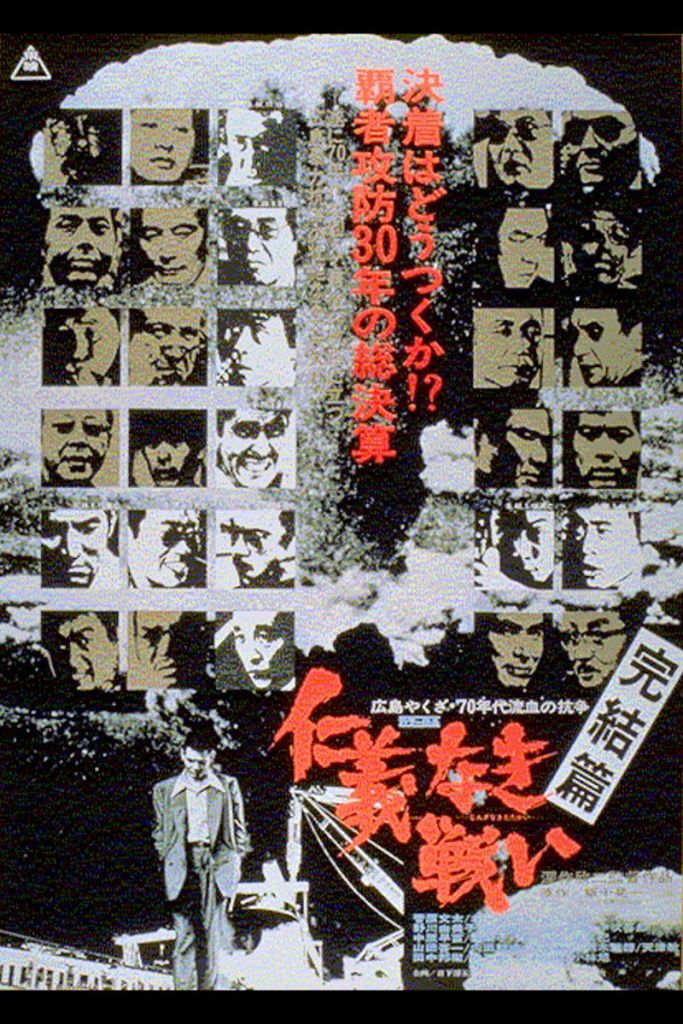 And so, the saga finally reaches its conclusion. Final Episode (仁義なき戦い: 完結篇, Jingi Naki Tatakai: Kanketsu-hen) brings us ever closer to the contemporary era and picks up in the mid ‘60s where Hirono is still in prison and Takeda, released on a technicality, has decided to move the yakuza into the legit arena. The surviving gangs have united and rebranded themselves as a political group known as the Tensei Coalition. However, not everyone has joined the new gangsters’ union and the enterprise is fragile at best.
 It’s 1963 now and the chaos in the yakuza world is only increasing. However, with the Tokyo olympics only a year away and the economic conditions considerably improved the outlaw life is much less justifiable. The public are becoming increasingly intolerant of yakuza violence and the government is keen to clean up their image before the tourists arrive and so the police finally decide to do something about the organised crime problem. This is bad news for Hirono and his guys who are already still in the middle of their own yakuza style cold war.
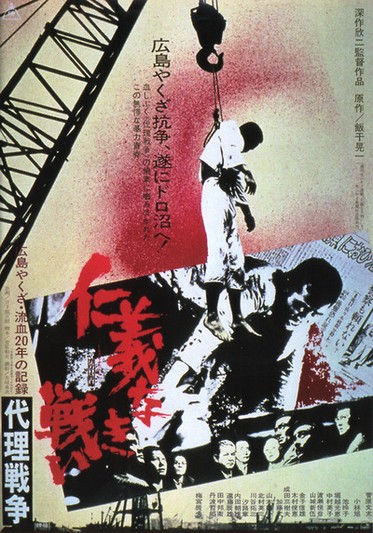 Three films into The Yakuza Papers or Battles Without Honour and Humanity series, Fukasaku slackens the place slightly and brings us a little more intrigue and behind the scenes machinations rather than the wholesale carnage of the first two films. In Proxy War we move on in terms of time period and region following Shozo Hirono into the ’60s where he’s still a petty yakuza, but his fortunes have improved slightly.
 If you thought the story was over when Hirono walked out on the funeral at the end of
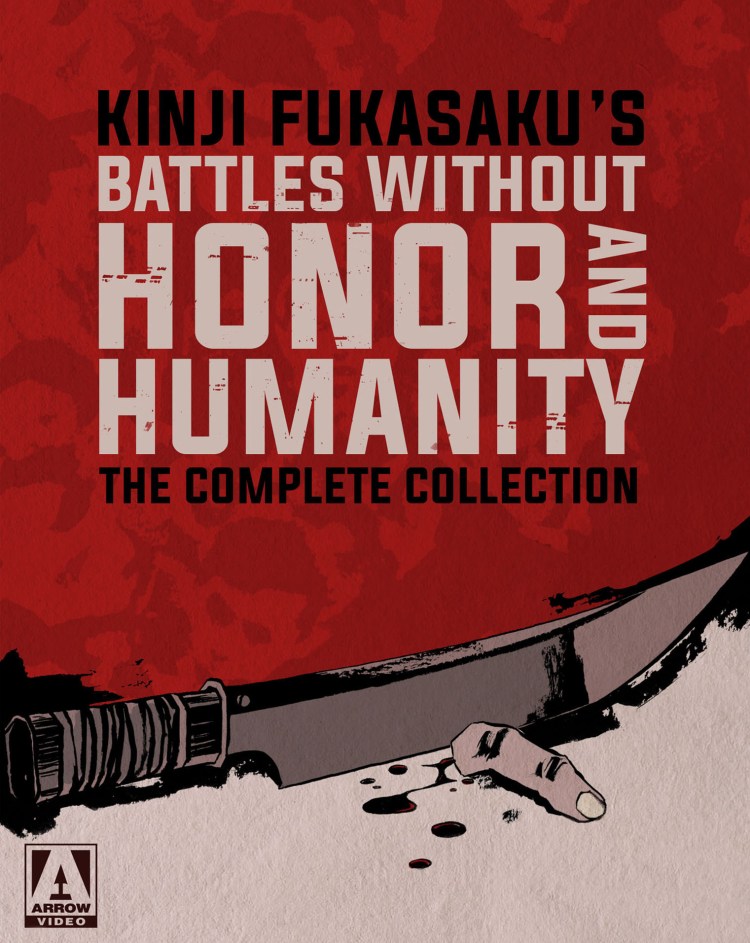
  When it comes to the history of the yakuza movie, there are few titles as important or as influential both in Japan and the wider world than Kinji Fukasaku’s Battles Without Honour and Humanity (仁義なき戦い, Jingi Naki Tatakai). The first in what would become a series of similarly themed movies later known as The Yakuza Papers, Battles without Honour is a radical rebooting of the Japanese gangster movie. The English title is, infact, a literal translation of the Japanese which accounts for the slightly unnatural “and” rather than “or” where the “honour and humanity” are collected in a single Japanese word, “jingi”. Jingi is the ancient moral code by which old-style yakuza had abided and up to now the big studio gangster pictures had all depicted their yakuza as being honourable criminals. However, in Fukasaku’s reimagining of the gangster world this adherence to any kind of conventional morality was yet another casualty of Japan’s wartime defeat.
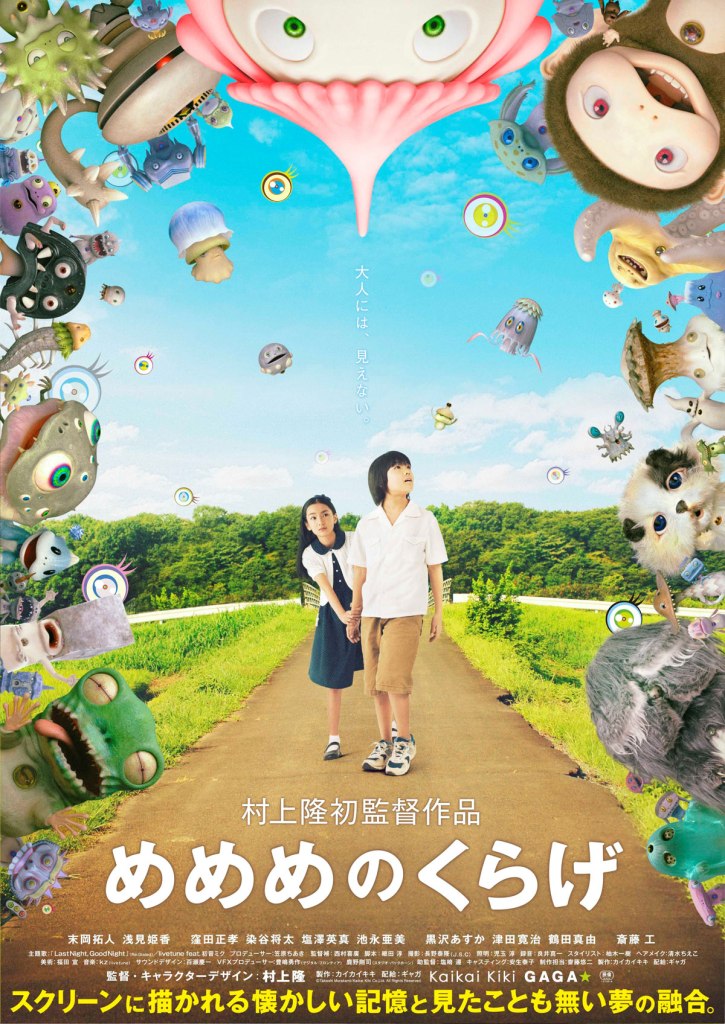 Jellyfish Eyes (めめめのくらげ, Mememe no Kurage) is the feature film debut of the internationally popular Japanese artist, Takashi Murakami. Well known for his cutesy character designs which are as likely to turn up in the world’s best regarded art galleries as they are on a kid’s backpack, Murakami is one of Japan’s most highly regarded art exports. Having unsuccessfully tried to raise interest in the more obvious totally CG animation, Murakami has enlisted the help of gore master Yoshihiro Nishimura for some director’s chair tips in creating a live action/CGI hybrid. Jellyfish Eyes is very definitely a kids’ movie, calling it a “family film” seems unfair when the age cut off is most likely around seven or eight years old but those who meet the (lack of) height requirement are sure to lap it up.

