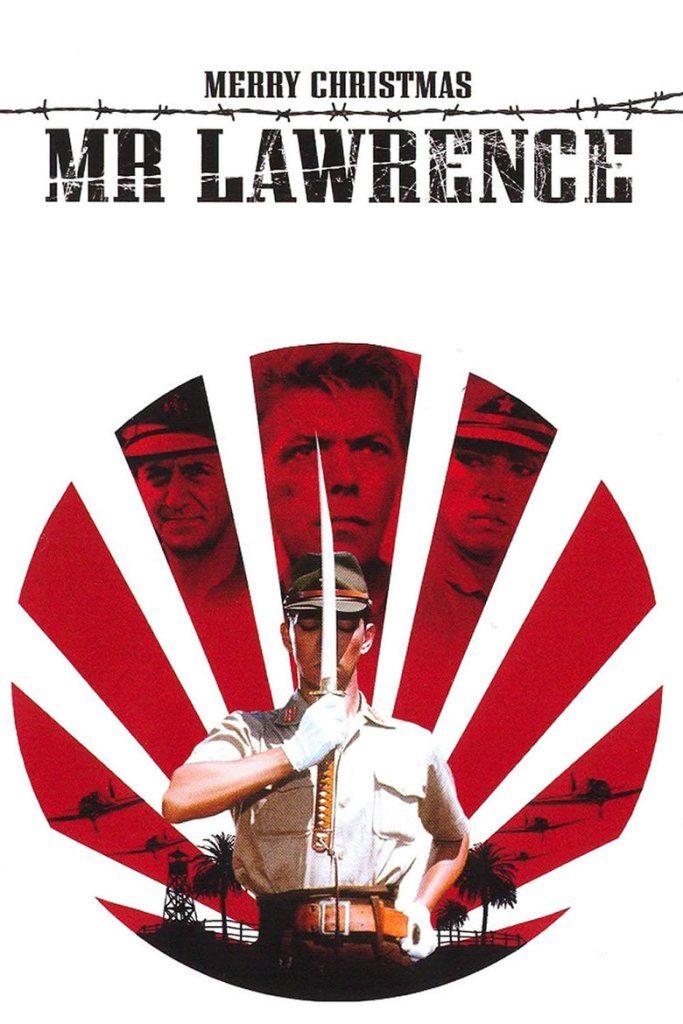
 Of all the post-war Japanese filmmakers, the one who liked to twist the knife the most was surely Oshima. No subject too taboo, no pain too raw – he liked to find the sore spot and poke at it a little, if only in the hope of encouraging an accelerated healing, albeit one which would leave a scar to remind you that once you suffered. With Merry Christmas, Mr. Lawrence (戦場のメリークリスマス, Senjou no Merry Christmas) he takes an unflinching look at the treatment of Japan’s prisoners of war and contrasts the Japanese forces with the different attitudes of the (mostly) British soldiers held within the walls of the camp.
Based on a semi-autobiographical novel by Laurens Van der Post, The Seed and the Sower, much of the action takes place in a prisoner of war camp run by the Japanese in Java in 1942. The titular Lawrence (Tom Conti) is one of the British prisoners here but unusually speaks fluent Japanese as he lived in Japan for a time before the war. The camp is run by Captain Yonoi (played by Ryuichi Sakamoto who also composes the music for the film) but largely ministered over by the more sadistic Sergeant Hara (played by Takeshi Kitano in an early straight acting role and billed here solely as “Takeshi”). Things kick off once Yonoi is called away to help preside over a military trial for a “difficult” prisoner who refuses to talk. However, Yonoi is somewhat taken aback by the upright soldier he discovers there. Celliers (played by David Bowie) is sentenced to death only to have the firing squad deliberately miss before he’s transferred to Yonoi’s camp.
As expected the conditions at the camp are not particularly pleasant. The first scene we’re treated to is Lawrence being called to witness an altercation where a Korean/Japanese soldier is accused of raping a Dutch internee. Hara taunts both of them with homosexual slurs and berates the Dutchman for not having resisted strongly enough. Kanemoto, the accused man, has obviously been badly beaten and is eventually ordered to commit seppuku which he eventually tries to do at that very moment by impaling himself on a bayonet. Seppuku is not something to be taken so lightly though so he’ll be patched up now for a ritual suicide later to be witnessed by the wronged parties (whether they wish to watch or not). Homosexuality, or more precisely, homosexual acts, are not to be tolerated among prisoners even if Hara later protests that samurai are not afraid of “queers” whilst insinuating that the majority of Englishman are gay anyway.
Latent homosexuality continues to be an ongoing theme throughout the film. The attraction between Yonoi and Celliers passes beyond simple admiration or even fascination. There don’t seem to be any other particular reasons for Yonoi to continue trying to protect Celliers as he does when he saves him from the firing squad and later allowing him a greater degree of freedom than other prisoners. Both men feel themselves prisoners of their respective social systems – Yonoi as the cold hearted samurai, efficient and unfeeling, yet with an intellectual core and a conflicted heart, and Celliers as a man desperately trying to atone for having once betrayed someone he deeply cared for in a misguided attempt to fit in. That said, both men are on opposite sides of a war and in any case that kind attraction stands against both of their countries’ current social customs. Again, a man is betrayed by a kiss and another man pays an extraordinarily high price leaving the other powerless to save him.
As Lawrence says there are no winners here, wars are just men doing what they thought was right at the time even if they really know that every one of them is wrong. The Japanese are rigid, repressed and anxious whereas the British are obsessed with honour in other ways and lean more towards the side of pragmatism when the going gets tough. A Japanese soldier may prefer to die, even going so far as to commit suicide, rather than subject themselves to the humiliation of having been captured alive. A British soldier will accept becoming a prisoner but largely because he believes he has a duty to live on and serve to the best of his capacity. Once captured, his duty is to try and escape to return to fight and die for King and country until the bitter end.
What both sides have in common is the dehumanisation of its troops. When it comes down to it one man is as good as another. If a radio has been smuggled into the camp someone must be punished for that action, the exact identity of the perpetrator becomes almost an irrelevance. Likewise, if a war has been lost, someone must pay for wrongful acts committed by the losing side even if his actions are no worse than those of any other soldier.
Merry Christmas, Mr. Lawrence proves a beautifully sad condemnation both of the rigidity of war, of men who think they’re acting in righteousness when the very idea is the one which causes them to act unjustly, and of repressive social systems in general. Lawrence acts as the voice of reason whilst all the while admitting that he himself is also “wrong” and forced into certain actions and modes of behaviour with which he does not necessarily agree. Both of these empires are on the verge of crumbling, all this death and cruelty will prove to have been for nothing. War is a fruitless tragedy in which there are no winners, only losers on every side. “There are times when victory is very hard to take”, victors too need to abide by their own sense of decency without being swayed by vengeance masquerading as righteousness.
Merry Christmas, Mr Lawrence is available with English subtitles on blu-ray as part of The Criterion Collection in the US (and was previously released on blu-ray in the UK from Optimum/Studiocanal but appears to be currently out of print).
(That final voice over is needlessy creepy, isn’t it?)

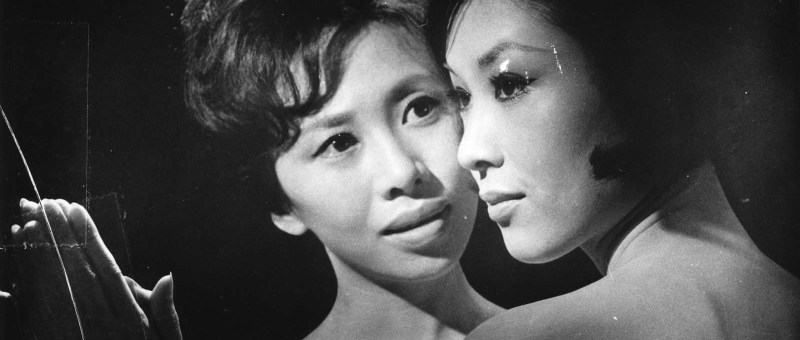
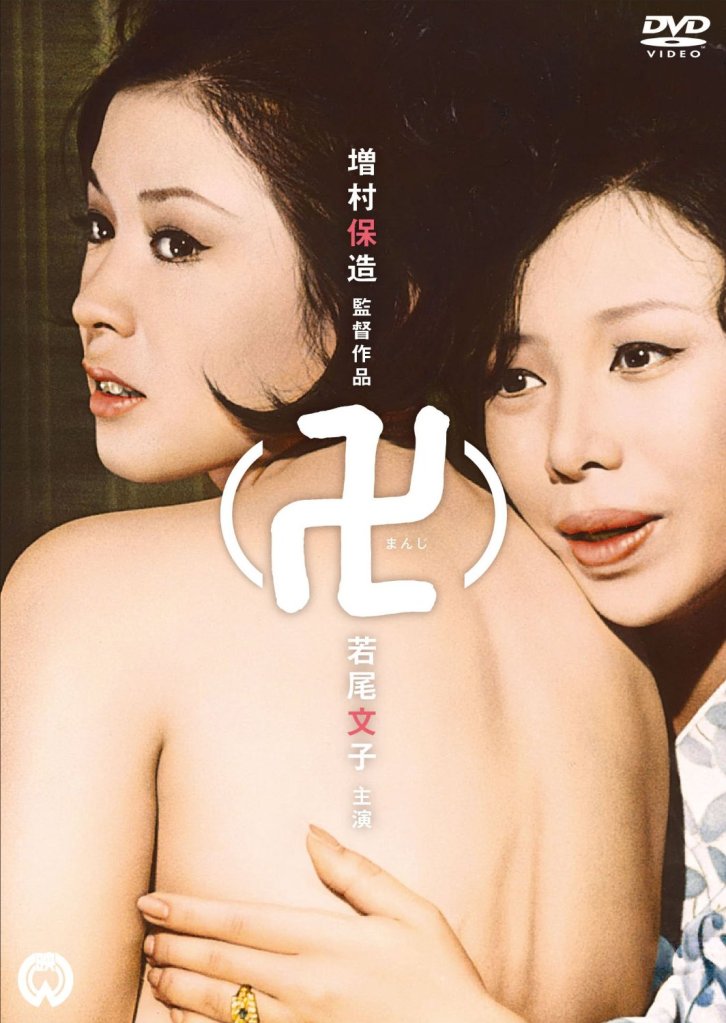 For arguably his most famous film, 1964’s Manji (卍), Masumura returns to the themes of destructive sexual obsession which recur throughout his career but this time from the slightly more unusual angle of a same sex “romance”. However, this is less a tale of lesbian true love frustrated by social mores than it is a critique of all romantic entanglements which are shown to be intensely selfish and easily manipulated. Based on Tanizaki’s 1930s novel Quicksand, Manji is the tale of four would be lovers who each vie to be sun in this complicated, desire filled galaxy.
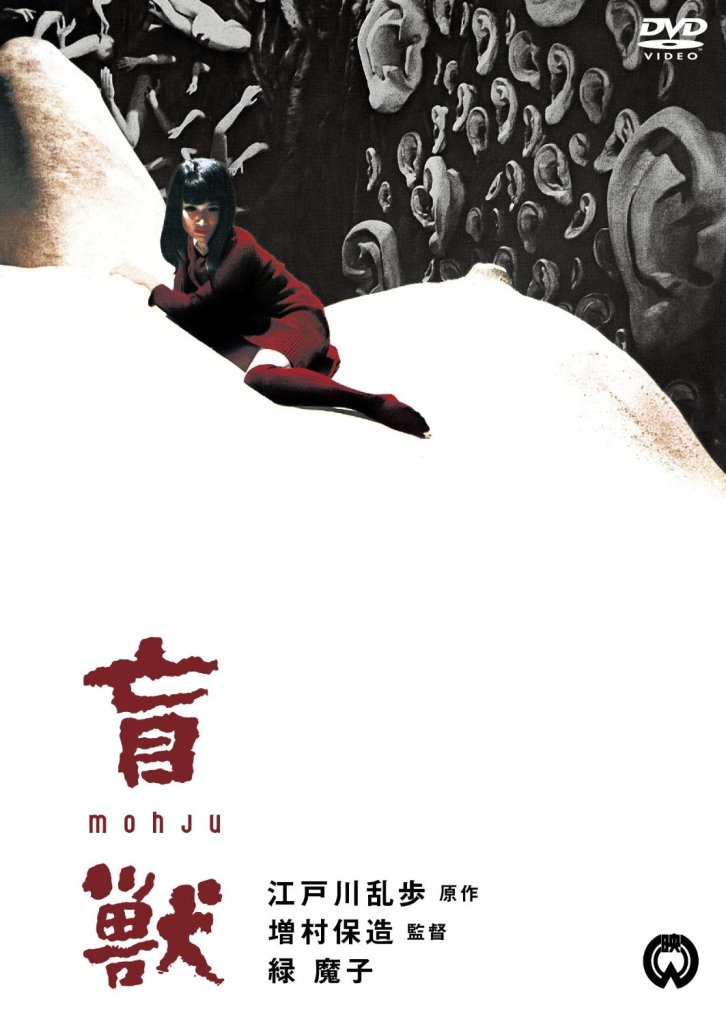 Never one to take his foot off the accelerator, Yazuso Masumura hurtles headlong into the realms of surreal horror with 1969’s Blind Beast (盲獣, Moju). Based on a 1930s serialised novel by Japan’s master of eerie horror, Edogawa Rampo, the film has much more in common with the wilfully overwrought, post gothic European arthouse “horror” movies of period than with the Japanese. Dark, surreal and disturbing, Blind Beast is ultimately much more than the sum of its parts.
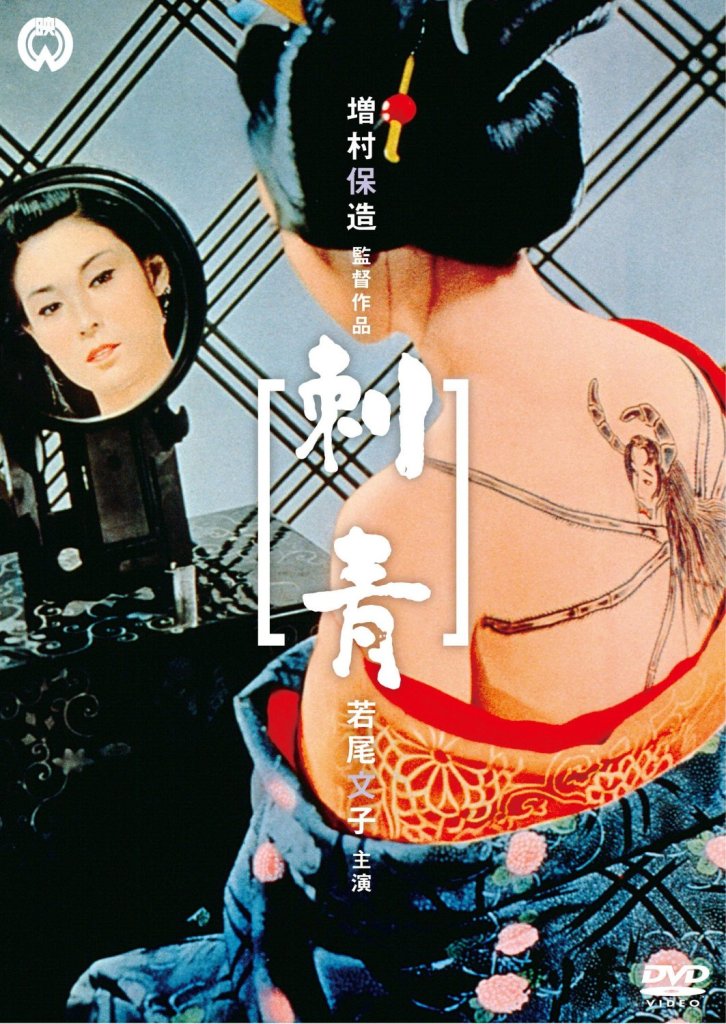 Irezumi (刺青) is one of three films completed by the always prolific Yasuzo Masumura in 1966 alone and, though it stars frequent collaborator Ayako Wakao, couldn’t be more different than the actresses’ other performance for the director that year, the wartime drama
 The debut film from Yasuzo Masumura, Kisses (くちづけ, Kuchizuke) takes your typical teen love story but strips it of the nihilism and desperation typical of its era. Much more hopeful in terms of tone than its precursor and genre setter Crazed Fruit, or the even grimmer The Warped Ones, Kisses harks back to the more to wistful French New Wave romance (though predating it ever so slightly) as the two youngsters bond through their mutual misfortunes.
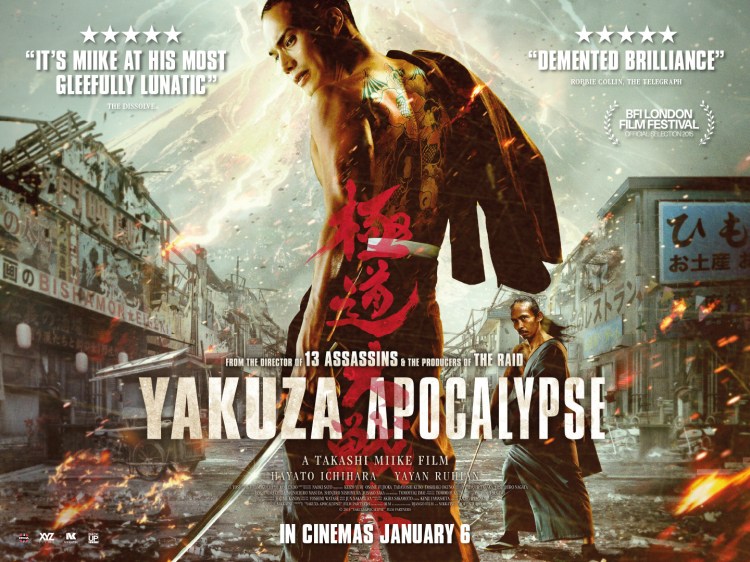 Belated review from the 2015 London Film Festival – Yakuza Apocalypse is released in UK cinemas for one day only on 6th January 2016 courtesy of Manga who will also be releasing on home video at a later date.
 Never one to be accused of clarity, Seijun Suzuki’s Capone Cries a Lot (カポネおおいになく, Capone Ooni Naku) is one of his most cheerfully bizarre movies coming fairly late in his career yet and neatly slotting itself in right after Suzuki’s first two Taisho era movies,
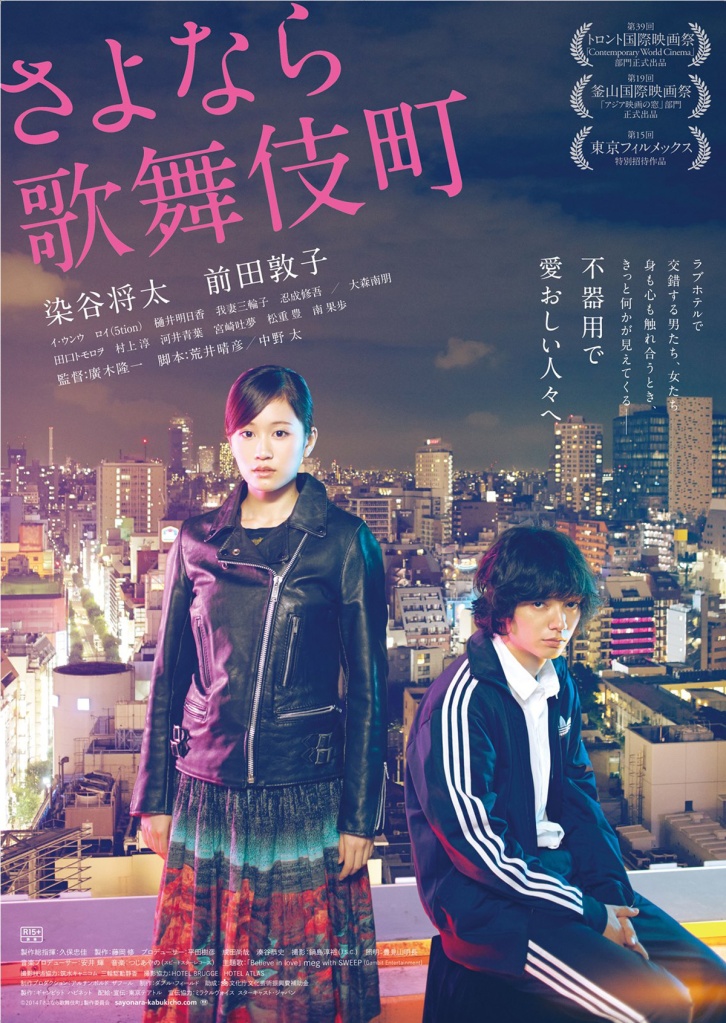 Kabukicho Love Hotel (さよなら歌舞伎町, Sayonara Kabukicho), to go by its more prosaic English title, is a Runyonesque portrait of Tokyo’s red light district centered around the comings and goings of the Hotel Atlas – an establishment which rents by the hour and takes care not to ask too many questions of its clientele. The real aim of the collection of intersecting stories is more easily seen in the original Japanese title, Sayonara Kabukicho, as the vast majority of our protagonists decide to use today’s chaotic events to finally get out of this dead end town once and for all.

