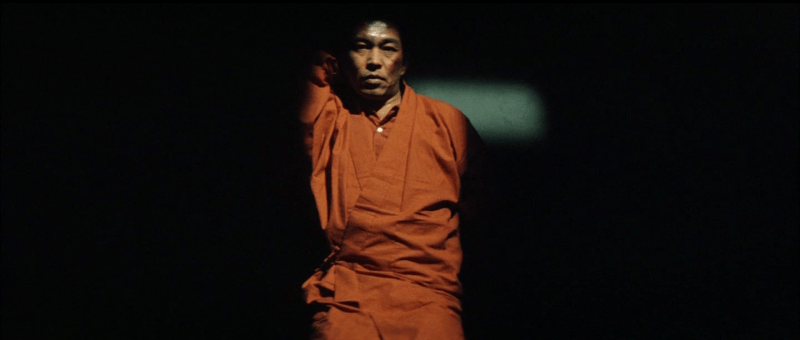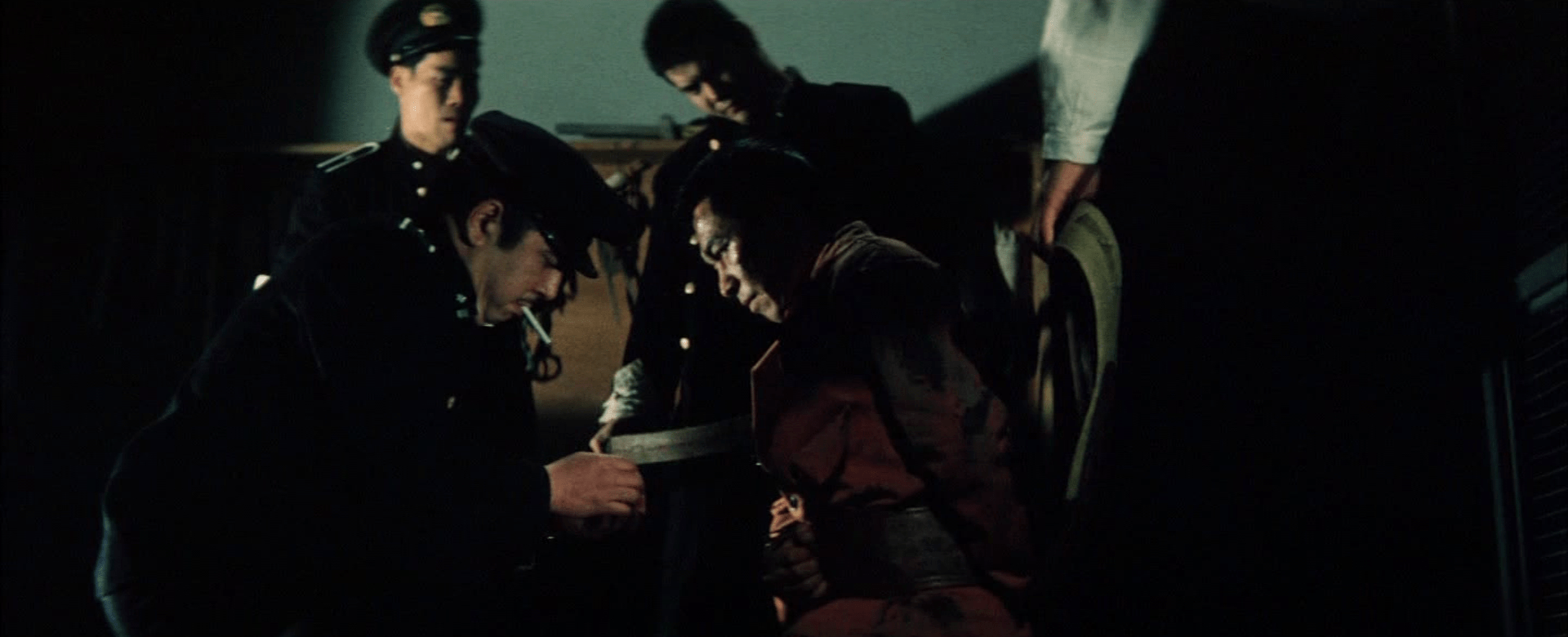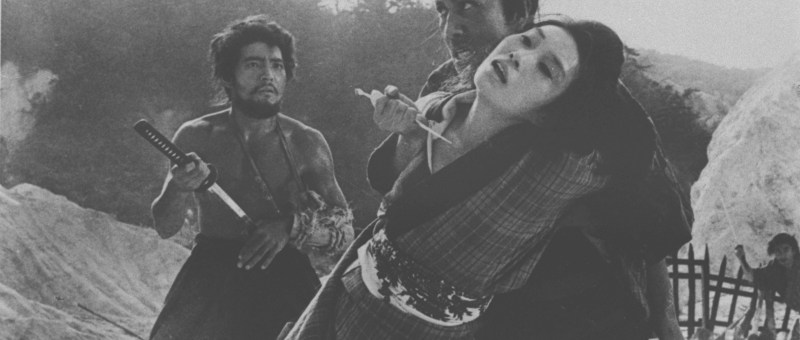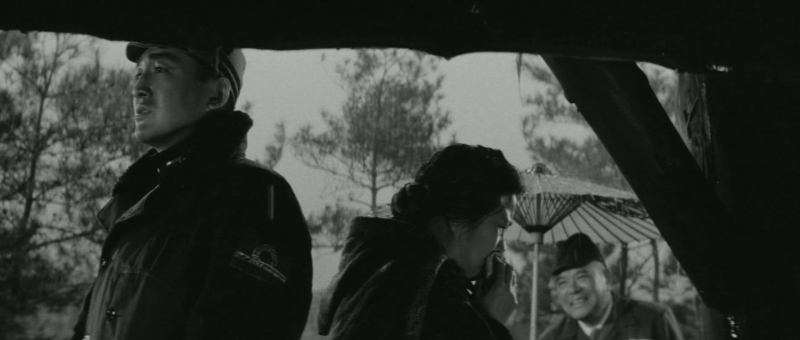
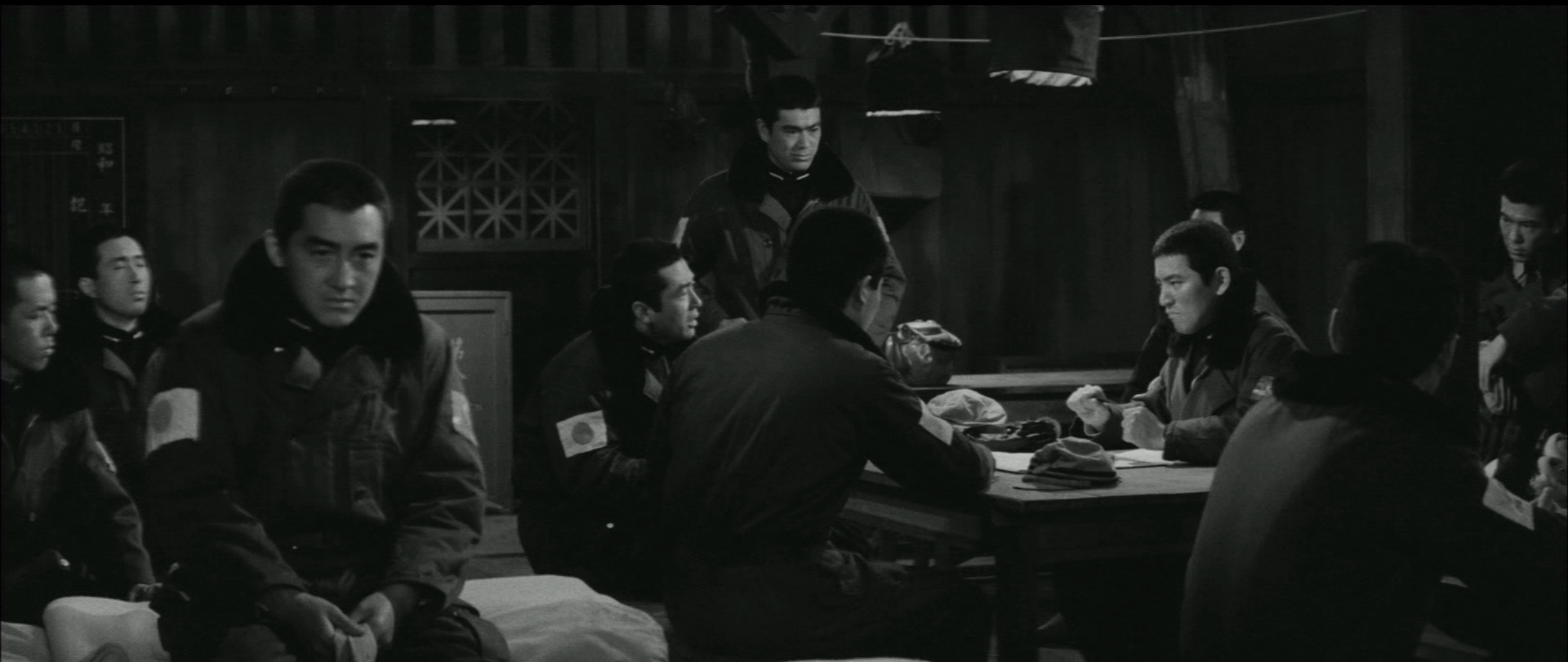
Classmates (あゝ同期の桜, Sadao Nakajima, 1967)

There had been films that dealt with the war before, but it was really with the generational shift that occurred among filmmakers in the mid-1960s that there was a greater willingness to reckon with the wartime past. Sadao Nakajima’s Classmates (あゝ同期の桜, Aa Doki no Sakura) was the first in a planned trilogy of war films at Toei, which was in other ways a studio that often leaned towards the right with its steady output of yakuza films, and most likely for that reason struggled to gain approval from studio heads. Taking its name from the military academy song, the film was inspired by a collection of essays put together from the letters and diaries kamikaze pilots had left behind. Nakajima had seen some of the letters sent back by the brother of a school friend, and reading them again on publication was determined to turn them into the film.

Nevertheless, only 25 years on from the end of the war it remained a sensitive topic. The film follows the men of the 14th class of reserve students who had previously had their draft notices deferred until they finished university but were now called up early because the war was going so badly. The majority of these men were allocated to kamikaze units and subsequently died in suicide attacks on US warships, though they received little in the way of training and mostly failed to hit their targets due to having limited fight experience. 

What might seem most surprising is that several of the men voice their opposition to the war along with the realisation that Japan is going to lose. Early on in training, one man deserts but the others are reminded that to do so amounts to treason and once caught, deserters will be executed by firing squad. This turns out not quite to be the case. Shiratori (Hiroki Matsukata), the resigned hero, encounters Taki (Mitsuki Kanemitsu) in Okinawa. where he’s working as ground staff. He’s insensible and appears to have lost his mind. The man working with him suggests that he was tortured so badly that it’s left him in a vacant state, though he’s still deployed for mindless tasks because they just don’t have the manpower.

Part of the reason for that is that they keep ordering people to die in a validation of the death cult that is militarism. On their arrival, the instructor tells the men he will have them all die, because dying for the emperor is their duty and destiny. The top brass insist this is the only way to win the war even though it’s counterproductive in that they’re running out of aircraft and skilled pilots even if one officer callously remarks that they have an endless supply of bodies. There’s also no real reason to send the planes up with two pilots as opposed to one, but they leave fully manned. The suicide missions are supposedly “voluntary”, but the men can’t really refuse due to a combination of peer pressure and military order.

When one pilot, Nanjo (Isao Natsuyagi), returns to base having been unable to reach his target, he’s immediately set upon by the others as a coward and a traitor. They accuse him of being afraid to die, leaving him feeling ashamed and frustrated by a sense of injustice while admitting that he didn’t want to die like a dog. He knows that he would not be able to go on living afterwards if he simply didn’t go through with it because the stigma of being a coward who let other men die so he could live would always be upon him. Eventually, he becomes so determined to prove himself that he insists on getting right back in his plane once it’s repaired and then blows himself up on the runway to prove a point.

Nanjo’s case is all the more poignant because he was a new father whose son was born after he was called up. He appears to have married quickly against his parents’ wishes and is now anxious that his family won’t accept his wife and child who will be left alone when he dies. His wife (Yoshiko Sakuma) desperately tries to see him to show him the baby, but manages only a few seconds before he’s forced to return to the barracks. Given a little more time, she brings a wedding dress for the impromptu ceremony they presumably skipped before, but ends up tearing it and giving Nanjo a strip as a kind of good-luck charm though like everything else it’s a gesture filled with futility.

It’s this sense of futility and resignation that seems to overtake Shiratori who knows he cannot escape his fate. To desert to is be killed anyway or to experience a spiritual death like Taki. He had introduced a friend, Hanzawa (Shinichi Chiba), to his sister and the two had become close, but he is forced to abruptly break up with her because he knows it’s unfair to string her along when he’s been sentenced to death. Reiko (Sumiko Fuji) will lose her brother and her boyfriend on the same day. Hanzawa and the other men visit a brothel on the night before their mission where they are treated as “gods”, though he sees only irony in the situation in which they are more like human sacrifices offered in prayer for an impossible victory. Their deaths will have no real meaning and are really only intended to instil fear in the enemy and weaken their morale rather than cause actual material damage to their fighting capability. Making use of stock footage, Nakajima freeze frames a plane in flight and points out at that point the men inside were still alive before cutting to a title card confirming the war ended just four months later. The title card at the beginning dedicated the film to the souls of those who died in the Pacific War, though it’s perhaps as quietly angry as it was permitted to be in 1967 in the senseless sacrifice of these men’s lives who were shamed, tricked, or forced at gunpoint into their cockpits and told they were disposable while those who stayed on the ground cheered and whooped at the grim spectacle of death.
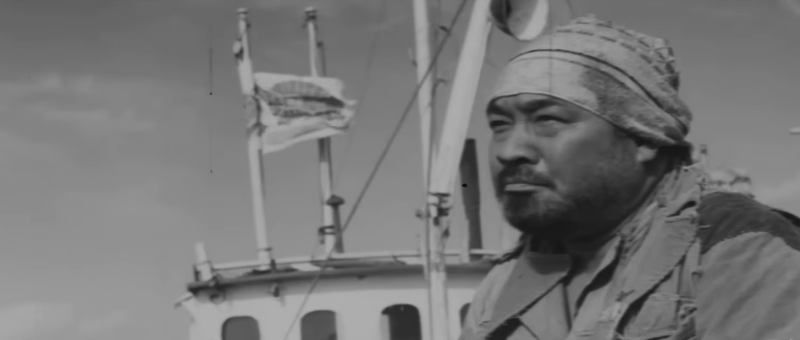
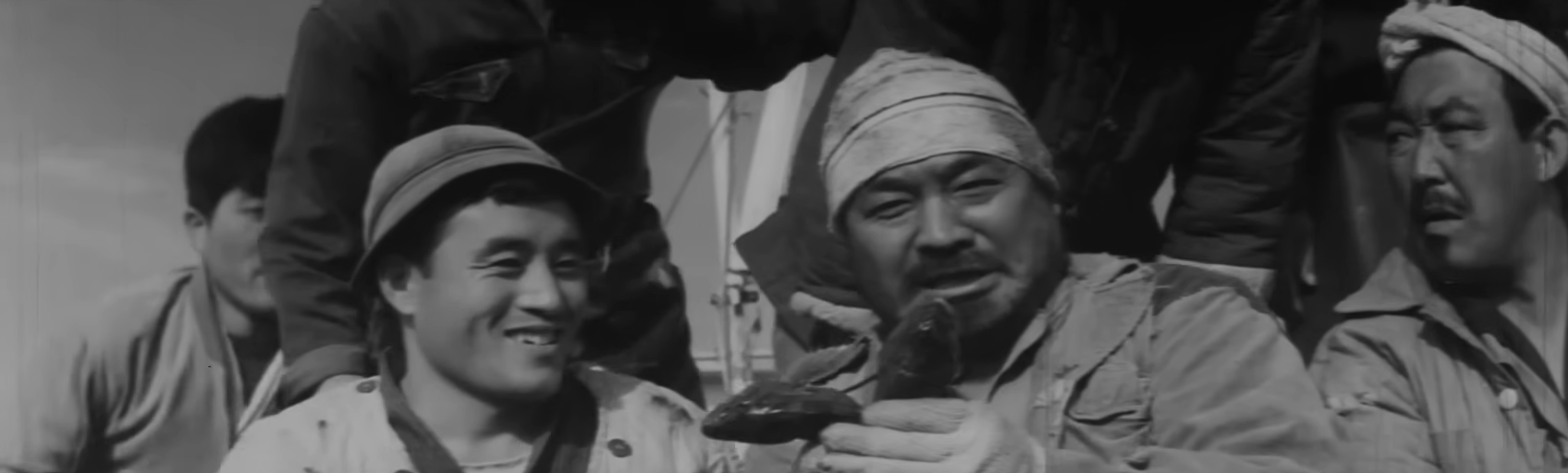
Full Ship (滿船 / 만선, Kim Soo-yong, 1967)

Released two years earlier, Kim Soo-Yong’s The Seashore Village had focused on the lives of women left behind while their husbands went to sea. Full Ship (滿船 / 만선, Manseon), meanwhile, more closely examines the lives of the men themselves along with the increasing pull towards modernity as this very traditional way of life becomes ever more precarious. Based on a play and another of Kim’s literary films, it nevertheless flies close to the wind in subtly challenging the effect that feudalistic capitalism has on each of these men’s lives as they find themselves dependent on the whims of the shipowner.

As Gom-chi (Kim Seung-ho) says, he’s fifty years old and he’s spent his life captaining someone else’s boat. Yet, he’s spent a lot of it toadying for the shipowner and justifying his reluctance to pay the fisherman by citing the shipowner’s expenses which include fuel for the boat, paying the union, and mending nets. The shipowner claims that he lives off debts and the fishermen actually owe him because he’s been lending them money and expects them to pay him back. Some of the other men suggest holding a gut ritual in his honour, but it’s unclear whether the shipowner is really as strapped as he says or merely hoarding all the money for himself. He dresses in fancy hanbok and looks more like a feudal lord than a contemporary business owner. When the fishermen do indeed come in with full boats and expect they’ll finally be getting what they’re owned, they receive only sacks of rotten hulled barely rather than rice. Still, most of them feel they have no choice than to suck up to the shipowner with even Gom-chi agreeing there are expenses to pay while drunkenly letting slip that he has savings and plans to buy his own boat only for the shipowner to find out and ban him from going to sea until he pays up what he owes.

Which is all to say, they’re between a rock and a hard place though “sea-crazy” Gom-chi holds tight to this way of life and has become estranged from his oldest surviving son Do-sam (Namkoong Won) who refuses to become a fisherman while Gom-chi’s wife, who has just given birth to a late baby though already in middle age, is opposed to letting their newborn grow up to go sea. They’ve already lost two sons to the waves, while Gom-chi’s father and grandfather were taken by the waters. To his mind, a fisherman dying at sea is merely going home and Do-sam is a failure and a coward for not following the tradition. 

He blames this on the fact that Do-sam left the island to do his military service and has become corrupted after seeing a different way of life on land. Another man who escaped the island, Beom-soe (Park Noh-sik), has returned wearing a suit and looking like a successful businessman, though as we later discover he’s on the run for a crime committed in the city, symbolising what the end results of this urban corruption may be. Seul-seul (Nam Jeong-im), Gom-chi’s daughter, is also tempted by the city while travelling there to sell goods though almost run over by a bicyclist on her arrival demonstrating its many dangers. People stare and laugh at them, as if the island women with their old-fashioned hanbok had emerged from another world. They laugh at Seul-seul too when she gives in to temptation and gets her hair set and styled into a beehive paid for by her boyfriend Yeon-cheol (Shin Young-kyun) who has also resisted the sea in favour of starting an innovative pearl farming business which is starting to pay off, though Gom-chi still seems resistant to their marriage. Beom-soe is taken with Seul-seul’s island innocence and tries to convince her to come with him with fancy presents from the city of soaps, perfumes, and silk, but she continues to resist him as if sensing that his urban success is not to be trusted. 

But, on the other hand, some seem to think it would be better to take their chances on land than continue with this harsh way of life. The film opens with a funeral in which a half-crazed old woman asks why they’re burying her son when he told her in a dream that he was alive just lost at sea. After a storm, Gom-chi comes back shouting of full boats, but they’re full of dead men drowned by the shipowner’s greed though he only complains about the damage to his vessel. Even the shamaness is a little bit corrupt, telling Do-sam’s mother that it would be inauspicious for him to marry because she’s having an affair with him herself, though prayers and rituals to the Dragon King are all they really have to protect them. Trapped between the sea and encroaching modernity that promises only more exploitation and misery, they have, as the poetic bookending narration suggests, only the life-giving, life-taking waters to turn to.


Eleven Samurai (十一人の侍, Eiichi Kudo, 1967)

“If no one denounces the absurdity of this world, then our descendants will keep suffering,” a soon-to-be ronin insists in Eiichi Kudo’s revengers tragedy, Eleven Samurai (十一人の侍, Juichinin no Samurai). It seems clear from the outset that their actions will have little effect no matter whether they succeed or fail because the enemy is feudalism which may be approaching the end of its life but is definitely not dead yet. They can at least attempt to avenge their clan even if they can’t save it while refusing to let an entitled, selfish lord get away doing whatever he likes just because he happens to be the son of the former shogun and brother of the current one.

The opening scenes see Nariatsu (Kantaro Suga) chasing a deer having declared himself a “real hunter”. He ignores the cries of his men to watch where he’s going and sails over the border into the territory of Oshi which amounts to an invasion seeing as he is armed and has no permission to be there. The deer gets away, but Nariatsu shoots an old woodcutter whom he felt to be in his way with his bow and arrow. The Lord of the Abe clan that rules Oshi immediately takes him to task and tells Noriatsu that his behaviour is unbecoming for the son of the former shogun. He’s committed a murder in their territory, but they’re prepared to let it go as long as he leaves as soon as possible. But Nariatsu doesn’t like being told what to do and simply shoots the lord in the eye, potentially sparking a diplomatic incident. 

The Abe clan try to lodge a complaint in Edo, but are shut down by courtier Mizuno (Kei Sato) who fears that to acknowledge an event such as this would damage the moral authority of the Tokugawa regime. He decides to cover the whole thing up by claiming it was the Abe clan who insulted Noriatsu. The Abe clan will then be dissolved, and Oshi essentially gets nationalised. All of which suits Nariatsu just fine because he wants to take control of Oshi and expand his territory anyway. Part of his petulance seems to stem from the fact that he feels hard done by with such a small inheritance when his brother became the Shogun and received multiple fiefdoms. The previous Shogun, Tokugawa Ieyoshi, had produced an unusual number of children which became quite a problem in that he had to find lands for them all and eventually hastened the demise of the shogunate because of the additional strain. 

But Nariatsu is also an overgrown child who has no idea how to do anything for himself and no concern for the feelings or fortunes of others. When instructed to do something he doesn’t want to, Nariatsu petulantly stamps his feet and complains, and when his actions are challenged he simply replies that he’ll be telling his father. In fact, he is so infuriating that it’s likely most of his men secretly want him dead too, including his chief adviser Gyobu (Ryutaro Otomo) who was once the General Inspector but is now expected to babysit this absolute buffoon. Even though Nariatsu knows the Abe clan will be trying to kill him, he still sneaks out to the red light district and gets blind drunk with geisha which in itself is conduct unbecoming for a high ranking samurai such as himself. 

As such, he represents almost everything that’s wrong with the feudal order while Mizuno represents the rest. It’s Mizuno that secretly plots against the plotters, manipulating them into giving up their assassination mission by claiming to have switched sides only to backtrack and reveal he’s actually still working for Nariatsu fearing a reputational loss for the Tokugawa. Chief revenger Hayato (Isao Natsuyagi) is also banking on this fear of reputational damage, certain that the Shogunate won’t be able to bear the humiliation of Nariastsu being killed by a ronin so will instead claim that he died from an illness. Vowing to avenge the clan, Hayato righteously gives up his position to become one so that the Abes won’t be linked to the crime and is joined by 10 more similarly annoyed samurai. Six of them are already “dead” having been asked to commit seppuku for recklessly attacking Nariatsu on their own and blowing the whole operation. 

Hayato at least believes this to be a suicide mission. He leaves his loving wife and home and allows people to think he’s run off with Nui (Eiko Okawa), the younger sister of one of their number who died before he could join them. They do this because they think it must be done, and also because if no one stands up to samurai oppression it will never end. Wandering peasant Daijuro (Ko Nishimura) agrees with them. He wants revenge on the samurai for raping his sister after which his father and brother took their own lives. Nariatsu is as good as anyone else and he does very much need to die. 

But despite Daijuro’s homemade cannons, nothing quite goes to plan. Kudo sets his final battle in an atmospheric, misty valley that is an obvious stand in for the underworld. Hayato may succeed in killing Nariatsu but it’s a pyrrhic victory. Though he vowed “to put an end to this ridiculous world,” a samurai cannot really win this battle. It’s Daijuro who eventually walks off with Nariatsu’s head, symbolically decapitating the shogunate which the closing titles confirm was mortally wounded by this incident. With his striking black and white cinematography, Kudo does indeed paint this samurai world as a hellish place ruled over by an infinitely corrupt and self-interested authority. The nihilistic futility of it all is emphasised by the figure of a grown man sitting like a small child and splashing his sword in a puddle while surrounded by dead bodies. There might be a way out of this, but not for the samurai, only for those who will come after and perhaps finally be free of this world’s absurdity.


The Greatest Challenge of All (喜劇 一発勝負, Yoji Yamada, 1967)

A prodigal son rocks the social order in Yoji Yamada’s anarchic nonsense comedy, The Greatest Challenge of All (喜劇 一発勝負, Kigeki: Ippatsu Shobu). The greatest challenge may be trying to manage Kokichi (Hajime Hana), a roguish Del Boy-like figure with an impossible dream of striking it rich. While in some senses he anticipates the equally  anarchic yet basically goodhearted Tora-san, he also represents a modernising and aspirant Japan determined to leave behind dusty old tradition for a new “deluxe” future.

Having taken to the road after being disowned by his conservative father (Daisuke Kato), Kokichi returns 15 years  later a middle-aged man with seemingly nothing to show for his many years of wandering. He has no idea that he has a daughter, Mariko, by a local woman that his parents took in and raised as if she were theirs which was not an especially uncommon solution to the problem of illegitimate birth in the post-war era. Nor did he know his mother had passed away before walking in on her annual memorial service. This sense of parental disconnection one level reflects a lack of filiality that marks him out as a “modern” man uninterested in these familial obligations or a sense of duty towards his family, but it’s also true that it’s to family that he’s returned having mellowed in middle-aged and in a way looking to settle down.

In any case, his life seems to have been a series of crazy episodes from briefly becoming a sumo wrestler to meeting a mysterious woman on a bridge who gets him a job as a snake charmer. When two yakuza types kick up a fuss about not being able to have their usual room at the inn during his mother’s memorial service, Kokichi manages to frighten them off just with bluster, hinting at the way he may have lived for the last 15 years. He also has two friends who turn up to see him, one of whom is a former yakuza who refers to Kokichi as if were his boss and they were a little trio of crime-adjacent buddies.

But it does appear that Kokichi has come with a business plan in mind, convinced that he can find the source of a hot spring in the town and build a resort hotel on top of it. To do this, he tries to convince his father to sell him his land and the inn the family run so he can knock it down and build a “deluxe” modern, Western-style hotel in its place. Kokichi’s father obviously isn’t keen. This inn has been in the family for generations, he really wouldn’t want to ruin that and especially not for one of Kokichi’s harebrained schemes. Yet again this brings us back to the battle between the conservatism of Koikichi’s father, and Kokichi’s own consumerist modernism that is more individualistic and no longer sees beauty in the past, only backwardness and stagnation. When he finally does find his hot spring, he builds a vast modernist complex with a botanical water park housed in a giant Hawaiian-themed conservatory complete with dancing hula girls. 

His corrupting presence is most discernible in the changing role of Fumi (Tanie Kitabayashi), the family’s housekeeper who generally dressed in kimono but on moving to Kokichi’s mansion she begins wearing Western dress. Fumi had at one time left the family because Kokichi had unwittingly forced her to betray it in helping him get his hands on a precious family heirloom to pawn as capital for his new business venture. Having done so brings her to a confrontation with the contradictions of her role within the family, both a surrogate mother to Kokichi and also a servant who is expected to abide by a certain code with not stealing from your employers a key tenet. She feels she can no longer look Kokichi’s father in the eye and must now return to her home in the country even though she has likely not seen it since she was a young woman. Having undergone this change, she can no longer return to the inn but is brought back to Kokichi’s modernist home once he strikes it rich. 

But Kokichi too is later confronted by hypocrisies of his own position as a free-spirited man and finally a father on learning the truth about Mariko. Hanging out at the hot spring, the 16-year-old Mariko has attracted the attentions of a couple of fashionable young men and wants to leave with them to visit Tokyo. Despite the intrusion of the modern in the hot springs resort, Mariko doesn’t want to stay in this “deadbeat” town and longs for the bright lights of the big city. Kokichi’s father understandably says no, but Kokichi is originally all for it, perhaps seeing his own desire to be free of his father’s oppressive authority. However, he soon changes his tune on assuming his paternity. He too tells Mariko she can’t go and strikes her for talking back. But just as he had, she leaves anyway. His modernity is no longer modern enough, and the young will always walk towards the future.

One exception might be Kokichi’s painter sister Nobuko (Chieko Baisho) who appears to be happy enough living at the inn and with seemingly no intention of marrying which might be her own kind of rebellion against traditional mores. While other similarly themed films may have emphasised the importance of hard work and the reality of the salaryman dream, this one suggests that it really is possible to bumble along and then strike it lucky but also that you never really travel as far from home as you might think. The desire for patriarchal control rises in Kokichi, but is now ineffectual. Though he didn’t raise her, Mariko is a child of the world he’s created and simply chooses to leave with a final sock in the eye to traditional filiality. 


Trailer (no subtitles)

Let’s Have A Dream (九ちゃんのでっかい夢, Yoji Yamada, 1967)

Convinced he’s dying of a terminal illness, a young nightclub singer yearns for death in Yoji Yamada’s romantic farce, Let’s Have a Dream (九ちゃんのでっかい夢, Kyu-chan no Dekkai Yume). In fact, the Japanese title is “Kyu’s Big Dream,” directly putting the name of the star into the name of the picture though he does in fact play a character called “Kyutaro” whose music career is starting to take off just as he convinces himself that his life is hopeless. Best known for “Ue o Muite Aruko”, Kyu Sakamoto was a huge singing star throughout the 1960s until his death in a plane crash at the very young age of 43.

Based on a novel by Nobuhiko Kobayashi who was working with Sakamoto on a television show at the time (and asked for a pseudonym because he wasn’t sure how the movie would turn out), the film is however partly an exploration of the nation’s growing internationalism. Indeed, the film opens with the Pan Am logo and then immediately travels to Switzerland where an elderly lady is dying having apparently never married or had children but still attached to the memory of her first love, a man from Japan. Accordingly, she decides to leave her entire fortune to that man’s grandson, Kyutaro (Kyu Sakamoto), which comes as a total shock to her closest living relative, “The wicked Mr Edward Allan Poe.” Her butler then vows to travel to Japan to tell Kyutaro the good news, but ends up sitting next to the hit man Edward Allan Poe hires on the plane.

But Kyu has already hired a hitman to take himself out because he thinks he’s suffering from a terminal disease and feels nothing other than fear and hopelessness. Though all he wants to do is die, he is unable to take his own life and so has decided this is the best way. He’s also in love with a childhood friend who works in a diner at the docks, but unbeknownst to him Ai (Chieko Baisho) has just got engaged to their other friend Kiyohiko (Muga Takewaki), a sailor. To add to the sense of European romanticism, Kyu writes long notes to himself about his sadness and melancholy all while the countess’ right-hand man continues to refer to him as the luckiest man in the world. 

In a running gag, the hitman speaks mainly in French and the Countess’ butler in cod German hinting at a new kind of internationalism. The hitman Kyu hires through shady local guy Pon (Kanichi Tani) is, however, much less sophisticated. He can’t afford a gun and fails to kill Kyu several times in other ways usually injuring himself in the attempt which again makes Japan look somewhat inferior to the rest of the world just as the opulent vistas of the Countess’ castle contrast so strongely with the down and dirty nature of the docks where Kyu lives and works. 

Despite being so desperate to die, Kyu pulls away when the hitman he hired tries to kill him which along with his inability to take his own life may suggest that he really does want to live after all. Though she evidently does not return his romantic feelings, Ai clearly cares for him deeply describing Kyu as like oxygen for her while trying to get to the bottom of what’s with wrong with him but it takes Kyu a little longer to figure out that people care about him even if not quite in the way he was hoping they would. Even so, there’s no denying the farcical quality of all that’s befallen him as he finds himself “the luckiest man in the world,” caught between two hitmen, and staving off eventual romantic heartbreak.

Still, even this plays into the melancholy sense of romanticism and elliptical ending as Kyu eventually gets to fulfil one of his big dreams by going to Europe and getting to live the life of a heartbroken count from a 19th century romantic novel. As a vehicle for Sakamoto, the film also features several of his songs along with dance routines and some otherwise goofy clowning while Chieko Baisho also performs a short but sweet rendition of My Bonnie Lies Over the Ocean. It’s all undoubtedly very silly but somehow heartfelt and wholesome for all its buried melancholy and deeply felt romanticism. 


Original trailer (no subtitles)

Dissolution Rites (解散式, Kinji Fukasaku, 1967)

“We’re all legitimate businessmen now” as a former yakuza explains to a recently released foot soldier stepping out into a very different Japan in Kinji Fukasaku’s Dissolution Rites (解散式, Kaisan Shiki, AKA Ceremony of Disbanding). The funereal opening scenes feature the first in a series of dissolution rites as a man dressed in black reads from a scroll and explains that all the local yakuza clans will be disbanding because despite “working day and night for the benefit of the world and humanity in the spirit of democracy” times have changed and they find themselves unnecessary.

There at the beginning of that change, Sawaki (Koji Tsuruta) served eight years in prison for the murder of a rival gang boss to ensure his gang got hold of a local landfill site where they later built an oil complex. While he was inside, his boss died and his clan disbanded leaving him with nowhere to go but thankfully looked out for by an old friend, Shimamura, who has since become a construction magnate. On his arrival at Shimamura’s office, however, he’s ambushed in a suspected case of mistaken identity while the man driving him is killed. 

Shimamura (Fumio Watanabe) tells him he’s gone straight, but it soon becomes clear that even as yakuza forsake the streets for more organised crime they still behave like thugs using the same old tactics to get what they want. Shimamura is in cahoots with a corrupt local politician, Kawashima (Asao Uchida), and is determined to get access to another stretch of bombed out wasteland owned by an egalitarian doctor, Omachi, who refuses to sell because he’s set up a community there of marginalised people, including Sawaki’s former girlfriend Mie (Misako Watanabe), who work on his chicken farm. Meanwhile, Shimamura is targeted by rival “legitimate businessman”, Sakurada (Hosei Komatsu), who pulls a few dirty tricks of his own in an effort to cut Shimamura out of the picture.

Once again Tsuruta plays a man who is out of step with his times, partly because he’s been in prison but also in his fierce commitment to a now outdated code of gangsterdom. “The chivalry that we were taught was just a way for bosses to use their soldiers” Shimumura insists, “you’ll look foolish if you don’t get rid of it”, disingenuously casting his transformation into a legitimate businessman as a way of freeing himself from yakuza oppression. Sawaki turns down his offer to join the business because it seems a bit dodgy while intensely disappointed to discover another former colleague, Kubo (Kyosuke Machida), running a trafficking ring masquerading as a management studio for cabaret singers and strippers by tricking women with the offer of good jobs then getting the hooked on drugs and shipping to them to Okinawa to do sex work near the US bases.  

On his return, Sawaki is also stalked by the man whose arm he severed in killing the rival boss who turn out to be, like him, an old school gangster which is why he insists on his revenge only to find an unexpected kindred spirit as the two men find themselves each adrift in a world in which no one really cares about humanity and honour. Sakai (Tetsuro Tanba) chooses to walk a different path, conducting his disbandment ceremony in protest of yakuza corruption. Like many Tsuruta heroes, Sawaki also has the possibility of walking away and living a conventional family life as a husband and father having been forgiven by Mei but inevitably is pulled in a darker direction by the necessities of his code. The oil complex he helped to create is only a symbol of the duplicities of the post-war society allowing men like Shimamura to get rich while literally choking the life out of those like Mei whom they now want to kick out of her home to add insult to injury. 

There’s no one more tragic than a yakuza Sawaki admits, knowing there is no longer any place for him in an amoral gangster society while unable to simply leave it and enjoy a quiet life with the woman he loves. An indictment both of corporatised yakuza and the equally duplicitous practices of “legitimate” businesses and corrupt authorities, the film ends in another righteous assault filmed handheld with Fukasaku’s characteristically canted angles amid the chaos and confusion of a rapidly changing society. 

A Swordsman in the Twilight (황혼의 검객, Jeong Chang-hwa, 1967)

Jeong Chang-hwa is better known for the films he made with Shaw Brothers in Hong Kong, including the iconic King Boxer which helped to kick start the Kung Fu craze of the 1970s, than for earlier films he made in his native Korea. Nevertheless, while he was there he also instrumental in creating a new genre of Korean swordplay films with A Wandering Swordsman And 108 Bars of Gold and 1967’s A Swordsman In The Twilight (황혼의 검객, Hwanghonui Geomgaek).

Drawing inspiration from both Japanese samurai movies and King Hu’s wuxia dramas, the film is set in 1691 and like many Korean historical dramas revolves around intrigue in the court. Our hero is however not a high ranking courtier but as he describes himself a struggling vassal who was lucky to get his job as a lowly palace guard because he has no real connections nor does he come from a prominent family and his skills and long years of study mean almost nothing in this society ruled by status. The more things change, the more they stay the same. In any case, he was not unhappy with his life, got on well with his father-in-law, a poor scholar, and had a loving wife and daughter, who like him, valued human decency over ambition. 

But it’s that gets them into trouble when the venomous Lady Jang stages a palace coup to usurp the position of rightful queen, Min. Queen Min is depicted as a shining example of traditional femininity and idealised womanhood. Though the situation she finds herself in is unfair, she bears it with good grace and refuses the small comforts others offer her saying only that she is a sinner and it’s only right she suffers this way for displeasing the king. Hyang-nyeo (Yoon Jeong-hee), wife of swordsman Tae-won (Namkoong Won), was once her servant and shares her birthday so feels an especial connection to her. Pitying Queen Min seeing her forced to walk barefoot through the mud she offers her shoes and for this crime is hounded by the Jang faction on account of her supposed treason.

Having taken the local governor and his clerk, who are also against the Jang faction but don’t know how to oppose it, hostage, Tae-won narrates his long sad story and reasons for his desire for revenge against corrupt courtier Oh Gi-ryong (Heo Jang-kang) who, it seems, is also motivated by resentment and sexual jealousy after having once proposed to Hyang-nyeo but been instantly rejected by her father who did not wish to marry his daughter off to a thug. As such, he comes to embody the evils of the feudal order in his casual cruelty and pettiness. When we’re first introduced to Tae-won he saves a young woman who was about to be dragged off by Gi-ryong’s henchmen presumably as a consort for their immediate boss, Gi-ryong’s right-hand man, but is warned by the other villagers that he should leave town quickly else the Jang gang will be after him. That is however, exactly what Tae-won wants. He fights a series of duels with Gi-ryong, the first of which ends with Gi-ryong simply running away when Tae-won breaks his sword and in their final confrontation he resorts to the cowardly use of firearms not to mention an entire squad of minions pitched solely against a wounded Tae-won and the unarmed governor.

What it comes down to is a last stand by men who know the right path and are now willing to defend it rather than turn a blind eye to injustice. Tae-won’s own brother (Park Am) had thrown his lot in with Gi-ryong in the hope of personal advancement, willingly aligning himself with the winning side and complicit in its dubious morality. This of course puts him in a difficult position, though he implies he will be prepared to sacrifice Tae-won and his family if necessary even if he also tries to find a better solution such as suggesting Tae-won kill Queen Min to prove his loyalty to the Jang faction. In an odd way, it speaks to the contemporary era as a treatise on how to live under an authoritarian regime not to mention the creeping heartlessness of an increasingly capitalistic society. 

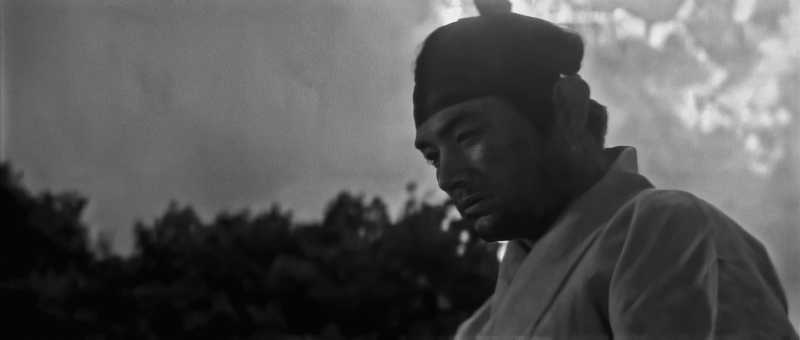
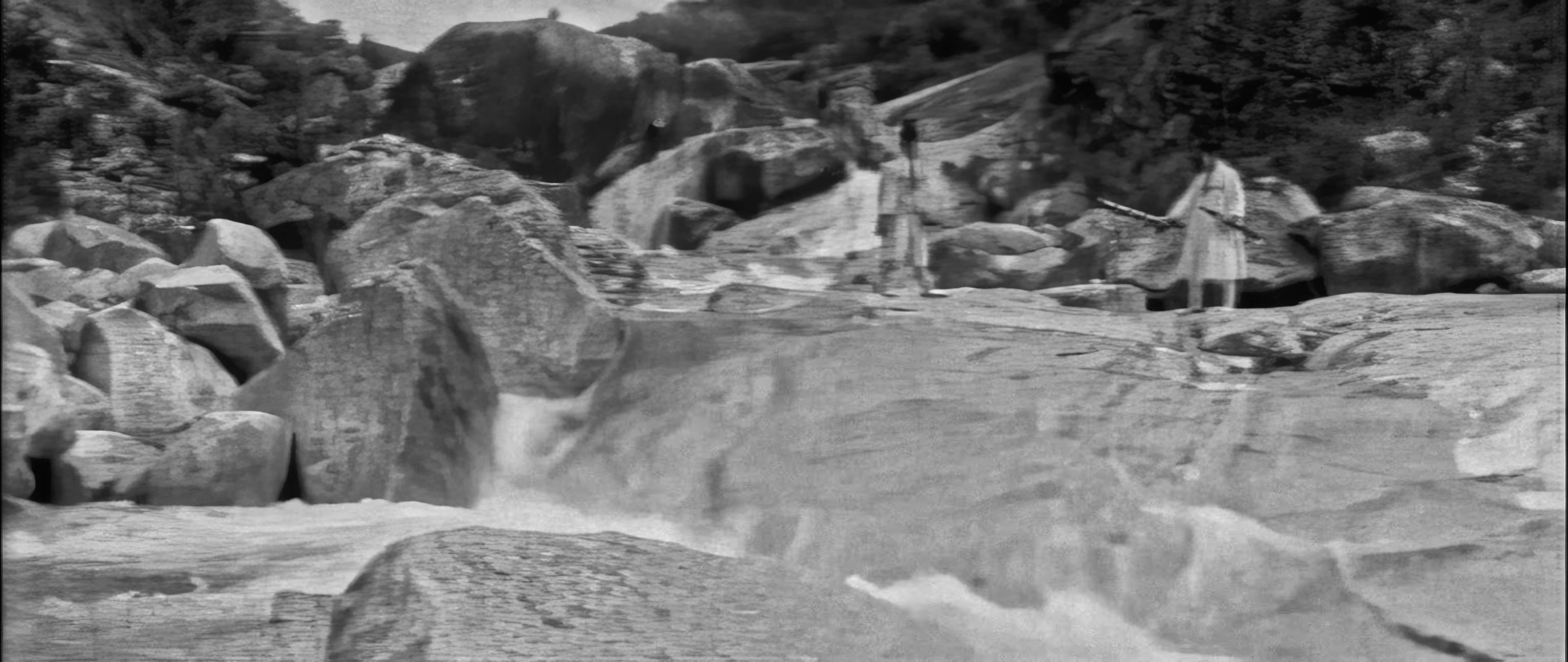
This sense personal rebellion may owe more to the jianghu sensibility found in the wuxia movies of King Hu than to the righteous nobility of the samurai film even if the ending strongly echoes chanbara epics in which the hero is displaced from his community and condemned to wander as a perpetual outlaw in a society which does not live up to his ideals. While staging beautifully framed action sequences such as fight at a rocky brook, Jeong undoubtedly draws inspiration from Hu in the use of trampolines and majestic jumps that have an almost supernatural quality. The sword fights are largely bloodless until the final confrontation but also violent and visceral. Gi-ryong’s henchman plays with a minion he feels has betrayed him by lightly scratching his throat before going in for the kill and such cruelty seems to be a hallmark of the Jang faction. But despite the seeming positivity of the ending in which a kind of solidarity has been discovered between Tae-won and the governor, the film ends on an ambivalent note with the fate of the nation still unknown as Lady Jang stoops to shamanic black magic to hold sway and darkness, the lingering shadows of authoritarianism, still hang over the swordsman even if he is in a way free as s rootless wanderer no longer quite bound by feudal constraint. 


A Swordsman in the Twilight screened as part of Echoes in Time: Korean Films of the Golden Age and New Cinema.

The Starting Point (원점, Lee Man-hee, 1967)

A hired thug and a sex worker dreaming of a new life are set on a collision course at mountain retreat in Lee Man-hee’s noirish thriller, Starting Point (원점, Wonjeom). A melancholy existential drama, the film nevertheless has a darkly comic absurdity and becomes for a time almost a satire of changing sexual mores and the anxiety surrounding the post-war population explosion while simultaneously hinting at corporate corruption in economically straitened times. 

Played in near total silence, the opening pre-credits scenes find the otherwise unnamed (the name given in the promotional material is never spoken) lackey (Shin Seong-il) raiding an office building with the intention of retrieving some mysterious documents the people who hire him later claim threaten to expose their “seven-year-secret”. The Lackey takes time to smoke a cigarette and read through some of the papers before putting them into a briefcase to make his escape but is soon met by a man with a rifle who challenges him. A fight ensues on the staircase from which the Lackey is able to escape, activating a rolling gate to get out of the building. But the other man keeps coming after him, managing to cling on the briefcase while his neck is crushed by the unstoppable motion of the shutter. 

Mirroring him, the unnamed Sex Worker (Moon Hee) is also intruded in a wordless sequence shot with the kind of realism seen in American independent and European arthouse cinema as she stares forlornly at the pretty dresses behind the glass in a small boutique before sadly making her way towards a streetlight near the Choseon Hotel where she wordlessly picks up a customer through suggestive looks and gestures. 

The Lackey knows too much, which is why his bosses want to take him out but for unclear reasons Mr Choi comes up with a bizarre and convoluted scheme which involves hiring the Sex Worker to pose as the Lackey’s wife during a honeymoon getaway to Mt. Seorak. What the Lackey thinks is going on or why the mountain is important is never really explained just like the nature of the seven-year-secret, but once there the film changes tack becoming a kind of ensemble mystery as the various guests each become suspicious of one another while the Lackey and the Sex Worker slowly fall in love for real perhaps bonding their mutual sense of existential peril and outsider status. 

In the liminal space of the mountain, both fear rejection by those around them who come to represent mainstream society, the Lackey because he has killed and Sex Worker because of her profession. Ironically, one of the other guests is a dodgy gynaecologist who makes a point of saying that most of his clients are sex workers from around the Choseon Hotel at least implying that he regularly performs abortions. He recognises the Sex Worker as a previous patient and tries to take advantage of her sexually but commits a breach of medical ethics by leaking her profession to the rest of the group who then shun her. When the planned camping trip encounters a snag seeing as only two tents have been provided and the obvious solution is for men to take one and the women the other, the women all immediately leave on the Sex Worker’s arrival refusing a share a space with a “fallen woman” in case they are somehow tainted by her shame. 

But then, the goings on at the mountain inn are strange in themselves. A middle-aged man who inexplicably doesn’t seem to have encountered a transistor radio before accidentally tunes into a news broadcast discussing the effectiveness of the contraceptive pill while the young people dance with wild abandon to music they don’t really understand. Meanwhile, the gynaecologist wades in when another of the women experiences terrible stomach pains insisting that he is “familiar with women’s issues” and informs the husband that his wife is pregnant which is confuses him because they only married the day before and he’s been a good boy so the news is perplexing. He spends the rest of the film counting dates on his fingers and at one point attempts to hang himself certain that his wife must have slept with another man before their wedding instead of maybe considering that the dodgy gynaecologist may be mistaken.  

When the couples are divided into separate tents, one guest quips that it’ll be good for keeping the birth rate down hinting at an anxiety about a new sexual freedom among the young coupled with the impact of the ongoing baby boom and its economic implications. The gynaecologist’s wife is the first to join in with the youngsters, but she’s also a rabid penny pincher making sure the newlywed husband pays for her husband’s treatment of his wife while intensely jealous constantly trying to keep the randy doctor’s attention off the other women. The sense of economic anxiety is echoed in the Sex Worker’s melancholy longing onto looking into the shop window while dreaming of opening her own hair salon though sex work is the only way she can support herself and leaves her with intense shame that like the Lackey exiles her from mainstream society. 

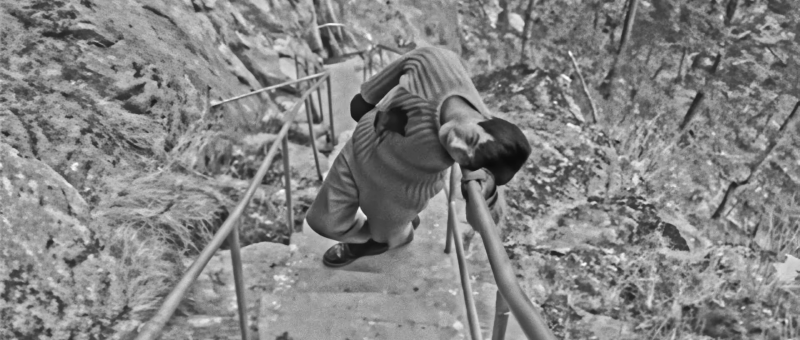
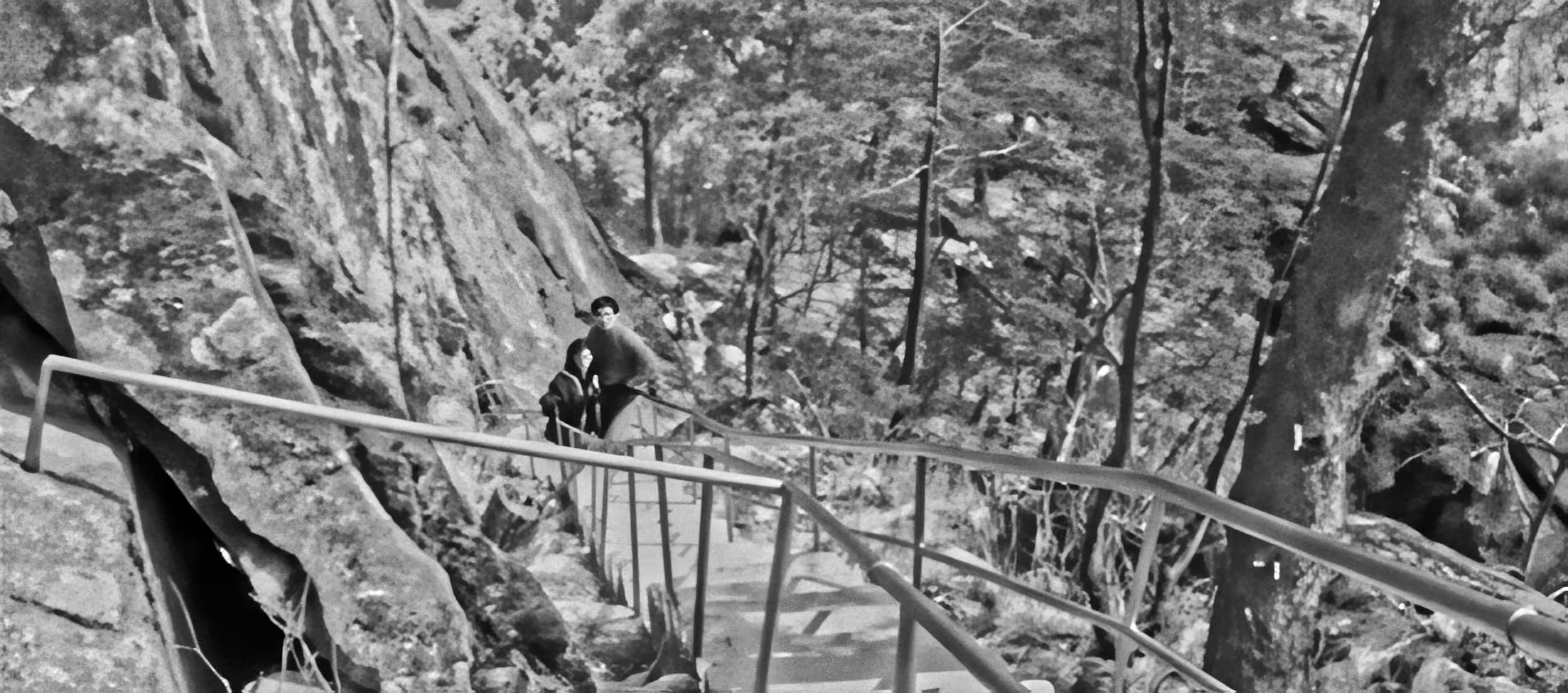
As she says while embracing her covert identity as a cheerful newlywed, she’s been looking up all her life and would like to look down for once which she ironically does atop the stairway on which the Lackey fights his existential battle with Choi and his minions. They each want to find a way to get off the mountain and return to the world, but are prevented from doing so by the forces that pursue them and will not let them go. Finally questioned, the Sex Worker is forced to admit that she knows nothing about the Lackey, not his name or where he lived or what he did for a living, only that he did not hate her which is as close to a declaration of love as it might be possible to get in this cold and dark world of exploitation and violence. Lee films with a noirish intensity and melancholy fatalism as the pair attempt to fight back against the forces which constrain them with the pureness of their love but later discover that, as they feared, all that is left to them are painful memories of momentary happiness. 


Eighteen Years in Prison (懲役十八年, Tai Kato, 1967)

Genre star Noburu Ando had a certain cachet in that he had been a yakuza prior to becoming an actor. He had in fact been the head of his own gang which at its high point had over 300 members and controlled much of the lucrative Shibuya nightlife scene. His first onscreen appearance was in a gangster movie in which he played himself. Rather than the jitsuroku epics he would later become associated with, Tai Kato’s Eighteen Years in Prison (懲役十八年, Choueki Juhachi Nen) essentially casts him in a ninkyo role as a noble if compromised former captain of the kamikaze squad who finds himself caught between the contradictions of post-war Japan and the American occupation. 

Indeed, in this as in many other yakuza movies set during the immediate post-war era, the Americans are really just the biggest gang. Suffering with survivor’s guilt, Captain Kawada (Noboru Ando) has set up an association together with former comrade Tsukada (Asao Koike) to look after he dependent relatives of men who fell in war. To do this, he has to resort to criminality raiding American boats for supplies such as sugar and rice which he redistributes to war widows and their families. His ultimate goal is amassing enough money to buy a patch of land in the town centre and do away with the black market which exploits the vulnerable replacing it with a legitimate market so the surviving family members can set up businesses to support themselves. 

Around this time, the association manages to track down the younger sister of one of their men who died as a kamikaze, Hisako (Hiroko Sakuramachi ), and discovers she is living in desperation having lost the family home to aerial bombing. As her mother is seriously ill and she needs money for food and medical treatment, Hisako contemplates turning to sex work and is almost assaulted by a gang of drunk and abusive American servicemen from whom she is rescued by a passing Kawada. This incident makes plain his resentment towards the occupation and sense that it is the American influence that is wilfully suppressing the efforts of the Japanese people to rebuild their society. It’s this resentment that lends a note of justification to Kawada’s decision to rob a nearby factory of valuable copper wire to get the money to save Hisako’s mother thereby saving her from falling into sex work and thereafter helping to achieve their ultimate goal of building the market. The raid, however, goes wrong. Kawada sends an injured Tsukada back to the association and is arrested.

In prison he discovers only more corrupt authority in which guards beat and torture prisoners, just another bigger gang. He finds out that block warden Hanya (Tomisaburo Wakayama) is actively accepting bribes and in cahoots with some of the inmates that attempt to terrorise newbies to the point that one attempts suicide by swallowing glass though Hanya refuses to call for help forcing Kawada and some of the other men to pull the alarm themselves. The sources of moral authority lie in the new college-educated deputy warden recently returned from five years as a POW in Manila, and a veteran yakuza with a grudge against Hanya who apparently had his girlfriend raped leading to her suicide. 

Though the film is titled eighteen years in prison, Kawada becomes eligible for parole in 1952 which is of course the year the occupation ends. By this point he discovers that Tsukada has abandoned their idealistic mission and turned full yakuza, building an immense red-light district on the land they bought for the market and making himself rich through the violent trafficking and exploitation of women. Eventually confronted, he tries to convince Kawada that the world has changed, that the post-war years of privation are over and that he sees only “the ghost of a nation that lost the war” rather than burgeoning new economy stimulated by the Korean War and an ironically a repositioned America now no longer occupiers but still somehow influential if leaving a vacuum a man like Tsukada may step into. It’s no coincidence that he threatens Hisako with deportation to a brothel in Okinawa he’s set up to service American servicemen in a place where the conditions of occupation are still largely in place. 

Tsukada clearly feels that he need have no more responsibility for his wartime conduct, roundly telling Kawada that the families of the fallen are not his responsibility and should “stop leeching off other people and start working for a living”. Hisako’s long lost younger brother Kenichi (Masaomi Kondo) who ended up alone on the streets after being conscripted as a student factory worker and returning to find his home in ashes, turns the blame back on the authorities reminding them that it’s their fault, they started the war the cost him his home and family and turned him into the half-crazed man of violence who immediately introduces himself as “King” on moving up from a juvie prison. Much of Kawada’s prison life is then given over to saving Kenichi, a representative of the next generation, from becoming mired in a life of nihilistic crime. 

In many ways, he remains a squad leader trying to atone for having sent so many young men to die by accepting the responsibility for their families while trying to protect those left behind from the vagaries of the post-war era including the amoral capitalism represented by the infinitely corrupt Tsukada. Dressed in a military uniform ironically pinched from an American soldier he goes on the rampage knowing that he has to deal with Tsukada himself in order to defend the post-war future from those like him who’ve apparently learned nothing much at all even from such recent history. Shooting from his characteristically low angles, Kato explores the seedy underbelly of the beginnings of the economic miracle while his noble hero does his best to offer a course correction to those who have already forgotten their responsibility not just to others but to those they left behind.


Samurai Wolf 2: Hell Cut (牙狼之介 地獄斬り, Hideo Gosha, 1967)

“We ronin must live without mercy” insists a fugitive on a quest for vengeance and riches only to meet his match in the justice-loving wanderer Kiba (Isao Natsuyagi) making his return for Samurai Wolf II: Hell Cut (牙狼之介 地獄斬り, Kiba Okaminosuke: Jigoku Giri). Like the second instalment in many series, Gosha’s avant-garde chambara largely follows the same formula picking up several familiar elements from the first film if giving them a new spin as Kiba once again finds himself caught up in intrigue provoked by the amoral venality of late Meiji society. 

In this case, he makes a rod for his own back by humiliating some swordsmen after catching them harassing a young woman, mocking them when they try to claim that their treatment of her is part of their “training”. Kiba saves the girl, Oteru (Rumiko Fuji), who has some kind of etherial quality and doesn’t quite seem to know what’s going on immediately throwing herself at Kiba who turns her down in gentlemanly fashion. Sometime later, he runs into a convoy of officials transporting criminals to the nearest judicial centre and stops to give the prisoners some of his own water explaining that that from the stream is polluted thanks to leaks from a nearby goldmine. In any case, Kiba is struck by the appearance of one of the men, Magobei (Ko Nishimura), who reminds him of the father who was killed by swordsmen he’d humiliated with his skill. 

Magobei is in chains for murdering the manager of the mine which previously belonged to the shogun but has now been shut down, its seam apparently exhausted. But like the toxins that poured into the river, the mine is a poison to society and in more ways than one. Magobei tells Kiba that he’s been set up. He was hired to kill the manager by a duplicitous gang leader named Jinroku (Bin Amatsu) who has found a new seam and has been operating the mine illegally taking all the gold for himself so obviously Magobei wants revenge. After seeing off an ambush, Kiba agrees to act as a bodyguard delivering both Magobei and the other prisoner, Kihachi (Out Yokoyama) who claims to be a big time bandit in trouble for robbing a samurai family, to the nearest city but secretly seems to sympathise with the injustice dealt to Magobei and the female prisoner who later joins them, Oren the Thistle (Yuko Kusunoki), who murdered a judge who killed her lover. 

Yet Kiba’s memories of his father cloud his judgment about Magobei who is definitely not a man worthy of his faith in him. “What good would pity do?’ Magobei asks, certain that compassion is a weakness and that if he were to give in to human feeling he would immediately be betrayed. The men misunderstand each other, assuming they are alike when in reality they are opposites. Kiba bets on Magobei’s humanity and loses, while Magobei assumes that Kiba will easily be won over by the riches to be found in the goldmine and help to wipe out Jinroku’s gang which is also a family of which Oteru is a member. “Life’s tough that’s how it is” he justifies, but Kiba cannot forgive him not least for his callous murder of a man who was only a frightened braggart and could not have harmed him and a woman who was otherwise blameless. Just as Sanai had in the first film, Magobei tells him that “one day you will be like me” a future that Kiba once again violently rejects. 

But then again he can never escape the world where goldmines pollute the rivers and money can buy anything, even the hearts of men. Just like his father, he’s pursued by the swordsmen he’s unwittingly insulted while discovering his desire to serve justice backfiring, eventually robbing him of the only thing he actually wanted just as it had at the end of the previous film. Even so, Kiba retains his sense of humanity and unlike so many jidaigeki (anti-)heroes refuses to give in to nihilism or despair. A little less avantgarde than the previous instalment, Gosha nevertheless conjures a world of dazzling violence in freeze-frame and silence while once again leaving Kiba the furious wolf to wander, a lonely figure in an unforgiving landscape.


Samurai Wolf 2: Hell Cut opens at New York’s Metrograph on Dec. 26 as part of Hideo Gosha x 3

Original trailer (English subtitles)