Sweet Rain: Accuracy of Death (Sweet Rain: 死神の精度, Masaya Kakehi, 2008)

“What do you think about death?” a charming grim reaper awkwardly asks, seemingly taking into account the answers given when deciding whether his “subject” should survive or if the untimely death they’re about to meet should be final. Adapted from the novel by Kotaro Isaka, Masaya Kakehi’s Sweet Rain: Accuracy of Death (Sweet Rain: 死神の精度, Sweet Rain: Shinigami no Seido) contemplates what it means to live well, how to go on living in the midst of pain and suffering, and finally how to know when it’s time to accept the finality of death. 

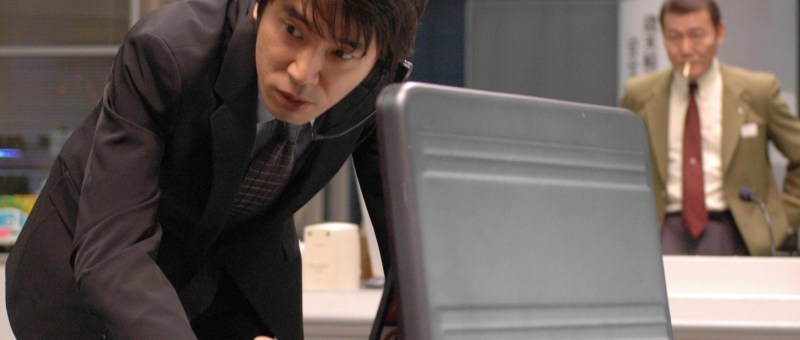
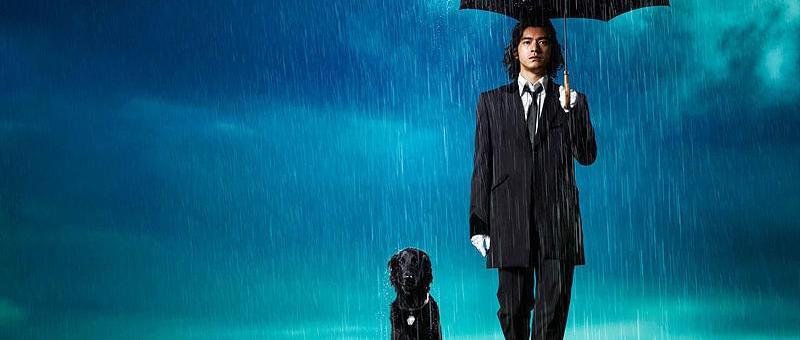
Chiba (Takeshi Kaneshiro) is a grim reaper and it’s his job to decide whether those involved in unexpected deaths, those not due to old age, illness, or suicide, should be allowed to live. According to his partner, who appears alternately as a black dog or raven, Chiba always chooses to “proceed” but something is obviously a little different with his latest job monitoring customer services representative Kazue (Manami Konishi) in the seven days leading up to her demise. Kazue is currently being harassed by a repeat caller who keeps calling the helpline asking for her personally and has recently graduated to pestering her about meeting up in person. It’s easy to see which way this could go, though luckily for her she ends up meeting Chiba who acts as a kind of protector when she’s hassled yet again by a different set of creeps in a park. As he gets to know her, Chiba learns of Kazue’s loneliness and sense of despair having endured more than her fair share of loss which has convinced her that everyone around her dies and she’s destined to be alone. But whether down to Chiba’s interference or otherwise, a surprising twist sees her offered a gig as a top idol star, leading Chiba to conclude that she has not yet fulfilled her purpose and should be granted more time. 

The expected romance does not quite take place, though Chiba is indeed becoming more interested in human life along with death while fascinated by music which he describes as humanity’s greatest invention. As we gradually gather, Chiba’s three jobs occur at lengthy temporal intervals, though the music store he frequents appears to be a constant and almost unchanged. Bar a hyper-realistic humanoid robot appearing in the final section in which Chiba is sent to assess an elderly hairdresser (Sumiko Fuji), these different temporal spaces are in another sense an extension of the present in which technology does not otherwise change substantially. Chiba picks up an iPod belonging to a petty yakuza on job two but continues to listen to CDs while the hairdresser seems to be doing her job the old-fashioned way and the kids that come to her store all collect Pokémon/Top Trumps-style paper cards. 

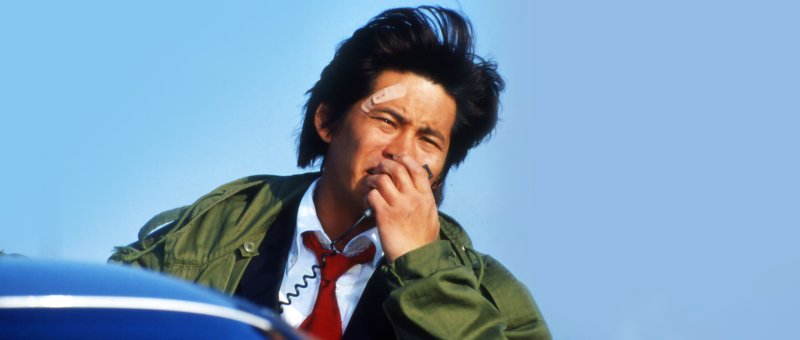
Yet Chiba is also a fish out of water, constantly confused by contemporary slang and with a strong tendency towards taking things literally. His discombobulation with language and custom is perhaps enhanced by the casting of Takeshi Kaneshiro who is half-Taiwanese and grew up in Taiwan speaking Mandarin as his first language, later working predominantly in Chinese-language cinema. In the audience perception he carries with him a quality of otherness that adds to the ethereality of his existence as a grim reaper. His appearance changes with each of his subjects, firstly appearing as a handsome young man, then as a grizzled yakuza complete with sunshades, and finally as a slacker student with each of his portals mirroring his destination from telephone booths to emergency exits and shopfront doors. As a grim reaper he has long unruly hair and wears a suit a loosened tie, but perhaps has little identity of his own and laments that he has never seen a blue sky because it is always raining whenever he is in the mortal world.  

The rain might well symbolise the pain and suffering around him as he lives among those who are about to die, but he himself feels that death is nothing special. As the old lady points out, that might be because it’s all he sees, he never visits people while they’re alive and knows nothing of life nor what it is to leave it. The old lady too experienced a lot of loss in her life and came to the conclusion that she was in some way cursed, severing her connection with those she truly loved believing she could only bring them harm and choosing to live all alone. “The sun in the sky’s nothing unusual but it’s important that it be there,” she adds, “death’s like that, maybe”. In any case she seems to have lived a long life that was happy enough even if it was “nothing special” and she can die with no regrets while Chiba too begins to learn something of the world’s ordinary beauty in his first glimpse of a sunny sky even if one overshadowed by the spectre of death. 


Trailer (no subtitles)
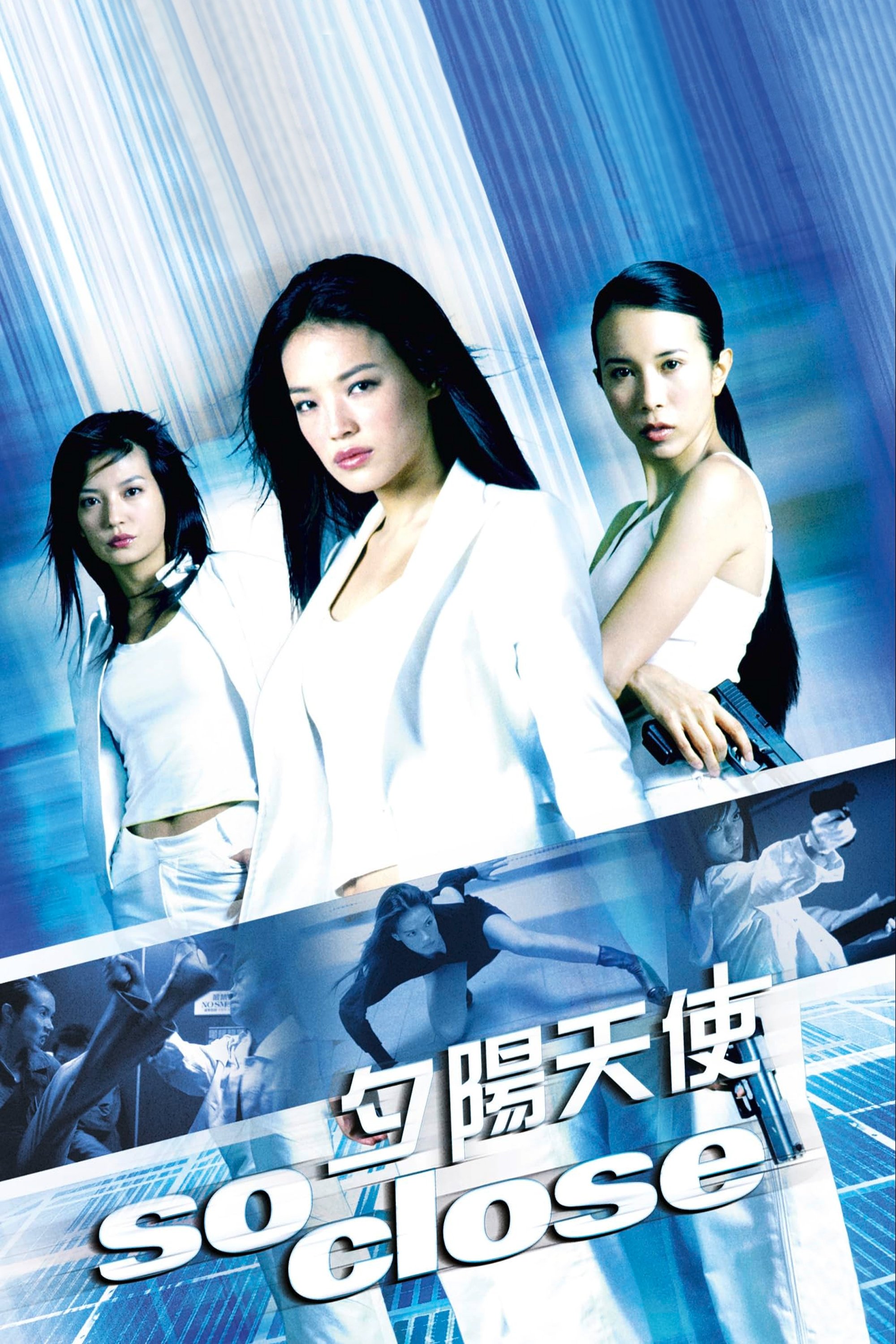
So Close (夕陽天使, Corey Yuen Kwai, 2002)

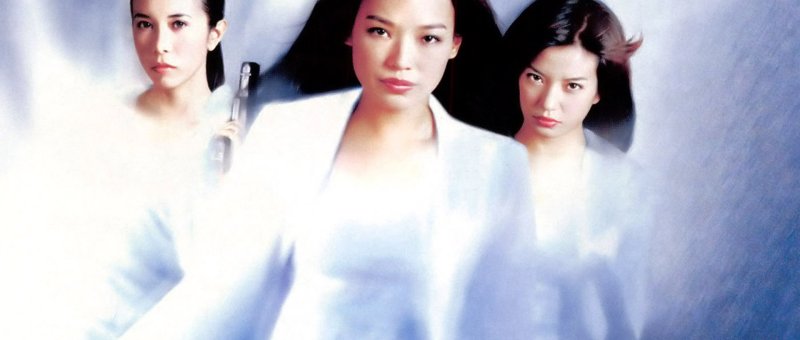
A latish entry in post-millennial cyber thrillers, Corey Yuen’s So Close (夕陽天使) finds two hit women sisters safeguarding next generation technology in keeping it out of the hands of corrupt businessmen who in fact murdered their father to get it. They claim he always intended to gift his all-powerful mass surveillance tool to the police, which either seems politically uncomfortable or incredibly naive, but have been using it themselves to earn their keep as killers for hire albeit justifying themselves in insisting on the moral bankruptcy of their targets.

In this case, that would be Chow Lui (Shek Sau) who according to “Computer Angel” made his “evil fortune” through drug smuggling. Infinitely smug, Chow thinks he has better technology but is soon proved wrong as Computer Angel admits she also sent the virus, or more accurately manifested it, to teach Chow a lesson. Yuen fills the film with 90s cyberpunk motifs, even having Computer Angel, later identified as Lynn (Shu Qi), jump off a building in a shot that is a clear homage to Ghost in the Shell while otherwise employing electronic imagery of cables and wires though the “World Panorama” system largely works through satellite.

In the opening sequence, Chow’s company is also revealed to be a global enterprise connected around a large table via the internet while futuristic systems allow him to have video calls with associates speaking Japanese and English. He suggests they simply pay the hackers to save their reputation which is apparently built on their world-class security systems though he himself perhaps remains sceptical abruptly shutting down his younger brother’s attempt to broker a deal investing in a company called Dragon. His office meanwhile has a bonsai tree in the background and his brother Nunn seems to have very close ties with a Japanese gangster hinting at a possible economic anxiety.

This fraternal conflict is eventually reflected in the fracturing relationship between the two sisters as field agent Lynn informs her sister Sue (Zhao Wei) that she wants to give up the killing trade after reuniting with an old boyfriend and deciding to get married. Techno wiz Sue has no other means of supporting herself and is resentful that Lynn always takes charge and won’t let her participate in missions, though Lynn is later vindicated when Sue’s hasty decision to take on a solo job goes just about as wrong as it can go. Meanwhile, their relationship is also strained by the presence of Hung (Karen Mok), a policewoman investigating Chow’s death who, as she later says, is strangely drawn to Sue who rollerblades around her at a record store with thinly concealed desire. 

There might be something in the fact that the actresses playing Sue and Lynn are from the Mainland and Taiwan respectively each performing their scenes in Mandarin but dubbed into Cantonese for the local release. They are indeed outsiders, firstly because of their unusual profession and secondly because of their all-powerful surveillance tool that allows them to carry out their missions yet also acting as a moral authority even if as Lynn later says they kill for money not conviction. World Panorama allows them to edit surveillance footage, placing fake avatars of themselves in the digital space and allowing them to otherwise recreate reality in a way that seems in keeping with the film’s otherwise low-key special effects which have an almost tongue-in-cheek quality parodying other more serious cyber thrillers from the mid-90s. 

The film’s English title comes from Yuen’s use of the Carpenters’ track (They Long to Be) Close to You, yet the Chinese is the more melancholy Sunset Angel which is most obviously refers to the film’s final scene if also perhaps calling time on the sisters’ roles of guardians of next-gen tech and avenging ghosts of the machine working out the bugs of corrupt gangster businessmen. In any case, they move through the “real” world like digital avatars performing incredible feats of human agility and not least in the high impact action scenes culminating in a lengthy katana fight in a tatami mat room which both echoes the cyberpunk aesthetics and reinforces an idea of corporatising colonialism finally blown away by the forces of female solidarity and an unlikely loves story between a soldier and a bandit. 


Trailer (English subtitles)

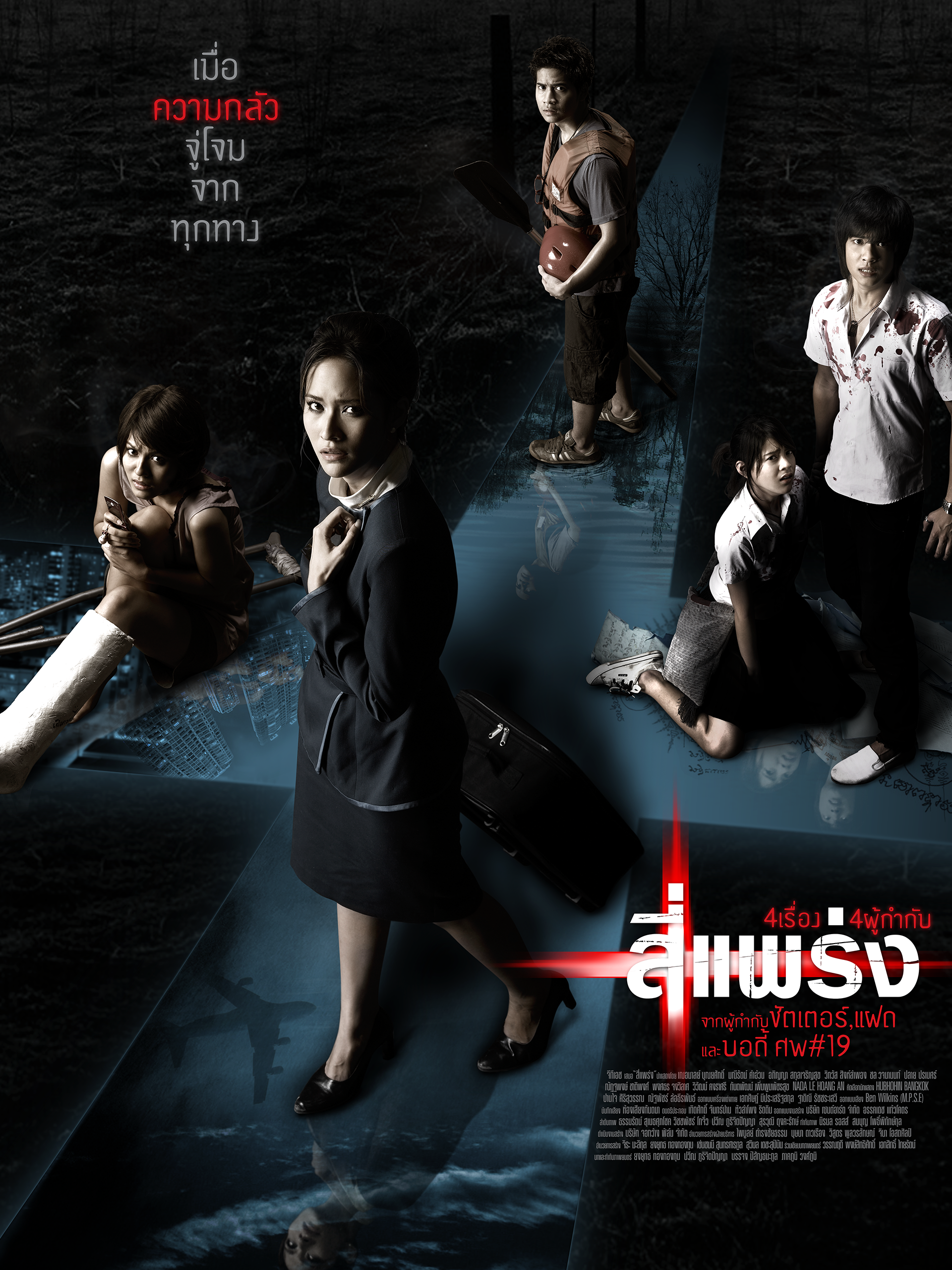
4bia (สี่แพร่ง, Youngyooth Thongkonthun, Banjong Pisanthanakun, Parkpoom Wongpoom, Paween Purijitpanya, 2008)

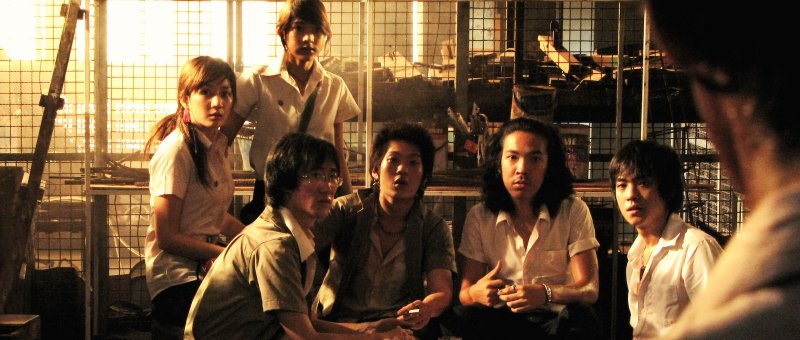
A quartet of Thai directors come together for four tales of horror in the appropriately titled 4bia (สี่แพร่ง). Though the stories are largely unconnected save for a few common details that locate them in the same universe, they each deal with a particular kind of anxiety and different sorts of ghosts who for various reasons are haunting the protagonists. What’s certain is that if you’re targeted by an otherworldly spirit, finding escape will not be easy.

That’s something quite obvious even in the first episode in which a young woman trapped alone in her apartment after breaking her leg in a horrific car crash begins chatting with a total stranger who sends her a random text message. Of course, replying to a message like that is not very sensible and even perhaps dangerous, as Pin (Maneerat Kham-uan) herself may release when she asks the (presumably) male messenger to send a photo only to be sent back the one she just sent of herself with the reply that he’s in it next to her. In any case, the real malevolent force here seems to be loneliness itself which is what motivates Pim to message back having already spent 100 days without interacting with another human being. The messenger has also spent the same amount of time alone in what he calls a “cramped space,” which is why he wants company. It’s gradually revealed that the pair share a kind of destiny which is an inversion of the kinds of meet-cutes you might find in a romantic comedy that makes Pim’s 100 days a purgatorial space of borrowed time in which she might as well have been a ghost herself.

But in the second chapter, Tit for Tat, it’s almost the opposite of loneliness that’s the problem as bunch of delinquent high school students and recreational drug users bully a bookish boy, Ngid (Nattapol Pohphay) and end up killing him. The boy then becomes a vengeful spirit and uses black magic to take them all out. Though one of them quips that they need to start smoking less weed, there’s no real question that the ghost is real or that the gang pretty much deserve what’s coming to them for having been so obnoxious in real life. The later part of the drama focuses on Pink (Apinya Sakuljaroensuk), a peripheral member of the gang who did try to tell the others to stop but otherwise did nothing to help Ngid and is punished for her sin of omission, though she does eventually think of a way to break the curse if only ironically in poetic justice for simply standing by and watching in the face of injustice. 

The third sequence, Banjong Pisanthanakun’s Man in the Middle is, however, a meta textual-delight that asks why ghosts in films always have long hair and pale faces. Four boys go on a rafting trip and swap campfire stories about how you should never sleep on the end when you’re close to the jungle in case a succubus comes to get you. When they get into an accident on the water and are separated, it leads to a sense of suspicion as some wonder if their friend actually died and is a ghost come to haunt them who, like in the Sixth Sense, may not know he’s dead. Though the twist maybe somewhat predictable, the tale is told with good humour and a sense of narrative cohesiveness that is lacking in some of the other chapters. 

Similarly, the final instalment Last Fright, is a chamber piece focusing on a stewardess who is unexpectedly charged with escorting a princess (Nada Lesongan) who’s fallen out of favour on her trip to Thailand where she spent her honeymoon. Pim’s (Laila Boonyasak) secret is that she’s been having an affair with the princess’ husband whom she met on their honeymoon flight which is why the incredibly imperious woman tortures her all the way through the flight before dying in a hotel room on arrival. Pim must, for reasons that don’t really make sense, escort the body back only to begin going out of her mind while haunted by the princess’ spirit. This is the only sequence which flirts with the idea of the ghost not actually being real but a manifestation of Pim’s guilt, or else a vengeful spirit come to punish her not for her secondary crime but for the transgression of adultery. Despite its potentially moralising overtones it’s a pretty chilling moment on which to end the film suggesting that in the end there is no real escape either from a vengeful ghost or your own questionable decisions.


4bia is available as part of Umbrella Entertainment’s Thai Horror Boxset.

International trailer (English subtitles)

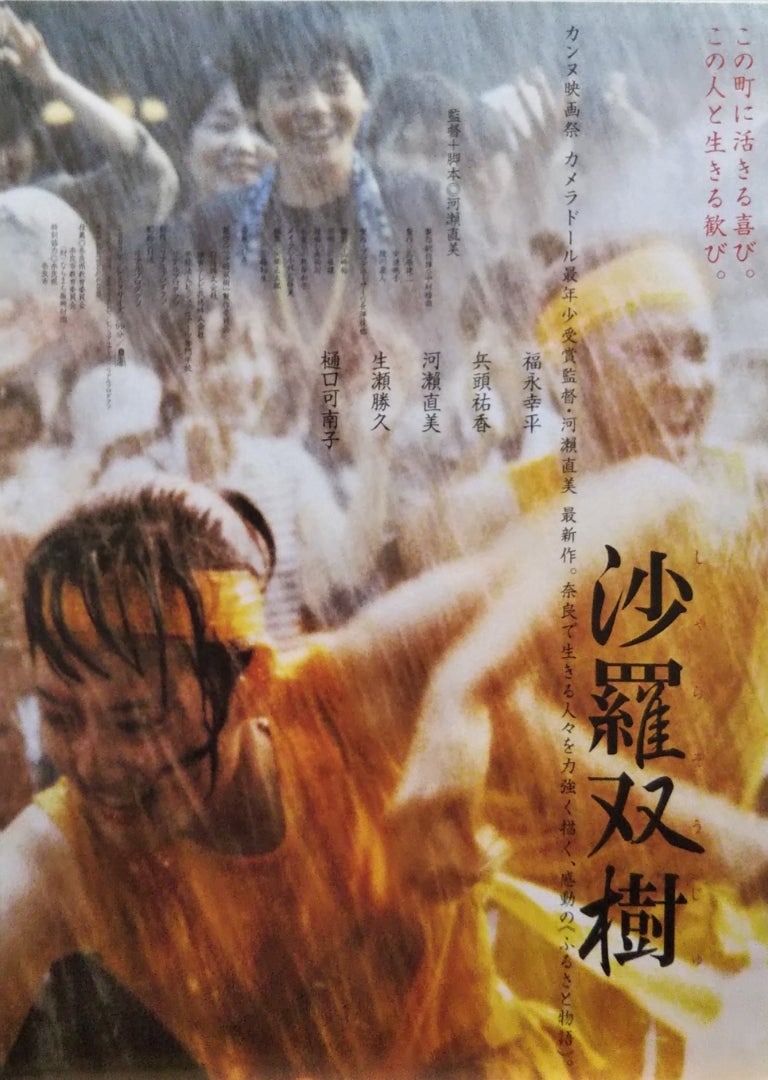
Shara (沙羅双樹, Naomi Kawase, 2003)

Familial absence and painful nostalgia once again take centre stage in Naomi Kawase’s third feature, Shara (沙羅双樹, Sharasoju), in which she also stars as an expectant mother still contending with tremendous loss. Set once again in the director’s hometown of Nara, Shara continues Kawase’s key themes in its gradual healing of a fractured family which finds itself at a point of departure, struggling to accept the path forward but finding strength in friendship and community spirit as they prepare to welcome a new life both figurative and literal. 

Shooting in her usual documentary style, Kawase opens with an ethereal handheld sequence wandering through an antiquated atelier until finding twin brothers playing with charcoal ink in a pure white room. Suddenly one of the boys, Shun, runs off and is chased by his brother, Kei, as the chanting of monks and the sound of bells accompany them marking this as a festival day. At some point, the boys switch places. Shun pauses to bounce off a car and realises his brother has turned a corner and can no longer be seen. He looks for him in vain before returning to his mother, making preparations at the temple, and explains what’s happened but Kei is not found nor ever seen again. 

An unannounced time jump moves us on some years into the future in which Shun (Kohei Fukungaga) is now a moody teenager obsessively painting a portrait of his absent brother, while his mother, Reiko (Naomi Kawase), is heavily pregnant and father, Taku (Katsuhisa Namase), is once again preparing for the festival. The family is, of course, defined by its absence, the unanswered question of Kei one they each actively avoid trying to address even as the impending birth of the new baby forces them into a reconsideration of their familial bonds. While Reiko tends to her flowers, which is to say to life, Taku busies himself to the street festival while only Shun remains definitively locked within his grief, isolating himself to finish the painting while tempted away from broody introspection by his pretty neighbour, Yu (Yuka Hyodo), who we learn is also contending with displacement and identity in learning that her mother is actually her aunt who had slightly problematic feelings for her older brother who like Kei simply disappeared one day and never returned. 

As often in Kawase’s filmmaking, the literal truths may be less important than the emotional or the spiritual. Kei’s body is eventually found, an event greeted with stoic resignation by the parents who must perhaps have been expecting it, while only Shun is thrown into chaotic despair in once again being confronted not only by his loss but the guilt and the finality. Both Reiko and Taku declare that it’s time to “face” things, something they have perhaps been refusing to do even while Shun was literally facing his brother in painting his portrait. Taku explains to his son that there are things which can be forgotten, others which must not, and more that must be. Painting a calligraphy banner with the characters for shadow and light, he tries to show his son a new way forward.

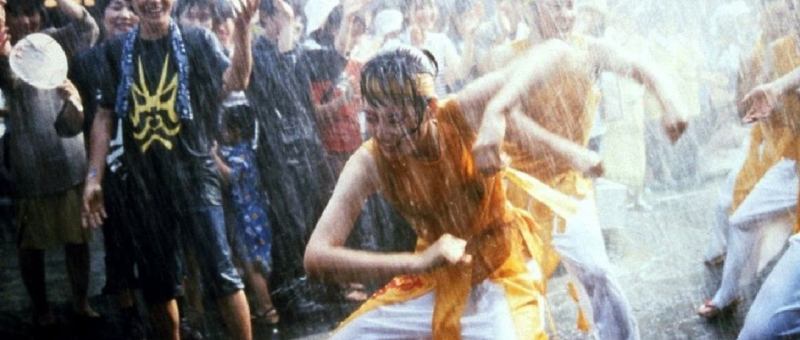
Yet it’s the local festival with its traditional Basara dance which finally allows Shun to find the path out of his grief. Kawase captures the local planning meeting with documentary rigour, Taku listening patiently while a local man explains the point of their festival is to make sure that the whole community is involved, something later made plain when Shun, hitherto a marshal, is invited to join the dance which continues even as the rain falls. Taku’s final speech in which he describes Basara dance as “a unique event in which each of us can shine our brightest” takes on new significance as the sun finally comes out. “When you’re offered the opportunity to shine you must grab it”, he concludes, hoping that the spirit of Basara dance will make its way into the rest of their lives. 

Elliptically structured and shot with Kawase’s trademark handheld, the film finds its way back to where it started as the chiming of the temple bell recurs with its air of anxious alarm, but is finally quieted, giving way to the peaceful summer sounds of the cooling breeze and ubiquitous cicadas as the family is perhaps repaired with the advent of new life, not replacing the old, but beginning again even in the midst of such unanswerable grief. 


Trailer (no subtitles)
Sasori (さそり, Joe Ma Wai-Ho, 2008)

Sasori had been dormant for a decade before being resurrected in this Hong Kong co-production directed by Joe Ma. She is, however, a very different Nami Matsushima (Mizuno Miki) who becomes less a feminist avenger than a sociopathic killer, albeit one fixated on revenge and with ambivalent feelings towards her former lover, Hei Tai (Dylan Kuo Pin-Chao), who evidently did not have enough faith in her to realise that she didn’t murder his entire family just because she felt like it.

Nevertheless, in contrast to other Namis, she did make the decision to do it and went through with stabbing Hei Tai’s sister in the heart right in front of him even if she did it to protect him from the crooks who’d invaded their home. Motives are never explicitly explained, but it’s later suggested that Hei Tai’s professor father may have been knocked off by a rival scholar/gangster researching “inhuman organ treatment”. In any case, the goons that break into her home sexually assault Nami and tell her the only way to save Hei Tai is to help them kill his father and sister. Unfortunately, Hei Tai does not seem to recognise the position she was in nor her transgressive love for him, so is filled with boiling rage and resentment. Curiously, Nami never actually explains either, but is by that point mired in a women’s prison where she contends with the sleazy warden (Lam Suet) and the cellblock’s toughest lady, Dieyou (Natsume Nana), through the medium of cage-based mud wrestling.

This Nami’s transformation is obvious when she rips the loose skull fragment from a woman with learning difficulties she’s befriended and uses it to kill Dieyou. The moment at which she kills Dieyou’s sister, a woman she has no quarrel with, solely to unbalance her rival is presented as a kind of climax in which Nami herself appears to get off on the act of killing. During this earlier stretch of the film, Nami’s victims are largely female and killed for petty reasons. Seemingly cowed and beaten down, she does what the warden says rather than opposing him or like other Nami’s stabbing him in an eye. 

This does, however, eventually allow her to escape if as a corpse rescued by a mysterious “corpse collector” (Simon Yam Tat-Wah) who gifts her a Japanese sword and teaches her kung fu so she can achieve her revenge. It’s at this moment that she becomes a kind of supernaturally powered embodiment of vengeance, but it’s immediately made clear that the only revenge she seeks is personal. Spotting a pimp kicking a sex worker in the street, she strikes him down but only tells the sex worker that she doesn’t plan to kill her too otherwise making no further attempt to help her. Ma then takes the action back to its manga roots, relying on obvious wirework to lend a kind of unreality to the fight scenes even if the hand-to-hand combat is generally more realistic. 

But at the same time, Nami steps into a more arthouse space in a meditation on time and memory that seems to be borrowing a little from Old Boy or perhaps 2046 as she walks into a bar where the barman tells her that he can hypnotise people to erase their memories though he doesn’t they should. Re-encountering Hei Tai who no longer remembers her or his past life as a policeman, she finds herself ambivalent about her revenge, on one level resenting him and on another wondering if she has the right to start over without the problematic fact of her having been responsible for the deaths of Hei Tai’s whole family. 

There are many things that don’t really make all that much sense, from the inhuman organ research to Hei Tai’s possibly selective amnesia. Nevertheless, Ma piles on the style with a particularly 2000s Hong Kong aesthetic with its neon lighting and woozy camera work but also adopts a retro sensibility brought out by the use of mainly post-sync sound in which the Japanese actors are dubbed into Cantonese. By the film’s conclusion, Nami has once again become a legend but this time a much less palatable one not so much avenger for an oppressed minority as a cold-blooded and sadistic vigilante interested in little more than personal revenge.


International trailer

Kakashi (案山子, Norio Tsuruta, 2001)

There’s a village in Japan that’s mostly inhabited by scarecrows. One of the last remaining residents began creating them to replace something that had been lost, fashioning effigies of those who had passed away and immortalising them as if clinging to a distant past long before the shadows of rural depopulation were cast over the village. In a way, it’s an expression of grief or at least a lament for a loss of community and a sense of increasing loneliness and isolation. 

Adapted from Junji Ito’s manga, Norio Tsuruta’s Kakashi is also in its way about grief and the way in which it can consume those left behind so that they too have no more desire to live. Dr Miyamori (Kenzo Kawarasaki) later explains that in the village they co-exist with death and he returned to his home town in the hope that he could save his daughter, Izumi (Ko Shibasaki), through its peculiar magic of resurrecting the deceased as human scarecrows. As he freely admits, he could not accept his daughter’s death and so has chosen to stay here in the village though alive himself rather than attempt to remake his life without her.

The village itself appears to exist slightly outside of the mortal realm as Kaoru (Maho Nonami) discovers on encountering the long tunnel that leads to its entrance. Her car breaks down half-way through signalling her liminal status as one who does not yet belong on either side. It’s not quite grief that’s brought her here but still a nagging sense of foreboding in that she’s come in search of her missing brother, Tsuyoshi, after discovering a letter from an old school friend, Izumi, next to his telephone. Kaoru appears confused as to why the letter should be there and travels to the village hoping for answers, assuming that Tsuyoshi (Shunsuke Matsuoka) may have travelled there in search of Izumi.

As the landlady lets her into his empty flat, Kaoru explains that she is his only family and there’s a suggestion that her attachment to him is unnatural, bordering on the incestuous. A policeman taking a look at the photo Kaoru hands him remarks that they look like a couple, which they do, leading her to stuff the photo back in her pocket as if she were embarrassed. To that extent, she’s come to reclaim Tsuyoshi, not just from death, loneliness, grief, and depression, but from Izumi or at least the spectre of her. In life, she feared that Izumi would take him away from her and at least in Izumi’s mind frustrated their romance out of romantic jealously. Dr Miyamori implies it was this sense of despair that contributed to her death and it’s clear that Izumi’s mother also blames Kaoru while Izumi accuses Kaoru of being forever in her way.

But then again, she did not bring Kaoru to the village and is not targeting her personally out of vengeance. Rather, she has moved beyond that as she finally’s about to become “herself” thanks to the village’s dark magic and the following day’s scarecrow festival, and therefore no longer needs to care about the resentments of her mortal life even if her father says that her evil spirit has empowered the town. There is definitely something quite creepy in this weird village with its shades of the Wicker Man in its strange ritual and humanoid effigies where improbable numbers of children softly blow pinwheels under a large windmill that seems to be moving time itself. Tsuruta even borrows a particularly eerie shot from Don’t Look Now and emphasises the liminal qualities of the village in Dr Miyamori’s advice that Kaoru leave as soon as her car is fixed otherwise she may no longer wish to.

The village is apparently full of those like him who are trapped but wilfully so because they no longer desire to leave. Kaoru attempts to help one of them, a young living woman from Hong Kong unable to let go of the memory of her late father whose scarecrow eventually tells her to go. It’s a place for those who have no other place to go to because they cannot let go of their grief and despair. Thus Kaoru is pulled towards the edge of the tunnel, not so much to free her brother as, in a way, herself by allowing her grief to consume her and consenting to live this empty life alongside death rather than allow herself to accept her loss.


Trailer (no subtitles)
Alone (แฝด, Banjong Pisanthanakun & Parkpoom Wongpoom, 2007)

A young woman returns to her apartment in Seoul to find the lights don’t work. She begins to feel uneasy, as if there’s a presence around her she can’t see or hear. Slowly, she moves towards the source of her discomfort, but the lights soon come back on. This isn’t a haunting, it’s a party. Her devoted boyfriend Wee (Vittaya Wasukraipaisan) has organised a surprise birthday celebration, though Pim (Marsha Wattanapanich) is indeed a haunted woman attempting to outrun her ghosts in a new country a world away from the nexus of her trauma.

This is just one of many ways in which Banjong Pisanthanakun and Parkpoom Wongpoom attempt to misdirect us while foreshadowing Pim’s eventual confrontation with ghosts of her past on returning to Thailand after her mother suffers a stroke and is hospitalised. A brief prologue sequence had seen her mother sewing a dress that’s oddly shaped, we later realise intended for her daughters who are conjoined twins. A guest reading the tarot at Pim’s party had hinted that something she’s lost would soon return, or else someone to whom she’d broken a promise would come back seeking recompense. This soon proves to be true, Pim haunted by the spectre of her sister Ploy (also played by Marsha Wattanapanich) who passed away unable to adjust after Pim’s apparently unilateral decision to separate.

It’s for this reason that Pim feels intense guilt, convinced that she killed her sister in breaking their promise to always stay together because she desired individual fulfilment. To that extent, some might wonder if the ghost Pim sees is “real” or merely a manifestation of her unresolved trauma. Wee eventually convinces her to see a psychiatrist, who is also a good friend of his, who tells him that Pim is suffering from a delusion while advising her to try to make peace with herself over her sister’s death if she wants to stop seeing the ghost. But perhaps there really is something dark and malevolent, a resentful spirit haunting her family home which is otherwise full of childhood memories. Pim flips through old photos all featuring her and her sister living their shared life of enforced closeness that is at first blissfully happy in its isolation but then suffocating and constrained. 

Nevertheless, though it’s Pim who’s left “alone” in being the one left behind, it’s also true that Pim’s actions have left Ploy “alone” too, only on the other side. The film plays into their nature as twins who represent two halves of one whole rather than two separate beings and locates the source of trauma in their separation as if they must in some sense be reunited in order to exorcise its taboo. In many ways, the psychological drama revolves around a quest for identity as Pim tries to reassert herself in the face of Ploy’s reflection, to become the whole rather than an orphaned part of it, while in other ways affecting a persona that is not quite her own. One cannot take the place of the other, just the new dog the pair get after moving to Thailand cannot replace their old one even if as Pim says they are otherwise identical. 

Yet Pim wonders if it was alright to desire an individual future, choosing herself over Ploy and thereby condemning her to a life of loneliness. To that extent, her dilemma is that of a contemporary woman torn between familial devotion and personal fulfilment, though of course, her words turn out to have a hidden implication suggesting that all is not quite as it seems even if she begins to confront her trauma by finally explaining the circumstances of her separation to an ever supportive but increasingly worried Wee. As the tarot reader had implied, perhaps all promises must in the end be fulfilled as the grim conclusion suggests, literally burning down the house as if to purify this space and restore order in uniting the sisters in an eternal embrace, alone together. Banjong Pisanthanakun and Parkpoom Wongpoom engineer a slowly creeping sense of dread in the gothic eeriness of Pim’s family mansion while edging towards the fatalistic conclusion in which a kind of balance is finally restored, the sisters are both separated and united once again two halves one perfect whole.


Alone is available as part of Umbrella Entertainment’s Thai Horror Boxset.

International trailer (English subtitles)

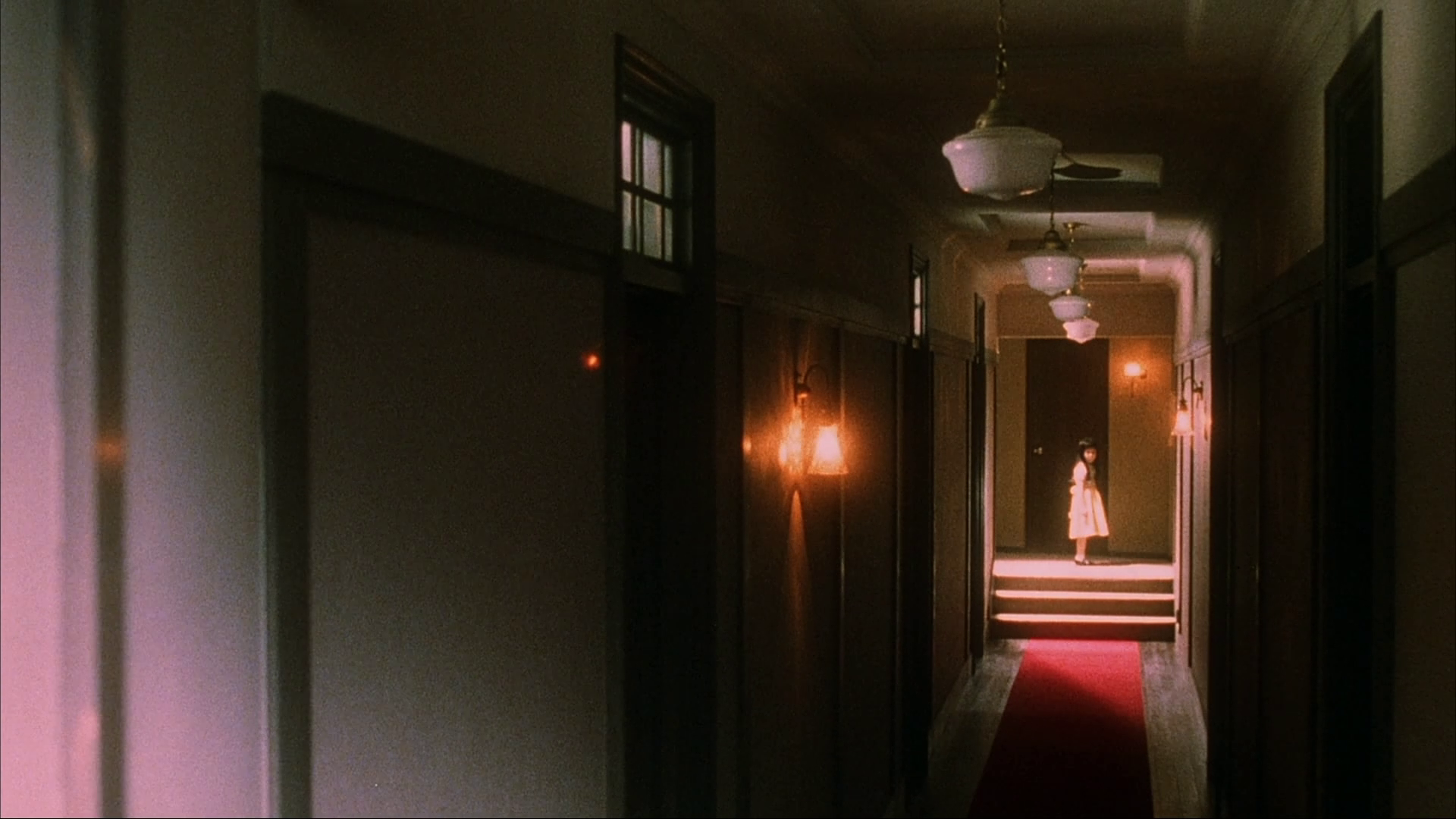
Dorm (เด็กหอ, Songyos Sugmakanan, 2006)

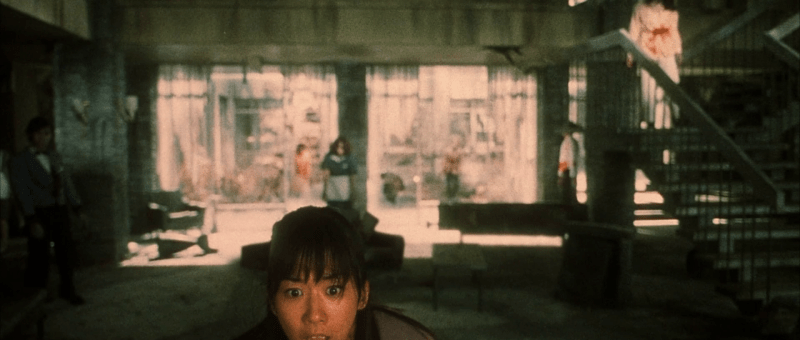
“Are you scared of ghosts?” one child asks another. Perhaps it’s an odd question. Ghosts are generally assumed to be frightening, but they can also in a way comfort though their presence may be painful. Songyos Sugmakanan’s poignant ghost story Dorm (เด็กหอ) casts the school at its centre as an infinitely haunted place, not just because of the associations it later takes on in the mind of the protagonist, but a prison-like space of emotional repression that nevertheless later becomes one of friendship and liberation.

It isn’t surprising that it feels like a prison to Chatree (Charlie Trairat) who has been abruptly sent there by his father (Suttipong Tudpitakkul) he feels as a kind of banishment for a very particular transgression. According to his father, however, it’s all because his school isn’t strict enough and Chatree spends too much time playing games and watching television. Intensely authoritarian, Chatree’s father soon alienates his son who bears intense resentment towards him not only for his severity and unwillingness to recognise his autonomy, but because of his failures as a father and eventually exiling of him because of the challenge he presents within this household. 

Further challenging notions of masculinity, Chatree’s father had told him that “a man must be able to live anywhere.” Though he had said the school had everything, the environment is grey and austere. Chatree is met by a rather cold woman, Pranee (Chintara Sukapatana), who takes him to the dorm where he will be sleeping which is in a large room with high ceilings and several rows of camp beds. Parnee cooly tells him that he’s expected to fend for himself, while his immediate neighbours proceed to haze him by telling him several ghost stories said to take place the school. Chatree’s school days continue in utter misery until he befriends Vichien (Sirachuch Chienthaworn), another lonely boy seemingly shunned by the others but as Chatree gradually realises actually a ghost unable to move on from the scene of his trauma just as Chatree is unable to move from his abandonment by his family. 

To that extent, the school is a kind of liminal place and it becomes clear that Pranee is also haunted by her own sense of guilt for something that turns out not to have been her fault after all but has, as the other boys say, turned her “weird”. The guilt that she feels has made her turn in on herself, become cold and repressed denying the boys the kind of maternal love and affection she appears to give them in flashbacks to her younger days. Chatree’s attempts to help Vichien are also attempts to liberate Pranee and himself from the limbo of the school and exorcise their traumas so that they may live again.

In Chatree’s case, his quest to help Vivhein is what allows him to make friends with the other boys, lifting the perpetual gloom of the school building and returning to him a sense of familial warmth that he felt that he had been denied in being exiled from his family. Though his resentment towards his father may in a sense ease, he does not seem to have forgiven him for his failures or transgressions but rather let his traditional family go in favour of friendship acknowledging that even the hardest times in life will soon pass if you have one close friend at your side. There are of course hints of queerness in the relationship between the two boys each of whom are in some way different and alike in their feelings of otherness and lack of belonging, while it may also in other ways explain Chatree’s father’s harshness towards him along with his preoccupation with traditional masculinity and obsession with academic success.

In that way unlike similarly themed nostalgia dramas, the school does not remain a purgatorial space and Chatree’s decision to remain within it is not an acceptance of limbo but of moving on in accepting himself and his identity and actively choosing a place to belong which is with his new friends rather than the repressive atmosphere of the traditional family as represented by his father. With shades of The Devil’s Backbone and Les Diaboliques, Songyos Sugmakanan conjures a gothic atmosphere of lingering dread but tempers it with humour and warmth in the genuine friendship between two lonely boys who in the end save each other and make what was once a prison a space of liberation.


Dorm is available as part of Umbrella Entertainment’s Thai Horror Boxset.

Trailer (no subtitles)

Nanayo (七夜待, Naomi Kawase, 2008)

Naomi Kawase had provoked a minor upset with her unexpected Grand Prix win for 2007’s The Mourning Forest and has since earned a reputation as a festival darling. Her followup film, 2008’s Nanayo (七夜待, Nanayomachi), however, failed to make much of an impact in the international festival scene and seems to have been more or less forgotten, considered among the most minor of Kawase’s disparate filmography. In some ways it picks up where The Mourning Forest left off as a young woman looks for meaning in the primitive beauty of nature, but it’s also a major departure in being the first of her films made outside of Japan and dealing with far broader themes from her familiar focus on familial disconnection to oblique references to the traumatic legacies of colonialism and the inefficiency of language as a tool for communication. 

The heroine, Saiko (Kyoko Hasegawa), arrives in Thailand it seems without much of a plan or a clear idea of where she’s going. Largely unable to communicate in any language other than Japanese, she wanders around lost looking for her hotel until someone is able to explain to her that she’s in completely the wrong place, and as the hotel is too far to walk she’d best take a taxi. The taxi driver, however, can’t understand her either but for some reason agrees to take her. Saiko falls asleep and wakes up sometime later to realise he’s driven her out to the middle of nowhere, belligerently insisting she get out of the car. Understandably fearing the worst, she manages to dodge past him and run off into the forest leaving her bags behind. Eventually she encounters a random Frenchman, whom she can’t understand either, who takes her back to the small guest house he’s staying at to learn Thai massage. Later the taxi driver, Marwin (Netsai Todoroki), turns up too and in a weird coincidence it turns out that he’s the brother of the woman running the massage school, Amari (Kittipoj Mankang). 

Despite having no common language, the four of them along with Amari’s half-Japanese son Toi (which in Japanese anyway means “far”) become an odd kind of family, relying on universal human gestures in an effort to communicate. To this extent, it is perhaps a shame that the film is subtitled in that the impossibility of true understanding through verbal communication seems to be a key theme. At one point, Frenchman Greg (Grégoire Colin) opens up to Saiko about his reasons for coming to Thailand, that he’d been in denial of his homosexuality and is finally beginning to accept himself. Perhaps he tells her precisely because she will not understand, but it’s an immense irony that her first question is to ask if the pretty bracelet on his wrist was a gift from a girlfriend. In their shared mix of broken English, she thinks he’s saying “lovely” when he’s really just trying to say that it looks like rain. 

Meanwhile, Amari has some Japanese, presumably learnt from Toi’s absent father of whom she gives no further details. Marwin later implies that she met him through some kind of sex work, and we later see him fall out with his daughter over something much the same in accusing her of being in a compensated relationship with a foreigner while she fires back that it’s none of his business seeing as he failed as a father in proving unable to support her financially. When Saiko makes the perhaps unwise decision to get in Marwin’s cab, it’s in the process of being vacated by a drunk and extremely rude Englishman who yells some vaguely racist abuse at him and then walks off with a Thai beauty. The prevalence of sex work appears as an extension of contemporary colonialism, something of which both Greg and Saiko may be accidentally guilty in coming to Thailand to look for something as nebulous as spiritual awakening, beckoned in by orientalist notions of Eastern mysticism. Amari, while never resenting Saiko, perhaps sees in her an echo of her absent lover, repeatedly asking her son if he’d want to meet his father or to visit Japan. The climactic fight which emerges seemingly out of nowhere is fought over Amari’s decision to send Toi to a temple to train as a monk, affirming that Saiko wouldn’t understand because her country is “beautiful and rich”, explaining that she wants her son to grow up rich spiritually not to be materialistic, though Saiko herself describes Japan only as “peaceful” lacking the warmth that she feels in the Thai people.  

Saiko of course cannot understand because she has absolutely no idea what anyone is saying, realising only that Toi has gone missing and everyone is so intent on arguing in several languages that no one’s bothering to look for him. She doesn’t understand why everyone’s shouting at her when she’s only a bystander, perhaps another comment on the legacy of colonialism, while to Marwin it seems obvious that the boy’s run off because he doesn’t want to be a monk and is sad thinking his mum doesn’t want him anymore. When Saiko finds him, it seems that he’s particularly preoccupied with whether or not his father loved his mother, perhaps beginning to understand the complexities of his birth and his dual nationalities. 

Once again adopting an elliptical structure, Kawase builds slowly towards the scenes which opened the film in which Toi and Marwin prepare to enter the temple as monks, the moment attaining a kind of spiritual catharsis which seems at odds with the conflicts of the preceding scenes which asked if Amari was right to separate from her son and force him to become a monk against his will. The temple scene is followed by a ritual dance similar to that in Shara in which Saiko seems to cast off her gloominess in spiritual release, building on earlier scenes in which she idly fantasised about intimate massages from a Japanese monk (Jun Murakami) apparently achieving an entirely different kind of enlightenment. Touch, Kawase seems to say, is the only true communication, leaving it to former soldier Marwin to expound on how we’re all different and speak different languages but we should love each other rather than kill in war. There is danger everywhere he explains, though Kawase’s gentle pan to the tranquility of life on the wide river might seem to contradict him.  


Trailer (no subtitles)

The Mourning Forest (殯の森, Naomi Kawase, 2007)

“There are no set rules,” according to the reassuringly steadfast head of a rural nursing home in Naomi Kawase’s The Mourning Forest (殯の森, Mogari no Mori). Uttering the phrase several times in many different contexts, the words prove truer than they first seem, eventually reassuring the grief-stricken heroine that there is no right way to feel or correct way to mourn, simply a gentle process of accommodation. An unexpected Palme d’Or winner, Kawase’s fourth feature sees her shifting into a more familiar arthouse register yet maintaining her trademark style as two lost souls, one old and one young, search for the “end of mourning” in the beauty of nature. 

The young one, Machiko (Machiko Ono), is a recently bereaved mother who has just taken a job at a local nursing home. We never find out exactly how her son died, in fact we only infer he did from the photo and incense on Machiko’s makeshift altar, but a later conversation with her presumed husband encourages us to assume that she blames herself for his death. Consequently, she perhaps recognises something in the dead-eyed vacancy of one of the home’s residents, Shigeki (Shigeki Uda), who crosses out the middle character, meaning 1000, in her name to make it read the same as his late wife Mako’s. Mako (Kanako Masuda) died 33 years previously, which according to the Buddhist priest visiting the facility means that her spirit will soon be leaving this plane for good, transitioning to the other world to become a Buddha.  

Something in Shigeki, whose name literally means “stimulation” though it is in fact the actor’s own, is awakened by the priest’s pronouncement, encouraging him to embark on a long-delayed journey. The priest too had been responsible for the initial connection between the two grieving souls, giving a perhaps insensitive lecture on the difference between living and existing which lies apparently in the ability to feel alive, something which neither of them perhaps do. For unclear reasons, Machiko agrees to travel with Shigeki to look for his wife’s grave, deep in the forest. Unfortunately they get into an accident on the way and while Machiko goes to look for help, Shigeki wanders off with the consequence that the pair of them eventually end up lost in the woods. 

“I was lost but now I’m here,” Shigeki finally explains, fighting his way through what was assumed to be dementia in his quest to say goodbye to his late wife for good before her soul leaves this world. The pair traverse somewhat difficult terrain, culminating in a painful episode in which Machiko begs the older man not to cross a wild river as if he were determined to cross the styx, or then again perhaps there is another explanation for the rawness of her distress. “We’re alive” they exclaim as they warm themselves by an elemental fire, settling the priest’s question once and for all as they press on in search of a grave and each of making peace with the past. 

As Wakako (Makiko Watanabe) had said, there are no set rules for mourning. Shigeki lived with his grief for 33 years and only found the courage to face it in the knowledge that there was no more time. Yet he reassures Machiko that “the water of the river which flows constantly never returns to its source”. In travelling with Shigeki, Machiko too begins to reckon with her grief, finding a kind of release in his catharsis and witnessing the proof of his long years of devotion suddenly given new purpose. She too is able to lay her mourning to rest in the natural beauty of the verdant forest.

Beautifully capturing the majesty of nature, Kawase shifts away from her trademark style swapping anarchic handheld for stateliness in the stillness of Machiko’s grief while quietly observing the ordinariness of the nursing home even as one resident relates her own grief in having lost a child. Filled with a deep sadness in its melancholy meditation on love, death, loss, and grief, The Mourning Forest is nevertheless a strangely uplifting, elegiac experience in which an old man and young woman find strength in their shared connection as they journey together towards the end of mourning and, perhaps, a rebirth in making at least a kind of peace with their grief and their longing.


Original trailer (English subtitles)