The Reason Why I’m Home (回家的理由, Chang Ming Yu, 2019)

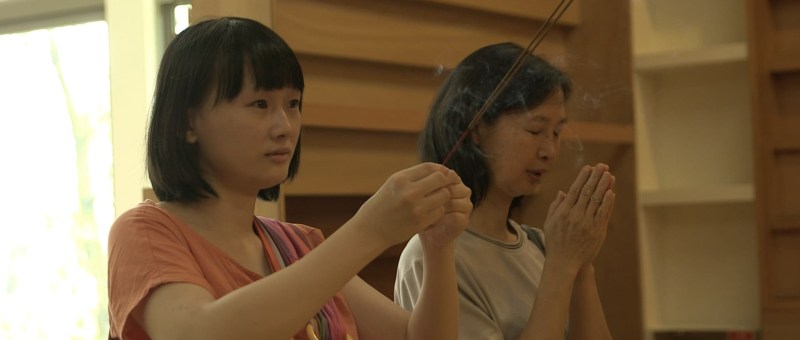
How do you learn to forgive after family tragedy? That’s a question Chen-yun the heroine of Chang Ming Yu’s documentary The Reason Why I’m Home (回家的理由, Huíjiā de Lǐyóu) begins to ask herself as she tries to come to terms with an extremely traumatic history while preparing to become a mother. As a close friend of his subject, Chang is both companion and chronicler, a quietly supportive presence as Chen-yun navigates these extremely difficult emotional waters, but also prompting her to think more deeply about the concept of family at the exact moment in which she begins to found her own. 

The reason Chen-yun returns home after a five year absence is that she is told her younger brother has been taken seriously ill. In fact, as it turns out he has passed away, apparently beaten to death by members of the cult her mother Fen-chueh belonged to though she also claims he had become a drug user. Fen-chueh accepts responsibility for her son’s death, but is said to have been under control of the cult’s crazed leader Chen-miao who according to Chen-yun brainwashed her brother to make him believe he was a bad person. Chen-yun suspects that like her he eventually wanted to leave but was unable to and was subsequently killed. She harbours a degree of guilt that she chose to leave him behind, telling him only that she was leaving to look for their father who had already escaped the cult. 

Expecting a baby with her policeman husband, Chen-yun is forced to deal with the fallout from the scandal of her mother’s crime, hounded by press determined to interview her about the case. Chen-yun’s father, technically the plaintiff in the case against Fen-chueh, signals his intention to sever ties with his former wife and advises Chen-yun to do the same while also telling her not to seem too happy which seems like an unfair request when she’s about to give birth to new life. After all as she puts it, life goes on. She hasn’t forgotten about her brother but you can’t go on mourning forever. Nevertheless, despite her earlier animosity in which she hinted that her mother had been abusive in her childhood and refused to say when questioned whether or not she still loved her, Chen-yun finds herself ringing Fen-chueh when she needs someone who can sign papers on her behalf at the hospital while her husband is unavailable. As healing an act as that might seem to be, it also has its share of awkwardness, a nurse accidentally asking a series of tactless questions necessary for the admission forms such as how many siblings Chen-yun has along with other details her mother is assumed to know but does not. 

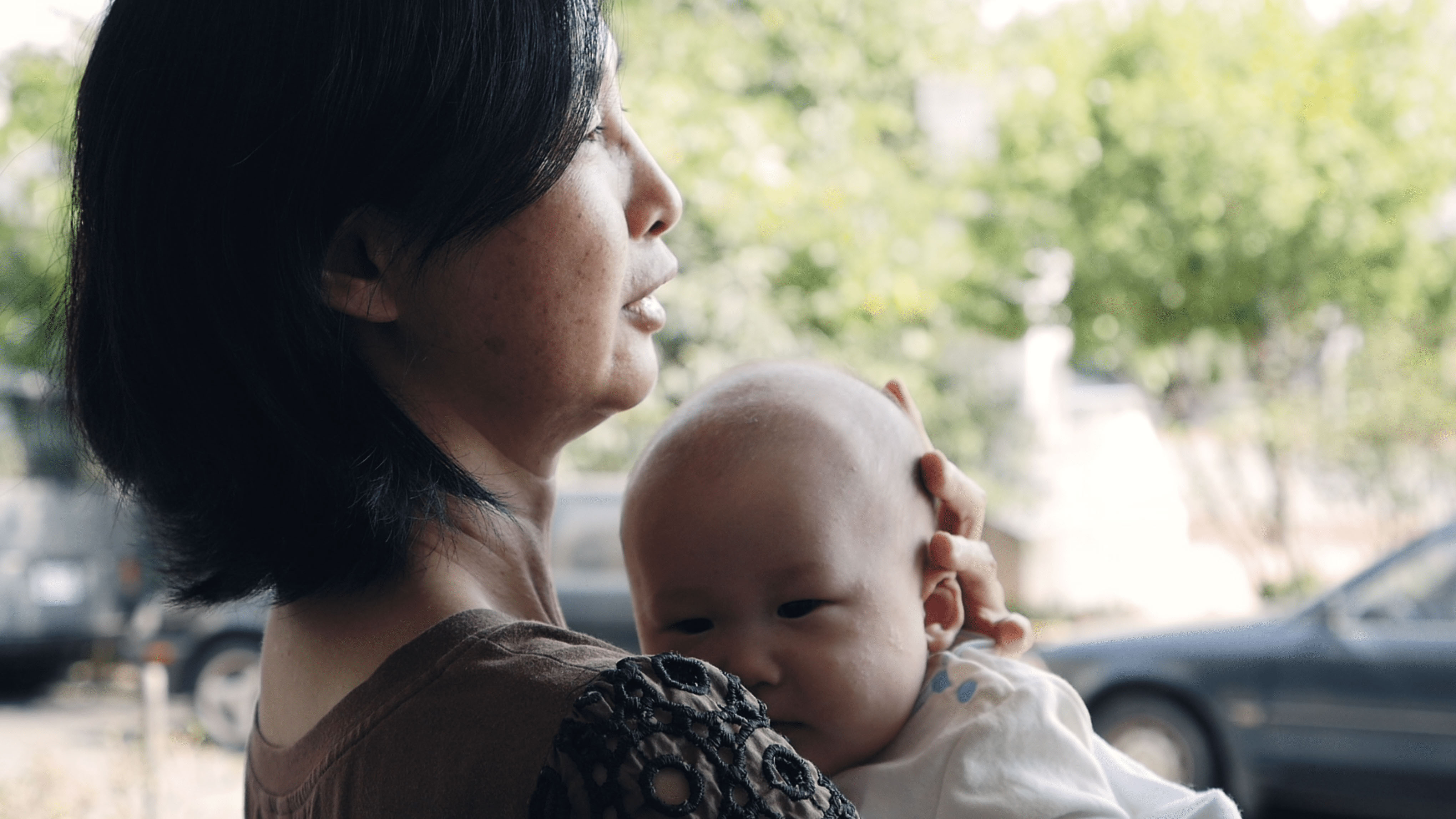
Given what we know of her family background, it is perhaps surprising that Chen-yun continues to allow Fen-cheuh back into her life, even asking her to look after her baby son. Nevertheless in the brief time before Fen-chueh must report to serve her four-year prison sentence, Chen-yun begins to repair their fragile maternal bond, coming to understand her mother a little more now that she has become a mother herself and perhaps learning to forgive her for her role in her brother’s death. “No one taught us how to be parents” Fen-chueh later confesses to Chang in a private interview, having realised that though she thought she was doing the best for her daughter she may only have been causing her harm. 

As a new mother Chen-yun cannot help but think of similar questions as she begins to bring up her young son in the midst of her family legacy, taking him with her as she visits her brother’s grave and to visit her mother in the prison so he’ll get to know grandma even while she’s away. Mixing observational footage with brief conversational sessions between a behind the camera Chang and an often emotional Chen-yun, The Reason Why I’m Home focusses not on the tabloid fodder of the crime with its cruel cultists and legacy of abuse but on the slow process of healing as Chen-yun learns to forgive herself and her mother while repairing their fragile family bonds as she does her best to raise her son in love and safety.


The Reason Why I’m Home streamed as part of this year’s San Diego Asian Film Festival.

Original trailer (English subtitles)

The Age of Awakening (前進, Ke Chin-Yuan, 2018)

Taiwan is now a prosperous society regarded as most the progressive in Asia, yet for some that prosperity has come at too high a cost. Ke Chin-yuan’s documentary The Age of Awakening (前進, Qiánjìn) looks back over the last thirty years and wonders how it can be that in a little under half a century humanity has managed to “devastate this beautiful, mountainous island”. Tracing the links between the authoritarian past and the origins of eco-activism, Ke is nevertheless keen to remind us that the environmental costs of unchecked capitalism are not a local issue. 

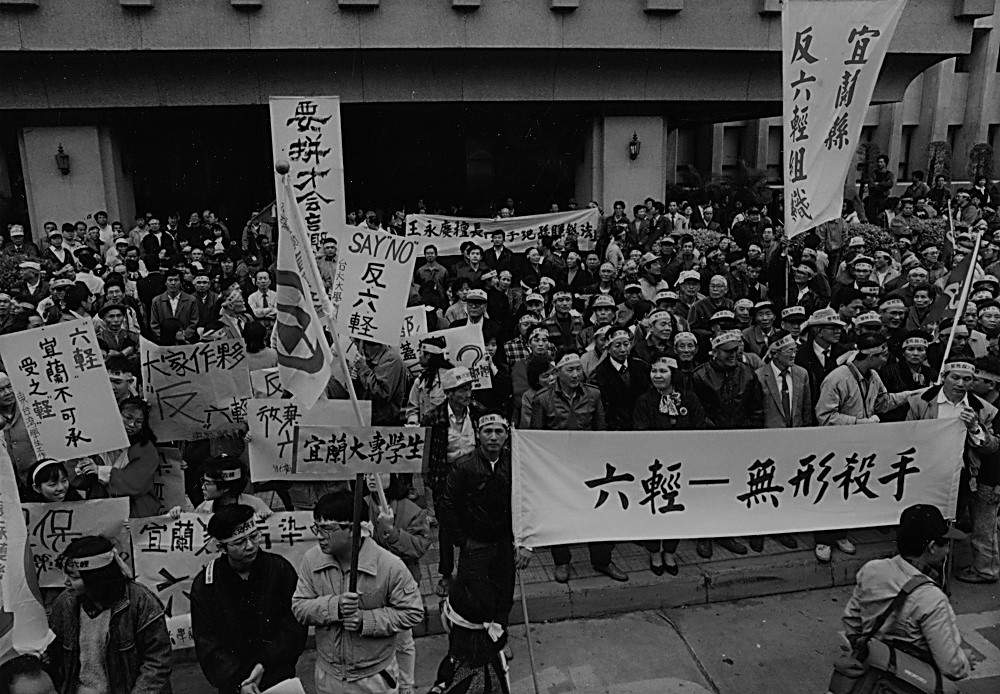
Ke cites the titular “awakening” at the tail end of the martial law era, explaining that the picturesque coastline where he first picked up a camera was forever ruined when the area was re-designated as an industrial park. His own eyes were awakened to the environmental costs of development when local residents rose in opposition to the building of a petrochemical plant, apparently a key part of the nation’s economic strategy. Charting the resistance towards the DuPont plant in Lugang and the LCY Chemical Corp in Hsinchu, he uncovers the hidden link of environmental harm and authoritarianism as centralised government and a prohibition on protest largely prevent the local community having a say over their own land. Though some may have been glad to see the plants arrive, misled by false promises of good jobs and the benefits of development, they were soon disillusioned by the reality in which industrial pollution poisoned the sea life on which the local economy was otherwise dependent while also destroying farmland and leaving an acrid, near unbearable smell in the air. 

As one of the protestors puts it, all they want is breathable air and drinkable water. If your government cannot guarantee you such basic rights, then what really is it for? Yet the government, Ke seems to suggest, is minded to make a tradeoff and thinks this is an acceptable price for the prize of economic growth. Seeing the imposition of the plants and misinformation surrounding their foundation as yet more evidence of the various ways in which those with the least power suffer most under authoritarianism, Ke centres the awakening to environmentalism as a cornerstone of the movement against martial law in which communities sought the power and freedom to be able to advocate for their rights on a local level.

Yet as he points out the environment is never just a local issue. The protestors may be successful in keeping the plant out their town, but maybe the plant gets built the next town over where they perhaps aren’t so lucky possibly because they have less sympathetic political leaders keener to toe the government line. Taiwan is a small island, and at least according to some you can’t ever really be far enough away to escape the effects of industrial pollution. Yet even when prevented from building in Taiwan, local companies simply shift overseas to other, even less empowered, areas of Asia where the same thing happens again. The poor are misled by offers of good jobs only to find dead fish washing up on their shores, eventually mounting protests against the unfair imposition of having a chemical plant built on their land. In Taiwan, meanwhile, the issue is even thornier with large developments built on territory which belongs to the indigenous community. 

Nevertheless, the drive for economic development continued after the martial law era. According to another protestor, it’s a matter of conscience rather than technology with the choice to favour the economy over the environment seemingly irreversible even when major parties win on an economic platform and govern with the knowledge that such policies have widespread public support. So, Ke asks, why is the government so unwilling to listen when the idea that the environment itself is also a basic human right is almost a given? What has actually changed in the last three decades with Taiwan’s transition to democracy? Not enough, according to his veteran activists, but it’s not all doom and gloom. Awareness has improved, people care more than they used to. They’ve been ‘awakened” to the issues in all of their complexity and Taiwan has a lively, diverse and intersectional activist scene in which environmental concerns are very much part of a social justice movement full in the knowledge that the environment is never just a local issue. The age of awakening may have come to an end, but the age of action is only just beginning. 


The Age of Awakening screens on 6th December at London’s Rio Cinema as part of Taiwan Film Festival UK 2020.

Original trailer (no subtitles)

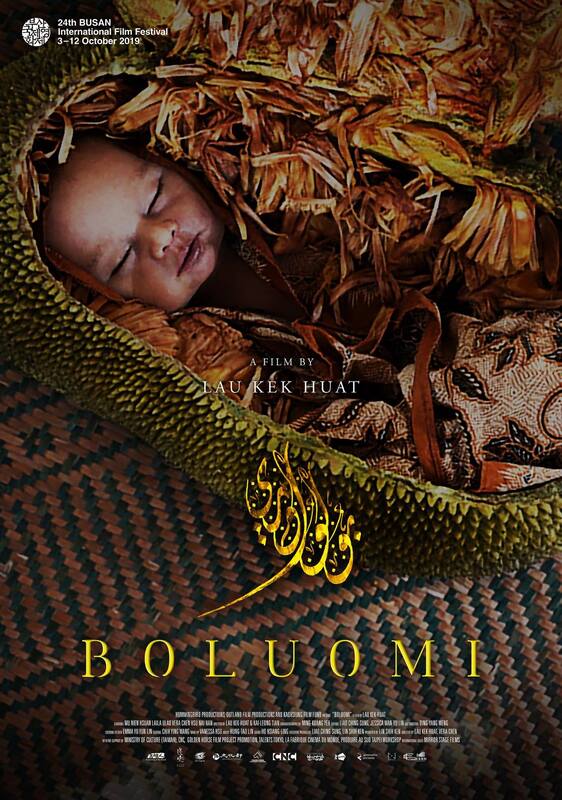
Boluomi (菠蘿蜜, Lau Kek Huat & Vera Chen, 2019)

Legacies of trauma and displacement frustrate the connection between two floating youngsters in Lau Kek Huat & Vera Chen’s poetic drama, Boluomi (菠蘿蜜, Bōluómì). Making a direct connection between the Malayan Emergency and a sense of rootlessness in the contemporary generation, Lau & Chen send their conflicted hero overseas in an attempt to plant himself anew but even there he discovers himself merely another kind of other even as he forms a tentative bond with a similarly displaced woman rendered still more marginalised by her undocumented status and inability to speak the language. 

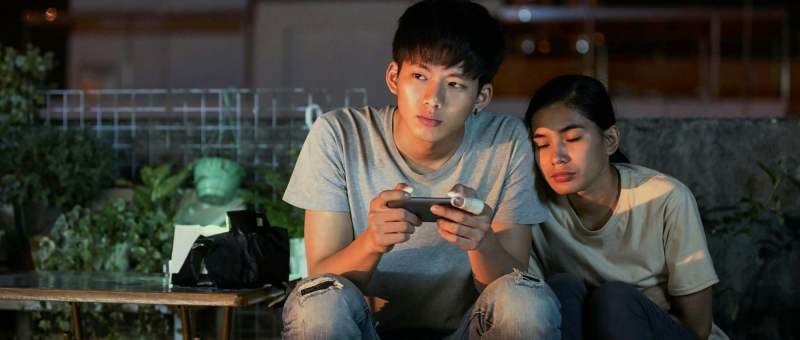
The film opens with the central trauma which is itself one of many as a child is born to a communist guerrilla fighter, Gyun (Vera Chen), and is then abandoned in the forest hidden inside the shell of a jackfruit or “boluomi” as is the custom apparently intended to ensure the child’s survival. In this case the child does indeed survive and like the opening of a fairytale is rescued by an older muslim Malay couple who have no children of their own and decide to adopt him, giving him the name “Mi” inspired by the unusual circumstances of his birth. Segueing to the present day we’re introduced to the hero, Yi-fan (Wu Nien-hsuan), just as he’s been humiliatingly stopped at customs on his return to Taiwan where he is studying agriculture because the homemade sambal his mother gave him is apparently too fragrant for the authorities’ taste. They won’t meet until later, but it’s at the airport that he first crosses paths with Laila (Laila Ulao), a young woman from the Philippines escorted out as one of many “carers from South East Asia” though as we later discover her true destination is a local massage parlour where she works as a cleaner in order to send money home to her family. 

Connecting the two timelines through a fragmentary dream we can assume that the abandoned child is Yi-fan’s father and that his double abandonment, later taken away from the loving older couple he believed to be his parents when his birth mother resurfaces, is responsible for his rage and fecklessness which has in turn left Yi-fan angry and resentful. The legacy of the Malayan Emergency is also perhaps connected to his feelings of alienation as a member of the Chinese minority, denied a place at university he feels solely on the basis of his ethnicity. Yet when he gets to Taiwan he’s suddenly not “Chinese” enough and incongruously finds himself speaking Malay even if there’s a double irony in being told that he should speak Chinese while in Taiwan. His professor with whom he seems to be on slightly awkward terms, perhaps another manifestation of his suspicion of male authority figures, pours cold water on his suggestions of finding a way to stay in Taiwan by opening a business instructing him that diaspora students have a duty to go home to stimulate social change. 

In a rather pregnant metaphor, the teacher’s opening lecture concerns foreign fruits successfully transplanted to Taiwan but also uncomfortably references viruses lurking in the soil, while Yi-fan’s attempts to grow a hybrid boluomi tree by grafting the Malaysian plant onto the Taiwanese eventually fail in parallel with his frustrated relationship with Laila who finds herself equally rootless while attempting to care for a fragile friend trafficked from Vietnam as a mail-order bride and now suffering ill heath but afraid to get treatment because of her status as an undocumented sex worker. Yi-fan befriends Laila by becoming an interpreter, helping her at the post office by translating into their shared language, English, and thereafter deepening their connection through the similarities found in Malay and Tagalog. Yet Yi-fan’s simple dreams of romance are frustrated by the world in which they live even as the pair bond through a shared sense of continual displacement. 

Try as he might, Yi-fan can’t make the boluomi grow, though it seems Laila could, putting down firmer roots while Yi-fan remains perpetually on the margins unable to escape the legacy of loss and alienation even in wilful migration. Struggling to survive in the precarious, largely hidden migrant worker underclass, Yi-fan and Laila’s romantic fantasy can never be more than just that though eventually comes full circle with another boy abandoned in the forest and a tree finally taking root.


Boluomi streams in Poland until 6th December as part of the 14th Five Flavours Film Festival.

Original trailer (English subtitles)
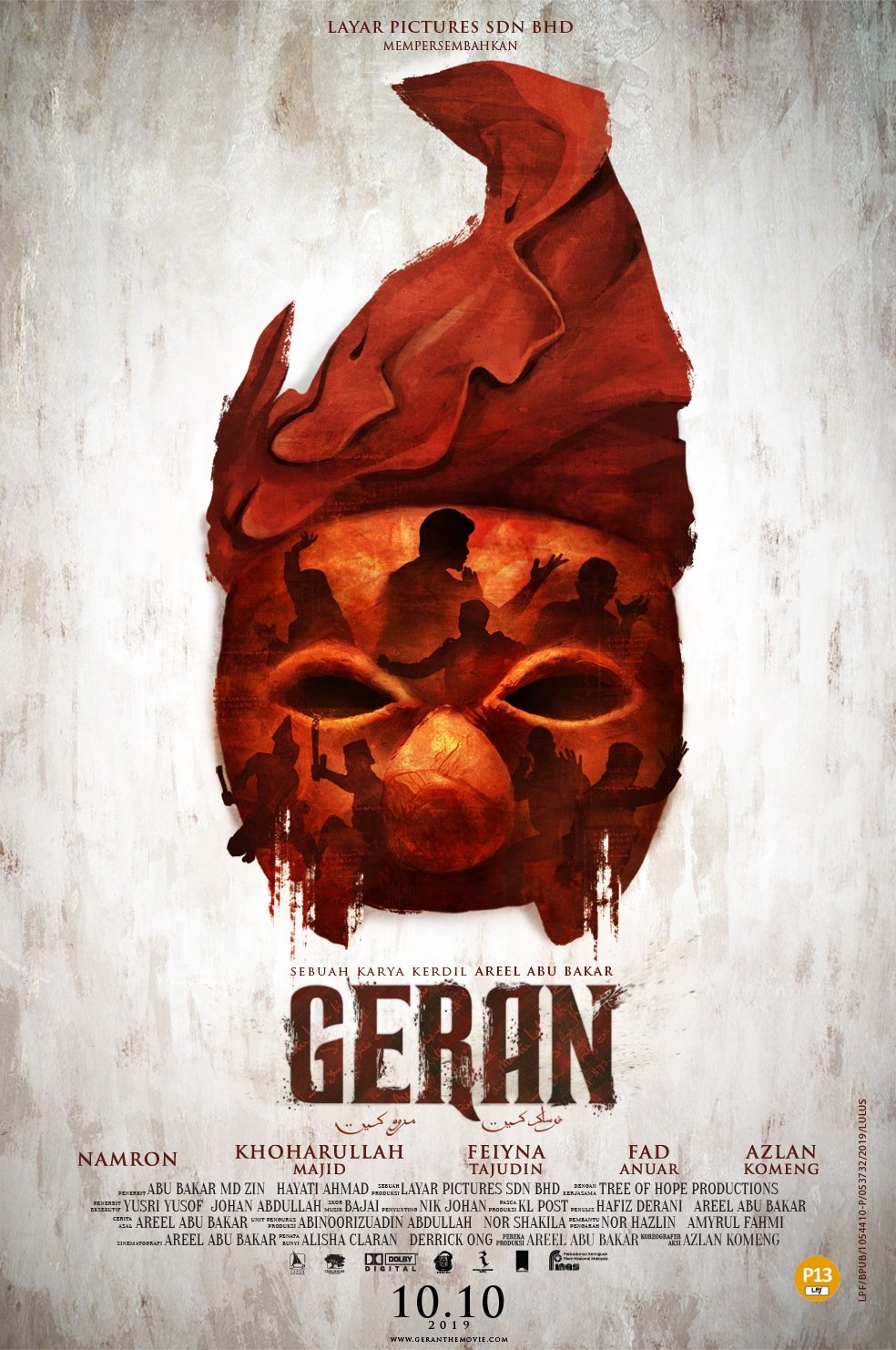
Geran (Areel Abu Bakar, 2019)

“Our family is not merely living for the love of wealth, but for love of a family” according to the late matriarch of the family at the centre of Areel Abu Bakar’s spiritually imbued martial arts film, Geran. Showcasing the Malaysian art of silat, Geran finds the family at the mercy of an increasingly corrupt and selfish society, stoically maintaining their “heritage and dignity” in the face of constant encroachment by the destabilising forces of evil in the form of violent and greedy gangsters.

All the trouble starts early one morning when sister Fatimah (Feiyna Tajudin) discovers that the deed to the family home is missing and concludes that her delinquent younger brother Mat Arip (Fad Anuar) who has not yet returned has most likely taken it as collateral for his gambling debts. Patriarch Pak Nayan (Namron) is not too worried, after all there’s nothing they can do with a deed that’s in his name and would need his permission to transfer, but soon enough the goons turn up only to get a rude awakening, quite literally kicked out by Fatimah who is more than capable of defending herself. They won’t stay away for long, however, because Mat Arip has played right into the hands of arch gangster Haji Daud who has unfinished business with Pak Nayan and an insatiable need to acquire all the land in town. 

The family’s prowess with silat is in many ways presented as an extension of their Islamic faith, a deeply spiritual act which connects them to their land and their culture. There’s not a little irony involved in the juxtaposition of older brother Ali (Khoharullah Majid) training with his mentor and Mat Arip gurning frantically on the fringes of a street fight, a sordid bastardisation of their noble art further sullied by the fact Mat Arip has placed a bet on the match’s outcome (which as we later discover is also rigged). Ali meanwhile remains pure hearted, sure that justice will triumph in the end while determined to defend himself and his family from the corrupting forces which surround them. 

As we discover, Haji Daud’s venality is a direct mirror of Pak Nayan’s goodness, a revenge quest born of his own dark heart and insecurity. Yet he remains a shadowy figure, hiding in back rooms while sending his minions to fight on his behalf. Mat Arip is reminded that debts must be paid, something his spiritually minded family probably agree with even as they continue to forgive him while hoping he’ll be able to free himself of his appetite for self-destruction though it does not appear there is much else out there for him other than his life of vicarious thrills. Unfortunately for him, he’s mired in a macho posing contest with Haji Daud’s equally bored, though presumably better resourced, nephew following a drag racing altercation that eventually gives him pause for thought in robbing him of his car. 

“God’s law is inescapable” Ali echoes, assured that Haji Daud’s crimes cannot go unpunished in a cosmic if not an earthly sense and he will someday pay for his deliberate exploitation of the miseries of the poor. Targeted by goons, the siblings get ample opportunity to show off their silat skills, Fatimah chased through a marketplace, eventually assisted by friendly stall owners shocked at her near lapse in taking a cleaver to one of the gangsters, while Ali goes on-on-one with Daud’s chief minion before going on all out assault to rescue Mat Arip realising that he too has probably fallen victim to attack.

The voice of Ali’s mother eventually reminds him that his successes come not only through his own action but through the prayers of those who love him, reinforcing the importance of familial solidarity as the siblings commit themselves to rescuing Mat Arip while forcing the gangsters into retreat. A worthy showcase for the art of silat with its high impact, innovatively choreographed action scenes, Geran is also a potent spiritual drama in which the family does its best to save itself as a means of saving others, holding the line against the Haji Daud’s of the world with little more than bare fists and incorruptible integrity. 


Geran streams in Poland until 6th December as part of the 14th Five Flavours Film Festival.

Original trailer (English subtitles)
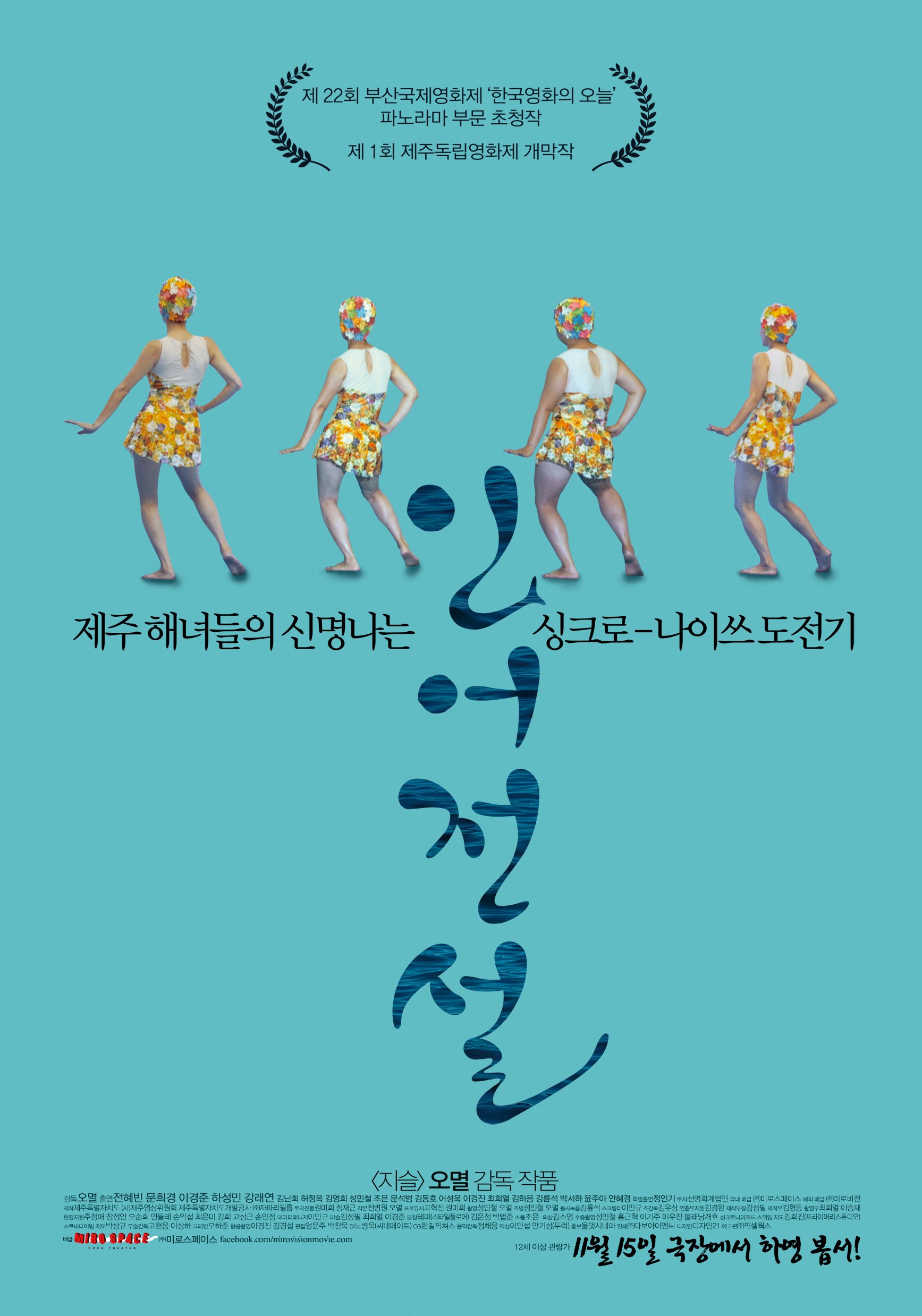
Mermaid Unlimited (인어전설, O Muel, 2017)

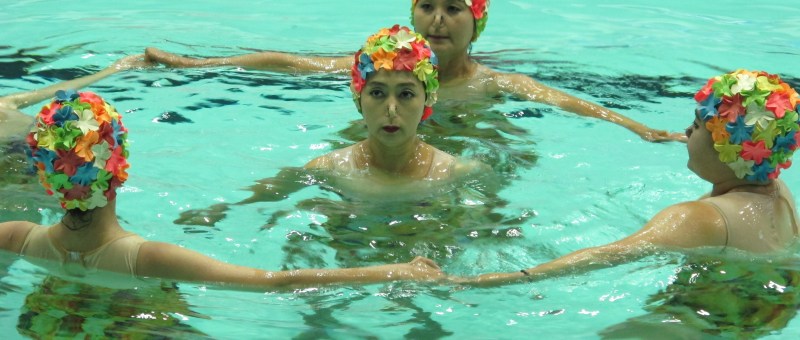
Venal city corporatism meets traditional Jeju culture in O Muel’s quirky comedy Mermaid Unlimited (인어전설, Ineojeonseol). An island movie showcasing the laidback charms of a disappearing way of life through those of the haenyo divers, Mermaid Unlimited is also an early example of cinema’s recent fascination with the art of synchronised swimming in which this most organised of sports helps a troubled young woman get a much needed reset in her life thanks to the down-home wisdom of the island aunties and the healing waters of Jeju.

A well-meaning government body has come up with a plan to promote synchronised swimming by getting a team of traditional haenyo divers as a warm up act before a national competition to be held in Jeju in the hope of making the sport “more accessible”. Former national team member Ga-yeon (Kang Rae-yeon) is under a lot of pressure to get a medal, not least to dispel the doubts of a hostile suit upset at having been passed over for project lead. In any case, she recommends an old colleague, Yeong-ju (Jeon Hye-Bin), who was the leading light of their old squad to coach the island ladies so they can perform a routine as requested by the PR people. However, there are several issues with this plan. The first being that village chief Bongseok (Lee Kyung-joon) has been a little over enthusiastic in agreeing to the idea seeing as there are very few remaining haenyo in the local area and many of them are understandably getting on in years. Meanwhile, Yeong-ju is in the middle of an extended personal crisis and is in fact a functioning alcoholic. 

Nevertheless, her appearance on the island immediately causes a commotion not least with Bongseok who is instantly smitten. She is herself, however, not perhaps convinced, instantly earning the ire of the defacto leader of the haenyo, the feisty and foulmouthed Okja (Moon Hee-kyung), after thoughtlessly describing the women as a load of old grannies, doubtful if they are really worthy of her precious “water ballet”. What ensues is a less than genial face off as the two women try to prove themselves queen of the seas through a petty competition which ends inconclusively and with a degree of drama but does eventually broker a kind of solidarity if only as they slag off their useless menfolk. In any case, the island ladies begin training in earnest while attempting to deal with their own quirky island problems. 

The island is certainly home to a fair few characters from Bongseok, smitten and overexcited while slightly clueless as to what the project entails (selling his empty swimming pool as bound to fill up next time it rains), to Okja’s wayward son Mansoo (Eo Sung-wook) and his bad romance, the pregnant haenyo who wants to give birth the old-fashioned way, a strange shanmaness and her son who has learning difficulties, and the young woman who desperately wants to become a haenyo despite her mother’s objections. Yeong-ju had a point when she suggested there weren’t many younger women around, most of the haenyo are indeed middle aged or older, and it’s fair to say this is a way of life fast disappearing. Okja laments that they haven’t been able to catch much lately, and later we hear of the building of a sea wall which may be having a detrimental affect on sea life so much so that there are reports of an elderly diver from a few villages over going missing at sea while protesting. Even so, the old women remain fiercely proud of their island culture and determined to protect it, seeing in the synchronised swimming exercise a way to show off their existence, something which perhaps mildly backfires bringing an influx of foreign tourists to the island hoping get the haenyo experience much to the confusion of the underprepared though very excited Bongseok. 

Through her friendship with Okja and the gentle support of the other island ladies who’ve seen enough of life to be unjudgemental, Yeong-ju begins to work through her unresolved trauma and alcohol issues while falling in love with island life and the traditional haenyo culture. A gentle ode to the wholesome charms of Jeju with its beautiful ocean vistas and hard spun rural wisdom, Mermaid Unlimited makes the case not only for the power of female solidarity but of bodies in unison as a means of existential healing through shared endeavour. 


Mermaid Unlimited streams in Poland until 6th December as part of the 14th Five Flavours Film Festival.

Original trailer (no subtitles)

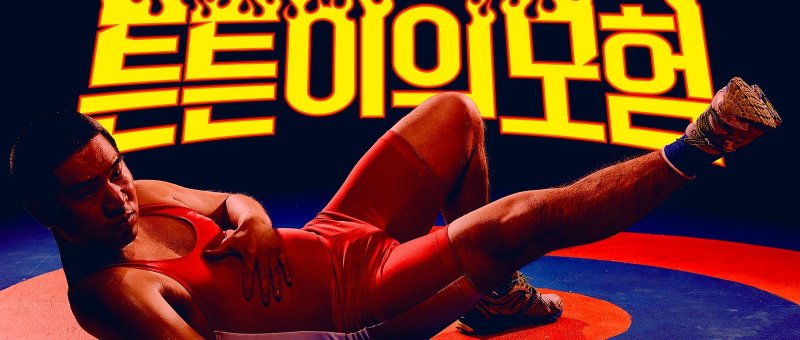
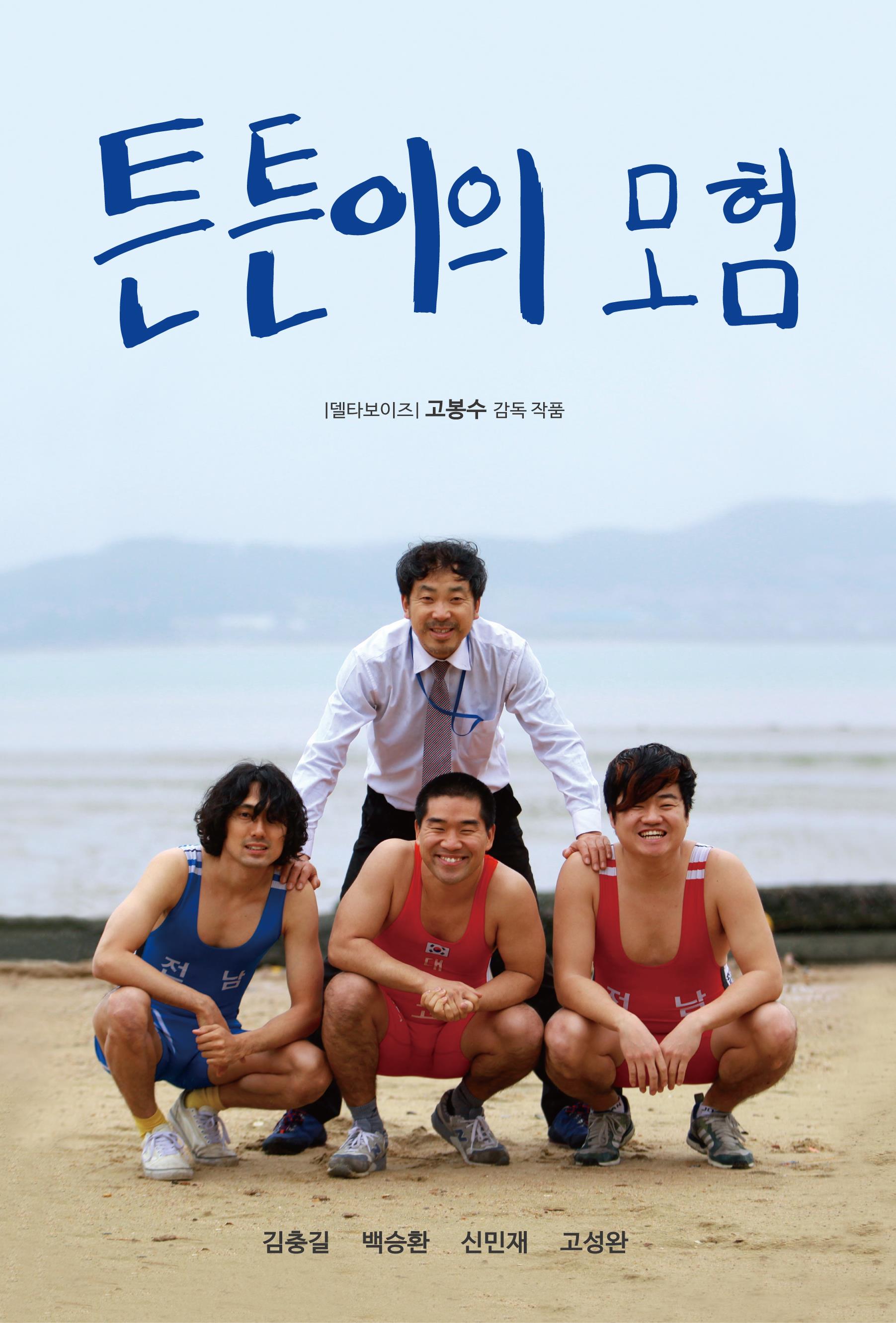
Loser’s Adventure (튼튼이의 모험, Ko Bong-soo, 2018)

Three aimless young men attempt to shake off small-town despair through the medium of high school wrestling in Ko Bong-soo’s underdog indie sports comedy Loser’s Adventure (튼튼이의 모험, Teunteuniui Moheom). Unkind as it may be to say, the young men are or at least feel themselves to be “losers”, each battling a sense of hopelessness dealing with difficult family circumstances and desperate to escape “this pathetic life” as one terms it for the comparatively brighter lights of Seoul. 

In his last year of high school, Choon-gil (Kim Choong-gil) is now the only member of the wrestling club seeing as everyone else has long since drifted away and, in fact, the coach (Ko Sung-hwan) quit ages ago to drive a bus because he enjoys being able to earn a living. Choon-gil, however, refuses to give up and has been writing daily letters to the head of the wrestling federation in the hope that he’ll somehow be able to resurrect his sporting dreams while trying to convince his conflicted friend Jin-kwon (Baek Seung-hwan) to rejoin the team. While Choon-gil lives alone with his authoritarian, alcoholic father, Jin-kwan has a mild complex about his widowed Filipina mother and her relationship with the dance-loving boss at her job in a junk shop. Hyuk-jun (Shin Min-jae), meanwhile, is a tough guy dandy living with an older brother and and sister in the absence of parents. A petty delinquent and a member of the faintly ridiculous “Black Tiger” gang, Hyuk-jun thinks wrestling’s a bit naff and is offended when his brother tries to give him an ultimatum to start studying hairdressing at his sister’s salon or pick a sport to get good at with the hope of getting a scholarship to uni. 

None of our guys is particularly bright, they know they’re unlikely to make it out through their academic prowess and probably they don’t really think wrestling is going to take them anywhere either but it’s at least something. The most sceptical of the boys, Jin-kwan reminds Choon-gil that he isn’t even very good at the sport and the only reason they took it up in the first place was because the coach semi-adopted them as the surrogate father they each needed at the time. Nevertheless, he’s determined to do whatever it takes to make his wrestling dreams come true. He is however, in for a shock as it turns out that the building holding the wrestling gym is due to be demolished in the imminent future. For some reason moved by Choon-gil’s pleas, the coach calls in a few favours and manages to get the guys listed on an upcoming tournament with the hope that if they don’t lose too badly it will show that the moribund club has promise and is worth saving. 

The irony is that as hard as he trains Choon-gil just doesn’t have much of an aptitude for the sport. He adopts the position of a mentor to new recruit Hyuk-jun, but annoyingly enough he turns out to be something of a natural, while Jin-kwon, the skinniest of the boys though also the tallest, resents the coach’s constant pressure to lose more weight. They are each, as it turns out, at the mercy of their essential character flaws, Choon-gil the hardworking dreamer who just doesn’t have it, Jin-kwan timid and struggling against himself, and Hyuk-jun talented but hotheaded and self-sabotaging in allowing his emotions to get the better of him. 

Still, they do not give up. No one really rates their chances, Choon-gil’s violent, drunken father even attempts to disown him for his love of wrestling, insisting that he become a bus driver instead for the steady paycheque, while Jin-kwan is openly mocked by his sister and Hyun-juk’s dream of starting a business in Seoul is derided both by his brother and by the Black Tigers who continue to plague him even after he tells them that wrestling’s cool after all and they’re all just a bunch of small town losers. The jury’s out on whether the guys can wrestle themselves free of their sense of impossibility and despair, not to mention their sometimes unsupportive family members, but they have perhaps at least found an outlet for their frustration not to mention a surrogate fraternity as they continue on their “loser’s journey” together looking for an exit from the disappointing small town future. 


Loser’s Adventure streams in Poland until 6th December as part of the 14th Five Flavours Film Festival.

International trailer (English subtitles)

Gundala (Joko Anwar, 2019)

“If we see injustice before our eyes and do nothing then we’re no longer humans” the idealistic father of a future superhero instructs his young son, trying to impart a sense of humanitarianism as a basic moral good. It’s a lesson the boy will find himself unlearning and resuming later, his innocence well and truly destroyed by an often cruel and cynical society only to be reawakened to the idea that it doesn’t need to stay that way. Among the most recognisable names of Indonesian cinema, Joko Anwar turns his hand to the creation of a local comic book cinematic universe, adapting the 1969 comic Gundala by Harya “Hasmi” Suraminata for the present day filtering contemporary Jakarta through classic Gotham. 

Operating as an origin story for the titular hero, Gundala opens with the young hero Sancaka (Muzakki Ramdhan) unable to prevent his father’s (Rio Dewanto) death due to his fear of electrical storms when he is first set up by a duplicitous factory boss and then assassinated while leading a protest for fair pay and conditions. Soon after, Sancaka loses his mother (Marissa Anita) too after she is forced to go to the city for work and never returns. Ending up a ragged street kid, he’s saved from an attack by a rival gang by an older boy (Faris Fadjar Munggaran) who teaches him how to protect himself physically and mentally by convincing him that the only way to survive on the street is keep his head down and walk on by even if it looks like others are in trouble. 20 years later the adult Sancaka (Abimana Aryasatya) is an aloof young man working as a security guard at a print house where his sympathetic mentor Agung (Pritt Timothy) begins to remind him of his father in his conviction that “living is no use if you stop caring and only think about yourself”, while he also finds himself defending the woman next-door, Wulan (Tara Basro), and her young brother Teddy (Bimasena Prisai Susilo), from hired thugs sent to intimidate them because of their involvement in a protest against the forced redevelopment of a local marketplace.  

Events seem echo around him. The major villain Pengkor (Bront Palarae) is also an orphan but on the opposing side as the son of a cruel plantation owner murdered by his not altogether ideologically pure workers whose desire for fair pay and conditions he had resolutely ignored. According to cynical politician Ridwan (Lukman Sardi), Pengkor became a union organiser of his own, leading an uprising at the abusive orphanage he was placed into by a cruel uncle hoping he’d die and free up the inheritance, thereafter becoming a kind of godfather to the fatherless with a thousands strong army of eternally grateful orphans he saved acting as sleeper agents for a coming revolution. 

Pengkor’s nefarious plan involves fostering a conspiracy surrounding contaminated rice said to make the unborn children of the women who eat it turn out “immoral”, a generation of psychopaths unable to tell right from wrong. Fairly unscientific, it has to be said, but playing directly into the central questions of the nature of “morality” in a “immoral” society. Can it really be “moral” for bosses to exploit their workers and get away with it, for politicians to cosy up to gangsters and remain complicit with corruption, and for a man like Pengkor to be the only hope for orphaned street kids otherwise abandoned and ignored by a wilfully indifferent society? Pengkor decries that hope is the opiate of the masses, but that’s exactly what Gundala eventually becomes for them in his “electric” ability to resist, eventually rediscovering his humanity as he designates himself as the embodiment of “the people” pushing back against the forces of oppression and seeming at least to win if only momentarily.  

Young Sancaka’s fear of lightning is, in essence, a fear of his power and his social responsibility something he is quite literally shocked into accepting. In a world of quite striking social inequality, he finds himself the lone defender of the oppressed whose very existence spurs others, including previously cynical politician Ridwan, into rediscovering their own humanity in the resurgent hope of a better future. As someone puts it, peace never lasts long but you keep fighting for it because every moment is precious. Not so much a battle of good versus evil as a battle for the meaning of good, Anwar’s Gundala recalibrates the anxieties of the late ‘60s for the modern era and creates an everyman hero not only to resist them but to foster a spirit of resistance and humanity in the face of heartless cynicism. 


Gundala streams in Poland until 6th December as part of the 14th Five Flavours Film Festival.

Original trailer (English subtitles)
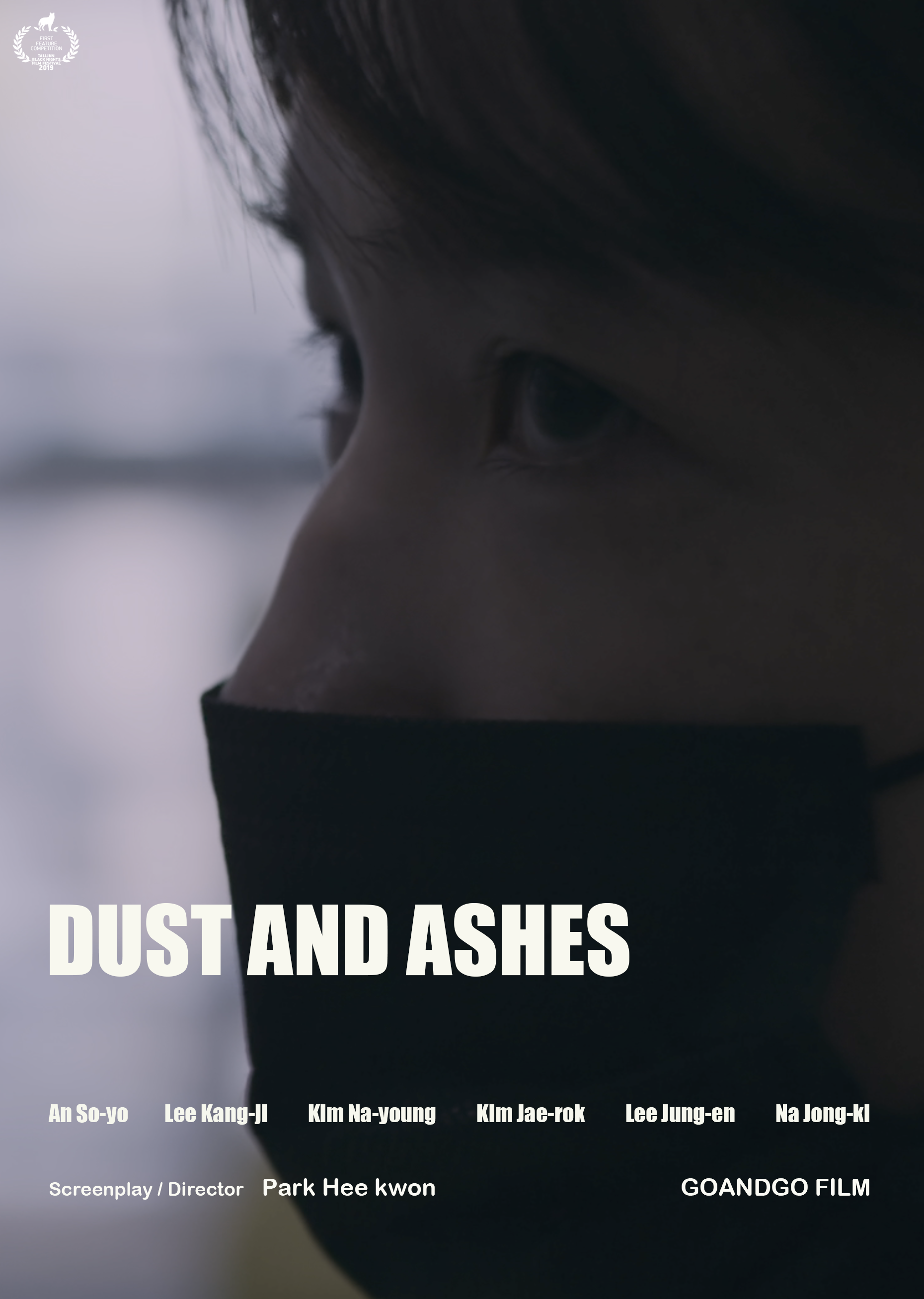
Dust and Ashes (축복의 집, Park Hee-kwon, 2019)

“People are property of the government from the cradle to the grave, since it’s all over they give it back to you” a corrupt policeman ironically explains handing over a dodgy document designed to help a desperate young woman subvert her tragedy. Stark in execution, Park Hee-kwon’s near wordless exploration of urban poverty Dust and Ashes (축복의 집, Chuk-bok-eui Jip) finds its heroine resorting to the unthinkable in a simple quest to survive while trapped in a world collapsing all around her. 

As we first meet Hae-su (Ahn So-yo), she’s leaving her factory job which evidently involves substances so toxic that she washes right away and scrubs her jacket clean ready for the next day before leaving for her other gig, scrubbing barbecue grills at a restaurant. She keeps trying to call someone who doesn’t pick up and walks home through the darkened streets, pausing so long outside the door we wonder if she’s gone to see whoever it is who won’t return her calls but eventually lets herself in with a key and walks quickly to the bathroom without turning on the light as if there’s something in there she doesn’t want to see.

Perhaps we begin to doubt Hae-su, somewhat uncertain of what has actually happened, but we can also see that she is griefstricken and nervous, driven to extremes in the depths of her despair. She must necessarily have known what was waiting for her at home, planned it, knowing exactly what it is she must do next. Her brother, Hae-jun (Lee Kang-ji), meanwhile is evidently not so much in favour, petulant and resentful but aware he has little choice in playing the role which has already been dealt him. Hae-su’s painful quest takes her on a journey through the corruptions of the modern society from a dodgy doctor taking cash for certificates to a corrupt policeman ‘helping” her alter the narrative circumstances to her advantage but only for a fee. 

Meanwhile, she’s about to be evicted, the entire area she lives in earmarked for “redevelopment”, a wasteland of deconstruction strewn with dust and rubble. We see her suffer the ignominy of a funeral with no flowers where she and her brother are the only mourners, a sight which seems to raise eyebrows not least with the insensitive policeman. Opening with darkness and the sounds of machinery, Park situates us in an industrial hellscape as if our entire lives took place on a gurney, trapped inside a wooden box being slowly pushed towards the fire. Showing the entirety of the funeral process in painful detail from the tender yet efficient embalming to the eventual cremation, grieving becomes something impossibly cold and clinical, no fancy curtains here merely an LCD screen reminiscent of that above a baggage claim carousel to let you know your loved one’s ashes (or more accurately bone dust ground in an industrial blender) are now ready for collection neatly packaged inside another, smaller wooden box. 

Yet Hae-su has no choice but to put up with these indignities. There appears to have been some level of male failure involved in the family, an absent or estranged father figure apparently no help, while we can also infer that the shadowy presence bothering her that she takes such care to avoid is an agent of the loan sharks in part responsible for her financial predicament. We can only imagine the desperation that must have forced this small group of people to take such a dreadful decision, and the anxiety of those left behind as they wonder if it will all come to nothing. Yet even if it works out, we get the impression Hae-su is running to stand still. Victory only means the continuance of the status quo, there seems precious little sign Hae-su or her brother will be able to escape their penury especially after everyone, including the loan sharks and dodgy policeman, exacts their cut. 

In the end all there is is dust and ashes. Hae-su evermore encumbered, wearing a mask to stave off the inevitable but still breathing in the corruption of the world around her as it too collapses into dust, a deconstructed wasteland of economic hubris. Necessarily bleak, Park’s spare, numbed photography finds only emptiness in Hae-su’s rain-drenched streets even as she strides off into the distance determined to survive no matter what it takes. 


Dust and Ashes streams in Poland until 6th December as part of the 14th Five Flavours Film Festival.

Festival trailer (English subtitles)

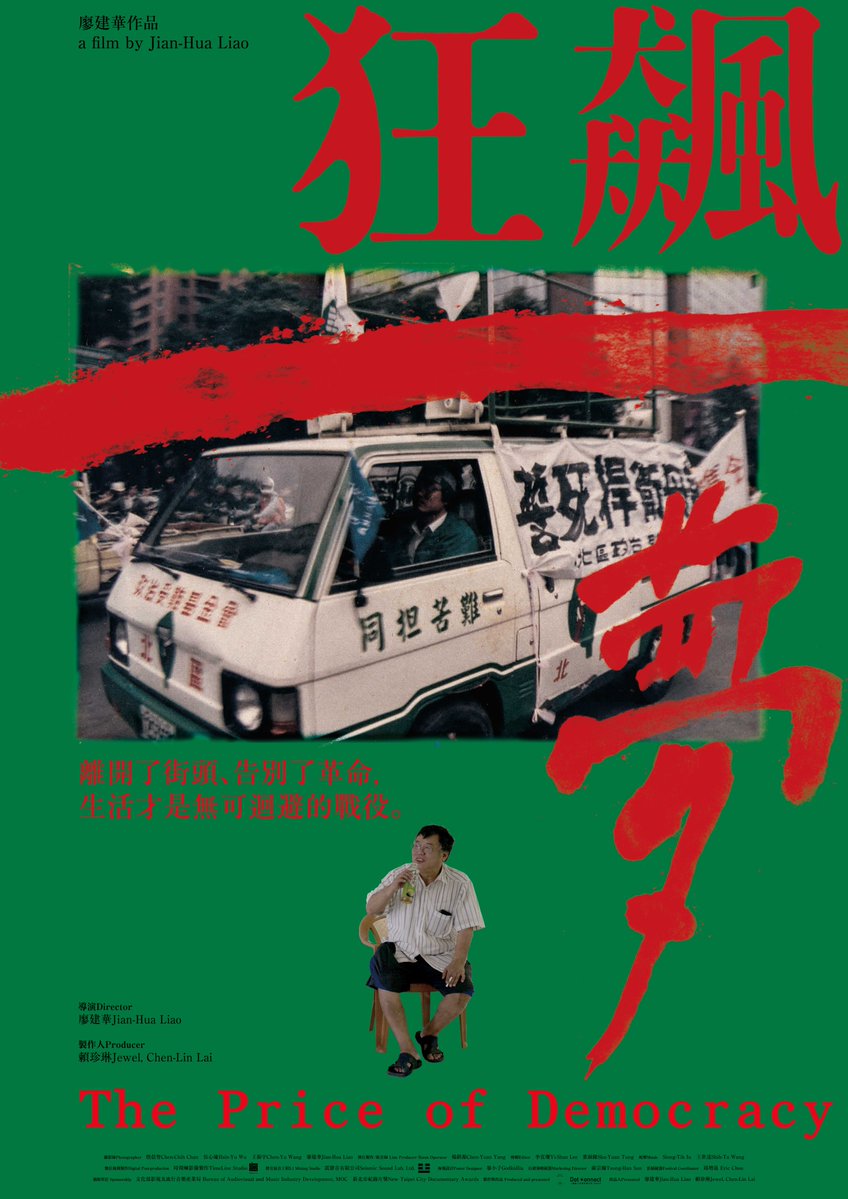
The Price of Democracy (狂飆一夢, Liao Jian-Hua, 2019)

What does a revolutionary do after the revolution? Lacking direction in his own life, director Liao Jian-Hua finds himself asking the question of those who fought for an end to martial law in Taiwan, wondering if the price they paid for their idealism was really worth it. Following two now elderly protestors both of whom continued with activism after the advent of democracy, he discovers that the battle was never really won and that each has their share of loss if not quite regret for the sacrifices they made to try and bring about the better world. 

The first of Liao’s subjects, Hsin-i, is a popular novelist though perhaps unexpectedly known for romance featuring working class women rather than anything more overtly political. Daughter of a Mainland soldier, she was married with two children when she first began to become disillusioned with Taiwan’s political situation after realising the extent to which the authorities would go to rig elections. Unfortunately, the family she married into was staunchly nationalist, actually members of the KMT, and after her husband read a satirical story she wrote for a magazine the marriage broke down. Fearing reprisals, Hsin-i’s husband and in-laws emigrated to America and took her children with them while she remained in Taiwan and deepened her involvement in the movement for democracy. 

Kang, meanwhile, is a Minnanese man from the South who came to Taipei for work. Staunchly leftist, he lives up to his ideals even in his 60s earning no more than the minimum wage and living in a kind of commune with other gentlemen of a similar age, often allowing those in need to stay giving up his bed to make space for them. Like Hsin-i, his activism eventually cost him his family though he admits that his marriage was perhaps a mistake to begin with with. Showing Liao pictures of his youth he reveals himself to be quite the dandy and caught up in the consumerist revolution of an increasingly prosperous society (another wealthy girlfriend even bought him a Renault when they first came to Taiwan), only to be converted to socialism after leaving the army. He admits that he married his wife largely because she was pregnant but was uncomfortable with her upper-middle class lifestyle, her father attempting to railroad him into running a convenience store. Given their ideological differences, the marriage failed and Kang lost contact with his son who would now be in his early 30s. 

Other members of the activist group swap similar stories, that their wives and families complained that they “changed” after getting into activism or accused them of neglecting their familial duties for the political. Kang describes this as a choice between “small” love and “big”, familial love versus the societal. He and his friends chose big love at the expense of the small, devoting themselves to bettering their society. Hsin-i meanwhile doesn’t see it quite the same way and harbours a degree of guilt and regret for not having been as present as she might have liked in the lives of her family, often torn between activism and caring for her elderly mother while obviously missing her children even now forlornly looking up the Facebook profile of the daughter who declined to have contact with her. 

Though each of them continued with activism after the end of the martial law period, both Hsin-i and Kang also have traumatic memories of what was obviously a very intense time, recalling the tragic death of one young man who self immolated in protest against oppressive KMT regime. While Kang seems to accept his act with sadness, it led Hsin-i to question the movement and her place within it that others knew this young man planned to take his life in such painful way and did nothing to discourage him. From the vantage point of a very different Taiwan following the victory of Tsai Ing-Wen’s Democratic Progressive Party in 2016, now regarded as the most liberal of Asian nations, Liao wants to ask them if they feel all their suffering was worth it but discovers perhaps that he’s asking the wrong question when the costs of betraying one’s ideals may not be worth contemplating. There is always work to do, and whatever it may have cost them, both Hsin-i and Kang have remained true to themselves as they continue to do what they can to bring about the better world filled with a big love for the whole of their society. 


The Price of Democracy (狂飆一夢, Kuángbiāo Yī Mèng) streams in the UK 28th November to 5th December as part of Taiwan Film Festival UK

Original trailer (English subtitles)
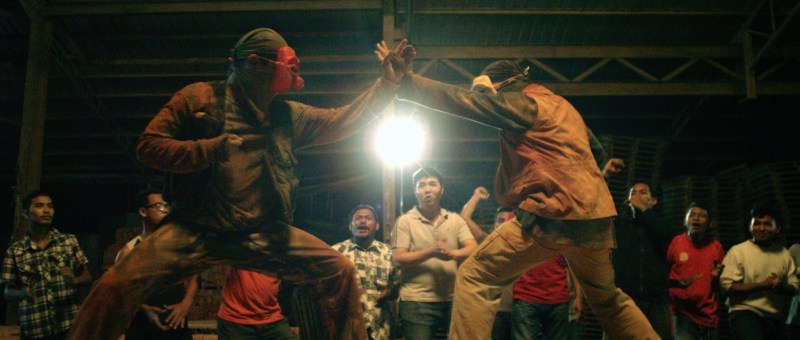
Go! Crazy Gangster (風雲高手, Chang Ching-feng, 2016)

Nothing is impossible, according to the surreal logic of zany sports comedy Go! Crazy Gangster (風雲高手, Fēngyún Gāoshǒu). The only crazy gangsters here are two old men, childhood friends both obsessed with basketball, who work out their gang rivalry through the much more healthy medium of high school tournaments. The hero is not a gangster, but he does admittedly dress like one. In any case, the point is that given the right motivation, even the most hopeless of slackers, and the most rebellious of delinquents, can be reformed by the mutual solidarity of team sports. 

Lai-Fong (Alien Huang) is a reservist on a professional basketball team, a last resort player known chiefly for his laziness. Variously nicknamed “idler”, “benchwarmer”, or “waterboy”, he is not exactly keen to get on the court. Nevertheless, after getting hit by random meteorite the unthinkable happens. He not only gets to play, he becomes his team’s MVP and guides them to an unprecedented victory. Shortly after that, however, he’s seduced and blackmailed by pretty high school teacher Hsaio-Yun (Cyndi Wang) whose gangster father Liao (Liao Jun) then forces him to take a job coaching a losing girls’ high school team. Unbeknownst to Lai-Fong, Hsiao-Yun has become the subject of a bet between Liao and his friend Tseng (Ma Ju-lung) to the effect that her hand in marriage has been promised to his thuggish son Shuai-Nan (Dean Fujioka) if the team loses. 

The problem is that the high school basketball team is made up of delinquent girls because the school have been using it in lieu of detention. Predicatably, they don’t want to actually have to participate in sports and so they do everything they can to get rid of Lai-Fong before having a change of heart in realising the extent to which he actually does care for them in an admittedly fast turnaround from his “idler” persona. Thanks to his newfound sense of compassion and desire to assume his responsibility as a coach, he begins figuring out the girls’ problems from the ringleader’s difficult home life with her mother’s struggling business, to the demands of a showbiz dream. Meanwhile he’s apparently always been kind, Hsiao-Yun recalling that they have a childhood connection which has long given her strength seeing as she was herself lonely in her youth, the other kids unwilling to befriend the daughter of a scary gangster. 

Chang neatly subverts a number of conventional stereotypes, recasting his scary gangsters as childish old men who play video games and exercise their rivalry on the basketball courts rather than in the streets, the hint of violence lingering somewhere off screen. The women are tenacious and mature, the men feckless and ineffectual, but then there is the mild unpleasantness that Hsiao-Yun has been wagered by her father as part of the friendly rivalry he has with Tseng who also resents that he’s already “lost” in the child stakes because Hsaio-Yun is just much “better” than his son Shuai-Nan who despite studying abroad at Harvard seems none too bright and is little more than a vain thug. 

Nevetheless, what everyone learns is that it’s not really about winning or losing but gaining confidence in being yourself while drawing strength from mutual solidarity. Hsiao-Yun begins to stand up to her gangster dad, perhaps realising that he had no right to bet her in the first place so she doesn’t necessarily have to go along with it even if the team loses while Lai-Fong declares himself proud of the team whatever happens knowing how hard they’ve worked to come this far. His attitude may be defeatist, resigned to an inevitable loss, but he’s willing to chalk this up to experience, a valuable lesson for the road ahead. Hsiao-Yun, however, reminds him that they’ve come this far precisely because they were together and they’re still together now so as long as they stay that way there’s always a chance. 

To put it bluntly, Go! Crazy Gangster makes very little sense, a Taiwanese take on Hong Kong mo lei tau nonsense comedy it rattles absurdly from one unexpected plot development to the next. Nevertheless it hardly matters as the gang get their game on through sorting out their personal problems thanks to the love and support of their teammates, gaining the confidence to fight for their dreams on the court and off.


Go! Crazy Gangster streams in the US Nov. 27 – 29 as part of Asian Pop-Up Cinema & TACCGC’s @Home with Taiwan Cinema: Love & Hope

Original trailer (English subtitles)