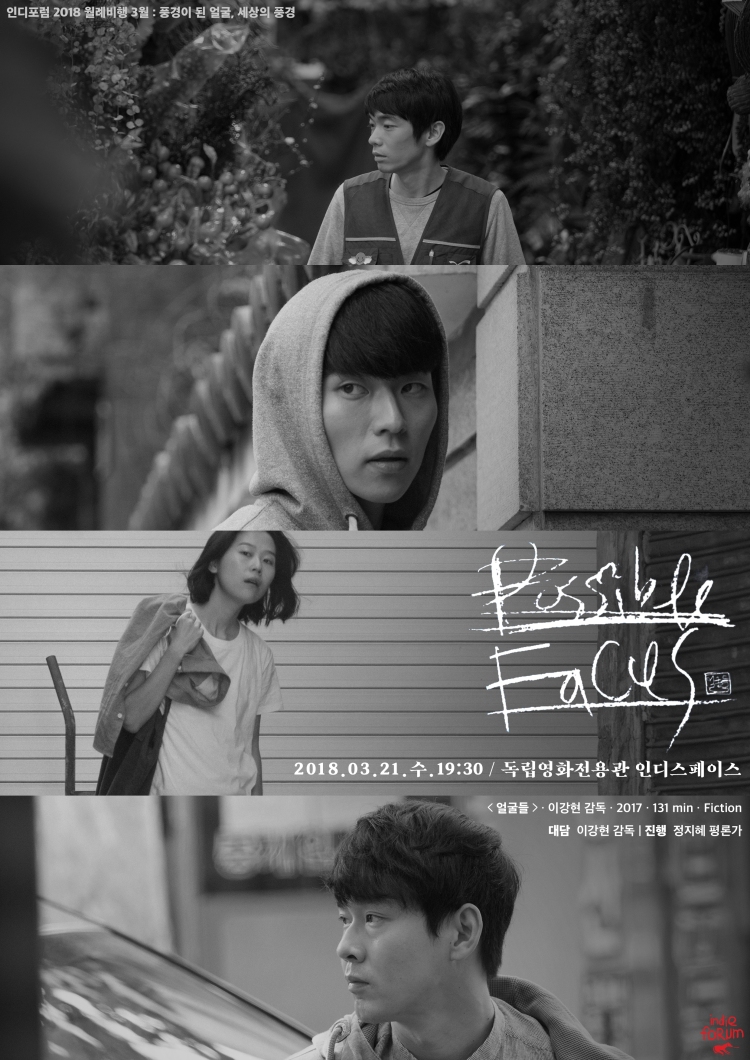
Possible Faces (얼굴들, Lee Kang-hyun, 2017)

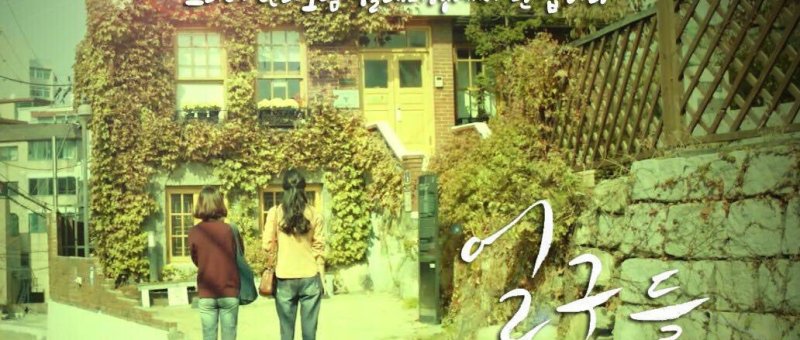
possible faces posterLee Kang-hyun becomes the latest Korean director to question the nature of reality in a rapidly modernising society in the oblique, deliberately confusing Possible Faces (얼굴들, Eolguldeul). Ironically enough, the film’s original Korean title is simply “Faces” and in a nod to the 1968 Cassavetes classic with which it shares its name, takes the breakdown of a relationship as its starting point to examine the parallel lives of former lovers. Circular logic predominates as the simulacrum begins to chew away at the authentic, but even if anyone notices the teeth marks at the edges of reality they may no longer care.

Dejected high school administrator Kisun (Park Jonghwan) has been kicked out of his girlfriend Hyejin’s (Kim Saebyeok) house after three years of cohabitation. It’s really not his area, but handed an incomplete scholarship application form from a soccer team member who routinely dodges classes, he finds himself becoming increasingly invested in the boy’s life. Meanwhile, Hyejin has resigned from her corporate office job to take over her mother’s cheap eats restaurant which she hopes to renovate and turn into a cute little boutique diner. The pair are accidentally connected by the circular motion of Hyunsu, a freelance delivery driver with a romantic heart.

Nothing is quite as it seems. One of Hyun-su’s early deliveries is collecting artificial flowers from a nearby garden centre for a magazine shoot. The regular guy has been moved on, so Hyunsu is the new contact but, as he points out to the saleswoman, though he may be wearing a uniform he is not technically speaking an “employee”. Hyunsu further reinforces his point by asking why none of the other stalls are open – they belong to wholesalers of “real” flowers so they keep specific hours. Sellers of artificial flowers, by contrast, can open 24/7, because their flowers require no maintenance and will never wither, eternally unchanging while the real thing fades. Meanwhile, museums stage reenactments of martial arts performances for tourists, display “replica” artefacts, and boast of the restorations on their “ancient” walls.

The world becomes increasingly “faceless”, as if time is beginning to wear away the surface of reality. Kisun, stuck in a depressive rut, laments that he could stick with his boring admin job for the next 20 years during which time nothing would change except the faces of the kids, as indistinct as they already seem to be. Hyejin walks past the Google Mapping van with a giddy sort of glee as if she’s just spotted a celebrity of whom she is a big fan, calling her friend to share her amazement but lamenting that they will probably blur her face and thereby neuter her newfound immortality. That may not be an altogether bad thing, as Hyunsu learns on reading a mysterious diary in which a woman makes cheerful fun of her husband for mildly resembling a wanted poster on the way out of the park.

The more things change, the more we want them to stay the same, only “better”. Hyejin quits her job to take over the family restaurant despite her mother’s misgivings, but she remakes it in her own image, giving it an upscale makeover in the process. She walks through run down shopping arcades and becomes a tourist in her own city, admiring the old world charm of narrow winding streets untouched by the neon lights of chain stores and comes home to plug in a dull LED lamp to write in her notebook with an old-fashioned fountain pen as if by candlelight.

Hyejin is moving backwards to move forwards, but Kisun is struggling to move at all. He jacks in his boring admin job to join a magazine dedicated to selling the charms of everyday life repackaged as marketable luxuries, complete with Kisun’s own poetic copy gracing the front cover. He finds himself on a kafkaesque quest chasing Schrödinger’s executive who always seems to be away from his desk before eventually tracking him down to a strange cultural event only to realise it isn’t him at all only after he’s been given the portentous advice to ditch his special issue feature for one on the soccer kid from the beginning, Jinsu. While Kisun meanders, Jinsu seems to have made something of himself. Years seem to have passed, but according to Hyejin’s diary it’s only been a few months – months of industry for some perhaps, if only slow months of drudgery for others. The world of Lee’s Possible Faces is one spiralling away from itself in which the nature of reality, identity, and objective truth has become indistinct, to the degree that it has become a mere simulacrum of itself in which the uncanniness of the real provokes only discomfort in its natural imperfections.


Possible Faces was screened as part of the 2018 London Korean Film Festival.

Interview with director Lee Kang-hyun from the 2017 Busan Film Festival.

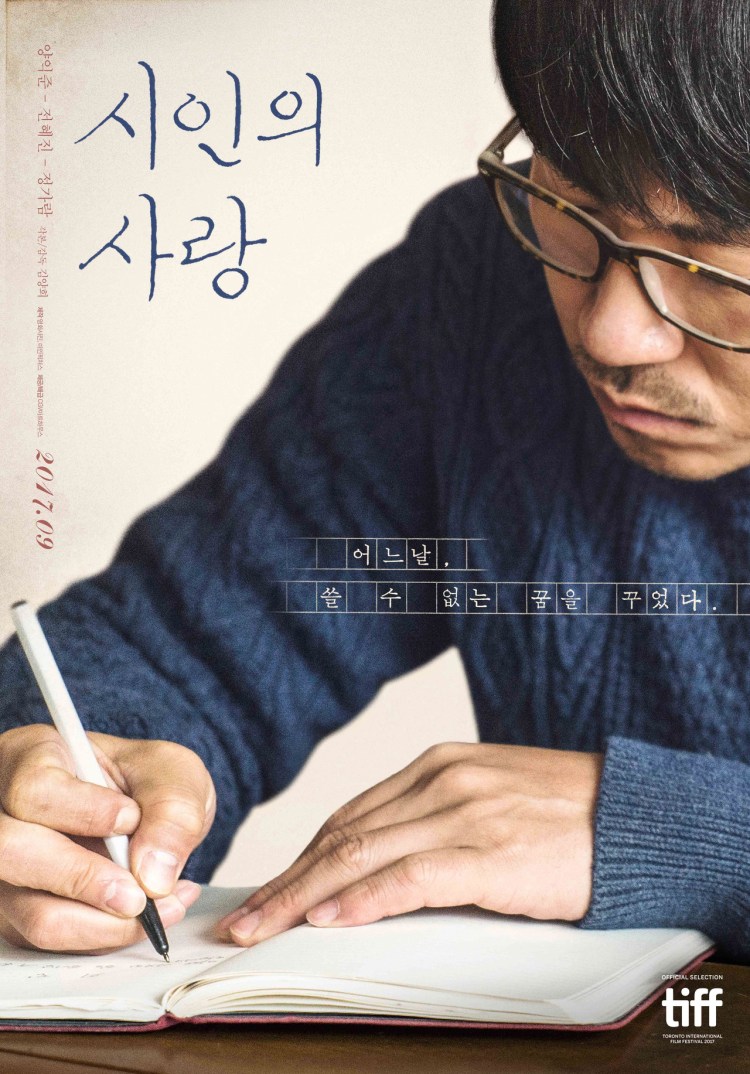
The Poet and the Boy (시인의 사랑, Kim Yang-hee, 2017)

Poet and the Boy posterA poet cries for the sorrow of the world, according to the hero of Kim Yang-hee’s melancholy drama, The Poet and the Boy (시인의 사랑, Sienui Sarang). Unfortunately for him, he lives in his own poet’s world, lonely and disconnected but never knowing the true depth of sadness which would give his verse meaning. Until, that is, he falls in love. Beauty turns out to be a doubled edged sword for a mild mannered yet emotionally brave artist struggling to comprehend his place in the world but discovering that some of it, at least, has already been decided for him.

Hyon Taek-gi (Yang Ik-june) is a 30-something aspiring poet married to a feisty shopkeeper. The couple have been married several years and though they are happy enough together, theirs is a marriage born more of convenience than passion. Having married “late” each has settled in to making the best of things, sure that a greater love will one day blossom between them. Mrs. Hyon (Jeon Hye-jin), feeling an absence in the family home, has been longing for a baby but Taek-gi has never been especially interested in that side of things and isn’t really keen on the idea of becoming a father.

Meanwhile, a brand new donut shop has just opened up in town which is good news for Taek-gi because donuts are one of his favourite things. Unsure whether it’s just his status as a purveyor of sweet goods, Taek-gi develops a fascination with the beautiful boy at the bakery (Jung Ga-ram) which is further inflamed when he accidentally catches sight of him in amorous moment with a female customer. To his mild surprise, Taek-gi finds himself captivated with the male physical form, experiencing feelings and desires he had not even known existed.

As his wife later puts it, a poet’s world is different. Taek-gi stops to appreciate the flowers, watches the children play, and makes a round about detour to a fast food restaurant to observe human life but he doesn’t quite live in the world he inhabits or allow himself to truly experience its beauty. As we first meet him, Taek-gi is writing a poem to open the map of his heart but quickly finds himself lost and wandering, unable to settle on a clear direction and ending up at a disappointingly familiar destination. The poem is interesting but imperfect, somehow hollow and inauthentic.

Taek-gi’s creative block is also an emotional one. What begins with a single moment of captivating beauty expands into something deeper and warmer as the poet gets to know the boy on a more intimate level. Seyun is a troubled young man from an impoverished family caring for his bedridden father while resenting his coldhearted mother. What he sees in Taek-gi is something between friend and father, both wary of and delighting in unsolicited kindness from a virtual stranger. Taek-gi’s wife teases him about his attraction to Seyun, probing him about the nature of their own strange relationship. She wonders if it’s really “love” without intense physical desire – something he has made repeatedly clear that he does not feel for her. Taek-gi insists that it is, citing another romanticised love which remained chaste as further evidence only for his wife to fire back that perhaps all he really wanted was the sadness of unfulfilled longing to complete his poetic world view.

Taek-gi later takes his words back, insisting that what he feels for his wife is not “love” and that their relationship was always doomed to fail. Yet it’s not carnal desire which brings him to this realisation so much a greater motion towards connection. Taek-gi who was always ill-equipped for life and never able to take care of himself, begins to look after the younger man both physically and emotionally asking for nothing in return other than his continued company. Despite his otherworldliness and alienation, there is something uniquely brave in Taek-gi’s willingness to tug on the thread of an unfamiliar feeling, uncertain what it is or might be but determined to find out. Disregarding the conservative values of his society which have led him to embrace conventionality in marrying “late”, supposedly “grateful” that someone allowed him the opportunity to marry at all, Taek-gi moves forward if cautiously, aware that his desires may not be accepted and may present a danger to those around him.

Then again, Taek-gi is a middle-aged man with a series of choices already behind him, many of which entail consequences and responsibilities it would be selfish and irresponsible to break even in the pursuit of individual happiness and fulfilment. Perhaps all he really wants is the grand failed romance that will open the map of his heart through breaking its spine, craving “sadness” to feed his art over “love” to feed his soul. True enough, sorrow does wonders for Taek-gi’s art even if he feels himself trapped by his previous choices and the restrictive social codes of his community but there is also something inescapably poetic in his magnanimity as he prepares to set the thing he loves free in a way he never was and believes he never can be.


The Poet and the Boy was screened as part of the 2018 London Korean Film Festival.

International trailer (English subtitles)

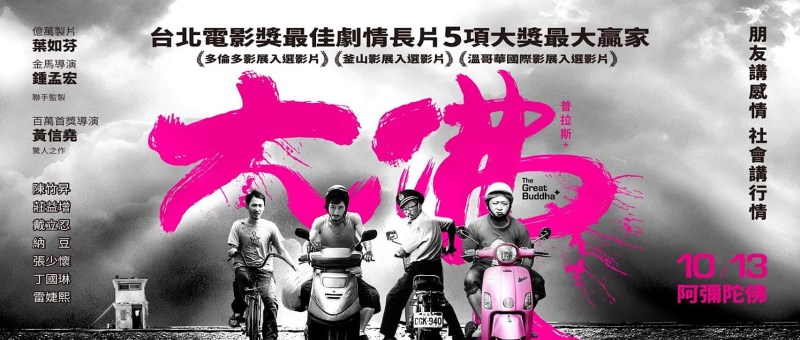
The Great Buddha+ (大佛普拉斯, Huang Hsin-yao, 2017)

Great Buddha + posterFor some, the good life always seems a little out of reach, as if they showed up late to the great buffet of life and now all that’s left is a few soggy pastries and the salad someone’s aunt brings every year that no one really likes. Still, even if you know this is all there is, it doesn’t have to be so bad so long as you have good friends and something to do every day. The “heroes” of documentarian Huang Hsin-yao’s fiction feature debut The Great Buddha+ (大佛普拉斯, Dà fó pǔ lā sī) are exactly this sort – men in late middle age who’ve never quite grown up but have eased into a perpetual boyhood safe in the knowledge that there’s nowhere left for them to grow up to.

“Pickle” (Cres Chuang) is something of a holy fool. His major preoccupation in life is his elderly mother whose increasing medical bills he is continually worrying about paying. He’s taken to banging a drum in a local marching band with a big line in funerals for extra money at which he is terrible but seeing as there’s no one else his job is probably safe for the minute. His “occupation” is nightwatchman at a factory owned by “Kevin” (Leon Dai) – a renowned sculptor working on a giant Buddha statue. Nothing ever happens at the factory at night so no one is very bothered what Pickle does there, which is mostly being “entertained” by his “best friend” Belly Button (Bamboo Chen). Belly Button doesn’t really have a job but earns money through collecting recyclables and selling them on. Looking for a new source of vicarious fun, Belly Button talks Pickle into stealing the SD card from the dash cam on Kevin’s fancy car so they can enjoy riding along with him in their very own private sim. This turns out to be more fun than expected because Kevin is also a womaniser with a thing for car sex even if the cam only captures the audio of his exploits. Nevertheless, the guys inevitably end up seeing something they shouldn’t.

Huang shoots in black and white but switches to vibrant colour for the dash cam footage, somehow implying that nothing is quite so real to guys like Pickle and Belly Button as a fantasy vision of someone else’s glamorous life. After all, if it’s not online it didn’t really happen. Trapped in the gutter of small town life, both men have either failed to move on from or wilfully regressed into a perpetual adolescence in which they waste their days idly on pointless pursuits – leafing through ancient porn mags, gossiping, and eating half frozen curries from half-filled Tupperware boxes. A mild mannered man, Pickle is so innocent that he never quite understands Belly Button’s lewd jokes while Belly Button, who is picked on and belittled by everyone else in town, takes delight in being able to boss him around.

Together the pair of them can only marvel at a man like Kevin with his wealth and talent which allows him to gain the thing they want the most – female company. Kevin, however, is not quite as marvellous as they might assume him to be even if they remain in awe of his caddish treatment of women while perhaps feeling sorry for those unfortunate enough to fall in love with him. In tight with the local bigwigs, Kevin is simply one link in a long chain of bureaucratic corruption in which business is done in the bathhouse surrounded by floozies. Kevin never explicitly lets on whether he knows that Pickle and Belly Button have stumbled on his secret, but their lives begin to change all the same. Their easy nights in the security cabin have gone for good and they feel themselves under threat in a chilling reminder of how easily a little guy can disappear or fall victim to an accident after asking too many questions about a vain and powerful man with money.

Meanwhile, Pickle is left worrying what’ll happen to his mum if he falls out with Kevin. Even if he wanted to speak out about a great injustice, he’d be putting his mother in the firing line. Then again, after a brief visit to Belly Button’s home in which he cocoons himself inside a mini UFO filled with the prizes he’s won from UFO grabber games (he says it’s like “therapy”), Pickle is forced to wonder how well he even knew him – his only friend. As Huang puts it in his melancholy voice over, we might have put men on the moon, but we’ll never be able to explore the universe of other peoples’ hearts.

Huang’s deadpan commentary is among the film’s strongest assets with its New Wave associations and determination to wring wry humour out of the increasingly hopeless world inhabited by Pickle, Belly Button, and their similarly disenfranchised friends. Filled with meta humour and a deep sadness masked by resignation to the futility of life, The Great Buddha+ is a beautifully lensed lament for the little guy just trying to survive in a land of hollow Buddhas and venial charlatans.


Screened as part of the 2018 London East Asia Film Festival.

Original trailer (English subtitles)

Walking Past the Future (路過未來, Li Ruijun, 2017)

Walking Past the Future poster 1Communism is a labour movement. It’s supposed to look after the workers, ensure fairness and equality through prosperity born of common endeavour. “Socialism with Chinese characteristics” was how the ruling powers tried to justify their headlong slide into globalised capitalism but thirty years on the modern China has left many behind while the rich get richer off the backs of the poor. The poetically titled Walking Past the Future (路過未來, Lùguò Wèilái) follows two such unlucky youngsters from Gansu who find themselves out of options in China’s shrinking industrial heartlands.

Our heroine Yaoting (Yang Zishan) has a job in an electronics factory assembling circuit boards. She lives with her parents – peasants from rural Gansu who came to Shenzhen 25 years previously in search of a better life, and a younger sister who is the family’s bright hope. Trouble is on horizon when Yaoting’s dad is taken ill and needs hospital treatment only to be unceremoniously “made redundant” when he tries to go back to work. On the very same day, Yaoting’s mother also announces she has been let go from her factory job leaving Yaoting as the family’s only earner. The day after Yaoting’s dad gets fired, his factory literally collapses and many workers are killed. You could say he’s had a lucky escape, but there are still few options for a man in his 60s with poor health and the family needs money. He decides they have no other option than to move back to Gansu and go back to farming, but when they get there, he discovers someone else has taken over his land (legally) and won’t give it back.

Meanwhile, Yingtao desperately wants to buy an apartment but with sending money back to her struggling parents her factory job is barely enough to live on. Her best friend Li Qian (Wang Ting), unburdened by a family, is addicted to plastic surgery and is saving to go to Korea for the best there is. On a hospital visit during which she is temporarily blinded, Li Qian runs into the roguish Xinmin (Yin Fang) who has a sideline recruiting desperate people to take part in potentially dangerous medical trials. Unbeknownst to either of them, Xinmin is also the “Desert Ship” to Yingtao’s “Misty Landscape”. They’ve become online best friends but have never met. Increasingly desperate to get the money for her dream apartment, Yingtao agrees to participate in a series of drug trials even though she has previously had a liver transplant and has a history of poor health.

Despite the supposed benefits of a movement led by workers, Yingtao and her family are victims of the modern era in which jobs are no longer for life, there is no community or fellow feeling between “boss” and “employee”, and those at the bottom of the ladder enjoy few rights. Yingtao’s father gets laid off when they find out he’s been ill with only a goodwill gesture of severance pay (which presumably goes up in smoke with the factory), while the same thing later happens to Yingtao when her liver condition resurfaces. When the electronics factory hits a rough patch, Yingtao is laid off for an entire week with no pay – so much for solidarity and a full belly for all.

Yingtao’s only pleasures are her constant conversations with “Desert Ship” who keeps needling her to officially accept his friendship request, but she won’t because moving their friendship to a more official level would prevent her from talking to him quite so freely. Neither Xinmin nor Yingtao is aware of the other’s identity, or that they are in fact texting each other while quietly miserable in the same room. A young orphan just trying to survive, Xinmin has a cynical and exploitative streak perfectly symptomatic of the world in which he lives but he is not completely heartless even if he is somewhat hypocritical in advising his online friend against the medical trials he has unwittingly persuaded her to undertake back in the real world. 

Pushed lower and lower, forced to undertake difficult and physically dangerous work with little protection and only the warning that their decisions are on their own heads, Yingtao and Xinmin find little to be hopeful about despite the eventual warmth of the connection between them and the innocent desire to see the snow back in the simpler world of rural Gansu. The future has indeed passed them by, marooning them in a miserable present yet, like the song the pair keep singing, they continue to dream of finding a “welcoming window” no matter how far off it seems to be.


Walking Past the Future screens in Chicago on Oct. 24 as part of the Seventh Season of Asian Pop-Up Cinema where director Lee Ruijun and producer Zhang Min will be present for an introduction and Q&A.

Original trailer (English subtitles)

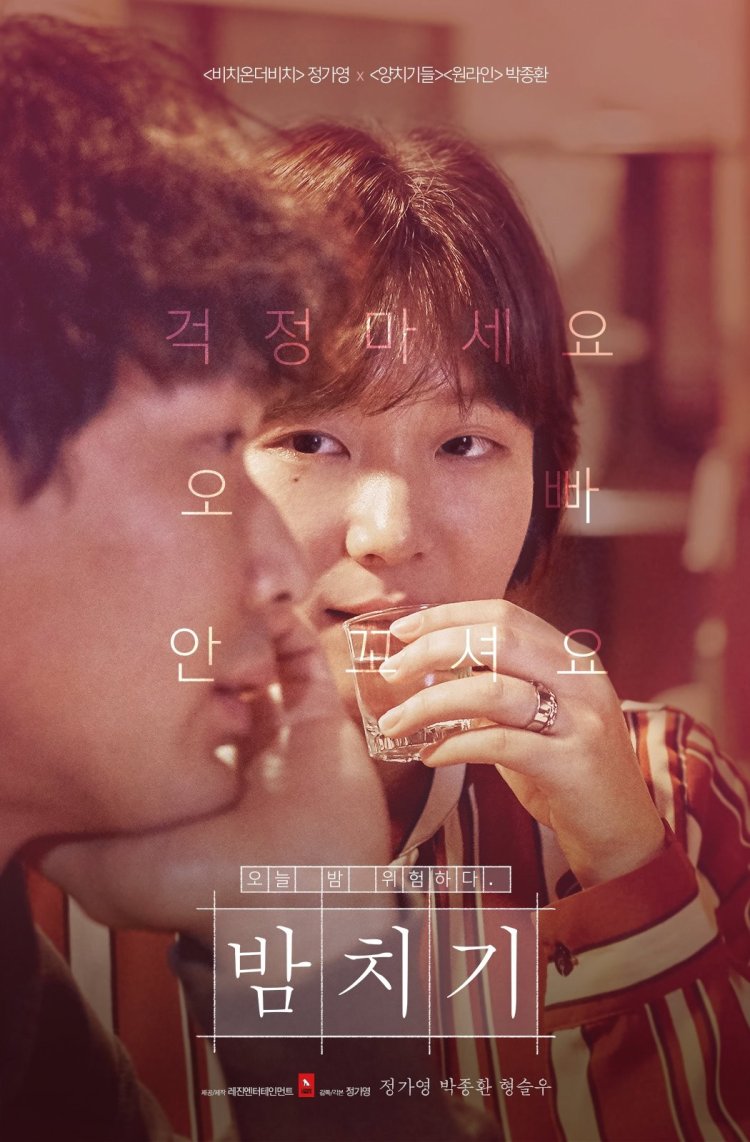
Hit the Night (밤치기, Jeong Ga-young, 2017)

Hit the Night posterFollowing her impressive, Hong Sang-soo inspired debut Bitch on the Beach, Jeong Ga-young returns with a similarly structured exploration of modern relationships though now in a suitably fuzzy colour rather than Bitch’s artful black and white. Once again, Jeong plays a meta version of herself – this time a writer/director ostensibly researching a screenplay but perhaps obfuscating her true motives even as she makes visible her innermost anxieties for her invisible audience.

Hit the Night (밤치기, bam-chi-gi) follows Ga-young (Jeong Ga-young) as she takes a young man, Jin-hyeok (Park Jong-hwan), out on the town. The pair have dinner together, but they aren’t a couple, or even really friends – Ga-young has bought Jin-hyeok’s time on the pretext of interviewing him to get background information for a screenplay she is writing. Jin-hyeok wants to be helpful and has committed to answering Ga-young’s questions as frankly as possible. Her questions are, however, extremely personal from the outset as she begins asking him about his masturbation habits almost before they’ve even sat down. As the night wears on and the drinks keep flowing, Jin-hyeok begins to smell a rat, wondering why it is Ga-young is so interested in his sex life when it doesn’t seem to have much to do with the various screenplays she outlines to him. Ga-young is indeed trying it on, her pretext of “research” a mere ruse and means towards seduction.

It has to be said that the situation is indeed creepy and Jin-hyeok has every right to be upset and offended, especially as he has repeatedly made clear to Ga-young that he has a girlfriend and is not interested in her. If Ga-young were a man taking a young woman out for dinner, plying her with drinks, asking increasingly suggestive and inappropriate questions and all on false pretences she would not be looking very good at all (much, indeed, like a classic Hong Sang-soo hero), not to mention the fact that money has already changed hands.

Nevertheless, despite his irritation Jin-hyeok decides to stay, progressing to a karaoke box rather than simply going home only to leave abruptly after palming Ga-young off on a lonely friend. Despite Jin-hyeok’s slightly underhanded machinations, there is less calculation and a clear possibility for genuine feeling between Ga-young and the other man, but she remains too fixated on her failed conquest and the idealised, unattainable fantasy romance to take a chance on an organic connection with a cheerful guy who likes movies and has his own well developed life philosophy.

Jeong’s approach is meta in the extreme – she repeatedly tells us the ongoing arc of the movie by referencing other movies while also reinforcing her intentions by foregrounding the various ideas for screenplays which Ga-young describes to Jin-hyeok. Her movie titled “Best Ending Ever” ironically has no ending while its hero aims to make a film in which all the characters speak their own fates in a conclusion that “won’t leave you hanging”, but real life is never quite so neat and there are no clean cut, narratively satisfying conclusions to be had in a “film” which is still ongoing.

Ironically enough, unlike the heroine of Bitch on the Beach, Jeong’s screenwriter makes a performance of control she never quite possesses, ceding ground to the earnest Jin-hyeok as he picks her up on her unethical practices and makes frequent attempts to reflect the inappropriate questioning back on her. Ga-young finds herself on the back foot, trying to manipulate Jin-hyeok into abandoning his principles and betraying his girlfriend even as her mask of unflappable frankness begins to slip. Yet Jin-hyeok, even if remaining steadfast in his moral goodness, finds himself captivated by Ga-young’s surprising candour while perhaps more ambivalent about her unusually predatory behaviour. With her short hair and plain, boyish clothes Ga-young adopts an aggressive, “male” persona, pursuing rather than being pursued, and using all of the same tactics that would generally be used against her only for Jin-hyeok to punch a hole through her artifice and expose the very insecurities it was designed to mask.

Not done with her meta messaging, Jeong “ends” on a Days of Being Wild inspired epilogue in which she meticulously dons her chosen persona before setting off to meet Jin-hyeok. This is a film without an ending because in its end is its beginning. Ga-young finds herself running in circles pursuing unrealistic ideals destined to end in frustrated defeat while ignoring the various “realities” which present themselves to her as she sets her sights on the “best ending ever” rather than the emotionally satisfying conclusion.


Hit the Night was screened as part of the 2018 New York Asian Film Festival and will also be screened as part of the London Korean Film Festival on 6th November 2018, 6.30pm at the ICA where director Jeong Ga-young will be present for a Q&A.

International trailer (English subtitles)

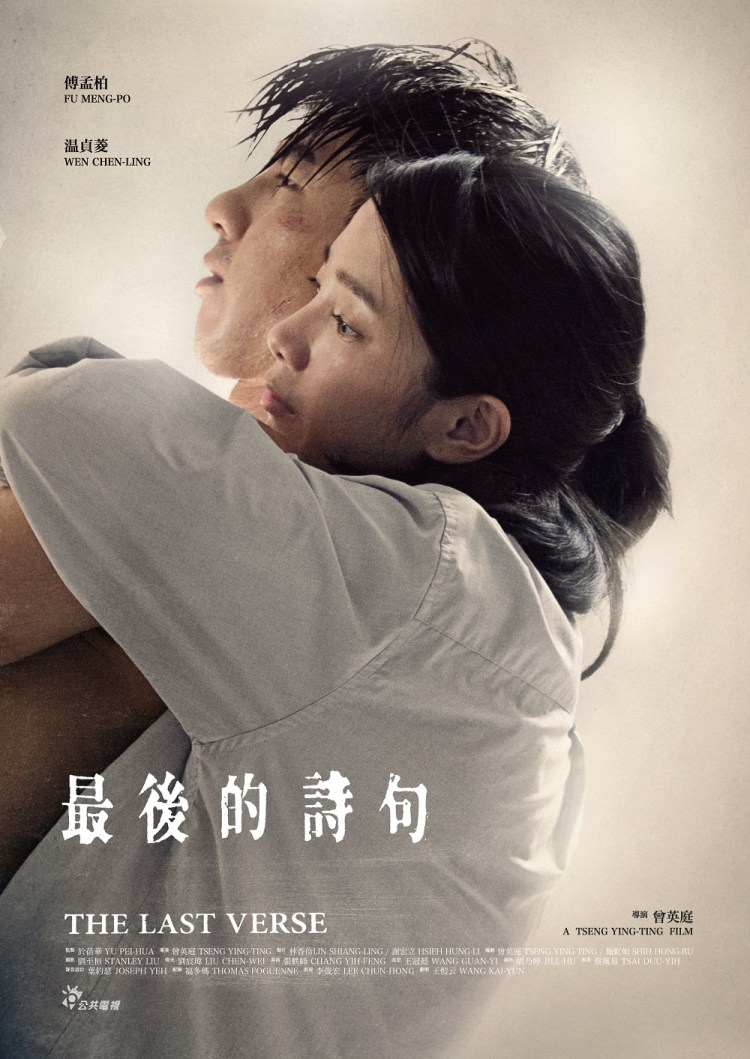
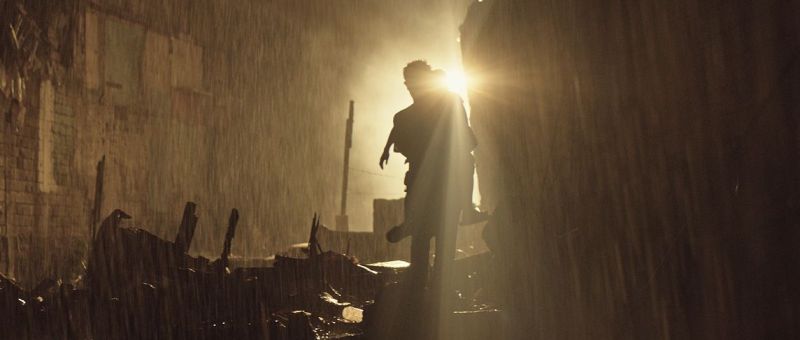
The Last Verse (最後的詩句, Tseng Ying-Ting, 2017)

The last verse posterThe dreams of youth seem destined to elude two idealistic Taiwanese romantics as they fall in love, out of love, into debt and then despair. Set against 16 years of turbulent Taiwanese history, The Last Verse (最後的詩句, Zhòu de S) follows two ordinary teenage sweethearts whose humble dreams of conventional success are consistently undermined by familial legacy and economic instability. Society crushes the dreams of those who refuse to abandon their youthful idealism, but then again perhaps they destroy themselves through chronic insecurity and a refusal to address their own failings rather than conveniently assigning blame to all but themselves.

In the golden summer of 2000, Ren-jie (Fu Meng-Po), nicknamed “poet” meets Xiao-ping (Wen Chen-Ling), the love of his life. The pair start dating and are sure enough about their future to be discussing long term financial plans, but Ren-jie still needs to complete his military service and so their lives are currently in a mild hiatus. Everything starts to go wrong when Ren-jie receives visit a from his estranged father – a broken shadow of a man whose wife left him because of his drunken violence in the face of the humiliating failure of his business when his towel factory went bust. Ren-jie didn’t want anything to do with his dad and sent him packing, only to bitterly regret his decision when he commits suicide on the way home by gassing himself in his car.

This original failing is the fracture line from which all Ren-jie’s subsequent sufferings unfold. Despite signing away any right to his inheritance in order to avoid taking on his dad’s debt, Ren-jie can’t shake off the vicious loansharks his dad once borrowed money from. Having managed to get a well paid, if morally dubious, job as an investment broker Ren-jie’s life ought to be progressing towards middle-class success. He lives with but is not legally married to Xiao-ping who also has a good job at a magazine, but is putting off legalities until the advent of financial stability. Ren-jie is therefore stubborn. He won’t pay the gangsters off because he doesn’t want his father’s legacy and resents their intrusion into his otherwise “respectable” life. He will learn, however, that there are things that cannot just be overcome through bloodymindedness and his male need to avoid being seen to back down is primed to put those he loves in great danger.

Ren-jie’s life is indeed ruined by the precarious era in which he lives as well as the legacy of that which came before, but his destruction is also at his own hands as he falls into a well of toxic masculinity which eventually leads him to harm and then betray the innocent love of his youth. During Ren-jie’s military service, some of the other men suggest staying on in the armed forces – most laugh off the idea but it does at least offer a secure paycheque, a fixed term contract, and the possibility for advancement – all things useful if, like Ren-jie, what you want is to get married and start a family even while still relatively young. Ren-jie, however, did not take this path. We don’t find out why he lost his well paid banking job, if it was the gangsters or the economy, but a few years later sees him an embittered estate agent trying to sell rundown flats in the middle of a housing crash to clients who know they’re better off waiting. Embarrassed not to be able to “provide” for a “wife”, Ren-jie’s male pride cracks under the twin pressures of being forced to give in to the gangsters and fearing that he is not good enough for Xiao-ping, paranoid that she will eventually leave him for someone with more money.

Xiao-ping, however, remains fiercely, idealistically in love with the boy she met at the river all those years ago. Ren-jie, making a common enough though self obsessed mistake, fails to see that financial success is not something that Xiao-ping worries about in any other way than wanting to see the man she loves fulfilled. What Xiao-ping wants is a conventional family life, but Ren-jie’s constant money worries and personal insecurities consistently deny her before he eventually makes another cruel and selfish decision that will only cause her additional suffering.

Ren-jie’s internalised self-loathing eventually boils over into violence, recalling the unwelcome legacy of the father he did not want to become. Yet Ren-jie is also a failure, a drunk, a violent man having meaningless sex with married women in empty apartments in order to try and reassert some kind of control in his largely powerless life. Unfairly burdened by his father’s literal debts, a legacy of violence, and the crushing hopelessness of his existence, Ren-jie has lost the sense of “poetry” which so endeared Xiao-ping to him all those years ago at the river. The memory of those sunswept days, romanticised as it might be, becomes both a touchstone and a dangerous symbol of all that has been lost and can never be regained. Unable to reconcile themselves to the compromises of adult life, the ballad of Ren-jie and Xiao-ping is destined to end in tragedy, self-inflicted wounds the only escape from the crushing hopelessness of a relentlessly indifferent society.


The Last Verse was screened as part of the 2018 New York Asian Film Festival.

Original trailer (traditional Chinese subtitles only)

Interview with director Tseng Ying-Ting from the 2017 Busan International Film Festival.

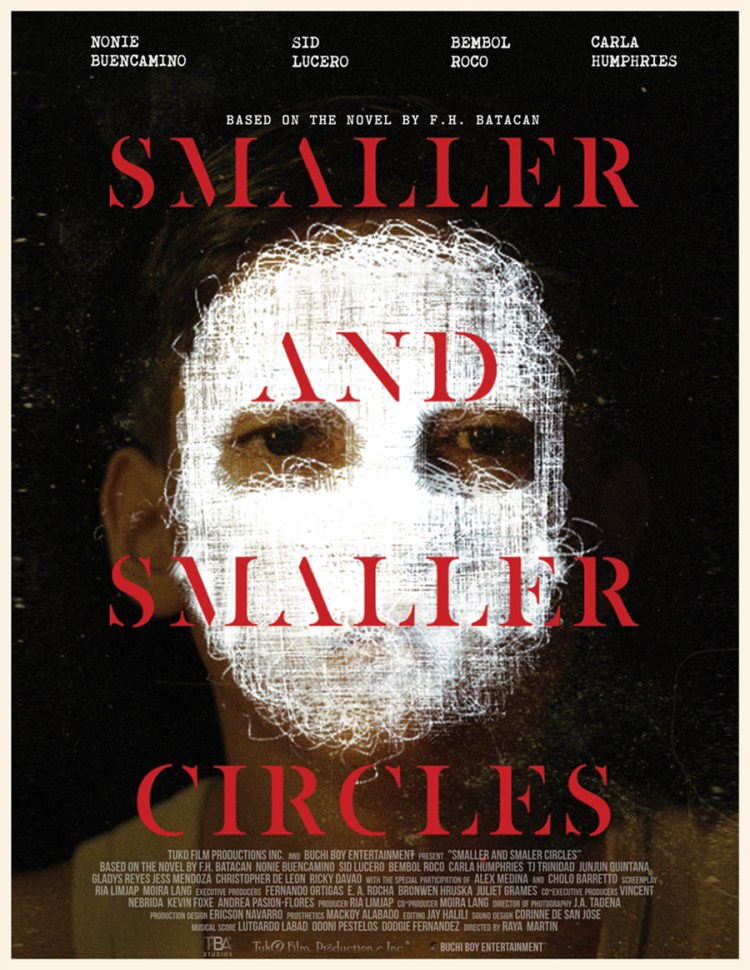
Smaller and Smaller Circles (Raya Martin, 2017)

Smaller and Smaller circles poster“Time and forgetfulness are the allies of abusers” – a Catholic priest reminds his students as part of a history lesson regarding the supposedly bloodless revolution that led to the end of the Marcos regime. Festival favourite Raya Martin dials things back a little in adapting the award winning novel by F.H. Batacan, Smaller and Smaller Circles. Batacan’s novel is often described as the first real Philippine crime novel – something echoed in the ridiculous views of a lazy and self serving police officer who believes there are no serial killers in the Philippines, yet the Smaller and Smaller Circles of the title lay the blame for the heinous acts its centre not at the feet of an evil madman but at those of the society which so progressively damaged his soul as to render it irreparable.

Our hero is himself a priest. Father Gus Saenz (Nonie Buencamino) is a man of faith and compassion who, despite all the failings he can see in it, still believes the Church is the best way to help those in need. He is sickened and appalled by the institution’s intransigence when it comes to bad priests and is preoccupied by one in particular – Father Ramirez, whose inappropriate conduct with children he has doggedly reported for more than a decade only for him to continually escape punishment. In addition to the priesthood, Father Gus is also a teacher of philosophy and a forensic scientist who works as an occasional consultant to the local police. It is in this capacity that he comes to discover a series of murders involving young boys whose bodies were discarded on a local rubbish dump deprived of their hearts, genitals, and faces. With the assistance of his junior priest, Father Jerome (Sid Lucero), and a reporter (Carla Humphries) who was once his student, Gus attempts to solve the mystery behind this horrific series of murders before the killer strikes again.

Martin breaks with genre norms by giving us an immediate insight into the killer’s psychology as we witness the prelude to the killings while listening to his own explanations of why they must occur. The picture he paints of his childhood quickly frames his crimes as a murder of the self as the killer indulges in a compulsion to kill the weak, targeting teenage boys and stealing from them not only the breath of life but the spirit of it too. The first of our circles is the Church – the bad priests whose abuses are sanctioned by their organisation and mitigated by the “good” they leave behind. Father Ramirez was shuffled on and now works for a children’s charity but Father Gus’ attempts to warn the charity’s director fall on deaf ears and then cost him his funding. Only when Father Ramirez’ financial improprieties are discovered is his position finally questioned.

The second ring is poverty. All of these boys were poor and many of them were not identified right away because aside from their parents (if they had them) nobody was going to miss them. The film opens with a scene of children running over a rubbish dump and as the father of the first victim explains, his son was one of many who supported their struggling families by combing over the left overs of the better off looking for anything which might still be useful. Our third ring is bureaucracy – when Fathers Gus and Jerome meet the local councillor, they are surprised to find that she is efficient and committed, keen to do whatever it takes to look after her constituents even if it means going up against the Church or the wider government. However, she knew nothing of the murders and though she is quick to grant Father Gus all the access he needs, it is partly her own efforts to provide essential services to the poor which have enabled the crimes as those who claim to want to help others are really only helping themselves and wilfully turning those same mechanisms back on the people who need them most.

As a man of faith Father Gus does his best, refusing to give up on the killer, trying to ease his burden whilst in grave physical danger. Set in the Philippines of the late 90s, Smaller and Smaller Circles is filled with those still trying to come to terms with the traumatic past but finding its unpleasantness echoing in unexpected places. As such it finds unexpected resonance in the world of 2017 in which life is once again cheap and compassion thin on the ground.


Smaller and Smaller Circles is screening as part of the seventh season of Chicago’s Asian Pop-Up Cinema on 19th September at 7pm, AMC River East 21, plus introduction and Q&A with director Raya Martin.

Original trailer (English subtitles)

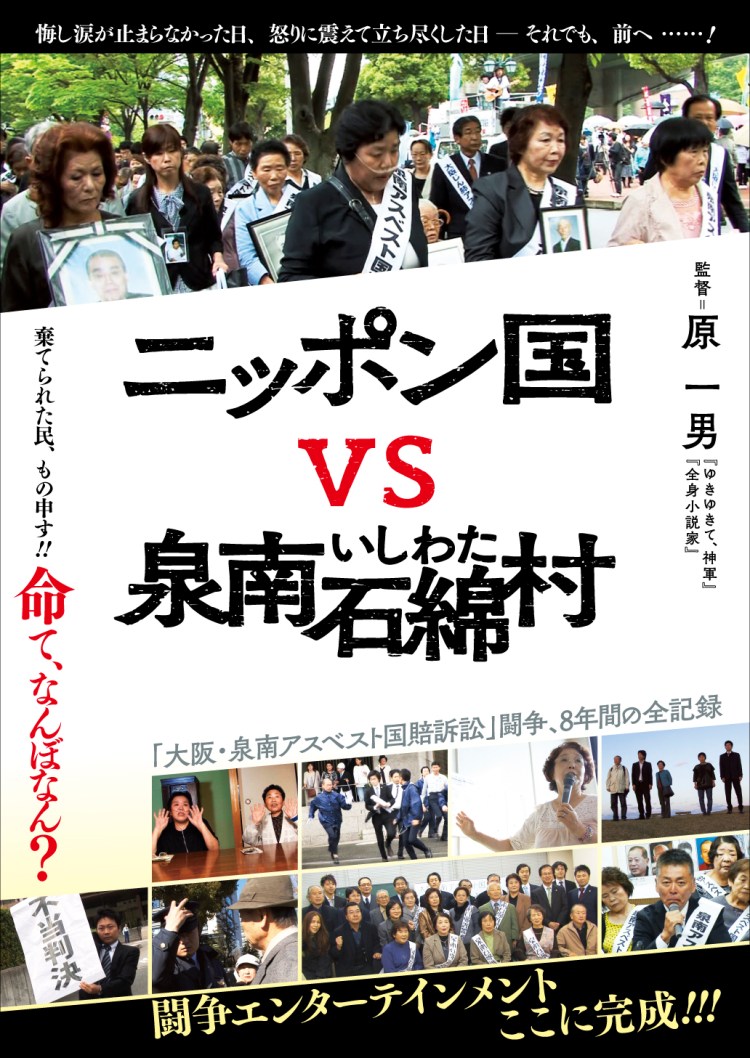
Sennan Asbestos Disaster (ニッポン国VS泉南石綿村, Kazuo Hara, 2017)

Sennan Asbestos Disaster posterIn these troubled times, many may find themselves wondering what the purpose of government really is. Is the primary duty of the state to look after its citizens or to maintain “order” and what exactly is the limit of the state’s responsibility towards those most in need of its care? Director Kazuo Hara had made a career of examining the lives of those who dared to defy the system, but his latest film Sennan Asbestos Disaster (ニッポン国VS泉南石綿村, Nipponkoku vs Sennan Ishiwata Mura) focusses not on an individual but on a group of ordinary people attempting to stand up to governmental bureaucracy after having been betrayed by successive administrations who put economic prosperity ahead of citizens’ welfare.

Asbestos was hailed as something of a wonder for its highly useful properties including sound insulation, fire proofing, strength and durability. Increasing in use throughout the industrial revolution, the harmful affects of asbestos were first discovered in the early 20th century but its use across most of the world was not banned until the turn of the millennium following long campaigns by those whose health had been adversely affected by breathing in its fibres leading to long term respiratory issues and even a risk of cancer.

In Sennan, in the South West of Japan, asbestos production was the dominant economy stretching back into the Meiji era. Concerns had been raised about the possible harmful effects of asbestos before the war and then again afterwards, but successive governments chose to do nothing while workers remained unaware of the risks even while noticing that many of their friends and family members were dying young often of respiratory conditions. Most only became aware that asbestos was dangerous in 2005 following a national scandal known as the “Kubota Shock” in which a well respected manufacturer of machinery was forced to admit that as much as 10% of its workforce had died of asbestos-related conditions.

Hara follows a collective of Sennan residents who have come together to file a class action law suit against the government for failing to ensure safety standards in asbestos production. Led by Kazuyoshi Yuoka whose grandfather owned an asbestos factory before the war, the group members are mainly older men and women who worked in the factories during the economically straitened days of the immediate post-war period. Though many point to the otherwise progressive nature of the factories which were desperate to attract workers and keen to foster a community spirit as well as offering other benefits including access to education, it is true that many of the employees were among those already facing other kinds of oppression aside from the economic – the uneducated rural poor, women, and a large number of minorities including zainichi Koreans. This information is important because it exposes the truth that the state decided these people were expendable and could be sacrificed in the name of the economic prosperity that was deemed necessary in order to rebuild the nation after its crushing wartime defeat.

Unlike the protagonists of Hara’s previous films, the Sennan campaigners are ordinary people – those assumed to have very little social power pressuring their government to take responsibility for having wilfully abandoned them. Unsurprisingly, the government is not very keen to do so. The legal case drags on eight years during which many of the sufferers die while their children or spouses continue the quest for justice. The case itself is wider than it first seems, extending not just to factory workers but to those exposed by general proximity such as famers owning land near asbestos plants and in one poignant case a woman whose parents took her to the factory while they worked when she was a child.

Forming a tightly knit community, the campaigners present a united front but come up against the wall of bureaucracy. As time wears on it’s difficult not to feel a small amount of sympathy for the junior civil servants the government trots out to deal with angry protestors, forced to repeat the same tired phrases without explanation while the group insist on seeing someone with a bit more clout, but even when the case is finally proved, progress is slow and the ritual apology as hollow as it always is. Yet even if some are angered by the perfunctory nature of professional atonement, others actively embrace it and appear grateful even for this small shred of attention from the authority. It’s here that Hara wavers in his sympathy, admiring the kindhearted solidarity of the protestors but lamenting their tendency towards feudal deference when they should be raging against a society which is often content to exploit and discard them, remaining accidentally complicit in enabling a gradual decline of democratic freedoms.

Nevertheless, Sennan Asbestos Disaster is the chronicle of a (partially) successful campaign in which a group of concerned citizens working within the law eventually force the government to concede an error, even if that concession may turn out to have no wider application. The victory, however, can’t bring back lost time nor ease past suffering and only serves to draw a line under one chapter of a struggle which is sadly far from over.


Sennan Asbestos Disaster was screened as part of a Kazuo Hara focus at Open City Documentary Festival 2018.

Original trailer (English subtitles)

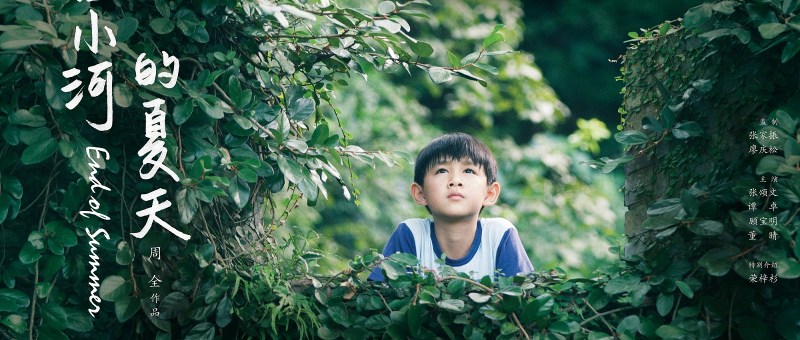
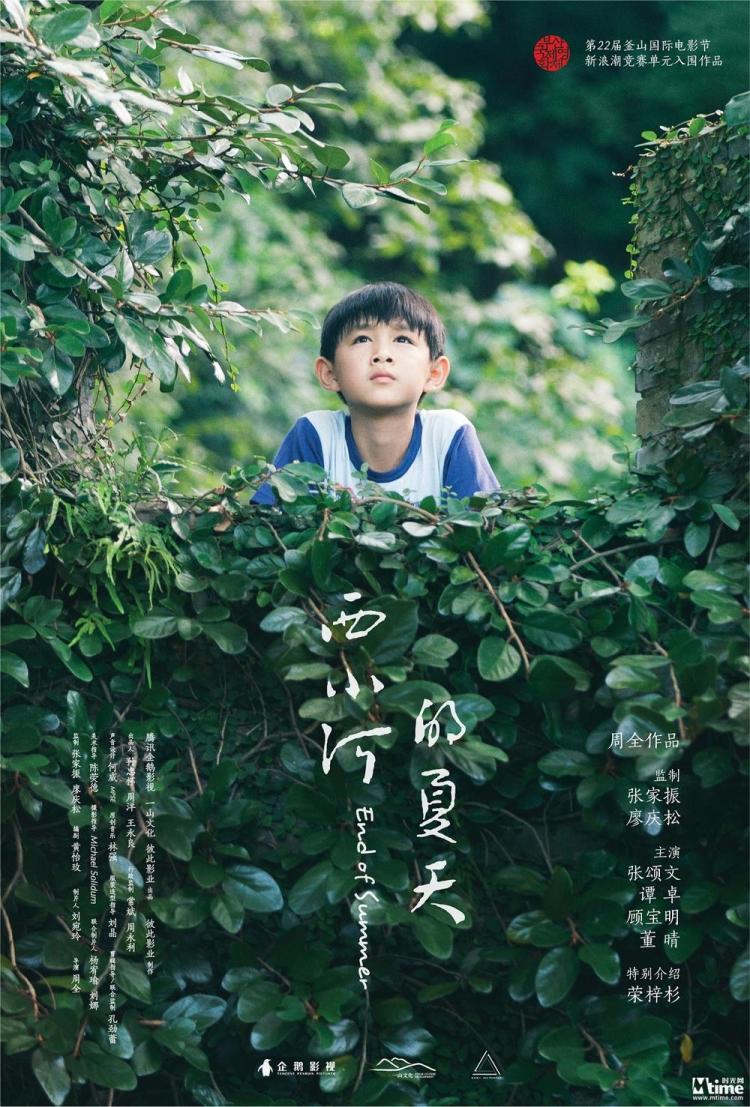
End of Summer (西小河的夏天, Zhou Quan, 2017)

The End of Summer posterMany things were changing in late ‘90s China. For one little boy in the summer of 1998, however, nothing much mattered beyond the World Cup which was being broadcast in its entirety for the very first time. Part nostalgia fest for a more innocent world, Zhou Quan’s End of Summer (西小河的夏天, Xī Xiǎo de Xiàtiān) is, as the title implies, a story of befores as its various protagonists attempt to resolve a series of personal crises that will lead to great changes preceding the autumn of 1998.

Football obsessed little boy Xiaoyang (Rong Zishan) has to keep his love a secret because his dad, Jianhua (Zhang Songwen), thinks all sports are frivolous and has forbidden his son to play with the other children. Jianhua is also a high ranking teacher at Xiaoyang’s school and demands high levels of discipline and commitment from his family, even forcing Xiaoyang to dob one of his friends in under heavy questioning about a playground fight. Bored and lonely at home, Xiaoyang has begun to bond with an older man at their courtyard who also loves football and has promised to help Xiaoyang train for the upcoming school tryouts next term if only he can persuade his dad to sign the consent form.

Meanwhile, there’s trouble brewing on the home front. Xiaoyang’s mother Huifang (Tan Zhuo) is a successful Peking Opera performer whose career is skyrocketing now that she’s been nominated for a prestigious award. Jianhua has also been earmarked for a promotion at work and is covering for a sick colleague, but the arrival of a new teacher threatens to dangerously unbalance the carefully won equilibrium of the Gu family.

Miss Shen (Dong Qing) is indeed a harbinger of social change. The polar opposite of Huifang, Miss Shen is a hippyish free spirit who plays the guitar and sings folk songs in a local cafe with her boyfriend. She teaches the children English through singing songs and playing games, always cheerful and energetic with an adorable smile and easy going personality. Xiaoyang proves himself unusually astute for his years when he misinterprets an innocent scene between Miss Shen and his father, correctly guessing that Jianhua has developed a mild crush on the lovely young woman though perhaps not realising that Miss Shen is merely naive and entirely oblivious to her boss’ ulterior motives.

The camera first catches Xiaoyang caught between two football teams, standing motionless and staring vacantly ahead. He remains caught between two worlds while prompted a little early towards the compromises of adulthood as he experiences the moral outrage of realising his rigid, authoritarian father maybe breaking all the rules of conventional morality by stepping out on his mum. A victim of China’s one child policy, he is often intensely lonely, left alone at home with nothing to do but study while his mother is out rehearsing and his dad increasingly staying out late to offer “guidance” to Miss Shen.

Xiaoyang’s loneliness finds a mirror in the grumpy old man from across the way, Zheng (Ku Pao-Ming), who appears to have fallen out with his family and is missing his own absent grandson, Bao. Zheng picks up the fatherly responsibilities Jianhua has failed to fulfil – supporting Xiaoyang in his football dreams, giving him little bits of life advice, listening intently to his worries regarding his parents’ marital problems without trying to sugarcoat the seriousness of the issues or making a pretence of humouring a perspicuous little boy as they turn detective and catch Jianhua in the act but just miss out on his humiliating defeat and the epiphany which accompanies it as he is forced to confront the fact that he has become a sad old man. Jianhua’s major problems stem from an intense lack of self confidence as his growing son begins to reject his rigid authority and his wife’s increasing success punches a hole through his male pride. Temporarily boosted by the possibility of a promotion, he decides to try rebelling by chasing a younger woman who is very much not his type, little knowing that she sees him only as a venerable teacher and is shocked by his improper interest in her.

Meanwhile change is on the horizon everywhere. The courtyard is earmarked for “redevelopment”, and Mr. Zheng’s family are constantly trying to convince him to come and live with them in the city. By the end of the summer everything will have changed, some things for the better and some perhaps not but there will at least be a shift as each is forced into a reconsideration of their present circumstances. End of Summer is gentler than its title would suggest, a wistful look back one dramatic summer in the childhood of a sensitive little boy, but what it lacks in impact it makes up for with sincerity and a good deal of warmth.


End of Summer was screened as part of the New York Asian Film Festival 2018.

International trailer (English subtitles)

Interview with director Zhou Quan from the 2017 Busan Film Festival.
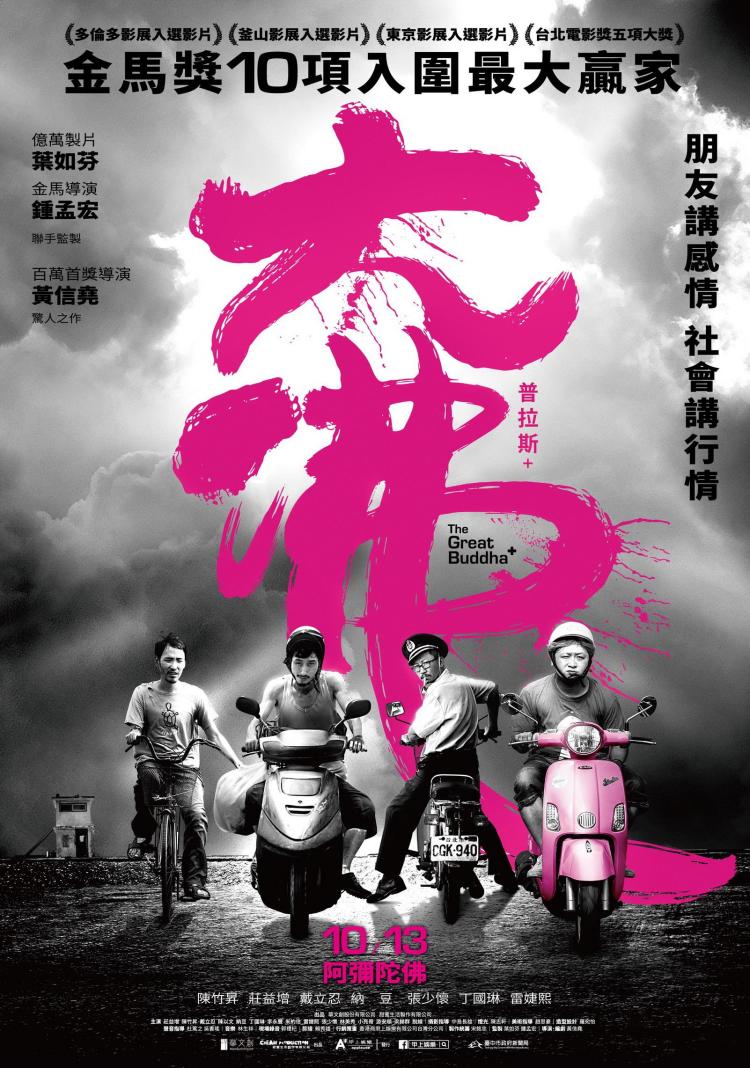
Poetry Angel (ポエトリーエンジェル, Toshimitsu Iizuka, 2017)

poetry angel posterLife is confusing. You think you know what you want, only to realise it wasn’t what you wanted at all. What you really wanted was the very thing you convinced yourself you didn’t want so that you could want something else. The characters at the centre of Toshimitsu Iizuka’s Poetry Angel (ポエトリーエンジェル) are all suffers of this particular delusion, lost and alone in a small town in rural Japan without hope or direction. That is, until they discover the strange sport of “poetry boxing”.

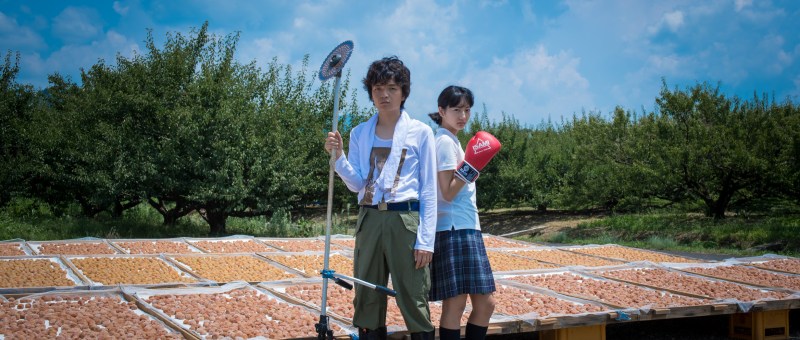
Our hero, Tsutomu (Amane Okayama), is a 21-year-old farm boy with dreams of becoming an author. His illusions are, however, shattered when he checks the board in the community centre and discovers he hasn’t even placed in a local history essay writing contest which appears to have been won by a child. In this delicate state, a pretty girl suddenly approaches him and begs for his help but then drags him into a seminar room where he is forced to listen to a lecture on “poetry boxing”. Almost everyone else leaves straight away but Tsutomu is intrigued – after all, semi-aggressive literary sport might be just the thing to get an aspiring author’s creative juices flowing.

Tsutomu’s problems are the same as many a young man’s in Japanese cinema – he resents having his future dictated to him by an accident of birth. His father owns a large orchard and is a well respected producer of salt pickled plums. As the only child, Tsutomu is expected to take over but he hates “boring” country life and the repetitive business of farming, his thinly veiled jealousy all too plain when an old friend returns from Tokyo on a visit home between university graduation and a new job in the capital. Tsutomu thinks of himself as special, as an artist, but no one seems to be recognising his genius.

This might partly be because his only “poem” is an alarming performance art piece in which he laments his tendency to destroy the things he loves with his “weed whacker”. The sport of poetry boxing has no physical requirements but it has no limits either. It’s more or less like performance poetry or a less directly confrontational kind of slam, but participants are encouraged to step into the boxing ring and express themselves in whichever way they see fit. Once both participants have concluded their “poems” a panel of judges votes on the winner. Like Tsutomu, the other members of the poetry boxing team are dreaming of other things or claiming to be something they’re not. Rappers who really work in cabaret bars, lonely girls who fear they’re plain and long to be “cute”, civil servants longing to kick back at inconsiderate citizens, and old men who really do just want to write poetry and appreciate the time they have left.

Yet through the endlessly wacky tasks set by Hayashi (Akihiro Kakuta), the leader of the group, each of the participants begins to gain a deeper understanding of who they are and what they really want. Not least among them An (Rena Takeda), a gloomy young girl who spends her life scowling at people and refusing to speak. She’d been into boxing for real and first met Tsutomu when she punched him in the face because his unexpectedly sexist friend from Tokyo was harassing her in the street. Poetry, however, begins to unlock even her deepest held desires which can finally be voiced from the ironically safe space of the poetry boxing ring.

There may be nothing particularly original about Iizuka’s delayed coming of age tale, but it has genuine warmth for its confused no hopers as they look for connection through formalised language and ritual play, discovering new depths to themselves as they do so. As it turns out mostly what you want was there all along, only you didn’t want to look. Annoyingly, other people may have figured it out before you but that can’t be helped and is, after all, only to be expected. Poetry is a doorway to the soul but it’s also one that might need a good kicking to get it open. Maybe the boxing ring is a better place to start than one might think.


Original trailer (no subtitles)