The Age of Awakening (前進, Ke Chin-Yuan, 2018)

Taiwan is now a prosperous society regarded as most the progressive in Asia, yet for some that prosperity has come at too high a cost. Ke Chin-yuan’s documentary The Age of Awakening (前進, Qiánjìn) looks back over the last thirty years and wonders how it can be that in a little under half a century humanity has managed to “devastate this beautiful, mountainous island”. Tracing the links between the authoritarian past and the origins of eco-activism, Ke is nevertheless keen to remind us that the environmental costs of unchecked capitalism are not a local issue. 

Ke cites the titular “awakening” at the tail end of the martial law era, explaining that the picturesque coastline where he first picked up a camera was forever ruined when the area was re-designated as an industrial park. His own eyes were awakened to the environmental costs of development when local residents rose in opposition to the building of a petrochemical plant, apparently a key part of the nation’s economic strategy. Charting the resistance towards the DuPont plant in Lugang and the LCY Chemical Corp in Hsinchu, he uncovers the hidden link of environmental harm and authoritarianism as centralised government and a prohibition on protest largely prevent the local community having a say over their own land. Though some may have been glad to see the plants arrive, misled by false promises of good jobs and the benefits of development, they were soon disillusioned by the reality in which industrial pollution poisoned the sea life on which the local economy was otherwise dependent while also destroying farmland and leaving an acrid, near unbearable smell in the air. 

As one of the protestors puts it, all they want is breathable air and drinkable water. If your government cannot guarantee you such basic rights, then what really is it for? Yet the government, Ke seems to suggest, is minded to make a tradeoff and thinks this is an acceptable price for the prize of economic growth. Seeing the imposition of the plants and misinformation surrounding their foundation as yet more evidence of the various ways in which those with the least power suffer most under authoritarianism, Ke centres the awakening to environmentalism as a cornerstone of the movement against martial law in which communities sought the power and freedom to be able to advocate for their rights on a local level.

Yet as he points out the environment is never just a local issue. The protestors may be successful in keeping the plant out their town, but maybe the plant gets built the next town over where they perhaps aren’t so lucky possibly because they have less sympathetic political leaders keener to toe the government line. Taiwan is a small island, and at least according to some you can’t ever really be far enough away to escape the effects of industrial pollution. Yet even when prevented from building in Taiwan, local companies simply shift overseas to other, even less empowered, areas of Asia where the same thing happens again. The poor are misled by offers of good jobs only to find dead fish washing up on their shores, eventually mounting protests against the unfair imposition of having a chemical plant built on their land. In Taiwan, meanwhile, the issue is even thornier with large developments built on territory which belongs to the indigenous community. 

Nevertheless, the drive for economic development continued after the martial law era. According to another protestor, it’s a matter of conscience rather than technology with the choice to favour the economy over the environment seemingly irreversible even when major parties win on an economic platform and govern with the knowledge that such policies have widespread public support. So, Ke asks, why is the government so unwilling to listen when the idea that the environment itself is also a basic human right is almost a given? What has actually changed in the last three decades with Taiwan’s transition to democracy? Not enough, according to his veteran activists, but it’s not all doom and gloom. Awareness has improved, people care more than they used to. They’ve been ‘awakened” to the issues in all of their complexity and Taiwan has a lively, diverse and intersectional activist scene in which environmental concerns are very much part of a social justice movement full in the knowledge that the environment is never just a local issue. The age of awakening may have come to an end, but the age of action is only just beginning. 


The Age of Awakening screens on 6th December at London’s Rio Cinema as part of Taiwan Film Festival UK 2020.

Original trailer (no subtitles)

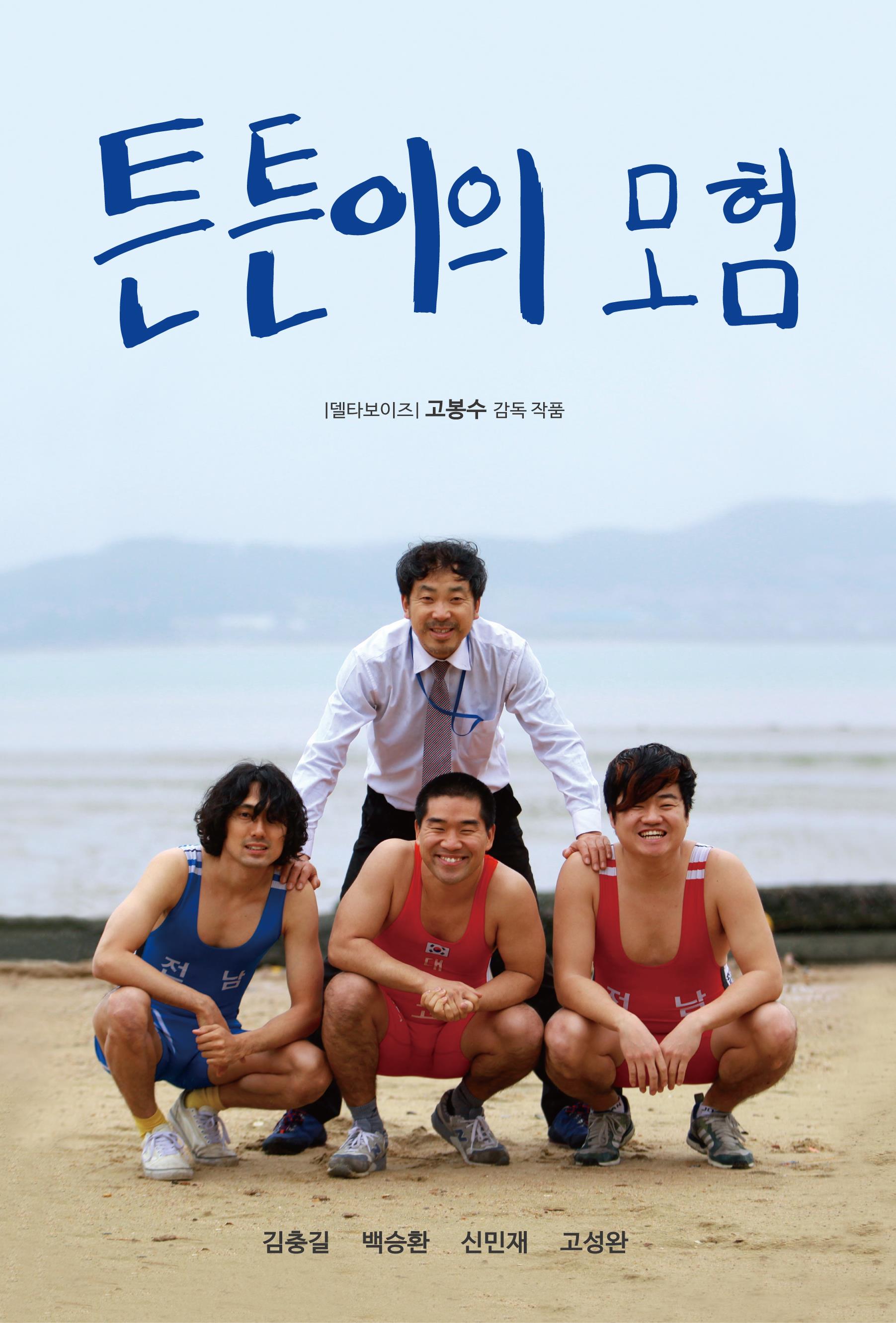
Loser’s Adventure (튼튼이의 모험, Ko Bong-soo, 2018)

Three aimless young men attempt to shake off small-town despair through the medium of high school wrestling in Ko Bong-soo’s underdog indie sports comedy Loser’s Adventure (튼튼이의 모험, Teunteuniui Moheom). Unkind as it may be to say, the young men are or at least feel themselves to be “losers”, each battling a sense of hopelessness dealing with difficult family circumstances and desperate to escape “this pathetic life” as one terms it for the comparatively brighter lights of Seoul. 

In his last year of high school, Choon-gil (Kim Choong-gil) is now the only member of the wrestling club seeing as everyone else has long since drifted away and, in fact, the coach (Ko Sung-hwan) quit ages ago to drive a bus because he enjoys being able to earn a living. Choon-gil, however, refuses to give up and has been writing daily letters to the head of the wrestling federation in the hope that he’ll somehow be able to resurrect his sporting dreams while trying to convince his conflicted friend Jin-kwon (Baek Seung-hwan) to rejoin the team. While Choon-gil lives alone with his authoritarian, alcoholic father, Jin-kwan has a mild complex about his widowed Filipina mother and her relationship with the dance-loving boss at her job in a junk shop. Hyuk-jun (Shin Min-jae), meanwhile, is a tough guy dandy living with an older brother and and sister in the absence of parents. A petty delinquent and a member of the faintly ridiculous “Black Tiger” gang, Hyuk-jun thinks wrestling’s a bit naff and is offended when his brother tries to give him an ultimatum to start studying hairdressing at his sister’s salon or pick a sport to get good at with the hope of getting a scholarship to uni. 

None of our guys is particularly bright, they know they’re unlikely to make it out through their academic prowess and probably they don’t really think wrestling is going to take them anywhere either but it’s at least something. The most sceptical of the boys, Jin-kwan reminds Choon-gil that he isn’t even very good at the sport and the only reason they took it up in the first place was because the coach semi-adopted them as the surrogate father they each needed at the time. Nevertheless, he’s determined to do whatever it takes to make his wrestling dreams come true. He is however, in for a shock as it turns out that the building holding the wrestling gym is due to be demolished in the imminent future. For some reason moved by Choon-gil’s pleas, the coach calls in a few favours and manages to get the guys listed on an upcoming tournament with the hope that if they don’t lose too badly it will show that the moribund club has promise and is worth saving. 

The irony is that as hard as he trains Choon-gil just doesn’t have much of an aptitude for the sport. He adopts the position of a mentor to new recruit Hyuk-jun, but annoyingly enough he turns out to be something of a natural, while Jin-kwon, the skinniest of the boys though also the tallest, resents the coach’s constant pressure to lose more weight. They are each, as it turns out, at the mercy of their essential character flaws, Choon-gil the hardworking dreamer who just doesn’t have it, Jin-kwan timid and struggling against himself, and Hyuk-jun talented but hotheaded and self-sabotaging in allowing his emotions to get the better of him. 

Still, they do not give up. No one really rates their chances, Choon-gil’s violent, drunken father even attempts to disown him for his love of wrestling, insisting that he become a bus driver instead for the steady paycheque, while Jin-kwan is openly mocked by his sister and Hyun-juk’s dream of starting a business in Seoul is derided both by his brother and by the Black Tigers who continue to plague him even after he tells them that wrestling’s cool after all and they’re all just a bunch of small town losers. The jury’s out on whether the guys can wrestle themselves free of their sense of impossibility and despair, not to mention their sometimes unsupportive family members, but they have perhaps at least found an outlet for their frustration not to mention a surrogate fraternity as they continue on their “loser’s journey” together looking for an exit from the disappointing small town future. 


Loser’s Adventure streams in Poland until 6th December as part of the 14th Five Flavours Film Festival.

International trailer (English subtitles)

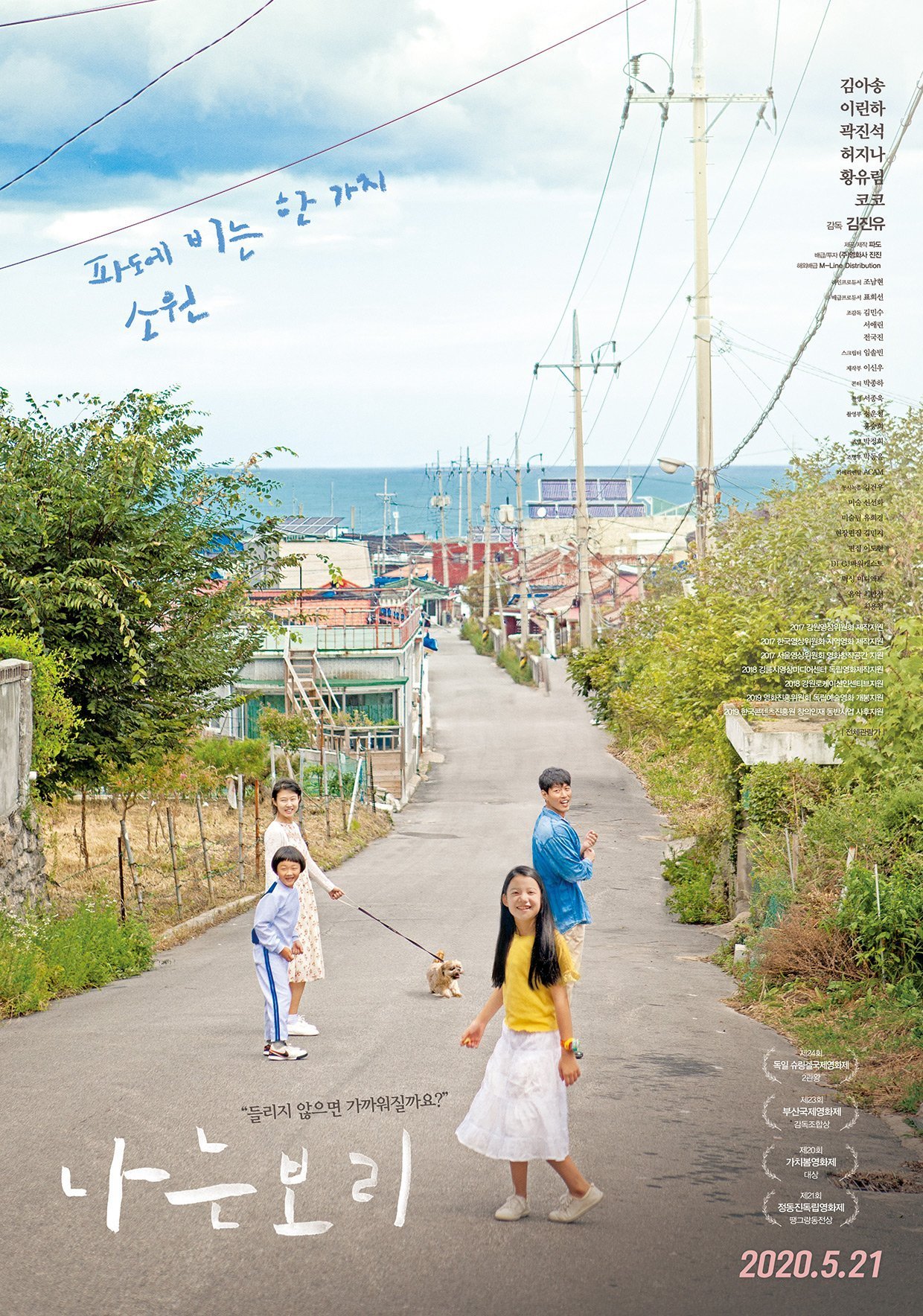
Bori (나는보리, Kim Jin-yu, 2018)

Perhaps it’s not unusual for a soon-to-be teenage girl to feel out of place at home, but for young Bori the sense of alienation is all the greater because she is the only hearing member of her family. Set in a charmingly tranquil seaside town during a serene summer holiday, Bori (나는보리, Na-neun-bo-ri) touches on themes of identity and belonging, disability and discrimination, communication and connection, but is at heart a beautifully drawn coming-of-age tale in which the heroine learns to feel at home in herself and her family while fully accepting that difference need not be a barrier. 

Though her home life appears to be blissfully happy, Bori (Kim Ah-song) can’t help feeling a little pushed out in being necessarily othered as she acts as a speaking interpreter for her family members. She mildly resents her younger brother Jeongwoo (Lee Lyn-ha), who like her parents is deaf, because he’s allowed to mess around just being a kid while she has to take on a more mature responsibility, telephoning for take away food, buying train tickets at the station, talking to bank tellers, giving taxi drivers directions etc. Though she obviously understands sign language, she does not always use it, often falling back on note writing to get across exactly what she wanted to say, and sometimes feels excluded from the happy bubble of her parents and brother as they continue to communicate in ways which still elude her. 

For these reasons, she’s taken to stopping off at the local shrine on her way to school to pray that she somehow loses her hearing. Bori’s best friend, Eun-jeong (Hwang Yoo-rim), is confused why she would actively like to deafen herself but nevertheless supportive, lending her her earphones to listen to white noise at unhealthy decibel levels but it’s not until the first day of summer holiday when she copies an elderly diver on TV and tries to implode her eardrums by jumping in the sea that she almost gets her wish, waking up in hospital and telling everyone that she too is now deaf. To Bori, all she’s done is make herself the same as everyone else in her family so she can’t understand why people seem upset. After all there’s nothing wrong with being deaf, so why is everyone acting as if she’s met with some kind of tragedy?

Then again, being “deaf” doesn’t seem to make the difference she thought it would. Her father (Kwak Jin-seok) cheerfully tells her it makes no difference at all to him whether she’s deaf or not, she’s just his lovely little girl while her mother (Hur Ji-na) who was understandably upset at the hospital quickly adapts. Jeongwoo meanwhile begins to confide in her a little more, temporarily becoming the big brother as he explains to her how difficult it can be for him as a deaf child in a hearing school. “I’m difficult for him too” Jeongwoo generously concludes telling his sister that he mostly doodles or sleeps in class because he finds it difficult to lipread and the teacher doesn’t seem to have made much of an effort to be inclusive. Bori realises that the reason her brother’s so football crazy isn’t just that he enjoys the sport, but that it’s the only time the other kids interact with him. He doesn’t really have any “friends” and even though he’s the best player for his age he’s only a substitute on the team because the coach is wary of his disability even though it can’t be said to make much difference on the pitch.

Eun-jeong, while suspecting Bori might be faking, treats her pretty much the same making an effort to communicate in whatever manner works, though the girls were used to talking through notes in class anyway. Some of the other kids at school, however, are far less understanding, unaware she can of course hear their barbed comments, and while out shopping with her mother she becomes more aware of the direct discrimination she faces as two rude cashiers in a boutique talk openly of their disdain for the “mute” in their store, whacking an extra 5000 won on the price thinking she won’t notice. Bori is outraged, but can’t say anything without blowing her cover. 

The worst occurs however when her aunt takes her and her brother for a checkup at the local hospital where the doctor suggests possible surgery and a cochlear implant for Jeongwoo. Bori hears him say that after the operation Jeongwoo would be unable to play sports or go swimming because of the dizziness meaning he’d have to give up football, his only outlet. Conflicted over whether to warn him, she is also a little offended that everyone seems to consider deafness as a problem to be fixed, not even bothering to enquire if that’s actually something that Jeongwoo might want. She repeatedly asks him, but is conflicted when he tells her that he would or at least he doesn’t necessarily want a “cure” for his deafness but would desperately love to be able to talk to his friends. Nevertheless, she’s annoyed with her aunt for railroading them towards “normality” without properly discussing it with them. 

Talking with her father he tells her of the discrimination he faced as a child, that the reason he can’t write is because he was badly bullied and prevented from attending school. He’s glad things are better for Jeongwoo, though they are obviously not perfect. What Bori realises is that her difference doesn’t matter and neither does anyone else’s, the people who love her would still love her no matter what and the ones that wouldn’t aren’t worth worrying about, while she also resolves to stand up to discrimination and injustice on behalf of those who might not be able to. A charmingly wholesome coming-of-age drama set in a sunny seaside town, Bori is a gentle plea for a more inclusive world fulled by empathy and openness. 


Bori streams in the UK on 12th November as the closing gala of this year’s London Korean Film Festival.

International trailer (English subtitles)

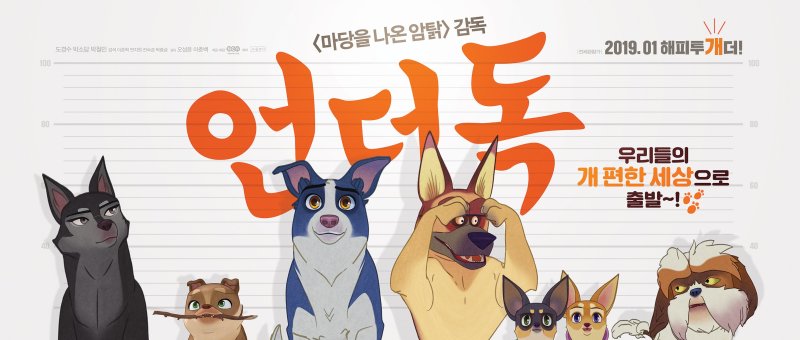
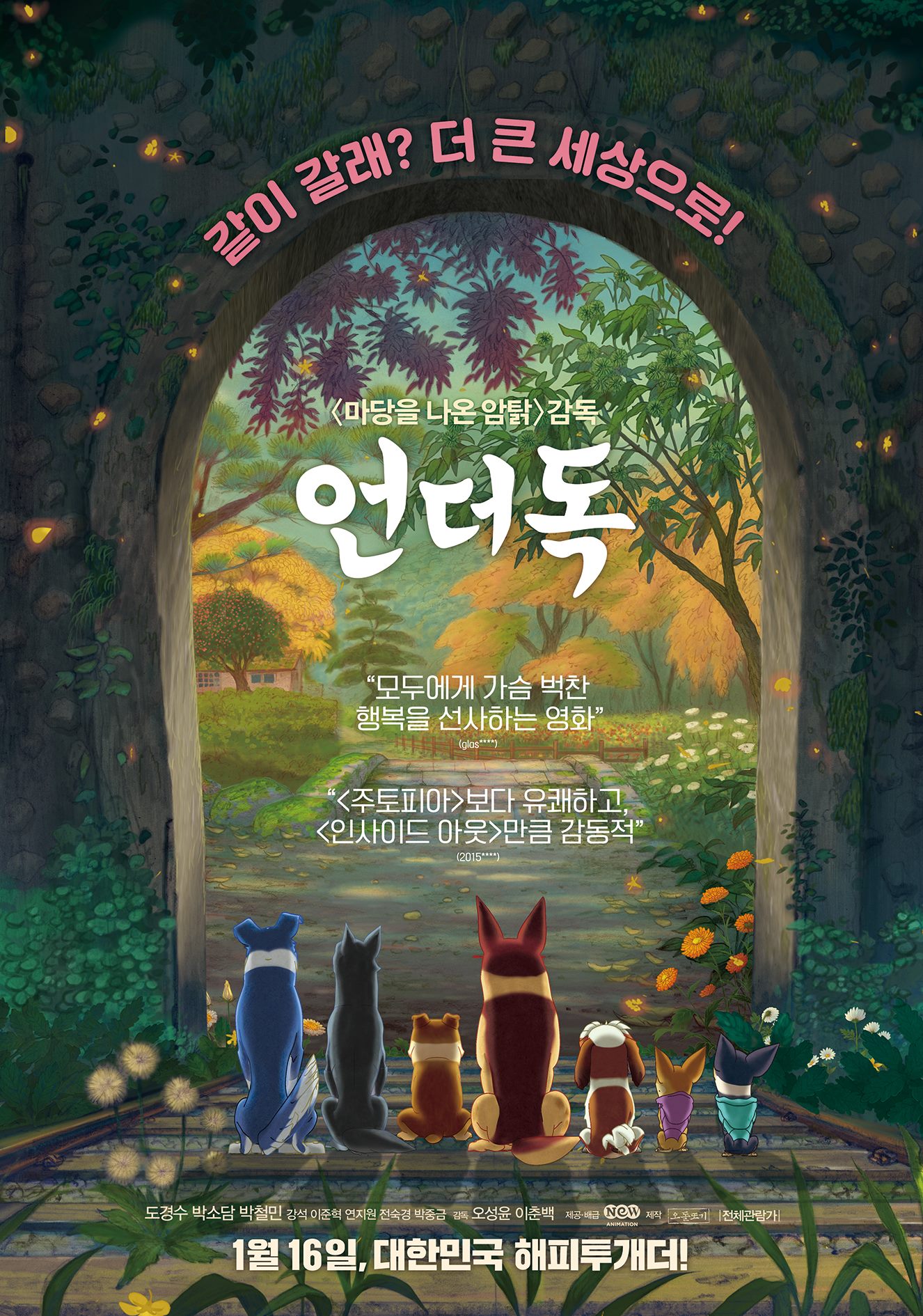
Underdog (언더독, Oh Sung-yoon & Lee Choon-baek, 2018)

“If you want freedom, you need to know how to survive” according to a wise old hound in Korean animation Underdog (언더독), produced by the team behind Leafie: A Hen into the Wild. A somewhat subversive tale of an individualistic desire for total freedom outside the walls of an indifferent society, Underdog also celebrates the power of friendship and family while following our oppressed canines all the way into the ironic paradise of the DMZ, a literal cage but one guarded on either side and guaranteed free of human cruelty. 

Our hero, Moong-chi (Do Kyung-soo), is a loyal family dog who has been raised as a domestic pet and knows nothing of life outside his apartment. Unfortunately, however, his owners bought a cute and tiny puppy without considering that he would eventually grow into a sizeable dog and so they no longer want to look after him. Heartless and irresponsible, Moong-chi’s owner drives him out into the forrest and leaves him there with a bag of kibble, seemingly aware that a domestic dog lacks the knowledge to survive in the wild. Pining and naive, Moong-chi fully expects his owner will be back to fetch him but eventually realises he’s been abandoned after meeting up with a small pack of other dogs in the same position and witnessing another car pull up and push a sick dog out of the passenger side before driving off. 

Trying to survive together while taking refuge in a derelict house in an abandoned part of town, the dogs lament their dependency on humans who have after all broken their hearts and then betrayed them. As they weren’t born wild, they’ve been deprived of their natural way of life, corrupted by a false civility that leaves them totally at the mercy of humans for the sustenance they need to survive while lacking the skills to hunt or forage for food other than that already discarded by the townspeople. Opinions within the group are divided with some fully accepting that they have no other option than to depend on humans despite the danger and duplicity they present, and others longing to find a place that’s free of humankind where they can truly be free to live as nature intended. 

For a children’s film, Underdog is entirely unafraid to be explicit in exploring exactly what “as nature intended” means, the ultimate goal of the dogs being to shift away from anonymous kibble towards tearing apart other kinds of wildlife with their bare teeth including cute bunnies and strangely scary deer. An early conflict arises between the abandoned domestic strays from the town and the true wild dogs from the mountain who complain that their hunting grounds and living environment are forever shrinking thanks to urban encroachment of which the strays are a minor symptom. The strays fear the mountain dogs for their ferocity, while the mountain dogs resent the strays for their neutered domesticity. Yet if they want to find freedom and a place free from human cruelty they’ll need to work together to get there. 

Meanwhile, the gang find themselves continually stalked by a psychotic dog catcher (Lee Jun-hyuk) who, paradoxically, relies on the exploitation of dogs for his livelihood yet vows to wipe them all out, particularly keen on bagging Moong-chi’s potential love interest mountain dog Ba-mi (Park So-dam) with whom he has a history. Bringing in the full horror of puppy farms and questionable ethics of a commercialised pet industry, not to mention dog fights and the meat trade, Underdog asks some uncomfortable questions about the unequal co-dependencies of animals and humans which will probably fly over the heads of the younger audience, but in any case insists on the right of wild animals to run free while simultaneously acknowledging the ability to choose to remain at the side of humans when the gang run into a kindly couple running a small animal sanctuary way out in the country living a more “natural” way of life free of the petty oppressions which mark urbanity. 

Nevertheless, the gang have an extremely ironic destination in mind in heading for the one place on Earth where human violence is not permitted, a buffer zone against the folly of war. Apparently seven years in the making Underdog boasts beautifully drawn backgrounds and an unusual 2D aesthetic that falls somewhere between cute and realistic while featuring scenes and themes that will undoubtedly prove distressing to sensitive younger viewers. Nevertheless, it presents a universal message of freedom and independence as well as solidarity among the oppressed as the abandoned dogs band together to find their path to paradise where they can live the lives they want to live free of human interference. 


Underdog streams in the UK 6th – 9th November as part of this year’s London Korean Film Festival.

International trailer (Korean with English subtitles)

Turning 18 (未來無恙, Ho Chao-ti, 2018)

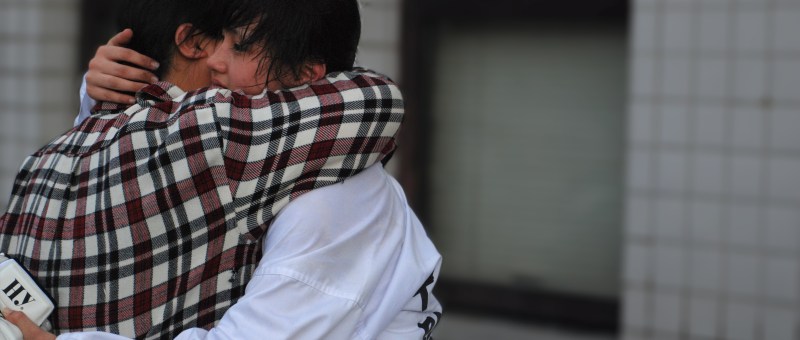
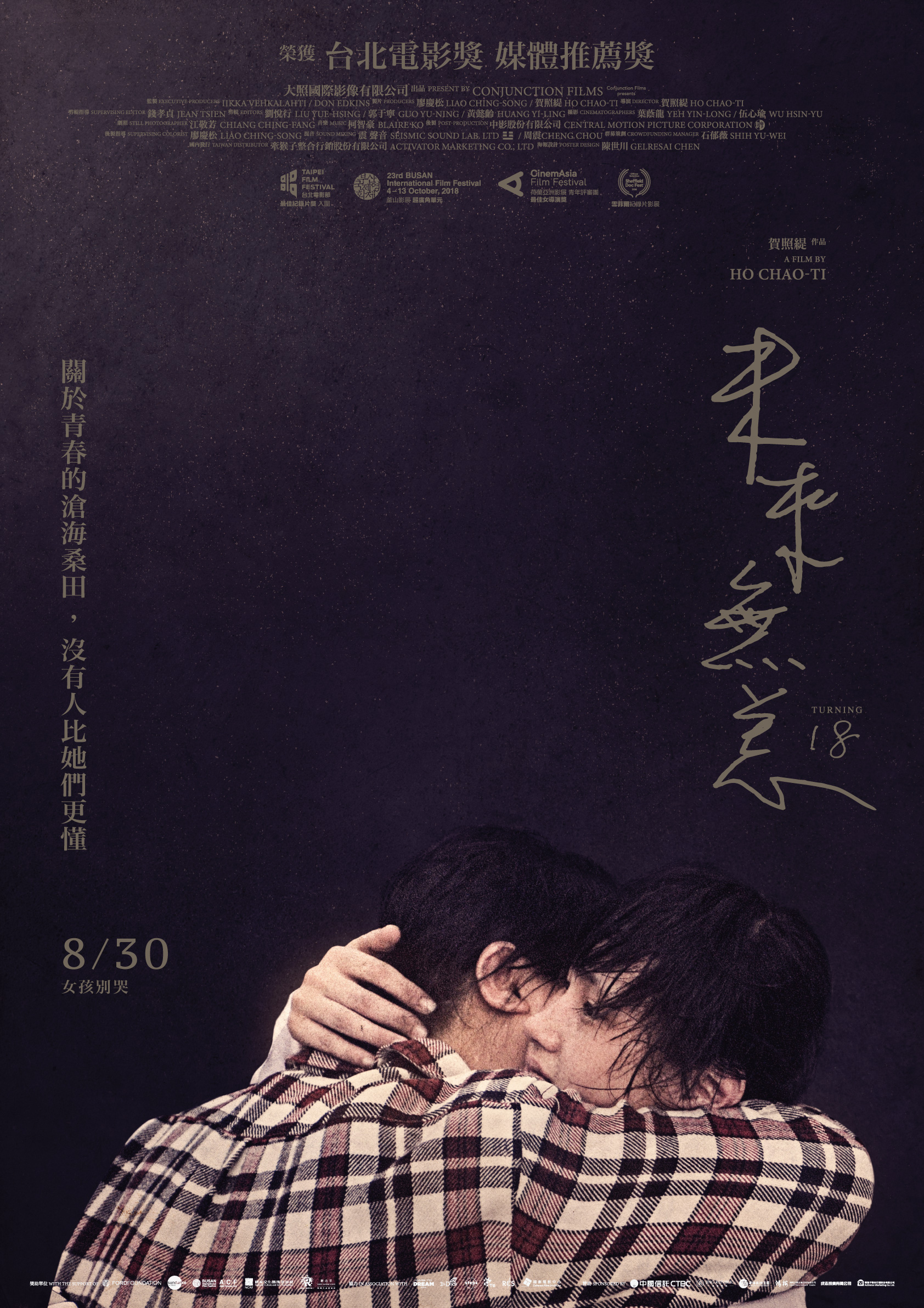
How much do you really owe a family that has failed you? A difficult question at the best of times, it’s one that continues to play on the mind of teenager Chen, one of two young women from indigenous communities at the centre of Ho Chao-ti’s documentary Turning 18 (未來無恙, Wèilái Wúyàng). Following the two girls who each come from challenging family backgrounds from the ages of 15 to 18, Ho perhaps draws a slightly uncomfortable contrast in the differing paths their lives eventually take after they briefly meet during an internship at funeral home but nevertheless presents an all too often ignored perspective on a hidden side of the island nation.  

Forced to grow up far too soon, both young women are children of single parent families in which there has been a history of domestic violence and, as we later discover, in Chen’s case sexual abuse. In response to her difficult family circumstances in which her mother has become an alcoholic and she has become the primary carer for her eight siblings, Chen has grown serious and mature. She intensely resents her mother’s drinking, not least because it plays into a racist stereotype about indigenous people while also trapping them in desperate poverty. Chen has had to take time out of education to look after her siblings and is grateful for the internship opportunity after which she will return to high school. 

Pei, meanwhile, has moved in with her possessive boyfriend, Wei, and his despairing mother. She is slightly less enthused about the internship, but dutifully completes it. Unlike Chen she never returns to school but remains with Wei who later becomes a delinquent and encounters trouble with the law. Pregnant before her 18th birthday, Pei finds herself navigating teenage motherhood and economic instability while the increasingly irresponsible Wei gravitates towards a life on the margins of crime. 

As such, it seems almost as if we’re being pushed towards judgement of the unlucky Pei for, perhaps, making the same mistake as her mother in unwisely depending on an unreliable man though they are both only teenagers, while it is undoubtedly much easier to get behind the earnest Chen who is determined to make something of her life while fiercely defending her family. Nevertheless, their marginalised status as members of an indigenous community is quickly brought home to us. Ho throws in a few snippets from post-war propaganda programs regarding the development of Hualien which describe the local Tayan population alternately as savage and uncivilised and then simple and innocent, apparently grateful for their “civilisation” at the hands of the KMT government which recommends Hualien to industry leaders as a source of cheap labour. 

Both the young women suffer at the hands of a patriarchal social code and fractured economy. Forced to compromise her education, Chen resents her mother for being unable to hold down a job of her own while it seems clear that she has little education herself and that her drinking is in part a response to her despair. Having escaped abusive spouses, the mothers of both girls have been left without effective means to support themselves in the absence of men, Chen’s mother depending on the support of her extended family who, we later learn, were also abusive. When the abuse is brought to light, Chen’s mother encourages her to lie to the court in order to protect her family members afraid perhaps of the shame but equally of the impossibility of surviving without them. 

Yet Chen continues to try to love her mother no matter how much she disappoints her, sorry only that her mother could not learn to love herself enough to save herself and determined never to make the same mistake. Finding an outlet in Taekwondo which she sees as another way to protect her family, Chen discovers another side of herself in dating another girl, at this young stage of her life incongruously insisting on referring to her as a “boyfriend” though the relationship appears to be accepted by her classmates as entirely normal. We never see how Chen’s family feels about her sexual identity save that she later affirms her desire to march in the Pride parade in Taipei precisely because she wants them to understand she loves women and that’s not something that will change, no one has the right to tell her who to love or who to marry. 

In this at least, Chen appears to have broken the cycle in definitively embracing her identities as a queer indigenous woman while also continuing to love and support her problematic family. Pei meanwhile is in a much less advantageous position, having perhaps repeated the same behaviour patterns in being letdown by an unreliable man and left to bring up a baby on her own though little more than a baby herself. Nevertheless, Ho’s camera is never judgemental in capturing this largely hidden side of Taiwanese society in which systemic male failure and entrenched patriarchy contribute to the marginalisation of the indigenous community even in the contemporary era. 


Turning 18 screens at London’s Riverside Studios on 3rd November as part of this year’s Queer East Film Festival.

Original trailer (English subtitles)
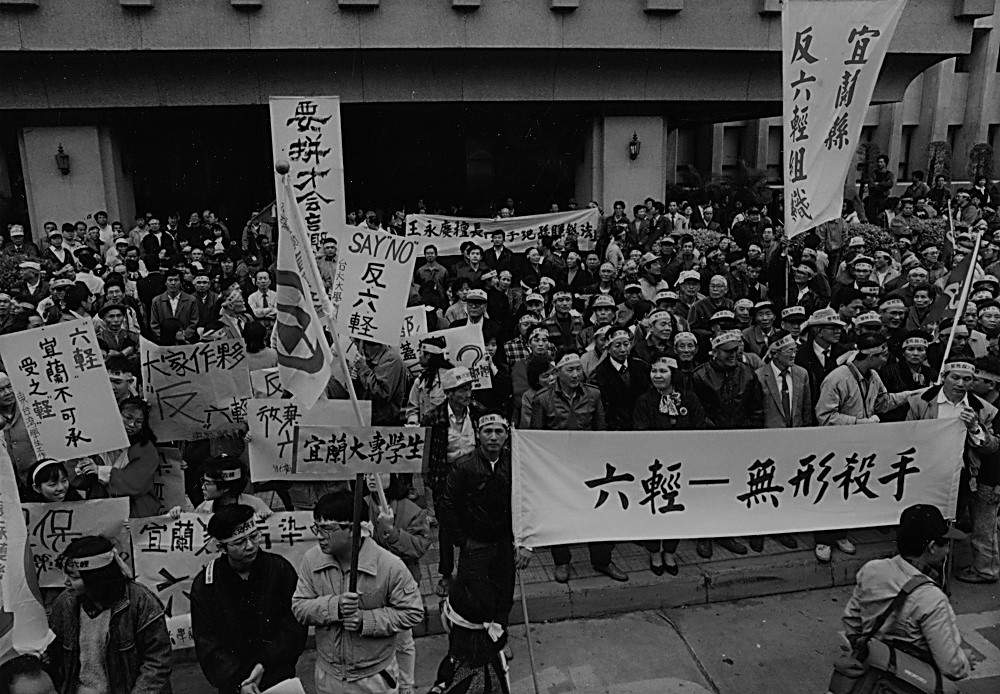
The Shepherds (牧者, Elvis Lu, 2018)

Among the most liberal of Asian nations, Taiwan became the first to legalise same-sex marriage in 2019 but that doesn’t mean that it’s always easy to be LGBTQ+ particularly if you come from a religious background and wish to maintain your faith. Elvis Lu’s documentary The Shepherds (牧者, Mùzhě) follows a small group of religious leaders who are or have been involved with a progressive church, Tong-Kwang, which was the first in Taiwan to expressly embrace the LGBTQ+ community on its foundation back in 1996. Unfortunately, however, the pastors have faced significant barriers in their personal and professional lives because of their views on homosexuality which face staunch opposition from mainstream religious organisations. The founder of Tong-Kwang Yang Ya-hui, a heterosexual female pastor, eventually took her own life because of the discrimination she later faced within the religious community which made it impossible for her to continue working and support herself without compromising her beliefs. 

Discrimination is also something which has affected pastor Huang Guo-yao and his wife who now work for Tong-Kwang but began their careers in Hong Kong. Huang was forced to give up his ministry after advocating for LGBTQ+ rights brought him into conflict with the more conservative local Churches, eventually making the decision to migrate to Taiwan while his children remained in Hong Kong. He laments that the situation in which he found himself may have had a negative effect on his now grown-up sons, the younger one he worries having become increasingly withdrawn and unwilling to talk about his feelings. 

Zeng Shu-min, meanwhile, is in a similar position unable to find employment with more conventional churches as an openly gay pastor. While officiating at same sex weddings, he’s had to look for other employment to support himself and generally lives an ascetic existence, dependent on the kindness of friends such as Hsiao-en, a lesbian advocate for LGBTQ+ Christians who was herself ejected from the seminary for her liberal views. Running the Light Up project, she provides a more positive religious presence at rallies where conservative voices loudly protest against the advancement of rights for LGBTQ+ people and the movement for marriage equality. Presenting a united front in their priestly outfits, conservative preachers openly commit to undermining the seats of local politicians sympathetic to LGBTQ+ issues, some advancing that they want to “protect” the LGBTQ+ community who must be living “very painfully”, while they refuse to compromise the “basic values” of their society. 

As part of her outreach, Hsaio-en also liaises with the parents of LGBTQ+ children who often find themselves ostracised from their church community solely because of their children’s sexual orientation. Like Shu-min, she also has to work a regular job to support herself while feeling guilty for not being able to devote herself to activism full time and lamenting that hard as she works it often feels as if she isn’t getting anywhere and her efforts don’t make much difference. Yet Tong-Kwang in itself provides a valuable safe place for LGBTQ+ Christians, running a hotline those in distress can call for relief when experiencing difficulty in their personal or religious lives and affirming that their sexuality need not conflict with their faith nor is it a barrier to God’s love. 

With a mixture of observational footage and talking heads interviews, Lu bookends the film with poetic black and white re-enactment featuring the words of pastor Yang Ya-hui taken directly from her autobiography, positioning her as a kind of martyr for the rights of LGBTQ+ people in Taiwan and particularly for LGBTQ+ Christians. The film ends with the passing of the marriage equality act, but is quick to point out that that does not mean that prejudice and discrimination evaporated overnight, Hsiao-en in particular worried that organisations such as hers will come under greater pressure from conservative religious voices intensifying their opposition. Nevertheless, despite the sometimes great toll on their personal lives and those of their families, each of the shepherds remains committed to defending the rights of LGBTQ+ people not only to occupy an equal place within their society but also within their faith as members of a compassionate and progressive religious community. 


The Shepherds streams in the UK 30th October to 5th November courtesy of Queer East and Taiwan Film Festival Edinburgh.

Original trailer (English subtitles)
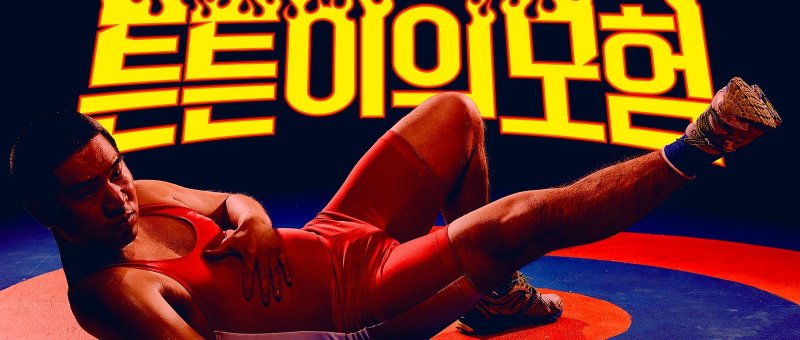
Between the Seasons (계절과 계절 사이, Kim Jun-sik, 2018)

“To live the way I am” replies the reserved heroine of Kim Jun-sik’s Between the Seasons (계절과 계절 사이, Kyejeolkwa Kyejeol Sai Kaebongyejeong) when questioned about her dream, not quite able to answer when asked if she isn’t living that way now. An anti-romance and gentle meditation on the costs of authenticity, Between the Seasons finds two women at different stages of life unknowingly fighting a similar battle, perhaps identifying something in each other but unable to voice themselves fully though in fear and insecurity rather than shame even if they each internalise something of that too as they struggle to push past the barriers that prevent them from fully becoming themselves. 

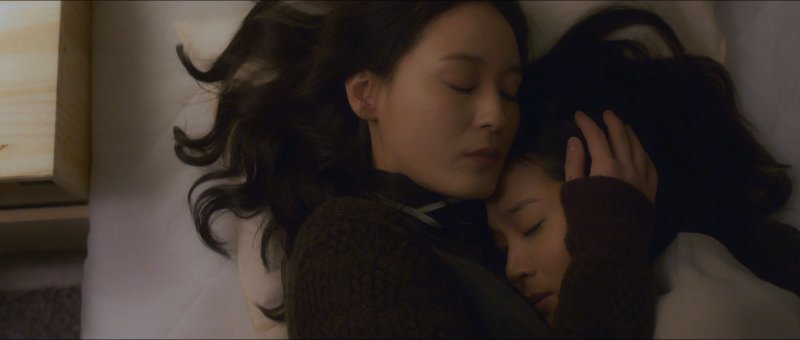
In her mid-30s, Hae-soo (Rie Young-zin) has just moved from Seoul to a small town to open a bare bones coffee shop. She spends her spare time alone, and we quickly get the impression that she’s making an attempt to move on from something, eventually visiting a mobile phone shop to buy a new handset and instructing the salesman to delete all of her previous contacts and photos. Despite her attempts to discourage her, however, Hae-soo ends up forming an awkward friendship with bubbly high schooler Ye-jin (Yoon Hye-ri) who came into the coffee shop with an unusual order and then became a regular customer. Further bonding on a rainy night after the movies where Ye-jin was stood up by her boyfriend, the young woman starts randomly helping out just because she can see Hae-soo is overstretched eventually becoming an official part-timer spending most of her spare time with Hae-soo much to the consternation of her overbearing, grades-obsessed mother. 

Ye-jin quite literally begins to bring spring into Hae-soo’s life decorating the cafe with pretty cherry blossoms and floral motifs, lending it a cosier, more domestic atmosphere than the rather frosty, utilitarian vibe of Hae-soo’s original non-design. Questioned by Hae-soo about her dream she says she’d like to make things by hand, a dream that is perhaps in direct contrast with her mother’s obvious ambition for her. There’s not much money in paper cherry blossoms after all. That’s two reasons she might prefer being in the cafe rather than at home or studying somewhere else, Hae-soo both mysterious older sister and quasi-maternal figure, only the relationship is further complicated by Ye-jin’s growing romantic attraction to the older woman, becoming jealous as Hae-soo begins a tentative relationship with the sweet and goofy guy from the phone shop (Kim Young-min). 

For her part, Hae-soo remains either wilfully oblivious or simply unwilling to acknowledge Ye-jin’s obvious crush, awkwardly failing her as a friend and as a quasi-parental figure in refusing to engage with her complicated feelings in fear of having to reveal her true self. Instead she pushes the younger woman away without explanation, rejects her, and leaves her with only more shame and awkwardness despite having insisted that that there is nothing wrong in being different and that only by embracing your difference can you improve your life. Ye-jin continues to struggle with her feelings, observing her homophobic friends making fun of the supposed lesbian only to find herself semi-stalking the young woman confessing that if the rumours are true she too is the same. Despite eventually approving of her, the other girl tells her to keep her distance at school, lest they each fall victim to guilt by association. Eventually she gets all dolled up and heads to a gay bar where she furiously makes out with the bartender, mostly one assumes because she reminds her of Hae-soo doubly confirming her feelings. 

Hae-soo, however, is still conflicted, afraid to reveal her true self to anyone. The realisation she eventually comes to, symbolically removing the scarf from around her neck, is that she wanted to shine by herself, finding the confidence in authenticity rather than reflecting the light cast by the approval of others. Ironically that’s something she tried to encourage Ye-jin to do too but accidentally crushed in her brutal rejection of her feelings, costing her perhaps more than she realised in the process. Ye-jin had coyly asked her if she wasn’t making a rash decision, that so far she’d only shown her spring in her cheerful coffeeshop interior design, perhaps she’d like to take in the summer, even see her in winter too, truly thinking long term but the two women remain caught between the seasons, trapped by a sense of internalised anxiety that prevents forward motion. A gentle meditation on connection, authenticity, and self-acceptance Between the Seasons offers no easy answers for its conflicted heroines but motions towards a season of openness in which all are free to be who they are.


Between the Seasons streams in the UK until Oct. 11 as part of the Iris Prize Film Festival in collaboration with Queer East.

Original trailer (Korean subtitles only)

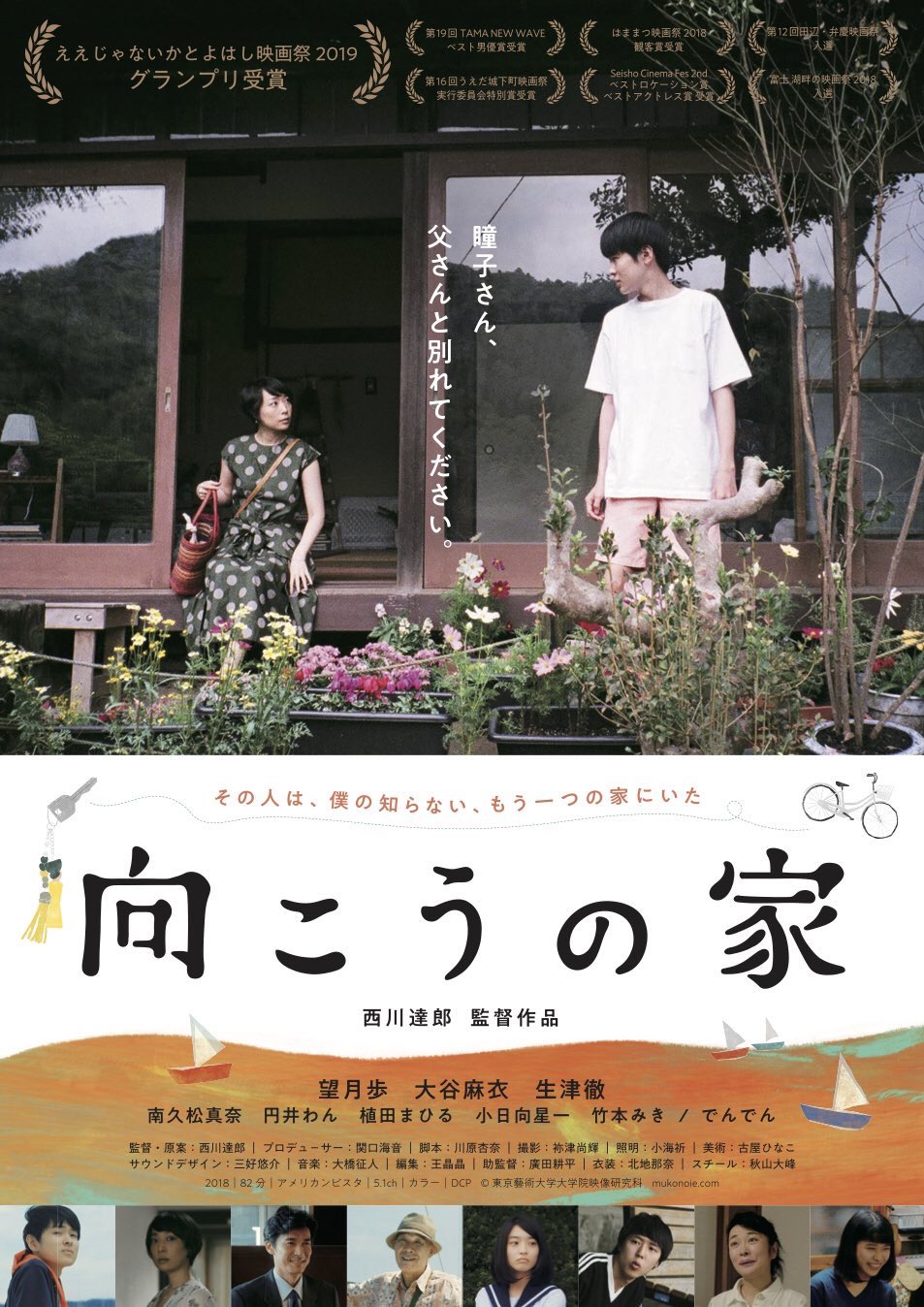
The Other Home (向こうの家, Tatsuro Nishikawa, 2018)

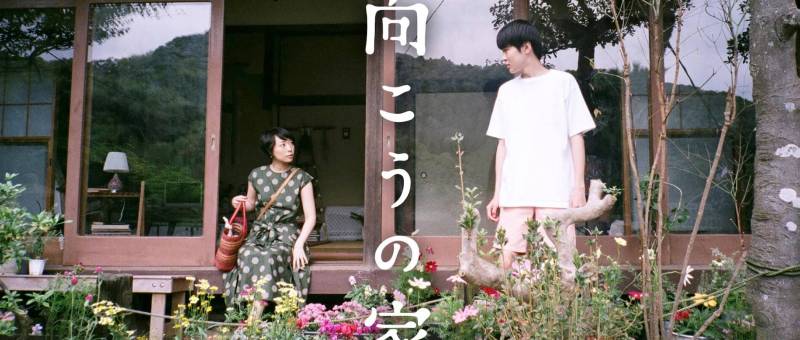
There comes a time in everyone’s life when they start to realise that things are not always as they appear and no matter how happy and settled your family life might seem, your parents aren’t perfect though they are probably doing their best. For Hagi (Ayumu Mochizuki), that moment comes at 16 when he gets fed up with school and takes some time off believing he might be able to learn more outside of the classroom than in. An unconventional coming-of-age tale, Tatsuro Nishikawa’s graduation project The Other Home (向こうの家, Mukou no Ie) is also a meditation on the modern family and the patriarchal order. 

Getting back to school after the summer break gets off to a rocky start when Hagi and his friend are told that the fishing club of which they are members is being shut down as the teacher who was in charge of it is scaling back her workload because she’s just got engaged and will eventually be leaving to get married. Hagi takes this in his stride, mostly at a loss over where to eat his lunch because his girlfriend, Naruse (Mahiru Ueta), for some reason thinks it’s embarrassing to eat alone in the classroom. In any case, Hagi reacts by deciding not to go to school at all. His parents don’t approve, but decide to give him some space to figure out what’s going on. Meanwhile, he’s beginning to wonder if it’s odd that his family never fight, his parents committed to talking things through peacefully rather than resentfully hiding their true feelings. 

Or, so he thought. There is something childishly naive in his conviction that because his parents never fight in front of him they never fight at all, though it’s true enough that he comes from a talking about things family in which his mother Naoko (Mana Minamihisamatsu), in particular, is keen that they share their thoughts and feelings honestly, looking forward to her husband Yoshiro (Toru Kizu) returning home each day after which they share a drink and make time to talk. It comes to something of a surprise to him then when his dad asks him to pick up a set of keys he’s forgotten and bring them to a cafe near where he works without letting his mother know. Hagi does as he’s told only to learn the keys are for a cheerful cottage by the sea which he’s been renting for his mistress, Toko (Mai Ohtani), with whom he now wants to break up preferably before the lease is due for renewal. Too cowardly to do it himself, Yoshiro enlists his teenage son’s help to break up with the woman he’s been cheating on his family with. 

Strangely, this revelation does not seem to sour him on his dad even if he realises the threat it poses to their happy family life. “Protecting the family peace. Men must uphold that promise” Yoshiro unironically tells his son, problematically implying that the way to do that is by covering up affairs rather than simply not having them. Dutifully Hagi heads over to “the other home”, only to be thrown out by Mr. Chiba (Denden), a friend of Toko’s who not unreasonably tells him that this is something his father should be dealing with himself rather than sending his teenage son to guilt his mistress into moving out of her house. Failing to engage with his father’s betrayal, Hagi nevertheless comes to sympathise with Toko who is about to be rendered homeless thanks to his father’s moral cowardice, staying with her in the cottage while lying to his mother that he’s doing an internship at his father’s company. 

Nevertheless, each of his parents is eventually found wanting as Toko teaches him the things they perhaps should have including how to ride a bike, an embarrassing oversight which had seen him deemed “uncool” by his exasperated girlfriend. The film has little time for Naoko’s talking about things philosophy, her husband merely lying to her while engaging in the same patriarchal double standards simultaneously insisting it’s a man’s duty to “protect family peace” while deliberately endangering it through an extramarital affair. Hagi too perhaps picks up these uncomfortably old fashioned ideas partly from his teacher who proudly shows off her engagement ring boasting that it cost her fiancé three months’ salary, the expense apparently proof that he intends to look after her well for the rest of her life as if she couldn’t do that herself. He begins to feel sorry for Toko as she outlines her life as a kept woman, a backroom full of unwanted presents from various men who too looked after her for a time, but in the end merely offers to look after her himself by quitting school to get a job so he can renew the lease to make up for his father’s moral cowardice.

The reason they were so happy, it seems, is that Yoshiro gave himself an escape valve. “Sometimes it’s hard for me to be dad” he admits, apologising for his inability to share his burdens honestly, his male failure neatly undercutting the tacit acceptance of the patriarchal authority which stands in contrast to Naoko’s ideal of a healthy relationship founded on emotional authenticity. Finally learning to ride a bike, Hagi finds himself entering a less innocent world as a young man now fully aware of the universe’s moral greyness if perhaps not quite so enlightened as he might feel himself to be.


The Other Home screened as part of Camera Japan 2020.

Original trailer (no subtitles)

Infinite Foundation (無限ファンデーション, Akira Osaki, 2018)

Sometimes the music finds you when you need it most. So it is for the heroine of Akira Osaki’s wistful coming-of-age drama Infinite Foundation (無限ファンデーション, Mugen Foundation). To better capture the teen experience with an immediate naturalism, Osaki’s cast was provided with no script only a vague outline inspired by the songs of singer-songwriter Cosame Nishiyama and asked to improvise each individual scene. What results is suitably intense tale of complicated teenage female friendships, frustrated ambitions, and fear for the future in which a shy, introverted young woman gradually finds the courage to chase her dreams with the help of an ethereal songstress and unexpected solidarity. 

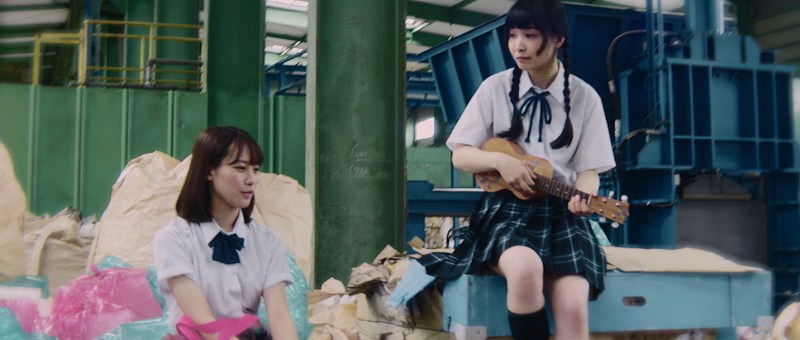
Mirai (Sara Minami), whose name literally means “future”, is a dreamy young girl who thinks she’s not much use for anything so usually idles away her time in school drawing dress designs in her sketchbook when the teacher’s not looking. In fact, she’s technically in summer school catch up, but every time the teacher returns to check on her he notices that she still hasn’t got round to filling in the answers on her maths test. Wandering home one day she hears the gentle strains of a ukulele coming from a nearby recycling plant and strikes up a friendship with a strange girl, Cosame (Cosame Nishiyama), with her hair in long plaits and dressed in a school uniform. Meanwhile, she’s also unexpectedly approached by the stylish Nanoko (Nanoka Hara) who, taken with her beautiful designs, insists that she join the drama club to help them come up with costumes for their imminent production of Cinderella. 

Perhaps Mirai will be going to the ball after all. Before that however she’s still contending with a sense of insecurity while her cheerful and supportive mother (Reiko Kataoka) tries to encourage her to pay more attention to her studies. Pushed towards conventional academic success, Mirai had been a little embarrassed about her love of drawing, particularly as it’s something as “frivoulous” as dress designs which she can’t believe anyone else would value. Rather than hanging out with friends, she spends most of her time sewing in her room, retreating into comfortable fantasy but also lonely and a little bit lost. So when Nanoko is so enthusiastic about her artwork it gives her a much needed confidence boost showing her that someone at least thinks her drawings have value and are not silly or embarrassing wastes of time. 

The drama club, however, is something of a baptism of fire for someone who feels themselves not good with people and at sea with interpersonal relationships. Mirai sticks fast to Nanoko, but Nanoko’s longterm bestfriend Yuri predictably doesn’t like it that she’s abruptly dragged this other person into their shared activity while the other members of the group struggle to relate to her, describing her as difficult to talk to and leaving her sitting in the corner doing her own thing while they get on with rehearsing. The main drama occurs when Nanoko makes a surprising announcement that puts the show in peril. She has a big audition lined up in Tokyo for a part in a film which makes it impossible for her to also star in the play. Nanoko asks for understanding, but does so with a degree of entitlement and superiority that cannot help but annoy her friends. She implies that she’s in this because she’s a real actress, while they’re only messing around in a school play. Mirai isn’t sure where to put herself, her new friend has just betrayed her and now she doesn’t know if they were ever friends at all or she was just using her to increase her hold over the drama club. 

The message that Mirai begins to get is that she may have real talent, but it’s up to her to achieve her dreams. She begins to feel that everything she’s been doing with her life has been superficial and incomplete because she never had the confidence to follow through, living in her own tiny bubble alone in her room for fear of getting hurt out in the big wide world. While the mysterious ukulele player sings her inspirational songs about living with loneliness, Mirai begins to build her infinite foundations towards a more confident future as a young woman determined to fight for her dreams.


Infinite Foundation streamed as part of this year’s online Nippon Connection Film Festival.

Original trailer (no subtitles)

Life Finds a Way (普通は走り出す, Hirobumi Watanabe, 2018)

Hirobumi Watanabe goes full 8 1/2 with the decidedly meta comedy, Life Finds a Way (普通は走り出す, Futsu wa Hashiridasu). After the joyful celebration of Party ‘Round the Globe, he returns in a noticeably self-reflective mood once again playing a version of himself as a self-involved, childish blocked filmmaker who fears he is falling out of love with film. Unable to come up with ideas, he fobs off producers and ignores phone calls while hanging out with grandma (Misao Hirayama) and making a nuisance of himself at the library but a mini-nervous breakdown and a reconnection with the film-loving little boy he once was perhaps offer him new direction though the jury’s out on whether “Hirobumi” is ever going to grow up. 

Once again locating itself in peaceful Tochigi and shot in crisp black and white with Watanabe’s trademark deadpan static camera, Life Finds a Way opens with Hirobumi fielding a phone call from a producer in which he confesses that he’s supposed to be working on a script created in collaboration with rock band Triple Fire but he’s getting nowhere so he’s hanging out in a cafe to “relax” while playing Dragon Quest. Later he rings his cinematographer, Bang Woohyun, and makes a similar apology, admitting that he’s going to take some time off to watch the World Cup because, after all, it’s a once in every four years opportunity. Meanwhile, he’s mostly snoozing at home with grandma, or driving around with his almost entirely silent and extremely patient strawberry farmer friend Kurosaki (Kurosaki Takanori). 

One of his early rants offered as a monologue to Kurosaki who seems to be used to them, revolves around his sense of inferiority as a creative unfairly maligned as a lazy good-for-nothing by workaholic Japanese society. In Japan, he says, we worship the worker ant who survives because he works away earnestly, while in France they honour the grasshopper because his beautiful music can cheer you up even in the depths of winter. Hirobumi thinks the French have it right, that Japanese people are too obsessed with doing everything “properly”, always worrying about trivial things. According to him, there are far too many worker ant types in the Japanese film industry. He thinks films should be free and unconstrained, not bound by some kind of ideal. 

In any case, while being quite rude to “worker ant” Kurosaki who labours all day long on his strawberry farm, Hirobumi blames all his problems on having been unlucky enough to have been born in Japan rather than somewhere like France where they appreciate people like him. Later, he interviews a few locals and asks them what they think is the problem with the Japanese film industry, only for Kurosaki to repeatedly answer “it’s Hirobumi”, perhaps getting his own back. In fact, Kurosaki, apparently meaning well, shows Hirobumi a piece about of one of his films in a glossy magazine only it’s uncomplimentary in the extreme which sends him into a rage, ranting furiously about ungrateful audiences and how much he hates film critics. Hirobumi seemingly blames everyone but himself for his faults and failures, climbing all the way up to a hilltop shrine to pray that he wins the Palme d’Or while also asking that the gods not give good jobs to successful directors but give them all to him instead, and for bad things to happen to someone who sent him a strongly worded letter. 

Hirobumi’s “fan mail” appears to be from a stuffy old woman who states that she has “kindly” written to him several times already to explain that his work is an insult to cinema yet he keeps “selfishly” making films. She’d liked to have told him this in person, but was apparently “too busy” so has written another letter urging him to reflect on his life choices and either make “good” films like Koreeda and Miyazaki, or find himself another career. Hirobumi wonders what the point of films is if they don’t make people happy or have the capacity to change the world. Asked what films meant to them most of his interview subjects either had no answer or regarded them only as entertainment. An encounter with himself perhaps reminds him what it was he saw in cinema and allows hims him to begin moving forward creatively. 

But even having finished his script, has Hirobumi really changed? He seems permanently to be surrounded by children, hanging out reading the manga in the kids’ section of the library, lining up behind a string of obedient primary school students to check out his DVDs where he sets a bad example by having a series of Tora-san movies already overdue but using grandma’s card to take out more, and hanging out with his niece catching crayfish in the local stream with a bucket and net just like he must have done since he was little. He lies about missing the World Cup, ignores phone calls from the library to snooze while spending time with grandma, and is not really any nicer to the patient Kurosaki than he was before. But life finds its way, Hirobumi escapes his creative malaise by rediscovering the joy of cinema, healing himself body and soul, and feeling more positive about the future even if nothing has really changed. 


Life Finds a Way is available to stream worldwide until July 4 as part of this year’s Udine Far East Film Festival. It was also scheduled to screen as part of the 10th season of Asian Pop-Up Cinema.

Festival Trailer (English captions)

Original trailer (no subtitles)