Beyond You (그대 너머에, Park Hong-min, 2020)

Ever feel like there’s something you just can’t remember, a strange prickling like an ant crawling across the back of your mind? The frustrated director at the centre of Park Hong-min’s Beyond You (그대 너머에, Geudae Neomeoe) is beginning to experience something similar though perhaps it isn’t quite his memory at all. Returning five years after the experimental thriller Alone, Park’s existential melodrama begins in Hong Sang-soo territory with its caddish director and constant repetition but quickly veers off into the realms of the metaphysical as he contemplates memory and legacy through the prism of dementia. 

After a brief prologue in which an ant ventures off from its colony and is later swept into a local bin, Park opens with a strange sequence in which film director Kyung-ho (Kim Kwon-hoo) sobs on a bench next to a shrine while another man who is either sitting on his lap or somehow occupying the same space seems entirely oblivious of his existence. In any case, Kyung-ho has been waiting for Ji-yeon (Yoon Hey-ri), a young woman who is the daughter of his first love In-sook (Oh Mine) and has recently begun corresponding with him over some writing that her mother had done concerning their past relationship. It comes as something of a surprise, however, when Ji-yeon boldly suggests he might be her father, reacting with horror when she asks him to take paternity test. Taking the hint, Ji-yeon soon leaves apologising for her sudden intrusion after explaining that her mother has early onset Alzheimer’s and has spoken of him often aside from the episode contained in the writing. 

Thereafter Kyung-ho chases after her, thinking perhaps he’s been rude or over hasty shocked to think that he might have had a daughter he never knew about though later confessing he had in a sense “forgotten” In-sook not having really thought about her in the intervening 20 years since they last saw each other. He finds himself wandering around the dreamlike backstreets of the city chasing the image of Ji-yeon only for her to finally track him down and haunt him directly by emerging from a cupboard in his room when he refuses to open his door. This scenario directly mirrors his later incursion into the subconscious of In-sook, invited by Ji-yeon who is currently unable to enter because her mother does not remember her, complaining about a “strange woman” hanging round outside. 

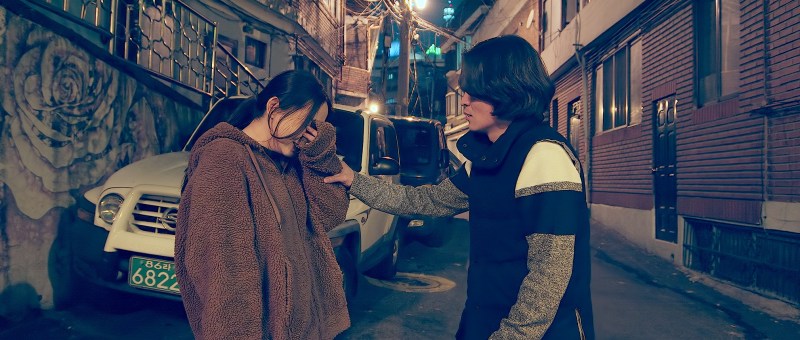
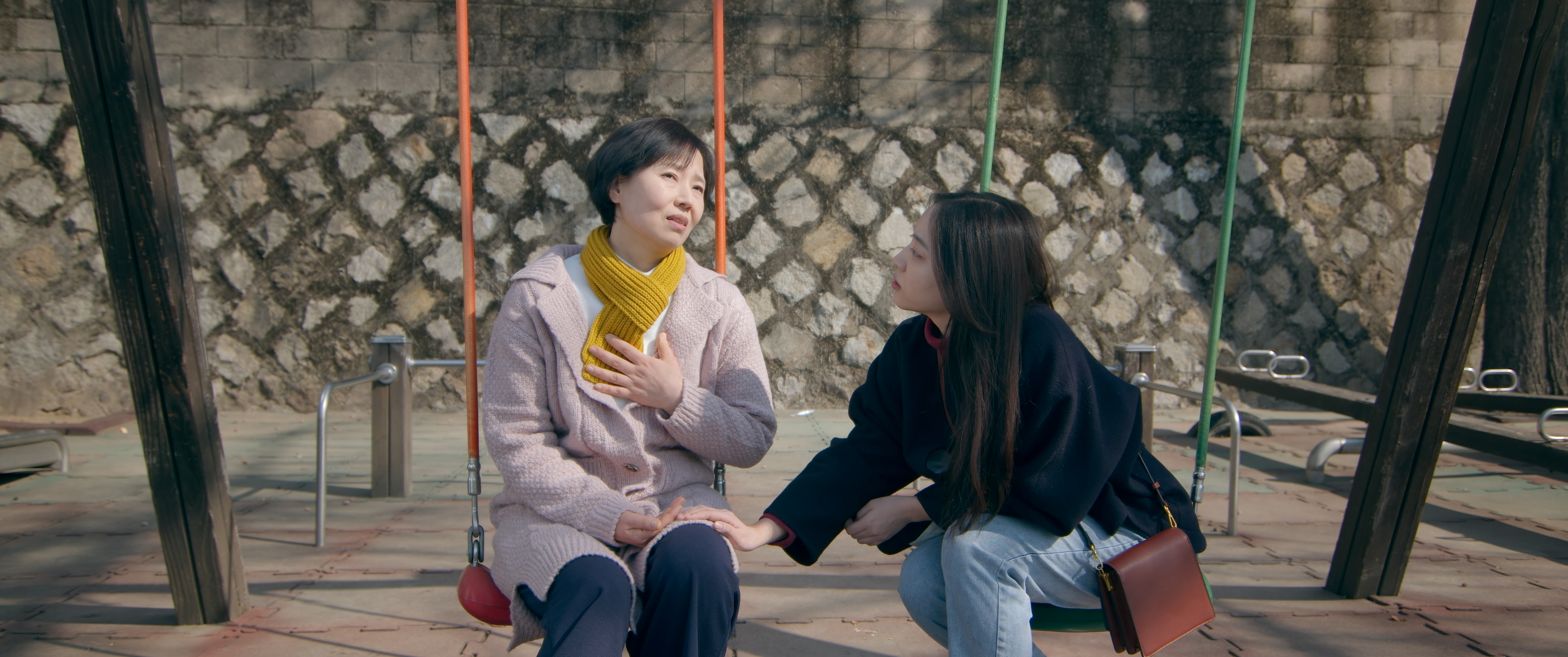
Ji-yeon’s preoccupation is with the nature of her existence if she is not remembered by her mother and therefore not a part of her conscious world. Kyung-ho goes inside, in a sense, to rescue her only to find In-sook suddenly struck by a moment of existential attack pulling piles of papers out of her cupboards as she searches for the memory of her daughter she is unable to retrieve. Yet as she hinted in the dream narrative she’d explained to the “real” Ji-yeon, In-sook looks for her daughter every day, eventually finding her even if she fails to recognise and associate Ji-yeon with the fragmentary image in her mind. 

Kyung-ho, perhaps selfishly not wanting the bother of a secret daughter, is forever telling In-sook that it’s OK to forget him, as if his space could be freed up for Ji-yeon to enter yet through his dream odyssey he begins to lose himself. Or at least, perhaps this is all part of the screenplay Kyung-ho is attempting to write which is dismissed as dull and self-obsessed by his producer who advises him write something that other people will find “fun”. He tries teaming up with a screenwriter, explaining that “nobody wants to hear my story so I really want to tell it” but she too tells him that he might be better off just filming himself. The meetings repeat with small differences, but never go in his favour until he finds himself a ghost witnessing them from the outside. Just as Ji-yeon wasn’t sure she really existed outside of her mother’s writings, Kyung-ho begins to doubt his own reality while trapped inside the meta-dimensions of his unfinished screenplay.  

Park’s rather convoluted machinations may prove frustratingly incoherent, lacking internal consistency while insisting on the logic of dreams as the hero effectively haunts himself, but are perhaps explained in that early ant metaphor in a small creature’s attempt to venture away from the crowd only to end up feeling lonely, falling into despair and then attempting to crawl its way out. “Wherever you go no one will recognise you” Kyung-ho is told, yet his tragedy may be that he fails to recognise himself even as he chases fleeting visions in the minds of others searching for existential validation in shared memory. 


Beyond You screened as part of the 2021 Osaka Asian Film Festival.

Original trailer (English subtitles)
Black Milk (Schwarze Milch, Uisenma Borchu, 2020)

“She doesn’t offend on purpose, she doesn’t know the custom.” an awkward friend of the heroine of Uisenma Borchu’s Black Milk (Schwarze Milch) offers in her defence. “Then she doesn’t belong with us” comes the rather cold reply. Borchu’s semi-autobiographical drama, the director herself left Mongolia at the age of four and was raised in Germany, on one level explores a sense of cultural dislocation and yearning for wholeness but also uncovers the persistent othering of the female existence as the pair of estranged sisters struggle with their awkward bond and conflicting visions of womanhood only to find themselves finally united if in despair and heartbreak. 

Wessi (Uisenma Borchu) is perhaps so estranged from the culture of her birth that her German husband (Franz Rogowski), seemingly abusive, remarks that he’s not even sure her sister really exists and wishes she would “forget about Mongolia” angrily shutting off a record of a retro Mongolian hit. He tells her that she cannot leave, that she is a coward, and that in the end she belongs to him. Leave she does, however, returning to the Steppe apparently in search of something though it is not clear exactly what. In any case though her sister accepts her warmly the hospitality may in a sense be superficial of the kind on which the nomad way of life depends. As Ossi (Gunsmaa Tsogzol) later remarks, it’s bad luck to bar the door. 

Many things are bad luck for Ossi, chief among them harming animals as she explains to Wessi revealing that from time to time snakes do indeed slither inside the yurt. Nevertheless, she earns her living through farming, and despite the tenderness with which she treats a sheep wounded by a wolf, part of her survival depends on harming them. As we eventually witness the traditional methods of slaughter are quite literally visceral if less bloody than expected. Ossi gingerly rescues a fly drowning in her milk, yet in contrast city-raised Wessi appears much less sentimental about the concept of life and death or the natural confluence between the two. 

In this she is perhaps much more masculine than her sister, continually resentful of the overt patriarchy of the nomadic world which tells Ossi it is improper for a woman to tend to the slaughter and she must wait for her husband’s return. Yet Ossi resents her for her urban airs and graces, continuing to behave as a guest barely helping out, dressing in her Western fashions and even pausing in front of a mirror to ask which shade of lipstick suits her best in a clear indication of their differing views of idealised femininity. She rejects her tendency to superiority, claiming an agency that Wessi perhaps is still in search of in insisting that she doesn’t need her, or anyone else, to tell her what she should and shouldn’t do among her own people. 

Likewise, Wessi found herself crushed by a husband who appeared to be cruel and possessive while openly challenging Ossi’s apparently “lonely” marriage to a feckless man who spends his time drinking with other men leaving all the work to her. This may be, in a sense, a dereliction of duty in unwisely leaving his wife alone on the Steppe vulnerable to ill-intentioned passersby while obliged to offer them hospitality full in the knowledge they may take advantage of it. “I’ll kill you if you make trouble and don’t obey” just such an intruder later sneers having thrown Ossi out of her own home to attempt to assault her sister. Wessie meanwhile adopts the attitude of a woman possessed, spinning him a tale of terror pregnant with symbolism as she insists that her breasts run black with milk as if he’d pay for his misuse of her. Yet there’s something in her self-possessed control of her sexuality that alarms her sister, a dangerous transgression in a society defined by male power. 

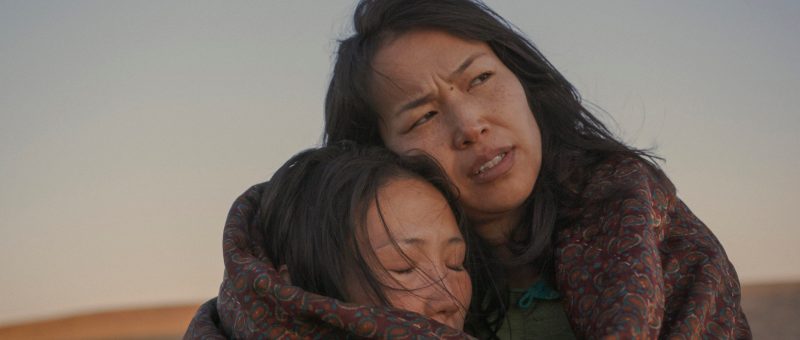
As the film opens we see Wessi roughly taken by her boorish husband, facedown and impassive while he mounts her from behind ironically mirroring the actions of a rejected stallion among Ossi’s herd. Comparatively less inhibited, she makes no secret of her unfulfilled desire sharing her fantasies with her sometimes scandalised sister though her attraction to an older man Ossi describes as a “freak” and a loner eventually provokes a challenge to the social order, the potentiality of the relationship somehow a taboo even as he becomes a source of masculine strength otherwise turned to by women letdown by their own menfolk. Yet despite their differences the sisters eventually find solace in one another, the pregnant Ossi wrapping her blanket around them both as they look out alone at the desolate terrain, united in shared despair and the knowledge that mutual solidarity is perhaps all they have. 


Black Milk screened as part of the 2021 Osaka Asian Film Festival.

Original trailer (English subtitles)

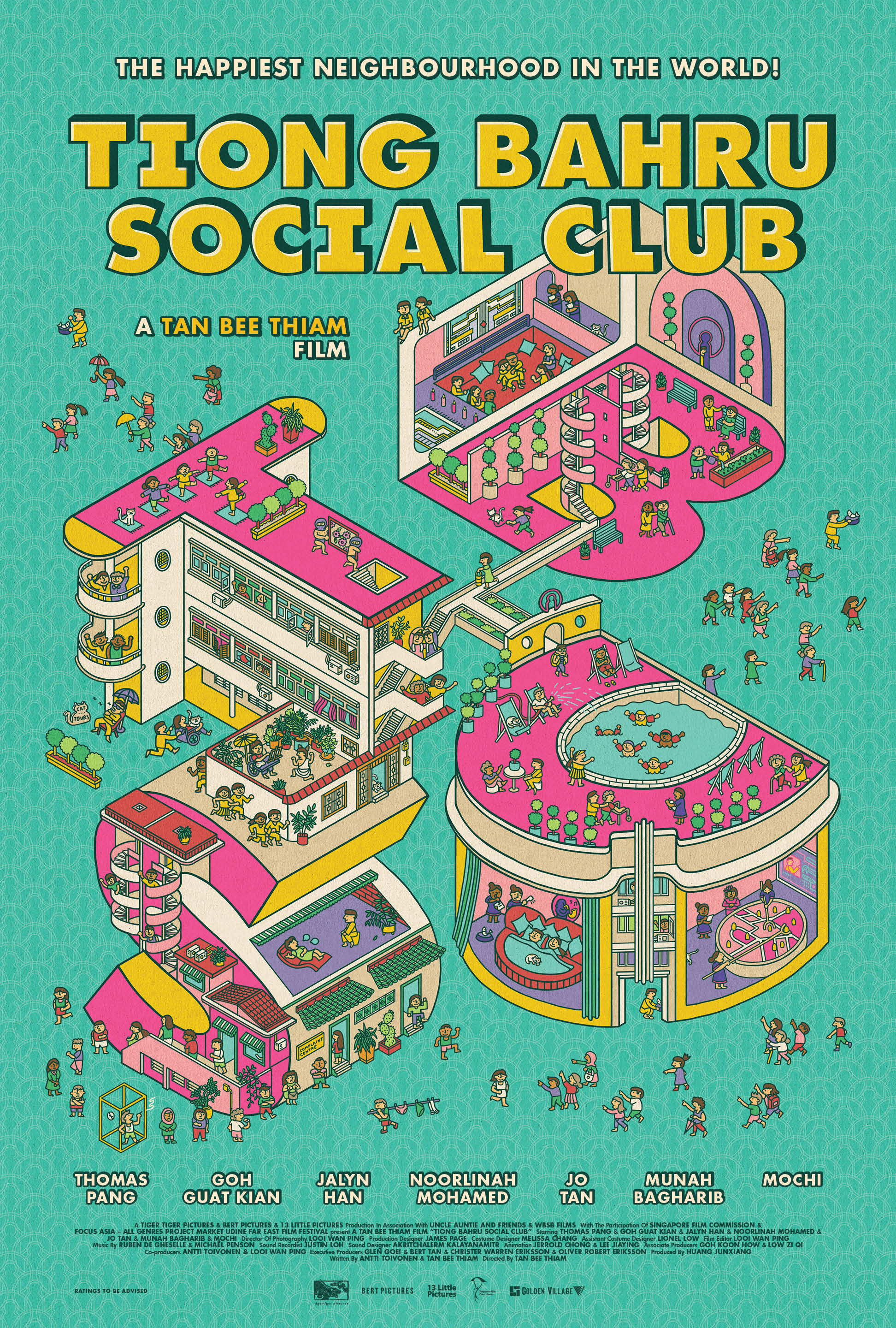
Tiong Bahru Social Club (中峇鲁俱乐部, Tan Bee Thiam, 2020)

“How can you simply approve all these claims, we can’t make everyone who complains happy!” the hero of Tan Bee Thiam’s surreal happiness satire Tiong Bahru Social Club (中峇鲁俱乐部) is admonished by his boss, a claim he will ironically later discover to be truer than he knows. It’s certainly true that the modern world has become somewhat complicated, but do you really need an algorithm to teach you how to be happy or more to the point can you truly feel “happiness” without a computer readout validating your feelings? That’s a question which only belatedly occurs to young Bee (Thomas Pang) when he takes a job at strange new social program aiming to create the happiest neighbourhood in the world but also sinisterly insisting that “everyone’s happiness is our business”, which it quite literally is. 

The Tiong Bahru Social Club is marketed partly as a retirement community set in the famous 1920s art deco colonial district. Promising to “put the unity back in community” they aim to foster an old fashioned village spirit. The reason Bee has decided to work for them, partly at the behest of his widowed mother with whom he still lives, is that he’s just turned 30 and needs to think of the future. The Social Club offers a speedy career track, high pay, and good benefits including food and accommodation which make it a much more promising option than his old job at the laundry even though he likes the sense of order and progress he feels listening to the predictable rhythm of the machines. Asked for a loyalty card at a supermarket checkout he proudly declares that he has “no passion” yet as his mother reminds him even as a little boy he was the type who just wanted everyone to be happy even if he ended up hurt. 

Such a temperament might make him an ideal recruit, as the algorithm seems to believe, but Bee is ill-prepared for the bizarre uncanniness of the cult-like Tiong Bahru society in which he’s guided by an AI assistant and asked to wear a ring which measures his happiness level and positive impact on others. His first assignment is looking after a grumpy old woman who, on the surface at least, isn’t really invested in the Happiness Movement and claims she’s only in it for the freebies. The problem may be, however, that Ms. Wee (Jalyn Han) is already in a sense “happy” in that she no longer cares very much about what other people think and is completely comfortable in herself if perhaps lonely and missing the various cats of her life, eventually enlisting Bee to steal one from the guy running a cat tours stand who later gets fired for not generating enough happiness. The other obvious problem with the Social Club is that, as an old-fashioned, iconic building it hasn’t been very well adapted for those using wheelchairs or experiencing problems with mobility, both factors which might make it more difficult for their elderly residents to feel “happy”. Meanwhile, Bee’s own happiness rating is adversely affected by the nature of the program kept in a constant state of anxiety that he might be for the chop if he doesn’t spread enough joy. 

In a slice of irony, Bee’s mother remains behind alone in the Pearl Bank building, a landmark of ‘70s high rise architecture now in a state of disrepair and the subject of a possible block buy by developers who presumably intend to tear it down (the real building was indeed demolished in March 2020 with a new high rise pending). The older residents mainly want to sell while the younger insist the building should be preserved for its historical value while feeling the loss of their community. As his AI assistant Bravo 60 tells him, Bee is now “successful” in that, having gained a promotion, he’s found his place in the community, is living in a nice apartment with a “perfectly matched partner” (selected for him via the algorithm), and has a job that gives him purpose but Bee doesn’t feel like he “deserves” it. If it’s all already decided, by the stars or by an algorithm then what’s the point? All he sees is emptiness. His life is micromanaged to an infinite degree, even given a diagram explaining how to make love to his new girlfriend in the way that generates the most happiness while his boss (and Bravo 60) look on in judgement from above. 

Yet, it’s emptiness that Bee eventually comes to appreciate as the force which in its own way gives his life meaning. Gradually disillusioned with the Social Club in which “happiness” is a matter of cynical manipulation he opts for something a little less neat in which happiness is no one’s business but his own, the slow and steady march of the Happiness Movement not withstanding. Featuring fantastic production design by A Land Imagined’s James Page filled with retro neon along with the cutesy heightened pastel colour scheme with its mix of calming yellows and the very ‘80s pink and blue, Tan’s quirky exploration of the fallacy of the “happiness index” subtly critiques the contemporary society along with an empty authoritarianism, subversively undercutting a socially conservative culture in the inclusion of two smiling, waving men on their balcony as Bee is reminded of his “perfectly matched partner”. Happiness is not a matter of order or design but perhaps there might be something in that sense of “community” if fostered by genuine fellow feeling and compassion rather than a system of penalty and reward brokered by “social credit”. 


Tiong Bahru Social Club screened as part of the 2021 Osaka Asian Film Festival.

Original trailer (English / Simplified Chinese subtitles)

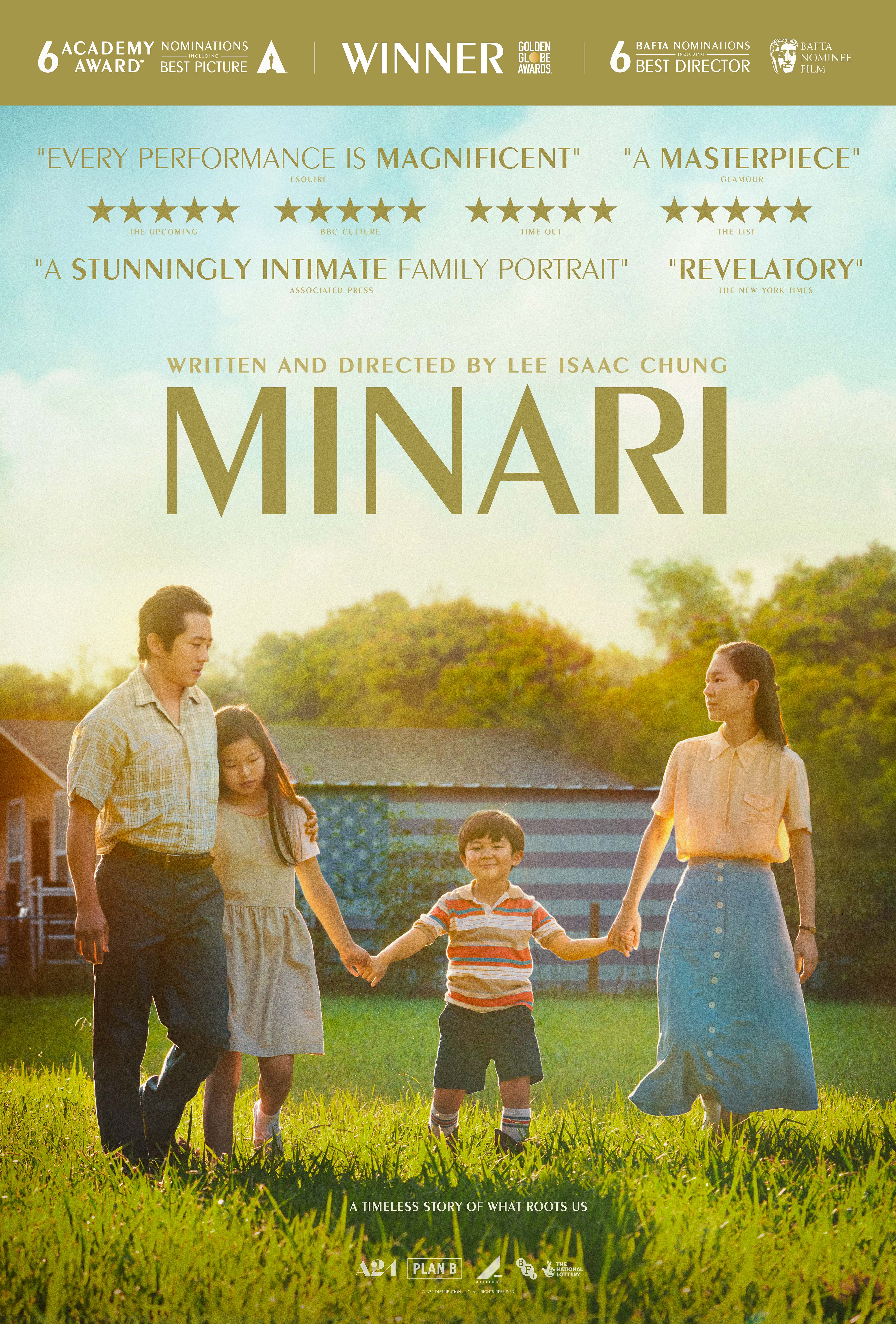
Minari (미나리, Lee Isaac Chung, 2020)

“Remember what we said when we got married? That we’d go to America and save each other. Instead all we do is fight” admits the failing patriarch at the centre of Lee Isaac Chung’s touching semi-autobiographical family drama Minari (미나리). Less a treatise on the elusiveness of the American Dream or the immigrant experience, Chung’s primary preoccupation is with the family itself seen partly through the eyes of the young David but also with the hindsight of adulthood in reconsidering the frustrated hopes and dreams of his parents as they find themselves divided not only by the fear and loneliness of trying to build a life in another country but by stubborn male pride and conflicting desires. 

The Yi family arrive for their new life in convoy, patriarch Jacob (Steven Yeun) leading in front driving a removal van and mother Monica (Han Ye-ri) following behind driving the family car with daughter Anne (Noel Kate Cho) in the passenger seat and son David (Alan Kim) in the back. Pulling up into the huge empty field to find a rundown trailer home which doesn’t even have steps up to the door, Monica is non-plussed. “This is not what you promised” she admonishes her husband with a force that suggests it isn’t the first time he’s disappointed her. Jacob, however, believes he’s found the new Garden of Eden, intending to root his family in the “best dirt in America”. His big dream is to plug a gap in the market by farming Korean fruit and veg to sell to the ever expanding diaspora community. 

Monica meanwhile is unconvinced, more concerned with immediate matters of practicality wondering if it’s really wise to have brought their son who has a heart condition out into the virtual wilderness an hour away from the nearest hospital. While making progress on the farm, the couple make ends meet with the same job they were doing back in California, sexing chickens, at which Jacob is apparently a dab hand while Monica struggles but is told that her efficiency is “good enough” for Arkansas. While he dreams, she concentrates on getting better at the job believing that if sexing chickens for the rest of her life is all there is it’s fine as long as its feeds their family. But Jacob remains stubbornly obsessed with making the farm a success no matter what it costs. Male chicks get discarded because in the end they have little use, they don’t taste good and they don’t lay eggs. “They need to see me succeed at something” he eventually tells his wife of the children even as she considers leaving him, too obsessed with his sense of male pride to admit the idea of failure. The last man who tried to farm his land apparently felt much the same, eventually taking his own life rather than live with the humiliation when the farm failed. 

“We can’t save each other” Monica concludes, realising that Jacob has chosen the farm or more accurately himself and his pride over their family and that she alone is in that sense shouldering the burden of their shared endeavour. Believing that his wife is most likely lonely, Jacob consents to inviting her mother to live with them (apparently a frequent source of their arguments), grandma Soon-ja (Youn Yuh-jung) remembering a sentimental love song that they’d liked when they were first married but like the love itself have apparently forgotten. Her presence at first disrupts and then perhaps heals the fracturing family through an injection of Koreanness, her “foreignness” thoroughly alienating youngest son David who is forced to share a room with her but complains that she “smells like Korea” and refuses to drink the traditional herbal concoction she prepares for him. She doesn’t fit his Americanised image of the traditional “grandma” as a warm and cuddly woman who bakes cookies and tells stories. Direct if not severe, Soon-ja plays cards, swears liberally, and wears men’s underwear while enthusiastically watching the wrestling on television. David only begins to warm to her when she takes his side against his authoritarian father even though he’d played a rather cruel trick on her. 

Nevertheless it’s grandma who perhaps saves the family in the end, planting her minari seeds from Korea at a nearby creek, explaining that they grow best wild and are a versatile source of sustenance for anyone and everyone. Mother and father do in fact save each other, quite literally, as Jacob finally chooses his wife over his farm while little David’s condition unexpectedly improves, the hole in his heart beginning to repair itself even as his family faces greater strain. A tender tale of familial, cultural, and emotional integration Minari eventually finds peace and comfort in the resilience of the family unit held together by a grandmother’s foresight and the rediscovery of a long buried love. 


Minari is available to stream in the UK from 2nd April courtesy of Altitude Films.

UK Trailer

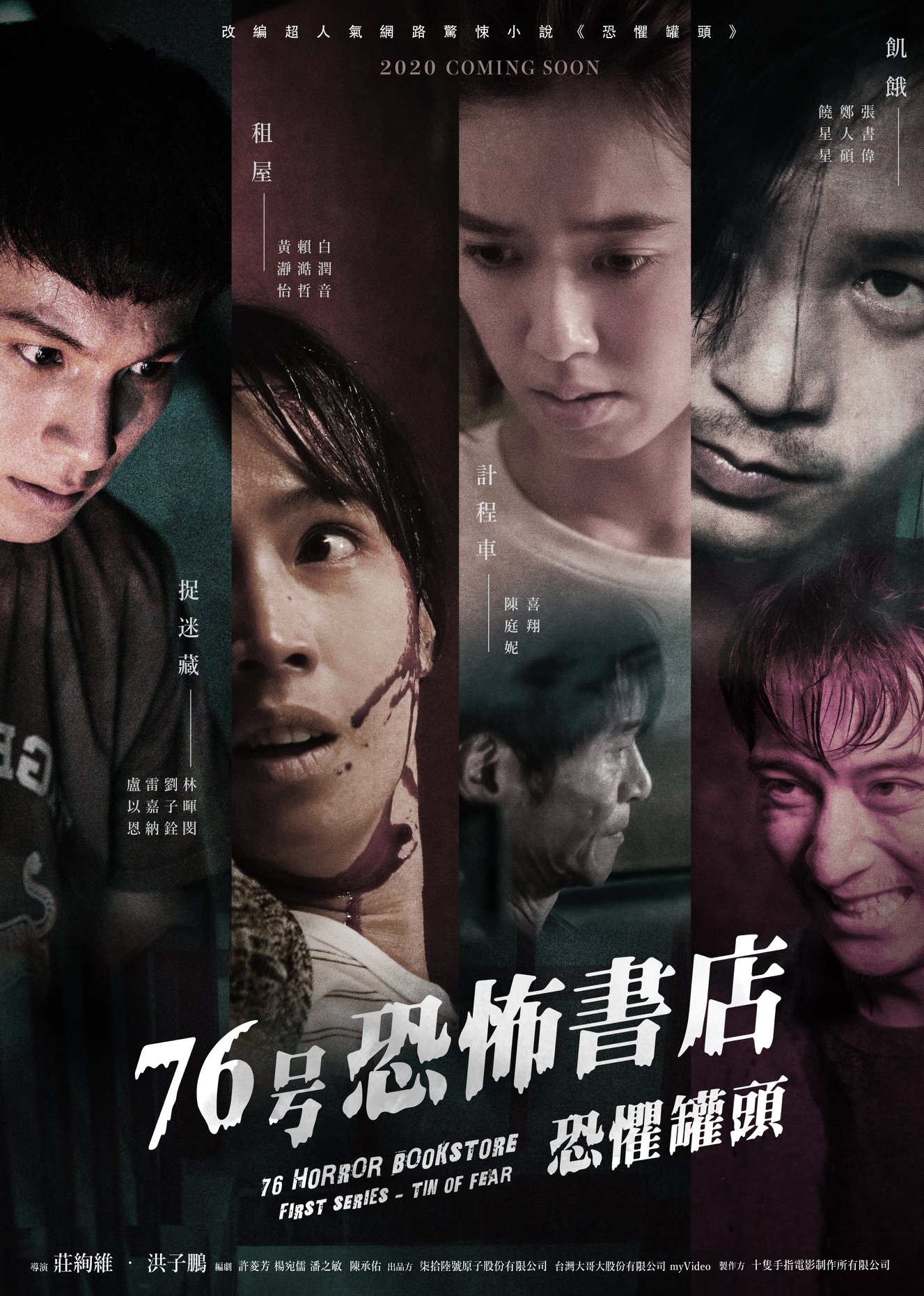
No. 76 Horror Bookstore: Tin of Fear (76号恐怖書店之恐懼罐頭, David Chuang & Hung Tzu-peng, 2020)

The first in a potential franchise, David Chuang & Hung Tzu-peng’s chilling anthology 76 Horror Bookstore: Tin of Fear (76号恐怖書店之恐懼罐頭, 76-Hào Kǒngbù Shūdiàn zhī Kǒngjù Guàntou) adapts four short stories from the online novel series of the same name. Somewhat interconnected and featuring some of the same cast, the four episodes each present a different kind of horror but all featuring a rather grisly spin from the secrets contained in the grim apartment building of the first instalment to the heartbreaking familial drama of the last as a collection of contemporary lost souls attempt to make sense of life, death, and that which exists somewhere in between. 

Titled “Rent”, the first chapter sees single mother Miss Ho (Esther Huang) leave her young son behind to travel to Taipei hoping to earn money through sex work in order to buy a house in which they can live together. Unfortunately, however, her city existence is even grimmer than expected, inhabiting a rundown apartment block overseen by an extremely creepy landlord (Lai Hao-Zhe) who informs her that the previous tenant, whose belongings are still in the room, abruptly disappeared without trace. “When your son grows up, he’ll be able to protect you” the landlord adds in rather sexist fashion finally getting round to fixing the lock on her door while singing unsettling nursery rhymes about slow rats getting eaten alive. Gradually Miss Ho becomes aware that the building is home to a dark secret connected with the sad fate of one particular family who apparently attempted to resist the urban renewal programme but ironically finds that her own victory lies in a sense with complicity. 

Meanwhile, in Hunger a convict (Joe Chang Shu-Wei) wakes up on the outside after a traumatic episode only to discover that in this version of reality food has been declared illegal. The clerk at a convenience store (Troy Liu Tzu-Chuan) reacts to his polite request for sustenance with shear horror as if he’d just asked him where he might be able to find the weapons grade plutonium or high grade explosives. A strangely dressed man hanging round outside explains that there’s no more food for another 76 days, but he can supply him with some tins for a small fee. Gesturing at the sign inside the store which is currently counting down to a ghost festival might have clued the man in on where he might be if only he had his thinking cap on, but sure enough he finds himself trapped in a purgatorial hellscape and eventually faced with an ironic confrontation as he resolutely fails to take the opportunity to overcome his baser instincts. 

Shifting into teen supernatural romance, Hide and Seek takes a less grisly though no less cruel turn as a bunch of kids head out on an adventure to celebrate the 18th birthday of Xiaoqi (Eric Lin Hui-Ming). Best friend Shaohua (Troy Liu Tzu-Chuan) has organised a camping trip to a supposedly haunted former dormitory yet the conflict here is of a more ordinary kind in that both the boys had unwittingly intended to declare their love to the same girl. Nevertheless, as the haunted house adventure proceeds Xiaoqi begins to to wonder who is haunting who, unwittingly forced into a delayed confession of his repressed emotion. 

Something similar befalls Hsin-chieh (Annie Ting-ni), the 30-something heroine of final instalment Taxi who has recently discovered she is pregnant and is subsequently consumed with maternal anxiety that reflects the loss of each of her parents in very different circumstances along with a possible sacrifice of independence and individual identity. Nagged by the aunt who raised her and seemingly cajoled by her perfectly pleasant, vaguely supportive boyfriend Ah-Shu (Wang Wei), Hsin-chieh leans towards an abortion, ending the relationship and getting a flat of her own but soon finds herself haunted by a creepy little girl and a host of other strange goings on until finally forced to face the legacy of abandonment in order to make peace with the traumatic past, ending a painful cycle of guilt and retribution in a bloody confluence of death and rebirth. Filled with surreal and nightmarish imagery, Taxi is at heart all about forgiveness and moving forward, a fitting end these four gloomy tales of supernatural harassment and guilty consciences finding at least a ray of hope in new life unburdened by fear or shame.


No. 76 Horror Bookstore: Tin of Fear streams in the US March 27 – 31 as part of the 12th season of Asian Pop-Up Cinema.

Original trailer (English / Traditional Chinese subtitles)

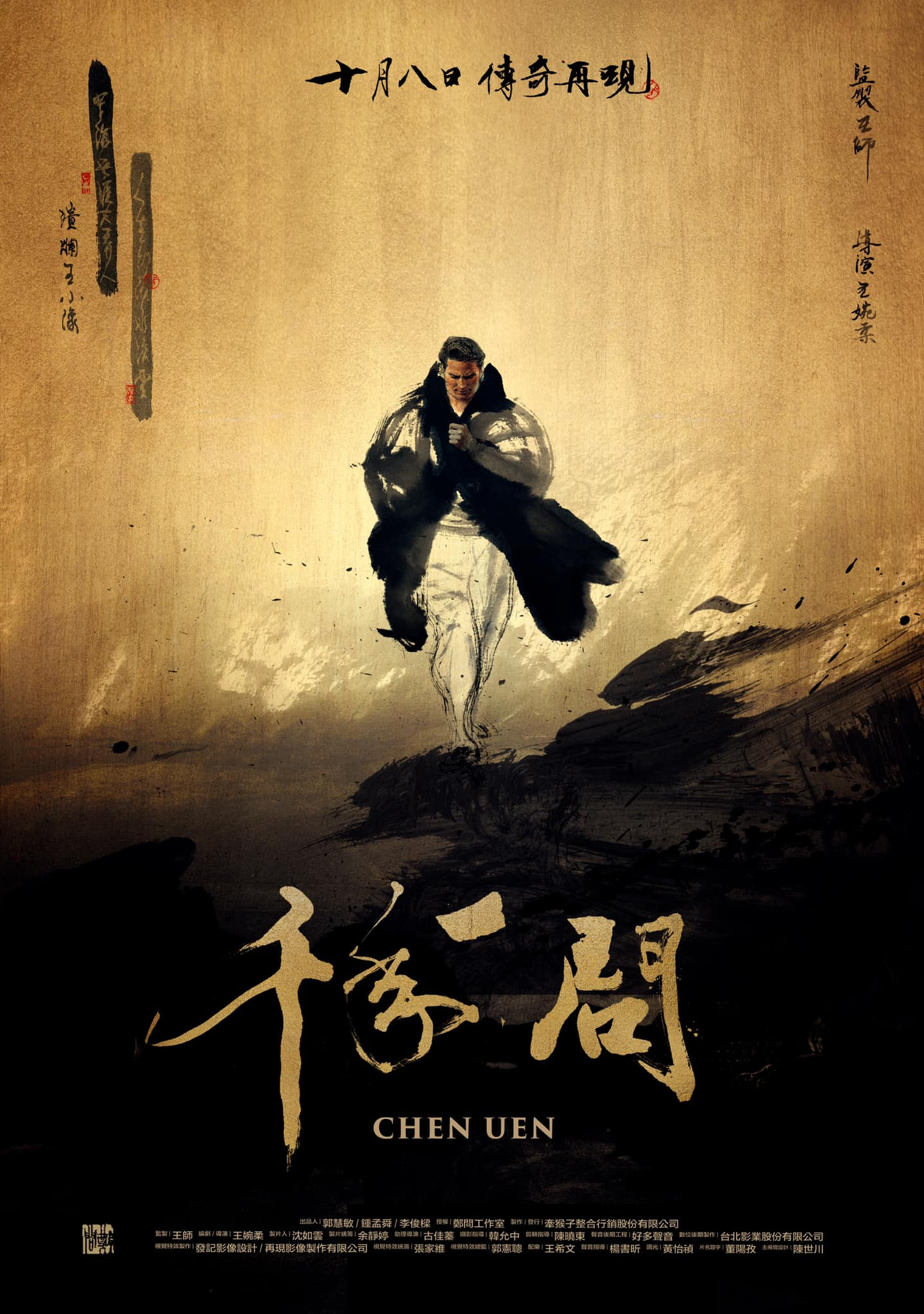
Chen Uen (千年一問, Wang Wan-Jo, 2020)

Born in Daxi in 1958, Chen Uen became one of Taiwan’s premiere comic book artists eventually publishing in Japan and Hong Kong and later travelling to the Mainland to work in the growing online gaming industry. Sadly after a tumultuous career spanning over 30 years, Chen passed away of a heart attack at the young age of 58 in 2017. Though he had perhaps not always been appreciated to the degree he would have liked in his home country, the artist did receive a posthumous exhibition at the National Palace Museum the summer following his death, apparently the first comic artist ever to have received such an honour. 

Exploring both his life and career, Wang Wan-jo’s engrossing documentary (千年一問, Qiānnián Yī Wèn) paints an enigmatic picture of the complicated artist, bringing his work to life with a series of animatics along with poignant shots of an animated Chen walking the city streets and eventually arriving at his own exhibition. Through interviewing his various collaborators, the image of him which eventually arises is of a man who was at once singleminded, driven by artistic conviction and certain in his skills, and that of a sometimes insecure talent privately hurt by his public failures and resentful that his home nation often failed to embrace his work. 

Like many of his generation, Chen was profoundly influenced by wuxia serials and carried that love into his art, becoming one of the first artists to move away from the then dominant Japanese manga aesthetics drawing inspiration from traditional Chinese ink painting including the use of a brush rather than the pen. In his later, increasingly avant-garde work we see him experimenting further with materials using toothbrushes and sand, scorching the paper with fire or marbling ink in water to achieve his desired effect. As mangaka Tetsuya Chiba (Ashita no Joe) points out, manga panels are constructed with narrative progression in mind yet Chen treated each of his panels as a standalone image with a strongly cinematic vision. This tendency towards directness in his stripped back storytelling leads Chiba and others to offer the slight criticism that to some readers Chen’s comics may have lacked dramatic richness as a consequence. Nevertheless, he soon found himself wooed by Bubble-era Japan, invited by publishing powerhouse Kodansha to collaborate on a series of wuxia-themed projects beginning with The Heroes of Eastern Zhou.

The Japan move would be the first of many, allowing Chen to escape the sense disillusionment he felt in Taiwan while honing his skills as a contractor for a major publishing house willing as his editor testifies to work on whatever they suggested including the ubiquitous cute girls then popular in the Japanese manga market. Unfortunately, however, he does not seem to have settled very comfortably in Tokyo while his wife recounts her difficulties trying to navigate raising their two children while unable to speak the language. The family soon returned to Taiwan, and Chen would make his subsequent moves alone leaving his family behind to work in comics in Hong Kong before moving on to Beijing where he began working on concept art for the then nascent world of online gaming beginning with a franchise inspired by Romance of the Three Kingdoms.  

In an excerpt from a TV interview, Chen describes his comic work as a dream that miraculously came true adding that had he been interested in material comfort he probably would have stuck to jacket art for video games which might have proved more lucrative. His decision to do just that later in his career might then seem like a minor defeat even as it feeds into comments from some of his assistants that he liked to stay ahead of technological change and was keen to experiment with new tools even teaching himself photoshop intuitively while the program lacked Chinese-language support. His colleagues describe him as mercurial, an unhappy person probably lonely away so long from his family yet also fiercely caring and protective of his staff. For Chen, heroes were less fearsome warriors than those who were “unwavering, rational, and polite”, qualities which ironically mirror his own personality though others also call him stubborn, a perfectionist who always did what was right rather than settling for the easy option. A poignant memorial to the under appreciated pioneer of Taiwanese comic art, Wang’s documentary does not set out to solve mystery of Chen but revels in his contradictions while celebrating the glorious complexity of his bold and colourful career. 


Chen Uen streams in the US until March 28 as part of the 12th season of Asian Pop-Up Cinema.

Original trailer (English subtitles)

Search Out (서치 아웃, Kwak Jung, 2020)

A trio of disillusioned youngsters kick back against Hell Joseon by chasing down an internet serial killer in Kwak Jung’s dark cyber thriller, Search Out (서치 아웃). As the title implies, the three are each looking for something to tell them that they still have time, their dreams are still achievable, and their lives are worth living, yet as they discover there are those keen to convince them otherwise including a mysterious online presence who seemingly takes advantage of those already in despair and pushes them towards a dark and irreversible decision. 

The hero, Jun-hyeok (Kim Sung-cheol), is currently job hunting while working part-time in a convenience store. His best friend, Seong-min (Lee Si-eon) is desperate to join the police force but having trouble passing the civil service exams. To pass the time, Jun-hyeok also does odd jobs for people who need help under the pseudonym “Genie” via his social media accounts, but when he’s unexpectedly approached by a woman in the same boarding house who tells him that she’s in a dark place and needs someone to talk to, he turns her down out of embarrassment afraid that his “real” identity might be exposed and ashamed to admit that “Genie” is just regular guy who can’t get a job. Unfortunately, however, the young woman is later found dead in an apparent suicide. 

Consumed with guilt, Jun-hyeok tries to ease his conscience but accidentally stumbles across a weird account the young woman had been interacting with shortly before she died. “Ereshkigal” asks all the wrong questions of those already in a dark place, probing them about the meaning of life and whether their lives are really worth living before, as Jun-hyeok later realises, blackmailing them into completing various “missions”. Paradoxically, Jun-hyeok’s quest to stop the mysterious online threat is partly a way of absolving himself of guilt while simultaneously fighting back against those same feelings of despair that he too feels as a young man who can’t seem to get his foot on the ladder, rudely insulted by a cocky high school kid for being an “adult” still doing a student’s job. 

Seong-min feels much the same, indulging his love of justice as a man who just wants to protect and serve and feels it’s unfair he’s being prevented from doing so because he struggles with paperwork when his true strengths lie in the field. Turning to a private detective when the police won’t listen to them, the guys team up with frustrated hacker Noo-rie (Heo Ga-yoon) who like them also feels as if she’s stagnating, slumming it with a shady job at the detective agency when she obviously has major IT skills. A psychiatrist Jun-hyeok meets through his Genie job warns them that the killer may be leveraging his victims’ feelings of despair to convince them that the only way to escape suffering is through death. Despite himself, it’s a sentiment that Jun-hyeok can well understand. 

Like other young people his age, he attempts to mask his sense of loneliness through social media, another weakness the killer sees fit to exploit. Yet as a potential suspect later points out, “it’s fun to peek at others’ private lives” exposing himself as a banal voyeur while simultaneously revealing the unexpected vulnerability of those who live online. In any case, the final revelations are perhaps expected, and not, in the way they bare out the inequalities of the contemporary Korean society. Jun-hyeok starts to wonder if it really was all his fault from the very beginning as his own not quite innocent but largely accidental moment of social media notoriety may have had unintended, unforeseen consequences even as he sought a kind of justice in exposing wrongdoing by the rich and powerful. 

Nevertheless, as Seong-min is fond of saying, “you must do what’s right. You must bring justice”. Others might argue that it’s “natural to kill others to survive”, but the trio at least prefer mutual solidarity as they work together to take down the killer while fighting their own demons along with the continued indifference of the authorities which are supposed to protect them. Partly a treatise on why you should be more careful about what you post online and how you interact with others in general, Kwak’s steely thriller is also a story of three young people searching out a reason to live and finding it largely in each other as they come to an acceptance of life’s ambiguities but also of their right to define them for themselves. 


Search Out streams in the US March 24 – 28 as part of the 12th season of Asian Pop-Up Cinema.

International trailer (English subtitles)

The Way We Keep Dancing (狂舞派3, Adam Wong, 2020)

In a Hong Kong already under threat, a small community of artists finds itself torn over how best to preserve their culture and way of life amid the seemingly unstoppable wave of gentrification that threatens to engulf them in Adam Wong’s quasi-sequel to his 2013 hit The Way We Dance, The Way We Keep Dancing (狂舞派3). Cheekily titled The Way We Dance 3 in the original Chinese, The Way We Keep Dancing takes place in an alternate reality in which a part two has already been released and follows the fortunes of alternate versions of the earlier film’s stars as they each fight their own battles while finding themselves conflicted over the future direction of their community. 

As the film opens, rapper Heyo (Heyo) receives a tip-off from a friend that the disused industrial building in which he and others are illegally squatting is about to be raided by the police. Later talking to a journalist, he explains that the “apartment” only has a sofa because sleeping there would technically be against the code of usage for former industrial buildings, though it’s obvious that he does indeed “live” there. A member of the “KIDA” (Kowloon Industrial District Artists) community he like others is acutely aware of the increasing gentrification of the local area which threatens to push bohemian artists like himself further out of the city. Yet no one seems to have come up with a united means of resistance, previous protests apparently having proved largely ineffective. 

It’s perhaps for this reason that he, along with the dance stars “returning” from the first movie, is later convinced to begin working with the Urban Renewal Bureau on a new project entitled “Dance Street” which, they are told by YouTuber mastermind Leung (Babyjohn Choi), will bring public attention to the local dance subculture and give them greater leverage to preserve their place within the community. Not all are convinced, however, with other local artists deriding them as sell outs conspiring with the developers who are, after all, subverting everything they stand for in repackaging hip hop and street culture to make it marketable to a mainstream audience of the kind that will eventually be buying and investing in the upscale apartments they presumably plan to build after tearing down disused industrial structures. This conflict comes to the fore when Leung gets the gang involved in promoting a new “Hip Park” which will apparently have a skate bank and graffiti area crassly commodifying the unique creative spirit of the Industrial District while deliberately confining it to a single location, sanitised and controlled. 

Meanwhile, aspiring dancer Hana (Cherry Ngan Cheuk-ling) has become a minor star since the release of The Way We Dance and its sequel, a popular celebrity with a small internet following. Somewhat naive and swept along alternately by her agent Terese and the persuasive Leung, she finds herself torn between her loyalty to her old dancemates and the demands of her rising fame. Terese makes it clear that the agency is only really interested in her while she keeps trying to find opportunities for her friends but also finds herself an accidental figurehead of the Dance Street movement because of her minor celebrity. Like others she is convinced that collaboration is the answer, not quite understanding its duplicities until directly confronted by the odious “call me Tony” head of the development board who embarks on a crass down with the kids routine in order to sell his new brand as a hip urban space for trendy young professionals while the artists are pushed even further into the margins. 

There is perhaps a further meta commentary to be read into Wong’s gentrification debate in the light of Hong Kong’s changing status and relationship to the Mainland in which many feel the local character and culture is being slowly erased. In any case, though including a series of large-scale set pieces, Wong concentrates less on dance than the plight of the KIDA community shooting shaky handheld footage of Heyo as he wanders the city in search of inspiration but encounters both hostility and disappointment from his fellow artists before eventually making the decision to rebel against the Dance Street project and his own unwilling complicity with its slightly dubious aims. Nevertheless, even if slightly ambiguous Wong eventually returns his dancing heroes to their roots as a small boy whose dreams may have been dashed by Leung’s thoughtless machinations dances defiantly amid the ruins . 


The Way We Keep Dancing screened as part of the 2021 Osaka Asian Film Festival.

Original trailer (English / Traditional Chinese subtitles)

Images: Golden Scene Company Limited © 2020

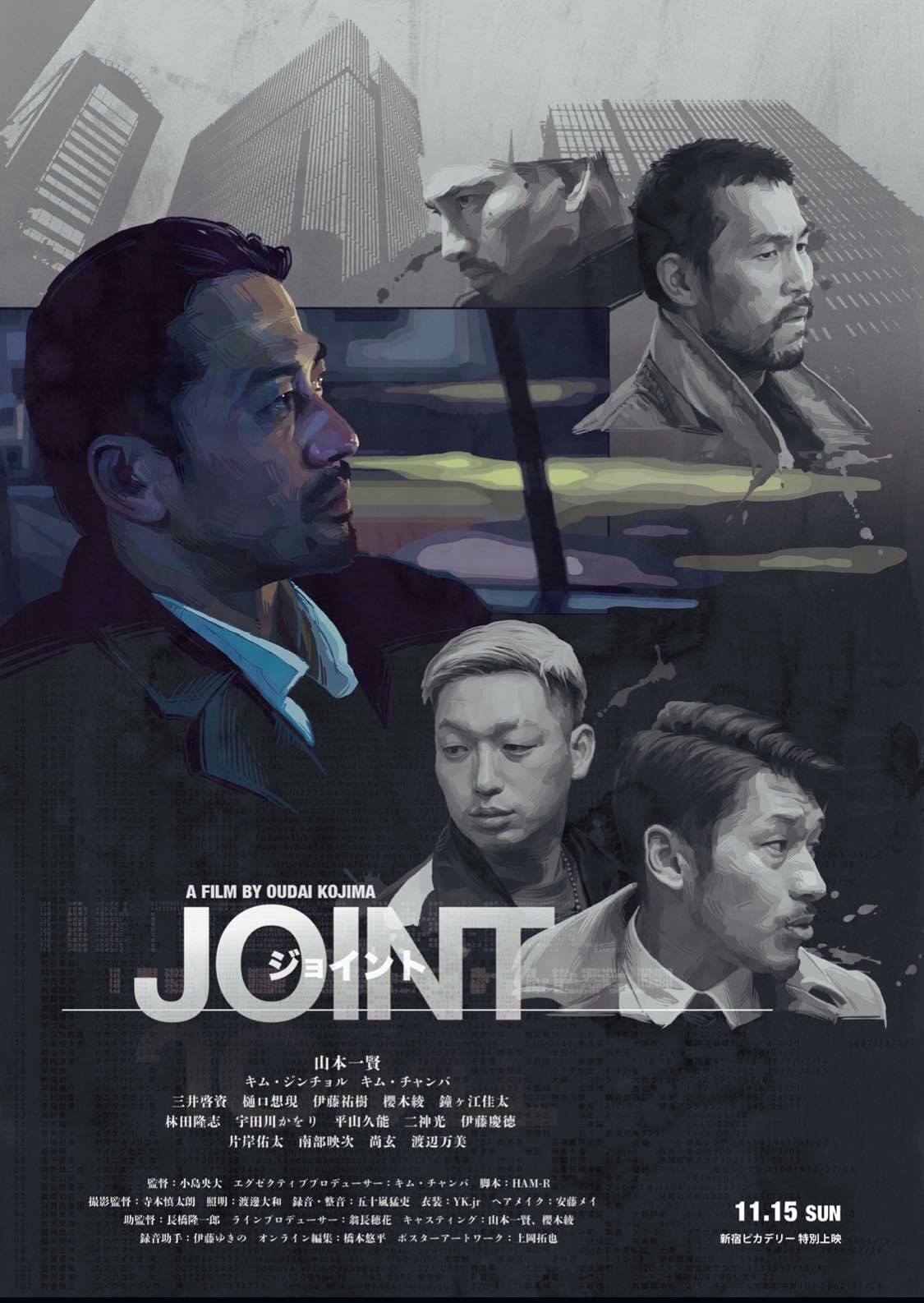
JOINT (Oudai Kojima, 2020)

The yakuza is in some senses at least an outdated institution long thought to be on its way to extinction, some positing that the coronavirus pandemic may be the final nail in the coffin. Organised crime is however nothing if not resourceful and facing post-war decline has long been sliding into corporatised legitimacy. As Oudai Kojima’s JOINT points out, however, the line between legitimate business and illicit enterprise has become increasingly thin especially when it comes to the usage of today’s most valuable commodity, our data. 

Emerging from two years in prison, middle-aged Take (Ikken Yamamoto) took a job ripe with symbolism in “deconstruction” on the invitation of a friend who has apparently managed to escape the criminal underworld for a respectable life as a “financier” with a wife and child. Having saved a small nest egg, however, Take soon makes his way back to the Tokyo underworld, good jobs being hard to find for ex-cons, where he attempts to remain on the fringes of the gangster world working as a kind of freelancer for the Oshima clan while not technically a member of the yakuza. Getting back in touch with an old underling and a Korean friend running a restaurant as a hub for the migrant community, he finds himself getting involved in the yakuza’s latest big business innovation trafficking big data to be used to facilitate large-scale fraud usually against the elderly. The thing about data is that it’s only pieces of a puzzle, the various lists of names with phone numbers, emails, and addresses etc are not worth much individually but coupled with related datasets giving a fuller picture of an individual life they are a veritable goldmine. Pulling together his various resources Take soon becomes a major data broker known for comprehensive documents. 

Ultimately, however, he wants out of the criminal underworld and decides to invest his money in venture capital through a start up working with, yes, big data but this time to be used for the purposes of advertising and marketing. His gangster life and supposed fresh start are in fact based on the exact same source, and who’s to say that illicitly collecting information and using it to sell us more stuff we don’t want or need is really any better than using it to commit fraud. Big data is indeed big business, and its possession it turns out to be as dangerous and contested as any other illicit substance from drugs to black market booze back in the post-war yakuza heyday. 

To signal their commitment to moving on, the Oshima gang has already attempted to clean up its act by exiling old school, violent elements but their efforts have only created a further destabilisation in the criminal underworld as the “traditional” yakuza fight back by founding their own gang rooted in violence and vice. Take has one foot in one foot out of the yakuza life, yet sees fit to pontificate on the code of gangsterdom unable to understand why his old contacts have become so toothless unwilling to take a stand or claim revenge when one of their own is murdered by a rival intent on taking over both their turf and the big data business. Meanwhile, Jinghui, the Korean restaurant owner struggles to support the migrant community who, like Take, find it difficult to secure legitimate work, and ends up working with a third gangster conglomerate which is entirely staffed by foreign nationals themselves intensely marginalised in an often hostile society. They see fit to take things one step further by tapping data at source through tampering with routers to funnel it directly to them. 

The “information war” sees no sign of slowing down, though ironically enough having just got out of the “joint”, Take finds himself trapped in the liminal space somewhere between gangster and legitimate businessman even as that space seems to be shrinking so much that it may soon disappear entirely from beneath his feet. Shooting mainly with handheld, Kojima deglams the yakuza underworld surveying it with a documentary naturalism that suggests it is in fact perfectly ordinary while playing with the trappings of the classic jitsuroku throwing up onscreen text featuring the names of the main players along with details of their roles and affiliations. Though the moody score and twilight neon might hint at neo-noir there’s not so much fatalism here as a sense of sorry impossibility, yet in contrast to the perhaps expected nihilism there is a degree of hope for Take brokered by his internationalism even if it exists only outside of Japan. 


JOINT screened as part of the 2021 Osaka Asian Film Festival.

Original trailer (no subtitles)

The Silent Forest (無聲, Ko Chen-Nien, 2020)


There can be no justice in silence, but when those in a position to help refuse to listen what can be done? Inspired by true events, Ko Chen-Nien’s The Silent Forest (無聲, Wúshēng) takes aim at cycles of abuse and systems of oppression in society at large through a thorough investigation of the culture of silence at a school for deaf children in which endemic bullying spreads like a virus emanating from a single trauma inflicted by a negligent authority. Yet this kind of violence cannot be fought with violence and there must be empathy too for the bully or the chain will never end as Ko’s ambivalent conclusion makes clear. 

The film opens with a boy on the run, finally chasing down an old man and tackling him to the ground pummelling him until the police turn up and separate them. The policemen are frustrated. This is apparently the first time they’ve ever come into contact with a deaf person and have no idea how to communicate with him. Chang Cheng (Troy Liu Tzu-Chuan) tries to protest their injustice, but they continue to treat him as aggressor rather than victim even as he explains in writing that the old man had stolen his wallet (the old man claims he “found” it and was planning to hand it in). Finally a teacher from his new school, Mr. Wang (Liu Kuan-ting), turns up and interprets but it quickly becomes clear that he too is in a sense complicit, reporting that Cheng is sorry for what he did and grateful to the officers. In his view at least, the boy has his wallet back and there’s no harm done so why make a fuss? Just let it go and everyone goes home.

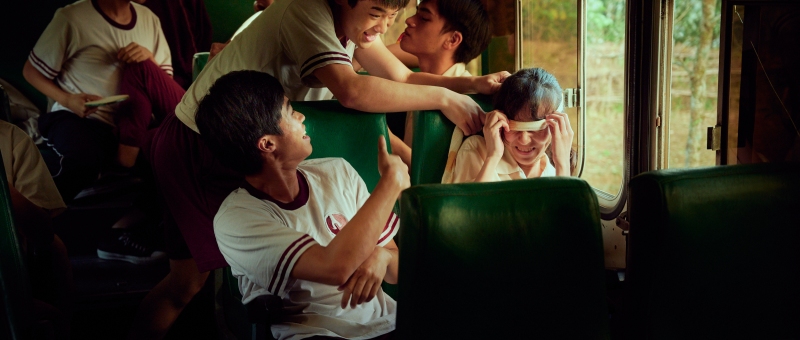
It’s this conflict between “silence” and justice that continues to prey upon Cheng’s mind after he starts at the school and becomes aware of the widespread culture of bullying witnessing a girl he likes being sexually abused by a gang of boys at the back of the school bus while the teacher sitting at the front does nothing. He tries to convince the girl, Beibei (Buffy Chen Yan-Fei), to tell one of the other teachers but she refuses, not wanting to “betray” her “friends”, insisting they were “just playing around”. Her reluctance however mainly stems from an intense fear of being sent away, that she might have to leave the school which is the only place she feels accepted. Both she and Cheng feel intensely othered in the hearing world, wary of being blamed for things that weren’t their fault as if their very existence were bothersome or “abnormal”. Even if it means putting up with extreme degradation, she would prefer it to the loneliness she felt before she found the school.

Yet the sense of social isolation is only one of the various oppressions to be found at the institution which ironically cultivates a culture of silence as regards the ongoing abuse as a means of preserving its reputation and therefore the “greater good” in providing the “safe space” from the social stigma the children face in the hearing world. Beibei points out that she was screaming, yet nobody could hear her. At first she tried to tell a teacher, but the teacher blamed it on her and implicitly on her disability insisting that the boys were “good kids” who were “just playing around” and didn’t understand she didn’t like it because she failed to communicate that she was uncomfortable. If they knew she was suffering they’d have stopped, the teacher insists before coldly walking away. Mr. Wang feels quite differently and wants to help but discovers that the culture of silence extends much deeper than he thought and the problem most likely cannot be solved through a few simple countermeasures but requires whole-scale systemic reform.

In fact, very little is done by the authorities leaving Chang Cheng with a hero complex believing that he has to be strong to beat the bad guys and save Beibei, but his righteous desire still leads him back towards complicity in order to protect her. The arch antagonist, Xiao Guang (Kim Hyun-Bin), bullies as a defence mechanism insisting that no one would dare bully him, manipulating others to do his bidding through the same mentality that one can either be a bully or a victim. Yet Xiao Guang is also a victim himself, a wounded damaged boy let down by a culture ruled by shame and unable to defend himself by any other means though apparently uniquely vulnerable to one particular aggressor. Only by addressing the root of his trauma can the cycle be brought to an end, but the concurrent cycles which he set in motion will in turn require their own resolution. A painful allegory, The Silent Forest boldly makes the case for speaking out but also admits that it doesn’t matter how loud you shout if no one is listening and without the desire for empathy and communication in all its forms the cycles will grow and repeat until the end of time.


The Silent Forest streams in Illinois until March 21 as part of the 12th season of Asian Pop-Up Cinema.

Original trailer (English subtitles)