No More Bets (孤注一掷, Shen Ao, 2023)

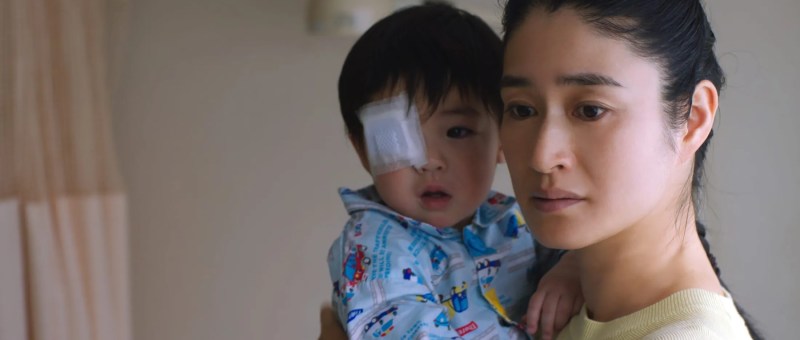
That the two biggest hits at the Chinese box office in summer 2023 both had a strong anti-gambling message perhaps hints at a contemporary anxiety, though No More Bets (孤注一掷, gūzhùyīzhì) is clearly the more direct of the two even if it also shares with Lost in the Stars its echoing of a theme in contemporary mainstream cinema that Chinese citizens are safe nowhere other than China. Then again, that particular message maybe somewhat disingenuous seeing as the villains here are all themselves Chinese if operating abroad to try and evade the law. 

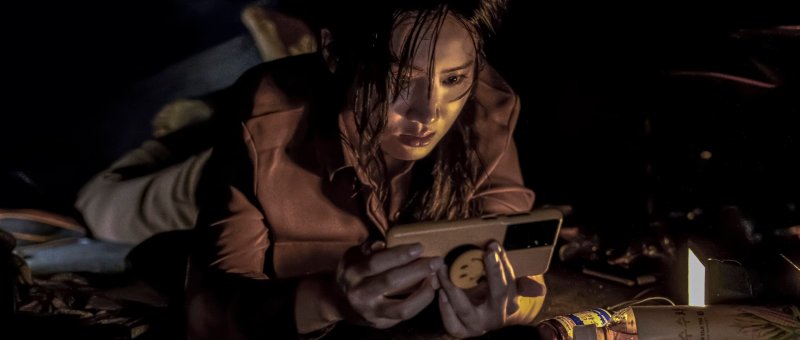
This ambitious programmer Pan (Lay Zhang) learns to his cost when he abruptly quits his job after being passed over for a promotion in favour of someone with an influential father and accepts a too good to be true offer from what he’s been led to believe is a gaming company in Singapore. Soon enough, however, he realises their brief stopover is actually their destination and he’s been trafficked to another South East Asian nation where he is forced to participate in online gambling scams. Pan is however a righteous young man and immediately takes a stand, explicitly telling his captors he won’t do their bidding though they viciously beat him. Eventually he teams up with the slightly less conflicted model Anna (Gina Jin Chen) who vaguely understood the job when she agreed to it but not that they’d confiscate her passport and she’d be unable to leave. 

Like Pan, Anna accepted the job while frustrated by the vagaries of her industry after being unfairly let go by her agency after her photo was used on a flyer advertising sex work without her (or their) consent. Like those who play the games, she was suckered in by the promise of easy money that could be earned quickly and didn’t really think about the implications of what she was doing. That the film positions the victim, Tian (Darren Wang), as an incredibly wealthy young man who had access to vast generational wealth avoids the implication that some are drawn into scams for the same reasons that Pan and Anna were in they feel a sense of impossibility in their lives because of societal unfairness and economic hopeless but nevertheless paints his gradual descent into madness and addiction as a personal failing born of his insatiable greed rather than a misfortune that might befall anyone with a smartphone. Even so, if a highly educated young man can be tricked by such an obvious scam it suggests that it really can happen to anyone. 

At least, the film seems to say that in any case it’s bad to gamble but you should definitely think twice about promises that sound too good to be true, especially if they involve offers of work abroad. A series of talking heads interviews (with blurred faces) from victims of trafficking at the film’s conclusion all advise viewers not to travel to other countries to work, while several remark on how relieved they felt to see Chinese police when they were eventually rescued. Uniformed police also give a press conference during the film insisting that they are doubling down on combatting fraud and other kinds of cybercrimes while Inspector Zhao (Yong Mei), whose speech bookends the film, struggles to get anything done because the crimes are taking place overseas and therefore outside of her jurisdiction. Then again, the entire operation is run by Chinese businessmen who try to engender a sense of loyalty and rebellion among the men whom they’ve essentially enslaved by making them think that they’re merely rebelling against an unfair society by taking the money of the “greedy” people who play their games and redistributing it to their own, downtrodden families. 

Pan is trying to do the right thing, but often does it in the wrong way actively putting others in danger while trying to find a way to blow the whistle on the whole operation in the hope of being rescued while even Inspector Zhao at times seems dismissive, failing to take the claims of Tian’s girlfriend that he’s being swindled out of his entire family fortune by online scammers seriously until it’s too late. Even so, Shen crafts an often tense tale of escape as Pan does his best to send out coded messages under the noses of his kidnappers while unwillingly participating in the fraud hoping that eventually someone will figure out what’s going on and put a stop the cruel cycle of misery once and for all. 


No More Bets opens in UK cinemas 8th September courtesy of CineAsia.

UK trailer (English subtitles)

Kitty the Killer (อีหนูอันตราย, Lee Thongkham, 2023)

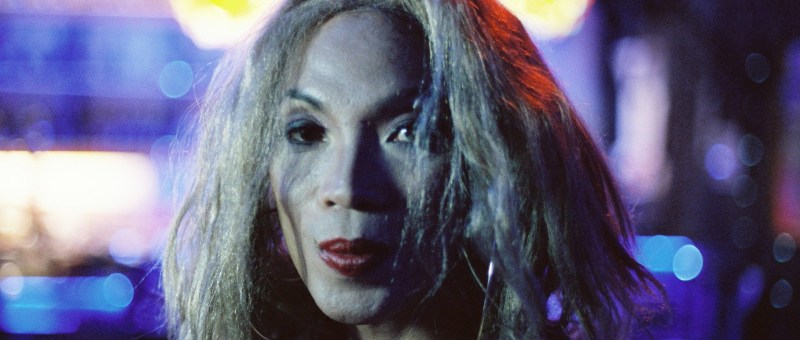
“You might be the stupidest killer I ever met” an ice cool assassin says of the bumbling hero at the centre of Lee Thongkham’s comic book action comedy Kitty the Killer (อีหนูอันตราย). She might indeed have a point, though as Charlie (Denkhun Ngamnet) points out killing is not strictly part of his job description which is more akin to a baby sitter for the “high school girl from hell” under his care, Dina (Ploypailin Thangprapaporn). In part a story of self-transformation, the film ironically plays with a series of genre tropes while providing a point of origin for an ongoing universe. 

As the film opens, Charlie is a feckless young man who can’t seem to get it together and is struggling to make a mark in his job as an “accounts manager” where he is semi-aware that everyone thinks of him as a bit useless. He muses on the difficulties of changing the way that others see him, but never quite takes the first step towards realising that what he needs to change is himself. Nevertheless, his life is changed for him when he runs into top assassin Grey Wolf shortly after The Agency tried to off him when he told them he wanted out of the game. Fearing he’s not long to live, Grey Wolf hands Charlie his trademark ring and tells him that he’s taken out a contract on his mum so if he doesn’t manage to rescue his associate Dina his whole family will be killed. 

Dragged into a world of assassins and conspiracy, Charlie has little option than to rise to the occasion shaking off his boring office boy persona to become a stylish handler perfectly equipped to face off against vicious killers as the gang chase vengeance for Grey Wolf and battle another faction of their own organisation which has apparently cut a deal with the Japanese which is why they all wear masks and carry katana. Lee Thongkham plays with a kind of re-imported orientalism in clear references to Kill Bill, even echoing a famous line in the film when assassin Nina the Faceless says to Charlie, “silly boy like you likes to play with swords.”

The line also hints at the subversion of traditional roles in play as Charlie becomes a male intruder in what in an otherwise a female space. Known as “Kitties” all the assassins are female though aside from villainess Violent all the handlers are men who are otherwise placed in a paternal role yet sidelined as nannies to the super-powered killers over whom they have almost total control. As Violet says, The Agency also has its rules and they are nothing if they do not obey. Charlie is to a degree raised by the four assassins under boss Makin (Vithaya Pansringarm) who train him to become to a capable handler allowing him to transform himself as he said he wanted to do in his opening voiceover while his mother otherwise pampers him at home. 

Nevertheless, the film also sympathises with the constrained lives of the Kitties who are told to have no emotions and that they must eliminate anyone who gets too close to them or witnesses them going about their business. As one of Dina’s “sisters” Tina remarks, she’s “just tired” of her emotionless life and lack of freedom, while Nina who already turned to the dark side tries to seduce them with false promises of greater autonomy under female boss Violet if simultaneously telling them they’d have to kill their friends and “family” in order to win it. In any case, it’s the sense of solidarity between the Kitties and the deeper than expected bond with their handlers that becomes the best weapon against Violet’s hostile take over of The Agency. Well, that and a magic stone that has the power to grant immortality, anyway. Filled with a good deal of deliberately silly dialogue and zany humour, the film also features a number of innovatively choreographed action sequences along with elaborate production design and the occasional use of onscreen graphics and animation. The depth of the world building hints at the potential for an ongoing series with a post-credits epilogue teasing a sequel offering further intrigue for the Kitties and their distinctly goofy handler in an expanding comic universe of retro charm. 


Kitty the Killer screened as part of this year’s New York Asian Film Festival

Original trailer (English subtitles)

Hail to Hell (지옥만세, Lim Oh-jeong, 2022)

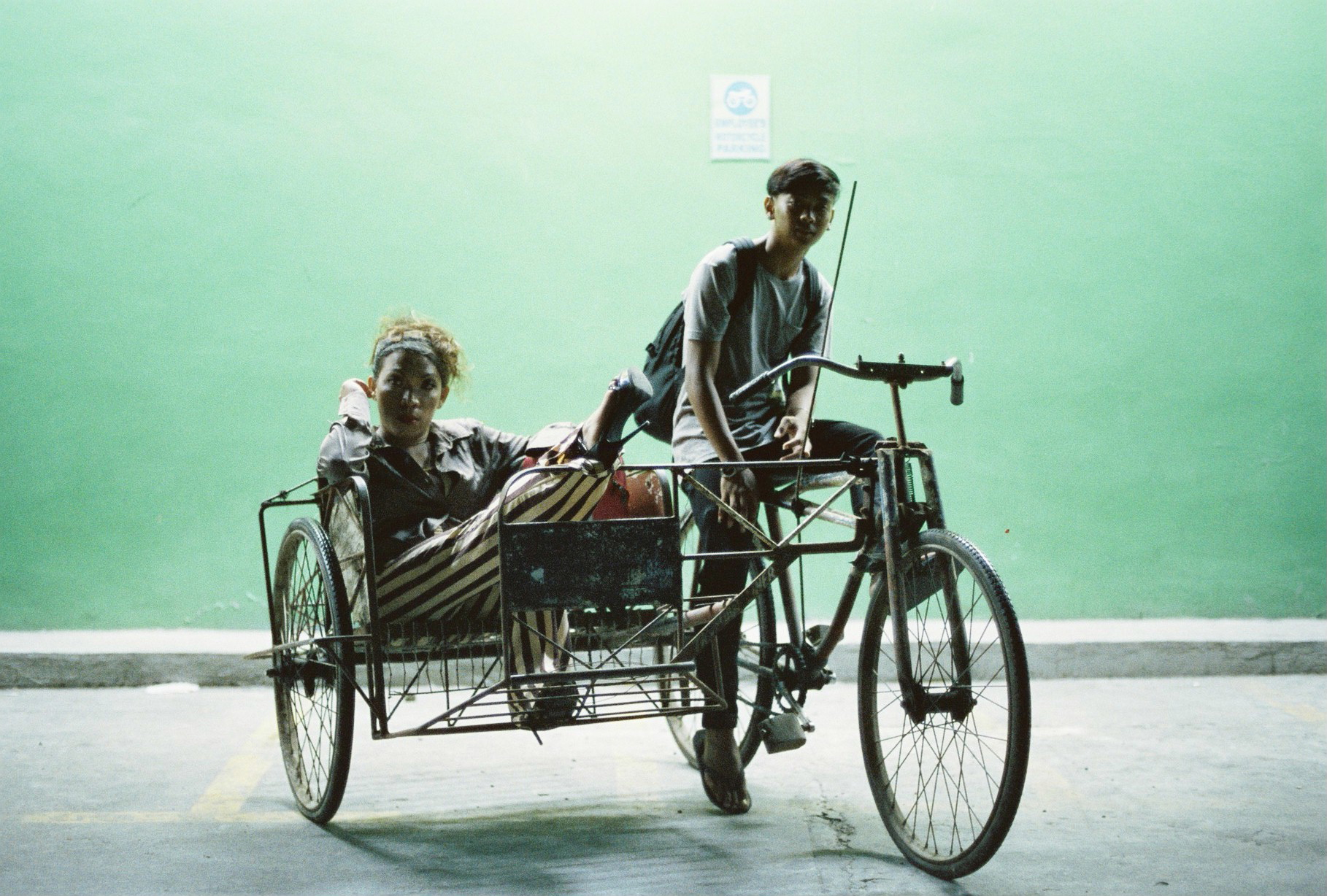
Two teenage girls swap thoughts of suicide for revenge on learning that their former tormentor is living well in Seoul but find their plans frustrated on discovering she has joined a religious organisation and apparently reformed in Lim Oh-jeong’s bullying drama, Hail to Hell (지옥만세, Jiogmanse). “Hell” is what the two girls, and a fair few others, believe their lives to be while seeing little way out other than taking their own lives but are confronted with questions of redemption and forgiveness not to mention death and paradise while plotting vengeance in the capital. 

The surprising thing about high school girls Na-mi (Oh Woo-ri) and Sun-woo (Bang Hyo-rin) is that Na-mi was once part of popular girl Chae-lin’s (Jung Yi-Ju) gang and only left it when they turned on her. Nevertheless, the two young women have bonded in their shared victimisation and desire for an end to their suffering. After several failed attempts at taking their own lives, they change tack on coming across Chae-lin’s Instagram posts which imply that she is living the high life in Seoul and even planning to study abroad which the girls regard as a cruel irony given the extent to which the bullying orchestrated by Chae-lin has disrupted their lives. Unsure exactly what they plan to do, they board a bus to the capital and make their way towards Chae-lin only to discover she’s joined a weird cult in which the members are expected to earn points through doing service in order to qualify for a ticket to “paradise”.

The language itself is quite sinister even if the “paradise” that’s on offer otherwise sounds fairly conventional. Then again, there is no real evidence that “paradise” actually exists while Chae-lin claims that her mother is already there which is why she’s so desperate to go. When the girls first arrive, her expression is strange to the extent that it’s impossible to tell if she’s “happy” to see them or merely excited by the prospect of tormenting them all over again. She says that she’s already confessed all her sins and views the girls’ appearance as a miracle sent by god so that she could atone and earn their forgiveness. Then again, being forgiven for one of your sins is worth the most amount of points and Chae-lin would definitely win if Na-mi and Sun-woo could be talked in to publicly forgiving her. 

Whether Chae-lin has changed or not the girls are divided on the prospect of forgiveness and whether the way they’ve been treated is something that even should be forgiven. Na-mi begins to concede that Chae-lin may have changed “a bit”, but is later forced to reflect on the ways she herself hasn’t changed or faced her complicity with Chae-lin’s bullying when she was a member of the gang while still apparently susceptible to her manipulation. Then again, it’s impossible to tell if Chae-lin is only in the religion for cynical reasons or genuinely believes in its teachings. The church itself has a distinctly eerie quality only deepened by talk of a possibly problematic article, onerous demands on members to buy “offerings”, and a points-based system of spiritual redemption. 

Meanwhile, it seems there is bullying even here with a young woman abruptly silenced, threatened with both a loss of points and “punishment”, for even making the suggestion that someone may be bullying her. Though Sun-woo sympathises with her plight, she does not know how to help her or to change the culture within the church. “No matter how long you wait, no one will help you,” Sun-woo advises another trapped young woman as she in turn attempts to shake off the feeling of powerlessness she had experienced as a victim of bullying and harassment. Neither girl had found any help from those around them, Sun-woo’s family apparently preoccupied with her disabled sister and Na-mi’s mother blaming her for being bullied insisting it was her own fault for being “weak” rather than fighting back but if their experiences have taught them anything, it’s that they can rely on each other and that they don’t really want to die so much as live without fear which might be more possible than they’d previously assumed it to be. “Welcome back to hell” Na-mi somewhat cheerfully calls out, countering a sign on the bus which had ironically claimed that wherever we are is “paradise” but perhaps finding something in it as she and Sun-woo prepare to move forward together having exorcised a few demons and reclaimed a sense of their own agency. 


Hail to Hell screened as part of this year’s New York Asian Film Festival

Trailer (English subtitles)

In Broad Daylight (白日之下, Lawrence Kan, 2023)

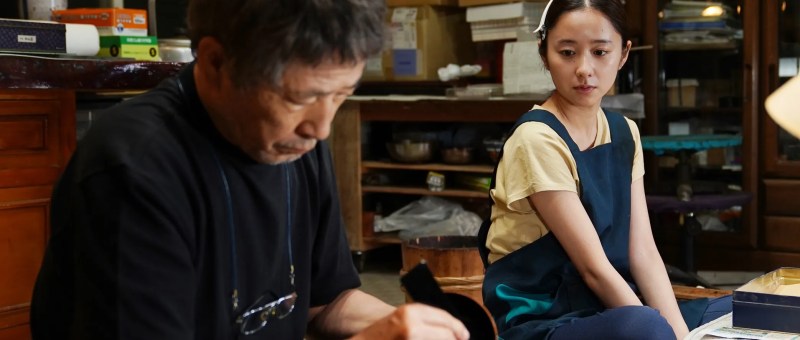
A jaded investigative reporter rediscovers a sense of purpose even as her industry flounders while exposing systematised abuse and neglect in privately run care homes in Lawrence Kan’s hard-hitting drama, In Broad Daylight (白日之下). The film’s title hints at its pervasive sense of despair, the problem isn’t so much that no one knew the state of affairs but that no one cared enough to do anything about it while the journalists too find themselves at the mercy of a hyper-capitalistic society. 

A whistleblower close to the end of the film reveals that they’d been anonymously sending photos from the care home where they work because they wanted “to feel human again” and “treat others as humans” only until now no one had taken any notice. They weren’t really expecting that anyone ever would. Top investigative reporter Kay (Jennifer Yu Heung-Ying) is one of only a handful of reporters left on her paper which is threatening to shut down the investigative department altogether if they can’t bring in a big scoop. Kay’s boss is similarly conflicted, not wanting to crush the idealism of rookie recruit Jess in insisting that their work has value in telling the stories that should be told while privately reminding Kay that the care home scandal might not be “explosive” enough to earn them a reprieve from their boss. 

For her own part, Kay is already jaded explaining to Jess that nothing really matters and nothing they write makes any difference when wrongdoers generally get off scot-free. Her desire to pursue the care home story is partly personal in that she’s dealing with a degree of guilt and grief over the death of her grandfather who took his own life in a privately run facility. To investigate one she’s been tipped off is particuarly bad, she poses as the granddaughter of a patient with dementia, Kin-tong, explaining that she’s not visited before because her family moved to Canada when she was a child, and thereafter making an offer to volunteer on seeing how bad things really are there witnessing not only a dead rat in Kin-tong’s room but physical abuse of the residents. 

It would be easy enough to assume that the faults are “isolated incidents” as the regulatory body likes to describe them and mostly down to the presence of the head nurse, Mrs Fong, who is clearly not someone who should be working in a care facillity, but the truth is that these are systemic problems largely born of governmental indifference. A government source tells her that the waiting list for a publicly funded homes stands at 15 years leaving many families little choice but to take what they can afford in the private sector. They are often unable to take care of elderly relatives themselves because they cannot take time off work to do so, or are simply not equipped to respond to their loved ones’ needs. 

But neither are the care homes. The manager, Chief Cheung who is blind himself, in part justifies the existence of his facility on the grounds that it is difficiult for people with disabilities to find homes to take them, painting the community as a happy family home doing its best rather than a callous attempt to exploit the vulnerable run by a dodgy businessman who admits that even if they’re exposed they’ll just change their name and start again somewhere else. Kay asks Kin-tong why he stays but he tells her that they’re all the same anyway. Even when she uncovers evidence of sexual abuse of a resident with learning difficulties she discovers that it’s almost impossible to prosecute because no one wants to put a vulnerable person on the stand opposite their abuser which allows them the confidence to think they can do whatever they want because they’ll never face dismissal let alone criminal proceedings. 

Kay begins to wonder what the point is if, as people are fond of telling her, no one really cares, but also is also forced to reflect on the moral difficulties of the situation. If the home is closed down, it will leave many of the residents with nowhere else to go. Mostly likely they will end up on the streets or in another equally bad private care home while she at least might earn herself a temporary reprieve in achieving the kind of scoop her money-minded editor was looking for. Her boss insists that she can’t change the world, the system won’t change overnight even if people are temporarily outraged. The truth is that these are people who’ve been abandoned by their society and often by their families especially with so many younger people emigrating leaving relatives behind with no one to watch over them. Though somewhat jaded, Kay comes to empathise with the people she meets at the care home and rediscovers a sense of purpose in her work that reminds her it’s worth the fight even if in the end nothing really changes. In many ways bleak, Kan’s empathetic drama is otherwise undespairing in its gentle advocation for mutual compassion and world in which we can truly take care of each other.


In Broad Daylight screened as part of this year’s New York Asian Film Festival. It will also be screening in Chicago on Sept. 16 as part of the 17th season of Asian Pop-Up Cinema.

Original trailer (English subtitles)

The Legend & Butterfly (レジェンド&バタフライ, Keishi Otomo, 2023)

“What was everything for?” an ageing Nobunaga (Takuya Kimura) asks his attendant Ranmaru (Somegoro Ichikawa) towards the conclusion of Keishi Otomo’s historical epic, The Legend & Butterfly (レジェンド&バタフライ, Legend & Butterfly) produced in celebration of Toei’s 70th anniversary. Oda Nobunaga is such a prominent historical figure that his story has been told countless times to the extent that his legend eclipses the reality, but rarely has been he depicted so sympathetically as in Otomo’s history retold as romantic melodrama in which he and his wife, Lady No (Haruka Ayase), are mere puppets of the times in which they live dreaming only of a place beyond the waves where they might be free of name or family. 

Tellingly, Otomo opens in the spring of 1549 in which the dynastic marriage was arranged to broker peace between unstable neighbouring nations Owari and Mino. Nobunaga’s father’s health is failing and he fears in the chaos of his death Mino may attack, while No’s father fears that her brother will soon revolt against him plunging the fiefdom into disarray and therefore vulnerable to an attack by Owari. At this point, Nobunaga is known as “the biggest idiot in Owari,” a foppish dandy who cares only about appearances. As he prepares to meet No, his courtiers apply his makeup and do his hair while dressing him in a rather outlandish outfit No immediately insults as “foolish”. He treats her with chauvinistic disdain, barely speaking save to order her to pour the drinks and give him a massage only for her to point out that she’s been travelling all day and a “thoughtful” considerate husband would be giving her a massage instead. “I detest women who do not know their place,” he snaps. “I detest men who are ignorant,” she counters. The wedding night ends in humiliating failure as No demonstrates her martial arts skills and Nobunaga is forced to call his guards to rescue him. 

Little is known of Lady No in historical record, but here she is bold and defiant, as her father had said too free with her opinions for a woman of the feudal era. She claims to have been married twice before and assassinated both husbands on her father’s orders, implying that she is essentially sleeper agent more than hostage and will kill Nobunaga without a moment’s thought as soon as the word is given. Yet she also begins to guide her husband towards his destiny, mocking him as a fool but giving him useful strategic advice that wins him glory on the battlefield along with the political advancement that led him to become the first great unifier of Japan. For all that they “hate” each other, they are well matched and have a similar sensibility that allows them first to become allies and then friends before frustrated lovers.

But their love is enabled only when they escape the feudal world, shaking off their retainers to go on a “normal” date in Kyoto where they dance to Western musicians and taste foreign candy only to end up accidentally massacring some peasants when No’s martial arts training kicks in trying to stop a man beating his son. Even so, they are forever linked by their time in Kyoto in the romantic talisman’s of a carved wooden frog and a European lute even if the blood-spattered jizo and buddhist statue watching their eventual connection imply there will be a reckoning for all the blood that is spent. Jumping on a few years, the film does not elaborate on what caused Nobunaga to become a man without a heart and lose the love of his most trusted ally but positions his transformation into the “Demon King” as the kernel of his undoing just as his dream of unifying Japan and bringing about an age of peace (if one ruled by fear) is about to become a reality. 

In any case, the one thing that everybody knows about Nobunaga is how he died though then again his remains were never recovered giving rise to a happier ending in which he and Lady No were finally able to escape the feudal world to chase a freer future beyond the sea which is perhaps what they do in the film’s poetic final sequence in which they might in a sense share a dream connected by frog and lute. It might not be very historically accurate, but that is perhaps the point in hinting at the lives they might have led if the world had been different. Otomo films with a painterly eye that lends an air of poignant gravitas to a tale of romantic tragedy in which love is both salvation and destruction amid the flames of a collapsing temple. 


The Legend & Butterfly screened as part of this year’s JAPAN CUTS.

Original trailer (English subtitles)

In Her Room (ひとりぼっちじゃない, Chihiro Ito, 2022)

The hero of Chihiro Ito’s debut feature In Her Room ( ひとりぼっちじゃない, Hitori Bocchi ja nai) is so pathologically shy that he has become almost invisible, a ghost-like presence not fully of this world. Colleagues ignore him, taxis never stop, and restaurant staff continue their conversations as if he wasn’t even there. At one point he’s run over by a car and tells the police that the person probably didn’t see him or realise they’d hit someone. Only a mysterious woman he later describes as showing him a side of himself that even to him was unfamiliar pays him any attention but then there’s something a little bit sinister in her otherworldliness that causes us to wonder what it is she wants from him. 

Dr. Susume (Satoru Iguchi) is so awkward that he’s taken to practicing small talk with the skull he uses as a training tool at the dentist surgery where he works. He seems almost abstracted from himself, unable to relate to others because his emotions are distant from him. His mother keeps calling and asking him to come visit her because there’s something she wants to talk to him about but he brushes her off, telling her she should do whatever she likes as if disinterested in whatever it might be that she wants to say. In fact, she is the only person who seems to be able to see him, calling out to him from a car to offer him some homemade bread, but he still doesn’t really engage with her. We start to wonder if he has a problem with the other person in the car, Tomoko, a middle-aged woman who may be his mother’s partner though she too greets him warmly and is understanding of his reluctance to spend time with them.

Miyako (Fumika Baba), the mysterious woman who lives in a fantastic flat entirely covered in indoor greenery, asks Susume if he loves his mother but he deflects her question and simply says that he wants her to be happy for the rest of her life. For a time, we can’t be sure if Miyako and her wonderful apartment actually exist or are simply the manifestation of Susume’s headspace as he tries to talk through his loneliness and lack of self, only it later seems that other people see her too and in fact frequent her home much in the same way Susume does which causes him a degree of obsessive jealousy. He is particularly bothered by the presence of Yuko (Yuumi Kawai), a woman who works in a nearby grocery store and is also friendly with Miyako and similarly possessive. He later tells her that Miyako is guiding him towards the person he’s supposed to be, though Yuko isn’t so sure and suggests her existence is a little more sinister. Apparently she keeps a giant ball of hair taken from everyone she’s ever known in a hidden drawer, and then a man apparently took his own life in her apartment though Yuko refuses to share the contents of his note with him. 

Yuko’s words contribute to a growing sense of unease exacerbated by a video Susume watches from a man who sounds like a cult leader who suggests that misfortune may be caused by magic or sorcery, leading credence to the idea that Miyako is some kind of forest-dwelling witch gently luring Susume into her trap. Soon after their relationship becomes physical, a praying mantis is seen climbing on her plants. Susume’s uncertainty is reflected in the carving he is making of Miyako’s face which gradually starts to take shape though is also in its way a self-reflection in much the same way he said that Miyako was showing him a side of himself that only she could see. When he finally delivers it to her, it’s just as blank as her expression, a smooth sphere with a vague outline of personality. She places it quietly in a shed where her various friends sometimes hide to spy on each other. 

The trio attend a weird play together in which a giraffe-man allows his community to eat him because he is a terminal people pleaser of the kind we might assume Susume to be only the play seems to arouse a flash of resentment. He tells Miyako that he thought the giraffe-man’s actions were duplicitous, that he must have been secretly confident that he would taste good and was in a sense showing off. He isn’t sure who he’s most angry with, the people that decided to satiate not their hunger but their curiosity by eating him or the giraffe-man himself for letting them do it. But Miyako replies that to her it’s quite the opposite. The giraffe-man simply wanted to be of use to those around him. A grim image of the dismembered giraffe is later echoed in that of a squashed bug, suggesting that this is what Miyako is doing to her various callers, feeding on their insecurities and leaving nothing more than a bloody carcass behind. 

Even so, Susume begins to realise that he’s being presented with a choice and decides on change, finally facing his mother and embracing her happiness along with Tomoko while expressing a desire to uproot himself to see if he’s capable of change in a different place. Adapting her own novel, Ito allows an eerie sense of mystery to remain never quite explaining the true nature of Miyako or the surreal nightmare sequence in which Susume is chased by a glowing orange entity, but instead ends on an ambivalent note at once hopeful and maybe not as Miyako carefully stores her effigy perhaps just one more trophy in a treasure trove of lost souls. 


In Her Room screened as part of this year’s New York Asian Film Festival.

Original trailer (no subtitles)

J005311 (Hiroki Kono, 2022)

If a stranger offers you a large amount of money to drive to an undisclosed location, what would you say? Hiroki Kono’s J005311 is so named for a bright new star born when two stars already dead collided which goes some way to explaining the central relationship between the two men at the film’s centre. Though they rarely speak, a kind of connection arises between them that changes them both in unexpected and unexplained ways but perhaps gives each a new sense of hope and possibility. 

After some kind of alarming phone call, Kanzaki (Kazuaki Nomura) throws away various things in his apartment and leaves as if not expecting to return. He goes out and tries to hail a cab, but it seems as if the driver refuses to take him where he wants to go. Kanzaki slowly walks away and sits down wondering what to do next before catching sight of a young man running furiously across the road after snatching a woman’s handbag. Kanzaki wouldn’t usually be the sort to chase a thief, but tears off after the man and makes him a rather unexpected offer. He will pay him a million yen if only he’ll agree to drive him to a location near Mount Fuji around two hours away. The man is understandably suspicious and in fact tries to snatch the bag Kanzaki had the money in but is ultimately unsuccessful and agrees to the drive.

No real explanation is given for why Kanzaki is prepared to pay this large sum of money to get someone to drive him rather than taking public transport at least part of the way or booking a car through some kind of chauffeuring firm where long fares are more usual. It may be because he’s afraid whoever called him will find him on a train or bus, which would also explain why he leaves his phone behind at a service station, or perhaps he just wants company and companionship on what is looking increasingly like a final journey. Kanzaki tells the man, Yamamoto (Hiroki Kono), that he’s going to meet “a friend” which is a fairly unimaginative lie he doesn’t believe for a second though he for the moment he lets it go. Later Yamamoto notices he has a rope in his bag while we also see Kanzaki loop its strap around his neck and try to strangle himself all of which adds grim import to his final destination. 

For his part, Yamamoto is wary of the arrangement and also of Kanzaki who is awkward in the extreme. He tells Kanzaki that he can buy whatever he likes with the million yen yet when he asks what he’ll use it for he says he doesn’t know. He says he likes work that’s “easy” like construction or deliveries while evidently supplementing his income with the purse snatching which he remarks gets easier each time you do it. Several times it seems as if Yamamoto may run off with the money, or just run off leaving Kanzaki stranded, but eventually comes back if for unclear reasons that nevertheless suggest he’s begun to care Kanzaki and feels to an extent responsible for him while fearing what awaits him at his destination. 

Kanzaki too feels responsible for Yamamoto, eventually asking him to give up bag snatching as if implying that he’s better than that and ought to respect himself more. After tipping copious amounts of sugar onto his food at a rest stop, Kanzaki shoves a whole pastry into his mouth and seems as if he’s about to cry perhaps feeling rejected or that he overstepped the mark with Yamamoto before suggesting that he might want to walk the last part alone only for Yamamoto to once again return and follow him. In a sense they begin to save each other, bonding in a shared sense of despair if exchanging few words and emerging with a new sense of possibility forged by their unexpected sense of connection. Kono follows the two men with restless intensity, the camera swooping POV style or clinging tightly to them in the confines of the rented car while eventually seeming to vibrate in the poignant closing scenes. At times obscure, the film nevertheless has a wintery poetry and melancholic soul and ends on a note of silent serenity as the two men prepare to move on though who knows where to. 


J005311 screened as part of this year’s JAPAN CUTS.

Plastic (Daisuke Miyazaki, 2023)

A young couple bond over their shared love of an obscure 70s glam rock band, but soon find their youthful romance eroded by the realities of impending adulthood in Daisuke Miyazaki’s warmhearted coming-of-age tale, Plastic. Emotional distance becomes a persistent theme as mediated through a message into space that might take light years to arrive not to mention the reply, which seems to echo the couple’s inability to communicate despite their star-crossed connection.

Jun (Takuma Fujie) and Ibuki (An Ogawa) bond after realising they are both fans of 70s band Exne Kedy, talking for hours at a small cafe only leaving when the place closes. Having recently relocated to Nagoya from Tokyo, Jun enrols at Ibuki’s high school and joins her after school club much to the chagrin of her two friends. The pair eventually become a couple going on a series of wholesome dates including a trip to watch Sad Vacation in a cinema and are apparently very much in love but a year later the novelty has begun to wear off. Ibuki is studying for university exams and bound for a top institution in Tokyo while Jun is planning to drop out and pursue music full-time. 

Perhaps slightly more conventional, Ibuki berates Jun for his impracticality asking how likely it is he’ll be able to support himself with the kind of music he makes. Later she has some kind of flash forward in which she imagines herself supporting him financially while he’s not even playing guitar anymore and they’re arguing about responsibilities for rent and living costs. She breaks up with him in the carpark of a convenience store but perhaps regrets it, keeping up a half-hearted friendship while he remains lost and lovelorn pursuing music on the side while working part-time. “Plastic” becomes a kind of metaphor for their relationship, something which should have lasted forever but has been subtly undermined by the microorganisms of conventionality and contemporary capitalism until it eventually broke apart. 

The distance between them is likened to that of the space radio broadcast which might not reach its target for 25,000 light years. The message was sent the same year that Exne Kedy broke up, and may well be delivered a little more than 50 years later at their reunion concert only as the narratorial voice over explains, that’s largely up to chance. Swapping notes on studying in the same way Jun’s mother and grandfather had talked about seeing Exne Kedy in concert, Ibuki’s parents had compared their flashcards to modern apps and joked that maybe someday education would all be online as in fact happened during the pandemic. Having swapped her rural home for the bright lights of Tokyo, all her classes are online which ironically gives her more time to spend with her friends but also leaves her exhausted and distant. 

When Jun wonders if his music is like the broadcast, destined not to arrive for thousands of years so he’ll never know who got it. Another school friend, Ayumu, asks him if he’s sure he hasn’t just missed a reply 25,000 years in the making which is sort of ironic because he’s clearly missed that she’s been trying to answer his message only he’s too hung up on his ex to notice. Later she asks him to move in with her, pointing out that she’s right there not 25,000 light years away like Ibuki who is now living with a DJ who doesn’t even know who Exne Kedy are. The two of them are far apart but somehow still connected, not least by their love for the band which may eventually reunite them. 

Exne Kedy is modern day creation by Ide Kensuke who had previously released the album Kensuke Ide With His Mothership ― Contact From Exne Kedy and the Poltergeists and makes a self-cameo in the film in a surreal scene featuring the band whom Ibuki and Jun unexpectedly run into doing an impromptu performance in the middle of a forest singing a song that echoes the state of the couple’s relationship in which a lighthouse no longer illuminates and cannot light the way. Yet there is always a sense of the couple as a pair of flashing beacons waiting to pass close enough to each other to be able to convey a message. Featuring cameo appearances from (former pop star) Kyoko Koizumi and Machiko Ono, Miyazaki’s strangely charming youth movie is surprisingly sincere in its romanticism but equally in its critique of the world that frustrates it while suggesting that music may once again save the day.


Plastic screened as part of this year’s JAPAN CUTS.

Original trailer (no subtitles)

Rebound (리바운드, Jang Hang-jun, 2023)

A collection of underdog teens learn a few valuable lessons in perseverance and determination while taking their moribund high school basketball team all the way to the national championships in Jang Hang-jun’s sporting drama, Rebound (리바운드). Inspired by the real life tale of Busan Jungang High School’s meteoric rise from obscurity to top rated team, the film quietly touches on inter-city rivalry and social inequality while otherwise spinning an inspirational tale of the power of solidarity and a never say die spirit. 

They are all in their way rebounding from something, and not least the team itself which is threatened with closure after being judged a bad investment by the penny pinching headmaster given its “embarrassing” series of total losses across a series of years. The team is given a brief reprieve but only as a token of its former reputation, the plan being to have one just for show but not actually enter any competitions while the school let it gradually fall into obscurity. Accordingly, they begins looking for “cheap” coaches who might be prepared to manage a phantom team and eventually land on 25-year-old social worker Kang Yang-hyun (Ahn Jae-hong) who is a former minor leaguer and alumnus of the school looking to reclaim his own failed hoop dreams vicariously through a new generation of new players. 

There are however only four left on the team, two of whom immediately quit leaving Kang scrambling around the city looking for tall boys who might be good with a ball and can be convinced to switch schools. The problem they have is that talented players are quickly snapped up by more prestigious institutions in Seoul which can after all offer more opportunities to ambitious youngsters aware that they probably won’t be playing basketball for the rest of their lives. No one really envisages a future for themselves in Busan which remains a kind of underdog in itself as it struggles against the the allure of Seoul as place of greater sophistication and possibility. Keen basketballer Ki-bum (Ahn Jae-hong) turns down Kang’s offer for just this reason insisting that his career is dead if he stays in Busban even while his parents seems to be turning down good offers on his behalf. He only agrees to join the team on learning that ace player Jun-yung (Lee Dae-hee) will be playing for them. 

Jun-yung is valued mainly for his height which sort of runs against the messages of the game in that it’s not something the players can control and no matter how hard they train they will always be at a disadvantage to those who are simply bigger. Kang’s first mistake is that he builds everything around the pillar of Jun-yung, barely letting the other players play while instructing them to pass every ball to him so he can shoot. In any case, Jun-yung too is eventually poached by a better team apparently forced to betray his teammates by his ambitious parents who are after all merely making what they see as a smart decision on his behalf. A disastrous fight between two players with unfinished business from middle school also results in a lengthy suspension ending the team’s hopes of competition success for the current season. 

But as Kang later says, it’s only really a “fake failure” in that it gave him a rebound he could use to realise his mistakes and start over prioritising their shared love of the game over his own insecurity now more willing to take a risk while concentrating on making the team as good as it can be rather than the external validation of championship wins. As he later tells them in an inspirational locker room speech, not all of your shots go in but that’s OK because they come back to you on the rebound and what matters is what you do with them then. Whatever happens, life goes on and fear of failure is not a reason to give up on something you love.

Jang does his best to avoid underdog sports movie cliches while subtly hinting at the pressures of social inequality as moody player Gang-ho (Jung Gun-joo) struggles with an old injury he couldn’t afford to have treated properly while trying to make extra cash betting on basketball games with other wayward neighbourhood kids. Capturing a real sense of energy in the various basketball games along with a wholesome sense of possibility as the team begin to bond and “improve” each other, Jang is careful not to be blinded by a false narrative of inspirational success but rather doubles down on the rebound mentality of seizing opportunities as they come and continuing to chase your dreams in your own way no matter how hopeless they may seem. 


Rebound screened as part of this year’s New York Asian Film Festival.

International trailer (English subtitles)

Images: ⓒ 2023 NEXON Korea Corporation, B.A. ENTERTAINMENT, WALKHOUSECOMPANY ALL RIGHTS RESERVED

As Long As We Both Shall Live (わたしの幸せな結婚, Ayuko Tsukahara, 2023) [Fantasia 2023]

A young woman with chronically low self-esteem learns to love herself after bonding with a taciturn nobleman in Ayuko Tsukahara’s adaptation of the fantasy romance light novel series by Akumi Agitogi, As Long As We Both Shall Live (わたしの幸せな結婚, Watashi no Shiawasena Kekkon). Set in an alternate version of the late 19th/early 20th century in which the nation is ruled by an emperor who has the ability to foresee the future and leads a series of prominent clans of superpowered soldiers against “aberrations” who wreak havoc in the lives ordinary people, the film is effectively a kind of Cinderella story only the fairy godmothers are a kindly housekeeper a shady underground sect with the power to manipulate people’s minds. 

In any case, Miyo (Mio Imada) was born into a noble house the members of which have the ability to manipulate the wind though sadly she appears to have been born “powerless” and is bullied by her step-mother and step-sister who treat her as a servant. At 19, she learns she’s to be married off and is excited about finally escaping her abusive family home but also wary that it might not make much difference because her potential husband, Kiyoka Kudo (Ren Meguro), is said to be cruel and violent. All three of his matches have fled the house in under three days though being so used to mistreatment Miyo is sure that it will just be a matter of adjusting to her new circumstances. 

What she discovers is that Kiyoka doesn’t seem all that bad just a bit aloof and direct in his manner of speech. Nevertheless, she continues to believe that she isn’t good enough to marry him because she doesn’t have any magical powers and is convinced he will call off the engagement when he finds out. Meanwhile, she bonds with housekeeper Yurie (Mirai Yamamoto) after breaking protocol by helping out around the house for something to do though it is perhaps a bit odd that someone from such an apparently wealthy family has only one servant and seems to lead an incredibly simple life devoted to his role as a soldier helping to keep the aberrations in check especially now that the emperor is dying and someone has apparently released the pent up souls of fellow aberration fighters who died horribly and are filled with dangerous resentment.

Many of Miyo’s self-esteem issues are down to the way she was treated by her family and having lost her mother at two years old though there is obviously parallel in her literal “powerlessness” and the lack of agency that is afforded to her in having been kept a prisoner in the family estate only to be traded off in marriage by a father apparently out for whatever he can get for such a “mistake” of a daughter. It’s perhaps a slight failing in the narrative that she turns out to have powers after all rather than simply beginning to accept herself in the comparatively warmer environment of Kiyoka’s home even if it might also be a little awkward that her self-love is born of feeling loved by Kiyoka and to a lesser extent Yurie and immediately has her pledging to give her life for him if only he should ask it. 

For his part, Kiyoka is also undergoing something of a transformation in that it turns out he also felt estranged from his mother and is actually kind at heart just incredibly awkward and taciturn. The reason he didn’t bond with any of his previous suitors seems to be that he objected to their insincerity and the nonsense that goes along with being a member of the aristocracy like the concept of arranged marriage in itself, later taking Miyo’s family to task for their treatment of her claiming that he doesn’t really care about her social status or whether or not she has any powers. In any case, it’s love that helps her overcome her “powerlessness” even if she uses her newfound inner strength for someone else rather than herself, taking control over and her life regaining self-confidence as someone worthy of love, respect, and basic human decency not to mention happiness. A post-credits trail hints at a potential sequel or even series expanding on the franchise’s rich world building but for now at least it seems as if Miyo has found her happy ending, finally able to embrace life on her own terms rather than feeling as if she needs to make a mends for her existence.


As Long As We Both Shall Live screened as part of this year’s Fantasia International Film Festival.

Original trailer (no subtitles)