
The Distributors (유포자들, Hong Seok-ku, 2022)

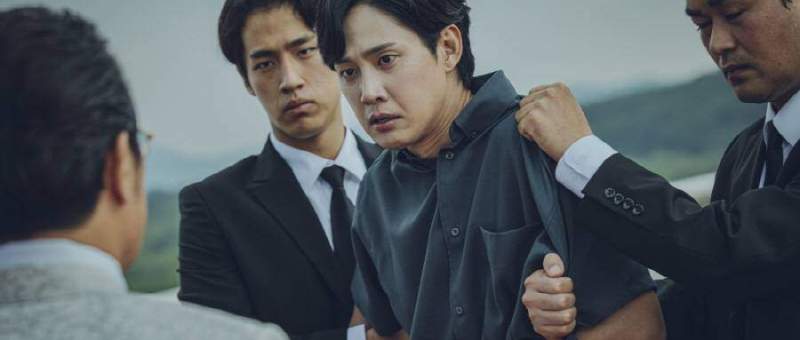
When Yu-bin (Park Sung-hoon) finds himself being blackmailed after being drugged in a club and videoed by an attractive young woman, he can’t help but feel hard done by. A teacher who once aspired to making films, he’s on the verge of marrying his fiancée Sun-ae (Kim So-eun) who is from an incredibly wealthy and very conservative pro-Japanese family, but if any of this gets out he can kiss his comfortable life goodbye. His focus is not, however, on how he shouldn’t have gone to his friend’s night club after promising Sun-ae he wouldn’t, but how he can cover all this up so she doesn’t find out he took two girls back to their flat when she was away on a business trip.

Hong Seok-ku’s The Distributors (유포자들, Yoopojadeul) never quite keys in to the fact that its hero’s a bit of a slimeball who nevertheless thinks he’s a good guy, and more often than not falls into his hard done by mindset. This might, however, echo the perspective of the average man in a society in which illicit photography has become a hot-button issue. As the film opens, Yu-bin is inflicting corporal punishment on two boys who’ve been caught taking inappropriate videos of women, which is perhaps not the best way to deal with this issue. Though he emphasises that they’ve done wrong, he’s also sort of on their side in that he agrees not to take this any further in case it damages their futures. Ji-ho, in particular, is on track to get into Seoul University and Yu-bin can’t really work out why he might have done something like this. The other boy Seong-min, happens to be his fiancée’s younger brother and predictably blames everything on Ji-ho.

It is then quite ironic that Yu-bin finds himself a victim of a video taken without his consent that shows him in a compromising position. Seven years earlier, he’d been accused of posting revenge porn after a former girlfriend broke up with him and had to pay her legal compensation. He claims that he didn’t intentionally leak it, but that his friend Sang-beom (Song Jin-woo) found it on his computer and uploaded it to the internet to make money on amateur porn sites. But again, his focus is more on how to make this go away rather than the harm he may have caused to Ga-young. She tells him that her life’s been ruined and that it’s pure hell to feel as if everyone’s looking at you wondering if they’ve seen the video. He, however, offers her money and suggests they settle this “like civilised people”, which is in itself not so different from blackmail while suggesting that she’s being unreasonable in not letting the matter drop.

Meanwhile, what Yu-bin might actually be worried about is that he’s made a tape of him and Sun-ae that she may not even know about or have consented to. In any case, his carelessness has meant that this video too might end up online ruining her life in the same way as Ga-young’s while the consequences for him are only mild humiliation and the breaking of his engagement. It’s not exactly clear how he and Sun-ae ended up meeting, but there’s a mild implication that he’s only really with her for the luxury lifestyle she provides while her father, who objects to the marriage because Yu-bin is not of their social class, also offers him career advancement in sponsoring a film department at the school. 

The blackmailer, Yu-bin, and his friend Sang-beom all make ironic references to this being like a Hitchcock movie, though Yu-bin is not really a “wrong man” so much as one running away from his own cowardice and imperfections. In his film class, he shows the children Kim Ki-young’s The Housemaid, which is certainly an ironic choice given that it ends with a direct message warning men of the dangers of adultery and to always remember their duties to their family as husbands and fathers. Even Yu-bin’s sadly looking out through a rainy window echoes Kim’s cinematography, though Yu-bin is still in the mindset of feeling sorry for himself rather than coming to the realisation that even if it’s not Ga-young who is punishing him, he has never really faced his role in what happened to her or accepted responsibility for his failure to safeguard her privacy. Only now, when it’s him, does he begin to understand not only that he’s been selfish but that he’s failed in his role as a teacher by not figuring out what was going on with the boys and the videos while focussing on protecting their futures rather than those of the young women around them who deserve safety and respect but are provided little of either by a male-dominated society.


Trailer (English subtitles)
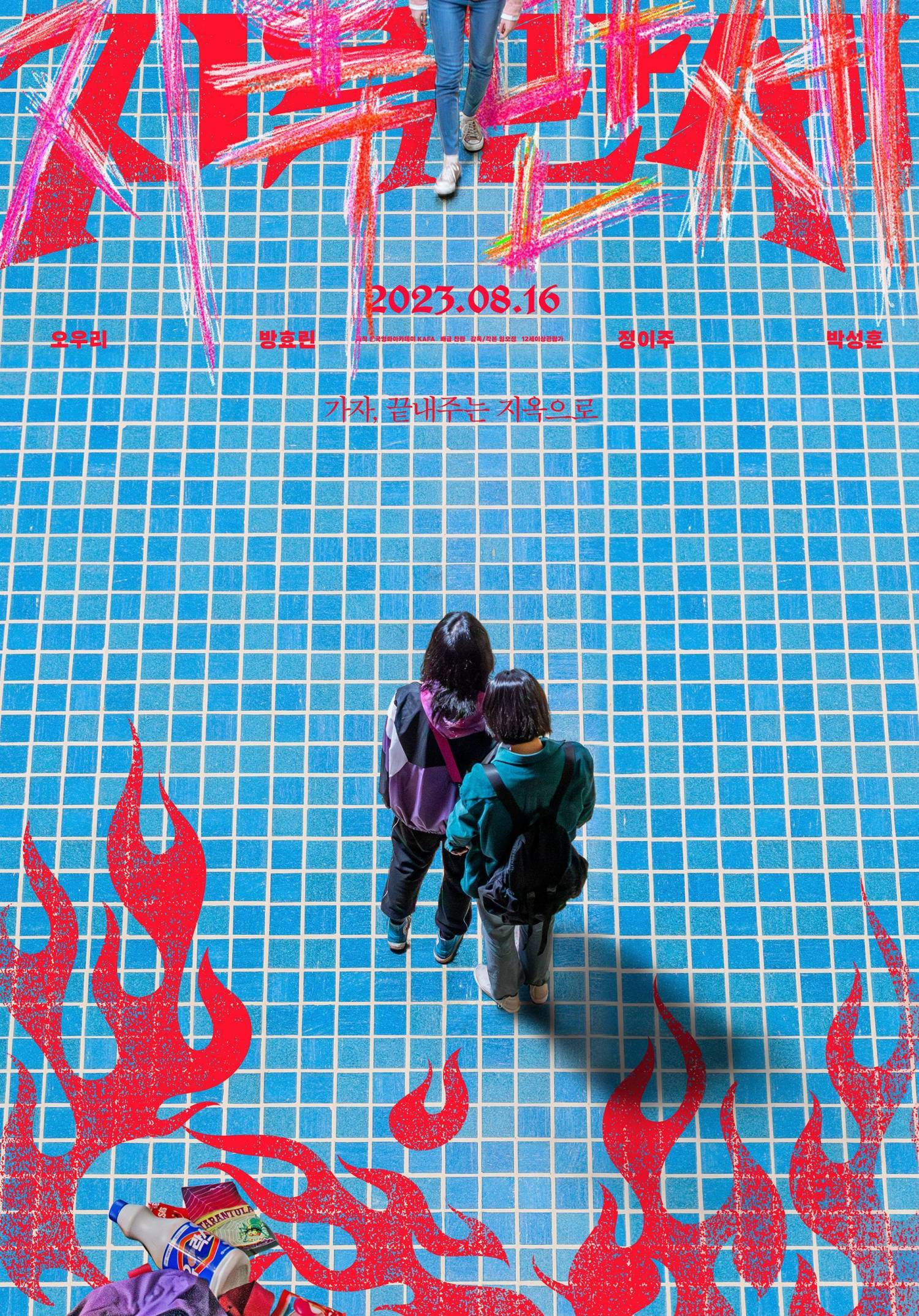
Hail to Hell (지옥만세, Lim Oh-jeong, 2022)

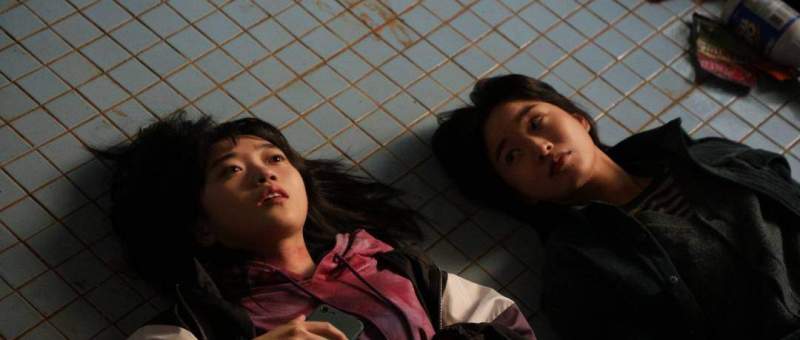
Two teenage girls swap thoughts of suicide for revenge on learning that their former tormentor is living well in Seoul but find their plans frustrated on discovering she has joined a religious organisation and apparently reformed in Lim Oh-jeong’s bullying drama, Hail to Hell (지옥만세, Jiogmanse). “Hell” is what the two girls, and a fair few others, believe their lives to be while seeing little way out other than taking their own lives but are confronted with questions of redemption and forgiveness not to mention death and paradise while plotting vengeance in the capital. 

The surprising thing about high school girls Na-mi (Oh Woo-ri) and Sun-woo (Bang Hyo-rin) is that Na-mi was once part of popular girl Chae-lin’s (Jung Yi-Ju) gang and only left it when they turned on her. Nevertheless, the two young women have bonded in their shared victimisation and desire for an end to their suffering. After several failed attempts at taking their own lives, they change tack on coming across Chae-lin’s Instagram posts which imply that she is living the high life in Seoul and even planning to study abroad which the girls regard as a cruel irony given the extent to which the bullying orchestrated by Chae-lin has disrupted their lives. Unsure exactly what they plan to do, they board a bus to the capital and make their way towards Chae-lin only to discover she’s joined a weird cult in which the members are expected to earn points through doing service in order to qualify for a ticket to “paradise”.

The language itself is quite sinister even if the “paradise” that’s on offer otherwise sounds fairly conventional. Then again, there is no real evidence that “paradise” actually exists while Chae-lin claims that her mother is already there which is why she’s so desperate to go. When the girls first arrive, her expression is strange to the extent that it’s impossible to tell if she’s “happy” to see them or merely excited by the prospect of tormenting them all over again. She says that she’s already confessed all her sins and views the girls’ appearance as a miracle sent by god so that she could atone and earn their forgiveness. Then again, being forgiven for one of your sins is worth the most amount of points and Chae-lin would definitely win if Na-mi and Sun-woo could be talked in to publicly forgiving her. 

Whether Chae-lin has changed or not the girls are divided on the prospect of forgiveness and whether the way they’ve been treated is something that even should be forgiven. Na-mi begins to concede that Chae-lin may have changed “a bit”, but is later forced to reflect on the ways she herself hasn’t changed or faced her complicity with Chae-lin’s bullying when she was a member of the gang while still apparently susceptible to her manipulation. Then again, it’s impossible to tell if Chae-lin is only in the religion for cynical reasons or genuinely believes in its teachings. The church itself has a distinctly eerie quality only deepened by talk of a possibly problematic article, onerous demands on members to buy “offerings”, and a points-based system of spiritual redemption. 

Meanwhile, it seems there is bullying even here with a young woman abruptly silenced, threatened with both a loss of points and “punishment”, for even making the suggestion that someone may be bullying her. Though Sun-woo sympathises with her plight, she does not know how to help her or to change the culture within the church. “No matter how long you wait, no one will help you,” Sun-woo advises another trapped young woman as she in turn attempts to shake off the feeling of powerlessness she had experienced as a victim of bullying and harassment. Neither girl had found any help from those around them, Sun-woo’s family apparently preoccupied with her disabled sister and Na-mi’s mother blaming her for being bullied insisting it was her own fault for being “weak” rather than fighting back but if their experiences have taught them anything, it’s that they can rely on each other and that they don’t really want to die so much as live without fear which might be more possible than they’d previously assumed it to be. “Welcome back to hell” Na-mi somewhat cheerfully calls out, countering a sign on the bus which had ironically claimed that wherever we are is “paradise” but perhaps finding something in it as she and Sun-woo prepare to move forward together having exorcised a few demons and reclaimed a sense of their own agency. 


Hail to Hell screened as part of this year’s New York Asian Film Festival

Trailer (English subtitles)

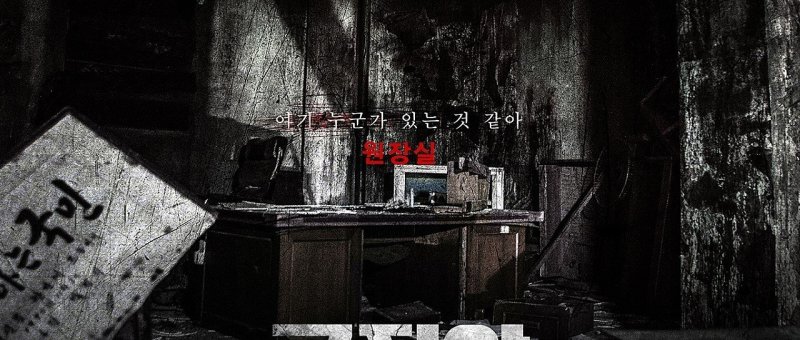
Gonjiam: Haunted Asylum (곤지암, Jung Bum-sik, 2018)

Gonjiam Haunted Asylum posterBack in 1992, all of the UK was scandalised by a strangely realistic “drama” starring three well respected TV personalities “investigating” poltergeist activity in an ordinary house. Screened as part of an ongoing anthology drama series, the show was presented as if it were live complete with a telephone number for viewers to ring in. Many were tricked into believing the events they were witnessing were “real” and that a genial children’s TV presenter they knew and loved had been dragged off by a malevolent supernatural entity. Fast forward 10 years and the nation was once again gripped by a “live” ghost hunting show presented by a dubious psychic and a (former) children’s television presenter but this time at least keeping up a pretence of “reality” even if the show’s appeal lay more in its exaggerated seriousness than it did a genuine interest in the paranormal.

The world may have been a more innocent place back in 1992, but ghost shows are still big business even in this comparatively more cynical age. Reality TV ghosthunters Horror Times decide the best way to pick up their flagging views is to go viral by going live inside a notorious disused sanatorium listed as one of CNN’s seven freakiest places on Earth. Rumour has it that Gonjiam Mental Hospital (a place all too real though here given a fictionalised history) was built by the Japanese over the top of a mass grave for resistance fighters though, according to our guides, it was also accounted one of the best psychiatric facilities in the country. Its director received numerous awards from the government of Park Chung-hee (which ought to tell you she was probably up to no good), but the hospital fell into disrepute after an incident in which all the patients mysteriously died and the director herself “disappeared”. Ever since then teenagers have been breaking in to try their luck, but anyone who’s tried to open the door to room 402 has met a sticky end.

Gonjiam: Haunted Asylum (곤지암, Gonjiam) is a found footage horror movie in the modern mould and like most, the crime our “heroes” are about to commit is one of extreme hubris. Cynical in the extreme, the Horror Times crew have absolute certainty in the non-existence of the supernatural and actively mock it through their exploitation of engineered “scares”. In an odd way, if you really thought about it, Horror Times would be quite an exploitative show if it involved “real” ghosts – perhaps you should let malevolent spirits lie rather than bullying them to fight you for the entertainment of others. Nevertheless, the Horror Times crew are about to find out just how wrong they are. While they bicker amongst themselves, hatching plans to wind up the most “expressive” of the team members, setting up bizarre “rituals”, and faking being “scared” to get more money, the Captain keeps a firm eye on the numbers from the safety of the editing tent and the horrors of Gonjiam begin to bubble quietly below the surface.

The thing is, there is clearly horror in spades in this version of Gonjiam where we are told the directoress excelled at treating not only the “distressed” but also “political prisoners”. The lab holds its share of bizarre discoveries including some kind of weird chicken in preserving fluid while the “collective treatment room” is filled with individual confessional boxes which are completely closed save one opening at the chest level. The spectres we later see have large scars running down their torsos and we can only image the true horror of whatever it was that was done here and to whom and on what grounds, but Horror Times aren’t interested in any of that despite their rather superficial “investigations” of the directoress’ office and her many photos of that time she got a prize off a dictator. By the time everyone starts speaking in tongues and getting trapped in strange underwater realms, it becomes clear the “truth” is going to remain buried. 

Maybe the other lesson the Horror Times guys should have learned is that the traumatic past is not your playground and it’s probably fair enough if those unable to pass on begin to feel upset about their personal pain being exploited for ghoulish thrills. Perhaps there’s a mild lesson in the unhappy fates of those who’d rather poke the ghosts than cure them, revelling in the darkness of another era rather than trying to expose it, but Gonjiam isn’t so much about lessons as good old fashioned scares. The abandoned hospital itself is atmospheric, as are the distant banging and doors opening of their own accord but there’s a glibness in its unease that undercuts the sense of dread and inevitability so essential to the genre. The biggest irony of all is that Horror Times’ viewers lost interest when the “real” ghosts showed up – reality TV never really was about “reality” anyway.


Screened as a teaser for the upcoming London Korean Film Festival. The next and final teaser screening will be A Tiger in Winter on 17th September at Regent Street Cinema at which the full programme for this year’s festival will be revealed.

International trailer (English subtitles)

For the curious, a clip from Ghostwatch (1992)