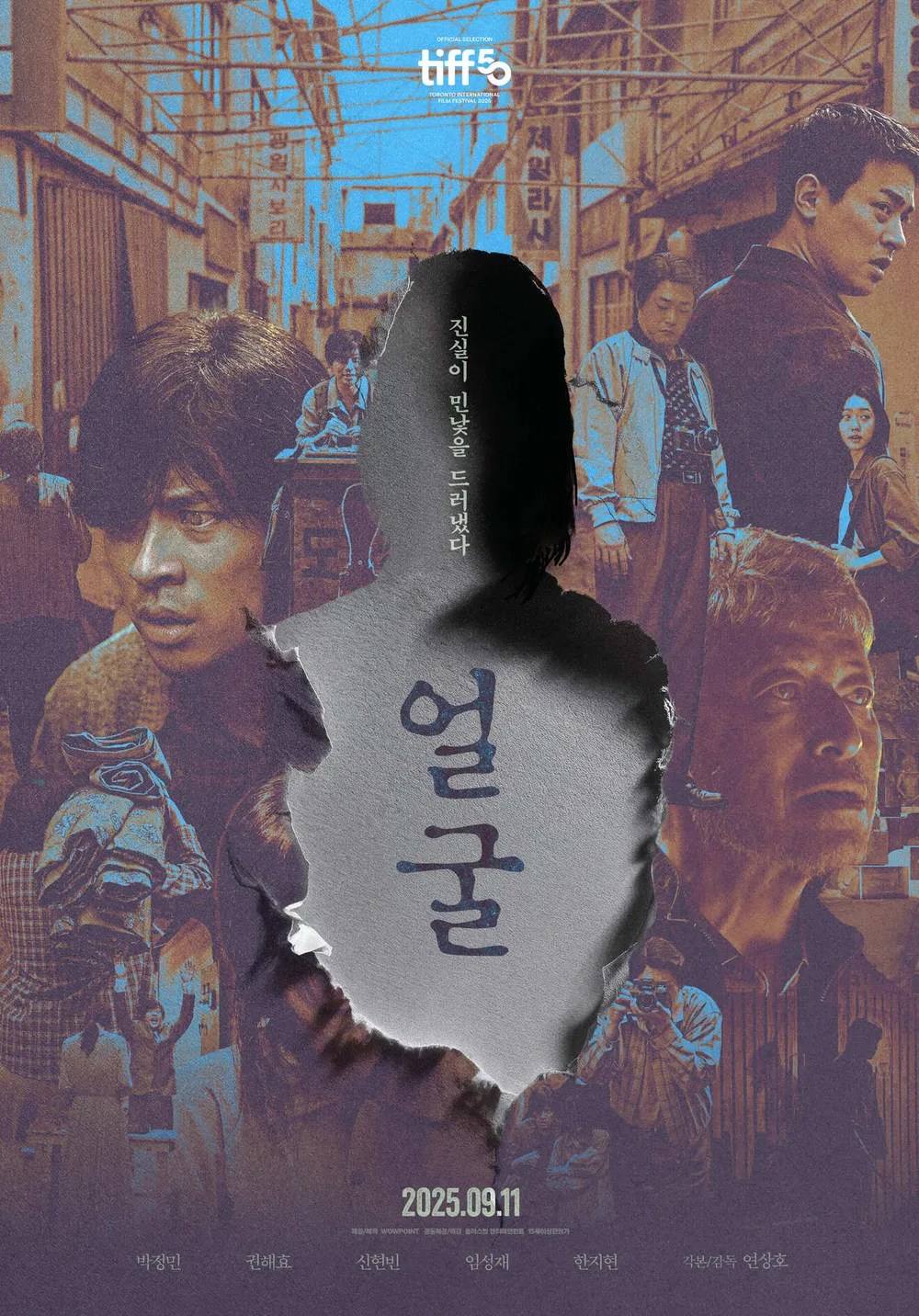
Amoeba (Siyou Tan, 2025)

Choo (Ranice Tay) wonders what it’s like to be the Merlion. Being made to stand there while everyone makes up stories about you, like you’re trapped in an aquarium and can only look out on the world. In an odd way, it reflects her own experience as an “ungovernable” young woman contending with an authoritarian culture led by entrenched patriarchy as mediated through her overly strict elite girls high school which is intent on producing “respectful daughters and students of virtue”.

The fact that Choo doesn’t quite it in here is signalled on her very first day in which she’s humiliatingly forced to drag her own desk from one classroom to another as a result of some sort of clerical error. A stern-looking teacher measures the diameter of the face on her wristwatch, decides it’s too large and, therefore, too masculine, and takes it away from her. They measure the length of her skirt above her knee and say it’s too short, while her hair is too long. Or rather, the style is wrong and she should make sure it doesn’t touch her collar by the following Monday. The teacher even pulls at her shirt as if she were about to tear it off to confirm the colour of her bra, though it is in no way visible and therefore presumably makes no real difference anyway.

Above the whiteboard in their classroom, there’s a sign reading “purity, moral uprightness, diligence, and filial piety,” all qualities Choo derides during her speech having been entered as a candidate to become class monitor against her will. She ends up ironically being made “Good Citizen” representative instead by her teacher, Mrs Lim, who takes an instant dislike to her and seems to regard Choo as a potential source of resistance. On the one level, the girls are all being encouraged to become proper young women and as Choo says despite her very feminine name, it doesn’t really suit her. Later, she becomes friends with another group of girls who ironically describe themselves as a “gang”, having realised the great figures they learn about in school and have streets named after them made their money peddling opium, only to be accused of actively participating in organised crime when their teacher finds a video of them dancing around to a street music video featuring a guy with tattoos and having fun in one of the girl’s bedrooms.

Choo and her friend Nessa (Nicole Lee Wen) had been worried about the video for another reason, that even though as Choo says they “technically didn’t actually do anything,” the video she shot of them messing around while trying to catch the ghost in her room could cause each of them a lot of trouble in the extremely conservative country where homosexuality was only decriminalised in 2022. In any case, the teacher doesn’t seem to pay any attention to that part of the video, which comes as a relief to both of them even if it’s made them guarded and awkward in the way they interact with each other. Nessa wants to quit swimming and try football instead, but doesn’t necessarily feel she has the freedom to make that decision and is fearful of its implications. “Can’t sleep, cannot eat, cannot freaking pee, can’t do anything,” another of the girls laments. “We can’t even study what we want.”

But having banded together over their shared sense of alienation, Choo’s friends are also separated by their socio-economic disparities. They mainly hang out at the house of the richest girl, Sofia (Lim Shi-An), whose father is a construction magnate. After deciding they all want to go to the same junior college, they struggle to agree on a destination as Sofia has her sights set on an elite institution the other girls think is out of their league given their current academic performance. Though she agrees to go to a less prestigious school with them, in reality Sofia can’t let go of her privilege or the expectation that goes with it and has secretly applied to the other school while trying to cajole the other girls to apply there too. Later it transpires that she’s already been given the answers to the exam questions by the tutor her wealthy mother hired, so there was never any doubt of her getting in because her money will always open doors. She shares the answers with the other girls to parrot back during in their oral which involves describing a picture of the iconic seafront to which the only “correct” answers are that the Merlion represents prosperity and national identity. Choo gives this answer too, but only to subvert it in asking what the point of this test is if they’re just supposed to give the “correct” answer while making it clear that she won’t go along with this charade even if it might be advantageous for her to do so.

The girls had taken refuge in a cave on the land being developed by Sofia’s father and created their own secret den, but when it’s taken down, erasing their history in the name of progress, it’s like they’re losing their last safe space where they can embrace these subversive thoughts and express their sense of frustration with the authoritarian culture around them as corporate forces seek to bury and obfuscate the past. Choo wonders how they can escape this “aquarium” and see a future for themselves when their history is constantly being revised and repackaged to reflect a certain ideology and they’re given so little freedom to think for themselves or to be who they really are in the culture where conformity is king. Yet though her camera and friendships, Choo does seem to have discovered a way to go on seeing, and speaking, the truth even if everyone else is content to ignore it.


Amoeba had its world premiere as part of this year’s Toronto International Film Festival.

Trailer (English subtitles)
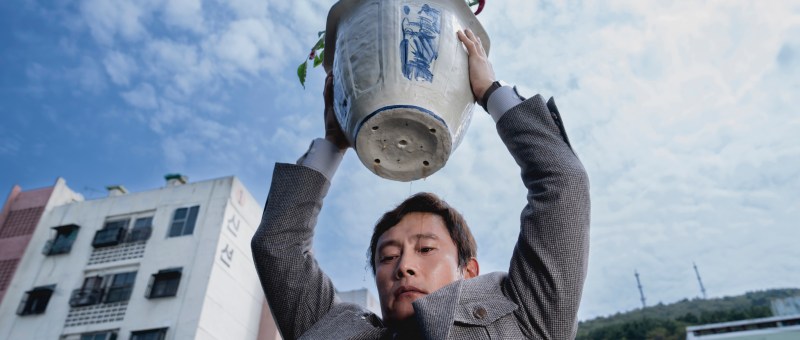
Hidden Face (히든페이스, Kim Dae-woo, 2024)

The obvious irony in the title of Kim Dae-woo’s erotic thriller Hidden Face (히든페이스), is that it refers both to the heroine, Su-yeon (Cho Yeo-jeong), who conceals herself within a secret bunker in her home to spy on her indifferent social climber boyfriend Sung-jin (Song Seung-heon), and to the sides of themselves that people choose not to reveal to others. As Su-yeon’s mother (Cha Mi-kyung) says, it’s what people see that matters, but the hidden corridors of Su-yeon’s home symbolise the ways in which she has imprisoned her true self or at least has locked a part of herself away from prying eyes while continuing to pry into the secret lives of others.

It’s in this forbidden space, apparently added to the house by the previous father’s owner who was a member of notorious Japanese Unit 731 during the war and feared exposure, that Su-yeon first kissed fellow student Mi-ju (Park Ji-hyun) with whom she’s been in a long-term, but apparently secret, relationship. While Mi-ju is patiently renovating the house she thinks they’ve bought together, Su-yeon has decided that she wants a “real life that people recognise”, which she evidently doesn’t believe a same-sex relationship can be. The forbidden space of “cold room” is then where she’s locked her queerness, and a manifestation of her fears of the consequences of exposure. The problem is that she doesn’t even like Sung-jin and the points of attraction he seems to hold for her are that he doesn’t like her either and is otherwise easy to manipulate because of the vast class difference between them. 

Part of the reason that Sung-jin keeps Su-yeon at arms’ length is that he resents the power that she holds over him. He resents both her and himself in knowing that he’s really only with her for material reasons, while simultaneously aware that his current success has nothing to do with his own talent and everything to do with Su-yeon’s privilege. Su-yeon’s mother congratulates him on working hard to build an image of himself, while otherwise needling him about his working-class background in which his mother ran a small restaurant and really knows nothing of this elite world of classical music, mansions, and honeymoons to resorts that charge some people’s annual wage for a single night’s stay. But the facade can’t really cover up Sung-jin’s insecurity and the fear that he couldn’t make it on his own though he so desperately wants to be a part of this world and to feel himself worthy of it. He feels emasculated and humiliated in assuming that other people can see that he’s just a puppet while Su-yeon, her mother, and their advisor discuss policy decisions he’s technically responsible for out in the open, he assumes to deliberately embarrass him and keep him under control. 

Yet the truth is that these kinds of hierarchal power structures of class and gender are less relevant when it comes to desire than otherwise might be assumed. Su-yeon refers to Mi-ju as her slave or underling and adopts a dominant role in the relationship yet eventually has the tables turned on her when Mi-ju decides to rebel. The power dynamic of desire is a push and pull between the desire and the desired mediated by the depth of yearning. It may seem to Su-yeon that she is in control, but equally Mi-ju derives power from her willing submission and can overturn the dynamic at any time she chooses upending Su-yeon’s delusion that Mi-ju is a mere plaything, or “tool”, she can take out and put away at will. 

Nevertheless, the question is whether anyone could be content with this shadow life or if Su-yeon, vain, psychopathic, and probably incapable of understanding other people’s feelings, is content to imprison herself within the hidden corridors of her home which come to stand in for the need to conform to the heteronormative, patriarchal, class-based social codes other people see as “real” and “normal”. Sung-jin is apparently all too willing, considering just leaving Su-yeon trapped behind their walls to continue enjoying this life of privilege with a little more freedom without considering that without Su-yeon he has no entitlement to it as her mother later suggests after becoming worried on realising that Su-yeon hasn’t used her credit in days which is extremely uncharacteristic behaviour.

Sung-jin would trade his pride as a man, his sense of self-worth, and even betray his moral code to appear wealthy and successful and deny his working-class origins. Su-yeon would also, it seems, rather be in a conventional marriage to a man for whom she feels only contempt and resents for not liking her, than live an authentic life as a lesbian and face her internalised homophobia along with that of the wider society. Thus she confines Mi-ju to a forbidden space of her mind in an attempt to have her cake and eat it too, while Mi-ju seemingly fulfils herself in wilfully becoming a prisoner of love, even if it may only be in Su-yeon’s fantasy. Perhaps they get what they wanted all along, affirming the primacy of privilege, but only at the cost of their authentic selves and trapped inside the prison of their own self-loathing.


Hidden Face is released Digitally in the US on September 16 courtesy of Well Go USA.

Trailer (English subtitles)
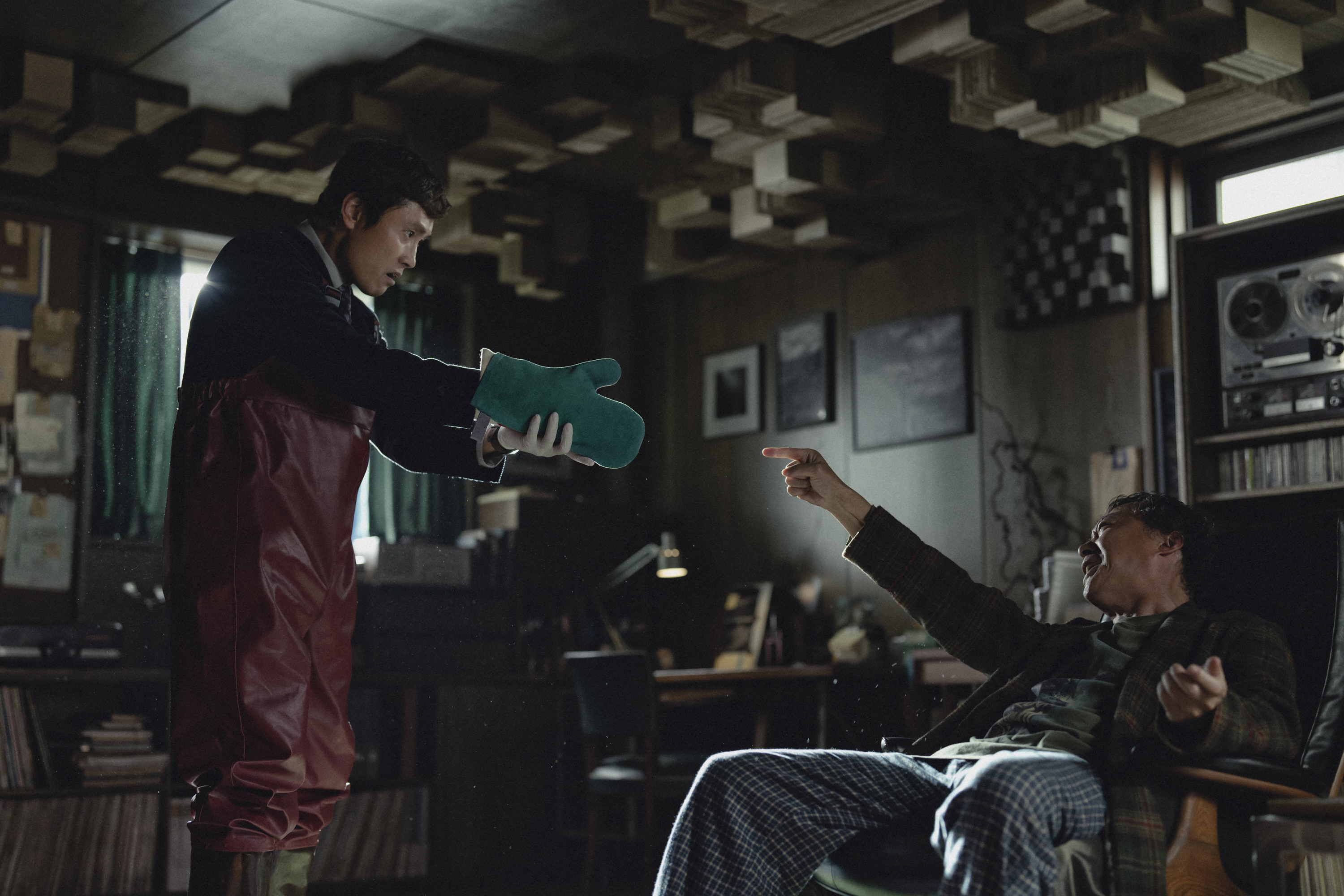
Laugh, Everyone! (みんな笑え, Taichi Suzuki, 2025)

A down of his luck second generation rakugo storyteller begins to discover a new way of life after meeting an aspiring female comedian in Taichi Suzuki’s lighthearted dramedy, Laugh, Everyone! (みんな笑え, Minna Waremashit). The title is taken from a moment of madness in which a resurgent Tamon pleads for everyone to just laugh rather than being at each other’s throats or feeling like they want to die, but that’s something he himself may not be able to do until he’s truly made peace with his demons.

Chief among them would be his father, Kenzo, a rakugo master who’s tormented and bullied him his whole life. In general, rakugo storytellers recite a canon of classical tales that have been passed down since the Edo era, but despite having inherited his father’s stage name, Tamon avoids performing the classical repertoire and sticks to original material. His acts don’t seem to please the audience, and it’s clear that his father’s other disciple, Kannosuke, resents that it was Tamon who became the official heir despite having no talent when he was the rightful successor. Unfortunately, Kanzo failed to plan for his retirement and now has dementia, meaning that he can no longer perform. Unable to make money through rakugo, Tamon has a part-time job in a warehouse to try to make ends meet all while being berated by Kanzo for bing a useless failure.

There are some touching moments later on in which Kanzo bonds with the son of his carer and plays with him as if he were Tamon, hinting that he might have liked to have been a different kind of father and have a different kind of life if it were not for the pressure of passing on his rakugo name. For his part, Tamon has become timid in the extreme and has been running away from anything challenging or unpleasant his whole life. In fear of not living up to his father’s legacy, Tamon avoids the old stories and sticks to telling the same original tale he’s been doing for the last 30 years. 

But if his problem is that he can’t master the classics, Kiko’s is that she can’t innovate and all her original material is pinched from somewhere else. She and her comedy double act partner Chi-chan have been trying to break into television, but can’t catch a break with their largely improvised act. While auditioning, they encounter entrenched sexism as the male panellist tells them that women aren’t funny and don’t take comedy seriously. Kiko’s mother Yoko experiences something similar at her bar where her sleazy backer is all over a younger hostess with whom he eventually hopes to replace her, while Chi-chan has also fallen prey to a predatory man working at a host club. She has been financially supporting Joe to help him achieve his dream while he forces her into sex work to make him more money, pushing her to quit comedy and work for him full-time. This kind of exploitation has regrettably become so common that a specific law was passed in 2025 to prevent young male “hosts”, who work in bars where they charm women into buying drinks and gifts, forcing their patrons into debt and then sexual exploitation. 

Nevertheless, Kiko strikes gold when she hears Tamon’s baseball-themed routine and realises it’s the same one her mother used to listen to on cassette tape. Reworking it as a manzai routine, she sees a way through her creative block even if it’s sort of plagiarism. After getting his permission to use his material, Kiko begins to think of Tamon as a mentor while he almost thinks the same of her as they encourage each other through their comedic failures even while working in opposite directions. A kind of rapport emerges between them as they were actually an accidental manzai double act along with a more positive paternal relationship than that seen between Kanzo and Tamon which is fuelled by a fear of obsolescence, ego, and resentment. Through his friendship with Kiko and rekindling that with her mother, Tamon eventually gains the courage to stop running away and face himself in classic rakugo both making peace with the complicated relationship he had with his father and carving out a new identity for himself in emerging from his father’s shadow. Sparrows fleeing the cage, both he and Kiko rediscover the healing power of laughter and with it the courage to face their troubles head on rather than continuing to run away in fear of failure and miss out on the joy the craft can bring to those around them.


Laugh, Everyone! is available to stream until 14th September 2025 courtesy of Chicago Japan Film Collective.

Trailer (English subtitles)
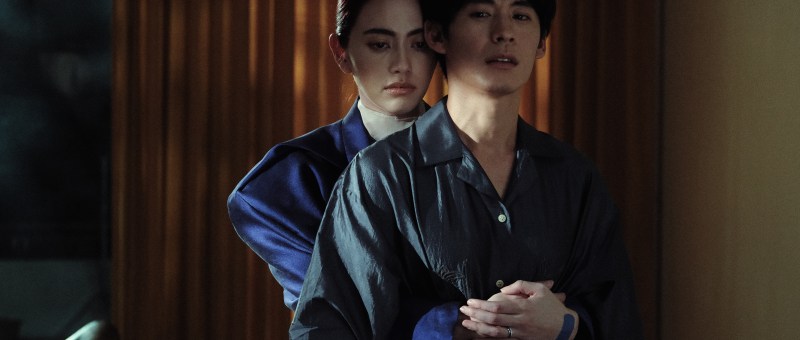
Virus (바이러스, Kang Yi-kwan, 2025)

Falling in love is like catching a virus, according to lonely scientist Gyun (Kim Yoon-seok), but how can you know if your feelings are “real” or just part of a crazy fever dream you won’t even remember as soon as the infection leaves your system? “There are no fake feelings,” lovelorn translator Taek-seon (Bae Doona) counters, which is true, but sometimes people do things they don’t recognise or later understand because they weren’t in their right mind, whether because of the sickness called love or a more literal kind of contagion. 

Anyway, this particular virus makes people incredibly happy for the short period time before they die and was developed as part of a project to create an anti-depressant with no side effects. Taek-Seon gets infected after a disastrous date her sister forces her to go on with socially awkward scientist Su-pil (Son Suk-ku). Su-pil is overly attached to the mice in his lab and is still mourning the death of Masako who appeared to him in a dream and told him to make sure her death wasn’t in vain. In retrospect, perhaps these are symptoms of the infection bubbling away in his body as much as they are of his loneliness, but it’s understandable that Taek-seon wasn’t really considering seeing him again only she’s forced into it when her mother and sister invite Taek-seon over to her apartment as a kind of enforced date. The mother and sister’s insistence on Taek-seon meeting someone and getting married is itself a reflection of a patriarchal society in which being unattached is taboo, while Taek-seon’s sister snaps back that translators won’t be needed soon because of AI implying she should find a husband to support her financially.

But then again, though she might claim to be, it does seem that Taek-Seon isn’t all that happy with her life and later confesses to being “always depressed”. She rarely leaves her apartment and lives a dull and unstimulating existence. Infected with the virus, she suddenly becomes sunnier, more confident, and independent, while chasing romance by approaching a childhood crush she seemingly never had the courage to pursue before. Yeon-u (Chang Kiha) is now a car salesman, and Taek-seon now suddenly has the urge to buy a Mini though she’s never actually driven outside the test centre despite having a license. In one sense, yes, it’s Yeon-u she’s after but the car also represents her latent desires for freedom and a more active life. 

Nevertheless, the corrupting aspects of the virus are all too present as Taek-seon begins to act in ways she may be embarrassed by if she could remember them once she’s better. Her memories seem to have remade themselves more to her liking. She’s forgotten that Yeon-u wasn’t quite the hero she thought he was in her overly idealised vision of the innocent childhood sweetheart that she never had the courage to pursue. On the run from “evil” scientists from the lab where Su-pil worked, she starts to fall for Gyun, the expert that’s helping her, but who’s to say whether her feelings are just a product of the virus, an attachment born of their relationship as doctor and patient, or something deeper. 

For his part, Gyun starts to fall in love with her seemingly before he himself is infected while knowing that she likely won’t remember any of this once she’s been cured. He too is still dealing with the romantic fallout of an improperly ended relationship in which he apparently stepped back because one of his friends liked his girlfriend more. The now-divorced girlfriend seems resentful that he didn’t put up more of a fight for her, and perhaps it’s true that he’s just a romantic coward and it’s a combination of the virus, a sense of responsibility, and the fact that Taek-seon’s natural immunity could hold the key to unlocking his own research that pushes him to try so hard to find a cure for her.

But his research goals are at least altruistic in his desire to find a depression cure without side effects to help people like his brother who took his own life. Dr Seong’s (Moon Sung-keun) lab, however, is entirely focussed on profit and protecting its own reputation. They’re mostly interested in Taek-seon because of her usefulness to them and are prepared to endanger her life if necessary. Even Gyun admits he acted unethically in agreeing to bypass animal testing but otherwise draws the line at anything that puts lives additionally at risk. Taek-seon, meanwhile, later signs over her antibodies so they can be used for free worldwide for the good of all. Even after the fever has cooled, the virus does seem to have made her a happier, more outgoing person who has the courage to pursue her dreams rather than living in lonely defeat. Whether her feelings were ”real” or merely part of her “sickness” and if the distinction really matters either way is up for debate, but that’s not to say she might not catch the love bug again from a less compromised position and actively in the driving seat of her own life.


Trailer (Korean subtitles only)

A Tour Guide (믿을 수 있는 사람, Kwak Eun-mi, 2023)

“We look the same, but they treat us less than foreigners.” Han-young’s (Lee Seol) friend Jung-mi (Oh Kyung-hwa) laments, explaining that she’s decided to move abroad for a better life rather than scrape by in a country that is not always welcoming. Kwak Eun-mi’s A Tour Guide (믿을 수 있는 사람, Mid-eul su issneun salam) explores the position of North Koreans in South Korean society, but also the difficulties of assimilating into a new culture that is not primed to accept you, the isolation of being of this place and not, and the heroine’s complex cultural background that leaves her feeling torn between competing ideas of homeland. 

Having lived in China for a while after escaping North Korea, Han-young worked hard to harness her Mandarin-speaking skills to earn a license to work as a tour guide and interpreter. Even so, she struggles to find employment as many companies are unwilling to hire those from the North whom they view with suspicion. When she eventually is hired, it’s a for a zero hours contract freelance job in which her pay is dependent on the amount of souvenirs her wealthy Chinese holidaymakers purchase. The ironies could not be starker. While Han-young struggles to get by, the residents of the formerly communist turned hyper capitalist society have more money than they know what to do with and often aren’t really interested in the information she has to give them about Korean historical sites but are eager to get to the duty free.

In her interview, Han-young had said she wanted to share Korean culture with visitors to the country but it also seems like this wasn’t really what she worked so hard to get her license for. She also said she wanted to earn a lot of money and have a nice life, which is more honest, but the job doesn’t really allow her to do that. She was told that she shouldn’t force people to buy goods, but it’s clear that this is essentially what the company’s hired her for. Under increasing pressure, she finds herself bending the rules and her own integrity. Copying a less earnest colleague, she begins embellishing her speeches with made-up information to appeal to the Chinese tourists, while later colluding with the saleswoman to put on a snake oil-style act selling Korean cosmetics in the hope of getting her ranking up and being kept on while the company experiences a period of financial difficulty. MERS and declining political relations between China and South Korea see a huge drop off in tourism and a fair amount of economic damage. 

Her brother (Jeon Bong-seok) too has witnessed the implosion of his South Korean dream having failed to get into university. Manual labour at the docks wasn’t what he had in mind, which might be one reason he drops out of contact with Han-young who tries to look for him but continues to hit a brick wall. She eventually discovers that he thought about going back to the North despite knowing what might happen to him if he did. In some ways it may not be all that surprising that some people find themselves unable to adapt and prefer the brutal certainty of their old lives, but it’s equally true that the siblings encounter only futility. Viewed with suspicion, they are constantly monitored by a “protection officer” who is supposed to be helping them adapt to life in the South and prevent them being exploited or harassed, though Jang-mi thinks it’s more like “surveillance” than “protection” and the focus is really on whether they present a danger rather than are presented with it. Nevertheless, her aunt decided to extend her protection period voluntarily because she said it was easier that way.

One by one, each of Han-young’s lifelines disappears, from her friend who decides to try her luck abroad, to her brother, and then protection officer. Asked why she doesn’t go abroad too, Han-young replies that if she stays closely, her family call live together again as if hinting at a desire for reunification even as she desperately tries to get the money together to bring her mother to the South while prejudiced bosses tell her she should just work in a factory, or a cafe, or a convince store, which is to say casual labour jobs they look down on and consider unworthy for South Koreans because someone like Han-young isn’t really entitled to become a tour guide. Eventually she’s joined by a friend from China whom she has to disabuse, reminding her you’re poor here too if you can’t find work and it’s not exactly the kind of utopian paradise she might have thought it to be. Nevertheless, it seems as Han-young is leading herself towards her own liberation and a future less constrained by loneliness and petty prejudice.


Trailer (English subtitles)
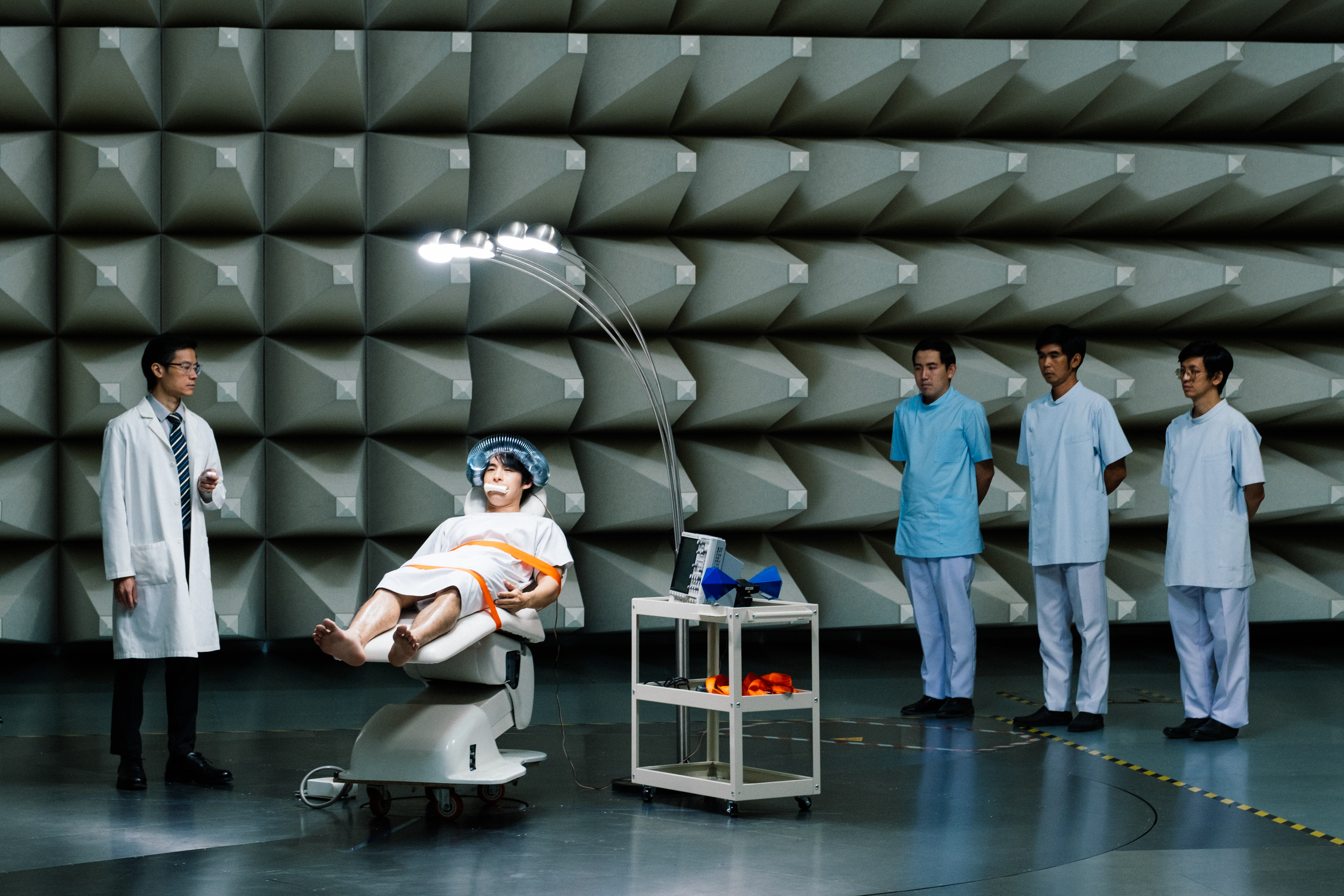
MA – Cry of Silence (မ – Cry of Silence, The Maw Naing, 2024)

After their factory withholds wages for two months, seamstresses decide they have no other option but to strike in The Maw Naing’s hard-hitting drama, Ma – Cry of Silence (မ – Cry of Silence). As the opening title cards explain, Myanmar has seen a series of military coups over the last few decades and is now in a state of civil war. The military’s burning of villages has forced young people into the cities in search of work and shelter, but also left them in a precarious position and vulnerable to exploitative conditions. 

Mi-Thet, at least,ƒ is haunted by memories of her village burning and lives in a kind of hell where smoke is always on the horizon. She has a job as a seamstress and lives in a dorm with other young women in similar positions, but the factory hasn’t paid wages in two weeks and the landlady is beginning to get fed up. She snaps at the girls and ironically asks if they want her to starve to death, laying bare both the domino effects of this world in collapse and the pervasive heartlessness of capitalism. At the factory, the Forman watches over them, ruler in hand and often strikes them if he thinks they aren’t working hard enough while they’re terrified of taking breaks or visiting the bathroom because he also peeps on them or tries to extract sexual favours which some of the girls grant because they need the money.

The foreman’s face is kept offscreen and even when the women confront him, he appears as a ghostly silhouette behind the plastic sheeting. The factory boss, even when he supposedly arrives by car, is never seen at all. It may be that the political situation makes it impossible to run this kind of business, but at the same time it seems more like the factory just don’t want to pay the women because they think they don’t have to. After all, they have money to hire thugs to break up the protests when the women decide to strike rather than just giving them what they’re owed. The foreman alternately threatens them and makes false promises of payment that the women can’t believe because they’re still owed so much money even though as Mi-Thet says, she spends her days between the factory and the dorm. It wouldn’t surprise her if she died at her machine, while one of the others quips they’d still keep them working after they died.

Mi-Thet remains on the fence about even joining the strike, as do many of the other women afraid of the repercussions and of losing the money they’re owed entirely though it doesn’t seem as if it would be paid anyway. Her neighbour U-Tun who is disabled and is covered in scars from the 1988 protests for democracy remains world-weary and not so much encouraging as fatalistic but offers Mi-Thet a series of books that help her commit to the cause though it’s seeing her friend who works as a maid be badly beaten by her employer that convinces her they have to act now. 

As U-Tun says, the country should have changed but it stayed the same, while Mi-Thet can’t figure out if they’re emerging from the darkness or walking deeper into it. News reports speak of torched villages and refugees but also of the food shortages the destruction has caused. Even the cook at the dorm complains prices have gone up so much she can’t get good food and says she’ll cook better when they pay her more. “Better” doesn’t really matter at the factory as long as the girls hit their quotas, but workers can’t work on empty stomachs and no sleep even as the foreman seems intent in working them to their deaths. Mi-Thet and the others attempt to stand up against this cyclical destruction, but discover that they have almost no power and the factory owners don’t care at all if they live or die because they think there’s an endless stream of displaced girls looking for work. Gunshots and the rumble of fire echo in Mi-Thet’s ears, but ultimately she discovers herself trapped within this historical loop but issuing a rallying cry to the youth of Myanmar to rise up against this continuing oppression.


MA – Cry of Silence screened as part of this year’s New York Asian Film Festival.

Trailer (English subtitles)

To Kill a Mongolian Horse (一匹白馬的熱夢, Jiang  Xiaoxuan, 2024)

The Mongolian Steppe is known for its vastness and ever-extending horizon, but for Saina it’s shrinking to the extent that seems to be homing in on him and threatening to destroy the only environment in which he feels he belongs. Saina is himself often likened to a runaway horse, though he’s forever catching them and bringing them back, longing for a world in which he could exist within this natural environment just as his ancestors did but finding only futility everywhere.

Once a racer, Saina injured his shoulder and is now relegated to the sidelines while trying to find other ways to work. His father, a broken man who drinks and gambles, has already sold off most of his sheep and is on at Saina to sell the horses too. His friend Hasa has also sold up, first rejoining the circus but then declaring himself sick of being a herdsman. After getting injured he decides to try his luck in the city and ironically ends up getting a job working for the mining company that is quite literally disrupting the foundations of Saina’s life.

The main enemy is modernity, but it’s delivered by the Chinese. Saina finds himself surrounded by Mandarin speakers, while it’s a Chinese mining company that is gradually buying up the Steppe to open a mine and eventually tries to force Saina and his father off their land. Saina’s father keeps telling him a Chinese horse broker could get them a good deal, but he’s also told that his beautiful white horse isn’t worth very much because it’s Mongolian. It’s meat wouldn’t even be worth as much as a cow’s, though that’s the only reason the broker is interested in it.

Nevertheless, it’s largely for Chinese tourists that Saina is obliged to parade his culture. He takes part in Medieval Times-style dinner shows where the audience is repeatedly reminded they can buy drinks for their favourite riders and carrots for the horses, though the riders and horses almost certainly don’t see them. Saina rides dressed as a heroic Mongol warrior, but has dreams of himself dying on the battlefield alone with his white horse. His ex-wife Tana encounters something similar, as her Chinese boss makes her serve drinks at dinner parties with Chinese businessmen while insisting she sing a Mongolian song for the local colour. Later Saina gets a job at a ranch where city slickers come to experience life on the Steppe, but complains that the tourists ride the horses too hard and end up injuring them. They don’t have a connection to the land or know how to treat animals, while the ranch owners exploit the horses in the same way they exploit Saina, taking little interest in their physical wellbeing only their ability to work. At the show, Saina discovers his horse is injured and asks to switch to another one to let it rest, but encounters resistance in being told to get higher approval from the boss.

Meanwhile, he applies for a job at a fancy equestrian facility but is basically told he’s too he’s common for this elite, aristocratic Western sport that’s no longer about racing but fine technique. The snooty woman who interviews him says that Mongolian riders don’t ride properly and their skills aren’t needed somewhere like this. Saina could possibly start from the ground up as a stable boy but most of those are teenagers. Meanwhile Saina reflects that his father never actually taught him how to ride, he just placed him in the saddle and left the rest up to him with the natural consequence that it feels like something that is innate and essential. Yet he wonders if his son will ride at all or if these grasslands will still exist when he comes of age. Tana lives in the city and wants to send the boy to a school she thinks is better where they speak Mandarin and English while Saina is worried he’ll lose his Mongolian. When he puts him on a horse, the boy is terrified and asks to get off. All Saina really seems to want is to ride horses and raise sheep, but this way of life is dying out and the grasslands are shrinking all around him. There is something quite sad and defiant in his riding of his horse along a motorway in the juxtaposition between the traditional way of life and the modernity which all but destroyed it even as Saina is seemingly left with nowhere to go and no place to roam.


To Kill a Mongolian Horse screened as part of this year’s New York Asian Film Festival.

Trailer (English subtitles)

Dongji Rescue (东极岛, Guan Hu & Fei Zhenxiang, 2025)

If someone’s drowning, then you save them no matter what language they speak or where they come from. Such is the simple logic of the Dongji fisherman who risked their lives to rescue British prisoners of war when the boat they were travelling on was torpedoed in the waters near Zhoushan. Inspired by this historical event, Guan Hu and Fei Zhenxiang spin a tale of resistance and righteousness with an unexpected advocation for borderlessness and freedom as the two orphaned pirate brothers at the film’s centre finally find their way back to their home in the sea.

It’s Ah Dang (Wu Lei), the younger of the brothers, who fishes a British soldier out of the water and tries to rescue him, while the older, Ah Bi (Zhu Yilong), refuses and tries to throw the man back. Ah Bi may appear heartless, but considering the risk the presence of the British soldier poses to the islanders perhaps Ah Bi’s callousness is perfectly understandable. Nevertheless, Ah Dang stashes the young man, Thomas Newman, in their cabin and seems fascinated by his blue eyes and a vision of the wider world that he seems to represent. Thomas desperately tries to communicate with Ah Dang but though he knows some Cantonese cannot get through to him that there are men trapped on the sinking boat. Meanwhile, Japanese troops turn up on the nominally occupied island erroneously looking for a blond, blue-eyed man missing from the ship. Convinced the islanders must be harbouring him, they start taking hostages and executing villagers until Thomas finally knocks out Ah Dang so he can give himself up to save them.

Though the island was not in fact occupied in real life, here the villagers are placed under incredibly oppressive rule despite there only being two Japanese soldiers standing guard. The fishermen are no longer allowed out to fish and are, they say, stuck on land like turtles unable to practise their traditional crafts or way of life. Old Wu led the resistance before, but didn’t end well and now even he has been cowed into submission. The rescue is then as much for the islanders as anyone else as an act of resistance to authoritarian oppression in their following their belief that those in peril on the sea must be saved in defiance of the Japanese’s prohibition on sailing. The same is doubly true of Ah Bi’s girlfriend Ah Hua (Ni Ni), Old Wu’s adopted daughter who takes up his place and breaks a taboo about women going to sea to lead the rescue mission. 

She, Ah Bi, and his brother are all technically outsiders on the island who were never fully embraced by the community. The brothers were held at arms’ length because of their possibly pirate origins, while Ah Bi’s dream had been to escape to Shanghai with Ah Hua. Ah Dang is then touched by Thomas’ constant attempts to talk to about “home” though he perhaps doesn’t quite have one while Ah Bi’s “home” more than anything else is simply Ah Dang. Rather than the expected definition of a homeland of the greater China, the brothers’ “home” is later redefined as “the sea” which is to say a place of boundless freedom where national borders don’t exist. 

These elemental origins also give the brothers a mythical quality that adds to the sense of heroism in the rescue as Ah Bi goes after the Japanese and attempts to save the remaining POWs, some of whom can’t swim, marooned in the middle of the sea. The Japanese, meanwhile, are intent on covering the incident up which means everyone must die from the POWs to the residents of Dongji Island, though it isn’t really clear who the islanders would tell anyway considering that they live on a fairly remote island. In any case, the heroism of the Chinese fisherman is directly contrasted with the craven callousness of the Japanese who are still trying to pick off the POWs like fish in a barrel and only stop on realising that there are too many Chinese fisherman and if they were to kill them all it would get out and they’d look very, very bad. Epic in scope and impressively staged with some truly stunning underwater photography, there is a sense of genuine poignancy and human solidarity in standing up to oppression and cruelty no matter how ironic or jingoistic it might otherwise seem as ordinary villagers rise to up to help those from a distant land they don’t even know at the risk of their own lives and livelihoods.


Dongji Rescue opens in UK cinemas 22nd August courtesy of CineAsia.

Trailer (English subtitles)

Gowok: Javanese Kamasutra (Gowok: Kamasutra Jawa, Hanung Bramantyo, 2025)

There’s an essential contradiction at the centre of Hanung Bramantyo’s spicy romantic melodrama Gowok: Javanese Kamasutra (Gowok: Kamasutra Jawa) in that, on the one hand, the gowok is said to exist so that men learn how satisfy their wives’ sexual desires. Which is to say, the sexual desires of women are recognised and approved rather than denied or taboo while men are expected to live up to satisfying them as part of what it means to be a proper man. But at the same time, women are constrained by the patriarchal institution of marriage, have few rights of their own, and are largely unable to live independently while lacking status as anything other than a man’s wife. 

Indeed, the inserting of increasingly outdated notions of sex and class that stand in the way of romance and set the tragic events in motion rather than the black magic to which many attribute the looming crisis. Years before, Jaya’s mother had been in love with the soon-to-be king, but he couldn’t marry her because she wasn’t of sufficiently noble birth. She agreed to step aside and marry a mutual friend on the condition he would be given high office and her son would marry into royalty so that she would be a queen in all but name and their family would enter the royal bloodline.

Now a university student, Jaya (Devano Danendra / Reza Rahadian) is sent to a gowok to make a real man out of him, though as he explains to his father, that’s not what a real man is. Jaya is a young man of the new Indonesia who believes in things like equality of the sexes and the breaking down of the old class system even if he maintains his privilege in other ways, including submitting himself to the gowok. Nevertheless, while he’s there, he falls in love with the adopted daughter of his gowok Santi (Lola Amaria), Ratri (Alika Jantinia / Raihaanun), and makes her a lot of promises about the future while introducing her to the women’s movement in 50s Indonesia that offers her the vision of a different future in which she might become an independent woman rather than being forced to become a gowok herself. To become a gowok necessarily means that she would not be able to marry. Most gowok adopt children to succeed them. Accidentally seeing a secret ritual, Santi fears that Ratri has fallen victim to a pure love spell that threatens spiritual disaster should the man break his promise which, as an older woman, she knows he almost certainly will. 

Then again, that turns out not quite to be the case and the lovers are in fact betrayed by those still clinging on to to the old class system. The destructive quality of their romance is played out against the background of the screws tightening across Indonesia as anti-communist fervour takes hold and suspicion falls on the women’s groups when military generals are abducted and murdered. Despite his progressive views, Jaya ends up married to a princess at his mother’s behest, exemplifying the ways in which women try to hold on to power by exerting matriarchal control over their sons. As for the princess, she is already pregnant by her communist boyfriend but prevented from marrying him and forced to marry Jaya instead though apparently coming fall in love with him after their marriage. Meanwhile, it turns out that there is an awkward connection between Jaya and Ratri that lends their fateful meeting a tragic quality even as his mother refuses to entertain the idea of Ratri marrying her son because her mother was a sex worker and she is not of their class.

In any case, though the gowok system may not actually be that different from other folk practices, there is something uncomfortable about it in that some of the “men” are very young and do not want to be there. Though Jaya, who is also sent there against his will, is in university and falls for Ratri who is around the same age, when his own son, Bargas, is sent to the gowok he is only around 14 and looks very childlike while ushered into “manhood” by a then 33-year-old Ratri. The system is at least potentially abusive and unethical while demonstrating how men are also ensnared by the patriarchal trap in that they too are being groomed for marriage whether they like it or not. It was in fact a man’s inability to remain faithful to the wife chosen for him that led to Ratri’s mother’s death and the activation of a black magic curse.

In any case, it turns out that human motivations can be far more damaging than any curse in the long years of anger, resentment, and misery born of misunderstandings and deliberately misdirected love. Ratri desperately tries to overcome her past and become an independent woman as a gowok but finds herself frustrated by the changing nature of society which promises so much freedom and opportunity in her youth only to immediately roll back on it while her own attempt at revenge backfires with tragic results. Poignant in its themes of tragic romance, the film quietly hints that this kind of oppression may not have really gone away even as Ratri seeks to reclaim her legacy in the 1980s-set coda by turning the gowok house into a school that educates women in a final attempt to finally free them from patriarchal control.


Gowok: Javanese Kamasutra screened as part of this year’s New York Asian Film Festival.

Trailer (English subtitles)

Travesty (Гажуудал, Baatar Batsukh, 2024)

“One man’s screams will not fix this social travesty,” according to an exasperated police officer sent in to quell a hostage crisis in a quiet rural town in Baatar Batsukh’s Mongolian crime drama. Led by chapter headings reading The Town, The City, the Nation, The State, the film pushes deeper towards the centre of corruption in an indifferent society in which the lives of citizens are barely valued and the authorities will do little to protect them. Indeed, the hostage taker’s claims that he will kill one person an hour seems to stand in for the slowly ticking time bomb of governmental indifference.

Or at least, that’s how it seems to Davaa whose teenage son keeps ringing him but he can’t help because he’s so far away on a case. His absent paternity seems to echo the ways in which the old have abandoned the young. The hostage taker turns out to be a young man who feels left out and hopeless. Rendered mute during his military service, he tried to sue the government but couldn’t while his mother, who worked for the government her whole life, ruined her health doing so and then was unfairly denied a loan to pay for medical treatment. The boy’s father appears to have been in the military, but is otherwise not around leaving him alone after his mother’s death having lost pretty much everything, which is why he takes revenge by holing up in the hospital with 20 hostages and asking 1 billion Mongolian tugrik a person. He’s clearly putting a price on a human life, but then so is the government when it declares I won’t pay.

The fact that it’s the hospital he takes over obviously has knock on consequences preventing local people from accessing health care, but the government does that too. As the doctor points out, rural hospitals are understaffed and under resourced. They can only offer basic services and send more seriously ill patients to the cities, but there aren’t enough beds there either so those like the hostage taker’s mother are sent back anyway. Meanwhile, a local crook’s ageing wife goes into labour with her fourth child which will earn them a medal from the government. The pregnancy is high risk and the doctor is worried about her because all of her previous births have involved complications which endangered the life of mother and child. But the woman insists she doesn’t care about the risks and is willing to die to get the medal from the government even though it appears they won’t care very much about her child after it’s born and fulfils their aim of expanding the population. 

Her husband is well known to the local police who’ve rounded up two other petty crooks who are listening intently to the unfolding crisis from their place in the cells. These middle-aged men, one of whom is a former nurse, don’t seem to have much to do except get into trouble. The police are doing their best, but like the hospital, they’re also under staffed and under resourced. A hostage crisis in their tiny town is an absurd development they have no idea how to deal with which is why Darvaa is dispatched to deal with it. The town can’t hope to raise the money the hostage taker is asking for, while the government could but it won’t pay despite Davaa’s please that they just give the hostage taker what he wants so he’ll stop executing people. When the authorities eventually turn up, it turns out they’ve lied. They didn’t bring the money and are planning to storm the building to end the crisis quickly without giving much thought to the hostages’ lives. Taken hostage himself, their representative grovels and pleads but refuses to offer the apology Davaa suggests as a last resort to appease the hostage taker with whom he has come to sympathise. 

A late twist makes the situation all the more tragic with the boy another victim of governmental indifference which would rather kill first and then refuse to answer any questions later. They try to fob Davaa off with a promotion in return for his silence, but he refuses while implying that he doesn’t really want to talk about this whole sorry affair either and would rather to get on with his job and looking after his family. In any case, the government representative seems more concerned that Davaa will embarrass him by exposing how he grovelled and begged for his life rather the fact they acted with callous disregard for the lives of the hostages and failed to take into account the fragile mental state of the hostage taker. The travesty is then not the hostage crisis but the state of the nation in which the citizens are themselves taken hostage by an indifferent and oppressive authority which extracts its ransom but offers little in return.


Travesty screened as part of this year’s New York Asian Film Festival.

Trailer (no subtitles)