HIGUMA!! The Killer Bear (ヒグマ!!, Eisuke Naito, 2025)

Last year Japanese society was sent into an existential panic due to a severe increase in the number of bear attacks as the creatures were forced to venture beyond their natural habitat due to climate change and the impacts of human behaviour on the rural environment. Eisuke Naito’s Higuma!! The Killer Bear (ヒグマ!!) then arrives at an apt time, though in this case, the bear seems to symbolise something else acting as a kind of karmic supernatural entity attacking those encroaching on its territory while drawn away from the safety of the city by greed and desperation.

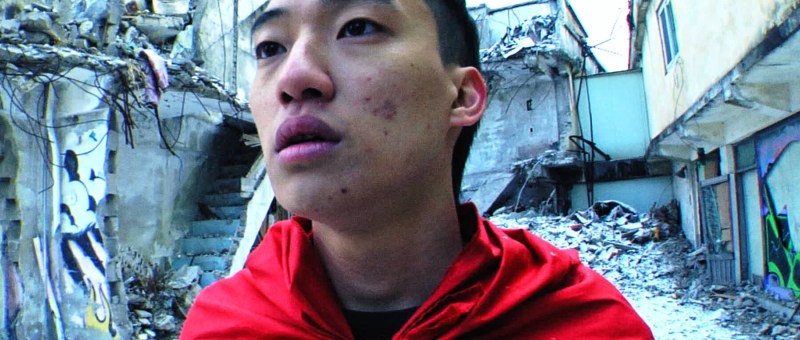
The cities are, it seems, in quite a bad way. Eighteen-year-old Sora (Fuku Suzuki) is an aspiring game developer, though the complaints that his retro 3D-platformer is too hard with janky character design might equally apply to the challenges of modern life. He’s just got into university, but his happiness is short-lived as his father takes his own life shortly afterward having been scammed out of all his savings and therefore unable to pay his son’s tuition fees. While his mother tries to make the best of the situation and insists she’ll figure something out so he can continue with his education, Sora is resentful and angry until unwisely agreeing to a shady job ad promising a large amount of money for delivering “an envelope” to an unspecified location. It’s after this that he’s plunged into a confusing world of backstreet crime, scams, and exploitation that he cannot otherwise escape.

Yet at the same time, this otherworld feels oddly like a video game and is often framed like an old-school arcade scroller, classic first-person shooter, or RPG as Sora is dragged further into this morally compromised sector of society. After being witness to his boss scamming an old lady out of her cash card and ink stamp, he’s charged with retrieving a precious gem from an agent turned rogue that looks a bit like a rupee from the world of Zelda and feels like a video game MacGuffin. The young woman, a former SDF member, decided to keep it for herself having been offered only 30,000 yen to steal it though it’s apparently worth ten million. It turns out that she’s a kind of victim too. Not only was she kicked out of the SDF for punching a superior officer who was sexually harassing her, but has become hooked on a live-streaming host and fallen into financial ruin. This has become such a common problem lately that legislation has been introduced specifically to stop hosts exploiting women and forcing them into sex work. Though Wakabayashi (Wan Marui) knows intellectually that this relationship is entirely one-sided and not actually real, she feels compelled to keep supporting him in part because he was the only person who listened to her worries and accepted her as she was even though she knows this is just part of his job.

That her desire for connection and acceptance can only be fulfilled through a transactional arrangement speaks of an increasing sense of disconnection and alienation just as Sora is dragged into this hellish world through an online ad, never having met his handler who goes by the ironic handle of “Angel”. It’s the need to get rid of Wakabayashi that forces the gang out of their natural habitat and into the bear’s territory of the forest where the human civility that marks urbanity is largely dissolved. Yet there’s a sense of human solidarity that emerges between Sora and Wakabayashi in which they call each other by their own names as they try to battle the bear even if they also give in to their greed by staying in the mountains longer than they need to in order to retrieve the gemstone which the bear has swallowed.

Another kind of human connection is brokered by Sora’s interaction with a young boy who is playing the game he designed. The boy has been told not to talk to strangers or his games will be taken away, but decides to trust Sora and ironically gives him some bear-shaped snacks. He ends up fulfilling the role of a wizard in an RPG, gifting Sora some much needed special items after he manages to beat his own game. This newfound senes of achievement allows Sora to regroup and decide to do the right thing, not only calling his mother to explain what’s going on honestly, but going back to confront the bear and save Wakabayashi. On his way back to the mountain, he passes a collection of elderly people who are running an anti-scammer drill which seems to be organised much like the bear catching drills being run various cities, only in that case, Sora would also be a kind of bear. Filled with darkly absurd humour, the film seems to say man is the most deadly predator and the cities are the place of real danger, but allows Sora to overcome his sense of despair in using his unique and specialist knowledge along with a sense of human solidarity to finally beat back the existential threats of an exploitative society. 


HIGUMA!! The Killer Bear screens as part of this year’s New York Asian Film Festival.

Trailer (English subtitles)

Tokyo Nightfall (トーキョーナイトフォール, Yuto Shimizu, 2026)

Struggling to deal with his feelings of grief and guilt following his younger sister’s suicide, a young man finds himself at an end of the world party for those who want to end their lives in Yuto Shimizu’s melancholy urban drama Tokyo Nightfall (トーキョーナイトフォール). The Tokyo these young people inhabit is one of loneliness and futility in which there is no real hope for future and the past holds only painful memories. 

The bleakness might best be demonstrated by Anna’s (Utano Aoi) reply that her happiest moment in life was her parents’ divorce. The pair hint at a childhood marked by domestic violence, but any hope they might have had for a better future was cut short when Anna witnessed the suicide of a friend of her brother Amenashi (Iori Abe) who jumped from their eighth floor flat. This even seems to have changed Anna who relates that it wasn’t so much the horror or the blood but the fact that she saw a person turn into an object in real time. It made her feel as if being alive wasn’t all that important. 

Working a soulless job as a delivery driver where his clients are often similarly withdrawn or hostile, Amenashi blames himself for Anna’s death and wonders if there was something more he could have done to prevent it while drawn into the same kind of darkness she was. Amenashi’s friend, Hattori (Taiga Hironaka), even states that he is worried about him because his erratic behaviour reminds him of that of Anna shortly before she died. It seems that the party he goes to a gathering for those planning to end their lives where they can have one last night of fun before they go.

Amenashi goes to the party, but is followed by his friends Hattori and Nozu (Kosuke Tanaka) who don’t quite know what the party is, but just want to find their friend. While Nozu, otherwise a comic relief character giving lewd and disgusting answers to the questions put to him, Nozu too sets out to enjoy the night even bonding with a young woman, but is also drawn into the darkness of the evening and reconsiders his own life. Others in the club react with irritation, telling Hattori he should respect his friend’s decision and has no business being here. Haunted by visions of Anna, Amenashi remains uncertain not quite knowing whether to live or die. Another guest at the club tells him that he should forget about this cold world and stay with them, dragging him over to the side of death, while Hattori does him best to encourage him to live.

The video camera sequences play out as a kind of will as Anna, Hattori, and Nozu look back over their lives. Shimizu sometimes replays the same video only to let the conversation run to add more information that changes our impressions of what’s gone before. Speaking about their happiest and saddest moments, the friends paint a bleak picture of familial disconnection and loneliness but are saved only by their bond with each other as Hattori names his happiest moment as spending time on the roof with them.

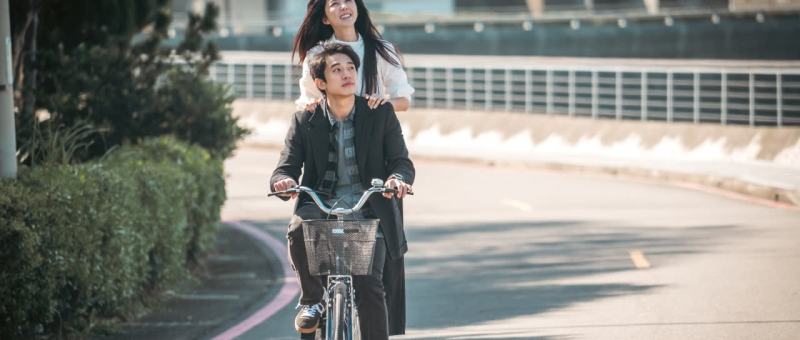
The irony is that may not be enough. The ghost of Anna tells Amenashi that neither choice is wrong and the film is non-judgemental about the idea of suicide, perhaps feeling that those who make the deacon to leave should be allowed to do so while Amenishi wrestles with himself about the right thing to do. Others may have the decision taken away from them, but he does at least have the power to decide his own future. Hattori had told him that there may be no point in thinking. People are full of contradictions and don’t even understand themselves. “We are here for each other,” Nozu adds, offering the only possible source of salvation in a world that otherwise seems hopeless and devoid of possibility. As Amenashi cycles around the city, he looks on at young couples and is struck by a sense of urban disconnection and loneliness, but does perhaps begin to rediscover something of the will to live in the power of friendship and the memories of those he’s lost, if perhaps only too late.


Tokyo Nightfall screened as part of this year’s Raindance Film Festival.

Trailer (English subtitles)

The Unluckiest Girl in the World (Ryosuke Hayazaka, 2026)

Sachiko Yamanoura feels herself to be the unluckiest person in the world. Her unluckiness may tens towards the superficial in that she has terrible luck with men and is the sort of person who always manages to step in gum and pick the tako-less takoyaki, but her perception of it seems to be impacting her quality of life This is partly because she has an odd conception of the world in which she believes that fate is decided by gacha capsule toys and therefore exercises very little agency over her life to the extent that she is continually unable to break up with her financially exploitative boyfriend who not only forgets her birthday, but chooses that particular day to bring another woman back to their flat.

It’s this romantic dimension that occupies most of Ryosuke Hayazaka 50-minute drama as Sachiko is abruptly hit by car and wakes up in an afterlife where a smartly suited version of herself invites her to choose a new lover for her next life from the Gacha Life machine. It apparently contains only men she is compatible with and therefore allows her to experience what it would actually be like to date them as a sort of advanced mental fantasy. What quickly becomes clear, however, is that none of these men are very good options for her and even the ones who looked good on the surface had hidden issues. She briefly considers dating her 45-year-old boss who did actually remember her birthday and otherwise appears to be kind and considerate, but it turns out that he is already married and fleeing domestic responsibility after his wife has given birth to their first child.

The real issue is that she’s still dealing with the fallout from the abrupt disappearance of her fiancé three years previously who left alone to travel the world the morning after proposing to her. When he suddenly reappears, she considers picking up where they left off but is continually insecure that he will suddenly disappear again. A popular influencer host, meanwhile, offers the opposite sort of comfort in making it his business to tell her what she wants to hear in soft and non-threatening tones while all the while planning to exploit her by recruiting her as a member of his cult-like pyramid scheme selling lucky water. A student she interviews at her company similarly claims that luck is his special skill, but when she considers dating him, she finds out that he’s overtly close with his mother and she’d need to pass an interview with her first if she wanted to be his girlfriend.

A series of speed dates provide a little more real life detail as Sachiko is subjected to the obviously married guy, the bully who insists no one else is going to want to date her, the guy who wants an open relationship, and the evangelistic polygamist who wants her join him in a new era. She certainly does seem to be unlucky in drawing all these men none of whom seem to be very viable prospects for a long-term relationship or even genuine romantic connection. But at the same time, it’s entrusting her life to luck that put Sachiko in this position. If she accepted that luck was something she could make for herself rather than continually accepting an unsatisfying status quo and basically allowing all these men to treat her badly, she might be able to find a degree of satisfaction in her life that may or may not include romance. 

Each of the rounds included the option to “pass”, but really Sachiko had that all along without really realising. Eventually she realises she doesn’t really need to pick any of these men and is free to stop drawing gacha rather than constantly waiting for the machine to spit out the winning ball. Shot in a 1:1 frame to mimic an Instagram reel, the film has a youthful, contemporary vibe informed by current dating mores and though it may present a rather bleak view of the prospect of romantic fulfilment in a chauvinistic society does at least allow the heroine to recover herself esteem and finally break up with her no-good boyfriend, refusing to let luck rule her life and finally taking control of her own destiny. 


The Unluckiest Girl in the World screened as part of this year’s Raindance Film Festival.

The Furious (火遮眼, Kenji Tanigaki, 2025)

A gang of child traffickers kidnap the wrong man’s daughter in Kenji Tanigaki’s non-stop action thriller, The Furious (火遮眼). Once again set in a fictional South East Asian nation, the film sees two men team up against a world of corruption as the last line of defence rescuing kidnapped kids and returning them to their families but in return incurring the wrath of the powers that be who are all too happy go along with traffickers for the financial benefits it offers.

Wang Wei (Xie Miao) is living in South East Asia while seemingly unable to return to China for unclear reasons with the implication that he is some kind of fugitive. His young daughter Rainy (Yang Enyou), who lives with her grandmother on the Mainland, has been staying with him for the summer and constantly begs Wang either to return to China with her or let her stay here with him. Wang rejects both of these options while insisting that Rainy learn kung fu so that she is able to defend herself in his absence, though she claims that she actually hates it and sees her training only as a means of being able to spend time with her father. 

In some ways, and a little uncomfortably, Wang’s desire to train his daughter for independence is depicted as a rejection of his paternal responsibilities while Rainy rejects it in favour of a more traditional femininity, reusing to get her hair cut short out of fear her classmates will make fun of her. It’s after an argument about the haircut that Rainy is lured by the traffickers having stormed out of the hairdressers while the neighbourhood aunties stop Wang going after her, assuring him that she’s just at that age and needs some space to blow off steam. Rainy’s skills might not be enough to protect herself against the traffickers and may even in a way endanger her when she actively tries to fight adult men much bigger and stronger than herself, but do perhaps give her confidence to continue trying to escape.

Wang, meanwhile, tries to report Rainy’s kidnapping to the police but finds them entirely uninterested with the police chief actively telling him that his complaint is unimportant. Seeing a large wall full of missing child posters convinces him that if he wants his daughter back, he’ll have to get her himself. The film suffers from the decision to have a large part of the dialogue in English with several lines unconvincingly dubbed which is likely intended to play into the idea of this place being a melting pot of cultures and languages in addition to a hub for a crime network stretching across Asia with incidental dialogue from the trafficking gang offered in Tagalog. The implication is then that fail son-in-law Paklung was sent to the US for an international education but is unable to integrate into this gangster society, engaging in the taboo activity of child trafficking and causing his father-in-law to suggest making him the fall guy. Paklung, however, cannot accept this rejection and goes on a sociopathic rampage that ironically destroys the future he had dreaming of.

On the other hand, the resolution lies in a defiance of authority as an earnest police woman gains the courage to turn against the corrupt police chief partly thanks to rising public resentment generated by the disappearance of a reporter who was investigating the trafficking ring and live streams from her husband Navin who is trying to find her. Frustrated father son relationships become something of a theme with giant-baby like henchman Ho also seeking revenge for the death of his father, killed by Paklung’s arrow-wielding minion, Tak (Yayan Ruhian). 

The fact is that no had really cared much about these children because they were poor and were viewed as disposable, though it is surprising in a way that the gang wouldn’t just give up Rainy rather than go to the bother of dealing with Wang. Though he had refused to go back and help the old woman in the opening sequence, telling Rainy that it was none of their business, Wang’s sense of responsibly is reawakened by Rainy’s desire to go back and save the other kids while extending a hand of friendship towards the boy who tricked her in the knowledge that he didn’t really have much choice either and lacked the courage to resist because he was alone and was only trying to survive. The brutal and frenetic action sequences reflect the nihilism of the world of the world around them in which Wang and Navin face attacks from all sides and seemingly immortal opponents while mustering all of their strength and ingenuity to protect those closet to them.


Trailer

Memorizu (メモリィズ, Miiku Sakanishi, 2026)

Trying to calm a nervous groom, ageing photographer Makoto (Issei Ogata) tells him that he also took his grandfather’s wedding pictures in a moment that speaks of several kinds of continuity all at once. Yet why is that we take photos? Is it for ourselves, as a kind of proof of existence “to remember we were here,” or so that we can share these moments with others and create shared memories to paper over the rift of absence?

The weight of nostalgia hangs heavy over Makoto’s photography studio, but the irony is that it’s son-in-law, Yuta (Tasuku Emoto), who’s come to look after him while he recuperates after breaking a leg, and therefore has no particular attachment to this place or the landscape given that it is not the place where he grew up. Nevertheless, this sense of distance is perhaps why Yuta finds himself taking photos on his smartphone and documenting his daily live in the peaceful rural environment as a means of keeping in touch with his wife, Yuki (Moeka Hoshi), and daughter, Hana, who were supposed to be coming with him but had to cancel at the last moment.

These photos are often spontaneous and sparked by the desire to share a moment or re-experience it later, whereas the photographs taken at Makoto’s studio are more deliberate. Someone has made a decision to have their photo taken either for a prosaic reason such as an application form, or because they too want to mark an important event like a wedding or the birth of a child. These are not events that anyone is likely to forget, but the physical object of the photograph becomes a repository for the emotions the subjects and photographer were feeling at that moment which might otherwise me transitory but can now be re-accessed through film.

The same can be true of the photos and videos Yuta takes on his phone which enable a kind of time lapse communication between himself and his family in which one can be both present and absent at the same time. Yet there’s an implication that the ease with which we take photos in the present day has diluted has their potency. Yuki calls up the photo app on her phone is ad plunged into a sea of images, mainly of her young daughter, so many that she will likely never open most of them again while the vastness of the archive might discourage looking at any of them at all beyond the already visible thumbnail. 

Even so, there’s a degree of poignancy in Makoto getting out the slide projector to show Yuta old pictures of his later wife and Yuki as a child as we see the same images recreated by the adult Yuki and Hana making exactly the same trip with the images appearing in Yuta’s mind like photographs. As Shiori and the young Yuki move further and further away from the camera, there’s a sense of continuing in these repeated images like a film negative running through a projector as one generation slowly replaces another. Though Shiori is already gone, her presence is felt through its absence in the empty seat next to Makoto as he remembers the time they saw a burning field, or her coat still hanging on the wall now on its own as Makoto has given his jacket to Yuta.

The gift of the jacket furthers Yuta’s identification with Makoto, though as one might expect the situation is a little awkward to begin with. Nevertheless, as he settles into the relaxed pace of rural life, the pair begin to bond and develop a familial relationship of their own. Sakanishi bookends the film with scenes of open windows, the first that of a ferry looking out onto the sea. Its rounded corners give it the aesthetic of film while the scene constantly changes to explore how various people react to it. Some look out on the sea as they eat, others more or less ignore it or get on with their work. The closing shot, meanwhile, is a timelapse photo through Makoto’s bedroom window capturing the changing seasons. The lesson is perhaps that the human eye is also a camera and that our lives our made up of these small, barely memorable moments that can nevertheless amount to something greater than ourselves. 


Trailer (English subtitles)

Nameless (名無し, Hideo Jojo, 2026)

A man who can kill with a seemingly invisible weapon goes on the rampage after being harangued by a religious woman in a cafe, leaving police and witnesses baffled in Hideo Jojo’s adaptation of the manga by actor and comedian Jiro Sato who also stars in the title role. The nameless hero, given the generic moniker “Taro Yamada” by the well-meaning policeman who discovered him in childhood, has a mysterious supernatural ability that causes things he touches with his right hand to temporarily disappear. They return when he takes his hand away, but living creatures appear to have been changed as if they existed in a state between life and death and then generally pass away soon after.

Taro (Jiro Sato) seems to have lived well into his 40s deliberately refusing to use his right hand, so what prompted this sudden turn toward nihilistic and indiscriminate violence? The answers may not be entirely clear, just as there is no concrete explanation of where Taro might have come from or how he acquired these strange powers. But it seems to be a reaction against a society that he feels does not accept him, or at least his failure to connect with it. After experiencing a betrayal by someone close to him, he vows that he’s going to stop trying to connect with people and this murderous rampage seems to be an expression of his loneliness and frustration. 

Then again, society did attempt to reach out to him in some ways even if it does not appear to have made much of an effort to understand his condition or to help him to live with it. Despite the Christianising religious overtones that hang over the film, Taro never seems to consider cutting off his hand or making it unusable. As a child, he bound it with wire, presumably to prevent himself lashing out with it instinctively or accidentally causing harm to other people. His only companion, an equally nameless little girl of unknown origin given the generic moniker “Hanako”, begs him not use it even to protect them, which suggests that he may have done so previously with negative consequences. Perhaps there is some benefit to it which is why he doesn’t try to neutralise his arm, but it’s never clear where things go when he touches them or why they comeback changed or depleted. 

The main issue is that he has a choice about using it. Originally, he didn’t want to, and perhaps didn’t want to kill all those people in the cafe either but ended up doing so. The irony is that he wants to connect, but is literally prevented from reaching out. He has these almost Nosferatu-like ticks and grimaces and is largely mute. He can hear and understand, but barely speaks and when he does, it’s with great effort. His voice his horse and the words come out awkwardly in a strange order. Yet the elliptical quality of the tale seems to hint at a desire to reconnect with his childhood self thereby closing the circle and making himself disappear.

Others may in a way be trying to do the same, such as lead investigator Kunieda (Kuranosuke Sasaki) who suspects the case may be linked to something in his own past but has it taken away from him by the National Police Agency who question the team’s competency while themselves failing to make much of an effort to understand the reality of a man like Taro. Some joke that perhaps he is a ghost, and in a way he does seem to be a supernatural entity. His invisible weapons are visible in a reflected surface such as a mirror, but apparently not captured on camera. His tragedy, though, maybe that he doesn’t understand himself beyond the fact of his difference and is too afraid to open himself to potential rejection by those who might be able to help him if they wanted to, with the potential for exploitation by those with darker motivations. In that sense, his violence, depicted with bloody absurdity by Jojo, does seem to be an attempt at connection or to feel himself a part of this world. Nevertheless, the conclusion seems to suggest that in the end acceptance comes from within and in giving in to his basest instincts the adult Taro may only have disappointed his more innocent childhood self.


Nameless screens as part of this year’s Raindance Film Festival.

Trailer (no subtitles)

Climbing for Life (てっぺんの向こうにあなたがいる, Junji Sakamoto, 2025)

A world-famous, record-breaking mountain climber faces the final ascent in Junji Sakamoto’s fictionalised biopic of Junko Tabei, the first Japanese woman to reach the summit of Everest. Here named Tabe, the highest mountain Junko (Sayuri Yoshinaga / Non) has to climb seems to be the patriarchal nature of Japanese society in the 1970s. The film does, however, mistakenly imply that sexism is an issue that has now been solved in the film’s contemporary setting of 2010-16 in which women hold positions of authority and are free to fulfil themselves outside the home on an equal footing with men.

Of course, this is not really the reality even if, in some ways, the situation may be much better than during the high prosperity era during which Junko was a trailblazer in more ways than one. When she decides to mount an all-female expedition team to conquer Everest, she’s mainly met with derision and scorn. While she and female reporter Etsuko (Yuki Amami / Mizuki Kayashima) do the rounds of various companies looking for sponsorship, the elderly male CEOs are incredibly confused and accuse them of being traitors to their sex. They questions whether it’s safe for women to do something like this without any men around (though in the interests of clarity, all the Sherpas appear to me male), and also what wonder what their husbands are supposed to do for the six months they’ll be away shirking their domestic responsibilities. Even when they encounter a man who is closer to their own generation and sounds supportive, stating that the era of gender equality has arrived, it turns out to be all talk. He does not take their proposal seriously and even asks which part of it he should read as if it wasn’t really important. In the end, his “support” doesn’t transfer into any investment.

In the present day, Etsuko remarks that there were a lot of useless men around back then, as if men are universally different now. She herself has become a senior reporter and is in a position of authority over younger male reporters in the newsroom. Likewise, Junko’s main physician in the later stages of her treatment following a cancer diagnosis is also female and makes a point of listening to her patient’s wishes and concerns. It does not appear that Etsuko ever married or had children, but no one of is critical of them for “abandoning” their domestic responsibilities to pursue a career in the way they were of Junko when she left her daughter behind to climb Everest. To that extent the film paints a rosier picture of the contemporary society than might actually be the case given the still persistent levels of sexism and gender bias that still present barriers to woman’s ability to find fulfilment whether within the domestic environment or outside of it.

Nevertheless, Junko’s husband Masaaki (Kôichi Sato) is depicted as a shining example of confident masculinity in his support for his wife’s endeavours. A sister-in-law looks after daughter Noriko during the day with Masaaki on parental duties outside of his shifts as a mechanic. Even so, Junko’s success is seen to have a negative effect on her children who do feel a degree of resentment towards her. Noriko has largely taken it in her stride, but also feels a sense of regret that Junko is not just her mother but someone she has to share with the world. When this spurs her on to deepen their relationship in adulthood, younger son Shintaro (Ryuya Wakaba) who was born after Everest is hugely resentful and struggles to emerge from his mother’s shadow or the pressure of being the child of a famous person. He doesn’t like it that people have expectations of him because of who his mother is and feels as if he is held to a different standard because of it, causing him to become rebellious at school. The situation becomes so bad that he eventually moves in with relatives and transfers to the relatively more anonymous Fukushima where his teacher gives him some harsh lessons in humility, reminding him that he is not “Junko’s Tabe’s son”, but that Junko Tabe just happens to be his mother.

Shintaro’s views also seem to be more patriarchal than those of his father whom he verbally attacks insisting that he must also be resentful of Junko and that if it were not for losing his big toes to frostbite it would have been him conquering Everest, not her. While Shintaro appears to feel emasculated by his mother and looks down on his father for what he sees as weakness, Shintaro is able to put his personal frustrations aside and devote himself wholeheartedly to supporting Junko. It’s not until Junko’s illness becomes serious that Shintaro is able to reconcile with her and find a more stable path in life through helping with her programme to bring high school students displaced by the 2011 earthquake to climb Mount Fuji.

Mountains take on an almost sacred presence for Junko with Mount Fuji in particular becoming a constant motif. The film depicts her final battle with cancer as being yet another mountain to climb, though knowing your limitations is also part of the art of climbing and so when she comes to the realisation that she can no longer reach the summit, she decides to plan her descent. The poignant closing moments have her looking at a photo of the women’s team and insisting they will all go together, expressing a degree of sadness that the group fell apart after Everest with some resentful that Junko had progressed to the summit alone rather than postpone to regroup to call off the ascent to try again another time. All of the press attention fell on her alone forgetting the efforts of those who’d stayed at base camp and without whom Junko’s success would not have been possible. Female solidarity is also vulnerable to these kinds of pressures, the film implies, though Junko’s friendship with Etsuko endures right to the end. Though the conclusion is bittersweet, the closing moments at least focus more on a life well lived amid the majesty of the mountains rather than dwelling on its inevitable tragedy.


Climbing for Life screens as part of this year’s Toronto Japanese Film Festival.

Trailer (English subtitles)

Tokyo Strayers (東京逃避行, Ren Akiba, 2026)

Amid increasing gentrification of urban centres, where are the kids supposed to go? Ren Akiba’s Tokyo Strayers (東京逃避行, Tokyo Tohiko) seems to suggest efforts to clean up Kabukicho haven’t actually been all that successful, while young and impressionable people for whom home is not or safe place or who feel themselves to be out of place in their hometown continue to flock to the city in search of a kind of grimy glamour that promises freedom in a conformist society.

At least, that’s why Asuka ends up in Shinjuku while in flight from a policeman father she resents for leaving their family for a younger woman. In truth, Asuka’s problems are more of the normal teenage variety and otherwise she appears to come from a more stable, financially comfortable home with parents that are invested in her welfare even if she finds them to be overbearing. The same is not true for many of the other runaways including Hiyori left home away after experiencing physical and sexual abuse at the hands of her father. It’s Hiyori who is currently writing the Tokyo Strayers blog that’s attracted Asuka and countless other young women to this hip and happening place, though it soon becomes clear that the diary is an idealised vision of Shinjuku life that doesn’t really exist.

The film seems to present two young men, Edo and Merio, as the angel and demon of Shinjuku. Edo runs a kind of shelter for runaway teens that provides a safe space for them where they can find food and start to rebuild their lives. Merio, meanwhile, gets young women hooked on drugs in order to sexually exploit them. The distinction between them would seem to be black and white, but in reality the two were once a team and Merio apparently only started working with a local drug dealer in order to get money to fund Edo’s sanctuary, which Edo eventually accepted, if unwillingly. In any case, Edo started the sanctuary with money he made as a host working in Kabukicho which means that it still arises from the sleazy underbelly of the red light district which is built upon the exploitation of women. 

Nevertheless, Edo is committed to keeping runaway kids safe, which is why he tells Hiyori to make sure Asuka gets home safely knowing that she likely means to sell her to Merio in exchange for drugs. Hiyori is only really doing this because she feels she has no other means of survival and the implication is that she began doing sex work as a kind of self-harm intended to wipe out the abuse she received at the hands of her father. Edo warns his runaways to avoid going out because of the increased police presence given that they will just send anyone they catch back home without considering whether that might be a safe environment for them. A policewoman later confesses her regrets about sending a girl back to her family thinking it was for the best and they’d patch things up over time only for the girl to take her own life shortly afterward. The film is then implicitly critical of an unthinking adult world that is failing to protect these children. Even if they try to report what’s happening to them, they are not believed or no action is taken because of a reluctance to interfere in domestic matters and an unshakeable belief in the sanctity of family. 

But this environment is obviously no good for them either, leaving them open to exploitation or falling into criminal activity as a means of supporting themselves. Edo’s initiative is one way of fighting back through youth solidarity, but it’s also rooted in the dark side of Kabukicho given the impossibility of running such an establishment without any kind of funding. Akiba seems to want to show the two sides of Kabuki, one seemingly glamorous and alluring, and the other seedy and depressing, while suggesting that the only real source of solidarity exists among the young people themselves if only they can find the strength to look after each other while simultaneously striving to escape the traumatic circumstances that have forced them onto the streets.


Tokyo Strayers screened as part of this year’s Toronto Japanese Film Festival.

Trailer (English subtitles)


One Last Love Letter (人はなぜラブレターを書くのか, Yuya Ishii, 2026)

“Why do people write love letters?” is the question posed by the Japanese title of Yuya Ishii’s latest film, which turns out to be less about romance than the regret that stems from things left unsaid. Love letters, it seems to say, are written more for the writer than the recipient, but can, at the same time, bring about a sense of closure or peace of mind in having communicated something that would otherwise have lingered as an unresolved mystery.

The film is inspired by a real-life incident in which a bereaved family received a letter over 20 years after their teenage son’s death in a train accident from a middle-aged woman who’d had a crush on him at the time but never got a chance to say anything. It is, of course, also drawing inspiration from Shunji Iwai’s seminal 90s romantic melodrama Love Letter in which a young woman sends a letter to her late fiancé she doesn’t expect to be delivered only to get an unexpected reply. After receiving some upsetting news about a medical condition and being reminded of her own first love by her teenage daughter Mai’s (Airi Nishikawa) eerily similar experience, Nazuna (Haruka Ayase) is prompted to write a letter to Shinsuke (Kanata Hosoda), a boy she liked on the train, but eventually decides against sending it, only for it to end up being delivered anyway.

Her medical prognosis is, in some ways, the reason that Nazuna writes the letter, knowing that Shinsuke is already dead, and that writing it will allow her to sort out her own feelings. She says in the letter that there is no one else that she can talk to, though she has a husband and daughter she otherwise struggles to communicate with. She too afraid to tell her daughter that her medical condition has declined and is living in a kind of limbo state with something left permanently unsaid. To begin with, there are hints that Nazuna’s marriage is unhappy with her husband Ryoichi (Satoshi Tsumabuki) a perpetually gloomy presence who stays out late drinking alone after work presumably to avoid coming home. Likewise, his gruff instructions to Nazuna that she should give up her vegetable garden and cafe business come off as patriarchal and controlling, though his irritation later seems to be an expression of the pressure lack of communication is placing on the family unit. He wanted Nazuna to give up her vegetable garden out of consideration for her physical condition, but phrased it badly, and later changes tack to help out as he and Mai harvest the vegetables together. 

In that sense it’s a little ironic that it’s Mai who is the open communicator and directly asks her mother for romantic advice having also fallen for a boy on the train, though one in her class at school. Nazuna’s letter brings comfort to Shinsuke’s parents precisely because he had been an uncommunicative son and parts of his life remained a mystery to them. Shortly before his death, he had begun to open up, but they are still left with regret that they did not have the opportunity to talk more and left many things unsaid. It’s this realisation that prompts Nazuna to have a serious discussion with her daughter about her health and implications for the future, reducing the sense of distance and anxiety caused by a lack of communication and allowing them to come together as a family.

In the end, the daughter’s first love turns not to be such a big deal and is quickly forgotten in favour of the central messages of making sure you say everything that needs to be said while you can still say it rather than being left with lingering regrets. Mai comes to see her mother less as the “random weed” of her name, and more as a hardy plant that can grow anywhere meaning that Nazuna is still somewhere close by watching over her, so she feels secure in her maternal legacy and family history as she begins to embark on her own story. In its own way, the film itself is a kind of love letter from a daughter to a mother that brings its own kind of healing in bringing the past full circle.


One Last Love Letter screened as part of this year’s Toronto Japanese Film Festival.

Trailer (English subtitles)

Samurai Vengeance (木挽町のあだ討ち, Takashi Minamoto, 2026)

The life of a samurai is to some extent dependent on ritual. It’s as much a performance as anything else, yet, unlike a play, these actions often have very real and destructive consequences that result in bloodshed or exile. Though absurd and arbitrary, it’s adhering to this code of ethics that makes one a samurai, and once set in motion the consequences of a particular action proceed with inevitability. One cannot, in the end, escape one’s duty or destiny even by resigning samurai status.

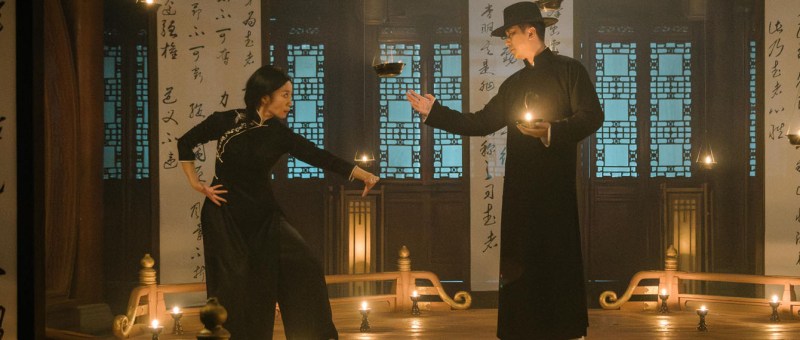
This is really the idea at the centre of Takashi Minamoto’s Samurai Vengeance (木挽町のあだ討ち, Kobikicho no Adauchi) in which a playwright conspires to take the blood out of revenge and finds largely that the conditions are met for the samurai world to continue on without incident. The fact that the act of vengeance is essentially theatre is clear from the opening sequence in which fallen samurai theatre director Kinji (Ken Watanabe) orders the spotlight-like lanterns to be turned on the scene of a young man who has raised his sword against an older one he holds responsible for the death of his father. The action takes place adjacent to a theatre where a performance of the 47 Ronin, one of the most famous tales of vengeance in Japanese history, has just concluded, and this is, in a way, a continuation of that. Attracted by the commotion, a crowd has started to gather around the two men that becomes both audience and witness to this act of performative justice.

But then the film wrong-foots us slightly, and we realise the central mystery is not to do with the staged performance itself, but the true identity of the man who has come around asking questions about it. Kase (Tasuku Emoto) too is playing a role, in this appearing as a bumbling, Kindaichi-like presence claiming to be a friend of the dead man, Sakubei (Kazuki Kitamura), who to some extent did not really exist having been giving an entirely new persona to suit the narrative of the staged revenge plot. Though Kase claims to have been kicked out of his clan and become a ronin himself, which explains why he has no money and is always hungry, he is later revealed to be a clan investigator who has fallen foul of the authorities after attempting to expose the corruption of a senior retainer.

Though the rules of samurai society may be strict, they can be gamed by those ruthless enough to subvert them for their own ends. This seems to be something that Lady Tae, the mother of the revenge-seeking Kikunosuke (Kento Nagao), knew all too well and understanding the performative nature of samurai justice, turned to her old friend Kinji to save her son from falling victim to the cruelty of their class. At only 17, Kikunosuke is a slender and effete young man of delicate features and sensibility. He does not appear to be suited to the harshness of samurai mores and being forced to take the head of a man who not only saved his life but is someone he’s been close to since the day he was born would likely destroy him.

His fragility is signalled in the fact he first appears dressed as a woman in a beautiful red kimono passed down from a retired onnagata to the current holder of his name. As they say, the world of the theatre is like another country and a place where those who do not otherwise fit into Edo society can be accepted. Kikuosuke’s vulnerability and the unfairness of his plight endear him to the members of the theatre company who all feel an instinctive need to protect him. Indeed, Kikuosuke himself says that he is sorry to have to leave the theatre behind and will never forget the six months that he has spent there. It may be that he is much more suited to living in this environment which is the antithesis of samurai rigidity. In the end, the symbolic need for “vengeance” is satisfied without actual bloodshed. Though those in power know this to be so, they accept it and decline to ask further questions, but still the samurai world continues as it is and others will not be so lucky as to avoid paying with their lives for offending its exceedingly arbitrary values.


Samurai Vengeance screens as part of this year’s Toronto Japanese Film Festival.

Trailer (no subtitles)