Travesty (Гажуудал, Baatar Batsukh, 2024)

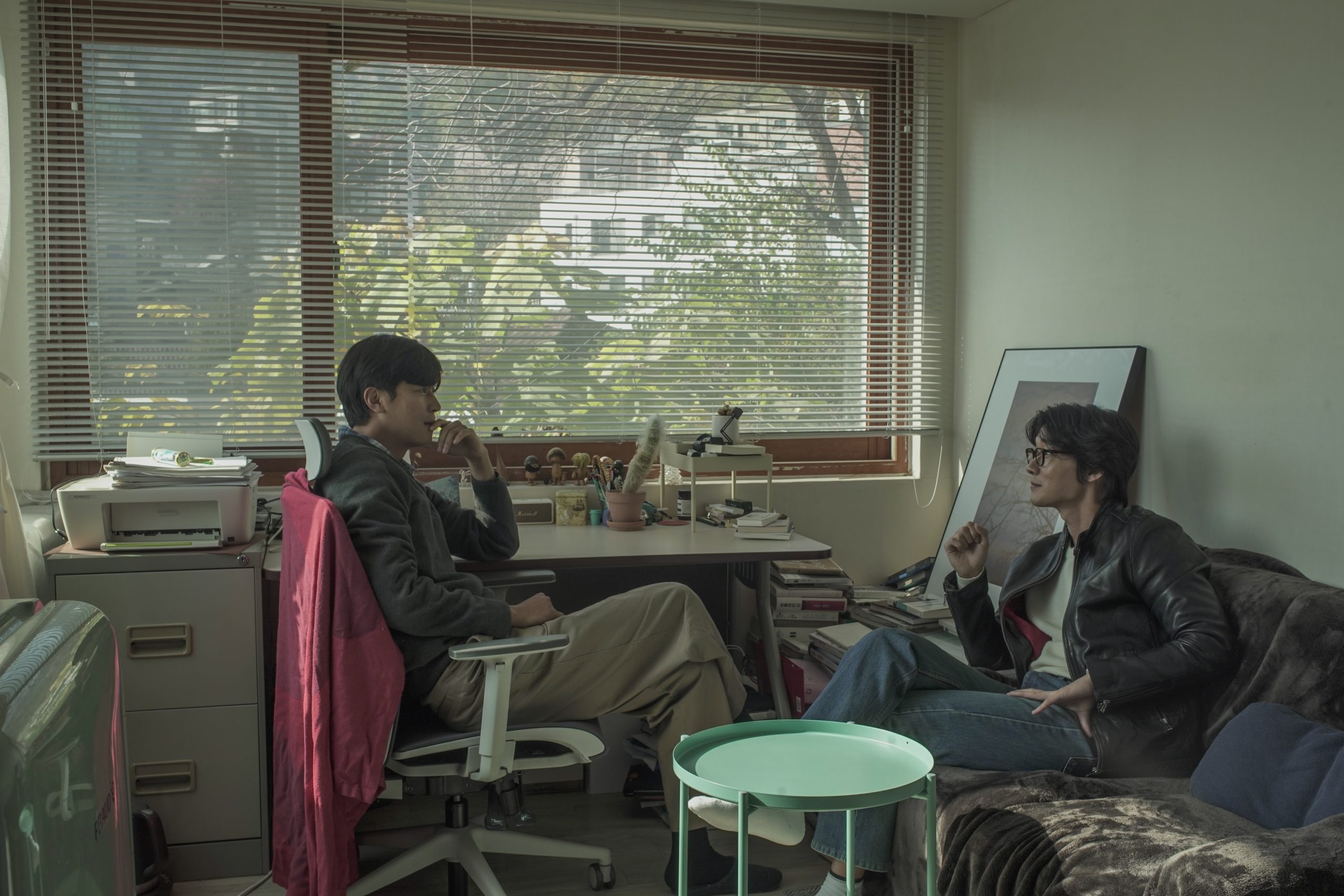
“One man’s screams will not fix this social travesty,” according to an exasperated police officer sent in to quell a hostage crisis in a quiet rural town in Baatar Batsukh’s Mongolian crime drama. Led by chapter headings reading The Town, The City, the Nation, The State, the film pushes deeper towards the centre of corruption in an indifferent society in which the lives of citizens are barely valued and the authorities will do little to protect them. Indeed, the hostage taker’s claims that he will kill one person an hour seems to stand in for the slowly ticking time bomb of governmental indifference.

Or at least, that’s how it seems to Davaa whose teenage son keeps ringing him but he can’t help because he’s so far away on a case. His absent paternity seems to echo the ways in which the old have abandoned the young. The hostage taker turns out to be a young man who feels left out and hopeless. Rendered mute during his military service, he tried to sue the government but couldn’t while his mother, who worked for the government her whole life, ruined her health doing so and then was unfairly denied a loan to pay for medical treatment. The boy’s father appears to have been in the military, but is otherwise not around leaving him alone after his mother’s death having lost pretty much everything, which is why he takes revenge by holing up in the hospital with 20 hostages and asking 1 billion Mongolian tugrik a person. He’s clearly putting a price on a human life, but then so is the government when it declares I won’t pay.

The fact that it’s the hospital he takes over obviously has knock on consequences preventing local people from accessing health care, but the government does that too. As the doctor points out, rural hospitals are understaffed and under resourced. They can only offer basic services and send more seriously ill patients to the cities, but there aren’t enough beds there either so those like the hostage taker’s mother are sent back anyway. Meanwhile, a local crook’s ageing wife goes into labour with her fourth child which will earn them a medal from the government. The pregnancy is high risk and the doctor is worried about her because all of her previous births have involved complications which endangered the life of mother and child. But the woman insists she doesn’t care about the risks and is willing to die to get the medal from the government even though it appears they won’t care very much about her child after it’s born and fulfils their aim of expanding the population. 

Her husband is well known to the local police who’ve rounded up two other petty crooks who are listening intently to the unfolding crisis from their place in the cells. These middle-aged men, one of whom is a former nurse, don’t seem to have much to do except get into trouble. The police are doing their best, but like the hospital, they’re also under staffed and under resourced. A hostage crisis in their tiny town is an absurd development they have no idea how to deal with which is why Darvaa is dispatched to deal with it. The town can’t hope to raise the money the hostage taker is asking for, while the government could but it won’t pay despite Davaa’s please that they just give the hostage taker what he wants so he’ll stop executing people. When the authorities eventually turn up, it turns out they’ve lied. They didn’t bring the money and are planning to storm the building to end the crisis quickly without giving much thought to the hostages’ lives. Taken hostage himself, their representative grovels and pleads but refuses to offer the apology Davaa suggests as a last resort to appease the hostage taker with whom he has come to sympathise. 

A late twist makes the situation all the more tragic with the boy another victim of governmental indifference which would rather kill first and then refuse to answer any questions later. They try to fob Davaa off with a promotion in return for his silence, but he refuses while implying that he doesn’t really want to talk about this whole sorry affair either and would rather to get on with his job and looking after his family. In any case, the government representative seems more concerned that Davaa will embarrass him by exposing how he grovelled and begged for his life rather the fact they acted with callous disregard for the lives of the hostages and failed to take into account the fragile mental state of the hostage taker. The travesty is then not the hostage crisis but the state of the nation in which the citizens are themselves taken hostage by an indifferent and oppressive authority which extracts its ransom but offers little in return.


Travesty screened as part of this year’s New York Asian Film Festival.

Trailer (no subtitles)

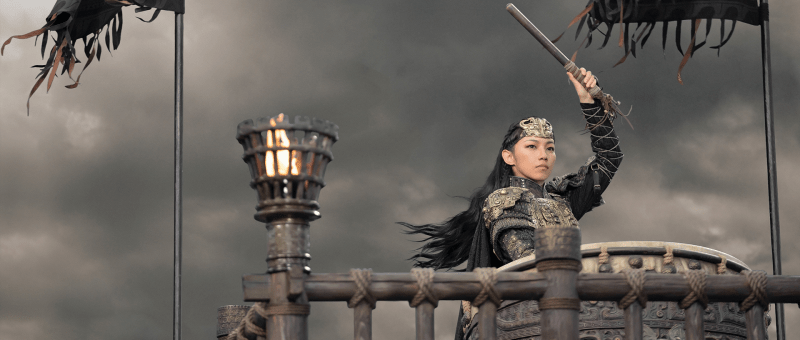
Invincible Swordsman (笑傲江湖, Luo Yiwei, 2025)

Adapted from Jin Yong’s wuxia classic The Smiling Proud Warrior, Invincible Swordsman (笑傲江湖,
xiào ào jiānghú) has a hard battle to fight in covering the same ground as 1992’s Swordsman II which featured an iconic performance from Brigitte Lin as the androgynous Invincible Asia. Produced by streaming network IQYI and Tencent, the film has a more epic feel than the studio’s similarly pitched wuxia and was also released in cinemas but is undoubtedly a much more conventional affair let down by an over-reliance on CGI.

To recap, Ren Woxing (Terence Yin Chi-Wai) led the demonic Sun and Moon Sect in despotic fashion slaughtering many of his own followers. Consequently, they flocked behind Invincible East (Zhang Yuqi ) to free them who eventually defeated Woxing and has imprisoned him in the basement of their lair. Meanwhile, drunken but earnest swordsman of the Mount Hua sect Linghu Chong (Tim Huang) has befriended Woxing’s daughter Ren Yinging (Xuan Lu) through their shared love of music and is kicked out of the clan for treason. Nevertheless, he’s taken on as a disciple by the charismatic Feng Qingyang (Sammo Hung Kam-Bo) who continues teaching him martial arts before he’s called back to the world of Jianghu by Yingying who warns him his friends are in danger after teaming up to defeat Invincible East who has now become even more despotic than Woxing in drinking the blood of their victims to stay young.

Even so, breaking Woxing out of containment so he can take out Invincible East seems like a bold plan given there’s no guarantee he’ll actually do that and even less he won’t just go back to his old ways afterwards. Linghu Chong only participates out of loyalty to his men and as a favour to Yingying and is therefore constantly insisting that none of this is anything to do with him because he’s leaving the martial arts world. It’s a fault with the source material, but it’s quite frustrating that all these women are hopelessly in love with the actually quite bland Linghu Chong who has a nasty habit of turning up every time a woman is about to fight someone and heroically standing in front of her. Ironically, that’s how he meets “Invincible East” without realising, or at least the nameless final substitute of Invincible East who has become the public face of the legendary warrior. 

Christened “Little Fish,” by a besotted Linghu Chong who believes her to be a damsel in distress, she is the only female substitute of Invincible East who has undergone self-castration in order to achieve a higher level of martial arts and in the film’s conception thereby feminised. Unlike the ’92 version, however, Little Fish is concretely female and bar a brief flirtation with some of her maids more preoccupied with her lack of individual identity in having no name of her own. Consequently, her love of Linghu Chong becomes an opposing identity though she feels herself forced to take on the persona of Invincible East. Linghu Chong too is fascinated by her mystery which causes him to act in a caddish way towards Yingying who is otherwise positioned as his rightful love interest even if their romance is frustrated by the relationships of their respective clans.

What they’re really fighting is Invinsible East’s corruption of Jianghu which it wants to rule in its entirety. The corruption has already worked its way into the Mount Hua sect as ambitious couturiers vie for power and throw their lot in with the Sun and Moon sect in the hope of advancement. Luo does his best to conjure a sense of the majestic in the elaborate action set pieces, but the over-reliance on wire work and CGI particularly for the swords leaves them feeling inconsequential while there’s barely any actual martial arts content as the fights revolve around the martial arts stances rather than combat. Frequent homages to the ’92 film including the use of its iconic song also serve to highlight the disparity in scope and vision though even if Zhang Yuqi appears to be channelling Brigitte Lin there is genuine poignancy in her tragic love for Linghu Chong which is also the longing for freedom and another identity that is forever denied her. With his belief in Jianghu well and truly destroyed, Linghu Chong finds himself a lonely wanderer and refugee from a martial arts world largely devoid of hope or honour and adrift with seemingly no destination in sight.


Invincible Swordsman is released on Digital 19th August courtesy of Well Go USA.

Trailer (English subtitles)

New Life (我会好好的, Dong Hongjie, 2025)

A lost young woman begins to find new purpose in life after taking in a stray dog in Dong Hongjie’s tearjerking drama, A New Life (我会好好的, wǒ, huì hǎohǎo de). A tribute to the healing power of a dog’s unconditional love, the film is partly about the grieving process and learning to let go, but also about what it’s like to feel abandoned and hopeless. Having something to look after gives Xiaoman (Zhang Zifeng) a reason to look after herself as well as her heartbroken father who’s turned to drunken rages in the wake of his wife’s death and subsequent loss of his business.

Ironically, Zhao Bujin’s (Wang Jingchun) old wood carving shop has been taken over by a vet, though Bujin can’t seem to let it go and is intent on causing trouble there. Having lost her mother due to an illness, Xiaoman is intent on not taking up her place at university and instead is earning money as a removals driver often helping to clear houses after the death of the owner. It’s during one particular job that she’s confronted by an angry dog who refuses to leave a cardboard box where, a neighbour explains, it stayed with its mother until she died. Ever since then, he’s been unable to get out, much like Xiaoman who also remains trapped within the box of her grief.

Identifying with the dog, she begins to worry about him during a rainstorm and decides to rescue him as a means of rescuing herself. But at the same time, she doesn’t really want to keep him and continues referring to the dog as “doggie” rather than naming him while he imprints on her as a new maternal figure. There’s a half an idea in the back of her mind that there might be money in it if she cleans the dog up a bit and sells him on with the help of the vet, Chuan (Zhang Zixian), who promises to help her find a good home for it. The first couple he suggests appear to be extremely wealthy and keen to adopt, but the film seems to be critiquing the idea that a life of material comfort is better than one spent struggling with family. The wealthy couple clearly have ideas about their ideal dog and how it would fit into their Instagram-worthy life including a name that skews feminine while Xiaoman’s dog is a boy. Predictably, the couple eventually send it back when it fails to bond with them and insists on returning to Xiaoman. 

Then again, Xiaoman and her father don’t necessarily seem to be struggling all that much. Though they don’t have much money, they’ve managed to keep their sizeable home and furniture even they’re economising on food and worrying about how to make ends meet with Bujin unable to find work. Xiaoman attributes this to his drinking, though it seems he actually sustained an injury he never got treatment for which has damaged his ability to carve. In any case, his industry has also changed. Though Xiaoman is led to believe he’s found a well-paying job at a factory producing wooden statues, she later learns that he’s being paid a pittance to do an apprentice’s job doing things like prepping wood. His friend explains that only elite master carvers make money these days because all the lower grade stuff is all mass-produced by machine so there aren’t any jobs for mid-grade craftsmen like Bujin. Bujin keeps on about finding an amazing log he’ll use for his masterpiece, but like so much in his life it seems like an impossible pipe dream.

Meanwhile, Xiaoman tries to keep it together with her only goal being to buy a proper grave for her mother overlooking ocean. Nevertheless, bonding with the dog, whom she later names Xiaoyi as if it were really her brother gives, her new reasons to look after herself and think about her future. Identifying with it closely, she also comes to realise how little people value the lives of cats and dogs and by extension other people too. That’s one reason why she begins holding proper funerals for pets to give them a little dignity in death when some owners just tell the vets to get rid of their remains and don’t even bother to collect the ashes. Adopting a quasi-maternal position in caring for Xiaoyi also helps her process her own mother’s death and begin letting her go so that both she and her father can start to move on. Truly tugging at the heartstrings, Dong’s film is a tribute to the unconditional love of a dog and the healing effects it can have on a life if only someone is willing to offer it the same in return.


Trailer (no subtitles)

Unexpected Courage (我們意外的勇氣, Shawn Yu, 2025)

Faced with a surprise pregnancy at 45, a workaholic music executive finds herself re-evaluating her life choices in Shawn Yu’s autobiographically inspired maternity drama, Unexpected Courage (我們意外的勇氣, wǒmen yìwài de yǒngqì). A kind of pun, the unexpected baby is later given the name “courage”, the film’s title hints at the resolve needed by the couple to face their new situation from the prospect of parenthood to the cracks already undermining the foundations of their relationship.

Those would partly be economic, but also their contradictory desires for professional fulfilment. The fact is that even before the baby they are already exhausted. Advertising filmmaker Po-en (Simon Hsueh) has been out all night on a shoot and walks in zombie-like just as Le-fu (René Liu), an executive at a record label, is walking out the door to travel to Shanghai with one of her stars so he can participate in a reality TV programme. They already live somewhat parallel lives and are barely connected to the extent that it seems their relationship may have run its course.

They aren’t really alone in that as Po-en discovers on running into another man at the hospital who is undergoing IVF treatment with his wife. The process is hampered by the fact that he works in Mainland China and only returns every three months which obviously makes trying for a baby logistically difficult. His wife accuses him of not really wanting children, while he later seems less than impressed on being told they’re having twins presumably because of the increased expense while his wife coldly tells him not to ask her to reduce the number because she won’t. A later phone call conversation reveals that the couple can’t afford a three-bedroom home in their preferred neighbourhood, while the husband would prefer they all move to Shenzhen which has a lower cost of living but this would necessarily mean the wife uprooting herself, losing her home and community while there would be no one left to look after her parents as they age. 

Le-fu is also considering taking a big promotion to head up the office in Beijing which is what she’s been aiming for throughout her career. It’s not clear if she intended to take Po-en with her, but in any case the discovery of the pregnancy, brought on by the scandal of one of her biggest stars being involved in a sex tape scandal, forces her to reassess her possibilities. Originally, she resolves to sign the contract and is resentful of the entire situation for throwing a spanner in the works, but is also touched by Po-en’s devotion and reluctant to give up what might be her only chance to become a mother even if it comes at the cost of her career. 

For his part, Po-en wants to keep the baby and is excited, if also anxious, about becomgina father. Having undergone a previous operation to remove part of her womb, Le-fu was led to believe she couldn’t have children and this too seems to have presented a fault-line in their relationship that prevented them from fully committing to each other. At 32, Po-en is 12 years younger, and Le-fu assumes he will eventually leave her for a younger woman while he at times seems resentful that she keeps him at arms’ length. 

The windowless hospital room in which Le-fu is confined then becomes a kind of womb from which she herself is reborn as a mother. Po-en’s tying a red ribbon to each of their wrists is both a romantic gesture that echoes the red string of fate connecting fated lovers, but also a kind of umbilical cord that finally helps them cement their relationship. Nevertheless, they also live in a patriarchal and conservative society that forces the question on them more directly as friends and family suddenly start asking if they’re getting married while others seem to disapprove of the fact that they’ve conceived a baby outside of wedlock. Likewise, the implication is that Le-fu must choose between motherhood and her career and the motherhood is the “proper” choice, negating the choice and agency she is otherwise given in the option to terminate the pregnancy. Po-en, meanwhile, wrestles with himself unsure he is up to the responsibility of fatherhood given that he did not have a father himself and therefore has no role model to follow. A grumpy sugar juice seller explains that his child will teach him, which is what children are put here to do as Le-fu has already realised. Expressing an anxiety surrounding the declining birthrate, the film does not shy away from its causes and the knock-on effects of life in a fast-paced, capitalist society but does in the end find a kind of serenity in the courage of both parents and child to embrace this new life with hope and excitement.


Unexpected Courage screened as part of this year’s New York Asian Film Festival.

Trailer (English subtitles)
ChaO (Yasuhiro Aoki, 2025) [Fantasia 2025]

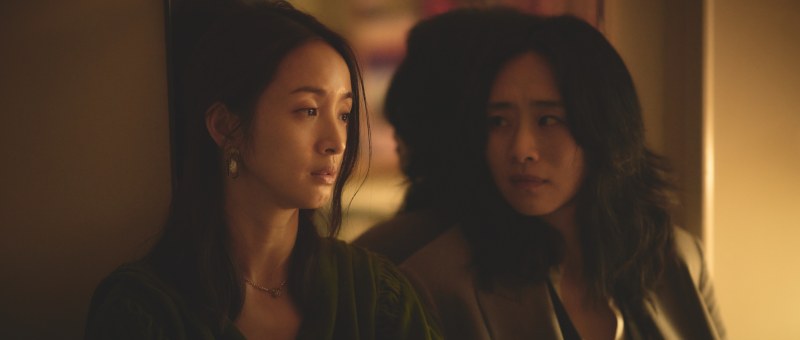
Given the chance to achieve his dreams, a young man can hardly say no when he’s pressured into marrying the daughter of the king of the Mermen, but soon finds himself increasingly conflicted in Yasuhiro Aoki’s gorgeously animated fable, ChaO. Set in Shanghai, the film’s timely themes embrace an environmental imperative along with critiquing the capitalistic drive that is slowly devouring our world in its all-encompassing lust for profit.

But as Stephan’s father was keen to tell him, we live in harmony with nature and not everything is ours to take. You should leave it at the bare necessities and never take more than you need, which is ironically Chao’s approach to life while living with Stephan. She soon sells off her vast royal treasures and declares herself happy enough just with Stephan himself and life of simple pleasures. But Stephan does seem to want more, or more to the point, he can’t see anything past the achievement of his dreams in keeping a promise to his father to invent a new air jet boat that would be safer and kinder to wildlife.

His evil boss Mr Sea, however, points out that no one’s going to want to pay more just to be kind to sea creatures so seeing as his air jets won’t save them any money, the project’s a non-starter. He only gets a shot at it because of ChaO and the light she casts on the company who are now very keen to look good, especially as they’re currently negotiating with Merman king Neptunus about compensation for the sea creatures injured by propellers on their boats. It’s clear that this bothers Stephan, especially as he overhears a pair of co-workers making fun of him in the bathroom. They think he’s an idiot too and that he’s only being indulged because he’s ChaO’s husband and agreed to humiliate himself by marrying a fish.

Stephan too refers to Chao at times as a “fish”, hinting at xenophobic notions within the contemporary society. He sees her as “ugly” and alien, but is also captivated by her human form which is to say, he can only appreciate her when she assimilates fully and becomes properly human. For Chao’s part, she does her best to be what she sees as the ideal wife to Stephan by human standards but struggles to adjust to life on land. Stephan clearly expects her to fulfil a feminine role by cooking and cleaning for him, but only belatedly notices that she’s injured her fins in an attempt to cook food he might find more palatable.

His obsession with his quest prevents Stephan from ever really seeing Chao for who she is or noticing how difficult it’s been for her to adjust to life in a new culture while he’s given her very little in the way of support. But it’s precisely through her that Stephan begins to unlock the buried secrets of his childhood and reacquaint himself with the boy he once was. What he really wanted was to be a bridge between humanity and sea creatures, which is something he can do in a different way if he weren’t so hung up on air jets which themselves also have their own dangers. 

Nevertheless, it’s telling that Stephan eventually chose to make his life on the sea, simultaneously accepting a liminal place and implying it is not yet possible to live on land. He’s approached in the framing sequence by a hapless journalist, Juno, who was fascinated by their story as a child and keen to know whether the improbable fairytale is actually true in part because he’s facing a similar dilemma and can’t work up the courage to tell the person he loves how he really feels. What he learns is that he should tell them as soon he can while he still can so he’ll have no regrets for the future. Aoki’s backgrounds teem with detail, each packed out with whimsey that alternately paints Shanghai as kind of charming pirate village and captures a sense of the real city in rainy water colours hinting at its lonely streets. The message is clear that coexistence is never guaranteed and requires more of a respect for nature and the natural world along with the thoughts and feelings of others if we are truly to live in peace and happiness.


ChaO screened as part of this year’s Fantasia International Film Festival.

Trailer (no subtitles)

Jinsei (無名の人生, Ryuya Suzuki, 2025)

A man goes by many names before he dies. The hero of Ryuya Suzuki’s almost entirely self-produced anime Jinsei (無名の人生, Mumei no Jinsei) never tells us his name. He doesn’t say anything much at all, but passively allows himself to be called whatever others call him while struggling to come to terms with the death of his mother and continually looking for new forms of family along with a place he can really call their own.

Indeed, in the wordless opening sequence, Se-chan’s father and mother meet, get married, have a child, and split up, but are killed together in a freak accident in which the young Se-chan watches helplessly as a pickup truck being driven by an elderly man mows them down. After that, he ceases to speak and looks on at the world vacantly. He becomes a kind of mirror for the world around him, an empty vessel onto which others may project their own fears and anxieties. Thus at school they call him “grim reaper” because he doesn’t speak or move. When another boy in the neighbourhood tries to reach out to him, he punches him in the face. Nevertheless the two eventually become friends, bonding in their shared status as bullied outsiders rejected by mainstream society. 

Kin, who in some kind of nominative determinism has dyed blond hair, is marginalised because of his interest in male pop idols and dreams of becoming one. A man named Shiratori comes from the city with a prophecy for Se-chan in the form of a VHS tape featuring his father dancing as part of a chart-topping boy band. Se-chan too has the desire to sing and dance, but the entertainment industry feeds on broken dreams. His father, Eito, had been the son of an aristocratic family who rejected him for following his dreams of becoming a singer. His father pulls a gun on him when he returns in disgrace having been caught using drugs and getting cancelled by the world at large. Eito too apparently could not cope with the pressures of showbiz and tired of the cage of stardom. Shiratori is clearly modelled on Johnny Kitagawa whose decades of sexual abuse were an open secret acknowledged only after his eventual death. He tells the boys that they’re in a cage to which he holds the key, but that it’s protection not imprisonment even as they become tools exploited by moneymaking execs intent on selling them body and soul.

Se-chan’s stepfather had told him that life was a swan and he should spread his wings, but cages are hard to avoid as he discovers on working as a Kabukicho club host once again exploited as a hook dangled to get money from women only to fall victim to another heartless man and the woman who couldn’t tame him. Se-chan found a kind of family in the boy band that he doesn’t really find anywhere else, certainly not in Kabukicho, until he decides to renounce the world entirely as a caveman recluse living in a disused building which is to say in a kind of past. Suzuki’s increasingly bleak descent into the near future echoes this desire for more genuine connections and familial warmth uncorrupted by the darkness of contemporary capitalism and the young Se-chan’s unresolved trauma. War and apocalypse give rise to shady cults, which are also like families, but exclusionary in calming themselves to be some kind of elite as a dangerous feudalism resurrects itself.

Travelling 100 years from 1995, the film moves from the biting cold of winter in Yamagata to the blazing heat of a post-apocalyptic society but seems to imply that in the end we find ourselves again and make the world anew as a great family of humanity. Suzuki apparently made the film up as he went  along, working without a script and stitching one scene on to the next, but his images move with a quiet power and purpose even they move towards an inevitable ending and the final goodbye. The man who was the lonely boy Se-chan, grim reaper, God, a pop star named “Zen”, someone’s Love, comes to embody the concept of life itself in being all things to all men while life in effect lived him in the depths of all his longing and loneliness only to find a sense of hope in confronting the eternal void.


Jinsei screened as part of this year’s New York Asian Film Festival.

Trailer (English subtitles)

Seppuku: The Sun Goes Down (陽が落ちる, Yuji Kakizaki, 2024)

What’s more absurd, that the shogun orders a man to take his own life in atonement for accidentally damaging his favourite bow or that the samurai actually does it without protest? There is something a little uncomfortable about Yuji Kakizaki’s Seppuku: The Sun Goes Down (陽が落ちる, Yo ga Ochiru) as it, unlike many similarly themed samurai dramas, seems to find only nobility in such a senseless death rather than outrage against a word in which a man must die for a careless and inconsequential mistake.

Indeed, the worst outcome Kyuzo envisages is that he’s going to get the sack from his job as a castle guard and his family will suffer both a reputational loss and financial hardship because of it. His wife, Yoshino, is quite prepared for the latter, stating only that they will soon adjust to living more simply. No one seems to be thinking that this is anything other than a minor incident that will soon blow over, which is why it comes as such a shock to Kyuzo’s best friend Denbei that his friend has been ordered to commit seppuku and that he must be the man to deliver the message the next morning. Kyuzo is currently under house arrest, which means that were Denbei to visit him before that, he too would be committing an offence and could end up suffering the same fate. The best thing he can do, as his wife advises, is to go there and sing a song outside conveying the difficult news through poetry while maintaining plausible deniability. 

Alternate forms of communication become a kind of theme with Yoshino deciding to fulfil the dreams of her loyal maid, Shige, by teaching her to read and write explaining that one may say in a letter that which they otherwise could not. Shige is from a peasant farming family and on her return to them after Yoshino decides to dismiss her so that she won’t be caught up in it when they deliver her husband’s death warrant which could, in fact, order everyone in the house to die, Shige’s family remark that they can’t understand these “cruel” samurai who are expected to surrender their lives over something so trivial. Yet Shige’s father who is currently bedridden with illness instructs her to go back knowing that it may mean her death because her duty is serve the family she was indebted to right until the very end. Shige even gives her father the comb and money Yoshino had given her to open a restaurant to pay for medical treatment but he won’t take it until she’s fulfilled her duty which rather undercuts any criticism of the samurai code.

Similarly, Yoshino struggles with the decision of whether to live on or take her own life alongside her husband. Her options are now few. She must either return to her birth family, if they agree to take her, or become a Buddhist nun, while their 10-year-old son Komanosuke would ordinarily be sent to his father’s relatives or placed into a temple as a monk. Denbei and his wife’s offer to adopt Komanosuke in the absence of an heir to their clan provides a neat solution, but leaves Yoshino’s fate in the balance now separated from both her son and husband. Only at the very end in her empty house does her resolve break as she cries out against the injustice and absurdity of it all.

Kyuzo, meanwhile, is expected to make his peace with his death having been given prior warning by Denbei and allowed to enjoy one last night with his family. He says that what he fears is “nothingness”, but as Yoshino tells him even if he were to reject his fate by running away he would endure a life of fear and misery on the run before he was caught and executed as a coward and a traitor. Yet what the film finds in his stoicism that takes on an uncomfortably elegiac quality that he is basically doing the right thing by submitting himself to the samurai code as cruel and arbitrary as it might seem to be with its overly enthusiastic magistrate who seems to relish the prospect of seeing Kyzuo’s head on a tray. He first gives Denbei the opportunity to leave out of consideration of their friendship knowing that he cannot accept the offer without incriminating himself, and then insists he be Kyuzo’s second as if to double down on the sadistic cruelty of ending a man’s life to demonstrate a capricious shogun’s power. Dramatising the submission of these people who seem to be good and kind yet caught in this absurd web of honour and power with sadness rather than anger leaves a slightly sour taste in the mouth in its implication that obedience to such an absurd social code constitutes nobility rather than foolishness and that the situation is merely a misfortune that must be quietly endured rather than an outrageous injustice that no one should defend.


Seppuku: The Sun Goes Down screened as part of this year’s Toronto Japanese Film Festival.

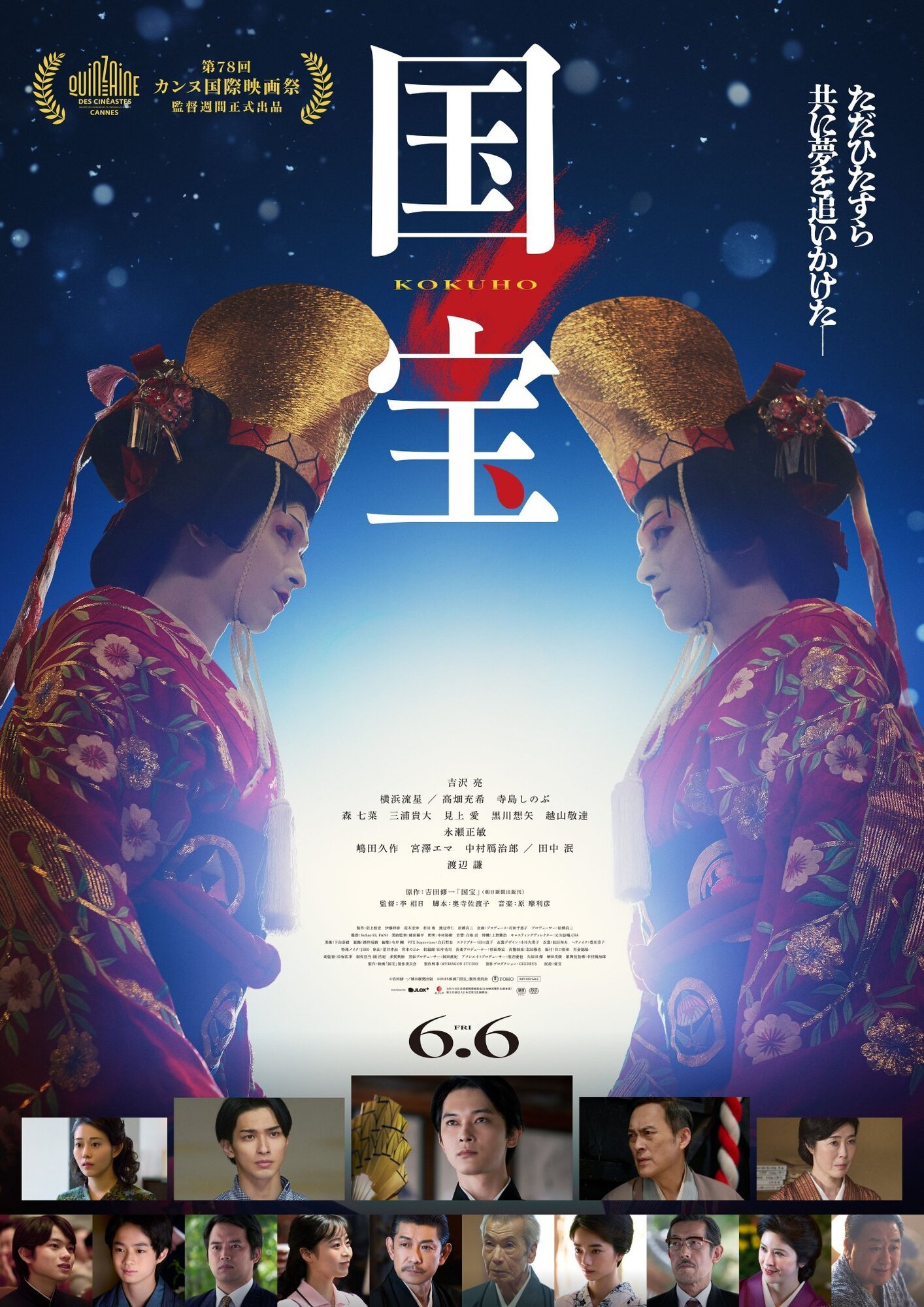
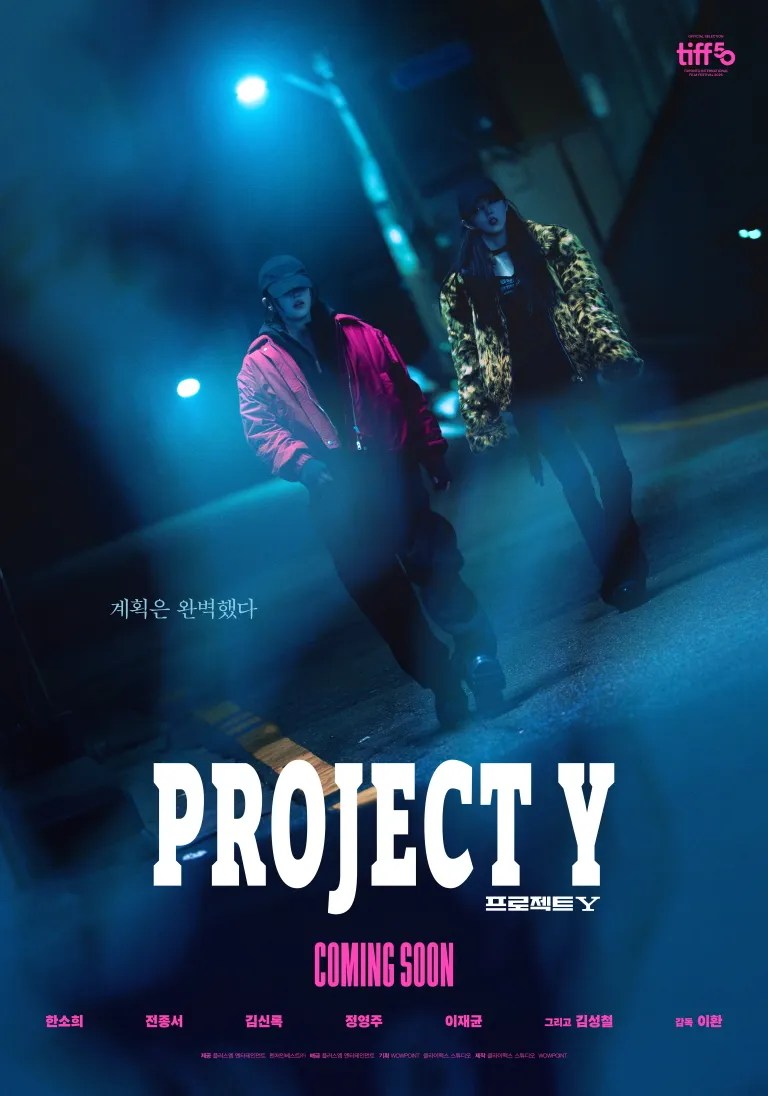
Haunted Mountains: The Yellow Taboo (山忌 黃衣小飛俠, Tsai Chia-Ying, (2025) [Fantasia 2025]

There are some things you aren’t meant to see. Or at least, should you come across them, you should think better of it and be quietly on your way minding your own business. But unfortunately, curiosity got the better of the three hikers at the centre of Tsai Chia-Ying’s timeloop horror, Haunted Mountains: The Yellow Taboo (山忌 黃衣小飛俠, shān jì huáng yì xiǎo fēi xiá) and now one of them’s trapped, forever living the same day over again and forced to watch his fiancée die in increasingly bizarre ways knowing he is unable to save her. 

To that extent, Tsai uses the time loop as a metaphor for grief in which the guilt-ridden Chia-ming (Jasper Liu) is psychologically unable to escape the mountain on which his friend, An-wei (Tsao Yu-ning), died. Five years later, he’s in a relationship with An-wei’s old girlfriend Yu-hsin (Angela Yuen)who was also on the mountain that day, but he can’t help feeling haunted by the spectre of An-wei and convinced that Yu-hsin would never have chosen him if An-wei were still alive. He worries that perhaps he didn’t try hard enough to save him knowing that he’d never have a shot at Yu-hsin with An-wei in the picture. He promised he’d get An-wei of the mountain, but in the end he left him there and in a way he’s still there too. 

This trip to the mountains seems to have been for closure. They’re still looking for An-wei’s body, but Chia-ming has a ring in his pocket and a question he’s too afraid to ask. He’s asked Yu-hsin to marry him before and she said no. He thinks it’s because she’s still hung up on An-wei, but in reality he’s the one who can’t let go and his insecurity is killing his current relationship. Repeatedly watching Yu-hsin die is a manifestation of his anxiety that she’ll never really be his, that he can’t keep or protect her, and that the only reason they’re together is because he betrayed An-wei. Yet the looping is also an expression of the way that his grief roots him in time. He literally can’t move forward and is forced to remember every day that his friend is gone. During his journey he eventually meets an older woman in a smilier position who says that she too finds each day repeating as she struggles to process the loss not only of her son who also went missing on the mountain, but of her husband, who was swallowed by his grief and ended up abandoning her in the same way that Chia-ming is unwittingly abandoning Yu-hsin.

But there are also ancient and arcane forces at work. All of this seems to have happened because An-wei broke a taboo and opened the door to the vengeful spirits of those who were killed by nature and claimed by the mountain. The mountain then becomes a place of death into which people disappear and leave those who love them lonely on the other side. The woman’s husband also felt that souls had become trapped here and wanted to free them while searching for his missing son, but as Chia-ming later discovers, though it may be possible to change the reality, it will come at a great cost and at least one sort of loss will have be to accepted before the mountain will release its grip.

Chia-ming makes his decision, but the outcome does rather have the effect of making his present life seem like a dream or thought experiment in which he imagined a future for himself in which his friend was no longer a romantic obstacle and then felt bad about it. He doesn’t really give Yu-hsin much of a say and makes (almost) all her decisions for her, never really knowing if one day she might have tired of An-wei and chosen him instead or if he could have resigned himself to loving her from afar. In the end, the only way he can free himself from this loop is to face the past with emotional honesty and reckon with his feelings along with his guilt and jealousy. The question is how much he really wants to leave the mountain or whether his obsession will eventually trap him there as just another “missing person” swallowed by grief and led astray by despair. 


Haunted Mountains: The Yellow Taboo screened as part of this year’s Fantasia International Film Festival.

Trailer (Traditional Chinese / English subtitles )

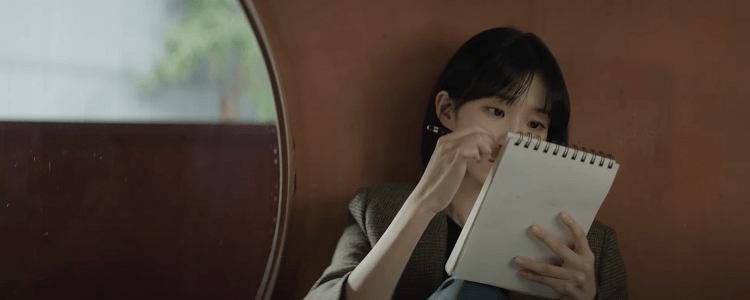
Sham (でっちあげ ~殺人教師と呼ばれた男, Takashi Miike, 2025) [Fantasia 2025]

After a couple of hundred years of corporatising culture, sham apologies have become an unfortunate phenomenon all over the world. Corporations in particular will often offer a fairly meaningless apology that acknowledges a minimal level of responsibility but does not bind them to recompense those they’ve wronged nor put right anything that their conduct has made wrong. The problem is that an apology has become a kind of sticking plaster that allows us all to move on but doesn’t really solve anything and may even prevent us from doing so because it turns us all into accidental liars who are primed to say “sorry” to make the situation go away even it wasn’t actually our fault.

That’s essentially what happens to Seiichi (Go Ayano), previously an unremarkable primary school teacher with a teenage son of his own and an apparently happy home. Inspired by a real life case, Takashi Miike’s courtroom drama Sham (でっちあげ ~殺人教師と呼ばれた男, Detchiage: Satsujin Kyoshi to Yobareta Otoko) flirts with ambiguities but in keeping with its themes eventually descends into a defence of the well-meaning man as its hero becomes so embroiled in the injustice being done to him that he doesn’t see that he is not entirely blameless. Though we’re first introduced to him as the “homicidal teacher” the papers describe him as, the film’s title leaves us in no doubt that his account is the truer. But it remains a fact that during his conversation with Ritsuko (Ko Shibasaki), the mother of the boy Seiichi is accused of racially bullying, he did remark that Takuto’s American grandfather may explain his unique characteristics which is perhaps within the realms of thoughtless things well-meaning people say in awkward conversations but hints at a level of latent societal prejudice. In any case, that the fact his conversation with Ritsuko ended up drifting towards subjects like bloodlines and the Pacific War is not ideal, while Seiichi should probably have been more mindful of his politically neutral position as an educator. 

Likewise, he doesn’t dispute that he tapped Takuto lightly on the cheek to “educate” him that it hurt when he slapped another boy, Junya, who, according to Seiichi, he was bullying. He probably shouldn’t have done this either, even if some may see it merely as common sense in teaching the children that violence is wrong, as ironic as that may be. In any case, the film is on Seiichi’s side and insistent that he did not treat Takuto any differently on account of his non-Japanese ancestor nor spout off any of the racist nonsense that Ritsuko attributes to him. But the major problem is that Seiichi is mild-mannered and also a product of this society. He tries to protest his innocence, but is pressured by his headmaster to apologise anyway which is, of course, a form of lying, something they discourage the children from doing. In the end he goes along with it, because it’s easier to just say “sorry” and hope it goes away rather than address the real issues. 

It’s this sham society that the film seems to be critiquing, even if its message gets lost among its intertwining plot threads as Seiichi effectively finds himself bullied by an empowered tabloid media formenting mob justice against what it brands a far-right fascist teacher as a means of selling papers through generating outrage. While he is scrutinised and scorned, no one bothers to look into Ritsuko’s story which is already full of holes such as why, if she’s so protective as a mother, she waited for her son to be a victim of “corporal punishment” 18 times before complaining to the school. Little motivation is given for Ritusko’s actions, though Miike films her and her husband with an an almost vampiric sense of unease as they appear eerily in black on their way to the school. Unhinged herself, the answers may lie in Ritsuko’s own childhood and her yearning for a protective mother figure, not to mention the sophistication of being a child returning from abroad with good education and prospects for the future.

Seiichi refocuses his closing statement on Takuto, insisting that he doesn’t blame him for “lying”, but it’s perhaps also try that he is a kind of victim too whose own actions can only be explained by a closer look at his relationship with his mother and familial environment. But it turns out that it really is easier to just say “sorry” and move on. Even the psychiatrists seem more interested in treating Ritsuko like a customer whose wishes must be obeyed than earnestly trying to help Takuto even if his issues don’t seem to be as serious as his mother might have it. But according to Seiichi, telling a child off is the purest expression of love. If everyone carries on with sham apologies, nothing really changes and kids like Takuto get forgotten about as everyone falls over themselves to make the situation go away. No one really cares about the truth, and so it becomes an inconvenience to social cohesion in which those who insist on speaking it are hounded down until they agree with the majority and meekly say “sorry” while those in the wrong nod their heads and continue with their lives free of blame or consequence.


 Sham screened as part of this year’s Fantasia International Film Festival.

Trailer (English subtitles)
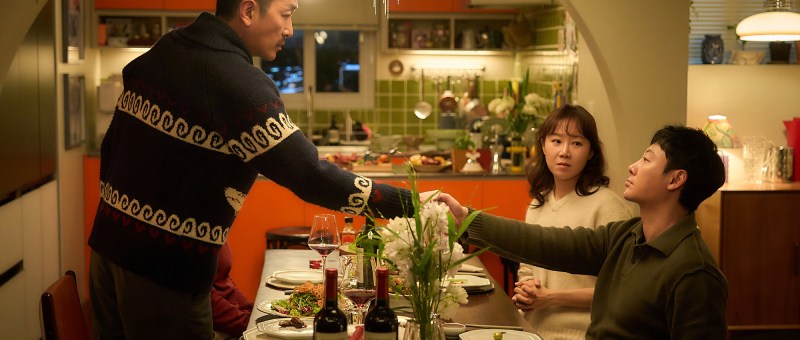
Trespassers (侵入者たちの晩餐, Itaru Mizuno, 2024)

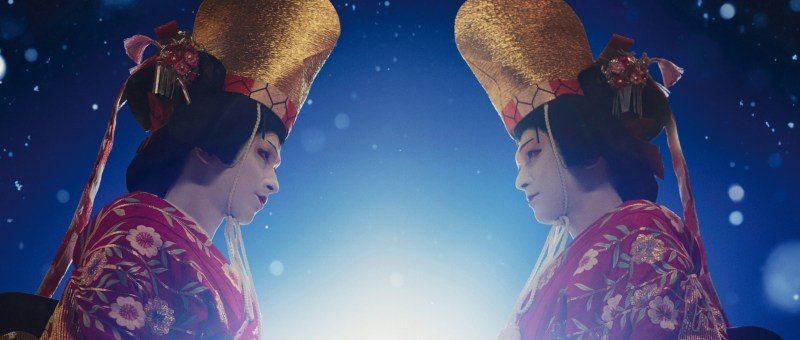
Trespassing. Somehow, it doesn’t sound that serious, does it? You’re always hearing about people being accused of trespassing simply for walking along a footway that someone believes to be on their land. It just means you were somewhere you had no right to be. Not doing anything, just being there. That’s exactly how it is for the heroines of Trespassers (侵入者たちの晩餐, Shinnyuushatachi no Bansan) who basically enter a home without permission, nosy around, then feel guilty and decide to clean the place to make up for it but accidentally find a burglar hiding in a corner! Could happen to anyone, really. 

Of course, there’s a little bit more to it than that. Middle-aged divorcees Akiko (Rinko Kikuchi) and Megumi (Kami Hiraiwa) work for the same exploitative housekeeping company which pays them a pittance while the boss, Natsumi (Mai Shiraishi), a former pin-up model turned influencer and entrepreneur, lives the high life. Though she claims to be an ally to working mothers, she also refuses to hire them because they have additional responsibilities that make it difficult for them to stick to her schedule, apparently. Megumi has heard a rumour that Natsumi is really into tax evasion and is hiding a large amount of undeclared money in her luxury flat, which is a rental in the company’s name that she also writes off. Of course, if someone were to steal that money, Natsumi could hardly go to the cops because then she’d have to admit she’d been cheating on her taxes. Why she wouldn’t just put it in a secret offshore account like everyone else is anyone’s guess, but everyone has their peculiarities and perhaps she just likes to have it handy. 

On entering with a cloned key and joined by Megumi’s yoga friend Kanae (Yo Yoshida) who “knows a lot about criminality”, the trio fail to discover the money or any evidence of tax evasion. Rather, Natsumi seems to have several certificates thanking her for donating large amounts of money to various charities which leaves the ladies feeling guilty for doubting her. Akiko had been the most morally conflicted about taking the money and was only persuaded on the condition that they would be giving the majority of it to worthy causes, so they were “helping people” like Robin Hoods rather than just helping themselves like greedy thieves. Megumi meanwhile had been less so and swayed by the rationale that Natsumi was exploiting them twice over by paying them such low wages and then depleting the public purse by thieving the money that should have been paid in taxes. Kanae, just seems to be along for the ride while hoping to open a yoga school with the money, but in a giant and unfortunate coincidence discovers another reason that Natsumi must pay.

Even the burglar, Shigematsu (Sosuke Ikematsu), a failed businessman with massive debts working as a food delivery guy to pay them off, has a sob story, but as the ladies point out it doesn’t really match the righteousness of their tax evasion whistleblowing mission. There is something quite wholesome about how bad they all are at “crime”, and how good Natsumi secretly is at it. It doesn’t even occur to the ladies that Natsumi’s willingness to forgive them is possibly because they’re right and she doesn’t want the police poking round because they might find something she doesn’t want them to. Meanwhile, it’s a little sad that each of them lament it’s been a while since they ate at home with other people rather than at restaurants and there’s something quite nice about their collective decision to make it a tradition though at one of their own homes rather than that of a suspected tax evader.

Indeed, as Akiko says, the real prize was the friends they made along the way. In many ways, they made everything better. Natsumi gets her comeuppance, they get improved working conditions, revenge, friendship and female solidarity too. What they found in Natsumi’s apartment was a family, though sadly they did not discover her hidden stash of hoarded gold. Bakarhythm’s typically witty script addresses a series of societal problems in a lighthearted way from the difficulties faced by middle-aged women and divorcees trapped in low-paying jobs, to hypocritical and exploitative CEOs peddling positive messages of success and empowerment but actually ripping off an entire society while laughing all the way to the bank. Maybe the ladies weren’t the ones trespassing after all when Natsumi too was where somewhere she had no right be.