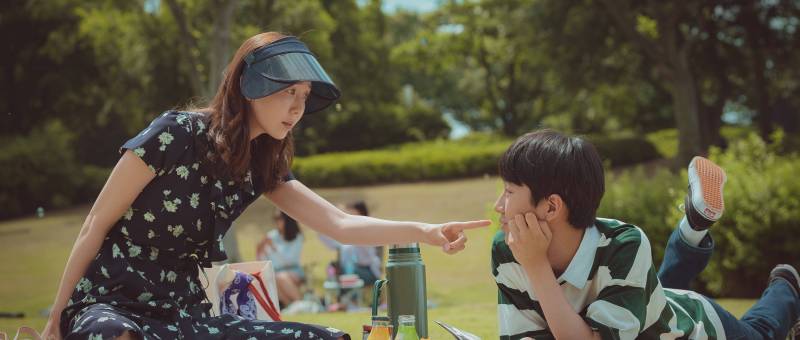
Special Delivery (특송, Park Dae-min, 2022)

“Why is it so hard to live?” a little boy asks after finding himself on the run with a strange woman who seems to be the only person interested in helping him. Situating itself in an upside-down world of backstreet crime, Park Dae-min’s high octane thriller Special Delivery (특송, Teuksong) is in part about how hard it is to live amid constant moral compromise as the heroine finds herself torn between her better judgement and human feelings in trying to rescue her human cargo not only from the bad guys chasing him but from a duplicitous society. 

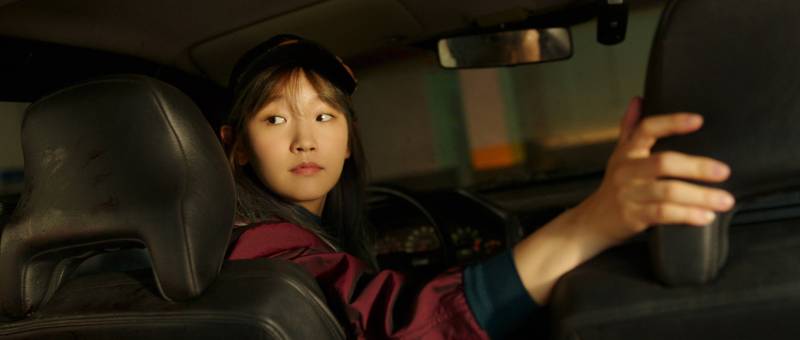
Technically speaking, Eun-ha (Park So-dam) is a delivery driver yet the services her firm provides are highly specialised promising to deliver anything anywhere by whatever means possible. In practice this often seems to mean transporting gangsters on the run from their hideouts to the nearest port before rival gangs can catch up with them as we see Eun-ha do with spectacular skill in the opening sequence. Other than the practice of frequently switching out license plates, what she’s doing in itself isn’t really illegal but is definitely crime adjacent and potentially dangerous. She is however well paid, arguing with her boss/mentor/father figure for a pay rate increase to an unprecedented 50/50 split in proceeds, though she lives a fairly modest life in a cosy apartment with her beloved cat Chubby whom she watches via security cam while waiting around for a fare. When her boss agrees to do a rush job for a Chinese gangster she tells him it’s a bad idea but ends up going along with it only to get drawn into the big news story of the day when a former pro-baseball player turned match fixing underworld figure blows the whistle and runs off with all the gang’s money. Eun-ha was supposed to drive him and his son Seo-won (Jung Hyeon-jun) to a port to leave the country but the bad guys who turn out to be corrupt police officers get there first and Eun-ha ends up with the kid and a bag full of money but no plan B. 

Drawing inspiration from John Cassavetes’ Gloria, the film develops into something of a buddy comedy as Eun-ha finds herself on the run with Seo-won having gone back for him after her boss suggested handing him off to an associate “who deals with children”. As we discover the child reminds her of her younger self being all alone with no other relatives or friends who could take care of him. Even when he reveals he might have a mother after all, it turns out to be a dead end because no one wants to get involved in this dangerously escalating underworld crisis. Yet the found family of the marginalised at the Busan junkyard where Eun-ha is based have more moral integrity than the world around them even if her boss’ solution for what to do about Seo-won isn’t ideal either. “Life is going alone” the corrupt police officer later sneers having repeatedly stated the necessity of staking one’s life to win such a big payout, but what Eun-ha is discovering is that it’s about going together trying to save the boy not only from the dangerously out of control corrupt police officers but from the moral bankruptcy of the contemporary society in which money is the only thing that matters. 

Overcoming both persistent sexism and societal discrimination Eun-ha proves herself a top operator in her field, Park choreographing a series of genuinely impressive car chases and visceral fight scenes as Eun-ha has to think her way through to take out the tougher, stronger bad guys while trying to protect Seo-won from danger on all sides. Her crime-adjacent existence tells her he’s not her responsibility but still she wants to complete her mission and deliver him somewhere safe much as she was rescued as a child by someone who might have felt much the same but chose to take her in anyway. With its neon lighting and retro score, Special Delivery harks back to an age of classic car chase thrillers with a stand-out performance from Parasite’s Park So-dam as a tough as nails getaway driver with nerves of steel fighting for humanity in an increasingly inhumane world. 


Special Delivery screened as part of this year’s Udine Far East Film Festival.

International trailer (English subtitles)
The Sales Girl (Худалдагч охин, Janchivdorj Sengedorj, 2021)

A shy young student of nuclear engineering’s horizons are broadened through her friendship with an eccentric old lady who runs a sex shop where she ends up working after being bamboozled into covering a classmate’s shifts in Janchivdorj Sengedorj’s charming coming-of-age dramedy The Sales Girl (Худалдагч охин, Khudaldagch ohin). Showing another side of contemporary Mongolia, Janchivdorj Sengedorj’s humorous tale turns on the unusual friendship that arises between the two women each in their own way lonely and looking for a kind of liberation from a sometimes hopeless existence. 

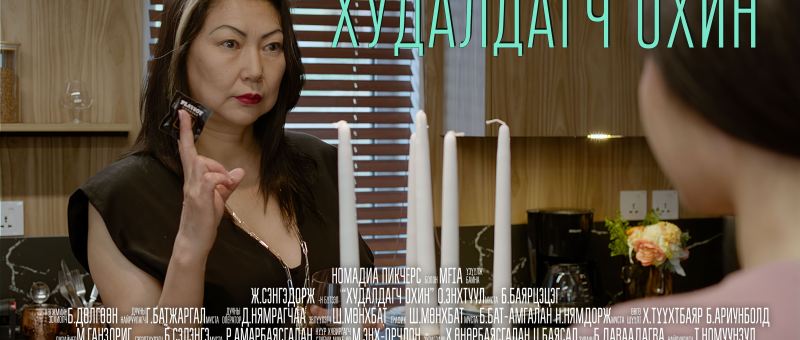
Saruul (Bayartsetseg Bayarjargal) is only studying nuclear engineering because her parents told her to and in truth would rather be an artist spending her evenings in her room crafting textured paintings rather than going out having fun. Her solitary air may be the reason she’s approached by another girl whom she hardly knows, Namuuna, who asks her to cover her shifts at work because she’s broken her leg slipping on a banana peel. Saruul is a little reluctant, unable to understand why Namuuna is being so secretive about the nature of her job anxious that she not tell anyone about where she works largely as we find out because it’s a sex shop run by an eccentric old lady whose cat she’s supposed to feed when she goes to drop off the day’s takings at her swanky new build townhouse. To begin with, Katya (Enkhtuul Oidovjamts) is gruff and unfriendly, somewhat unpleasant and intimidating yet something intrigues her about Saruul and gradually the two women begin to generate an awkward friendship. 

As if immediately picking up on her inner conflict, Katya scoffs “where will that get you?” when Saruul explains she’s studying nuclear engineering perhaps fairly suggesting that in terms of finding steady income there may not be much difference between a career as a painter and someone with a degree in such a specific subject. In any case, Saruul is largely unfazed by the nature of her work at the sex shop, taking it mainly in her stride though telling her parents only that she’s been helping out with “deliveries” of “medications” including “human organs” which fits in nicely with Katya’s life philosophy in which she runs a “pharmacy” that sells things to help unhappy people find fulfilment and the self-confidence to restart their lives. Somewhat sceptical, Saruul tries out her advice on her friend’s dog Bim which she’d always thought seemed a bit bored and lethargic, “not really like a dog at all”, feeding him a tab of viagra and then panicking when he disappears only to discover him out living his best life running with the local strays. 

Meanwhile under Katya’s influence she begins to open up too, getting a more fashionable haircut and dressing in a more individual fashion while embracing her sexuality in deciding to seduce her friend Tovdorj who is equally lost in contemporary Mongolian society where as he puts it you work all your life to get a small apartment and a Prius, planning to change his name to Jong-Su and become an actor only to be told he has “hollow, vapid eyes”. Saruul may be equally directionless but while fascinated by Katya’s sense of mystery, this elegant older woman with a Russian name who claims to have been a famous dancer but also at one point spent time in prison and now seems to be fabulously wealthy, she becomes disillusioned when presented with the dark sides of her work, almost arrested as a sex worker and then harassed by a creepy customer after unwisely agreeing to enter his home while attempting to deliver a package. As she points out, Katya is already quite divorced from “real life” and may struggle to understand the reality of Saruul’s existence living in a small apartment where her parents craft felt shoes to sell at the market after coming to the city when she was around 10 even though her father was once a teacher of Russian. 

Then again as Saruul comes to realise Katya has had a lot of sadness in her life and the wisdom she has to impart is sound if often eccentric meditating on the fact that happiness that comes late is in its own way sad because you no longer have the capacity to enjoy it to its fullest. Even so, she is doing her best to chase happiness and helping others, Saruul included, to do the same. Gradually, Saruul sheds her ubiquitous headphones which allow her to zone out into an internal disco complete with flashing coloured lights to become more herself with a little help from her fairy godmother, the ever elusive Katya. Quirky yet heartfelt, The Sales Girl sheds new light on the concerns of young people in Mongolia but finally allows the reserved heroine to free herself of her preconceived notions to live her life the way she wants a little more aware of the world around her. 


The Sales Girl screened as part of Osaka Asian Film Festival 2022

Original trailer (no subtitles)

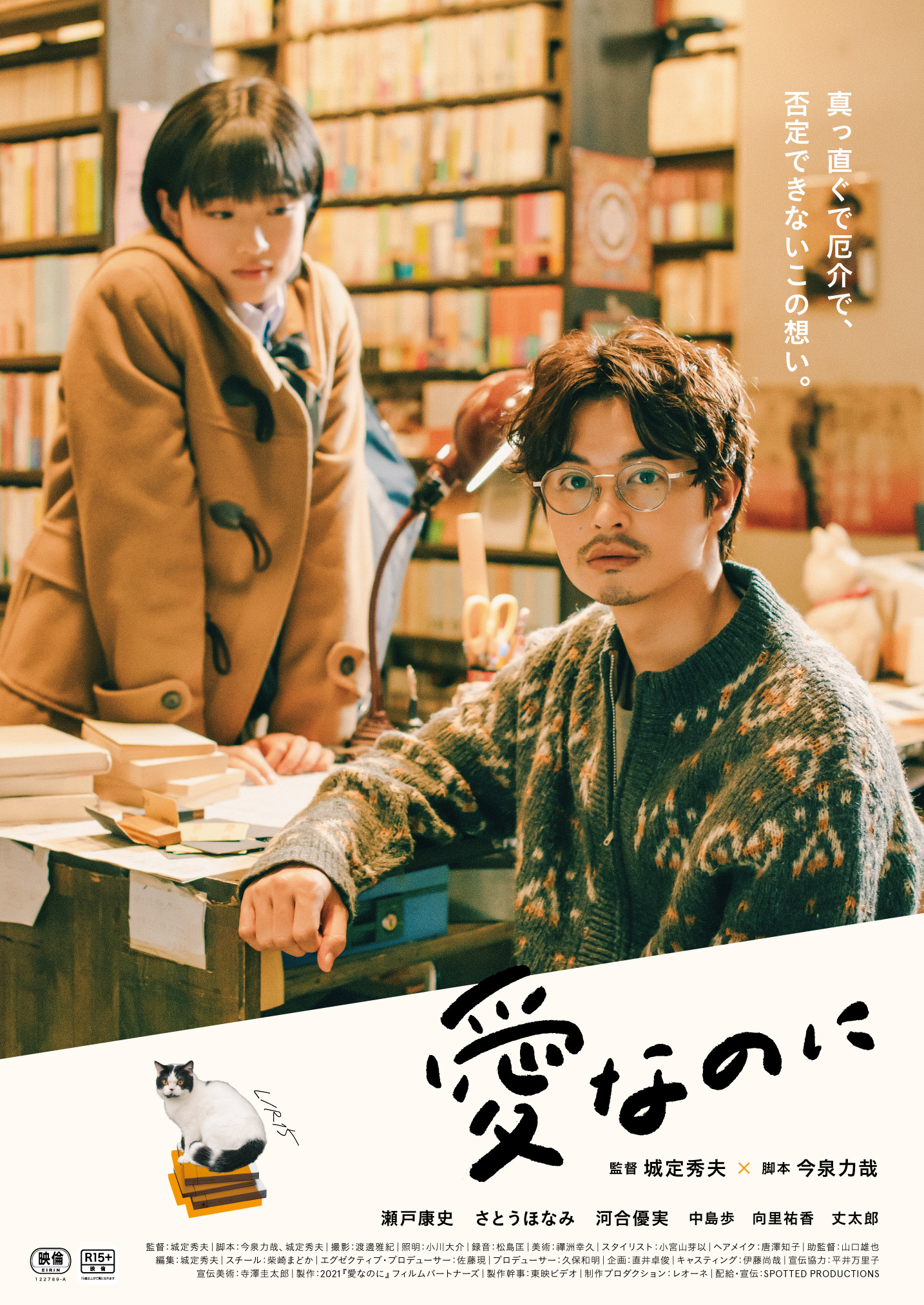
Love Nonetheless (愛なのに, Hideo Jojo, 2022)

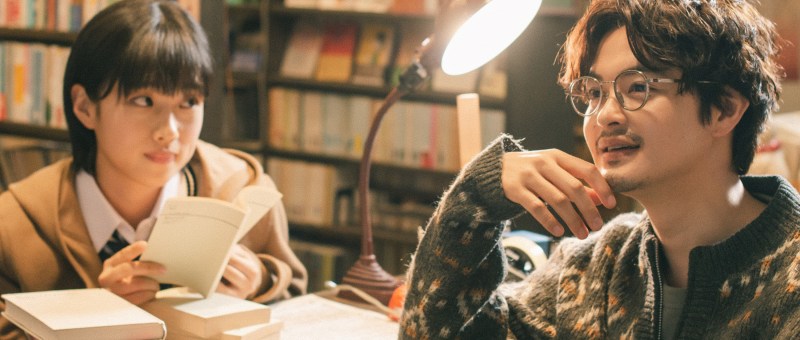
“Don’t deny love!” the fantastically awkward yet empathetic hero of Hideo Jojo’s Love Nonetheless (愛なのに, Ai Nanoni) eventually exclaims when confronted by the parents of a high school girl whose crush on him he’d tried to diffuse sensitively while growing to appreciate her friendship. Scripted by the ever prolific Rikiya Imaizumi who has made something of a name for himself examining the complicated romantic lives of young people in the contemporary society, Jojo’s prickly dramedy like his other film this year To Be Killed by a High School Girl deals with some quite uncomfortable ideas but does so with as much sensitivity as it can muster. 

The lovelorn hero, Koji (Koji Seto), for example is always trying to rationalise the circumstances around him considering his own actions and their implications carefully. When he catches a high school girl, Misaki (Yuumi Kawai), stealing a book from the secondhand bookshop where he works he chases her but she, surprisingly, stops running when she notices him struggling and buys him a bottle of water from a vending machine before eventually confessing that she stole the book because she saw him reading it. Not only does she announce she’s in love with him, she immediately proposes marriage. 30-year-old Koji is shocked and alarmed. He tries to turn her down but she doesn’t listen, continuing to frequent the store bringing him letters reiterating her marriage proposal which he never answers. 

Meanwhile, he’s hung up on an unrequited crush, Ikka (Honami Sato), who he’s just learned is about to be married. Even he describes himself as a “creep” looking back over of a cringeworthy series of tweets he’d sent her which she never replied to, while she explains to her fiancé Ryosuke (Ayumu Nakajima) why she’s not planning on inviting him to the wedding despite inviting everyone else from her old part-time job. Unbeknownst to her, Ryosuke has secretly been carrying on with their wedding planner, Miki (Yuka Kouri), who is content with the no strings nature of their relationship and ironically hates the “bizarre ritual” she has been hired to organise having developed a rather cynical view of marriage due to the nature of her work. The couple seem to be in a fairly liminal state, their apartment still full of boxes while they bicker about the financial strain of a ceremony which as Miki points out is not even about them but solely for their families and any children they may later have. 

All these people supposedly love each other, so why is it all so difficult and destructive? Always introspective, Koji realises he may have alienated Ikka with his inappropriate behaviour and has reflected on his actions but the fact remains that most of the other men are not so emotionally aware. Misaki is also courted by an awkward classmate who greets her with roses but thrashes them to the ground in frustration when she turns him down and later physically attacks Koji even when he points out that hitting his love rival won’t change the fact that Misaki’s not interested in him. Ikka meanwhile is approached by a sleazy salaryman when drinking alone in an izakaya whose response when she tells him she’s married is “so what, I am too”. Ryosuke appears to be having an affair for no other reason than he could while simultaneously confused by Miki’s lack of emotional investment in their relationship only for her to patiently explain to him that his problem is he’s bad in bed something which a lover would be unable to tell him directly. Ikka begins to realise this for herself while turning to Koji to get back at Ryosuke on learning of the affair as if believing that a level playing field of emotional betrayal would somehow allow them to start their married life on an equal footing. 

The secondary question arises of how important sex is in a romantic partnership, Ikka wondering if Ryosuke really is just a bad lover or if their unsatisfying sex life is a sign that they are simply incompatible and should separate given that she finds much more fulfilment with Koji whom she chose because of her lack of romantic interest in him. Koji meanwhile, fully aware of the realities of the situation, points out that it’s unfair and irresponsible of Ikka to exploit his feelings for her while cautioning her that her behaviour is heading towards the self-destructive and that she should reconsider marrying Ryosuke not because he thinks she should date him but simply because this complicated situation is obviously unhealthy for everyone. You could of course say the same about his awkward, perhaps uncomfortable relationship with the teenage Misaki which might in a sense be romantic, both slightly inappropriate and essentially innocent even if his eventual concession that he might love her one day is a step too far in failing to fully diffuse her one-sided crush in part because he’s become dependent on the attention he receives from her in the letters he doesn’t answer. 

Then again, the most troubling aspect of Ryosuke’s affair is not the extra-marital sex but the manipulative lie he constructed to excuse it designed to arouse Ikka’s sympathy in tying it back to her awkward experience with one-sided workplace crushes. Aware of the affair but not the lie, the choice she thinks she’s making is if her relationship with Ryosuke is strong enough to accept sacrificing sexual fulfilment or if perhaps this is as good as it gets when it comes to marital compromise. Koji’s solution seems to be that you should let love rest where it lands, denying it is pointless even if not reciprocated while sensitivity with other people’s feelings is essential for a happy, healthy society. Warmhearted and empathetic in its forgiveness of its messy protagonists’ many flaws, Jojo’s steamy drama never pretends love is easy but suggests it comes in many forms and in the end maybe follow your heart is as good advice as you’re ever going to get.


Love Nonetheless screened as part of this year’s Udine Far East Film Festival.

Original trailer (English subtitles)

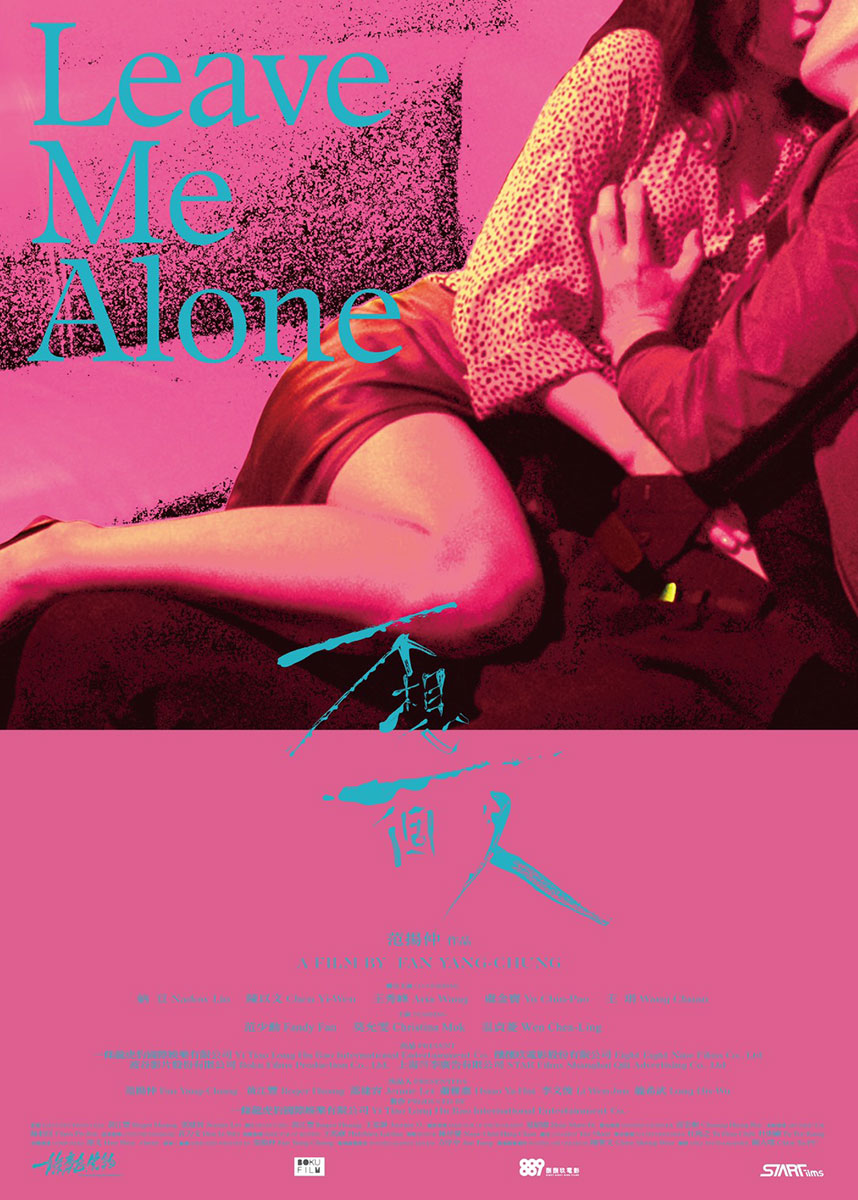
Leave Me Alone (不想一個人, Fan Yang-chung, 2021)

Lonely souls seek impossible connection in a rapidly disintegrating world in Fan Yang-Chung’s steamy urban drama, Leave Me Alone (不想一個人, bùxiǎng yīgèrén). The title may in its way be misleading, the original Chinese meaning something more like “I don’t want to be alone” hinting at the misdirected longing that informs all of the relationships in play, but is in another way the thing each of them fear – that they are being left behind while everything around them seems to be on the brink of collapse. 

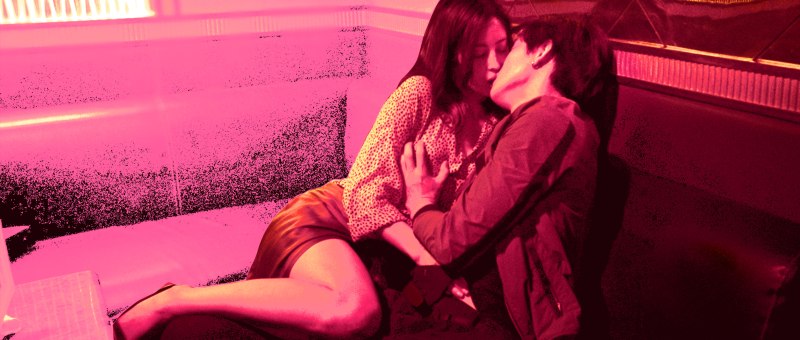
Petty street pimp Loong (Fandy Fan Shao Hsun) literally lives in a disused building that’s about to be torn down, while his side gig involves working with a local gangster to pressure residents of an old-fashioned apartment block to sell up so the land can be redeveloped. Loong has a rather unsentimental, amoral approach to his work in finding the body of an old man and pressing his finger on the documents to make it look like he changed his mind right before died, something which seems all the colder on realising that his own father lives in the building. His gangster boss Brother Chao ominously reminds him that’s something he’ll need to take care of. 

In other ways eager to please, Loong’s involvement with Brother Chao is part of his aspirational desire to live a better life which also in part explains his fascination with beautiful gallery owner Olivia (Christina Mok) who is also in her own way lonely having discovered that she’s carrying the child of her married lover whom she’d believed was ignoring her only to discover the reason he’s not been answering her calls is that he’s in hospital in a coma and unlikely to wake up. Both Loong and and Olivia are repeatedly blocked from getting what they want, she prevented from entering her lover’s hospital room on the orders of his wife and he later rejected from a fancy apartment block by the same set of security guards instructing him to take the back stairs as if reminding him of his status and the class difference between himself and Olivia even if he’s smartened himself up while continuing to exploit other women for his living.

He does perhaps undergo a minor pang of conscience when Olivia tells him not to treat her like one of his sex workers, but later seems to have given up on achieving a more mainstream success after overplaying his hand with Brother Chao and paying a heavy price for his hubris. Olivia meanwhile entertains other men in an attempt to overcome her loneliness, sending each of them away with the excuse that her friend is coming over though of course he isn’t and doesn’t respond to her messages. As she and Loong drift into an affair, Oliva becomes a kind of tourist in his world raising eyebrows at the karaoke bar where the girls entertain Brother Chao’s guys, but Loong is hopelessly out of place in her upperclass society hovering in the background at a swanky party and eventually alienating another guest he felt was belittling him by offering to set him up with one of his girls. While he longs for Olivia as a symbol of the high life he feels is denied to him, so Chin-shah (Wen Chen-ling) his casual squeeze longs for him looking perhaps for protection or uncomfortably for the familial while he largely thinks only of himself. 

In any case, they each live in a world set to disappear. In one of the earliest scenes, Olivia watches as workmen dismantle the current installation in preparation for the next, her own image shattering as a mirror is smashed by a workman’s hammer, while the disused apartments and obsolete housing complexes familiar to Loong must too eventually come down leaving him forever displaced in a rapidly gentrifying city. “You’re too poor and you can’t handle me” Olivia eventually reflects after asking Loong if he’d always be there to take care of her making it plain that they occupy two different worlds while temporarily trapped in the same liminal space by their shared loneliness and a longing for something else that they don’t think they can have. They must try to find a way to move on but are otherwise forced deeper onto the paths they’d already chosen while trapped together bound by their shared yet opposing desires. In Fan’s stratified city of frustrated longing, love may not be so much the cure for loneliness as its ultimate expression. 


Leave Me Alone screened as part of Osaka Asian Film Festival 2022

Original trailer (English subtitles)

Cracked (ภาพหวาด, Surapong Plearnsang, 2022)

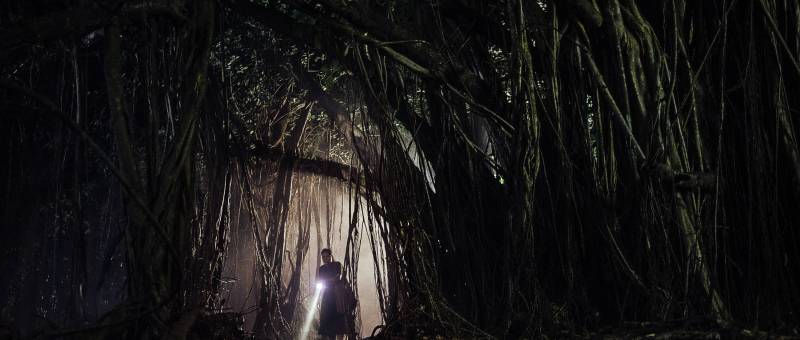
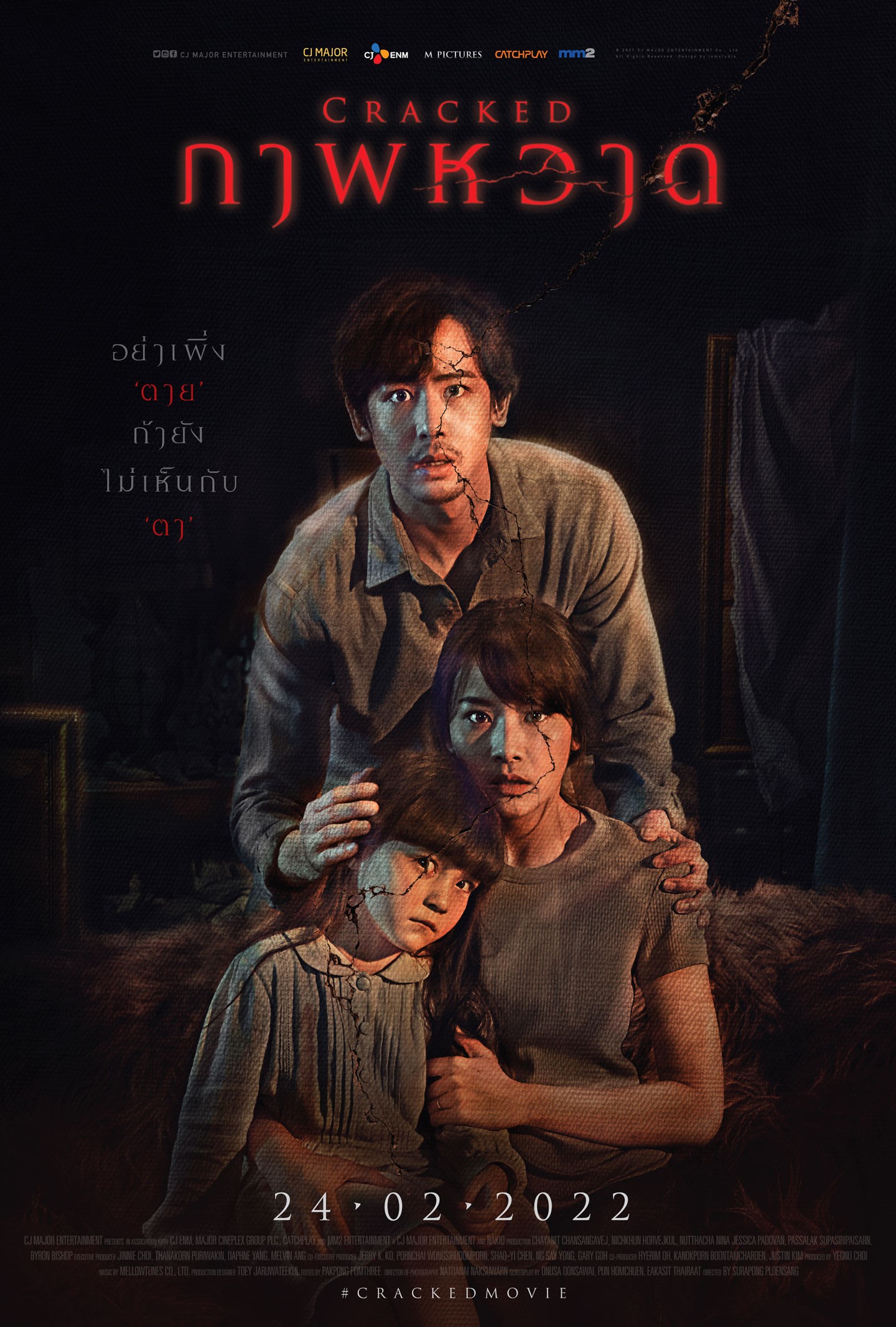
The traumatic past comes back to haunt a widowed single mother in Surapong Plearnsang’s eerie supernatural horror, Cracked (ภาพหวาด). A Singapore-South Korea-Taiwan-Thailand co-production, Cracked is adapted from an unproduced Korean screenplay and finds its heroine dealing with an inheritance both literal and spiritual following the death of her estranged father while she herself is filled with anxiety trying to find the money for an operation her daughter desperately needs to avoid losing her sight. 

In any case, the young Ruja (Chayanit Chansangavej) had been told “if we pretend not to see them, they cannot hurt us” which doesn’t sound like particularly good advice to begin with but perhaps fuels her reluctance to revisit the hidden past. Now living in New York with her young daughter Rachel (Nutthatcha Padovan), she is shocked when an old friend of her father’s, Wichai (Sahajak Boonthanakit), tracks her down and insists she return to Thailand her father having died. In addition to his giant gothic mansion seemingly inhabited only by a maid, her father has also left behind two famous paintings titled “A Painting of a Beauty 1 & 2” for which Wichai has found a buyer but needs Ruja’s consent. Ruja thinks the paintings are creepy anyway the recent history that the smaller was previously owned by a man who killed his entire family and then himself not withstanding and wants them gone as soon as possible especially if they raise enough to pay for Rachel’s medical treatment, but Wichai wants to have them restored first, his son conveniently enough being an art restorer. 

Ruja’s reluctance to look at the paintings is echoed in the instructions her mother had given her about unseeing the things that frighten her, yet being back in the house re-awakens a series of traumatic memories as she looks back on the way her father treated her mother from the perspective of an adult woman with a child of her own. Meanwhile, Rachel is keen to explore later explaining that she hasn’t been wandering off alone but in the company of a woman with a red scarf which is how she runs into Tim (Nichkhun Horvejkul), Wichai’s kind-hearted art restorer son. The problem is that the more Ruja is forced to look at the paintings the more they seem to decay, cracking so badly that the paint begins to fall away exposing a secondary painting below and a truth that Ruja did not want to witness. 

In a sense she’s been made to pay for her father’s transgressions, but also for her mother’s refusal to oppose them along with her discrimination towards another family she regarded as part of a “ghost-worshipping hill tribe”. Having been told to unsee Ruja is punished for the act of looking away, and perhaps also for having left and trying to make a new life for herself abroad having on some level forgotten what happened to her in the house and what she saw in her father’s studio. Surapong Plearnsang’s production design reflects her fractured viewpoint in the overlay between the broken window she peeks through and the hole in the painting while lending the paintings themselves an eerie disquiet painted as we later discover with violence and darkness by her already corrupted father later himself falling victim to a curse. 

The suggestion is that Ruja’s only escape lies in burning the past and creating a new history to pass down to her daughter free of the traumatic legacy inherited from her parents. “We only have each other now” she reminds Rachel, promising to protect her with her life while preparing to leave the eerie forest behind. Echoing the gothic in its creepy old mansion and obsession with corrupted legacy, Cracked is equal parts psycho chiller as Ruja tries to work through her buried trauma while assaulted by genuine supernatural forces of malevolence wanting her to pay for her parents’ transgressions aided by a more corporeal assistant seemingly hellbent on vengeance. Filled with a sense of dread not to mention extensive snake symbolism, Surapong Plearnsang’s haunted house creeper sends its conflicted heroine into the past hoping to fix the future only to discover that it’s not enough to paper over the cracks of an incomplete history, only by stripping the veneer and exposing the ugly truth below will you ever be free. 


Cracked screened as part of this year’s Udine Far East Film Festival.

Original trailer (English subtitles)

The Light of Spring (ひかりのどけき, Fumito Fujikawa, 2022)

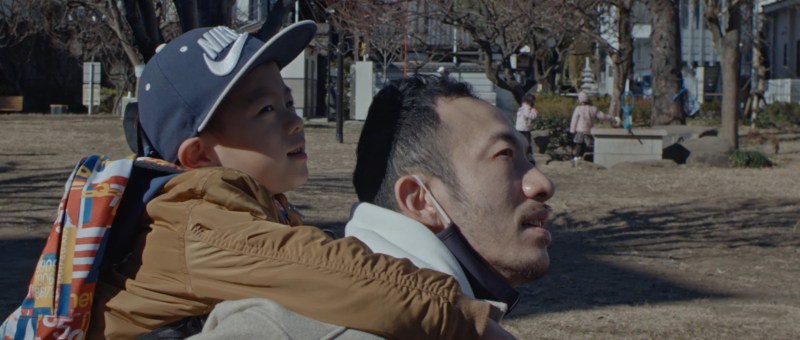
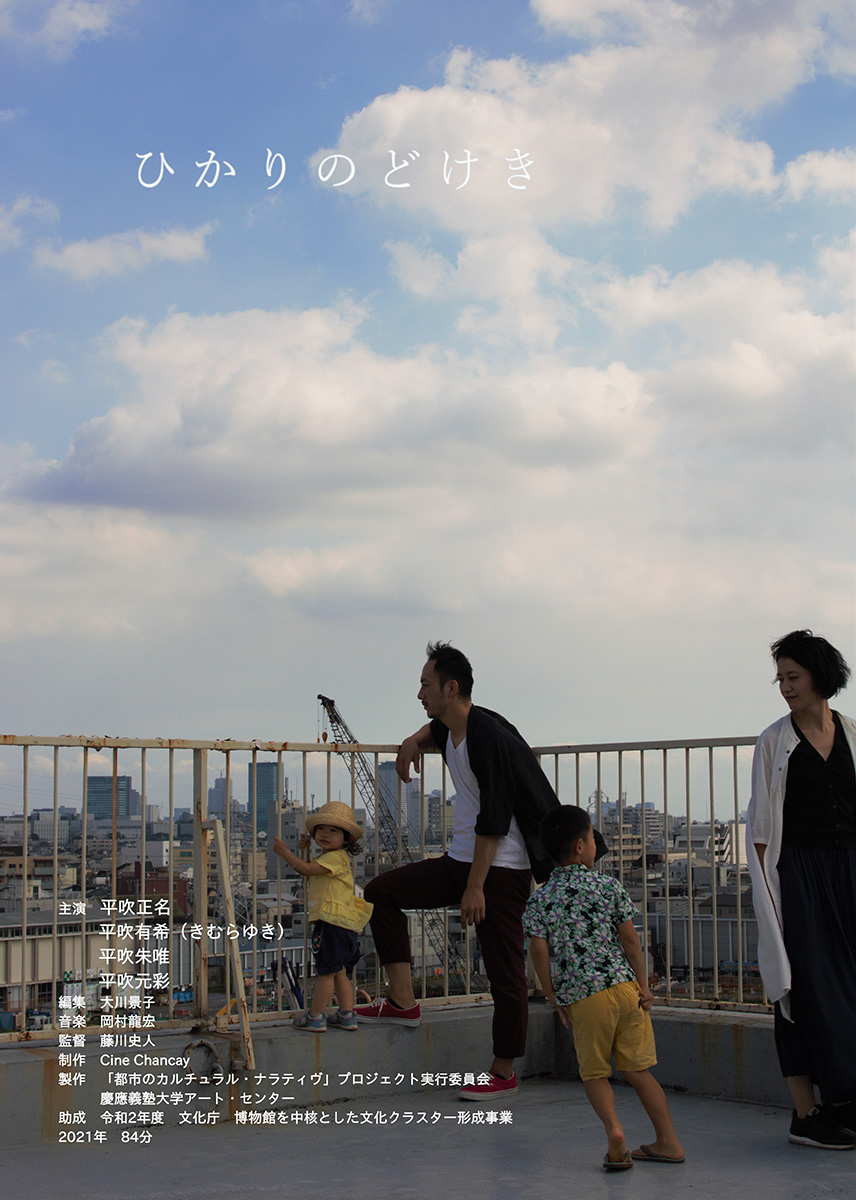
“The more we try to be a family the more we feel like strangers” a husband laments reflecting on the pressures of the contemporary society which seem to have stretched his marriage possibly to breaking point. Starring a cast of non-professional actors, actually a real family living in the suburbs of Tokyo, Fumito Fujikawa’s neorealist drama The Light of Spring (ひかりのどけき, Hikari Nodokeki) examines the effects of familial breakdown largely from the perspective of the couple’s young son Shui (Shui Hirabuki) as he struggles to process the changes in his life and the indefinite absence of one parent or another. 

As the film opens, the father (Masana Hirabuki) hugs his infant daughter, Chikasa (Chikasa Hirabuki), while the mother (Yuki Kimura) gets her son, Shui, ready for an outing repeatedly asking him if he is able to do things for himself such as zip up his jacket or put on his mask as if preparing him for an early independence. She puts a backpack on his shoulders and tells him dad is taking him somewhere nice, but when the pair get back she and Chikasa will be gone. Something has obviously gone wrong in the parents’ relationship and the mother is taking Chikasa with her to the grandparents as the couple embark on a trial separation. 

The majority of the rest of the film focusses on the boy and his father adjusting to life alone as little Shui attempts to process what’s happening thinking that perhaps his mother has just gone away somewhere temporarily and will return in a few days. Indeed, his father does not tell him concretely that she won’t be coming back, just that he doesn’t really know if or when meanwhile they leave the baby gate in place even though there’s no baby around each of them stepping over it to access the kitchen and the balcony. Dad tries to make it fun, spending additional time with his son, but also discovers the pressures of being a single parent having to rearrange his working life in order to accommodate picking him up from school. Even so as he later admits to him the trial separation is working out in his favour. Without apologising he explains in simple terms that he feels trapped by the responsibility of fatherhood and is coming to believe perhaps it’s better if he and his wife do not continue to live together. 

The mother meanwhile is beginning to feel the opposite, asking her own mother if she often fought with her father and getting a fairly typical answer wondering if perhaps they’re overreacting and should try and find a new way through together. Where dad shuts down Shui’s questions, he even wondering at one point if Chikasa is still alive, she is more mindful on the effect on the children returning home when Shui calls her from a public telephone and taking him back to the grandparents only for him to then miss his dad. Dad meanwhile thinks he needs more time to decide, uncomfortably admitting that he likes it better with fewer responsibilities but perhaps in the end also missing his family.  “I wonder what a family is supposed to be” mum sighs, “we’re becoming more and more like strangers” as the pressures of the contemporary society along with the pressing anxiety of the coronavirus pandemic distance them ever further from each other. She remains at the table, but the father tells her to go with increasing intensity as if making clear that he no longer wants to have this discussion and means to exile his family from his life continuing to live in the family home marked as it is by a sense of absence while they remain displaced temporarily housed with the grandparents. 

Shot in the classic 4:3 of retro home video, Fujikawa’s neorealist drama captures the everyday life of a contemporary family with its trips to the park, museums, and burger bars or just cooking together at home but also hints at the anxieties which come with it exacerbated by the existential anxiety of the coronavirus pandemic. “Nothing’s unbreakable” the father admits, “but I’m sad when they break” the boy complains. “Even if you take good care of things, some things still break” his father goes on to explain in what seems like more of a life lesson than might be expected in a discussion about a worn-out pillow. Even so perhaps they don’t break all the way, as the hopeful conclusion implies set amid the pretty cherry blossom not quite in full bloom in a quiet corner of an otherwise busy city. 


The Light of Spring screened as part of Osaka Asian Film Festival 2022

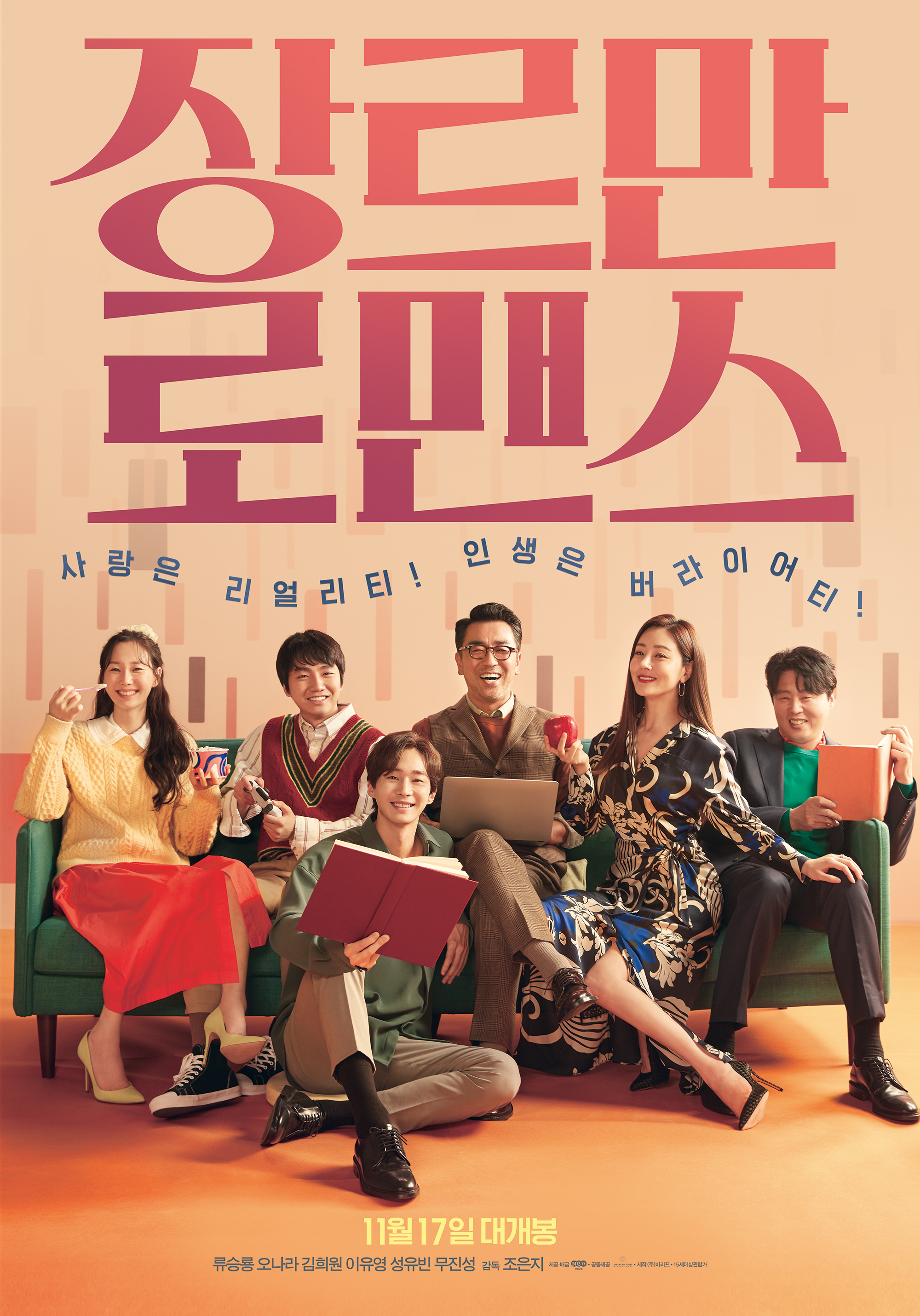
Perhaps Love (장르만 로맨스, Cho Eun-ji, 2021)

A blocked writer finds himself growing as a person after mentoring a young protégé but is also forced to meditate on his own romantic cowardice and tendency to treat others badly because of his inner insecurity in the directorial debut from actress Cho Eun-ji, Perhaps Love (장르만 로맨스, Jangleuman Lomaenseu). Caught in a complicated web of romantic intrigue between himself, his ex-wife, current wife, publisher, son, the woman across the road, and the young protégé, the writer is forced to reflect on the varying natures of love which may sometimes be misdirected or unreciprocated but no less real or important. 

Hyun’s (Ryu Seung-ryong) problem is that he had a big hit and became a literary phenomenon while relatively young but hasn’t written anything of note in the last seven years and is currently supporting himself as a professor of creative writing. His old university friend and publisher Soon-mo (Kim Hee-won) is becoming thoroughly fed up with increasing pressure from above to deliver the manuscript knowing that if he really can’t turn anything in Hyun risks being plunged into inescapable debt in having to repay his generous advance. After being pranked by a friend who invited him to his old teacher’s “funeral” which turned out to be a birthday party, Hyun goes to visit another old friend, Nam-jin (Oh Jeong-se), with whom as it transpires he had fallen out. Possibly out of jealously, Hyun had not only panned Nam-jin’s book in a review but thoughtlessly outed him by complaining that his writing was full of “cheap gay sentiment”, a comment which Nam-jin took to be essentially homophobic and on a personal level unnecessarily cruel. Hyun of course disputes this and doesn’t quite see why Nam-jin is so upset. 

Nam-jin’s short-term boyfriend Yu Jin (Mu Jin-sung) has point when he tells Hyun that the reason he can’t write is because he’s too afraid of losing what he has, unprepared to risk vulnerability in the service of his art. Then again, all Hyun really has is the faded glory of his former success, his present life is a mess. His second wife (Ryu Hyun-kyung) has been living in Canada with their daughter, while he ends up ruining his relationship with his angst-ridden teenage son Sung-kyung (Sung Yoo-bin) when he’s caught in the middle of a drunken fumble with feisty ex-wife Mi-ae (Oh Na-ra) who has secretly been dating Soon-mo. Sung-kyung meanwhile is in the middle of his first breakup after being dumped by his high school girlfriend who is carrying someone else’s child. Disillusioned by his adulterous parents he develops a not entirely appropriate relationship with an eccentric actress (Lee Yoo-young) who lives across the road. Meanwhile, Yu Jin suddenly reappears in Hyun’s life and reveals he’s been in love with him for years. 

All of these loves are in someway incomplete, hesitant or uncertain each of the lovers lacking the confidence to claim the word. A terrible holiday forces Mi-ae and Soon-mo to realise that they’ve been keeping their romance secret less because of the potential awkwardness in their shared history with Hyun than because they themselves are romantically insecure. Sung-kyung thinks he’s in love with the older lady from across the road and completely misses all of her attempts to avoid his romantic overtures, while she is perhaps just lonely and unfulfilled in both her marriage and her career. Hyun meanwhile is confronted with his own romantic cowardice in cheating on both of his wives, continually self-sabotaging in his insecure inability to commit. Having ruined his friendship with Nam-jin he threatens to do the same to a younger female writer joining the university who has eclipsed him in literary success in having been shortlisted for the Booker Prize. 

It’s the arrival Yu Jin that shakes him up, seeing something in the young writer that reawakens his creative spirit as he offers to become a mentor co-authoring a novel with him, but it also disturbs Hyun in confronting him with his latent homophobia and later his complicated feelings for the young man which might extend to a kind of love he cannot quite put a name to. Where Hyun is too afraid to risk losing the comfortable life he currently has, Yu Jin has no such worries because as he later says he’s used to getting hurt and having to get over it. As gay man in a conservative society he’s familiar with a constant sense of casual rejection, a fellow student in Hyun’s writing class shouting out “the gay guy” in mocking tones when Hyun asks who’s missing during roll call while the pair are later the subject of a media frenzy when Nam-jin goes to the press accusing them of being lovers. Yet Yu Jin is willing to state his feelings plainly with no expectation that they will be reciprocated leaving Hyun floundering as to the proper way to react.

While there may be some latent conflict in Hyun, what he comes to realise is that love is more complicated than he thought and what he feels for Yu Jin may be a kind of it comprising the paternal, fraternal, that of a mentor for a pupil, and that simply for another human being. In an interview promoting the book they’ve written together, Hyun explains that he wanted to explore how people can change and grow with relationships having overcome his latent homophobia in advancing that no one should be judged for who they love while otherwise able to appreciate Yu Jin’s talent without jealousy or resentment having regained his own desire to write. Through their various experiences each of the lovers is confronted with a romantic reality accepting who it is they love or don’t while teenager Seung-kyung experiences his first real heartbreak in realising the extent to which he’d misinterpreted his relationship with the quirky neighbour. Always forgiving of its feckless hero’s flaws, Cho’s warm and empathetic dramedy is indeed about how people can grow and change through their interactions with others finding new equilibrium with themselves if not, perhaps, love. 


Perhaps Love screened as part of this year’s Udine Far East Film Festival.

International trailer (English sutbtitles)

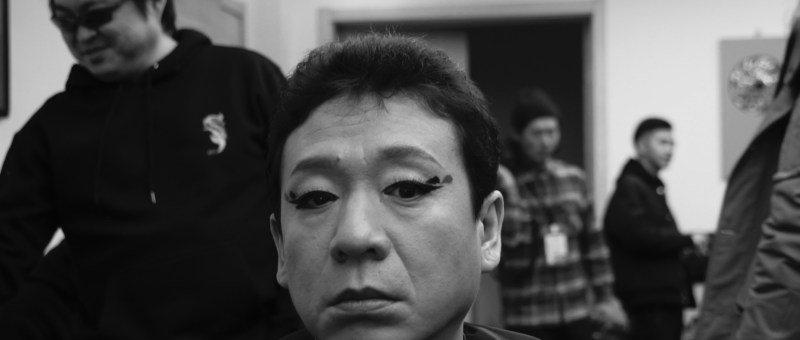
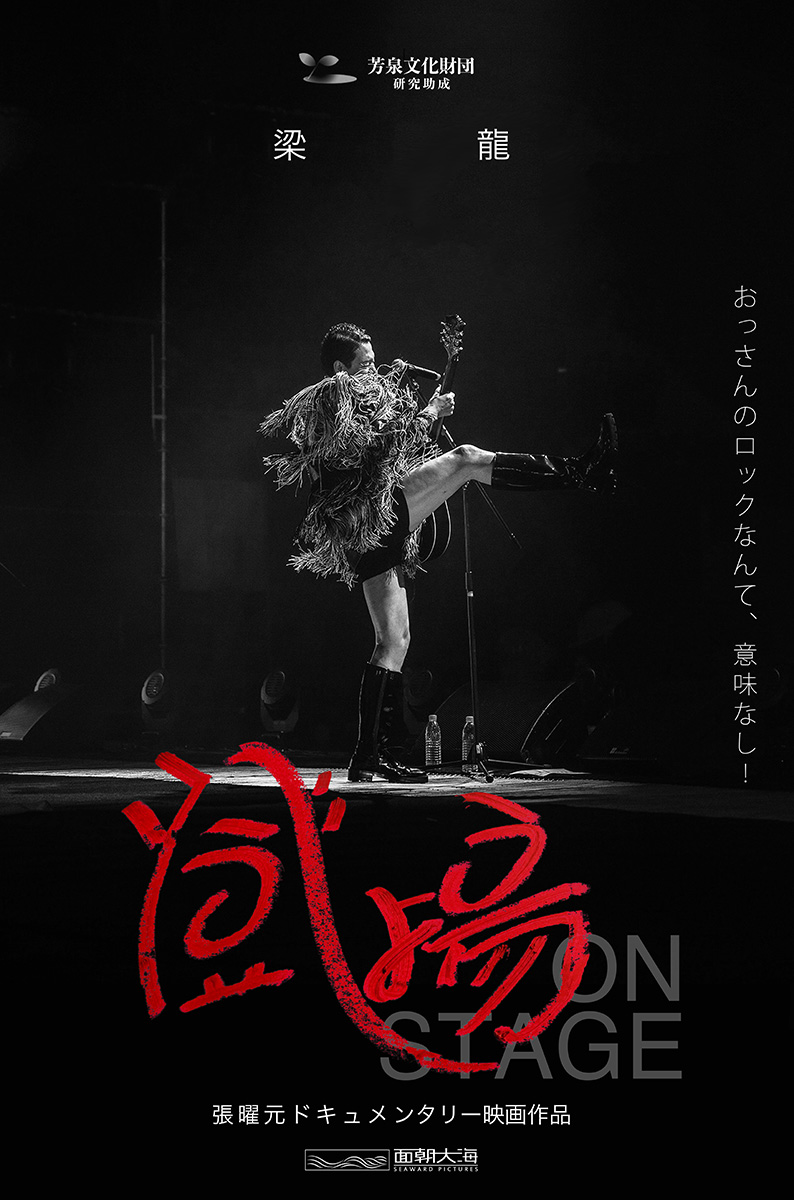
ON STAGE (登場, Zhang Yaoyuan, 2021)

Lead singer of alternative rock band Second Hand Roses, Liang Long has been a sometimes controversial figure previously known for his shaved head and androgynous appearance often appearing onstage in female clothing and heavy makeup. Ironically enough Zhang Yaoyuan’s documentary ON STAGE (登場, Dēngchǎng) captures him mostly off, now with a full head of hair as he prepares for a New Year concert in his home area of Shenyang in the North East while simultaneously shooting a movie later released as No Problem directed by Looking For Lucky’s Jiang Jiachen.  

Zhang also hails from the North East and the area does seem to be important to the film, a banner above the stage at one point bearing the message “Develop the North East” with the film crew also wondering if their film can help do the same only for Liang to correct them that “revive” might be better than “develop” seeing as the area had been prosperous in the past but is now struggling without the oil industry. Meanwhile, he’s joined in the discussion by Wang Hongwei, star of Jia Zhangke’s Xiao Wu which the pair later reference while lamenting the decline of the North East before going on to describe the modern day Hegang as a kind of film city but not in an altogether good way each scandalised that apartments are so cheap it’s more cost effective for film crews to buy rather than rent even if they make a loss when they sell at the end of the shoot. Meanwhile, the gang later go on tour paying a visit to the China–North Korea Friendship Bridge in Dandong with two crew members engaging in separate mini rants about North Korea tricking China into paying more than their fare share by pulling out early. 

In any case, Liang is certainly cineliterate, shooting a Wong Kar-Wai-esque intro video for his upcoming concert set to Quizás, Quizás, Quizás and featuring a woman walking sadly through the streets. Another crew member decides to have another pop at Japanese directors, mystified by their admiration for natural light having sworn off ever working with Shunji Iwai again because he wanted to do things his own way. Doing things his own way is however something that’s very important to Liang as he explains to a caller on a radio show “I must keep my style from inside to outside”. The caller had somewhat impolitely explained that she originally thought his eccentric appearance seemed “nutty” but later came to understand it wondering if it’s something that Liang was doing deliberately only for him to answer that he’s fine with people describing him as crazy because he knows he’s “normal”. “When I’m in an artistic state, everything goes natural. Nothing weird” he adds, implying that his appearance is merely the purest expression of his artistic intent though it’s true enough that others may not always approve of his use of makeup or androgynous dress. Nevertheless, the concerts seem to attract a coterie of diehard fans copying his style often dressing in rose-patterned shirts and dresses with wigs and makeup, Liang later asking a photographer to go out and film them because he says they enjoy being appreciated. 

Liang does indeed seem to be a savvy operator, also interacting with his fans through live streaming which he describes as more difficult than performing onstage though he does seem pretty nervous hanging around in the wings waiting for the intro to finish ahead of his big New Year concert. Meanwhile, he’s frequently seen taking photo ops with fans and family members of the crew, in general pleasant to be around if occasionally impatient never grandstanding or pushing his fame but hanging out with his crew drinking and swapping stories. Even so he’s scathing when asked for recommendations of contemporary bands complaining that there’s “no one worth respecting” because most are artistically stagnant trading on past glory rather than coming up with new ideas. Stagnancy is not perhaps something of which you could accuse him given how incredibly busy he seems to be in just this short period of his life, never really stopping between rehearsing for the New Year show, shooting the movie, and live streaming for his fans. Shot in a crisp black and white, Zhang’s observational documentary frames him a garrulous yet contemplative man perhaps most at home onstage in the most natural state of his pure artistic vision. 


ON STAGE screened as part of Osaka Asian Film Festival 2022

Original trailer (Japanese subtitles only)

Noise (ノイズ, Ryuichi Hiroki, 2022)

The dark heart of small-town Japan is fully exposed in Ryuichi Hiroki’s ironic tale of murder and mass deception, Noise (ノイズ). “It’s for the sake of the island” the heroes are fond of claiming, one morally dubious justification leading to another as they contemplate the greater good saving their town while eroding its soul assuming of course that it had one to begin with. Addressing everything from rural depopulation to a back to the land philosophy, Hiroki’s quietly escalating drama imbues its “idyllic” wholesome island with an unsettling sense of quasi-spiritual unease as its well-meaning hero begins to buy in to his own saviourhood deciding all things are permissible so long as they serve the town. 

Following a recent trend, Keita’s (Tatsuya Fujiwara) big plan for saving the island is through the cultivation of black figs which he hopes to turn into a local industry boosting the economy and encouraging young people from the mainland to repopulate the rapidly ageing village. Ironically enough, it’s this that brings him to the attention of recently released ex-offender Mutsuo (Daichi Watanabe) whose kindly probation officer has brought him to the island in the hope of finding him an honest job so he can restart his life in a wholesome and supportive environment. Unfortunately, however, Mutso suddenly kills the old man for no particular reason and then begins wandering the island generally acting suspiciously and alarming the islanders including Keita’s best friend Jun (Kenichi Matsuyama), a hunter. When Keita returns home and discovers the bottle he’d seen Mutso drinking from lying in his garden and his small daughter Erina missing, he assumes the worst. He, Jun, and their childhood friend Shin (Ryunosuke Kamiki) recently returned to the island to take over as its one and only policeman, finally track Mutsuo down to one of the greenhouses and challenge him only for Mutsuo to fall over and hit his head during the tussle. 

Obviously on a personal level it’s not an ideal situation for the three guys but their first thoughts are for the island. Keita was supposed to be its saviour and now he’s killed someone in right under the figs that were supposed to rescue the economy. If this gets out it’s game over for everyone. The first lesson new policeman Shin had been taught by his departing predecessor (Susumu Terajima) had been that a policeman’s job is about more than enforcing the law and sometimes what’s “right” might not be “best” for the town using the example of a middle-aged woman with a history of bad driving who’d hit a wild boar. If she lost her license the family’s life would become impossible, so seeing as it’s “only” an animal, perhaps it’s better not to bother logging it as a “crime”. Faced with this situation, Shin decides the greater good of the island is more important and that covering up the crime is best thing for everyone only to be caught out when mainland police arrive having been alerted by the probation officer’s daughter. 

The situation is complicated by the fact that the town had been in the running for a government development grant based on the potential of the figs which gives everyone a reason not to want the scandal of a murder taking place on the “idyllic” wholesome island where according to the mayor, Shoji (Kimiko Yo), there is “absolutely no crime”. That may largely be true especially given the attitude of local law enforcement but is also an ironic statement seeing as we later discover Shoji apparently cannot sleep without her trusty taser by her side, just in case. Having lied in trying to cover up the murder, Keita is later forced to get even more of the townspeople involved in the conspiracy while they are it seems surprisingly happy to help because they believe in him as the saviour of the town and are prepared to do pretty much anything to help save the island. 

Stoic yet omniscient police detective Hatakeyama (Masatoshi Nagase) sneers at the villagers’ tendency to see all outsiders as enemies. “Typical of a dying town” he adds, commenting on the way the combination of isolation and desperation has brought the townspeople together as they present a united front in the face of the things they think threaten their small-town wholesomeness, some objecting to the idea of new residents moving in a fear which is ironically borne out in the arrival of a man like Mutsuo. Yet their small town wasn’t all that wholesome to begin with. Shoji had told the three guys to eliminate the “noise” that disturbs the island though in the end it isn’t’ so much Mutsuo who created the disturbance as their own quasi-religious determination to save the island by whatever means necessary. Keita wants to save the island because the island once saved him, but in saving it like this he ironically destroys the very qualities he hoped to preserve in building their new future on blood and lies. 

Meanwhile the strain of trying to conceal a murder exposes the cracks in the foundations of the friendship between the men, earnest policeman Shin continually conflicted in betraying his own ideals, while hunter Jun’s personal insecurity in continually playing second fiddle to saviour Keita who is so obsessed with the idea of being the island’s chosen one that he never notices the pain in each of his friends, gives rise to a degree of instability in their otherwise carefully crafted plan. Maybe this island isn’t so idyllic after all, keeping a dark hold on the bewitched Keita as his increasingly worried wife Kana (Haru Kuroki) suggests concerned he’s “becoming someone else” in buying in to his own messianic hype. “What are you trying to protect?” Hatakeyama had asked him hinting at the dark side of the furusato spirit but also at his misplaced priorities as the forces of greed and anxiety threaten to consume the wholesome soul of moribund small-town Japan. 


Noise streams in Europe until 30th April as part of this year’s Udine Far East Film Festival.

international trailer (English subtitles)

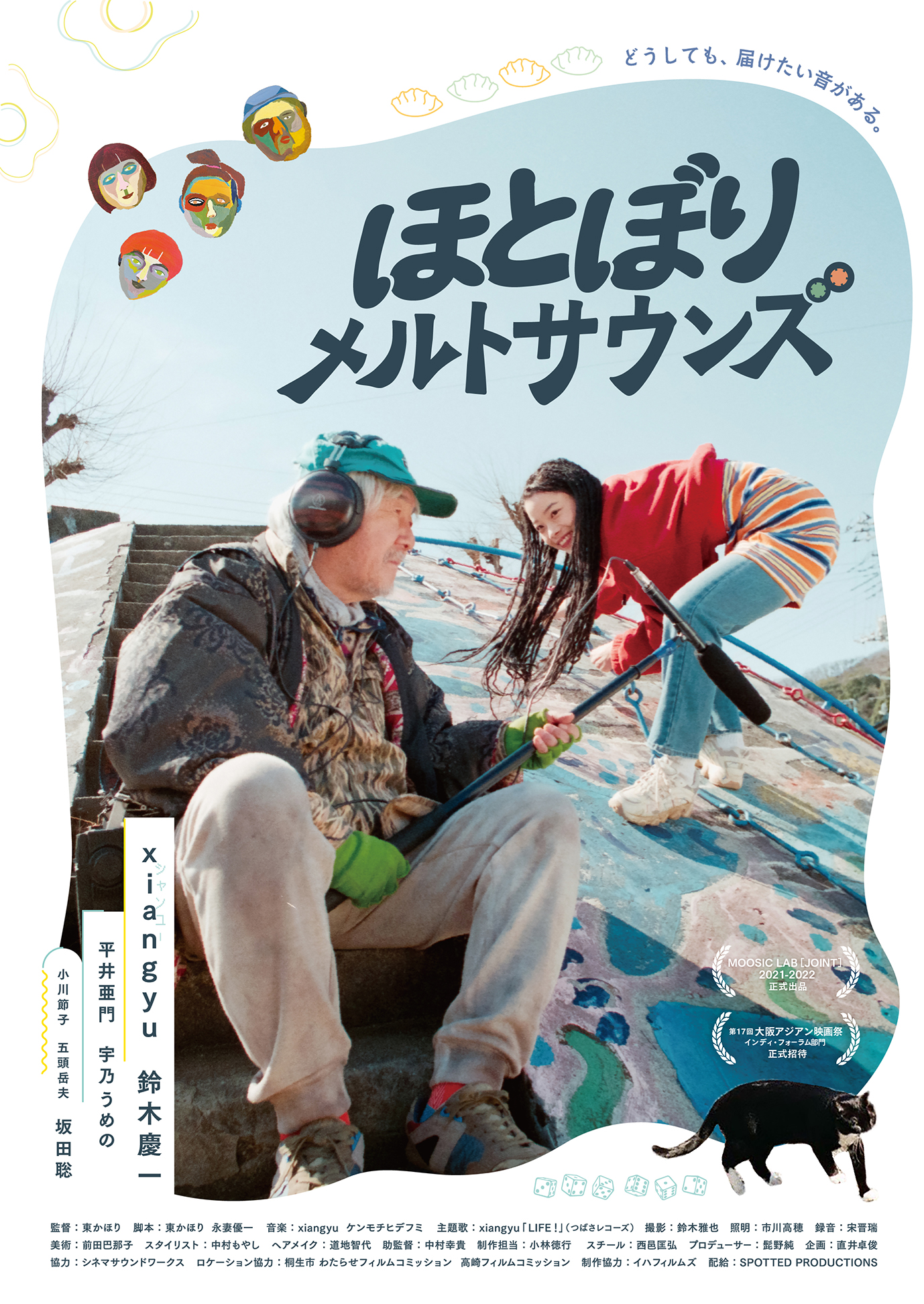
Melting Sounds (ほとぼりメルトサウンズ, Kahori Higashi, 2021)

“They’re all dealing with something. They have nowhere to go back to” an old man sighs watching a cohort of similarly aged men doing callisthenics in a local park knowing that they’re about to lose this place too. A Moosic Lab production, Melting Sounds (ほとぼりメルトサウンズ, Hotobori Melt Sounds) is about what you keep and what you have to let go as the heroes try to preserve a disappearing soundscape while unable to resist the march of progress as even their little backwater finds itself at the mercy of modernising developers. 

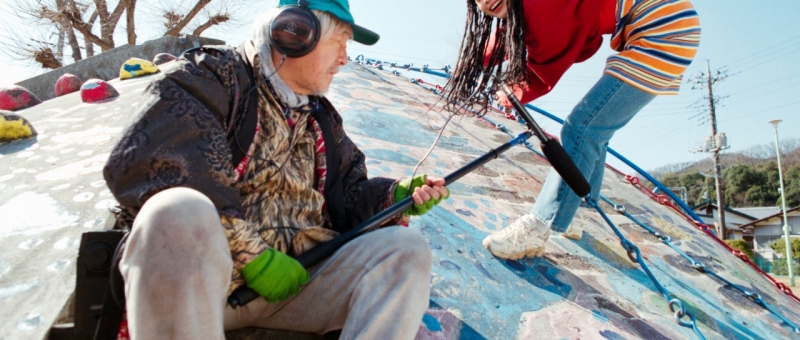
Hoping for a solo getaway, Koto (xiangyu) arrives at the rural home of her late grandmother only to discover a strange man, Take (Keiichi Suzuki), camping in the garden. As she will repeatedly, rather than enlist the authorities Koto invites Take into the house where it’s warmer and discovers that he’s in the middle of an important project recording ambient noise from around the village attempting to capture the banal sounds of everyday life such as someone going to the dentist or a young couple having a pointless argument in the street. Meanwhile, the pair receive a visit from a young man, Yamada (Amon Hirai), bearing a tablet featuring the face of a woman, Hiroko (Umeno Uno), trying to explain to them that the house needs to be knocked down so they should hurry up and move out. Unfazed, Koto once again asks Yamada to come and sit under the kotatsu where it’s warm, the young man later taking a break from his job to stay with them under the pretext of convincing them to leave while they’re later joined by Hiroko who also becomes increasingly conflicted and decides to join their small family. 

Just as Take had said they’re all dealing with something, Koto having become estranged from her father whom she no longer talks to, Take as we discover recording the sounds on old-fashioned speaker walkmans for his late sister who was killed in a landslide, and Hiroko and Yamada each conflicted in their work for a greedy amoral developer who reveals that he too was responsible for evicting mostly elderly people from their homes in a town that has since become famous for bubble tea. The four of them are already displaced by the modern society, as are the men doing callisthenics in the park as they watch their town gradually dismantled around them, pushed out even from disappearing and depopulated rural Japan by an encroaching modernity. The developer claims he wants to rejuvenate the town to attract young people to return but is indifferent to what is being lost such as the recording of the nostalgic five o’clock chimes which so moves Hiroko, adding only that they no longer have them where they are only for Hiroko to suggest that you can only hear them if you’re pure of heart. 

Take claims he’s making a “grave of sounds” but he’s also capturing a moment in time and with it the essence of life. As he puts it everything has a sound from a flower blooming to air conditioners and church bells, each of them a part of something bigger immersed in the now. As he points out, everything comes to an end eventually, be it love or friendship or even family. The recordings are a kind of proof of life, but paradoxically also its passing the final implication being that all things have their season and it’s best to enjoy them while there’s time. Small-town Japan may be disappearing or at least changing even if the promised bubble tea might not be quite what you’d expect but that doesn’t necessarily mean it all has to go. 

Thanks to Koto’s warmheartedness, inviting each of them into the house despite having arrived for a “solo” getaway, the trio of youngsters find a new solution to their sense of lonely disconnection discovering a kindred spirit in their shared desire for something simpler and more wholesome as they play boardgames together by candlelight, making curry and gyoza sure to record the sound of them sizzling. A warm and quirky ode to the various ways life can be improved by the simple act of stopping to listen, Kahori Higashi’s laidback debut may be about learning to let things go but also appreciating what you have while you have it and taking what you can with you while being kind and openhearted even in the face of those attempting to run you out of town.


Melting Sounds screened as part of Osaka Asian Film Festival 2022

Original trailer (no subtitles)