Hunt (헌트, Lee Jung-jae, 2022)

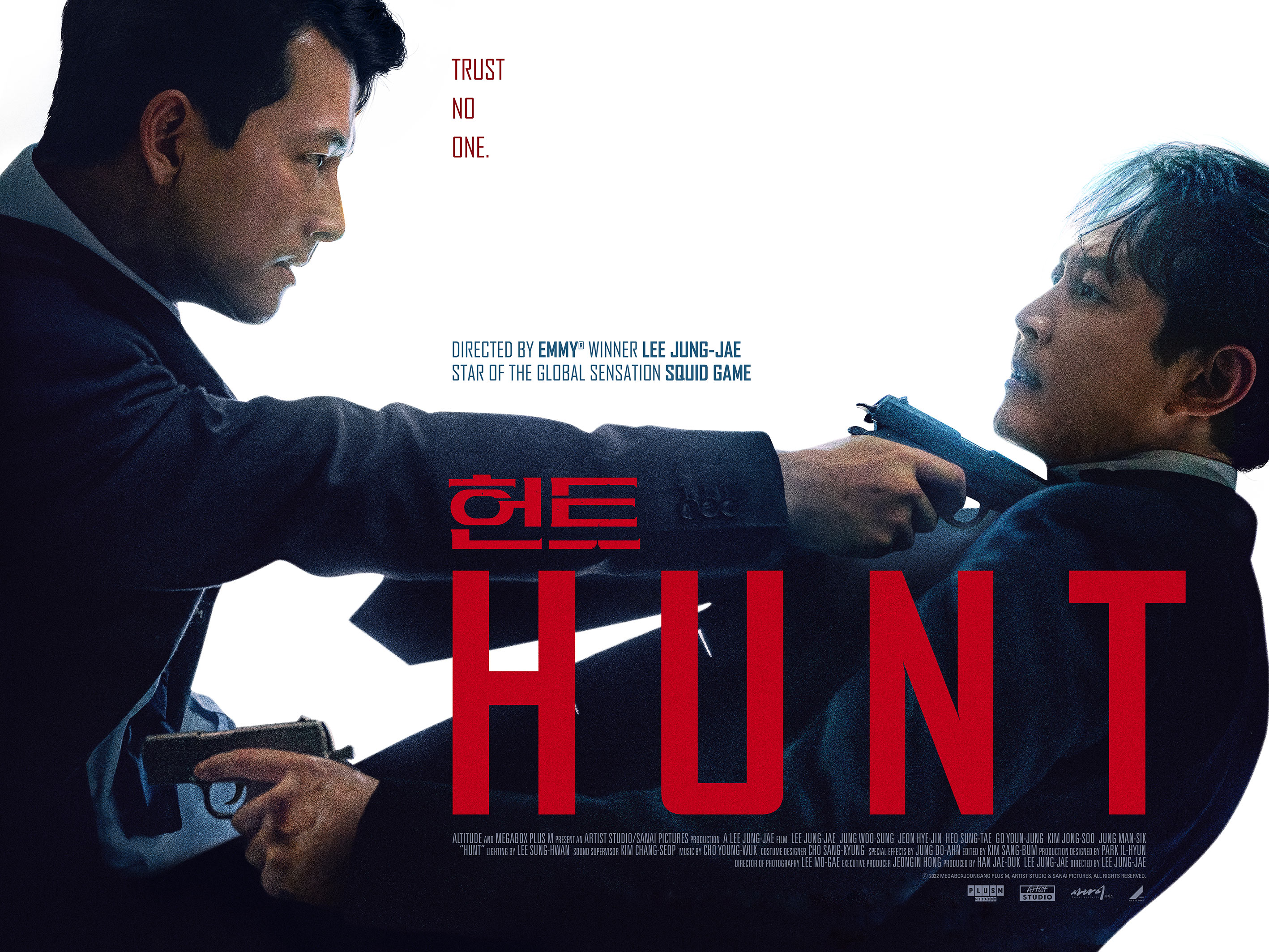
“How long can you fight violence with violence?” one accidental ally asks another towards the conclusion of actor and star Lee Jung-jae’s 80s-set directorial debut, Hunt (헌트). As the title implies, this is a story of two men stalking each other but also each ironic representatives of an ideological divide both seeking a better future while torn between violent overthrow and peaceful revolution in the dying days of a Cold War in what could be termed its ground zero. 

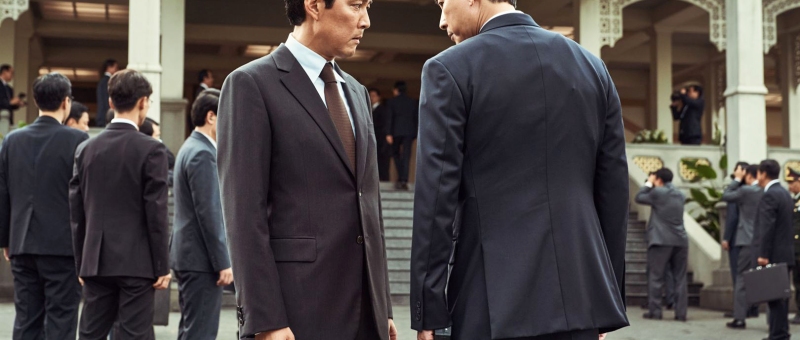
As the film opens, the South Korean president, a stand-in for an unnamed Chun Doo-hwan, faces mass protest from local Korean-American democracy activists on return to his hotel while on a diplomatic visit to Washington. His security team is itself somewhat compromised in that it is a joint operation between foreign and domestic intelligence teams neither of which have must trust in the other. When it’s discovered that a plot is underway to assassinate the president, foreign intelligence chief Park (Lee Jung-jae) is taken hostage but insists on capturing the suspect only for domestic chief Kim (Jung Woo-sung) to abruptly shoot him, leading Park to wonder if Kim did it to keep him quiet rather than simply to neutralise an immediate threat. Assuming North Korea is most likely behind the plot, each begins to suspect the other is a mysterious double agent known as Donglim. 

What soon becomes apparent is that the two men, the domestic and the foreign, are being pitted against each other by the questionable authority that is the Chun regime. Recently promoted from the military, Kim had in fact instigated Park’s torture in the immediate aftermath of the assassination of the previous president, also a military dictator, Park Chung-hee. Both men appear to be conflicted in their association with an authoritarian government in the wake of widespread state violence including the brutal suppression of the Gwangju Uprising in May 1980. Nevertheless, both are party to acts of torture many of them enacted on teenage democracy activists they routinely smear as communists. 

In short, no one could really blame anyone who wanted to overthrow this brutal regime but as oppressive as it is, it’s also backed by the Americans who would rather keep Chun in power than risk the students’ wishes that the American military pull out of Korea coming to fruition lest it lead to a similar situation in Okinawa, which had only returned to Japanese sovereignty a decade earlier, undermining their ongoing foreign policy goals in Asia. If there is one clear villain, aside from Chun, it’s the shady the international order that is content to watch authoritarian leaders enact violence on their people when it supports their own interests. Nevertheless, it’s also true that Park and Kim’s personal vendetta sparks major diplomatic incidents in two sovereign nations which in any other case would seem primed to turn this cold war hot.

What emerges is a cat and mouse game in which each attempts to unmask the other while on increasingly unstable ground unable even to rely on support from their superiors who in any case answer directly to Chun. It seems there are several factions who would like to unseat him even if they do not necessarily object to authoritarian rule only to persistent state violence against citizens who are more often than not mere children. The differences between Park and Kim are ideological in more ways than one, torn between the belief that only violence can free them from violence and the desire to seek a better solution but each agreeing that assassination is the only viable path to deposing Chun and ushering in a better future despite the failure of the assassination of the previous president to do the same . 

Anchored by strong performances from veteran actors Lee Jung-jae and Jung Woo-sung, the film also features a host of cameos from some of the nation’s top stars including Hwang Jung-min as a manic North Korean airforce defector and Lee Sung-min in a small but pivotal role as a Korean-Japanese asset. With notably high production values and truly astonishing action sequences, Lee excels in capturing the paranoid atmosphere of the conspiracy thriller and an almost unbearable tension between its twin protagonists who will later discover that they are quite literally on the same bus even if they have very different destinations in mind. 


Hunt screened as the opening night gala of this year’s London East Asian Film Festival and arrives in UK cinemas/digital on 4th November courtesy of Altitude Films.

UK release trailer (English subtitles)
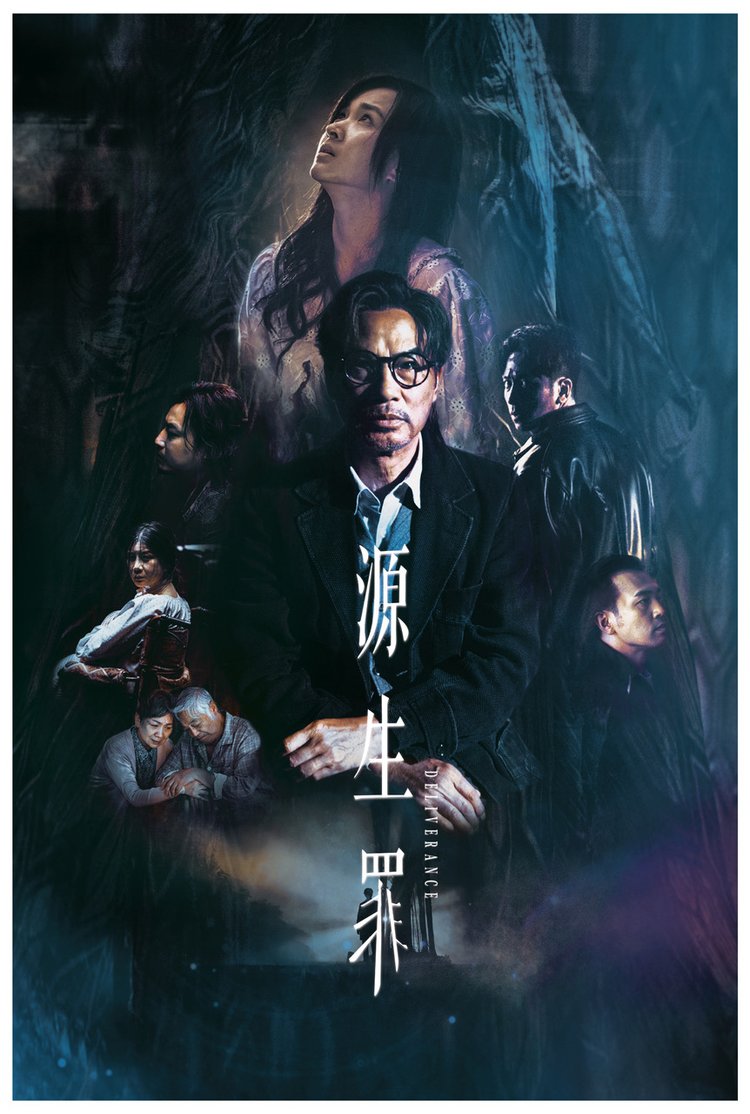
Deliverance (源生罪, Kelvin Shum, 2022)

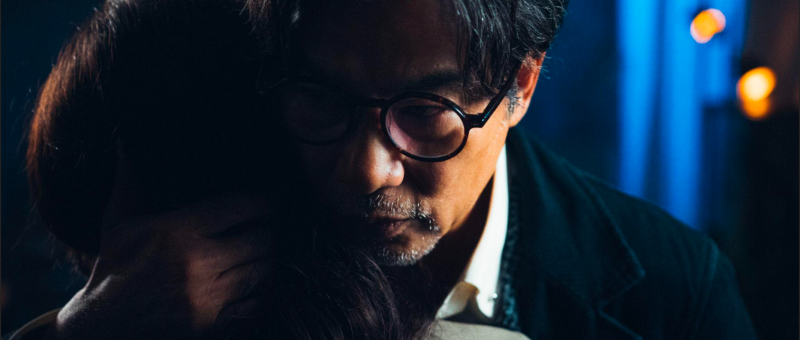
A young woman haunted by the buried memories of repressed trauma discovers that sometimes it really is better not to know but also comes to a new appreciation of familial love in Kelvin Shum’s visually striking psychological chiller, Deliverance (源生罪). Meaning something more like original sin the Chinese title hints at the reconsideration of the traditional family which lies under the central mystery and prompts the heroine, long separated from her siblings, to question the nature of her familial bonds and whether she can really say that those closest to her have her best interests at heart. 

After living abroad for 15 years, Nicole (Summer Chan) has married and returned home to Hong Kong with her husband but is haunted by a shadowy figure that reminds her of her childhood trauma in being unable to remember anything about the night her mother passed away after a long illness. Back in a familiar environment and reconnecting with her siblings, old memories begin to surface particularly after a few sessions with her famous hypnotist brother, Joseph (Simon Yam). Gradually she begins to suspect that her mother may not have died of her illness as she was led to believe but may have been murdered and possibly by a member of her immediate family which was then under intense pressure from loansharks due to debts run up by her absent father who ran away and abandoned the family to their fate. 

The theme of abandonment continues to resonate, Nicole insecure in her familial relationships as her brothers sent her abroad to study shortly after their mother’s death. She can’t escape the idea that they are keeping something from her, and is quite literally haunted by her inability to remember what happened on the night her mother died. But as Joseph had said during one of his lectures, memory is a treacherous thing and if you don’t remember something perhaps that’s because it’s better not to. Then again as her brother Will adds, it’s impossible to escape your past and someday you will be expected to answer for it whether you remember it or not. 

Nicole’s insistence on knowing the truth may partly be motivated by the fact that she is shortly to become a mother herself, though Joseph tries to convince her that her eerie visions and increasing paranoia are side effects of her pregnancy. Trust is the foundation of relationships, and Nicole is beginning to feel as if she can’t trust anyone anymore, but nor can she trust her memories many of which are influenced by her brother’s hypnotism. Working as a doctor she is touched by the relationship between an elderly couple who remain devoted to each other as the husband (Kenneth Tsang) contends with terminal cancer, but is also struck by the discord between their children who argue loudly in the corridor about the responsibilities of care and the financial burden of their father’s medical treatment. 

The understanding she begins to come to is that all of these reactions can in fact come from a place of love even if it doesn’t really seem like it on the surface. Whatever happened to her mother it may be no different, and if her family are indeed keeping something from her it may be out of a desire to protect her from the truth however misguided a desire that may be. As Joseph had said in his speech, emotions can take lives but they can also save them, though it appears the pain of not knowing is eating away at Nicole’s soul and only the truth can set her free. Mr Lam, the terminal cancer patient, cheerfully explains that all of life is a journey towards death but only to emphasise that it’s how you use the time that’s important so obsessing over the past might not serve you so well in the end. In any case, the journey into her own psyche may be uncomfortable and reveal truths that are painful but allows Nicole to begin overcoming her trauma while repairing her existing familial bonds before beginning new ones. Shot with noirish visual flair featuring high contrast colour and a dreamlike eeriness in Nicole’s ever present haunting, Shum’s psychological mystery suggests orphaned files must be brought back into the fold and that there can be no healing without truth but also that the expression of love can take many forms not all of which are easily understood. 


Deliverance had its World Premiere as part of the 15th season of Asian Pop-Up Cinema.

Trailer (dialogue free)

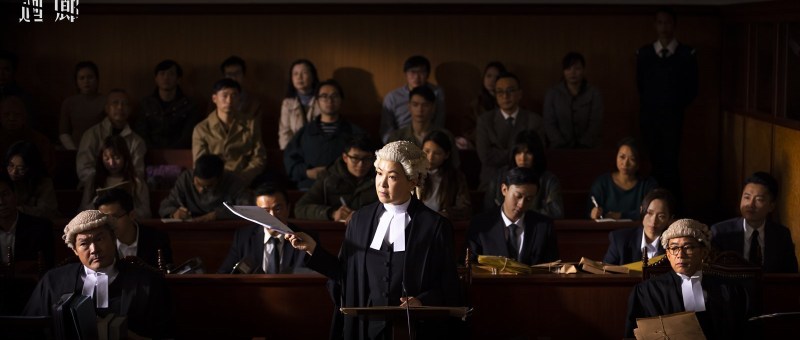
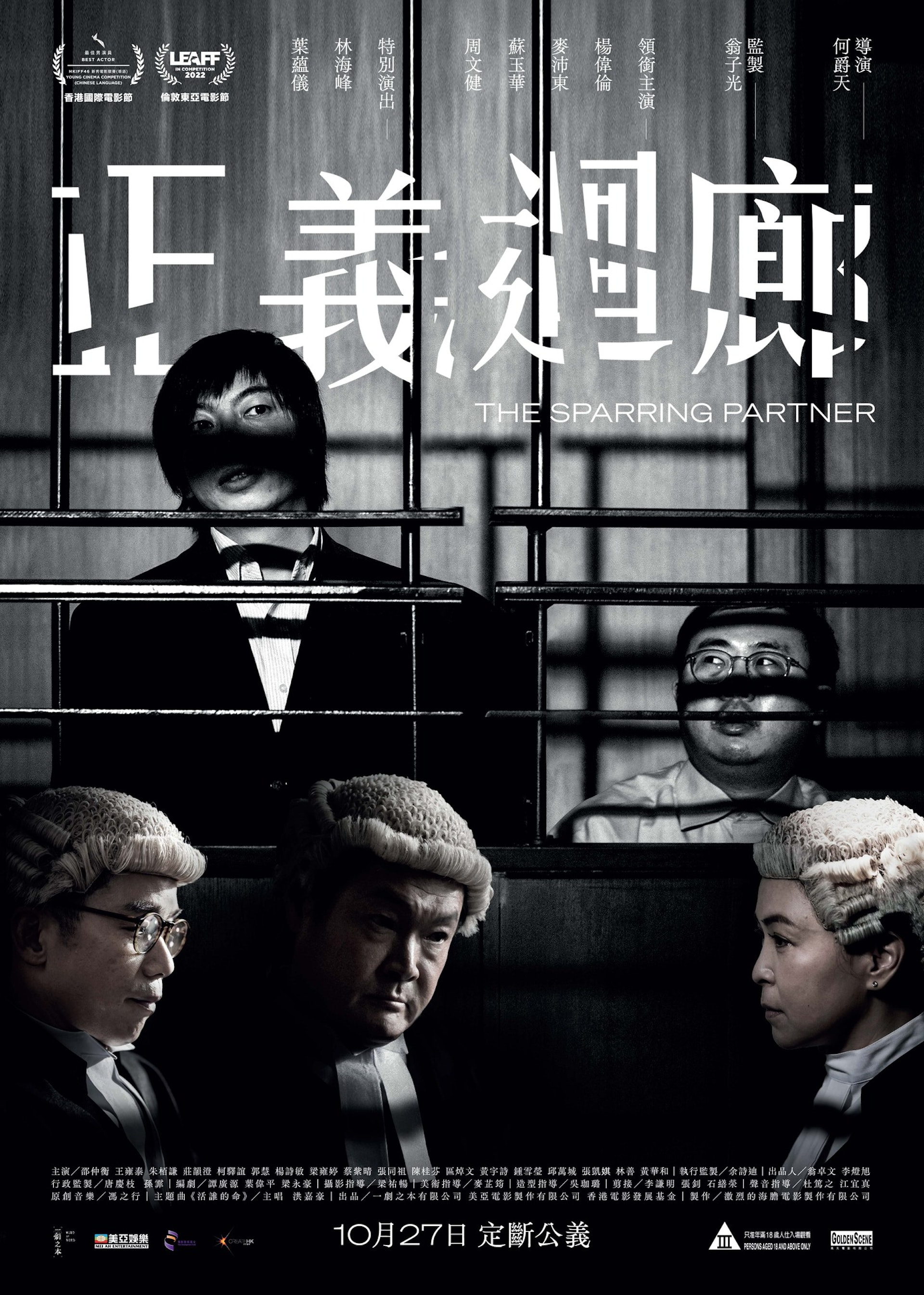
The Sparring Partner (正義迴廊, Ho Cheuk-tin, 2022)

Loosely based on a real life case in which a man murdered his parents then reported them missing and even went to the media for help looking for them, Ho Cheuk-tin’s The Sparring Partner (正義迴廊) distances itself from the sensationalism of the crime to ask a series of questions about human nature and the operation of the criminal justice system. The first of those questions is obviously why, but not just why did he murder the people who raised him but why did he go to the media and why did he eventually decide to confess. 

One reason Henry (Yeung Wai-lun) gives for killing his parents is that his upbringing was abusive, a fact later confirmed by his sympathetic cousin herself a devout Christian. It seems fairly clear that Henry has an inferiority complex for which he blames his mother and father, resentful that they made him play piano and wouldn’t let him play basketball to which he attributes the small stature that led to merciless bullying in school and fractured masculinity in adulthood. Ho often places the camera slightly behind Henry’s shoulder, emphasising his smallness and neatly reflecting the way in which he literally feels as if everyone is looking down on him. He has so far had a life full of failure, studying abroad but failing to make the grade and resentful towards his more successful older brother Ho Jin to whom his parents force him to sign over his share of a flat they bought as an investment after Henry’s gambling debts and inability to find a job left him unable to pay the mortgage. Losing a flat in Hong Kong is worse than losing a life Henry’s lawyer points out at trial, attempting to justify the resentment that led to Henry’s decision to not only murder but brutally dismember his parents. 

Another question mark, however, hangs over Henry’s accomplice and why exactly he chose to take him down with him. Angus (Mak Pui-tung), a man he met at a job interview, seems to have learning difficulties and may not quite understand what is going on. His sister describes him as naive and explains that he has a tendency to make friends with those who only hope to exploit him and may have been manipulated by Henry in fear for the safety of himself and his family or else simply not to lose the friendship. The extent of his involvement with the crimes remains unclear, Henry claiming that he was present and participated in the killing of his mother, while Angus insists that he only took part in the disposal of the bodies. Perhaps uncomfortably the film asks how much we can really trust Angus, suggesting that he may simply be manipulating the sympathy of others and is not really quite as naive as he makes out. 

In any case, his treatment at the hands of the police is as unjust as it comes, intimidated into offering a confession simply to make the interrogation stop so that he sleep and get something to eat. In court the truth hardly matters, a trial is about constructing a credible narrative. The lawyers for joint defendants Angus and Henry attempt to undercut each other, Henry’s arguing he is not responsible on the grounds of mental illness while implicating Angus as the instigator, and Angus’ intent on emphasising his disability suggesting was merely manipulated by Henry. The jurors in the jury room struggle to make sense of the case but also of their own role, tasked not with assessing guilt or innocence but the strength of the argument based on the evidence they’ve been given only for some of them to base their convictions on gut instinct anyway. 

They are perhaps aware that Henry is a master manipulator, he lied to his own brother and fooled all of Hong Kong with his video appealing for support before dramatically confessing online. He has obvious delusions of grandeur and idolises Hitler, claiming that had he been born at the right time he could have done what Hitler did. Ho often dramatises his moments of introspection as fantasy in which Henry poses as Hitler and speaks German to those around him before snapping back to reality and finding him experiencing a moment of clarity that makes him step back. Yet there are moments of heartbreaking authenticity in the “friendship” between the two men such as in their meeting at the job interview as they bond in a shared sense of rejection, the subtext of their crimes inviting the reading that they are intended as acts of vengeance against the society into which neither of them was able integrate. 

In the closing scenes, a policeman remembers evidence left behind during the initial sweep of the crime scene by his incompetent boss and returns to Angus’ apartment to find a migrant family living there who tell him they know there was a murder but they don’t care about things like that and are just grateful to have a home. Henry too continues his dark jokes about permanently devaluing his family’s apartments, but seems genuinely distressed on realising that his brother really may abandon him for his total lack of remorse while Angus finds himself exploited by the tabloid press only too eager for all the gory details. Ho’s closing images which find Angus enveloped in the webs of the spiders which plague his dreams perhaps hints at his place in a complex network of forces which contribute to his exclusion from prejudice towards the disabled to fatphobia along with the manipulation of men like Henry who promise friendship but only take advantage of his inability to resist. Then again, the fact of the matter is that you’ll never really know the truth, whether Henry did it all for the attention and ended up alone anyway or if it really was Angus who planned everything and fooled all of Hong Kong, like the jury all you can do is weigh up the evidence and draw your own conclusions.  


The Sparring Partner screened as part of this year’s London East Asia Film Festival and will open in UK cinemas on Nov. 18 courtesy of CineAsia.

Leonor Will Never Die (Ang Pagbabalik ng Kwago, Martika Ramirez Escobar, 2022)

A grief-stricken screenwriter resolves to write her way out of self-imposed inertia while trapped in a world of her own creation in Martika Ramirez Escobar’s meta dramedy Leonor Will Never Die (Ang Pagbabalik ng Kwago). Drawing inspiration from the action exploitation films of the 1980s, the film asks some big questions about grief and agency and the role stories play in our lives while celebrating a sense of community in cinema along with the accidental immortality it may grant. 

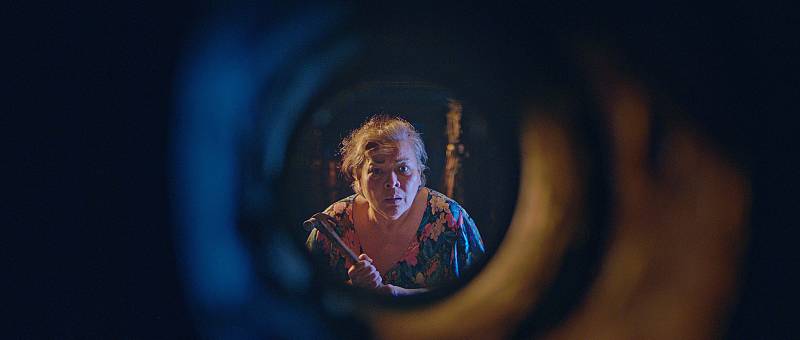
Once a successful screenwriter of action films, Leonor Reyes (Sheila Francisco) is now an elderly lady who has largely shut herself away following the tragic death of her eldest son, Ronwaldo (Anthony Falcon). Her youngest, Rudie (Bong Cabrera), still lives with her but as she later reveals there is distance between them and a sort of repellant dependency in which each resents the other and longs for freedom while simultaneously afraid to chase it. When Leonor “forgets” to pay her electricity bill and is berated by Rudie, she is handed a newspaper by the ghost of Ronwaldo containing an ad for a screenplay competition and decides to dust off the script she broke off when he died. While taking a cigarette break, she is hit on the head by a flying TV thrown out by the man next-door fed up with his wife’s addiction to soap operas and finds herself falling into the world of the film hoping she can save the hero, also named Ronwaldo (Rocky Salumbides), from his tragic fate. 

Shifting into a grainy 4:3 with mono aural sound, Escobar perfectly recreates the world of retro action drama but subtly updates it from its Marcos-era backdrop in replacing activists with drug users, her authoritarian thugs carrying out extrajudicial killings for reasons of intimidation. The movie Ronwaldo is set on revenge against a corrupt mayor and his vigilante son who shot his brother and then placed a pistol and a small packet of drugs next to the body, resisting authoritarianism in a way it may not have actually been possible to do so directly in the movies of the past. In any case, Leonor slips into her own screenplay as an awkward omnipotent force writing as she goes but struggling with her own role and agency before picking up a hammer and venturing into danger to rescue the hero and his love interest herself.  

From the other side of the screen, Rudie asks her if she’d be OK with someone else finishing her screenplay which is in a way asking her if she’s alright with her final decisions being made for her. That might be what Leonor is trying to decide for herself by rewriting in real time, searching for the right ending for her life’s story. Rudie had resented his mother, blaming her for keeping him behind when he planned to apply for an overseas work visa to join his boyfriend abroad but she wonders if he isn’t just using her as an excuse while afraid to take the risk. She by turn insists she can manage alone, but is perhaps afraid she can’t which, along with the grief she feels over Ronwaldo’s death, leads her to push him away. 

Leonor’s coma perhaps brings them both clarity that allows them to discover what it is they really want, Rudie finally handing agency back to his mother in telling her do what she has to do in a world of her own creation while she tells both her sons to be sure they write their own lives. The doctor had told Rudie that Leonor was trapped in a world between sleeping and waking and that you can’t wake someone who is not asleep, they will have to find a way to escape by themselves something which in one way or another Leonor perhaps does coming to terms with Ronwaldo’s death and breaking free of her grief through recapturing her creative spirit if writing a poetic end for herself. Then again as an authorial voice breaks through, life is never as simple as narrative and we’re rarely given the opportunity to edit our own stories or decide the way in which they end, perhaps Leonor isn’t either but even so passes into a world of joy and song in which there are no real endings only a great expanse of cinema. Charmingly surreal and filled with good humour, Leonor Will Never Die is at once the story of an old woman rediscovering herself while letting go of her grief and a celebration of escapist pleasures as paths towards self actualisation. 


Leonor Will Never Die screens in Amsterdam on 30th October as part of this year’s Imagine Fantastic Film Festival.

US release trailer (English subtitles)
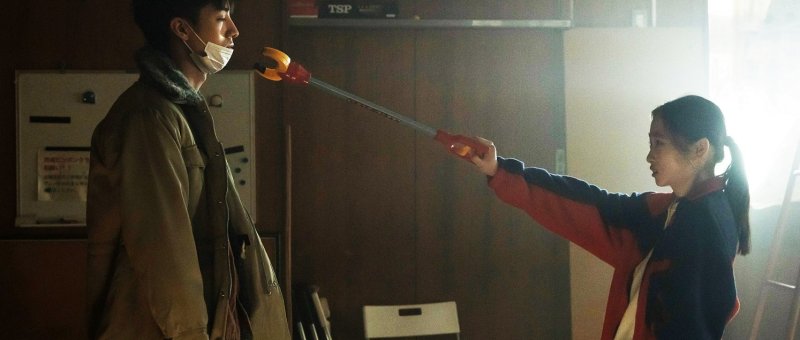
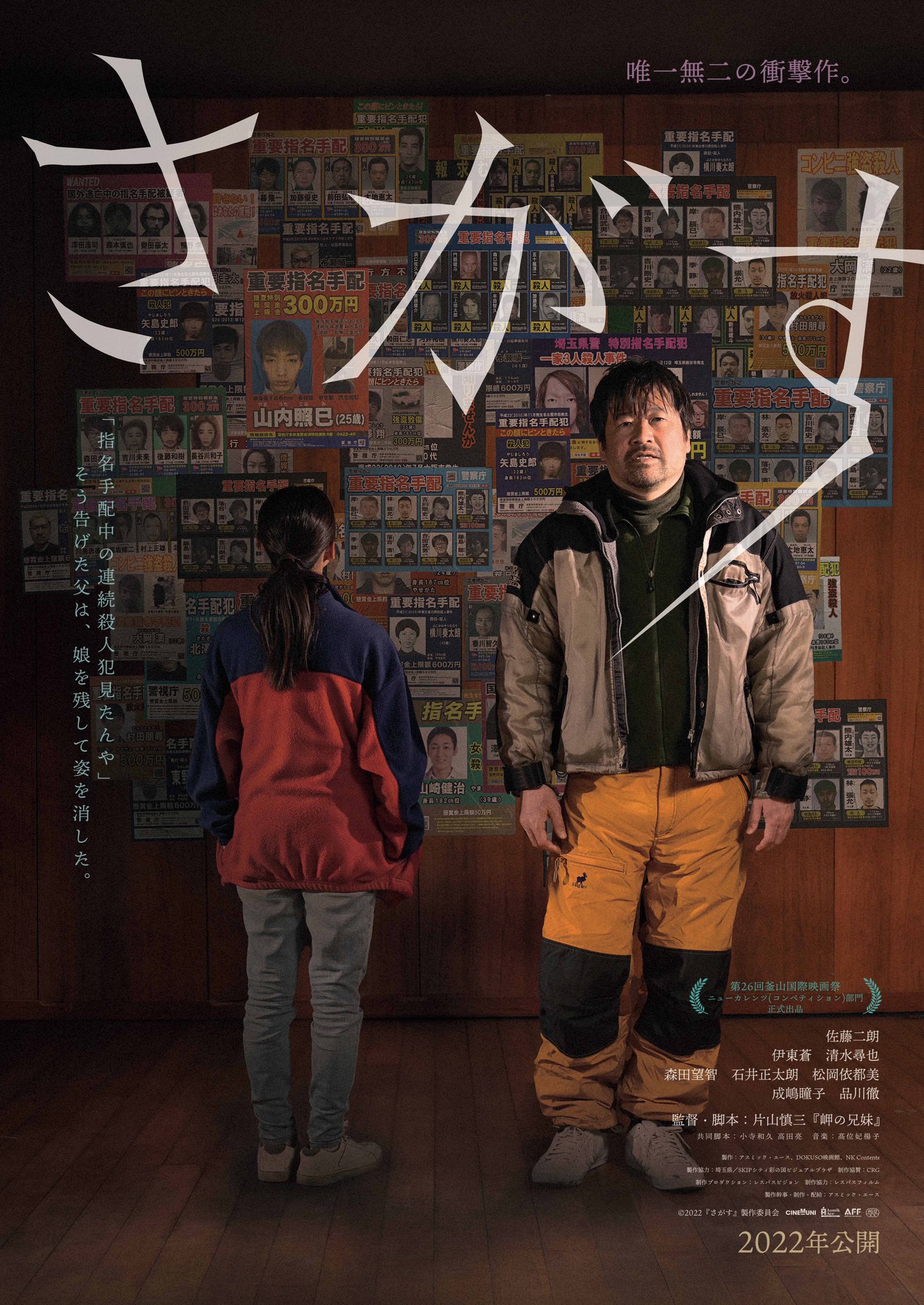
Missing (さがす, Shinzo Katayama, 2021)

“None of us are needed” claims the nihilistic serial killer at the centre of Shinzo Katayama’s dark mystery drama, Missing (さがす, Sagasu). That he’s wrong is an obvious point, but also one reinforced by the teenage heroine’s determination to find her father not just literally and physically, but spiritually and emotionally as she struggles to reorient herself and find direction in her life in the midst of grief and despair. Drawing inspiration from the so-called “Twitter Killer” case of 2017 Katayama asks some difficult questions about the ethics of life and death and how seemingly ordinary people can be pulled towards the dark side by a mixture of greed and misplaced compassion. 

As the film opens, young Kaede (Aoi Ito) is running through the backstreets of Osaka looking for her dad (Harada). What occurs is something of a role reversal as she arrives, breathless, at a convenience store and is forced to apologise because her father has been caught shoplifting having been short the paltry sum of 20 yen which she then has to pay to smooth things over so he won’t actually be arrested. It’s at this point that Satoshi tells her about his big get rich quick scheme which involves claiming the reward for catching a fugitive serial killer, Terumi Yamauchi (Hiroya Shimizu), known as “No Name”, whom he believes to have seen in the local area. Kaede does not take her father seriously, but then Satoshi suddenly disappears. She can’t help but wonder if he was telling the truth and that something untoward has happened to him. 

What she quickly discovers, however, is that no one except herself is very interested in her father’s disappearance. Her teacher tries to help by taking her to the police, but it’s clear that they do not consider Satoshi to be a person worth looking for suggesting that whatever’s happened to him is most likely his own fault for being an imperfect person, implying that he drinks and has debts so most likely has gone missing on purpose. The teacher later comes to the same conclusion, getting a nun from a local orphanage to come and fetch Kaede believing her father has no intention of returning. Probably meaning well, the nun also tells her that her father has abandoned her and there’s no point waiting for him. But even if everyone else thinks that Satoshi is an “unnecessary” person, he is important to her and so she will not stop until she finds him even if that puts her in similar danger hot on the heels of a serial murderer. 

Like the Twitter Killer, Yamauchi disingenuously claims to be helping people, offering “salvation” to those who want to die but cannot bring themselves to end their own lives. By his logic, there are some who are only clinging on to life out of guilt for those who will be left behind while simultaneously blaming themselves that they are “unneeded” and nothing more than a burden to the few who do care about them. His claims are however nothing more than sociopathic justification designed to convince others that what he’s doing is in some way compassionate rather than a sickening attempt to satisfy his own dark desires. As he finally concedes with a repeat customer, in the end none of the people he killed wanted to die but were looking for something else which obviously was not what he wanted to give them. 

Perhaps Satoshi was looking for something too though whether he found it or not only he could say. Katayama hints at the grimness of everyday life in Satoshi’s unsatisfying existence of casual labour, guilt, and loss. When Kaede tries to check whether or not he’s been going to work, no one recognises his picture and it turns out that someone else has been working under his name. A migrant worker urges her to be careful, that the man calling himself Satoshi Harada has bad vibes of the kind he claims you often find “in places like this”. All Satoshi wanted to was to reopen the ping pong parlour he was forced to close in order to care for his wife during a longterm illness which left him with financial debts along with the emotional. It is quite literally a back and fore between father and daughter, a ping pong ball flying across a table until finally hitting its mark as Kaede reveals that she has found the answers she was looking for even if not quite the ones she wanted. Lightened by moments of dark humour, Katayama’s strange procedural grimly suggests that none of us is really so far away from acts of desperate brutality but equally that none of us is ever unneeded no matter how lonely it might feel. 


Missing screens in Chicago on Oct. 30 as part of the 15th season of Asian Pop-Up Cinema. It will also be released in the US on Nov. 18 courtesy of Dark Star Pictures.

US release trailer (English subtitles)
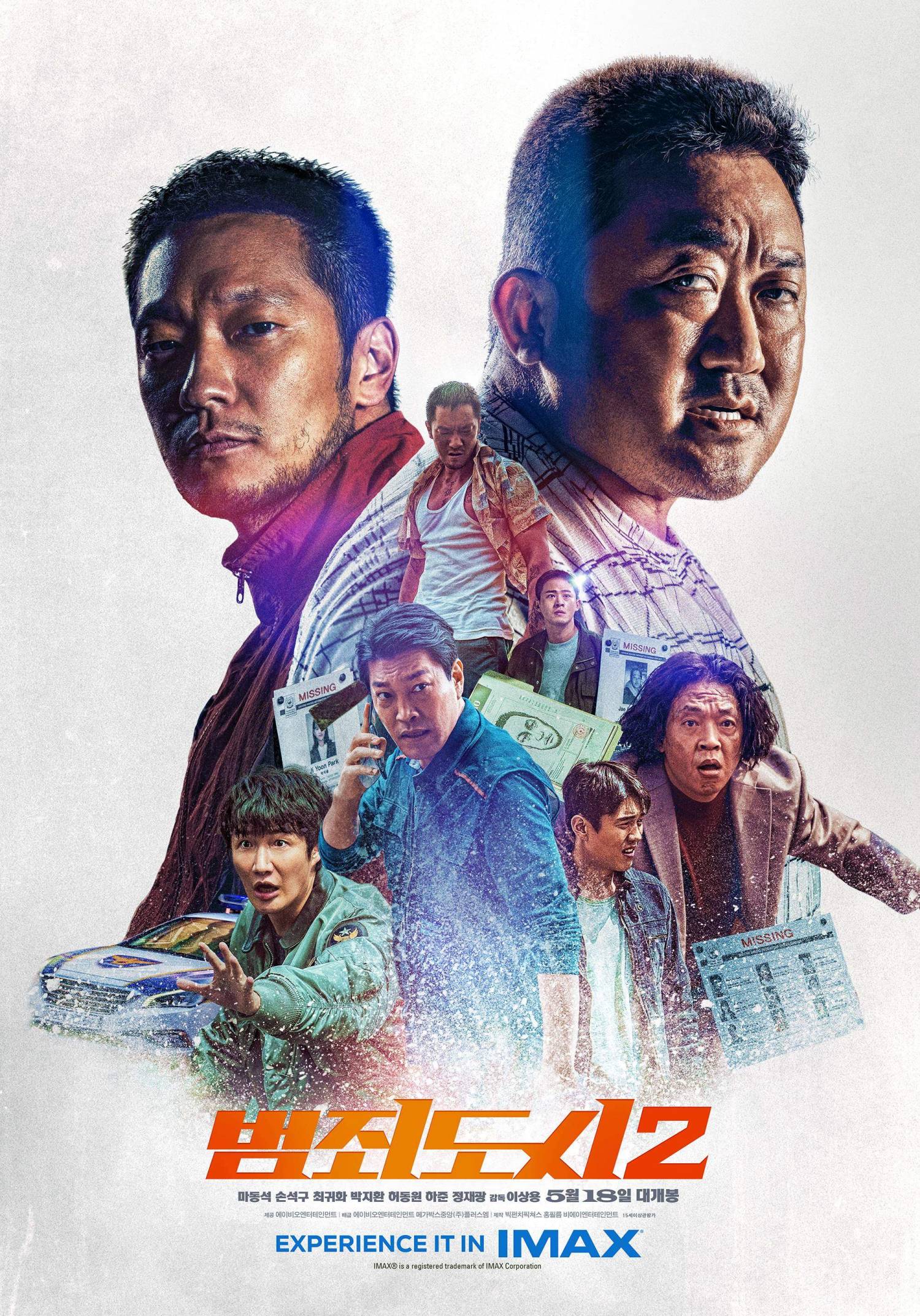
The Roundup (범죄도시 2, Lee Sang-yong, 2022)

Force of justice Ma Seok-do returns five years after The Outlaws to right more wrongs in jet-setting action comedy, The Roundup (범죄도시 2, Beomjoidosi 2). By this stage in his career, actor Ma Dong-seok has succeeded in creating a persona for himself as a loveable bruiser whose violence is just a way of being and always in service of a greater good. These are qualities very much in play as Seok-do (Ma Dong-seok) finds himself defending the interests of Korean citizens abroad against crooks the cops failed to catch at home.

Seok-do is however in the dog house for being accused of using excessive force in the papers after neutralising a hostage incident in a convenience store. To keep him off the front pages, the higher ups decide to send him on a mini mission abroad bringing home a Korean fugitive who has apparently turned himself in to the Vietnamese authorities. Given that this is quite an odd thing to do and the criminal’s explanation that he was suddenly overcome with guilt and wanted to repay his debt to society doesn’t ring true, Seok-do smells a rat. As he discovers, it all points back to the kidnapping and murder of a rich man’s son by vicious gangster Hae-sang (Son Seok-koo) who preys on unsuspecting tourists. Rather than get the police involved, the boy’s father has decided to hire a bunch of mercenaries to take revenge further destabilising the local underworld in Ho Chi Min City. 

It has to be said that there is something a little uncomfortable in the quasi-nationalist posturing of the film’s central premise. Korea has effectively been exporting crime by allowing dangerous criminals to flee abroad where the law can’t touch them. Korean crooks then make trouble for Korean tourists even if not quite to the extent of Hae-sang, all of which ignores the effects on the local Vietnamese population in concentrating on Korean on Korean crime. At the end of the film it’s even suggested that Korean police officers might be dispatched to other areas of Asia to look after Korean tourists which shows a certain lack of respect for national sovereignties while more or less letting the same police officers off the hook for failing to catch criminals in Korea or address the issues which led to them entering lives of crime. A maverick cop, Seok-do does rather throw his weight around in a foreign country, caring little for protocol and threatening to spark a diplomatic incident every few seconds. 

Then again he is just particularly keen on shutting down Hae-sang and exposing him for his heinous acts, cleaning up a mess that has ended up spilling over abroad. Ironically enough, the bereaved father, Choi (Nam Moon-cheol), maybe a powerful CEO but he made his money loansharking and is pretty much a petty gangster himself so of course he wants personal vengeance once again uncomfortably hiring mercenaries from China. Meanwhile, Seok-do ends up enlisting the help of a formerly undocumented migrant when Choi ends up getting kidnapped himself by a cornered Hae-sang.

In any case, Seok-do more than holds his own against the bloodthirsty villains in a series of well choreographed action sequences culminating in a one-on-one showdown on a bus. Much of Ma’s appeal lies in his effortless ability to take down bad guys which he does a plenty, even dispatching one via escalator to his waiting teammates below. Even so, he knows not to take himself too seriously and is keen to cede screen time to the ensemble allowing a gentle camaraderie to appear among his squad members despite their separation while Seok-do and the Captain are in Vietnam trying to have a covert holiday and the rest of the team are left behind to do regular admin work in the office. Though it may present some rather uncomfortable ideas in a kind of Korean exceptionalism that implies a degree of superiority over and disregard towards other Asian nations, the film is nevertheless a charming retro action comedy and perfect showcase for the charismatic star as his no-nonsense policeman makes a point of slapping down bad guys and fighting international crime while generally living his best life hanging out with similarly justice-orientated buddies. 


The Roundup screens in Amsterdam on 27th October & 4th November as part of this year’s Imagine Fantastic Film Festival.

International trailer (English subtitles)
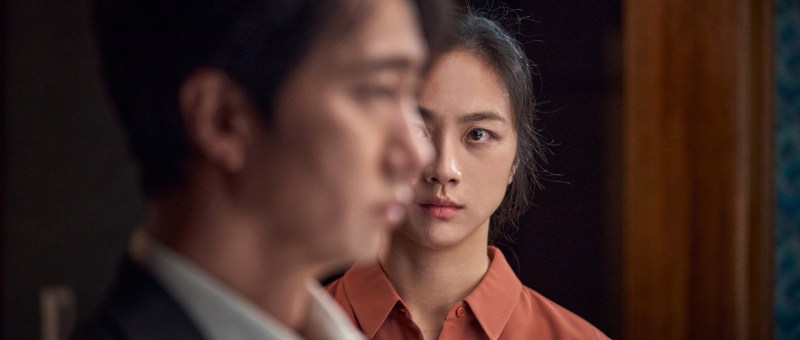
Decision to Leave (헤어질 결심, Park Chan-wook, 2022)

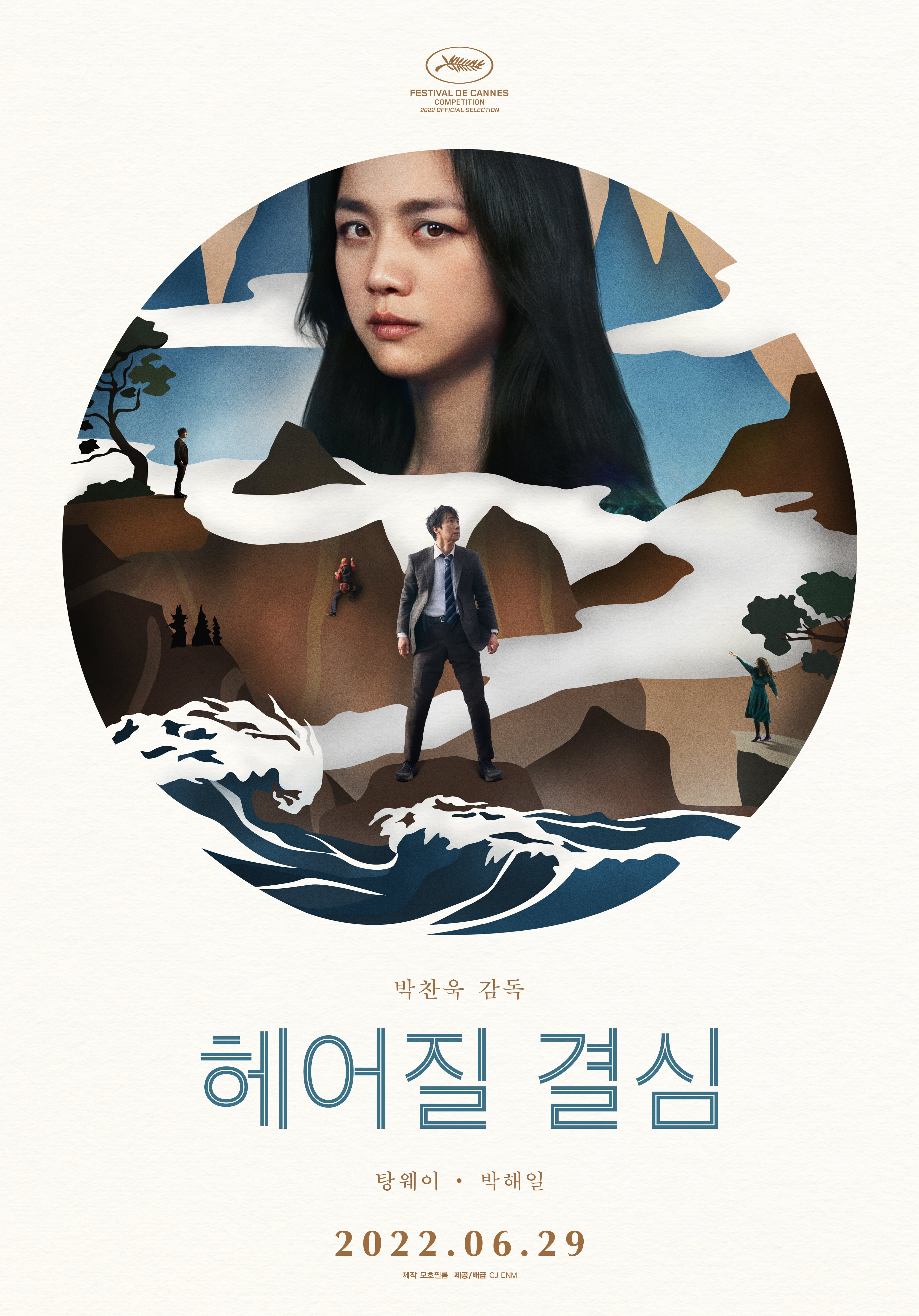
“I went through hell for you but without you my life would be empty” a fugitive murderer asks an insomniac detective to tell the woman he loves, making his own Decision to Leave (헤어질 결심, Heojil kyolshim) which will in fact be one of many in Park Chan-wook’s achingly romantic noir. Tinged with fatalism, the pursuit of love is also one of death and leads inevitably to a kind of haunting from which there is no real escape though you wouldn’t really want one anyway. 

In any case, the detective Park Hae-joon’s (Park Hae-il) sense of reality is already fracturing under the strain of his incurable insomnia. As he tells his partner, it’s not that he can’t sleep because of his obsessive stakeouts, it’s that he goes on stakeouts because he cannot sleep. Unfortunately for him, there have been relatively few murders lately. He wonders if it’s because of the nice weather, as if homicidal rage were being held in check by the gentle art of picnicking which it has to be said has a strange logic to it. Living apart from his wife who is a nuclear engineer in provincial Ipo, Hae-joon prides himself on being a good policeman and is preoccupied by his failure to catch two suspects currently on the run for a vicious murder. When he’s called to the scene of a dead body lying below a cliff, most are ready to rule it a tragic accident or perhaps a suicide but Hae-joon isn’t so sure especially given the unusual behaviour of the man’s much younger widow, Seo-rae (Tang Wei), who appears almost indifferent to her husband’s death and giggles to herself during an interrogation a habit she later claims is born of nervousness and a lack of confidence in her ability to speak Korean having migrated from China. 

Seo-rae’s Korean is perhaps a little better than she makes out, but still we see her repeating lines from romantic dramas on television, lines she later repeats to Hae-joon, while he wonders if her taste for historical romance has lent her Korean its archaic quality. They are each in a way out of time, she remarking that he strikes her as “dignified” to a degree she didn’t expect in a “modern” man while he ironically tells her that he was drawn to her because like him she liked to look at things directly. Yet there’s nothing at all direct about the mysterious Seo-rae whom he suspects of murdering her husband, and though there might be something unspoken directly understood between them their attempts at communication are always frustrated. Not only is there an ever shifting language barrier, but a mediation through text message and voice note or else through the act of being observed at a distance. As they grow closer, Hae-joon allows Seo-rae to listen to his surveillance tapes recorded as he voyeuristically watched her apartment from the rooftop opposite. She immediately deletes them but later does something similar herself, and is finally undone by her inability to delete a potentially incriminating recording because it has come to mean too much to her. 

The pair are in a sense perfectly matched. Hae-joon’s melancholy wife finally exclaims that he needs murder and violence in order to be happy, while Seo-rae admits that she ends up with terrible men like husband because it would take something extreme such as a murder for a good man like Hae-joon to take notice of her. As the couple dance around each other, Park colours their non-romance with shades of the gothic in the repeated motif of the crow feathers each of them find as they work their way towards the apotheosis of their love. As they say every love story is a ghost story and what is love if not an unsolvable mystery? Hae-joon’s sense of reality is forever in flux, Park playfully dressing Hae-joon’s new team and his old team in similar outfits as he segues between fantasy, reality, and memory while trying to parse out an objective truth. Hae-joon’s tragedy may be that he discovers more than he ought to know but not enough to solve the mystery, destined to be haunted by his unresolved cases and the elusive silhouette of lost love lingering silently in the mists of memory. 


Decision to Leave screened as part of this year’s BFI London Film Festival and is now on general release in US & UK cinemas courtesy of MUBI.

International trailer (English subtitles)
Angae (Mist) by Jung Hoon-hee (1967) which is also the title song for Kim Soo-yong’s 1967 film of the same name.

Shiro – Hero of Heroes (諸葛四郎 – 英雄的英雄, Lin Yu-chun & Chuang Yung-hsin & Liu Yu-shu, 2022)

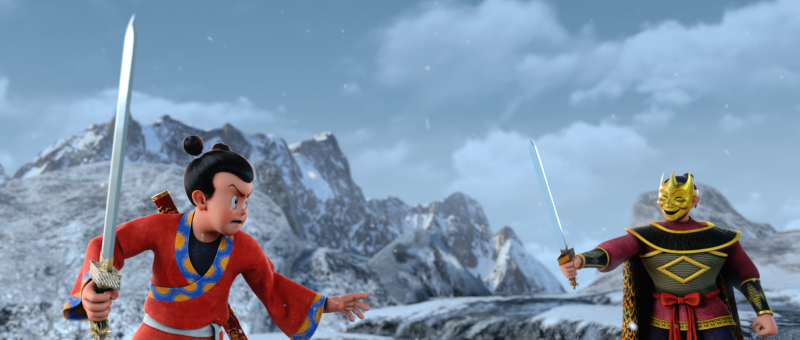
An earnest young man, grieving son, and feisty princess team up to stop the evil Demon Society from becoming all-powerful rulers of their land in an adaptation of classic Taiwanese comic book Shiro – Hero of Heroes (諸葛四郎 – 英雄的英雄, Zhūgě Sìláng – yīngxióng de yīngxióng). Created by Yeh Hong-Chia in the late 1950s, the series has become a nostalgic touchstone for generations of children and is about to reach new ones with a feature-length 3D CGI animation following Zhuge Shiro (Wang Chen-hua) on another exciting adventure to reunite the magical Dragon and Phoenix swords and stop their awesome power from falling into the wrong hands. 

Unfortunately the Dragon Sword has already been lost, much to the king’s regret. When Demon Society raid the palace during a festival and place a mask over the princess’ face, the king puts the land on lockdown and summons the nation’s locksmiths to try and free her only to realise there’s no way to unpick Demon Society’s diabolical locks without giving in to their demands to surrender the Phoenix Sword. Luckily hero of heroes Zhuge Shiro just happens to be in town on the invitation of his locksmith uncle and pledges to help the king salvage his fracturing relationship with his daughter who resents his hesitation to exchange the sword for her wellbeing and make sure Demon Society doesn’t get its hands on the swords’ unleashed power. 

Though this is in many ways a tale aimed at younger audiences, the incredibly witty script moving to the rhythms of traditional opera includes a series of meta jokes for grownups from a silly reference to a limited edition dart and workplace exploitation to subtle digs at societal authoritarianism along with a small cameo from a wandering cartoonist whose work is censored by the powers that be. Having faced Demon Society several times before, Zhuge Shiro is a pure hearted young man wise beyond his years with a strong sense of justice. His first act of goodness is standing up to an officious guard, General Shan, who won’t let a worried father with a sick child enter the town to find a doctor, while he soon earns the respect of the king through his compassion and emotional intelligence in trying to explain the king’s dilemma to the princess. He does however engage in a little sexism which the princess herself is quick to push back against, pointng out that she’s a skilled fighter herself and does not need protecting but will be joining him on this mission whether he likes it or not. 

Similarly, Zhuge Shiro gains another comrade in Zhen Ping (Chiang Tieh-Cheng) who is originally under the misapprehension that Zhuge Shiro is responsible for his father’s death only to later realise it was all the fault of Demon Society. To reunite the swords and save the kingdom, the trio find themselves battling through the villain’s booby trapped lair and discovering that the swords’ power lies in a different place than they first might have assumed, one Demon Society is largely unable to appreciate and therefore to benefit from even if they had managed to hold both swords in tandem. In other words, it’s brotherhood and justice which eventually enable the trio to prosper while the bumbling masked demons only make fools of themselves in their intense greed and villainy. 

Staying close to the aesthetic of the comic book, the film’s highly stylised designs closely match those of the original characters from back in the late 1950s if perhaps a little cuter and rounder in keeping with contemporary CGI animation while it moves to a comic beat inspired by traditional opera interspersed with a few song and dance numbers and exciting martial arts fight scenes as the trio face off against the minions of Demon Society while standing up for justice. Just as the king learns the real meaning of treasure, the trio discover a brotherly bond and a new mission to rid the land of the evils of Demon Society while accepting that even villains can change their ways and should be allowed a chance to redeem themselves, and those who may seem obviously villainous might be alright on the inside. In any case, Zhuge Shiro embarks on what could be the first of many adventures in charming style taking down the bad guys with good humour and righteousness fuelled by the power of friendship.


Shiro – Hero of Heroes screens in Chicago on Oct. 23 as part of the 15th season of Asian Pop-Up Cinema.

Original trailer (English subtitles)

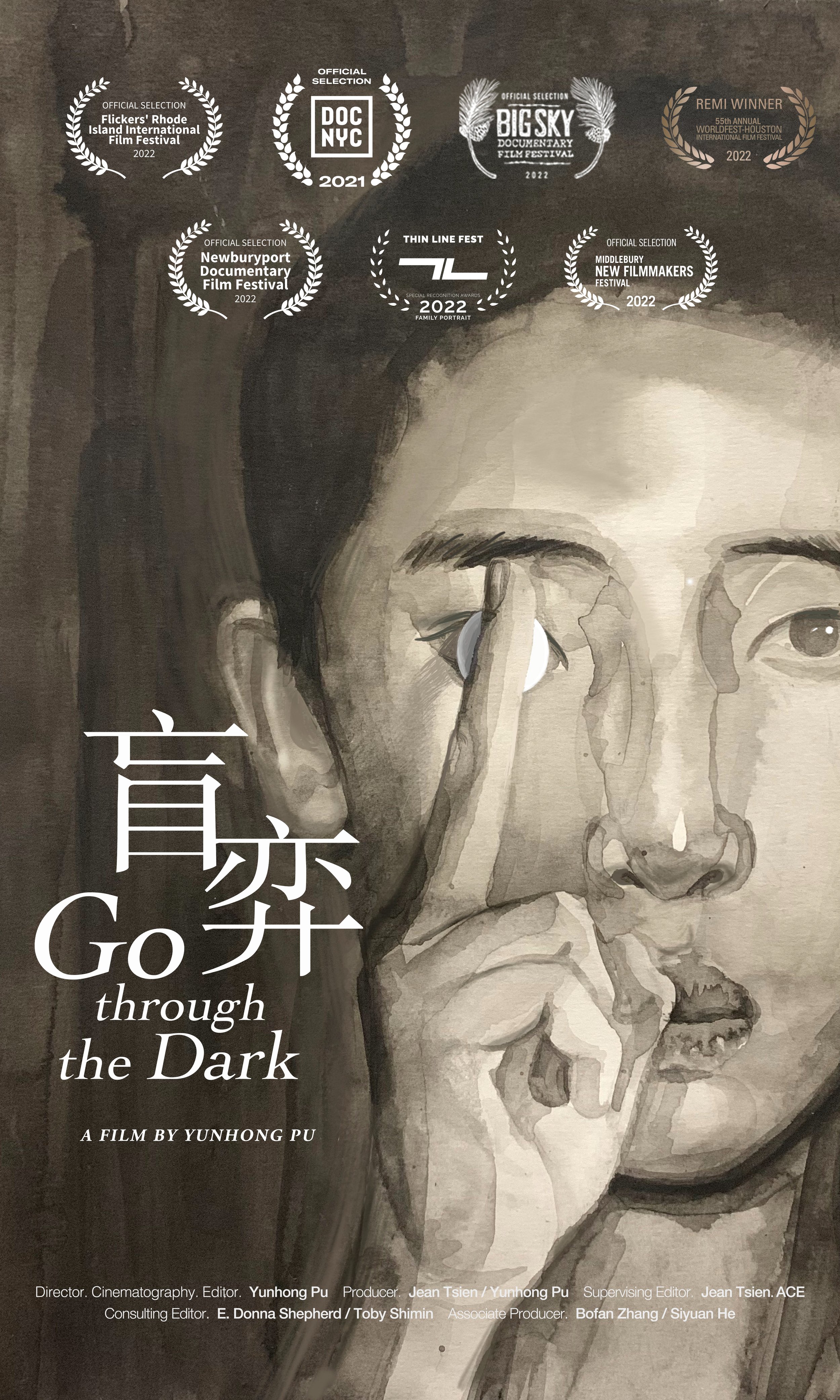
Go Through the Dark (盲弈, Pu Yunhong, 2021)

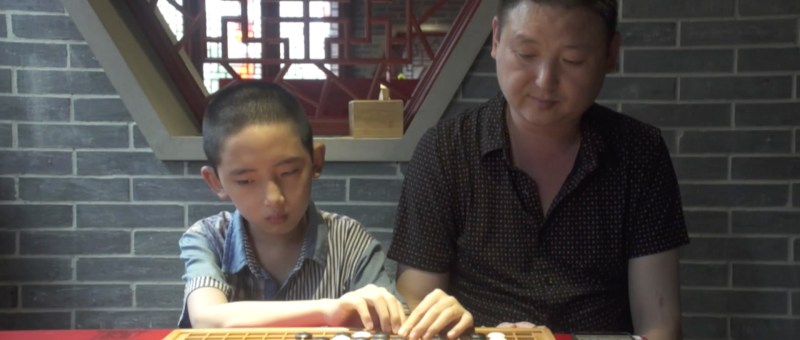
“You should rely on yourself not on others. Success comes from your own efforts” a father tells his son, yet his words have a particular irony given the complicated nature of their relationship. Pu Yunhong’s mostly observational documentary Go Through the Dark (盲弈, máng yì) follows an 11-year-old boy who unwittingly became a social media star after winning a regional Go contest despite the fact that he is blind. At first Guanglin’s father seems supportive and caring, yet the boy often appears to be on the brink of tears and is near silent giving no real indication whether or not he actually likes the game of Go or is only doing it to please the father who has told him he has no other future solely because of his blindness. 

In any case, Guanglin has already achieved level four status after only two years and at a relatively young age even for a sighted child who devoted themselves solely to studying the game. Using a specially adapted board that allows him to play by touch, he seems genuinely heartbroken on losing out in the final match of a tournament, crying into his father’s shirt, but later events lead us to wonder if it’s merely disappointment that has him so upset or guilt mixed with fear in being unable to live up to his father’s expectations. It seems that Guanglin’s father has decided that his future lies in becoming a professional Go player, explaining that he had previously considered sending him away to train as a masseur expressing a rather outdated and prejudicial view of blindness in insisting there are no other possibilities for him, but there is an ongoing conflict of interest that sees him attempt to micromanage the boy’s affairs as if making a bid for vicarious success rather than earnestly supporting his son in order to see him fulfil his dreams. 

He first explains that they were offered a place at a Go school in Beijing but then that the school messed them around, accusing them of exploiting Guanglin to boost their image while having no real intention of helping him. Then they travel south to Xiamen following an offer from Mrs Wang who provides them with an apartment and offers to train Guanglin for free. But it’s still not enough for his father who complains endlessly that he feels ripped off and exploited, irritated by Mrs Wang’s suggestion he help out at the school while she seems to have some concerns about their potentially toxic co-dependency. Though his father is always pointing out that Guanglin will have to become independent someday, he takes frequent steps to prevent him doing so. Apparently suffering from severe separation anxiety, Guanglin does not attend school and is getting no conventional education nor does he have the opportunity to mix with other children of his own age and has poor social skills. Mrs Wang is concerned that he never chooses his own food to eat but accepts only what his father gives him, while there is something worrying in his tendency to simply eat a few bites and declare himself full with his father then finishing off his meal. 

The cause of Guanglin’s blindness, according to his father, is malnutrition caused by their poverty though Mrs Wang in particular is convinced that he may never have attempted to get proper medical care for his son. When she tries to encourage him to take Guanglin to a specialist who suggests that it might be possible for him to regain at least some of his sight, his father becomes indignant. His anxiety may be born of a genuine fear that surgery may make things worse or cause additional injury because of the affects of the anaesthetic but behind it all there’s the uncomfortable suggestion that he simply doesn’t want Guanglin to be cured because that would reduce his dependency on him while rendering him “ordinary”, no longer the blind Go player with no guarantee that he can learn to play the game the way that others play it. 

Even when his father puts him in a school in Beijing, the coach seems to agree with him that it would be “better” if Guanglin could delay the treatment on his eyes so the school would have the cachet of training the blind Go champion. Yet when he had put him in a school in his hometown, the coach there had humiliated Guanglin in front of the whole class calling his moves “cabbage-headed” and unacceptable for someone at his level. “No one wants to play with a loser” his father cruelly tells him, as Guanglin wanders around on his own rejected by the other kids who are mostly reading or playing video games yet often appearing at his most happy running around and standing behind his classmates listening to them play even when not included. Though often withdrawn, stressed and close to tears, Guanglin does his best without complaint while his father runs him down and rants about people not supporting their dream. It may be that pretty much everyone is exploiting Guanglin in one way or another, no one really thinking about his quality of life or future independence, but he is left with nowhere else to turn and only Go to cling to as an uncertain lifeline towards a better future. 


Go Through the Dark screens on 21st October as part of Cambridge Film Festival.

Original trailer (English subtitles)
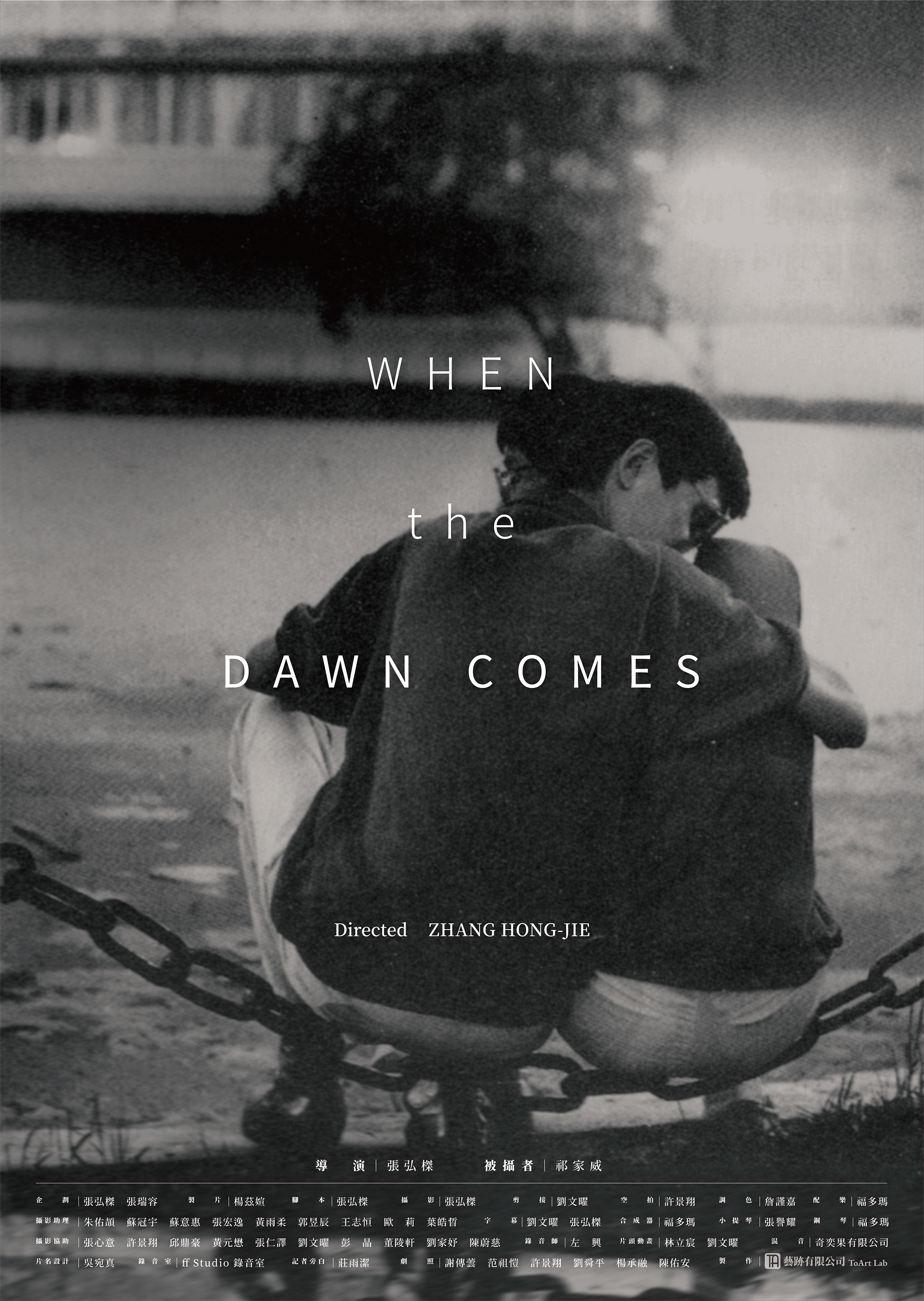
When the Dawn Comes (黎明到來的那一天, Zhang Hong-Jie, 2021)

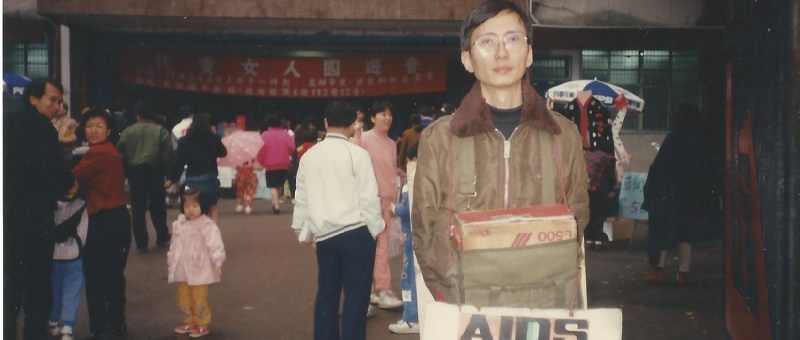
When Chi Chia-Wei appealed to the Legislative Yuan for marriage equality in 1986, he was told that “homosexuals are perverted minorities that seek to disrupt social morals for their own sexual desires”. 33 years later in 2019, Taiwan became the first Asian nation to legalise same-sex marriage. Zhang Hong-Jie’s documentary When the Dawn Comes (黎明到來的那一天, límíng dàolái de nà yī tiān) follows Chi during the final days of the campaign amid a counter offensive from conservative groups who hoped to prevent the legislative change going ahead. 

Chi has been a literal flag bearer for the LGBTQ+ community, a familiar sight at protests and pride parades well known for climbing to the highest point available and waving a rainbow flag where no one can miss it. Indeed the documentary captures him doing just this despite his advancing age and the efforts of the authorities to prevent him. His campaign has been a long one, beginning when he was just a young man as the opening sequence points out with dark hair who held a press conference and came out publicly as a gay man becoming the first in Taiwan to do so. Now his hair is grey, and he is still fighting the same the battle though when this battle is done he knows there will be others still to fight. 

When he first began his campaign for marriage equality Chi was battling the stigmatisation of the gay community during the AIDS crisis, continuing to argue that advocacy for gay rights and AIDS prevention should be carried out at the same time. In some ways subverting the prejudice shown against him, Chi became a well known figure handing condoms out in the streets wearing a series of striking outfits as a kind of performance art. As another advocate points out, what made his approach different was that it refused to submit to internalised shame in normalising the idea of gay sex while encouraging safe practice and educating both the gay and straight communities about the importance of sexual health. 

Nevertheless, Chi was not uncontroversial. Though he took a hands on approach in AIDS activism, setting up a hospice for those with nowhere else to go, he was criticised for inviting the press to cover it leading some of the patients to leave resenting Chi for breaching their privacy. He then went on to sue three men whom he accused of hiding their diagnosis and going on to knowingly infect others, something that was also widely criticised in the community for essentially outing these men and their partners publicly and potentially setting a dangerous precedent when it comes to medical privacy. One fellow activist speculates that Chi may have justified his actions on the grounds of discouraging others from doing the same but points out that it in part had the reverse effect with some unwilling to be tested at all fearful that they might end up getting sued too if the test came back positive. On the other hand, he also regularly submitted blood samples on behalf of men who were too afraid to go in person lest their private lives be exposed. At one point Chi became such a thorn in the authorities’ side that they tried to frame him for a random crime and eventually sent him to prison for five months for “misappropriating waste”. 

As for himself, Chi is also in a somewhat difficult position in that his longterm partner (who is never seen in the documentary) is still in effect closeted and facing pressure from his family to marry. Asked if they personally plan to marry once the law goes into effect, Chi can’t really answer suggesting only that they may do once his partner’s father passes away explaining that he is an only child. In one of the hearings, a lawmaker brings up an anxiety about what to do with ancestral tablets while the question of the family line still seems to lie behind prejudice towards same sex relationships. Meanwhile, his partner has long been taking anti-depressants to cope with the pressure of his family’s lack of acceptance, while Chi too is also on numerous kinds of medication for conditions caused by the stress of his work. Even so, once marriage equality is fulfilled, Chi immediately files for a paper marriage with a Malaysian man to challenge the new legislation’s failure to account for international marriages, determined to continue fighting for fully equal rights. Zhang’s documentary never shies away from some of the more controversial aspects of his activism, but nevertheless celebrates the determination of a man who dedicated his life to a cause for which he was never afraid to stand out and proud.


When the Dawn Comes screens 16th October as part of this year’s Taiwan Film Festival Edinburgh.

Original trailer (English subtitles)