Hero (영웅, JK Youn, 2022)

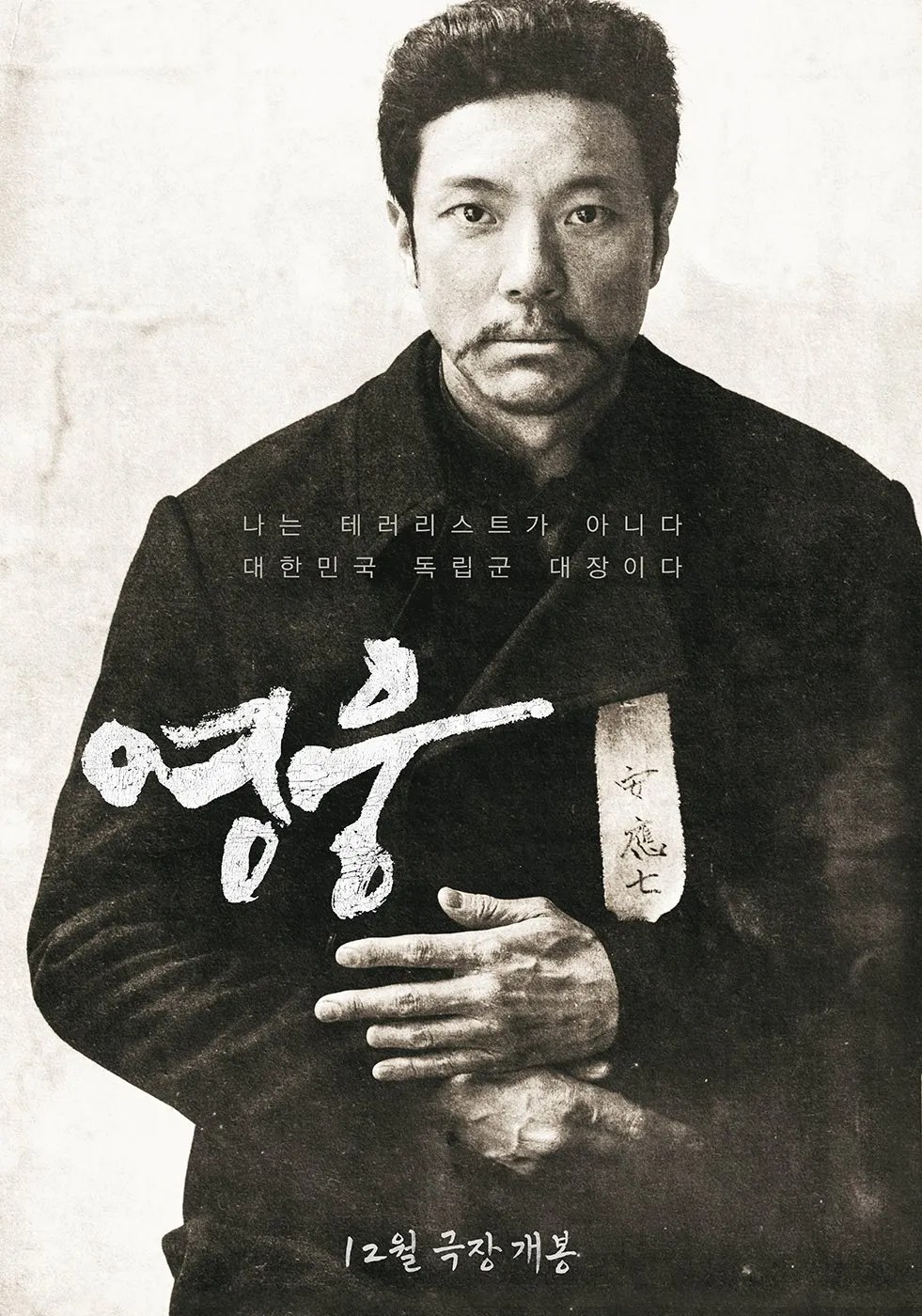
An Jung-geun is a key figure in modern Korean history whose story has been dramatised numerous times and given rise to its own legend. JK Youn’s Hero (영웅, Yeong-ung) is, however, the first movie musical devoted to his life and adapted from a stage hit that has been running since 2009. It has to be said that structurally the musical owes a fair amount to Les Misérables with a dramatic first act closer that is more than a little reminiscent of One Day More, while a number about meat buns echoes the kind of comic relief provided by Master of the House, though the rhythm might hint at Sweeney Todd’s meditation on pie making.

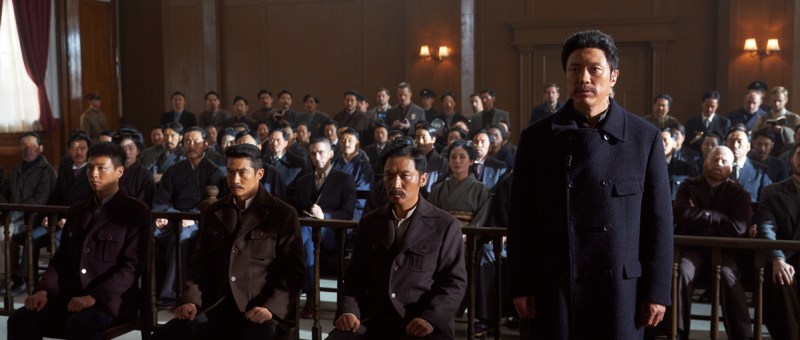
It is certainly out of keeping with the intensity surrounding it as the focus is, after all, on an attempt to stop the Japanese colonising Korea and practising even more cruelty. An Jung-geun abandons his family in the early part of the film, but this isn’t seen as a moral failing or irresponsibility so much as evidence of his devotion to the cause that he sacrifices a peaceful life as a husband and father. His revolutionary activity is furthermore filial because his mother encourages it, later writing him a letter while he is imprisoned urging him not to appeal his sentence but accept his death as a martyr. To appeal would mean accepting the Japanese’s authority in begging for his life. Jung-geun had wanted to be tried not as a murderer, but as a soldier fighting a war and therefore sees his trial as illegitimate. He insists he is a political prisoner, a rousing number outlines 15 reasons why the man he assassinated, Ito Hirobumi Japan’s first prime minister and resident-general of Korea, deserved to die which include dethroning the Emperor Gojong, assassinating the Korean Empress Myeongseong (Lee Il-hwa), lying to the world that Korea wanted Japanese protection, plunder, and massacring Koreans (all of which the Japanese had done). 

It’s the assassination of Empress Myeongseong that motivates the film’s secondary heroine, Seol-hee (Kim Go-eun), a former palace made now operating as a resistance spy in Japan under the name Yukiko. Seol-hee’s impassioned songs have curiously homoerotic quality and take the place of a central romance which the piece otherwise lacks except in the tentative relationship between Jin-joo, sister of one of An’s closest men, and the youthful recruit Dong-ha. Even if “Myeongseong” is effectively “Korea”, Seol-hee’s passionate intensity is quite surprising while her motivation is more revenge for her murdered mistress than it is saving the nation and eliminating Japanese influence. In this, her arc might not quite make sense in that her final actions almost derail Jeun-guen’s mission in putting the Japanese on high alert. 

But at the same time the film leans in far harder on Jeun-geun’s religiosity than other tellings on his story in which his faith presents only a minor conflict as evidenced by his offering an apology to God for killing Ito while justifying his actions as those of a righteous man in the courtroom. While placing him at odds with the left-wing ideology of other Independence activists, his religiosity is aligned with his humanitarian decision to release Japanese prisoners rather than execute them, abiding by the commonly held rules of war while his men are eager for blood. The decision backfires, but is depicted more favourably than in the narratively more complex Harbin and Jung-geun is otherwise an uncomplicated hero who makes no wrong decisions and never fails even if he is at the mercy of the Japanese.

As such, the musical sticks to the familiar beats of Jung-geun’s story from the Japanese counterstrike to his talent for calligraphy and the letter from his mother instructing him to go bravely to his death. Anchored by an incredibly strong vocal performance from Chung Sung-hwa who originated the role on stage, the film portrays Jeun-geung as the hero of the title, defiant to the end and thereafter wronged by the Japanese who buried his body in an unknown location and prevented him from ever returning home to a free Korea. It also glosses over the possibility that Ito’s assassination may actually have accelerated the course of Japan’s annexation which it failed to prevent and otherwise had little lasting effect. Nevertheless, despite its overt patriotism, the film does present the rousing spectacle of Jung-geun’s embodiment of the good son of the nation who fought hard for a liberated Korea he never got to see.


Hero screened as part of this year’s London Korean Film Festival.

Trailer (English subtitles)

Someday or One Day (想見你, Huang Tien-jen, 2022)

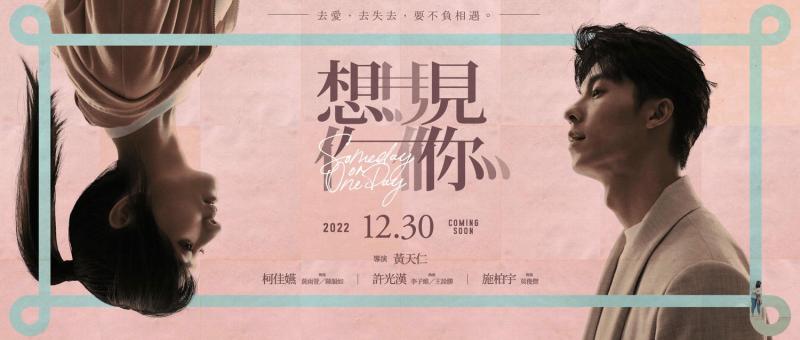
A young woman finds herself quite literally in someone else’s shoes while trying to reclaim lost love in Tien Jen Huang’s sci-fi-inflected drama, Someday or One Day (想見你, Xiǎng Jiàn Nǐ). Inspired by the hugely popular television drama of the same name and starring the same cast, this big-screen edition drops the 20-year time slip device for a comparatively compressed tale largely taking place between 2014 and 2017 while the romantically troubled heroes effectively span a kind of multiverse of heartbreak, each looking for the good timeline where both they and their love can survive together. 

It has to be said, however, that the meet cute between destined lovers Yu-hsuan (Ko Chia-yen) and Zi-wei (Greg Hsu) is not without its problematic elements given that Yu-Hsuan is still in high school when the tale begins while Zi-wei is in his mid-20s, not to mention he’s largely interested in her because she looks exactly like old high school friend Yun-ru (Also Ko Chia-yen). Their meeting was brokered by a shared dream featuring the song Last Dance by Wu Bai which was released in 1996 which might explain why Yu-Hsuan didn’t know it prior to hearing it in the dream world where she lived with a man she didn’t know but turns out to be Zi-wei. The pair hit it off and eventually move in together. They are blissfully happy until Zi-wei is killed protecting Yu-Hsuan when they both randomly fall from a building which is still under construction. 

What they were doing there in the first place isn’t really explained, but it doesn’t become the nexus of Yu-hsuan’s trauma as she struggles to move on with her life continuing to communicate with Zi-wei through text message and imagined conversation even after moving to Shanghai for work. After being sent a walkman and cassette tape of The Last Dance, she wakes up in the body of Yun-ru the day before the accident and realises she can save Zi-wei if only she can convince him, and herself, that the danger is real. 

Moving the action to 2014 does rather undermine the nostalgic power of the song along with that of the walkman itself as a kind symbol of a late ‘90s youth only hinted at in brief flashes of Zi-wei’s high school days that were most likely better fleshed out in the TV series. Then again the theme of nostalgia is itself destructive given that the opening lines remark on how “silly” it is to try to hold on to “something that is vanishing” which is what each of the lovers is trying to do in the time slip drama by attempting to prevent the accident at the building site (though it doesn’t seem to occur to any of them that they could just not go there). 

As the rather trite closing quotation suggests it’s better to have lost and lost than not loved at all, each of the lovers realising that they cannot in fact change the past however much they might wish to and should try to do their best to enjoy the time they’ve been given with those they love for no one knows how long that will be. Nevertheless, there’s no denying that all the body swapping, multiverse shenanigans become incredibly convoluted, especially towards he film’s conclusion, making it largely impossible to keep track of who is who at the current time and what their relations to each other are. Viewers of the TV drama will be better placed to decipher whom some late introductions actually are given that their presence goes largely unexplained save for vague references to their names. 

Then again, we can’t be sure if the heroine eventually wakes up from a dream or is unable to do so becoming trapped in a fantasy of lost love defined by dream logic and wilful nostalgia rather than the anxieties of her nightmare in which she feared that though Zi-wei held her tight he would one day disappear. Undoubtedly confusing, the film nevertheless manages to deliver its time slipping messages of the importance of holding every moment close and then treasuring the memories of lost love rather than continuing to pine for something that can never be regained.


Trailer (English subtitles)

Remember What I Forgot (曾經擁有, Keian Chui, 2022)

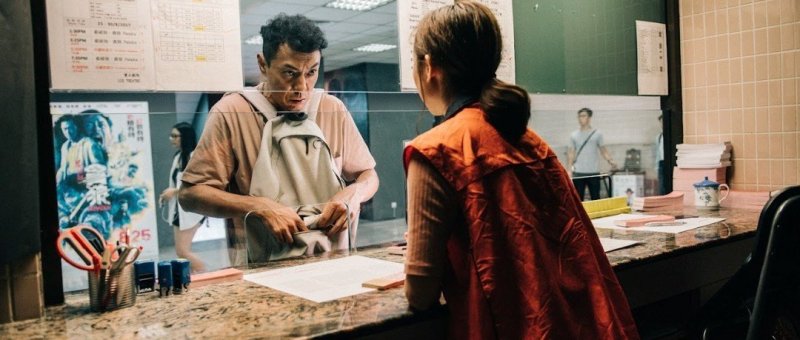
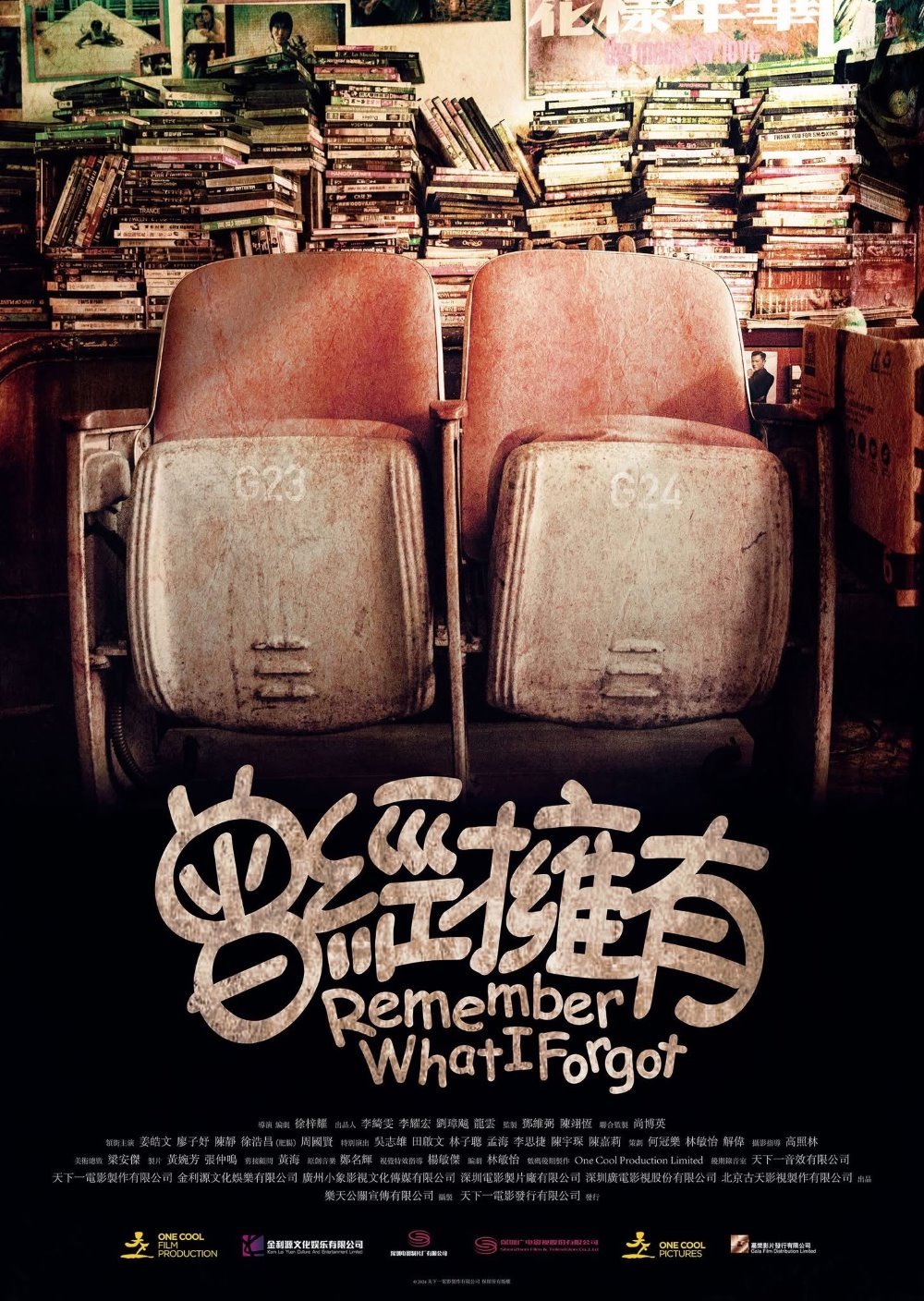
Shot in 2017 and held back until recently, Remember What I Forgot (曾經擁有) is one of series of films that suggest Hong Kong cinema is becoming a thing of a bygone era. The conceit is that the hero literally cannot remember as he has early-onset dementia and is to some extent stuck in the past or at least using Hong Kong cinema as a means of anchoring himself in a society that’s constantly changing as demonstrated by his quest to find a copy of Perter Chan’s 1996 film Double the Trouble which has gone out of print. 

Kim (Philip Keung Hiu-Man) lives with his cousin, Wan, who is also afraid to move on because he’s worried Kim won’t be able to find his way home if they leave his moribund repair shop. Kim otherwise spends his time hanging out on film sets and watching movies at the cinema and at home which is what has convinced Ginger Keung (Fish Liew), a journalist working for a trashy TV expose show, that Kim maybe the so-called “Prince of Darkness”, a film reviewer who posts scathing takes on movies on his blog and has become the enemy of all Hong Kong film producers. 

It’s surprising they afford him so much power, but it does seem that love or loathe it his writing is eagerly awaited. Ginger tries to befriend Kim in order to exploit him by exposing him as the prince of darkness on her TV show though finds herself conflicted on realising his condition. Kim is also the only one who remembers Ginger as a screenwriter and apparently liked her film, The Movie Exorcist, which he described as “nonsensical” and having “no commercial value” but also the most fun he’s ever had at the movies. A dark satire of the death of the film business in which ghosts buy tickets in a haunted cinema, the film had been an expression of the frustration Ginger felt graduating film school but being unable to find any work. This is perhaps why she’s become cynical about Hong Kong cinema which she describes as lacking in passion. 

Having regained some of the memory he’d lost, Kim laments that he just wants to remember everything about Hong Kong cinema and doesn’t understand why no one else seems to care. Given his condition, his mind sometimes “remembers” scenes from classic movies such as Infernal Affairs and Comrades Almost a Love Story as if they had actually happened to him, which in a way they have because they’re a part of the history of Hong Kong of which he has now become a sole guardian. Poignantly, it seems that the reason he always goes to the same cinema and books the same seat is that he’s waiting for someone, but has also forgotten all about it and no longer remembers why he goes there except for his intense love of Hong Kong film.

Ironically, Kim’s becoming a movie star too in that Ginger is intent on filming him for her show while simultaneously feeling guilty for taking advantage of him and wondering if she really has what it takes to be this kind of ruthless “journalist” ready to upend someone’s life and expose them to censure and ridicule for view numbers. Maybe it was easier when she thought he was a snarky bastard trashing Hong Kong films for clicks in much the same way her show trash talks people’s “dirty laundry,” than when she realised he may be being exploited by someone else and in any case just has high standards because he loves Hong Kong cinema so much that he wants it to be better. Having remembered something, Kim tries to revisit an old cinema to keep an appointment, but it’s already been closed down as there’s no way back to that moment. Kim cannot find his way home except in the movies because that Hong Kong no longer exists anywhere else. Nevertheless, he seems determined to reclaim and preserve as much of it as he can while righting old wrongs and keeping that appointment even if the person he’s waiting for likely won’t arrive. It’s his enthusiasm that guides Ginger back from her cynicism, causing Ginger to rediscover her own love for Hong Kong films and re-evaluate her current line of work while helping Kim to achieve his dreams of keeping it alive.


Trailer (Traditional Chinese & English subtitles)

Hey! Our Dear Don-chan (おーい!どんちゃん, Shuichi Okita, 2022)

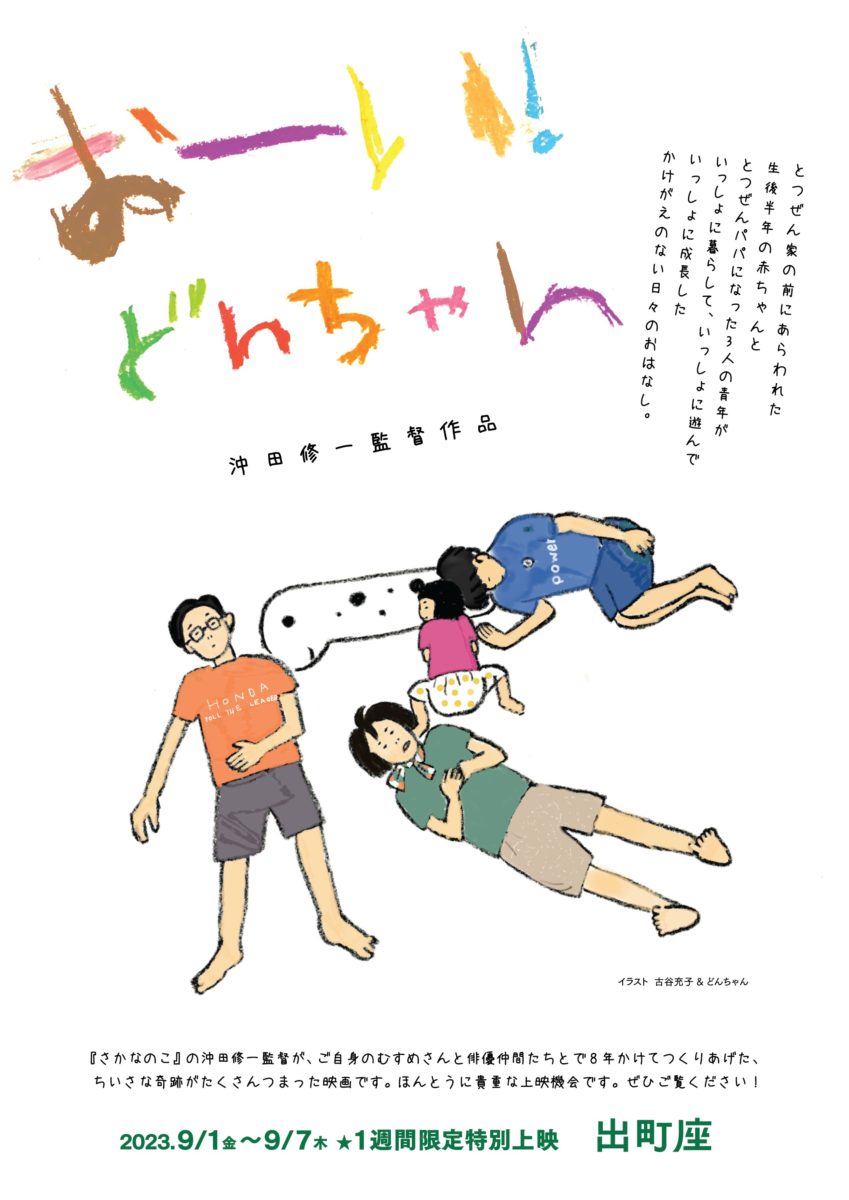
A trio of actors undergo a coming-of-age tale of their own when a baby is suddenly abandoned on their doorstep in Shuichi Okita’s charming slice of life dramedy, Our Dear Don-chan (おーい!どんちゃん, Oi! Don-chan). A take on Three Men and a Baby, the film stars the director’s own daughter and follows her over a period of three years as the actors attempt to adjust to fatherhood and the new kind of family that has arisen between them. 

As the film opens, Michio (Tappei Sakaguchi), Ken (Hirota Otsuka), and Gunji (Ryuta Endo) are struggling actors working in slightly different media but having about the same amount of luck and continually dejected about their lack of career success. Ironically while playing the game of life, Ken has a baby girl in the game but is surprised to hear one crying for real on the street below. On reading a note in her pushchair, Ken realises that the baby has been left by a previous girlfriend, Kaori, with the instruction that he raise it. 

Of course, the situation gives rise to a degree of panic, Ken wondering not only if he is the father but if he can be while supported by the other two guys, along with former houseman Sakamoto and his girlfriend Akari, taking care of more practical matter likes getting nappies and baby food. Then again, some of the practical details are already overcome by virtue of their occupations which allow them to be home during the day taking shifts to watch the baby they christen “Don-chan” on account of not knowing her real name. 

As they struggle with the demands of fatherhood, the three men each commit themselves to Don-chan’s well being, mindful of the memories she’ll make in the future and wanting to make her present as happy as possible. At one point they decide to take a camping trip in order to show her that they can be “manly dads”, but otherwise entertain her at home or take her on trips to the aquarium acting as a trio even if Ken is technically the primary dad forming a new kind of family that makes it easier to care for a small child than it might otherwise have been. If Ken had been on his own, he may not have been able to raise her. Michio and Gunji both complain at the precarious state of childcare facilities, lamenting that you can’t get a place unless you work full-time but you can’t work full-time if you can’t get childcare for when you’re at work. 

Meanwhile, they continue to struggle in their professional lives. A humiliating audition for a TV commercial causes Ken to rethink his career plans, stopping off to buy new toys for Don-chan on the way home lamenting that he “danced like an idiot for no reason.” Michio continues to go full method over researching all his roles for seconds of screen time in TV and movies, while Gunji’s stage career is disrupted when the manager of his troupe decides to admit himself to a psychiatric facility for long term care. Through their interactions with Don-chan, however, they all begin to grow up gaining further life experience which enhances their performance ability and gives them a greater goal to work towards aside from mere career success. 

A heartwarming familial drama, the film doesn’t gloss over how difficult it can be to raise a child in contemporary Japan especially as a single-parent but rather embraces a larger idea of the word family which centres platonic friendship and community while simultaneously understanding of Kaori’s position in the knowledge that none of this is easy and she may not have had access to the kind of support that made it possible for Ken to care for Don-chan with so much love and attention. In any case, little Don-chan is certainly lucky to have so many people around her all invested in her happiness and future whose lives she has also enriched just by her existence. A truly happy film, Okita adds small doses of absurdity to the already surreal events along with a nostalgic sense of childhood comfort right down to the childish font of the film’s titles complete with corrections and crossings out that are, much like life, evidence of joyful trial and error. 


Trailer (English subtitles)

Tales from the Occult: Body and Soul (失衡凶間之罪與殺, Frank Hui, Daniel Chan Yee-Heng, Doris Wong Chin Yan, 2022)

The second in a series of horror-themed anthologies, Tales From the Occult: Body and Soul (失衡凶間之罪與殺) takes fairytales as its theme but truth be told none of the episodes has very much in common with the most well known version of their respective stories. What they do have in common is a rather grisly view of the nighttime city perhaps inspired by classic Cat III shockers though mediated through a strong sense of irony. “I like it a bit dark” one of the heroes exclaims and it’s certainly a sentiment shared by each of the three directors. 

The first instalment, Frank Hui’s Rapunzel finds former idol star Maggie (Michelle Wai) trying to prop up her flagging career while constantly written off as a has been best known for a cheesy pose in a dated shampoo commercial. Her manager sends her to an obnoxious rich kid’s birthday party where the women are so young they weren’t even born when she was a star and relentlessly mock the weird “aunty” and her “retro” movies. One of the guys sets fire to her hair which is even more of a problem for her because she’s supposed to have an important meeting with a producer in the morning and he’s not going to hire her with a less than perfect appearance. Maggie’s desperation eventually draws her into the orbit of a hair fetishist serial killer from whom she must try to escape while attempting to rescue her hair and save her career. A secondary strain of social community places the killer’s creepy all night salon in a building that’s about to be torn down for urban renewal leading him to be bullied by gangsters to move out but not wanting to for obvious reasons. Maggie meanwhile eventually makes a surprising decision in order to fix herself which is in its own way cannibalistic at least of the female image when it comes to the idea of perfect hair. 

You couldn’t say that Daniel Chan’s Cheshire Cat really has that much to do with the classic Alice in Wonderland character either, though Chan does throw in something like a Mad Hatter’s tea party and leave his heroine trapped in a cage suspended above the air. Nora (Cecilia Choi Si-Wan) works in a cat rescue centre and is particularly upset by the idea of people hurting her feline friends, especially as her own cat Bobo was recently murdered. After agreeing to rescue a kitten trapped under a van she unwittingly passes into a grim haunted house adventure with a death metal vibe. In a series of atmospheric shots, Chan frames Hong Kong in an angry red tint capturing the increasing resentment of Nora as she continues to take out her rage on those who would harm poor defenceless creatures. 

Doris Wong’s The Tooth Fairy perhaps ironically subverts its title while toying with the interplay of sadomasochistic fetishes. Dental nurse Sammi (Karena Lam Ka-Yan) is being relentlessly harassed at work by sleazy dentist Steve (Tommy Chu Pak-Hong) who won’t take no for an answer. On her way to the bank, she comes across a fight between two young men in which one bites off the other’s ear, and invites the biter to her clinic to get his swollen cheek looked at. Steve, however, does not take kindly to this after seeing he and Sammi flirt with each other, extracting a healthy tooth without anaesthetic as if teaching him a lesson, but clearly deriving sexual pleasure from his pain just like the sadistic killer on the news. In any case events soon escalate following some cake-related triggering and not just for its capacity to ruin your teeth. The killer may claim they’re setting people free from their earthly suffering but is clearly in part at least killing for the thrill. 

In any case, danger seems to lurk behind every corner with potential serial killers apparently all around us as the heroes find out during their various quests. Their stories may not have much in common with their inspiration but each have a strangely ironic quality curiously mimicking B-movie cinema in terms of colour palette and production design, Frank Hui eventually opting for a neon-coloured nightmare lair while Nora and the gang chase through a haunted Hong Kong and Sammi does her best to extricate herself from the unwanted attentions of her sleazy boss who is perhaps the real monster in the shadows. 


Trailer (English subtitles)

A Muse Never Drowns (ミューズは溺れない, Nozomi Asao, 2022)

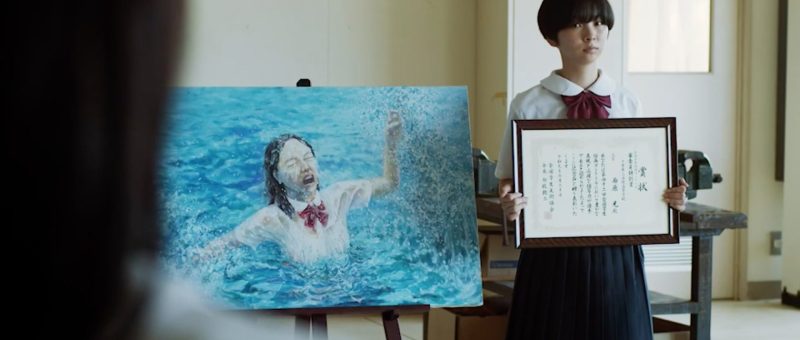
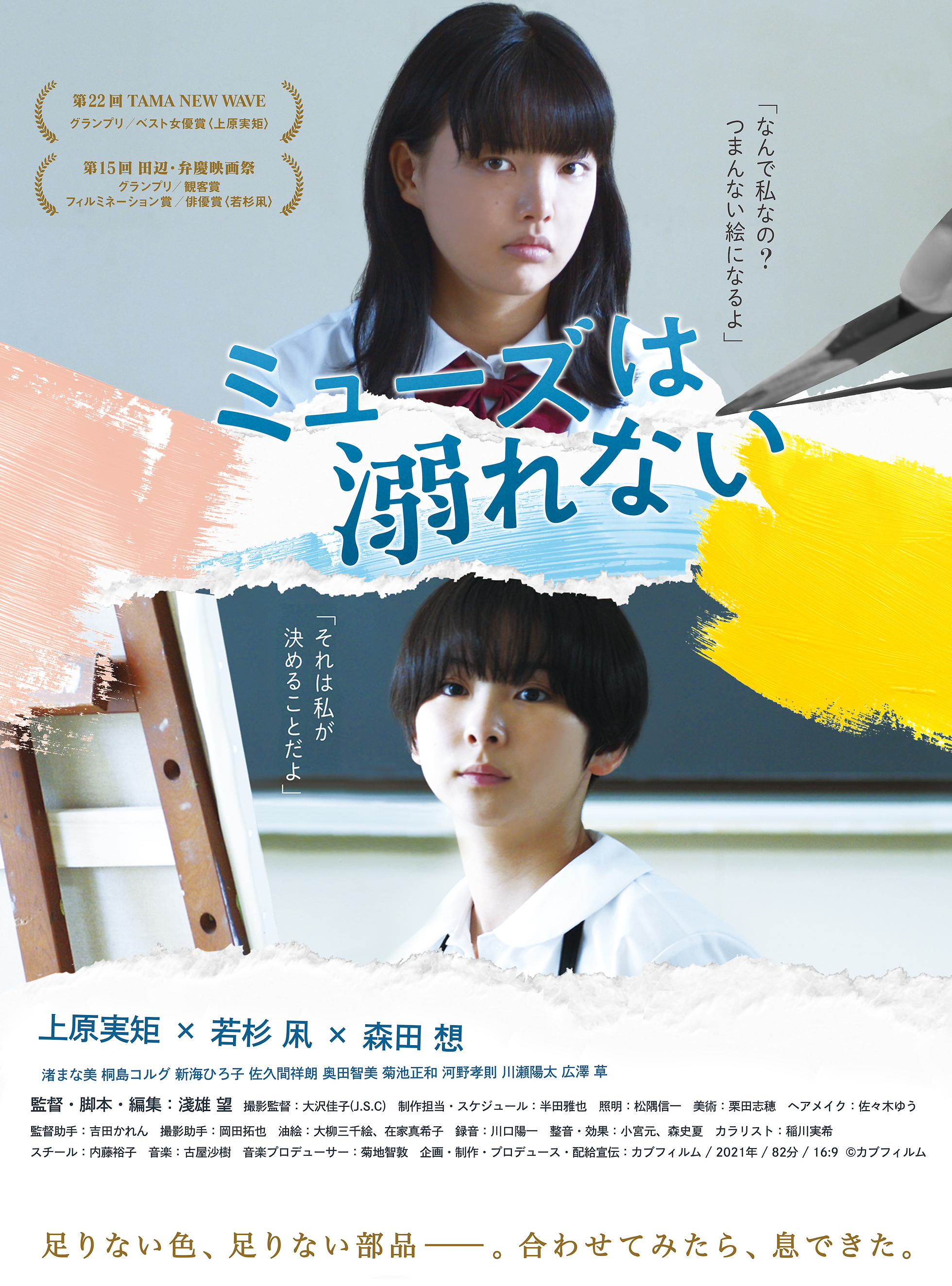
A teenage girl flounders amid a series of changes in her life while questioning her future and identity in Nozomi Asao’s empathetic coming-of-age film, A Muse Never Drowns (ミューズは溺れない, Muse wa Oborenai). Saku (Miku Uehara) is however drowning, a fact brought home to her by the relentlessly aloof Saibara (Mimori Wakasugi) who captures a sense of her panic and despair in a painting of her falling into the local harbour. Yet through their rather tumultuous friendship the pair eventually discover that they aren’t so different after all.

Saibara’s perfectly executed painting destabilises Saku on more than only level, firstly in her discomfort in having been seen and secondly in the insecurity it causes her in her own talent as an artist. Saku had wanted to go to art college, but a teacher harshly corrects her drawing style as if trying to push her towards a more authentic form of expression that’s less worried about getting it right than capturing a sense of what she sees and feels. Lacking confidence that she’ll get in, Saku is thinking about quitting the club in embarrassment but is persuaded to try making something else for the cultural festival while simultaneously receiving an unexpected entreaty from Saibara who wants her to pose for her next painting.

Most of the other students seem to resent Saibara for what they see as her superiority complex, believing she is aloof because she thinks she’s better than them. Because of her blunt manner, Saku too had thought her to be ultra confident and is surprised to realise that Saibara too is filled with doubts and anxieties even if she makes a point of pushing through them. Echoing her teacher’s words, Saibara admits that the lines don’t always come out the way she wants them either but all she can do is try to connect the dots. The reason for her aloofness is a vicious circle of deep-seated loneliness that convinces her she will ultimately be rejected, mirroring Saku’s conviction that she is a “boring” person, and therefore it is easier to remain alone from the start. 

Part of Saibara’s self-rejection is borne of internalised homophobia uncertain if others will accept her sexuality while harbouring a crush on Saku she doesn’t know how to articulate other than through her art while Saku too struggles with her feelings and is confused by the attention she receives from Saibara. Saku’s feelings of insecurity are informed by a sense of embarrassment that she has never experienced a romantic crush like her friend Emi (Kokoro Morita) who likes baseball player Endo despite knowing that likes he Saku, though Emi has also picked up on the way she looks at Saibara and is drawing conclusions about her lack interest in boys. Emi tells her that she accepts her whatever her sexuality is, but is hurt and confused when Saku remains silent and declines the opportunity to open up to her though perhaps partly because she does not really know the answer herself. 

Other than Saibara, Saku is the only one who hasn’t yet returned her careers survey still uncertain of the future direction of her life. Her father has recently remarried and he and her step mother Satomi (So Hirosawa) are expecting a baby all of which has Saku feeling somewhat adrift, displaced within her family and soon to lose her home which has been bought out for a new development project meaning they’ll soon be moving to a new house shorn of the memories of her birth mother and primed for her father’s new start. 

Yet through all her experiences, slowly bonding with Saibara and repairing her friendship with Emi, Saku begins to discover a path towards a more authentic art born of the desire to take things apart and put them back together again while quite literally feeling her way forward with her hands. Coming to terms with her new family circumstances, she builds herself a boat and is no longer drowning but drawing strength from her new found friendships with a renowned sense of possibility for the future while her friends do much the same in the knowledge that they are all scared and uncertain but doing their best to join the dots towards a happier future. 


Trailer (English subtitles)

OMG! Oh My Girl (รักจังวะ..ผิดจังหวะ, Thitipong Kerdtongtawee, 2022)

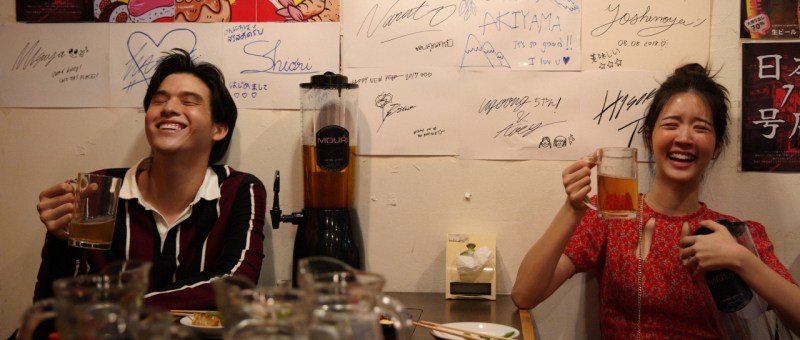
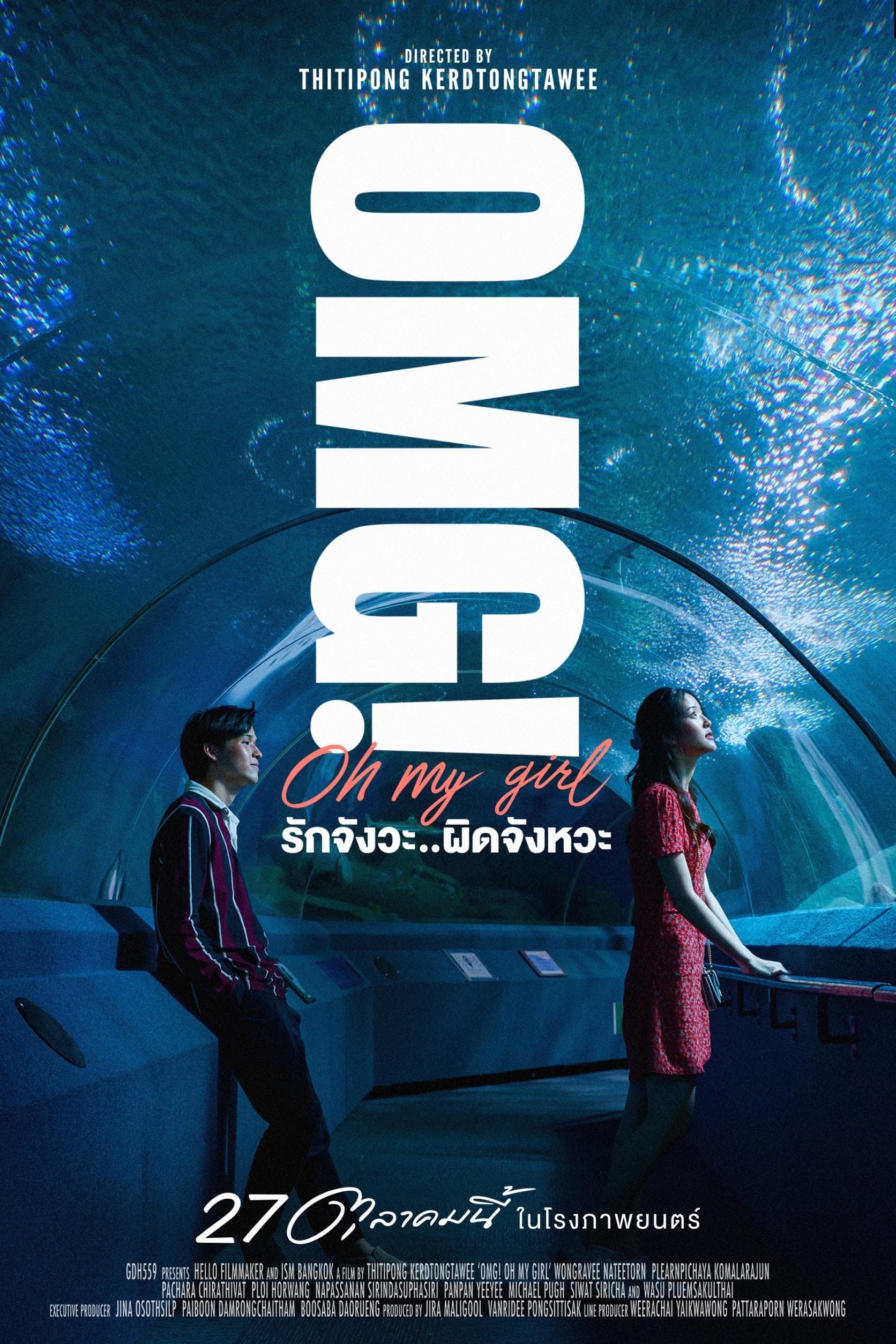
The course of true love never did run smooth. For the lovelorn hero of Thitipong Kerdtongtawee’s OMG! Oh My Girl (รักจังวะ..ผิดจังหวะ), it’s a path filled with misunderstandings, bad timing, and diffidence on his part that all leave him out in the cold watching the object of his affection get swept off her feet by other guys while little realising she likes him too but thinks he’s only interested in friendship because of his cool and aloof demeanour. 

The hero has the amusingly generic name of “Guy” (Wongravee Nateetorn) making him an accidental everyman in this tale of romantic confusion. He first meets June (Plearnpichaya Komalarajun) in university where she is so popular with guys on campus that it’s impeded her ability to make friends with other women. After a serendipitous meet-cute and bumping into each other several times the pair become friends but, in a motif which will be repeated, Guy finds himself giving advice to his friend Phing (Michael Pugh) about how best to ask her out and ironically tells him to send a text message reading “I like you, June” while standing directly in front of her never thinking Phing would actually do it let alone that it would work. June and Phing have a rather tempestuous relationship and are always breaking up every five minutes only to get back together again leaving Guy nervous to make his move. 

In effect, this happens several times. Guy is too diffident to shoot his shot and ends up missing out, while everything he does to try and win June’s heart ends up backfiring as if fate were conspiring against him. Then again, perhaps there’s a danger in over romanticising romantic destiny. It’s true that the pair experienced a “meet-cute” but June also had a meet-cute with another guy, Pete (Pachara Chirathivat), whom she later ends up dating. Who’s to say Pete’s meet cute is any less meaningful than Guy’s? Often, we attach meaning to these minor events after the fact to solidify a grasp on the present, never really lending much thought to what might have been with someone we tipped coffee over or lent a few coins to at a parking metre. 

Then again, the real advice Guy had tried to give to Phing is that confessions of love don’t often go anywhere. People usually just hang out together a lot and then come to a mutual realisation that they’re already “dating”, only that never quite happens for Guy and June who seem to actively avoid progressing towards romance unlike Guy’s zany friend Tah (Siwat Sirichai) who is eventually able to enter a romantic relationship with June’s cool roommate Lex (Wasu Pluemsakulthai) through getting to know her socially. After his own attempt at a love confession backfires, it’s Guy whose romantic vision edges towards the toxic in his inability to let go of his obsession with June and accept that she is in a stable long-term relationship with Pete and that is now inappropriate for him to continue pursuing her romantically. 

The problem is that Pete is a nice guy who loves June and takes extremely good care of her leaving Guy little justification for his desire to implode their relationship even if it also seems June may have niggling doubts and unfinished business with her unresolved feelings for Guy. For most of its runtime, OMG! Oh My Girl is a sweet and gentle post-modern rom-com but makes a huge misstep in final moments allowing Guy to make a catastrophic mistake amounting to a huge breach of trust after which it becomes impossible to root for his romantic success given that after he does it neither June nor any of his friends should really want to have much more to do with him. Given that he’s just seen how destructive what he’s about to do could be in the implosion of his sister’s marriage, it’s really difficult to see how he could have thought doing such a thing himself would have a good outcome or make June any more likely to leave her stable relationship for a half-baked attraction to the uni best friend she hasn’t seen in five years.

Even so, the conclusion does have a neatly feminist subtext that undercuts Guy’s vision of June as something like a prize to be won as she fights for a sense of security in independence knowing that she can take care of herself and doesn’t necessarily need to be with anyone to be happy and fulfilled. Filled with the kind of deadpan zany humour familiar from similarly themed Thai comedies of recent years, OMG Oh My Girl would be a surefire classic were it not for its tacit condoning of the hero’s toxic behaviour and wilful indifference to the feelings of others ruining an otherwise charming tale of romantic misconnection. 


International trailer (English subtitles)
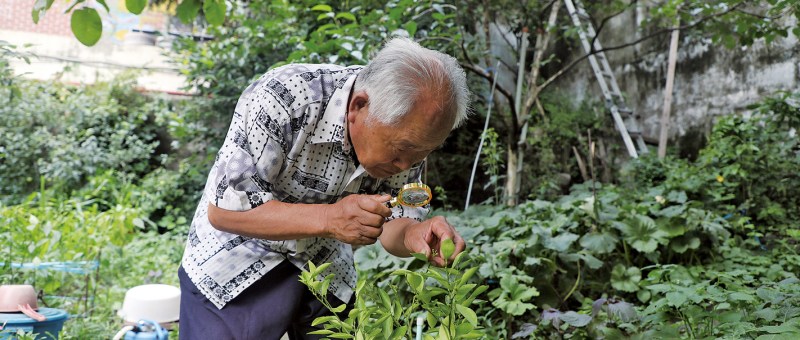
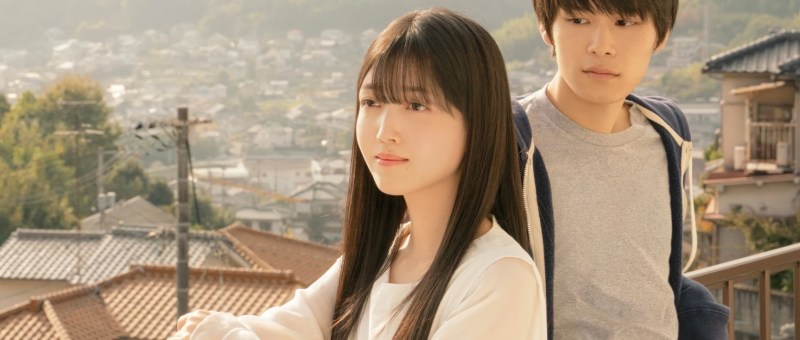
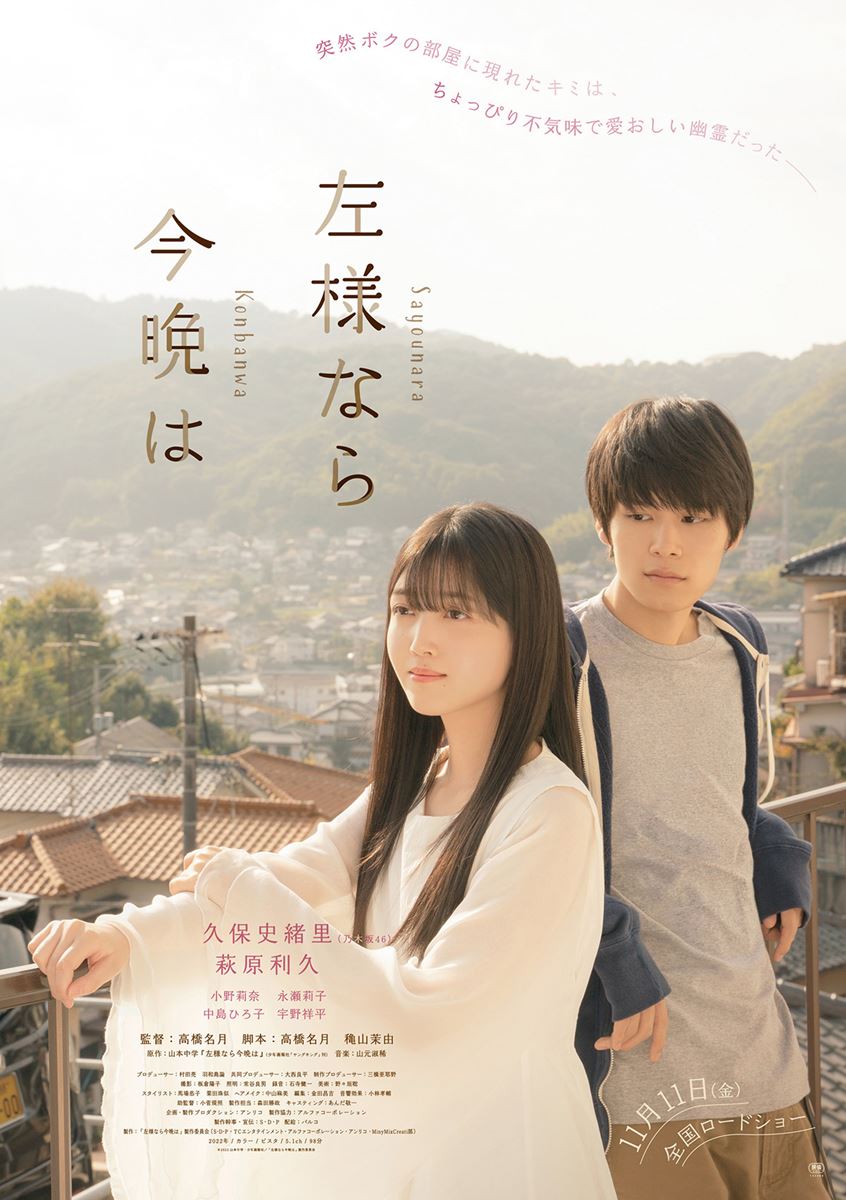
A Girl in My Room (左様なら今晩は, Natsuki Takahashi, 2022)

A young man reeling from a breakup is suddenly confronted by the literal ghost of lost love in Natsuki Takahashi’s supernaturally-inflected romantic drama A Girl in My Room (左様なら今晩は, Sayonara Konbanwa). Set in the peaceful town of Onomichi, the film finds its hero wasting away pining while wondering if falling in love with a ghost is all that bad only to later ask himself if any of it was real or just a fantasy of his lovelorn mind. 

As the film opens, Yohei’s (Riku Hagiwara) girlfriend of two years, Rena (Riko Nagase), moves out of their apartment apparently sick of his superficiality and inconsiderate nature. Soon after, Yohei becomes aware that a ghost has been living in their apartment with them the whole time only should she couldn’t manifest because Rena apparently had unusually strong spiritual energy. Though originally frightened by the new presence, Yohei soon warms to the woman he names “Aisuke” (Shiori Kubo) and becomes determined to find out who she was and how she died only no one will tell him. 

Of course, Aisuke could just be the symbolic ghost of Rena, a spectre of lost love confronting him with his romantic failure, but also seems to have an inner life of her own even if she can’t remember much about who she was when she was alive and how it was she came to die in the apartment. Fleeting memories seem to hint at a life of loneliness marked by romantic longing in which she wanted nothing more than a regular grown-up relationship though sadly it never happened for her. If she has unfinished business, then falling in love may be part of it but then it’s clear that any potential relationship between herself and Yohei is doomed to failure seeing as she is already dead. 

Aisuke chose Yohei because she thought he was a good boyfriend after seeing him with Rena, but even so agrees that though he seems nice on the surface he never really thinks about anything and responds to criticism by smoothing it over with an apology rather than reflecting on his actions or trying to better himself. Work colleague Kanan (Rina Ono), who also has a crush on him, conversely claims that Yohei shows his kindness too easily though also remarking that kindness in itself can also be problematic. In any case, as he bonds with Aisuke, Yohei does seem to engage more with his flaws and reflect on the mistakes he may have made in his relationship with Rena in order to become not just a better boyfriend but a better person. 

In these respects, Aisuke becomes a romantic mirror confronting him with the problematic aspects of his own personality but somehow gaining in corporeality as the relationship progresses as if love were bringing her back to life. But then Kanan also claims that that’s because Aisuke is unwittingly sucking the life out of him which is why he looks tired and gaunt. A picture she took of him on her phone has a dark aura over his face hinting at something malevolent at work that’s taking a toll on his health. But as much as he’s warned, Yohei determines to stay with Aisuke, slowly falling in love with her in the wake of his failed relationship.

Partly a fable about the dangers of remaining trapped by the ghost of lost love rather than resolving to move on, the film is also a poignant love story in which the pair must help each other overcome their mutual unfinished business while becoming aware that their liminal romance cannot continue forever. A side plot involving an estate agent and his endless calls from a confused older gentleman randomly asking him for legal and life advice hints at other kinds of living ghosts and urban loneliness but also at those willing to take care of them as perhaps the estate agent did with Yohei and Aisuke in a bit of supernatural matchmaking helping each of them to begin moving on with their lives on either side of the mortal divide. Charmingly quirky and comforting in its tranquil setting, Takahashi ends on a poignant, bittersweet note but also one of warmth in which the ghost of lost love doesn’t so much haunt as abide, a constant source of comfort in a lonely existence.


Original trailer (English subtitles)
The Tai Chi Master (张三丰, Lin Zhenzhao & Cheng Siyu, 2022)

The funny thing is that, in contrast to contemporary Chinese cinema, Lin Zhenzhao & Cheng Siyu’s The Tai Chi Master casts those who stand up to corruption as the villains. Of course, their insurrection threatens the social order and their subsequent to overthrow the Song Dynasty may be too revolutionary to find much a approval but it’s surprising all the same even if the film also finds fault with officials too focused on the “big picture” rather than the citizens in the townships they’re supposed to be overseeing.

In any case, though it should not be confused with the Jet Li film from 1993 with which it shares both English and Chinese titles, this Tai Chi Master is once again an origin story for the renowned Taoist scholar Zhang Sanfeng which is the name the hero takes at the film’s conclusion having achieved a degree of enlightenment through experiencing near death and tragedy at the hands of the Netherworld Cult. For the most part, he goes by his courtesy name Junbao and is something of a libertine, spending most of his time enjoying fine liquor and trying to craft immortality pills as a member of the Wuji Sect. 12 years previously when the Imperial Court increased taxes to a unreasonable degree, the Netherworld Cult slaughtered the corrupt officials but were condemned by the rest of society for their actions. Junbao has a habit of drinking with Kui Tianxing, the former head of the Netherworld Cult who has been imprisoned in the Wuji’s Sect’s gloomy basement for the last 12 years and in fact transgressively learns from him “evil” techniques claiming that there is no good or bad in martial arts for all depends on the righteous heart of the practitioner.

But there is unrest brewing and it seems some can no longer bear the corruption and indifference of the noblemen supposedly managing their interests on behalf of the court. After taking a liking to a mysterious forest woman who rides a giant silkworm she charms with a flute, Junbao is taken to task for his solipsistic hedonism. She asks him how he can ignore suffering in the world and continue to remain apart from it, but he doesn’t truly gain the desire to oppose injustice until the Wuji Sect is targeted and his master is killed. Even then, his opposition is awkwardly positioned given that the new Netherworld Cult is also motivated by the desire to throw off the authority of corrupt officials, which means in a sense that Junbao is defending that same corrupt social order which he does not otherwise challenge.

In keeping with the teachings of the real Sanfeng, he instead preaches righteousness and harmony but otherwise removes himself from the martial arts and wider worlds, while his brief romance with the mysterious silkworm woman seems to fall by the wayside in his ongoing quest for spiritual enlightenment. Meanwhile, it has to be said that his relationship with the little girl who seems to be in his care is a little uncomfortable at times. In what is presumably supposed to be a sweet and innocent piece of childish banter, she frequently flirts with him, makes statements about becoming his girlfriend, and expresses jealousy towards the silkworm woman all of which seems very inappropriate for a child of no more than 11 or 12.

Nevertheless, the fight choreography is often interesting if sometimes marred by imperfect CGI and mid-level production values for a streaming film. The injection of fantasy-style lore with its demons and underground, cave-like bases gives the film’s internal universe a degree of consistency in reflecting the yin/yang philosophy espoused by the Netherworld Cult in the white-clad, surface-living Wuji Clan and the dark, anarchic world of the often masked rebels. The mysterious silkworm and the flute-playing woman meanwhile seem to occupy a liminal space caught between each world and whatever she says like Junbao not really a part of either until pulled into the final battle. Perhaps troubling or at times contradictory in some of its implications, the film does at least have a degree of charm in its likeable characters and fleshed-out backstories that hint at the possibilities of an ongoing franchise.


The Tai Chi Master is available digitally in the US courtesy of Well Go USA.

Trailer

Remember (리멤버, Lee Il-hyung, 2022)

An elderly man suffering with a brain tumour and advanced dementia is determined to expose the abuses of the colonial past all too easily forgotten by the contemporary society in Lee Il-hyung’s remake of the 2015 Atom Egoyan film of the same name, Remember (리멤버). The film’s title works on multiple levels, firstly in the mind of the hero who both wants to remember and doesn’t as he feels his mind slipping away, and then in the minds of the men he seeks asking them both to remember the man who’s come calling with vengeance on his mind and who it is they really are. 

As in many other similarly themed films of recent times, Pli-ju’s (Lee Sung-min) main problem is that those who chose to collaborate with the Japanese during the colonial era and directly contributed to the deaths of all his family members have largely gone on to extremely successful careers at the heart of the establishment. Ironically enough, right-wing Korean nationalist ideology is largely pro-Japan and the legacy of Japanese militarism was a key component in the post-war military dictatorships of Park Chung-hee and Chun Doo-Hwan. To that extent, Pil-ju is the inspector that calls visiting each of the men who caused the deaths of his father, brother, and sister in turn while exposing a series of colonial abuses. One of the men he visits is a working professor who teaches that Japanese colonial rule was actually beneficial in that it helped “modernise” the society though building infrastructure such as roads and railways without really considering that they were largely built with forced labour. 

This casual disregard for human life has continued into the present day with the general Pil-ju targets, Chi-deok (Park Geun-hyung), also the head of the company, in which the Japanese effectively have a controlling share, responsible for a workplace accident that injured the father of Pil-ju’s getaway driver In-gyu (Nam Joo-hyuk) and refused to compensate him. Chi-deok, a hero of the Korean War, even makes a rousing speech instructing the audience that they must remember those who fell in defence of democracy which is a little rich seeing as his values are anything but democratic. Chi-deok also tries to justify himself to the police officer investigating the murder of the first man Pil-ju knocked off that those days were just about survival and that “Korea” no longer existed so all he could do to save it was to become Japanese. But like many of the other men, such as the professor who tricked Pil-ju’s brother into forced labour in a mine where he eventually died, he did so for personal advancement wilfully selling out his fellow countrymen throwing those who refused to change their names or continued to speak Korean in jail while sending off their sisters to become comfort women for the Japanese army. 

The first man that Pil-ju killed tortured his father to death on a trumped up charge so he could steal his land. It’s not even ideology, it’s just greed and oppression. Everyone keeps telling him that no one cares about this kind of thing anymore, but conservative politicians nevertheless continue to weaponise it suggesting that anything is permissible in the battle against communism while imperialism is therefore a lesser evil. Pil-ju’s dementia is a metaphor for the literal erasure of history and the simple act of forgetting, the process by which many of these men have been able to rewrite their pasts to justify their actions. Yet it’s also true that there are things Pil-ju too does not want to remember and actively denies until finally forced to reckon with himself, with his complicity, guilt, and regret that he was as Chi-deok puts it not all that different as a man who survived those times when so many did not. Shot through with a gentle humour, Lee’s admittedly unsubtle drama (a Japanese soldier named Tojo literally says he’s going end the pacifist constitution so Japan can start wars whenever it feels like it) is also a gentle tale of intergenerational bonding as Pil-ju comes to develop a paternal affection for his workplace buddy In-gyu that suggests the past is only exorcised when spoken and passed down to new generations free of justifications or omissions and most importantly remembered as it was by those who really lived it.


Original trailer (no subtitles)