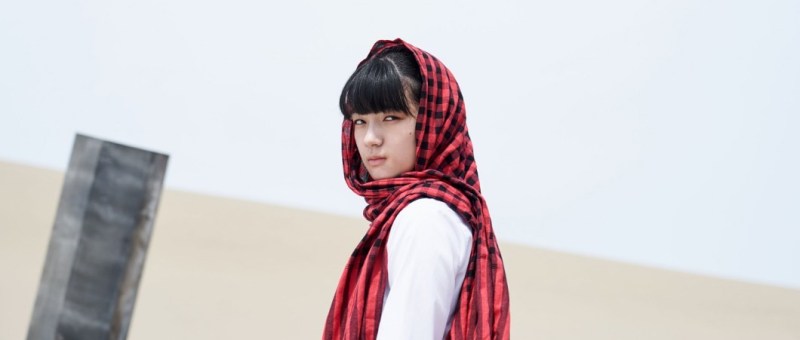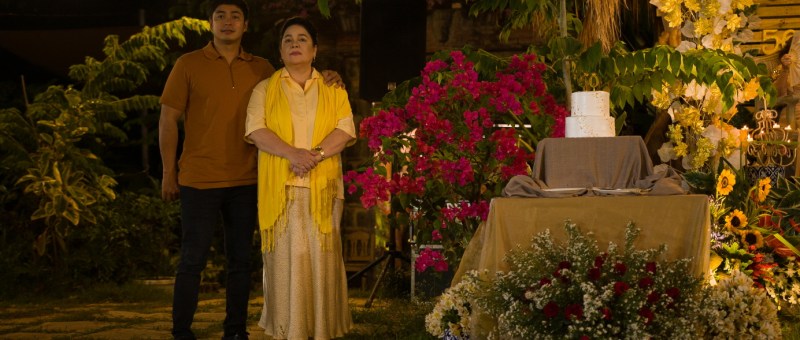
Feast (Apag, Brillante Mendoza, 2022)

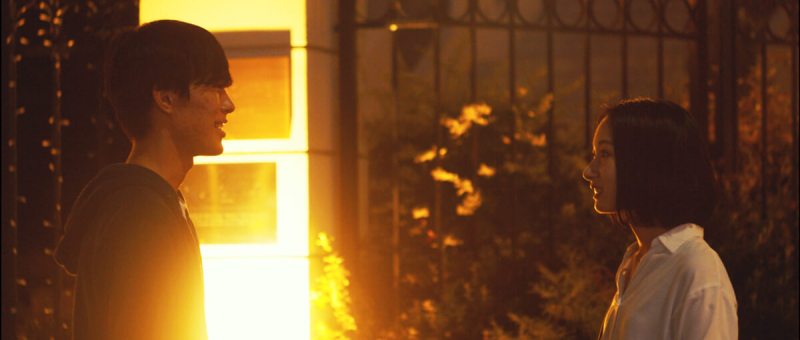
A young man fuelled by an internalised class conflict struggles to come to terms with his guilt after running over a man and his daughter in Brilliante Mendoza’s social drama, Feast (Apag). With a strong religious sentiment, each of the four acts is preceded by a title card with a Biblical quotation, Mendoza seems to suggest that we are all one big family and that all divisions are healed when the feast is shared equally, except that equal it is not even when brokered by mutual compassion. 

The opening scenes also have their irony. Wealthy businessman Alfredo (Lito Lapid) and his diffident son Rafael (Coco Martin) shop for expensive fresh crabs at the market, while Matias and his young daughter haggled for much less extravagant fare before making their way home by scooter and sidecar. Distracted by a phone call, Rafael ends up colliding with Matias in his 4×4. Acting quickly, Alfredo jumps in the driving seat and speeds away insisting that he will take the responsibility for the accident, whatever that might mean. After a talk with their lawyer who tells them they’ve not a leg to stand on, Rafael goes to the hospital and pays the family’s bills but Matias dies soon afterwards. Alfredo insists on taking the blame, agreeing to go prison in his stead, but Rafael can’t get over his guilt and enters a depressive spell that prevents him from getting on with the rest of his life.

As we later discover, Rafael occupies a difficult position in terms of his social class. His mother Elisa is Alfredo’s second wife, once a waitress in the family home and disliked by the children of his previous spouse. He is separated from his daughter as his wife seems to have left him for unclear reasons and gone abroad where she has met another man. He wants to unburden himself by accepting the punishment for Matias’ death but is prevented by his father’s heroic act of sacrifice and must carry the guilt alone. The family determine to make amends by “supporting” Matias’ widow Nita (Jaclyn Jose) and their children, but are in essence wielding their privilege over her in assuming they can settle all of this with money and need accept no other responsibility. 

Nita is rightly insulted when Elisa turns up to offer her money to compensate for her husband’s death, but it’s also clear that the family is already poor and now presumably without their main breadwinner. In any case what she wants is justice, and both gets it and doesn’t when Alfredo is sent to prison in place of Rafael. In the final acts of the film, the family has taken in Nita and her children but ostensibly as servants even if ones treated like friends while she is forced to feel grateful to the family that killed her husband for gifting her financial security. The feast with which the film ends was cooked by Nita, but she is not invited to partake in it only stand by and watch while the rest of the family eat. Yet the scene is presented to suggest that a divide has been healed, that inviting them to attend the feast was enough in itself even if a class distinction is still clearly felt between those who serve and those who eat. 

Though Nita seems to have some latent resentment, it is largely washed away on learning the truth allowing her to forgive and symbolically releasing Rafael from his torment. While forgiveness maybe worthy, it also lets the privileged off the hook for their oppressive behaviour in suggesting that the wealthy need only show magnanimity while the poor are expected to simply accept it in good faith. Had this not happened, there is no way they would share their feast with a woman like Nita nor will they ever do so again. If they really meant to dissolve class barriers, they could open the doors to all but they do not. In any case, through coming to terms with his responsibility for Matias’ death, Rafael appears to quell his own inner class conflict to occupy his rightful place but perhaps still fails to fully consider that Matias’ death wasn’t really just an “accident” but a natural consequence of the way in which men like himself move through the world.


Feast screened as part of the 2022 Busan International Film Festival.

Original trailer (no subtitles)
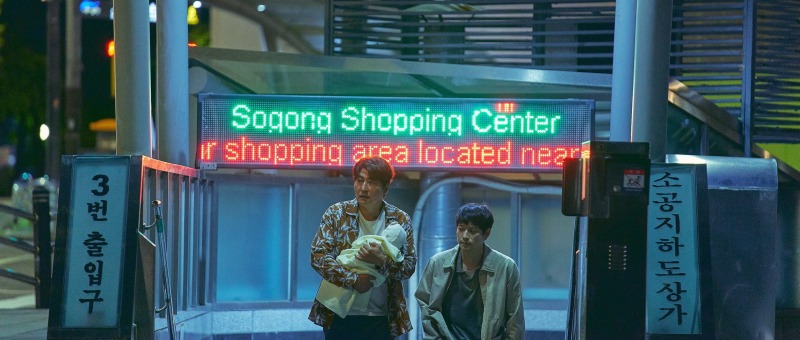
Broker (브로커, Hirokazu Koreeda, 2022)

Perhaps more than any other contemporary director in Japan, Hirokazu Koreeda has persistently interrogated the concept of the modern family asking what exactly the word has come to mean and how it is or should be defined. In Nobody Knows he showed us a case of parental neglect as abandoned siblings attempted to get by on their own in the absence of maternal care, while the separated brothers of I Wish struggle to define the nature of their relationships in the wake of their parents’ divorce. In Like Father, Like Son, Koreeda asks whether it’s blood relation that defines a family tie or whether it is forged more by mutual affection and shared memories, and in festival hit Shoplifters, he showed us a family who were not related by blood but had found in each other a home and a place to belong. 

Billed as a kind of companion piece, Broker (브로커) once again features a found family “brokered” by criminal activity but goes a step further, asking once again what the rights and responsibilities are when it comes parenthood and if the choice to abandon a child can ever be justified. Set in Korea where Christian morality has a greater influence, the film opens with a young woman leaving her infant child in front of a church yet abandoning him on the floor rather than placing him inside the “baby box” in the church’s wall. A policewoman staking out the church in the belief that someone is using the baby box to traffic children gently places the infant inside with what looks like maternal care but then we start to wonder, perhaps she only does so in order to see what happens when someone picks up him from the other side. 

Indeed, the policewoman will later concede that perhaps she herself was the one who most wanted the baby, Woo-Sung, to be sold so that she could catch the traffickers redhanded. We might feel a degree of revulsion towards the idea that a baby could be exchanged for money, but then perhaps we don’t stop to wonder who might buy and for what purpose. Sang-hyun (Song Kang-ho), a dry cleaner with gambling debts, and his partner Dong-soo (Gang Dong-won) who himself grew up in an orphanage, later recount selling a baby to two gay men who would otherwise be unable to adopt in the still conservative country suggesting in part that it’s a repressive society that forces people into this morally questionable underground trade in human children. It’s also societal conservatism that necessitates the existence of something like the baby box in that often very young women who bear children but cannot keep them either out of shame or simple economic impossibility have few other options than to abandon their child in the hope that someone will take it in. 

Detective Lee (Bae Doona) nevertheless brands these women as “irresponsible” and blames the baby box for tacitly encouraging their behaviour. An abandoned child himself, Dong-soo also struggles with his attitude towards the mother, So-young (Lee Ji-eun), who against all the odds does come back to reclaim her son after changing her mind. He and Sang-hyun justify their actions that they’re “saving” Woo-sung from being placed into the care system by finding him a loving home with parents who can give him a comfortable life. After taking to the road, the trio arrive at the orphanage where Dong-soo was raised which is less a home for him than a painful reminder of all he’ll never have and will never achieve as someone without a clear idea of a place to belong.

The man running the orphanage even concedes he’s not doing so well after the losing the subsidies for a few of the kids who have left, though few people adopt kids over six and the law makes it more difficult at eight which is a particular problem for football enthusiast Hae-jin (Im Seung-soo) who ends up climbing into Sang-hyun’s van and demanding they take him in. “Blood is thicker than water” the man sighs, explaining that kids are often sent back when it doesn’t work out or even end up suffering abuse despite the supposedly rigorous processes for vetting potential parents which causes some to simply buy a child on the black market instead. 

Despite the image of Dong-soo and Sang-hyun as heartless child traffickers they nevertheless take good care of Woo-sung and are up to a point careful that they should give him to someone responsible, mindful of those who might want a baby for untoward purposes or are intent on selling him on. A visual motif of tangling threads from the cotton on Sang-hyun’s sewing machine to the rope that pulls the busted back door of the van closed hints at the various ways these five dispossessed people are slowly bound together, becoming an accidental family forged through a process of mutual understanding in which Dong-soo is able to re-evaluate his feelings towards his mother through bonding with So-young and realising that in abandoning her child she may only have been trying to protect him and give him the better life that she never had. 

So-young tells Dong-soo that she sometimes has a dream in which the rain washes away her life until now, but on waking she realises it’s raining and nothing’s changed. He tells her perhaps all she needs is an umbrella that’s big enough for two, a metaphor for the protective quality of family he could perhaps have given her. Even she later concedes that had she met them earlier, none of this would have been necessary while Detective Lee’s more sympathetic partner (Baek Hyun-jin) likewise asks why they couldn’t have intervened earlier and done something to help this struggling young woman whose only problem was her aloneness before it came to this. What emerges is an unexpected compassion and the extension of an umbrella from an unexpected source in the acknowledgement that nothing’s ever quite as simple as it might seem. Koreeda leaves us with an outcome that is possibly as happy as it could be in an imperfect world, which might in itself be a little unrealistic but nevertheless in its own way hopeful in having reclaimed a notion of “family” brokered by selflessness and mutual compassion if not quite love for the orphans of an indifferent society.


Broker opens in UK & Irish cinemas on February 24th. For more information head to http://broker.film/

UK release trailer (English subtitles)

Hypnosis (ヒプノシス, Takuto Okui, 2022)

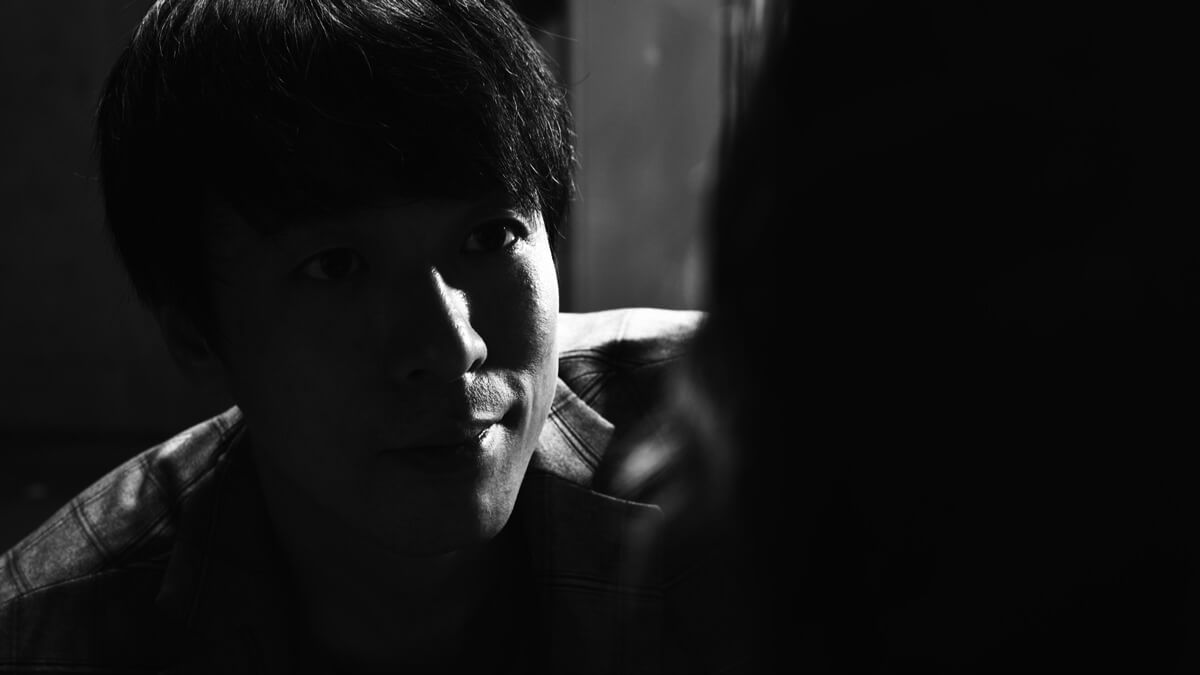
The difference between hypnosis and brainwashing, according to a recently released street thief, is that brainwashing forces you to do something you don’t really want to whereas hypnosis merely encourages you to act on a latent desire. He perhaps leans a little heavily on this defence, justifying his own actions as only accidental motivators as if his victims were somehow complicit in his crimes, yet there is something in what he says if only in his own wilful self-delusions. 

A graduation project, Takuto Okui’s Hypnosis (ヒプノシス) follows protagonist Kazuto across two time periods 15 years apart opening in colour with the young Kazuto hypnotising and then robbing a policeman of his watch and gun, before jumping forward and into black and white to find him recently released from prison using his powers for “good” to knock out a sexually aggressive guy and rescue sex worker Maki from being assaulted in an alleyway. Taking her for a hamburger dinner he can’t convince her to eat, he explains that he was passing through on a trip down memory lane remembering when he’d saved his first love Mei from a similar situation with an abusive boyfriend. 

Kazuto proves his point about hypnosis only working if the target on some level wants to comply when his attempt to convince Mei to leave violent partner Masashi immediately fails, she later coming to the conclusion her decision to stay with him was also a kind of brainwashing. Nevertheless, he seems to be able to pull Jedi mind tricks on various policemen while otherwise using it to manipulate a situation to his advantage. We might wonder about his ability to pull the wool over our eyes especially when he pulls a gun on his abusive father, a fantasy sequence giving way to his shooting him for real but there being no sign of blood at the scene though a policeman does turn up a little later having received a report of a gunshot only for Kazuto to convince him to go away without investigating further. 

In each timeline he’s minded to play the hero, firstly trying to save Mei from Masashi and then Maki from the loansharks who have been after her ever since her father took his own life after unwisely guaranteeing a loan for his boss who then ran off and left him to carry the can. But the more he tells us the less we trust him, painting a picture of romantic tragedy in which he was cruelly robbed of his true love and languished in prison for 15 years while Masashi apparently went on enjoying his life. “That’s how this story ends” Kazuto stoically explains, suggesting that it’s how he’s chosen to end it in not immediately gunning for revenge on his release from prison but also hinting at a degree of personal myth making in creating an ending that fits with his version of events. 

The colour sequences are in a way part of the movie in his mind, the way he’s taught himself to remember it, while the black and white are just that a starker version of an objective truth without Kazuto’s editorial filter. He says he wants to help Maki, and perhaps he does, but is also playing an angle to get his hands on her money while leaving her open to reprisals from the loanshark, not to mention his grand plan involves selling someone to an elite club of French of torture enthusiasts through middle woman Akemi who, as a kind of anchor, has apparently not changed in the 15 years he’s been in prison. 

Even so, reality will eventually come calling for him and he’ll go to great lengths to protect his self-deluded fantasy, preserving the grand act of self-hypnosis he’s practiced on himself. As it turns out, there are some situations you can’t talk your way out of or escape through a simple Jedi mind trick but the ability to rewrite the past as you remember it might be the next best thing. Heavily stylised, Okui’s noirish drama pits fantasy against reality and objective truth against delusion while Kazuto wanders between failed hero and cowardly villain unable to protect anything or anyone save perhaps his image of himself even in his failure. 


Hypnosis screened as part of the 2022 Yubari International Fantastic Film Festival.

Interview with the director (Japanese only)

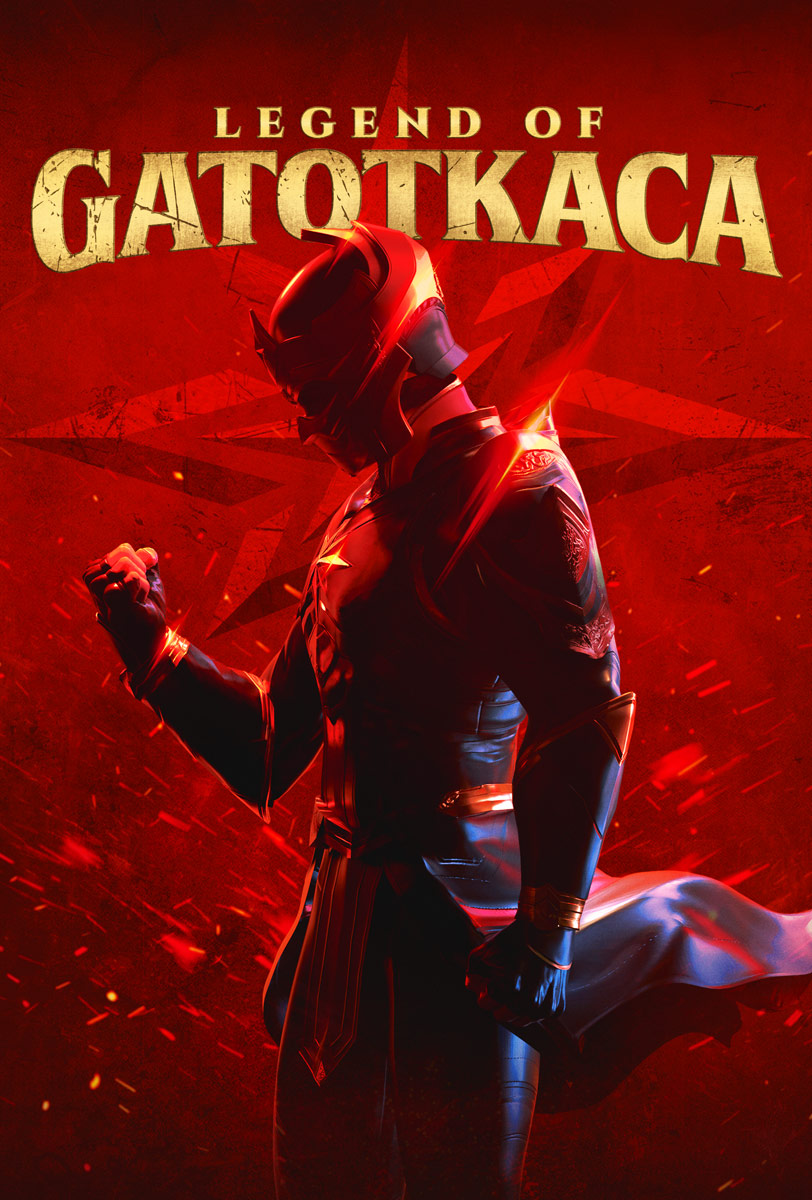
Legend of Gatotkaca (Satria Dewa: Gatotkaca, Hanung Bramantyo, 2022)

Indonesia has quietly been building its very own superhero cinematic universes over the past few years with Joko Anwar’s Gundala almost certainly the best known internationally. The Legend of Gatotkaca (Satria Dewa: Gatotkaca) is similarly intended to be the first in a new franchise, Satria Dewa, which draws influence from Indian mythology and is set in a dualistic world centuries after a battle between good and evil was ended by the gods to stop evil winning. 

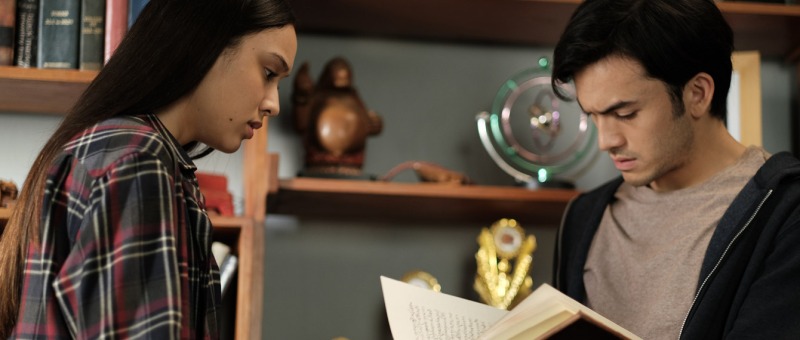
Essentially an origin story for the titular hero Gatotkaca, the film follows down on his luck photographer Yuda (Rizky Nazar) who had to drop out of university because he is poor and also responsible for taking care of his mother who is suffering with memory loss and mental illness following an incident 15 years previously in which the pair were attacked by a mysterious figure in black who could shoot lasers from his fingers. Yuda assumes his memories from back then must have been a dream and that his mother’s mental distress has more to do with his father, Pande (Cecep Arif Rahman), abandoning the family. Nevertheless, he is soon dragged into intrigue when his best friend Erlangga (Jerome Kurnia) is murdered in the same way his mother was attacked during his university graduation ceremony. Determined to figure out the truth, Yuda and professor’s daughter Agni (Yasmin Napper) find their way to a secret organisation Erlangga had been a part of which aims to save the world from destructive forces carrying the Kaurava gene. 

In the film’s dualistic world view, there was once a civil war between those carrying the Pandava gene which encourages good, humanistic qualities and the Kaurava whose impulses are dark and destructive. But then as Professor Arya (Edward Akbar) who studies such things points out, Pandava can also be destructive while Kaurava are capable of using their “destructive” qualities for good. Even so, most of the bad things that have happened in the world particularly in the last 15 years since a mysterious meteorite fell to earth, can be attributed to the rising Kaurava influence from political corruption to illegal logging and even the COVID-19 pandemic. Someone is bumping off Pandava in an effort to release evil Kaurava general Aswatama (Fedi Nuril) from his imprisonment within a giant gemstone which explains the “mysterious” deaths of talented people like Olympic sportmsmen and a doctor who discovered a COVID-19 vaccine. 

Of course, Yuda turns out to be a chosen one and must pursue his destiny as the defender of the Pandava before assuming his rightful role as Gatotkaca. Only by confronting his immediate family history can he make himself whole and gain the strength to defeat Aswatama, saving the world from chaos. Meanwhile he has to contend with a romantic subplot in which Agni is aggressively courted by the odious and entitled Nathan (Axel Matthew Thomas) and his father who have at least strong Kaurava energy aside from being embodiments of oppressive elitism looking down on Yuda simply because he is poor. The underground cell Yuda eventually comes into contact with are also in their way a resistance to this same elitism, though unusually well equipped in their incredibly expensive-looking lair filled with the latest technology and looked after by a kindly Indian granny who is herself a Karauna but uses her powers, and at one point a good old-fashioned shot gun, for good.

It’s this duality to which the film eventually returns as Yuda declares they must be the light in the darkness and the darkness in the light as they secretly wage a war against an ancient evil apparently already well established in the contemporary social order. This being the first instalment in what seems to be cued up as a burgeoning franchise, there is undoubtedly a lot to take in from the talk of heirlooms and amulets to holy water and ancient weapons though the film does boast some excellent production design even if the centralisation of genetics as an indicator of good and evil is equally uncomfortable. Nevertheless, it’s a promising start to the cycle with a series of exciting action set pieces showcasing the art of silat along with some impressive CGI in the Star Wars-esque laser warfare even if it’s clear Gatotkaca’s toughest battles are yet to come.


Legend of Gatotkaca streams in the US via Hi-YAH! from 17th February and will be released on Digital, blu-ray, and DVD on March 21 courtesy of Well Go USA.

International trailer (English subtitles)

Goodbye Cruel World (グッバイ・クルエル・ワールド, Tatsushi Omori, 2022)

Tatsushi Omori has had a rather strange career beginning with the incredibly grim Whispering of the Gods which was so controversial that the only way he could screen it was to set up a marquee in a park and put it on himself. Since then he has in recent years softened a bit with the incredibly charming Seto and Utsumi and heartwarming tea ceremony drama Every Day a Good Day. Goodbye Cruel World (グッバイ・クルエル・ワールド) returns to the nihilism of Omori’s earliest work, but with a layer of heavy irony in its self-consciously cool aesthetics. 

This is world is cruel indeed, pulling each of the worldweary protagonists into an inescapable hell of crime and violence. As the film opens, a car of full of criminals drives towards a love hotel where they plan to rob a bunch of yakuza in the middle of a money laundering exchange. If you have to rob someone, perhaps it’s fair enough to rob the yakuza but for obvious reasons it’s not a very good idea. Still, the fact is they accomplish the heist pretty easily not least because the yakuza are lazy and complacent. Not only could they not be bothered to change their meeting place like the boss told them, the lookouts didn’t even put up much of a fight. “Japan’s gone to hell,” “old-leftist gone bad” Hamada (Tomokazu Miura) sighs lamenting that no one does their job properly anymore.

Now in his 70s, Hamada waxes on his days as a student protestor while now a disillusioned old man who was previously dismissed from his position as a political secretary for cooking the books. In a last ditch bid to change the status quo, he later hatches on a plan to rob the secret campaign stashes of the incumbent conservative candidate whom he has also exposed for tax evasion and an affair with a bar hostess not to mention a general air of sleaze and corruption. The robbers’ main competition is a corrupt policeman who’s been working with the yakuza ever since he was foolish enough to accept a tip off from boss Ogata (Shingo Tsurumi) to arrest some of his rivals. 

Like everyone else, what Detective Hachiya (Nao Omori) wants is out but there is no out from this hellish world of crime. Anzai (Hidetoshi Nishijima) tried to go straight in the wake of anti-organised crime legislation but there are no second chances for ex-yakuza. He just wanted a normal life, but it’s hard to leave the yakuza world behind when you can’t even open a bank account and no wants to employ a former thug. Hachiya steals the money to buy himself a new life trying to resurrect his father-in-law’s failed hotel in a moribund seaside town where the other businessmen lament the decline of the local shopping area amid the economic complexities of the contemporary society. But he’s frustrated by the arrival of former associates, Iijima (Eita Okuno), who blackmails him over his yakuza past and poignantly says he’s done for the same reasons Anzai does the robbery, he just wants to be able to live together with his wife and child. 

Miru (Tina Tamashiro) says she came up with the idea of robbing the yakuza to escape sex work and is helped by hotel employee Yano (Hio Miyazawa) who dreams of running away with her. She says all she wants is sleep, while he wants to live comfortably in a quiet seaside town. Like the kids that hang round Hamada, they represent a kind of rebellious youth rejecting the corrupt authority of men like Anzai and Hachiya but are quickly slapped down. As Hachiya points out, the “grown-ups” took all the money and the only reason they’re not dead is that Ogata wants them to clean up their mess before they go by taking out the other gang members. During the robbery, Miru appears an unwilling participant so frightened that she cannot pry her fingers from the pistol when the sociopathic Hagiwara demands it back. But on her eventual murder spree/mission of revenge she’s an ice cold killer with vacant eyes trying to shoot her way out of existential malaise. 

Omori signals the degree to which they are all trapped by the ubiquity of retro nostalgia in the unlikely ‘70s getaway car and the soul music which plays on its sound system. Seeming to directly reference ‘90s Tarantino in musical choices, the film’s self-consciously cool aesthetic sometimes works against it even while hinting at the general sense of emptiness which envelops those caught in this hellish underworld. As Anzai later suggests, they are all the same, covered in blood with nowhere to go for there is no place for any of them in contemporary Japan. A bloody tale of nihilistic futility and self-destructive violence, Goodbye Cruel World suggests that there’s no way back from the purgatorial exile of an underworld existence.


Goodbye Cruel World screened as part of this year’s Japan Foundation Touring Film Programme.

Original trailer (no subtitles)
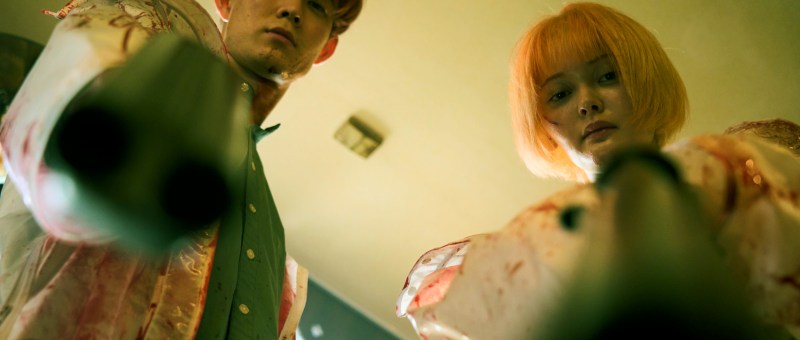
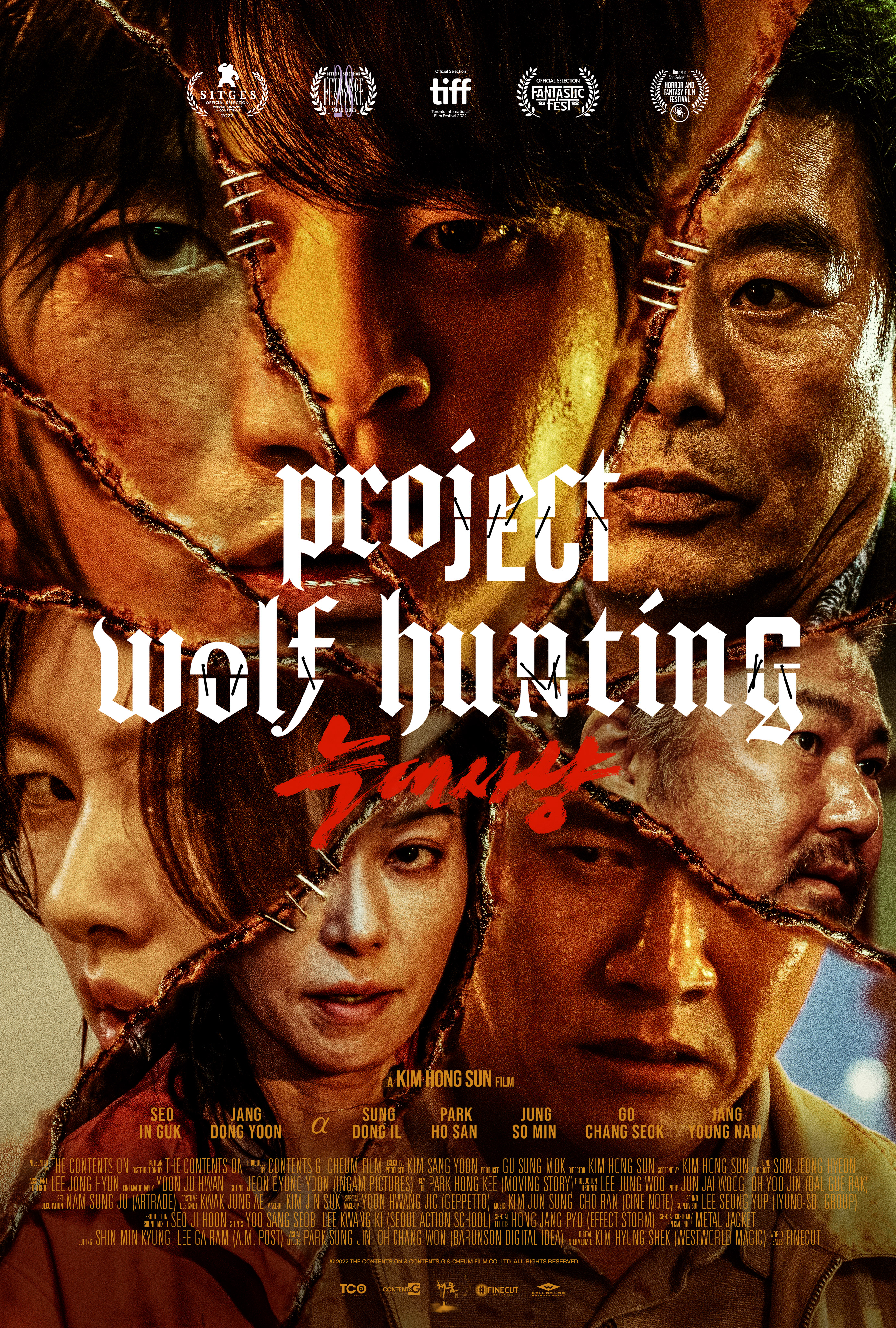
Project Wolf Hunting (늑대사냥, Kim Hong-sun, 2022)

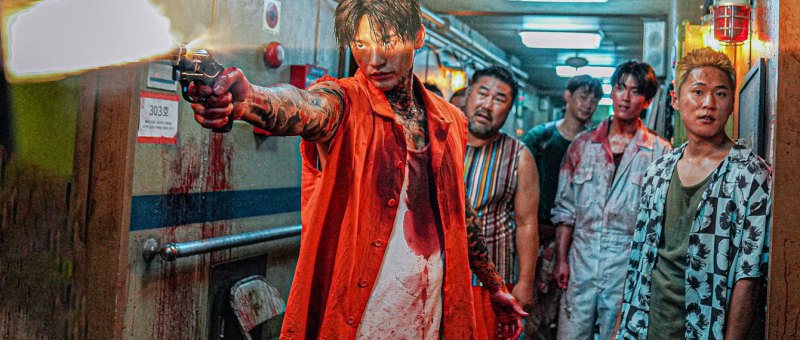
“Remember, there’s nowhere to run” an arrogant police officer explains to collection of rapists and murderers locked aboard a cargo ship ready to be delivered to “justice” in Korea having attempted to flee to the Philippines. It is in someways ironic that these men and women, depraved as many of them may be, have been loaded onto a commercial vessel to be shipped home less like cattle than faceless and inanimate objects. Kim Hong-sun’s eerie gore fest Project Wolf Hunting (늑대사냥, Neukdaesanyang) is in many ways about the horrors of the past but also suggests that the present is little better in a world in which there is little difference between cop and thug and we are all at the mercy of looming violence. 

As one older prisoner puts it, “if this isn’t hell, I don’t know what is”. Thanks to an international extradition arrangement some of the worst Korean criminals are about to be repatriated from the Philippines only the historic event is disrupted by a suicide bombing carried out by a disgruntled victim whose smashed glasses and severed limbs are an eerie harbinger of what’s to come. After a rethink, the government decides to hire a cargo boat instead so the public won’t have access to the criminals, which is somewhat ironic, while accompanied by a crack team of veteran cops each with over 10 years of experience on the force. Already it isn’t seeming like a very well thought through plan, but as Captain Lee (Park Ho-San), who openly beats a prisoner with whom he has prior history on the dock, points out, there aren’t any cameras so he has full authority to enforce the law with no concern for the rights of inmates nor basic human morality. To cut it short, he’s little different than they are even if he isn’t, as far as we know, a multiple murderer or rapist. 

In any case, keeping a bunch of violent criminals handcuffed with only one bathroom break a day and no stimulation seems like a recipe for disaster even if it weren’t just plain inhumane. But inevitably the operation is compromised by an attempt to spring a gang boss which lets the criminals take control of the ship albeit temporarily seeing as there’s something else lurking in the bowels of this floating hellscape that is pure nightmare fuel and a not quite living embodiment of man’s inhumanity to man. Predictably, this all stems back to the abuses of the colonial era and the machinations of the equivalent of Unit 731 operating in the Philippines but has since seemingly been co-opted by a shady Korean organisation apparently also attracted to the research’s capitalistic potential in the booming anti-ageing market hoping to usher in the next stage of human evolution. 

What ensues is a parade of senseless violence in which cop and killer alike are stalked by a mysterious “monster” with wolf-like senses and preternatural strength, and that’s on top of the bloody destruction wrought by the vengeful criminals in their unsuccessful attempt to escape. As Lee had said, there really is nowhere to run though as it turns out that cuts both ways. The gang boss proves unexpectedly heroic, genuinely trying to save the moll who’d been arrested alongside him, while law enforcement reveals itself hopelessly out of depth even as Lee and his female subordinate Da-yeon (Jung So-min) pivot towards protecting the prisoners they were previously intent on oppressing as they form a temporary alliance to defend themselves against the mysterious threat, ironically a product of the “kemono” (beast) project and a reminder of what happens when you decide that some people aren’t really “human” after all. 

Even so, the rampage is indiscriminate. The “monster” doesn’t care if you’re a cop or a killer, all it knows is violence smashing in the heads of the toughest gangsters and ripping hearts out of well-built bodies without a second thought. It’s got no eyes but knows how to use a gun and it still might not be the scariest thing on the boat, at least not in the end as we wonder what exactly all this is for and what might be meant by the next evolution of our species. This is indeed hell and there’s no where to run either from the unresolved past or the malignant future. 


Project Wolf Hunting is released in the US on Digital, Blu-ray, and DVD on Feb. 14 courtesy of Well Go USA.

International trailer (English subtitles)

Thousand and One Nights (千夜、一夜, Nao Kubota, 2022)

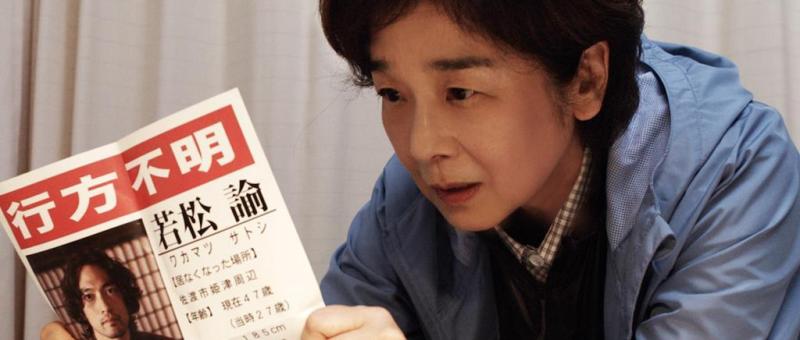
“I can reach the mainland by rowing boat, but why won’t my feelings reach you?” a plaintive song asks in Nao Kubota’s melancholy tale of perpetual longing and continual loss, Thousand and One Nights (千夜、一夜, Senya, Ichiya). A lingering ghost story, Kubota’s contemplative mood piece sees two women, one old and one young, take different paths in the wake of their abandonment but perhaps finding themselves no less unhappy when left with the unanswered questions of a sudden absence. 

On the island of Sado, fishwife Tomiko (Yuko Tanaka) has been waiting for her fisherman husband Satoshi to return home ever since he said he was “just going out for a bit” thirty years previously. Many in the community view her with a mixture of pity of revulsion, seeing her as close to madness in her refusal to accept that her husband will never come back to her. Meanwhile, the former mayor Taisuke now retired to take care of his bedridden wife, puts another young woman, Nami (Machiko Ono), whose husband Yoji (Masanobu Ando) similarly just went out for a bit two years ago and never came back, in touch with Tomiko hoping she can help her investigate what might have happened and if Yoji may be among the small number of presumed abductees taken from the island by the North Koreans. 

Sado does seem to have a large numbers of “missing” people, which in itself is not such an unusual phenomenon given how easy it can be in Japan to simply “evaporate” and start again somewhere else. The island was also the site of a handful of confirmed abductions by North Korea in the late 1970s, dangling another unanswered question in front of the women wondering if their husbands might have been spirited away and prevented from contacting them no matter how much they may have wanted to. Nami is herself third generation Zainichi Korean and wonders if that might have had something to do with Yoji’s disappearance, though in contrast to Tomiko her goal is less reunion than a simple desire to know why. She wants to give herself permission to move on, having drifted into a relationship with a besotted colleague (Takashi Yamanaka) she may not actually quite love but offers her a quiet and conventional life of security she’ll never now know with Yoji. 

Nami does, however, feel a degree of shame in her desire to put the past behind her as if she were betraying a romantic ideal in being unable or unwilling to give up her life in waiting as Tomiko has done. She fears Tomiko may resent her, but she doesn’t, not really only acknowledging that she’s made a different choice. Like Tomiko, Nami is left with unanswerable questions, wondering if Yoji simply walked out on her because he grew tired of the inevitability of their life together, if he was bored, or lonely or depressed. Perhaps he met someone else, had an accident and lost his memory, fell off a cliff or was killed in some other way and someone covered it up. Perhaps he’s dead, perhaps he’s in North Korea. Perhaps it’s all the same. 

While the community pities Tomiko in her martyrdom, they attempt to pressure her to move on by agreeing to marry local fisherman Haruo (Dankan) who has long carried a torch for her even since they were children. Yet in the irrationality of romantic longing, Haruo cannot understand why Tomiko will not give up on Satoshi even as he is unable to give up on her despite her frequent and unambiguous rejections of his overtures. There is a particularly unpleasant quality to his obsessive ardour as his mother (Kayoko Shiraishi) comes round to plead with Tomiko to marry her son and his work colleagues organise a kind of intervention asking her to give in because he’s going out of his mind. He runs her down, says she’s “withering away” and only he can save her while worryingly possessive and controlling even threatening suicide and later going missing at sea just to make her feel guilty and worry about him. 

Even Tomiko’s mother is suffering the pain of lost love, hugging her late husband’s prosthetic leg as she sleeps while excusing the drunken violence that Tomiko says left her with a lasting fear of men by explaining that the war changed him. Tomiko complains that no one ever tells her anything important and that they always leave, but equally refuses to reveal very much important to anyone else keeping her feelings largely to herself remaining something of an enigma, uncertain if her constant waiting is more habit than devotion. In all these tales of frustrated longing from Taisuke and his ailing wife to Satoshi’s parents who rarely talked of their son only for the father to tell the mother on her deathbed that he was still out playing, there is an inescapable loneliness in the essential inability of conveying one’s true feelings that leads some to simply make their exit without saying a word. 


Thousand and One Nights screens at New York’s IFC Center on Feb. 12 & 15 as part of ACA Cinema Project’s New Films From Japan.

Original trailer (no subtitles)

The Zen Diary (土を喰らう十二ヵ月, Yuji Nakae, 2022)

A romanticised idea of returning to the land has become a frequent motif in recent independent Japanese cinema as disillusioned youngsters crave freedom in simplicity but there’s no use denying the life of a mountain ascetic is not for everyone. Based on a 1978 essay by Tsutomu Mizukami, The Zen Diary (土を喰らう十二ヵ月, Tsuchi wo Kurau Junigatsu) is part foodie feature comfort film in the vein of The Little Forest and part melancholy contemplation on the cycle of life along with its inevitable end. 

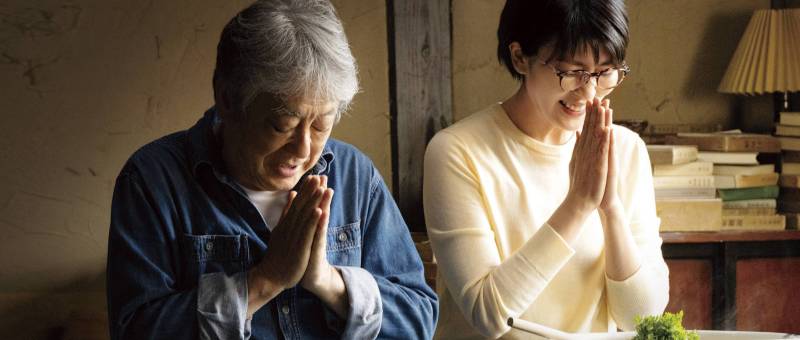
Ageing widower Tsutomu (Kenji Sawada) lives in a cabin in the mountains with his beloved dog and is mostly self-sufficient, growing his fruit and vegetables for the largely vegetarian temple food he learned to cook as a novice monk. His peaceful days are sometimes interrupted by the arrival of his editor, Machiko (Takako Matsu ), in search of his latest manuscript but otherwise intent on staying for meal made with the freshest produce lovingly prepared by Tsutomu. It’s clear that their relationship is no longer strictly professional, if otherwise ill-defined, but equally that Tsutomu’s mountain life could itself be seen as a kind of limbo in his inability to move on from the death of his wife 13 years previously. Her ashes still sit in a box on his altar long after most would have them interred much to his elderly mother-in-law Chie’s (Tomoko Naraoka) consternation. 

Chie is also a mountain ascetic living in a cabin not far from Tsutomu’s where she apparently supplies half the local area with home made miso paste. This life is hard enough for Tsutomu, but must be verging on the impossible for a woman of Chie’s age. Nevertheless, she perseveres while apparently estranged from her surviving son (Toshinori Omi) with whose wife she did not apparently get along. Because of this apparent disconnect, Tsutomu is for some reason held responsible for her existence despite not being a blood relative, while her son is confused by her lifestyle and more or less refuses to have anything to do with her. 

Still, like Tsutomu she had perhaps also come to understand that life is movement and the simple routine of tending crops and preparing sustenance is the engine that drives existence. Divided into a series of vignettes following the traditional divisions of the year, the film lingers on seasonal details as Tsutomu painstakingly washes and prepares his homegrown veg and pickles to prepare for the upcoming season. A series of brushes with death, however, throw him into a contemplative mood realising that his ascetic lifestyle is also a flight from the inevitable and a refusal to face his fear of mortality. “Who in this world lives for eternity?” a folk song asks, while Tsutomu meditates on the zen teachings of his Buddhist upbringing and his life as a novice monk raised in a temple from the age of nine until he ran away at 13.

His reflections are perhaps more in keeping with the 1978 of the original essay than they are the contemporary setting of the film but also hint at the absurdity of class inequality. The crematorium has two doors, only one of them ornate, yet everyone leaves the same way and we are all equal in the end. He was sent to the temple because his family were too poor to feed him, though his temple life stood him in good stead for self-sufficiency and gave him the capacity for solitude. Though his family had lived on the edges of a graveyard, his father made coffins for a living, and temple life is necessarily bound up with death, Tsutomu had lived in its shadow never making his peace with mortality. Yet the seasons will also progress towards winter, and Tsutomu with them as his life draws towards its inevitable conclusion.

In any case, the film’s final words are those of thankfulness for all that life has to offer as represented in the fruits of the earth, gratefully received by an enlightened Tsutomu. In keeping with its subject matter, the unfussy yet often picturesque photography brings out the pleasures of a life of simplicity and the human warmth often to be found within it while also reflecting the intense melancholy of Tsutomu’s contemplative solitude as he meditates not only on mortality but what it is to live in sync with the rhythms of the natural world.


The Zen Diary screens at New York’s IFC Center on Feb. 12 & 16 as part of ACA Cinema Project’s New Films From Japan.

International trailer (English subtitles)

Yamabuki (やまぶき, Juichiro Yamasaki, 2022)

The lives of a series of dejected souls in a moribund quarry town intersect in unexpected ways in a poetical drama from Juichiro Yamasaki, Yamabuki (やまぶき). The film takes it name from a colourful mountain flower which as someone later comments grows in the shade where no one can see, much like the sullen teenage girl whose mother named her after it because as she says “sunflowers face the sun but you don’t have to”. A tale of finding a place to root oneself in a rocky landscape the film has an understandably melancholy atmosphere but nevertheless eventually finds hope in perseverance or as one of the heroes finally sighs, “ask and ye shall receive”.

“This is my family” former Korean equestrian Chang-su (Kang Yoon-soo) beams on visiting a local ranch where his girlfriend’s daughter Uzuki is learning to ride. Chang-su explains that he was forced to give up horse riding after his father’s business went bust, implying at least that he’s from a formerly wealthy family in Korea with whom he seems to have few emotional ties. We see him send money abroad which seems to be intended to pay off loan sharks, presumably his father’s debts unwisely incurred by his failing business and perhaps the reason why Chang-su has come to Japan to work a manual job in a quarry. Most of the other workers are also economic migrants, many of them from the same area and conversing with each other in their own shared language though Chang-su seems to be the only Korean. After receiving the news that he’s to be made a regular employee rather than a casual worker, he starts to think that his life is back on track allowing him to once again ride a horse. 

But his hopes are suddenly dashed when his car is hit by falling rocks dislodged by police detective Hayakawa (Yota Kawase) trying to uproot a yamabuki flower to take home with him while his teenage daughter, Yamabuki (Kirara Iori), rolls her eyes and storms off. Reeling from the death of her war reporter mother in a Middle Eastern combat zone, Yamabuki is at odds with her father and searching for her own identity. She has begun hanging out with a group of protestors who stand silently at the roadside with prominent signage though their protests seem to take on many forms with no particular focus. One moment it’s the consumption tax and the next American presence in Okinawa or racism in contemporary Japan. This last one is met with a counter protest by a man shouting at them to go back where they came from, echoing the kind of othering and displacement felt by Chang-su who is let go from the quarry after the accident.

Just as Chang-su tries to anchor himself with his new family, Hayakawa tries to remake his in the absence of his wife while carrying on a kind of relationship with a Chinese sex worker equally displaced by the modern society and looking for a place to belong. As she points out, her mother came to Japan because at that time it looked like the future, but like the quarry town it now seems like the past. Her mother returned to the economic powerhouse of Shenzhen and has apparently become wealthy, though her half-Japanese daughter struggles to find a place for herself. As Chang-su reveals, “yamabuki” was also the name given to gold coins offered as bribes in the feudal era, lamenting the money-oriented nature of the contemporary society just as Yamabuki herself concludes that she wants her life to mean something and to feel present in every second of her existence. Her father had objected to the protests, but eventually tells her that she should be preparing for her independence and learning to be accountable to herself for her actions. She must have the courage of her convictions, as he lays out in a scene shot in the manner of a political rally and echoing Soviet realist cinema, so she can’t regret it later even if she one day changes her mind.  

They are all, in their ways, like the yamabuki rooting themselves in rocky ground and growing in the shade each discovering something new that allows them to continue despite the continual disappointment of their lives. Shot in a grainy 4:3 16mm, the film emphasises the aura of impossibility that enshrouds the town as if it were somehow trapped in the past, but equally lends it a kind of elegiac quality peppered with the colourful yellow of the yamabuki flowers which suggest that it is possible to blossom even under the constant gloom of a continually uncertain existence.


Yamabuki screens at New York’s IFC Center on Feb. 10 & 11 as part of ACA Cinema Project’s New Films From Japan. Director Juichiro Yamasaki will be present at each screening for a Q&A.

Original trailer (English subtitles)

Hero (世间有她, Li Shaohong, Joan Chen, Sylvia Chang, 2022)

The latest addition to the growing sub-genre of Chinese pandemic movies, tripartite anthology film Hero (世间有她, Shìjiān Yǒu Tā, AKA Her Story) is the first to root itself in the lives of contemporary women just as they are disrupted by the arrival of COVID-19. As might be expected, the themes are largely those of love and endurance which draw additional poignancy from a Lunar New Year setting that prioritises family reunion but may also be in their way reactionary in reinforcing patriarchal social codes while implying that it might be the women who need  to give a little and reassess their notion of what’s really important. 

Directed by Li Shaohong, the opening sequence pits 30-something mother Yue (Zhou Xun) against her domineering mother-in-law, Ju (Xu Di), whose love and care for her son and grandson borders on the destructively possessive. Yue is the first to contract the mysterious new form of pneumonia then taking hold in Wuhan, prompting Ju to immediately try and kick her out of her own flat while insisting her son, Kai, and grandson, Dongdong, come back with her to another city further north. When lockdown is declared in Wuhan, the grandmother is trapped with the family but her acrimonious relationship with Yue adds to an already stressful situation. After Ju comes down with COVID too, Kai and Dongdong take refuge in the empty flat of a friend leaving the two women alone but mainly phoning Kai to complain about each other. 

A phone call from Yue’s parents eventually forces Ju into a reconsideration of her corrupted filiality as she remembers that Yue is also someone’s daughter and a mother herself. She accepts that Yue’s criticism of her as overly invested in her son’s life is fair and mostly born of her loneliness rather than an attack on her otherwise conservative values that imply she exists only in service of the men of the family, while realising that by failing to take proper care of herself she accidentally increases the burden on those around her and should instead agree to care and be cared for as a part of a harmonious community. 

This question of interdependence also raises its head in the third chapter directed by Sylvia Chang set in Hong Kong and filmed in Cantonese. Chang’s segment is not really much about the pandemic save for the additional strain it places on the relationship between press photographer Chelsea (Sammi Cheng Sau-man) and her husband Daren (Stephen Fung Tak-lun) with whom she is in the process of separating. When their son develops a fever, they end up in a blazing row discussing the reasons their marriage is falling apart which relate mostly to differing views of contemporary gender roles with Daren apparently reluctant to do his fair share at home while lowkey resentful that Chelsea has not only continued to work but is professionally ambitious especially as, it’s implied, his salary is not really enough to support a family of four on its own. The family also have a Filipina helper who in a rather poignant moment is heard singing happy birthday to her own child back in the Philippines whom she cannot see because she’s earning money taking care of Chelsea’s. Like Yue, Chelsea is also prompted to consider what’s most important, but the implication seems to be that she’s the one in the wrong and should learn to prioritise her family while her husband is more or less vindicated rather than encouraged to change. 

Only the middle section, directed by Joan Chen, attempts to deal with the gaping losses of the pandemic era as a young woman, Xiaolu (Huang Miyi), tries to gather the courage to tell her parents, who are still hoping she’s going to hook up with a now successful childhood friend, that she’s going to marry her uni boyfriend, Zhaohua (Jackson Yee), who’s stayed behind in Wuhan to look after their cat while she returns to Beijing for Lunar New Year. Xiaolu keeps in regular contact by phone but soon discovers that Zhaohua has become ill with a mysterious illness. She immediately decides to return to Wuhan but he warns her not to because it isn’t safe and shortly thereafter the city is locked down while she and her family are placed under quarantine in Beijing. Shot in a washed out black and white only the various FaceTime conversations between the young couple are in colour hinting at the greyness that now surrounds Xiaolu’s existence and the distance between herself and the happy life in Wuhan which has now been taken away from her. 

The film’s Chinese title more literally means “the world has her” or maybe more simply implies that she is in the world, more of an everywoman contending with the extraordinary than the “hero” of the title though the survival of the three women is in its own way also of course “heroic”. This concept of heroism may however be somewhat problematic in its emphasis on patriarchal social codes which insist that their first and only duty is to the family even if the message of holding your friends and relatives closer in the wake of disaster is universally understandable. Nevertheless, it does perhaps pay tribute to the women’s perseverance and determination to seek kindness and love even in the most difficult of times. 


Hero streams for free in the US and Canada until Feb. 5 as part of Asian Pop-Up Cinema’s Lunar New Year celebration.

Original trailer (English subtitles)