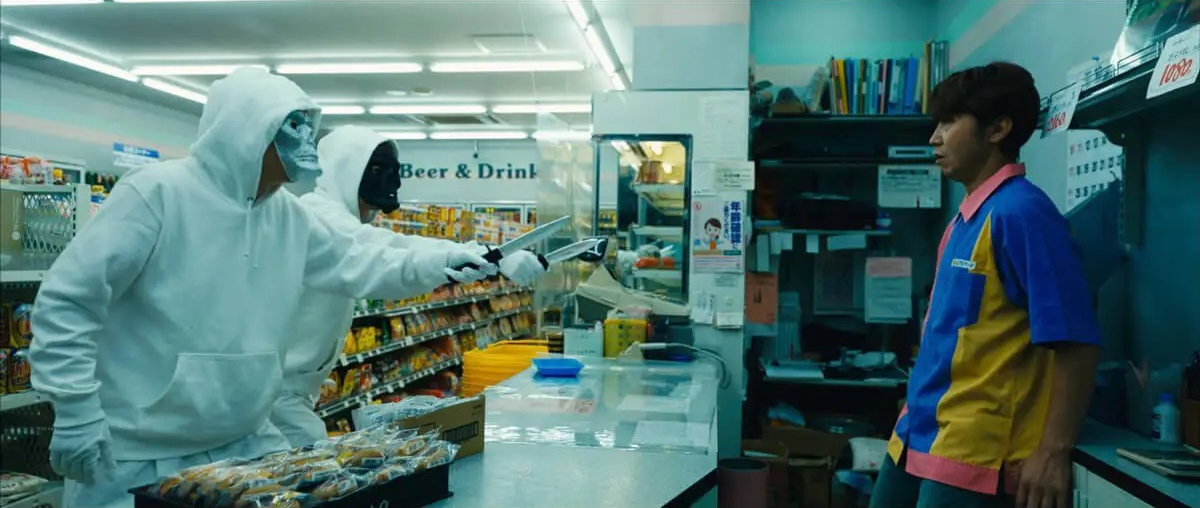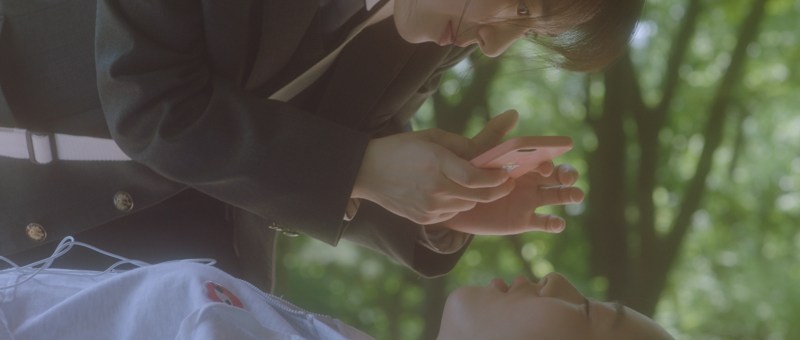
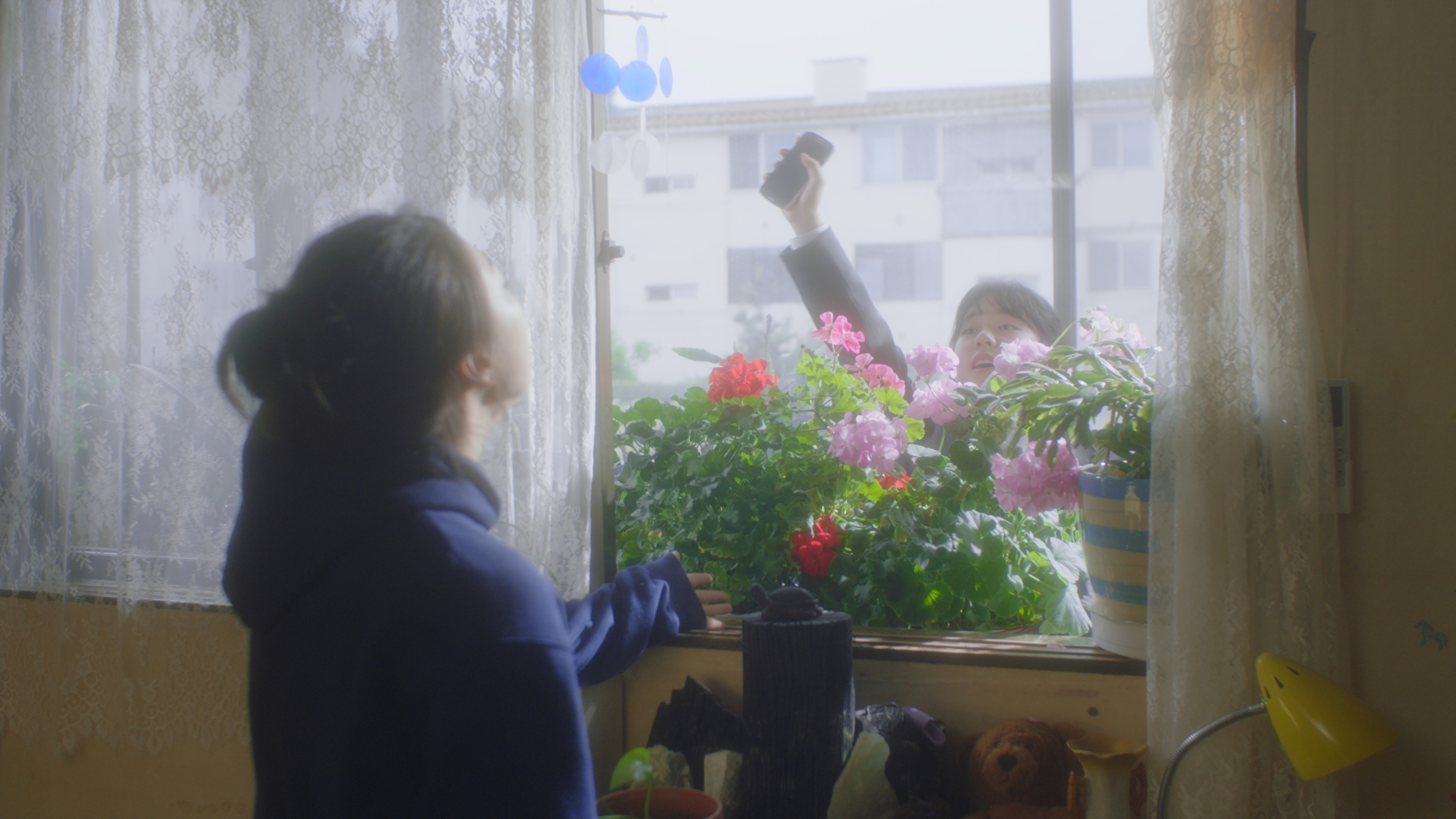
Jiseok (지석, Kim Young-jo, 2022)

When Kim Jiseok, co-founder and head programmer of the Busan International Film Festival, passed away suddenly at Cannes in 2017 of a heart attack at the young age of 57, it sent shockwaves through the cinema industry. Kim had been a key figure in the promotion of Asian cinema which he founded the festival to showcase, but had also become mired in controversy following the decision to go ahead with a screening of a documentary about the Sewol Ferry disaster that the municipal authorities had tried to pressure the festival to cancel because it reflected badly on the government. 

Kim Young-jo’s documentary Jiseok (지석) makes no secret of suggesting that the stress of dealing with the government’s attempts to overrule the festival’s autonomy was a direct cause of his death. In a poignant clip from a 2012 interview included close the documentary’s conclusion, Jiseok is asked why BIFF has managed to survive when so many other festivals have not and answers that there has always been such a tight bond between its team members which has not so far been strained by conflict or controversy and he doubts that it ever will be. 

But this is in fact thought what happened as the organisers split into factions with differing views as to how the festival should proceed after it was targeted by the government, some feeling they should cancel all together and others wanting to go ahead. Jiseok felt himself pressed into a corner caught between opposing forces and torn between loyalty to his old friends and the desire to preserve the film festival. Industry friends also privately recall that he was personally very affected by the Sewol Ferry Disaster in which a large number of school children were killed when the ferry they were travelling on as part of a school trip capsized due to mismanagement and lax safety procedures. 

Still, Jiseok was regarded by some as a traitor for continuing to work with the festival and taking over the duties of Lee Yong-kwan who had made the decision to go ahead with the screening but was forced to resign under government pressure and later accused of embezzlement after a government audit carried out in retaliation. In subsequent years, many Korean industry figures decided to boycott the festival entirely while a question mark hung over its autonomy and artistic freedom. Most of the interviewees are able to acknowledge that Jiseok found himself in a difficult position and do not necessarily hold his decision to continue working at BIFF against him but do suggest that it was the fragmentation of these relationships, some of which went back over 30 years, that caused him additional strain and damaged his health. 

What’s most clear is that Jiseok was very well loved and is much missed not only by his wife who also appears in the documentary but by the international industry at large. Some of the biggest names in East Asian cinema such as Hirokazu Koreeda, whom Jiseok had asked to become the dean of the Asian Film Academy, and Apichatpong Weerasethakul appear on camera offering their memories of Jiseok while it’s clear that he also enjoyed warm and close relationships with filmmakers at both ends of their career. Malaysian director and actress Tan Chui Mui (Barbarian Invasion) makes a particularly poignant statement recalling the bubbling frog bath toy Jiseok had gifted her infant son who will now only know his “Korean Uncle” only from photographs and her stories of him. Other South Eastern filmmakers also pay tribute to his warm support of underrepresented national cinemas and encouragement of new cinematic voices.

Kim’s documentary may in some ways find itself caught between competing visions on the one hand keen to examine the fallout from the tightening censorship regime of the Park Geun-hye era which eventually led to the blacklisting of artists who were critical of the regime including internationally renowned names such as Park Chan-wook and Bong Joon-ho, while on the other offering a simple memorial of the man himself in an act of catharsis for those who knew him with the consequence that little else of him is revealed aside from his warmth, cheerfulness, and affability along with his passionate love of film. In any case, many of the interviewees appear close to tears as they attempt to bid Jiseok goodbye, testament to good he left behind not just in terms of cinema but as a human being.


Jiseok screened as part of this year’s Osaka Asian Film Festival.

Original trailer (English subtitles)

The Dream Songs (너와 나, Cho Hyun-chul, 2022)

Teenage friends wrestle with a sense of mortality, frustrated longing, and future anxiety in the etherial feature debut from actor Cho Hyun-chul, The Dream Songs (너와 나, Neo wa Na). Set shortly before the 2014 Sewol ferry disaster and shot in a washed out soft focus with a hazy nostalgic quality, the oneiric drama finds its conflicted heroine coming to an appreciation of the solipsistic qualities of obsessive love while preparing to cross the line between adolescence and adulthood in fearing she may not return from her upcoming trip or that the her that returns will not be same and the world will have moved on without her. 

The trip is only four days, but for Sam (Park Hye-su) it represents the end of her adolescence and the beginning of adulthood. As the film opens, she wakes up in her classroom after having a disturbing dream that something bad is going to happen to her best friend Ha-eun (Kim Si-eun) who is currently in the hospital though only for broken leg after being hit by pedal bike on a zebra crossing. So upset is she, that Sam manages to convince her teacher to let her leave early to verify that Ha-eun is OK with her own eyes and try to convince her to come on the school trip to Jeju with her, broken leg and all, so that whatever happens happens to them together. 

In the repeated dream imagery, it’s being left on her own that Sam seems to fear. She doesn’t want to be the only one who survives or the only one who dies and leaves her friend behind though as she confesses there was something that felt peaceful in her dream on looking at a corpse that might have been her own. The school trip to Jeju is one that many teenagers take in a quite literal rite of passage, but it’s also tinged with additional anxiety in the painful reminders of the 2014 Sewol Ferry disaster, directly referenced via a radio broadcast, in which many school children taking the trip from the area where the film takes place lost their lives. Sam’s impending sense of foreboding causes her to reevaluate her relationships and especially that with her best friend Ha-eun for whom she has developed romantic feelings she is unsure can be returned. Afraid to leave without saying anything but also worried she may be rejected and end up imploding the friendship too, Sam’s internalised conflict ironically blinds to her Ha-eun’s individual suffering in having recently lost her pet dog as well as her disappointment on missing out on the trip while recovering from her accident. 

Cho frequently lands on the image of clocks, often stopped, which hint at time running out while there are frequent allusions to death and drowning from the bird Sam finds on the ground by the school to the girls’ final parting seemingly taking place in front of a stranger’s funeral with mourners talking outside while people carry funeral wreaths directly past them. While the lines between dream and reality continue to blur, Sam sees images of herself in the two little girls playing together in the park and another with her grandmother who “saves” a toy dinosaur from drowning in an environment in which it is unable to survive. She and Ha-eun chase a lost dog and eventually end up on opposite sides of a fence which is the outcome Sam most feared, but are eventually reunited and able to have a more emotionally honest conversation now that Sam has come to an understanding of the self-involved qualities of her romantic obsession. 

Even so, for the first part of the film it isn’t entirely clear if Sam’s feelings are indeed romantic or if it’s more a case of intense teenage friendship that causes her to be jealous of others that might be spending time with Ha-eun while preoccupied with the identity of the mysterious “Humbaba” whom Ha-eun apparently wanted to kiss in a diary entry Sam was presumably not intended to read. Sam’s feelings are made clear in a letter she doesn’t have the courage to send while she seems to fear that time may slip away from her and Ha-eun won’t be there when she returns from her trip. Yet what she ends up awakening to is more like self love, or at least no longer fearing “Joy” will fly away from her when she’s not looking. Cho’s hazy, poetic coming-of-age drama excels in capturing the joyful quality of teenage female friendship and diffidence of first love if tinged with a note of melancholy nostalgia in the wake of a devastating loss.


The Dream Songs screened as part of BFI Flare 2023

Original trailer (English subtitles)

R 21 aka Restoring Solidarity (Mohanad Yaqubi, 2022)

The occupation had ended in 1952, but America’s influence on Japanese society continued in other ways not least among them defence. 1960 saw the biggest protest movement Japan has ever experienced against the renewal of the security treaty with the Americans that underpinned the pacifist constitution, though the treaty was eventually signed anyway in defiance of public opinion. Student protestors and radicals came to feel oppressed by American imperialism and objected to the hypocrisies of Japan’s role in America’s foreign in policy in Asia. For these reasons, those on the political left came to feel a solidarity with the Palestinian struggle against colonialism and began to travel to Palestine in order to learn and share support often filming what they’d observed for those back home. 

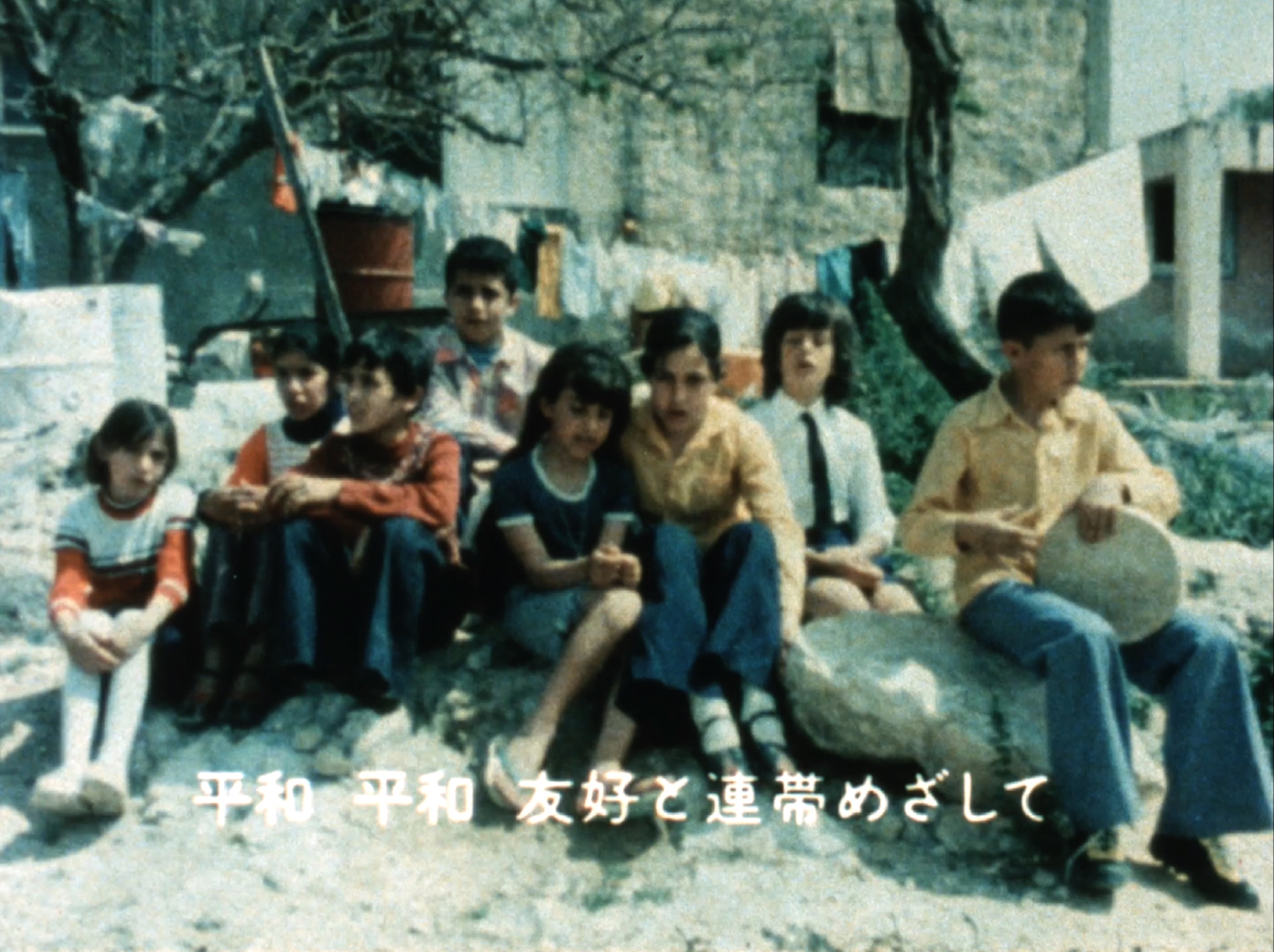
R 21: Restoring Solidarity is a collection of 20 such films kept safe in Japan and later handed to the director, Mohanad Yaqubi, after a screening of his previous film, Off Frame. Film number 21 is the film itself intended as a message of solidarity in the overarching contemporary voice over narration in Japanese. The films themselves are in several languages, many of them subtitled or dubbed for audiences in Japan, some shot by Japanese activists in Palestine and others produced by news organisations or other observers. A few feature upsetting footage of bodies and rubble, tanks on the streets, and shoes without owners while others record children singing cheerfully about peace or displaced students talking about their hopes of one day restoring their country.  

A lengthy sequence contains an interview with an old woman recounting how her village was slowly erased to a British reporter, a more obvious parallel with Japan occurring with the direct allusion to the devastation of the atom bomb in ruined landscapes now devoid of all human life existing only as the symbol of societal collapse. The old woman tells the reporter that they should leave the town the way it is as a reminder of the evils which have gone before. Yet also included in the archive is footage from a programme with a British voice over which seems to be much more propagandistic in tone, raising questions of the purpose and objectivity of the videos and the role they were intended to play. 

Perhaps the most interesting segment features a short film starring a collection of children who come across an abandoned missile launcher and start playing with it only to be confronted with the realities of conflict on coming across the body of another child. The children then appear in military uniforms, radicalised to avenge their friend by fighting for their country. The reels also include direct to camera statements and interviews from prominent people that may also in their own way contain a degree of artifice. Yaqubi frequently cuts in with images of the reels themselves or restoration process reminding us that what we’re seeing is a constructed image that’s being reconstructed before our eyes and quite literally repurposed but also “restored” and repaired as an archive of struggle. 

The voice over reminds us of the struggles still ongoing, the indifferent self-interest of global powers that led to the early ‘70s oil crisis which threatened to derail the Japanese economic miracle and itself fostered a desire for closer relationships with Middle Eastern nations. A reporter for a Japanese newspaper, however, states that he thinks most people in Japan would be broadly in favour of the Palestinian cause if superficially knowing little of it while political support can be fickle and lacking in depth. As the voice over suggests, video is and was a powerful way of keeping memories alive but also of expressing solidarity with an otherwise distant cause in the shared struggle against colonial oppression.


R 21 aka Restoring Solidarity screens March 18 at New York’s Museum of the Moving Image as part of this year’s First Look.

A Man (ある男, Kei Ishikawa, 2022)

©2022 "A MAN" FILM PARTNERS

“Why was living so hard for him?” a brother remarks of man he assumed to have died in an accident after severing ties with his family, though with little sympathy in his voice and in truth should the brother be dead it would be all the better for him. Adapted from  a novel by Keiichiro Hirano, Kei Ishikawa’s A Man (ある男, Aru Otoko) asks questions not so much about the limits of identity and the existence of an authentic self, but the kinds of labels we place on others and the prejudice that often accompanies them that makes some want to run from themselves. 

Accidental detective Kido (Satoshi Tsumabuki), a lawyer who previously represented the recently widowed Rie (Sakura Ando) in her divorce from her first husband, is a case in point. He tries not to react while his wealthy and extremely conservative father-in-law runs down a case he’s just won representing the parents of a man who took his own life after being expected to work extreme overtime by an exploitative company solely to fulfil the image of the salaryman. The father-in-law sneers and complaints about the family receiving compensation before moving on to a rant about the welfare state scoffing that “real” Japanese don’t rely on such things which are only for “Koreans and people of that ilk”. 

Aside from its unpleasant xenophobia, the remark is insensitive as Kido is himself third generation Zainichi Korean, though a naturalised citizen of Japan. Throughout the film, he’s bombarded with social prejudice and racist abuse to which he chooses to say nothing, because there’s nothing he can really say, though leaving us to wonder if his decision to marry his wife (Yoko Maki), the daughter of a wealthy and conservative family, is an attempt to secure his own identity as a member of Japanese society even while bristling at her further demands, that they should invest in a more impressive, larger detached house as recommended by her father and also have another child. 

Kido’s quest to uncover the “true” identity of Rie’s husband Daisuke (Masataka Kubota) who is discovered to have been living an assumed identity when the brother of the man whose name he borrowed arrives at his memorial service, is also a quest to affirm his own identity which is in many ways as self-constructed as Daisuke’s is assumed to be. The interesting thing is that Daisuke, who said little of his past, used the other man’s backstory leaving no doubt that is not quite a case of mistaken identity that brings Kyoichi (Hidekazu Mashima) to Daisuke’s memorial service, though he is quick enough to disparage the life the deceased man shared with Rie in a rural “backwater” while making vague references to insurance policies and inheritances and simultaneously offering to pay for the funeral expenses as if reclaiming ownership over Daisuke’s legacy. 

Like Kido’s father-in-law, Kyoichi appears to be a cynical and self-interested man and it’s not difficult to see why the other Daisuke may have wished to escape his life with him. As an older man points out, everyone has things in their past and though they might not seem like much to others it’s natural enough to want run from yourself, to leave everything behind and start again somewhere else. In Japan, this is much easier to do than in some other countries and it’s true enough that changing one’s name is not that uncommon either. Rie’s young son Yuto, now old enough to question his own identity, took his mother’s maiden name after the divorce, then Daisuke’s surname Taniguchi when he married his mother. Now he wonders what his name should be if it is not Taniguchi and who he really is underneath it. 

In essence, we give people names as a kind of label to describe our relationship to them as a means of mapping out the world. These labels also come with prejudices such as that directed towards Kido as a Zainichi Korean and to another of the “disappeared” men who struggled to emerge from the shadow of his father’s crime as a death row felon. The projection of an identity can be harder to live with than the identity itself. When Kido’s wife tells him that he doesn’t seem himself and she wants him to go back to the way he was before, it’s a rejection of the new identity that has begun to surface through his quest to identify Daisuke and an instruction that he conform to the image of him she has constructed for herself as a typical Japanese salaryman not so different from her father in their affluent, middle-class existence.

Having satisfied himself that he understands the man Daisuke came to be, Kido’s self-image and sense of identity seem to be reaffirmed. He is happier with his wife and son, and has fewer doubts about his place in the world, but then he’s suddenly confronted with an unexpected revelation that undermines his new sense of security in causing him to doubt the veracity of the image he has of others, and consequently of their relationship with him which again leaves him unanchored unable to affirm his image of himself without its reflection. Rie’s final acceptance that in the end she never needed the “truth” (now that she has it) points to the same answer, that in the end Daisuke’s name was irrelevant because he was the man he was to her at the time that she knew him and this is all we can ever really know of each other in a continual act of faith in interpersonal connection. A man can be many people at once, or in quick succession, and none of them any less “real” than another. “It’s nobody’s life but your own,” Kido is reminded even as he struggles to reorient himself in a merging of identities self-constructed or otherwise but perhaps destined to remain forever a stranger to himself.


A Man screens in Chicago March 18 as part of the 16th season of Asian Pop-Up Cinema.

International trailer (English subtitles)

Huahua’s Dazzling World and its Myriad Temptations (花花世界, Daphne Xu, 2022)

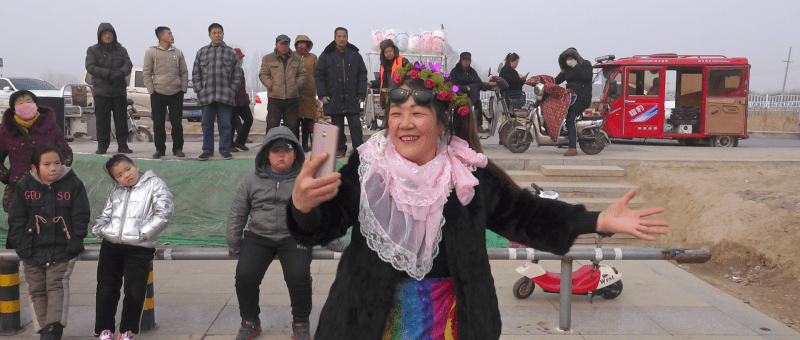
“If there were no live streaming platforms, I don’t think I’d know anyone” a middle-aged grandmother turned unexpected online star admits, laying bare the sense of isolation and impossibility she feels in her life in rural China. Daphne Xu’s largely observational documentary Huahua’s Dazzling World and its Myriad Temptations (花花世界, huāhuāshìjiè) follows Huahua as she goes about her ordinary days, Xu’s camera filming her as she films herself so, she claims, that those like her “won’t lose hope” gaining their own kind of courage in witnessing her optimism and positivity. 

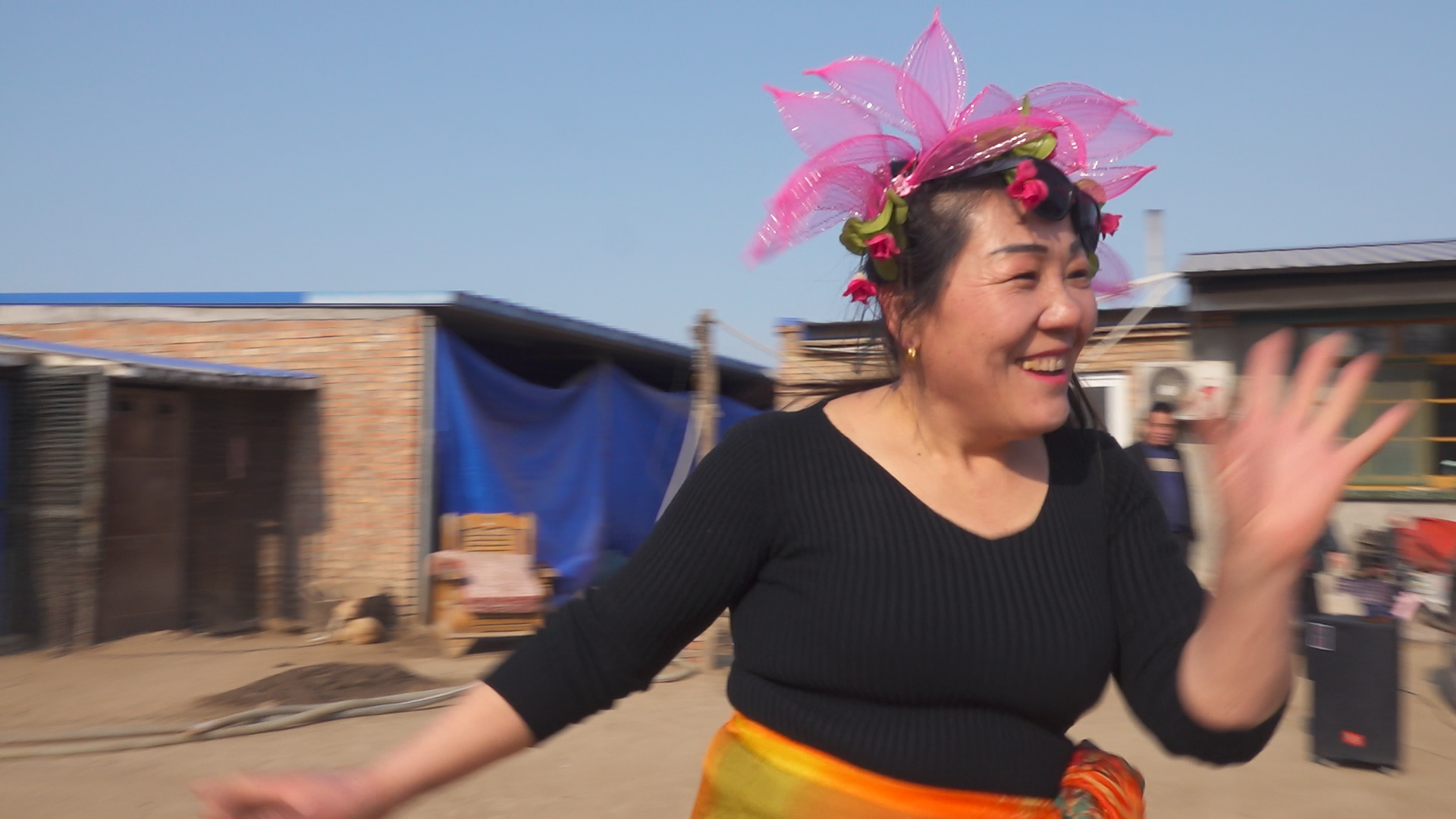
Huahua’s most popular activity is her furious dancing, often wearing a distinctive floral headband if adding a beauty filter to her videos as a means of altering her realities. Reality might not, however, be that far away. During one particular dancing video she suddenly stops and picks up a box of oranges currently on sale at her store and begins peddling them to her followers who often support her monetarily by sending hearts online. As Huahua admits, live streaming is a learning curve for a woman like her who is illiterate and was given little education. While driving home from a nearby commercial area, she emphasises the importance of early education for all children while suggesting that kids from the city learn faster not just because their schools are better resourced but simply because they interact with more people. Children in rural areas might go days without seeing anyone and only have regular contact with the same few family members and acquaintances limiting their ability to learn from each other which also in its way informs her appreciation for live streaming in the community it has given her access to which she might otherwise be denied. 

Meanwhile, she’s clear on the importance of education for women in particular explaining that she’s dedicated to supporting her daughter’s studies so that she will have a better future than she has had not least because she will be financially independent which means she will be at less risk of becoming trapped in an abusive relationship. Huahua’s relationship with her husband seems to that extent to be unhappy, Huahua complaining that she has to cook his meals after working all day while no one cooks for her. During a later live-streaming session, she characterises him as violent but says that she gives as good as she gets suggesting that this is the way she mediates the power differential in their relationship. Then again, she also uncomfortably remarks that women who are killed by violent partners or continue to suffer domestic abuse bring it on themselves by being too “weak” to fight back lending a darker shade to her messages of no-nonsense self-sufficiency in implying that her drive is largely fuelled by a desire to be free of male violence and subjugation. 

On her live streaming platform, she is very much in charge but also offers a fairly egalitarian sensibility in which each of her viewers is free to contribute as little or as much as they want whenever they choose without needing to think about hierarchy. China’s live streaming networks are also subject to a heavy degree of censorship, but Huahua declares herself unafraid to speak her mind and frequently uses profanity which might otherwise incur a ban given the prohibition against “vulgar” behaviour. Her followers seem to appreciate her frankness along with her willingness to offer advice and commentary on the things that might be bothering them.

It’s the idea of exchange which might in the end be the most valuable. Huahua’s videos are as much about sharing as they are showing off, allowing her to connect with others in the otherwise isolated environment of rural China. This sense of openness seems to have rubbed off on her daughter who dreams of studying languages and eventually becoming a diplomat channeling her mother’s “optimism” into an international career. She does though worry about the declining opportunities available in her community in which a new commercial development offers no promise of employment but in fact its reverse. “There won’t even be a place for you to buy jianbing” her teachers somewhat dismissively warn, speaking of an age when everything is automated. They even have robots to mix cocktails, what will the local people do to support themselves in the future? Like Huahua they may need to find alternative means not only to make money but to create new worlds in their own image free of geographical and social constraints.


Huahua’s Dazzling World and its Myriad Temptations screens March 18 at New York’s Museum of the Moving Image as part of this year’s First Look.

Like & Share (Gina S. Noer, 2022)

Two young women seeking escape from a repressive social culture find themselves betrayed by the hypocrisies and lawlessness of the online society in an infinitely empathetic drama from Two Blue Stripes’ Gina S. Noer, Like & Share. Like many young people, they see internet stardom as a path towards freedom and independence, but are too naive to understand its underlying darkness even when presented with evidence of its misuse in the alarming popularity of an illicit sex tape and its violent sequel. 

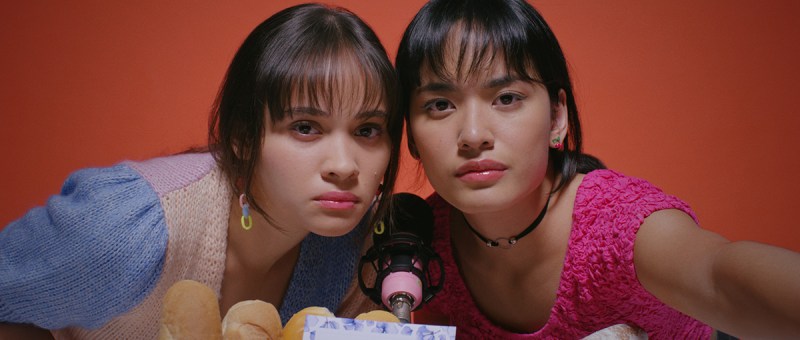
Lisa (Aurora Ribero) in particular is strangely fascinated by the video despite realising that in the sequel that followed the woman is crying and appears to have suffered sexualised violence at the hands of the man whose face is never seen. “No face, no case” the girls are fond of saying, naively thinking that they can safeguard themselves from potential harm simply by shooting from the neck down. When nude photos are leaked of another girl at school, she’s able to claim that it’s not her and encourage people to block the sender but still it seems like no one really believes her. Lisa and Sarah (Arawinda Kirana) seem to feel a sense of invincibility, that they’re in control of their online personas and the channel they’ve set up featuring beautifully produced ASMR videos accompanied by a deliberately “sexy” voice over. Though Lisa is unsure, Sarah brushes off some of the more unpleasant comments they get as simply par for the course while reminding her that they’ll get more likes and shares appealing to the sort of people that make them. 

But the girls are largely ill-equipped to understand the world they’re entering, not least because of the repressive atmosphere in which they’ve been raised. Lisa soon becomes fixated on the sex tape, addicted to pornography and masturbation which temporarily replaces ASMR as her preferred method of stress relief. The problem is compounded by the fact that her mother has married an older, quite conservative religious man and converted to Islam. She is very keen that Lisa not upset her new stepfather, who has agreed to pay for her education, mainly because it’s her own “second chance” to atone for the failure of her first marriage and prove herself a good wife and mother. “What sort of good woman are you that has no empathy for other women?” Lisa later asks her but gets little reply. Her mother advises her to read the Quran if she wants to calm herself down, though Lisa counters that she can’t read Arabic anyway.

As Lisa explains, she was merely curious and it’s not as if she could have asked her mother for knowledge or advice. Her addiction partly stems from the illicit nature of the activity, had she had a healthier outlet and better access to sex education she would probably not have reacted to the video in such an extreme way. Sarah later experiences something similar after meeting a boy, Devan (Jerome Kurnia), at a local recreation ground and agreeing to date him without necessarily seeing any red flags in the fact he’s 27 with a full-time job and wants to date a 17-year-old high school girl. Every time she expresses reluctance to take their relationship to the next level he calls her “childish”, later assaulting her and filming it to use as blackmail and potential online clout. “It’s always the girl’s life that’s ruined, never the man’s” he later sneers, certain that he’ll get away with it because it’s his word against hers and as her lawyer cautions her after Devan leaks the video going to the police is risky because there’s a chance she could end up being charged with obscenity under the country’s laws surrounding pornography. 

Misogyny is already deeply ingrained in the system. Ironically enough, the girls’ teacher tells them the school can’t afford to fund group activities so they need to go swimming on their own and film it for him so he can mark them. The videos are shown to the entire class with even the teacher appearing to salivate over the footage of teenage girls in wet swimsuits while their male classmates make inappropriate comments that go largely unchallenged. Sarah is unwilling to accept that what happened to her was rape, firstly brushing it off as a potential fetish for rough sex or suggesting that Devan did not hear her say no despite having previously told her about a too spicy dish at a restaurant that if she doesn’t like or want something she should say so. Lisa meanwhile is forced to accept her partial complicity after crossing paths with the woman from the sex tape and becoming somewhat fixated on her before reflecting on the harm that she had done in having watched it in the first place. It’s she that later helps Lisa come to an understanding of the best way to support her friend through her ordeal which may be simply to be there and to listen. 

Despite the judging eyes of the world around them, the two women have their friendship and the refreshingly progressive support of Sarah’s older brother who stands by his sister rather than blaming her. Even so, it’s other women who often fail her from the conservative judgement of Lisa’s mother to a lawyer at a court hearing who says that Sarah made her choice when she decided to enter the hotel room with Devan and has no right to call her “regret” “rape”. Yet Lisa and Sarah are finally able to repair their friendship and stand up in solidarity against a patriarchal social culture, refusing to let Devan off the hook while reassuming control of their channel by reading out some of the inappropriate messages they’ve been sent by men online. “Thank you for being brave” a message on the website of a woman’s legal organisation reads, once more reinforcing the power of female solidarity against systematised misogyny. 


Like & Share screens March 14/18 as part of this year’s Osaka Asian Film Festival.

Original trailer (English subtitles)

Where the Wind Blows (風再起時, Philip Yung, 2022)

Philip Yung’s first film since the acclaimed Port of Call was scheduled for release all the way back in 2018 only to be repeatedly held up by troubles with the censors later compounded by the coronavirus pandemic. For many reasons, it isn’t surprising that Where the Wind Blows (風再起時) would run into trouble with the current censorship regime dealing as it does with the touchy subject of police corruption albeit it in the colonial era, but the most surprising thing may be that it was passed at all given the subversive undertones of a late speech delivered by the voice of reason, ICAC chief George Lee (Michael Hui Koon-man), whose attack on the corrupt practices of the British authorities has obvious parallels with the modern day. 

The film is however set firmly in the past ranging from the 1920s to the 1980s and inspired by the “Four Great Sergeants” of post-war Hong Kong who amassed great personal wealth while working as police officers. Once again, the police is just the biggest gang, or perhaps the second biggest given that the great racket in town is the colonial rule. It is indeed the British authorities who have enabled this society founded largely on systemised corruption, something which as Lee points out they are unwilling to deal with because it suits them just fine and they have no real interest in the good of Hong Kong. 

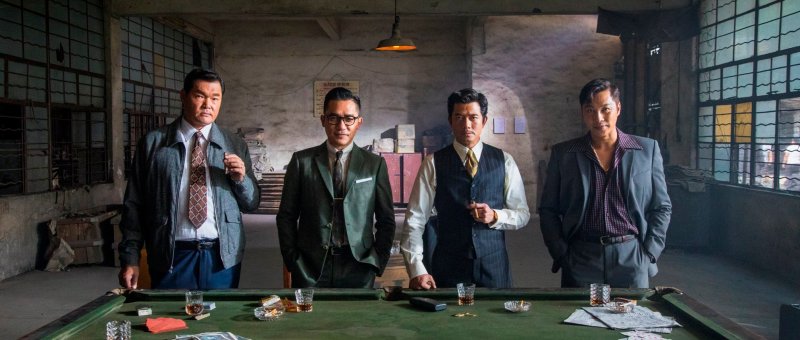
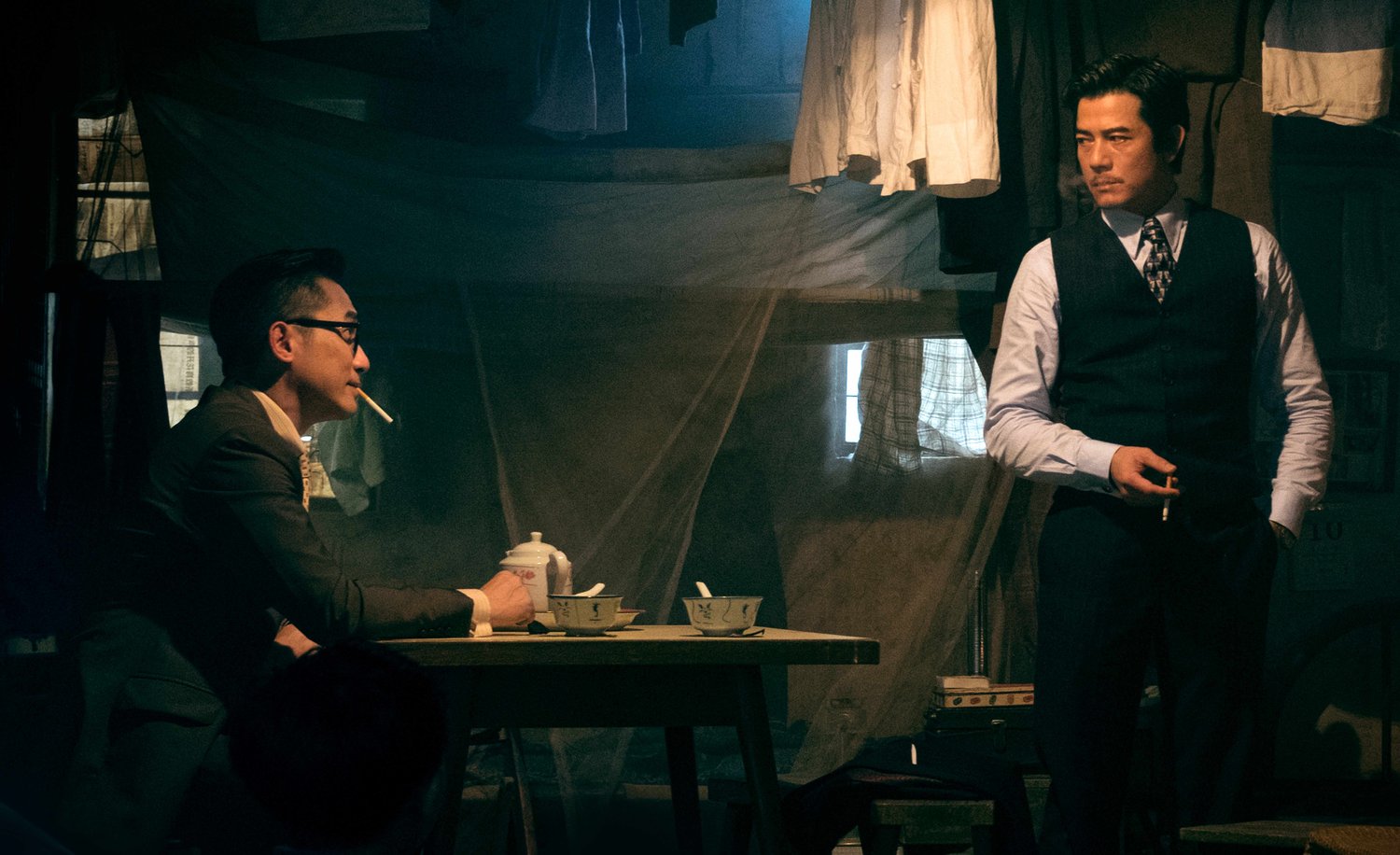
In any case, flashy cop Lok (Aaron Kwok Fu-shing) started out as an earnest bobby before the war who was shocked by the institutionalised corruption all around him and refused to participate in it. But his law abiding nature only made him a threat to other officers who needed him to be complicit in their crimes to keep them safe. After several beatings, he ended up accepting the culture of bribery just to fit in. In the present day, he and likeminded detective Nam (Tony Leung Chiu-wai) justify their dubious methods under the rationale that they’re helping to “manage” triad society by effectively licensing the gangs in taking protection money to leave the chosen few alone while enriching themselves in the process. 

Then again, the balance of triad society is disrupted by the arrival of a bigger Mainland outfit which later ends up backing Lok, with the assistance of his Shanghainese wife (Du Juan), to place him in a position which is the most beneficial to themselves. To quell riots by supporters of the KMT in 1956, Nam lies to the protestors that he secretly supports their cause and that if they do not disperse there is a chance the British Army will forcibly disperse them which he also describes as an inappropriate outcome because this is a matter that should be settled among the Chinese people not by foreigners. In the final confrontation with ICAC chief Lee, the British authorities rule out military or police action, though the rioters in that case are in fact policeman angry about increasing anti-corruption legislation. Ironically enough, Lee’s speech advocates for something similar to that which Nam had suggested, essentially saying that the Hong Kong people should decide their own future and that society in general should be more mindful as to the kind of Hong Kong their children and grandchildren will eventually inherit. 

In any case, the four sergeants are soon eclipsed by changing times while Lok and Nam are mired in romantic heartbreak in having fallen for the same woman who brands Nam an over thinker and implies she may have married Lok less out of love than in the knowledge he’d be easy to manipulate. For his part, Lok is damaged by wartime trauma which has left him cynical and nihilistic while filled with regret and longing for a woman he lost during the war in part because he did not have the money to pay for medical treatment which might have saved her. In this sense, it’s money that is the true corrupting force in a capitalist society in which, as Lee suggests, it might eventually become necessary that you’d have to bribe a fireman to save your house or an ambulance driver to get your ailing mother to a hospital. Then again, as Nam says power lies in knowing there are those weaker than yourself. Yung’s sprawling epic apparently rant to over five hours in its original cut before being reduced to three hours forty-five and then finally to the present 144 minutes leaving it a little hard to follow but nevertheless filled with a woozy sense of place and an aching longing for another Hong Kong along with a melancholy romanticism as a lonely Nam dances alone to a ringing telephone bearing unwelcome news. 


Where the Wind Blows screens in Chicago on March 14 as part of the 16th season of Asian Pop-Up Cinema.

Original trailer (Traditional Chinese / English subtitles)

The Sunny Side of the Street (白日青春, Lau Kok-rui, 2022)

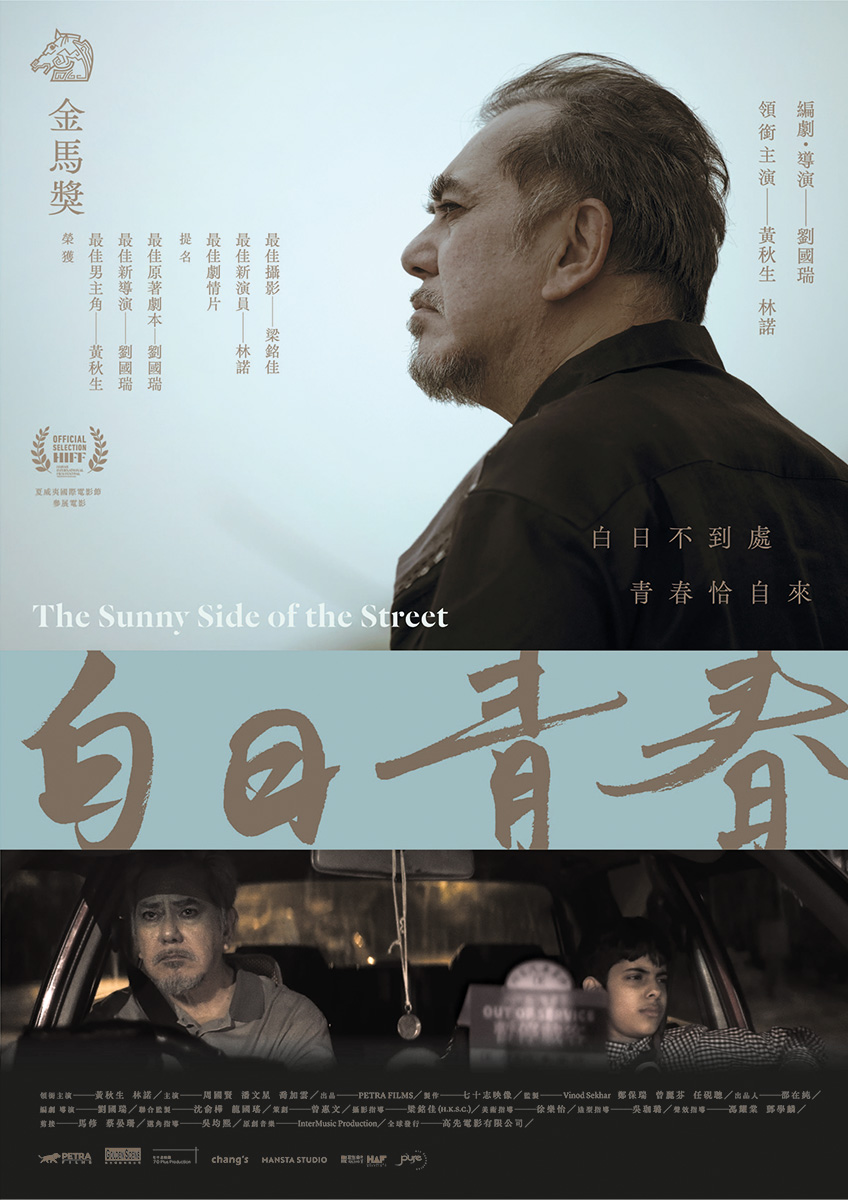
Dualities abound in the stories of two frustrated fathers and the sons who vow to be nothing like them in Malaysian director Lau Kok-rui’s paternal drama, The Sunny Side of the Street (白日青春). The fathers are in their way looking for a place in the sun but struggle to find it, while the sons want nothing but their affection and approval but remain resentful for their repeated failures. Each affected by the legacies of geographical displacement, they remain free floating if looking for safe harbour though perhaps in all the wrong places. 

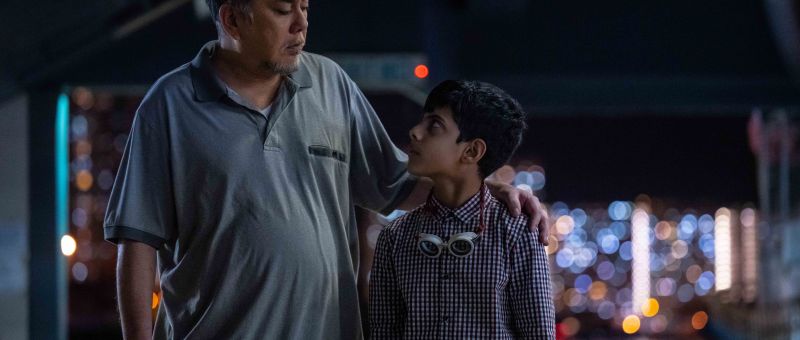
The parallels between embittered taxi driver Yat (Anthony Wong Chau-sang) and former lawyer turned refugee Ahmed (Inderjeet Singh) are amply demonstrated by the opening sequence in which each is late for a wedding after Yat rams into the van Ahmed had borrowed from store owner Ali to transport a secondhand fridge. Yat arrives just in time to see his son, Hong (Endy Chow Kwok-yin), make the toast at his wedding but thank his father-in-law, a senior policeman at his precinct, while looking daggers at Yat whom he only invited a few days before out of a sense of obligation. Ahmed meanwhile was supposed to be a witness at a wedding between a Pakistani man and an Indonesian woman at the refugee camp not far from where Yat lives which the officiant is keen to remind them is binding in the eyes of Allah but not so much the government of Hong Kong. 

As a somewhat prejudicial radio show playing in Yat’s car explains, Hong Kong is a point of transit. If their claims are upheld, the refugees will not settle there but be moved on to other countries such as Canada where a family at the wedding are about to travel taking the best friend of Ahmed’s son Hassan (Sahal Zaman) with them. The radio show talks about “fake refugees” describing them as a drain on resources depriving local people of services they should otherwise be entitled to while it’s clear that many don’t seem to see the refugees as equals and think of them as lazy shirkers with criminal proclivities. Yat repeatedly uses a racial slur to refer to Ahmed and immediately tries to pin the accident on him assuming the policeman will also jump to the conclusion that it must be Ahmed’s fault for being a bad driver only the policeman doesn’t quite play along even when pulling Ahmed aside for an ID check. 

The irony is that Yat is also a refugee who swam to Hong Kong from the Mainland and is still carrying trauma from his flight in the same way many like Ahmed are yet cannot find it within himself to empathise with him, only to act with entitlement and absolve himself of blame through manipulating his connections with the police. He has quite clearly lost his moral compass as the repeated motif of him looking the one which led him to Hong Kong but now appears to be broken makes plain. Hong pointedly refuses to help his father and is clear they should go by the book, but his less rigorous friend is only too keen to help. In any case the petty vendetta between the two men, Ahmed sticking to his principles and refusing to lie to make the situation go away and Yat insisting on enforcing his privilege by forcing him to back down, escalates with tragic results eventually forcing Yat to wrestle with the consequences of his actions and not least the causes of his estrangement with his son. 

Hong tells him that he doesn’t want to be a man like him who is unable to protect his family, while Hassan snaps at Ahmed that his acts of petty thievery are better than being poor like his father. Yet while Hong has swung in the opposite direction, raising himself to be a man who is compassionate and dedicated to justice, Hassan is in danger of going off the rails not least because he has bad eyesight and is falling behind at school because even as something as simple as glasses for their son is not in the family’s reach. Ahmed’s dodgy friend Numen is forever trying to get him into crime, knowing that refugees are not permitted to work or even accept monetary gifts, but he refuses while Hassan begins to see a way of taking control of his situation though thievery and rebels against his father as he does so. 

When Yat begins to take an interest in Hassan it’s mainly to assuage his guilt in knowing that he ruined Ahmed’s life and has left a boy without a father for whom he is now responsible. Yet it’s also in a way an attempt to repair the relationship he could not rebuild with his son while addressing the latent trauma from his own escape from Mainland China which he has otherwise buried through heavy drinking that finally resulted in a liver transplant from Hong that only seemed to deepen the sense of debt and obligation between them. Perhaps Hong Kong is a transitory place after all, each of them in some way displaced and not least from each other while continuing to hope for a better place in the future only to discover nothing more than loneliness and uncertainty if tempered by love and the shades of a frustrated hope.


The Sunny Side of the Street screens March 12/17 as part of this year’s Osaka Asian Film Festival.

Original trailer (Traditional Chinese / English subtitles)

Images: (C) Petra Films Pte Ltd

Daruma (極道系Vチューバー達磨, Daiki Matsumoto, 2022)

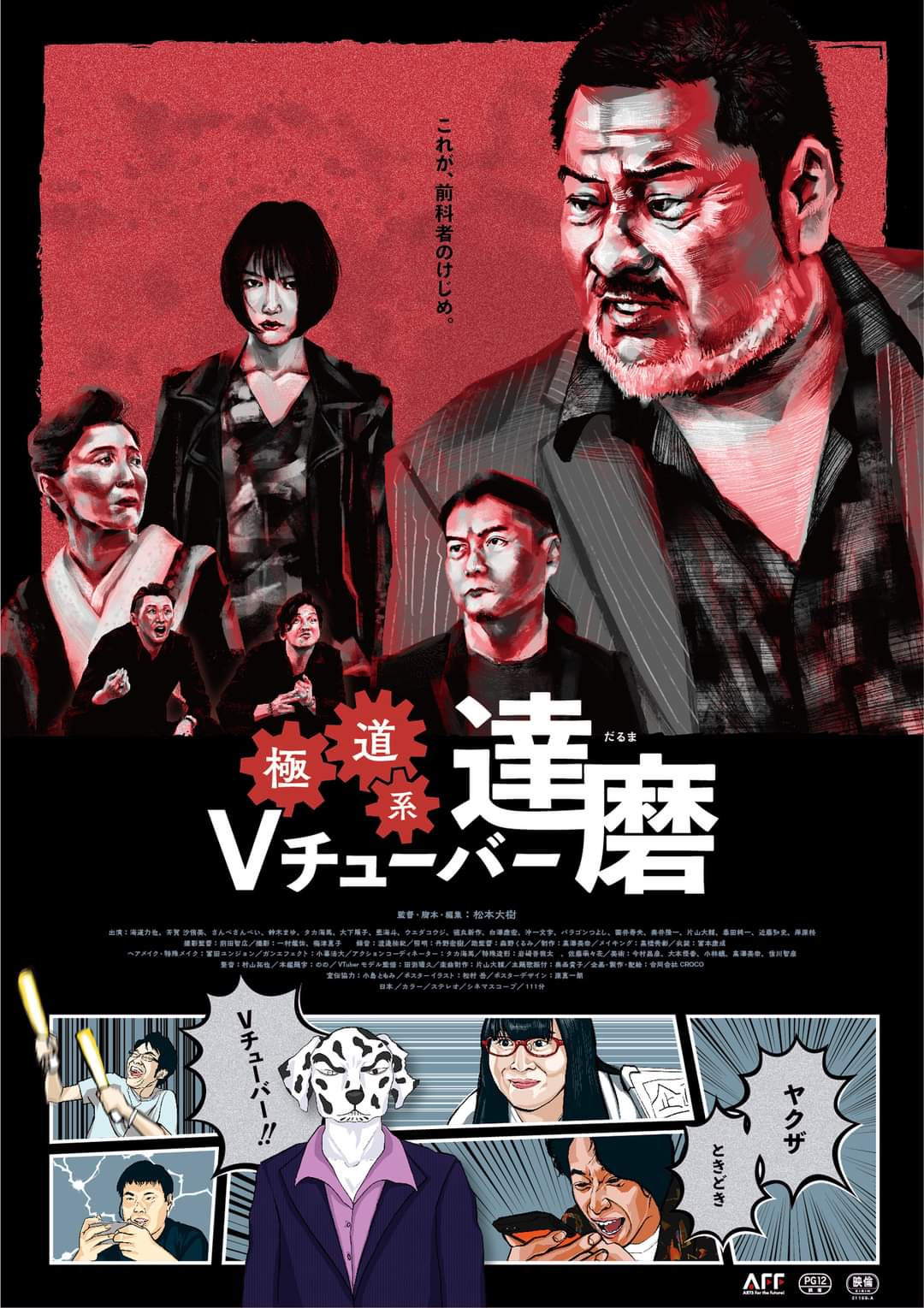
Times are hard for yakuza. The footsoldier who comes out of prison and discovers everything has changed (and from his point of view not for the better) while he’s been inside is a stock character of the post-war gangster movie but the yakuza has been in decline for decades so you’d think there might not be so much of a culture shock on emerging into the world of 2022 after 15 years away. The hero of Daiki Matsumoto’s Daruma (極道系Vチューバー達磨, Gokudokei VTuber Daruma) is however plunged straight into the deep end when his late boss’ wife (Junko Ohshita) who now heads the operation puts him in charge of a moribund film studio currently being used by the previous owner’s daughter, Shoko (Sayumi Haga), to livestream as a VTuber. 

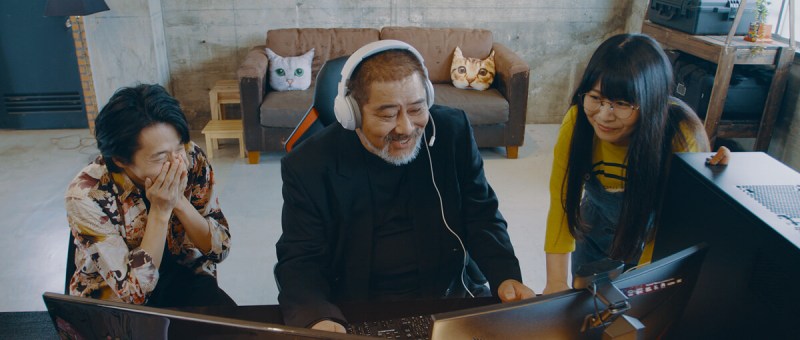
Daruma (Rikiya Kaido) hasn’t even heard of YouTube so it’s a quite a learning curve for him when the assistant he’s given, IT nerd Sampei (Sanpesanpei), explains that a VTuber is a live streamer who appears as an animated avatar, in this case a cute high school girl. When a miscommunication about dates causes Shoko to miss an important stream, Daruma has no choice but to step in himself but though some viewers respond positively to the obvious incongruity of a grizzled old man’s voice coming out of a cute high school girl’s animated mouth others are soon flooding the comments section with anti-yakuza sentiment. Nevertheless, he eventually finds an audience after leaving his mic on accidentally while sharing prison anecdotes with Shoko and Sampei. 

There’s no question that Daruma is intended as an example of good old school yakuza while the young guys who surround the lady boss are definitely of the new generation who no longer care about things like honour or humanity. Avuncular in nature, he may be intimidating when needed but is generally cheerful and pleasant to be around which makes it difficult to accept that he was in prison for 15 years for stabbing a man to death on the orders of his gang. Even so, after after getting out, he’s quick to spring into action to help out some of his old buddies most of whom now run legitimate businesses which are suffering under the constraints of the pandemic-era economy. It’s clear the yakuza game has changed even while he’s been away, Daruma noticing one of their guys riding a delivery bike and asking if even yakuza need a side hustle these days (though as it turns out he may have been working his main job after all). As he arrives at HQ, the youngsters are busy trying to teach a veteran how to run an “ore ore” scam which he can’t seem to manage because he can’t drop his classic yakuza speech to sound like a teenager in trouble to con money out of vulnerable old people. 

Daruma’s crisis comes when he realises that the gang has shifted into lines of work prohibited by their old moral code including the manufacture and trafficking of drugs which is not something Daruma can condone. While he leaves to start his own “gang” with Sampei and Shoko, factional tensions arise between the old school veterans and the amoral youngsters with Daruma’s protege Nishimura (Kaiba Taka) caught in the middle. Meanwhile, he’s left wondering if and when he’ll have to deal with reprisals for the killing of 15 years ago as he reflects on his new found happiness as an improbable VTuber surrounded by people who love and respect him as if he really were a member of their family. 

A daruma is a round, red, figure with a rounded bottom so that it can not fall over and just like his namesake Daruma does try to keep going trying to rebuild his life in the new yakuza environment while taking care of friends and family and genuinely moved by the support of his new internet community. In the film’s gory finale he even takes on the form of a daruma, covered in red and rolling around but finally getting back up again to carry on with the help of his friends as if to symbolise his resilience and rebirth as a yakuza VTuber offering strange stories from his life of violence along with acting as a kind of agony uncle. Matsumoto frequently references classic cinema in giving Daruma the surname Mifune and having him belong to the Kurosawa clan, while Sampei claims he became a yakuza after seeing Battles without Honour and Humanity and the films of Takeshi Kitano even suggesting their lady boss reminds him of Shima Iwashita in a series of films about yakuza wives directed by Hideo Gosha in the 1980s. His gently humorous tale of yakuza redemption, found family, and unexpected new beginnings eventually comes full circle in its surprisingly bloody climax, in some ways quite literally, allowing Daruma to put the past to rest and then get back up again to rejoin his new family. 


Daruma screened as part of the 2022 Yubari International Fantastic Film Festival.

Original trailer (English subtitles)

Long Goodbye (さようなら, Yuuji Nomura, 2022)

“No matter where we go nothing will change” according to a dejected factory worker in Yuuji Nomura’s adaptation of stage play Long Goodbye (さようなら, Sayonara), yet it seems change might be possible no matter where they are if only they had the will to pursue it. Set at a small factory on a small island, the film reflects a sense of small-town ennui but also the concurrent anxiety that even if you managed to escape it life may not be so much better in the city and you’d have lost the illusionary hope that a better life is possible. Still, what each of them learns is that money alone won’t solve their problems but will definitely create a set of new ones. 

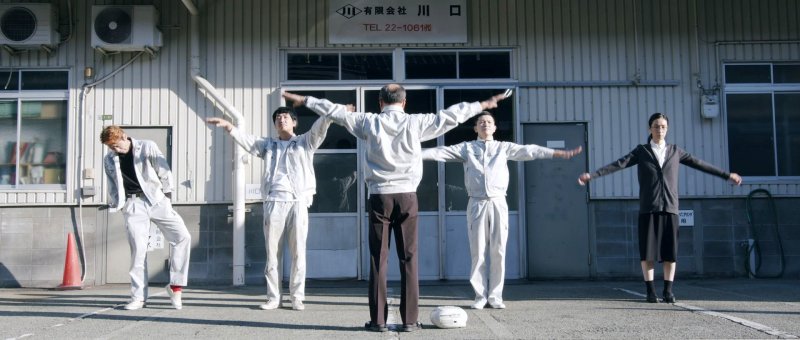
The crushing dull nature of life at the factory is rammed home in a looping series of events that begin with Miyazaki (Kouji Kawazoe) and Shibata (Yuuji Nomura) singing karaoke at local bar run by mama-san Tomiko (Kyou Mikamoto) where they appear to be the only customers before waking up early and returning for a group radio taiso session of morning callisthenics. Prone to throwing his weight around, Miyazaki doesn’t like it when Shibata invites co-workers Sueda (Naoyo Ichinose) and Chen (Syunkurou Itoh) to join them but is even more irritated by their refusal. A mousy young woman, Sueda has recently lost her parents in an accident and dreams of leaving the island to pursue a fashion career in Tokyo, while Chen came to Japan from China at 10 years old and has a habit both of comically repeating his name whenever someone else says it and of inappropriately talking about sex workers and masturbation at every given opportunity.  

The crisis occurs when Sueda and Chen discover that their boss has been fiddling his taxes and has a large amount of cash stored on the premises because he obviously can’t deposit it in a bank. Realising that he couldn’t go to the police if someone robbed him, they decide to steal the money and are eventually forced to rope Miyazaki and Shibata in to help by keeping their boss drinking at the karaoke bar while they carry out the heist. 

Of course, nothing quite goes to plan partly because Chen is a bit of a loose cannon but also because none of them are really the heist-planning sort and they have no idea what they’re doing. Sueda double-crosses Miyazaki and Shibata by leaving with all the cash while she and Chen take a taxi to Osaka station to realise when they get there they’ve missed the last train. Meanwhile, Chen has also stolen a watch from their boss’ home which places them all in danger as it gives him an opportunity to go to the police without necessarily revealing his tax evasion operation. The money represents for each of them the possibility of changing their lives or at least of leaving the island and its dearth of opportunities, but as Sueda keeps cautioning Chen you also have to know how to use it to best achieve your dreams. 

Shibata is seemingly the only one who’s more or less happy with his life as it is, constantly reminding the others that actually their lives are fine as they are, unable to understand their sense of desperation and resentful of having his life messed up by their unrealised desire for change. He challenges Sueda that the money is an irrelevance because if she really wanted to change her life she could have done it on the island but she counters him with her feelings of insignificance certain that no one really cares about her or would notice if she tried to change herself. No one can be fully satisfied with their life, he warns her, perhaps suggesting he thinks she’s asking for too much and is simply existentially restless which isn’t something she could cure through crime and a sudden flight to the city. After all, she didn’t earn the money herself, she’s just stolen it from someone else which isn’t a particularly good foundation for self-reinvention. 

After being accused of plotting the crime, Miyazaki is then forced to face his own feelings of dissatisfaction, which his arrogant belligerence was intended to cover, along with his frustrated romance with Tomoki who like everyone else just wants to run away hoping that Miyazaki will finally pay off his tab when they get the money. His attitude changes to the extent he offers to bow down to Shibata in exchange for assistance, but he similarly asks him if he really wants to change or is going to settle for his small-town existence too afraid to take the risk of gambling on something better. Their boss cautions Shibata that finding the meaning of life might not be a good thing if you end up discovering that all that awaits you is death, but it seems some do begin to find new direction thanks to their failed heist even if it’s not necessarily the direction you’d expect. 


Long Goodbye screened as part of the 2022 Yubari International Fantastic Film Festival.

International trailer (English subtitles)