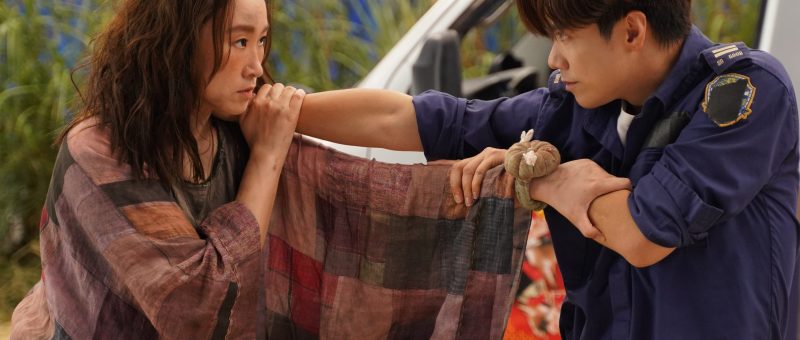
The Burden of the Past (過去負う者, Atsushi Funahashi, 2023)

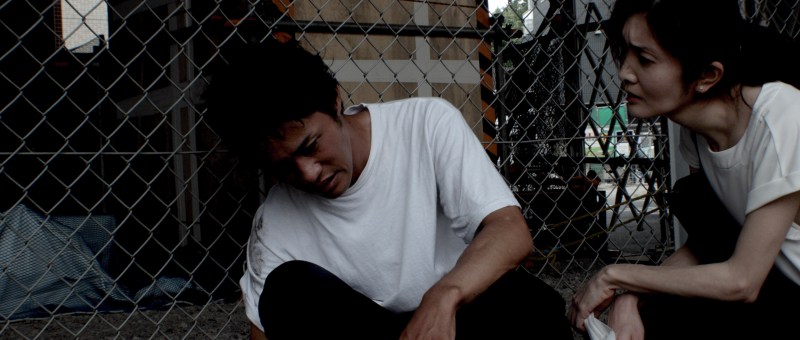
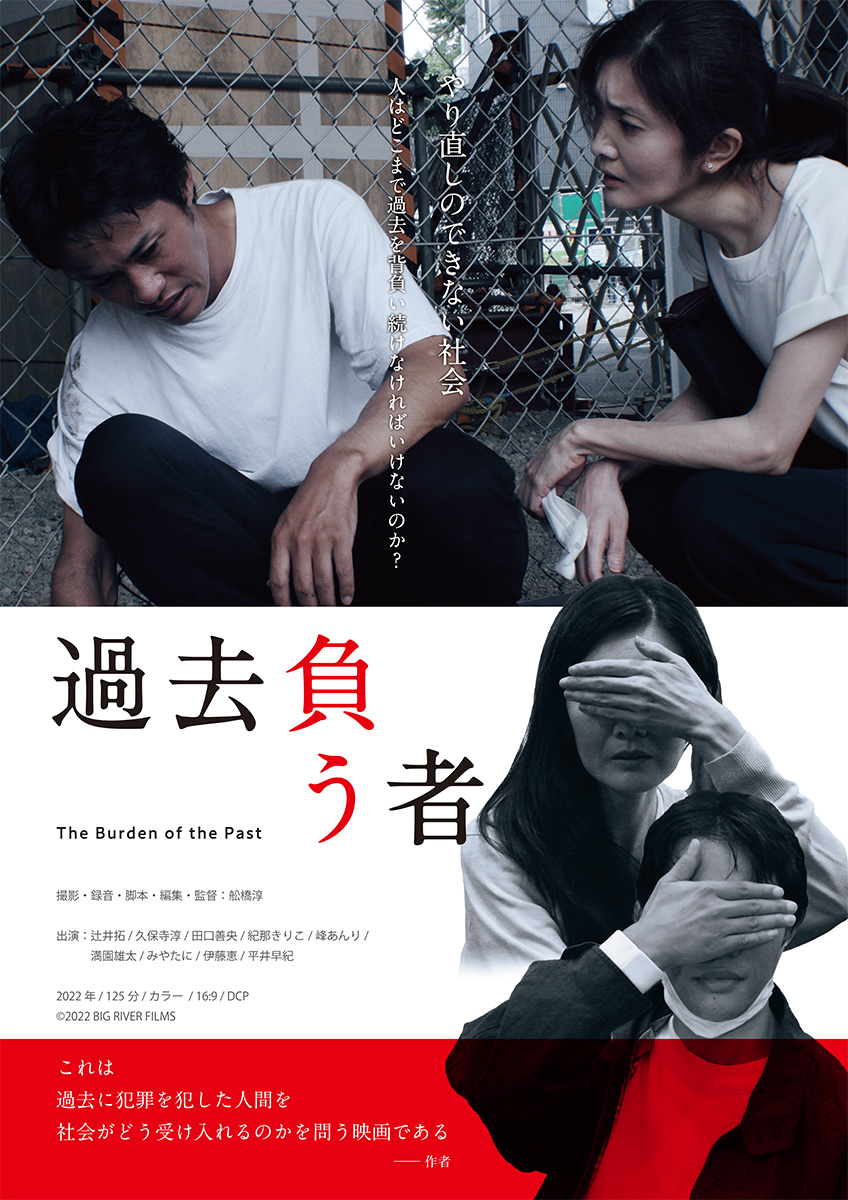
Japan has a relatively high recidivism rate with 50% of those released from prison convicted of reoffending within five years. To some this figure simply proves that “criminals“ are, as one woman puts it, “an entirely different race” who have no place in mainstream society and can never be rehabilitated. In many ways it’s a vicious circle, those who’ve spent time in prison are rejected on their release and unable to find steady employment have no other option than to return to criminality in order to support themselves. Atsushi Funahashi’s socially-minded docudrama The Burden of the Past (過去負う者, Kako Ou Mono) explores this contradiction through the stories of a series of former prisoners and the organisation that attempts to help them reintegrate into mainstream society, Change. 

“Change” might in some ways be an ironic name, placing a demand on the people they’re trying to help that implies they are necessarily at fault for their involvement with criminality. The well-meaning staff members are committed to helping the former prisoners reform, but are otherwise powerless to address the systemic social circumstances that led them into crime while prioritising the individual and advocating for conventionality as the only path towards a settled life. That said, each of the people the film spotlights are involved in quite specific kinds of crimes which lean towards the individualistic with only the backstories of Taku, who killed a teenage boy in a hit and run but is also revealed to be dealing with unresolved trauma from childhood physical abuse, and Ai who turned to drug use to overcome her problems with interpersonal communication, loosely explored. 

It is however Ai who suffers most from the hypocritical attitudes of mainstream society. After being taken on as a cleaner she encounters a man smoking who ironically reveals to her that he used to smoke pot but was never caught which is perhaps the only difference between them but on explaining that she spent time in prison for possession of crystal meth he calls her “a real mess” and a “junkie”, telling her that she has no right to hope for a future and should have stayed in jail. His rant results in Ai going temporarily missing with a fear that she may being using drugs again to overcome her sense of hopelessness. Her circumstances are dictated by her existing sense of alienation in her inability to communicate, something which could have been better addressed either by finding ways for her to communicate more effectively or for encouraging others to accommodate her way of communicating rather than insist she conform to theirs. 

Yet it’s clear that the issue is more to do with the stigmatisation of criminality than it is about any fear of potential reoffending as the team from Change discover on talking to a man hoping to recruit a large number of people quickly for pandemic-related cleaning services. The first issue is that he specifically mentions hiring women seeing as it’s a job in cleaning, but also that he says he’ll have to discuss with his boss about hiring people who’ve been involved with sexual or drug-related crimes rather than those which might present a more practical anxiety such as theft, violence, or fraud. 

Close to the end of the film, Change stages a play featuring some of the former prisoners which ends in a confrontational Q&A session in which members of the audience direct their anger towards not only the cast but Change itself for helping them rather than focussing on the welfare of victims of crime. Change also receives a fair amount of harassment, as do a couple who live close by and complain that they feel personally uncomfortable knowing that people with criminal pasts are wandering around where they live while also bringing up that it’s bringing down the price of their property. One of the case workers tries to explain that they’re trying to stop the cycle of recidivism, which would result in lower crime all round and less chance of becoming a victim, but the audience members cannot see her point. They simply feel that these people are not quite human by virtue of their transgression and are in some way weak or defective for being unable to control their impulses or emotions. It may be a comforting thought, to believe these people are so different from oneself is to deny that anyone at anytime could become involved with a crime for a variety of different reasons. After all, laws are socially constructed device for defining conventional morality and what’s considered “criminal” today may not be tomorrow or vice vera. 

But then how do we deal with those whose crimes are so deeply offensive to a conventionally held morality that they cannot really be forgiven? Misumi is a former teacher convicted of an indecent act with a child and fears that he may end up reoffending. He obviously cannot return to his previous employment, and given the nature of his crime can find no other but also must find a way to live. Many at the Q&A session seem to feel that those who’ve been convicted of crimes should be segregated into an alternate prison society so that they do not corrupt the mainstream, but this is in its own way a social death sentence that effectively says they no longer deserve to live even if unlike the extreme case of Misumi their “crimes” were relatively minor and of the sort many others may have committed and faced no penalty for. 

Still, Funahashi doesn’t exactly let Change off the hook suggesting that they are overly idealistic and fundamentally ill-equipped to deal with some of the more serious problems the former prisoners face especially those that would benefit from more comprehensive psychological care. He does though criticise the justice system in which the prison sentence is essentially a fine that’s paid in time and is geared towards punishment rather than rehabilitation leaving the prisoners no different on their release than they were when incarcerated some like Taku still not having fully addressed or accepted their crime and therefore unable to move on with their lives. In any case, the conclusion seems to imply that simple acts of human trust and compassion can go a long way helping to restore a former prisoner’s self-esteem and allowing them to process the realities of their crimes so that they can avoid committing them again even if it is also society which must change. 


The Burden of the Past had its World Premiere as part of this year’s Osaka Asian Film Festival.

Original trailer (English subtitles)

Side by Side (サイド バイ サイド 隣にいる人, Chihiro Ito, 2023)

The unresolved past conspires against present happiness in the supernaturally-tinged second feature from Chihiro Ito, Side By Side (サイド バイ サイド 隣にいる人, Side by Side: Tonari ni Iru Hito). Ito began her career as a screenwriter often working with director Isao Yukisada penning the screenplay for his 2004 junai mega hit Crying Out Love in the Center of the World before making directorial debut just last year with In Her Room, produced by Yukisada and selected for the Tokyo International Film Festival. Like many of the films Ito scripted, Side by Side bears an unusual sensitivity and gentleness of spirit in the way it sees the world which may in its way be filled with pain and longing but also warmth and light even if some may ultimately feel that they can never become a part of it. 

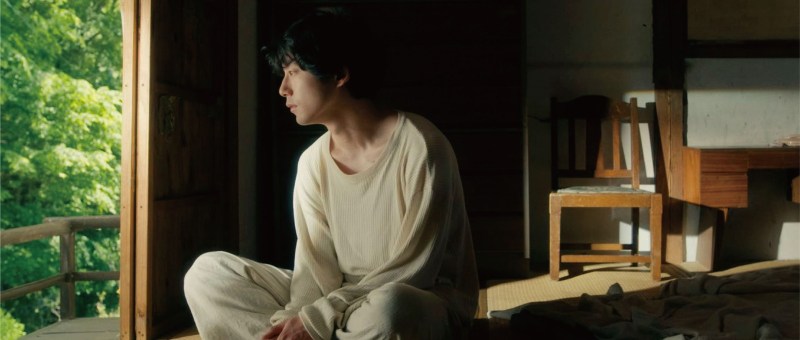
Miyama (Kentaro Sakaguchi) is indeed a haunted man in more ways that one, though the most obvious is that he’s continually followed around by a blond man dressed in black (Kodai Asaka) who says nothing but just stares blankly much like Miyama himself. Working as a physiotherapist, Miyama travels the country and often discovers that the physical pain his patients experience is linked to an emotional trauma as manifested in the various ghosts he sees around them which don’t seem to speak to him. Having left the city of Tokyo where he was raised, he wandered around before eventually finding a home with the welcoming nurse Shiori (Mikako Ichikawa) and her young daughter Mimi (Ameri Isomura) in a tranquil rural village in picturesque Nagano. Yet there are ways in which Miyama doesn’t seem to fit inside the familial environment, almost like a ghost himself somehow there and also not. 

The ghosts are in their way a visual representation of the unresolved past that endangers the new family Miyama has begun to build with Shiori and Mimi but fears he can never really be a part of. Shiori recalls seeing a light fitting in a film that she wants to hang over their dinner table to bathe it in the warm light of family, but is unable to find it even with Miyama’s help. It’s she that makes the rather unusual decision to invite a another ghost of Miyama’s past into their home in the gothic vision that is Riko (Asuka Saito), a woman Miyama “abandoned” who has since experienced some kind of breakdown and is then “abandoned” once again by another man who may or may not be the father of the child she is carrying. The unconditional love and support of Shiori and her daughter begin to bring Riko back to life, no longer dressing all in black and eating only white-coloured foods as colour and warmth are slowly returned to her. 

Even so, there are times it becomes difficult to tell the living from the “dead” when even Miyama seems like a ghost dressed all in white haunting his own life with his eerie stillness and not quite vacant eyes but those which express, as someone later puts it, a deep regret in his past. Like everyone else he struggles to emerge from past trauma in parental abandonment and physical abuse while acknowledging that his father suffered as a child and passed that suffering on to him because he did not know how to be a father. Miyama doesn’t know how to be a father either which is perhaps why he fears the depths of his new relationships and his role as a paternal figure while filled with shame and regret for those he failed in the past. 

But then there are others so undeniably alive such as Shiori and her daughter, often dressed in a vibrant yellow and basking in the warm sunshine which streams through the large windows of Shiori’s beautifully designed home. The family take solace in the beauty and comfort of the natural world, protected by its rhythms and the serenity it often offers them. Miyama may feel that he can never recover from his past and has no right to be drawn to this one solitary source of light, as Shiori describes it, like the bugs he is forever trying to keep out of the house but in the end gives them something else in the unconventional family that arises founded on human compassion and unconditional love that asks few questions and simply accepts those who are willing to accept it.


Side by Side had its World Premiere as part of this year’s Osaka Asian Film Festival.

Original trailer (no subtitles)

Images: (C) 2023 “Side by Side” Film Partners

Is This Heaven? (天国か、ここ?, Shinji Imaoka, 2023)

A middle-aged couple ponder loss and regret on a surreal odyssey into the afterlife , or something like it at least, in Shinji Imaoka’s cheerfully absurdist dramedy Is This Heaven? (天国か、ここ?, Tenkokuka, Koko?). Reuniting with several actors who starred in Imaoka’s previous film Reiko and the Dolphin, the film addresses several of the same themes in its exploration of grief and the inability of moving on but perhaps paradoxically sees its central couple arrive at a happier destination having begun to repair a marital rift. 

How they end up in “Heaven” isn’t exactly clear. Nobuo (Hidetoshi Kawaya), a middle-aged man who likes a drink, dances along a highway with half a can of chuhai in his hand and suddenly finds a flier with the word “Heaven” written on it. Everyone he meets seems to be doing an odd dance, even his wife Mayuko (Aki Takeda) who soon snaps out of her trance to tell him off for drinking in public again. While wandering around wondering where they are and how to get back because stationery stores don’t run themselves, the couple run into an old friend, Ueno, which is nice but also weird because Ueno died a week ago having hanged himself in shame over the failure of his business. 

Like everyone else in this strange place, Ueno is irrepressibly cheerful and seems to know nothing of his suicide. “When we die, we go to Earth, right?” he asks perplexed while Nobuo begins to wonder what it might mean if he’s really in Heaven, if he’s alive or dead or something in-between. Gradually we come to understand that there is tension in the marriage, much of it born of Nobuo’s insecurity. He fears that Mayuko only married him out of lonely desperation following the death of her first husband Takeshi (Yohta Kawase) whom she may never have got over, and that absolutely anyone would have done it just happened to be him. He resents Mayuko pointing out they’ll be in trouble if they close the stationery store because he’s never had a proper a job and his drinking problem won’t allow him to get one. 

It may be drinking that’s brought him on this strange odyssey. The film is divided into four chapters each bearing the title of a progressively harder drink as things get ever stranger while Nobuo wanders around meeting various other strange people including one who may have appeared in one of Imaoka’s previous films along a with a young woman obsessed with shogi and sex. Nobuo later describes them as people he’ll never meet again, standing this time on the other shore of life and death shouting back at the void in a defiant memorial of all he’s lost. Yet his weird journey to the other side has perhaps helped both he and Mayuko deal with the unresolved past and with it the cracks in their marriage.

In a strange way it may be that “Heaven” really is “here” as the couple rediscover an appreciation for all that they have now in the shadow of past and future loss. Indeed, one of the things that convinces Nobuo that he’s not really “dead” is the fact that he can still get drunk and is at least able to feel something while experiencing the sensations of life in taste and touch that the dead can no longer enjoy. “It’s such a miraculous thing” Mayuko sadly tells the younger woman of meeting and falling in love, reminding her not to waste the gift she’s been given. 

Then again, Nobuo’s conception of Heaven is very much that of a middle-aged man with its drinking and hostess clubs even if Mayuko opts for the more wholesome option of a trip to the onsen while the young woman rebels against her unwholesome life by embracing the comparatively respectable game of shogi. The strangely dreamlike, elliptical quality of the other world Nobuo and Mayuko find themselves in has its qualities of whimsy in the weird dancing, the death god wine, random cake, and underwater voice effects but also a deep melancholy and a kind yearning for something, well, more Earthy that the pair may eventually rediscover at the end of their journey.


Is This Heaven? had its World Premiere as part of this year’s Osaka Asian Film Festival.

Original trailer (no subtitles)

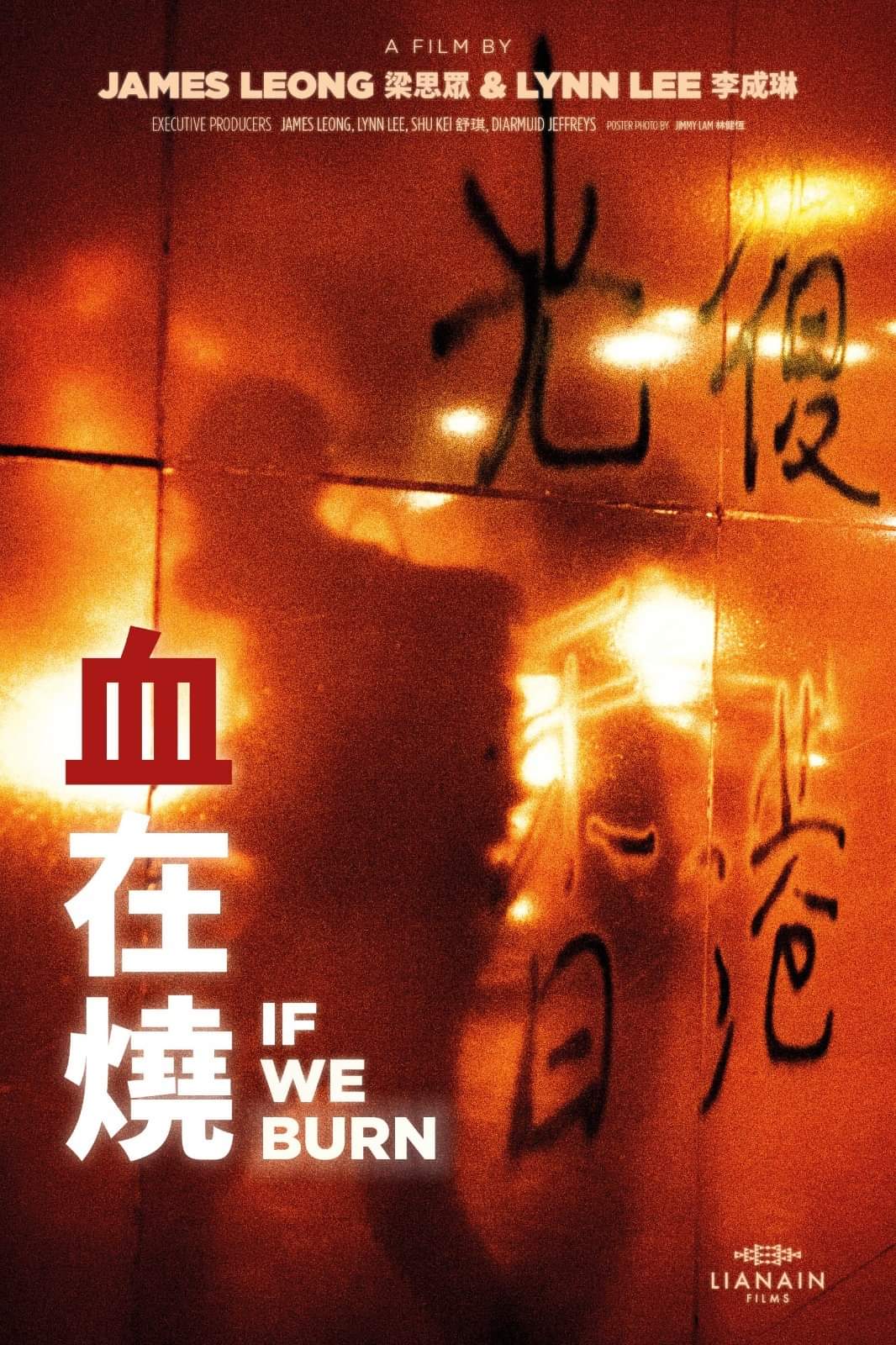
If We Burn (血在燒, James Leong & Lynn Lee, 2023)

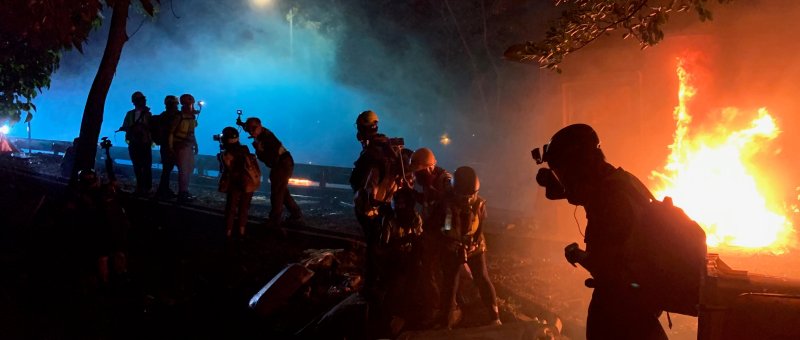
Clocking in at over four hours James Leong & Lynn Lee’s If We Burn (血在燒) provides the most comprehensive overview of the Anti-Extradition Law Amendment Bill Movement of any of the recent documentaries focussing on the events leading up to the passing of the Security Law in June 2020. Utilising professionally shot footage of the protests along with that captured by protestors via mobile phone, the film presents a tale of gradually escalating tensions provoked by increasing police violence and an expanding sense of hopeless desperation. 

Focussing largely on a series of climactic events such as the storming of the Legislature, the Yuen Long and Prince Edward Station attacks, and the sieges of the Chinese University and Hong Kong Polytechnic University, the film posits police brutality as a deliberate tactic that developed into state terrorism designed to intimidate society into submission. In the talking heads segments which occupy the first half of the film, the filmmakers interview a journalist who was present at the Yuen Long attack and was herself beaten by the mysterious vigilantes who raided the station. In this and the attack at the Prince Edward station which followed, it was clear that the target was not solely protestors but the people of Hong Kong who were simply attempting to catch a train in order to go about their ordinary business and became victims of, in the case of the Prince Edward MTR passengers, state violence in an unwarranted police intervention. As the journalist explains, given such a threat to their safety it is not surprising that many were radicalised and that some who had previously been committed to peaceful protest resolved to fight fire with fire. 

Some also regard the police action as a deliberate tactic, that in escalating violence the authorities attempt to provoke those protesting in order to justify even harder crackdowns. It’s also later revealed that police officers infiltrated the movement, dressing as protestors but suddenly attacking those around them giving rise to mistrust and paranoia. A lengthy sequence in which a mob at the airport protest catch a man they believe to be a Mainland police spy hints at the moral ambiguity of the protest movement as they argue with each other what to do with him while the man himself becomes a stand-in for the entirety of the violence inflicted so far. As tensions rise and duplicitous actions of the authorities increase, protestors begin to lose their sense of righteousness agreeing that there no longer is any line they will not cross to secure the freedom of Hong Kong. 

It’s clear that this period of instability has greatly affected the mental health particularly of younger protestors with many thrown into despondency and despair. During the university sieges, many state their intention to die and become martyrs while others talk of suicide and the toll the deaths of friends have already taken on them. During a rally in which older people offer thanks and support to the student protestors a young musician tearfully talks of how the the protest movement’s lack of success has exacerbated his depression and left him feeling hopeless with the only the solidarity of the people around him keeping him going. 

What had begun as a simple request to reject the Extradition Law Amendment Bill soon turns into a series of five demands and finally towards a desire for independence among the more hardline of the protestors who are now so mistrustful of Mainland authoritarianism that they can never consent to living under it. The documentary ends with alarm bells still ringing and a post-apocalyptic vision of battlefield destruction in the quad of the Polytechnic University peppered with small fires and piles of rubble while police drag protestors away from the scene. Talking heads who still appear in masks and goggles with disguised voices look back on the effects of the protests and the various ways they are changing Hong Kong while a piece of onscreen text coldly explains that the Security Law was passed and many have since been arrested or fled into exile. Still, as the alarm bells ring over the closing scene featuring the graffiti that gives the film its title, the documentary seems to suggest that all not yet lost while flame of resistance continues unextinguished.


If We Burn screens at London’s Genesis Cinema 18th March as the Opening Gala of this year’s Hong Kong Film Festival UK.

People Who Talk to Plushies Are Kind (ぬいぐるみとしゃべる人はやさしい, Yurina Kaneko, 2023)

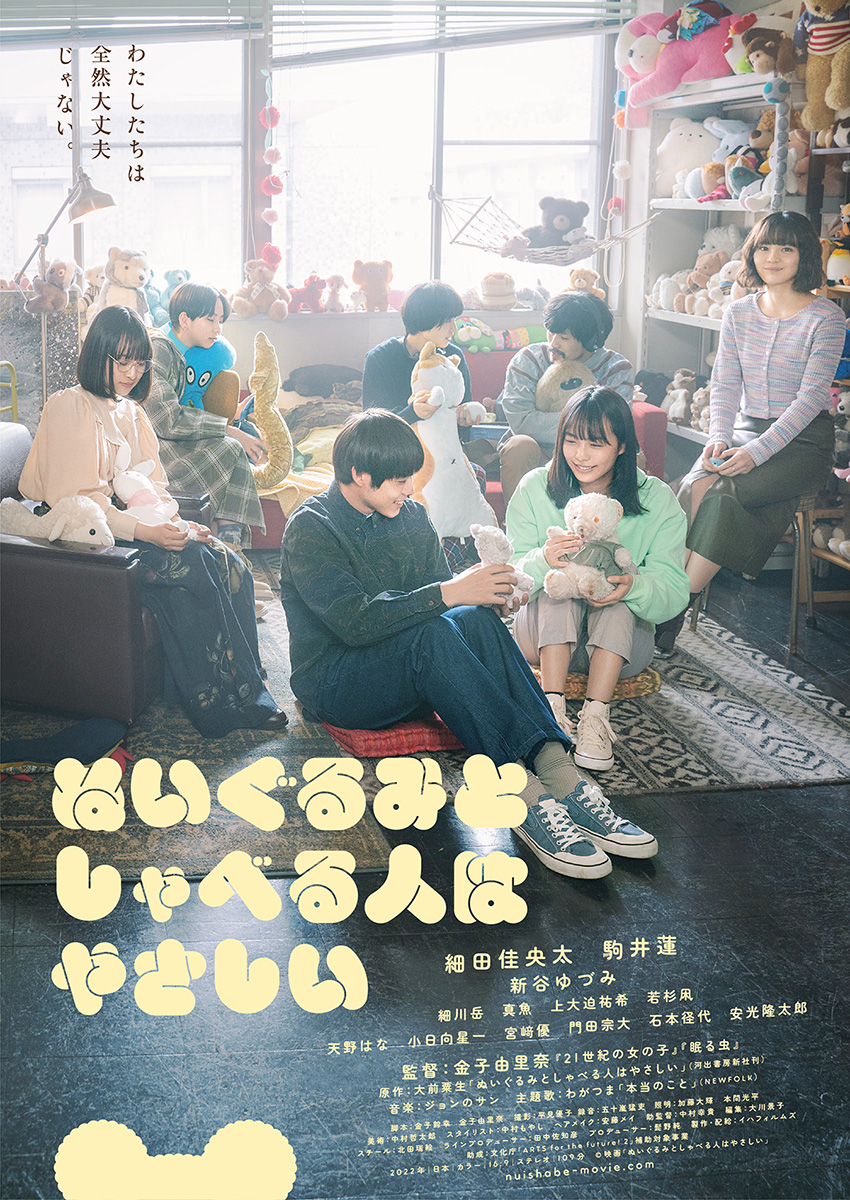
How is it possible to go on living in a society which is often unkind and at times hostile? A collection of sensitive university students find themselves struggling to accept the world around them in Yurina Kaneko’s charmingly empathetic adaptation of the novel by Ao Omae, People who Talk to Plushies are Kind (ぬいぐるみとしゃべる人はやさしい), but discover a kind of solidarity in softness after joining a club where they don headphones and unburden themselves to cuddly toys. 

As they point out, it’s good to talk. But talking to someone else about your worries can end up making them worried too and that’s the last thing any of the members of the Plushie Club want which is why they’ve decided to talk to plushies instead. Yet what’s worrying them isn’t just their worries, but a sense of their powerlessness and complicity in having behaved as if they believed the problems of others were nothing to do with them until they were shown otherwise. The hero, Nanamori (Kanata Hosoda) regrets that he “laughed things away with everyone else” rather than speaking up when he saw something that seemed wrong to him and should change while acknowledging that simply by existing as a man he may make someone feel afraid or uncomfortable without meaning to. 

Nanamori is careful not to hurt others by his own actions, trying to turn down a confession of love from a classmate in high school as kindly as he can but perhaps failing in his awkwardness even as he straightforwardly tells her that he doesn’t understand the concept of romantic desire. He simply doesn’t know what it means to “like” someone, and feels that there must be something wrong with him that he can’t grasp this simple facet of human behaviour. On a trip home uniting with some boys from school, he is immediately put off by their stereotypically masculine banter in which they ask him about girls and crushes and mock him for being a virgin until he finally leaves and tells them not to laugh at him just because he is different. 

Everyone at the Plushie Club is “different” in their own way, but has come to find a place to belong where they are simply allowed to be without needing to offer anything else. As another of the members, Nishimura (Mimori Wakasugi), puts it there’s something between kindness and indifference that is simply gentle, a quiet yet powerful quality of acceptance. When she casually revealed one day that she had a girlfriend, most of her friends were supportive but perhaps superficially. Her revelation had made them uncomfortable and regardless of how they felt about it, their perception of her had changed and she was no longer the person she had been to them before. They began to treat her differently, but at the Plushie Club there was no real difference and everyone carried on reacting to her the same way they always had. 

The Plushie Club is a place where it’s permitted to be soft in a hard world, where the members can allow themselves to feel drained by the process of living and find relief from their sense of powerlessness in acknowledging that they have made a choice to continue being kind rather than become what the world wants them to be. In an effort to understand romantic desire, Nanamori begins dating a fellow member, Shiraki (Yuzumi Shintani), but discovers that she has chosen the opposite path laughing at women who complain about societal misogyny and insisting that it’s pointless to resist because nothing will ever change. She joined the Plushie Club because she was sick of being sexually harassed at other uni gatherings but later decides to deliberately join another club filled with sexist guys because the real world isn’t so nice and the only way to survive it is to become hard yourself. 

Shiraki claims that she finds Nanamori’s “righteousness” “exhausting” and wishes she could free him and a similarly minded classmate, Mugito (Ren Komai), from their “tormenting kindness” which has in its way hurt her though unavoidably so even as she continues to be kind despite herself if rebelling by refusing to talk to plushies. Kaneko sometimes shifts to a blurry plushie vision with shimmering pastel-coloured edges and a kind of glitter snow effect that makes it seem as if the stuffed toys really are watching over their human friends as they silently, or not, agree to shoulder some of the burden of living. “They’re the ones talking to us,” Nanamori points out though in a way perhaps it’s more that the plushies reflect a part of themselves allowing them to exteriorise their internal dialogue and reach an accommodation with their fear and loneliness amid a world which consistently proves immovable and disappointing.


People Who Talk to Plushies Are Kind had its World Premiere as part of this year’s Osaka Asian Film Festival.

Original trailer (no subtitles)

Images: (C) 映画「ぬいぐるみとしゃべる人はやさしい」

Cafune (カフネ, Haruki Kinemura, 2023)

A pair of teenagers with differing priorities struggle to deal with the discovery of an unplanned pregnancy in Haruki Kinemura’s evenhanded indie drama Cafune (カフネ). Refreshingly progressive, the film is careful never to characterise the pregnancy as a tragedy or in anyway shameful but centres more on the decisions it forces the teens to make about themselves and their futures rather than fixating on the transience or longevity of teenage love. 

Love is the answer Mio gives when her mother quizzes her over the pregnancy test she found shoved into a black plastic bag hidden at the back of a drawer. There’s no getting away from the fact her mother thinks she’s been foolish and is disappointed to have found out this way, but at the same time she’s not exactly scandalised and is clear that it’s Mio who has a decision to make both for herself and for her unborn child without trying to influence her either way. As for the baby’s father, Nagisa, he does not react anywhere near as well, suddenly trashing his room and flailing around in frustration even though his own mother has been almost as sympathetic as Mio’s despite a similar level of disappointment with him. Though part of that may be that she knows he’s also been carrying on with Mio’s friend Natsumi which would explain the dirty look she gives him on meeting Mio on the way out as she leaves in a hurry after failing her first attempt to tell him about the baby. 

Mio certainly has a point when she tells Nagisa that he’s immature and self-centred. He’s been bunking off school for weeks while supposedly studying at home for an important exam and seems to have a mild superiority complex. Just as she was going to tell him about the baby he announces that they should take a break so he can study harder, leaving her to handle all of this on her own while also beginning to suspect that he’s been cheating on her which makes her situation all the more difficult. “Am I the only one who’s been irresponsible?” she asks him when he reacts badly to the news about the baby, blaming Mio for this sudden crisis right before his exam as if he had no part in it at all. Mio already seems to suspect that whatever her decision she can’t rely on Nagisa to take responsibility even while making it clear that it’s not something she feels she can decide unilaterally. 

Then again as she later says, maybe happiness isn’t something you can just decide either. The conclusion that she comes to is that she should make herself happy rather than waiting around for someone else to do it for her and even if Nagisa promises to make her happy in the future it’s partly for selfish reasons, as much for himself as for her in proving a point of masculine pride. In any case, the solution which is found is in itself refreshingly mature requiring no particular sacrifice for either party as each is allowed to pursue their individual hopes for the future without resentment or recrimination.

Mio is also able to repair her relationship with possibly treacherous best friend Natsumi who in the end was only jealous fearing that she would lose Mio as a friend now that she has a lover while failing to realise that there is someone else to whom she’s currently “number one”. Largely free of the sense of judgment that often colours teen pregnancy drama, Kinemura’s gentle coming-of-age tale instead discovers an unexpected well of support across the generations as the teens take centre stage in shaping their decisions not just for the present moment but for their mutual futures in figuring out who they are, what they want out of life, and what is best both for themselves and for the baby. Making the most of its tranquil fishing village setting, the film gradually makes its way towards a kind of serenity as the friends play together on the beach beset as it is by roaring waves but also a gentle kind of happiness.


Cafune had its World Premiere as part of this year’s Osaka Asian Film Festival.

Original trailer (no subtitles)

Everything Under Control (超神經械劫案下, Ying Chi-Wen, 2023)

A cocky band of security guards find themselves on the back foot when they’re ambushed by gangsters and one of guys decides to hightail it with the loot in Ying Chi-Wen’s anarchic take on Taiwanese movie Treat or Trick which was itself inspired by the Korean film To Catch a Virgin Ghost. A Lunar New Year release, Everything Under Control (超神經械劫案下) is a typically anarchic affair full of zany nonsense comedy and random gags but is ultimately a redemption story and a defence of community. 

Possibly in a nod to mainland censors the “heroes” are now private security officers rather than actual policemen and have a rather cynical view of their work. The cocky Yau-shing (Hins Cheung King-Hin) who wears sunshades and talks a big game, laughs at rookie recruit Penguin’s questions about about a possible ambush explaining that, in a slice of dark humour, you’d need to rob around 10 convoys before you could afford a Hong Kong flat so it’s not worth the risk nor the effort. Nevertheless in what seems to be at least in part an inside job, the gang are indeed ambushed by gangsters working for Boss Lai (Juno Mak) while transporting diamonds across town on the behalf of an elite tycoon. When Penguin unexpectedly fights back, fellow guard Jelly decides to snatch the diamonds and run with a view to starting a new life in Malaysia. Boss Lai is understandably unimpressed and orders his underling, Monk, to accompany Yau-shing and Penguin as they attempt to track down Jelly and get the diamonds back while he holds their friend Pig Blood hostage as collateral. 

After swerving to avoid what seemed to be the ghostly figure of a young woman in the road, Jelly ends up in a weird village with its own theme song that he has to bribe his way into. His presence is definitely unwelcome and the villagers’ behaviour is undeniably suspicious even in their weird hippie commune aesthetic though the diamonds themselves become something of a MacGuffin as a battle begins between the security guys and the villagers who are understandably keen to defend their territory from incursion especially as it seems there may have been an attempt to force them off their land. “Everyone has something they want to protect” according to weird village chief Wong Cool (Ivana Wong Yuen-Chi) whether it be like her her community, diamonds, status, or the lives of friends though truth be told that doesn’t seem to be at the top of Yau-shing’s list, poor Pig Blood more or less forgotten about by everyone. 

Nevertheless, Ying amps up the weirdness in the quirky village with its rumours of a vengeful ghost who kidnaps “virile men” and gives them what otherwise seems to be a strangely childish punishment adding a note of creepy horror to the guys’ predicament. Penguin even comes to the conclusion that he has psychic abilities and is able to read a crime scene with the power of his mind, committed to the pursuit of justice but also endearingly dim. Monk, meanwhile, is some kind of cinephile gangster who is mocked by his mother for not being a “real man” because he’s never been to a film festival. The guys’ car radio also seems to be permanently tuned to an entertainment program where they offer acerbic comments about the Hong Kong film industry. After a while, we might wonder if we too are being affected by the purple sporing plants found all over the forest which cause Jelly to have a weird fever dream involving a kappa, a Nian beast, and the apparently well-endowed Goddess of Fortune who insists he say “Gong hei fat choy” despite it not being New Year in the movie even though it obviously is to the audience. 

As the radio host admits, redemption doesn’t come from outside forces but by one’s own moral character which explains Yau-shing’s final change of heart, dropping his cynicism and deciding to believe in a better world after all. “Serve with our hearts, protect with our lives” it says on the outside of their van, and Yau-shing may have discovered something worth protecting while the diamonds remain more or less forgotten along with Lai’s ultimatum and Pig Blood’s fate. Decidedly strange, Ying’s genre hoping crime caper strays into some dark corners of human activity but maintains a lightness of touch along with genuine heart even as it does so.


Everything Under Control was released in UK cinemas courtesy of CineAsia.

UK trailer (English subtitles)

A Guilty Conscience (毒舌大狀, Jack Ng Wai-Lun, 2023)

“Something is wrong” a defence lawyer eventually asserts, witnessing a blatant attempt at perverting the course of justice right in front of her but otherwise unsure what to do about it when her opponents are so sure that they really are above the law. The directorial debut from screenwriter Jack Ng Wai-lun, A Guilty Conscience (毒舌大狀) is the latest in a series of films to put the judicial system on trial in pointing out that we are not in fact all equal before the law and the systems that are intended to protect us can often by subverted. 

Subverting the legal system was in a sense what the hero, fast-talking lawyer Adrian Lam (Dayo Wong Chi-Wah), had been trying to do. After years on the bench, his career as a magistrate is going nowhere and he doesn’t really bother to show up anymore which is why he’s abruptly demoted to a committee dealing with potentially obscene material. Cutting his losses, he decides to join the private sector working for a sleazy firm representing the rich and powerful. His first case is supposed to be a walk in the park, defending a woman, Jolene Tsang (Louise Wong Dan-Ni), accused of murdering her daughter. As usual, Lam assumes the case will be easy to win and doesn’t really bother putting the work in, especially once he finds out the mother was the mistress of a powerful man, Desmond Chung (Adam Pak Tin-Nam), and assumes sorting out the murder charge will help him get in with the elite. Only Lam badly miscalculates and owing to his own hubris sees his heartbroken client sentenced to 17 years in prison for a crime she almost certainly did not commit. 

It’s a huge wake up call for Lam who is suddenly snapped out of his cynicism and burdened by the guilty conscience of the title knowing that it’s his sloppiness that sent a bereaved young mother to serve out the rest of her youth in jail. Opening a small office of his own in a rundown part of town he resolves to serve a better kind of justice, but also determines to do what he can for Jolene in an effort to correct his mistake. He gets a chance when someone involved with the case dies and leaves a note explaining that they lied during the original trial, but as the wealthy Chung family is involved he finds himself frustrated at every turn. No one is brave enough to go against them, while their sleazy legal advisor Tung (Michael Wong Man-Tak) continues to manipulate the system to his own advantage. 

Lam may have to play a little dirty, appealing directly to the jury and wilfully breaking court procedure to make sure they hear evidence which is otherwise inadmissible, but does so in the interest of “truth” which according to Tung has no place in a court of law. Tung may well be correct, objective truth is largely irrelevant when rhetoric and legal argument hold sway. What’s morally wrong might not actually be against the law, while doing what’s right might also get you into trouble. That’s where the jury comes in, Lam answers, as a kind of check and balance using common sense to temper cold legality and decide what might best serve a kind of moral justice rather than simply answer if an offence has been committed under the law. 

But Tung calls the jury “laymen”, implying they are too stupid to understand legal complexities and are in fact a spanner in the works of justice. He objects to the introduction of “feelings” and preaches “fairness” while manipulating the system to his own advantage. Lam catches him out by needling at his elitism, pointing out that he may think he’s an elite now that he hobnobs with the rich and powerful but in their eyes he’ll never really be their equal in a world still ruled by old money. In a case Lam presided over in which a young man was accused of stealing a pair of ready meals from a convenience store where he’d previously been employed, he asks the defendant if he thought poverty was an excuse to do whatever he wanted, irritated by his attempt to manipulate his feelings by emotionally blackmailing him in claiming the meals were for his elderly parents and only taken because his boss had not paid his wages. Nevertheless, Lam had acted in the interests of “fairness” spotting that he was being asked to repay the full price in compensation when the meals he stole were actually heavily discounted and adjusting the amount accordingly. In effect Lam does something similar in defending Jolene, asking the rich if they think their power and status puts them above the law. The Chungs at least clearly think they do, doing their best to intimidate and frustrate the course of justice. 

“Everything is wrong” Lam adds during his closing speech, decrying the influence of wealth and power not only in the judicial system but in society at large. Tung thought he could manipulate the prosecutor (Tse Kwan-Ho) in knowing him to be a stickler for letter of the law, but even he knows that sometimes you might have to break the rules to do the right thing and to apply the law incorrectly would not be in the best interests of justice. With strong comedic undertones and warmhearted charm, Ng’s farcical courtroom drama discovers that the real culprits are privilege, elitism, corruption, and ambition but that justice can be served if only we apply a little common sense. 


A Guilty Conscience is in UK cinemas now courtesy of Magnum Films Global.

Original trailer (Cantonese with Traditional Chinese / English subtitles)
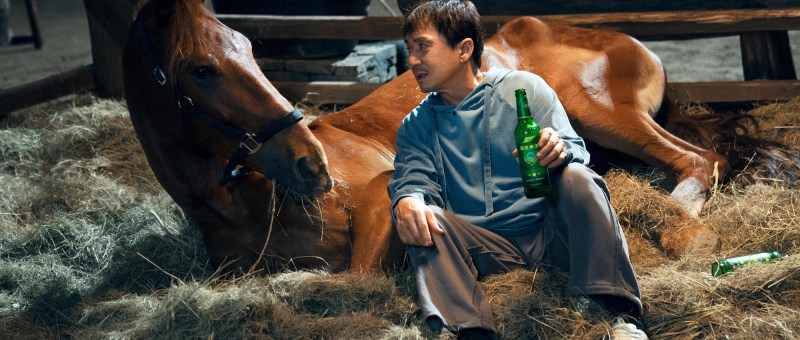
The Wandering Earth II (流浪地球2, Frant Gwo, 2023)

Back in what now seems like another world, Frant Gwo’s The Wandering Earth became a Lunar New Year box office smash and was described by some as China’s first foray into big budget sci-fi. Adapted from a novel by Liu Cixin, the film was much about fathers and sons as it was about sacrifice and solidarity in the face of oncoming apocalypse all of which are quite traditional New Year themes. Arriving four years later, The Wandering Earth II (流浪地球2, liúlàng dìqiú 2) largely drops overt references to the Spring festival bar the repeated motif of journeying home, but does once again stress the importance of international cooperation in safeguarding the future of the planet.

Then again, it seems that many feel it’s not a good use of time or resources to address a problem that will occur in a hundred years when they are long dead. A prequel to the first film, Wandering Earth II begins in the early days of the Moving Mountain Project which is the plan to push the Earth onto a different orbit to escape the sun’s eventual implosion. Given its enormous expense and the reality that much of the population will simply be left to die, the majority of the public back the rival Digital Life program in which humanity would be saved by relocating to a new virtual reality. Where this virtual reality is supposed to be stored is not exactly clear if there is no Earth for it to exist on, but it’s clear that some consider the possibilities of the digital existence preferable to allowing millions to die in the tsunamis which will engulf the Earth as it uncouples from the moon’s gravitational pull. 

Chief among them is software engineer Tu (Andy Lau Tak-wah) who is griefstricken by the loss of his wife and child in a traffic accident and has been secretly working on creating a fully fledged AI simulacrum of his daughter Yaya. He tells his more practically minded colleague Ma (Ning Li) that he doesn’t have the right to define what is “real” while eventually jeopardising the Moving Mountain Project by prioritising his desire to save Yaya over saving the Earth and eventually creating the AI system that will become Moss, a possibly dangerous entity which decides the best way to save humanity is to destroy mankind. 

The first film’s hero, Liu Peiqiang (Wu Jing), meanwhile is a rookie astronaut caught up in a terrorist incident carried out by militant opponents of the Moving Mountain project while enjoying an incongruously goofy courtship with fellow astronaut and future wife, Duoduo (Wang Zhi). This time around, he’s a dutiful son rather than conflicted father serving alongside his own dad who eventually becomes an example of intergenerational sacrifice as the old begin to make way for the young whose responsibility it now is to preserve the Earth. A nervous young aid serving the current premier later takes over the reigns and finds herself giving the same advice to a similarly nervous young man as they prepare to carry on the Wandering Earth project despite knowing that it will take thousands of years to complete. 

The ultimate message is therefore to choose hope, as Peiqiang later does striving to save the world even if it all turns out to be hopeless, rather than giving up and resigning oneself to one’s fate as many suggest doing when faced with the potential failure of their mission. As in the first film, the plan requires cooperation between nations and this time even more so as world powers must surrender their nuclear weapons to help blow up the moon. The Chinese premier looks forward to a day when governments can work on solving future problems rather than preparing for war, but then in an echo of the ongoing climate crisis some just don’t seem to see the point in dealing with something that won’t happen for a hundred years despite likely being among the first to complain no one did anything sooner when it finally affects them. Gwo adds a little whimsy in the technically pre-apocalypse setting with charming details such as Tu’s warm relationship with his dog-like robot helper and the general goofiness of Peiqiang’s attempt to court Duoduo while improving on the already polished visuals of the first film through several high impact set pieces but finally returns to its messages of hope and solidarity perhaps intended for a weary world attempting to find its own way out of a period of protracted strife.


The Wandering Earth II is in UK cinemas now courtesy of CineAsia.

International trailer (English voice over, Simplified Chinese / English subtitles)

Onlookers (Kimi Takesue, 2023)

Onlookers is a strange word. It implies passivity, if also perhaps indifference, but nevertheless invites a question. Who exactly is looking at what or is the onlooker themselves also a spectacle of attention? The opening shots of Kimi Takesue’s Laotian documentary find a row of people waiting by the side of a road. A young man stares intently at his phone, as does an older woman two stools over, while an old lady’s eyes idly flicker as she watches the passing traffic. Another woman sits further away with a dog, facing an entirely different direction. 

Of course, we are also onlookers, watching the old lady as she watches if not exactly us then perhaps our ghost as manifested in the camera. In a sense the landscape is also onlooker, a passive presence often strangely forgotten by the tourists who pass through the frames throughout the rest of the film. In the early scenes, more local sightseers can be seen visiting temples and other landmarks, like others paying more attention to getting the perfect photographs rather than immersing themselves in the experience of actually being there. 

The temples seem to loom over them, onlookers too, passively observing their conduct which is not always respectful. “Don’t smoke weed here” a large sign pleads in English while large groups of tourists congregate at a swimming hole. In an elegantly composed shot of the mountains, most of the tourists are facing the wrong direction, quite literally bending over backwards to get the perfect selfie while otherwise oblivious to the beauty all around them. In a small waiting area near a shop offering tube swimming tours, the TV seems to be tuned in to ancient episodes of Friends while potential customers haggle with the driver leaving the young boy who accompanies him to wander out into the road. 

Even religious practice seems to have become a tourist attraction, gaggles of sightseers crowding round a small hut where monks ring bells, taking turns banging gongs themselves. Takesue contrasts these acts of accidental voyeurism with the local people simply trying to go about their business, a row of women again siting on the roadway though this time to offer alms to a seemingly endless parade of monks in a near eternal loop. Much of the local economy does seem to revolve around the tourist trade, the monk’s parade also attracting is share of onlookers, while a woman washes a dog in the street and others try to get on with selling their goods before Takesue abruptly switches to scenes of schoolchildren on scooters or filling plastic water bottles from the river. 

Then again, perhaps the real onlookers are the bemused cows fighting over tufts of grass as they wander onto temple grounds. The tourist trade may also be having a negative effect on the local environment, drowning out the sounds of the nature and disrupting the natural tranquility of the area while the tourists often appear indifferent to the world around them as if it were a mere playground and the people themselves little more than onlookers observing them from the outside. Occasionally Takesue cuts to scenes of nature without any people in them, bathing in the natural beauty of the landscape unsullied by human intervention as if to remind us of the various ways in which consumerism eats away at the world in which we live if also hinting at our own desire, as onlookers, to paint these scenes with a kind of pastoral innocence coupled with an otherwise uncomfortable exoticism. 

The film ends as it began, with another roadway only this time empty save for a dog who turns around to look towards the departed people before a second dog enters the frame and barks at the camera as he passes through as if to ask where everyone’s going or perhaps what they were doing here in the first place. A gentle meditation on the nature of “travel” and the disruptive qualities of “tourism”, Takesue’s elegantly lensed images seem to argue for a more active reflection on the world and our place within it rather than remaining a perpetual onlooker observing without thought or feeling.


Onlookers had its world premiere as part of Slamdance 2023.

Trailer