Tatsumi (辰巳, Hiroshi Shoji, 2023)

The titular Tatsumi (辰巳) laments that there used to be a line. They used to be better than this. But his incredibly duplicitous boss just laughs at him and says they can’t live on honour and humanity anymore. In any case, there didn’t seem to be much honour or humanity in Tatsumi’s decidedly unglamorous life of petty gangsterdom even before everything went to hell but despite his cynicism and seeming indifference he is the last holdout for some kind of gangster nobility.

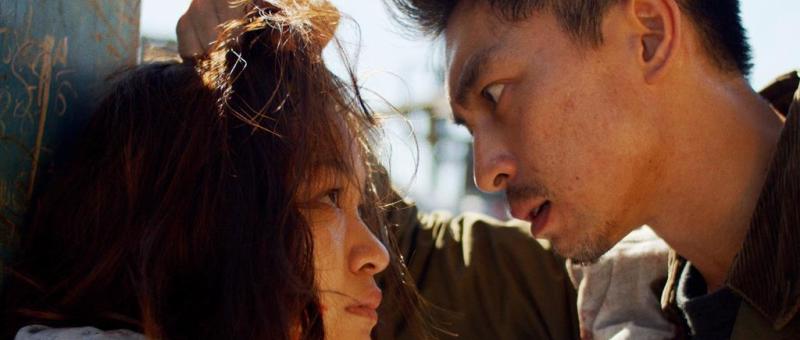
Though he has a cover job as a fisherman, Tatsumi’s (Yuya Endo) main hustle is as a cleanup agent getting rid of inconvenient bodies for various gangs. He finds himself mixed up in local drama when a pair of crazed, sadistic gangsters become aware someone’s been skimming their meth supply. They torture and kill a suspect who leads them to another, garage owner Yamaoka (Ryuhei Watabe) who is married to an old flame of Tatsumi’s, Kyoko (Nanami Kameda), while her younger sister, Aoi (Kokoro Morita), is also in trouble with another rival ganger, Goto (Takenori Goto), on the suspicion of having pinched some of his meth supply. Tatsumi ends up agreeing to mediate for Aoi, gets much more than he bargained for when the crazed Ryuji (Tomoyuki Kuramoto) murders Yamaoka and Kyoko and Aoi becomes a secondary target after catching him in the act.

Ryuji doesn’t seem to care about tying up loose ends, but just wants Aoi dead for reasons of total vengeance. It’s his uncontrolled violence that has disrupted the equilibrium of the local gangster society though the proposed solution is simply more violence in allowing him to kill the people he wanted to kill in the hope he’ll then calm down and stop which seems unlikely. Like many similarly themed yakuza dramas, Ryuji’s violence appears to have a sexually charged quality and there is also a hint of a potential relationship between Ryuji and Tatsumi’s boss whom he calls “Skipper.” 

Ryuji also has a slightly less crazy sibling in an echo of the relationship Tatsumi once had with his own brother who died of a drugs overdose having become involved in petty crime. The implication is that Tatsumi gave up on his brother and was relieved when he died but also that he harbours a degree of guilt for preventing him ending up the way he did and not trying harder to save him. That may partly be why he decides to help Aoi, seeing echoes of the brother he couldn’t save while she is also friendless alone having unwisely made enemies of almost everyone because of her outrageous behaviour and reckless disregard for authority. Aoi has an unpleasant habit of spitting at people who upset her while otherwise adopting a devil-may-care attitude with those minded to kill her. If she did skim from Goto’s stash, it cost the life of another falsely accused underling. 

Despite himself, Tatsumi becomes increasingly determined to help Aoi even though or perhaps because he assumes neither of them is likely to survive this crisis. Desperately trying to stay one step ahead he plays one side against the other and tries to find the best angle for escape while knowing there probably isn’t one. Shoji sets the tale across a series of moribund jetties and shacks laying bare the busy emptiness of this world with only the sea beyond. “Emotion will make you fail,” Tatsumi tells Aoi while describing dead bodies as just things and trying to keep his cool when needled by Ryuji or another dangerous and violent gangster. 

Death and life by extension appear to be meaningless and of little value. Tatsumi does perhaps close a circle, or maybe more than one, as the last principled gangster who thought there ought to be a line between what they do and greedy thuggery only to find there never was one and his determination not to cross it is the kind of sentimentality that can get a man killed. Making good use of slow dissolves, Shoji revels in a retro aesthetic in a tale of moral compromise and redemption as Tatsumi determines to safeguard Aoi not only from her own reckless impulses but the meaningless emptiness of the gangster life but the toxic legacy of violence and fallacy of vengeance as a salve for the wounds of the soul.


Tatsumi screened as part of this year’s Camera Japan.

International trailer (English subtitles)

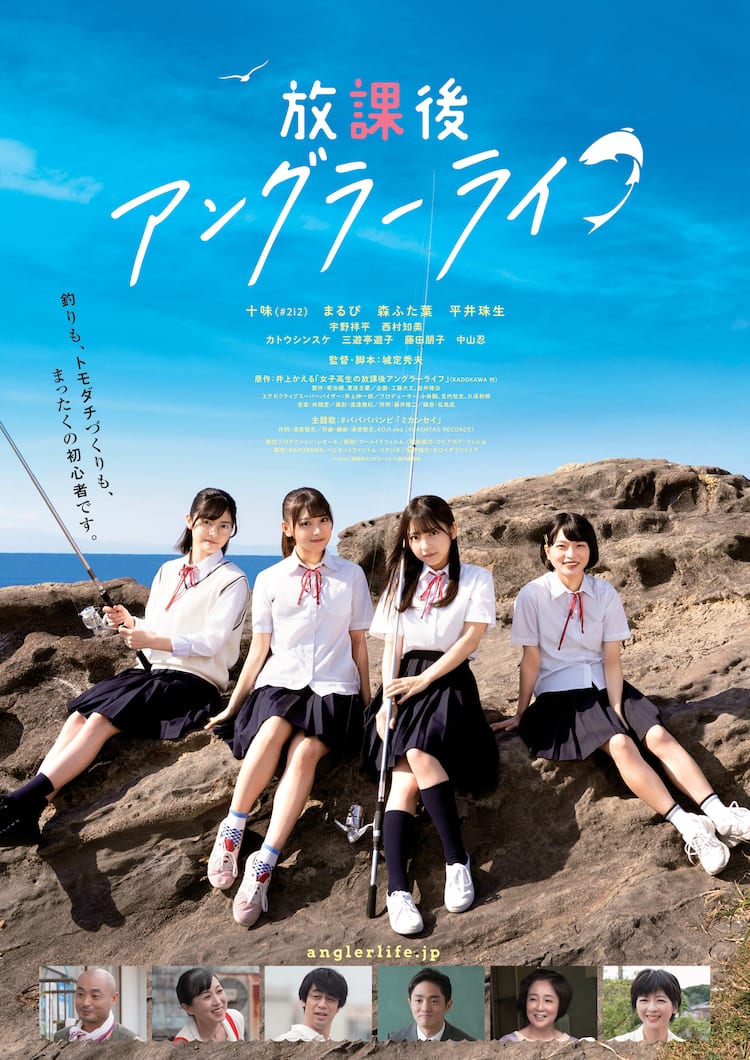
Afterschool Anglers Club (放課後アングラーライフ, Hideo Jojo, 2023)

What does it take to learn to trust people again after a traumatic experience? Mezashi (Toomi), the heroine of Hideo Jojo’s adaptation of the light novel by Kaeru Inoue Afterschool Anglers Club (放課後アングラーライフ, Hokago Angler Life), was bullied by people she once called friends and has since retreated within herself, becoming a massive people pleaser while terrified of annoying people or upsetting them in some unknown way.

Fortunately for her, her father is transferred to the country and so they all have to move with Mezashi taking the opportunity to trash her phone and with it her traumatic memories of being bullied both online and off. As one might expect, people in the country are inherently more friendly and it’s difficult for Mezashi to tell if her new classmates are just excited about her arrival or already making fun of her. On moving to the country she’d written a new manifesto swearing that she wouldn’t attempt to make friends and would carry on people pleasing, instantly agreeing to any favours asked of her, smiling sweetly, and always giving non-committal answers to avoid causing offence. 

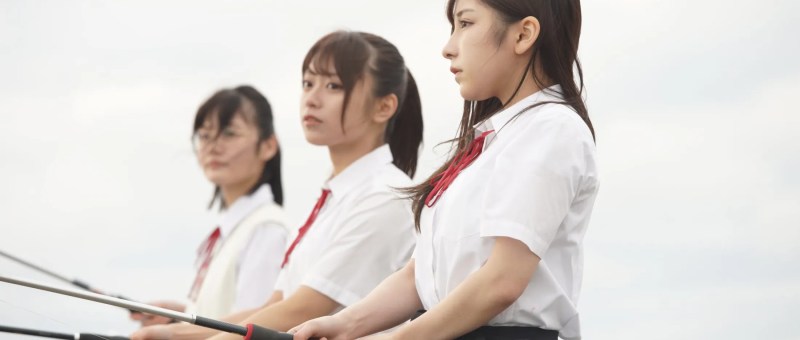
She runs into trouble when she’s invited to the secret club run by two of the girls, realising that her goals are incompatible so she can’t avoid both making friends and refusing a request. Though the girls more or less adopt her and make her a part of their unofficial fishing club, Mezashi can’t seem to work out how to be a part of a friendship group and is often confused about what she should say and do. She’s constantly worried that her new friends are annoyed with her for not being very good at their shared hobby of fishing and subsequently ruining their fun. But this sense of insecurity is a vicious cycle in that she continues to present a facade of blandness which prevents her from generating a friendly intimacy with any of the girls. Ring leader Shiira (Marupi), who originally bonds with her because their names both have a fishy connection, says as much in mentioning that it bothers her Mezashi never laughs from her heart or gets angry with them. Her defensive mechanisms actively sabotage her new relationships while she struggles to overcome the trauma of her betrayal at the hands of former friends turned bullies.

But then there are also tensions within this otherwise close and supportive friendship group in that Akari (Tamao Hirai) has an obvious crush on Shiira and is resentful of Mezashi joining their gang though not to the extent of bullying or rejection. Shiira, meanwhile, seems to be constantly flirting with Mezashi who does not appear to be interested in her in that way, even at one point pretending to have been stung by a venomous fish so that Mezashi will suck the toxins out of her leg. Nevertheless, Nagi (Futaba Mori), another member who discovers Mezashi’s secret, tries to encourage her to be less of a people pleaser and just be honest if she doesn’t like something or doesn’t want to do it such as threading the bait onto the hook or gutting the fish. In effect, she gives her permission to be herself and the confidence to believe that your friends won’t abruptly stop liking you just because you asked for help but they can’t bond with someone who won’t let them know when they’re not okay. 

All in all, Jojo paints this corner of a small coastal town as a wholesome place of kindness and comfort where people are on the whole friendly and welcoming as opposed to the city where they can be cruel and judgemental. The very thing that allows Mezashi to find her new friends was her unusual name for which she’d previously been bullied. Learning to trust again is certainly no easy thing, but just as Nagi had said humans are made to rely on each other and friendship is about both give and take, offering support and agreeing to accept it. With fishing, you just have to cast the line and see if anything bites and friendship is much the same, Mezashi gaining the strength to reel it in thanks to the gentle support of her new friends and tranquil rhythms of small town life free of the petty prejudice and casual cruelties of the city.


Afterschool Anglers Club screened as part of this year’s Camera Japan.

Original trailer (no subtitles)

The Moon (月, Yuya Ishii, 2023)

If you can judge a society by the way it cares for its most vulnerable, then at least according to Yuya Ishii’s The Moon (月, Tsuki), adapted from the novel by Yo Hemmi, Japan is not doing very well. Inspired by a real life incident in which a disaffected young man went on a rampage murdering patients at a facility for the disabled claiming they were a drain on national resources, the film probes into some dark areas of the human psyche asking what people really think deep down and who we do and don’t see as being human just like us.

Blocked writer Yoko (Rie Miyazawa) only takes the job at a care facility because her literary career has stalled and her husband (Joe Odagiri) is out of work. Each of them is still reeling from the death of their three-year-old son who was born with a heart defect and suffered brain damage during an operation that meant he never spoke and was fed through a feeding tube. Working at the care facility brings up painful memories and directly confronts Yoko with realities of her son’s life and death while she later discovers that she is pregnant again and isn’t sure whether or not to have the baby fearing it may have the same condition and knowing that as a woman over 40 there is an increased chance she may give birth to a child who has complex needs.

In many ways it’s Yoko’s own reaction to her pregnancy which underlines the film, the lunar imagery intensely linked with that of her ultrasounds while she reckons with her own feeling of perhaps not wanting to bear an “abnormal” child, as someone puts it. Of course, this very personal sentiment is informed by the loss of her son and the experience of living and caring for him for the three years he was alive, but it also informs her perspective on the care, or lack of it, sees at the facility where patients are sometimes confined to their rooms indefinitely, left covered in their own excrement, or allowed to harm themselves through lack of stimulation. Like Yoko most of the other orderlies seem to have no medical training and two in particular mistreat the people in their care for their own amusement. On witnessing an orderly strike a patient for no reason while frogmarching him back to his room, she asks him if that’s really okay but he just replies that okay or not it’s the way they do things here. She tries to take her concerns to the facility’s director, but he basically tells her the same thing and even threatens her employment if she continues to make a fuss. 

Yoko closely identifies with another woman who happened to be born on exactly the same day she was yet has been confined to bed for 10 years and is assumed to be unable to communicate. According to another orderly, also called Yoko (Fumi Nikaido), Ki-chan could walk and was partially sighted when she arrived but someone decided that it would be easier to care for her if she stayed in her room so now her muscles are too wasted to walk while they also covered up her windows because they thought dim lighting would keep her more docile. Essentially, they further disabled her for their own convenience and concluded that because she could not communicate with them in a way they considered usual that she had nothing to communicate. It doesn’t seem to occur to them that biting the other Yoko’s arm, for instance, is also communication as are some of the behaviours exhibited by the other patients which the orderlies respond to with force or violence.

Shoko, the girlfriend of another orderly Sato (Hayato Isomura), is deaf and remarks to the other Yoko that she doesn’t need to hear to be able to understand yet a value judgement seems to have been placed on these people’s lives based solely on their ability to communicate through conventional means. Yoko is accused of romanticising notions of disability, while many people may outwardly say they believe those with physical or intellectual disabilities are equal to themselves and deserve the same levels of respect and dignity they are also unwilling to deal directly with the unpleasant side of their care such as cleaning up bodily fluids which may have strong and penetrating odours. Both the other Yoko, who has literary aspirations of her own, and Sato make frequent reference the stench of reality, something which often left out or not spoken of. The other Yoko accuses Yoko of leaving the smell of decay out of her award-winning book on the Great Kanto Earthquake of 1923 which she later reveals was something urged by her editor who instructed her to soften the edges to create a story that readers would find uplifting and inspirational.

One of the unpleasant things glossed over about 1923 earthquake was the pogrom against Koreans which took place in its wake, something that is tacitly referenced during the attack on the care facility as the killer determines to ask each of the victims if they have a soul despite having already decided that those who cannot speak do not. During the pogrom, those suspected of being Korean were often asked to pronounce certain words to see if they had a Korean accent, only many people from other areas of Japan also pronounce them in the same way so the test proved nothing. The killer wants to see themselves as “normal”, that their way of thinking is just the same as everyone else’s only they don’t have the courage to speak and that their course of action is one most people tacitly support because they also do not believe that the people at the care facility are human or that they have a soul.

Raising her concerns, Yoko has a long philosophical conversation with Sato which doubles as a self-interrogation while it is also in some senses true that the people at the care facility are each refractions of herself. In any case, the conditions and contradictions of the facility appear to place a strain on the mental health of those who work there who are encouraged to simply get used to the way the system works rather than attempt to change it. Sato complains that he struggles to discern dream from reality, while reality itself is often distorted by a lack of desire to talk about anything that might be unpleasant or inconvenient.

Even a discussion that might have been unpleasant or inconvenient to have is interrupted in the closing moments, though the most important things are indeed said while Yoko and her husband are able to sit face to face and begin rebuilding their relationship in the wake of the loss of their son. Ishii conjures an atmosphere of true dread as events slowly creep towards an inevitable conclusion, but also peppers Yoko’s life with small moments of joy if underscored by a searing horror that many are prepared to unsee until brought to a violent confrontation with the contradictions and hypocrisies that dwell deep within their own hearts.


The Moon screened as part of this year’s Camera Japan.

Trailer (English subtitles)
The Mob (龙虎制霸, Zhao Cong, 2023)

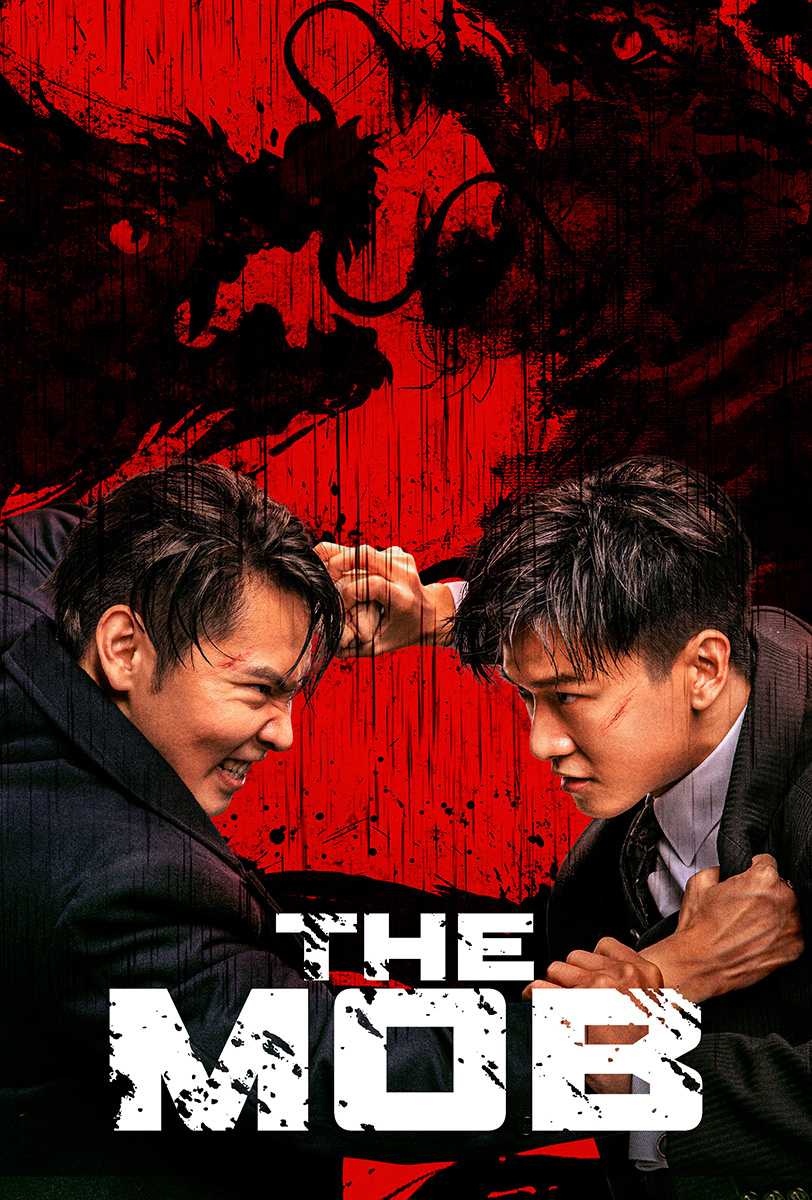
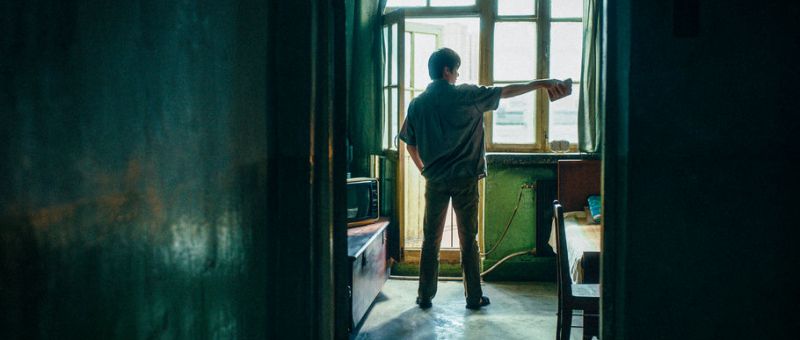
The feckless son of the head of the Chamber of Commerce discovers he needs to grow up fast when a rival gang starts selling opium in the Shanghai of 1928 in Zhao Cong’s well appointed action streamer, The Mob (龙虎制霸, lónghǔ zhì bà). There can be few settings as enticing as pre-war Shanghai and Zhao certainly makes the most of his budget with beautifully designed sets along with a number of stylish action sequences and a narrative that’s a little more interesting that your average streamer.

The interesting thing is that the bad guys are the ones who want to work with foreigners, particularly the British, to flood Shanghai with opium which is obviously very bad for everyone and will cause a series of social problems the good gangs and the authorities don’t really want to deal with not least because it will disrupt their other business and increase foreign influence in the city. Evil gangster Zhao Longde doesn’t care about that though and is already making trouble that is only exacerbated by the return of his illegitimate son Yuyang from studying abroad. Yuyang has a serious chip on his shoulder about his relationship with his father and is jealous of Longde’s adopted son, Hai, who is just much better at this whole gangster thing and all thing’s considered the son Longde probably wants as opposed to Yuyang who can’t be trusted with anything.

Across town, Fang is also a feckless son but one on the side of the good guys in that his father is the current head of the Chamber of Commerce and dead against anyone trading opium in Shanghai. If they do, they’ll be kicked out and unable to do business in the city. Though the name sounds legitimate, it’s really just a forum to maintain equilibrium between the various gangs who control the local ports though the balance has already been destabilised with tension between Zhao Lin who runs swanky nightclub New World and Longde who apparently caused his brother to lose the use of his hand. Fang is drawn into the conflict when he comes to the defence of Hai when he’s attacked and outnumbered at New World.

They’re obviously on opposing sides, but the two men discover a respect for each other as fighters and men of honour. Hai is a loyal son to Longde and respected Yuyang out of loyalty to him but privately does not approve of some of the gang’s actions such as flouting the rules of the Chamber of Commerce, bumping off their rivals, and planning to take control of the local opium trade. Fang, meanwhile, is just really directionless and an overindulged little brother who spends all his time reading comic books and gambling on frog racing much to the disappointment of his father. But with all hell breaking loose in Shanghai, he has no choice but to step up to the plate and play his part as a member of the Tongmingtang to restore order and keep drugs out of Shanghai.

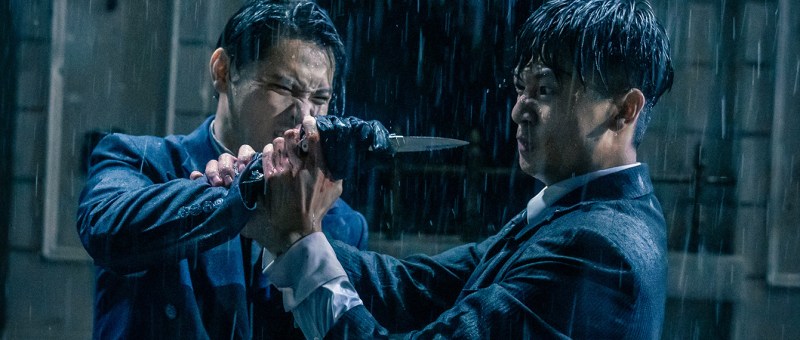
Interestingly enough, though perhaps just because it’s a streaming movie set firmly within the pre-Communist past, the film does not end with one of the familiar title cards explaining that justice was done and the wrongdoers punished but in fact justifies Fang’s violence as righteous and adds that he later joined the resistance movement against the Japanese (which sounds like a hook for another interesting film). In any case, Zhao includes plenty of twists and turns, betrayals and counter betrayals, while reserving the most interesting arc for the conflicted Hai who eventually shakes himself free of the sense of obligation he has to a gang that offends his sense of morality realising that like Fang he owes nothing to anyone and is free to make an individualistic choice as regards which side to be on. Fang’s sister Jiayue meanwhile is somewhat underused but is otherwise quite an imposing presence and certainly makes an impact with a hardline stance against the priggish Yuyang. Echoing the era of Heroic Bloodshed, Zhao lends the action an epic quality through his artfully designed set pieces including the rain soaked finale and an impressively staged assassination sequence intercut with scenes of a grieving family at a funeral.


The Mob is available now in the US on Digital courtesy of Well Go USA.

US trailer

A Long Shot (老枪, Gao Peng, 2023)

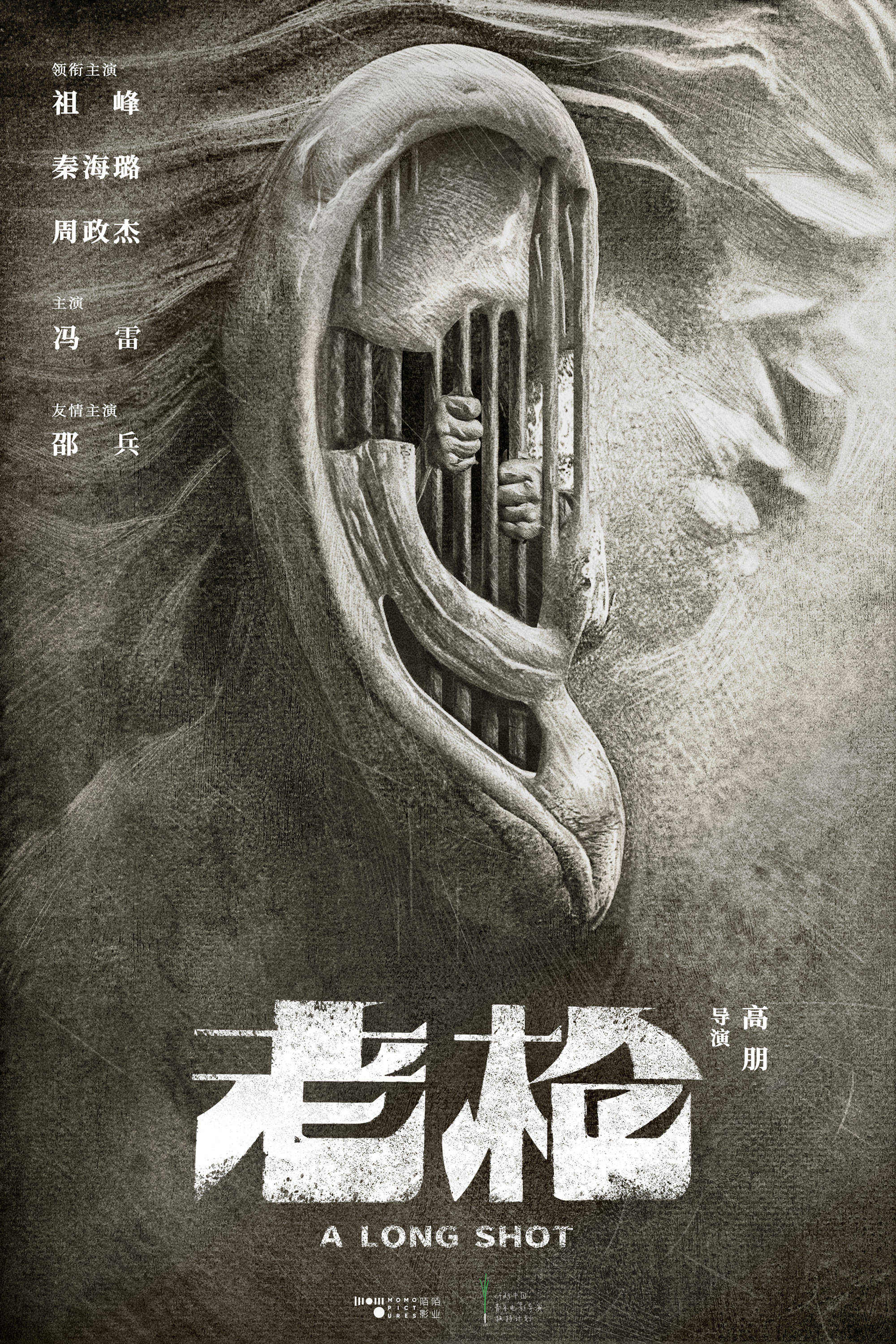
The hero of Gao Peng’s A Long Shot (老枪, lǎo qiāng) is forever reminding himself to “regain your focus”, yet in other ways it’s something that he’s making an active choice not to do and that others wish he wouldn’t. Set amid the chaos of China’s mid-90s economic reforms, the film suggests that Xue Bing has little other option than to tune himself out and avoid being a direct part of the corruption all around him as he has little power to stop it.

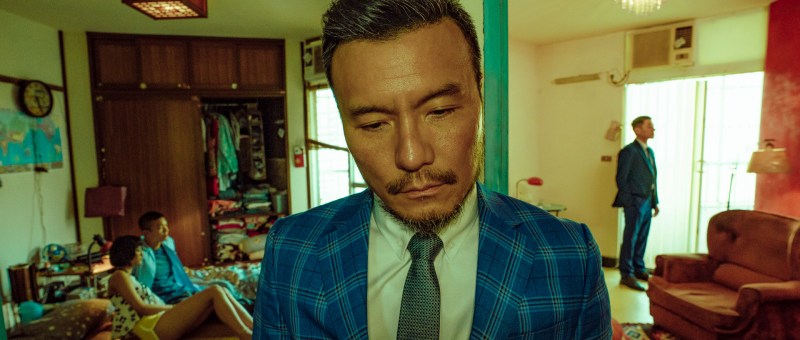
In a prologue set five years before the main action, Xue Bing (Zu Feng) had been a sharpshooter on the national team but is told that he has experienced hearing loss which may affect his balance and is subsequently let go. The hearing loss is perhaps symbolic of the fact that Xue Bing does not listen to the lies and double talk around him and maintains an integrity that is nothing but irritating to his morally compromised colleagues. On the other hand, he later tells Xiao Jun (Zhou Zhengjie), a teenage boy to whom he’s become a kind of father figure, that staring at a bull’s eye all your life isn’t good for your eyes hinting at his problematic hyper focus in which he’s just trying to keep his head down and do the best job he can under the circumstances.

But the circumstances are grim for everyone. Now with shaggy hair and a look of disappointment in his eye, Xue Bing works as a security guard at a moribund ferroalloy factory where the workers haven’t been paid in years as the nation goes through a number of complex economic reforms that are changing the face of the nation and giving rise to a new class of wealthy elites who’ve gained their riches through immoral and exploitative means. With people not being paid, thefts are a common occurrence but the security guards have turned to taking bribes, tacitly turning a blind to equipment going missing if the thieves are willing and able to pay a small fee. Xue Bing doesn’t like to go along with this and avoids joining in, but is powerless against the other guards including his boss Chief Tian (Shao Bing). 

The film frames the factory as a microcosm of the wider society which has become a vicious circle of corruption. But on the other hand, the workers guards, and even in the management see themselves as taking what was rightfully theirs but has been unfairly denied them. The workers steal from their employer because their wages weren’t paid, the guards aren’t getting paid either so they extort the workers and rip off the company, while the management know the factory’s effectively bust so they’re asset stripping while they still can. Chief Tian runs into one of the thieves who’s since started a “trading company” having taken some cues from a Russian working at an equally moribund shipyard where he’s no longer monitored by the authorities and has been selling off warships as scrap hinting at the disintegration of post-war communism and the resulting capitalist free for all that followed. 

Xiao Jun, the son of a woman Xue Bing thinks he’s in a relationship with but the reality is somewhat ambiguous, is caught amid this crossfire as a young man coming of age in complicated times. He resents the corruption he sees around him and bonds with Xue Bing thinking he’s a straight shooter only to be disappointed by his defeated complicity which he also sees as a kind of unmanliness. Xiao Jun’s mother, Jin (Qin Hailu), had been trying to run her own business but later gets a job in a nightclub that seems to be sex work adjacent thanks to her relationship with another corrupt businessman, Mr Zhao. She remarks to Xue Bing that there are so many ways to earn a living these days she doesn’t understand why anyone would go back to the factory, laying bare the wholesale change in the society. Xiao Jun has taken up with a gang of seeming delinquents who frequently loot the factory complex, but even they are only taking what they think is theirs as one of the boy’s fathers was killed in a workplace accident and the family was only given a certificate of commendation rather than financial compensation for the father’s lost wages without which they are unable to support themselves. 

The guards have been told they’ll finally get paid after the company’s 40th anniversary celebrations, with corrupt manager Sun telling Tian he’ll need his help to keep the others in line when he presses him and is finally told they’ll only get two months’ worth of the back pay they’re owed. Xue Bing is told Sun was selling off the lathe machines in order to pay the workers, and it seems like he believes them naively falling for their greater good narrative while Xiao Jun seems on a collision with adult hypocrisy refusing to sign a false confession to get the managers off the hook. Gao lends Xue Bing’s world a greying hopelessness in which the only two choices are to close his eyes and ears or go down fighting, closing with a lengthy shootout in which firecrackers mingle with gunshots masking the sound of rebellion from a continually unheard underclass.


 A Long Shot screened as part of this year’s New York Asian Film Festival.

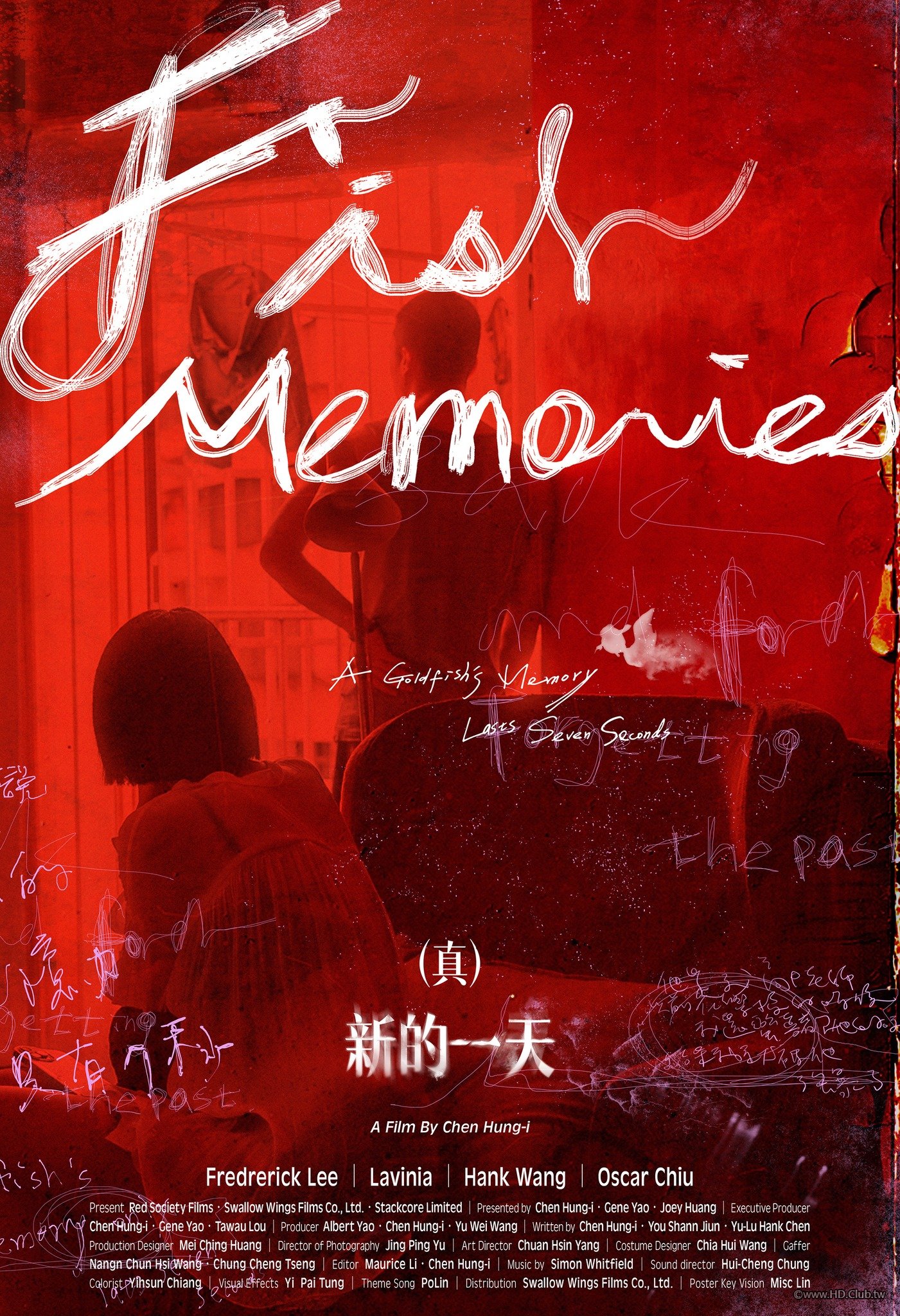
Fish Memories ((真)新的一天, Chen Hung-i, 2023)

The sometime narrator at the heart of Fish Memories ((真)新的一天, (zhēn) Xīn de tiān) says that she wishes her memory were like that of a fish, no longer than seven seconds, and that she were able to be free of her traumatic past by forgetting it. But of course, she is unable to forget and like her boyfriend, Shang, and the middle-aged man with whom the pair eventually form a twisted relationship, a kind of orphan drifting in the wake of parental failure.

Businessman Zi Jie (Frederick Lee) also seems to drifting, seemingly dissatisfied with his financially comfortable but emotionally empty existence. He later says that his own parents only cared about about money and sent him away to Singapore when he was a teenager only for their business to then fail. He feels as if he’s done better than them, at least, but when asked how to avoid loneliness he answers only “earning money, spending money, earning money”. He has a girlfriend of around his own age, but bristles when she expresses a desire for greater intimacy and ends up pushing her away while beginning to bond with Shang (Hank Wang), a teenager he meets in a convenience store while picking up a parcel. He runs into the boy a few more times and ends up developing a friendship with him and also his same age girlfriend Zhen Zhen (Lavinia) who is still in high school and claims to have been sexually assaulted by one of her teachers who’s apparently done the same thing to several other girls with no apparent consequences.

Zi Jie’s relationship with the teens straddles an awkward divide, partly parental and partly friendly. He seems to partially regresses in their company, drinking incredibly expensive wine but also sitting around playing video games and agreeing to childish dares such as the one in which he ends up swapping places with Shang, waking up in his walkup apartment and dressing in his clothes. Shang’s living environment is not ideal, Zi Jie balks at the stairs while the place is cramped and filled with junk and Shang evidently rarely does no laundry but to Zi Jie it represents a kind of freedom. Of course, he can always return to his luxury apartment which still has power even during an outage which is an option not open to Shang who nevertheless seems to increase in confidence while wearing Zi Jie’s fancy tailored suit. Several times he approaches his rundown apartment block and looks to the sky as if echoing his sense of aspiration though that turns out not to be the reason he’s interested in Zi Jie. 

When he first gave him a car ride, Shang blunts told Zi Jie he wouldn’t sleep with him because he liked girls, remarking that Zi Jie looked “a bit gay”, but a sexual relationship does eventually evolve between the trio even as they also form an unconventional family unit. When they sit down to breakfast together with the doors onto the courtyard open and the sun drifting in with idyllic view behind, Zhen Zhen remarks that it’s the kind of moment she’s been waiting for all her life despite the awkwardness of this quasi-incestous and definitely inappropriate relationship given that the teens are underage and Zi Jie is a wealthy middle-aged man keeping them in his apartment.

But it’s perhaps when the streams start to cross that things begin to go wrong, Zi Jie making a huge miscalcutation while in the teens’ world that provokes a tragic event biding each of them together though only in the darkest of ways. The three of them are each in their way trapped in a tank, no more free than the fish they place inside it and in the end able to find freedom, of one kind or another, by remembering and acknowledging the truth. Repressing his sexuality and chasing only empty financial success has evidently left Zi Jie a hollow, broken man seeking to reconnect with his younger self through his relationship with Shang which in its way also prevents him from acknowledging the vast gulf that exists between them in their differing circumstances but also unites them in a shared feeling of irresolvable loneliness and the legacy of parental abandonment in a sometimes indifferent society defined by economic success.


Fish Memories screens 8th September in Melbourne as part of this year’s Taiwan Film Festival in Australia.

Original trailer (Traditional Chinese / English subtitles)

Retake (リテイク, Kota Nakano, 2023)

What if life were like a movie and you could simply go for another take when things didn’t turn out like you planned? That’s the way it works out for the hero of Kota Nakano’s Retake (リテイク), a young man editing in realtime in an attempt to fix his mistakes and engineer a happier outcome while preparing to meet the end of his youth. Part summer holiday movie, part meta take on storytelling and the movies, the film is most of all about moving on whether things work out or not.

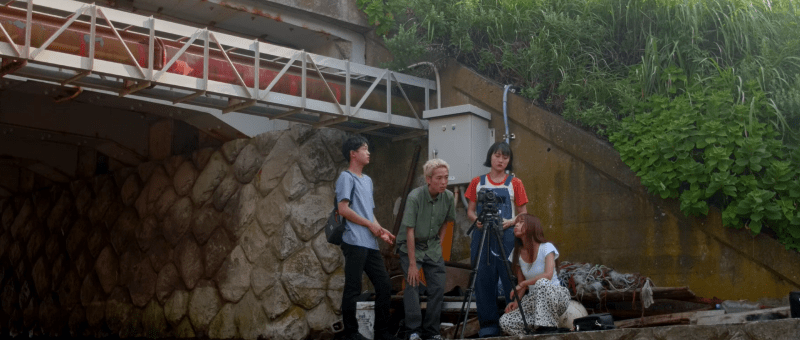
To that extent it’s telling that the film the teens are making is about a couple who attempt to go to a place where time does not flow. For the flighty Yu, the film’s architect, the desire seems to reflect her own anxiety about growing up and entering a new world of adulthood. “I wish this time would go on forever,” she sighs while discussing with her cameraman Kei how the film should end. Nakano plays with this scene, repeating it several times as if it itself were a land where time does not flow and Kei were playing out a memory in his head envisaging how something should have gone rather than how it did. Eventually the conclusion that they come to is that they should continue their journey instead of staying here, trapped in an eternal loop of dead time with no past or future. 

But moving forward is scary, after all it means leaving the past behind. Kei snaps images of the world around him as if he were trying to steal a moment, freeze it and take it with him. The hero of the film, played by his friend Jiro, is an artist who similarly tries to capture motion through the medium of sketching and constantly finds himself frustrated. He likes to sit still and concentrate, but he meets a girl who likes dance and move in the free flow of time. Kei is much the same, a natural observer yet sometimes blind to circumstance as in his decision to invite Allie, a girl they meet by chance while raiding the school broadcasting club for equipment, oblivious to the awkwardness that seems to exist between herself and Yu. 

The film teases the conflict, eventually settling on a disagreement if not exactly over a boy than surrounding him though for the rest of the runtime seems as if it may more have been more about the tension between the girls themselves. Nevertheless, Kei quickly fixes on the idea of repairing their friendship to prevent the film collapsing when his own attempt to confess his feelings is seemingly the straw that breaks the camel’s back prompting Yu into a petulant conviction that no one cares about her film and there are only ulterior motives among her crew. But paradoxically, what Kei learns is the importance of speaking up in the moment, shaking off his diffidence to support Allie when her suggestion is treated with callous indifference by Yu and thereby building bridges.

Though those same bridges may ironically leave him feeling left out and isolated as a peripheral figure on the team while the others all seem to pair off leaving him alone. He tries different approaches, and retakes his mistakes looking for the perfect ending while otherwise buoyed by the warmth of the summer and company of his new friends wishing like Yu and the protagonists of the film that this moment would never end, symbolically repeating and reliving it as if himself trapped in the land where time doesn’t flow. Nakano signals the unreality of his environment by allowing Kei to approach the unseen camera and turn it off, announcing a new take with a clapperboard and then editing in real time in search of perfect answers. In some senses, it’s the operation of nostalgia but also an adolescent desire to find the right path forward along with the courage to take it. But what the teens discover is that in the end you just have to go, frustrated by the boredom of being trapped in an external limbo of stagnant time and eager to see what the next scene will bring in a continual flow of isolated moments that somehow constitute a life.


Retake screened as part of this year’s JAPAN CUTS.

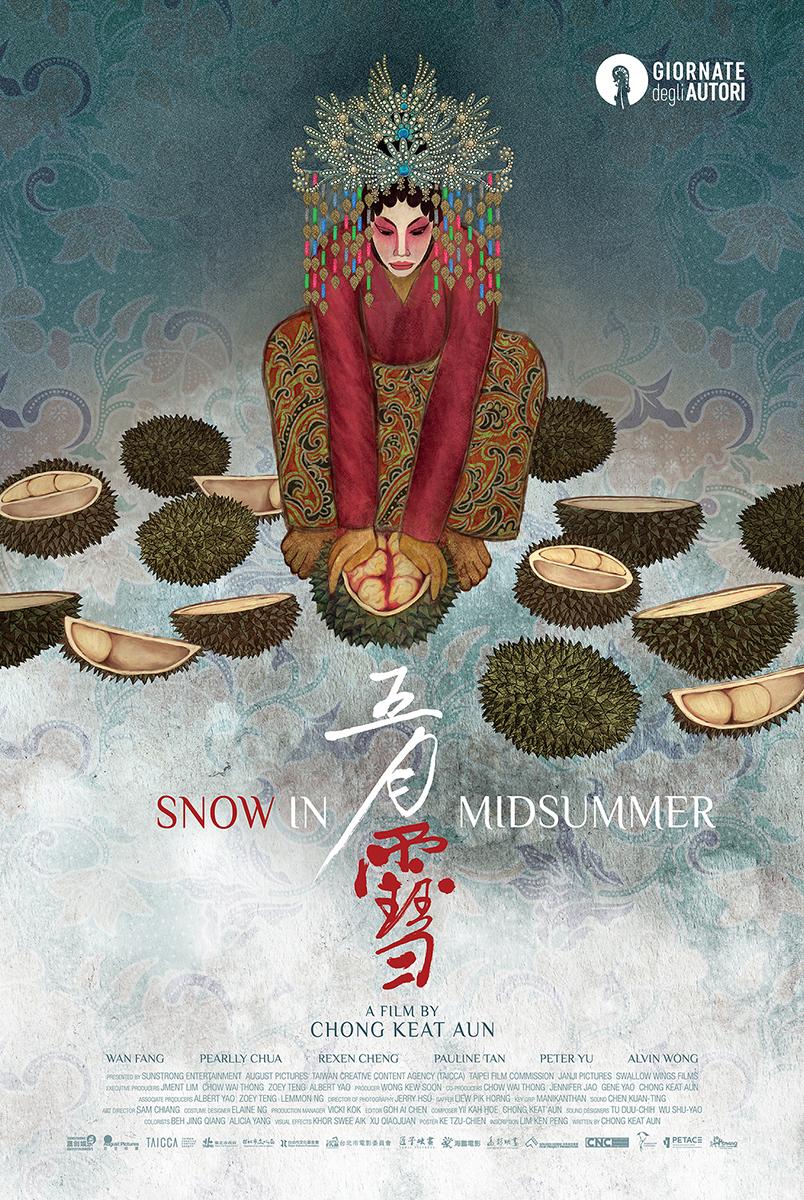
Snow in Midsummer (五月雪, Chong Keat-Aun, 2023)

How should you deal with the traumatic past? In Chong Keat-Aun’s Snow in Midsummer (五月雪) it becomes clear that this past has not been dealt with and that its heroine has been living in a kind of limbo unable to move fully forward with her life in the constant search to discover what happened to her father and brother during the 513 Incident in 1969. The first act devotes itself to the slowly unfolding horror of the massacre which erupted shortly after a general election during which a number of smaller parties affiliated with the Chinese community had begun to gain ground from the Malay-dominated Alliance Party. 

Bullied by her classmates as a Chinese student in a Malay school, Ah Eng spends the night of the massacre hiding in the backstage area of a Cantonese opera troupe as if in a literal act of taking refuge in fantasy. The film’s title alludes to the famous Cantonese opera Snow in Midsummer, actually “Snow in June” here retitled as “Snow in May”. The play’s theme is injustice as its heroine is condemned to die for a crime she didn’t commit, someone remarking that the gods must be outraged to provoke such an aberration of the natural order as snow in the height of summer. The ageing leader of the opera troupe ventures out during the incident in search her friends and relatives who had gone to the local cinema. Unable to open the door, she climbs onto the roof and sings a lament decrying the bloodshed and her own cruel fate as she watches the city burn beneath her. 

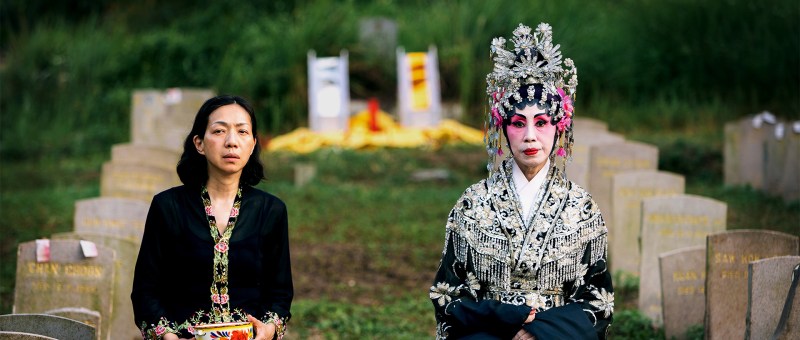
A similar lament is sung 49 years later in a graveyard we’re told is set to be “redeveloped”. The opera troupe had performed here for the dead during the intervening years, but in an event echoing that of 1969 are challenged by authorities asking if they have permits. That was in the past, they’re told, this is now and their performance causes a disturbance to a mosque which has recently been built close to the site. In a touch of irony, the taxi driver who brings the middle-aged Ah Eng to the cemetery asks her if she’s going to the leprosy hospital remarking that the Chinese community usually refuse to go anywhere near it. Each of the headstones, many of which read simply “unknown Chinese”, is marked “courtesy of the Malaysian government”, but it’s clear that this site was chosen because of its remoteness for similar reasons to the leper colony because they did not really want to address what had happened in any meaningful way.

That Ah Eng returns 49 years later hints at spiritual echoes of cycles of rebirth, but Ah Eng has lives her whole life in limbo haunted by the impossibility of discovering the resting place of her father and brother. Her father had refused to take her to the cinema, leaving her and her mother to watch the opera alone in echoes of the patriarchal oppression she continues to face as a middle-aged woman whose husband reacts with violence and anger simply because he suspects she intends to return to Kuala Lumpur to mourn her loss. Her sister-in-law gives her a lift to the station, but insists on being called by her Chinese name revealing that’s divorced her Muslim husband and intends to move to Australia with her child. On her arrival in the city, Ah Eng passes by the former sit of the Majestic Theatre which is now a fancy hotel with the same name in a very changed city. Her former Malay school is now Chinese but has a stand outside it selling Islamic food where the Cantonese opera troupe discuss their visit to the cemetery. 

“The past is dream,” the old woman sings to the grave echoing the surreality that runs through Chong Keat-Aun’s vision of the past as a man rides his elephant through the streets and lives the tale of a king forced to drink the Sultan’s foot water as a symbol of his subjugation, while others at the theatre are sold of a tale of a king with a quite literal bloodlust sustaining himself on the suffering of his subjects. A melancholy contemplation on lingering trauma, loss, and memory Chong Keat-Aun ends with a poignant image of comfort and catharsis but one is which is forever haunted by an intangible past and the wandering, unseen ghosts of buried injustice. 


Snow in Midsummer screens as part of this year’s Taiwan Film Festival in Australia.

Trailer (Traditional Chinese / English subtitles)

Motion Picture: Choke (映画(窒息), Gen Nagao, 2023)

Humans place themselves above animals precisely because of their ability to communicate and work together to create complex plans that allow them to overcome their circumstances. Robbed of our speech, would we still say the same? Gen Nagao’s dialogue-free drama Choke (映画(窒息), Eiga Chissoku) takes place in a world in which language appears to have disappeared. Humans communicate only through gesture and are therefore prevented from explaining themselves fully, able to rely only on the vagueness of feeling to convey their thoughts and intentions. 

Yet we might not quite grasp this at first, because the heroine (Misa Wada) lives a solitary life in which she rarely needs to talk to anyone anyway. Shot in a crisp black and white, this appears to be some kind of near future, post-apocalyptic world in which even ancient technologies have largely been forgotten. The woman lives in a concrete structure, presumably a disused factory which is dotted with broken machinery that the woman largely ignores as she lives her simple and repetitive life of waking, fetching water, hunting, cooking and eating. We have no reason to think that she is unhappy for besides the occasional sigh, she simply gets on with her daily tasks and then goes to sleep seemingly unafraid of external threats.

But it is indeed male violence that punctures her world when she’s set upon by three men, seemingly an older man and his grown-up sons one of whom holds her still while the middle-aged man rapes her after breaking the magnifying glass she’d bought off a cheerful pedlar enraptured by the wonder of instant fire (well, while the sun shines at least). Her world becomes darker and she finds herself haunted by a shadowy figure that hovers over her as she sleeps. But then, her trap catches a young man (Daiki Hiba) whom she at first seems as if she’s going to kill and eat but later reconsiders and lets him go presumably calculating he poses no threat to her. The young man has a goofy grin and cheerful disposition, returning to bring the woman gifts and follow her around doing odd jobs before the pair develop a relationship and start living as a couple. The young man even devises a system of bamboo pipes to bring water from the brook so the woman won’t need to carry buckets back and forth anymore in a seeming rediscovery of technology born of his desire to make her life easier.

This more nurturing, protective kind of masculinity brings a new a dimension to her life but their harmonious days do not last long before male violence intrudes once again and proves a corrupting influence for the young man who seemingly becomes cruel and vengeful, though not toward the woman even as she begins to reconsider her relationship with him and if this kind of inhumanity is something she can tolerate in the idyll she’d crafted for herself before he arrived. Then again, in trying to deal with it is there something that becomes cruel or violent in herself in that wasn’t that way before even if doing so also makes her sad and leaves her lonely?

Until then she’d found only wonder in the natural world, repurposing the disused, man-made structures of the factory to make music in the rain and more problematically filled with childish glee when something wanders into her trap. But nature holds its dangers too even if there don’t appear to be any predators here besides man in the form of poisonous mushrooms easily mistaken for the edible kind. Even so, it’s violence that finally poisons her world. A senseless kind of violence that doesn’t seem to be about competition for resources, but only an animal lust and craving for dominance. If only they could communicate in a more concrete way perhaps it could be avoided, but then that doesn’t seem to have worked out that way for us who face such threats every day with words often ignored. 

In any case, Nagao finally heads into a more abstract space as the woman seems to react to the abrupt halt of the film’s soundtrack followed by the removal not only of speech but sound from her world as is if she had lost her hearing. Her reality fractures and we can’t be sure she hasn’t just imagined anything that went before or that she has been targeted by some unseen supernatural or spiritual force for her transgressions leading to her exile from a disintegrating paradise. Obscure and haunting, the film nevertheless has a kind of cheerfulness in its innate absurdity captured in the lunking physicality of the actors who move with a cartoonish strangeness and exaggerate their facial expressions in a strenuous attempt to communicate in the absence of words. The message seems to be that in the end we ruin things for ourselves, either through violence or simply doing what we think is right but in the end may really be no different nor any better.


Motion Picture: Choke screened as part of this year’s JAPAN CUTS.

Original trailer (dialogue free)

Brave Citizen (용감한 시민, Park Jin-pyo, 2023) [Fantasia 2024]

There’s an intentional irony in the mantra teacher Si-min (Shin Hae-Sun) is fond of repeating that “If you do nothing, nothing will happen,” in that on the one hand it means that until people decide to act a dissatisfying status quo will continue, but on the other it may also seem threatening implying that if only you keep quiet nothing will happen to you. The main thrust of Park Jin-pyo’s webtoon adaptation Brave Citizen (용감한 시민) does seem to be that abuses of power take place because so few people are willing to challenge them or indeed to stand up for those who cannot stand up for themselves.

That’s something Si-min discovers when a student comes to her and says he’s being harassed by notorious bully Su-kang (Lee Jun-Young). A former boxer/martial artist, Si-min is on a temp contract and evidently waited quite some time to be offered a position so takes it to heart when her boss, Mrs Lee (Cha Chung-Hwa), warns her not make waves and jeopardise her hopes of being hired full-time. Somewhat cynical she tries to talk herself out of standing up for him, talking herself into turning a blind eye to injustice as nothing to do with her but at the end of the day she isn’t someone who can just sit by and take it nor watch as others are harmed while Su-kang goes unchallenged. 

He’s unchallenged largely due to the socio-economic conditions of contemporary Korea in which the wealthy and well-connected are able to live above the law. When one of Su-kang’s victims tries to report him to the police, they are the ones who end up accused of making a false report while Su-kang gets off scot free because he counts judges and prosecutors among his relatives while his mother is a prominent lawyer. His family apparently also donate large amounts of money to the school, which has won a series of “anti-bullying awards,” which is why he can’t be expelled. Si-min’s predecessor took her own life because of Su-kang’s bullying while pretty much everyone is scared stiff of him.

It’s for these reasons that Si-min turns to violence in the hope of giving Su-kan a little “off-site education” and perhaps you can’t blame her when faced with such intransigence from compromised authority. Yet standing up for the students is also a way of learning to stand up for herself, not to succumb to turning a blind eye to injustice simply because it’s more convenient. It’s this wilful suppression of one’s rage towards the persistent injustices of society that ends up spreading them, a continuous chain of abuse in which people take out their frustrations on those unable to defend themselves like the drunk man who yells at Si-min in the street and comes to realise he’s picked on the wrong person. 

Then again, when questioned why he behaves this way Su-kang only answers that “it’s fun”. It’s difficult to believe he would be insecure in his status, yet he persistently mocks those he sees as socially inferior, “nobodies” and ”hobos”, as opposed to elites like himself. The suggestion is that he and his friends have become this way because of a lack of boundaries and a sense of invincibility, which is partly what annoys him so much about an intervention from an authoritarian figure such as Si-min over whom he has no authority because she has decided not to grant it to him. 

This might be what makes her a “brave citizen,” the name of an award granted to ordinary people working in favour of justice that her father had once won after otherwise ruining his life through unwisely guaranteeing a loan and being left on the hook for paying it back. Embracing the absurdity of the webtoon, Park goes big and bold painting the inequalities of the contemporary society in stark relief while injecting a sense of catharsis into Si-min’s attempts to smack some sense into the bullies while rediscovering her own desire to challenge injustice rather than remain complicit with it even if it is personally inconvenient. Her rebellion encourages others to do the same while robbing the bullies of their privileged position and exposing them to the consequences of their actions. Of course, fighting violence with violence may not be the best solution but does at least allow Si-min to make the most of what she has and to recover the self that had been beaten down and defeated but is now capable of fighting back both for herself and others.


Brave Citizen screened as part of this year’s Fantasia International Film Festival.

International trailer (English subtitles)