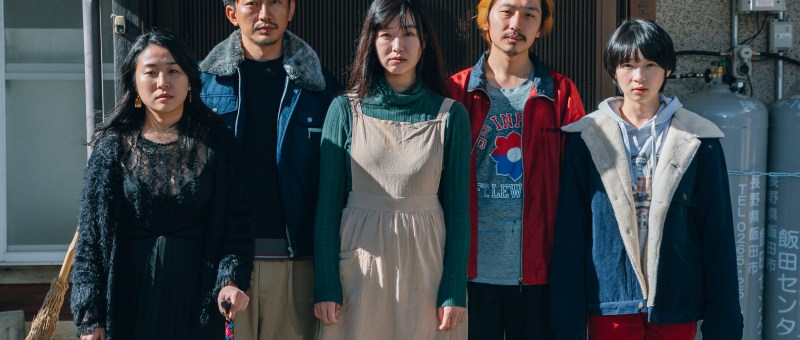
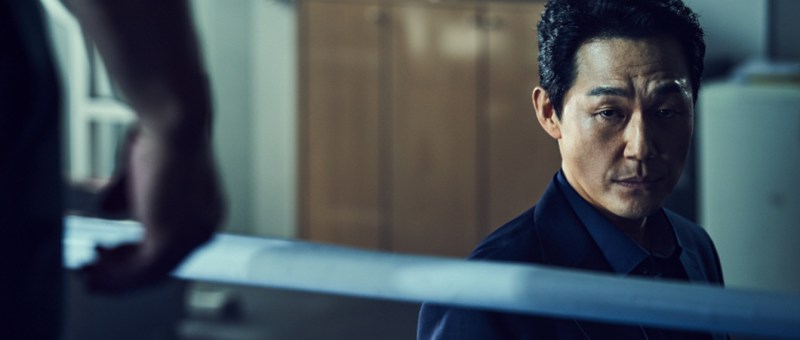
We’re Millennials. Got a Problem? International (ゆとりですがなにか インターナショナル, Nobuo Mizuta, 2023)

Seven years on from the hit TV series, the guys find themselves dealing with the problems of early middle age along with increasing internationalisation as members of the so-called Yutori generation in Nobuo Mizuta’s We’re Millennials Got a Problem? (ゆとりですがなにか インターナショナル, Yutori desu ga, naninka Internationa). Now they’re in a different place and increasingly confused by the youth of the day while reconsidering their own life choices and facing a series of impromptu crises.

Among them would be that both the yakiniku restaurant where the guys worked in the TV series and the company that used to distribute the sake produced by Masakazu’s (Masaki Okada) family brewery have been taken over by Korean conglomerates. To make matters worse, the company tells Masakazu at an online meeting he’s embarrassingly turned up to in person because no one thought to tell him it was remote that they’re shifting production entirely to makgeolli because no one drinks sake anymore and his takings are about to fall off a cliff. The only way he can keep the contract is by agreeing to introduce a new product, either makgeolli or alcohol free sake. 

Meanwhile, his friend Maribu (Yuya Yagira) has returned after seven years in China with a Chinese wife and three children but apparently no job prospects. Masakazu offers him a job at the brewery, forgetting that it’s a bit awkward because he used to date his sister, Yutori (Haruka Shimazaki), who has quit her corporate job to start a business selling nordic knickknacks. It’s Maribu’s live streaming of the moribund brewery that unwittingly exposes the cracks in Masakazu’s marriage when Chinese netizens starts sending aphrodisiacs through the post to help him overcome the problems of his sexless life with wife Akane (Sakura Ando) who is herself struggling with the demands of looking after two small children and taking care of all the domestic chores with no help.

Later Akane tells mutual friend Yamaji (Tori Matsuzaka) that she’s worried she has post-natal depression and is fed up with her home life. We see can how stressful it is in the opening sequence in which Masakazu (ironically) tries to become a YouTube sake star but is repeatedly heckled by offscreen calls from Akane asking him to bathe the children and otherwise help out before she finally has no choice but to bring the kids to him. When they go to city hall to apply for a place in childcare they’re immediately dismissed, Akane somehow told that she doesn’t have as many “points” as her husband even though they’re both self-employed and there are many more needy candidates before the (probably well-meaning) civil servant not so subtly checks their daughter’s arm for signs of abuse or neglect. It’s not that surprising therefore that when the aphrodisiacs start piling up at home she wonders if Masakzau’s having an affair placing further strain on the relationship. 

Shin-hye (Haruka Kinami), the Korean-Japanese-American CEO of the company that bought out their old distributor (for whom Akane was once a regional manager) also a expresses a similar anxiety about the place of women in the workplace on the one hand coming from Korean corporate culture and finding that Japan might not as be “as bad” at least in its every increasing list of harassment which at least admit there’s problem with workplace bullying, sexist culture, and unwanted sexual advances from men in positions of power. Yamaji, meanwhile, finds his well-meaning attempts to foster diversity in the classroom floundering when the kids declare themselves unable to understand the intricacies of LGTBQ issues explaining that at their age “dating” just means hanging out though they’re unexpectedly accepting of the Thai transfer student with an inexplicable crush on the incredibly obnoxious American boy who transferred in the same time as him. 

In other ways, however, Yamaji is the same as ever. On his first appearance he’s on an awkward date with a woman from a dating app which he largely spends talking to his mentor on an iPad and making sexist remarks. They are all struggling with the demands of a more concrete adulthood in which much is already decided while their settled lives are undermined by unexpected crisis from the fallout from the conravirus pandemic and ongoing economic malaise to marital discord, the demands of caring for small children, and a friend a they had no idea was a top star live-streaming star in China. A recurring gag sees people undertake zoom meetings dressed in a suit jacked with sweatpants underneath. Yutori eventually exclaims that there’s no point even having dream while her family have a lot of sensible questions about her new business like where all the stock is whether it was worth the risk leaving her stable job that was presumably subject to all the harassment and otherwise oppressive corporate culture of contemporary Japan. Nevertheless, the millennials eventually come to a kind to acceptance and understanding of where they are in their lives along with a re-appreciation of everything they already have.


We’re Millennials. Got a Problem? International screened as part of this year’s Nippon Connection

Original trailer (English subtitles)

LONESOME VACATION (Atsuro Shimoyashiro, 2023)

A rockabilly detective starts to realise that the most mysterious part of his case is his client in Atsuro Shimoyashiro’s quirky tale of buried histories and enduring images, Lonesome Vacation. Echoing amore distant past, the film reflects that some things you’re better off not knowing while those around us are often flawed beyond our imaging or else carrying painful secrets of their own they may not wish to share though more for the sake of others than themselves.

You might say that Eichi (Takuma Fujie) stands out with this 1950s quiff and retro get up, but it also allows him to hide in plain sight while carrying out his various jobs chasing cheaters and other kinds of surveillance work. But when he runs into old flame Kyoko (Kyoka Minakami) whom he briefly dated in college, she asks him to investigate a reel of film she deceived in among her late father’s belongings. The film seems to show her father with another woman, Reiko, whom Kyoko is keen to track down. 

Setting off on a roatrip that is as Eiji later says is almost like a vacation, the pair eventually start to grow closer and perhaps fall in love while trying to solve the mystery of the film. Kyoko’s father Miko, suggests in his voice over that film is a more ephemeral medium than video while simultaneously confessing that he wanted to capture a woman on film, to keep her in the present moment, in the knowledge that film will last longer than us. Miko describes it as a metaphor for life, his own and perhaps generally though it’s lost to us now. Kyoko searches for the answer to a puzzle her father died before telling her how to solve.

Piecing everything together, Eichi starts to realise that Mikio most likely had an affair and Kyoko may have a sibling though neither of them are very sure whether they should reveal themselves not wanting to create further trouble in their lives by announcing that their mother had an affair. Nevertheless, even after it seems like the original case has been resolved, Eichi realises he’s unable to solve the mystery of Kyoko. Having very briefly dated in uni, he doesn’t quite understand why she’s come to him now or really anything about her character or habits. She meanwhile seems to have taken a liking to him through their strange road trip during which everyone seems to regard them as a young couple very much in love.

Ironically enough, Eichi avows that it’s the image that matters but only after comes to understand the import of something he’s seen, little reasoning that sometimes relationships can be different than the image we have of them. Yet as he says, it’s image that’s really important, our thoughts and impressions of something as disctivt from their physical presence along with the absences within them that provoke our imaginations. Kyoko gets some answers if perhaps not the ones she’s was looking for but is also left with unavoidable gaps because those who could have filled them in are no longer able to do so.

Shimoyashiro gets good milage out of the retro quality of Eichi’s outfit and hairstyle along the absurdity of a rockabilly detective but also gives him an almost Kindaichi-esque sense of goodness, too diffident to pursue Kyoko even after beginning to realise that she seems to be flirting with him. Slightly more dejected than he is, Kyoko insists that one day simply follows another but that also kindness is what gives life its meaning. In a way, it’s what gives the image value too in a kind of selflessness that placed no ownership over its subject and was content to let it roam where it chose. Taking place largely in the surprisingly romantic environs of Jogashima, the film has a charmingly old-fashioned quality even in its central slow burn romance along wth a genuine sense of worth and authenticity even if its main subject turns out to be the melancholy echoes of a lost love or at least the image of it enduring long after the lovers themselves have departed,

LONESOME VACATION screened as part of this year’s Nippon Connection

Original trailer (English subtitles)

Qualia (クオリア, Ryo Ushimaru, 2023)

“What is happiness for a chicken?” a recent recruit to a chicken farm wonders, though as she later points out they all meet a grim fate in the end. Yuko (Kokone Sasaki), a timid, quiet woman is much like the chickens she farms though apparently content with her captivity echoing only that it’s enough for her that she feels needed by the family who otherwise mistreat her. Actor Ryo Ushimaru’s directorial debut Qualia (クオリア) examines the place of women in the contemporary family along with its seething resentments and petty paybacks. 

On spotting one hen that’s being bullied by the others, Yuko places it in a protective cage and wonders if it will one day be able to return to the others while perhaps aware that it echoes her own circumstances. Having married into the family of her husband, Ryosuke (Kenta Kiguchi), she’s become little more than a drudge bullied by her embittered sister-in-law Satomi (Maya Kudamatsu) who walks with a cane after an accident caused by her brother which gives her some additional leverage over him. Perhaps to escape the sense of constraint he feels in his familial relationships, Ryosuke has been having an affair with a woman from a roadstop that buys their eggs, Saiki (Ruka Ishikawa), who has spun a tale about a false pregnancy in an attempt to get him to take their relationship more seriously. When that doesn’t quite work, she fetches up and the farm and is mistaken for a job applicant, overjoyed on realising the position comes with room and board. The unsuspecting Yuko is all too eager to accept her, almost browbeaten by Saiki into overriding her internalised compulsion to clear it with Satomi and Ryosuke first. 

Yuko is such a people pleaser that even after finding out about Saiki’s claims to be carrying her husband’s child she welcomes her into their home as if tacitly admitting her inferiority to this other woman who has done what she couldn’t do in conceiving a child. Much more direct by nature, Saiki cruelly retorts that becoming a mother is the key part of being a wife while making pointed and barbed remarks that express her desire to elbow Yuko out of the way and take her rightful place at Ryosuke’s side. After moving in, she quickly takes over the domestic space by requesting that she be allowed to help with the cooking and cleaning while Yuko takes care of the chickens outside, playing the part of the perfect housewife in an attempt to undercut Yuko’s place within the family.

Yet she also seems to feel sorry for Yuko and disapproves of the way Ryosuke treats her with his bullying manner and emotional coolness. Ryosuke had told her that he never loved Yuko and had married her only because his sister told him to, hinting at his feelings of emasculation amid this otherwise matriarchal environment where Satomi effectively rules the roost. The irony is that there are supposedly only female chickens on the farm which is how they ensure none of the eggs they send out are fertilised. If they find out any of the new chicks they take in are male, they get “removed” by conflicted farmhand Taichi (Chikara To) who is a bit of chicken obsessive and finds it hard to square his affection for the birds with this responsibilities as a farmer which mean they’ll all be “removed” when they stop laying and therefore lose their purpose.

The same is true for Yuko. Unable to conceive she’s now being replaced by a subsequent generation and has lost the will to fight back unable even to say that she objects to any of these new arrangements. Ryosuke, a rooster in the henhouse though one whose masculinity is scrutinised, seems to want a reaction from her but all she can tell him is that she treasures the memory of him proposing to her with all the chickens cheering them on and that she’s satisfied just with that one romantic moment. The question remains whether she too will one day find the courage to fly the coop and escape her bullying at the hands of the other women or otherwise discover a way to reassert herself that doesn’t leave her at their mercy. In any case, Ushimaru’s quirky, surreal dramedy eventually discovers that chickens too can fly if only they’re given the chance to do so.


Qualia screened as part of this year’s Nippon Connection

Original trailer (English subtitles)

Dreaming in Between (逃げきれた夢, Ryutaro Ninomiya, 2023)

Everyone keeps asking Suenaga (Ken Mitsuishi) is if he’s okay. He has these tiny moments in which it looks like he’s on pause, sudden instances of stillness in which he stares vacantly into space. We start to wonder if he’s experiencing some kind of mental distress, having a stroke or developing dementia as those around him seem perplexed about his his behaviour which to us seems cheerful and pleasant. In fact, it seems confusing and unfair that he’s held in such contempt by his wife and daughter not to mention the pupils at his school and sullen young woman at the cafe he often frequents. 

A man of a certain age with a once overbearing father now mute and living with dementia in a retirement home, Suenaga is indeed undergoing a crisis of life. A year away from retirement, he begins to wonder what it was all for and how his relationship with his family became what it is today. He asks his wife Akiko (Maki Sakai) if they somehow gradually became estranged from each other in an impassioned speech in which he begs for love that neither she or his daughter are very minded to give him. Perhaps we can infer from the surprised reactions to his cheerfulness and attempt to take an interest in his daughter’s life that he hasn’t always been this way, though he too seems confused and perhaps not so much trying to make a mends but only to be his real self at what he fears may be the close of his life. 

When he surprises the waitress at a local cafe he goes to frequently by sitting in a different seat and then neglecting to pay the bill, it’s not really clear whether he actually forgot or did so deliberately as an attempt to assert himself. Likewise when he makes a clumsy attempt to embrace his now emotionally estranged wife or calls in sick to work it seems like more examples of his strange behaviour, yet Suenaga claims he’s becoming more of himself and on looking back over his life so far feels dejected and unfilled.

This  sense of mid life crisis is exposed in his conversation with Minami (Miyu Yoshimoto), the waitress at the cafe and an former pupil. He reveals that he wanted to become a head master but didn’t make it, and thinks he was only appointed deputy head because of picking up so many cigarette butts dropped by his rebellious charges, Minami is in many ways his opposite number, young and grumpy yet also grateful to him in another way restoring meaning to his life when she tells him that his words once saved her when he told her that she was fine the way she was. Even so she goads him a little, joking and maybe not really that he should give her his retirement money so she can have a better life. Echoing the opening conversation with his father, Minami hints she may soon quit the cafe to become a bar hostess or sex worker to save up before eventually emigrating Greece.

For all his teacherlyness, Suenaga seems to be a man who wants to be more understanding. He takes an interest in his pupils though they assume he doesn’t and again tells Minami that people should live the way they choose. In the rawness of their final parting, he tells her not to do anything she’ll regret but then adds that maybe she should, as if a life with no regrets is not really lived or perhaps reflecting that despite his own unhappy circumstances he does not really regret the life he’s lived. 

Filming in 4:3, Ninomiya makes great use of closeups, not least of Mitsuishl’s cheerful expression which somehow carries with it a great sorrow amid his own disappointments and yearnings. False or otherwise, there is something touching the connection of these dejected souls, the ageing teacher and the former pupil looking for permission to move on with her life but also teaching something to Suenaga in her sullen defiance and the eventual drive to keep going. Quiet and gentle if suffused with melancholy, Ninomiya’s poignant drama does indeed seem to argue that people in general are alright as they are but false acts jollity are as likely to confuse as console.


Dreaming in Between screens 1st June as part of this year’s Nippon Connection

Original trailer (English subtitles)

Tiger Stripes (Amanda Nell Eu, 2023)

There’s a moment in Amanda Nell Eu’s Tiger Stripes in which a teacher writes a sentence in English on the board for the students to fill in the blanks. “The father ___ to work,” one reads. Another, “The mother ___ at home.” It’s within these blanks that the girls live their lives, contained by rigidly held patriarchal norms supported by a religious environment that turns resistance into heresy, something demonic and evil that must be rooted out so the afflicted individual can be returned to society without their parents being ostracised.

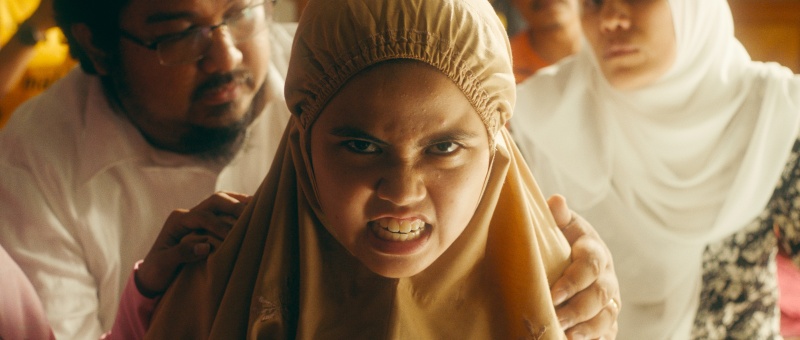
A bright and talented student, Zaffan (Zafreen Zairizal) is shown to flaunt these rules by wearing a bra and commandeering the toilets to record tiktok dance videos with the help of her friends Mariam (Piqa) and the more conservative Farah (Deena Ezral). Perhaps the most transgressive thing about them is that she’s removed her hijab and in fact much of her clothing, defiantly assuring herself with a cheekiness that seems almost naive. After getting her school uniform wet in a local pond, she cheerfully runs home hair exposed in only her smalls. Her father barely bats an eyelid, but her mother is incensed. Somewhat counter productively, she drags her outside and shouts at her in front of all the neighbours about bringing shame on their family. 

Time and again, it’s other women that cause Zaffan the most trouble. After her classmates discover that she’s got her period and is therefore a woman, they beat her up and call her names suggesting that she’s unclean and no longer wanting to associate with her. It doesn’t help that her new status is known to all because girls on their period cannot participate in some of the religious practices at the school which similarly reinforce the idea that menstruation is a pollutant and womanhood itself is toxic. It’s indeed womanhood which been activated in Zaffan along with a natural desire to resist her oppression and be who she is. She begins to undergo a transformation that even she barely understands, snapping and snarling those who challenge her while otherwise catching and eating wild animals which she tears apart with her teeth. 

The girls tell each other a story of a woman, Ina, who apparently went feral and escaped to live in the forest. They tell it as a cautionary tale, but Zaffan begins to see and identify with Ina who has found a kind of natural freedom outside of the oppressive patriarchal social codes of the contemporary society. Yet it’s precisely this freedom that must tempered ad women kept in their place. The school later calls in some kind of spiritualist, Dr. Rahim (Shaheizy Sam ), who pedals snake oil treatments and claims to be able to exorcise the young women who have similarly come down with shakes and shivers in the wake of Zaffan’s metamorphosis. Earlier on, Zaffan had seen a wild tiger filmed by a man who walked slowly behind it, menacing but unwilling to engage. Her friends tell her they probably mean to kill it, but there’s also an ineffectuality in this male timidity that is essentially afraid of an independent woman. Having transformed herself into a tigress, Zaffan too is followed by a crowd of men but all they do is stare at her back.

Meanwhile, in the background her teachers make ironic comics that the students won’t amount to anything while the Malay pupils seemingly trail behind their Chinese classmates. Zaffan becomes the embodiment of monstrous femininity, a dangerous and transgressive womanhood that rejects all of the constraints placed upon it. Though she does not understand what is happening to her and is hurt that her former friends, still on the other side of adolescence, now view her as something other and unpleasant, Zaffan longs for the freedom of the forest and to dance to her heart’s content no longer willing to submit herself to the strictures of the patriarchal society. Her rebellion earns its followers among girls of her age, themselves longing for freedom but too afraid to ask for it. Tinged with supernatural dread, the film nevertheless presents Zaffan’s progress as a gradual liberation found in the natural world, nature red in tooth and claw but alive and unconstrained as free as a tigress in a world without man.


Tiger Stripes is in UK cinemas now courtesy of Modern Films.

UK trailer (English subtitles)

A Boy and a Girl (少男少女, Hsu Li-Da, 2023)

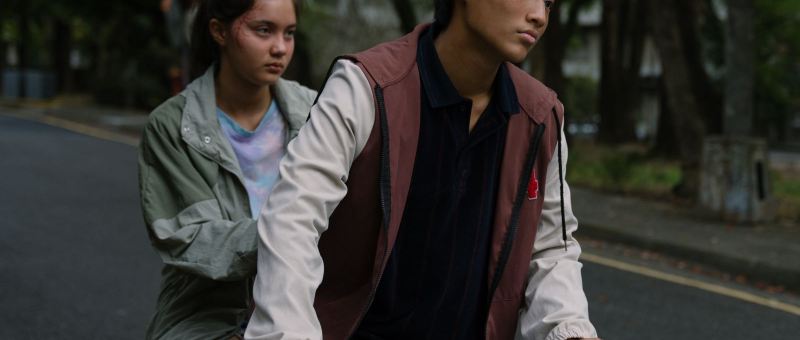
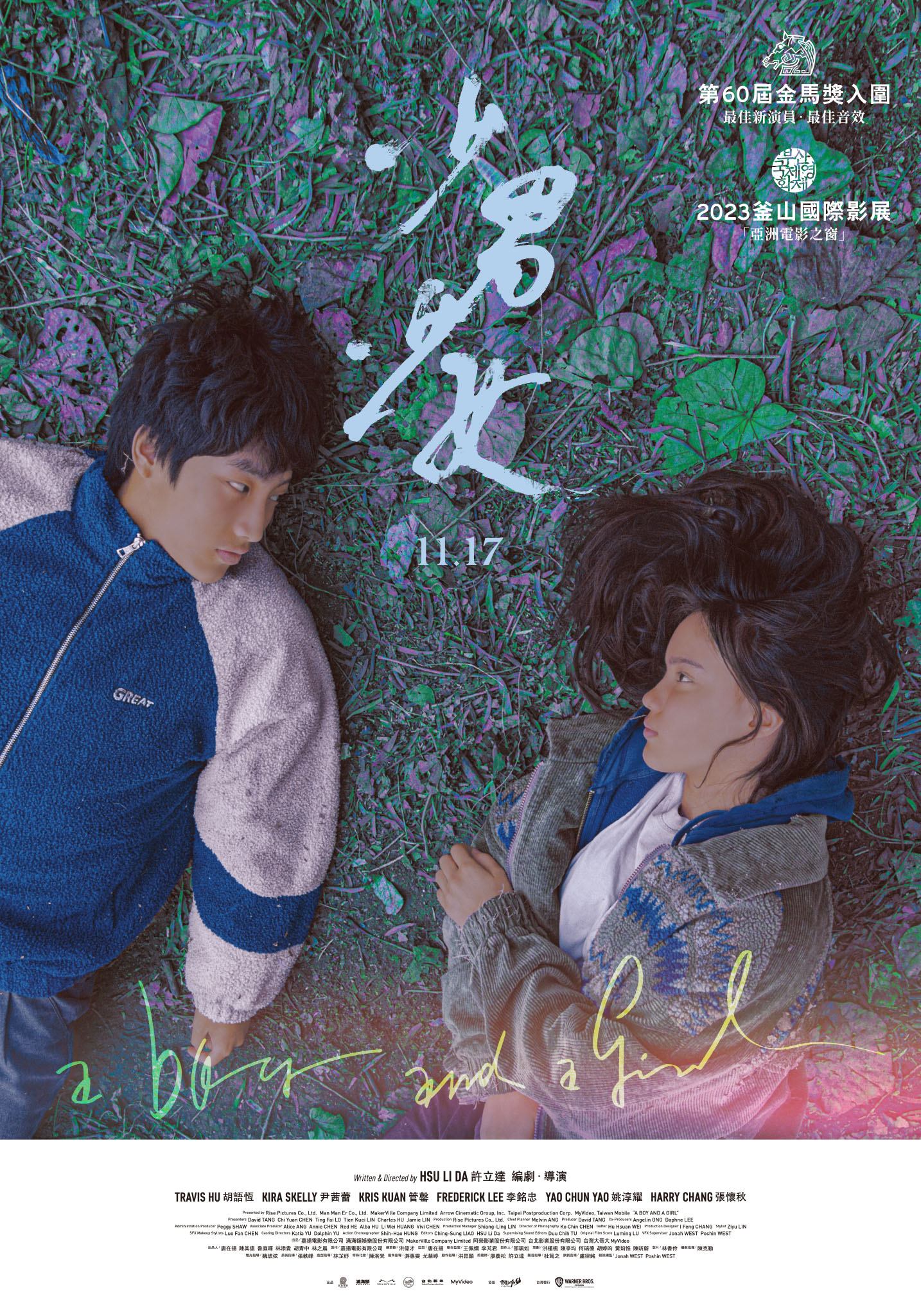
A young man on the cusp of adolescence longs to escape his miserable circumstances but gradually finds himself succumbing to the corruption all around him in Hsu Li-Da’s bleak coming of age drama, A Boy and a Girl (少男少女, shàonánshàonǚ). Though the title may sound like a cheerful rom-com, Hsu’s film is closer to anti-romance as the ill-defined relationship between the two provokes unforeseen changes and eventually dangerous situations. 

In any case, all the Boy’s trouble’s start when his phone gets broken in the middle of a deal to sell in game points signalling an abrupt end to his escapist dreams. He’s desperate to get another one, but his mother can’t afford it and has problems of her own in that the hostess bar she runs is in financial trouble and she’s had to enter a sexual relationship with a local thug just to keep it running. The Boy catches them at it, and looks on voyeuristically laying bare his oedipal desires coupled with a moralistic objection to the act and resentment towards the gangster.

For these reasons he becomes determined to escape his moribund small town along with the hostess bar where his mother works by fighting back against adult duplicity. After meeting the Girl and gaining access to her phone, he discovers that she had been involved in a sexual relationship with their PE teacher which had resulted in a pregnancy. The pair of them attempt to blackmail the teacher with screen caps of his incriminating messages to her, but the plan backfires. The teacher doesn’t feel under threat and gets two of his underlings to beat the Boy up rather than pay. The Boy is morally outraged by the teacher’s behaviour and thinks someone ought to do something, but doesn’t know what to do so lands on blackmail as a form of punishment though as it turns out the Girl was less interested in vengeance or money than whether the teacher really loved her. Like the Boy, the Girl is mostly alone. She claims not to know who her mother is, while her father is suffering with an illness.

As expected they plot their escape together, but events soon overtake them. With the blackmail scheme ruined, the girl settles on sex work and the Boy becomes a kind of pimp if a conflicted one frustrated by the Girl’s whimsical businesses sense which sees her tell a potential client to forget about the money because he’s not quite as hideous as all the others. Meanwhile, she starts giving the boy a drug called Little Devil which causes those who take it to laugh manically and commit acts of extreme violence. Left without a moral arbiter the boy has nowhere to turn. Not only can he not talk to his mother’s boyfriend, but eventually encounters a corrupt cop whose immediate reaction is to tout for a bribe or, as he would have it, protection money. 

In this very messed up environment, all relationships have become transactional. Gradually the Boy begins to behave like those around him and takes on the codes of the masculinity with which he is presented, posturing and squaring up to his mother’s boyfriend in contest over ownership of her. His mother wants escape too, but is afraid and constrained by the persistent misogyny of the present society even if, ironically, her work her also leans into it in running a karaoke bar where the some of the hostesses are encouraged to undress. The more they try to escape, the tighter the noose seems to grow refusing to let any of them leave and denying them even the hope of better life.

Already cynical, the Girl is resigned to her fate and in fact no longer really resisting it save for interactions with the Boy. Told that her father is much sicker than they thought and needs an expensive operation, the Girl suggests that she doesn’t intend to pay while the Boy tries his best to get cash to pay off the ganger, free his mother, and keep the bar only to be confronted with his naivety. The picture Hsu paints of contemporary Taiwan is bleak and unforgiving, refusing either of the pair the prospect of a happier future and guaranteeing only misery for all in a land of cheats and gangsters in which a good heart is weakness few can afford.


A Boy and a Girl screened as part of the 18th Season of Asian Pop-Up Cinema.

Original trailer (English subtitles)

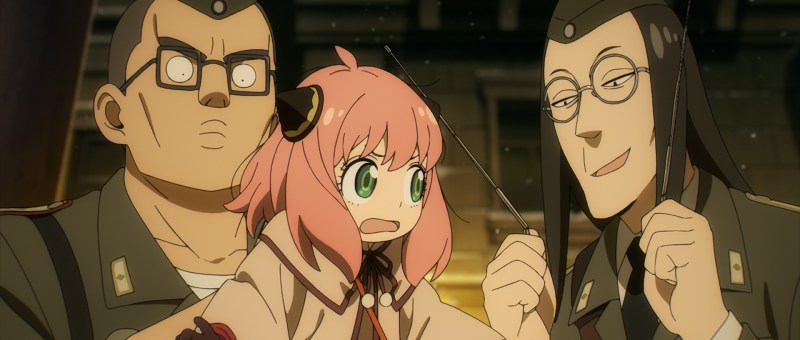
SPY x FAMILY CODE: White (劇場版 SPY×FAMILY CODE: White, Takashi Katagiri, 2023)

The irony at the centre of the Folger family is that they cannot communicate effectively because they’re each afraid of blowing their cover. Adapted from the manga by Tatsuya Endo, Spy x Family was the smash hit anime of 2022 and now makes its way to the big screen with an epic adventure which threatens the foundations of a “fake” family which has become increasingly real to the extent that it may have come to eclipse the reason it was created.

Newcomers to the franchise need not fear as the film is broadly standalone and gives a brief explanation of its setup in not dissimilar fashion to the voiceover intro of the TV anime. Codenamed “Twilight”, spy Loid Folger (Takuya Eguchi) has adopted a little girl, Anya (Atsumi Tanezaki), and married a local woman, Yor (Saori Hayami), in order to infiltrate an elite boarding school with the aim of targeting a reclusive politician through forging a connection with his younger son, Damian. What Loid doesn’t realise is that he’s completely in the dark about his new family. Anya is the only one who knows the whole truth as she is a telepath, while Yor is a secret assassin who agreed to fake marriage as cover to avoid detection by the authorities. Even the family dog, Bond, is a canine clairvoyant who was the product of an experimental program to breed super intelligent dogs. 

The mission is compromised by the fact that Anya is less than academically gifted and unlikely to gain all eight stars needed to join the elite group of students that would get her close to Damian and Loid close to his father. Having made so little progress, Loid’s handler reveals Operation Strix may be taken away from him and given to a political crony which would necessarily mean he’d have to give up the new family life to which he’s gradually become accustomed. But the family is also threatened by Yor’s insecurity and conflicted feelings for Loid, well aware their arrangement is “fake” but still anxious that Loid is having an affair and worried he’ll divorce her for not being good enough at the domestic life she too has come to value. Anya, meanwhile, obviously wants to keep to her new family together while helping her parents with various missions but can’t say anything for fear of exposing herself as a telepath and Bond as a clairvoyant. 

Echoing the extended cruise arc from the anime, the film follows the Forgers on a mini break to nearby Frigis in search of a regional dessert they hope will help Anya win another star only to end up swept into local politics. The long-form format of the feature surpasses that of the TV series in shedding its bitty, episodic structure for something more substantial though that may of course detract from its charms for those taken by the isolated vignettes of the show. Even so, the film doesn’t stint on quickly humour gaining the ability to deepen its ongoing gags culminating in a fantasy sequence animated like a kids drawing in which Anya meets the God of Poop and is rewarded for excellent service. 

Though what’s really about is once again the Forger family who must finally turn the wheel together in order to avoid certain death. Though fighting parallel battles, unable to simply explain what they’re doing and ask for help, the gang eventually end up in the same place united in their missions and also as a family having faced off various threats and reaffirmed their bonds which have by this point become very much real. Loid continues to struggle with the mechanics of his mission, frequently unable to read Yor’s insecurity and unwittingly fuelling it, and exclaiming that he doesn’t understand children nor have much clue how to manage Anya’s often madcap behaviour. The irony is that if he succeeds, the family will have to disband and he’ll lose this new sense of domesticity that’s becoming used to, but if he fails his nation may go to war and thousands of people will die. But until then his biggest problem is figuring out how Anya can win a baking contest and survive yet another impromptu family holiday without becoming embroiled in an international conspiracy. 


SPY x FAMILY CODE: White is in UK cinemas now courtesy of All the Anime.

UK trailer (English subtitles)

Images: © 2023 SPY x FAMILY The Movie Project © Tatsuya Endo/Shueisha

The Wild (더 와일드: 야수들의 전쟁, Kim Bong-han, 2023)

Who’s fault really is it? The hero of Kim Bong-han’s The Wild (더 와일드: 야수들의 전쟁, The Wild: Yasoodeului Jeonjaeng) goes to prison for seven years after the guy he was fighting in an illegal boxing match dies. But later he discovers that his friend and gang boss Do-sik (Oh Dae-Hwan) drugged his opponent first to assist in their match fixing scam, leaving a question mark about who was finally responsible for the young man’s death. It’s this confusing web of causality which damns each of the protagonists each in their own way seeking an impossible escape from the past. 

The first thing that Woo-cheol (Park Sung-Woong) says when he gets out of prison is that he wants to lead a quiet life, refusing Do-sik’s offer to give him a bar in compensation for his long years inside. Yet Woo-cheol is quickly pulled back into the gangster underworld after bonding with a young sex worker, Myung-joo (Seo Ji-Hye), who also happens to be the former girlfriend of the man he killed. This brings him into conflict with corrupt cop Jeong-gon (Joo Suk-Tae) who is working with Do-sik to take out the middle man in their smuggling operation which is largely handled by North Korean defectors. 

There may be something in the positioning of Gaku-su (Oh Dal-Su) and Woo-cheol as outsiders trapped by circumstance, yet the North Koreans otherwise depicted are all worst than the gangsters knowing only violence, recrimination, and rapaciousness. Putting up with them tries Woo-cheol’s patience and puts him at odds with Do-sik while disrupting the power play that has emerged between him and his underling Yoon-jae (Jung Soo-Kyo). Later in the film, another man calls them fools for being so obedient when the facts is that dogs never abandon their owners but are often abandoned by them. With so many concurrent schemes in motion, relationships are generally a weakness and it becomes impossible to know who can be trusted or what side anyone is on. 

That’s a dilemma that strikes right at the heart of Myung-joo who is attracted to Woo-cheol’s manly nobility but also conflicted and later pursued by her late boyfriend’s younger brother who blames her for his brother’s death insisting that he only participated in the fight because he wanted money to move out so they could live together. Then again perhaps it was the mother’s fault for refusing him the money when he asked for it. Everything that happens is really everyone’s and no one’s fault, just a fatalistic motion towards an unstoppable end game. Do-sik prides himself on being able to make his own fate, but even he is carried along by forces outside of his control never quite as much in charge of his destiny as he’d like to think. 

Meanwhile, he takes out his sense of futility on those around him. An intensely homosocial tale about the corrupted brotherhood between a series of men, the film has an unpleasant streak of deeply ingrained misogyny with strong depictions of sexualised violence and rape. Aside from Mrs Han, the feisty boss in charge of the girls who is later punished for her attempt to stand up to the men’s bad behaviour, the women are afforded little agency with Myung-joo reduced to little more than a tool used and manipulated by various plotters while like Woo-cheol longing to live a quiet life. Life him, she is dragged down by her guilt and trauma unable to escape her past. Do-sik, meanwhile, dreams of leaving this small-town world for the bright lights of Seoul but perhaps makes too great a calculation and finds himself outmanoeuvred by unexpected betrayal.

The film’s Korean title dubs the conflict between the men as a war between beasts, while it’s true enough that each of them is embroiled in a fiery hell preemptively looking for revenge before the threat has arisen. Romance and loyalty lead only to death and disappointment. A melancholy Do-sik asks Woo-cheol if they’re still friends and though it’s unclear if the question is genuine, seems to be harbouring a degree of regret in the coldness of his plotting either willing to sacrifice lifelong friendship or sure that those bonds are too secure to be broken. In any case, you cannot outrun fate nor find refuge from its ravages, only attempt to embrace its bitter ironies.


The Wild is available digitally in the US courtesy of Well Go USA.

International trailer (English subtitles)
After School (成功補習班, Lan Cheng-lung, 2023)

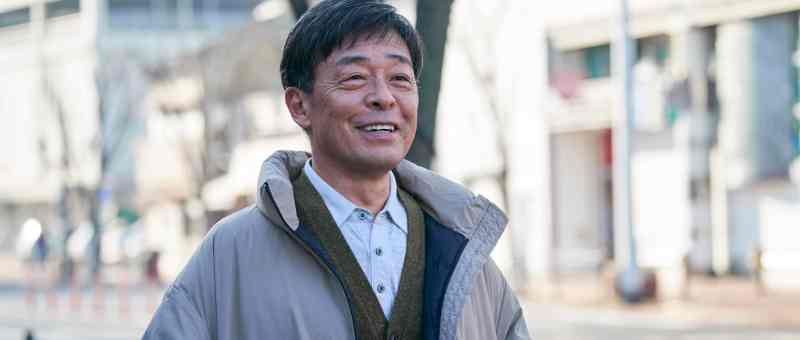
In an odd kind of way, Lan Cheng-lung’s autobiographically inspired coming-age drama After School (成功補習班) charts how far Taiwan has come since the mid-90s while pivoting around the figure of Mickey Chen, a hugely influential LGBTQ+ filmmaker who passed away 2018. Chen was in fact Lan’s own cram school teacher and in terms of the film a voice for the future giving the children the permission to be themselves in the post-martial law society even as they struggle to break free of the authoritarian and fiercely patriarchal past. 

In a sense, cram school itself is the manifestation of that culture in that most of the kids have been forced to go there by their parents to pursue futures not of their choosing. The hero Cheng Heng (Zhan Huai-Yun), Lan’s stand in, wants to be a filmmaker but his dad wants him to be a maths teacher. That might be one reason he and his friend Cheng Hsiang (Chui Yi-tai), who lives with his family because problems with his own, spend most of their time messing around and playing childish pranks on the teachers and admin staff. Meanwhile, they’re far mare interested in potential romance than studying with Cheng Hsiang a bit of a ladies man and Cheng Heng nursing a crush on the school’s most popular girl Chen Si (Charlize Lamb). 

Nevertheless, the closeness between the boys gives rise to a few rumours that they may be gay. The idea is only further cemented by an ironic incident in which Cheng Heng sustains an embarrassing injury to his groin while watching a pornographic video he swiped from a cousin little realising that it was actually gay porn. His parents, or really more his father, do not take well to this and see it perhaps as just more evidence of his rebelliousness and lack of respect for his family in his desire to follow his own path rather than the one they’ve set down for him of getting a steady, respectable job as a teacher. 

That’s one reason that the arrival of Mickey (Hou Yan-xi), a recent graduate taking a temporary teaching job to save for studying abroad, is thought so disruptive because he encourages the kids to be who they are not who they’re taught to be. Mickey holds progressive sessions on sex and sexual identity, explaining concepts such sexual orientation and safe sex which is surprising not least because this is a cram school which exists solely to help kids do well on standardised tests rather than give them any broader kind of education. The headmaster, who is also the father of the boys’ friend Ho Shang (Wu Chien-Ho), is by contrast an authoritarian remnant of the martial law era who can’t permit any kind of liberalisation or individualisation and often inflicts corporate punishment on pupils deemed to have transgressed the rules of a polite society. 

But it’s Mickey who tries to help the boys accept and become comfortable with their sexuality and that of others, taking them to a gay bar where he interviews several of the regulars for his documentary. The barman once entered a marriage of convenience and had a child to please his parents but feels deep guilt and regret for the way he treated his wife and his since been disowned by his family. Now he hosts a New Year dinner for others like him who have nowhere else to go because their families have rejected them. The boys too are rejected by their fathers solely on the suspicion of homosexuality while the mothers remain broadly supportive of their children but trapped by those same patriarchal social codes caught between their authoritarian husbands and love for their sons.

Yet even with these more distressing themes, Lan’s film is at times a little too rosy, sticking to its lighthearted tone rather than fully address the implications of society’s attitude to the LGBTQ+ community in the mid-1990s as opposed to that of today in which Taiwan became the first Asian nation to legalise same sex marriage. Nevertheless, it presents a warm-hearted firsthand account of the effect Mickey had on those around him as the teens rebel against the authoritarian past to embrace their freedom and identities, no longer afraid to speak their feelings but determined to be themselves and accept the selves of others rather than live under the constraints of oppressive patriarchy and traditions.


After School screened as part of the 18th Season of Asian Pop-Up Cinema.

Trailer (Traditional Chinese / English subtitles)

Who’ll Stop the Rain (青春並不溫柔, Su I-Hsuan, 2023)

What does “freedom” actually mean? Su I-Hsuan’s post-martial law drama Who’ll Stop the Rain? (青春並不溫柔) sees a younger generation struggle to shake off the authoritarian yoke meanwhile it seems clear that freedom has its limits and has not been granted equally to or by all. Set in 1994 it takes place against the longest student strike in the nation’s history and ultimately pits the forces of protest and complicity against each other in the constant struggle for individual freedom. 

Free-spirited Chi-wei (Lily Lee) might be something of an outlier in this age, later expressing confusion to the comparatively repressed Ching that she doesn’t understand why they’re fighting for freedom when freedom was something they had always possessed. Yet at the university she finds herself constrained in what is supposed to be an artist’s school, denied creative freedom by stuffy professors who mark their students not by the quality of their work but their obedience and willingness to accept the lessons the professors see fit to give them. Chi-wei’s professor gives her telling off because he says her hair’s too messy, then humiliates her in front of the class by throwing her work on the floor and telling her to start again. Chi-wei, however, remains defiant and continues to work her own way regardless of what the teachers may say. 

It’s after a chance encounter with Ching (Yeh Hsiao-Fei) that she’s drawn into the student movement which opposes the authoritarian rule of the professors and demands greater creative freedoms for the students and society at large as this generation who came of age after martial law considers the kind of future they envision for themselves. But like any student movement, there are innate tensions within the group with some suggesting that its leader, Kuang (Roy Chang), is merely trying to relive the White Lily movement and is in fact less committed to the cause than he seems as evidenced by his willingness to enter dialogue with the staff against the wishes of his girlfriend, Ching. 

Unlike the others, Ching is a law student and not and artist. She’s also the daughter of a prominent, conservative and patriarchal politician and the group is somewhat ironically often dependent on her familial wealth. Her background perhaps makes it harder for her to emerge into a new, ostensibly freer age as bound by a set of ideas otherwise alien to Chi-wei who is at any rate absolutely herself and unafraid to be so. Ching tells her that she longs to be part of a group, which is presumably why she’s joined the artists in their protest even if others accuse her of simply rebelling against her privilege, which is something Chi-wei has little need for as she has already discovered the power of freeing her mind. 

It’s these forces that generate the push and pull between the two women as Chi-wei is eventually awakened to her sexuality by Ching only to experience her pulling away in her deeply internalised shame. Even so, she takes an approach that largely avoids direct confrontation but allows her to stay by Ching’s side, patient yet confused in attempting to create a safe space that Ching can accept as her own. Both women are also constrained by forces of traditional patriarchy with even Kuang stating that perhaps women shouldn’t be too independent after all or else they wouldn’t need him in an ironic moment foreshadowing his total redundancy. Meanwhile, Chi-wei is aggressively pursued by a fellow student who won’t be deterred by her frequent rejections and general lack of interest in men while ironically trying to convince her she’s been “brainwashed” by the strikers and is really a good girl, like him willing to bend to the authoritarian yoke. 

Perhaps it’s telling that it’s only once the strike is over and following a confrontation with her authoritarian father that Ching is able to overcome the barriers that prevent her from embracing her true desires and authentic self. In her opening voiceover, Chi-wei reflects that back then they still believed a tiny flame could burn down the forest implying at least that she was mistaken but even if a wider revolution ends if not exactly in failure than in compromise, disappointment, and rancour, it is true enough that the spark between these women was enough to burn through the forces that kept them apart to find a more individual kind of freedom that exists outside of oppressive superstructures even if as Ching says protest never ends.


Who’ll Stop the Rain screened as part of this year’s BFI Flare.

Trailer (English subtitles)