Penalty Loop (ペナルティループ, Shinji Araki, 2024)

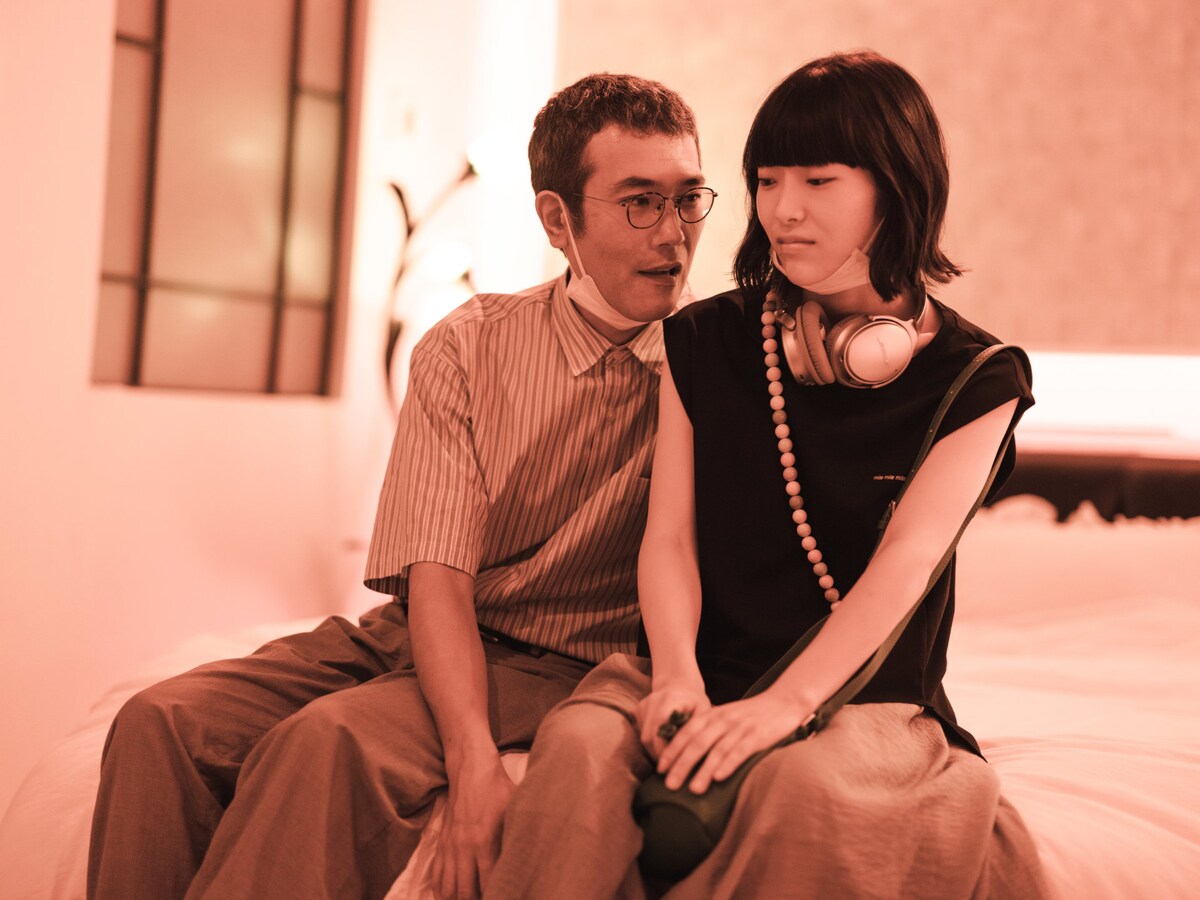
Time loop cinema has made a resurgence in Japan of late, but Shinji Araki’s Penalty Loop (ペナルティループ) is not quite what you’d assume it to be rather a meditation on the grieving process in a constant process of recycling rage and hurt day after day. When his girlfriend is murdered and her body is found dumped in a local lake, Jun becomes obsessed with the idea of revenge and turns up at the killer’s place of work where he poisons his morning coffee and then stabs him to death in his car before poetically dumping his corpse in the same lake where disposed of Yui’s (Rio Yamashita) body.

The weird thing is, that Jun (Ryuya Wakaba) wakes up the next day to discover it’s still 6th June and he has to do the same thing all over again. Rather than switching up his methods, he simply repeats the process but it turns out the Killer (Yusuke Iseya) is also aware they’re trapped in a loop and starts trying to avoid being killed. Before too long, the men have begun to trauma bond over their shared despair of being trapped in this constant cycle of retribution and become almost friends in an absurdist, existential meditation on the fallacies of justice and revenge. The killer and his indirect victim are locked in this cycle together and, the film seems to suggest, can only escape it through a process of healing and forgiveness rather than Jun’s futile attempts at revenge by killing the killer over and over again.

It is though somewhat perplexing that Jun never asks the Killer why he killed Yui and shows no real curiosity in his motives only asking him if he killed a lot of people. Yui also seems to have been mixed up in a concurrent conspiracy which the film does not go into or was in fact locked into her only cycle of despair and futily as the Killer suggests in volunteering that Yui wanted to die anyway, telling him that she had nothing to live for and was filled with emptiness. Of course, perhaps it’s simply the case that a kind of justice has already taken place in the “real” world and that Jun already knows why Yui was killed but simply wants a more personal kind of revenge to satisfy his hurt and anger, or that the Killer would not really be able to tell him much anyway because we can’t be sure he’s “real” or just a character existing for the purpose of Jun’s revenge no different from a dummy punch bag.

A strange, grinning man (Jin Daeyeon) is often seen observing the two men and later becomes irate on hearing Jun state that he no longer plans to kill the Killer but seems to have befriended him instead. His presence hints at a wider authoritarian presence that feeds off Jun’s negative emotions and forces him to continue vengeance long after he has tired of it. At this point, his killings become less violent. Rather than the poison and a knife, the bloody struggle in the car and the clinical process of bagging the body to be dumped in a lake, Jun uses a gun and the Killer patiently allows himself to be killed so that the cycle can continue. Further revelations suggest that the loop is less cosmic than commercial and Jun is constrained by a contract he signed for something that is supposed to be a kind of therapy the ethics of which would be very debatable, as would the offer of a secondary “rehab” programme on his completion of the process though how he, a man with no apparent income who lives in a room that already resembles a prison where he builds model houses that express the life he might have liked to give Yui, would be able to afford all this.

In any case, it’s true enough that Jun is imprisoned by his grief and powerlessness and his desire for vengeance is an attempt to free himself though in the end he can only do it by abandoning his rage and violence and finding empathy for the killer with whom he is trapped in this hellish cycle of grief and retribution. Araki lends his quest a dystopian air, taking place largely in some kind of hydroponic facility which otherwise exists only for the purposes of Jun’s revenge. Strangely quirky in its absurdist humour and bleak in some of its implications the film otherwise suggests that forgiveness is the only path out of grief for the cycle of vengeance will never really end.


Penalty Loop screened as part of this year’s Nippon Connection

Belonging (とりつくしま, Kahori Higashi, 2024)

What if you could come back after you died and watch over those close to you while possessing a familiar if inanimate object? Her second film this year, Kahori Higashi’s Belonging (とりつくしま, Toritsukushima) adapts a novel by her mother in which the recently deceased are asked to choose a “belonging” to sink into given that they seemingly still have lingering attachments to this world. Yet simply watching can itself by painful while it might not do to linger too long in a place where everything is moving on except you.

That’s a possibility that comes to mind the second story featuring a little boy who asks to inhabit the blue climbing frame at the park. He wistfully watches other kids he used to play with pass by and later meets a little sister for the first time, but all these other children will grow up while he will not even if other children will their place. The kindly woman (Kyoko Koizumi) sitting in the school room that doubles as Belonging’s office doesn’t mention what happens if the object is destroyed or moved as something like a climbing frame might be though we later discover that depleted objects can no longer hold their charges which are then dragged back to the afterlife. 

Of course, there’s always the possibility that an object that was precious to you was not so precious to others and may end up being sold or given away as one old woman discovers realising the beloved grandson she hoped to spend eternity with has sold the camera she gave him. The heroine of the first sequence, Koharu, installs herself in a coffee cup featuring a design of a triceratops she and her husband bought on a trip to the museum which he continues to fondle and treasure though Koharu watches him being a tentative relationship with another woman who urges him to buy new mugs as a symbolic moving on from his late wife. 

For Wataru, the coffee cup may already in a sense have been possessed by her spirit though he sees her more in a plant he keeps watering unaware that it’s artificial. Objects can have a kind of presence and carry something of their former owners with them even if not literally possessed but being trapped inside an inanimate object is also frustrating and at times painful. They can no longer act or interact but are mere passive observers at the mercy of their loved ones who may be readier to move than they’d assumed or otherwise dispose of or lose the objects the deceased assumed would be precious to them. 

The heroine of the final sequence might have this right when she chooses to possess an item she knows will only give her a limited time, not even minding when she’s denied the full resolutions of her anxieties in seeing her teenage son win a baseball game while he continues to call her number and recite pleasantries like some kind of mantra. She acknowledges that it might not be good for her or her son to stay too long, she just wants to see he’ll be alright before moving on to the afterlife. The woman from Belonging seems to approve of her choice though her own backstory remains unclear, present both in this world and in the other. 

Making brief detours to introduce us to some strange people in the part such as a female banzai double act and a not-quite-couple, the film is at pains capture both everyday life and the poignancy of loss as the various spirits look for new places to belong while the world around them continues to change and evolve in ways they no longer can. In the park, an old man dances comically much to the dismay of his female companion who is trying to read her book, claiming that he’s going to keep living to the very end which at least expresses a vibrant desire for life in some ways free of the lingering attachments that bind the recently deceased to our world but perhaps also trap them here in solitary museums of past love in which their presence may be felt but also unacknowledged. 


Belonging screened as part of this year’s Nippon Connection

Original trailer (English subtitles)

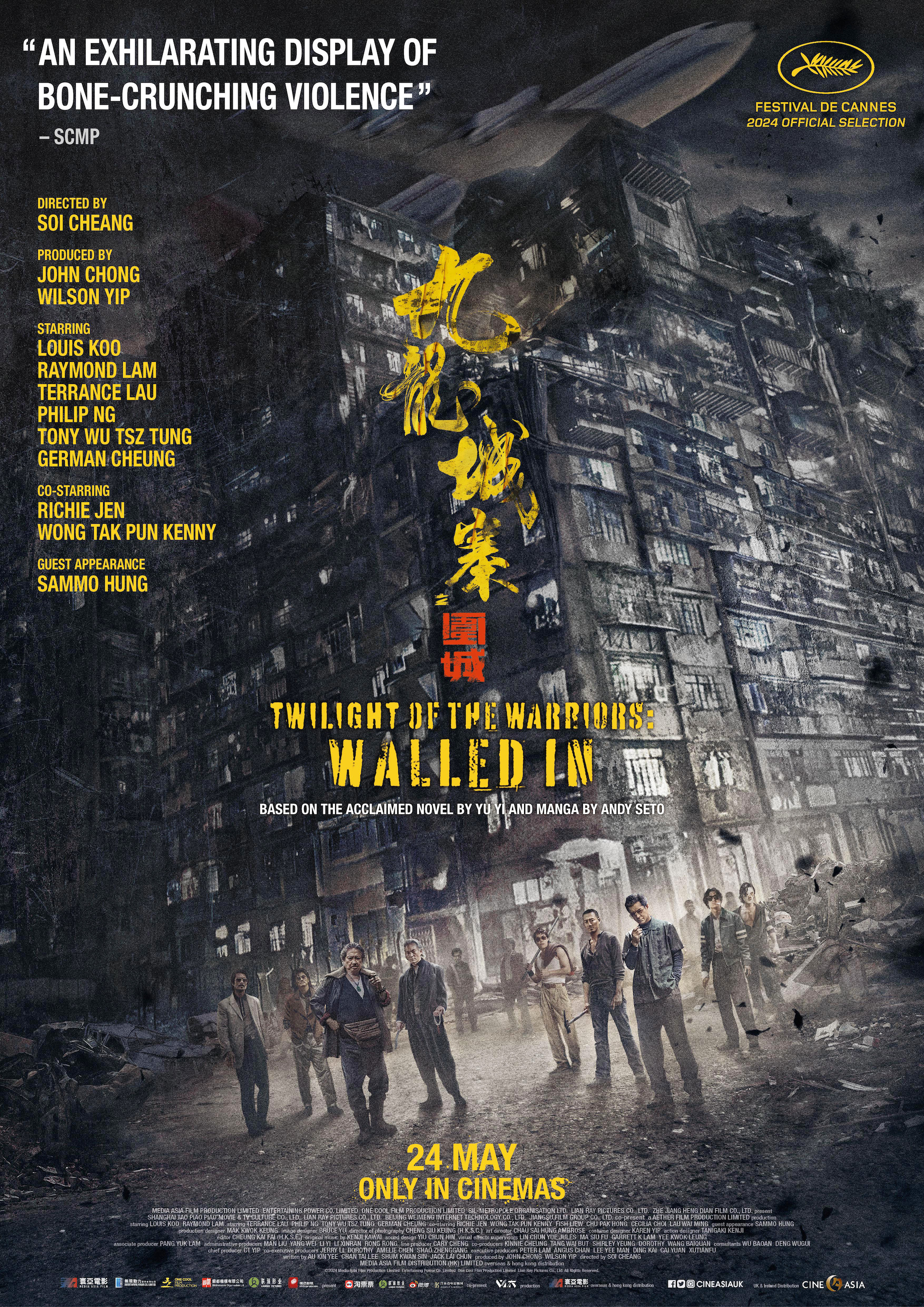
Twilight of the Warriors: Walled In (九龍城寨.圍城, Soi Cheang, 2024)

In Kowloon Walled City, you give help, you get help. Sometimes described as a colony within a colony, by the late 1980s the settlement was largely ungovernable and literal law unto itself save for the triads who maintained what little order there was. Yet in Soi Cheang’s Twilight of the Warriors: Walled In (九龍城寨.圍城) it’s a place of comfort and security, a well functioning community that as its leader Cyclone (Louis Koo Tin-lok) points out may be unpalatable for “normal” people but provides a point of refuge for the exiled and hopeless.

It’s difficult not to read it and Cyclone himself as embodiments of Hong Kong that is slowly disappearing. Dying of lung cancer, Cyclone is aligned with the fate of the walled city as someone whose time is running out, tired and world weary but still hanging on. In the opening sequence set 20 or so years before, we see Cyclone stand up to an apparent dictatorship and institute what seems to be a more egalitarian form of government though one obviously defined by violence. Nevertheless, when refugee Lok (Raymond Lam Wui Man) lands up there originally suspicious of Cyclone having been duped by local gangster Mr Big (Sammo Hung Kam-bo), he discovers him to be a stand up guy looking after those in his community and generally keeping the peace. Nevertheless, Lok’s arrival is the fatalistic catalyst for the opening of old wounds amid the free for all of the mid-80s society in which the Walled City, sure to be bulldozed, has just become a lucrative property investment.

Mr Big and his crazed henchman King represent this new order, amoral capitalistic consumerists who care little for the conventional rules of gangsterdom. Their bid to seize the Walled City has its obvious overtones as they seek to replace the (generally) peaceful egalitarian rule of Cyclone with something that appears much more authoritarian and ruthless. Believing himself to be a stateless orphan, Lok tries to keep his head down saving everything he can to buy a fake Hong Kong ID card which is also in its way a quest for identity not to mention a homeland and a sense of belonging. He finds all of these things, along with a surrogate father figure, in the Walled City only to have the new home he’s discovered for himself ripped out from under him because of a twist of fate. When he teams up with a trio of other young men who all owe their lives to Cyclone and the Walled City to attempt to take it back, it’s also an attempt to reclaim an older, more autonomous Hong Kong that exists outside of any kind of colonial control as evidenced by his final statement that no matter what happens some things don’t change.

This sensibility extends to the casting of the film which includes a series of Hong Kong legends including a notable appearance from the legendary Sammo Hung not to mention Louis Koo alongside a generation of younger stars such as Tony Wu and Terrance Lau Chun-him. Adapted from the manhua City of Darkness by Andy Seto, the film opens with a flashback to the original war for control of the Walled City that hints at deeper, extended backstories otherwise unexplored though equally mythologised by those who impart them to them Lok, a prodigal son and eventual inheritor of the City’s legacy. Even so, the comic book elements sometime distract from Soi Cheang’s otherwise evocative if hyperreal recreation of the Walled City slum or the political subtext that can be inferred in the presence of supernatural abilities such as those which seem to grant King near invincibility.

In any case, Soi Cheang looks back equally towards the history of heroic bloodshed in particular in his tale of brotherhood and loyalty in which the secondary antagonist is literally imprisoned by his own futile desire for a pointless vengeance on the descendent of a man who had wronged him but was already long dead himself. As he’d said, the future of the Walled City is in the hands of the younger generation who choose to end the cycle by setting him free rather than imprison themselves along with him while defending their home as well as they can. With some incredibly well designed action sequences including one that make its way onto a double-decker bus, Soi Cheang’s beautifully staged action thriller as its name suggests has a rather elegiac quality but also the spirit of resistance in its gentle advocation for the importance of supportive communities.


Twilight of the Warriors: Walled In is in UK cinemas from 24th May courtesy of CineAsia.

UK trailer (Traditional Chinese & English subtitles)

During the Rains (つゆのあとさき, Shinpei Yamazaki, 2024)

At several points during Shinpei Yamasaki’s indie drama During the Rains (つゆのあとさき, Tsuyu no Atosaki) we encounter someone whose life has been disrupted by the economic effects of the coronavirus pandemic. The danger is, of course, that the pandemic itself becomes the problem which is also a way of glossing over all the problems that existed before and will likely survive whatever kind of sickness they encounter. Chief among those problems and impacting the lives of the women at the film’s centre is problematic men and the generalised disregard for women.

It seems that Kotone was working in hostess bar that closed because of the pandemic while her no good boyfriend ran off with a necklace a customer had given her. Left with nowhere to go she’s noticed on the street by Kaede, a young woman who promises her a room in a love hotel but does so in order to recruit her for a threesome. Sometime later Kotone is working in a “cafe” where young women sit behind a glass window in numbered booths for male customers pick out and select though she also has a “daddy”, Kiyooka, who pays the lease on her flat and would be annoyed to discover she was still frequenting the cafe.

It’s the at the cafe that she meets Sakura, a naive young college student who was pushed into sex work when the place she was working before closed down because of the pandemic. Kotone at one point snaps back at her that she wouldn’t even be at the cafe if it weren’t for the pandemic as if suggesting she were in some way better than the other girls after she reacted with horror to Konone’s plan to find a “hardcore daddy” who’ll pay more for the right to break a few bones and cause other kinds of harm.

This might be ironic in a sense as Sakura is a Christian who carries around bible verses to calm herself down including the ones about turning the other cheek and blessing those who persecute you which don’t seem to be particularly good advice for the situations she finds herself in especially as the lesson she’s learned from them is that you should accept whatever abuse comes your way without complaining. Ironically that might be what Kotone has been doing in her almost total indifference to her circumstances. The Roomba in her apartment gets stuck in her hallway and shuffles in confusion between the walls after constantly butting its head unable to find a way out. Yet according to Kiyooka what separates Kotone and Sakura is that Sakura seems desperate in a way Kotone does not which is a quality he appreciates presumably because it gives him more control over her, something he knows he doesn’t have over Kotone who point black tells him she has no strong feelings about whether he dumps her or not after he discovers she’s still seeing other men and engaging in casual sex work.

The lollipops she’s always sucking on give Kotone a slightly childish edge as perhaps does her moodiness but she’s also cynical beyond her years and seemingly living the way she does almost as an act of self harm. She’s being relentlessly trolled by someone who accuses her of having a sexually transmitted disease while even the other girls at the cafe resent her, ironically calling her a slut and other misogyinistic insults. Later she’s even knocked down some stairs by a previous client who is resentful that she doesn’t really remember him while another of her regulars, Yata, paws at her insultingly as if feeling himself entitled to her body. Another customer whose wife and daughter left him after his business failed asks her why she does this, adding that he’s worried about his daughter which seems to be an incredibly ironic comment given the situation.

Even the girls at the cafe complain that they’re getting les work because of the influx of women showing up there after being pushed towards sex work out of desperation, but it’s almost as if the film would like to believe the pandemic was the problem rather than attitudes society has towards these women and indeed all women. Nevertheless, through her growing friendship with Sakura and an unexpected tragedy Kotone comes to realise that she can perhaps change her circumstances and does not necessarily have to continue turning the other cheek to a society that had largely turned its back on her.


I Love You, to the Moon, and Back (穿过月亮的旅行, Li Weiran, 2024)

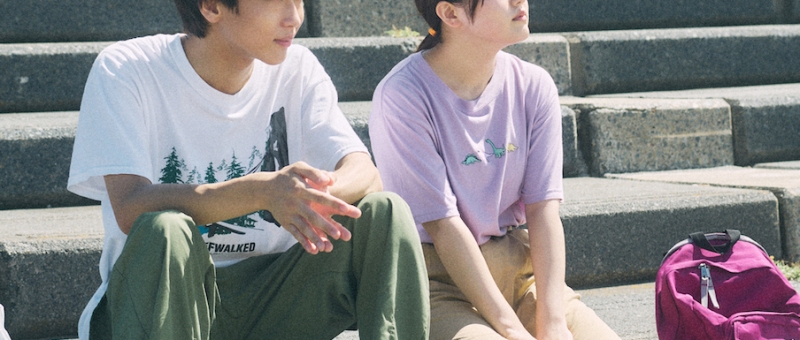
The economic realities of a changing mid-90s China conspire against a young couple who find themselves stranded in different cities and only able to meet up once a month for a night of passion in a hotel in Li Weiran’s wholesome romantic dramedy, I Love You, to the Moon, and Back (穿过月亮的旅行, chuānguò yuèliang de lǚxíng). Based on a novel by Chi Zijian and themed around the Mid-Autumn Festival, the film has a quirky, nostalgic quality but also a degree of poignancy amid the absurd journeys the lovers make in pursuit of their love.

Gradual flashbacks reveal that Wang Rui (Hu Xianshu) and Lin Xiushan (Zhang Zifeng) married in their home village but like many youngsters of the day left soon after for the city in search of work. Forced to leave school by his farmer father who saw no point in education, Wang Rui quickly finds works in construction but Xiushan, who was also forced to leave school early, is unable to find anything in Shenzhen and eventually takes a job in a dumpling factory in Guangzhou where she lives in workers dorms. Their plight reflects the economic reforms which were taking place throughout the 1990s giving rise to a new, much more capitalistic society as embodied by the employers who give Wang Rui an extra day off for lying on TV that they’re not exploiting him, and an obnoxious businessman Xiushan has the misfortune to sit opposite on the train who talks loudly on his mobile phone about an important deal and even drips cigarette ash all over the old lady next to him justifying himself that he doesn’t want to damage his expensive suit. 

By contrast, Xiushan and Wang Rui are incredibly frugal shopping mainly at markets with Wang Rui padding a fancy pair of shoes that are too big for him but available at a large discount. They save all their money for their monthly meetups which, as they’re both living in communal dorms, take place in cheap motels. Xiushan tries to ameliorate their grimness by covering the stained mattresses with her own sheets featuring a pattern of large sunflowers and blue skies that help her feel as if they’re back in the village lying down together in a pretty garden. To this extent it’s clear that living in the city in addition to so far apart has corrupted the innocence of their romantic connection. Xiushan was warned by her brother that if she wanted to hear Wang Rui’s harmonica playing she should put off going out with him because the romance will die once he’s won her, and it’s true enough that Wang Rui never plays the harmonica for her anymore in part because they’re now quite expensive and he’d rather save up his money for another cross-country visit. 

Xiushan’s decision to buy one for him with some money from an unexpected windfall is then an attempt to rescue their romantic connection which is now under threat because of their geographical displacement and economic oppression. On the train, however, she runs into another man who plays harmonica and has apparently been arrested for an undisclosed crime. Out of compassion she asks the policeman escorting him to allow the condemned man to play a song which he does and reduces the entire carriage to tears hinting at other sad stories of separated lovers in modern China. Wang Rui encounters something similar in a one armed man caring for a wife from whom he was separated who has since become ill and is apparently in love with someone else. His cynicism causes Wang Rui to doubt Xiushan, so paranoid that another man may take a liking to her that he puts back the pretty dress he’d intended to buy as a present and gets the much more temporary gift of a bunch of roses instead.

These respective choices of items might signal where they are in their relationship, but there’s still a pureness to their love that can’t be destroyed completely. Both unexpectedly given an extra day off for the Mid-Autumn Festival they decide to make surprise visits to other’s cities only to perpetually miss each other, stuck travelling back and forth by train and only able to make contact via “their” set of payphones for as long as their phonecards would allow before fate finally, if briefly, smiles on them under the light of the autumn moon. Charmingly quirky and hopelessly innocent, the film nevertheless captures something of the chaotic undulations of the mid-90s society in which youth is on the move but love it seems is standing still.


Original trailer (Simplified Chinese & English subtitles)

The Roundup: Punishment (범죄도시 4, Heo Myeong-haeng, 2024)

There’s a moment in the fourth instalment of the Roundup series when monster cop Seok-do’s boss asks him what good his fists are in the age of cyber crime. More so than in previous episodes, Punishment (범죄도시 4, Beomjoedosi 4) seems to lean hard into the idea that Seok-do iMa Dong-seok) is a dinosaur stuck in the 1970s and unable to understand the modern world. He’s a bruiser cop in an era of supposedly compassionate policing, a thug sent to catch a thug. Yet he’s also presented, as is actually said by his superior officer, as everything a good cop should be in his determination to nail the bad guys to keep a promise to a murder victim’s devastated mother.

But as in the previous films, the victim largely gets forgotten until the very end when Seok-do and his colleagues pay a visit to his grave. Set in 2018, the film is apparently inspired by a real life case and in an echo of the kinds of explanatory title cards seen at the end of Chinese films, ends with a reminder that the government began cracking down on cybercrime in that year. Reminiscent of anti-gambling drama No More Bets, the victim here is also a computer programmer effectively enslaved after being lured to the Philippines on a promising job offer only to be forced to work on casino websites by organised crime. Seok-do is mostly concerned with catching the bad guys rather than exposing this nefarious practice or its effects on those who fall victim to its addictive gambling scam. 

In any case, a running joke sees Seok-do once again cast as a dinosaur apparently unable to grasp simple concepts of modern technology. “Right, we’ll go get it before it closes, then,” he replies when informed the villains used “open source software”. He thinks syncing to the cloud means a crowd of people will come help you set up your phone and he never replaces his because it’s a bother to put in all those numbers into your contacts again. The team end up having to recruit a new team member from cybercrime, the only woman in the room which comes in handy when they need her to pose as the girlfriend of familiar comic foil Jang Yi-soo (Park Ji-hwan) who is tricked into thinking he’s been deputised with a shiny badge that looks like it fell out of a serial packet and has the telltale letters FDA at the top which Seok-do convinces him stands for Police Dark Army.

Despite all the thuggery, there’s something essentially childlike about Seok-do’s roguishness that sees him delight in playing a trick on Jang Yi-soo. After wrecking the first class cabin of a soon to depart plane, he walks off sheepishly like naughty little boy ignoring his boss’ frantic calls to come back and explain himself. In this instalment, we get less of the overt references to police brutality with one brief scene of Seok-do putting a motorbike helmet on a suspect and beating him over the head while his colleague keeps watch outside as we peek in through the widow. To remind us he’s still the good neighbourhood cop, we see several scenes of him visiting a restaurant run by the widow of a colleague killed in the line of duty and secretly slip his teenage daughter wads of cash to buy something nice for herself. 

What it all amounts to is a slightly awkward advocation for the police who are directly stated to be always there to protect the citizens and catch criminals who harm them even if they do It abroad. To this extent, Seok-do is a good cop literally smacking some sense into bad guys because it turns out his giant fists can fight “digital” crime after all and there’s no denying that it does feel good to see Ma Dong-seok smack bad guys. The action scenes this time around are visceral and surprisingly bloody not to mention loud with the sound of Ma’s thunderous fists flailing around. The film’s distinctly retro sensibility is echoed in the ‘70s score which seems to hark back to an era of maverick cop movies about men like Seok-do who keep order on the streets while Seok-do himself seems increasingly like a man out of time, a throwback to a bygone era perhaps uncomfortably romanticised in the quasi-authoritarian sensibility which seems to underpin it.


Festival trailer (English subtitles)

Memories of His Scent (においが眠るまで, Kahori Higashi, 2024)

The link between scent and memory is incredibly strong to the extent that they are often inextricable from one another. For Hinoki, what she fears is that her father’s scent will fade from the world around her and she’ll no longer be able to feel his presence either externally or within herself. She tries to recapture and recreate it artificially only to realise that there was a crucial component that she never thought to include but was always central to her memories of her late father.

We can see the way she immortalises him in her dream sequence in which she walks through a gallery looking at a series of small exhibits marking out her father’s life until his hospitalisation at age 45 and subsequent death from illness. The last box appears empty but turns out to contain a simulacrum of his scent in the same way some museums offer the opportunity to experience what it may have felt like to live in a place through breathing in its ambient smells. It’s this sense of intimacy that Hinoki longs to recapture as she attempts to deal with her grief and the series of upheavals to her life in the wake of her father’s death including closing his coffee shop and bean roastery. She’s horrified that her mother’s put his favourite apron in the to go pile as if she were throwing away an essential part of him she can’t recover. It’s this along with a diary dropped off by the owner of a mini theatre he used to deliver coffee to that sends Hinoki on a summer holiday road trip adventure looking for traces of her father in the places he visited and trying to identify that behind a poetic entry at the end of the diary. 

The film then doubles as another in a series of films elegising the dying culture of boutique cinemas in small towns often catering to small but dedicated audiences who have formed a kind of community around their love of film. These smaller screens generally show older and indie films and are key to the success of independent filmmakers whose work often wouldn’t be shown in larger multiplexes, yet audiences have often not returned after the enforced break of the pandemic era while they also face competition from streaming and other forms of entertainment. The first cinema Hinoki visits is closing down in 42 days though she marvels at the scent and atmosphere of this retro space which has its own elegiac quality. Whilst there she also coincidentally runs to a scent scientist who gives her some pointers about how to preserve and recreate her father’s scent before it fades. By the time she reaches the end of her journey the final cinema has already closed down and rather depressingly been replaced by an entirely empty open air car park. 

Even so what she begins to realise is that nothing really disappears and experiences can be recreated to an extent as she discovers when they put a movie on in the car park leading to a very personal epiphany. The people she meets along her way teach her various things such as the importance of clearly stating how you feel while there’s still time even if her best friend’s attempt to do just that doesn’t quite go to plan. A single father raising a small daughter brings back painful memories for her of her own childhood and her father’s now continuing absence while also reminding her that those experiences live on in her memory along with the various things her father taught her throughout her life. 

Though suffused with melancholy, the film is ultimately uplifting in its determination that life goes on and nothing really disappears. Originally diffident and describing herself as someone who doesn’t particularly like interacting with others, through her partly solo road trip Hinoki learns to open herself up to the world around her along with its myriad fragrances and what they say about the people who inhabit a place. She thinks she’s looking for her father, but she’s really looking for herself and the path towards the rest of her life lived in his absence while discovering the richness of life as its lived in addition to that which has passed.


Memories of His Scent screened as part of this year’s Osaka Asian Film Festival.

Unborn Soul (渡, Zhou Zhou, 2024)

When a woman receives the news that her unborn child has a 70% chance of being born with a disability she finds herself confronted by a series of uncomfortable social attitudes and prejudices while trying to decide what is best both for herself and her child in Zhou Zhou’s empathetic drama, Unborn Soul (渡, dù). Touching on issues such as the demands of caring for someone with a profound disability and patriarchal notions of needing to continue the family line, the film sees its heroine more or less isolated in her refusal to be pressured into an abortion she isn’t convinced is the right decision. 

Though now relaxed, the legacy of the One Child Policy may in part be influencing the way people think about raising children and the ageing society with Qing’s father-in-law insisting on a “perfect child” to inherit their family name. Qing has been the sole carer for her 60-year-old uncle who has cerebral palsy and an intellectual disability since her grandmother died and it seems to be in the back of her mind to wonder who might be around to care for her child when she is no longer able to if they were indeed to be born with a disability that prevented them from living an independent life. Because of her closeness with her uncle, she has also has a more empathetic view of living with a disability than those around her and believes it is wrong to think that the baby is better off not being born having heard from him that he is glad to be alive.

Her husband however leans towards an abortion admitting that he is not really prepared to care for a disabled child for the rest of his life while his father outright objects to the idea of having someone with a disability in their family. Laying bare the patriarchal attitudes that surround her, Qing is essentially silenced by her husband and father-in-law who at one point says he’s sick of women like her who “can’t communicate” and won’t do what they’re told. Her husband is also in a sense trapped by this patriarchal system in that his father heavily pressures him to force his wife to have an abortion until she finally files for divorce. He has a clause put into the agreement that if Qing insists on going ahead with the pregnancy the child will have no connection to his family regardless of whether or not it is born with a disability. 

While all of this is going on, the baby seems to narrate its thoughts on the present drama while lamenting the suffering he feels himself to be causing to his mother. The question arises of whether or not the baby would wish to be born which is not a question anyone could answer and in any case perhaps he would end up feeling it would have been better to not to have been even if he were born able-bodied and with no intellectual disabilities. In an attempt to reassure herself, Qing visits a home for disabled adults and encounters a man with cerebral palsy who has got a job as a masseur and is living a fulfilling and independent life but is also confronted by the fact that many of these people have been abandoned by families who feared the stigma of disability. 

The implications of the film’s ending maybe slightly uncomfortable even if they reflect Qing’s nature as a true mother who thought only of her child even while the film is otherwise critical of an overly efficient medical system which tries to usher Qing towards an abortion without really considering that her choice to give birth to the child might be valid which also displays a lack of respect for the lives of disabled people. Shot in a classic 4:3 the film flits between theatricality and detachment while shifting into a strangely dreamlike aesthetic with its commentary from the unborn baby who certainly seems quite a sophisticated thinker for one so young. In any case, the decision is in a sense taken out of Qing’s hands leaving her with little choice other than to accept the hand that fate has dealt her while otherwise isolated from a cold and rational society.


Unborn Soul screened as part of this year’s Osaka Asian Film Festival.

Original trailer (English subtitles)

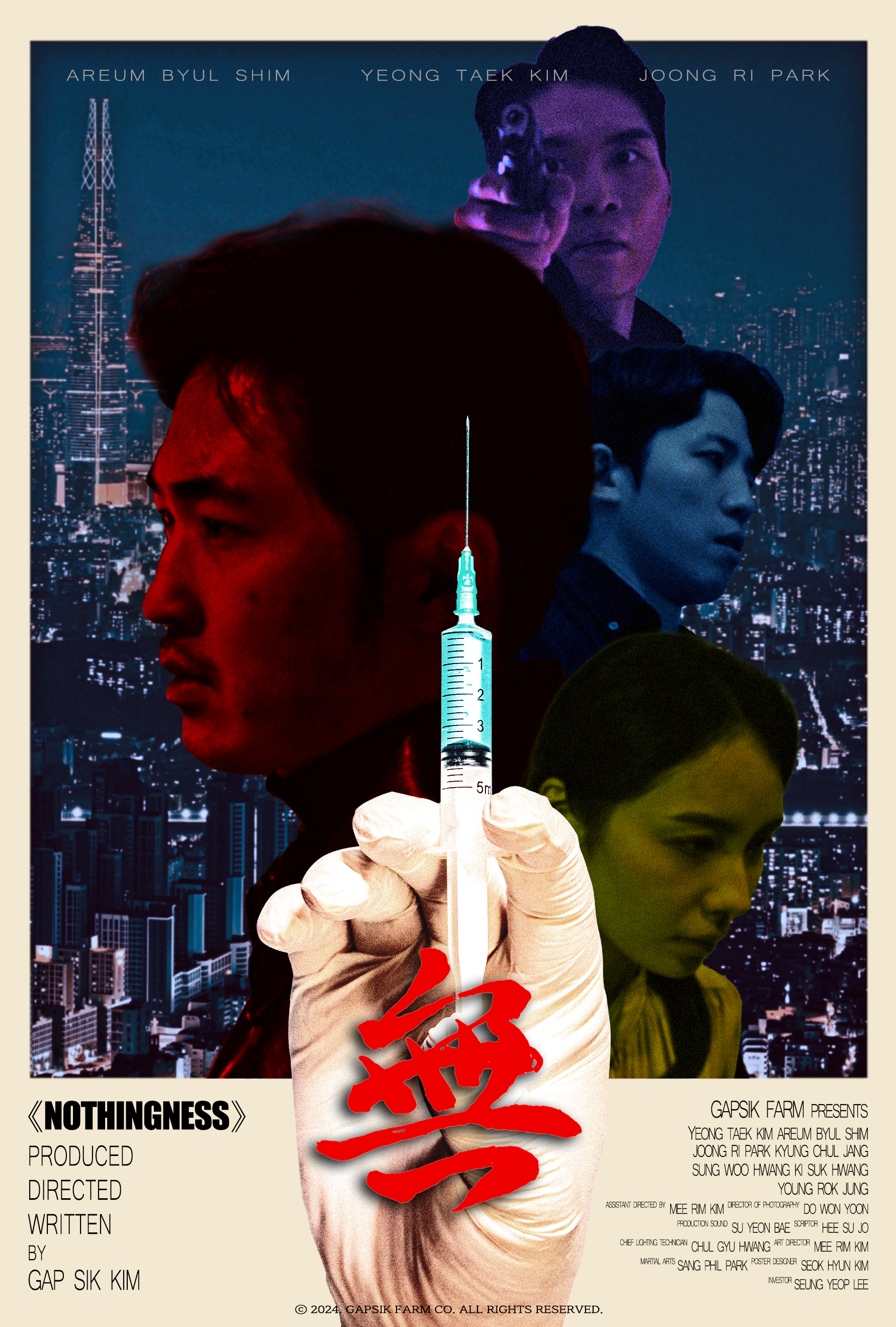
Nothingness (無, Kim Gap Sik, 2024)

What are we without our violent impulses? In Kim Gap Sik’s sci-fi-inflected noir Nothingness (無, 무, Mu), a shady corporation has produced a new drug that inhibits the tendency for violence with those unwilling to take it exiled to the “City of Dreams”. But what does it mean to live with inhibition, and can we really call ourselves free if we are prevented from acting on our baser instincts?

At least, it seems to be slowly eating away at former policeman Young-il (Kim Yeong-taek) who has been placed on suspension and forced to take drug R-3 after dispatching violent serial killer and former childhood friend Jong-ha (Hwang Sung-woo). Young-il is now in a relationship with Jong-ha’s former girlfriend Yeon-jeong (Shim Areum-byul) but lives a depressed and aimless life devoid of purpose or meaning. Dangling the prospect of reinstatement, his former partner informs him that Jong-ha’s DNA has been found at a crime scene hinting that he is alive and has escaped from the City of Dreams to return to Seoul to enact his revenge.

Through his investigations,Young-il comes to discover that Jong-ha is part of a group that apparently intends to cast the world into “nothingness”. Jong-ha claims that he is now someone who has no name, hometown, or nationality and has transgressed the borders of what is considered to be a meaningful life. Young-il meanwhile struggles with himself, gravitating towards suicide while his doctor ignores his complaints. Resentful that he has been unfairly cast out of the police force he obsesses over the idea of reinstatement in part as a bridge to a happier life with Yeon-jeong but also finds himself conflicted.

After all, he’s told Jong-ha wants to “turn the world into nothingness”, but arguably so do those who invented R-3, reducing him to a zombie-like state of numbness and despair out of fear that he may at some point commit an act of violence. The creator of R-3, for whom Yeon-jeong works, explains that the people have traded freedom for security though she is becoming convinced that what he cares about is lining his own pockets indifferent to the side effects of his wonder drug including the suicidal ideation that plagues Young-il. Young-il suggests taking a trip back to their hometown, but Yeon-jeong is against it, certain that everything there has changed. A fugitive from City of Dreams he encounters tells him those like him who refuse to take the drug have lost their hometowns or perhaps never really had one in this harsh and judgemental world from which they have already been exiled for insisting on their freedom over the enforced authoritarianism that revokes their power to resist. 

The man also warns him that his former partner and other officers routinely collect protection money in the area and if he’s reinstated as a policeman he probably he will too robbing him of a position of righteousness in his quest to neutralise serial killer Jong-ha who is now targeting employees of the company that manufactures R-3. Accusing her boss of wanting to turn the world into obedient dogs, Yeon-jeong begins to reconsider her commitment to her work pleased by the “violent” sight of a child stomping in the park and no longer able to go along with the kind of side effects that plague Young-il or the wilful suppression of human nature.

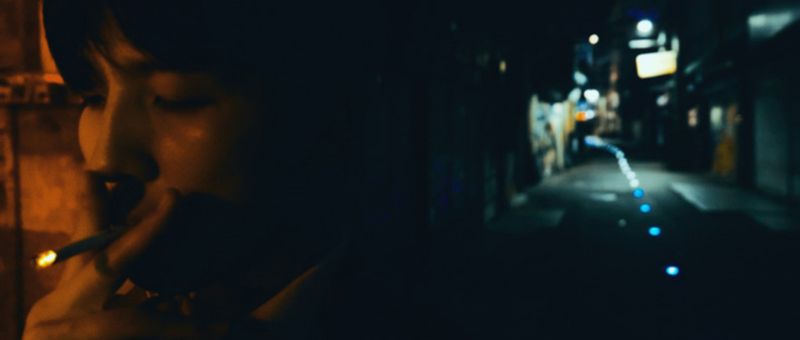
As the threat of a nuclear strike hovers in the background, Kim conjures a sense of existential dread caught between those attaining a zen-like sate of emptiness and those like Young-il unable to escape their own despair. Seemingly inspired by Blade Runner and classic noir cinema, Kim uses voiceover and a jazz synth score to bring out the neo noir themes while often filming in an intense darkness that echoes the murkiness of the world inhabited by Young-il, a lost soul searching for himself in a world of decreasing autonomy. Meanwhile, his mirror image Jong-ha takes on an almost mythical quality as an embodiment of nothingness and destructive nihilism that in itself becomes means of resisting a corrupt society. Making the most of its modest budget, Kim’s elegantly lensed noir presents a bleak vision of a near future world coloured only by despair and emptiness in which there is no freedom or safety and as Young-il is reminded cares little for men like him.


Original trailer (no subtitles)

DitO (Takashi Yuki, 2024)

A defeated boxer and absent father rediscovers the will to fight after an unexpected reunion with the daughter he abandoned to chase his dreams in Takashi Yuki’s Philippines-set sporting drama DitO. The title translates simply as “here” which is what Eiji (Takashi Yuki) and those around him eventually accept themselves as being, striving to create a place for themselves to belong rather than fruitlessly searching for one and finding themselves denied.

A contrast is eventually drawn between Eiji, an ageing boxer who remained in the Philippines when his wife (Machiko Ono) and child returned to Japan, and Joshua, a 17-year-old aspiring boxer and surrogate son figure whose boxing dreams are suddenly dashed by unexpected defeat and the death of his father from a long illness. Faced with these two blows, Joshua declares that he’s going to choose his family in giving up boxing to look after his younger siblings in direct contrast to the choice Eiji made to let his family leave him so that he could continue chasing a boxing glory he never achieved. 

When his now 17-year-old daughter Momoko (Momoko Tanabe) shows up out of the blue and tells him her mother has passed away, he’s a defeated figure still nagging his kindly boss Tamagon to set him up with a fight though having apparently fallen out with his coach some years previously. Her father’s living conditions evidently come as a shock to Momoko as she winds her way through the narrow alleyways of a local slum towards a small courtyard where Eiji lives in a home stewn with cardboard boxes that has no functional gas supply or other cooking facilities. In her youth, she’d seen him as a hero who keeps fighting no matter what, but here he’s clearly given up and is far from the saviour she hoped he’d be after travelling all the way from Japan where she believes she has nothing and no one to go back to. 

Meanwhile, as he reminds her the Philippines is not Japan and she finds it difficult to adjust to an environment that much less safe at least for women as her father cautions her not to go walking around alone and especially at night. Tamagon and coach Sese also paradoxically remind them that they shouldn’t trust Japanese people after the pair are scammed by an offer of an apartment which in truth seemed far too good to be true by a pair of Japanese expats apparently expressly targeting their fellow countrymen. Yet as she said, everything she has left in the world is “here” and so Momoko too decides to forge her own future in the Philippines rather than go looking for one if while also recapturing the past of her happy childhood memories from when they all lived together as a family. 

As Sese says, Eiji’s internal battle has narrowed his vision of the world and cost him the will to fight must as Joshua says that in understanding his fear he has lost the desire to fight it in the anxiety that he may lose. What they learn is that they must stand and fight for what they want, never giving in win or lose, though they will always have the familial solidarity of the boxing gym whatever else may happen to them. Essentially a family drama, the film is in part a tale of father and daughter learning to reconnect but also of the importance of making an active choice to “here” rather than passively existing in a place not of your own choosing. 

Momoko’s decision to clean her father’s long neglected house is not only a symbol of her desire to lighten his life and jolt him out of his inertia, but of a determination to make a home for herself and maybe even get the gas turned back on so she can use the kitchen. Nevertheless, it’s also clear that “here” is wherever you are and the thing is to embrace the now or change it and fight for your place to belong rather than let it beat the spirit out of you. In the end being a hero really just means staying in the fight with no fear of losing because you know you won’t stop fighting.