DitO (Takashi Yuki, 2024)

A defeated boxer and absent father rediscovers the will to fight after an unexpected reunion with the daughter he abandoned to chase his dreams in Takashi Yuki’s Philippines-set sporting drama DitO. The title translates simply as “here” which is what Eiji (Takashi Yuki) and those around him eventually accept themselves as being, striving to create a place for themselves to belong rather than fruitlessly searching for one and finding themselves denied.

A contrast is eventually drawn between Eiji, an ageing boxer who remained in the Philippines when his wife (Machiko Ono) and child returned to Japan, and Joshua, a 17-year-old aspiring boxer and surrogate son figure whose boxing dreams are suddenly dashed by unexpected defeat and the death of his father from a long illness. Faced with these two blows, Joshua declares that he’s going to choose his family in giving up boxing to look after his younger siblings in direct contrast to the choice Eiji made to let his family leave him so that he could continue chasing a boxing glory he never achieved. 

When his now 17-year-old daughter Momoko (Momoko Tanabe) shows up out of the blue and tells him her mother has passed away, he’s a defeated figure still nagging his kindly boss Tamagon to set him up with a fight though having apparently fallen out with his coach some years previously. Her father’s living conditions evidently come as a shock to Momoko as she winds her way through the narrow alleyways of a local slum towards a small courtyard where Eiji lives in a home stewn with cardboard boxes that has no functional gas supply or other cooking facilities. In her youth, she’d seen him as a hero who keeps fighting no matter what, but here he’s clearly given up and is far from the saviour she hoped he’d be after travelling all the way from Japan where she believes she has nothing and no one to go back to. 

Meanwhile, as he reminds her the Philippines is not Japan and she finds it difficult to adjust to an environment that much less safe at least for women as her father cautions her not to go walking around alone and especially at night. Tamagon and coach Sese also paradoxically remind them that they shouldn’t trust Japanese people after the pair are scammed by an offer of an apartment which in truth seemed far too good to be true by a pair of Japanese expats apparently expressly targeting their fellow countrymen. Yet as she said, everything she has left in the world is “here” and so Momoko too decides to forge her own future in the Philippines rather than go looking for one if while also recapturing the past of her happy childhood memories from when they all lived together as a family. 

As Sese says, Eiji’s internal battle has narrowed his vision of the world and cost him the will to fight must as Joshua says that in understanding his fear he has lost the desire to fight it in the anxiety that he may lose. What they learn is that they must stand and fight for what they want, never giving in win or lose, though they will always have the familial solidarity of the boxing gym whatever else may happen to them. Essentially a family drama, the film is in part a tale of father and daughter learning to reconnect but also of the importance of making an active choice to “here” rather than passively existing in a place not of your own choosing. 

Momoko’s decision to clean her father’s long neglected house is not only a symbol of her desire to lighten his life and jolt him out of his inertia, but of a determination to make a home for herself and maybe even get the gas turned back on so she can use the kitchen. Nevertheless, it’s also clear that “here” is wherever you are and the thing is to embrace the now or change it and fight for your place to belong rather than let it beat the spirit out of you. In the end being a hero really just means staying in the fight with no fear of losing because you know you won’t stop fighting.


Yolo (热辣滚烫, Jia Ling, 2024)

In the training footage which plays over the closing credits of Jia Ling’s YOLO (热辣滚烫, Rè là gǔntàng), someone asks her why she’s learning to draw and she replies that she’s trying to become a better version of herself. The same is very much true of the movie’s heroine who trying to rediscover her will to keep fighting in a world that seems to have beaten her down and destroyed her spirit. Inspired by Masaharu Take’s 2014 boxing drama 100 Yen Love, Jia’s film is kinder and less cynical in tone while also taking on a meta quality in documenting the actress’ own transformation.

Then again, the film opens with a sequence laying bare the petty prejudices that surround Leying (Jia Ling) as a woman in her 30s unemployed and still living with her parents. It’s never revealed what exactly caused her to leave the job she got after college though she explains that she was unable to get another because she finds it difficult to talk to people. What seems apparent is that she is likely living with a heavy depression that is all too often dismissed as mere laziness by those around her and most particularly her mean and judgmental older sister (Zhang Xiaofei). The crunch time comes when her cousin Doudou (Yang Zi) who works for a TV company producing a reality programme about finding jobs for people who for various reasons struggle to get one, tries to bamboozle her into appearing on the show by turning up with a camera for an impromptu family intervention before even asking her if she wanted to take part.

In the attitudes of her family and most particularly the TV show which is ironically called “Find Yourself”, there is a degree of fat shaming in which Leying is treated in certain ways just because of her weight which is assumed be the outward manifestation of her problems. Doudou’s previous guest on the show had been a man who was obese and had mobility issues so they got him a job posing as Buddha for photos. It’s tempting to read Leying’s transformation as complicity with culturally defined notions of feminine beauty and ideal body shape, but the point really is that Leying is unhappy and as a people pleaser with low self-esteem unable to care for herself until she discovers boxing and literally learns to fight back. It is therefore also a little bit awkward that her first steps towards self-care are taken in order to look after a man, insecure boxer Hao Kun (Lei Jiayin), as she tries to help him achieve his dream while allowing him to mooch off her even though he treats her poorly.

Nevertheless, it’s seeing him give up without at fight that eventually spurs her on to start fighting back by taking up boxing herself and surprising those around her with her seriousness and determination. Asked why she’s doing it, she says that she just wants to win for once and eventually comes around to the idea of winning in her own way which doesn’t necessarily mean being named as the champion or beating someone else but holding her own and staying in the fight. What she regains is self-confidence and self-respect, no longer a willing doormat accepting whatever humiliation comes her way to avoid upsetting someone else but standing up for herself and gaining the courage to say no to things she doesn’t want to do. 

There is something quite moving in witnessing the actual transformation of actress Jia Ling throughout the credits sequence and most particularly when she comes to film the scene in which she walks parallel with her old self and has to turn back because it’s too much for her on a personal level. Jia shows us just how unhappy and hopeless Leying had become because of the way the world treated her, but also how singleminded pursuit of her goal gave her a new sense of purpose and a means of fighting back that showed her she could win in her own way when it came to life as well as in the ring. Swapping the grimness of Take’s original for something more broadly inspirational, Jia nevertheless hints at the prejudices of the contemporary society and its money-loving superficiality while simultaneously allowing her heroine to find and occupy her own space born of her own individual happiness rather than the acquisition of things other people think she should want but actually does not.


Original trailer (English subtitles)

Exhuma (파묘, Jang Jae-hyun, 2024)

The vengeful ghost of Japanese imperialism rises to take its revenge on its forgetful children in Jang Jae-hyun’s eerie supernatural horror, Exhuma (파묘, Pamyo). As in The Wailing, the supernatural threat is in this case not of Korean origin which causes a problem for otherwise powerful shaman Hwa-rim (Kim Go-eun). As a Korean exorcist, she is apparently not best placed to defeat an alien spirit while insisting that Japanese ghosts are more dangerous because they kill indiscriminately and cannot be reasoned with.

This is often true of ghosts in Japanese folklore. Their grudges become all-consuming. Revenge is often taken against society or humanity in general rather than a specific target and can even affect those the ghost once would not have wished to harm. In this case, it appears the supernatural entity in question has retained some of his selfhood while screaming for a hundred years having been sealed away in what one person describes as the worst burial plot in Korea. The ghost’s newborn great grandson won’t stop crying, apparently a family affliction, and so they want to do something about this apparent curse. But that requires digging into the past and unearthing its unpleasantness such as the fact the family’s immense wealth is thanks to the great-grandfather’s questionable politics as a full on militarist committed to the furthering of the Japanese empire. 

Meanwhile, the other ghost that haunts them is that of a giant samurai who was killed at the battle of Sekigahara, which of course means he could also have participated in Hideyoshi’s invasion of Korea only eight years previously. The film hints at backstories, never explaining why it is that Hwa-rim speaks fluent Japanese or what it was that happened in Japan except that she apparently found out that Korean shamanism doesn’t work that well on the average Japanese ghost. It all goes back to some kind of mad monk and fox diviner who did some black magic on the peninsula as a whole though it’s not clear exactly what it’s been doing for the last 70 years or so. 

These different kinds of spiritual practice and folklore beliefs jangle together seemingly without border or conflict. The funeral director (Yoo Hae-jin) who works with Hwa-rim and her geomancer friend (Choi Min-sik) is a Christian but apparently has no objection to witnessing shamanic rights nor disbelief in their power as if his twin belief systems simply sat next to each other. Even so, there does seem to be something entirely distinct about Hwa-rim’s practice that is different from Japanese Shintoism despite it its superficial similarities to the extent that her abilities have no effect on a Japanese spirit. 

Then again, this evil is older and deeper than the original ghost apparently wailing for a hundred years about his imprisonment and keen to take down all his descendants in self-destructive revenge. A grave digger spots what seems to be a snake with the head of a person, while no one seems to take the warnings about opening the coffin seriously. Everyone talks about grave robbers, ironically looking for riches among the dead, though the what the team find themselves doing is unearthing the buried past, trying to free themselves from it and perhaps the oppressive yoke of the colonialist legacy.

Jang heightens the sense of anxiety with faced paced, rhythmic editing coupled with scenes of extreme eeriness. He hints at a world beyond our own filled with vengeful spirits and lurking evil while the threats are largely supernatural rather than human even if the ghosts themselves did originate as ordinary people who were also fairly problematic before they died. In some ways, the film might be saying that it doesn’t do any good to go digging up the past but also that if you don’t you may have to live with a slowly festering evil that will visit itself on your children and your children’s children. Still, like the little boy who secretly kept grandma’s false teeth because he wanted something to remember her by, the past can be a difficult thing to let go of and simply re-burying it in a nicer place may not be enough to free yourself from the long buried generational trauma of an almost forgotten past.


US trailer (English subtitles)

Performing Kaoru’s Funeral (カオルの葬式, Noriko Yuasa, 2024)

According to an undertaker in Noriko Yuasa’s darkly comic drama Performing Kaoru’s Funeral (カオルの葬式, Kaoru no Ososhiki) death is a kind of natural disaster. Despite the sometimes farcical going ons at this particular funeral, he does indeed have point in the sense of inevitable tragedy that the colours events as a dejected middle-aged man attempts to clarify his memories while overseeing the funeral of a woman he was once married to but evidently had not seen in many years.

To this extent, as the title says, Jun is “performing” Kaoru’s funeral though perhaps it’s true enough that there’s always an degree of performance in involved. As Kaoru’s young daughter, also named Kaoru, says, no one here believes in god or Buddha and this ritualised mourning process doesn’t seem to be helping her process her grief. From time to time, Yuasa cuts back to a Bruegel-esque image of a painting of hell complete with demons staring pots with people in boiling water suggesting that this too is a kind of purgatorial hellscape.

Suddenly tasked with MCing his former wife’s funeral Jun takes it with good grace if also a little confusion. Guests mainly seem to be using it as an opportunity to vent their dissatisfaction or settle old grievances. The atmosphere is strange, somehow fraught and otherworldly while the other guests seem to treat Jun as an interloper never really considering that he may be grieving too. The ritualised act of performing the funeral causes him to remember his married life along with the woman who seems to have remained an enigma to him and may have done so to everyone. 

Once an aspiring actor, Jun is now a defeated figure employed as a driver for girls working at a Soapland. Before receiving the call about the funeral he’s beaten up by a pair of gangsters after intervening when one of them tried to assault the girl he was driving. Presented in a boxy square, Jun’s flashback memories have an unreal quality as if his marriage was a kind of fairytale or a dream he was woken from too soon. Kaoru’s decision to make him the chief mourner at her funeral may in a sense have been ironic, a final acknowledgement of the role he played in her life but also grants him a valuable opportunity to set the past to rest and perhaps begin to move on. 

For some of the other guests, however, that doesn’t quite seem to be the case. Some lie about their relationship with Kaoru or else cause unexpected trouble in venting a petty grievance. A rival screenwriter turns up to get drunk and make catty remarks, while a middle-aged man also uses the occasion to lay into his daughter-in-law with a lengthy misogynistic rant about his unmanly son’s inability to manage his wife. Little Kaoru seems largely left on her own, expected to carry out these rituals while grieving for her mother with no real support. A small subplot revolves around the potential candidates for her father, but none of them, bar perhaps Indonesian restaurant owner Wayan and Jun himself who claims she cannot be his pays much attention to her.

After opening with a grim scene of Kaoru on the slab, much the action is accompained by the urgent sound of something ticking as if marking out the passage of time while lending a sense of urgency to something that is no longer really urgent. Brought together by her deaths, the guests each have their own relationship with the deceased and like Jun and little Kaoru perhaps begin to process their grief and move step forward though in other ways also the opposite in one’s near literal inability to let go. The girl Jun had been escorting found an abandoned urn on the train and took it home with a kind of perverse delight musing on the reasons someone might leave their urn behind. In a way, that’s what Jun is trying to do, let his past drift away, Kaoru somehow setting him free to start living his life again after he sees her off. As the screenwriter said every script has to have a moment of catharsis and Yuasa’s tragicomic tale does indeed have its share of melancholy poignancy but ends on a bittersweet note of thank you and farewell as Jun and little Kaoru sail off into a new future having laid the past to rest.


Performing Kaoru’s Funeral screened as part of this year’s Osaka Asian Film Festival.

Original trailer (English subtitles)

A Weather Report (胴鳴り, Yu Kajino, 2024)

A successful television writer is confronted with the mistakes of his past when the teenage daughter he abandoned before birth suddenly tracks him down in Yu Kajino’s indie drama, A Weather Report (胴鳴り, Donari). The film does indeed feature several storms of the more literal kind, but dances around the fallout of the writer’s unexpected reconnection along with his ongoing inability understand himself or the nature of his relationships.

This is in a sense ironic, as Omori’s (Ryuta Furuya) big hit show Cliffs of Love is a poignant romantic drama about two people who are too shy to reveal their feelings openly and consequently can only behave in ways which seem bizarre. Omori later has a similar moment to the lovers from the show when he attempts to take his relationship with casual girlfriend Satsuki further only to find her on a completely different page and explaining to him that they are both people who don’t know how to love or be loved so they were never really destined to be together for the long term. 

Even so, the man we see now, if perhaps a bit of a sleaze, does not really seem like the “human shit” his former partner Mayumi describes him to be. It’s difficult to know what brought the relationship to an end with such apparent recrimination, though the reappearance of his daughter Hikari confronts him with the possibly questionable decision he made to stay out of her life having been told by Mayumi that she intended to raise the child alone and didn’t need his input. He abandoned her with a sense of relief born of parental anxiety, yet now begins to act like a father protecting and nurturing her after she comes all the way from Niigata on the train to find him having fallen out with her mother who has taken up with a smarmy business man, Numata. 

Hikari later ironically remarks that she was never really interested in her mother until they were separated and is getting to know other sides of her thanks to talking to others that knew her. In another way, it might have been the reverse with her father who was otherwise absent from her life leading her to create her own image of him which meeting threatens to shatter. Omori dreams of attending a theme park with his now teenage daughter who is clearly too old for such things, only to suddenly realise she wasn’t with him any more and feel unexpectedly anxious for her. 

It seems that Hikari was hoping he’d be able to do something to oppose her mother’s relationship with Numata though for obvious reasons he is reluctant to do so, politely listening to Numata’s conservative political ranting without saying a word. She sees them float up like ghosts in a hotel corridor and is somehow haunted by their presence though she says she doesn’t mind her mother dating only taking a personal dislike to Numata who was a frequent customer at the bar her mother ran. As for Mayumi herself she too seems to struggle with loving and being loved, still incredibly angry with Omori all these years later while otherwise drinking heavily and playing Momoe Yamaguchi’s Last Song For You on repeat.

In any case, though the unexpected reconnection with her father may strain the relationship she has with her mother it eventually seems to give her a new kind of strength and maturity even as she contends with a self-centred boyfriend who simply rides off on his bike when she challenges him about sleeping with her friend and tries to adjust to the ironic role reversal of her mum moving on by getting a boyfriend leaving her largely home alone. Omori continues to narrate his life while researching his next drama and getting suckered by the bizarre claims of a potential subject just as he begins to interrogate himself and the regret and failures of his life. Set in picturesque Niigata with the fabulous home in which Hikari and her mother live surrounded by the nature, the film has an elemental quality in which a change in the weather can signal calamity or liberation but also a sense of peace amid the serenity of unexpected reconnections.


A Weather Report screened as part of this year’s Osaka Asian Film Festival.

Original trailer (English subtitles)

Momoe Yamaguchi – Sayonara no Mukougawa (Last Song for You)

Swimming in a Sand Pool (水深ゼロメートルから, Nobuhiro Yamashita, 2024)

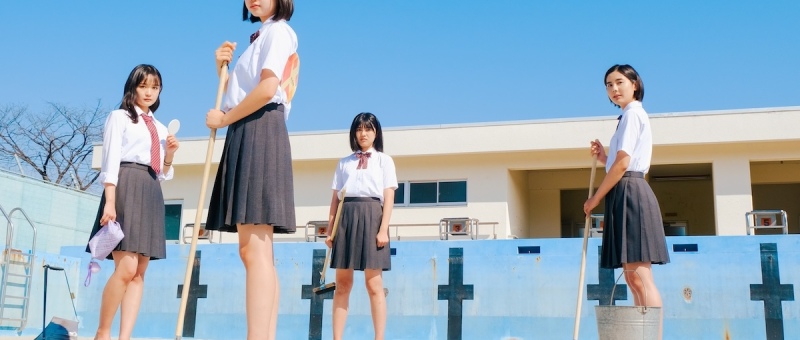
As the film’s title implies, the teenage girls at the centre of Swimming in a Sand Pool (水深ゼロメートルから, Suishin Zero Meter Kara) each find themselves pushing forward but meeting with resistance in Nobuhiro Yamashita’s deadpan teen comedy. Inspired by a high school play, the drama has a timely quality as each of the girls reconsiders what it means to be a woman while simultaneously insisting that gender doesn’t matter. In this case, however, it seems to matter a great deal as they’re forced into the “meaningless” and Sisyphean task of sweeping their swimming pool free of the sand that drifts over from the boys’ baseball game.  

As one of the girls, Chizuru (Mikuri Kiyota), suggests, the boys probably don’t realise (or care) how their actions are inconveniencing them. It’s the middle of summer and the pool is supposed to be undergoing maintenance in August which makes this pointless task seem even more absurd yet after trying to complain to their equally frustrated teacher Yamamoto they’re told they’ve got an attitude problem and it’s only “meaningless” because they’ve decided so in heir heads. As an adult woman, you’d think Yamamoto would have more sympathy or at least some kind of advice for the girls but only seems to want to drum mindless obedience into them, insistent that if she’s told them to do something then it must in fact have meaning. At the end of her tether she snaps that perhaps she doesn’t really like having to conform to the idea of what a teacher should be either, but seems clear that one must do it anyway. Still when a friend from home expresses surprise she’s staying in town over the summer to supervise students, Yamamoto bristles when she remarks that she now seems very like a teacher and is later seen having a covert smoke round the back of the school. 

Obsessed with rules and conformity, one of the chief reasons she’s disliked by the girls is a sense of treachery in having made one, Kokoro (Saki Hamao), humiliate herself by forcing her to participate in a swimming lesson while menstruating. Yamamoto complains that she didn’t ask for an exemption via the appropriate protocols, adding that some girls use it as an “excuse” for getting out of things. Repeatedly the girls accuse each other of using their gender to make excuses for themselves in backing down in front of the boys or allowing themselves to be constrained by social ideas of femininity. Gender is indeed something they seem to think about and dwell on, Kokoro constantly insecure in her appearance while insisting that a girl must be cute in order to count and this is the way she strives for equality with men while simultaneously insisting that gender equality is a myth.

For Miku (Reina Nakayoshi), meanwhile, the opposite maybe true in that she dances the male version of the local folk dance and has done since she was little though now wears a chest binder while she does. Miku seems hurt by Kokoro’s picking at her, eventually walking off and bumping into another girls, Rika, whom it appears she may have a crush on and is a sort of rival of Kokoro’s having beaten her to become manager of the boys’ baseball team. Another girl, Yui, seems to have a similar admiration for swimmer Chizuru but is frustrated by her having experienced a moment of existential crisis being beaten in a race by baseball team star Kusonoki with whom most of the other girls are in love.

What’s true, however, is that none of the girls can do much of anything while desperately trying to sweep up all the dust the boys chucked at them so they can get their pool back and finally swim again. “Don’t take high school girls lightly,” one insists, while another decides to make a “declaration of war” but only seems to elicit snickers from the boys. Nevertheless, through their time shovelling the sand, the girls seem to have come to their own conclusions about the role of gender in their lives and generally discovered a new kind of liberation both from their own self-imposed ideas and the sometimes repressive nature of education that reinforces them. A charming teenage summer comedy, Yamashita nevertheless captures an inspiring sense of rebellion from the students who will no longer be bound by outdated notions of what everyone else tells them they should be.


Swimming in a Sand Pool screened as part of this year’s Osaka Asian Film Festival.

Original trailer (no subtitles)

Wash Away (うぉっしゅ, Ikunosuke Okazaki, 2024)

A disconnected young woman begins to rediscover herself while caring for her ageing grandmother who is largely bedridden and has advanced dementia in Ikunosuke Okazaki’s lighthearted indie drama, Wash Away (うぉっしゅ, Wash). In a sense, the heroine is attempting to wash away loneliness but is ironically unable to scrub away her own while filled with a sense of shame and aimlessness in the city working at a soapland and dreaming of a career in real estate.

Soaplands are are legalised form of sex work in which generally male customers can pay pretty young women to give them a wash. Kana has been working at one for some time under the shop name Koyuki and has made a nice life for herself with a swanky apartment but has avoided returning to visit her family and has led them to believe she’s an estate agent. Despite having a maid visit three times a week, her flat is strewn with rubbish and empty fast food containers which hint at her inability to look after herself along with a sense of internalised shame. She looks to her housekeeper, Mrs Natori, as a kind of surrogate mother and is forever giving her expensive gifts and inviting her to stay for dinner in an attempt to circumvent the loneliness she feels in the false connections of her work in which the customers either become over invested in her Koyuki persona or completely forget her once the appointment is over.

As Mrs Natori later points out, it was Kana herself who had largely forgotten about her grandmother Kie whom she had not seen in at least eight years. When her mother, Sanae, has to be hospitalised for a hip operation she asks Kana to watch Kie during the day to which she reluctantly agrees. Despite not having had any recent contact with her, Kana is still disappointed when Kie cheerfully introduces herself on her arrival as if they were complete strangers meeting for the first time, something she continues to do each day that Kana arrives at the house. The irony is that part of Kana’s job is to wash her grandmother in the same way as she washes customers at the soapload though she encounters the same kind of frustrated connection unable to get through to Kie who is lost in time and often incredibly anxious that she’s late for some kind of event where everyone is waiting for her. 

Though she approaches the responsibility seriously, the truth is that Kana is fed up after the first few setbacks and decides to subcontract her care responsibilities by outsourcing to a professional carer telling herself that her grandmother would probably prefer that anyway. Her friend Sumire seems disappointed in her, remarking that perhaps Kie is in a way lucky to get to experience so many things for the first time again and meet the world with a sense of childish wonder such as in her fascination with colourful plastic balls. In an odd way, caring for her grandmother encourages to Kana to start caring for herself, gaining the confidence to speak honestly with someone she assumes won’t remember anything she says but reassured by Kie’s surprising outburst that work is work and she’s no need to feel ashamed of herself if she approaches it with pride whatever her occupation might be. 

This simple act of interest begins to reawaken something in both of them, Kie’s memory and energy seeming to improve in the light of Kana’s determination that she won’t be forgotten much as she hopes she won’t be either in a constant search for connection. Though she may have thought her grandmother had forgotten her, that she was in a sense invisible and faceless to the customers who bought her services, Kana washes away her misconceptions and learns to see herself again in repurposing her work as an act of care. Okazaki lends the world around her an off kilter quirkiness that is at odds with the despair Kana feels and while never shying away from the difficulties of caring for someone with advanced dementia allows the two women to recover both something of themselves and each other through the simple act of reconnection.


Wash Away screened as part of this year’s Osaka Asian Film Festival.

Original trailer (no subtitles)

Sumiko 22 (スミコ22, Sawako Fukuoka, 2024)

22-year-old Sumiko is beginning to fear that she’s losing her sense of self. Even when she hangs out with her friends, she can’t think of anything interesting to say nor does anything they say spark much of an interest. Sawako Fukuoka’s breezy, New Wave-inspired dramedy captures the sense of malaise among young people today who are quickly disillusioned with the conventionality of a stereotypical adulthood while becoming aware that all that awaits them is the constant exploitation of eternal overtime and compulsory afterwork socialising.

That might be one reason why Sumiko (Haruna Hori) quit the job she got after graduating university after only a few months. But then by contrast, her friend describes her 9 to 5 office job as “wonderful,” though adding that she works for a more benign company who have a minimum overtime policy and seem to care about her work/life balance. Her other friend is not so lucky, explaining that he’s expected to work from 7am to 11pm, though can take half the month off. He breaks down in a karaoke booth, in tears screaming that he wants to quit his job. It’s all a bit too much for Sumiko who makes a quiet exit to grab some fresh air. 

Though Sumiko puts a cheerful face on it, we often see her seemingly caught motionless in moments of complete and total despair. She doesn’t seem to know what she’s doing with her life and has no real sense of direction. Nevertheless, we can see that through her sometimes strange enoucounters she begins to regain an interest in the world along with a desire for forward motion, taking an active role in her life by offering a slice of pizza from the restaurant where she works to a man who plays the recorder in the underpass she’s sometimes fantasised about dating.

We see her gleefully draw a little cat in the sauce on top of her salisbury steak only to be middle rebuked by a radio host who can’t abide such childishness, but in a sense this is exactly what Sumiko is striving for the freedom to be cheerful and creative rather than a soulless drone valued only for her productivity. Another of her roommates also has his quirks, displaying a toy dinosaur called Tom on his bike that so impresses the proprietor of a restaurant that she makes him a little bow tie.

Sumiko lives a relaxed life, working at the pizza restaurant and otherwise spending her days wandering the neighbourhood, playing frisbee with her roommate Hana, or hanging out with friends. A female convenience store worker flirts with her awkwardly, first bonding over a shared love of cats and then admiring the line of her arms and the way they bend at the elbow. She watches a couple fight at a vending machine and then worries that she’s been rude in informing a woman wearing white jeans that her underwear line was visible when she bent down to tie her laces. The woman later seemingly becomes a friend, appearing in a short film Sumiko makes capturing the quirky surreality of her life.

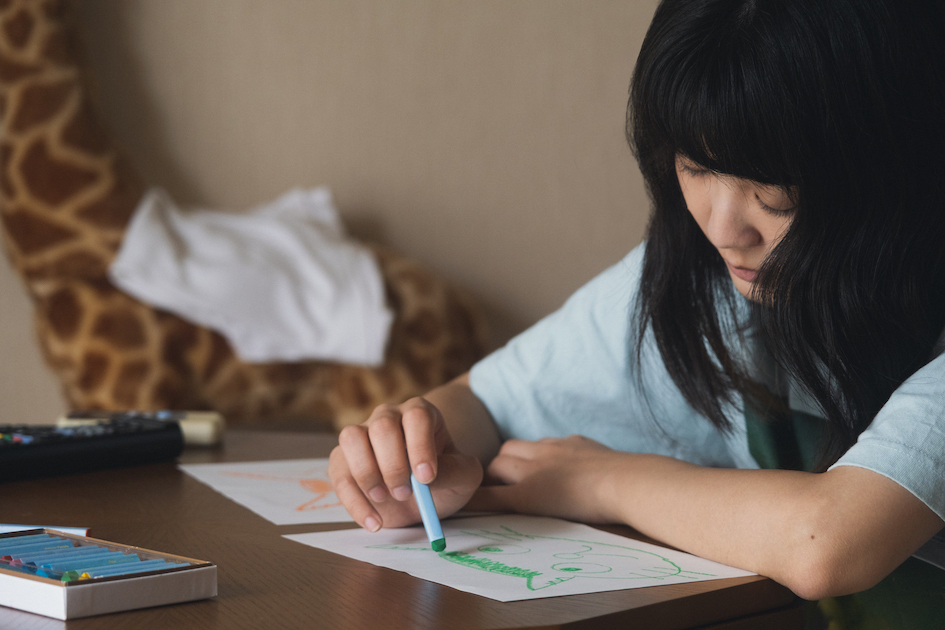
Drawing inspiration from the French New Wave, Fukuoka adds a deadpan voiceover to narrate Sumiko’s aimless days each broken into sections from her diary complete with an adorable crayon doodle. Sumiko might be hit by small moments of despair but otherwise remains cheerful, embracing the simplicity of her life along with the company of her friends even if it is sometimes a little hard to bear. She thinks she was born to eat cake and is obsessed with salmon, finding the moments of small joy in her life and along with them a new sense of purpose and direction that might in its own way be simply to stay still, living as she pleases and embracing her aimlessness as freedom rather than anxiety. Cute and quirky in its surreality the film captures something of life’s absurdity, but also displays a boundless empathy for those like Sumiko who aren’t so much lost as aimlessly on their way to the place they were they were always supposed to be.


Sumiko 22 screened as part of this year’s Osaka Asian Film Festival.

Original trailer (no subtitles)

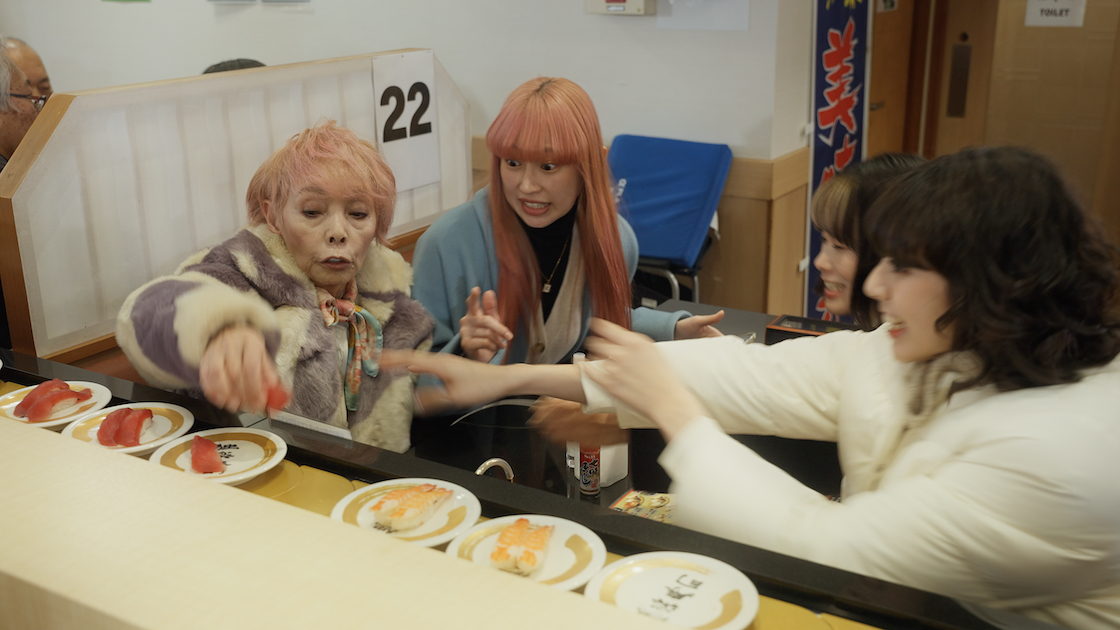
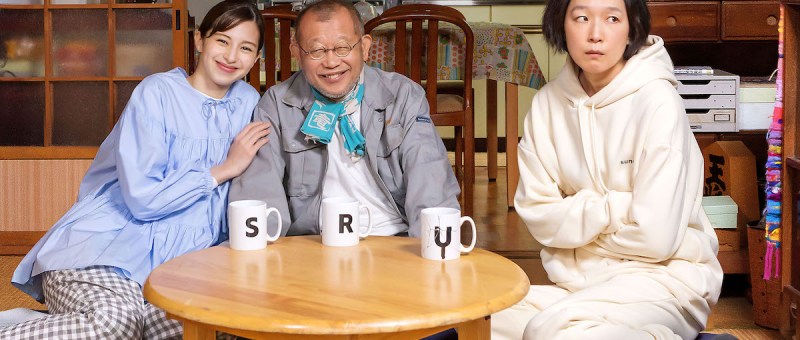
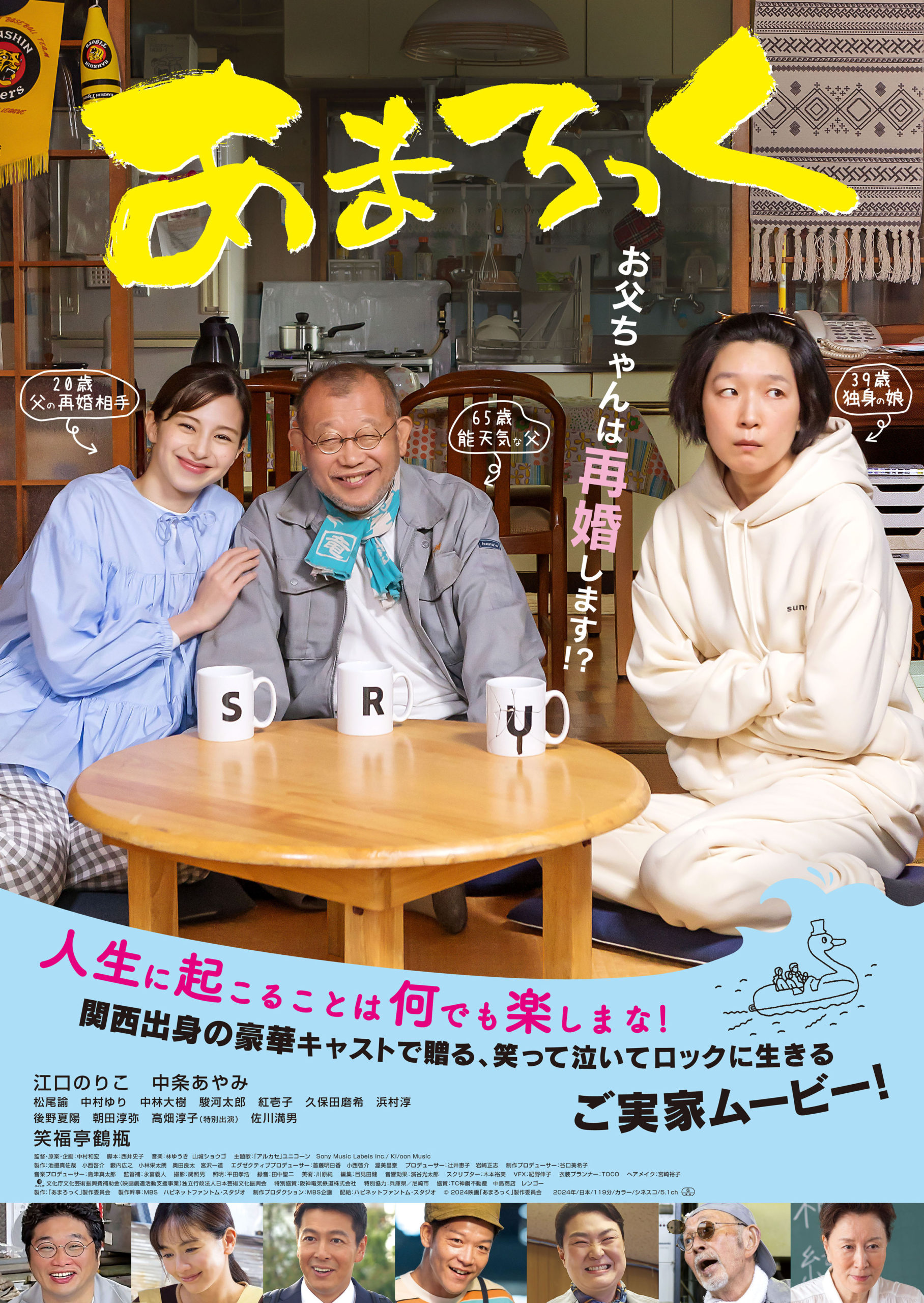
Amalock (あまろっく, Kazuhiro Nakamura, 2024)

The purpose of a lock, at least far as those on water are concerned, is to keep everything on an even keel and protect the surrounding area from flooding. From the lock’s point of view it might be a thankless task, people never notice you’re there unless you’ve somehow failed at your job but the lock is ever present and always about its duty even if it might be difficult to understand. For all of these reasons, the heroine of Kazuhiro Nakamura’s gentle indie drama had come to think of her father as the titular Amalock (あまろっく) but often resented him for it, seeing him only as lazy and irresponsible.

For Ryutaro (Tsurube Shofukutei), meanwhile, laughter was the only way to make life bearable. His motto was to always enjoy the things that happen in life be they good or bad which is why he puts out a congratulations sign when his grown up daughter Yuko (Noriko Eguchi) returns home after being made redundant. Despite being good at her job and in receipt of several commendations for her work, Yuko is simply not pleasant to be around and creates tension in the office with her grumpy aloofness and tendency to make younger male members of staff cry in front of her. 

The implication is that Yuko became the exact opposite of the father she thought was feckless and of no use to anyone, yet mainly finds herself lying in front of the TV in a tracksuit mainlining snacks exactly as he had done when she was a child. Seemingly trapped in an intense depression, she makes no attempt to find new work for eight years, instead being supported by her father’s moribund ironmongers. The surprise news that he plans to remarry 20 years after her mother’s death to a woman barely 20 who works at the townhall sends shockwaves through her life and turns her into a petulant, resentful teenager who can’t accept her new stepmother.

The situation is of course ridiculous. Yuko is almost 40 and Saki (Ayami Nakajo), Ryutaro’s new wife, makes no attempt to wield authority over her beyond the well-meaning attempts to introduce potential husbands more because she thinks it would be nice for her to have someone than she wants her out of the house. Even so, Yuko’s problem is that she can’t understand the way her father works and that his cheerful attitude to life has value to those around him who are buoyed up by his friendliness and easy going nature even when times are hard. Like the Amalock, he’s always been there quietly supporting her despite her scorn and resentment, preventing her from becoming overwhelmed by the floodwaters of life tragedies.

In his way, he’s done something similar for Saki who ironically only ever wanted what Yuko could have had in a happy “harmonious” family having experienced a series of troubles of her own. Saki honours Yuko’s mother’s memory and includes it in her vision of the “family,” but struggles to get through to Yuko who remains difficult and resentful unable to see the value in the kind of life that Saki wants or in herself as human who might benefit more from interacting with others. The twin stressors of unexpected tragedy and a tentative marriage proposal from a man who turned out to know her little better than she thought begin to shift her perspective allowing her to see what it really was her father brought to the world and what she might bring to it too if only she were less serious about things that don’t really matter.

That is after all how you find your way to a harmonious life, becoming an Amalock for others who can also be an Amalock for you and might be willing to make a few compromises to make that happen. Set in the tranquil town of Amagasaki, Nakamura’s gentle tale captures a little of life’s absurdities along with the simple power of good humour to make life easier to bear. Rooted in tragedy as it may be, Ryutaro’s philosophy of making life a celebration has its merits and ones which are not lost on a newly enlightened Yuko becoming more and more like her father but also like herself at the heart of a harmonious family.


Amalock screened as part of this year’s Osaka Asian Film Festival.

Original trailer (no subtitles)

Snowdrop (スノードロップ, Kota Yoshida, 2024)

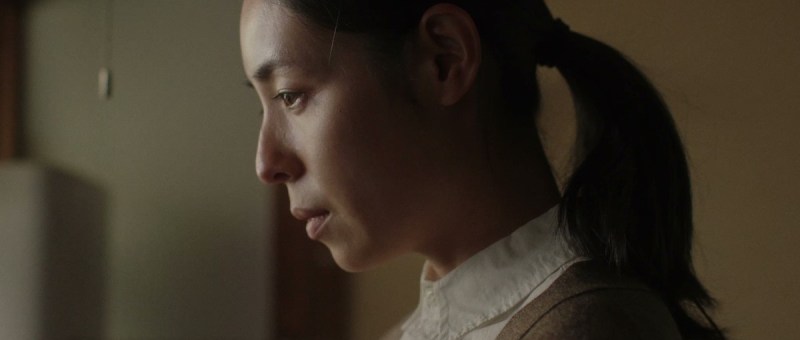
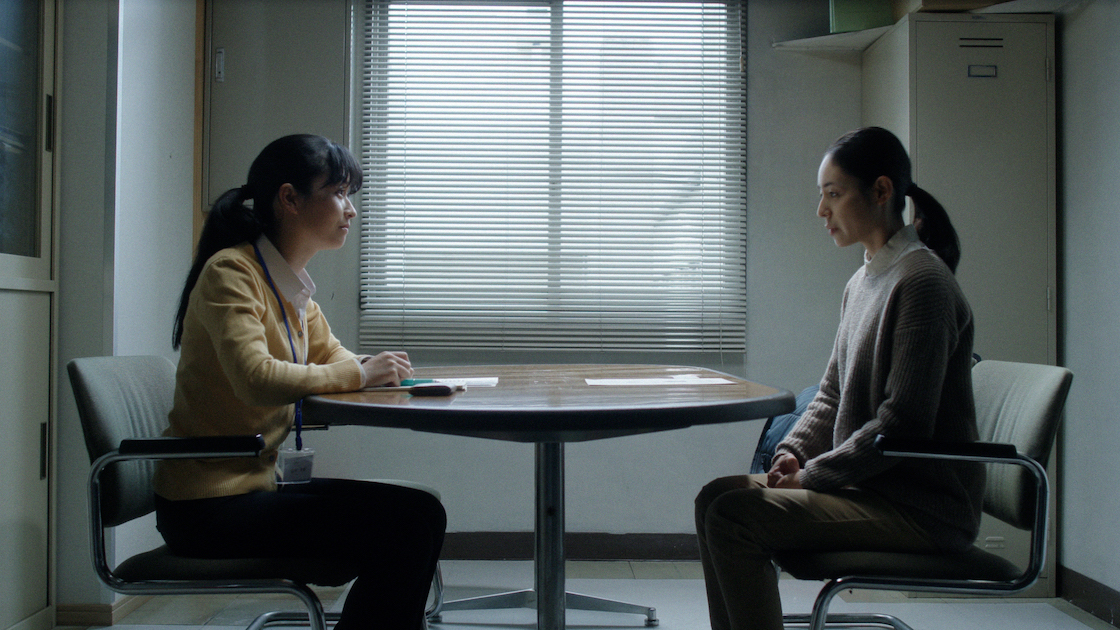
As the heroine of Kota Yoshida’s Snowdrop (スノードロップ) says close to the end of the film, you can become used to living in miserable circumstances and bear it because it is your normal but being suddenly confronted by them does nothing other than compound your misery. At least that’s how it seemed to her while attempting to register for social security payments after her father suffers a workplace accident and needs surgery they can’t afford in order to be well enough to be employed and earn money. 

Then again, her family circumstances are a little unusual in that her father, Eiji, left when she was little only to return 25 years later and ask to be taken in again swearing he’d work hard. Nearly 20 years after that, Naoko (Aki Nishihara) has had to give up working to care for her mother who has advanced dementia and requires round the clock care leaving Eiji as the only breadwinner though he is also elderly and working only as a newspaper delivery man which already makes it very difficult for them to make ends meet. It’s Eiji’s boss who suggests they apply for government help so that Eiji can get treatment for the gout that’s affecting his legs and get well enough to work again, though it’s clear that the family feel a degree of shame about the idea of accepting assistance even though as social worker Munemura points out it’s something that’s available to everyone should they ever need it.

The problem is however that you have to prove that you’re struggling which can be a long and difficult process. Naoko later describes it as a kind of humiliation, that she was forced to parade her penury and by doing so was confronted by the misery of her circumstances. Munemura describes her as a very earnest woman and is impressed by the way she meticulously fills in all the correct forms while the house, when they come to inspect it, is tidy and well kept (something which might actually go against you in other countries) even if they’re eying up her car and wondering if she really needs it. Munemura also sympathises with her on a personal level, realising from the forms that Eiji must have been absent from the family for an extended period and that they suffered because of it while it must also have been hard for Naoko caring for her severely ill mother alone for over 10 years.

Naoko herself has a largely beaten down, defeated aura in which she’s given up on the idea of a future for herself. She later describes caring for her mother as its own kind of escape in that she always found it difficult to get along with other people and never felt confident at work so being a carer became a kind of identity for her that she also feared losing if they were successful in their application and were able to secure nursing assistance for her mother. As well-meaning as Munemura is, she is not perhaps in the position of being able to see or deal with all sides of the issues someone like Naoko faces and is therefore shocked by the dark place her despair eventually takes her. Munemura faces a similar issue with a woman in her 70s whose claims that the cleaning job they insisted she take was simply too difficult for her at her age is treated with less than total sympathy by her slightly more cynical colleague.

A largely unexplored subplot in which it’s implied there was another sister who was given up because of the father’s abandonment and the family’s poverty hints at a deep-seated childhood trauma but also fissure within the family itself as Naoko explains her actions solely with the justification “we were a family” as if she too feared being left behind or abandoned even while her older sister has evidently been able have a family of her own though is also very sympathetic towards Naoko and in no way holds her responsible anything that happened. All she really wanted was an escape from her misery, which she may in a way get with the fresh shoots of a new life already visible to her if only she can embrace them. Shot with a detached naturalism, Yoshida’s drama is often bleak though does not lack for empathy and especially for those like Naoko who are largely left to deal with their misery all alone.


Snowdrop screened as part of this year’s Osaka Asian Film Festival.

Original trailer (English subtitles)