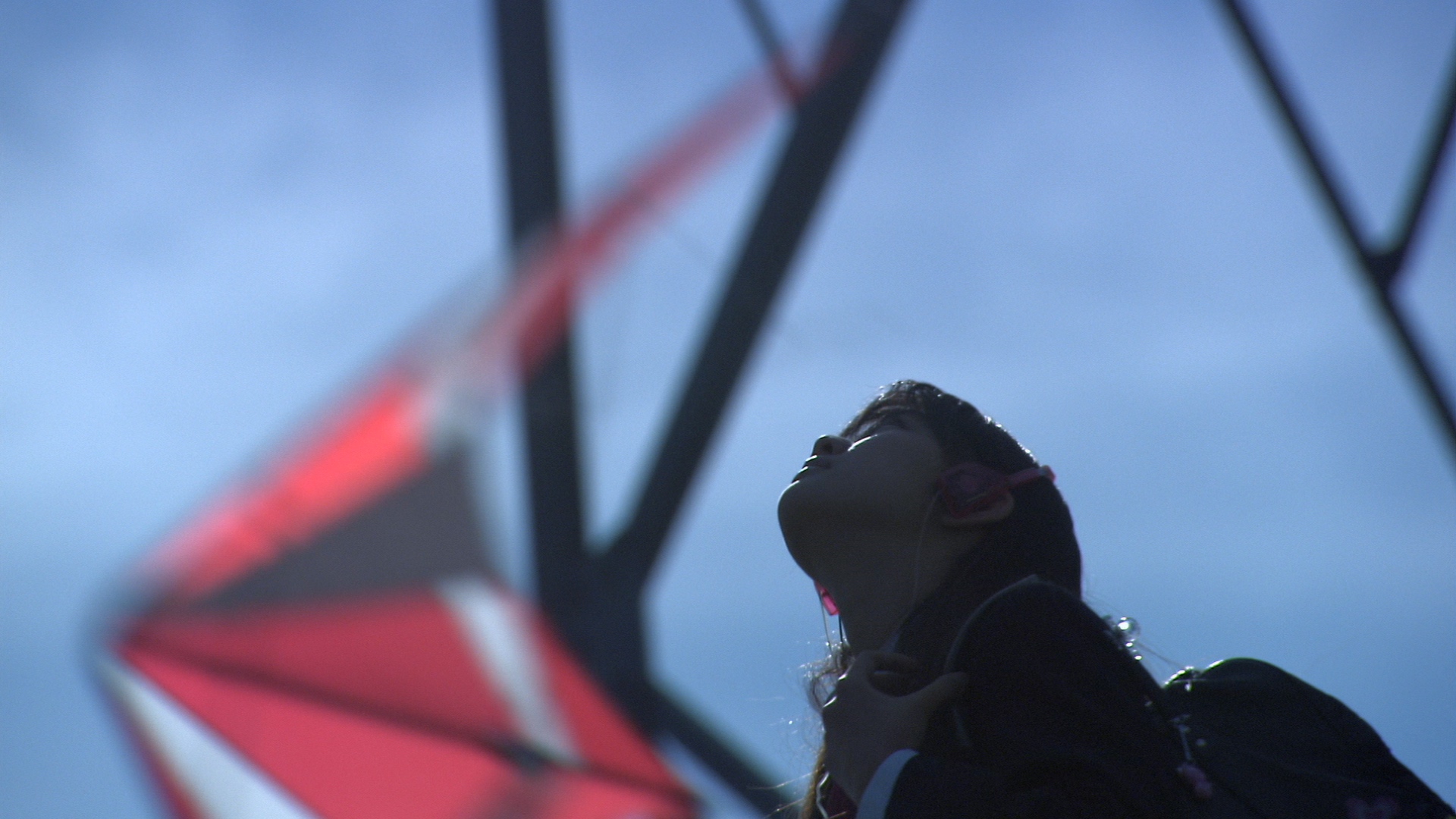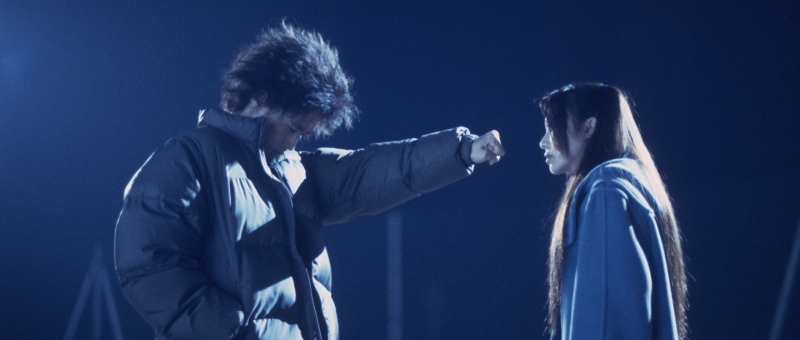
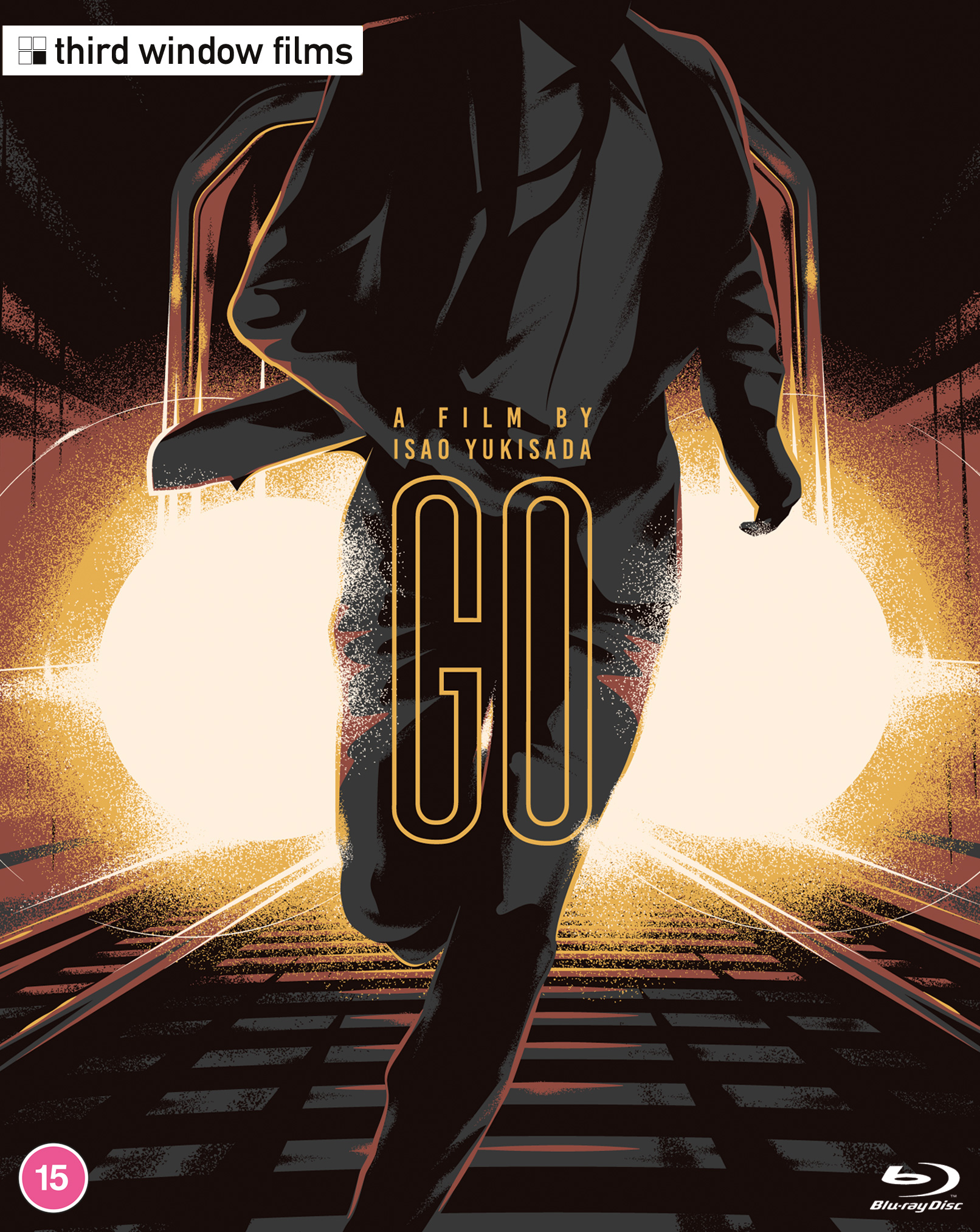
GO (Isao Yukisada, 2001)

“We never had a country” a student at a North Korean school in Japan fires back, hinting at his feelings of displacement in being asked to remain loyal to a place he never knew while the culture in which he was born and raised often refuses to accept him. The hero of Isao Yukisada’s Go is not so much searching for an identity as a right to be himself regardless of the labels that are placed on him but is forced to contend with various layers of prejudice and discrimination in a rigidly conformist society.

As he points out, when they call him “Zainichi” it makes it sound as if he is only a “temporary resident” who does not really belong in Japan and will eventually “return” to his “home culture”. In essence, “Zainichi” refers to people of Korean ethnicity who came to Japan during the colonial era and their descendants who are subject to a special immigration status which grants them rights of residency but not citizenship. Sugihara’s (Yosuke Kubozuka) situation is complicated by the fact that his father (Tsutomu Yamazaki) has a North Korean passport, making him a minority even with the Korean-Japanese community. He attends a North Korean school where speaking Japanese is forbidden and is educated in the tenets of revolutionary thought which are of course entirely contrary to the consumerist capitalism of contemporary Japan. 

His father eventually consents to swap his North Korean passport for a South Korean one mostly it seems so he can take a trip to Hawaii with his wife (Shinobu Otake) which seems to Sugihara a trivial reason for making such a big decision especially as it caused the lines of communication to break down with his bother who returned to North. Yet it seems like what each of them is seeking is an expansion of internal borders, the right not to feel bound by questions of national identity in order to live in a place of their own choosing. “I felt like a person for the first time,” Sugihara explains on being given the opportunity to choose his nationality even if it is only the “narrow” choice between North and South Korea. 

But on the other hand he wonders if it would make his life easier if he had green skin so that his “non-Japaneseness” would be obvious. Sugihara reminds us several times that this is a love story, but he delays revealing that he is a Zainichi Korean to his girlfriend because he fears she will reject him once she knows. On visiting Sakurai’s (Ko Shibasaki) home, it becomes obvious that she comes from a relatively wealthy, somewhat conservative family. Her father, who is unaware Sugihara is Korean-Japanese, immediately asks him if he likes “this country” but is irritated when Sugihara asks him if he really knows the meaning behind the various words for “Japan” again hinting at the meaninglessness of such distinctions. When he eventually does tell Sakurai that he is ethnically Korean, her reaction surprises both of them as she recalls her father telling her not to date Korean or Chinese men on account of their “dirty” blood. 

Such outdated views are unfortunately all too common even at the dawn of the new millennium. Even so, Sakurai had not wanted to reveal her full name because she was embarrassed that it is so “very Japanese” while conversely Sugihara takes ownership of the name “Lee Jong-ho”. He embraces the “very Japanese” tradition of rakugo, and hangs out in the Korean restaurant where his mother works dressed in vibrant hanbok. Given a book of Shakespeare by his studious friend, he is struck by the quote which opens the film which states that a rose by any other name would smell as sweet and wonders what difference a name makes when its the same person underneath it. 

Perhaps his father’s admission that he always found a way to win wasn’t so off base after all, nor his eventual concession that Sugihara may have it right when he rejects all this talk of “Zainichi” and “Japanese” as “bullshit” and resolves to “wipe out borders”. He insists on being “himself” or perhaps a giant question mark, and discovers that Sakurai may have come to the same conclusion in realising that all that really mattered was what she saw and felt. Yukisada captures the anxieties of the age in the pulsing rhythms of his youthful tale which keeps its heroes always on the run, but is in the end a love story after all and filled with an equally charming romanticism. 


GO is released on blu-ray in the UK on 22nd May courtesy of Third Window Films.

Original trailer (English subtitles)
All About Lily Chou-Chou (リリイ・シュシュのすべて, Shunji Iwai, 2001)

“For us the natural world is a playground. But for the things that live in it, it might be hell on earth.” a middle-aged stranger explains to a confused teenage boy elaborating on a metaphor about a strangler tree that wraps itself around its brethren and suffocates them to death. The contemporary society is indeed a hell on earth to the alienated turn of the century teens in Shunji Iwai’s plaintive youth drama All About Lily Chou-Chou (リリイ・シュシュのすべて, Lily Chou-Chou no Subete) who have found solace in “The Ether”, “a place of eternal peace” as discovered in the music of a zeitgeisty pop singer inspired by the ethereality of Mandopop star Faye Wong. 

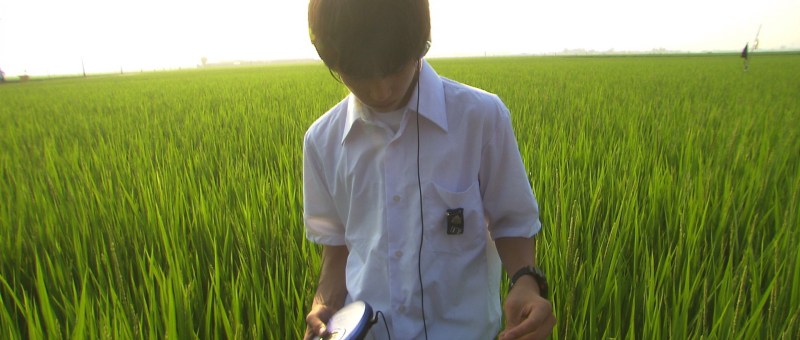
Filled with millennial anxiety, The Ether as mediated through message board chat is the only place the teens can be their authentic selves. “For me only the Ether is proof that I’m alive” one messenger types using an otherwise anonymous online handle unconnected with their real life identity. Iwai often cuts to the teens standing alone listening to music on their Discmans while surrounded by verdant green and wide open space with a bluer than blue sky above, but also at times finding that same space barren and discoloured, drained of life in, as Yuichi (Hayato Ichihara) puts it, an age of grey much like a field in winter. For Yuichi the world ended on the first day of school in September 1999 when his torment began at the hands of a previously bullied boy who decided to turn the tables after, of all things, getting hit in the head by a flying fish in Okinawa and almost drowning.  

Purchased with money stolen from some other bullies who had just stolen it from a well-off middle-aged man they were harassing in a carpark, the trip to Okinawa captured in grainy ‘90s holiday video style later subverted by the same use of contemporary technology to film a gang rape of a fellow student, is the event that finally reduces Yuichi’s world to ashes. Like the other teens he is also carrying a sense of alienation as his mother prepares to remarry while carrying his soon-to-be stepfather’s child which also dictates that Yuichi will have to change his surname lending a further degree of instability to his already shaky sense of identity. For Hoshino (Shugo Oshinari), his sometime friend, the instability seems to run a little deeper. “Nobody understands me” he tells Yuichi with broody intensity, irritated by the image others have of him as a top swat chosen to give a speech at the school’s opening ceremony and widely believed to have placed first in the exams. In truth he only placed seventh and is most annoyed that whoever really did come top probably thinks he pathetically lied about it for clout. 

We can see that Hoshino’s family appears to be wealthy, at least much more than Yuichi’s, though as we also discover they once owned a factory which has since gone bust amid the economic malaise of the ‘90s leading to the disintegration of his family unit. Like Yuichi he feels himself adrift, evidently bullied in middle school for being studious and introverted while rejected by the girls in his class who again attack him because of his model student image. Hoshino seems to have a crush on a girl who is herself bullied, Kuno (Ayumi Ito), apparently resented by the popular set for being popular with boys. “It’s amazing how women can ostracise someone like that” band leader Sasaki (Takahito Hosoyamada) reflects, one of the few willing to call her treatment what it is but finding no support from their indifferent teacher Miss Osanai (Mayuko Yoshioka), while entirely oblivious to the fact that the boys are just the same in Hoshino’s eventual reign of terror as a nihilistic bully drunk on his own illusionary power. 

Shiori (Yu Aoi), blackmailed into having sex with middle-aged men for money, questions why she and Yuichi essentially allow themselves to be manipulated by Hoshino and are unable to stand up to him even when they know they are being asked to do things that they find morally repugnant such as Yuichi’s complicity when tasked with setting Kuno up for gang rape by Hoshino’s minions with a view to videoing it for blackmail purposes. Whether or not he did in fact have a romantic crush on her, Hoshino’s orchestration of the rape signals his total transformation, forever killing the last vestiges of his humanity and innocence but for Yuichi, who can only stand by and cry, it signals the failure of his resistance that if he went along with this there is no line beyond which he will not go if Hoshino asks it. Yuichi asks Shiori why she didn’t agree to date the kindhearted Sasaki who would have been able to shield her from Hoshino but she knows it’s too late for that while suggesting Yuichi is in a sense protecting her though his inability to do so only further erodes his wounded sense of masculinity. 

Only online can the teens find the elusive Ether they dream of, ironically connected via a message board that Yuichi runs under the name Philia where the only rule is that you have to love Lily yet unknown to each other thanks to the alienating effect of their online handles. Someone has a point when they suggest all this talk of polluting the Ether sounds a bit like a cult, but does at least give the teens their safe space where they can share their pain free of judgement and find solidarity in adolescent angst. In any case all of this shame, repression, and loneliness is later channeled into nihilistic violence and cruelty provoked by millennial despair. The only way Yuichi can free himself is by killing the part of himself that hurts in an effort to quell the “noise” in his head. Broken by title cards accompanied by the reverberating sound of typing in emptiness, Iwai’s characteristic soft focus lends a trace of nostalgic melancholy to this often harrowing tale but also neatly encapsulates turn of the century teenage angst with the infinite sympathies of age. 


All About Lily Chou-Chou screens at Japan Society New York on Dec. 10 as part of Love Letters: Four Films by Shunji Iwai

Original trailer (English subtitles)
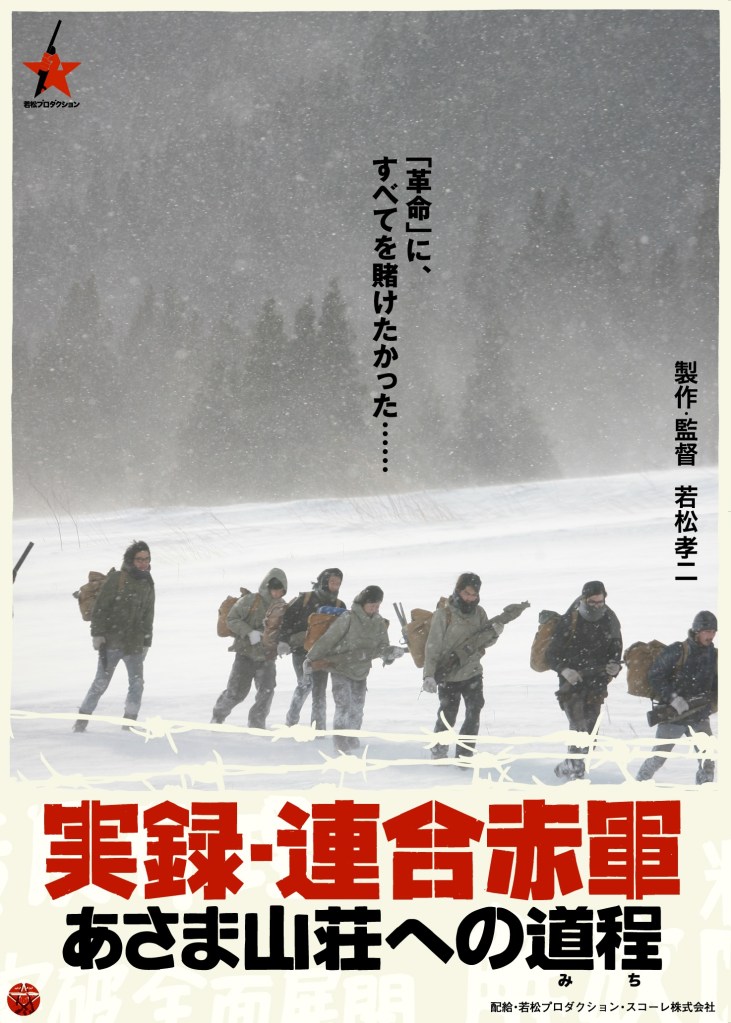
United Red Army (実録・連合赤軍 あさま山荘への道程, Koji Wakamatsu, 2007)

Koji Wakamtasu had a long and somewhat strange career, untimely ended by his death in a road traffic accident at the age of 76 with projects still in the pipeline destined never to be finished. 2008’s United Red Army (実録・連合赤軍 あさま山荘への道程, Jitsuroku Rengosekigun Asama-Sanso e no Michi) was far from his final film either in conception or actuality, but it does serve as a fitting epitaph for his oeuvre in its unflinching determination to tell the sad story of Japan’s leftist protest movement. Having been a member of the movement himself (though the extent to which he participated directly is unclear), Wakamatsu was perfectly placed to offer a subjective view of the scene, why and how it developed as it did and took the route it went on to take. This is not a story of revolution frustrated by the inevitability of defeat, there is no romance here – only the tragedy of young lives cut short by a war every bit as pointless as the one which they claimed to be in protest of. Young men and women who only wanted to create a better, fairer world found themselves indoctrinated into a fundamentalist political cult, misused by power hungry ideologues whose sole aims amounted to a war on their own souls, and finally martyred in an ongoing campaign of senseless death and violence.

Dividing the narrative into three distinct acts, Wakamatsu begins with a lengthy history lesson starting right back in 1960 with the birth of the student movement and the first casualty of the unborn revolution as a young woman loses her life protesting the rise of tuition fees. Despite the lack of success, the student movement intensifies during the turbulent 1960s with the renewal of the ANPO treaties and the perceived complicity of the Japanese government with America’s anti-communist warfare in Asia. Mixing archive footage with reconstructions and on screen text detailing timelines, names and affiliations these early segments are hard to follow but bear out the complexity and chaos which contributed to the inefficacy of the student movement. Soon, each of the leaders we have been introduced to has been removed from the scene leaving the older but inexperienced Tsuneo Mori (Go Jibiki) in charge of what was then the Red Army Faction.

Mori had only recently rejoined the movement after leaving in disgrace at fleeing a protest and thereby evading arrest. The Red Army Faction then merges with another sect, the Revolutionary Left Wing (RLF), to form the United Red Army. Led by Mori and a female commander, Nagata (Akie Namiki), the United Red Army holes up in a cabin in the woods in order to undergo military training for the upcoming armed insurrection. Prior to this, there had been a series of purges and executions in the city producing an atmosphere of terror and paranoia which only intensifies in the incestuous and claustrophobic environment of the ascetic mountain retreat.

Out of his depth and eager to prove himself, Mori’s revolutionary consciousness developes into a dangerous cult of personality in which his iron rule is more akin to fundamentalist religion than a serious political movement intended to change the world for the better. Wakamatsu’s depiction of these events is as terrifying as it is absurd. Maoist doctrine becomes a holy scripture as each of these would be revolutionaries is forced to undergo self criticism in order to devote themselves fully to the revolution and become a “true communist”. Brainwashed and naive, the cadre comply seeming not to realise that no self criticism they can offer will ever be good enough for Mori’s constant need for identity erasure and that each fault they offer will only be used to form the basis of the next charge levelled against them. What begins as questioning develops into screaming before descending into bloody violence and eventually murder.

If Mori’s fault is a kind of madness born of fear and insecurity, it is Nagata whose mania takes on an almost gleeful quality. A plain woman with unremarkable features and a sharp personality, Nagata, as she’s portrayed in the film, displays extreme issues relating to femininity. When an idealistic young woman arrives dressed in typical city fashions necessary to blend in with the capitalist bourgeoisie, Nagata wastes no time in berating her for her stylish clothes and makeup. Threatened both by the woman’s conventional beauty and high ranking position in another faction, Nagata takes especial care to make sure she herself remains on top. Despite being in a relationship with one cadre member and later leaving him for Mori (because it’s “right from the communist perspective”), Nagata cannot bear any hint of sexual activity and it is an ill judged kiss which ends up leading to the first set of mercilessly violent self criticism sessions eventually resulting in death as both parties are beaten and then tied up in the freezing mountain air where death by exposure is all but inevitable.

Mori declares that “leadership means beating” but when this is no longer enough the death sentences come thick and fast. Eventually, some members manage to escape and the mountain hideout is discovered. Splitting up and heading on the run, Mori and Nagata are captured while a group of five break into a mountain lodge where they take the caretaker’s wife hostage and remain under siege for nine days until the police eventually break in, arrest the terrorists and rescue the woman all of which became the first such event to be live broadcast on Japanese TV. The Asama-Sanso incident, as it came to be known, sealed the fate of the left wing protest movement in Japan as the terrorist violence of the renegade protestors forever coloured public perception.

Wakamatsu does not end his story here – returning to the captions which opened the film, he reveals to us the legacy of the failed student protest movement in the overseas activities of the Japanese Red Army, most notably in North Korea and the Middle East. The protest movement in Japan resulted in abject failure – the ANPO treaty survives, the Sanrizuka villages were destroyed and an airport built, the capitalist future arrived at speed heading into the bubble economy where the only revolution was consumerism. The glorious future of which these young people dreamed, free of class, gender, and social inequality, would not materialise as their idealism devolved into introspective dogmatic rhetoric, violence and murder. Trapped inside a fundamentalist cult, the true tragedy is that this was a children’s revolution – the vast majority of its victims under 25 years old, one just 16 and forced to participate in the death of his own brother. How much good could each of these socially conscious young people have gone on to do if only they’d found a less destructive cause? Would anyone want to live in the world born of this revolution? Contrasting the joyous camaraderie of the peaceful protests with the escalating, internecine violence of the URA, Wakamatsu’s vision of the movement he was once a part of is a necessarily bleak one but resolute in its gaze. Ugly, cold and unforgiving United Red Army is a warning from history which has only sympathy for those caught up in its terrible machinations.


Original trailer (English subtitles)