The World of You (麻希のいる世界, Akihiko Shiota, 2021)

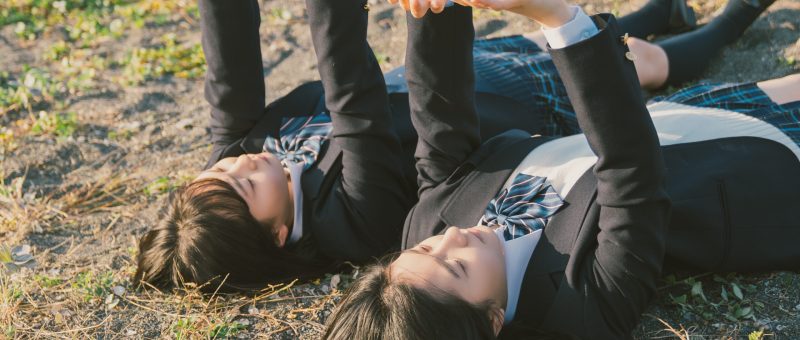
A girl with a chronic illness becomes fixated on a traumatised classmate in Akihiko Shiota’s meditation on the self-destructive effects of obsessive love, The World of You (麻希のいる世界, Maki no iru Sekai) . It is not, however, the heroine that primarily experiences them, as her own romantic obsession is in one sense a purer love, but in another is a way of making her mark on the world before her short life comes to an end. 

Yuki (Yuzumi Shintani) spots Maki (Marin Hidaka) leaving a local shack and locking the door behind her preceded by a shady-looking young man. She later recounts that she once stayed in this same shack for three days after running away from home following her parents’ divorce which she thinks her illness may partly have been responsible for her. The shack represents different things for each of them, but is also a space of their otherness and isolation from which neither of the girls is able to escape. It’s clear that Yuki’s growing obsession with Maki who is ostracised at school and resented by all is romantic, yet Maki appears to reject her attentions and reminds her she’s the type of girl who sleeps with guys.

Yuki sighs and she says knows as if she’s already resigned herself to the impossibility of her romantic desires being fulfilled, but Yuki continues to behave flirtatiously and otherwise uses the desire she knows Yuki feels for her as a means to manipulate her. Even so, on some level, she too has genuine feelings for Yuki and repeatedly tries to push her away in fear that she will only cause her trouble and pain. She tells her that her father is a convicted paedophile, which is why she is shunned by the local community. Though people are sympathetic at first, they often come to reject and resent her which is why she alternately responds to and then refuses Yuki’s insistence on connection. Though she never says so, her behaviour hints her father may have abused her too or at least that was she sexualised at an early age now and has a self-destructive attitude to sex in which she engages in potentially dangerous relationships with older men and uses her desirability to manipulate her male classmates.

Among them is Yusuke (Airu Kubozuka), who has a one-sided crush on Yuki that she continually rejects but he seemingly cannot take no for an answer. The situation between them is further complicated in that Yusuke’s father is also Yuki’s doctor. After her parents’ divorce, Yusuke’s father entered an affair with Yuki’s mother and eventually left his wife for her, breaking up their family. It’s already a messy situation, though Yusuke’s obsessive love is seemingly more possessive, whereas Yuki’s has taken on a passive quality. She does not really expect that Maki will ever return her feelings and seems to be aware that she uses them to manipulate her, but makes it her remaining life’s purpose to ensure that Maki’s musical talent is appreciated by the wider world. 

In some senses it’s a classic tale of an incredibly toxic love triangle in which Maki plays off both Yusuke and Yuki though may not actually care for either them as all romantic desires are effectively processed through her. Each of the teens is unfairly made to pay for the sins of their parents and effectively left without proper guidance or more positive examples of healthy romantic relationships. Though they all lose something, Yuki’s loss of her voice is especially ironic given that she’d barely talked to begin with but had bared her soul to Yuki who is then in fact reborn, possibly as the “even more wonderful Maki” that Yuki hoped she be though she no longer remembers her. Nevertheless is there is something that seems more hopeful in Yuki’s insistence that they will meet again when pitted against Yusuke’s repeated claims that he knows Yuki will come to love him eventually, especially considering the destructive actions they ultimately lead him to. Yuki’s love, meanwhile, is only self-destructive or in its way life giving in allowing her to sacrifice herself for the world that has Maki in it but that she may never see.


Trailer (no subtitles)

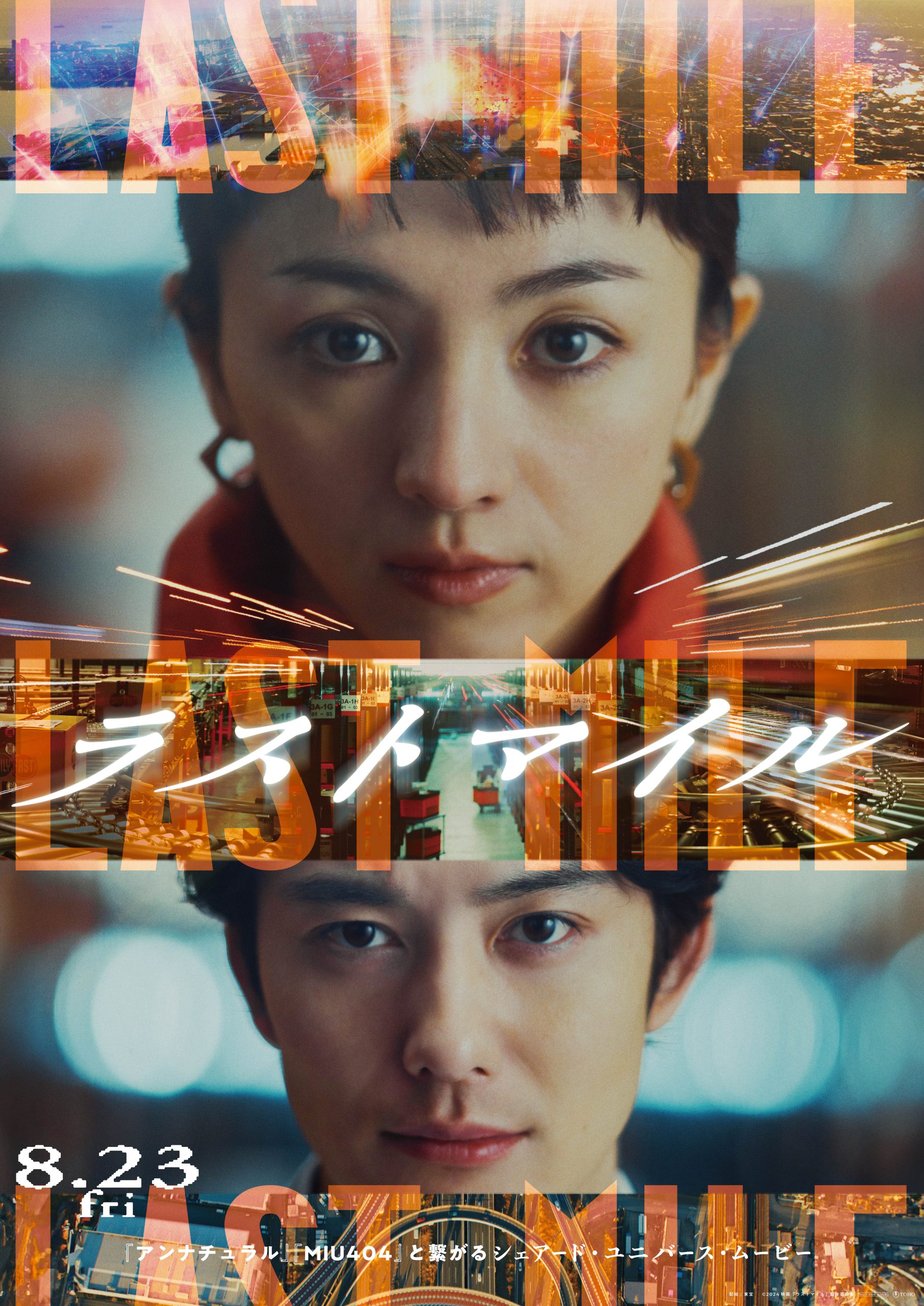
Last Mile (ラストマイル, Ayuko Tsukahara, 2024)

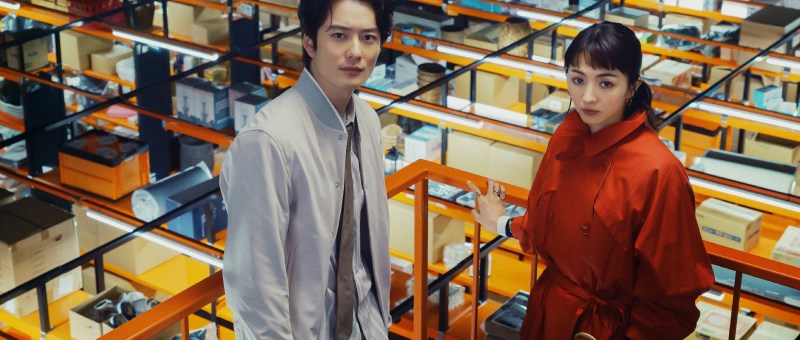
“Customer-centric”, what does that actually mean? The Amazon-like US-based conglomerate at the centre of Ayako Tsukahara’s Last Mile (ラストマイル) prides itself on its customer-centric philosophy, but at the end of the day, what that really means is that they give us what we tell them we want through our purchasing patterns and browsing history. That would be that we want everything as cheap and fast as it’s possible to be and don’t really think about the wider implications or what a world of infinite convenience might be doing to the society around us.

At least from the perspective of corporate lackey Elena (Hikari Mitsushima), recently returned from the US, the reason Daily Fast pressures its delivery staff to lower costs isn’t to maximise their profits, it’s so they can go on providing lower prices to customers which to her is all part of their customer-centric approach. This doesn’t really gel with her off-the-cuff remark about the warehouse not having a safety net to protect the workers from accidental falls or, she ominously adds, prevent people from jumping. That she brought it up at all might signal that she knows something’s not quite with the way this company treats its employees, though as it turns out she may have something else on her mind. In any case, when she arrives on her very first day the entrance to the complex is little better than a cattle market with a man on loud speaker barking instructions about were to go to the 800 members of staff some of whom have only been brought in to bulk up for the upcoming Black Friday sale. 

Which is all to say, it wouldn’t be all that surprising if the fact that some of their parcels have been exploding on delivery were a concerted attack against their ultra-capitalist philosophy, though actively delivering bombs to people who didn’t order them is not very “customer-centric” in any case. Obviously, Elena isn’t keen on this either but is also convinced that it can’t really be their fault because they have strict and dehumanising security measures in place preventing the workers from bringing in anything inessential. Even after she works out that the bomber has actually warned them that there are 12 bombs out there, she wilfully withholds the evidence from law enforcement to avoid damaging their share prices while trying to minimise business interruption rather than do anything sensible like stop delivering people parcels until they’ve figured out what’s going on with the bombs, though the real mystery is why the police don’t really seem to have the power to do that and, in fact, end up working with the warehouse to check each parcel individually to keep the conveyor belts going.

From the aerial view, the city itself resembles the warehouse with the roads taking the place of the belts as delivery vans shuttle along them. Seventy-something delivery driver subcontractor Sano (Shohei Hino) once had a friend who used to say that they were the ones who kept the country running. Yacchan became the number one driver largely because he took 10 minutes to eat his lunch and worked every hour god sent for dwindling pay with the implication that his gruelling schedule contributed to his early death. Sano’s son Wataru (Shôhei Uno) has just started working with him on the van after being laid off from an electronics job. They made quality washing machines that were designed to be efficient and to last, but of course they couldn’t compete with cheaper brands so they went bust.

Elena berates herself for being “too Japanese” for the American company which is to say that she takes pride in her work. That’s not to say that everything about the American business culture is bad as she encourages her assistant, Ko (Hikari Mitsushima), to call her Elena and to feel free to speak his mind rather than equivocate to avoid causing offence. But despite their “customer-centric” approach, it’s clear that the company puts profits above all else and treats its workers, who are not actually employees, poorly, without concern for their wellbeing. Yagi (Sadao Abe), the boss of logistics first Sheep Express which is the prime courier for Daily Fast, laments that he’d love to hire more drivers to help them through this crisis but he can’t because they’re always squeezing his budget and no one will work for their terrible rates except for those who, like Sheep Express itself, have no other options and will have put up with it because they’re dependent on Daily Fast. And because they’re dependent on Daily Fast, it means we all have to keep buying stuff we don’t really want or need just keep the belts going because we’re terrified about what will happen if they stop.

There is a direct comparison between Wataru’s well-made washing machines and the cheap and fast consumerist model that’s gradually taken over that suggests things like craftsmanship and integrity have gone out the window in a world where no one really bothers to go the last mile anymore, though it’s his steadfast engineering that eventually saves the day while even Elena comes to rethink her career trajectory and advises the drivers to strike and end this culture of exploitation because it turns out Daily Fast needs them more than they need Daily Fast. But maybe we don’t really need Daily Fast either, and we’re as much to blame for letting them give us what we think we want without really considering what that actually means. Perhaps a “customer-centric” society’s not all it’s cracked up to be, especially when workers and consumers are often the same people stuck on conveyor belts knowing there’s only one way to stop them.


Last Mile screens 19th June as part of this year’s Toronto Japanese Film Festival.

Trailer (no subtitles)

Hijacked Youth – Dare to Stop Us 2 (青春ジャック 止められるか、俺たちを2,  Junichi Inoue, 2024)

A loose sequel to 2018’s Dare to Stop Us, Hijacked Youth (青春ジャック 止められるか、俺たちを2, Seishun Hijack Tomerareruka, Oretachi wo 2) picks up a decade later with an autobiographically inspired tale from writer director Junichi Inouchi but in its way also becomes the latest in a series of indie films to offer a celebration of Japan’s mini theatres still struggling with the fallout from the COVID-19 pandemic while exploring the origins of the contemporary independent film scene. 

The allusion seems clear even from the film’s opening in which cinephile and former programmer Kimita (Masahiro Higashide) fears for the future of cinema amid the arrival of the VCR. Having quit his job to support a young family, he is puzzled but eventually won over when unexpectedly contacted by notorious film director Koji Wakamastu (Arata Iura) who has apparently decided to open a cinema in provinciail Nagoya after the screening of Ecstasy of the Angels was restricted because someone bombed a police box for real. Kimita wants to run it as a rep cinema, but Wakamatsu sees it partly as a vanity project and a side business so has his eye on the bottom line. Making the mistake of programming films he thinks are good rather than ones people want to see quickly puts them in the red with Wakamatsu pressuring Kimita to give in and agree to screen pink films even though he himself had admitted that pink cinema had had its day. 

Wakamatsu is forever taking Kimita to task for having a prejudice against these kinds of films which are after all the kind that Wakamatsu makes though he does concede that there are talented directors working in pink film who may someday become the leading lights of the Japanese cinema industry. Some of that is hindsight, but what the film is working towards is a link between pink film, which was independently produced in contrast to something like Roman Porno which was made by a studio with much higher budgets and production values, and the rise of independent cinema which is largely dependent on the mini cinema ecosystem to it keep going. 

But then the film is also a nostalgic memoir revolving around the director’s teenage dreams and his eventual meeting of Wakamatsu thanks to the cinema in Nagoya. The irony is that the first film had been titled “Dare to Stop Us,” focussing on Wakamatsu Pro during the turbulent days before Asama-sanso as an anarchic force in a sometimes staid film industry. But the through line here is that everyone gives up far too easily. Kimita abandoned his dreams to sell video recorders, while the young woman who works for him believes she has three strikes against her, the first being her gender, the second a lack of talent, and the third which she does not disclose that she’s a member of the Zainichi community of ethnic Koreans often discriminated against even the Japan of the 1980s and in fact today. 

Junichi gives up a bit easily too after making a twit of himself on Wakamatsu’s film set, though the picture he paints of him is larger than life. Fatherly and compassionate, he gives him solid advice to go to a proper uni and learn filmmaking with him while otherwise taking him under his wing, but also pretty much takes over after giving him his first opportunity to make a film and has a tendency to take no prisoners when it comes to his crew members. At least as far as the film would have it, he’s become a rather lonely figure now that his more politically minded friends have scattered following he decline of the student movement in Japan. As much as anything else, the film is a sort of hagiography as evidenced by the surreal coda which seems to reference the director’s early death in traffic accident in 2012, jumping forward 30 years to find the cinema still open and celebrating his legacy more literally yet also in its existence in supporting the indie scene Wakamatsu helped to birth. According to Wakamatsu, the most important thing is finding your own angle and sticking to it, something his rebellious spirit at least may have fostered in the many directors who started their careers at Wakamatsu Pro and not least Inoue himself.

Hijacked Youth – Dare to Stop Us 2  screened as part of this year’s Nippon Connection

Original trailer (English subtitles)

September 1923 (福田村事件, Tatsuya Mori, 2023)

After the devastating Great Kanto Earthquake struck in 1923, it led to a period of hysteria in which in the natural disaster somehow became equated with the Korean Independence Movement, foreigners, and socialists and who were after all thorns in the side of rising nationalism. Documentarian Tatsuya Mori makes his narrative film debut with September, 1923 (福田村事件, Fukudamura Jiken) released to mark the 100th anniversary of the incident and focussing on a little known episode in which villagers turned on a small group of itinerant medicine pedlars they were convinced were not Japanese. 

In this case, at least, they were Burakumin. An oppressed underclass of their own, they too are divided in their views about Koreans some finding solidarity with them as another minority who is bullied and discriminated against while others are quick assert themselves as at least being above them on the pecking order cheerfully using slur words as they go. Shinsuke (Eita Nagayama), the leader of the troupe, laments that they have to live this way, tricking those worse off than themselves into buying their snake oil cures while explaining that though people will often help each other out when times are good, if survival’s on the line they’ll turn against each other. 

Perhaps that’s difficult to imagine in a small village of genial farmers, but militarism has already corrupted its gentle rhythms. Men from the village are fond of telling war stories from their time as conscripts in China or Russia, though one has a particular bee in his bonnet about wives being left lonely with husbands away overseas and is convinced that his father has slept with his wife. Another local woman was indeed having an affair shortly before her husband was killed in action and is then ostracised by the village for her transgressive behaviour becoming yet another oppressed minority. The village chief is keen on democracy and progressive in his way yet soon finds himself powerless against the local militia mostly comprised of old men with a lust for blood and glory. It’s this militarist hysteria that eventually proves tragedy as they find themselves desperate to identify “spies” and protect the village only to murder children and a pregnant woman who were just passing through. 

The absurdity extends to asking those suspected of being Non-Japanese to repeat a particular phrase difficult for Koreans in particular to pronounce, only those from other areas of Japan also pronounce it in a way that might seem “foreign” in Tokyo. Cornered by the militia, Shinsuke asks if it would be alright to kill him even if he were Korean, taking issue with the militia’s absurdist and racist rationale that decides someone must die because of the way they pronounced a certain word or seemed uncomfortable shouting “banzai” at the point of a sword. But one of the villagers unwittingly uncovers a since of guilt felt even by a man in a village miles away from anything that the Koreans have been bullied for years, this the understandable result of their rage boiling over and a moment of retribution. 

The film seems to suggest that the buck doesn’t really stop, except perhaps with the bystander who merely watches this horrifying violence and does nothing. Tomokazu (Arata Iura) has recently returned to the village after many years living in Korea bringing back with him a Korean wife but his marriage is falling apart due to his own guilt and trauma having been complicit in a Japanese atrocity. Watching the massacre unfold, his wife, Shizuko (Rena Tanaka), asks him if he’s just going to watch this time again but his attempt to intervene makes no difference. An idealistic news reporter meanwhile takes her boss to task for publishing propaganda headlines associating Koreans with crime and terrorism rather than real truth of what’s happening on the ground, asking him what the point of the press is if it won’t speak truth to power. But militarists do not listen to reason, and as the headman points out they will have to keep living with those who’ve committed these heinous acts. Sometimes a little on the nose with its symbolism such as a literal murder of hope in the killing of an unborn child, Mori’s otherwise poignant drama lacks the impact it strives for but nevertheless addresses a shocking moment of mass hysteria that is not quite as historical as we’d like to think.


September 1923 screened as part of this year’s Nippon Connection

Original trailer (English subtitles)

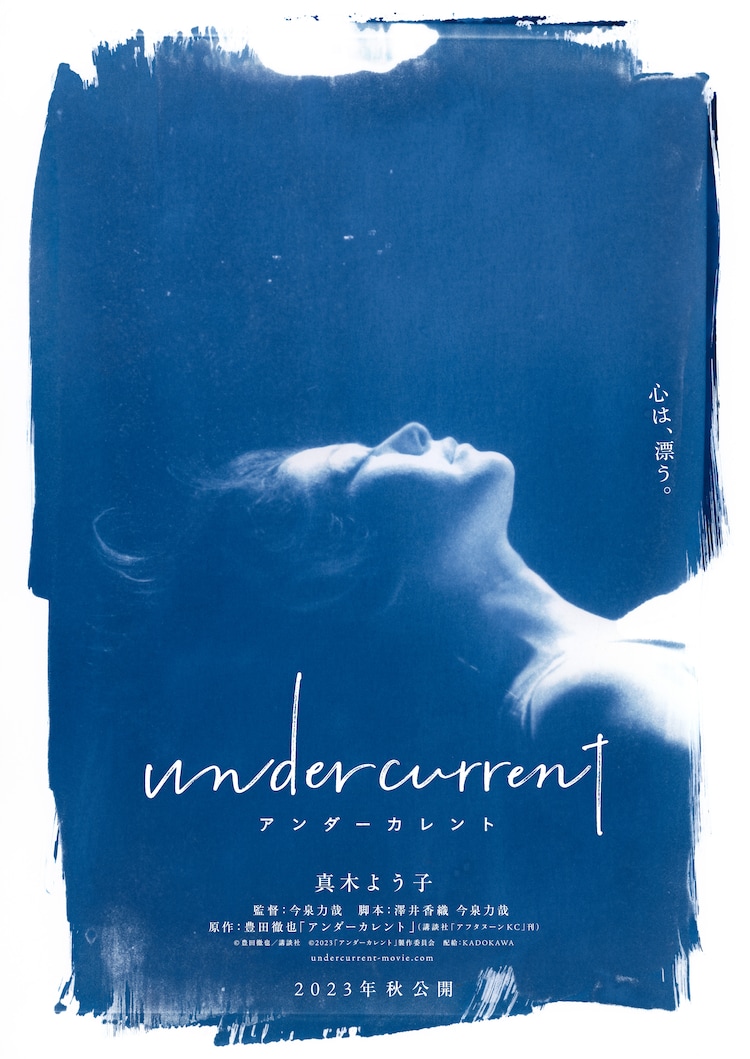
Undercurrent (アンダーカレント, Rikiya Imaizumi, 2023)

Part way through Rikiya Imaizumi’s adaptation of the Testuyua Toyoda manga Undercurrent (アンダーカレント) a detective asks his client what she thinks it means to “understand” someone. Of course, she doesn’t really have an answer, and the film seems to suggest there isn’t one because we are forever strangers to ourselves let alone anyone else. We do things without knowing why or that somehow surprise us, while the actions of others can an also be be worryingly opaque. But then perhaps you don’t really need to “know” someone in order to “understand” them and as someone else later says perhaps it’s true enough that most people don’t really want the truth but a comforting illusion. 

But then Kanae’s (Yoko Maki) illusions aren’t exactly comforting. Her husband of four years Satoru (Eita Nagayama) suddenly disappeared during a work trip a year previously and has not been heard from since. She turns the television off when the news announces details of a decomposing body discovered near a set of electrical pylons, but on another level she’s sure that Satoru is alive and chose to leave her for reasons she can’t understand. Kanae tells a friend that what pains her most is thinking that in the end she wasn’t a person Satoru felt he could share his worries with so she was powerless to help him. Then again, there’s something in Kanae that is equally closed off, a little distant and otherworldly as if she were also putting up a front to keep her true self submerged.

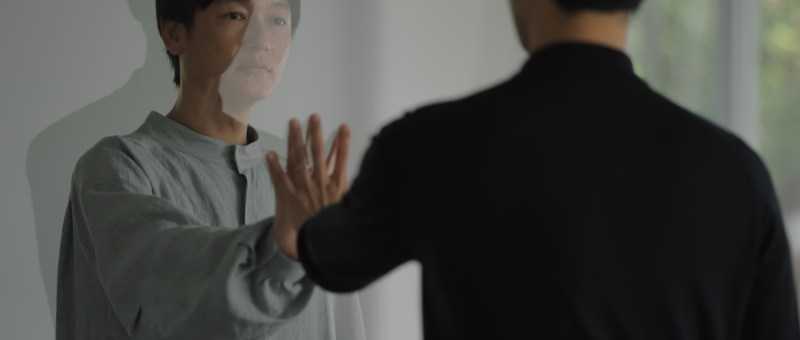
The detective (Lily Franky), whose name is “Yamasaki” yet allows people call him “Yamazaki” because it’s easier for them, says of Satoru that his “cheerful,” ever smiling nature may also have been a kind of masking designed to dissuade people from looking any deeper. Someone else admits that they lied mostly to fit in, be what others wanted them to be, only to be caught out by the gulf between their genuine feelings and and the ever expanding web of their lies. Caught in a kind of suspended animation uncertain if Satoru will ever return and if and how she should continue with her life, Kanae ends up taking in a new assistant at her family bathhouse. Hori (Arata Iura) is the polar opposite of the way her husband is described, silent, soulful and somehow sad. We might be suspicious of him, his arrival seems too coincidental and the way he looks at some children running past in the town perhaps worrying. Yet how can we judge based only on his silence knowing nothing else of his history? Nevertheless, he may understand Kanae much better than anyone would suspect and may be the comforting presence from her recurring nightmares.

In her dreams, she’s plunged into water with a pair of hands around her neck. Unknowingly, Hori asks her if she’s ever really wanted to die and she can’t answer him even if it seems to us that the dreams reflect her desire for death, to be submerged in a sea of forgetfulness. Yet we later learn they come to have another meaning reflecting her long buried trauma and the reason for her own listlessness. These are the undercurrents that run silently through her, waves of guilt and grief that obscure all else. Disappearances have happened around her all life and seem only to increase, another bath house owner seemingly disappearing after a fire having promised to sell her his boiler. Yet through her experiences, she comes to fear them less reflecting that anyone could leave at any moment and that’s alright, as Hori had said nothing’s really forever. 

Even so, she regrets that there couldn’t have been more emotional honesty from the beginning then perhaps no one would need to disappear without a word. Confessions are made and the air is cleared. Someone had said that no one wanted the truth, but it seems Kanae has chosen it as perhaps symbolised in her decision to call Yamasaki by his actual name rather than the one he allows people to use because it’s too much trouble to correct them. Aside from his multiple names, Yamasaki is a strange man who holds meetings in karaoke boxes and theme parks though perhaps because he simply thinks Kanae could use a little cheering up. In more ways than one, it’s the ones left behind who are left in the dark, but they may be able to find their way out of it with a little more light and reflection.


Screened as part of this year’s Japan Foundation Touring Film Programme.

Original trailer (English subtitles)

Amiko (こちらあみ子, Yusuke Morii, 2022)

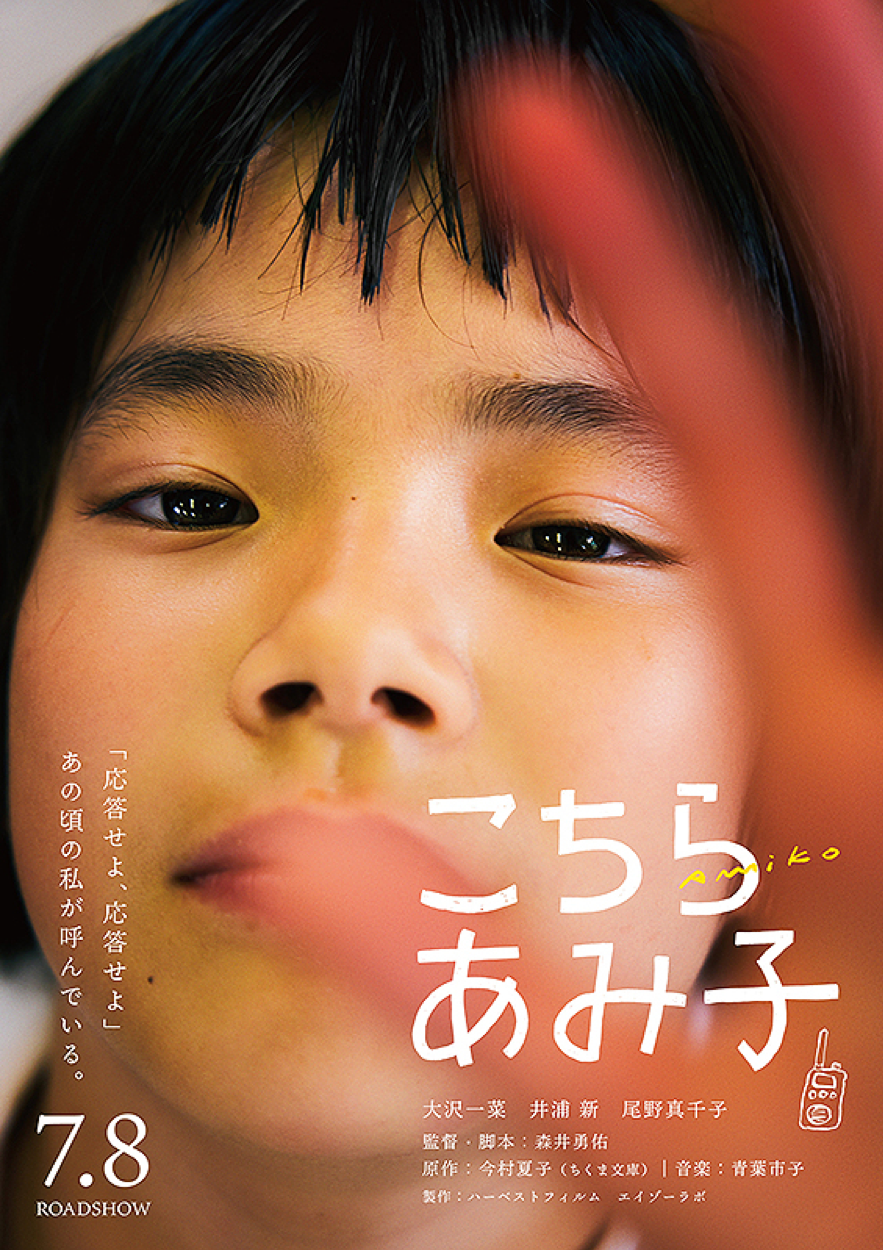
Is there a sadder thing than a solo walkie talkie? The heroine of Yusuke Morii’s quirky dramedy Amiko (こちらあみ子, Kochira Amiko) is given a pair of retro presents for her birthday, a set of toy radios and a disposable camera each intended to help her bond with the baby brother expected to join the family in the immediate future, but the sad fact is that Amiko has no one else to communicate with and largely lives in her own little world like a ghost in her own home. 

Even so, she doesn’t seem to be particularly lonely and is only just beginning to realise that she’s a little different from the other kids. Living in a nice house in tranquil seaside town in Hiroshima, Amiko appears to be a happy little girl with a loving family around her even if her relationship with step-mother Sayuri (Machiko Ono) who teaches calligraphy in a back room may be a little strained. Sayuri disapproves of Amiko’s unusual behaviour and for some reason does not allow her to join the other children at the classes leading Amiko to peer in from a crack in the door until one of the other kids inevitably notices her. 

In an odd way, Amiko’s situation improves when the family encounters a tragedy, losing the baby they’d all been so excited about welcoming. Touched by her attempts to look after her as she recovers at home, Sayuri warms to Amiko and embraces her as a daughter finally inviting her to take part in the calligraphy classes once they resume. But a well-meaning gesture on Amiko’s part that from an adult perspective is insensitive and inappropriate throws Sayuri into a depressive spiral from which she never recovers. The rest of the family describe Amiko’s gesture as a “prank” as if she did it with malicious intent when really it was just her way of dealing with her grief. Of course, everyone else is trying to deal with their grief too and each going about it in their own way so they don’t have time or really the inclination to sit down with Amiko and help process what’s just happened to their family. 

Amiko becomes convinced that there’s a ghost haunting her balcony and it must be that of her younger brother who hasn’t made it to Heaven yet and is trying to come home, though her attempts to ask her father about it see her literally pushed away while he can’t see her confusion as anything other than a hurtful fantasy. There is indeed a ghost haunting her family, but it’s the grief they cannot share with each other or bear to explain. Amiko’s older brother Kota (Kensei Okumura) begins to go off the rails and then leaves the family entirely to join a biker gang instead. Amiko’s father (Arata Iura) doesn’t even bother to look for him, expressing only mild confusion when Amiko points out that Kota doesn’t come home anymore answering only that he’s sure he saw him “the other day”. 

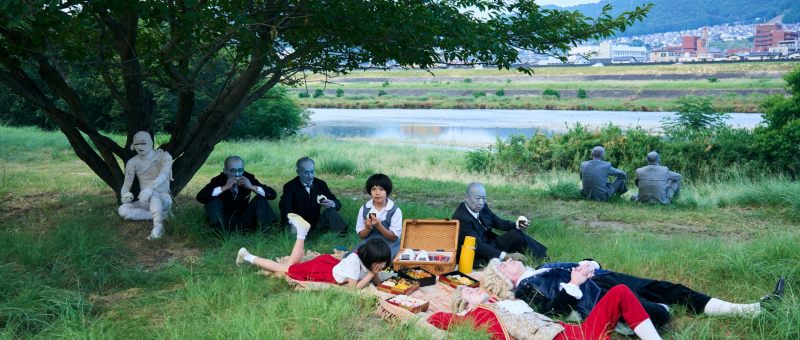
It’s no wonder then that Amiko retreats into a fantasy world, singing a song to herself to ward off ghosts while followed around by several of them including for some reason mummies and people from 18th century Europe. She in turn follows a boy she likes seemingly oblivious to the various ways he attempts to avoid her, while otherwise ignoring a loudmouth kid who is the only other person willing to talk to her despite her classmates’ conviction that she is simply “weird”. Amiko maybe beginning to realise this herself, wondering if her forced courtship may have strayed into the “creepy” and asking directly for advice wanting to know what about her seems to make others uncomfortable or embarrassed. After a period of mild neglect, Amiko even starts walking around school in bare feet because she doesn’t have indoor shoes or clean socks but most seem to just regard it as another expression of her oddness. As the other kid points out, it’s both a symbol of her “freedom” and one of the reasons she gets bullied. Amiko’s story is sad, but Amiko doesn’t know that and simply goes on living in her own little world with its strange logic simply waving to the departing boats of the floating dead with a cheerful “I’m fine” while otherwise abandoned on an unfamiliar shore with only herself to rely on.


Amiko screens in Frankfurt 8th June as part of this year’s Nippon Connection.

Original trailer (no subtitles)

Torso (トルソ, Yutaka Yamazaki, 2009)

A traumatised woman overcomes her sense of loneliness by sharing her life with a limbless inflatable doll in the aptly named Torso (トルソ). More than a treatise on urban disconnection, the directorial debut from Yutaka Yamazaki is both an exploration of the lingering effects of childhood trauma and a contemplation of contemporary womanhood, the changing relationship dynamics between men and women, and the extent of bodily autonomy in an often conformist society while ending on a note of ambiguity which may represent either liberation or resignation. 

34-year-old Hiroko (Makiko Watanabe) works at an apparel studio where she is among the older of the employees and somewhat aloof with her colleagues, declining invitations to hang out after work or attend the singles mixers one of the other girls is forever organising. She is indeed the sort of person who likes to keep her distance, ostensibly preferring her own company spending her time working on a patchwork quilt but secretly cuddling up at night with a slightly smaller than life-size inflatable male torso which is anatomically correct yet has no head, arms, or legs and into which she must herself breathe life only to let it out again later. Her only other real connection is with her younger half-sister Mina (Sakura Ando) who is her polar opposite in terms of personality, a bubbly, energetic woman who seems to crave the kind of contact her sister is largely unable to give her. 

Even so despite claiming to hate having other people in her space, Hiroko is indulgent of Mina always giving in and allowing her to stay at her apartment at one point for an extended period of time even if not entirely happy about it. While Hiroko has eschewed male contact for the 100% controllable union with the torso pillow, Mina is trapped in an abusive relationship with a man, the otherwise unseen Jiro, whom we later learn to have been a long term boyfriend of Hiroko. Theirs is a relationship frustrated and defined by unresolved resentments, Hiroko complaining that Mina always takes everything she treasures beginning it seems with her mother’s love. A colleague of Hiroko’s around her own age laments that at their age weddings and funerals are the only occasions that they visit their hometowns, but Hiroko is reluctant to visit for reasons other than the usual awkwardness between grownup children and their parents, dressing up and catching a train to attend the funeral of the stepfather we gather must have abused her while her mother (Miyako Yamaguchi) turned a blind eye but finally unable to go through with it. 

For Hiroko’s mother, Hiroko is the embodiment of her resentment towards her first husband who left her, later on another visit snapping back that she must have got her “unpleasant personality” from him while otherwise praising Mina who admittedly has bad taste in men but a generous heart. Hiroko meanwhile projects her own resentment onto her mother who failed to protect her from abuse she wonders possibly because of the resentment she feels towards her while she also projects her feelings of jealous inadequacy onto Mina who may also in a sense resent her for being unable to return the sisterly affection she desires. As she replies, she took Hiroko’s things because she only wanted her love even if vicariously through the otherwise abusive relationship with Jiro whose child she is also carrying. 

In many ways it’s Mina’s pregnancy which forces Hiroko to reassess her life, not least in the accusation that she had wanted to carry Jiro’s child herself. At 34 Hiroko is perhaps at a moment of crisis, her frosty mother coldly telling her she’ll soon have to “give in” and abandon her solitary life for a conventional marriage (despite her recent widowhood her mother has already started another affair with the guy from the funeral parlour). On the other hand, are men actually very necessary anymore or has true independence become not only viable but a respected choice? Despite the constant mixers, some of the younger women at the office have decided not to wait for marriage and have already put a foot on the property ladder getting a good deal on a mortgage by starting young to own their own place and achieve financial independence. “You can’t rely on men these days” one of others agrees while recognising that choosing this kind of independence does not necessarily mean a rejection of romance or long term relationships. 

For her part, Hiroko is wary of men who do in the main seem to be sleazy and predatory, visibly flinching as an over-friendly clerk at the car rental office repeatedly attempts to lean across her while she’s sitting in the driving seat. Aside from its obvious insentience, the torso is symbolically unable to harm her in having no arms to strike, no legs to kick, and no head to hurt while preserving the part she most craves buried in its empty chest which she cradles constantly like a child with a favourite toy. Her attachment to it is not purely physical but emotional, taking it on a mini holiday to the beach dressed in a pair of tiny speedos as they frolic in the sea together alone on a private beach. Yet even this body as empty as she feels her own to be can also betray and be betrayed, another treasure to be stolen if only in the breaking of a spell on realising that Mina has discovered her secret. 

Mina’s final decision is both old-fashioned and ultra-contemporary, vowing to go back to the country and raise the child alone while in a symbolic sense becoming her mother in intending to take over her old part-time job at a nursing home. Hiroko meanwhile is preoccupied with the idea that she’s sacrificing her dreams and aspirations because of something that’s essentially Jiro’s fault, in part stripping her of her own agency in making her decisions and imposing on her the view that struggling in the city even if it doesn’t really suit you is inherently better than making a simple life at home. A brassy gravure model (Sora Aoi) who makes a point of the fact her body is business similarly looks down on Mina, suggesting that she’s simply weak and if she really wanted to pursue her dreams she’d have an abortion without a second thought. Yet does it really need to be an either or? The decision that Hiroko finally comes to may suggest that it might, or then again perhaps she’s merely freeing herself of her long held trauma and looking to lead a more emotionally fulfilling life. “We’re just starting out” Mina shouts back from from across the ticket barriers as she leaves hinting at new beginnings for each of the sisters having each at least laid something to rest. 


Original trailer (no subtitles)

Parasite in Love (恋する寄生虫, Kensaku Kakimoto, 2021)

A pair of exiles from mainstream society develop a bond that allows for mutual evolution, but are their feelings genuine or the result of a love bug and does it really matter anyway? Kensaku Kakimoto’s adaptation of the light novel by Sugaru Miaki Parasite in Love (恋する寄生虫, Koi suru kiseichu) finds a germophobic man planning to plant a virus to destroy the world he thinks has rejected him coming to care for a young woman who cannot face the glare of a judgemental society while asking if love were a sickness would you really want to be “cured” and if its sacrifice would be worth the price of living a “normal” life. 

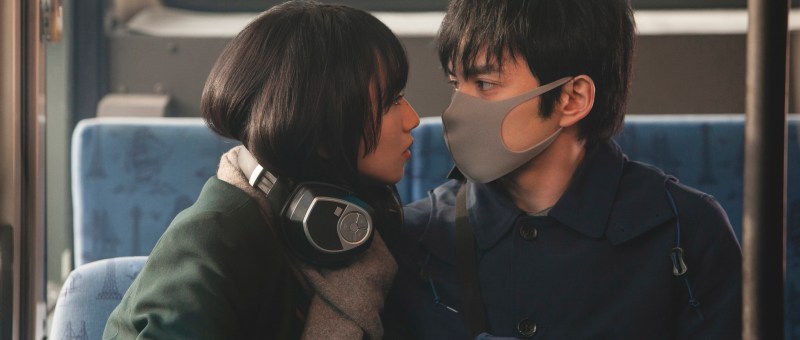
Kosaka (Kento Hayashi) lost his parents to suicide at eight years old and has been alone ever since. He is terrified of the world around him believing that everything and everyone is covered in dangerous pathogens and leaves his apartment, where he is busy writing a virus designed to disrupt communication between devices in an ironic revenge for his own inability to connect, only when necessary. On one such trip, however, he runs into high schooler Hijiri (Nana Komatsu) who cannot bear to see other people’s eyes and wears headphones to block out the interpersonal noise of the mainstream society. Where Kosaka chooses isolation because he fears infection, Hijiri is convinced she has a life-limiting parasite in her brain which is infectious to others and does not want to pass it on. 

Approached by an intimidating middle-aged man, Izumi (Arata Iura), Kosaka is charged with “looking after” Hijiri in part to find out why she’s been skipping school. She too lost her mother to suicide which her grandfather (Ryo Ishibashi), a mad scientist, has told her is down to a parasite in her brain, the same one that Hijiri has, which eventually drove her to take her own life while it seems simultaneously rejecting the role of his own authoritarianism in which he attempted to force her to have the parasite removed against her will refusing to listen when she insisted her feelings were her own whether he chose to recognise them or not. Hijiri’s quest is similarly one for personal autonomy in the face of her grandfather’s attempts to excise what he sees as abnormal in what amounts to a modern day lobotomy. 

Then again, it’s difficult to argue with the thesis that the relationship between Hijiri and Kosaka is inappropriate given that he is a 27-year-old man and she is a high school girl, which would be one thing if the scientists had not originally forced them together after discovering that Kosaka has the same parasite in his brain and the mutual evolution their pairing would produce would allow them to remove the problematic bug more easily. As the pair hang out together doing “normal” things such as riding public transportation and eating in cafes, gradually the masks and earphones disappear as they give each other the strength to face a hostile environment with an open question mark over whether it’s all down to the bugs or they’ve fallen in love for real. Hijiri’s dilemma is just as in the story she tells of a man who was infected with a parasite that made him love his cat to the exclusion of all else, if they really want to be “cured” or if the price of sacrificing their love and the essence of who they are is worth paying for the right to reenter mainstream society. 

As Izumi admits, our bodies are full of bugs and perhaps some of them have more power over us than we’d like think. How much control do you really have over your own biology anyway? Kakimoto’s quirky drama only ever flirts with darkness in Kosaka’s original desire to burn the world out of his intense resentment, and in the mad scientist grandfather’s patriarchal insistence on controlling his granddaughter’s emotional life, removing any hint of what is deemed unconventional to turn her into a perfectly “normal” member of a conservative society. Suggesting that romantic destiny may indeed be akin to a parasitic infection, the film nevertheless comes down on the side of the lovers as they discover solidarity in difference and decide to live their lives the way they see fit parasites or not. 


Parasite in Love streamed as part of this year’s Nippon Connection.

Original trailer (no subtitles)

Skeleton Flowers (かそけきサンカヨウ, Rikiya Imaizumi, 2021)

The increasingly prolific Rikiya Imaizumi has become most closely associated with zeitgeisty youth romance accurately capturing the fears and anxieties of 20-somethings in contemporary Japan but brings his characteristically mellow touch to the classic coming-of-age tale in adapting Misumi Kubo’s short story Skeleton Flowers (かそけきサンカヨウ, Kasokeki Sankayo). In contrast to the gloominess of the title, teenage angst is never where you’d expect it to be as the variously pre-occupied pair at the film’s centre strive to deal with their problems with maturity and mutual compassion. 

You might for instance expect Yo (Sara Shida) who has been raised by her father, Nao (Arata Iura), since her mother left the family when she was three to feel jealousy or resentment when he sits her down and tells her that he’s fallen in love and wants to get married, especially as the woman he’s fallen in love with, Yoshiko (Akiko Kikuchi), has a small daughter of her own, Hinako. Attempting to be sensitive, Nao frames the new arrangement in a positive light in that Yo will be have more free time to be a regular teen and hang out with her friends rather than skipping out on after school clubs to take care of the household chores, a spin which could backfire in that Yo has obviously been used to being the lady of the house and might feel as if a responsibility she was proud of carrying is being taken away from her or that she’s being displaced by the new maternal presence of Yoshiko. She may in fact feel a little of this, but rather than lashing out or rebelling against the change in her familial circumstances she does her best to accept it with good grace while simultaneously prompted into a reconsideration of the relationships between parent and child meditating on the absence of her birth mother and wondering how and why she could have come to leave her behind. 

Riku (Oji Suzuka), her sometime love interest, had started a discussion in their friendship group about their earliest memories Yo unable to come up with anything on the spot but later remembering her mother carrying her into the forest and showing her the skeleton flowers of the title which appear bright white when dry but gradually become transparent as they absorb water. Later she remembers something else unsure if it’s a memory or a dream, a feeling of being suspended in mid-air as her parents argued as if everyone had forgotten she existed. Riku too frequently states that he’s “nothing at all”, feeling himself lost and directionless after being diagnosed with a heart condition later forced to accept that his life will never be the same as it was and his choices are now limited in ways they might not have been before. His health anxiety ironically leaves him emotionally numb, unable to identify let alone express his feelings as he becomes close not only to Yo but another, much more direct, girl in his class Saki (Tomo Nakai) who later does him the favour of explaining exactly what his problems are hoping to jolt him out of his emotional inertia while taking him to task for having been unintentionally condescending in his innate kindness. 

It’s this innate kindness that eventually sees both the teens through, each approaching their various worries with a mature compassion. Riku had felt uncomfortable in his familial home and jealous of Yo’s “real family” as she comes to accept her new relationships with Yoshiko and Hinako, but himself comes to understand the complicated relationship between his overbearing grandmother and lonely mother as one of mutual support getting another tip from Yoshiko that even if he feels has no particular talents, also jealous of Yo’s artistic prowess, his ability to support those around him is a talent in itself and an important part of the whole. A robust emotional honesty and the willingness to think things through calmly eventually lead stronger bonds between all concerned, Yo forgiving her birth mother while also embracing a new maternal relationship with Yoshiko, while Riku gains a new perspective of his own and even if he still hasn’t quite learned to identify his feelings is more comfortable with expressing them directly. A gentle, empathetic coming-of-age tale Imaizumi’s teenage drama roots itself in a world of fairness and compassion that allows each of the teens the space to figure themselves out while helping others to do the same no longer transparent in the rain but whole and fully visible not least to themselves. 


Skeleton Flowers streams in the US until March 27 as part of the 14th season of Asian Pop-up Cinema

Original trailer (English subtitles)

Air Doll (空気人形, Hirokazu Koreeda, 2009)

“Was everything you saw in this world sad? Was there something, anything, what was beautiful?” the heroine of Hirokazu Koreeda’s exploration of urban loneliness Air Doll (空気人形, Kuki Ningyo) is asked by her creator though he can offer her few answers for the strange mystery of her life. Like a child, she takes beauty where she finds it yet much of what she sees is indeed sad as she reflects on the disconnected lives around her, the emptiness and futility of life in the contemporary society where everything is just a substitute for something else which cannot be obtained. 

As for herself, she is quite literally empty inside, an inflatable sex doll owned by middle-aged family restaurant waiter Hideo (Itsuji Itao) who has given her the name of his ex, Nozomi (Bae Doona), which ironically means hope, wish, or desire though not generally of the sexual kind. Yet one day she suddenly wakes up and begins to explore the world rejoicing in its new sensations feeling the rain on her hands and the wind that sounds the chimes as she watches her neighbours go about their daily routine. Dressed in the French maid’s outfit picked out for her by Hideo she gets a job at a local video store and begins living a more independent life while learning how to operate in human society. She feels herself out of place but is repeatedly told that there are others like her, mistaking her literal emptiness for their spiritual despair. 

Yet that sense of emptiness and futility is evident from Nozomi’s first forays into the human world in that the first act of mundanity she witnesses is the bin men sorting rubbish for disposal. “Unfortunately they’re non-burnable” Nozomi’s creator explains when she visits him in search of answers revealing he throws out the broken dolls that are returned to him once a year, “after all, once we die we’re burnable garbage. It’s not such a big difference” he adds, though as it turns out it is quite a big difference to Nozomi in ramming home to her that she can never become human and will always be something else, an inorganic “substitute” for something perceived as the “real”. 

“Your only flaw is that your body’s so cold” Hideo ironically laments as he warms her up in the bath, something she is told repeatedly to remind her that though she has discovered a heart it does not beat and she is not “alive”. Yet an old man (Masaya Takahashi) seeking a different kind of comfort later remarks that those with cold hands often have warm hearts as he reflects on his own life as a “substitute” teacher while she looks over the pictures of the many dogs he’s had through the course of his life as substitutes for the traditional family that have only left him feeling lonelier through their inevitable absences. There is perhaps in this a slightly conservative and uncomfortable implication that the loneliness we see in everybody that we meet is partly caused by the decline of the traditional family itself partly a consequence of the shifting gender roles of the later 20th century society. When they first meet, Nozomi has been rejected by a group of local mothers for inappropriately cooing over a baby in a pushchair the old man comforting her with a tale of the mayfly which is itself empty inside existing only to give birth and then die its own life defined by futility. Nozomi can never truly be human, but more than that she can never truly be a woman because she cannot reproduce as signalled in her final exchange with a little girl in her neighbourhood who swaps her beaten up and broken doll, a substitute for her absent mother now symbolic daughter to Nozomi, in exchange for her ring, a symbol of adulthood. 

In this way Nozomi becomes herself a symbol of something that is broken, an active barrier to societal happiness in providing a way for men like Hideo to escape the responsibility of the traditional family by satisfying his sexual desire through a fantasy of intimacy with an inanimate substitute. When Nozomi throws her pump away, Hideo buys a new model and when she confronts him he asks her to go back to being a passive doll because he finds all the human stuff “annoying” and only wants a woman who can be a selfless embodiment of his desires, will never talk back, challenge him, or hurt his feelings. Meanwhile, when her boss at the store (Ryo Iwamatsu) who seems have experienced a recent familial breakdown of his own blackmails her into having sex with him in the bathroom he is conversely annoyed by her passivity while tearfully calling out his wife’s name. Even her innocent love for coworker Junichi (Arata Iura) has its darkness, not only does she suspect she’s merely a substitute for his ex, his fetishisation of her revolves around his ability to take control over life by letting out her air and then permitting her to live by blowing his own back into her. 

“I am an air doll. A substitute for sexual desire” is how she introduces herself, preoccupied with her literal emptiness yet along with a heart discovering a sense of self as she interacts with others, beginning to wear her own clothes rather than those purchased for her by Hideo. At a moment of crisis she is surrounded by all the treasures she’s collected which ironically include a number of ornaments intended for a doll’s house including a tiny simulacrum of a cake which reappears in her imaginary birthday party suggesting that the only true happiness is to be found in wishful fantasy while the “real” will only ever disappoint. Nevertheless, she uses her last breath to bring happiness to all she can, uniting the old man with a lonely old woman (Sumiko Fuji) who confesses to random crimes just to have someone to talk to. Shot with unusual fluidity by Mark Lee Ping-Bing, Koreeda captures a society in flux in which the easy convenience of disposable consumerism has begun to replace human relationships and left us all empty inside. 


Air Doll in in US cinemas and on VOD Feb. 4 courtesy of Dekanalog

Trailer (English subtitles)