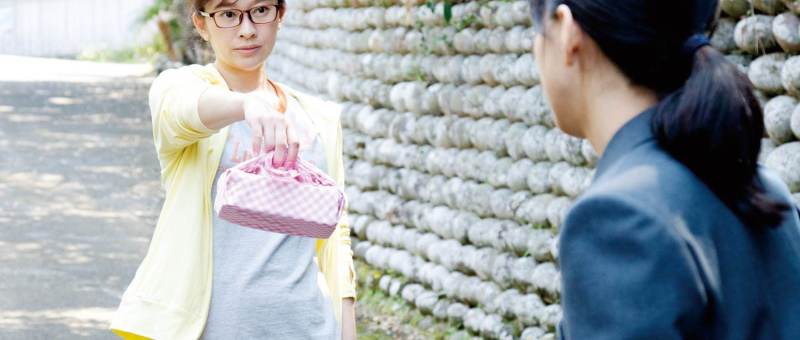
 Childhood’s a funny thing. Obviously lacking life experience and used to being the centre of someone’s universe, children can be curiously self-centred, little knowing the hard work their parents put in to try and make them happy until they suddenly realise years later that their mothers must have toiled through the night just to finish that costume for fancy dress that they didn’t really want to wear. Fed up with her teenage daughter’s sullen indifference, the heroine of Bento Harassment (今日も嫌がらせ弁当, Kyo mo Iyagarase Bento) comes up with an ingenious solution – increasingly elaborate lunchboxes designed to vent her frustration in a way that’s impossible for her daughter to ignore.
12 years previously Kaori (Ryoko Shinohara) was blissfully happy with her two little daughters, Wakaba (Rena Matsui) and Futaba (Kyoko Yoshine), but then her husband was killed in an accident and her life was turned upside down. Now she lives alone with her youngest daughter Futaba who has entered something of a rebellious phase, never directly talking to her mother but communicating through pithy, passive aggressive texts. In a bid to get her attention, Kaori decides to play her at her own game – by becoming so annoying that she’s impossible to ignore. From the day that Futaba enters high school she commits herself to making one “annoying” bento every day, eventually adding a message or two into the mix. Much to Futaba’s chagrin, her mother’s bento becomes a cause of daily excitement among her school friends who can’t wait to see how her mother has chosen to troll her on this particular day.
Perhaps tellingly, Kaori and her daughters live on a small island, Hachijojima, which is technically classed as “Tokyo” though in another sense almost as far from the bustling metropolis as it’s possible to get. There are no trains, or shopping malls, or convenience stores, just cows and wholesome wisdom. Caught between one thing and another, Futaba quits her after school athletics club to sit in a field and write angsty poetry about how she’s all alone in the universe. She doesn’t understand why her mum’s so extra and is confused by her attraction to a childhood friend (Kanta Sato) who has now become buff after developing an obsession with taiko drumming. Beginning to figure out why her daughter’s so moody lately, Kaori doubles down on the annoying bento plan but tries to put a little guidance in there too to push the indecisive Futaba towards making concrete decisions about her future.
Unlike the typically self-sacrificing mothers of “hahamono”, Kaori has her spiky side and never particularly looks for thanks or recognition from her daughters only basic civility. She works two jobs (one in a bento shop and another in a pub) and still makes time to devote herself to the petty art of annoying bento which she also posts online on a blog which becomes an instant hit with similarly stressed out parents looking for a little innocent revenge. Through the blog she finds herself bonding with Shunsuke (Ryuta Sato), a widowed father of a five-year-old boy who is struggling to perfect the art of bento though his aim is less revenge than trying to bond with his son who obviously misses his mum. Yet even “annoying” bento comes from a fundamental place of love – after all, you don’t spend all night cooking to send a passive aggressive message to someone you don’t like. Rising to the challenge, Futaba refuses to admit defeat and makes a point of eating all of the annoying bento without a word of complaint, allowing a kind of communication to arise between herself and her extremely patient mother.
Seeing all her dreams crushed on one extremely bad day, however, makes Futaba lose faith in her mother’s gentle wisdom. Kaori tries to convince her that nothing’s ever really “wasted” because even when things don’t work out the way you hoped they still teach you something else but that’s a hard lesson to learn when you’re young and unused to disappointment. Nevertheless, thanks to her mother’s relentless trolling and some careful words from her sister, she comes to realise just how much her mother has sacrificed on her behalf and understand her mother’s love. A warmhearted tale of mother daughter bonding and an ode to persevering through life’s various difficulties, Bento Harassment is a wholesome treat and inspirational tribute to living life without regrets.
Bento Harassment screens in Chicago on Sept. 27 as part of the ninth season of Asian Pop-Up Cinema.
Original trailer (English subtitles)





 Chicago’s
 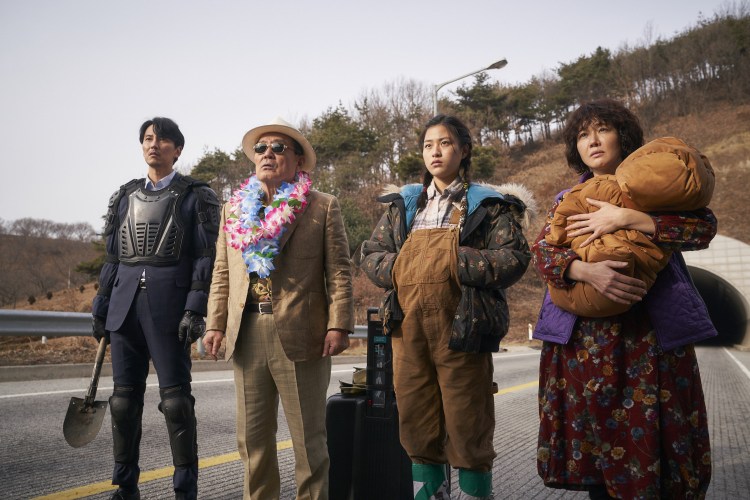 A weird family take in the “zombie” victim of nefarious pharmaceutical plant experimentation and decide to keep him as a pet, especially once they realise that his bite has healing qualities with intense marketability. Hilarious off the wall zombie comedy.
 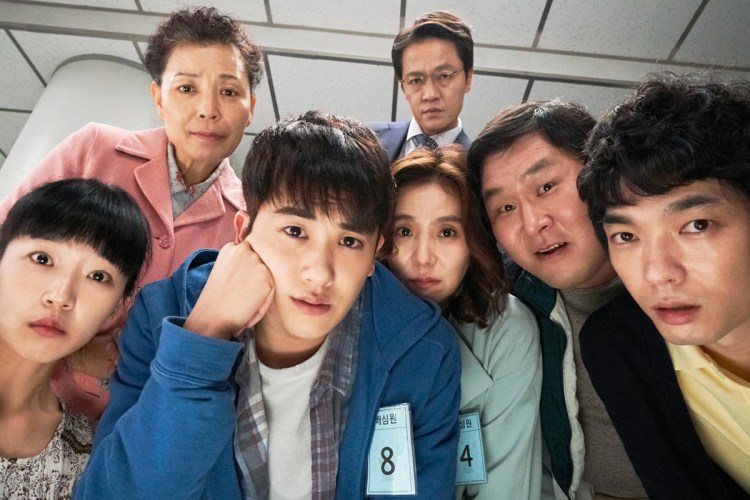 Courtroom comedy from Hong Seung-Wan inspired by Korea’s first jury trial in 2008. A young man is accused of murdering his mother. All the evidence points to his guilt and he has also confessed to the crime but one juror isn’t quite convinced.
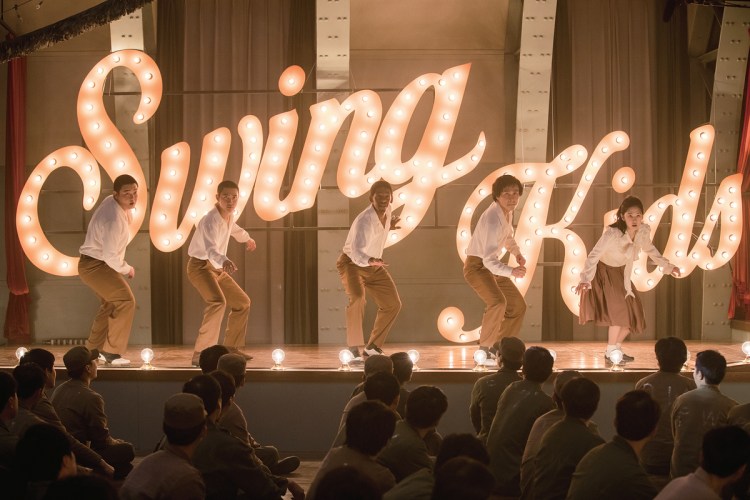 A North Korean prisoner of war falls in love with tap dancing after being co-opted into a group by a former broadway dancer turned US Army captain in Kang Hyung-chul’s musical drama.
 Drawing inspiration from classic ink paintings, Zhang Yimou returns to the world of wuxia with a tale of balance and duality as a general’s double processes his conflicted loyalties in a world in which the king is weak and his enemies strong.
  A little boy gets sent to stay with grandpa over the summer, but grandpa unexpectedly gets a message about an old friend he hasn’t seen in a long time and decides to drag his grandson halfway across the country on a makeshift vehicle to go visit him.
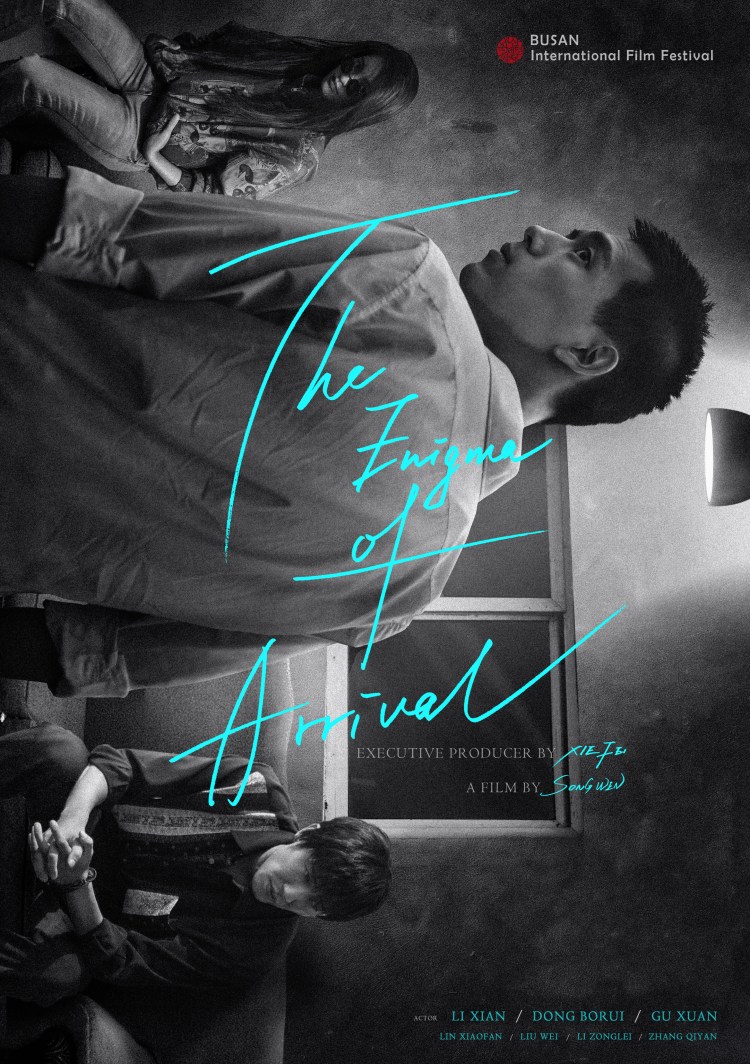
 A group of former uni friends reunite years after the disappearance of a friend broke them apart in an experimental drama from the founder of the “Chinese Sundance” Xining FIRST International Film Festival, Song
 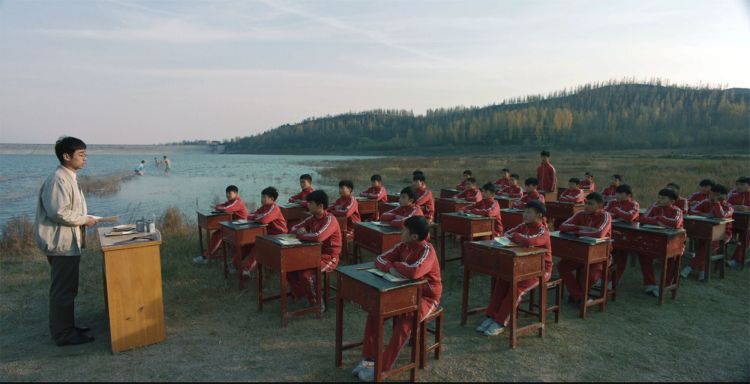 The new teacher at a martial arts school is disheartened to discover his pupils’ lack of interest in education but bonds with a lonely young boy ironically disinterested in martial arts but talented in his studies.
 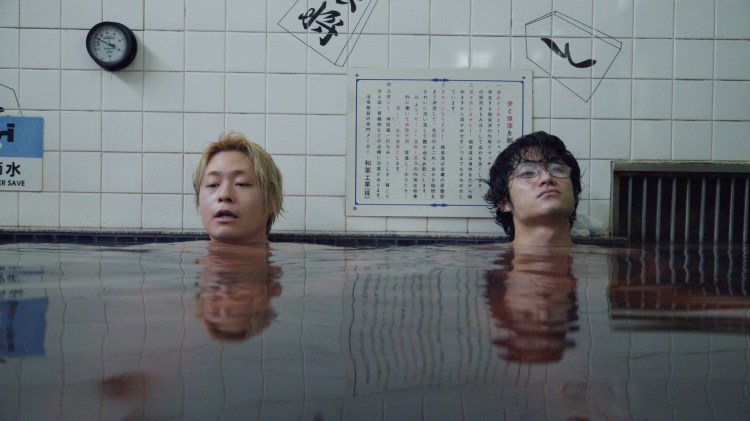 An alienated young man who graduated from Todai but remains totally opposed to the rat race ends up taking a job in a bathhouse after a conversation with a pretty girl he went to high school with, only to find out that the bathhouse doubles as a yakuza killing ground after hours.
  An ambitious executive’s dreams of promotion are dealt a serious blow when she ends up getting hypnotised by a shady theme park entertainer and finds herself breaking into song and dance like the heroine of an old fashioned Hollywood musical every time she hears music in the latest madcap comedy from Shinobu Yaguchi (
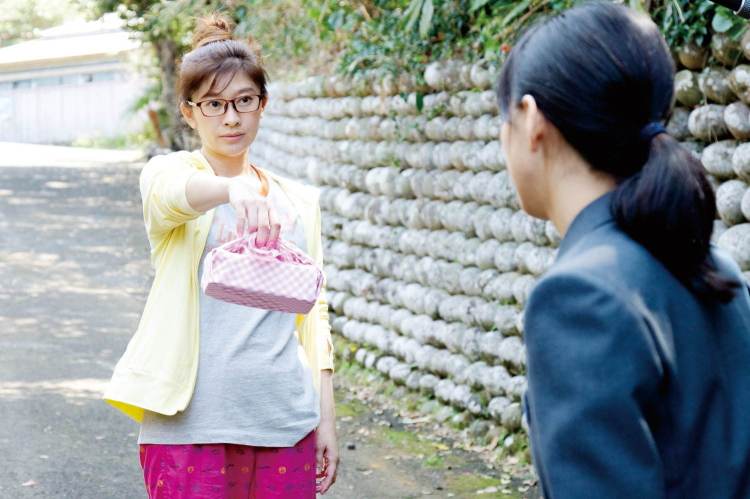 A single mother fed up with her teenage daughter’s nonsense starts sending passive aggressive messages through bento in a tale inspired by a real life blog.
 A man ends up having to clean a disused pool after a film shoot but falls asleep on an inflatable raft. When he wakes up, he finds that the water level has fallen so low he can no longer climb out. He screams for help, but the only creature to hear him is a crocodile…
 A young man from a small island where the only cell phone signal is found on a rocky outcrop desperately tries to help his sister and her child escape an abusive marriage in Finland.
 Johnnie To’s beautifully choreographed musical set in the high stakes world of corporate finance.
 A poor boy missing his dad and a resentful teacher dispatched to a remote island against his will eventually bond through the unlikely medium of traditional dance in Heather Tsui’s charming coming of age drama.
  A Philippine take on the
  A popular novelist’s marriage to his childhood sweetheart is on the rocks thanks to his womanising ways. When an attractive woman moves into the flat above him, he quickly begins having yet another affair but when she threatens blackmail his thoughts turn murderous…
 A jaded lawyer agrees to take on a seemingly open and shut case of a young man who wakes up next to the dead body of a billionaire’s daughter with no idea what happened only to find himself caught up in a wider conspiracy.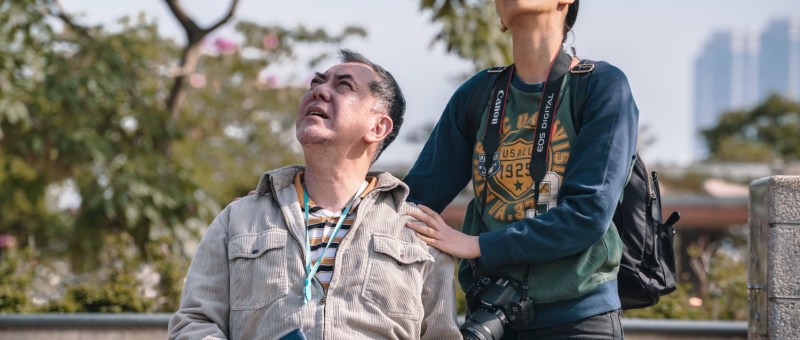








 Windows on Worlds