“You’re a real weirdo, aren’t you?” the lonely hero of Junji Sakamoto’s existential psychodrama My Brother, the Android and Me (弟とアンドロイドと僕, Ototo to Android to Boku) is constantly told not least by his exasperated and unsympathetic boss but on another level may be the most human of them all longing for a sense of connection in a world which seems to have rejected him to the point that he is no longer sure whether or not he actually exists. Quite clearly drawing inspiration from Mary Shelly’s Frankenstein, the Modern Prometheus as well as its many film adaptations though most obviously the 1931 Universal Horror classic, Sakamoto’s oblique chronicle of crippling loneliness presents a man estranged from himself but looking for comfort in his reflected image.
Sakamoto opens the film in true gothic fashion, his hero Kaoru (Etsushi Toyokawa) a dark and mysterious figure obscured by an oilskin coat amid the ever falling rain illuminated only by the light of an ominous moon. As we discover he works as a university professor but says nothing to his students other than making an apology for his poor handwriting, sometimes writing with both hands at once as he recreates complex algorithms on an old-fashioned chalkboard. The students all mock him, not least because of a curious neurological condition which prevents him from fully controlling his right leg with the consequence that he is often compelled into strange, jerking movements or else to hop on one foot from place to place. In truth, his errant right leg is a symptom of Kaoru’s sense of displacement in that he does not quite feel it to be his own and experiences only pain when his right heel is in contact with the floor.
It’s this problem with his leg that seems to most irk his boss who later invasively barges in to the gothic western-style mansion/disused hospital where he lives in the company of his nephew, a psychiatrist, who probably means well but offers little more than platitudes in insisting that Kaoru’s leg has simply been left off his internal schematics so all they need to do is mentally reconnect it. His boss meanwhile bizarrely states that Kaoru needs to get well “so that cracked roads can be fixed”, ironically treating his body like a machine that needs to be repaired so that it is optimised for work rather than out of care for another human being who may be in pain. Having barged into Kaoru’s office, he’d discovered his secret project in a highly complex, lifelike robotic arm which was a problem for him because he was supposed to be working on a robot that fixes potholes which seems almost ironic in its banality. In any case, Kaoru also has the rather unfortunate habit of entirely ignoring the person talking to him as if they weren’t even there which is in itself an ironic inversion of the way others see, or more to the point don’t see, him. Kaoru’s boss describes him as creepy because he has no presence, you’re never sure if he’s there or not, but can immediately sense the “giant” presence of his other self, the lifelike android he’s building in his spare time.
The android is in its way his Frankenstein’s monster, an ironic attempt to rebirth himself constructed in the ruins of his family’s abandoned obstetrics hospital. By chance, he meets a young woman (Yuki Katayama) who closely resembles himself and carries her into his laboratory like the Bride of Frankenstein but treats her only with tenderness and sympathy while attempting to fend off his estranged half-brother (Masanobu Ando) constantly hassling him for money to pay for medical care for the father who abandoned him. His mother had instructed him to find his other self which is perhaps what he’s been doing if caught between the Id and Superego of his brother and father. Constant fire imagery including the repeated motif of a burning body in a conventional fireplace keys us in to Kaoru’s positioning as a “modern Prometheus” whose duty it is to keep the fire in while giving birth to himself as manifested in a perfect manmade creation that others may find frightening or uncanny though the android itself has done nothing wrong because it is in essence the embodiment of Kaoru’s frustrated humanity. Featuring sumptuous gothic production design with sci-fi sheen, Sakamoto’s steely, fragmentary drama finds a man in search of himself while also a perpetual exile but discovering a sense of warmth in the uncanniness of a reflected image.
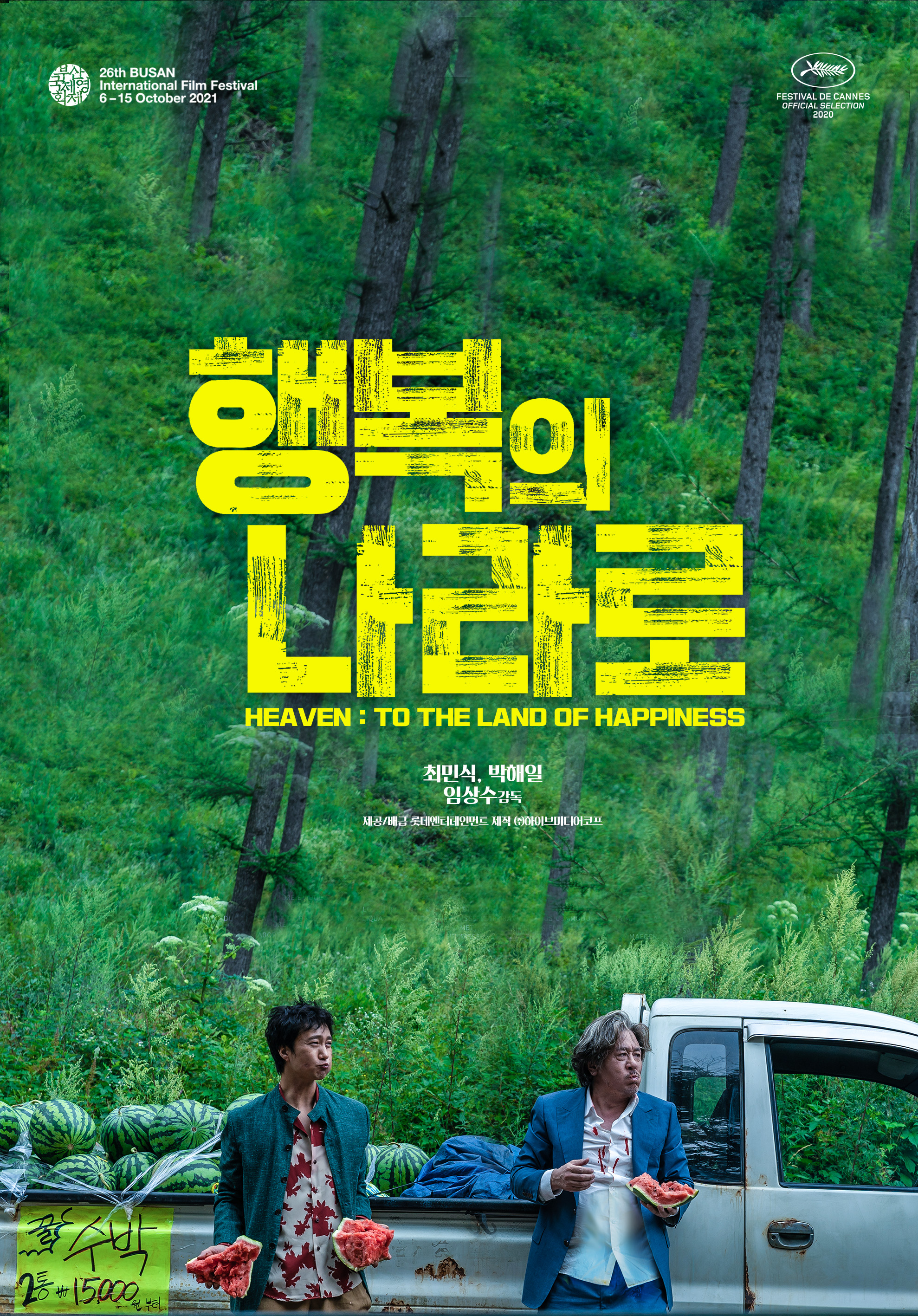
A chronically ill thief and a “poetic fugitive” find themselves on the run from a “philosophical gangster” whose money they unwittingly stole after driving off with his hearse in Im Sang-soo’s playful existential drama, Heaven: To the Land of Happiness (행복의 나라로, Haengbokeui Nararo). In one way or another, all of our heroes are sick or dying, pushed into a moment of introspection which forces them to consider how it is they wanted to live and what for them night constitute a good death while pursued by pettiness and injustice squabbling over the most meaningless but equally impossible to live without thing imaginable, money.
Our narrator, Nam-sik (Park Hae-il), is a youngish man suffering with a chronic illness which has forced him into a life of wandering taking menial jobs at hospitals in order to steal the medicine he needs to treat his condition which otherwise costs more than the average annual salary for a month’s supply. On the day his cover’s about to be blown, he runs into Prisoner 203 (Choi Min-sik) who has been brought in by the local prison only to be told that his brain tumour is now inoperable and in their estimation he has as little as two weeks left to live. Unwilling to die behind bars and longing to see his estranged daughter again, 203 manages to mount an escape attempt with the help of Nam-sik who ends up on the run with him after getting accidentally tasered.
Not only are Nam-sik and 203 each suffering from life-limiting medical conditions, but even the elderly female gang boss, Madame Yoon (Youn Yuh-jung), is also bedridden and apparently at death’s door while in an extreme irony the casino money the guys have accidentally run off with was stored inside an ornate black coffin. Rich man or thug we’re all the same when we die, 203 remarks as he and Nam-sik prepare to bury the coffin before discovering what’s inside, hinting perhaps at the utter pointlessness of the gangsters’ quest to retrieve it. After, all you can’t take it with you and 203 has little need of vast riches now which is another irony seeing as he’d been in prison for embezzlement.
All of those around him constantly describe 203 as a “decent man”, his guard quickly shutting down the outlandish suggestions of a bumbling cop that he may have murdered the owner of an abandoned truck by exclaiming that 203 isn’t the sort of person who would do something like that. In fact, Nam-sik and 203 are responsible fugitives, often giving away large sums of money to those they meet in exchange for the use of a vehicle or some other kind of assistance. 203 doesn’t even want his share of the loot, partly because he rightly assumes it’s only going to bring them trouble, and partly because he no longer has need for it. Nam-sik meanwhile seems to relish the idea of being rich, but quite literally needs money to survive in order buy his medication (as well as potentially help out the impoverished mother who rings him asking for financial assistance). Even Madame Yoon seems to want the money as a kind of survival mechanism, suddenly reviving after hearing her stylish but inept gangster protege daughter (Lee El) report she’s found the missing cash while otherwise explaining to her that she needs to be “tough, persistent, and almost merciless in order to beat the insignificants and become rich”.
But you can’t buy your way out of death with money, even if as the philosophical gangster says everyone has to go some way, don’t take it personally. Caught in existential limbo, the two men generate a kind of absurdist brotherhood, a wandering Vladimir and Estragon, or the Rosencrantz and Guildernstern of Stoppard’s play blinking in and out of existence while caring for each other altruistically for no other reason than the connection they’ve developed in shared mortal anxiety. “It was warm and it made me feel happy” Nam-sik reflects somewhat incongruously on a death that was in its own way good and just amid so much injustice. Swapping the provocation which defines much of his earlier work for cheerful melancholy, Im’s strangely moving existential dramedy suggests that happiness lies in simple human connection and the power of redemption while money only leads in one direction.
A dejected middle-aged former footballer rediscovers both a love for the game and his self respect while coaching a trio of hopeless amateurs towards competition glory in Yi Sung-il’s underdog sporting drama, Sunday League (선데이리그). A testament to the restorative power of team sports, Yi’s gentle comedy allows each of its troubled heroes to discover a positive outlet, gaining a sense of confidence that isn’t about winning or losing but mutual support and community spirit.
As a young man, Joon-il (Lee Seong-uk) had been primed for sporting success but an injury soon brought his career on the pitch to an end. Sullen and embittered, he is a now middle-aged man with a drinking problem and a part-time job working for an old friend coaching a kids’ team while in the middle of an acrimonious divorce. As will become apparent, he is temperamentally unsuited to coaching young children, his coaching style somewhere between drill sergeant and dictatorial PE teacher essentially amounting to little more than bullying. His ill-tempered rant even reduces one small boy to tears proving the last straw for head coach Sang-man who has to field the complaints from understandably upset parents. Otherwise at a loss, he fires Joon-il from the kids team but asks him to help out on a new sideline coaching amateur players, an offer he originally turns down but later reconsiders when faced with the realities of his impending divorce and desire to maintain contact with his son.
Each of the new students is like him in their own way stuck, looking for a way forward while blowing off steam through team games. While Bok-nam’s fried chicken shop is struggling in a difficult economy, the otherwise superrich Mr Kim is considering running for public office but privately insecure, while the last recruit Hyun-su is a shy and fragile man recently diagnosed with bi-polar who has been signed up by his wife after losing his job. It has to be said that Hyun-su’s mental health is sometimes treated as the butt of a joke in which he is often simply told to “man up” while his tendency to burst into tears on the field becomes a running gag, yet through training with the other guys he does at least begin to find a sense of purpose and contentment both on the field and off through working in Bok-nam’s chicken shop with his wages paid by the ever generous Mr Kim.
As for Joon-il, meanwhile, he struggles both as a coach and as a father unable to get over his own sense of regret and resentment in the loss of his sporting career while his son goes quietly off the rails. Though originally reluctant and irritated by the dilettantism of his pupils, Joon-il is finally forced to face himself in realising that his own stubbornness has been the cause of all his problems and that his tendency to run away from unpleasantness rather than face it head on has only made his life more difficult. Picking up a series of innovative new coaching techniques such as using videogames to demonstrate otherwise confusing strategies while rediscovering the power of positive reinforcement he begins to coach himself back towards his best self finding a new sense of purpose on the pitch.
Meanwhile, Yi throws in a series of of surreal gags including a lengthy sequence in which the team square off against the squad from the local church led by a football-mad pastor while a chorus of hallelujah rings out over the match as the guys finally begin to find their footing. Joon-il only took the job on the promise of a full-time salaried position if he managed to get them into the finals of a local competition, but in the end it isn’t really about winning or losing so much as self-improvement and gentle camaraderie, the guys each facing themselves while playing the game and discovering a new sense of pride in their progress Bok-nam cheerfully exclaiming that they are all footballers simply by virtue of playing the game. A warmhearted sports dramedy about positive male bonding and positivity for the future, Sunday League discovers new sides to the beautiful game in its restorative abilities affording each of the guys a new lease on life as members of a small team of plucky underdogs less interested in the winning than the taking part.
Asian Pop-Up Cinema returns for its 14th season March 13 to April 10 bringing some of the best in East Asian cinema to screens across Chicago and streaming online to homes across the US with a limited selection available in Illinois only. Season 14’s Bright Star Award goes to Taiwanese actor Kai Ko who stars in quirky crime dramedy Grit screening on April 10 immediately before closing film Waiting for My Cup of Tea.
Sunday, March 13, 1:30 PM: Sunday League(선데이리그, Yi Sung-il, South Korea, 2020)
AMC Niles 12 (301 Golf Mill Ctr, Niles, IL 60714 inside the Golf Mill Shopping Center). Writer-Director Yi Sung-il scheduled to attend in person
Washed up former football prodigy Jun-il makes ends meet as a temporary coach at a kids’ training centre but is about to be fired because he’s temperamentally unsuited to teaching small children. Offered the chance to coach three seemingly hopeless players for a new futsal team he unenthusiastically agrees and is promised a permanent position if only he can take the new side all the way to the league finals in Yi Sung-il’s sporting comedy.
The latest film from Im Sang-soo stars Youn Yuh-Jung alongside Choi Min-sik and Park Hae-il as a man with an incurable illness (Park) who cannot afford his treatment goes on the run with a white collar criminal (Choi) who has less than two weeks to live.
Saturday, March 19, 1:30PM: Aloners(혼자 사는 사람들, Hong Sung-eun, South Korea, 2021)
Tower Auditorium at Illinois Institute of Technology (IIT) (10 W 35th Street, Chicago)
A solitary call centre employee is forced into a reconsideration of her way of life when a neighbour dies a lonely death in Hong Sung-eun’s melancholy character study
Friday, March 26, 6:30PM:Tokyo Shaking(Olivier Peyon, France/Japan, 2019)
Alliance Française de Chicago (54 W Chicago Ave)
A French woman recently transferred to Tokyo finds herself torn between her corporate and personal responsibilities during the 2011 earthquake and tsunami.
Saturday, April 2, 1:30PM:Bamboo Theatre(戲棚, Cheuk Cheung, Hong Kong, 2019)
AMC River East 21 (322 E. Illinois)
Cheuk Cheung’s artful documentary explores the dying culture of Hong Kong’s itinerant bamboo theatres constructed entirely by hand without a single nail only to be continually torn down and rebuilt.
Saturday, April 2, 4:30PM:Mama’s Affair(阿媽有咗第二個, Kearen Pang, Hong Kong, 2022)
AMC River East 21 (322 E. Illinois)
Latest drama from Kearen Pang (29+1) starring Teresa Mo as a former record producer who gave up work to raise her son but decides to restart her career when he prepares to study abroad.
Sunday, April 3, 1:30PM:ARC(アーク, Kei Ishikawa, Japan, 2021)
AMC River East 21 (322 E. Illinois)
Inspired by a Ken Liu short story, Kei Ishikawa’s sci-fi drama follows a drifting young woman in search of immortality who encounters a mysterious cosmetics company that specialises in dead body sculptures while her mentor’s brother begins using same the technology in order to prevent ageing among the living.
Saturday, April 9, 1.30PM: Increasing Echo(修行, Chienn Hsiang, Taiwan, 2021)
AMC River East 21 (322 E. Illinois)
The already strained marriage of a middle-aged couple is brought to crisis point by a phone call from the sister of the husband’s former mistress begging him to visit her in a care home where she has been for many years in director Chienn Hsiang’s eerie pandemic-era drama.
Saturday, April 9, 4:30PM:Treat or Trick(詭扯, Hsu Fu-Hsiang, Taiwan, 2021)
AMC River East 21 (322 E. Illinois)
Earnest cop Feng is left with no choice but to chase after his corrupt partner Chiang when he takes off with a bunch of gang diamonds but finds himself in an eerie rural village where he is dragged into local intrigue while plagued by a mysterious female ghost in this Taiwanese crime comedy.
Sunday, April 10, 1:30 PM: GRIT(鱷魚, Chen Ta-Pu, 2021)
AMC River East 21 (322 E. Illinois)
A young gangster named Croc goes back to work for his old boss at the city councillor’s office after his release from prison and is tasked with taking care of a stubborn farmer who flat out refuses to give up her land for redevelopment in a quirky rom-com from director-cinematographer Chen Ta-pu.
Taiwanese romance which begins on a cold Valentine’s Day when a fed-up university student hands a warm milk tea to a boy shivering outside waiting for his girlfriend only to find herself swept into her classmate’s complicated love life and an unexpected romance of her own.
Saturday, March 19 2:00 PM @ Korean Culture Center of Chicago (KCCOC) (9930 Capital Drive, Wheeling)
Sunday, March 20 1:30 PM @ Tower Auditorium at Illinois Institute of Technology (IIT) (10 W 35th St., Chicago)
A film student dreaming of becoming an action star teams up with a nerdy classmate to make a movie planning to capture their teacher’s exposure for admission’s fraud but the plan soon gets out of hand.
Also screening physically: Tuesday, 15th March, 10:30 AM @ Korean Culture Center of Chicago (KCCOC) (9930 Capital Drive, Wheeling)
Fed up with being expected to cook the meals every holiday, family matriarch Yeong-hui packs her daughter-in-laws in a van and takes off leaving the men to fend for themselves in this ensemble comedy.
Friday, March, 18, 6:00 PM @ Korean Culture Center of Chicago (KCCOC)
Saturday, March 19, 4:30 PM @ Tower Auditorium at Illinois Institute of Technology (IIT)
Coming-of-age drama in which a Taiwanese-Korean student born in Seoul struggles with his identity while facing discrimination and bullying which intensifies when he transfers to a regular public high school from a school for overseas Chinese students.
A lonely robot scientist who doubts his own existence creates an android identical to himself only to be confronted with an estranged half-brother arriving in search his inheritance in this sci-fi drama from Junji Sakamoto.
A 36-year-old writer who scored a big hit in her 20s about the joy to be found in independence finds herself in the midst of crisis when her recent work no longer sells and she begins to worry that it may be too late for romantic fulfilment in Momoko Fukuda’s adaptation of the manga by Mari Okazaki.
Believing his father’s obsession with rally driving hastened his mother’s death, a young man returns to his hometown after he dies and gains new understanding after getting to know the locals in this warmhearted drama from the director of Bento Harassment.
Musicophilia (ミュジコフィリア –, Masaaki Taniguchi, Japan 2021)
Drama inspired by Akira Saso’s 2011 webcomic in which a young man with a special ability to understand sounds in nature whose father and brother are successful composers overcomes an internal inferiority complex that causes him to stay away from music.
Written, directed by, and starring NON, Ribbon follows art student Itsuka who finds herself at a loss when her graduation project cannot be displayed as planned because of COVID-19.
A shy second generation Filipino-Canadian who has always lived in the comfort of his parents’ home begins to fear for his future as their health declines and resolves to find a partner in Martin Edralin’s sensitive drama.
Adapted from a novel by Eileen Chang, the latest from Ann Hui stars Sandra Ma Sichun as a young woman who travels from Shanghai to colonial Hong Kong in search of an education but is drawn into the turbulent upperclass world of a flighty aunt and embarks on a doomed love affair with a wealthy yet inconstant suitor (Eddie Peng).
Madalena(馬達.蓮娜, Chan Nga-Lei, Hong Kong/Macau, 2021)
An amnesiac taxi driver gains new hope for the future after picking up a young woman who works as a restaurant receptionist by day and a hostess by night little knowing that she too has has a secret past she is struggling to overcome.
Hilarity ensues when a luxury hotel is declared a COVID-19 hotspot and forced into a sudden lockdown in Vincent Kok’s ensemble comedy featuring a host of A-list Hong Kong stars.
A police officer despatched to investigate the murder of his girlfriend attempts to interrogate the suspect who has confessed only to hear that she herself may have instigated the killing in a twisty crime thriller adapted from Feng Shi’s novel, Love.
Chicago’s Asian Pop-Up Cinema will return for its 14th season March 13 – April 10 in hybrid format with 17 films streaming online and 11 screening in cinemas across the city. The full programme will be revealed in early March, but to whet your appetite the festival has announced its opening, closing, and centerpiece galas as well as confirming that this season’s Bright Star Award will go to Taiwanese actor Kai Ko whose latest film Grit will also be screening.
Opening Film: Heaven: To The Land of Happiness (헤븐: 행복의 나라로, Im Sang-soo, 2021)
March 13 at AMC Niles 12 in Niles
The latest film from Im Sang-soo stars Youn Yuh-Jung alongside Choi Min-sik and Park Hae-il as a man with an incurable illness (Park) who cannot afford his treatment goes on the run with a white collar criminal (Choi) who has less than two weeks to live.
Sunday League (선데이리그, Yi Sung-il, 2020)
March 13 at AMC Niles 12 in Niles. Director Yi Sung-il scheduled to attend.
Washed up former football prodigy Jun-il makes ends meet as a temporary coach at a kids’ training centre but is about to be fired because he’s temperamentally unsuited to teaching small children. Offered the chance to coach three seemingly hopeless players for a new futsal team he unenthusiastically agrees and is promised a permanent position if only he can take the new side all the way to the league finals in Yi Sung-il’s sporting comedy.
Centerpiece Film: Arc (アーク, Kei Ishikawa, 2021)
April 3 at AMC River East 21
Inspired by a Ken Liu short story, Kei Ishikawa’s sci-fi drama follows a drifting young woman in search of immortality who encounters a mysterious cosmetics company that specialises in dead body sculptures while her mentor’s brother begins using the technology in order to prevent ageing among the living.
Closing Film: Waiting For My Cup of Tea (一杯熱奶茶的等待, Phoebe Jan Fu-hua, 2021)
April 10 at AMC River East 21
Taiwanese romance which begins on a cold Valentine’s Day when a fed-up university student hands a warm coffee to a boy shivering waiting for his girlfriend only to find herself swept into her classmate’s complicated love life and an unexpected romance of her own.
Grit (鱷魚, Chen Ta-pu, 2021)
April 10 at AMC River East 21
A young gangster named Croc goes back to work for his old boss at the city councillor’s office after his release from prison and is tasked with taking care of a stubborn farmer who flat out refuses to give up her land for redevelopment in a quirky rom-com from director-cinematographer Chen Ta-pu.
The full programme will be revealed in early March. Asian Pop-Up Cinema Season 14 runs online and in cinemas across Chicago March 13 – April 10. Full details for all the films as well as ticketing links will be available via the official website in due course and you can also keep up with all the latest news by following Asian Pop-up Cinema on Facebook, Twitter, Instagram, and Vimeo.
Asian Pop-Up Cinema returns with another series of movies streaming for free in the US and Canada Feb. 1 – 15 via Smart Cinema USA in celebration of lunar New Year.
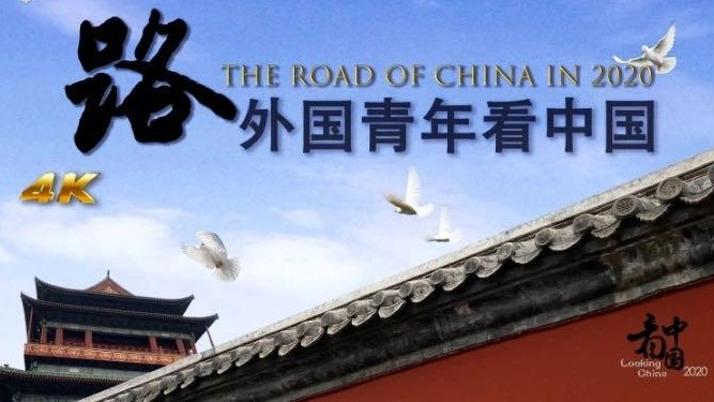
The Road of China
Documentary short anthology shot in early 2020 by a series of young directors from around the world as part of the “Looking China Youth Film Project” .
Striding into the Wind
A slacker film student yearns for freedom and independence but cannot break free of the forces which constrain him in Wei Shujun’s indie debut. Review
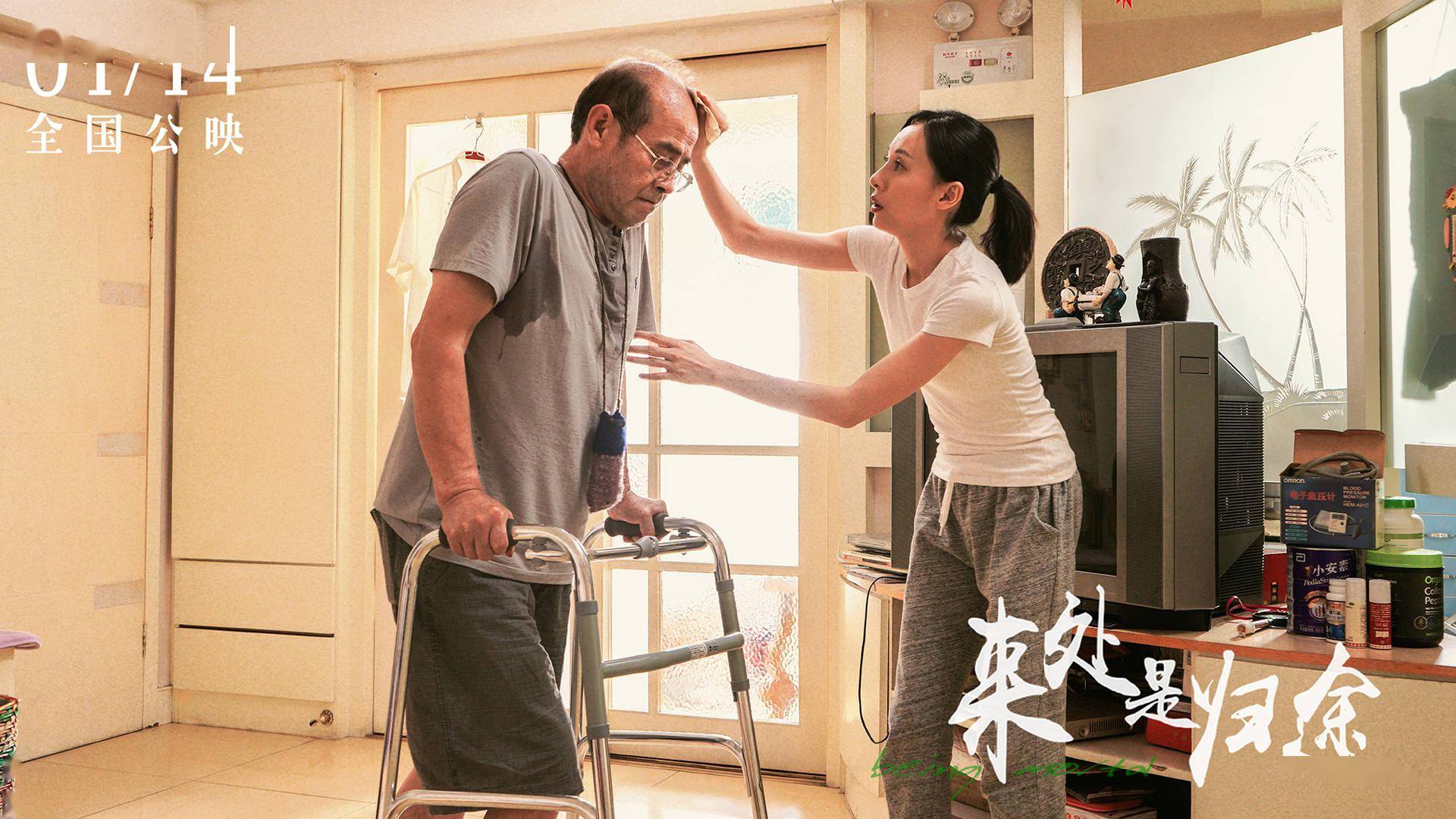
Being Mortal
Drama in which a young woman gets a job transfer to her hometown in order to look after her father who has been living with Alzheimer’s for the last 10 years.
My People, My Country
Patriotic anthology film first released for National Day and featuring segments from top tier directors Chen Kaige (Farewell My Concubine), Zhang Yibai (I Belonged to You), Guan Hu (The Eight Hundred), Xue Xiaolu (The Whistleblower), Xu Zheng (Lost in Thailand), Ning Hao (Crazy Stone), and Wen Muye (Dying to Survive) each set in a different era of China’s history since 1949. Review.
Life of Buda
Biopic of Tibetan hero Buda spanning the nation’s history from before the peaceful liberation to the establishment of the Tibet Autonomous Region.
Spring City
Documentary focusing on the city of Kunming, known as the “spring city” and the capital of Yunnan province.
In recent years, Chinese big budget disaster extravaganzas have dedicated themselves to celebrating the selfless heroism of the undersung branches of the emergency services, firemen for example in Tony Chan’s The Bravest or the coast guard in Dante Lam’s The Rescue. Li Jun’s Cloudy Mountain (峰爆, Fēng Bào) features its fair share of fearless rescue teams, but is nevertheless dedicated to the rather unlikely source of pride, the Rail Soldiers whose lives, at least according to the closing credits, were sacrificed in large numbers to complete the infrastructure necessary for the expansion of the Chinese state yet in 1984 they were renamed “China Railway Construction Corporation” a development the film at least seems to regard with a surprising degree of ambivalence.
This becomes most obvious in the conflict between the two heroes, an estranged father and son burdened by personal trauma, one a former Rail Soldier and the other a high tech engineer working for a commercial enterprise on the building of a high speed railway network through terrain known to be geologically volatile. Grandpa Hong (Huang Zhizhong) is set to visit his son Yizhou (Zhu Yilong) for New Year, though he doesn’t really want to see him knowing that his father will only criticise his work on the tunnel leading to another intergenerational argument. Meanwhile, Yizhou also finds himself unpopular at work for requesting additional safety checks many seem to regard as a pointless waste of time, and oddly they might have a point seeing as Yizhou’s monitoring fails to detect a shift in the rock formation which causes water to flood the almost complete tunnel during routine blasting.
The fact is Hong was a Rail Soldier and is also one of those old men who think they know best about everything. He kicks off at a bored young lady at service station because she doesn’t want to accept payment in cash and has no change to offer confused as to why Hong can’t just pay with Alipay or WeChat like everyone else. Despite his years of hands-on experience, he no longer understands the modern high tech engineering industry and thinks his son is somehow unmanly with his scientific data and use of drones, believing that if you want to solve a problem you just get in there and do it. This causes a minor problem when a manmade earthquake strikes just after his arrival as he pushes rescue crews out of the way to set about rescuing everyone trapped underground on his own only to end up trapped himself.
The film is almost on his side, definitely ambivalent about the state of modern Chinese infrastructure. Mrs. Ding (Chen Shu), the female manager of the tunnel project, is initially positioned as a villain, insisting that the tunnel must be completed on schedule and they can’t be wasting money on things like safety checks, hinting at the nation’s notoriously lax approach to public safety and widespread corruption in the construction industry. One might even ask if it was a good idea to build this tunnel at all given the geological volatility of the local area, yet Mrs. Ding later becomes something of a hero in finally agreeing to sacrifice 10 years of her own work when it becomes clear a nearby town cannot be evacuated before disaster strikes. Stepping into propaganda mode she advances that while Westerners may pin their hopes on Noah’s Ark, Chinese men move mountains convincing the workmen to blow up the tunnel they’ve been spent the last decade working on by reminding them that they can simply build it again.
Meanwhile, Yizhou and Hong begin to sort out their father/son problems underground most of which go back to the death of Yizhou’s mother for which he blames himself but also his father for failing to return home when his wife was ill because he had important nation building work to do. This minor barb might hint at a conflict between selfless dedication to the State and familial responsibility, which would seem to run against the secondary message that unchecked capitalism is doing the same thing while also endangering public safety. One reason the crews didn’t want to fall behind through “needless” safety checks was because they’d already agreed to sacrifice New Year with their families to get the tunnel done on time. Nevertheless the only way to save both the tunnel and the town depends on father and son working together, a mix of Yizhou’s high tech data analysis and Hong’s hands-on experience as they perilously climb up the slide of a sheer rock face in torrential rain to blow up an entirely different mountain to create a protective shield.
The major villain, if there is one, is personal greed born of irresponsible capitalism, and its only cure is, paradoxically, a recommittal to the State as Mrs Ding offers inspirational messages about the legacy of the Rail Soldiers while self-sacrifice for the public good is held up as the only moral responsibility. In any case, Li piles on the tension with a series of possible negative outcomes from the tunnel disaster not only swamping the town and killing off the local population but also endangering an adjacent chemical plant, never quite making the case for why the tunnel is so necessary in the first place even as it swaps its literality for the metaphorical in allowing the reconnection of father and son overcoming a generational divide to find an ambivalent accommodation with the demands of the modern China.
Asian Pop-Up Cinema returns this November with another free streaming series hosted by Smart Cinema USA in the US & Canada Nov. 12 – 21 offering a rare chance to see a mini retrospective from legendary 4th Generation filmmaker Xie Fei, as well as a free screening of the latest big budget action movie from Mainland China Cloudy Mountain at Chicago’s ChiTown Movies Drive-in on Nov. 13.
Xie Fei: A Retrospective
Our Farmland (我們的田野, 1983)
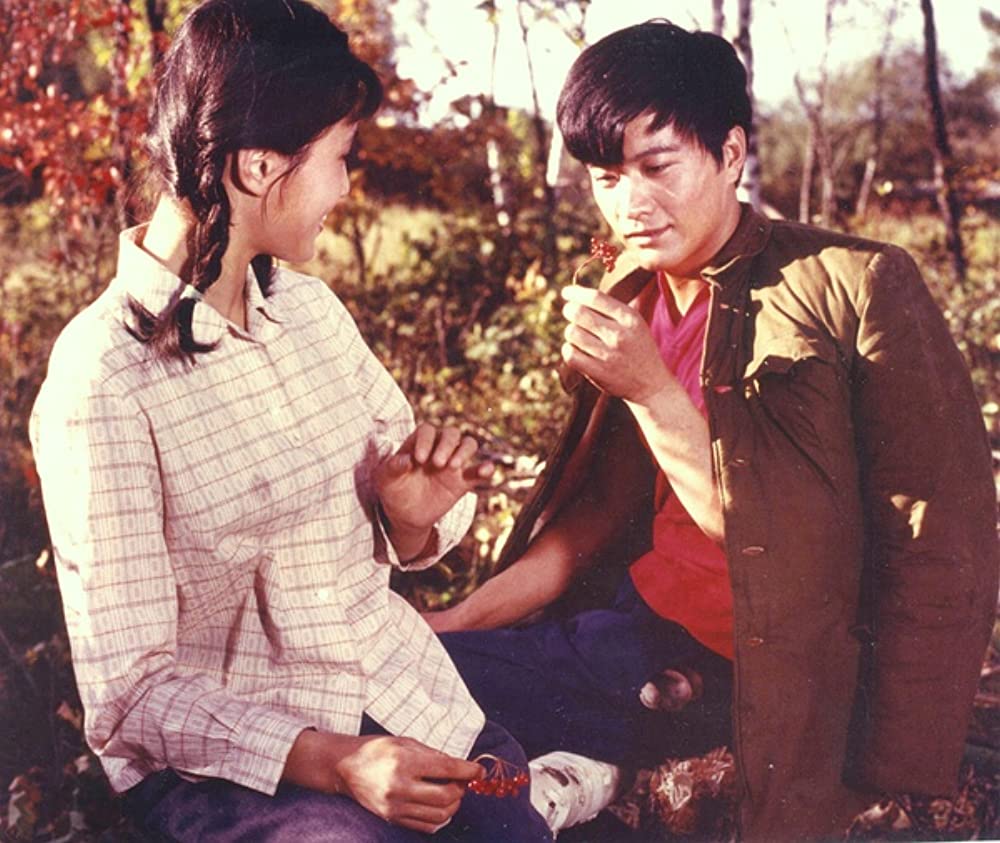
Xie Fei’s 1983 autobiographical drama follows the lives of five students sent to the countryside for “reeducation” during the Cultural Revolution as they continue to search for meaning in the years afterwards.
A Girl from Hunan (湘女萧萧, 1986)
Co-directed with U Lan, A Girl From Hunan follows the fortunes of Xiao Xiao as she is married off at 12 years old to a boy who is only an infant and finds herself more mother than wife only to later fall for a handsome farm hand.
Black Snow (本命年, 1990)
Melancholy post-Tiananmen noir starring Jiang Wen as a man deprived of an education by the Cultural Revolution whose every attempt to move forward with his life after leaving a labour camp is continually thwarted.
Woman from the Lake of Scented Souls (香魂女, 1993)
Also known as Woman Sesame Oil Maker, Xie’s adaptation of the novel by Zhou Daxin follows a middle-aged woman who has achieved success selling sesame oil after being married off as a child bride to a man with a lame leg and decides to use some of her money to find a bride for her son who has learning difficulties and suffers frequent epileptic fits.
A Mongolian Tale (黑骏马, 1995)
(Available November 21 only)
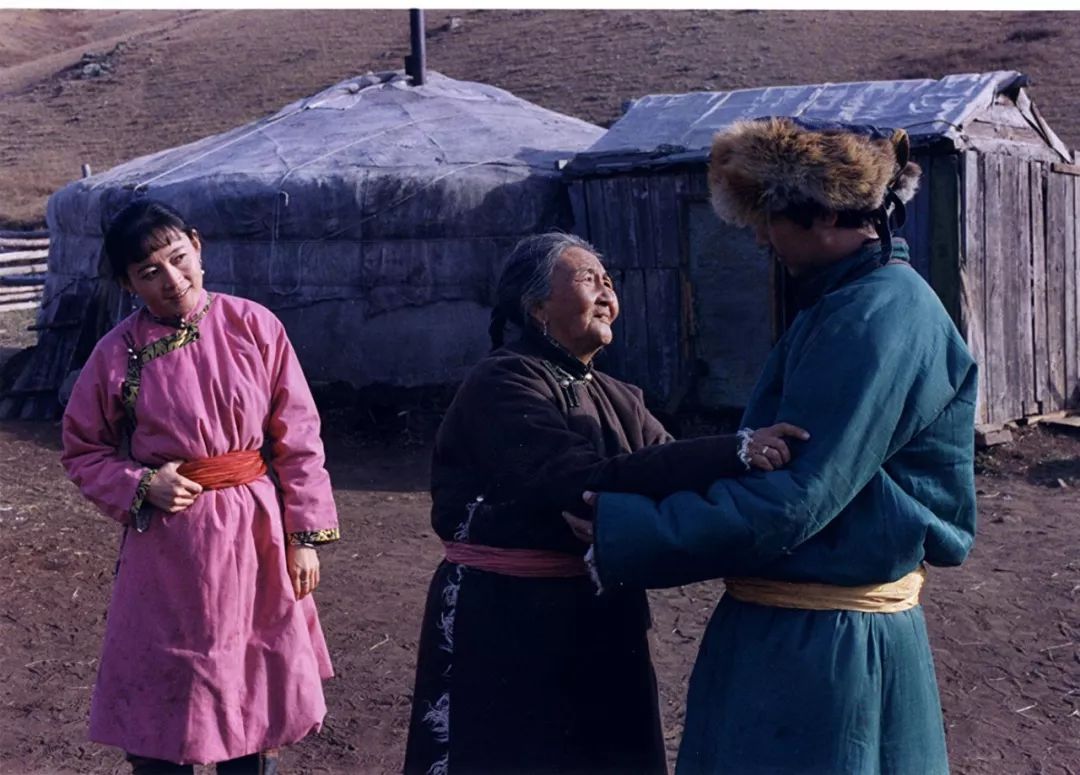
Adapted from Zhang Chengzhi’s novel Black Steed, this 1995 Mongolian drama follows two childhood sweethearts whose romance is disrupted when the boy must leave for the city and the girl is married to someone else.
Song of Tibet (益西卓瑪, 2000)
Historical epic set against the backdrop of Tibet’s turbulent 20th century history following the three loves of one woman.
Big budget action drama from Li Jun in which estranged father and son scientists must work together to save the town when unexpected geological fluctuations destabilise a soon-to-be completed tunnel leading to a chain reaction of possible disasters.
The Xie Fei retrospective streams for free in the US and Canada via streaming app Smart Cinema USA Nov. 12 – 21. Tickets for Cloudy Mountain at the drive-in on Nov. 13 are also free but must be reserved in advance. Further details can be found on the official website and you can also keep up with all the latest news by following Asian Pop-up Cinema on Facebook, Twitter, Instagram, and Vimeo.
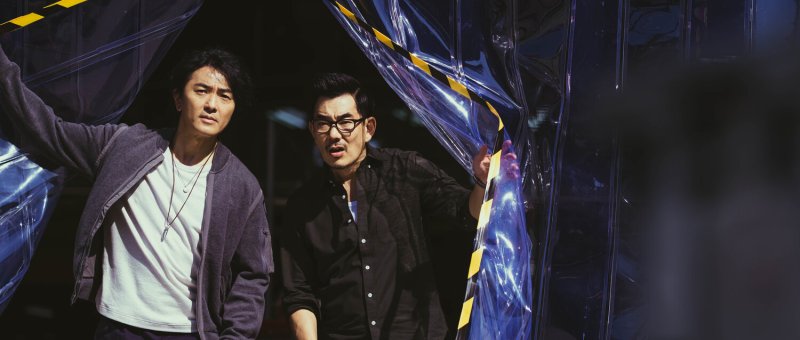
“Help those in need, then what about me?” asks the cynical hero of screenwriter Shum Sek-yin’s directorial debut, The Dishwasher Squad (洗碗天團). Another in the recent series of films exploring attitudes to disability in contemporary Hong Kong, Shum’s breezy comedy sees two self-centred businessmen with some extremely outdated and often quite offensive views decide that the only way to recover from being scammed into buying a moribund business is by exploiting the vulnerable only to eventually reawaken to their humanity if only perhaps to a degree.
After Kyun’s (Richie Jen Hsien-chi) business fails, his best friend Lun (Ekin Cheng) comes up with a plan to buy out the industrial dishwashing plant owned by the friend of a friend who is apparently keen to sell because he wants to emigrate to Canada with his son who has learning difficulties. Strangely, on that very day, Kyun seems to find himself repeatedly running into disabled people for whom he seems to have little to no respect often using offensive language and even stealing an extra cookie from a young man with Down’s Syndrome collecting money for charity. Kyun seems fairly smug about each of these problematic encounters as if congratulating himself for getting one over on those he sees as lesser than himself. Unfortunately for him, however, while he thought he was conning the factory owner by telling him they planned to use the place to help the needy, the factory owner was actually conning him seeing as the business isn’t viable and is in fact riddled with debts. Not only that, all the staff were casual employees leaving Kyun and Lun with a huge problem seeing as they have legally binding contracts to fulfil and no staff to fulfil them.
That’s one reason he eventually hatches on a cynical plan to take advantage of a government scheme to become a “Social Enterprise” in order to gain a subsidy by employing a majority of marginalised employees who might otherwise find it difficult to secure regular employment. Working with a local social worker (Hedwig Tam), he agrees to employ a young woman with autism and two men with learning difficulties along with another woman trying to rebuild her life after leaving prison. Aside from access to the subsidy, the main draw for Kyun is that he assumes he won’t have to pay them very much or even at all, getting the two men to work for free during their “probationary” period and thereafter attempting to fire one of them before it comes to an end. To bolster the work force, Kyun also recruits a series of undocumented South Asian migrants for much the same reasons assuming they will have little desire to make a fuss over their pay or conditions.
Nevertheless, through close contact with each of his staff members Kyun finally begins to develop a sense of humanity though it’s unfortunate that his ability to recognise his employees as fellow humans only comes with a realisation that they are “useful” to him after all as they each and for varying reasons become attached to their new jobs and the atmosphere at the factory. It has to be said, however, that Shum’s otherwise positive message of people over profit is undercut by the series of fat jokes aimed at a female worker who at one point is seen eating from an automatic pet feeder, while a scene featuring an improvised stomach pump after an employee accidentally ingests detergent is also perhaps in poor taste even if hinting at the depths Kyun is prepared to sink to in order to protect his business interests.
Despite having bonded with his employees in a genuine sense of camaraderie, Kyun is still intent on exploiting his workforce and continues to see himself as superior if having developed a little more of a moral compass. Even so, he has perhaps developed the desire to run an honest business built on trust and compassion rather than greed and deception even if he hasn’t quite got there yet while reaffirming his friendship with Lun as they find themselves on a more even footing after a brief falling out. Mixing mild social issue themes regarding the difficulties faced by those marginalised by the contemporary society with lighthearted humour and a lot of heart, The Dishwasher Squad eventually argues for doing right by each other even if not everyone feels the same way.
What’s so great about being “normal” anyway? As the title of Koji Maeda’s quirky screwball comedy You’re Not Normal, Either! (まともじゃないのは君も一緒, Matomo Janai no wa Kimi mo Issho) suggests neither of its heroes is quite in tune with the world around them but then again, is there really such a thing as “normal” or is it more that most people are making themselves unhappy by settling for less simply because they think that’s just how things are and resistance only makes you seem awkward?
Nerdy cram school maths teacher Yasuomi (Ryo Narita) thought he was OK with being a little different, but just recently he’s begun to feel lonely and fears the possibility of being alone for the rest of his life. Perhaps inappropriately, he looks to one of his students, forthright high schooler Kasumi (Kaya Kiyohara), for romantic and life advice hoping that she will teach him how to be, or at least present as, more “normal”. Unbeknownst to him, however, Kasumi is not quite “normal” herself and is in fact obsessed with a tech entrepreneur, Isao (Kotaro Koizumi), who is all about a new and freer future in which humanity is freed from the burden of labour. Finding out that her crush is already engaged to Minako (Rika Izumi) the daughter of a hotel magnate, Kasumi hatches a plan to break them up while training Yasuomi in the art of seduction.
Kasumi’s insecurities seem to be down to her failure in her middle school exams, attracted to Isao’s philosophies because they offer a possibility of freedom outside the rigid demands of academic success in Japan. She tells Isao in a not quite by chance meeting that she wants to become a teacher in order to expand children’s minds rather than force them into a fixed perspective as the rather authoritarian, rote learning system of education often does. Yet she also feels out of place among her peers whom she sees as vacuous always gossiping about part-time jobs and boys. She frowns at Yasuomi when he accidentally cuts the conversation dead with an awkward comment while attempting to chat up a pair of bubbly office workers in a bar, but often does the same thing herself while sitting with her high school girl friends who fall silent and then change the subject after she injects a little realism into their mindless chatter.
Yasuomi had viewed himself as “normal” and never understood why others didn’t, noticing that people often stopped associating with him but not knowing the reason why. Obsessed with pure mathematics, over literal, and overstimulated by the complications of life he takes refuge in the forest and the sensory overload of its nocturnal creatures speaking quite eloquently about the beauty of numbers and actually fairly emotionally intelligent in his understanding of the two women. Resolutely failing at Kasumi’s Cyrano act, he comes into himself only when speaking more honesty much to Kasumi’s annoyance actually hitting it off with Minako who is herself just as lonely and alienated but perhaps wilfully trapped.
Predictably enough, Isao isn’t exactly “normal” either or perhaps he is but only in the most depressing of ways, his rosy vision of the future delivered with more than a little snake oil and just as much sleaze. Minako may know what sort of man Isao is, that her marriage is largely a dynastic affair set up by her overbearing, authoritarian father, but she too may think this is “normal” and might have preferred not to have to confront her sense of existential disappointment while attempting to fulfil the role of a “normal” woman content with creating a comfortable space in which her husband can thrive.
Romantically naive, Kasumi wonders how people come to fall in love informed by two relatively mature classmates that for them at least falling in love is a gradual process of increasing intimacy generated through casual conversation. This turns out to be pretty much true for Kasumi too, though in ways she didn’t quite expect watching as Yasuomi opens up to Minako and finding herself unexpectedly jealous while reluctant to let go of the idealised vision she had of Isao as some kind of messiah for a better Japan. There is something a little uncomfortable in the potentially inappropriate relationship between a student and her teacher even as the roles are, on one level at least, reversed but there’s also a kind of innocence in their childish friendship and later determination to start small and let things grow while abandoning the idea of the “normal” altogether to embrace their true selves in a freer future of their own creation.



















 Windows on Worlds