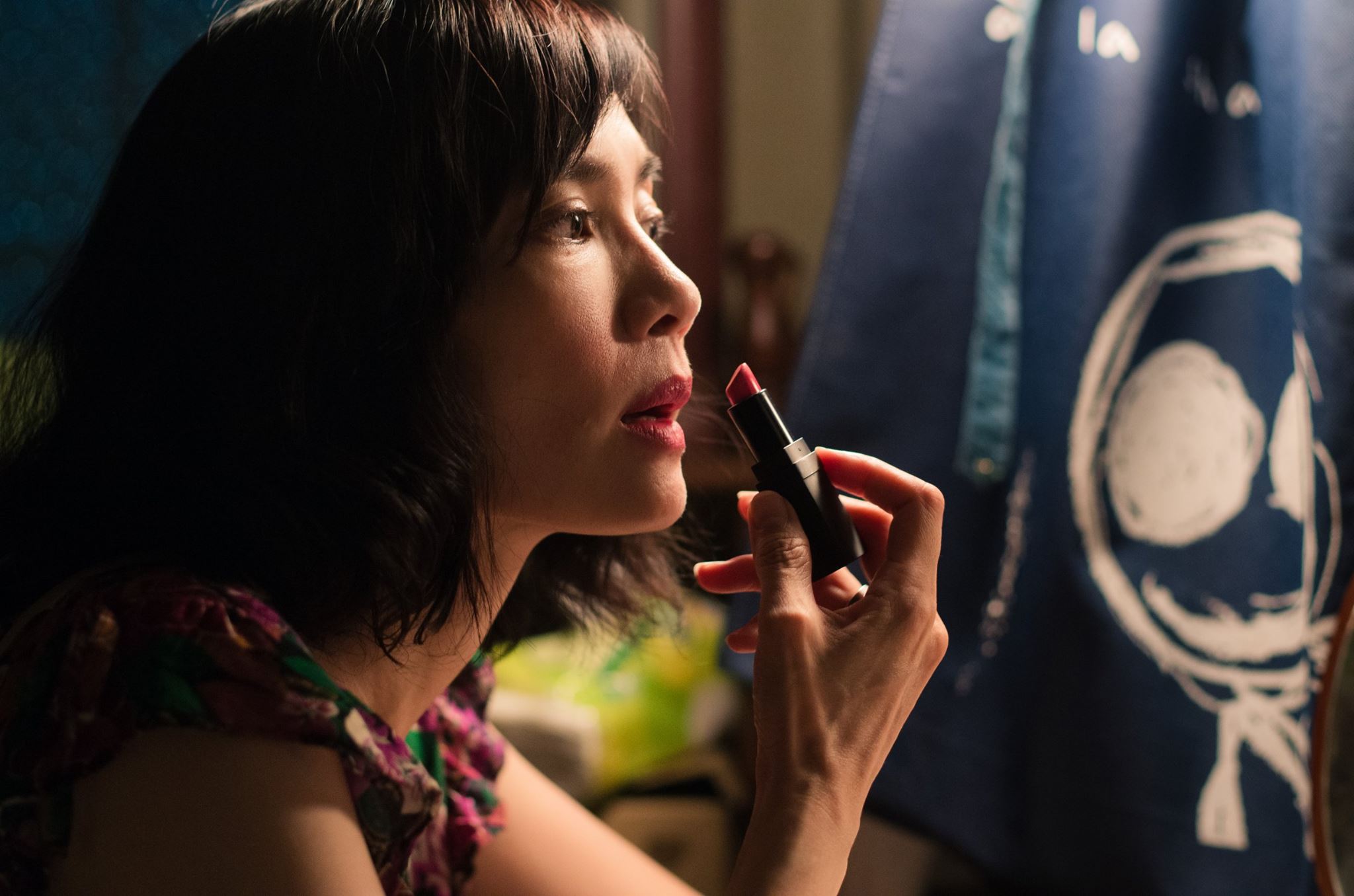
West North West (西北西, Takuro Nakamura, 2015)

This area has a weird magnetic field, claims one of the central characters in Takuro Nakamura’s West North West (西北西, Seihokusei), it’ll throw you off course. Barriers to love both cultural and psychological present themselves with almost gleeful melancholy in this indie exploration of directionless youth in modern day Tokyo. Three young women wrestle with themselves and each other in a complex cycle of interconnected anxieties as they attempt to carve out their own paths, each somehow aware of the shape their lives should take yet afraid to pursue it. The Tokyo of West North West is one defined by disconnection, loneliness and permanent anxiety but it is not the city which is the enemy of happiness but an internal unwillingness to find release from self imposed imprisonment.

After beginning with the twilight scene of a city in fog, Nakamura cuts to Iranian student Naima (Sahel Rosa) leaving the visa bureau with something on her mind. An attempt to call a friend strikes out when she discovers her with her fellow Chinese students busily chatting away in a language she does not understand. Taking refuge in a coffee shop, Naima spots another similarly depressed woman silently crying at a table in the very back corner.

Striking up a conversation, the two women unexpectedly begin a tentative friendship but Kei (Hanae Kan) has problems of her own. Trapped in a toxic relationship with fashion model Ai (Yuka Yamauchi) whose possessive, jealous, and entirely self-centred behaviour have turned her into a nervous wreck, Kei is acutely preoccupied with her lack of forward motion, feeling as if she’s just been somehow pushed out into the world with no clear idea of what it is she’s supposed to be doing.

Kei and Naima have much more in common than it might at first seem. Culturally displaced, Naima is at odds with her surroundings despite her native level language abilities but she finds a kind of ally in the taciturn Kei when an emotional outburst in the cafe causes commotion with an unpleasant fellow customer who objects either to the “inappropriate” loudness of her phone call or that it’s in another language. Naima is a retiring sort and mortified to have caused a fuss but Kei, coming to her rescue, is bored with accepting other people’s intolerance. Having felt so alone, pushed away from her only other real friend by an impenetrable barrier of culture and language, someone arriving and actively taking her side is an almost miraculous development.

Bonding instantly in their shared melancholy, the two women share a deepening sense of recognition as Naima begins spending more time with Kei, sleeping on her sofa and getting her to look after the pet bird which she refuses to name so that it will hurt less when they are eventually forced to part. Kei’s prejudices and preconceptions are pushed by Naima’s fierce attachment to her religion, but her eventual decision to casually state that she has a girlfriend meets with only mild surprise rather than rejection or moral questioning. Attempting to clarify Kei’s vague reply, Naima asks directly if Kei is a “lesbian” only for her to irritatedly deny the label – it’s just that she only falls in love with women, she says. Naima’s reasoned response that that’s pretty much the definition of “lesbian” leads to Kei quickly exiting the scene in confusion, not wanting to pursue this line of thought any further though it perhaps sends Naima in exactly the opposite direction.

Kei’s intense insecurity regarding her sexuality is one reason she seems to find it so hard to break things off with high maintenance girlfriend Ai despite her obvious unhappiness with the relationship. Ai, a low level fashion model, has a series of intense insecurities of her own though these have less to do with sexuality and more with power and control. Having realised that Kei is not as attached to her as she is to Kei, Ai’s jealous rages have Kei in a permanent state of fear from which she attempts to hide at a local pool only to have a full blown panic attack on receiving an unexpected phone call from her girlfriend.

An awkward hospital waiting room conversation with Ai’s mother explains much of her behaviour as she begins to lay out the various failings of her child and desire for her to give up modelling and live a “normal” life. Ai had not shared the fact that her lover was another woman, leaving her mother to feign politeness even whilst feeling he need to voice her “disgust” that her child had “these kinds of feelings”. Indifferent to Kei’s ongoing discomfort, Ai’s mother has a few home truths for the woman who’s corrupted her daughter, advising her to break up with Ai as soon as possible seeing as the relationship is doomed to failure.

In principle, Ai’s mother might have offended Kei but she has to concede that she has a point. Kei is not happy with Ai, but Ai will not let her go. Ai’s jealousy is both the catalyst and barrier for Kei’s growing feelings for Naima as she seeks a kindred spirit and gentle soul in refuge from Ai’s emotional violence. An awkward dinner party between the two makes plain the degree to which they are ill suited when Ai berates the sullen Kei for a lack of emotional readability ironically missing that Kei needs someone to understand her feelings instinctively – a level of connection on which self-centred Ai is ultimately unwilling to engage.

Ai’s attempt to warn off Naima in a worryingly threatening “stay away from my girl” speech eventually forces her to confront her own feelings and what exactly Kei is to her. Both women are repeatedly asked to provide a definition of their relationship, faltering each time, but Naima’s crisis runs deeper as she’s forced to confront herself on a more profound level. A group job interview provokes an unexpected moment of introspection as she’s cruelly asked what exactly she’s learned during her time in Japan and is thrown into silence before admitting that she does not know. Naima may indeed have learned or perhaps confirmed a few things about herself, but if she has she is still unable to accept them.

Beautifully played by Sahel Rosa, Naima’s isolation is palpable in her pain filled eyes and longing looks as she finds herself captivated by the more certain yet diffident Kei. Hanae Kan’s Kei is equally trapped within herself, essentially kind yet reserved, afraid to break things off with the controlling Ai yet confused by her growing feelings for the increasingly conflicted Naima. Returning to the fog filled cityscape, Nakamura leaves things as he finds them, refusing resolution as each of the central characters compromises themselves in one way or another, settling for something that seems “right” but feels essentially wrong. The melancholy greyness of a wintery sunset descends once again, leaving each of the three women rudderless but with an added burden of self knowledge tinged with regret and sorrow.


Reviewed at BFI Flare 2017.

Original trailer (English subtitles)

If you happen to understand either Japanese or German there’s an interesting video interview with director Takuro Nakamura produced for the Munich Film Festival:
Farewell My Concubine (霸王别姬, Chen Kaige, 1993)

farewell-my-concubine-1993
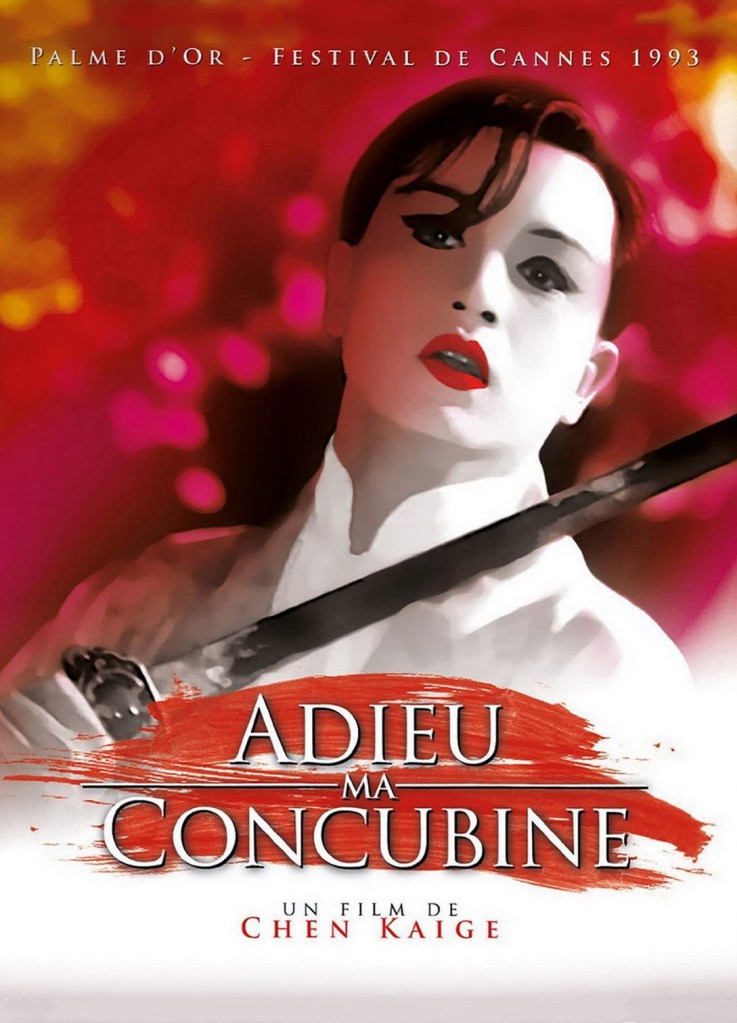
French DVD cover

Review of Chen Kaige’s 1993 masterpiece Farewell My Concubine (霸王别姬, Bàwáng Bié Jī) first published by UK Anime Network.


“Why does the concubine have to die?” Spanning 53 years of turbulent, mid twentieth century history, Farewell My Concubine is often regarded as the masterpiece of fifth generation director Chen Kaige and one of the films which finally brought Chinese cinema to global attention in the early 1990s. Neatly framing the famous Peking Opera as a symbol of its nation’s soul, the film centres on two young actors who find themselves at the mercy of forces far beyond their control.

Beginning in 1924, Douzi (later Cheng Dieyi) is sold to an acting troupe by his prostitute mother who can no longer care for him. The life in the theatre company is hard – the boys are taught the difficult skills necessary for performing the traditional art form through “physical reinforcement” where beatings and torturous treatment are the norm. Douzi is shunned by the other boys because of his haughty attitude and place of birth but eventually finds a friend in Shitou (later Duan Xiaolou) who would finally become the king to his concubine and a lifelong companion, for good or ill.

Time moves on and the pair become two of the foremost performers of their roles in their generation much in demand by fans of the Opera. However, personal and political events eventually intervene as Xiaolou decides to take a wife, Juxian – formerly a prostitute, and shortly after the Japanese reach the city. Coerced by various forces, Dieyi makes the decision to perform for the Japanese but Xiaolou refuses. After the Japanese have been defeated Dieyi is tried as a traitor though both Xiaolou and Juxian come to his rescue. The pair run in to trouble again during the civil war, but worse is to come during the “Cultural Revolution” in which the ancient art of Peking Opera itself is denounced as a bourgeois distraction and its practitioners forced into a very public self criticism conducted in full costume with their precious props burned in front of them. It’s not just artifice which goes up in smoke either as the two are browbeaten into betraying each other’s deepest, darkest secrets.

Farewell My Concubine is a story of tragic betrayal. Dieyi, placed in the role of the concubine without very much say in the matter, is betrayed by everyone at every turn. Abandoned by his mother, more or less prostituted by the theatre company who knowingly send him to an important man who molests him after a performance and then expect him to undergo the same thing again as a grown man when an important patron of the arts comes to visit, rejected by Xiaolou when he decides to marry a prostitute and periodically retires from the opera, and finally betrayed by having his “scandalous” secret revealed in the middle of a public square. He’s a diva and a narcissist, selfish in the extreme, but he lives only for his art, naively ignorant of all political concerns.

Dieyi doesn’t just perform Peking Opera, he lives it. His world is one of grand emotions and an unreal romanticism. Xiaolou by contrast is much more pragmatic, he just wants to do his job and live quietly. On the other hand, Xiaolou refuses to perform for the Japanese (the correct decision in the long run), and has a fierce temper and ironic personality which often get him into just as much trouble as Dieyi’s affected persona. The two are as bound and as powerless as the King and the Concubine, each doomed and unable to save each other from the inevitable suffering dealt them by the historical circumstances of their era.

The climax of the opera Farewell My Concubine comes as the once powerful king is finally defeated and forced to flee with only his noble steed left beside him. He begs his beloved concubine to run to sanctuary but such is her love for him that she refuses and eventually commits suicide so that the king can escape unburdened by worry for her safety. Dieyi’s tragedy is that he lives the role of the concubine in real life. Unlike Xiaolou, his romanticism (and a not insignificant amount of opium) cloud his view of the world as it really is.

It’s not difficult to read Dieyi as a cipher for his nation which has also placed an ideal above the practical demands of real living people with individual emotions of their own. Farewell My Concubine ran into several problems with the Chinese censors who objected not only to the (actually quite subtle) homosexual themes, but also to the way China’s recent history was depicted. Later scenes including one involving a suicide in 1977, not to mention the sheer absurd horror of the Cultural Revolution are all things the censors would rather not acknowledge as events which took place after the birth of the glorious communist utopia but Farewell My Concubine is one of the first attempts to examine such a traumatic history with a detached eye.

Casting Peking Opera as the soul of China, Farewell My Concubine is the story of a nation betraying itself. Close to the end when Dieyi is asked about the new communist operas he says he finds them unconvincing and hollow in comparison to the opulence and grand emotions of the classical works. Something has been shed in this abnegation of self that sees the modern state attempting to erase its true nature by corrupting its very heart. Full of tragic inevitability and residual anger over the unacknowledged past, Farewell My Concubine is both a romantic melodrama of unrequited love and also a lament for an ancient culture seemingly intent on destroying itself from the ground up.


Farewell My Concubine is released on blu-ray in the UK by BFI on 21st March 2016.

Original US trailer (with annoying voice over):

http://www.youtube.com/watch?v=VKHwZr6X3Og

Taiwanese Cinema About to Hit the UK in a Big Way

exit 1This is kind of another link post, but bear with me! First up Ang Lee’s first three films finally became available on DVD in the UK. Cunningly titled The Ang Lee Trilogy, you can now feast your eyes on Pushing Hands, The Wedding Banquet and Eat Drink Man Woman for the first time. Feast is the right word too as all the movies feature food in a very prominent way so make sure you have the proper supplies arranged before you sit down to watch them. You can read my review of the trilogy over at UK Anime Network. They’re all great, but I particularly like The Wedding Banquet because it’s just so funny!

Here’s an awful old school trailer for The Wedding Banquet (the film is better than this, I promise).

OK, moving on you can also pick up the award winning debut from Chienn Hsiang EXIT on DVD and VOD courtesy of Facet Films. I reviewed the film when it played at the Glasgow Film Festival and you can read that at UK Anime Network too. I also had the opportunity to interview the film’s star Chen Shiang-Chyi while she’s over here shooting The Receptionist. Contrary to expectations, Chen Shiang-Chyi was actually very chatty and super nice so the only reason the interview seems a little short is because she gave very long and detailed answers! You can checkout the interview over at UK Anime Network.

Which brings me on to the upcoming Hou Hsiao-Hsien season at the BFI which begins tomorrow. Pretty much everyone is expecting his new movie The Assassin starring his regular muse Shu Qi to appear in the film festival (it would be really strange if it didn’t right?) and I for one am really looking forward to seeing it.

Hou Hsiao-Hsien will be appearing in conversation at the BFI on 14th September (tickets apparently still available) ahead of a screening of one of his greatest films, The Time to Live and the Time to Die. I was lucky enough to see this one during the BFI’s extended season of Chinese films last year and though it’s not always an easy watch, Hou’s biographical tale of mainland refugees and their Taiwanese offspring is nevertheless a moving and fairly universal coming of age tale.

I’d also recommend Dust in the Wind 

and A City of Sadness

but I just have to post this scene from Three Times again because I love it so much

They’re also showing Hou’s Ozu tribute and Japanese set Café Lumière starring Tadanobu Asano if that’s more your speed.

That’s a lot of Taiwanese cinema all of a sudden right? It’s a good thing though! If you still want more I’ll direct you to the films of Edward Yang as mentioned in Chen Shiang-Chyi’s interview:

Yi Yi: A One and a Two

No trailers for a Confucian Confusion or A Brighter Summer Day though – both are a little more difficult to get hold of but worth the effort. A Confucian Confusion has a great Rom-Com style ending (though not as good as Comrades: Almost a Love a Story which has the best ending of any film, ever, but I digress) and A Brighter Summer Day which is an epic at four hours long but a total heartbreaker.


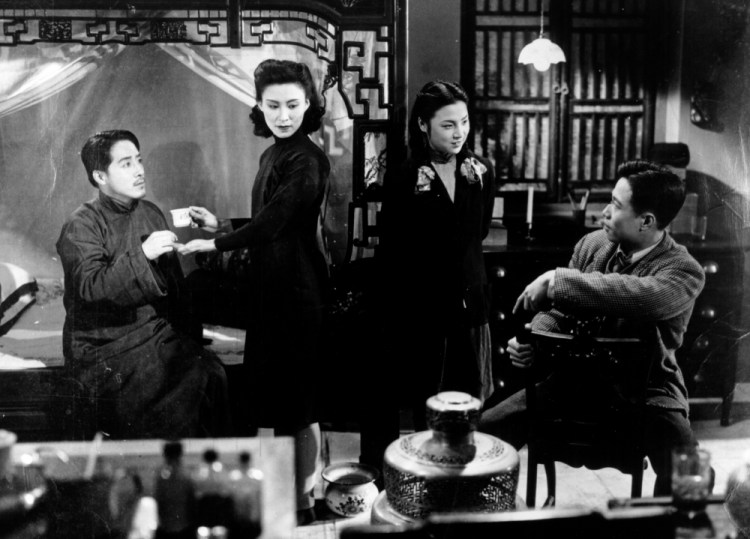
Spring in a Small Town (小城之春, Fei Mu, 1948)

spring-in-a-small-town-1948-001-two-couples-in-the-householdReview of this Chinese lost classic up at UK Anime Network


Fei Mu’s Spring in a Small Town is often regarded as one of the great lost masterpieces of Chinese cinema. Completed in 1948, it stands on the borderline of China’s transformation into a communist state and ultimately paid the price for its “questionable” politics (or, indeed, lack of them). Fei like many at the time relocated to Hong Kong where he set up a production company but sadly died not long after at just 44 years of age and Spring in a Small Town became his final film. Based on a short story by Li Tianji, the film is a complex portrait of frustrated hopes and failed marriages against the backdrop of a society in rapid change.

Yuwen is a married woman who lives for her daily errands which take her out of the decaying house she shares with her invalid husband and his school aged younger sister. Her one pleasure in life is the solitary walk she’s accustomed to take along the ruined wall which leads into town. Her husband, Liyan, believes himself to be suffering from tuberculosis and confines himself to what remains of their estate and its once fine garden. The house is little more than rubble in places and bears the heavy scars of the war years on its un-repaired exteriors. One day, an old friend of Liyan’s, Zhang – a doctor, comes to visit. Unbeknownst to anyone, Zhang and Yuwen grew up in the same village and were, in fact, childhood sweethearts until time and circumstance forced them apart.

Shot through with Chekhovian melancholy resignation (but perhaps without his trademark sense of humour), Spring in a Small Town is a tightly wound character drama which uses the plight of its characters to deliver a much wider message. Yuwen narrates her inner life for us (a stylish device which anticipates the technique coming into its prime nearly twenty years later in the French New Wave), giving voice to thoughts that could never be expressed directly. Her unhappiness is the first thing that strikes the viewer along with the decayed grandeur of her surroundings. Having become more nurse than wife to a husband that she never loved, Yuwen has resigned herself to a life of morning walks and embroidery devoid of all stimulation. Zhang’s unexpected re-entry into her life spells both doom and salvation. Liyan suspects nothing and even sees Zhang as a potential match for his sixteen year old sister, Xiang! Zhang’s arrival threatens to throw a hand grenade into this delicately balanced yet unhappy household with long buried emotions slowly working their way to the surface.

Fei keeps the tension up by keeping a tight lid on the repressed emotions of the time. What could so easily have become an overwrought melodrama retains its emotional power precisely because of its naturalistic restraint. Spring in a Small Town has been described as “the Chinese Brief Encounter” and it certainly shares something of that film’s powerful emotional manoeuvring pushed through with a level of reserve many would consider typically British. Both films also resolutely reinforce the prevailing social order of the day where duty conquers all and properness comes before personal happiness. However, where Brief Encounter ends on a note of melancholic restoration, Spring in a Small Town dares to be a little more upbeat (if still just as melancholic) with a sense that spring may really have returned to these four people after a long and hard winter. The frost has finally thawed and new life can begin again.

It’s not completely clear what exactly the new regime found problematic about Spring in a Small Town though it’s certainly a long way from socialist realist cinema. The world it depicts is an upper class one with not a little sorrow over the decline of this once noble house and fretting about its legacy neither of which gel very well with communist party guidelines. Otherwise the film is fairly apolitical which would render it a little frivolous from their point of view but far from trivial in ours. Enormously influential since its rediscovery by the Fifth Generation filmmakers in 1980s, Spring in a Small Town is a gloriously melancholic character study that deserves to finally take its rightful place alongside finest romantic dramas the golden age of cinema has to offer.


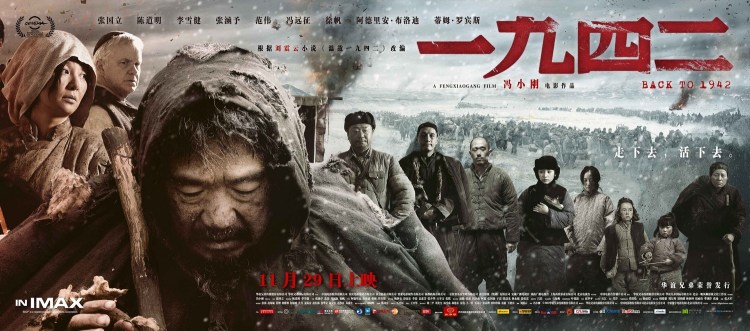
Back to 1942 (一九四二, Feng Xiaogang, 2012)

back-to-1942-poster08Review of this (slightly stodgy) war time starvation drama up at UK Anime Network.


Feng Xiaogang might not exactly be a household name in the West but at home he’s one of China’s most bankable directors. Dubbed the Chinese Spielberg (perhaps a little reductively) he made his name with a series of crowd pleasing comedy films that had audiences queuing ‘round the block in expectation. In recent years, he’s moved away from the comedy genre in favour of big budget, Hollywood style dramas centred around historical events like the 1976 Tangshan Earthquake in Aftershock or the Civil War themed Assembly. Back to 1942 sees him step back even further in time to one of China’s great hidden tragedies, the great Henan famine of 1942.

In 1942 China was in a precarious political position as it faced the ongoing Japanese incursion and came under increasing pressure to align itself with Japan’s enemies as part of the wider global conflict. A serious drought could not have come at a worse time as ever dwindling resources were pulled in several directions at once. The story here concerns the landlord, Fan, who had originally a sizeable grain store set aside to feed his family and retainers. However, after his village is raided by bandits he too is forced to travel westwards in hope of finding better supplies. Along with his wife, pregnant daughter-in-law, daughter and servant as well as another family from the village he faces increasing hardship as he tries to find food to survive. Meanwhile an American journalist employed by TIME magazine has got wind of the story and is trying to get something done about it but to no avail. The government has the war effort as its top priority – what does it matter if a few peasants die as long as the army remains well fed.

Politically speaking, you can get away with talking about ‘unpleasant’ historical events assuming that they happened before the communist revolution. The finger here is pointed quite squarely at Chang Kai-shek and his nationalist government who are portrayed not only as unfeeling and self interested but also as ineffectual when it comes to the business of conducting war with the Japanese. Indeed, at once point Chang suggests simply ceding Henan to the Japanese rather go to the expense of defending this barren stretch of land. Though it is clear he is aware of the extent of the famine, he does little about it until eventually sending “emergency supplies” to “the disaster area” to try and alleviate the damage to his reputation and diplomatic relations with other powers when news of the famine finally reaches them after the conflict. Though the local governor appears genuinely concerned and does his best to get help for the starving people (even if it’s only to alleviate the ridiculous burdens placed on them to supply grain for the army even though there is none) he is hamstrung by the top heavy hierarchical system.

No help is going to come from the government for Fan and his family. They might have been bigwigs once but now they’re in the same boat as everyone else – forced on a virtual death march through the arid land desperately trying to find anywhere that will yield to them the resources to survive. Bodies litter the landscape as the weaker succumb to starvation, donkeys and pack horses are eaten and finally wives and children are bought and sold in the hope of surviving a few hours more. Make no bones about it, Back to 1942 is almost two and a half hours of pure misery as one tragic yet inevitable event follows on the next. Unfortunately, Feng has laid the gloom on a little thick in this understandably bleak tale. The tone never wavers and somehow the constant nature of its sorrows fail to engage as they take on a sadly predictable air. Despite the obvious potential of the story, there’s precious little actual drama and the performances fail to capture the audience’s sympathies as Fan & Co. forced into increasingly degrading acts trying to ensure their own survival.

However, Back to 1942 was an expensive production and you can see all of that money on screen as the battle and action sequences rival those of any Hollywood blockbuster. Whatever reservations there may be with the plotting, it always looks good and you could never accuse it of skimping out on its production design. The only minor criticism may be that the performances of non-Chinese actors feel significantly under rehearsed with Tim Robbins’ priest being the obvious example as he struggles with a strange accent and unclear position in the narrative. Adrien Brody fares better as the idealistic reporter but still fails to convince. The film doesn’t quite seem to know where to put itself when it comes both to the role of religion and of other powers active in China at this time and though neither of those ideas are at the forefront of this film, they muddy the waters in ways other than intended by the filmmaker.
An often beautifully photographed film Back to 1942 is also a cold one and given its depressing subject matter something of a chore. The famine that struck the Henan region in 1942 and subsequent (non) reaction to it from the powers at be is indeed something that should be addressed and brought to light in the modern world but perhaps it doesn’t need to be in such a blunt fashion. The film is long, and wearing but ultimately fails to connect with the viewer in a non cynical way making its drawn out proceedings a little on the tedious side for most viewers. Those with a taste for sentimental melodramas with high production values may find a lot to enjoy with Back to 1942 but those who prefer a more nuanced drama will likely leave disappointed.