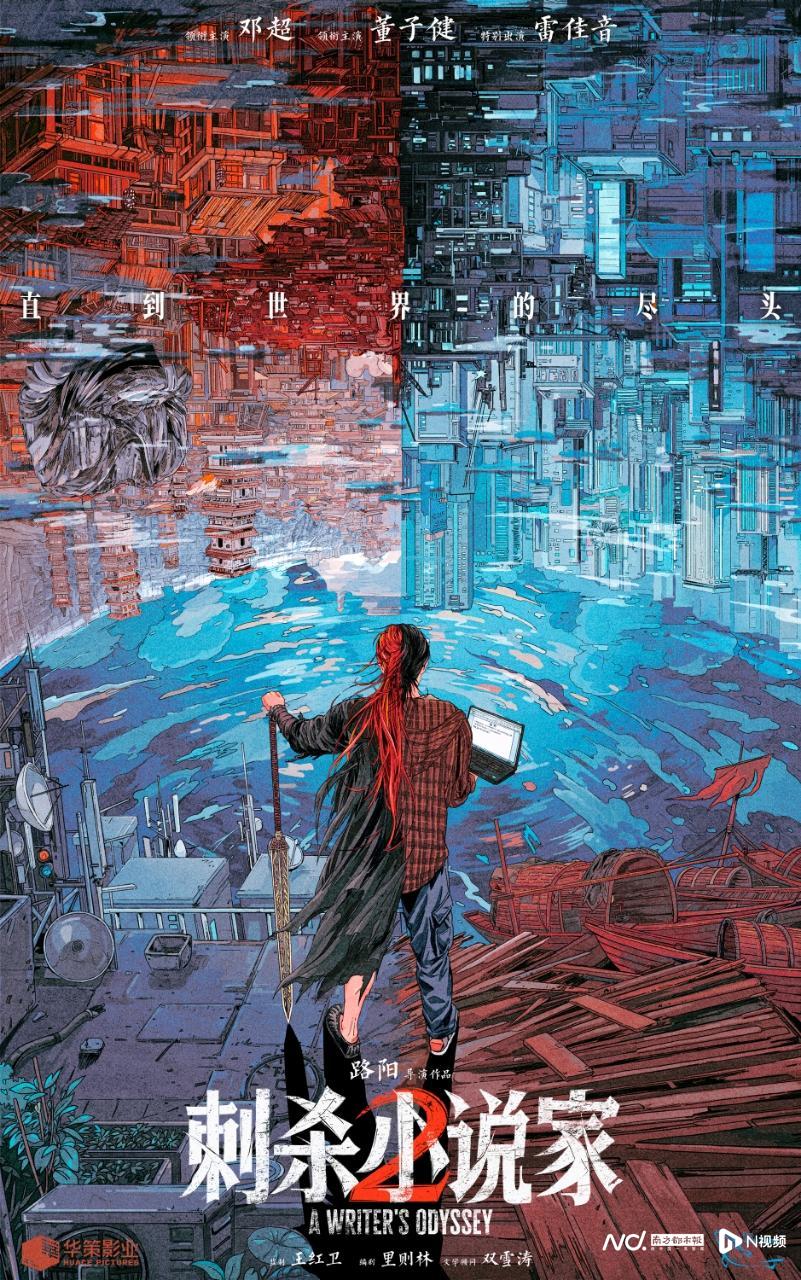
A Writer’s Odyssey 2 (刺杀小说家2, Lu Yang, 2025)

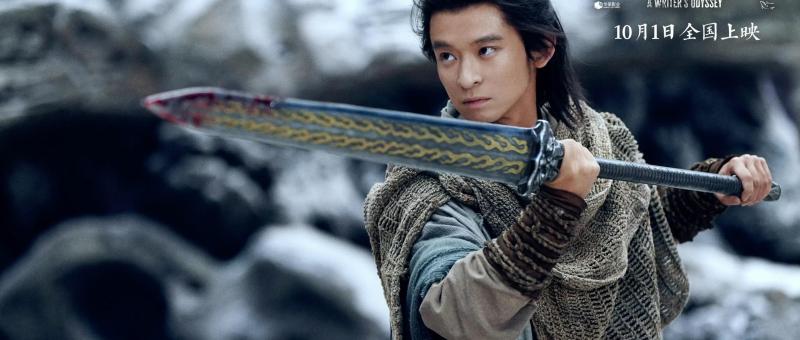
Arriving four whole years after the previous instalment, A Writer’s Odyssey 2 (刺杀小说家2, cìshā xiǎoshuōjiā 2) is in many ways a very different film. While its predecessor was a fairly serious affair tackling some of the issues of the modern China such as child trafficking, machinations of the oligarch class, and generalised capitalistic oppression, the sequel is a typically mainstream fantasy blockbuster complete with some fairly goofy humour and the ultimate message that despotism is bad and people should work for the good of others rather than just themselves.

In that regard at least, it’s another pointed attack on authoritarians and corporate bullies like Aladdin’s Li Mu. The entire Aladdin plot is, however, jettisoned, which seems like a missed opportunity, especially as it means that Yang Mi does not reprise her role and we don’t get any answers about who the boy was with Tangerine at the end of the previous film nor whether the “death” of Redmane led to the death of Li Mu in the real world as he feared it would. In truth, even Guan Ning (Lei Jiayin) is somewhat sidelined. Six years later, he, Tangerine (Wang Shendi), and Kongwen (Dong Zijian) are living as a family running a restaurant. Though Kongwen finished his Godslayer novel, it was stolen by an influencer, Cicada (Deng Chao), who accused him of plagiarism which got Kongwen blacklisted in the publishing industry and unable to earn any money through writing. As he’d said in the previous film, it was writing that gave his life meaning so now he’s started to become hopeless and depressed. 

Meanwhile, he’s begun to dream of Ranliang and the return of Redmane who has survived but as a mortal rather than as a god and is determined to get back everything he’s lost. This means, in meta terms, that he wants to challenge “god”, or really Kongwen, whom he sees as the architect of his fate. On the one level, it seems as if he’s trying to insist on his own free will and is sick of being controlled by unseen forces, but in reality he just wants the powers of a god for himself so he can oppress people properly. Nevertheless, this means he has to come to our world in order to square off against Kongwen, the writer.

It has to be said the vision of the real world on offer this time is much glossier and devoid of the kind of darkness that haunted Guan Ning. Though they’re worried because the restaurant’s not doing so well, the trio seem to have pretty nice lives with relatively few other problems outside of Cicada who is now aligned with Redmane in place of Li Mu standing in for a venal class of confluencers. Kongwen is then fighting a war on two fronts as Redmane taunts him to come over to the dark side and turn his fantasy story of good defeating evil into one of nihilistic despair echoing the way that Kongwen feels in his life.

The meta drama of the writer pursued by his characters is resolved in a fairly unexpected way with Kongwen effectively giving up his godlike powers and allowing his characters to save themselves through “mortal courage” rather divine intervention. Though Renliang had been plunged into chaos as the power vacuum Redmane left behind saw his former allies effectively become warlords reenacting the warring states period, in the end it’s solidarity that saves them as they agree to band together to oppose Redmane while offering the possibility of forgiveness if only Redmane can give up his quest for domination and agree to work for the common good. 

Kongwen learns something similar, remembering his writing isn’t solely an economic activity, and not only about himself but giving something back to the world. Torn between the anarchic ambition of Redmane and the righteousness of Jutian (Chang Chen), modelled after his own absent father, he struggles to find meaning amid the injustices of the modern China having been unfairly cancelled by netizens after being falsely accused of plagiarism by the man who stole his story and asks himself if it’s worth sacrificing his friends in a last ditch attempt to save them through teaming up with the forces of darkness. Nevertheless, Lu frames his tale in a much more lighthearted fashion as symbolised by demonic armour Darkshade’s sudden merging with a lettuce to become unexpectedly adorable. As such, it feels like something of a missed opportunity in choosing not to build on the foundations of the first film but sidestep them completely. Even so in upping its production values and the quality of its visual effects, the sequel embraces a new sense of fun which is definitely different but possessed of its own charm.


Trailer (English subtitles)
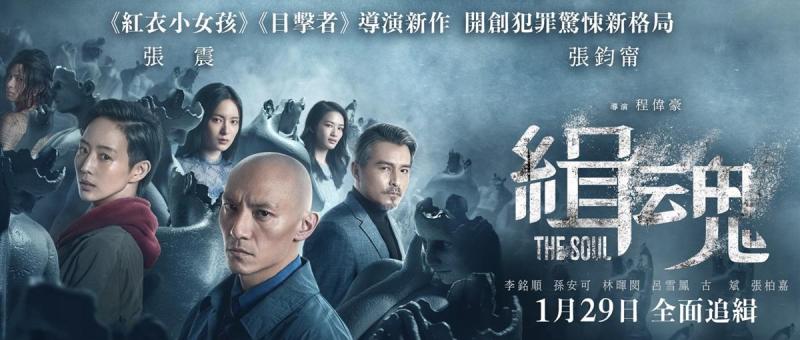
The Soul (緝魂, Cheng Wei-Hao, 2021)

“Affection is the greatest obstacle on the path to success” according to the villain at the centre of Cheng Wei-Hao’s philosophical mystery, The Soul (緝魂, Jī Hún). Adapted from a science-fiction novel by Jiang Bo, Cheng’s near future tale has a series of questions to ask about legacy, family, love, and repression as its earnest investigator tries to come to terms with his oncoming end while living with treatment resistant cancer and trying to decide what is the best way to support his wife and unborn child in his impending absence. 

In 2032, police are called to the palatial estate of a local tycoon only to find him brutally murdered. Perhaps there’s nothing so shocking about that, powerful men have enemies, yet the strange thing is that Wang (Samuel Ku) was already dying of brain cancer and had a very short time left to live so there would seem to be little advantage in bumping him off early. The prime suspect is his disgruntled son Tien-yu (Erek Lin) who was seen leaving the mansion in a hurry and is known to bear a grudge against his father over his mother’s death while Wang’s much younger second wife Li Yen (Sun Anke) also identifies him as the killer. But there are definitely a few things which don’t add up here. Why is Wang’s business partner Wan named as his second choice as heir after Li Yen despite the rumours he had been having an affair with first wife Su-chen (Baijia Zhang), why are there security cameras in Li Yen’s bedroom, and why would a man with so little time left to live opt for an arranged marriage to an orphaned 20-year-old woman from one of the orphanages his philanthropic organisation supports?

Those are all questions which immediately present themselves to veteran investigator Liang (Chang Chen) whose own wife Pau (Janine Chang Chun-ning), also a policewoman, is pregnant with their child while he has just learnt that his cancer has resisted all treatment and may in fact be incurable. Deciding his remaining time may be best spent providing what he can for his family he asks his boss for his job back and specifically to be put on the Wang case, immediately homing in on the company’s radical new treatment for cancer through transplanting rejuvenated neurons directly into the brain. He begins to wonder what comes with it if you begin implanting neurons that belong to someone else but gets no reply from Wan in the middle of his sales pitch. 

Hinted at in the Chinese title the question that arises is that of the connection between soul and flesh and whether it becomes possible to achieve a kind of immortality through colonising brains in healthy bodies, an idea which might of course prove appealing to Liang if he were not so innately incorruptible. Then again as his wife says, perhaps it’s easier to die. It’s the ones left behind who have it hardest, suddenly left to deal with everything on their own. That might be why she finds herself tempted by their rather obvious conflict of interest in compromising her integrity to buy her husband a few more days while he wonders what the point of such a sacrifice might be.

Yet what we discover in the unhappy saga of the Wangs is both a megalomaniacal obsession with control that extends beyond one’s own lifetime and a tragic love story born of internalised shame that led to a lifetime of repression and unhappiness in the inability to be one’s authentic self. Liang describes the RNA treatment as an expression of the living’s obsession with the dead, while others describe it as “modern necromancy” oddly echoing the black magic which Su-chen, herself a neuroscientist, and her son had apparently been practicing in their intense resentment of Wang. Pau insists she’d rather believe a soul exists no matter in what form, but if you make division of yourself you may also face an unexpected existential threat born of your own internal conflicts and mutual desire for survival. A slow burn mystery, Cheng’s eerie drama has its share of hokum but nevertheless asks some pertinent questions about the nature of humanity in an increasingly technological age, what it is we leave behind and how it is we move forward (or not) with the process of letting go even as its ironic final moments provide a kind of justice emotional and literal in restoration of a family. 


Monk Comes Down the Mountain (道士下山, Chen Kaige, 2015)

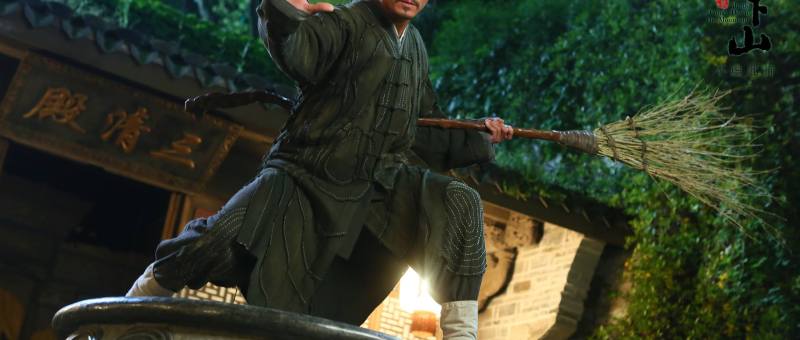
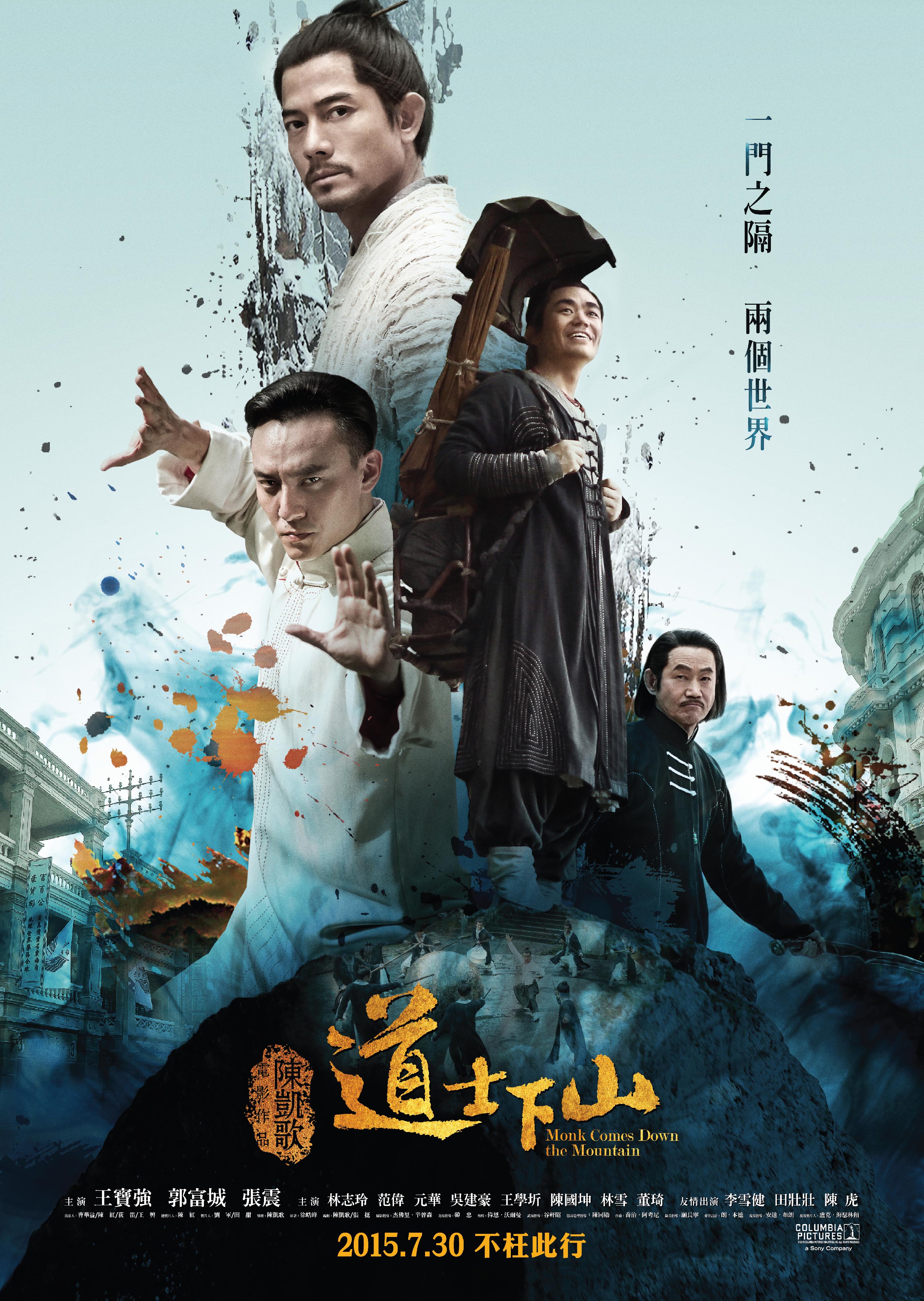
A wandering monk is forced to consider a series of dualities presented by his traditional upbringing and burgeoning modernity in Chen Kaige’s ‘30s wuxia Monk Comes Down the Mountain (道士下山, dàoshì xiàshān), inspired by the work of novelist Xu Haofeng. Essentially a picaresque, Chen sets orphan He Anxia (Wang Baoqiang) adrift in the secular world where he learns to see good and bad and perhaps the murky overlap between the two while simultaneously telling a rather subversive tale of frustrated same sex love and corrupt authorities. 

When the temple at which he was abandoned as a baby falls into financial difficulty, He Anxia enters a kung fu fighting competition he believes will put him first in line for food only in cryptic monk fashion the “prize” turns out to be exile as the winner is obviously the most capable of looking after themselves alone in the world. He Anxia is however something of an innocent and despite the monk’s warning to stay true to himself soon falls into difficultly yet ends up discovering a new father figure in monk turned pharmacist Tsui while trying to steal his fish. For all of Tsui’s goodness, however, there is discord in his house as his pretty young wife Yuzhen (Lin Chi-ling) prefers his dandyish brother, Daorong (Vanness Wu), who has abandoned the filial piety of the past to chase modern consumerist pleasures in selling the shop he inherited for a fancy ring. When the situation escalates, Anxia finds himself taking drastic action only to wonder if he did the right thing. 

Head of a local temple Rusong (Wang Xueqi) encourages him to think beyond dualities, wondering if he did the right thing for the wrong reasons or the wrong for right. This temple is famous for helping women have male children through praying to goddess of mercy Guan Yin, yet under Rusong’s predecessor they adopted a much less spiritual solution to the problem in simply providing a place where other men could father their sons. Rusong again asks him if the men who took part were sinners or saints while laying bare the paradoxes of the monastic life in the contemporary society. A petitioner goes so far as to ask Anxia if he might be her saviour, pointing out that if she cannot provide a male heir even though the problem may lie with her husband she may be cast out of her family, thereby disgraced not to mention financially ruined. Having lived all his life in the temple surrounded by men, gender inequality is not something Anxia had been very aware of. He tells her that though he had no family he was able to find one only to lose it, little understanding why she might not be able to do the same. 

On the other hand, he appears to show surprising perspicacity in the touching moments in which he must say goodbye to his second father figure, reclusive kung fu master Xiyu (Aaron Kwok), in realising the depth of his feelings for army buddy Boss Zha (Chang Chen) who then becomes his final master. Ironically, the obviously homoerotic relationship between Xiyu and Boss Zha was perhaps less controversial in 2015 than it might be in the present day but its inclusion is nevertheless surprising if also poignant as Xiyu tells Boss Zha that he should resume his stage career, marry and have children, while he will live a quiet and lonely life perfecting his kung fu though he will always keep him in his heart. Fiercely loyal to his mentors, Anxia accepts this relationship totally and appears to fully understand its import to Boss Zha to whom he subsequently transfers his allegiance as they band together to face off against big bad Peng. 

Playing into the good fathers and bad motif, Peng’s problem is his sense of paternal rejection in being passed over by his biological father in favour of Xiyu whose skills are stronger. After having ousted his rival, Peng fears the same thing will happen to his own son who is not only lacking in aptitude for martial arts but also appears to have a drug problem. To win they resort to cheating in picking up a pistol signalling both their own lack of jianghu honour and the nature of the changing times in which the very nature of kung fu has perhaps become obsolete. Meanwhile, Anxin and Zha are targeted by the police commissioner, Chao, who happens to be a former triad and also points his gun at them if less successfully while in cahoots with the amoral Peng and son.

Only through each of these subsequent encounters does Anxia begin to realise why he was cast down from mountain, understanding that he had to witness the good and bad of the secular world in order to understand his Buddhist teachings and finally find his place. With sumptuous production values perfectly recreating the 1930s setting, Chen’s quietly subversive 20th century wuxia takes aim at the ills of the contemporary society in its tales of corrupt authorities and amoral greed, but eventually finds solace in simple human goodness and genuine relationships as Anxin continues on his long strange journey to find his way home. 


International trailer (English subtitles)

Happy Together (春光乍洩, Wong Kar Wai, 1997)

4K

“Turns out, lonely people are all the same” according to the hero of Wong Kar Wai’s melancholy handover romance, Happy Together (春光乍洩). A statement cutting straight to the heart of Wong’s sensibility, it at once casts the individual as the universal as a man is forced to see himself from another direction, mirrored in the eyes of his former lover a man he can neither keep or forget. The title’s all too apparent irony becomes plain as the couple find peace only in incapacity, lovers on the run perpetually in search of but unable to attain the image of idealised romance. 

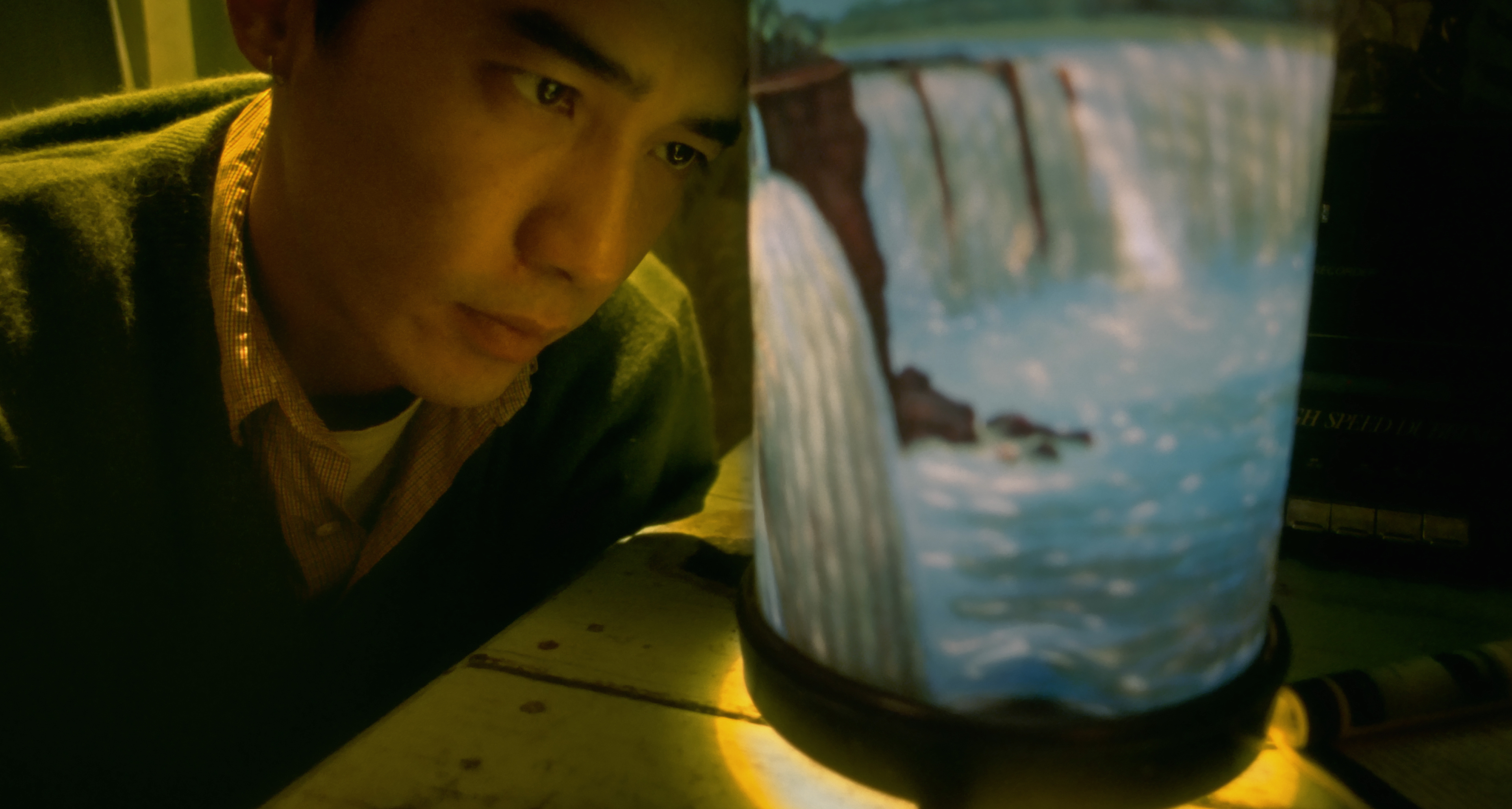
As if to signal his intent, Wong begins with a zoom in on the symbol of the love the two men can never fully realise in the colourful lamp bearing the image of a majestic waterfall they continue to search for but only one of them finds. Switching to a melancholy black and white he shows us for the time at least a semi-explicit sex scene between two men played by two of the biggest stars of the day while the hero, Yiu-Fai (Tony Leung Chiu-Wai), laments in voiceover his tendency to give in when his lover, Po-Wing (Leslie Cheung), utters the phrase “Let’s start over” encapsulating the tempestuous quality of their romance. To do just that, they’ve fled pre-Handover Hong Kong for Argentina in the hope of fixing their relationship but have discovered only more of the same, their contradictory qualities highlighted by their isolation in an unfamiliar environment. 

Tellingly Po-Wing first breaks up with Yiu-Fai on the road after they fail to find the waterfall as if in acknowledgment of the impossibility of mutual acceptance. Both ending up in Buenos Aires the pair awkwardly reunite, Yiu-Fai working earnestly as a bouncer at a tango bar while Po-Wing becomes a sex worker, his sharp outfits and sunshades an immediate contrast with Yiu-Fai’s somber workwear. Nevertheless, when his new life implodes leaving him badly beaten it’s to Yiu-Fai that he returns. By turns resentful, Yiu-Fai will later describe these days as their happiest, those in which Po-Wing was in a sense tethered, incapacitated, and dependent, his worst qualities neutered by his present need. Demonstrative and affectionate, he attempts to rekindle his relationship with the reluctant Yiu-Fai but is soon up to his old tricks again as his wounds begin to heal while strangely jealous as Yiu-Fai develops a friendship with an itinerant young man from Taiwan, Chang (Chang Chen), who works at the restaurant he transfers to after getting into a fight avenging Po-Wing at the tango bar. 

Like Yiu-Fai and Po-Wing, Chang claims he left Taipei because he was “unhappy” and is currently on a journey to the “end of the world”, looking for a lighthouse where it is said the brokenhearted can leave their sadness behind. It isn’t exactly clear if Chang realises Yiu-Fai is gay, seemingly shocked on picking up the phone to hear a man’s voice where he expected a woman’s but saying nothing of it and continuing to frame his conversation in heteronormative terms, though Yiu-Fai certainly seems worried what the fallout might be of Chang’s accidental discovery. Perhaps in flight from an uncertain future in a Hong Kong on the brink of a “reunion” with an authoritarian regime, the two men live freely bathing in the isolation of being two alone together in an unfamiliar culture, but their paths are always set to diverge. Sobbing into Chang’s Walkman, Yiu-Fai bounces to the end of the world and back again, observing the roaring waters for himself before travelling on echoing the footsteps of Chang, representative of another Sinophone nation, coming to realise that his wandering is possible only because he has a place to which he can return. 

Po-Wing, meanwhile, unexpectedly clings to the past, attempting to mend the lamp while living in the apartment he once shared with Yiu-Fai now regretful that they can perhaps never again “start over”. Leaving his sadness at the end of the world, Yiu-Fai extricates himself from a previously toxic relationship in exercising his right to “start over” having accepted the impossibility of his idealised dream of romance. Impassively observing the news of Deng Xiaoping’s death, he travels a nighttime Taipei, apparently resolved to reclaim his home choosing perhaps a kind of rooted independence following Chang’s example as he rides the elevated train into a neon-lit night filled with energy and positivity for the future. Shot with the melancholy greens and woozy ethereality of Wong’s emotional landscape, Happy Together deceptively mines the joys of moving on in a gradual unburdening that spells the end of loneliness.  


Transfer: As the original negative was damaged by fire and could not be fully restored, some of Tony Leung’s monologues have unfortunately been trimmed though the presentation is otherwise more faithful to the original than others in the series if also deepening the greenish tint.


Happy Together is currently available to stream in the UK via BFI Player in its newly restored edition as part of the World Of Wong Kar Wai season.

Restoration trailer (English subtitles)

Mr. Long (ミスター・ロン, SABU, 2017)

Mr. LongTaiwan and Japan have a complicated history, but in SABU’s latest slice of cross-cultural interplay each place becomes a kind of refuge from the other. Working largely in Mandarin and with Taiwanese star Chang Chen, SABU returns to a familiar story – the lonely hitman tempted by a normal family life filled with peace and simplicity only to have his dreams taken from him by the spectre of his past. Only this time it isn’t just his past but that of others too. Despite the melancholy air, Mr. Long (ミスター・ロン) is a testament to the power of simple human kindness but also a condemnation of underworld cruelty and its vicelike grip on all who enter its grasp.
Mr. Long (Chen Chang) is the best hitman in the Taiwanese underground. A part-time cook, he’s known for his knife skills and fearless action, entering a room full of gangsters and instantly eviscerating them before they can even reach for their weapons. Sent to Japan to take out a prominent yakuza, Mr. Long finds his usual methods ineffective owing to the fact his target is wearing a stab vest. Captured, beaten and driven out into the middle of nowhere, Mr. Long is beginning to think this is the end of his story when the gangsters are attacked by another knife wielding assailant repeatedly asking them to free his girl. Mr. Long escapes in the ensuing chaos but has no money or way back home.

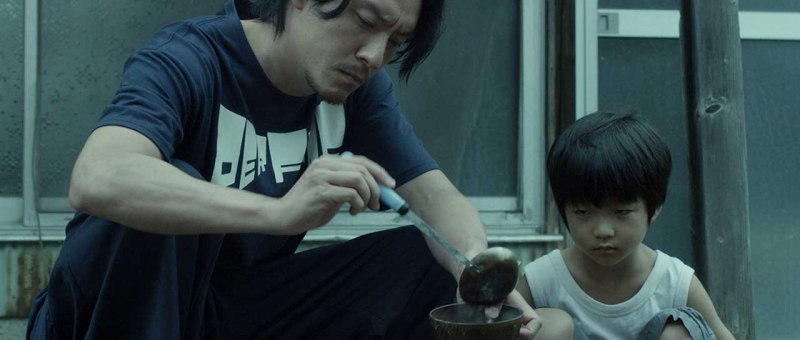
Marooned and bleeding in a rundown area, Mr. Long is saved by quiet little boy who brings him first medical supplies and then some probably stolen vegetables. Mr. Long manages to find an abandoned house which still has running water and cooking facilities and shares his improbably tasty soup with the little boy whose name is Jun. Surprisingly, Jun can speak fluent Mandarin because his mother, Lily, is also from Taiwan. Soon enough, other people in the area start to hear about the mysterious stranger and his wondrous cooking. Before he knows what’s happening, the tiny town has adopted him and built a stall on a cart where he can sell Taiwanese beef noodles.

SABU embraces his absurd sense of humour as Mr. Long’s capture becomes a cartoonish slapstick affair which ultimately sees him running off into the night with a sack on his head before regaining his quintessential cool. Mr. Long is the archetypal movie hitman – the major reason why he doesn’t say much is firstly that he doesn’t know any Japanese but  his conversations with the boy are pretty one sided and he doesn’t seem to be the chattiest even in Taiwan. Confused as to why all of this is happening Mr. Long asks Jun for guidance only for him to point out that it’s his own fault for acting so cool and never saying anything.

Yet for all the comedy there’s an underlying sadness as Mr. Long comes to care for this strangely friendly village which has more or less adopted him, providing him with food, clothing, and even an occupation in his brand new beef noodle stand. Even though he’s been in contact with his bosses and is supposed to get a boat to Taiwan in just a few days, Mr. Long doesn’t quite want to go home and let all of these nice people down. Especially as he’s begun to bond with the boy and grow closer to his mother.

Both Mr. Long and Lily are people who’ve had their lives ruined by proximity to the underworld – his by being trapped into a profession of killing with no possibility of escape, and hers by losing the love of her life to men who claimed to own her. Lily’s story is a sad one which eventually sees her fall into prostitution as a means of caring for her son only to be exploited by a duplicitous customer who gets her hooked on heroine as a means of control. Mr. Long frees her from this particular demon and the three begin to look as if they could make a go of things together only for the past to suddenly reappear and ruin everything.

Unexpectedly dark, Mr. Long veers between whimsical comedy and heartbreaking tragedy as its hero begins to long for another life which he knows he will be denied. Filled with SABU’s typically absurd world view mixed with balletic yet horrifying violence as the lonely hitman becomes the dragon spelt out in his name, Mr. Long is a familiar gangland tale in which a man cannot escape his past or his nature and risks rejection from those who’ve come to love him when they discover who he really is, but even if there can be no escape for some there is hope of redemption in human kindness and genuine connection.


Mr. Long was screened at the 17th Nippon Connection Japanese Film Festival.

Original trailer (no subtitles)

The Grandmaster (UK Release) (UK Anime Network Review)

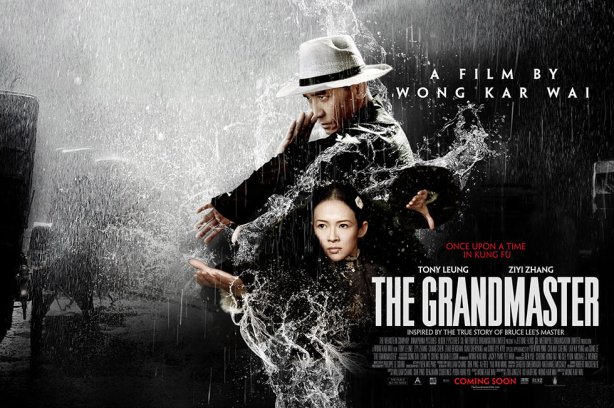
background_46481“Once upon a time in Kung Fu”? Really? “Inspired by the True Story of Bruce Lee’s Master”? Yeah, this poster tells you everything you need to know. 1000+ word rant Review of the Weinstein cut of Wong Kar Wai’s latest up at UK Anime Network.


You’d be hard pressed to find a more internationally well loved Chinese director than the achingly cool Wong Kar-wai. When it was revealed that Wong was going to tackle the story of legendary martial arts practitioner Ip Man with frequent collaborator Tony Leung along for the ride, excitement levels were obviously dangerously high and only set to rise. However, the project never quite seemed to get off the ground and, in fact, several other Ip Man movies were made in the meantime including the hugely successful series starring Donnie Yen the third of which is currently in development. The film finally found its way to the Berlin Film Festival in 2013 and received a brief cinema run in the UK last year but is only now reaching UK homes courtesy of Metrodome.

As usual with Wong who’s never quite managed to find the “save & quit” button, The Grandmaster exists in three different versions – the first being the original “Chinese cut” which runs 130 minutes, the second the “Berlin Cut” which runs 123 minutes and then there’s the “Weinstein Cut” which is 108 minutes long. If alarm bells are already ringing on hearing the name Weinstein, you are unfortunately correct – the UK release is limited to the shorter Weinstein cut. Not only is the film 18 minutes shorter than the longest version, it is an entirely different movie. Subplots have been streamlined or removed altogether, scenes have been reordered and rearranged and crucially additional voice over and explanatory title cards have been added for the “benefit” of an international audience. Seeing as few people will have the opportunity to see either of the other cuts of the film, there’s little point in explicating every last difference but suffice to say if you do have the opportunity to view the 130 minute Chinese version of the film it is a much better option than this overly accommodating “Ladybird Book” style international offering.

As for the plot of this Weinstein version, it runs more like a traditional martial arts thriller with Ip Man as the challenger who must fight various bosses to become the king of martial artists with some stuff about not kowtowing to the Japanese thrown in. The film has been “refocused” to centre more definitely on Ip Man himself as THE Grandmaster whereas the Chinese cut of the film situates him slightly to one side of things – almost an impassive observer of the chaotic events which over took Chinese society from the mid 1930s through to the early 1950s as seen through the mirror of the popularism of the kung-fu world both real and imaginary. In fact, in the Chinese  version the real story is arguably that of Zhang Ziyi’s Gong Er whose tragic life story serves as a metaphor for the dangers of a stubborn adherence to traditional values. Left with little to reflect on, this Ip Man’s story is relegated to a martial arts serial style retelling of the early adventures of the man who went on to train Bruce Lee which is both reductive and actually a little insulting.

The Chinese cut of the film is a sweeping, operatic epic rich with restrained emotions and barely suppressed personal, and implied national, tragedies. Most obviously the subtleties of the central love story between Ip Man and Gong Er are all but lost in this version as the scenes which allowed them to build up the necessarily emotional resonance have either ended up on the cutting room floor or been rearranged ruining the careful rhythms of their relationship and robbing the film of its beating heart in the process. Adding to the zombified feeling are the various title cards interspersed throughout the film which simply display a a few stage directions in an extremely ugly white font, almost like the kind you might see in the restoration of a rare film in which some reels are missing and the only way to fill in the blanks for the audience is to provide a scene synopsis for the intervening action. To put it bluntly, this is an extremely amateurish solution which both takes you out of the ongoing action of the film and adds to the feeling that one is being talked down to.

However, it isn’t all bad. The beautifully balletic fight sequences and often stunning cinematography have both made it through largely unscathed. The film has an undeniable aesthetic appeal and those action scenes are just as exciting as they are good to look at. Likewise, the central performances, though often frustrated by the problems raised by this new edit, are universally strong though it’s shame that Zhang Ziyi’s quite extraordinary work here is being unfairly disrupted by the butchering of her character arc. Coming to the film cold entirely unaware that another version exists, you may feel it’s a so so art house kung-fu movie with a bit too much talking, not enough fighting and altogether too much too much distance between the two but perhaps not find it altogether unenjoyable.

It’s a shame that the UK will likely never see the longer cut of The Grandmaster. Though apparently Wong Kar-wai worked closely with Harvey Weinstein to create a version that was more accessible to non Chinese viewers, it’s difficult to believe this extremely dumbed down approach could really be what he was looking for. After all, there is no dubbed track here – viewers opting to watch a subtitled film most likely aren’t looking for something familiar, they’ve chosen it because they’re interested enough in another culture to spend two hours exploring it. They almost certainly don’t need the kind of bald explanatory text offered here (though, really, who would?) and will most likely feel insulted at having been treated like children who need every last little thing explained in painful detail. Nevertheless, if this is the only way to see the latest film from Wong Kar-wai, there is still a fair amount to enjoy but be aware that it’s far from the true version of The Grandmaster and it may be worth your while to seek out the 130 minute Chinese cut to see Wong’s complete vision.