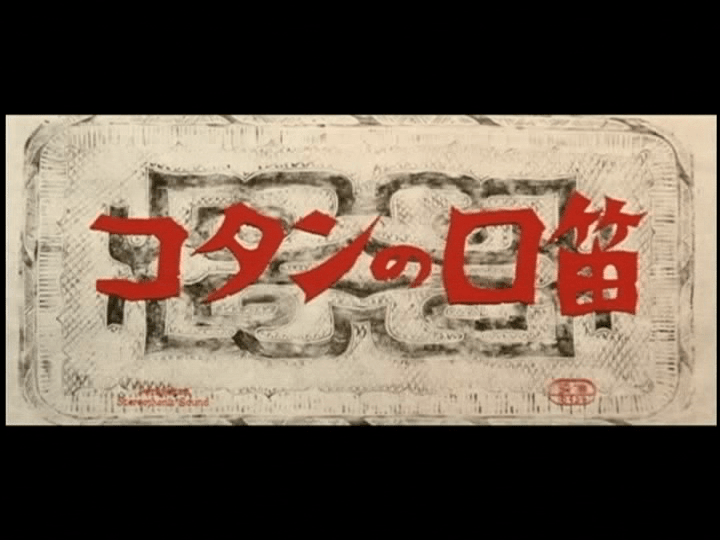
 The Ainu have not been a frequent feature of Japanese filmmaking though they have made sporadic appearances. Adapted from a novel by Nobuo Ishimori, Whistling in Kotan (コタンの口笛, Kotan no Kuchibue, AKA Whistle in My Heart) provides ample material for the generally bleak Naruse who manages to mine its melodramatic set up for all of its heartrending tragedy. Rather than his usual female focus, Naruse tells the story of two resilient Ainu siblings facing not only social discrimination and mistreatment but also a series of personal misfortunes.
Masa and Yutaka are a teenage brother and sister living with their alcoholic father who has been unable to get things together since their mother passed away. They also have their grandmother and cousin, but otherwise they’re pretty much fending for themselves. At school, both children are shunned and picked on by some of their classmates solely for being Ainu. When one girl reports that her purse has gone missing, she immediately points to Masa and though another girl defends her, the obvious racial overtones continue to get to her. Similarly, Yutaka finds himself getting into trouble with one of the other boys after he beats him on a test. Yutaka pays a heavier price (at least physically) but both children are left wondering about their place in the world and what the future might hold for them.
Masa’s bright hope revolves around her art teacher who draws a picture of her at a local watering hole which he intends to enter into a competition. The teacher has his sights firmly set on a career as an artist in Tokyo but like everyone else’s dreams, it proves harder to realise than he might have hoped. Perpetually left behind, Masa’s dreams crumble too as do those of her friend who has her romantic hopes crushed firstly by her well meaning grandmother and then secondly by an unexpectedly racist action by someone who had always been seen as a friend. If all of these difficulties weren’t enough, fate is about to deal Masa and Yutaka a very cruel blow indeed which leaves them at the mercy of an evil uncle worthy of any Dickens novel.
Like much of Naruse’s work, the outlook is extremely bleak. The children face such a hopeless future that the most they can do is affect a kind of false cheerfulness to try and raise their spirits. Masa and Yutaka are both mistreated by the general population, leaving them with a lingering sense of anger and resentment towards those that seem incapable of treating them like regular human beings. Their cousin, Koji, has apparently come to the conclusion that he has to stand up against such mistreatment, however, the ultimate harm that is done to the pair is done by a member of their own family acting with total disregard their feelings and wellbeing. At this point Koji reconsiders and says he understands now that it isn’t about Ainu or Japanese, there are just awful people everywhere. An odd, if depressingly stoic, late in the game plea for empathy and tolerance, this ironically positive statement sits very well with Naruse’s general feelings on human nature.
Whistling in Kotan is not one of Naruse’s more subtle efforts. The tone is relentlessly bleak as the children experience ever more degrading treatment solely because of their ethnic group. Even their supposed ally eventually turns on them exposing the last lingering threads of prejudice among even those who portray themselves as forthright liberals. The message is one of forbearance and patience, that times have changed and will change more but that one has to grin and bear it while they do. Pragmatic as that is, it does let society of the hook when it comes to the refusal to acknowledge and deal with consistent prejudice. Filled with Naruse’s sense of despair, Whistling in Kotan is an uneven yet interesting exploration of this sensitive subject though perhaps undoes much of its good work with its ambiguous and often blunt approach to the material.
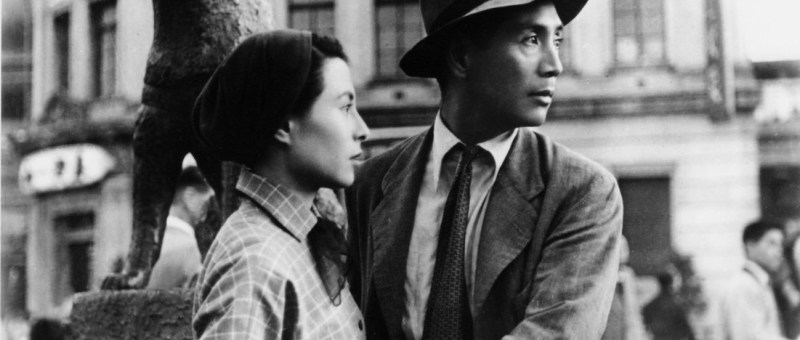
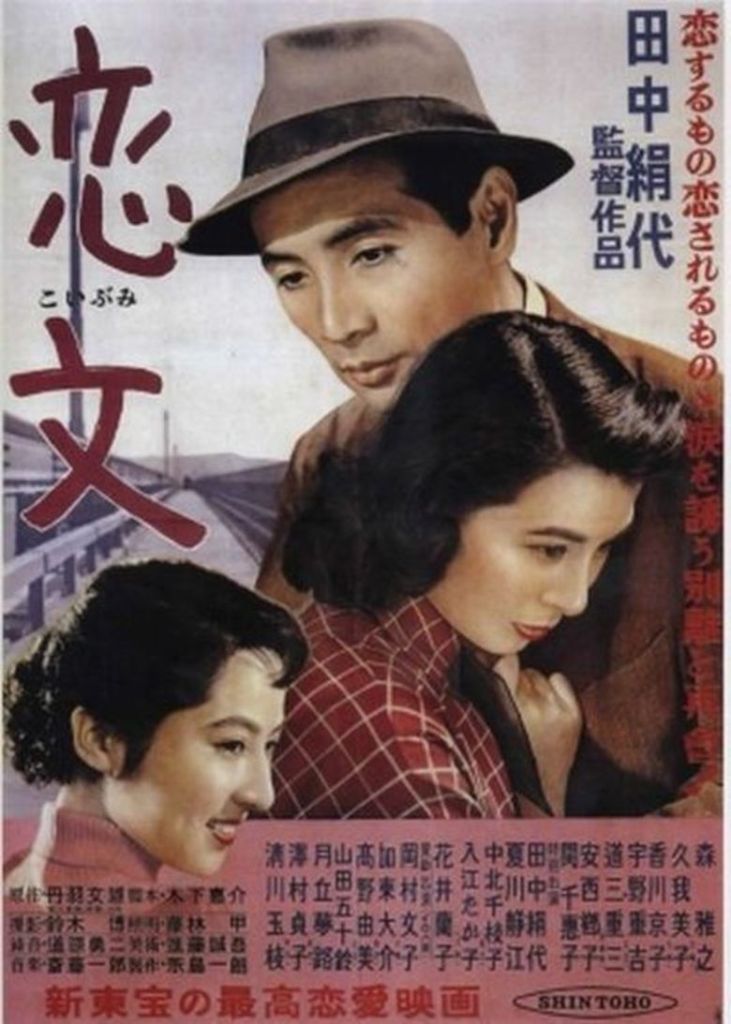 Kinuyo Tanaka was one of the most successful actresses of the pre-war years well known for her work with celebrated director Kenji Mizoguchi including several of his most critically acclaimed works such as Sansho the Bailiff, Ugetsu, and The Life of Oharu. However, post-war Japan was a very different place and Tanaka had a different kind of ambition. With 1953’s Love Letter (恋文, Koibumi) she became Japan’s second ever female feature film director, though her working and personal relationship with Mizoguchi ended when he attempted to block her access to the Director’s Guild of Japan. No one quite knows why he did this and he tried to go back on it later but the damage was done, Tanaka never forgave him for this very public betrayal. Whatever Mizoguchi may have been thinking, he was very wrong indeed – Tanaka’s first venture behind the camera is an extraordinarily interesting one which is not only a technically solid production but actively seeks a new kind of Japanese cinema.
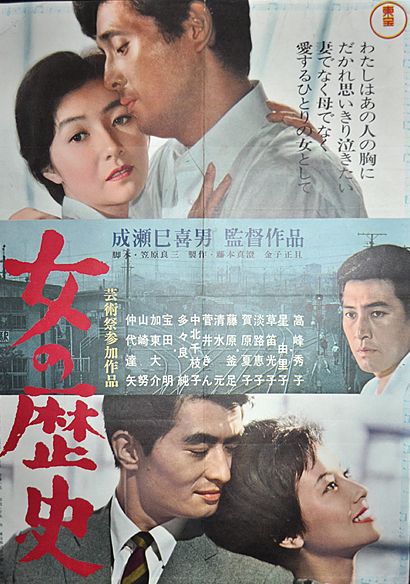 Mikio Naruse made the lives of everyday women the central focus of his entire body of work but his 1963 film, A Woman’s Story (女の歴史, Onna no Rekishi), proves one of his less subtle attempts to chart the trials and tribulations of post-war generation. Told largely through extended flashbacks and voice over from Naruse’s frequent leading actress, Hideko Takamine, the film paints a bleak vision of the endless suffering inherent in being a woman at this point in history but does at least offer a glimmer of hope and understanding as the curtains falls.
 Windows on Worlds