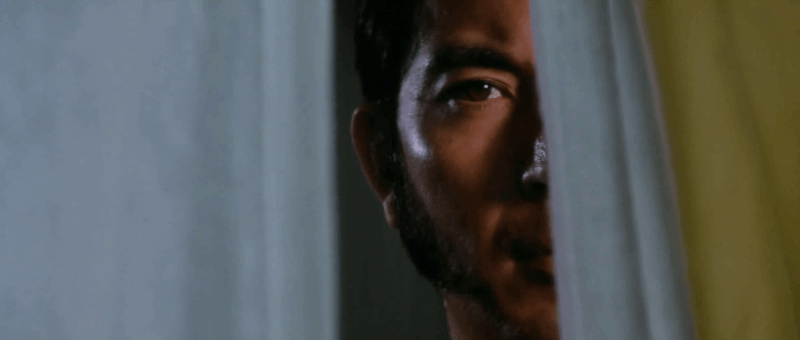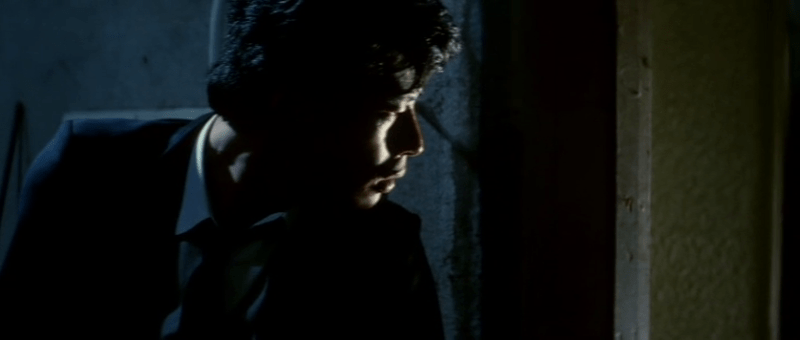
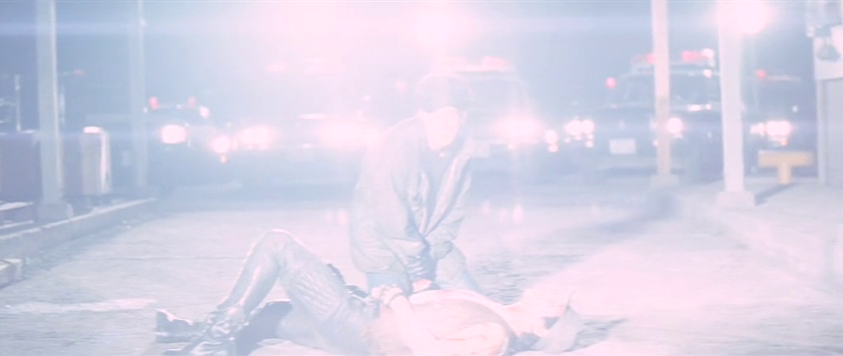
Target (薔薇の標的, Toru Murakawa, 1980)

By 1980 Toru Murakawa was an in-demand director thanks largely to his extremely successful collaborations with late ‘70s icon Yusaku Matsuda. Fresh off the back of the Game series, Toei Central Film hired him to do for their aspiring star Hiroshi Tachi what he’d done for Matsuda with grimy noir Target (薔薇の標的, Bara no Hyoteki). Interestingly enough Target shares its Japanese title with the 1972 drama The Target of Roses, a truly bizarre thriller in which a hitman stumbles on an international nazi conspiracy that was penned by the same screenwriters but is otherwise entirely unconnected with the earlier film and shares no common plot elements whatsoever. 

Set firmly within the contemporary era, the action takes place in Yokohama and is essentially a tale of proto-heroic bloodshed as the hero, Hiroshi (Hiroshi Tachi), seeks vengeance for the death of his best friend, Akira, during a drug deal which is ambushed by a third party who make off with both the drugs and the money killing Akira in the process. Hiroshi goes to prison for four years and then sets about getting some payback on his release by chasing down the Idogaki gang through gunman Yagi who he believes was directly responsible for Akira’s death. 

The plot is perhaps straight out of the Nikkatsu playbook, a little less honour than you’d find in the usual Toei picture though also cynical and nihilistic in keeping with the late ‘70s taste for generalised paranoia. Hiroshi is soon targeted by the Idogaki gang, but is saved by an old prison buddy, Kadota (Ryohei Uchida), who is a little older than he is and to an extent has a noble reason for his life of crime in that he has a son who became disabled after contracting polio and wants to get enough money together to make sure he’ll be alright when he can no longer look after him. Kadota then adds a third a man, Nakao, a former narcotics cop who jokes that he was kicked off the force for rape but according to Kadota was forced out for noble reasons after his attempt to help a friend backfired. The three men team up to turn the tables on Idogaki by ambushing his own drug deal with, in a throwback to ‘60s Sinophobia, gangsters from Shanghai. 

Meanwhile Hiroshi is caught between the life he had before and the contemporary reality in reuniting with his former girlfriend Kyoko (Yutaka Nakajima) who has evidently become the mistress of a wealthy man and is presumably the mysterious benefactor who paid all his legal fees. After a meet cute at a florist he also strikes up a tentative relationship with a wealthy young woman, the daughter of a CEO who plans to move to Mexico. Despite the rising prosperity of Japan in the early ‘80s, pretty much everyone has their sights set on going abroad, Kadota planning to head to Canada after making sure his son is well provided for. Yet Hiroshi is trapped in the Japan of the past, obsessed with vengeance for his friend while torn by his relationship with Kyoko who similarly wants to exit her comfortable yet compromised life to return to a more innocent time at Hiroshi’s side while unbeknownst to him the mistress of high ranking Idogaki boss Hamada. 

What becomes clear is that there is no prospect of escape from contemporary Japan, not even perhaps in death, Hiroshi left alive but dead inside at the film’s conclusion having committed a kind of spiritual suicide born of the dark side of what remained of his honour in seeking vengeance for the death of his friend who had seemingly only participated in the drug deal at Hiroshi’s command in an effort to improve the fortunes of their gang. Once again produced by Toei’s subsidiary Toei Central Film, Target has lower production values than the films Murakawa was making with Matsuda (who has a small yet memorable cameo as a rockstar whose life has been ruined by drugs) with non-synchronised dialogue and a grimy aesthetic which only adds to its sense of fatalistic nihilism otherwise enlivened by Murakawa’s artful composition and atmosphere of moral ruin in which there is no more humanity nor justice. 

Legend of the Cat Monster (麗猫伝説, Nobuhiko Obayashi, 1983)

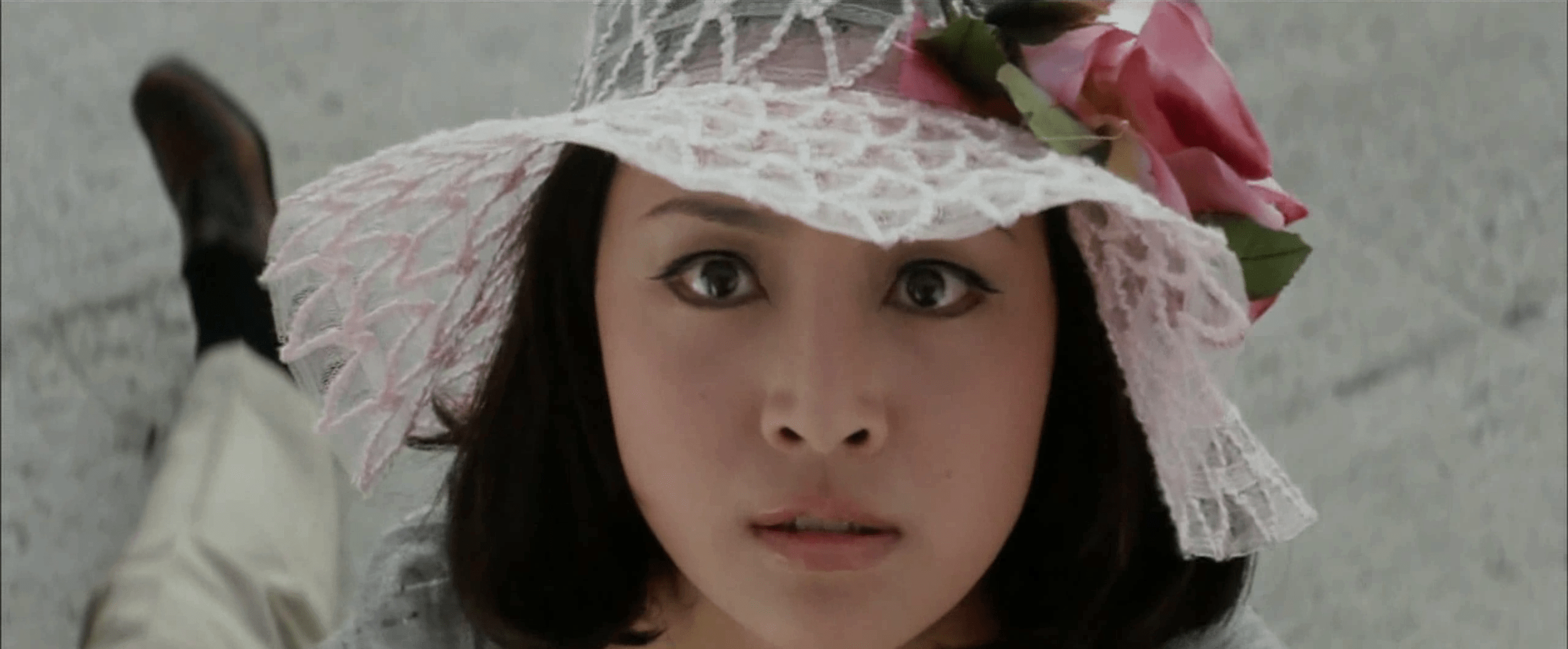
Produced as a special marking the 100th episode of the Tuesday Night Suspense Theatre TV drama series, Nobuhiko Obayashi’s Legend of the Cat Monster (麗猫伝説, Reibyo densetsu) is preceded by a title card reading “Elegy for a Faraway Film”. Scripted by Chiho Katsura, the film is indeed in its way a lament for dying world albeit one which owes a heavy debt to Billy Wilder’s Sunset Boulevard with a little Fedora thrown in. Repurposing the classic ghost cat film it casts cinema itself as dangerous illusion, a vampiric compulsion that drowns all who encounter it in irresolvable longing. 

This sense of irrecoverable nostalgia is palpable from the opening sequence which, aside from the melancholy voiceover, introduces us to the world of Setouchi Cinema apparently a moribund studio complex once dubbed the Hollywood of Japan. The new arrival, Ryohei (Akira Emoto), is dressed in noticeably anachronistic fashion as if he were a 1930s newsboy rather than a young man living in the Japan of the early 1980s. His girlfriend, Ryoko (Jun Fubuki), who works as a stage hand dresses in a similarly old-fashioned style and in fact carries an oversize watch that was a heirloom from her late father, an unsuccessful film director. Ryoko remarks that she’s been hoping someone would come and rescue her from this half-dead island but she doubts Ryohei will be the one to do it because he has also come here in search of a dream. 

That dream is, however, already dead at least according to some. The film director working at the studio is berated by a woman of around the same age working as a manager for an idol star for still getting an allowance from his mother at 60 because he has failed to make it as a film director at least in financial terms. There is a poignant, largely unexplored subplot between that suggests the inability to reconcile the dream of cinema with the economic “reality” has kept them apart all these years and that their dream of love may now be over too. 

It seems that the reclusive actress at the film’s centre, Akiko (Wakaba Irie), is also living on a frustrated dream of love withdrawing from the world around her believing that her lover will someday return from “Hollywood” which seems to be another word for paradise or perhaps the world beyond on the other side of the silver screen. To her, film is but a dream with in a dream. A window or screen is a portal to the burdens of the heart, memories of days gone by, and the illusions we once saw that cannot be seen again.  She herself is trapped within her own dream of love, but it is not so much a dream of her that bewitches Ryohei but the impossibility of cinema.

When passing photographer, Tachihara (Toru Minegishi), who lost his own wife to the unobtainable magic of the movies, snaps a picture of Akiko at her window holding a cat and looking exactly as she did the day she abruptly walked out on an incomplete film, it spurs a cynical producer to get the idea of convincing her to make a comeback and in a ghost cat movie, no less. Obayashi’s casting coup is getting mother and daughter Takako and Wakaba Irie to play aged and youthful versions of the famous actress, Takako herself having been a huge star of the 1930s performing most notably for Kenji Mizoguchi in the The Water Magician. There is an undeniable poignancy in her reflection that is only her aging body which is dying, as if she were merely becoming an embodiment of her image migrating to silver screen which exists between this world and next. It’s this screen that is later ruptured by Ryoko as she makes her escape after failing to save Ryohei from the curse of cinema. 

As Akiko laments, he’s writing his script more for himself than for her and it’s the quest for art which has begun to drain and make him mad. When he, pale and zombie-like, attempts to proffer his scripts it appears to be nothing more than his own name written over and over again. Like the Max-esque butler Mizumori (Akira Oizumi) says, film is an eternal dream which by its definition can never realised and exists only a state of longing somewhere beyond the veil. Drawing inspiration from Nobuo Nakagawa in particular and harnessing the sense of gothic dread found in Sunset Boulevard, Obayashi captures the eternal nightmares of artistic creation with the maddening obsessions of unrequited love and the image of the ideal which exists eternally out of reach somewhere on the other side of the screen.


The Target of Roses (薔薇の標的, Kiyoshi Nishimura, 1972)

One of a series of internationalist conspiracy thrillers arriving in the early 1970s, Kiyoshi Nishimura’s Target of Roses (薔薇の標的, Bara no Hyoteki, AKA Red Target) finds itself at a particular moment of paranoid anxiety. In the immediate wake of Asama-Sanso, its villains are a band of revolutionaries hiding out in the mountains behind the shield of “New Religion” as they plot the over throw of the state. Yet these villains are not left-wing former student protestors but Nazi holdovers branding themselves as the “Fourth Reich” while insisting that they are not “fascists” but merely trying to create a new world order free of “corrupt governments”. 

The hero, Akira, in keeping with similar roles Yuzo Kayama played in this period, is a former Olympic sharpshooter who fled to America after being implicated in the death of a teammate. You can tell that things haven’t been going well for him by the terrible mutton chops haircut he is forced to wear throughout the film, but his problem seems to be that he has lost all interest in living. That’s one reason he’s recruited by the Fourth Reich’s local leader Tachibana who theorises that Akira is a man who lives for the gun and is good as dead without one. He and his one-eyed associate Nomura (Toby Kadoguchi), a former sharpshooter himself, begin training him with various strange exercises never revealing their true purpose until asking him to shoot a prisoner they’ve tricked into trying to escape from their secret base. Realising the target is human Akira refuses but then changes his mind shooting the man at much closer range as he runs through a forest. 

Meanwhile, foreign photographer Robert (Ralph Jesser) and his assistant Ling Ling (Taiwanese actress Chen Chen) accidentally end up finding the secret camp after becoming lost in the forest, Robert returning later to investigate and take more photos. Akira is then sent to Hong Kong where the pair have travelled to visit the grave of Ling Ling’s brother, a war photographer killed by a landmine in Laos, in order to take out Robert before he exposes their operation in the newspapers. Never asking any questions of his new job, Akira is unexpectedly moved on seeing Ling Ling’s distress over Robert’s body, later striking up a relationship with her when she too becomes a target for the Fourth Reich. 

In a surprising contrast to similar contemporary crime thrillers, Hong Konger Ling Ling represents a kind of innocent beauty as symbolised in her interest in photographing flowers rather than the war zones covered by her brother. At one point she and Akira are even seen tiptoeing on the railway tracks just like innocent lovers only for Akira to then reflect on the sight of an obsolete steam train likening it to himself, abandoned and destined to be torn to pieces. His love for Ling Ling gives him new reason to live, breaking the nihilistic spell which he claims had led him to want to destroy everything. To that extent Tachibana is correct when he says that Akira has no interest in the future of mankind, but he has become determined to preserve the world of two which exists between himself and Ling Ling which leads him to oppose The Fourth Reich, of whose activities he had been previously ignorant. 

It has to be said that Nishimura’s repurposing of Holocaust imagery, the failed “trainees” of the Fourth Reich’s re-education programme driven to vacant madness and piled up on wooden bunk beds later to be gassed and burned on mass funeral pyres, may be a little inappropriate in its accidental flippancy. Nomura’s claim that the Fourth Reich is not a resurrection of fascism is somewhat disingenuous even if they seem to have no other ideology than their weird super soldier brainwashing programme designed to create some kind of new society, later suggesting that the conspiracy already has assets within the Japanese government. Yet Akira is indifferent to fascism, as Tachibana had framed him a man of the gun born only to pull a trigger a function he later uses in order to convince him to destroy himself. Often marred by overly theatrical dialogue rendered in sometimes awkward English which plays much less well than it might in Japanese, Target of Roses remains a little on the pretentious side despite Nishimura’s characteristic artistry but nevertheless embraces its nihilistic philosophy in the vast emptiness of its internecine conclusion. 


Hanagatami (花筐/HANAGATAMI, Nobuhiko Obayashi, 2017)

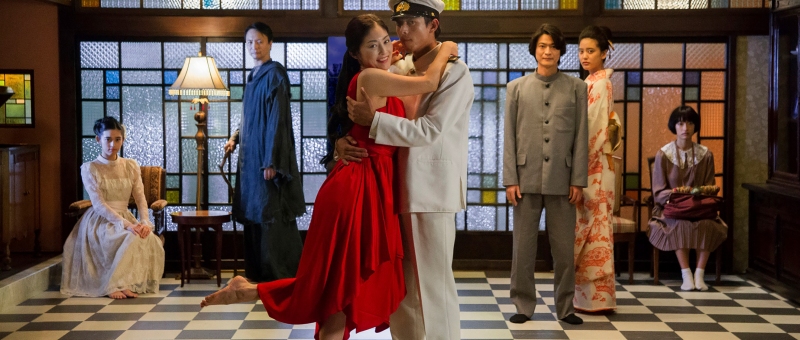
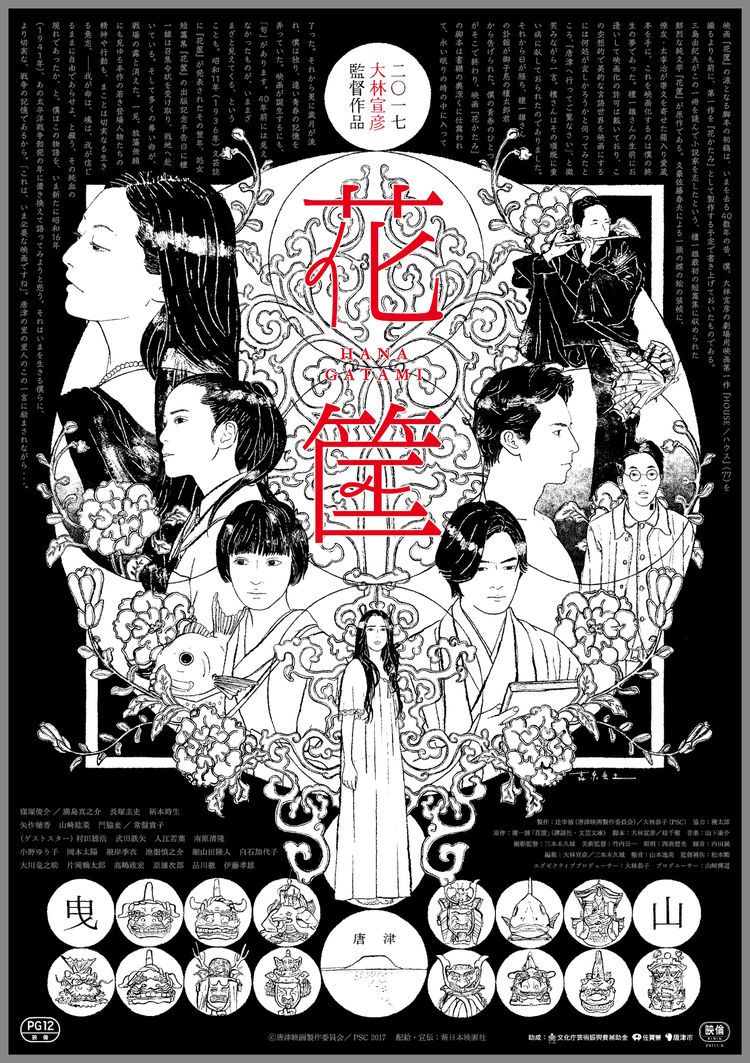
Hanagatami posterIn time the past becomes a dream. A world in and of itself, conjured from feeling and memory and painted in the imprecise strokes of one attempting to recreate a long forgotten scene. The melancholy heroes of Nobuhiko Obayashi’s long career were each trapped in a sense by nostalgia, a yearning for another time and place, or more precisely another, more innocent, version of themselves only with the benefit of hindsight and the confidence of age. Finally realising a long dreamt of project in dramatising Kazuo Dan’s classic wartime youth novel Hanagatami (花筐/HANAGATAMI), Obayashi reunites with another melancholy young man who as he puts it in the opening text wants to tell his story not out of a sense of nostalgia but out of longing for the things which were lost. Those like him who had the misfortune to be young before the war saw their whole world swept away by a kind of madness far beyond their control, losing not only a past but a future too.

When Toshihiko Sakakiyama (Shunsuke Kubozuka) returns home from Amsterdam where he had been living with his parents, Japan is already at war in China. Though the times are changing, Toshihiko’s life remains relatively untouched by conflict, insulated from the concerns of the day by the pleasant natural surroundings of his old-fashioned country town. Returning to the family estate presided over by his war-widow aunt, Keiko (Takako Tokiwa), Toshihiko strikes up a friendship with her sickly sister-in-law, Mina (Honoka Yahagi), whose proximity to death only seems to enhance her beauty. At school he finds himself caught between two polar opposites – the strong and silent Ukai (Shinnosuke Mitsushima) and the cynical nihilist Kira (Keishi Nagatsuka), while his two sets of social circles finally combine with the addition of Mina’s friends Akine (Hirona Yamazaki) and Chitose (Mugi Kadowaki) who also happens to be Kira’s cousin. The world is on the brink of ruin, but there are dances and picnics and festivals and everywhere everyone is desperate to live even in the midst of such foreboding.

Obayashi opens with a quote from one of Dan’s poems in which he mourns the flowers in full bloom shortly to be cut down in their prime. Hanagatami itself means “flower basket” but is also the title of a noh play about a woman driven mad by love for a man from whom she is separated by the arbitrary rules of her society. Japan itself has become a basket of flowers, offering up its youth on a senseless altar to political hubris while a generation attends its own funeral and becomes obsessed with the idea of permanence in a permanently uncertain world. Chitose carries about her camera, bitterly claiming that she will confer immortality on her subjects while privately longing for an end to her loneliness and suffering.

Like the heroine of the noh play, our protagonists too are driven mad by love as the madness of their times spurs them on and holds them back in equal measure. Mina, in all her etherial beauty, becomes the symbol of an age – innocence about die, drowned in its own blood. All in love with Mina, or perhaps with death itself, the men sink further into petty rivalries and conflicted friendships all the while staving off the inevitabilities of their times – that soon they too will be expected to sacrifice themselves for a cause they don’t believe in or risk being left behind alone.

Toshihiko finds himself torn between his two friends – the light and the dark, the robust Ukai and the gloomy Kira. While Toshihiko’s wide-eyed hero worship of Ukai and his idealised male physique takes on an inescapable homoerotic quality, his relationship with Kira leads him towards a darker path on which everything is “worthless” and all pleasures impossible in a world apparently so close to its end. Kira, having committed a truly heinous act, reminds his friends that they routinely kill and eat animals, and that one day they too will be gobbled up, swallowed whole by the cruelty of their times.

One by one the war takes them, if indirectly, leaving only Toshihiko behind. Describing his youth as like a game of hide and seek in which he suddenly realised it had gotten dark and all his friends had gone home, Toshihiko recasts his tale as a ghost story in which he remains haunted by the visions of his younger self and longs for his long absent friends, robbed of the futures promised to them by right of birth. Free floating through dreams and memory, Obayashi conjures an etherial world overshadowed by tragedy but coloured with wistful melancholy as pale-faced soldiers march off for the land of the dead while youth does its best to live all its tomorrows today in rejecting the senseless cruelty of its age.


Screened at Nippon Connection 2018.

Update July 2020: Hanagatami is released on UK blu-ray from Third Window Films on 6th July in a set which also includes a 20-minute making of and 35-minute interview with director Nobuhiko Obayashi.

Original trailer (no subtitles)

Goodbye for Tomorrow (あした, Nobuhiko Obayashi, 1995)

goodbye for tomorrowAfter completing his first “Onomichi Trilogy” in the 1980s, Obayashi returned a decade later for round two with another three films using his picturesque home town as a backdrop. Goodbye For Tomorrow (あした, Ashita) is the second of these, but unlike Chizuko’s Younger Sister or One Summer’s Day which both return to Obayashi’s concern with youth, Goodbye For Tomorrow casts its net a little wider as it explores the grief stricken inertia of a group of people from all ages and backgrounds left behind when a routine ferry journey turns into an unexpected tragedy.
Three months after nine people were drowned when a local ferry sank in the harbour, friends and relatives of the dead begin to receive messages signed by their loved ones instructing them to be at a small island at midnight. Cruel joke or not, each of the still grieving recipients makes their way to the boathouse, clutching the desperate hope that the dead will really return to them. Sure enough, on the stroke of midnight the ghostly boat rises from the ocean floor bringing a collection of lost souls with it, but its stay is a temporary one – just long enough to say goodbye.

Obayashi once again begins the film with an intertile-style message to the effect that sometimes meetings are arranged just to say goodbye. He then includes two brief “prequel” sequences to the contemporary set main narrative. The first of these takes place ten years previously in which a boy called Mitsugu throws a message wrapped around a rock into a school room where his friend Noriko is studying. We then flash forward to three months before the main action, around the time of the boat accident, where an assassination attempt is made on the life of a local gangster in a barber shop. At first the connection between these events is unclear as messages begin to arrive in innovative ways in the film’s “present”. After a while we begin to realise that the recipients of the messages are so shocked to receive them because they believe the senders to be dead.

At three months since the sinking, the grief is still raw and each of our protagonists has found themselves trapped in a kind of inertia, left alone so suddenly without the chance to say goodbye. The left behind range from a teenager whose young love story has been severed by tragedy, a middle aged man who lost a wife and daughter and now regrets spending so much time on something as trivial as work, a middle aged trophy wife and the colleague who both loved a successful businessman, two swimmers with unresolved romances, and the yakuza boss who lost his wife and grandson. For some the desire is to join their loved ones wherever it is that they’re going, others feel they need to live on with double the passion in the name of the dead but they are all brought together by a need to meet the past head on and come to terms with it so that they can emerge from a living limbo and decide which side of the divide they need to be on.

Aside from the temporary transparency of the border between the mortal world and that of the dead, the living make an intrusion in the form of the ongoing yakuza gang war. The Noriko (Kaori Takahashi) from the film’s prequel sequence also ends up at the meeting point through sheer chance, as does the Mitsugu (Yasufumi Hayashi), now a gangster and charged with the unpleasant task of offing the old man despite his longstanding debt of loyalty to him. These are the only two still living souls brought together by an unresolved message bringing the events full circle as they achieve a kind of closure (with the hope of a new beginning) on their frustrated childhood romance.

The other two hangers on, an ambitious yakuza with a toothache played by frequent Obayashi collaborator Ittoku Kishibe, and a lunatic wildcat sociopath played by the ubiquitous Tomorowo Taguchi, are more or less comic relief as they hide out in the forrest confused by the massing group of unexpected visitors who’ve completely ruined their plot to assassinate the old yakuza boss and assume control of the clan. However, they too are also forced to face the relationship problems which bought them to this point and receive unexpected support from the boss’ retuned spouse who points out that this situation is partly his own fault for failing to appreciate the skills of each of his men individually. The boss decides to make a sacrifice in favour of the younger generation but his final acts are those of forgiveness and a plea for those staying behind to forget their differences and work together.

Revisiting Obayashi’s frequent themes of loss and the need to keep living after tragedy strikes, Goodbye For Tomorrow is a melancholy character study of the effects of grief when loved ones are taken without the chance for goodbyes. Aside from the earliest sepia tinged sequence, Obayashi plays with colour less than in his other films but manages to make the improbable sight of the sunken boat rising from the bottom of the sea genuinely unsettling. The supernatural mixes with the natural in unexplained ways and Obayashi even makes room for The Little Girl Who Conquered Time’s Tomoyo Harada as a mysterious spirit of loneliness, as well as a cameo for ‘80s leading man Toshinori Omi. The Japanese title of the film simply means “tomorrow” which gives a hint as to the broadly positive sense of forward motion in the film though the importance “goodbye” is also paramount. The slight awkwardness of the English title is therefore explained – saying goodbye to yesterday is a painful act but necessary for tomorrow’s sake.


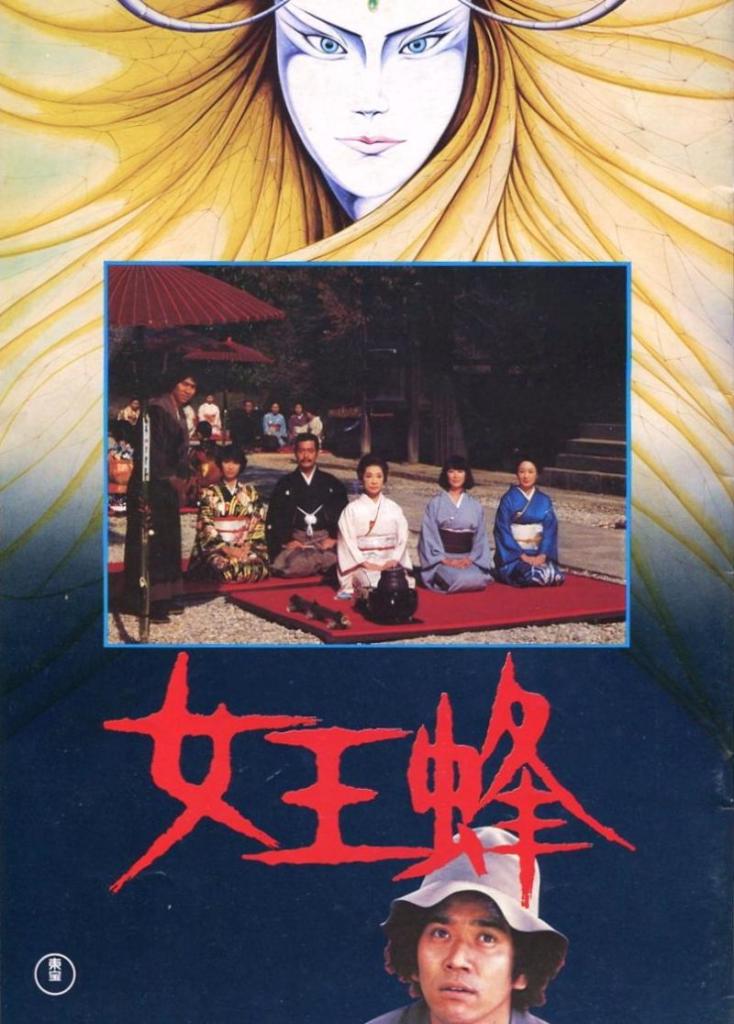
Queen Bee (女王蜂, Kon Ichikawa, 1978)

queen beeKon Ichikawa may be best remembered for his mid career work, particularly his war films The Burmese Harp and Fires on the Plain as well as his melodramas Ototo and Bonchi, but he was one of the few directors who was prepared to keep one foot in the commercial arena as well as making more personal, “artistic” efforts. For this reason he was able to go on working through the creatively dry ‘80s when other big name directors, in particular Akira Kurosawa, found themselves locked out of the cinematic arena in their native country. Ichikawa’s biggest box office success was in fact the literary adaptation of a popular mystery novel The Inugamis (which he actually remade in 1999 as his final feature film). 1978’s Queen Bee (女王蜂, Jooubachi) is one of five films that Ichikawa made based on the work of popular mystery writer Seishi Yokomizo which feature the eccentric detective Kousuke Kindaichi.

In many ways, Queen Bee is the perfect synthesis of European and Japanese mystery styles as it technically plays host to its strange detective but places him off centre, more as an onlooker to events than the protagonist. Though it follows something like a classical Agatha Christie approach, it also brings in the Japanese love of puzzles and the importance of long buried secrets bubbling to the surface and coming back to haunt everyone involved in the original incident. It’s also important to note that Ichikawa is deliberately playing up the camp comedy of the situation too as he makes his bumbling policeman a definite figure of fun as well as sending Kindaichi tumbling into a pond among other oddly comic elements for this multiple murder mystery.

The story itself begins in 1932 as two students, Hitoshi and Ginzo, leave a small town where they’ve been learning all about the local folklore. Hitoshi later returns under less than pleasant circumstances as he’s come to get his grandmother’s ring back after giving it to a local girl, Kotoe, whom he’d agreed to marry, only his mother objects so now he wants to hold off a bit. Unfortunately this is not a good idea as Kotoe is already pregnant with his child. Sometime later Hitoshi dies in mysterious circumstances and we flash forward to 1936 when the daughter, Tomoko, is three years old and Ginzo comes back to propose to Kotoe.

Now we fast forward to 1952 when Tomoko is about to turn 19. Kotoe has died, Tomoko has been adopted by Ginzo, and three folklore loving students have set their eyes on her as a bride. Unfortunately, one of these suitors also winds up getting killed with Tomoko the prime suspect and it looks like history may be about to repeat itself.

Queen Bee may be a more mainstream effort, but Ichikawa films in a noticeably anarchic fashion with extremely strange cuts and juxtapositions, not to mention the almost parodic tone of the film. He adopts a fairly perverse approach to the entire enterprise even allowing his veteran star Tatsuya Nakadai to play the 20 year old version of himself in the brief 1930s scenes which is, it has to be said, something of a mistake. As fine an actor as Nakadai is, playing a 20 year old at 50 is a stretch and one which serves as a point of alienation during the deepest historical layer of the film.

As is usual with Japanese mysteries, the plot relies on the solution of various puzzles, riddles and the mechanics of crime much more so than the human psychology and importance placed on motive that dominate Western detective tales. As well as the long buried secrets, Queen Bee brings in some commentary on the place of social class in the post-war world, the folly of misplaced love, and how the failure to act honestly and in the best interests of others by putting your own feelings aside can cause extreme repercussions not only in your own future but those of generations to come. Once again, only by exposing previously unexpressed emotions and lies both accidental and deliberate can the trauma be resolved and crises come to an end.

Queen Bee is a strange film which plays up its European detective novel atmosphere complete with the drawing room lecture that has become a hallmark of the genre but also adds in a layer of irony and an almost winking jokiness that make for an oddly amusing tone. The mystery element itself is satisfying enough to keep even the most seasoned crime fan guessing with plenty of red herrings and misinformation along the way. That said, Queen Bee is also very much of its time and perhaps fails to offer much more than an enjoyably old fashioned detective story, albeit one which is anchored by strong performances from its veteran cast.


Unsubtitled trailer:

https://www.youtube.com/watch?v=TPZ64PbVOio