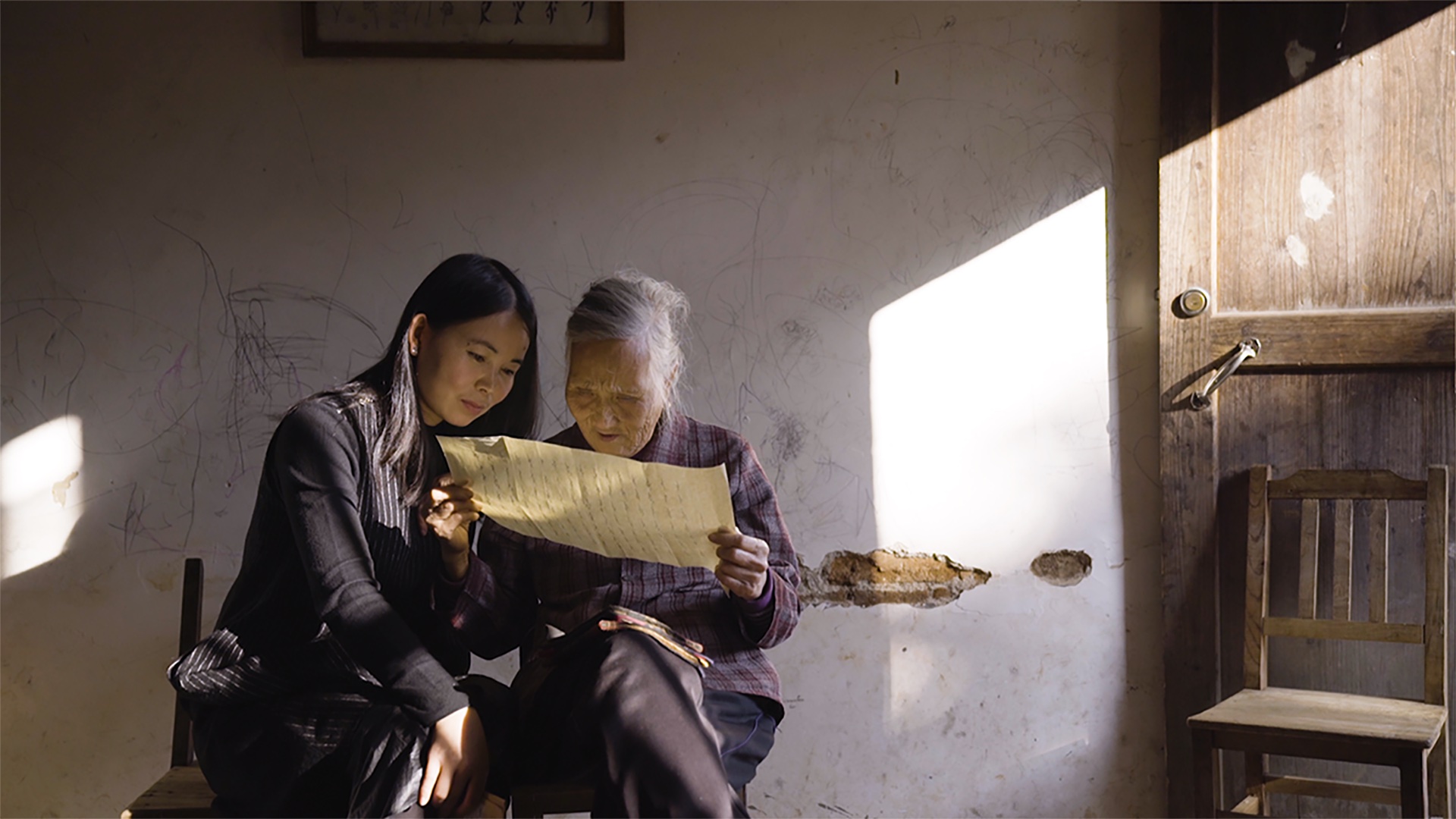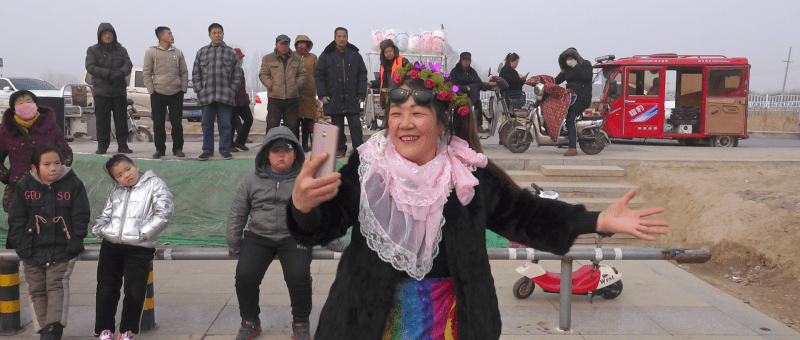
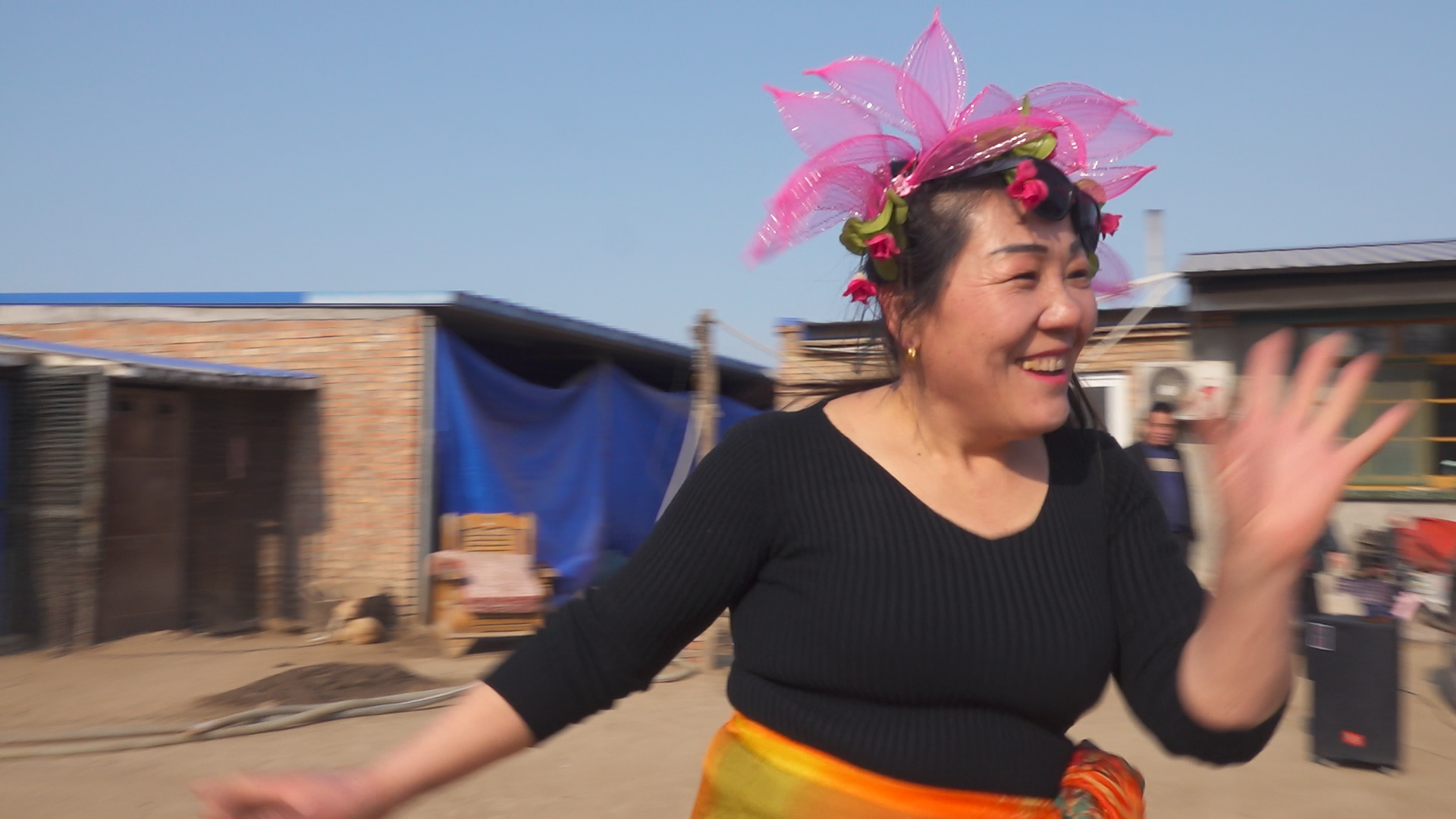
Schemes in Antiques (古董局中局, Derek Kwok, 2021)

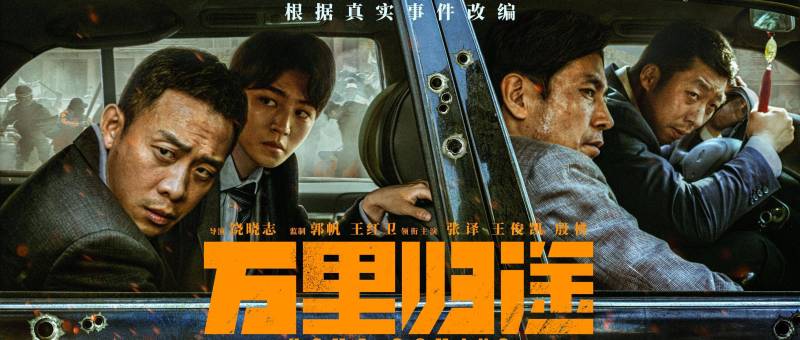
Two very different men square off in the race to find a precious Buddha head and reclaim their family honour in an old-fashioned tomb raiding mystery from Derek Kwok, Schemes in Antiques (古董局中局, gǔdǒng jú zhōngjú). The key to the future seems to lie in the past as the heroes approach from opposing sides, one keen to expose a truth and the other seemingly to conceal it but both otherwise unable to escape a problematic family history and be rehabilitated as a member of one of the top five antiquing families in the China of 1992. 

Now a middle-aged drunkard, down on his luck Xu Yuan (Lei Jiayin) lays the blame for his present circumstances solely with his immediate forbears. A member of the Plum Blossom Five, five families who are the ultimate authorities on the authenticity of historical artefacts, Xu Yuan’s grandfather was executed as a traitor during the war for having gifted a precious Buddha head to the Japanese. In a fairly traumatic childhood, Yuan was abandoned by his his dad whom he believes to have been too badly damaged by seeing his grandfather die to be any sort of father while somehow even kids his own age called him scum in the streets because of the shame his grandfather’s transgression had placed on the family. Now running an electronics store which is in its way the opposite of antiques, Yuan has a fairly cynical view of the artefacts trade but is dragged back into it when the granddaughter of the Japanese soldier who received the Buddha head (Lili Matsumoto) insists on returning it to a direct descendent of the Xu family. 

Perhaps surprisingly, the issue isn’t really with the Japanese but the current status of the Buddha head which, after a duel of detection with well dressed rival Yao Buran (Li Xian) who is also trying to redeem his family honour, Yuan quickly realises is a fake suggesting his grandfather wasn’t really a traitor after all while giving rise to the question of what actually happened to the “real” one. When it comes to the antiques trade, perhaps there’s a question mark over the degree to which “authenticity”, whatever that might mean, really matters and if all the Plum Blossom Five are really doing is attempting to assert their authority over an unruly market as the accusation that one head of family in particular has long been knowingly authenticating fakes when it suits them to do so bears out. In something of a plot hole, Yuan is revealed to be an antiques expert despite having been abandoned by his father at a young age but his ability is for some problematic even if admired by his main rival in its ability to expose the hidden truth or as the film later puts it the real within the fake. 

In any case, it’s true enough that the battles of the past are still being fought by the grandchildren of those who started what they couldn’t finish. Yuan is joined in his quest by the feisty granddaughter of another Plum Blossom family (Xin Zhilei) who is also battling her grandfather’s sexism in his refusal to trust her with anything important in the antiques trade. She and Yuan end up squaring off against Yao who is largely playing his own game as they embark on a good old-fashioned treasure hunt in which they solve a series of puzzles set down by Yuan’s father to lead them towards the truth.

Discovering another father figure along the way, Yuan learns to accept his complicated legacy while redeeming his family honour and along with it his self worth in outsmarting just about everyone else to solve the final mystery. There is something refreshingly innocent in these well constructed, defiantly analogue puzzles which rely on cultural knowledge and mental acumen along with a spirit of curiosity, while there’s also a fair amount of running away from bad guys and escaping from collapsing tombs filled with artefacts that might in a sense be cursed even if not quite literally. There are definitely a lot of schemes in antiques, something of which Yuan himself takes full advantage, but they’re also in their own way pieces of a puzzle in which the fakes are less red herrings than gentle pointers towards other truths some of them buried under layers of subterfuge and obfuscation only to be dragged into the light by those with dangerously curious minds.


Schemes in Antiques streams in the US Sept. 10 – 16 as part of the 15th season of Asian Pop-Up Cinema.

International trailer (English subtitles)

The Magical Craftsmanship of Suzhou (天工苏作, Sun Zengtian, 2022)

Suzhou was once such a bustling hub of traditional arts that the guild had to institute a quota system forbidding artisans from taking on too many apprentices lest they generate a monopoly. Times are now very different and such businesses often have trouble recruiting young people willing to learn traditional crafts or are even in a sense reluctant to do so knowing that their industry is in decline and those entering it now may never be able to support themselves fully on an artisan’s earnings alone. 

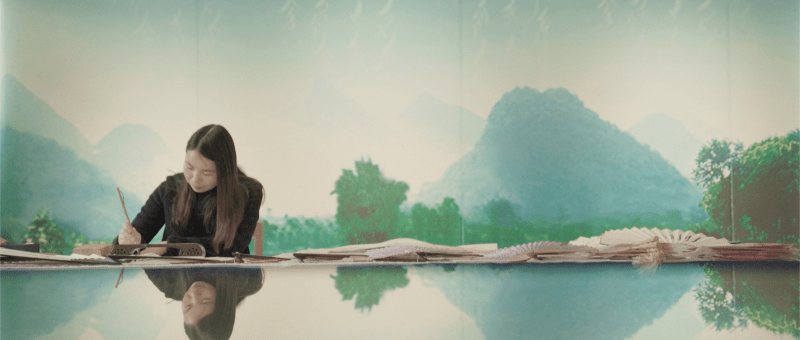
Sun Zengtian’s documentary The Magical Craftsmanship of Suzhou (天工苏作, tiān gōng sū zuō) is however a little more hopeful than some of its subjects examining the still thriving local culture along with some of the efforts and perhaps compromises of those trying to ensure the traditional arts survive. A lantern maker laments that his industry has become so straitened that his small team often have to work to incredibly tight schedules with little time for rest yet he refuses to compromise on quality and is determined not to damage his hard-won reputation as a master of the art. The demand may be more limited than it might have been in the past but is still very much there as the crowds of visitors at a local festival marvel at the spectacle of light illuminating the darkness through the beautiful lantern designs. In any case, he takes pride in showing his daughter some of his work safely installed in a local museum while giving talks in local schools to ensure the next generation is at least familiar with the art of lantern making.

Meanwhile, another man’s business carving intricate designs into olive stones continues to grow while he takes on pupils to pass on his knowledge. Others meticulously craft traditional furniture and aim to reintroduce an element of serenity through simplicity in an increasingly chaotic modern society. A chair can be whipped up in as little as eight minutes by a skilled carpenter, but the wood requires two years of seasoning and a seasoned craftsman to understand the process. Many believe that only a handmade piece can perfectly match the spirituality of the natural materials rather than the soulless mass produced furniture of a similar design. 

For the carpenters, their craft is almost a ritual and for that reason largely unchangeable save for the use of modern sandpaper in place of the leaves their ancestors may have used with a kind of tenderness to protect the wood. Yet for the craft itself may be less important that the end result such as it is for a local architect who sometimes butts heads with his father trying to explain that things cannot always be done like the old days given modern building and employment regulations. Their problem is that many of the craftsmen are now elderly and few are keen to learn their skills while the veterans often find it difficult to follow the plans constructed by young and inexperienced architects sometimes choosing to disregard them in favour of their well honed professional judgement. Yet the young architect feels compromise is the way to go, building traditionally but with the assistance of modern technology while preserving the aesthetic charm of traditional buildings. 

Others look to the international market drawing inspiration from global fashion trends and making innovations of their own such as an embroidery master who has patented her own style and firmly believes her craft to be an art rather than a simple means to support oneself as it had been for her mother and grandmother. She worries about taking on apprentices knowing that there is little scope for them to earn a decent living through handmade embroidery, but there is a poignant moment as she discusses options with a young woman wanting to learn as she sews the needle and the potential apprentice pulls it through. Meanwhile, a pair of female visitors from overseas ask how they might be able to learn traditional weaving. The woman running the store just laughs while the narrator explains that it’s easy to learn but difficult to master and many give up halfway. She is trying to modernise by building an online platform for practitioners in her field but finds it difficult to get the older artists on board. In any case, it seems that the traditional arts are very much alive in Suzhou, not fossilised or stuck in the past but constantly evolving as they fight for their survival along with the pleasures of a simpler existence in a fast moving culture. 


The Magical Craftsmanship of Suzhou screens in Chicago on Sept. 10 as part of the 15th season of Asian Pop-Up Cinema.

Trailer (English subtitles)

Back to Love (带你去见我妈, Lan Hongchun, 2021)

Change comes slow to rural China in Lan Hongchun’s lighthearted drama, Back to Love (带你去见我妈, dài nǐ qù jiàn wǒ mā). Shot largely in the local Chaozhou dialect, the film explores the increasing distance between the kids who left for the city and their small-town parents whose views are often more conservative especially given the fluctuating local hierarchies which are often defined by successful marriages of the children. True love may be hard-won in a sometimes judgemental society but it is in the end the older generation who will have to make a shift if it’s really their children’s happiness that they care about most. 

Xian (Zhong Shaoxian) runs a backstreet butcher shop in a small rural town and lives with her retired husband, who is also a performer of traditional opera, her elderly mother, and her youngest son. Engaged in a sort of competition with another local old lady, Xian is forever trying to organise blind dates for her older son who works in a warehouse in the city. Unbeknownst to her, Zekai (Zheng Runqi) already has a girlfriend, Shan (Lu Shan), and the pair have been living together for some time. Though his uncle who works with him already knows about the relationship, Zekai has been reluctant to tell his family back home because not only is Shan not from their local area but has also been married once before which he knows will not play well in his hometown where divorce and remarriage are still taboo subjects. As his uncle advises him, his diffidence is unfair to Shan who deserves a little more commitment along with the possibility of starting a family before the chance passes her by. 

Having thought it over, Zekai proposes and talks about becoming a father while suggesting they visit his family en route to her hometown for a wedding but still hasn’t explained to his parents about Shan’s marital status. Their immediate problem with her, however, is simply that she isn’t from the Shantou area and does not understand their local dialect while, living as they do in a fairly isolated community, they do not understand standard Mandarin. Xian and the grandmother who is otherwise more accepting of the situation continue to refer to Shan as “the non-local” while she does her best to pitch in, learning little bits of dialect and helping out as much as she can with the family’s ancestral rites while getting on well with Zekai’s already married sister. 

Gradually Xian warms to her, but the divorce may still be a dealbreaker given Xian’s preoccupation with her status in the local community reflecting that the family would become a laughing stock if people find out their already old to be unmarried son stooped to marrying a divorcee. Most people don’t mean any harm, but there are also a lot of accidentally hurtful comments about a wedding being a once in a lifetime affair and that a woman should stick by the man she married no matter what else might happen. But then it’s also true that Zekai has been keeping secret from his mother and she can’t help but feel deceived. If he’d told her earlier, she might have just got over it after getting to know Shan personally. At the end of the day, perhaps it’s Zekai’s own internalised anxiety that’s standing in the way of his romantic happiness rather than the outdated social codes of small-town life.  

As Zekai points out, he’s always done what his mother told him to. He wanted to study fine art and she convinced him to switch to general sciences but in the long run it hasn’t made a lot of difference to his life and he might have been happier doing what he wanted. The couple could of course choose to just ignore Xian’s resentment and continue to hope she’ll change her mind in the future, but then Shan is also carrying some baggage in internalised shame over her failed marriage. She didn’t think she’d marry again not because of the bad experience but because of the stigma surrounding divorce, fearing she’d never have the opportunity. In any case, it’s Xian who finally has to reconsider her actions, accepting that she may have unfairly projected some of her own feelings of disappointment onto her son while accidentally denying him the possibility of happiness solely for her own selfish reasons in fearing a change in her status in the community. Filled with local character, Lan’s gentle drama doesn’t necessarily come down on either side but advocates for compromise while clear that the youngsters should be free to find their own path to love with nothing but gentle support from all those who love them. 


Back to Love streams in the US Sept. 10 – 16 as part of the 15th season of Asian Pop-Up Cinema.

Original trailer (Simplified Chinese / English subtitles)

Embrace Again (穿过寒冬拥抱你, Xue Xiaolu, 2021)

Another in the recent line of “Main Melody” features celebrating ordinary heroism during the extraordinary period of the pandemic, Embrace Again (穿过寒冬拥抱你, chuānguò hándōng yōngbào nǐ) is dedicated to the volunteers who risked their own safety to support frontline workers in the early days of the Wuhan lockdown. Though sometimes bittersweet, the film is noticeably lighter in tone and somewhat rosy in comparison to other similarly themed dramas such as Ode to the Spring but it is in its own way prepared to concede that the initial response was not handled perfectly and that fear, chaos and panic were the defining features of New Year 2020 even if it does so to throw the heroism of those who stepped up to help in stark relief. 

Like other pandemic films, Embrace Again is comprised of a series of interlocking stories connected by the volunteer effort helmed by A-Yong (Huang Bo) who has something of a hero complex and is caught in a mini war with his feisty wife who is quite understandably upset with him seeing as he’s left her all alone with their son during these difficult times while he runs around helping other people having decided to stay elsewhere so as not to expose them to further risk of disease. As he ferries people around, it becomes clear that there were not so many people like him in the beginning with most preferring to keep to themselves out of fear leaving the medical staff who were risking their own lives to protect those suffering from the virus with nowhere to turn for support.

A-Yong’s heroism is contrasted with the indifference of wealthy businessman Li (Gao Yalin) who rudely tells him where to go when A-Yong rings up trying to organise food donations for hospitals. Li is at odds with his wife (Xu Fan) whose successful tourist business has been all but destroyed by the virus, unable to understand her decision to keep her staff on payroll with full salaries and resentful of her insistence on calling in a longstanding loan from an old friend of his. Yet like so many his attitude is gradually changed by witnessing responses to the pandemic, allowing him to regain his social conscience becoming a volunteer himself and agreeing to donate a significant proportion of his stock to frontline workers while rediscovering his love for his wife who started her own business not for the money but for her dignity after being called a “stupid housewife” by their daughter now soon to be a mother herself and trapped overseas in New Zealand by the lockdown. 

Nicknamed Brother Wu (Jia Ling) because of her forthright character and robust frame, a female delivery driver associate of A-yong’s experiences something similar as she firstly befriends a cheerful young nurse, Xiaoxiao (Zhou Dongyu), working at the hospital and engages in a tentative romance with a sensitive divorcee, Mr. Ye (Zhu Yilong), she picks up prescriptions for. In a pleasantly progressive plot strand, Wu is forever telling people she’s trying to lose weight but both Xiaoxiao and Mr. Ye make a point of telling her that she’s fine as she is and has no need to. When Xiaoxiao gifts her lipstick, it’s not a suggestion that she is unfeminine but the reverse allowing her a means to reclaim her femininity for herself and believe that she is both beautiful and desirable exactly as she is. 

Similarly, an elderly woman (Wu Yanshu) living with her widowed son-in-law and grandson is given permission to begin moving on with her life when when she’s called out of retirement to return to the hospital as a midwife. While telling her son-in-law that he shouldn’t feel guilty about seeking new happiness, she too finds love with a Cantonese chef (Hui Shiu-hung) who ends up becoming a volunteer solely so he can deliver her lovingly prepared meals direct to the hospital. Each of these tales are essentially about people finding love in unexpected places while rediscovering their ties to the community, setting greed and self-interest to one side as they risk their own safety to preserve that of others. Wuhan is cut off from the rest of the world, but receives support in the form of external supplies celebrated by A-Yong and the small core of volunteers pitching in to keep the city running. Ending on a bittersweet note acknowledging a sense of loss but also that of a new beginning, the film closes with touching scenes of community in action before giving way to the now familiar stock footage of the real volunteers celebrating Wuhan’s reopening with a sense of joy and relief that might in retrospect seem premature but is also a perfect encapsulation of the view from April 2020.


Embrace Again screens in Chicago on Sept. 10 as part of the 15th season of Asian Pop-Up Cinema.

International trailer (English subtitles)

I Am What I Am (雄狮少年, Sun Haipeng, 2021)

A diffident young man learns to unleash the lion inside while battling the fierce inequality of the modern China in Sun Haipeng’s heartfelt family animation, I Am What I Am (雄狮少年, xióngshī shàonián). With its beautifully animated opening and closing sequences inspired by classic ink painting and the enormously detailed, painterly backgrounds, the film is at once a celebration of tradition and advocation for seizing the moment, continuing to believe that miracles really are possible even for ordinary people no matter how hopeless it may seem. 

The hero, Gyun (Li Xin), is a left behind child cared for by his elderly grandfather and it seems regarded as a good for nothing by most of the local community. Relentlessly bullied by a well built neighbour who is also a talented lion dancer, Gyun finds it impossible to stand up for himself but is given fresh hope by a young woman who makes a dramatic entrance into the village’s lion dance competition and later gifts him her lion head telling him to listen to the roar in his heart. 

The young woman is presented as an almost spiritual figure embodying the lion dance itself, yet later reveals that her family were against her practicing the traditional art because she is female exposing the persistent sexism at the heart of the contemporary society. Gyun’s heart is indeed roaring, desperately missing his parents who were forced to travel to the city to find work while leaving him behind in the country hoping to earn enough for his college education. Part of the reason he wants to master the art of the lion dance is so that he can travel to the city where his parents can see him compete, while privately like his friends Kat and Doggie he may despair for his lack of options stuck in his small hometown. 

But even in small towns there are masters of art as the boys discover when directed to a small dried fish store in search of a once famous lion dancer. Perhaps the guy selling grain at the market is a master poet, or the local fisherman a talented calligrapher, genius often lies in unexpected places. Now 45, Qiang (Li Meng) is a henpecked husband who seems to have had the life-force knocked out of him after being forced to give up lion dancing in order to earn money to support his family, but as the film is keen to point out it’s never really too late to chase a dream. After agreeing to coach the boys, Qiang begins to reclaim his sense of confidence and possibility with even his wife reflecting that she’s sorry she made him give up a part of himself all those years ago. 

Then again, Gyun faces a series of setbacks not least when he’s forced to travel to the city himself in search of work to support his family taking his lion mask with him but only as an awkward burden reminding him of all he’s sacrificing. Taking every job that comes, he lives in a series of squalid dorms and gradually begins to lose the sense of hope the lion mask granted him under the crushing impossibility of a life of casual labour.  The final pole on the lion dance course is there, according to the judges, to remind contestants that there are miracles which cannot be achieved and that there will always be an unreachable peak that is simply beyond them. But as Gyun discovers sometimes miracles really do happen though only when it stops being a competition and becomes more of a collective liberation born of mutual support. 

In the end, Gyun can’t exactly overcome the vagaries of the contemporary society, still stuck in a crushing cycle of poverty marked by poor living conditions and exploitative employment, but he has at least learned to listen to himself roar while reconnecting with his family and forming new ones with friends and fellow lion dancers. While most Chinese animation has drawn inspiration from classic tales and legends, I Am What I Am roots itself firmly in the present day yet with its beautifully drawn backgrounds of verdant red forests lends itself a mythic quality while simultaneously insisting that even in the “real” world miracles can happen even for lowly village boys like Gyun when they take charge of their destiny not only standing up for themselves but for others too.


I Am What I Am screens in Chicago on Sept. 10 as the opening movie of Asian Pop-Up Cinema season 15.

Original trailer (English subtitles)

Virgin Blue (不要再見啊,魚花塘, Niu Xiaoyu, 2021)

A young woman becomes lost in a confusingly timeless world of fractured memory in Niu Xiaoyu’s ethereal drama, Virgin Blue (不要再見啊,魚花塘, bùyào zàijiàn ā, yúhuā táng). As realities continue to shift and blur, we begin to wonder if two women are really one as seen through the memories of another and what we are experiencing is the confusion of dementia or perhaps a dying dream in which the heroine tries to put the pieces of her memory back in the right place only to end up at a mythical lake populated by those no longer able to live in the “real” world. 

Nominally Yezi (Ye Zi) is a recently graduated student returned home to stay with the widowed grandmother (Shengzhi Zheng) who raised her after her parents divorce over the summer, yet we often see her taking her grandmother’s place, finishing her knitting, while alternately rebelling against childhood’s end in insisting that she doesn’t want to grow up, has no interest in a relationship, and most of all wants her grandmother to go on knitting sweaters for her. At a hospital appointment, the pregnant nurse who in someways at least stands in for her own mother simultaneously her criticises for being unattached at such a “late” age and cites her celibacy as a possible explanation for her youthful appearance. 

We see that Yezi walks with a limp, she is diagnosed with hypoplasia at the hospital appointment, and that grandma has bad knees which she is later treated for by a buddhist nun in a dream. It’s grandma who keeps fearing that she’s forgetting but Yezi who isn’t clear with her, first of all telling her that grandpa died in 2020 (which is the current year) and then that it’s only 2013. Grandma claims that she always feels out of place, as if she were in someone else’s home and never her own which might in a sense be true. At times, the meta voice of the director can be heard off camera sharing stories of her own such as a traumatic dream in which her grandparents came to rescue her after youthful heartbreak but her grandmother got stabbed by a mystery attacker on the way home leaving her feeling that if only she were stronger and more independent, she would not have needed rescuing and grandma would be alive. Could the director be the “real” Yezi and her film counterpart a search for self in the memories of her grandparents? Perhaps so, as the image of her parents seems to drift into the scene along with potential friends and suitors who may or may not be figments of her imagination.

Even so her eventual destination is a surreal fantasyland peopled by a runaway princess who escaped from the real world after a failed elopement, a man who might once have been a kidnapped boy dressed in a bear suit, and a series of tiny dancers who perform elaborate dance routines for classic Chinese pop songs. The princess, Jingjing, and the bear describe themselves as monsters, marginalised to the lake, while monstrous is also how grandma describes the vision of herself as a dementia sufferer worried that even Yezi would reject her. The pregnant nurse and her colleague discuss the new trend for caesarean births, the colleague advising her to see a fortune teller and choose a good day in order to ensure that the child will not bring bad luck on its parents. 

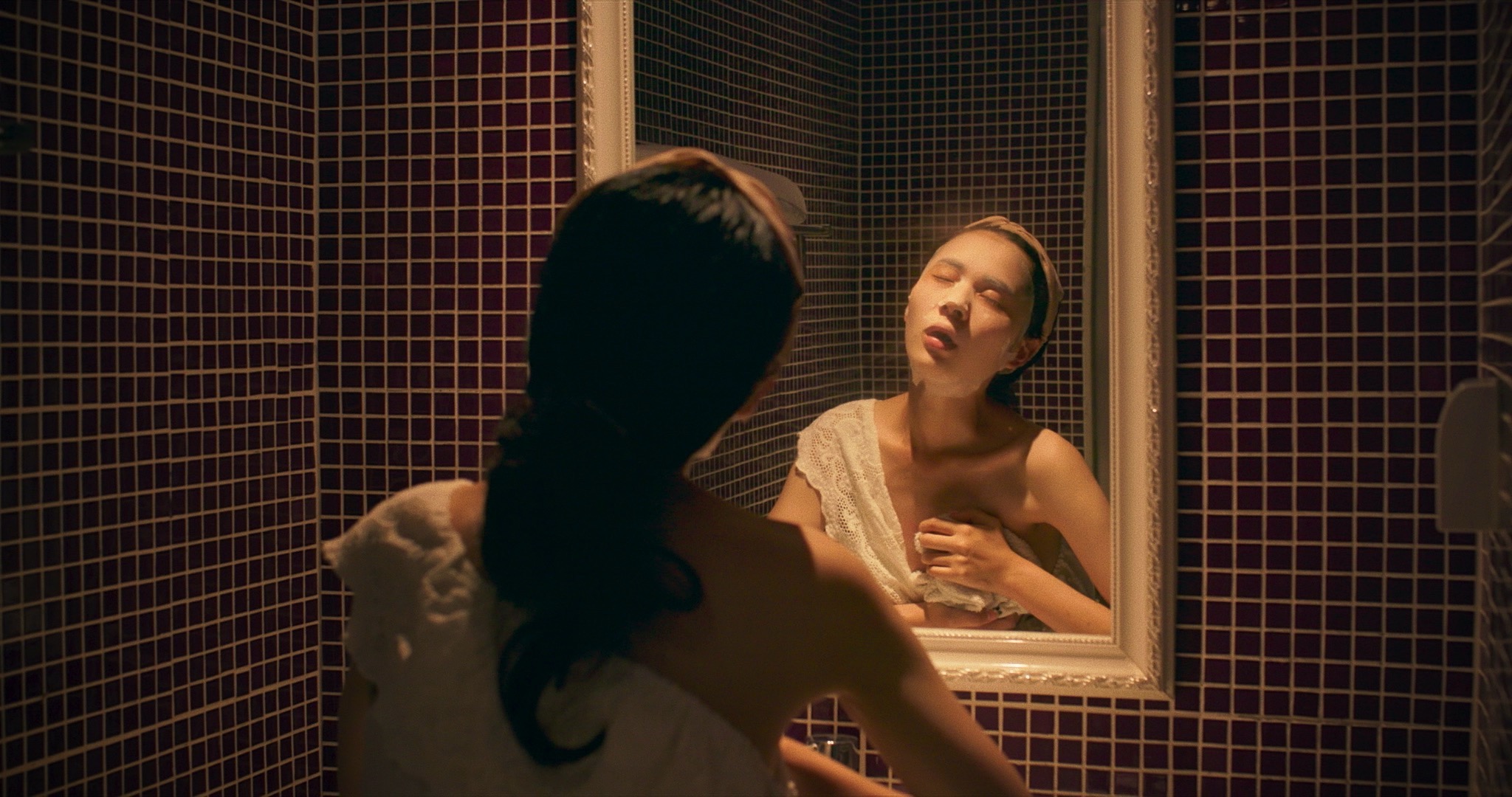
Through it all, Yezi has visions of herself as a child with her late grandfather as if looking for childhood safety and comfort while trying to reorient herself as an adult. The fantasy world with its larger than life, childlike designs and nostalgic tunes is somewhere between fairytale safety and a kind of limbo from which Yezi is either eventually released or fully condemned as she looks back us, breaking the fourth wall to shake her head as if in warning. Infinitely strange yet also charming even in its confusions, Virgin Blue has a kind of melancholy warmth as Yezi tries to reintegrate this fragmenting world while processing her grief perhaps even for her self along with interrogating her past before ending on a note of joyful celebration as the monsters of Yuhua pond dance in the daylight to an unexpected rendition of Jun Togawa’s 1988 hit Daitenshi no you ni (Like an Angel).


Virgin Blue screened as part of this year’s New York Asian Film Festival where it was presented in partnership with CineCina.

Trailer (dialogue free)

Jun Togawa – Daitenshi no you ni (Like an Angel)

Images © Yu Tang Films (Anhui)

One and Four (一个和四个, Jigme Trinley, 2021)

A lonely forest ranger nursing a broken heart and an incredible hangover finds himself the accidental arbiter of truth in Jigme Trinley’s frosty psychological drama, One and Four (一个和四个, yī gè hé sì gè). One and four is what each of these men are, individuals pitted one against the other. The atmosphere is one of danger and mistrust coupled with almost supernatural dread in the constant warning of an approaching blizzard with a ruthless maniac on the loose while it’s true enough that the only neutral party may have been quietly going stir crazy for quite some time aside from his recent troubles. 

Troubles do indeed descend on Sanggye in threes with each of his various visitors only complicating an already dangerous situation. As the film opens he’s clearly hungover, grumpy, and tense, going about his quotidian tasks and chopping wood while apparently out of food resorting to sucking old bread and bones. He writes in his diary that he wishes the events of the previous night had been a dream and introduces a note of mistrust regarding village man Kunbo who visited him Sanggye had assumed to borrow money but may have had a different purpose in mind. He’s later startled by another knock at the door from a wounded man carrying a rifle who claims to be a policeman chasing a dangerous poacher but looks to Sanggye like he could well be the poacher himself. 

Then again, Sanggye isn’t entirely honest with him either telling the man that he has no alcohol because forest rangers aren’t supposed to drink yet we’ve already seen bottles littering the cabin and it seems clear he woke with a hangover. “I didn’t know you why should I tell you the truth” he later tells his guest not unreasonably having concealed Kunbo’s visit the night before but now finding himself dragged into a wider drama involving a high speed crash which seems to have caused the death of at least one policeman with the poacher supposedly on the run. Sanggye looks for clues most particularly in the policeman’s badge number though we might wonder if it’s reasonable to assume someone driving a police car or wearing a jacket with a number on it is necessarily a policeman, or if on the other hand someone carrying a hunter’s rifle in the manner of a poacher must be a poacher. He looks for objective facts occasionally asking for verifiable detail such as the name of the man who runs the forest commission and his place of birth but once both Kunbo and another man also claiming to be a policeman turns up the situation only becomes more confusing.

Did Kunbo set him up, drop by deliberately to upset him so he’d be less likely to catch him committing crimes or is he simply in the middle of a bad situation? Are both these men policemen or neither, could they both be poachers after the same kill with Kunbo caught in the middle or is the whole thing some kind of bizarre cosmic coincidence ironically occurring on the “day for heroes to gather” as it says today to be on Sanggye’s wall calendar. As Sanggye points out, if one of these men is a poacher most likely he’d be dead by now but then maybe he’s only waiting to retrieve his missing hoard of antlers cut from a bemused deer left bleeding in the snow. 

“Preventing forest fires is everyone’s responsibility” according to Sanggye’s mug, though it seems unlikely anyone’s going to be able to stamp out this conflagration very speedily. Aligned with nature, Sanggye first refuses to accept a gun perhaps because he does not trust the man who gives it to him fearing that he intends to lull him into a false sense of security but is eventually forced to wield one in a four-way stand off uncertain who to believe in this increasingly complicated piece of game theory thought experiment. Sanggye probably wishes this had all been a dream too though one supposes he’s reason to believe the bad news he received the previous evening may not be true. In any case another cosmic coincidence eventually makes his decision for him as the clock rounds out the day. Tense, frosty, and full of questioning angles, Jigme Trinley’s well designed forest fable suggests the most dangerous beast in the forest is your fellow man though a deer may repay a kindness if you’re mindful enough to show them one. 


One and Four screened as part of this year’s New York Asian Film Festival.

Original trailer (English subtitles)

Images: © Mani Stone Pictures/Tsemdo

Return to Dust (隐入尘烟, Li Ruijun, 2022)

“You were used by others for most of your life, haven’t you had enough?” a farmer asks on parting with his faithful donkey as it hesitates to leave him, but might as well be asking the question of himself. Set in 2010, Li Ruijun’s peaceful rural drama Return to Dust (隐入尘烟, yǐn rù chén yān) paints a bleak picture of life on the margins of the modern China in which the old ways are literally being eroded while the promised modernity has yet to materialise. 

Middle-aged farmer Fourth Brother Iron (Wu Renlin) is a quiet and soulful man often exploited by his family members being the youngest of four brothers the elder two along with the parents having already passed away. Essentially wanting to be rid of him, his brother arranges a marriage to a local woman, Guiying (Hai Qing), whose family are also keen to offload her as she has a disability which has left her incontinent and unable to bear children. Neither she nor Iron say very much of anything but passively accept the marriage moving in together in one of the abandoned houses in their village. 

As villager had put it, Guiying had lived a horrible life shut up in a shed, beaten, and abused by her brother all her life. She thought Iron would make a good husband after seeing him comfort his donkey after his brother had beaten it and he does indeed begin taking good care of her even while it is clear the other villagers do not always accept Guiying, calling her a “wretched thing” or “useless idler” when she wets herself or is seen riding on Iron’s donkey cart. Slowly bonding through common purpose and mutual compassion, this marriage which could have meant only more misery for each of them becomes one of the few sources of joy in their lives. On moving properties, Iron cheerfully puts up the double happiness wedding character above their bed expressing the warmth which will fill the previously drafty home they will share together. 

But life is hard in rapidly depopulating rural China. Many of the houses in the village are vacant, abandoned by those who’ve either migrated to the city or other rural communities with better opportunities. The government has instituted a policy of countryside renewal in which it will offer generous compensation for demolition or renovation of traditional homes which of course brings many of those who had left back with the intention of claming the free money for demolishing their abandoned properties. But for a man like Iron the policy ironically backfires pushing him into a cycle of continual displacement taking shelter in one abandoned property after another forced to move on when the owners return and ask him to leave. Pained, he asks one to hold off just a few days so a newly hatched swallow nesting under the roof of his home will be strong enough to fly away but the man is unsympathetic, insisting that he has no time to spare and must return to the city as soon as possible. The bulldozer goes in seconds after Iron and Guiying have picked up their cart. 

Patiently baking mud bricks, the couple resolve to build their own home and farm their own land. So long as you do not betray the soil the soil will not betray you, Iron soulfully suggests yet his earthy rationalisation when Guiying sadly holds up a failed sapling that it will be fertiliser for the others sounds like a description of his own life. His status in the village is unbalanced when it turns out he has a rare blood type and is more or less forced to offer blood transfusions to a thuggish local businessman who owes the villagers both rent on the land he’s leased from them and wages which he’s not paying on the grounds that he’s ill and needs to sell the grain before he can settle. Bled dry, Iron receives small gifts from the man’s son such as a coat for Guiying he couldn’t afford to buy and accepts on the condition that it’s a loan, and a fancy dinner neither of them seem very comfortable with eating. 

Because of his new connections, his brother, having not invited him to his son’s wedding banquet, fetches up and tries to intimidate Iron into getting an apartment in the city he clearly intends his son and daughter-in-law to live in. Bemused on looking out on the flat’s view of endless fields, Iron asks what he’s supposed to do with his chickens, the pigs, and the donkey, but the civil servants who are filming him presumably for propaganda purposes to show how people’s lives have been changed through the scheme, just laugh while his brother and sister-in-law mutter about the kitchen considering the suitability for the new couple. Iron signs all his bills with a thumbprint implying that he probably cannot write and perhaps cannot read. As he later puts it, what’s a peasant to do without land? The new future cannot look the same for everyone, and to succeed it will have to do away with the idea that the urban is inherently superior to the rural. 

Continually displaced, Iron and Guiying accept their hardship with quiet dignity, stoically getting on with their lives while others only seek to exploit and misuse them. A brief scene of Iron setting up a box of lights to hatch chickens for Guiying to raise in place of the children they’ll never have adds a sense of wonder to their humble home while the compassion and kindness they show to the natural world would have perhaps repaid them if it had not been for the cruelties and contradictions of the modern China in which the rural has long been sacrificed in favour of increasingly consumerist cities. Iron pays his debts and prepares to move on though even in these vast plains it seems there is little space for him. 


Return to Dust screened as part of this year’s Edinburgh International Film Festival and will be released in UK & Ireland on 4th November courtesy of Modern Films.

International trailer (English subtitles)

Before Next Spring (如果有一天我将会离开你, Li Gen, 2021)

A naive exchange student finds a surrogate family while working at a Tokyo Chinese restaurant in Li Gen’s semi-autobiographical drama, Before Next Spring (如果有一天我将会离开你, rúguǒ yǒu yī tiān wǒ jiānghuì líkāi nǐ). Though it becomes obvious that almost everyone has come to Japan as a means of escape from personal troubles, the disparate collection of migrants eventually find solidarity with each other as they attempt to settle in to life in another culture while bonding with similarly troubled locals themselves excluded from mainstream society. 

Li Xiaoli seems to have chosen to come to Japan to find some release from a difficult family situation caused by his father’s illness. His mother had to give up work to look after him so the family have little money but Xiaoli is determined to make the most of his year abroad. When a stint in a supermarket doesn’t work out, his classmate Chiu (Qiu Tian) gets him a job at a Chinese restaurant where her friend/colleague Zhao (Niu Chao) also works. Though Zhao immediately takes against him perhaps out of jealousy, Xiaoli is taken under the wing of the restaurant’s manager, Wei (Qi Xi), who has been in Tokyo for some time but has recently had her application for permanent residence turned down in part because she is not married and has no children meaning the authorities are not satisfied about her longterm ties to Japan. 

Wei’s situation perhaps bears out the precarity of her life in Tokyo and the inability to fully feel at home experienced by many of the restaurant workers. Later it turns out that she is in need of an operation for uterine fibroids in part hoping to improve her chances of conceiving a child thought it’s unclear if her desire is solely to start a family or to give herself a better footing for getting her permanent resident card. Meanwhile the uncertainly undermines her relationship with chef Song (Song Ningfeng) who is undocumented and apparently in frequent contact with another woman who has her residence card already. The restaurant is frequently raided by police on the look out for anyone who might be working illegally, forcing Song to hide behind a fishtank in the basement like a criminal and giving rise to an atmosphere for persecution and anxiety. While the the pair are walking home one evening, they are hassled by a drunk man in the street who bumps into them and then demands they apologise. Song is visibility irritated by the humiliation of being forced to apologise to belligerent xenophobe and struggles to avoid losing his temper. Something similar occurs when a neighbour complains about the noise and then rings the police after hearing Song and Wei arguing, Xiaoli who was present at the time having to pose as Wei’s boyfriend flashing his legitimate student ID for the detectives. 

Xiaoli also makes a friend of the middle-aged Chinese teacher at their school, played in an extended cameo from Sylvia Chang, who hints that in some ways the experience hasn’t changed since she arrived at the tail end of the Bubble era. She recounts working three jobs but being delighted on buying everything she ever could want during department store sales. Only now she’s as rootless and dejected as Xiaoli. Her husband has returned to China, and now she’s living alone trying to redefine her reasons for coming to and staying in Japan. Middle-aged Chef Wan (Chen Yongzhong), who also experiences a unpleasant incident of being accused of groping a woman on a train because he was holding his aching stomach on the way to a hospital appointment, is feeling something similar having dreamed of bringing his family to join him only to now wonder if there’s really any point after so many years apart. 

The moody Zhao, meanwhile, is half-Japanese but has been all but abandoned by his parents and feels nothing for them other than resentment. Caught between two cultures, he insists on being called by the Japanese reading of his first name, Aoki, rather than the Chinese, Qingmu, and makes a point of talking to Xiaoli in Japanese rather than Mandarin despite being aware that his language skills are still undeveloped. He is in deep love with Xiaoli’s schoolfriend Chiu who works as a hostess in addition to her gig at the supermarket but is too diffident to say anything and though she seems to care for him she makes it clear she does not intend to wait.  

The sense of loneliness each of them feel is echoed in the melancholy tale of an older couple who run a hairdresser’s and had no children of their own, finding themselves unanchored in their old age but discovering a place for themselves at the Chinese restaurant. The only Japanese worker, Watanabe who develops a maternal relationship with Zhao, finds something similar while working a second job at a supermarket raising her children and trying to care for her elderly mother. Told over the course of a year with Xiaoli’s departure date already set, Li Gen’s lowkey drama is content with a lack of resolution that suggests time in motion marked by a series of partings some of which may be more permanent than others but each in their own way meaningful.


Before Next Spring screened as part of this year’s New York Asian Film Festival.

Original trailer (Traditional Chinese / English subtitles)

Images: © Huace Film & TV (Tianjin) Co., Ltd.

Ode to the Spring (没有一个春天不会来临, Zhou Nan, Zhang Chi, Dong Yue, Tian Yusheng, Rao Xiaozhi, 2022)

There isn’t any denying that the last two years have been extremely difficult for everyone all around the world. Multi-strand “main melody” drama in praise of frontline workers Ode to the Spring (没有一个春天不会来临, méiyǒu yī gè chūntiān bùhuì láilín) may in itself be slightly optimistic in that its perspective is clearly one assuming that the worst is over and the pandemic is largely a thing of the past. Ironically the film’s release, previously scheduled for April, had to be delayed until the early summer because of rising cases in Mainland China. Nevertheless, its messages of hope and the importance of community have lost none of their power while the film’s willingness to admit that some things could have been handled better, even without expressly stating by who, is surprisingly subversive. 

Structured as a multi-strand drama rather than a traditional omnibus movie, the film follows five groups of people mainly in Wuhan at the beginning the outbreak. The first story revolves around a young man, Nanfeng (Yin Fang), whose relationship with local florist Xiaoyu (Zhou Dongyu) had become strained by his decision to move to Shanghai to earn more money for their future. As the New Year Spring Festival approaches, he returns to Wuhan in an attempt to patch things up oblivious of the new disease engulfing the city. Xiaoyu and her mother, who had not approved of him, have each been hospitalised but were separated in the chaos and are now in different hospitals with no way to stay in touch. In a mild rebuke to modern day consumerism, the message that Nanfeng is forced to learn is that he should have been thinking how best to support his community rather than leaving to make more money in Shanghai. Running all around town looking for Xiaoyu’s mother, he eventually wins her approval but is simultaneously warned that he is too impulsive and should think more about what it is others actually want rather than giving them what he thinks they should have. 

Meanwhile a pair of migrant workers struggle to make a living but are given a load of face masks and told to sell them in Wuhan. They too are little aware of how bad things have already become. The older of the drivers is rebuked by his wife because he hasn’t come home in several months and his daughter is beginning to forget him. Though they become increasingly afraid of infection, the truckers maintain their compassion helping an elderly lady and her granddaughter, whose parents are already in a quarantine centre, get to a hospital and then deciding that perhaps they shouldn’t be trying to profit from the pandemic no matter their own desperate circumstances. 

Then again, the film is surprisingly frank about the supply problems in the hospitals which have already run out of high grade medical masks while medics are close to burn out. A doctor is forced to sleep in his car because he’s technically on call. His wife, a nurse, chooses to join him rather than stay in the hotel room they’ve been provided while their son is cared for by his grandparents. He calls a man to tell him his father has passed away and ask for additional documentation to release the body, but the grieving son is himself in a quarantine centre as are all the other family members who have so far survived. The inability to save a fellow doctor who was shortly to become a father almost breaks him, while his wife wonders what’s to become of their son if they should both fall ill. Despite having scolded the boy on the phone about not doing his homework, the doctor has recorded a poignant voice message for his son just in case letting him know that he bought him the toy he wanted for his birthday and has been paying attention even if it didn’t seem like it at the time. 

The themes of parental separation echo through each of the stories, Xiaoyu is separated from her mother, the trucker cannot return to his family because of the lockdowns and his precarious financial position, and the doctor is staying away from his son to treat the sick. In the final strand, a naughty little boy obsessed with legendary child warrior Nezha is separated from his doctor mother (Song Jia) who is despatched to Wuhan to help with the relief effort while his father (Huang Xiaoming), unused to taking care of him, is preoccupied because he unwisely invested in buying a bus he cannot now use because no one is allowed to go anywhere. The boy dreams of visiting a local Buddha statue and getting him to “awaken” from his “quarantine” to show the virus who’s boss only for the Buddha to let him take on Nezha’s form to stamp on those nasty viruses so his mum can come home.

Similarly, the head of a local neighbourhood committee struggles to deal with complaints about a young woman playing piano at all hours while left home alone because her mother is a doctor staying at the hospital. Mr. Wang (Wang Jingchun) becomes something of a local hero, selflessly caring for the residents of a series of apartment blocks ensuring they get food deliveries and dealing with disputes. When he comes down with a fever and has to isolate, the whole block turns out their lights in support waving the torchlight on their phones like tiny stars shining in the distance. It’s here that the film’s real message lies in praising the value of community, not just the doctors and frontline health workers but the civil servants who kept everything running and the ordinary people who did their best to follow the rules and stay at home, while also hinting at some of the failures in the response from the random veg that keeps turning up at the depo to lack of PPE and the total disregard for the migrants stuck far from home in the midst of an economic collapse. Shot by five directors, the strands each have idiosyncratic flare from the chaotic handheld of the hospital scenes to the gentle romance of Nanfeng’s quest and the cheerful adventures of the would-be-Nezha but are otherwise of one voice in the film’s consistent messaging of mutual solidarity and praise for frontline workers. 


Ode to the Spring opens in UK cinemas on 8th July courtesy of CineAsia.

International trailer (English subtitles)