The Last Dance (破·地獄, Anselm Chan, 2024)

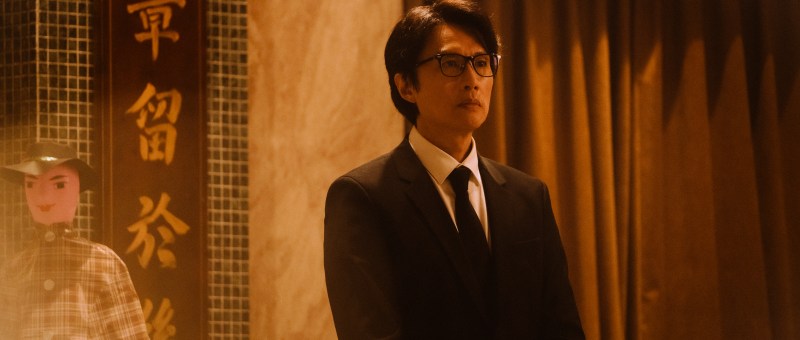
When serving the living doesn’t pay, why not make money from the dead? That’s the advice that’s given to former wedding-planner Dominic (Dayo Wong) in Anselm Chan’s touching spiritual drama The Last Dance (破·地獄), but after pivoting towards organising death rituals it’s the living he continues to serve. In many ways, Dominic stands at the borders of life and death, but he’s also an onlooker in a wider debate about tradition and modernity, what we inherit and what we choose to pass on, along with the departing soul of an older Hong Kong as the young flee abroad leaving those who stay behind to carry what may seem to them a burden too heavy to bear alone.

The irony is that though Dominic had been a wedding planner until the economic effects of the coronavirus pandemic killed his business, he is not in fact himself married and according to his long-term girlfriend Jade (Catherine Chau) did not see the point in a marriage certificate. One might infer that if he thought weddings were essentially meaningless exercises in vanity then he might feel the same way about funerals and his initial behaviour after taking over the funeral parlour run by Jade’s ageing Uncle Ming (Paul Chun) might confirm that suspicion. Not only does he start selling tacky trinkets as some kind of funeral favours, but makes a huge faux pas with an ostentatious stunt at his first funeral that causes upset and offence to the family. At the very least, it would have been useful to confirm how the deceased passed away before trawling their instagram account in an attempt to reconstruct their personality.

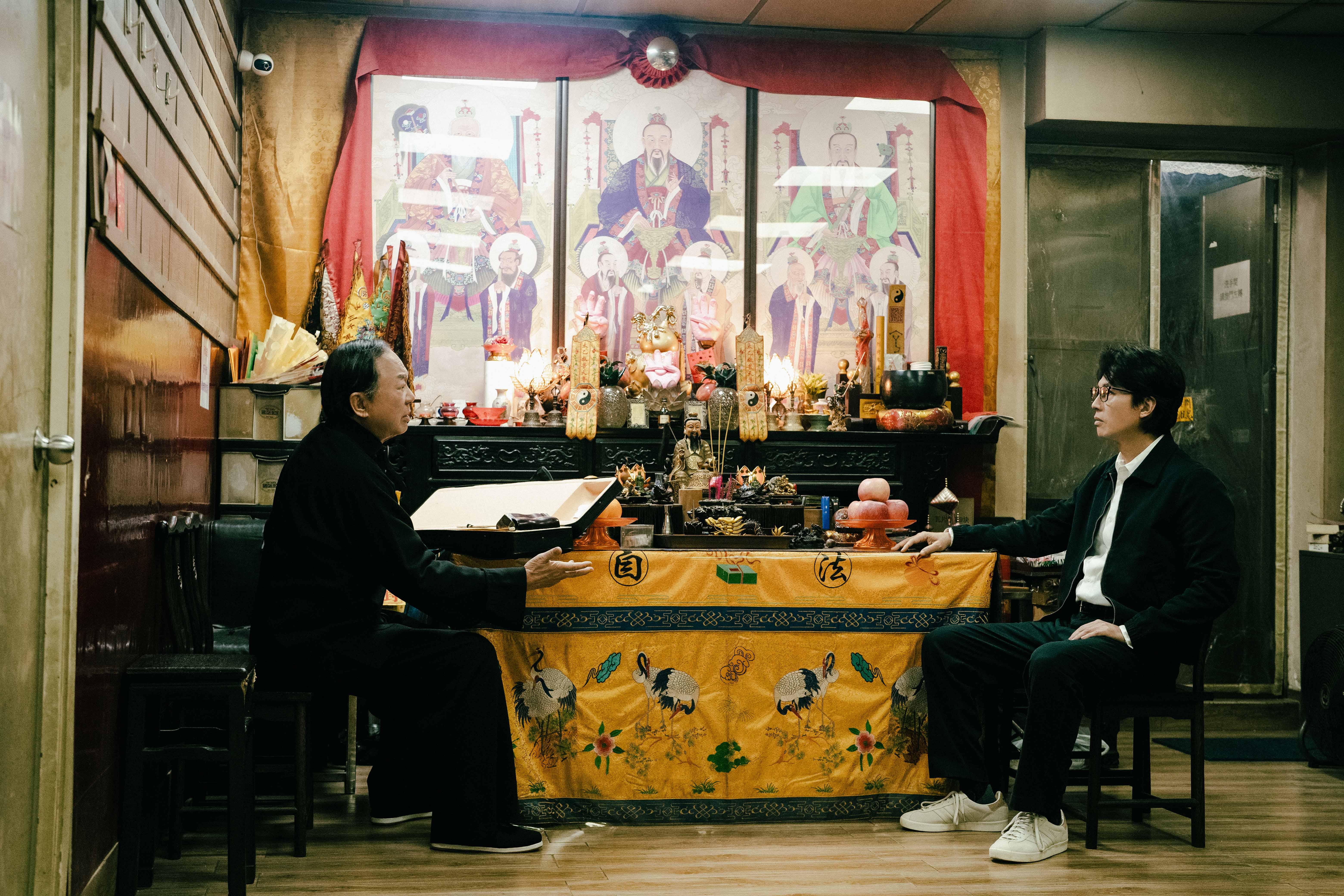
It’s this kind of insensitivity that irritates intensely grumpy Taoist priest “Hello” Man (Michael Hui) who brands Dominic an “amateur” believing that he’s only obsessed with money and intent on exploiting the grief of bereaved families. But on the other hand, Man is only really interested in the sanctity of ritual and doesn’t get involved with the living nor is he very sensitive to the emotional needs of those in the process of sending off a loved one. His entire life has been in service of the ancestors to the point that it’s soured his relationships with his two children. He has no faith in his son Ben (Chu Pak Hong) to inherit his position as a Taoist priest, while Ben resents being forced to inherit a burden he has no desire to carry. Daughter Yuet (Michelle Wai), perhaps ironically a paramedic, would have happily have carried it, but has endured years of being told that “women are filthy” and is prevented from inheriting these traditions because there is a taboo against women undertaking the role of a Taoist priest. The continual sense of rejection has left her with huge resentment towards her father and resulting low self-esteem that sees her engage in a no strings relationship with a married doctor.

Ultimately the film suggests that these traditions themselves are too large to bear, at least in their entirety, and do nothing more than crush and oppress the young. In part, they embody the spirit of an older Hong Kong which is itself in danger of fading away as seen in Dominic’s innovative new bespoke funeral planning services which to traditionalists might seem like they play fast and loose with ancient ritual, but the resolution that each Dominic and Man come to is that funerals are for those who remain behind and while Man liberates the souls of the dead Dominic does the same for the living in taking a more compassionate approach to dealing with those grieving a loss. Not only does his acceptance of the strange requests of a heartbroken mother (Rosa Maria Velasco) branded a “nutcase” and rejected by the local area bring her a degree of comfort, but his decision to allow what seems to be the same sex partner (Rachel Leung) barred from a funeral service the right to say goodbye albeit in secret demonstrates the necessity of doing right by both the living and dead.

As Man later says, in some ways he’s shown him how to do funerals and awakened him to the ways his oppressiveness in his adherence to tradition has prevented him from being a better father. His decision to wear a western suit for his own funeral might indicate a desire not to take this rigidity into the next world while hoping to liberate his children from the burden of tradition and show them that they were each loved and accepted even if it did not always seem that way. Which is not to say that the tradition should not be saved or that this is itself a funeral for the soul of an older Hong Kong, but only that if you let some of it, such as its inherent sexism, go it will be easier to carry when everyone carries it together. “Living can be hell,” Dominic admits and the funeral is a liberation both for the living and the dead. A touching yet surprisingly lighthearted meditation on life and death, what it comes down to really is that death is coming to us all but there’s no point spending your life worrying about it when you should just try to enjoy the dance until the music stops.


The Last Dance is in UK cinemas from 15th November courtesy of CineAsia.

UK trailer (Traditional Chinese / English subtitles)
Fly Me to the Moon (但願人長久, Sasha Chuk Tsz-yin, 2023)

A pair of sisters find themselves exiles in their own home in Sasha Chuk Tsz-yin’s poignant familial drama, Fly Me to the Moon (但願人長久). Burdened by a sense of rootlessness, they have only each other to cling to while their family otherwise disintegrates amid the pressures of making a life in an unfamiliar place and an unavoidable paternal failure that has a lasting legacy on the lives of each of the girls as they struggle to emerge from the shadow their father cast over their lives.

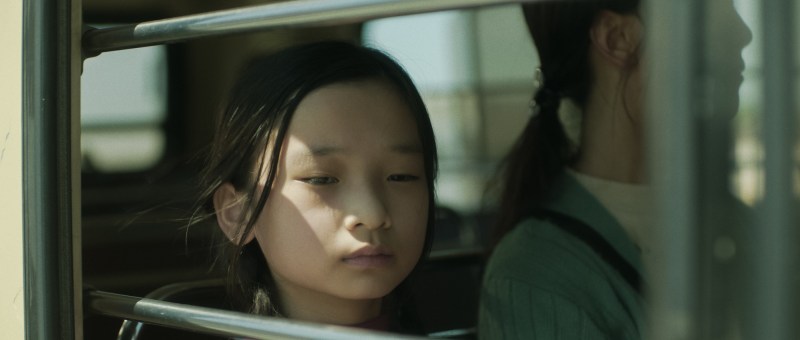
It’s telling that the film opens in 1997, though Yuen’s father Kok-man (Wu Kang-ren) has apparently smuggled himself into Hong Kong from Hunan, later sending for his wife and older daughter, Yuen, while leaving the younger behind. The first image we see is of Yuen being taken to see her father in prison by her mother, a meeting in which no words are exchanged that seems to leave the young Yuen conflicted and confused. Not long after arriving in Hong Kong, she discovers him using drugs and learns of the addiction that has ruined his life, turning him into a petty thief in and out of prison for the children’s entire lives.

Yet in his later years, Kok-man told his relatives that his best and only achievement was raising two wonderful daughters though of course he didn’t actually raise them at all. Nevertheless, he had a profound effect on their lives, Yuen also tempted to steal on witnessing her father’s bad example even while remaining contemptuous and resentful of him. Though he eventually becomes violent, so desperate for money he threatens his teenage daughters, Kok-man appears to have wanted to take of his family but was not able to do so while their mother is forced to work long hours supporting the family and living the life of a single mother even while her husband is home. 

This leaves the girls with no one else to rely on while otherwise removed from mainstream society which is often is hostile towards those who’ve arrived from the Mainland and most particularly at this strained political moment. Their otherness is signalled by their home dialect of Hunnanese which later mingles comfortably with their Cantonese, much as Yuen’s Mandarin later does, which is as good as anyone else’s though some might not them as real Hongkongers. Kuet’s schoolfriends, little knowing she also was not born in Hong Kong, shun another girl after spotting that the number on her ID card begins with an “R” which means she came to Hong Kong from somewhere else. Kuet eventually decides to befriend the girl herself, though it remains unclear whether or not she discloses that she was also born outside of Hong Kong. Years later after becoming a tour guide, a customer remarks that Yuen’s Cantonese and Mandarin are both so good he wonders where she’s from which is quite an ironic comment. 

Yet in other ways, the girls can’t escape their roots. Despite her enmity towards him, Yuen’s first boyfriend is a carbon copy of her father. A brusque boy with blond hair who shoplifts to impress her, but then runs off and leaves her behind when he almost gets caught. Her romantic relationships seem fraught and difficult and the men largely no good, while her sister similarly has troubles with the law leading her mother to lament that there was little point in going to university if she was just going to end up like her father. When Yuen eventually returns to Hunan, she’s that girl from Hong Kong, even while in Hong Kong she’s that girl from the Mainland. For the girls, Hunan has a kind of mythical quality bound up with their memos of happier times for their family, but Yuen is quickly disillusioned. The lily fields her father mentioned are long since gone, destroyed in a fire, and her family home is empty as a result of her grandmother’s illness. All that remains are photographs that present a kind of evidence of the relationship Yuen once had with the father she struggled to accept in adulthood, reuniting her with her childhood self and perhaps restoring the roots she’s been looking for even she herself remains a floating presence guiding tourists around foreign countries while otherwise marooned in the family flat now shared only with the sister who equally is heading in another direction. 


Fly Me to the Moon screens July 21 as part of this year’s New York Asian Film Festival.

Original trailer (Traditional Chinese /.English subtitles)

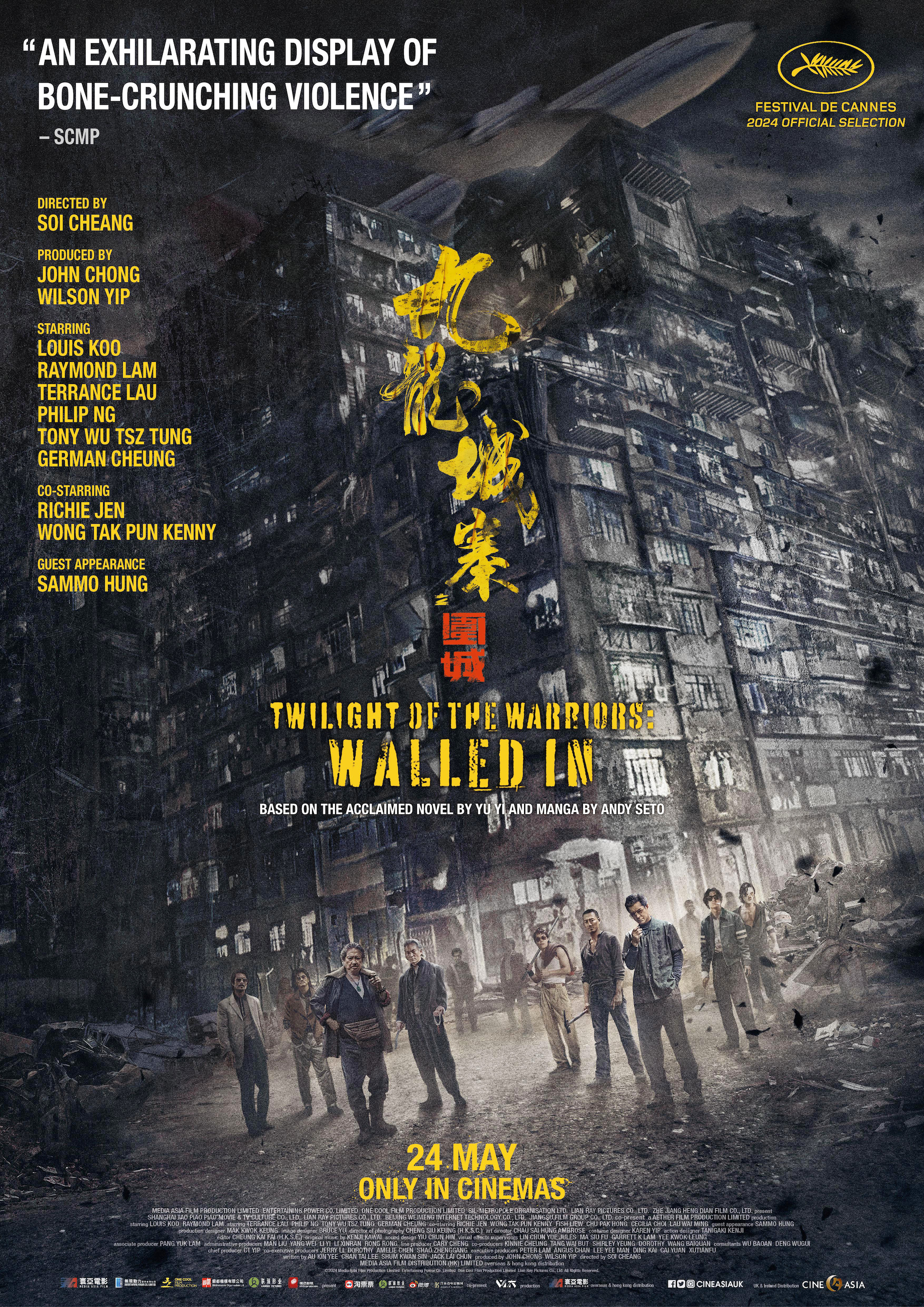
Twilight of the Warriors: Walled In (九龍城寨.圍城, Soi Cheang, 2024)

In Kowloon Walled City, you give help, you get help. Sometimes described as a colony within a colony, by the late 1980s the settlement was largely ungovernable and literal law unto itself save for the triads who maintained what little order there was. Yet in Soi Cheang’s Twilight of the Warriors: Walled In (九龍城寨.圍城) it’s a place of comfort and security, a well functioning community that as its leader Cyclone (Louis Koo Tin-lok) points out may be unpalatable for “normal” people but provides a point of refuge for the exiled and hopeless.

It’s difficult not to read it and Cyclone himself as embodiments of Hong Kong that is slowly disappearing. Dying of lung cancer, Cyclone is aligned with the fate of the walled city as someone whose time is running out, tired and world weary but still hanging on. In the opening sequence set 20 or so years before, we see Cyclone stand up to an apparent dictatorship and institute what seems to be a more egalitarian form of government though one obviously defined by violence. Nevertheless, when refugee Lok (Raymond Lam Wui Man) lands up there originally suspicious of Cyclone having been duped by local gangster Mr Big (Sammo Hung Kam-bo), he discovers him to be a stand up guy looking after those in his community and generally keeping the peace. Nevertheless, Lok’s arrival is the fatalistic catalyst for the opening of old wounds amid the free for all of the mid-80s society in which the Walled City, sure to be bulldozed, has just become a lucrative property investment.

Mr Big and his crazed henchman King represent this new order, amoral capitalistic consumerists who care little for the conventional rules of gangsterdom. Their bid to seize the Walled City has its obvious overtones as they seek to replace the (generally) peaceful egalitarian rule of Cyclone with something that appears much more authoritarian and ruthless. Believing himself to be a stateless orphan, Lok tries to keep his head down saving everything he can to buy a fake Hong Kong ID card which is also in its way a quest for identity not to mention a homeland and a sense of belonging. He finds all of these things, along with a surrogate father figure, in the Walled City only to have the new home he’s discovered for himself ripped out from under him because of a twist of fate. When he teams up with a trio of other young men who all owe their lives to Cyclone and the Walled City to attempt to take it back, it’s also an attempt to reclaim an older, more autonomous Hong Kong that exists outside of any kind of colonial control as evidenced by his final statement that no matter what happens some things don’t change.

This sensibility extends to the casting of the film which includes a series of Hong Kong legends including a notable appearance from the legendary Sammo Hung not to mention Louis Koo alongside a generation of younger stars such as Tony Wu and Terrance Lau Chun-him. Adapted from the manhua City of Darkness by Andy Seto, the film opens with a flashback to the original war for control of the Walled City that hints at deeper, extended backstories otherwise unexplored though equally mythologised by those who impart them to them Lok, a prodigal son and eventual inheritor of the City’s legacy. Even so, the comic book elements sometime distract from Soi Cheang’s otherwise evocative if hyperreal recreation of the Walled City slum or the political subtext that can be inferred in the presence of supernatural abilities such as those which seem to grant King near invincibility.

In any case, Soi Cheang looks back equally towards the history of heroic bloodshed in particular in his tale of brotherhood and loyalty in which the secondary antagonist is literally imprisoned by his own futile desire for a pointless vengeance on the descendent of a man who had wronged him but was already long dead himself. As he’d said, the future of the Walled City is in the hands of the younger generation who choose to end the cycle by setting him free rather than imprison themselves along with him while defending their home as well as they can. With some incredibly well designed action sequences including one that make its way onto a double-decker bus, Soi Cheang’s beautifully staged action thriller as its name suggests has a rather elegiac quality but also the spirit of resistance in its gentle advocation for the importance of supportive communities.


Twilight of the Warriors: Walled In is in UK cinemas from 24th May courtesy of CineAsia.

UK trailer (Traditional Chinese & English subtitles)

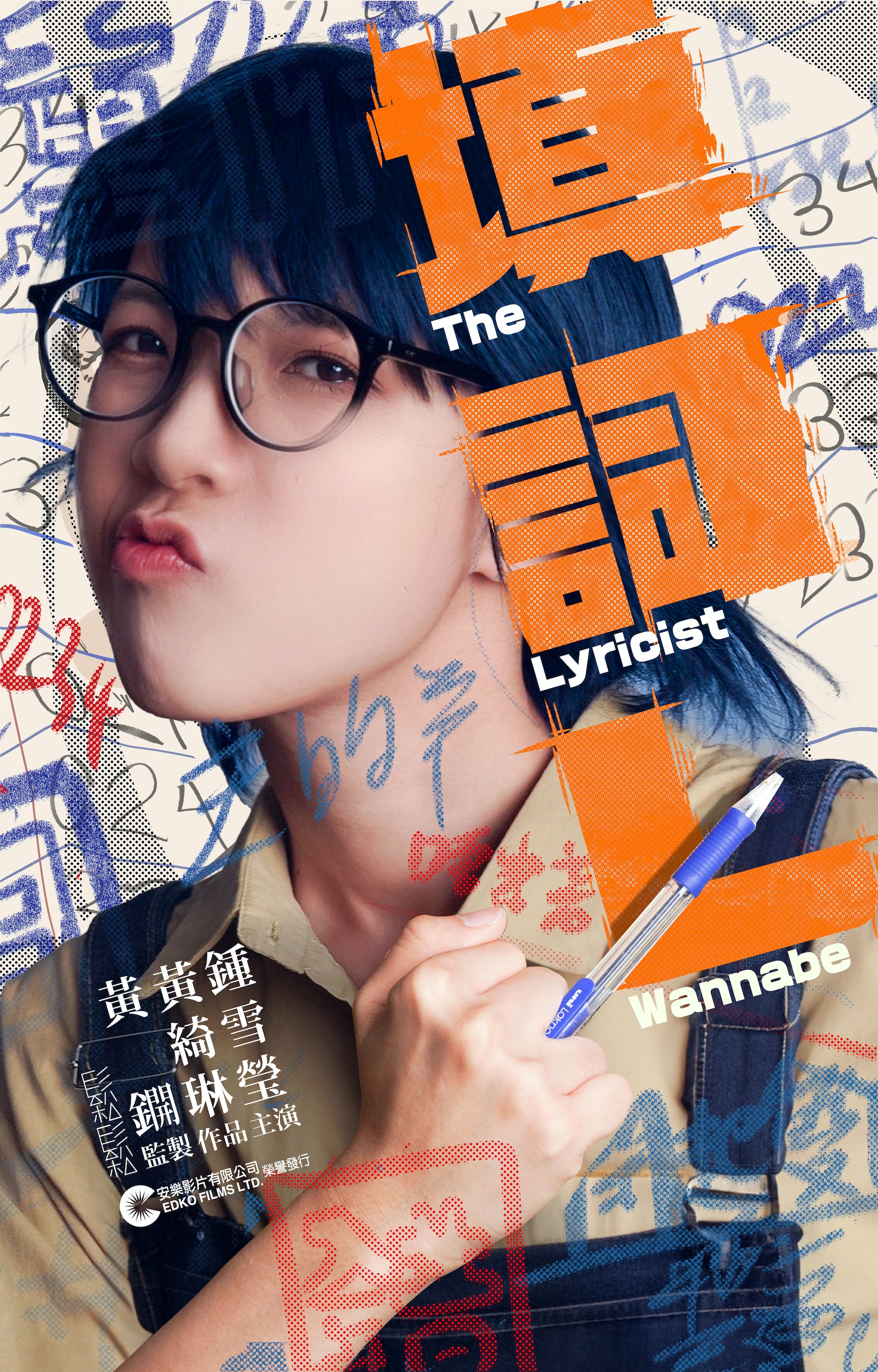
The Lyricist Wannabe (填詞L, Norris Wong, 2023)

Sometimes a dream might have come true only we never really noticed. In Norris Wong’s autobiographically inspired drama The Wannabe Lyricist (填詞L), a young woman battles her way towards becoming a Cantopop songwriter yet perhaps she already is one by virtue of her constant act of lyric writing. What she craves is the validation of having a song published, yet experiences setbacks at every step of the way that encourage her to doubt her talent or the right to continue chasing her dreams.

At a particularly low point after being taken on by a music producer to work with a spoilt influencer who’s getting studio time as some kind of favour, Sze (Chung Suet Ying) is told that her lyrics are no good and that after struggling so hard for six years perhaps she ought to take the hint and accept she isn’t suited to this line of work. It’s an act of intense cruelty, though one in part motivated by a well-meaning faux pas. In her excitement, she told the influencer she’d write lyrics for her album for free just to be published, but the palpable sense of desperation seems to have put the influencer off unable to have confidence in the work that Sze herself has devalued.

She encounters something similar during a partnership with an aspiring pop star who says he likes her lyrics but then drops the bombshell that he plans to sing in Mandarin because it’s a bigger audience. Ironically, on a trip to Taipei to sell his album she’s told that his accent is no good for the local market and while they like the song she worked on she later realises that they hired another lyricist for “real” release without even telling her. What’s more, tones don’t matter while singing in Mandarin whereas lyric writing in Cantonese is a painstaking process of trying to ensure that the tone of the word fits the melody. Aside from its political implications, not only does the pop star’s arbitrary decision to just sing it Mandarin ruin the lyrical flow she spent so long perfecting but entirely disrespects her work.

After deciding to take a break from trying to make it in music, Sze gets a job working at a ridesharing app startup where she’s roped in to create a jingle but once again her hopes are dashed when the business strays into a legal grey area and several of the drivers are arrested. While the app’s creator silently cries in his office, his female colleague ponders going somewhere else, “anywhere that doesn’t punish dreamers” which seems like a nod not only towards an oppressive capitalism that values only marketability but equally the increasingly oppressive atmosphere of the nation’s political realities. In a way this is what Sze ends up doing too, putting geographical distance between herself and the failure of her dreams by returning to the land which as the farmer says never lies to you, you reap what sow.

Yet for all her drive and perseverance there are others who view Sze’s obsession with her dreams as selfish and self-involved complaining that she rarely considers the feelings of others and neither notices nor cares if she may have hurt or inconvenienced them. She’s told that her lyrics are hollow because she lacks life experience but also is incapable of empathising and cannot see anything outside of her quest to become a lyricist. She watches other people move on, her brother getting married, friends enjoying career success etc while she’s still stuck looking for her big break only for something to go wrong just as everything was about to go right.

Wong signals the playful qualities of her fantasies though use of onscreen illustrations and even a karaoke-style video along with the nostalgic quality of the early 2000s setting of Sze’s schooldays with its MSN messenger and ICQ. Sze may be “dragged along by the melody” in more ways than one as she tries to make peace with her dreams and her future and find some way of living in harmony with the rhythms of the world around her but eventually comes to realise that she was a lyricist all along no matter what anyone else might have tried to convince her she was.


The Lyricist Wannabe screened as part of this year’s Osaka Asian Film Festival and opens in UK cinemas 15th March courtesy of Cine Asia.

Original trailer (Traditional Chinese / English subtitles)
Ready O/R Knot (不日成婚, Anselm Chan, 2021)

After two people have been together a significant amount of time, it might start occurring to others that really they ought to be married. Perhaps it even starts occurring to one or both of the two people too, but should you really make such a big decision based only on the fact that it’s the done thing rather than something you actively want to do? That’s a dilemma that presents itself to the young couple at the centre of Anselm Chan’s marital farce, Ready O/R Knot (不日成婚). While she would like a further degree of certainly in their relationship, he fears commitment along with a loss of freedom and authority as a family man with responsibilities perhaps greater than he feels he can bear. What ensues is an accidental battle of the sexes as each partner teams up with their respective allies to trick the other into going along with their plan. 

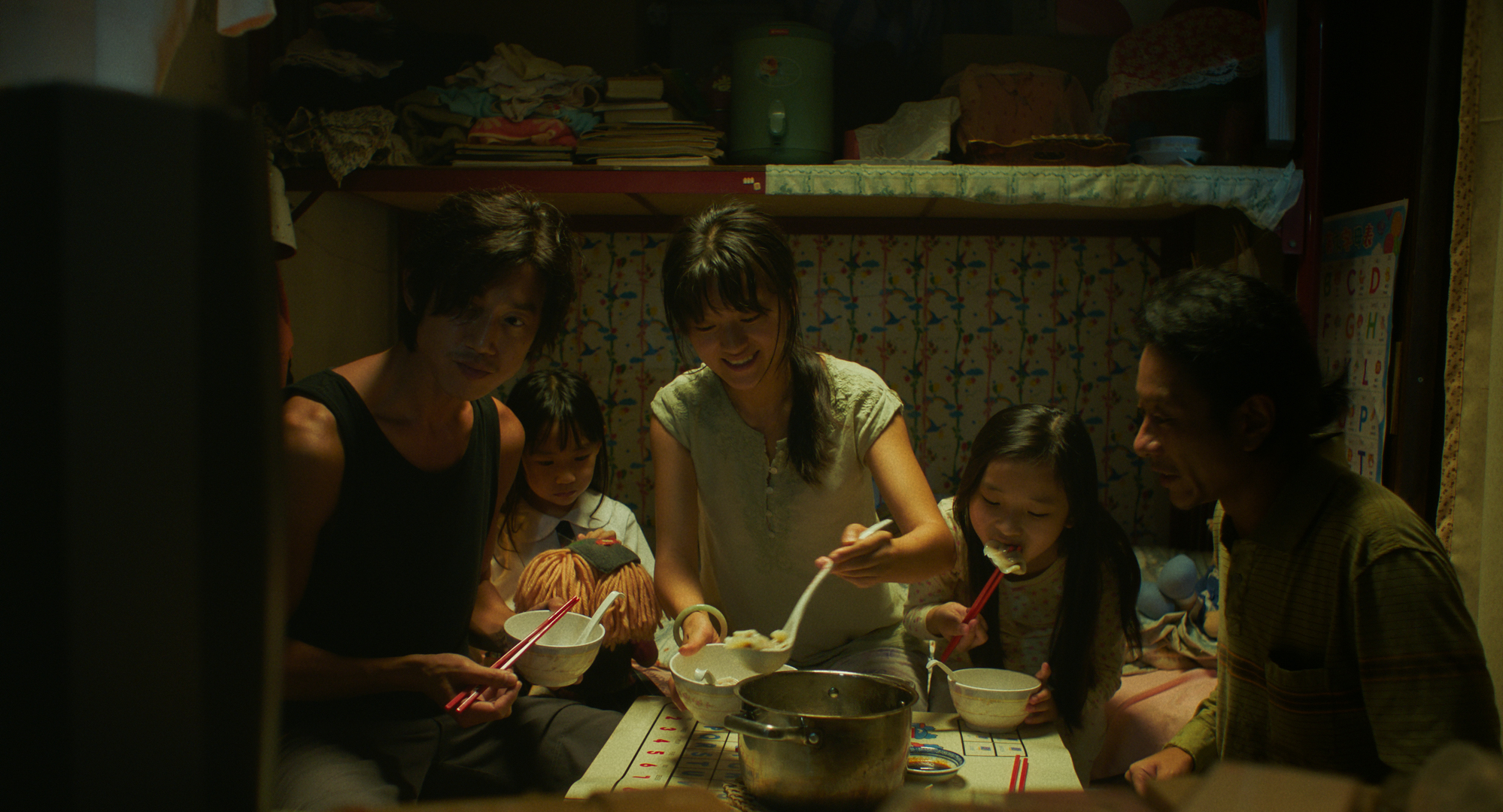
Guy (Carlos Chan Ka-Lok) and Ho-yee (Michelle Wai Si-Nga) have been together for five years after meeting at the wedding of Guy’s friend Grey Bear (Chu Pak Hong) and Ho-yee’s bestie Jen (Hedwig Tam Sin-yin). Grey Bear and Jen now have two children, but there is already an air of superficial duplicity in the relationship, Grey Bear using his friends to help him visit illicit sex services in Macao in rebellion against the tyranny of marriage. While the women quietly suggest to Ho-yee that it’s time they got married and left to his own devices Guy will continue to drag his feet, the guys are are determined to dissuade him viewing it somehow as a defeat of masculinity. They fear being tied down and mock other men for being in thrall to their wives while the women seem to fear that their men are duplicitous and unreliable and that therefore they need this additional level of protection. Nevertheless, the moment the marriage debate has begun, the relationship undergoes further strain and scrutiny even as each party descends into sometimes worryingly unethical levels of scheming in order to get their own way. 

It has to be said that for much of its run time, Ready O/R Knot reflects some extremely sexist, hopefully outdated social attitudes while making occasionally off-colour jokes about domestic violence and drugging one’s spouse without their knowledge or consent. At a low moment, Guy finds himself swallowing a morning after pill and thereafter gaining a sudden empathy for women on experiencing what he assumes is akin to period pain, lying on the sofa clutching a copy of Marie Claire while his friend who has also taken one in solidarity eats chocolate ice cream directly from the carton. Grey Bear thinks he was tricked into marriage by Jen’s plan to seduce him to forego protection thereby engineering an accidental pregnancy, which is why Guy has been avoiding intimacy with Ho-yee hoping to avoid being “trapped” in the same fashion. 

A perpetual man child, Guy resists the trappings of adulthood, reluctant to sell his two-person scooter and learn to drive a family car while remaining obsessed with football, his PS4, and hanging out with his sleazy, sexist friends. As the crisis intensifies, however, it leads Ho-yee towards a more progressive realisation, advised by her wise old grandmother (Siu Yam-yam) that she should learn to put herself first for a change and strive for her own happiness rather than that of her man. Guy begins to realise what he’s at risk of losing, but his late in the game epiphany isn’t in the end enough to repair the damage his diffidence has caused, returning agency once again to Ho-yee who has learned to ask for more, that her own hopes and desires are just as important as Guy’s, and that “marriage” is not in itself “the point”.

Buried underneath some of those sexist attitudes is a basic fear and tinge of toxic masculinity as Guy realises his reluctance is partly insecurity that he’ll fail as a husband, unable to “provide for” (apparently something he regards as a male responsibility, simultaneously mocking Grey Bear for living off his wealthy wife) Ho-yee or to make her truly “happy”. Only after undergoing a humbling and being willing to pursue the relationship on a more equal footing is he finally given a second chance, noting that Ho-yee should not be expected to sacrifice herself for their relationship to succeed while he has resolutely refused to invest in their mutual future by clinging to his individual past. Simultaneously cynical about the institution of “marriage” yet somehow eager to believe in the power of love and commitment, Ready O/R Knot takes a moment to make up its mind but in the end comes down on the side of equality in romance as its warring lovers eventually call a truce in rediscovering what it is that’s really important. 


Ready O/R Knot screens at Chicago’s Lincoln Yards Drive-in on May 2 as part of the 12th season of Asian Pop-Up Cinema.

Original trailer (English / Traditional Chinese subtitles)

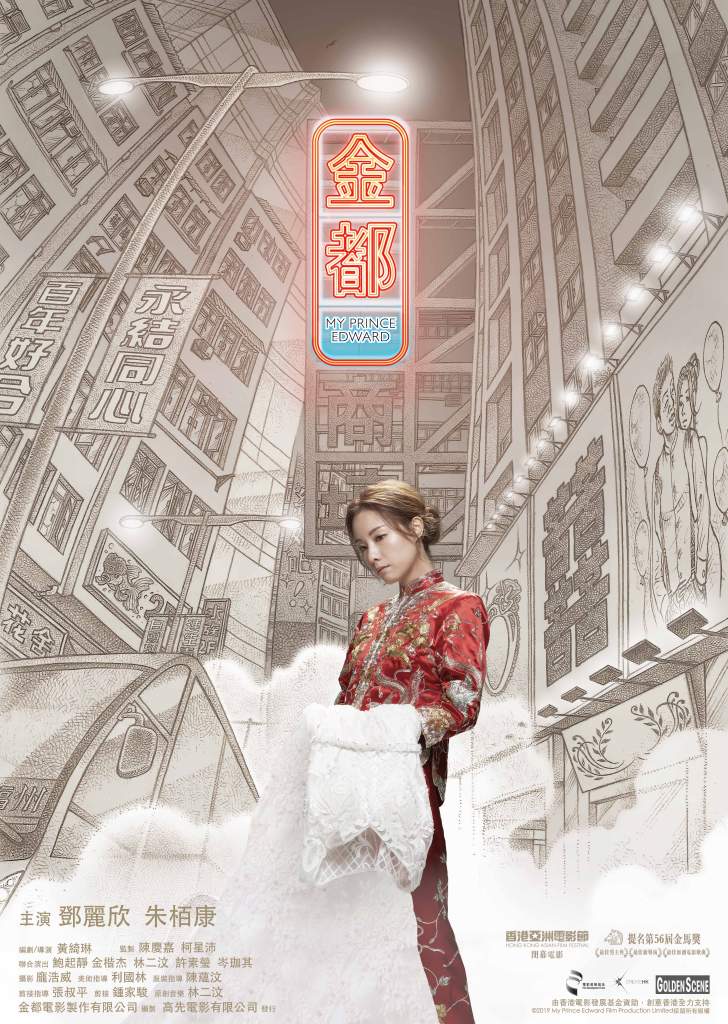
My Prince Edward (金都, Norris Wong Yee Lam, 2019)

(C)My Prince Edward Film Production Limited

“Why do you all think that marriage means happily ever after?” A conflicted young woman asks the man attempting to railroad her into a life of conventional respectability. “It doesn’t mean that” he explains, “But there’s no happiness if you don’t get married”. In 21st century Hong Kong can it still really be that a woman’s success or failure is measured by her age at marriage? The debut film from Norris Wong Yee Lam, My Prince Edward finds its heroine asking if there isn’t more to life than marrying a man you don’t love because it’s what everyone seems to expect. 

31-year-old Fong (Stephy Tang Lai-yan) has been in a committed relationship with wedding photographer Edward (Chu Pak Hong) for the last seven years, but she’s been keeping a secret from him. 10 years previously, she and her friend Yee (Eman Lam Yee-man) underwent sham marriages to Mainlanders in return for cash so they could rent a flat with a third friend, Mabel. Fong believed that the agency would deal with her “husband” on their own, arranging his Hong Kong residency permit and thereafter a divorce but although Yee’s “marriage” went off without a hitch, Fong’s hit a snag in that the agent was arrested so her husband never got his ID card and she never got her divorce. The reason she’s worried now is that she overheard Edward tell his assistant to photoshop his client’s marriage certificate to redact any mention that he’s been married before to avoid potential embarrassment at the ceremony.

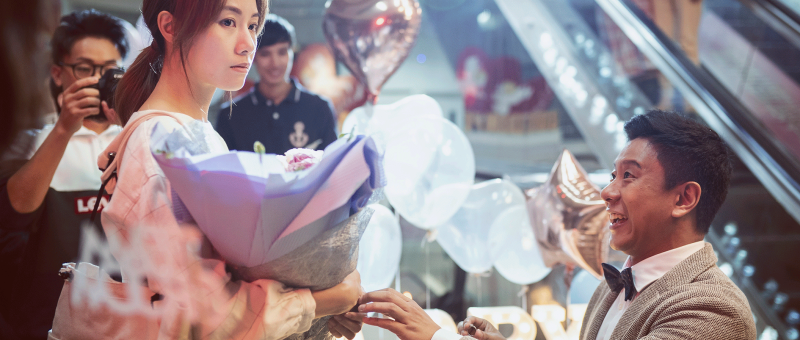
The fact is, Edward is a strangely conservative, patriarchal sort of man and she knows he might not be very understanding even if she sits him down and explains that she’s technically still married to someone else. Everything might have carried on as normal if Edward had not taken it upon himself to make an ostentatious public proposal that Fong could hardly have refused even if she’d wanted to. The public proposal is perhaps another manifestation of Edward’s manipulative tendencies, but is also mostly undertaken to please his conservative and equally possessive mother (Nina Paw Hee-ching) with whom he still shares a joint bank account at the age of 31. Too afraid to face the potential consequences of the pair finding out, Fong attempts to track down her “husband”, Yang Shuwei (Jin Kaijie), to convince him to co-sign the divorce papers so they can come through before her mother-in-law’s preferred wedding date in a few months’ time. 

The grand irony is that Fong only did the sham marriage because she felt trapped by her conservative parents who objected to a teenage romance. She moved out to find freedom, but now feels trapped within the claustrophobic district of Prince Edward and most particularly the Golden Plaza shopping centre which houses her apartment and the bridal shop where she works which is next-door to Edward’s photography studio. She wanted to move into a swanky new flat, but Edward’s mother is dead set on buying the place where they currently live so Edward won’t have to move, an arrangement which suits him fine. Edward, meanwhile, is prone to jealous rages and Fong can hardly leave the apartment without getting 30 messages asking where she is and when she’ll be back. 

It turns out that “freedom” was what Shuwei was looking for too. He wanted a Hong Kong ID card as a stepping stone to going to America, hoping to make worldwide travel easier than with a PRC passport. Ironically, he can’t understand why Fong puts up with Edward’s prehistoric attitude and encourages her to reconsider marrying a man who’s already borderline abusive. Fong doesn’t quite want to admit it to herself but she feels the same, only she doesn’t have the courage to resist. She’s been successfully keeping Edward at arm’s length all these years, but now that the subject of marriage has been raised she’ll have to make a firm a decision. 

Working in the bridal shop she sees enough stressed out, unhappy couples going through the motions to realise that it’s not all sunshine and flowers, while it sounds like her family life was not exactly a bed of roses growing up. What she can’t seem to do, however, is to give herself permission not to marry. Unexpectedly getting his wings clipped, Shuwei asks her what it is she wanted to do and where she wanted to go, questions that no one else has really asked and Fong doesn’t know the answers to. If she stays with Edward, she might never find out. Like the flipped over turtle she tried to rescue from a pet shop, Fong runs the risk of swapping one tank for another, ending up trapped inside the Golden Plaza for the rest of her life being bossed around by her mother-in-law and walking on egg shells around the fragile Edward which seems like a heavy price to pay simply to be accounted respectable. “You don’t know what freedom is” Shuwei scolds her, confused that she chooses to stay when she has the choice to be anywhere she wants. The real Prince Edward gave up his throne for love, choosing one kind of freedom at least or perhaps just swapping one tank for another. Fong doesn’t know where she wants to go, but is beginning to realise that she has a choice and choosing herself is no bad thing. 


My Prince Edward screens on March 8/12 as part of this year’s Osaka Asian Film Festival.

Original trailer (English / Traditional Chinese subtitles)