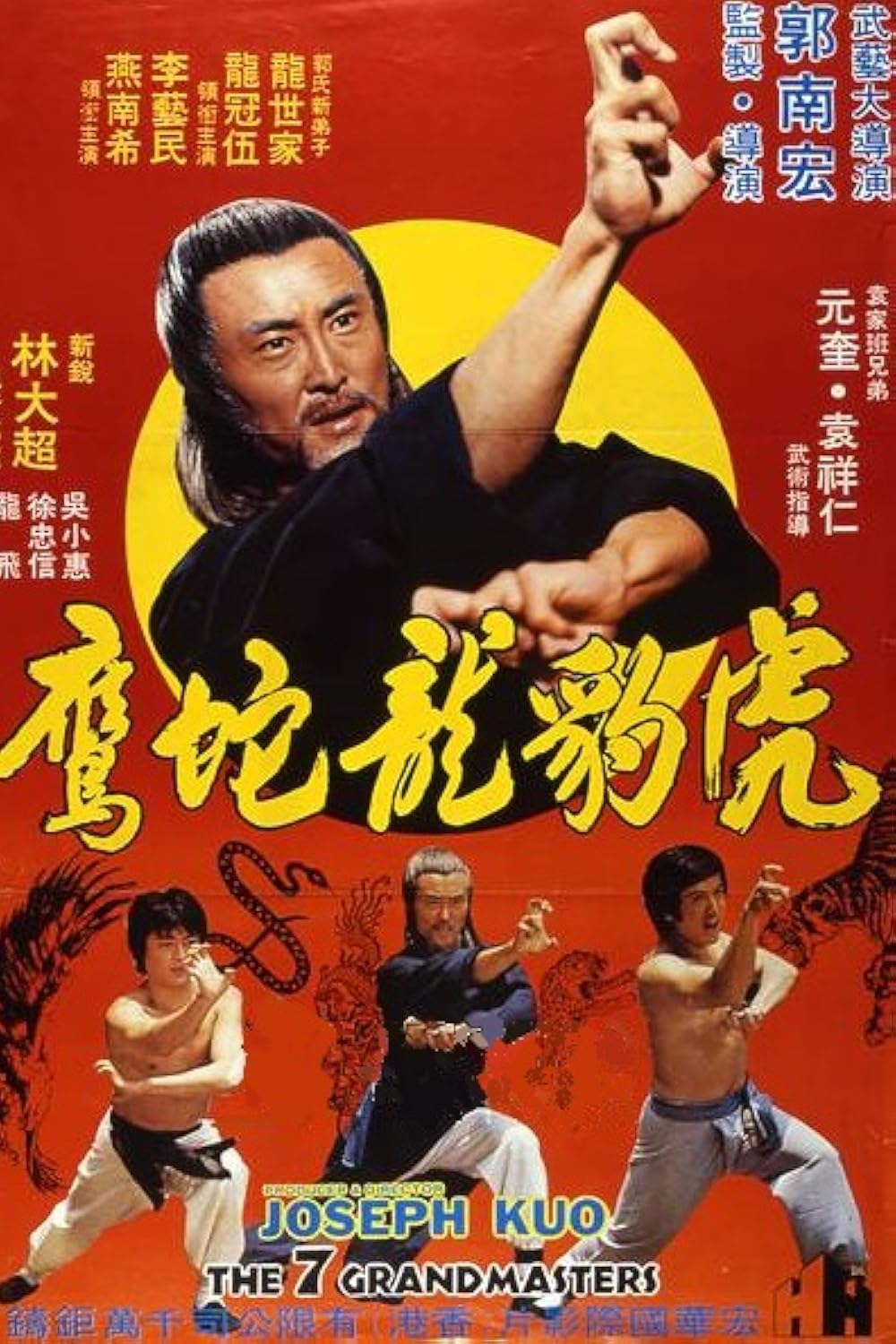
The 7 Grandmasters (虎豹龍蛇鷹, Joseph Kuo, 1977)

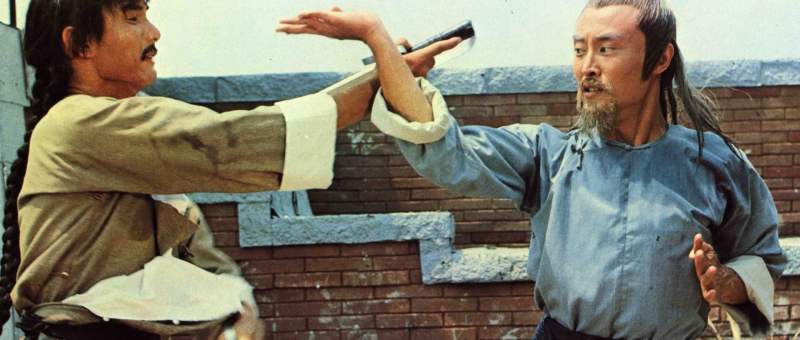
“The way of kung fu, no one is invincible. A fighter shouldn’t be arrogant and bully others,” according to one of the mini lessons given by the ageing champion at the centre of Joseph Kuo’s 7 Grandmasters (虎豹龍蛇鷹), though it has to be said there is a fair amount of cockiness in play while bullying does seem to be a part of his training programme. Arrogance is in fact what he has himself been accused of at the ceremony at which he has been honoured by the emperor and after which he planned to retire if he had not received a rude note telling him he is not a real champion and shouldn’t lay claim to the title until he’s defeated all of the other regional champions in each of their signature fighting styles. 

A 30-year veteran of the local martial arts scene, Zhang Shenguang (Jack Long) is tired and ready to pass his school on to the next generation but feels he cannot retire until he’s proved once and for all that he is the greatest kung fu master. Setting out with his daughter and three pupils, he roams around the land easily defeating his rivals and teaching them a lesson to boot. Unfortunately, however, his first target, Sha (Wong Fei-lung), ends up dying while he’s also being followed around by an over-earnest boy, Shao Ying (Li Yi Min), who insists on becoming his pupil, though Zhang is unwilling to take him on because his own master was betrayed by a bad faith student who stole the final three pages of the book he’d been given to safeguard outlining the 12 Bai Mei strikes.

Zhang is definitely all about righteousness, constantly reminding everyone about the responsibilities that come with kung fu but his own students are fairly merciless to Shao Ying firstly mocking him as he trails along behind them like a stray puppy and then continuing to bully him until he finally surpasses their own abilities. They are all also supremely confident and often resort to cocky banter during fights which it has to be admitted they usually win. The film is structured around Zhang’s quest abruptly shifting from one expertly choreographed fight sequence to another, each showing off a different style and the ways in which Zhang can overcome it while some of his opponents accept defeat gracefully and others not. In one town they are ambushed by goons working for the local master who wanted to avoid potentially losing his title by underhandedly taking Zhang out first but as Zhang puts it losing his good name instead. The final challenger meanwhile refuses to Zhang directly because he can see Zhang is already ill and it wouldn’t be fair so has their students square off instead. 

Nevertheless, Zhang is not permitted to exit the world of kung fu until dealing with the left over baggage of the three missing strikes of Bai Mei, Shao Ying eventually becoming its inheritor after a twist of fate connects him with Zhang’s past while causing him a paradoxical dilemma in temporarily becoming Zhang’s enemy in order to avenge the death of his father as his code dictates. Like Zhang however he is perhaps only trying to make a point, never intending to harm his former mentor, at least physically, but only to close the cycle through symbolic revenge, later returning to Zhang’s side on realising he’s been used and deceived. 

Featuring top choreography from Hong Kong’s Yuen Kwai and Yuen Cheung Yan, Kuo’s low budget indie kung fu drama is pure fight fest less interested in the emotional conflicts between the men than the physical which might explain its incredibly abrupt conclusion which largely implodes the moment of catharsis achieved in the villain’s defeat. Even so, it succeeds in showcasing a series of fighting styles as Zhang continues with his quest to prove himself the ultimate grandmaster so he can finally retire while throwing in some comic relief thanks to Shao Ying’s dogged determination to become one of the gang before finally proving himself the most talented of all the students, not least because of his perseverance and willingness to learn. Shooting mainly in the open air to avoid the expense of sets, Kuo’s approach is unfussy but to the point of removing all distractions in order to showcase the immense abilities of his performers in an otherwise generic tale of rivalry and revenge. 

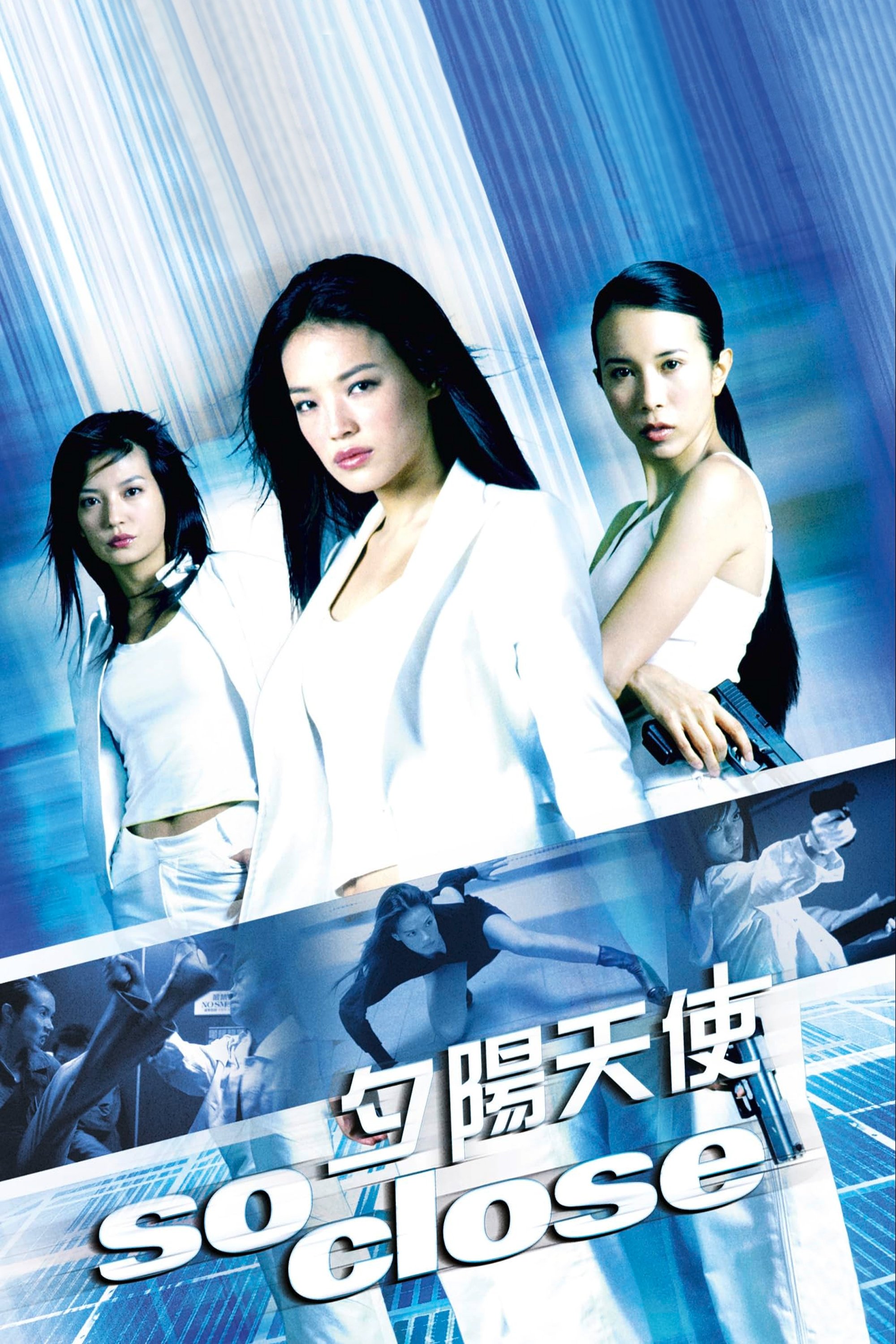
So Close (夕陽天使, Corey Yuen Kwai, 2002)

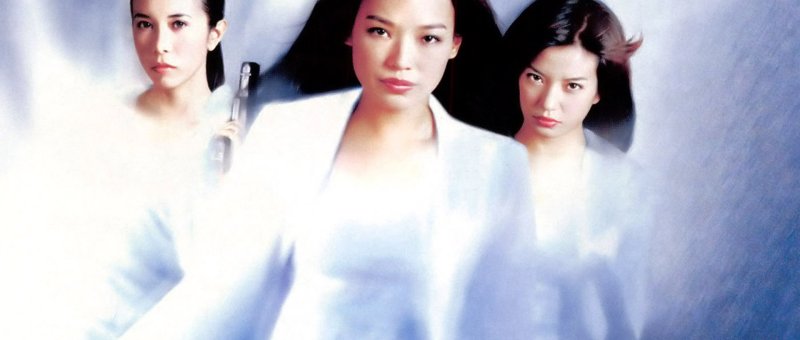
A latish entry in post-millennial cyber thrillers, Corey Yuen’s So Close (夕陽天使) finds two hit women sisters safeguarding next generation technology in keeping it out of the hands of corrupt businessmen who in fact murdered their father to get it. They claim he always intended to gift his all-powerful mass surveillance tool to the police, which either seems politically uncomfortable or incredibly naive, but have been using it themselves to earn their keep as killers for hire albeit justifying themselves in insisting on the moral bankruptcy of their targets.

In this case, that would be Chow Lui (Shek Sau) who according to “Computer Angel” made his “evil fortune” through drug smuggling. Infinitely smug, Chow thinks he has better technology but is soon proved wrong as Computer Angel admits she also sent the virus, or more accurately manifested it, to teach Chow a lesson. Yuen fills the film with 90s cyberpunk motifs, even having Computer Angel, later identified as Lynn (Shu Qi), jump off a building in a shot that is a clear homage to Ghost in the Shell while otherwise employing electronic imagery of cables and wires though the “World Panorama” system largely works through satellite.

In the opening sequence, Chow’s company is also revealed to be a global enterprise connected around a large table via the internet while futuristic systems allow him to have video calls with associates speaking Japanese and English. He suggests they simply pay the hackers to save their reputation which is apparently built on their world-class security systems though he himself perhaps remains sceptical abruptly shutting down his younger brother’s attempt to broker a deal investing in a company called Dragon. His office meanwhile has a bonsai tree in the background and his brother Nunn seems to have very close ties with a Japanese gangster hinting at a possible economic anxiety.

This fraternal conflict is eventually reflected in the fracturing relationship between the two sisters as field agent Lynn informs her sister Sue (Zhao Wei) that she wants to give up the killing trade after reuniting with an old boyfriend and deciding to get married. Techno wiz Sue has no other means of supporting herself and is resentful that Lynn always takes charge and won’t let her participate in missions, though Lynn is later vindicated when Sue’s hasty decision to take on a solo job goes just about as wrong as it can go. Meanwhile, their relationship is also strained by the presence of Hung (Karen Mok), a policewoman investigating Chow’s death who, as she later says, is strangely drawn to Sue who rollerblades around her at a record store with thinly concealed desire. 

There might be something in the fact that the actresses playing Sue and Lynn are from the Mainland and Taiwan respectively each performing their scenes in Mandarin but dubbed into Cantonese for the local release. They are indeed outsiders, firstly because of their unusual profession and secondly because of their all-powerful surveillance tool that allows them to carry out their missions yet also acting as a moral authority even if as Lynn later says they kill for money not conviction. World Panorama allows them to edit surveillance footage, placing fake avatars of themselves in the digital space and allowing them to otherwise recreate reality in a way that seems in keeping with the film’s otherwise low-key special effects which have an almost tongue-in-cheek quality parodying other more serious cyber thrillers from the mid-90s. 

The film’s English title comes from Yuen’s use of the Carpenters’ track (They Long to Be) Close to You, yet the Chinese is the more melancholy Sunset Angel which is most obviously refers to the film’s final scene if also perhaps calling time on the sisters’ roles of guardians of next-gen tech and avenging ghosts of the machine working out the bugs of corrupt gangster businessmen. In any case, they move through the “real” world like digital avatars performing incredible feats of human agility and not least in the high impact action scenes culminating in a lengthy katana fight in a tatami mat room which both echoes the cyberpunk aesthetics and reinforces an idea of corporatising colonialism finally blown away by the forces of female solidarity and an unlikely loves story between a soldier and a bandit. 


Trailer (English subtitles)

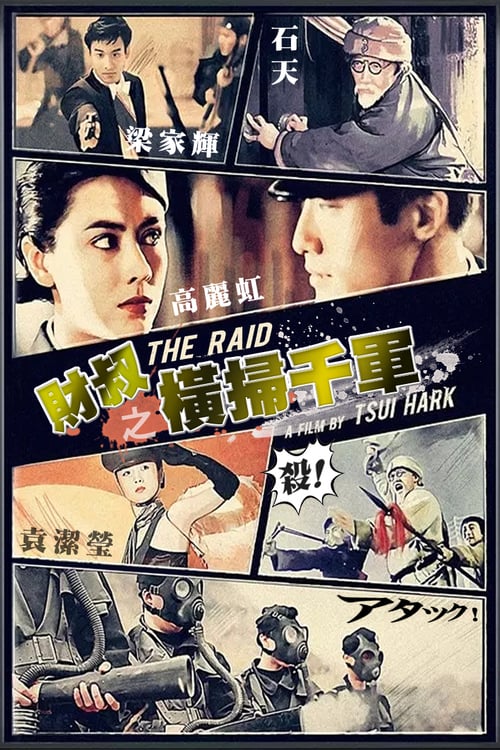
The Raid (財叔之橫掃千軍, Tsui Hark & Tony Ching Siu-Tung, 1991)

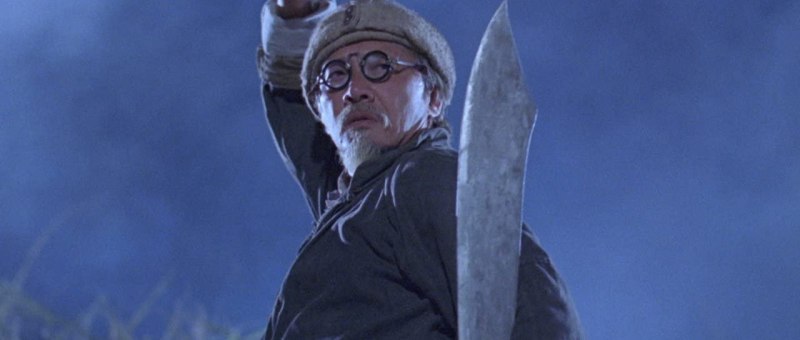
Comic book heroes often rise in resistance to a label others have placed on them, but Uncle Choy (Dean Shek Tin) may be the first to offer fierce opposition to societal ageism. Inspired by a series of comic books which ran from 1958 to the mid-1970s, Tsui Hark and Tony Ching Siu-Tung’s The Raid (財叔之橫掃千軍) is at great pains to make plain that you shouldn’t write people off because of a few numbers on an ID card as its admittedly geriatric hero proves that he’s the force for good the Resistance has been waiting for. 

That would be the Resistance towards the Japanese and the new puppet state of Manchuria in the confusing world of 1932. Tsui and Ching open with Pu Yi himself getting out of a limo in a sparkling white uniform adorned with meaningless medals glinting in the sun before he takes to the stage and bizarrely likens himself to Hitler while insisting that he’s here to unify China because his ancestors told him to in a dream. Meanwhile, the Resistance has already infiltrated his forces and installed dynamite in his microphone only for his right-hand man, Matsu (Tony Leung Ka-fai), to catch on right before it explodes. Pu Yi is saved, for now, while Matsu declares himself unfazed by the Resistance fighter’s dying words that he will be coming back to haunt him. 

In another part of the jungle, a team of mute locals is trying to bring a doctor to some soldiers hiding out in a remote shack. After narrowly escaping a plane attack by blowing a hole in a dam and drowning it with water, Uncle Choy arrives to discover that the men are victims of a new kind of poison gas. It’s too late to save the commander, but Choy manages to restore the others to health and even offers to join them in their new mission of destroying the poison gas factory, but Lieutenant Mong (Paul Chu) tells him to go home. He’s too old to be of help and would only get in the way. As expected, Choy finds that very upsetting. Unwrapping the giant sword he fought with in his youth, he leaves a note for his adopted daughter Nancy and heads off on his own towards the revolution, but she follows him with her giant spear and is then followed by a cheeky young guy armed with slingshot. 

There is something a little bit suggestive about this rag tag bag of patriots trying to stop the poisonous fumes of a new China wafting over towards the land they love. Pu Yi, the “last emperor” is something of a tragic figure, a bumbling fool with some weird ideas but also a noticeably progressive streak which sees him tell Matsu, in the middle of an otherwise silly and slightly homophobic joke, that he firmly believes love is love and he plans to make a law that says so. He is, however, just a puppet himself, caught between the villainous Matsu and beautiful actress/super spy Kim Pak-fai/Kawashima Yoshiko (Joyce Godenzi).

Matsu is fond of telling the heroes that they cannot win against a force with superior technology, that old Uncle Choy’s sword and fists are useless in a modern world of guns and chemical warfare. To perfect their poison gas, they’ve been working with a local gangster who cares only for money and has been willingly sending them test subjects. Big Nose (Corey Yuen Kwai) is currently engaged in a turf war with the equally greedy Bobo Bear (Jacky Cheung Hok-yau), testifying to the tendency of oppressed people to fight amongst themselves rather than unite against the true evil. Bobo Bear is also in love with the famous actress Kim Pak-fai and deeply regrets getting mixed up with the Resistance, but later falls for nerdy undercover spy Tina (Fennie Yuen), who is the real brains of the operation, and comes over to the side of right. As does Big Nose after getting a dressing down from Uncle Choy and being confronted with the consequences of his actions by an overconfident Matsu. 

According to Matsu whoever has the best weapon controls the world, but as in any good kung fu movie the best weapon is righteous solidarity. Uncle Choy’s sword turns out not to be so useless after all, while he also makes himself useful as a doctor to the revolutionaries, proving that old people still have a lot to offer and don’t deserve to be put out to pasture by patronising youngsters. Making plenty of space for cartoonish slapstick fun and a series of farcical episodes including the classic misdirected love letter and spy hiding under the bed, The Raid is pure pulp but never pretends to be anything more than it is even while leaving its earnest revolutionaries in media res as if to remind us that a battle still rages even in 1991.


Short clip (no subtitles)

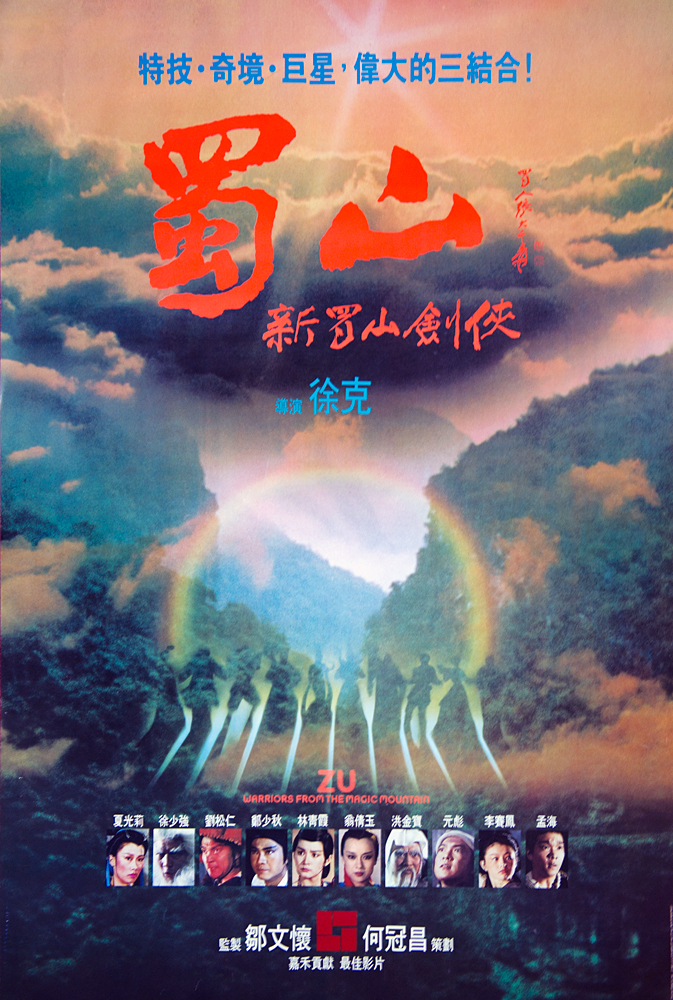
Zu: Warriors from the Magic Mountain (新蜀山劍俠, Tsui Hark, 1983)

“I never imagined that the righteous would not only refuse to unite, but also be incapable of action” laments a reluctant soldier realising there are no heroes coming to the rescue in Tsui Hark’s SFX-laden fantasy wuxia, Zu: Warriors from the Magic Mountain (新蜀山劍俠). Inspired by the work of Huanzhulouzhu (Li Shoumin), Tsui’s feudal fable marked a departure from the more “realistic” swordplay movies which were popular at the time harking back to an earlier era of fantastic adventures which drew inspiration from traditional Chinese folklore. It was also, however, an attempt to prove that Hong Kong could rival Hollywood in the post-Star Wars world, blending what might now be viewed as fairly camp but then cutting-edge special effects with classic wuxia action. 

Accordingly, after a brief voice over, Tsui opens with a world in chaos in which several factions are currently vying for hegemony over the hotly contested, mystical and mountainous terrain of Shu. Lowly retainer Ti Ming-Chi (Yuen Biao) has been tasked with delivering a message regarding troop movements to his superiors, but there is a difference of opinion in the chain of command as to whether to attack by land or sea. Placed in an impossible position, Ming-Chi eventually sees himself pledge to obey both captains, only for infighting to emerge within the group forcing him to flee for his life which is how he encounters “Fatty” (Sammo Hung Kam-Bo), a soldier from a rival faction and discovers, quite ironically, that they are from neighbouring villages which makes their rivalry all the more ridiculous. In the course of his attempt to escape, Ming-Chi falls into a mountain crevasse and finds himself entering a mysterious cave which takes him to another world in which he becomes similarly embroiled in a war against the evil Demon Cult which apparently practices child sacrifice and then uses the bones as a kind of magical armour. 

A reluctant soldier, Ming-Chi finds himself captivated by the “Great Hero” Ting Yin (Adam Cheng Siu-Chow) and determines to become his disciple while the pair form an uneasy alliance with a pair of similarly matched Buddhist monks, master Hsiao Yu (Damian Lau Chung-Yan) and his assistant I-Chen (Mang Hoi), also hot on the trail of the Demon Cult. Finding this world also confusing, he is nevertheless reassured by I-Chen’s simple explanation “they’re bad, we’re good” as the two masters face off against the Demon Lord, but comes to discover it’s not quite all as black and white as it seems and this world too is torn apart by chaos and disorder because “the hearts of men are so corrupt.” Ming-Chi begs Ting Yin to use his “peerless martial arts skills” to “save mankind”, but Ting Yin cynically tells him his best course of action is to retreat into the mountains and avoid human society because “neither you nor I have the ability to bring about change”. 

Yet Ming-Chi remains pure of heart, certain that “as long as everyone puts in the effort, peace can be restored under heaven”. “Teach me martial arts and once I’ve mastered it, I can fight oppression, help the weak, and save the masses” he pleads, but Ting Yin once again refuses him. In fact, in one of the later SFX sequences, Ting Yin will “transfer” his martial arts knowledge near instantly via a laying on of hands assisted by some elaborate prosthetics which see Ming-Chi’s body warp and bubble to accept it. Nevertheless, the lesson that Ming-Chi begins to learn, bonding with fellow assistant I-Chen who ignored his master’s petty parting words to bid him goodbye to hope they meet again along the way, is that the masters care only for themselves and are no better than the warring nobles from his own lands, obsessed with their rival sects and ideologies. If they want to save the world they’ll have to save themselves through mutual solidarity in pursuit of their goal, tracking down a pair of mystical swords which are the only way to end the demonic threat for good. 

There might of course be an added dimension to this allegory in the Hong Kong of 1983 which is perhaps also beginning to feel like disputed territory coveted by duplicitous elites who fight amongst themselves while ordinary people suffer, but Tsui is in any case more interested in zany action and excuses to employ zeitgeisty special effects making full use of the technology of the day from lasers to animation along with in-camera stunts to recreate his epic fantasy world in which old men can keep evil at bay for as long as 49 days using nothing but their powerfully hairy eyebrows and a fancy mirror. With small roles for Brigitte Lin and Moon Lee as an ice queen with a warm heart presiding over an all female palace and her spiky guard respectively, Tsui’s bonkers fairytale moves on at a glorious, confusing pace but is nevertheless filled with warmth and humanity as the goodhearted heroes attempt to head off the folly of war with human solidarity. 


Zu: Warriors from the Magic Mountain streams in the UK 9th to 15th February as part of Focus Hong Kong

Eureka release trailer (english subtitles)