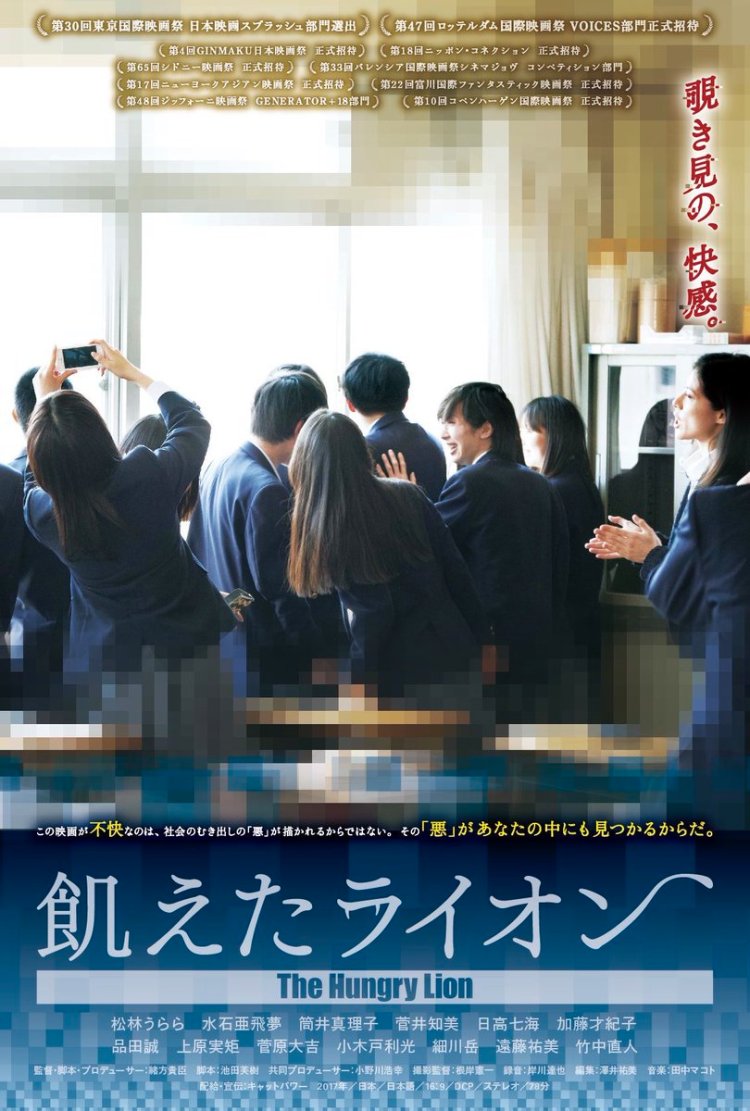
 Rumour has a strange power. A baseless lie, no matter how innocuous, can quickly derail a life but the power of lie with a tiny grain of, if not truth exactly but circumstantial evidence, can prove ruinous when there are vested interests at play which make belief an attractive prospect. The heroine of Takaomi Ogata’s The Hungry Lion (飢えたライオン, Ueta Lion) finds herself at the centre of such a storm through no fault of her own, becoming a victim not only of her country’s restrictive social codes, tendency towards victim blaming, and reluctance to deal openly with “unpleasant” topics, but also more directly of the latent jealousy lurking in her closest friends which finds a convenient home in someone else’s scandal. Nobody will come to her rescue, her “disgrace” has exiled her from the group and she finds herself abandoned as a lonely a sacrifice to the hungry lion that feeds on social shame.
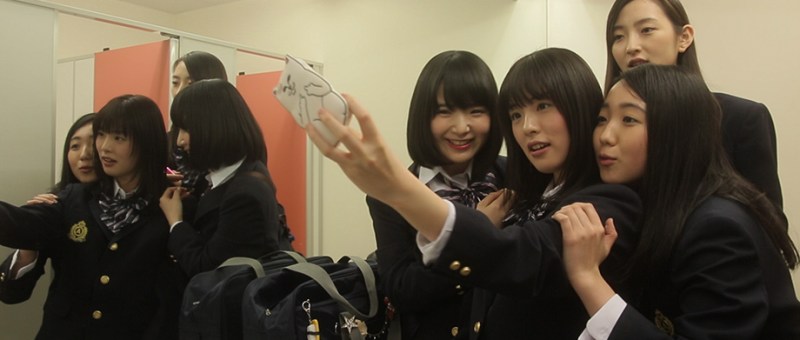
High school teacher Mr. Hosono is not exactly popular with his students. He is strict with the boys but less so with the girls, as he proves greeting one tardy student who blames a train accident for his late arrival by berating him about his regulation busting necklace while allowing a female student, Hitomi (Urara Matsubayashi), who arrives a couple of minutes later to take her seat unharrassed. Midway through the register, Mr. Hosono is called away and eventually arrested in connection with the viral video all the kids were looking at before he arrived which appears to show him in a compromising position with a student. For one reason or another, a rumour spreads that Hitomi is the girl in the video. She isn’t, but few believe her strenuous denials and her life becomes one of constant strife not only because of the bullying itself, or the injustice of being falsely accused and then disbelieved by those closest to her, but by the way she is made to feel embarrassed and shamed for causing trouble to others even though she herself has done nothing wrong.
A “relationship” between a teacher and a student is never appropriate, and Mr. Hosono has at least been removed from his position at the school, but no one seems very interested in identifying the girl in the video in order to help her, only to spread ruin and rumour. Hitomi is not the girl in the video, but even if she had been there is no support on offer to her as a person who has been abused by someone in a position of power she should have been able to trust, nor are there any measures in place to ensure her academic life will not be unduly damaged by becoming involved in such a traumatic incident. Aware of the rumours, the school accepts Hitomi’s assertion that she is not the girl but still suspends her to avoid “awkwardness” and protect their own reputation. Likewise, her own mother and sister are far from supportive, berating her for bringing shame on the family and creating problems for them in making the family a target rather than standing by her in her ordeal whether she had been the girl or not.
The rumour itself seems to spring from persistent shaming and stigmatisation of atypical families. Hitomi is 18 and she has a boyfriend who is a little older. He has some shady friends and likes to push buttons as he does by causing mild embarrassment to Hitomi by taking her into the curtained off “adult” section of the local video store in an attempt to shock her. Nevertheless the pair eventually make their way to a love hotel (where they are not age checked) and he films her in a compromising position. Girls talk and Hitomi’s friends all know about her relationship which is also plastered all over her social media on which she is something of a star. Some of her friends are jealous but also harbour a degree of disapproval and the mere fact that she is already sexually active ties her to the girl in the video and casts her in an “impure” light in the cute and innocent world of high school girls. Similarly, her boyfriend’s estimation of her drops after she consents to sleep with him while his leering friends make lewd comments and regard her as an “easy” girl who has lost the right to refuse their advances.
Ostracised for essentially becoming a “fallen woman”, Hitomi is left entirely alone with no one to turn to for support. Later, authorities are keen to stress that it’s important to speak out if you’re suffering because adults will always help children but like everything else they are just empty words. The school give out a pamphlet on the importance of prudence when using social media, but refuse to accept their responsibility in failing to protect their students. The news meanwhile becomes obsessed with tearing apart Hitomi’s family, laying the blame at their feet, insisting that Hitomi’s downfall is in someway a result of her parents’ divorce even blaming her mother for having the audacity to find a “boyfriend” before her children were fully grown. The image we had of Hitomi is suddenly reversed. No longer is she a “slutty schoolgirl” involved in an illicit relationship with her teacher, but a neglected child damaged beyond repair by “liberal modern society”.
Reputation is what matters, but reputation is easily manipulated and rewritten, muddy even when objective truth is revealed. Ogata shoots in brief vignettes, each severed from the next by a stark black screen which forces us to examine the objectivity of each scene as distinct from the others, assembling our own versions of “objective” truth which are in fact guided by Ogata’s carefully crafted editing. Fake news has an agenda, truth does not, but it’s often much easier to believe the lie especially if the lie benefits us much more than the truth or enables us to feel superior to someone we secretly think needs taking down a peg or two. Society is a hungry lion which feeds on shame, externalised and internalised, as those who find themselves on the wrong sides of a series of social taboos become unwilling sacrifices to its unkind, unforgiving, and unrelenting hunger for suffering.
Screening at New York Asian Film Festival 2018 on 30th June, 2.45pm.
Original trailer (English subtitles)
 Kanae Minato is known for her hard-hitting crime stories from Confessions to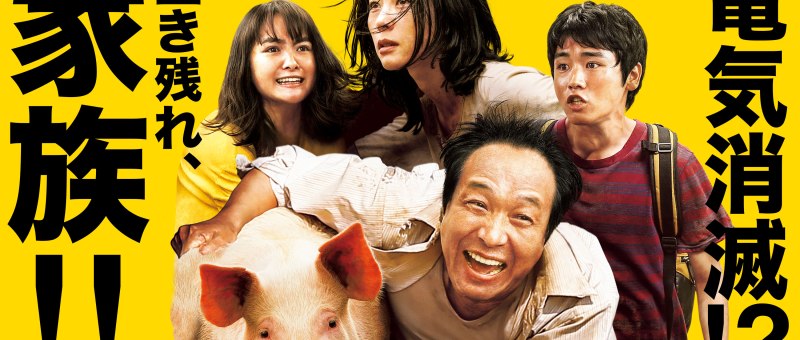
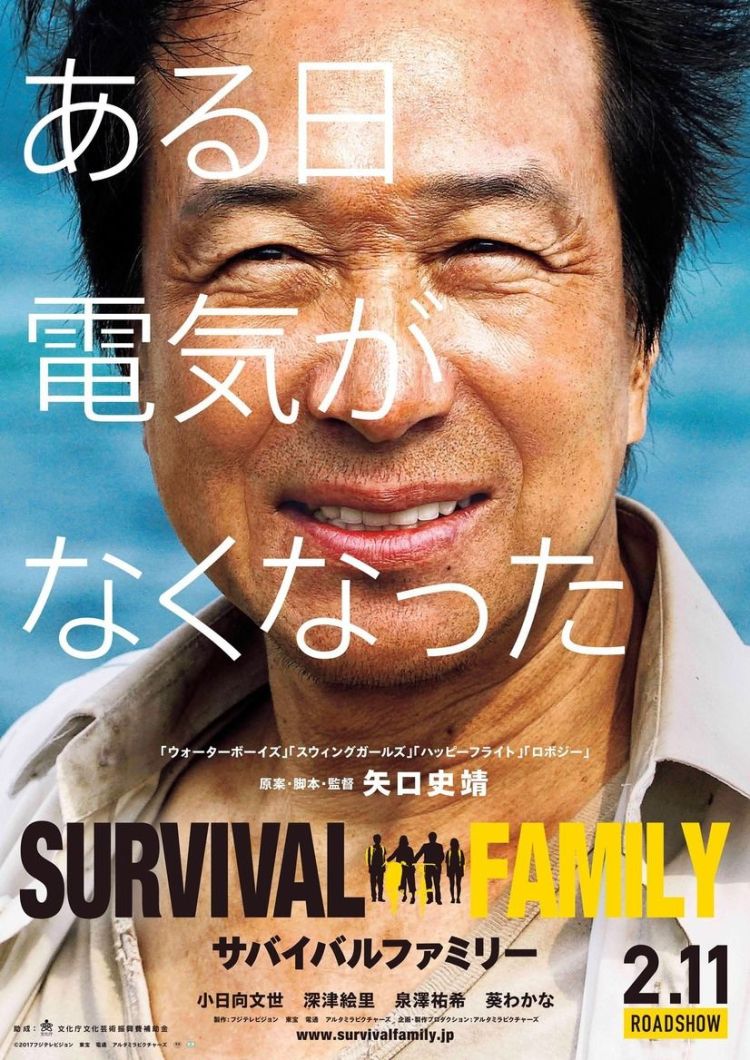 Modern life is full of conveniences, but perhaps they come at a price. Shinobu Yaguchi has made something of a career out of showing the various ways nice people can come together to overcome their problems, but as the problem in Survival Family (サバイバルファミリー) is post-apocalyptic dystopia, being nice might not be the best way to solve it. Nevertheless, the Suzukis can’t help trying as they deal with the cracks already present in their relationships whilst trying to figure out a way to survive in the new, post-electric world.
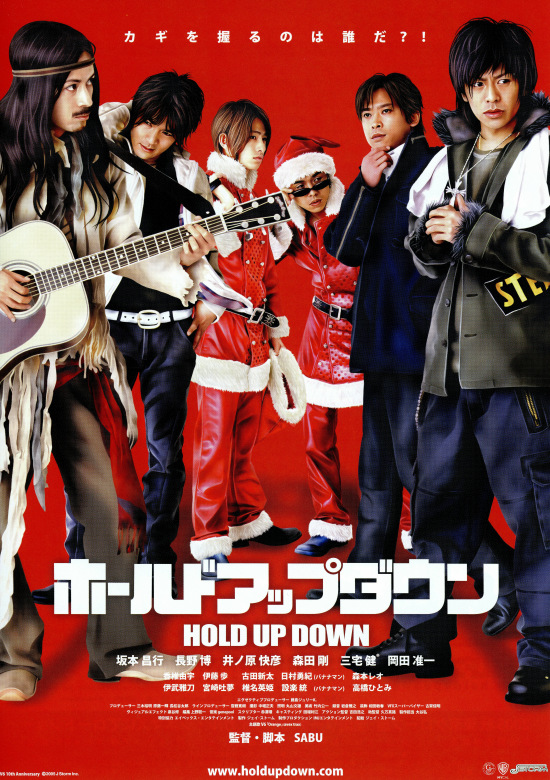 Reteaming with popular boy band V6, SABU returns with another madcap caper in the form of surreal farce Hold Up Down (ホールドアップダウン). Holding up is, as usual, not on SABU’s roadmap as he proceeds at a necessarily brisk pace, weaving these disparate plot strands into their inevitable climax. Perhaps a little shallower than the director’s other similarly themed offerings, Hold Up Down mixes everything from reverse Father Christmasing gone wrong, to gun obsessed policemen, train obsessed policewomen, clumsy defrocked priests carrying the cross of frozen Jesus, and a Shining-esque hotel filled with creepy ghosts. Quite a lot to be going on with but if SABU has proved anything it’s that he’s very adept at juggling.
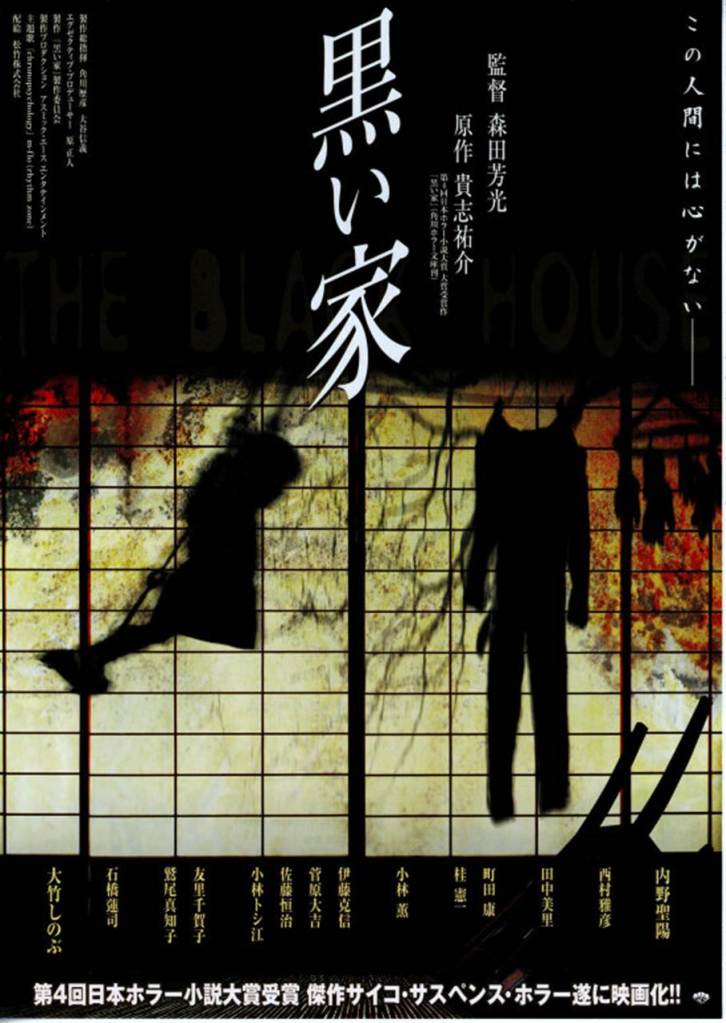 Yoshimitsu Morita, though committed to commercial filmmaking, also enjoyed trying on different kinds of directorial hats from from purveyor of smart social satires to teen idol movies, high art literary adaptations and just about everything else in-between. It’s no surprise then that at the height of the J-horror boom, he too got in on the action with an adaptation of Yusuke Kishi’s novel of the same name, The Black House (黒い家, Kuroi Ie). Though tagged as “J-horror” you’ll find no long haired ghosts here and, in fact, barely anything supernatural as the true horror on show is the slow descent into madness taking place inside the protagonist’s mind.
 Windows on Worlds