Hero (英雄, Zhang Yimou, 2002)

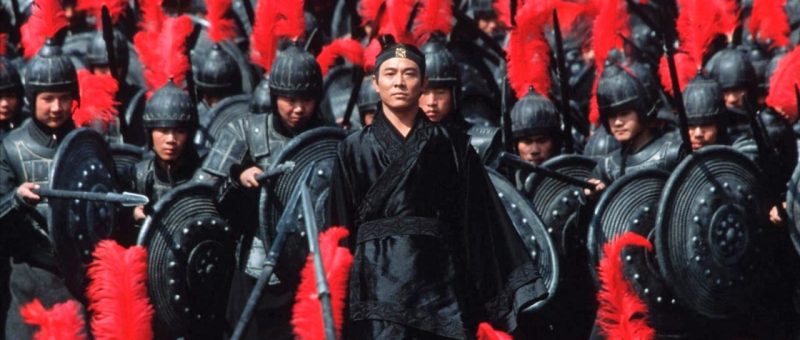
In the closing moments of Zhang Yimou’s Hero (英雄, Yīngxióng), what we see is an empty space. The outline of a person surrounded by arrows, or perhaps the doorway they protected with their body that nevertheless remains closed. On its initial release, Zhang’s film received criticism for what some saw as an overt defence of authoritarianism. After all, what we may come to understand is that the hero of the title is the Qin emperor (Chen Daoming), the founder of the modern China, but also in historical record a brutal tyrant whose tyranny is therefore justified in the name of peace, just as contemporary authoritarianism is justified in the name or safety and order.

This reading is only reinforced by the demeanour of Qin himself who condemns the nameless “hero” to death because he has chosen authority and this is what authority demands. No forgiveness, no compassion, only brutality and an iron first. Yet he cries because he is a compassionate man and understands the sacrifice he is asking his remorseful assassin to make. He does not do it because he is cruel or out of vengeance or anger, but because he believes it necessary to ensure peace for “all under heaven”. Now we may find ourselves asking again if the assassin is the hero after all because he willingly submits himself to and sacrifices himself for a tyrannous authority because he believes it to be the best and only choice that he can make for the wider society.

Nevertheless, there is something chilling in the vision of a thousand arrows flying toward one man who does not flinch while the man who ordered them sent appears to shake with his own power. The soldiers retreat, and the king is left alone, dwarfed by the immense architecture of the palace and the blood-red calligraphy of the character for sword reimagined by another potential hero whose name echoes his final conviction that in the end the apotheosis of the swordsman lies in the realisation that there is no sword. It’s this that leads him to abandon is own desire to assassinate the king and submit himself to a greater authority in the name of peace. In the end what he rejects is the tyranny of the sword itself, yet the king is also an embodiment of that tyranny because his authority is only possible through terrifying violence. 

In this way, the assassin, ironically named “Nameless” (Jet Li), may stand in for the everyman refusing to bow to the authority of a corrupt king who cares only for power. In one of the many tales he tells, Nameless remarks that he fought with the first of Qin’s three assassins in his mind and it’s true enough that what passes between the two men is a duel of words which is eventually won by the king. Qin tells Nameless of his desire to increase his influence beyond the other six kingdoms of Warring States China and create an empire that encompasses “all under heaven”, but Nameless later cautions him to remember those who gave their lives for the highest ideal, peace, and refrain from further killing. The closing title card is displayed over the Great Wall, making plain that Qin did in fact stop after conquering the six other kingdoms to unite all of China while building the wall to protect his citizens from “northern tribes,” or perhaps competing imperialists.

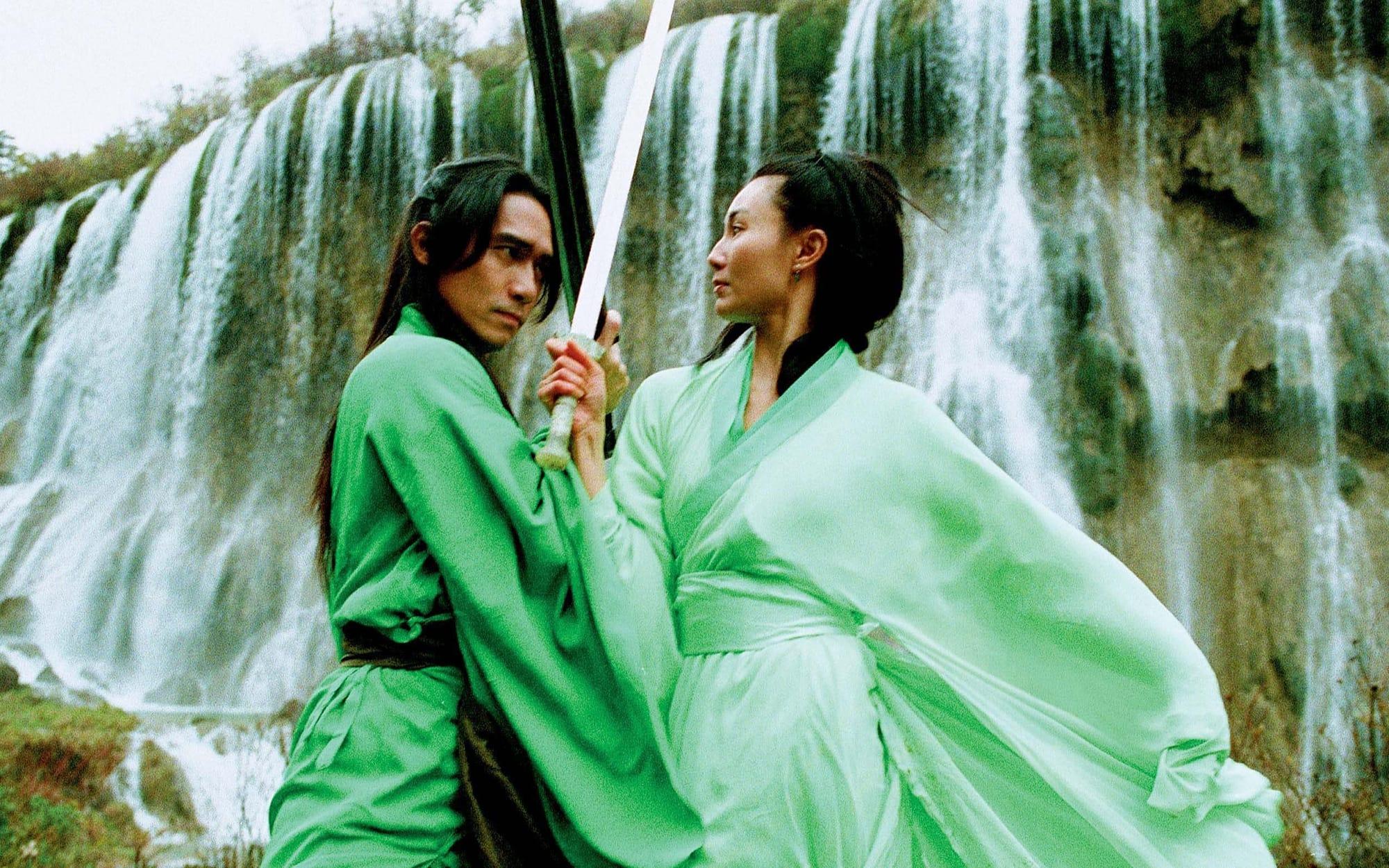
But walls keep people in as well as out and are in fact another facet of the king’s tyranny and a symbol of enduring authoritarianism. The problem is that it isn’t tyranny or authoritarianism that any of the assassins oppose for they are driven only by hate and vengeance and have no greater ideology or vision for the future. The argument is that peace under the iron fist of Qin is better than the chaotic freedom of the Warring States society, yet what we’re left with is nihilism. The love between assassins Flying Snow (Maggie Cheung Man-yuk) and Broken Sword (Tony Leung Chiu-wai ) is disrupted in each of the tales Nameless relates of them, firstly by romantic jealously and then secondly ideological divide. The conclusion that Broken Sword comes to is that they must not resist, but Flying Snow cannot live without recrimination with the past and the sealing of its tragic legacy. Her revolution fails, and as such “all under heaven” there is only death and only in death is freedom to be found.

The sense that these assassins are already dead is echoed in the choice of white for the final sequence of the film. Zhang frames each of his sequences in vibrant colour, the red of the first tale in which the lovers are destroyed by a supposed love triangle, the blue of the second in which tragedy and sacrifice do not so much destroy as deify it, the green of the penultimate in which jade curtains billow and fall inside the imperial palace, and finally the cold white of death in which the lovers eventually find their home leaving their surrogate child alone in a windy desert of futility. Yet each of these sequences is filled with an intense beauty and the romanticism found in classic wuxia. What remains in the mind is the balletic fight between the tragic heroine Flying Snow and the orphaned pupil Fading Moon (Zhang Ziyi) in an autumnal forest that’s suddenly drenched in red, or feet dancing across the water, an image of an idealised past and lost love among wandering ghosts with no home to go to. Here there are no heroes, only lonely souls and frustrated ideals. 

Polar Rescue (搜救, Lo Chi-leung, 2022)

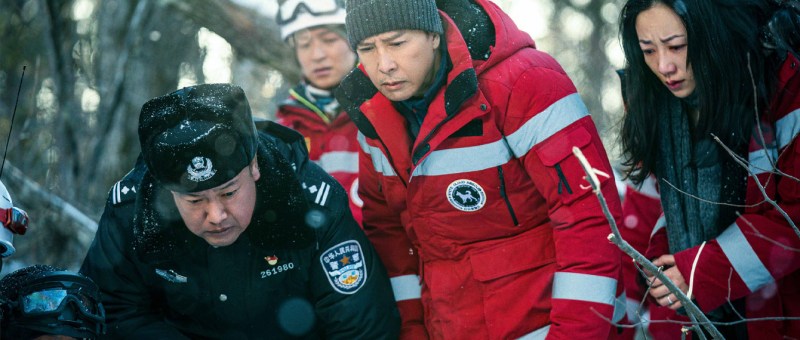
One of the more surprising things about Polar Rescue (搜救, sōujiù, AKA Come Back Home), a rare vehicle for Donnie Yen outside of the martial arts and action genres, is just how unheroic its panicked hero is. Though he may start off as a frantic parent who has our sympathies, we later begin to realise that he is at least severely flawed while there are also a few perhaps subversive hints towards the pressures of the modern China which have frustrated his attempts to be what he would assume a good father to be.

Despite later hints that the family is in a spot of financial bother, they’ve all gone on what looks like a fairly expensive skiing holiday in a European-style resort. The problem begins towards the end of their stay when eight-year-old Lele starts acting up in part because his father, De (Donnie Yen), promised to take him to Lake Tian to see the monster but has broken his word because of road closures due to the adverse weather. Wanting to make it up to his son, De decides to try going anyway via the backroads which are still open but soon enough gets stuck in a ditch. Events from this point on are deliberately obscured, but somehow Lele gets separated from his parents and sister and goes missing in the freezing wilderness. 

Rather than a father’s one man race against time to find his missing son, the film soon shifts into familiar China has your back territory as the full force of artic rescue complete with helicopters and specialist equipment is deployed to find this one missing boy. De is still not satisfied and at several points frustrates the rescue effort by getting into trouble himself without really reflecting that it’s his own irresponsibility and paternal failure that have caused the rescuers to risk their own lives trying to find his son. 

Though we might originally have sympathised with him, particularly as it seems clear Lele is behaving very badly and will not listen to either of his parents, we later come to doubt De on learning that Lele’s disappearance is at least in part related to an incredibly ill-advised though perhaps understandable parenting decision. As the film would have it, De is both too old fashioned in his authoritarian approach in which he’s often been violent towards his son, and too slack as evidenced by the boy’s bad behaviour. He’s failing in most metrics as a father given that he’s run into career difficulty as an engineer after challenging some of the nation’s famously lax safety regulations on a site he was working on he believed to be unsafe and then getting swindled on another construction project by a client who ran off with all the money. He also seems reluctant to allow his wife (Han Xue) to work to ease the family’s financial burden out of a mistaken sense of male pride. 

This ties in somewhat to the propagandist themes as we see him totting up how much it would cost to send his kids to school overseas only for his wife to tut that Chinese education is good too, while the fact the family have two children also hints at a new ideal in the wake of the loosening of the One Child Policy to encourage correction to the rapidly ageing population. The rescuers, meanwhile, are portrayed in a perhaps slightly ambiguous light given than many of them quickly become sick of De and think they should stop looking given the unlikeliness of a child surviving alone for several days in such freezing conditions. Some even suspect De may be responsible for his son’s disappearance and is using them to cover up the crime. Even so, they get to sing a rousing song to the tune of Bella Ciao and re-echo their commitment not to give up until they’ve found Lele even if it turns out to be too late to save him.

A subplot about the two-sided nature of social media in cases like these is dealt with only superficially, while many other things do not quite make sense including the inclusion of a bear and his cub whose appearance, though obviously serving a symbolic purpose, seems like overkill. Nevertheless, there’s a good degree of ambiguity in the central disappearance that helps to head off the otherwise predictable nature of its trajectory. 


Polar Rescue is out now in the US on Digital and Blu-ray courtesy of Well Go Usa.

US trailer (English subtitles)

Sakra (天龍八部之喬峰傳, Donnie Yen & Kam Ka-Wai, 2023)

Donnie Yen returns to the (co-)director’s chair in an adaptation of Jin Yong’s classic wuxia Demi-Gods and Semi-Devils, Sakra (天龍八部之喬峰傳, Tiānlóng Bā Bù zhī Qiáo Fēng Zhuàn). 59-year-old Yen also stars as the tragic wuxia hero Qiao Feng who is repeatedly stated to be around 30, though he also appears in a handful of scenes as Qiao’s father which might help to explain the casting choice. Even so, Yen mostly pulls it off while striking an authoritative figure fighting for justice in an unjust world. 

As the opening titles reveal, this was a fairly tragic age in which “those who had feelings were all caught in it”. The Northern Song Dynasty faces invasion by the Khitan-led Liao, while the Yan are also vying to restore their lost power. Discovered as a foundling and raised by a Song couple, Qiao Feng joins the notorious Beggar Gang and becomes a powerful martial artist often defending their territory against Khitan raiders. After rescuing a young man held captive by a monk who describes him as a human sacrifice, Qiao returns to be accused of treachery by the Beggars. His leader, Ma, has been murdered, and Ma’s wife Min (Grace Wong Kwan-hing) claims she saw Qiao do it. Ma had apparently told her that he feared Qiao would kill him because he had come into an incriminating letter which suggests that Qiao’s biological parents were in fact Khitans and he is some kind of treacherous sleeper agent. 

Qiao realises there’s nothing he can really do to counter their suspicion except leave and discover the truth about his origins for himself. Unfortunately, however, everyone he could have asked ends up dead with him framed as the killer. Meanwhile, he wrestles with questions of identity asking himself if he can be both a “good” person and a “Khitan” but later coming to doubt his allegiance to Song after witnessing some soldiers massacre a group a of Khitan peasants out on the road. While investigating he ends up saving the life of mysterious spy Azhu (Chen Yuqi) who like him is looking for her origins, having been told by Yan warlord Murong Fu (Wu Yue) for whom she is working that he would tell her if she stole a scroll from the Shaolin temple. Azhu is the only one continues to believe in him, reassuring Qiao that regardless of his identity he is still a “good person”, and the pair soon fall in love vowing to leave the martial arts world behind to raise cattle in the country once their respective quests are concluded successfully. 

Even so, he later claims not to fight only for his land but for a righteous world against the amoral machinations of the villainous Murong Fu and all those who conspired with him. The Beggar Gang is not entirely innocent either, subject to a struggle for succession that made Liao’s existence inconvenient to some while Qiao is later confronted by the realities of a situation he may have misunderstood. Qiao may learn the secret of his origins, but is also left with a new mission in the necessity of stopping Yan’s despotic bid to reclaim Song, riding straight into battle with only a loyal companion at his side. 

Though struggling under the sheer complexity of Jin Yong’s sprawling novel, Yen and Kam showcase the key incidents such as the opening rescue of Duan Zhengchun’s son, and Liao’s epic battle against the Beggars after wading straight into a meeting knowing he’d likely be killed but looking for a doctor for Azhu. The action scenes are visceral and impressive, making the most of the movie’s high production values with a mixture of CGI and practical effects as Qiao faces off against hundreds of men at once or makes daring wire-assisted leaps from under a dome of enemy shields. There is also a genuine poignancy in the tragic romance between Azhi and Qiao who just want to be free of their legacies and the machinations of the martial arts world to live quiet lives as innocent farmers but are reminded there is no real escape from the political reality. Having covered half of Liao’s arc in Jin Yong’s text, a door is left open for a sequel in which Qiao continues to pursue justice and clear his name while hinting at a battle still to come in world in which “those who have feelings are all caught”.


Sakra is released in the US on DVD & Blu-ray June 13 courtesy of Well Go USA.

Original trailer (English subtitles)

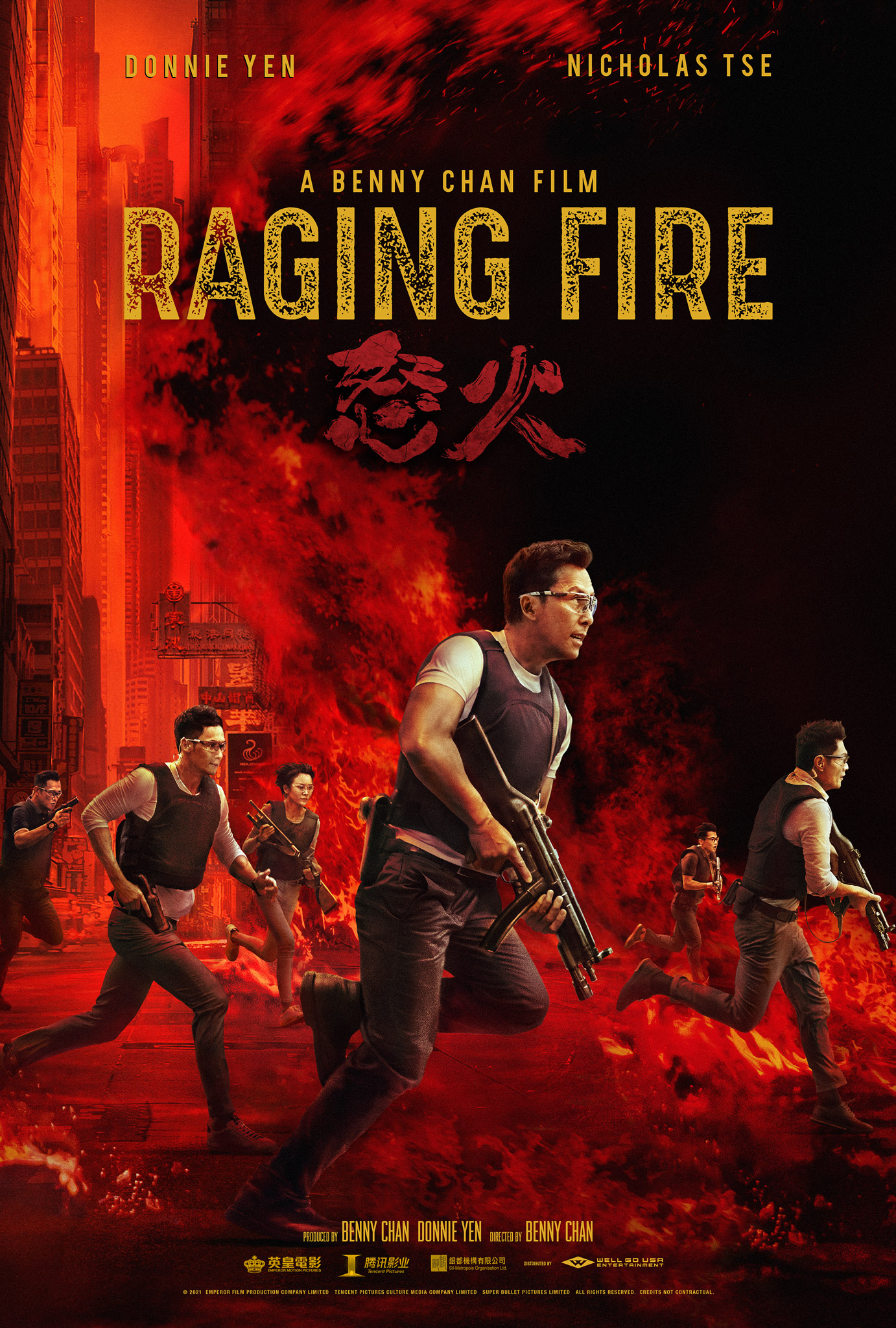
Raging Fire (怒火, Benny Chan, 2021)

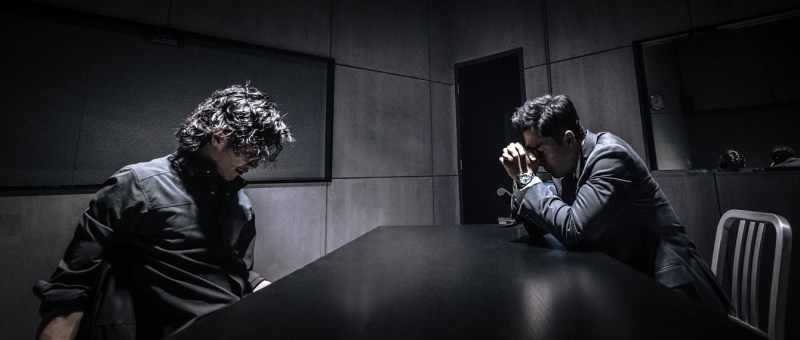
“If you had chased Coke that day, would our destinies have been reversed?” a cop turned villain asks of his righteous colleague, but his friend has no answer for him. The final film from director Benny Chan who sadly passed away last year after being diagnosed with cancer while filming, Raging Fire (怒火) pits a disgruntled police officer wronged by the system against an incorruptible detective but suggests that the real villain is an increasingly corrupt society in which the rich and powerful have a direct line to justice. 

As the film opens, noble officer Cheung (Donnie Yen) is racing towards some kind of altercation in a shipyard but later wakes up next to his much younger and very pregnant wife (Qin Lan). After a years long operation, his team is about to take out a petty criminal involved with a previous investigation which resulted in fellow officers getting sent to prison for excessive use of force. After refusing to to help a wealthy businessman make his son’s drunken car accident go away, Cheung is taken off the case while the raid turns out to have been a trap leaving eight of his friends dead and many more injured. Through his investigations, Cheung begins to realise that his former colleague Ngo (Nicholas Tse), recently released from prison, may be responsible for the deaths of his friends in pursuing a vigilante revenge against the police force he feels betrayed him. 

“This society doesn’t reward good men” Ngo later insists, though his total and relatively sudden transformation from earnest cop to bloodthirsty psychopathic killer seems something of a stretch. Cheung aside, the Hong Kong police force is depicted as infinitely corrupt and working at the behest of the rich and powerful to further agendas not always in the interests of justice. The case which caused so much trouble related to the kidnapping of a prominent financier and the secretary he was canoodling with at the time, the financier’s wife having obeyed the kidnappers’ instructions not to call the police by ringing a government contact instead which is why the operation is covert. Ngo and his team were told to do whatever it took to extract information from a suspect who later wound up dead but were hung out to dry by the superior officer who ordered it. Not unreasonably they see themselves as victims of a corrupt system but care little who might get in the way of their vicious bid for revenge. 

For his part, Chueng is also a thorn in the side of his colleagues because of his refusal to play along with the base level corruption all around him. Dragged to the meeting with the businessman by nervous colleague Beau (Patrick Tam), Cheung sips tea rather than the wine everyone else is drinking and eventually storms out making a point of paying for his exorbitantly priced beverage while refusing to be complicit with systemic corruption. So upright is he that he asks a passing driver if he has insurance before borrowing his car to chase down Ngo and when he himself is accused of breaking protocol the entire squad shows up to petition the disciplinary panel on his behalf. Ngo asks him if the situation would have been reversed had it been Cheung who had questioned the suspect that night, but of course it wouldn’t because Cheung would never have beaten a suspect to death in the first place. 

Chan places this debate front and centre by setting the final showdown in a church currently undergoing renovation, Ngo seemingly judged for his moral transgressions while Cheung meditates on the man he used to be in a bromance montage that laments the tragedy of Ngo’s fall from grace. The battle of wits between the two men, Ngo of course uniquely positioned to game the system he rails against, ends only in futility while the system which created him remains unchanged. Chan shoots with characteristic visual flare sending his compromised cops through a golden hellscape of the contemporary city veering between beautifully choreographed, high octane action sequences including a lengthy car chase through a highly populated area, and procedural thrills tinged with ambivalent social commentary in which justice itself has become commodified while police officers exceed their authority and bow to the rich and powerful. A throwback to classic Hong Kong action, Chan’s final film is a fitting finale for the career of a director taken far too soon. 


Raging Fire screened as part of this year’s New York Asian Film Festival and will be released in US cinemas on Aug, 13 courtesy of Well Go USA.

International trailer (English subtitles)

Ip Man 4: The Finale (葉問4:完結篇, Wilson Yip, 2019)

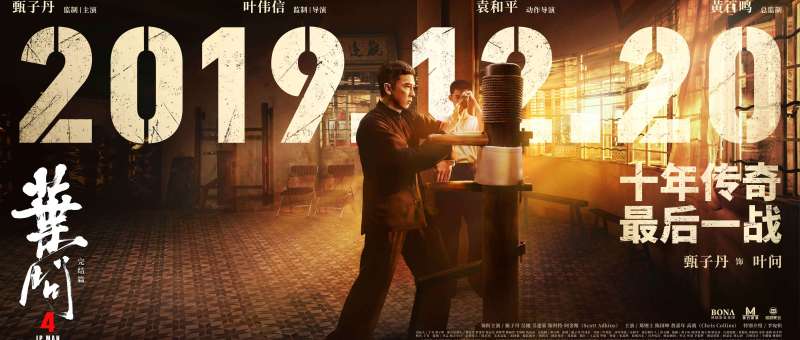
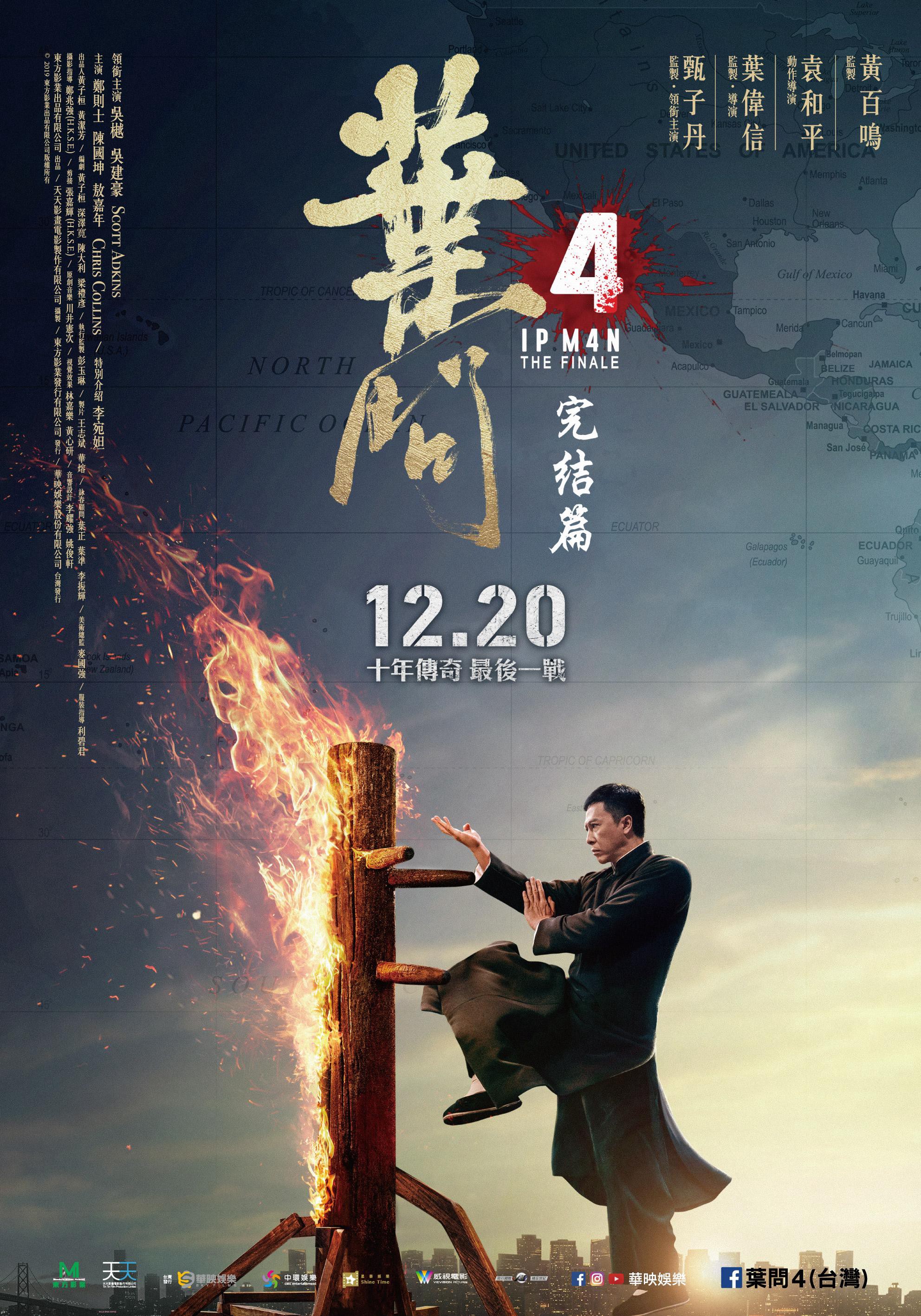
Ip Man 4 poster 1Superhero movies may be undergoing something of a complex reevaluation of late, but you can’t deny that they often come in unexpected forms. Ip Man, the man who made Bruce Lee, has himself become a mythical figure, a kind of kung fu saint defending ordinary Chinese people from oppressors and bullies. All heroes, however, must eventually meet their end. Ip Man 4: The Finale (葉問4:完結篇) brings the Donnie Yen starring series to a bombastic close with Ip seemingly facing off against the rising populism of the present day by kicking back against racist aggression in the San Francisco of 1964.

Why would Ip be in San Francisco, you ask? Because Bruce Lee (Danny Chan Kwok-kwan) invited him. Rewinding a few minutes, we discover that Ip has recently been diagnosed with throat cancer which is why he politely declines Bruce’s offer to pay for him to fly to the US to see him in a karate tournament. Personal matters, however, change his mind. His wife now passed away, Ip is struggling to connect with his increasingly rebellious son Jin (Jim Liu) who has been expelled from school for fighting. All Jin wants is to study kung fu like his dad, but Ip doesn’t approve. The headmaster advises him that unruly kids might do better abroad and so Ip decides to visit Bruce and check out schools in the US in the process, but he quickly runs into trouble on learning that the elite private institutions of the area require a recommendation from the Chinese Benevolent Association. The CBA are of the opinion that Chinese martial arts are for the Chinese people and are very angry about Bruce Lee’s determination to teach them far and wide. They were hoping Ip could talk some sense into his former pupil, but Ip is firmly on Bruce’s side. He too believes that martial arts should be a bridge between peoples, not a secret weapon preserving its mystique to intimidate.

This central divide becomes the film’s axis with head of the CBA Wan (Wu Yue) gently reminding Ip that he does not live in the city and is ill qualified to comment on local politics while advocating a gentle path of quiet appeasement. Wan clashes with his feisty daughter, Yonah (Vanda Margraf), who wants to be a cheerleader but faces constant micro aggressions from the openly racist rich kids at the same elite high school Ip wants to send Jin to. Yonah disagrees with her father’s turn the other cheek philosophy and longs to use the martial arts she didn’t particularly enjoy learning for their real purpose, later bonding with Ip after he steps in to frighten a group of posh thugs who attacked her on instruction from her rival on the cheerleading team.

The anti-racism theme slowly dovetails with the mirrored threads of failing fatherhood as Ip realises that he has made all the same mistakes as Wan. Yonah is impressed by Ip’s aura of quiet authority and spiritual power, instantly striking up a kind of paternal relationship with him, but offers cutting critique in casually echoing Jin’s words in complaining that her father has never supported her. Facing his mortality, Ip wanted to ensure his son’s independence as quickly as possible, but refused him the independence of deciding his own future. Eventually he realises that the only way to atone for his failure as a father is to pass his knowledge on while he still can, but a key part of that is that a martial artist must stand up to injustice wherever they see it, which is pretty much everywhere in San Fransisco in 1964.

Somewhat incomprehensibly, the great evil this time around is a group of massively racist karate enthusiasts who like to shout racial slurs at the practitioners of Chinese kung fu. Granted massive racists are not known for their critical thinking abilities, but no one seems to have told them that karate was not born in America which makes their animosity towards kung fu all the stranger. Yet, just as Ip and Bruce had suggested, martial arts can indeed be a bridge as Bruce discovers in besting a promising challenger in an alleyway and getting a big thumbs up in return.

Not everyone is as easily won over, however. Ip’s final battle against a crazed marine instructor (Scott Adkins) plays out as if he really has defeated racism in America by punching out a meat headed bigot with fatherly righteousness which is, however you look at it, a little on the flippant side. It also, of course, plays into the persistent “just stay in China” message of contemporary Chinese cinema, but nevertheless presents a slightly subversive front in clumsily uniting the oppressed population of the city under Ip’s revolutionary banner in opposition to entrenched racism, classism, corruption, and nepotism. Awkwardly delivered perhaps, but you can’t argue with the broadly positive plea for cultural exchange and international co-operation as the best weapons against injustice.


Currently on limited release in UK/US cinemas courtesy of Well Go USA.

International trailer (English subtitles)

An Inspector Calls (浮華宴, Raymond Wong & Herman Yau, 2015)

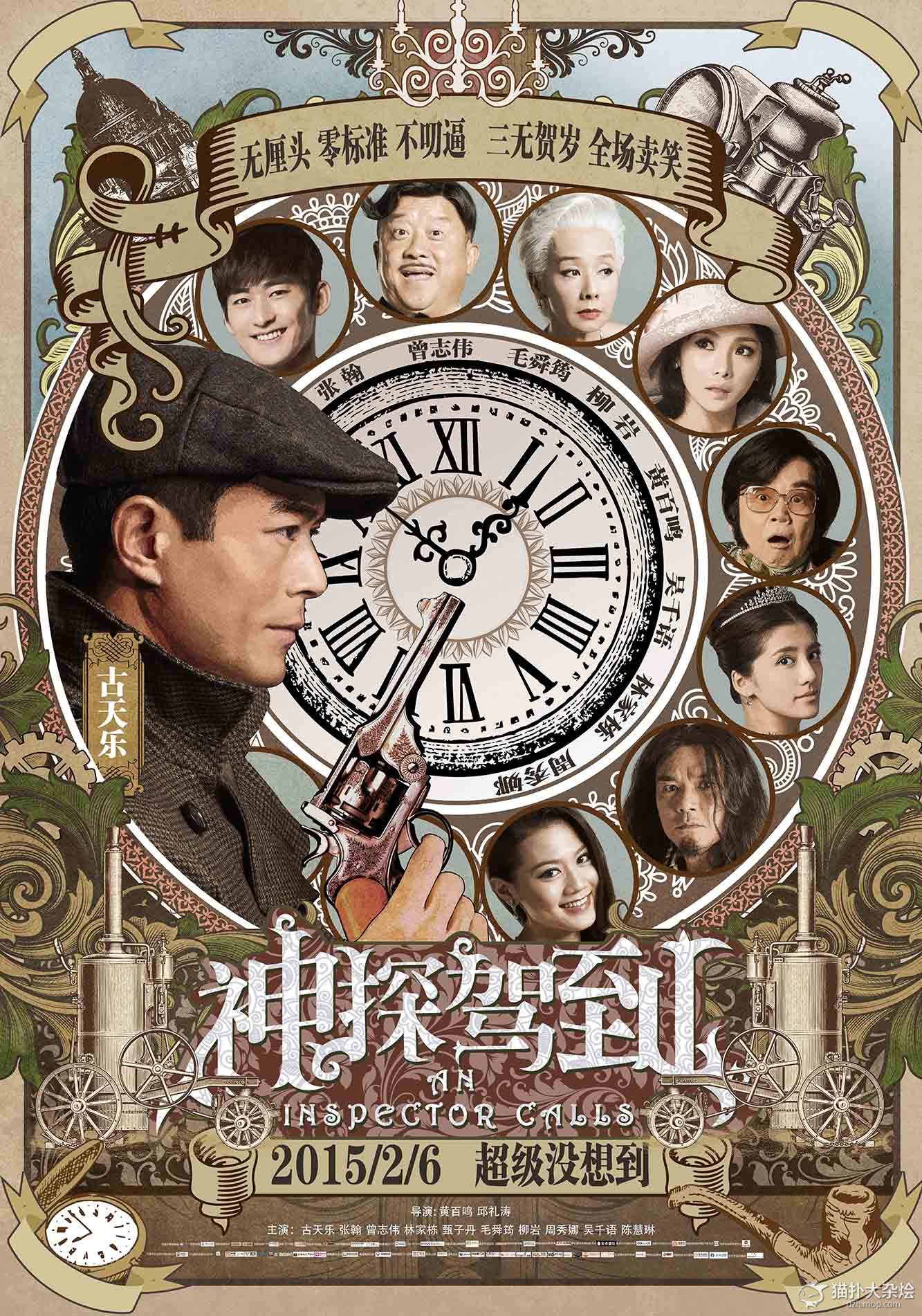
Inspector Calls poster 1J.B. Priestley’s An Inspector Calls found itself out of favour until a phenomenally successful stage production brought it back into the national consciousness in the early ‘90s, but even if some decry its inherent melodrama as a relic of another era the play’s comments on the entrenched classism of British society sadly still ring true. An Inspector Calls is many things, but one thing it defiantly is not is funny – a series of concentric tales of betrayals and oppressions, Priestley’s drama lays bare the callousness with which the privileged bolster their position through the story of one faceless factory girl standing in for an entire social class whose lives are often at the mercy of those “above” them.

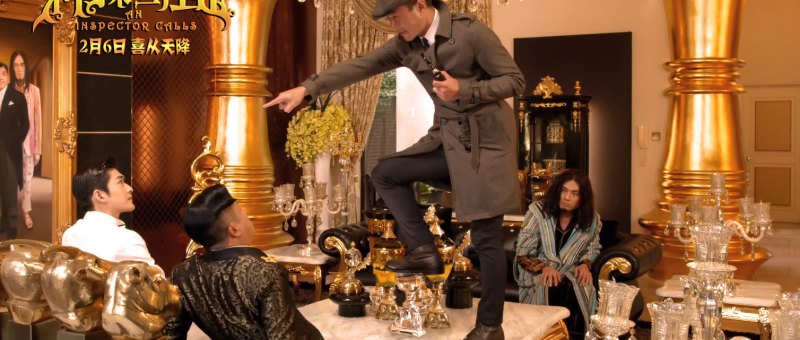
In adapting Priestley’s play as a Chinese New Year movie (a strange concept in itself), Herman Yau and Raymond Wong relocate to contemporary Hong Kong, re-conceiving it as a broad comedy of the kind one might expect for the festive period. The setup is however still the same. The Kau family will be receiving a visitation – this time from Inspector Karl (Louis Koo Tin-lok) who has some difficult news for each of them. Three hours previously, a young woman committed suicide in her apartment by drinking bleach, taking the child she was carrying with her. Inspector Karl views this as a double murder and, based on the diary they found at the crime scene, has brought the reckoning over to the Kaus’.

The Kaus, at the present time, are preparing an engagement party for daughter Sherry (Karena Ng) who will be marrying the handsome younger brother of a factory owner, Johnnie (Hans Zhang Han). What no one can know is that the family business is going under, the Kaus are broke, mum and dad don’t get on, and all of this finery is merely rented affectation. The only member of the family who still seems to have something like a social conscience – Tim (Gordon Lam Ka-tung), the 27-year-old younger son, is viewed by all as a feckless and naive hippy, hiding out in his childhood bedroom, still all fluffy cushions and toy soldiers.

As the Inspector explains, he holds Mr Kau (Eric Tsang Chi-wai) responsible because the woman once worked in his factory and he fired her for participating in a strike for better pay and conditions. Sherry got her fired too when she worked in an upscale fashion store. Johnnie knew her during an unfortunate period as a bar hostess, and Tim as a masseuse. Mrs Kau (Teresa Mo Shun-kwan), who heads up a woman’s charity and publicly espouses tolerance while privately judgmental, once turned her down for familial support seeing as the father of her child was still living. She advises holding him to account and if he won’t pay, forcing his family to take responsibility on his behalf. The irony being that the father is likely her own son and that if this poor woman had rocked up at the Kaus’ with a sad story and an infant in her arms, she would have been met with nothing more than contempt save perhaps some hush money to send her on her way.

The Kaus are merely a series of examples of the various ways the wealthy mistreat the poor, wielding their sense of entitlement like a weapon. Yau and Wong adopt an oddly Brechtian approach in their expressionist production design with the faceless masses identified only through titles – the word “labour” on the workers’ caps, “manager” in the fashion store, “secretary” at the foundation. None of these people are really worthy of names because they will always be “less” while the Kaus are “more” in more ways than one. Actions, however, have consequences. The family console themselves that this is all far too coincidental, that they couldn’t all have known the “same” woman in different guises, but that in many ways is the point – she isn’t one woman but all women, used, abused, and discarded not only by heartless men but by jealous and judgemental members of her own sex too. Better than her than me, they might say, but that’s no way to run a healthy society as the sensitive, slightly damaged Tim seems to see.

Like the Birlings, the Kaus attempt to brush the Inspector’s warning off, thinking it’s all been some elaborate prank that can they laugh about and then forget, but there will be a reckoning even if they attempt to gloss over the various revelations regarding their moral failings. Wong and Yau’s vague gesturing towards the outlandish greed of the hypocritical super wealthy is undercut by the ridiculous New Year slapstick of it all despite the Metropolis-like production design and expressionist trappings, giving in to an excess of its own in an extremely unexpected musical cameo from a martial arts star and the decision to end on a social realist photo of an innocent, pigtailed proletarian woman dressed in red. Nevertheless, strange as it all is the bizarre adaptation of Priestley’s play has its own peculiar charm even if it’s outrageousness rather than moral outrage which takes centre stage.


Currently available to stream online via Netflix in the UK and possibly other territories.

Original trailer (English / Traditional Chinese subtitles)

Chasing the Dragon (追龍, Jason Kwan & Wong Jing, 2017)

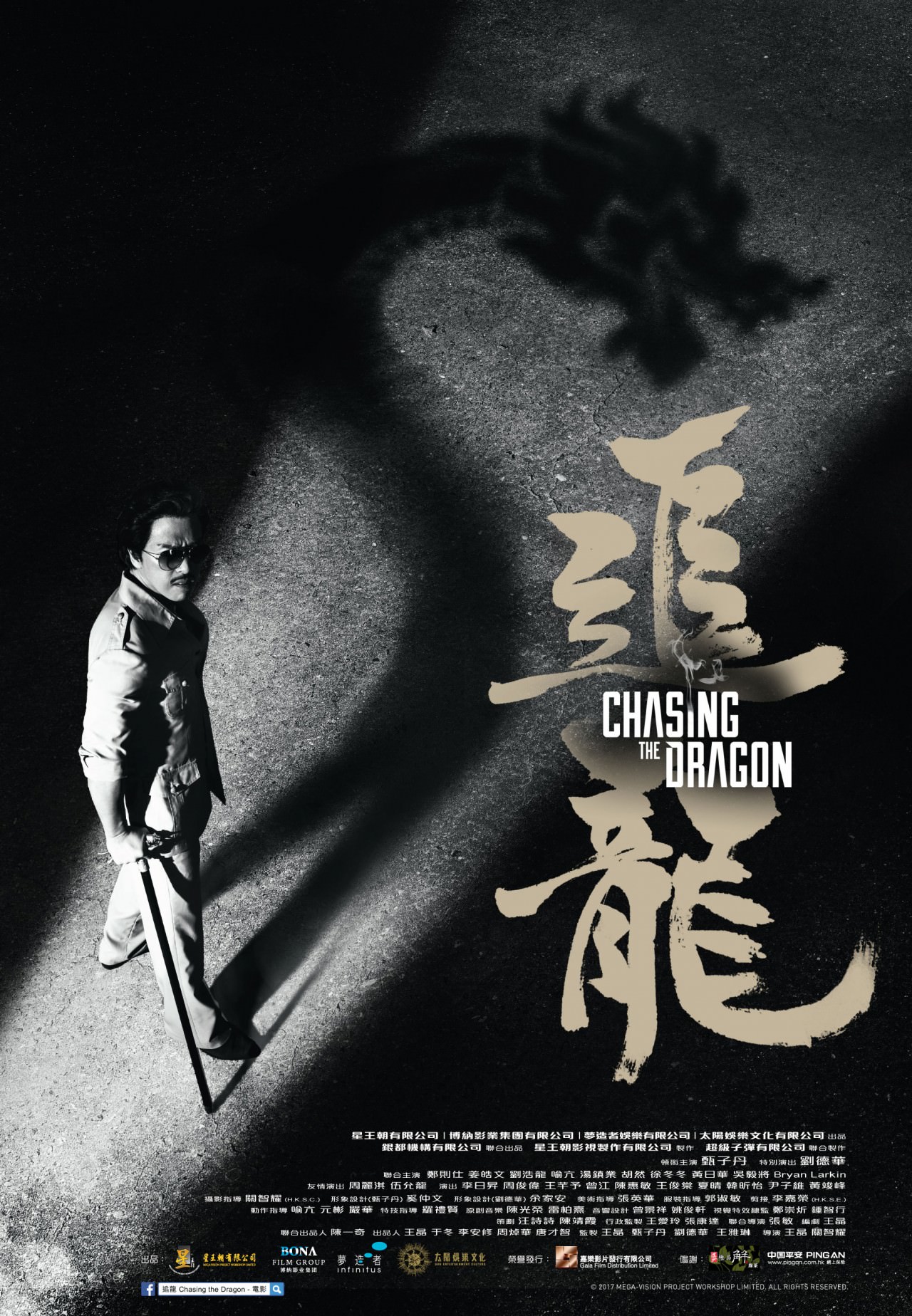
chasing the dragon posterWhen it comes to Mainland China anything goes so long as you set your movie before 1949. In Hong Kong it seems the same thing is true only the cut off date is 1997. Wong Jing and Jason Kwan’s surprisingly glossy Chasing the Dragon (追龍) follows two giants of 1960s Hong Kong in Crippled Ho whose life was previously brought the screen in 1991’s To Be Number One, and crooked (but only in a nice way) policeman Lee Rock who is played by Andy Lau – the very same part he inhabited in a series of films over 25 years ago. Marking a first time collaboration between martial arts superstar Donnie Yen and veteran leading man Lau, Chasing the Dragon firmly points its finger at the rotten roots of colonial corruption which, apparently, allowed such lawless times to endure in order to reap their copious rewards.

In 1963, Crippled Ho (Donnie Yen) smuggles himself into Hong Kong from the Mainland along with three of his friends and his little brother Peter. The boys find it hard to get honest work and are largely existing as hired muscle – or rather they’re supposed to get paid $30 to stand at the back make the local gangster’s gang look more impressive than it really is. One fateful day they get hired by Will, Grizzly Bear’s fixer, to hang around at a supposed confrontation with rival gangster Comic only this time the fight, which has been organised to put a damper on the birthday celebrations of crooked police chief Ngan, breaks out for real. Crippled Ho and the guys are skilled fighters who’d really rather avoid getting involved so they steal some police uniforms and try to escape by blending in but they’re caught by vicious British cop Hunter (Bryan Larkin) and nearly beaten to death before being rescued by the less corrupt Lee Rock (Andy Lau).

This first confrontation sets the tone for the remainder of the film as Crippled Ho, a vicious, ruthless, and ambitious gangster is repeatedly plagued by Hunter – the typically racist, corrupt, incompetent, greedy, and amoral sort which seems to define British officialdom across the Empire. Empire is the big enemy here (though it’s easy enough for one Empire to stand in for another) as pictures of the Queen reign supreme and men like Hunter think they can do whatever they like because colonial life is cheap. Lee Rock knows his place with the system and is content to play it. He warns Ho that pretty much anything goes, but the Brits are off limits because it’s the authorities that are bankrolling this illicit economy and any attempt to bite the hand that feeds threatens to bring the entire system crashing down.

As revealed in Ho’s opening voice over, ’70s Hong Kong was a haven of corruption in which the authorities collaborated with the Triads partly as a way of appeasing them but also as a way to make money. Unlike his incorruptible buddy, Lee Rock is as corrupt as they come – setting himself a target of $500 million and becoming actively involved in the drugs trade. He does, however, have his limits and makes sure to always play within the “rules”. The rules go awry when Rock decides to try deposing an unpredictable gang leader in favour of a more stable one and gets trapped inside Kowloon Walled City only for Ho to come to his rescue in answer of their debt of loyalty.

Despite their positions at opposite ends of the spectrum, Lee Rock and Crippled Ho generate a genuine brotherhood during the ten years which see their ascent to the top of the Hong Kong criminal tree. The launch of ICAC in 1974 which aims to eradicate corruption across the board threatens to bring the party to an end with its obvious desire for efficacy in refusing to hire the same old stooges who will do nothing, and actually arresting some of the most notorious abusers of power. Wong and Kwan end the film with a frankly ridiculous statement that thanks to ICAC and the retreat of the British, corruption has now been completely eradicated from Hong Kong along with colonial rule. Yet, in keeping with censorship guidelines, both Rock and Ho are allowed to appear in an epilogue sequence in which they have an emotional conversation revealing the ways crime has not paid for them in the way they hoped it might.

Dripping with period detail and thankfully reining in some of the more outlandish elements and unwise comedy Wong is often known for Chasing the Dragon is also a surprisingly bloody affair as ears are sliced off, severed heads appear in boxes, and the gang engage in a series of action packed set pieces many of them set in the famed Walled City. Yen and Lau play two sides of the same game while their intense bond is shaken by the need for revenge and a suspicion of betrayal. Wong Jing redeems himself with the assistance of the ever reliable Kwan in a star studded tale of corrupt yet noble criminals daring to rebel against oppression by embracing its amoral rules.


Currently on limited release in UK cinemas.

International trailer (dialogue free)

The Monkey King (西游記之大鬧天宮, Cheang Pou-soi, 2014)

Monkey King (donnie yen) posterEverybody knows the story of The Monkey King. His “journey to the west” has been reimagined by everyone from Tsai Ming-liang to Akira Toriyama but, all power to them, no one has yet had the courage to stuff Donnie Yen into a monkey suit to fully recreate the legend. Cheang Pou-Soi’s The Monkey King (西游記之大鬧天宮) rectifies this problem but makes up for it by adding a lot more to the already overcrowded arena. Based on a few early chapters of the story, this first of three Monkey King films could best be classified as an origin story as it retells the events which eventually see Sun Wu-kong imprisoned underneath Five Finger Mountain for 500 years.

Basically, a long, long time ago there was a war between gods and demons after which a fragile truce was formed. The demons were defeated and exiled from Heaven which is repaired thanks to the sacrifice of Princess Nuwa (Zhang Zilin) who transforms herself into crystal tears, one of which births a strange divine creature who has a long and arduous journey ahead of him. Emerging from his crystal egg, The Monkey King (Donnie Yen) returns to lead his people before being discovered by a monk who seeks to train him and make sure he remains on the path of the light. Now renamed Sun Wu-kong, The Monkey King finds himself summoned to the heavenly court where he causes a bunch of trouble and becomes swept up in the Demon King’s ongoing plot for revenge.

A super high budget production, The Monkey King is a live action/animation hybrid even beyond that of any recent Chinese fantasy blockbuster. Utilising green screen for the majority of backgrounds, Cheang also adds in a menagerie of strange creatures including supernatural dragons before the final fight develops into a complete CGI fest as a giant cow and super powered monkey duke it out for the rights to define their world. Rendered in 3D the battles are a whirl of brightly coloured mythic action but it’s often a confection too sweet to be to be truly satisfying, backed up only by a very variable quality of animation.

The film’s true standout element is in the surprisingly nuanced performance of Yen who completely becomes The Monkey King right down to his animalistic gestures. This being a family film he’s much more of a recalcitrant fun lover than someone who likes to cause trouble, but nevertheless trouble is usually what you get if The Monkey King pays you a visit. He is, however, hampered by the slightly incongruous obviousness of his monkey suit given the more abstract designs afforded to other characters. Despite the inherent strangeness of his appearance, Yen is afforded the opportunity to do some quality acting alongside killer fight sequences even if he’s often let down by the lacklustre script and production design.

The origin story of The Monkey King is a necessarily long and complicated one but even so, Cheang seems to have decided that coherence is unnecessary when his audience knows the story so well already. Consequently, the potential romance between Son Wu-kong and the fox spirit Ru-xue is inadequately backed up given its importance to the central narrative whereas other characters appear for such little screen time that they almost seem like excuses to add yet another famous name to the poster. Meandering from one episode to another, the film makes little attempt to maintain engagement between its large scale set pieces, becoming over reliant on its parade of well known personages.

Despite the gravitas offered by Chow Yun-fat and the intense villainy of Aaron Kwok’s poisonous antagonist, The Monkey King remains a fairly silly exercise, a visual sugar rush which seems primed to put viewers off their tea whilst leaving them with a slight headache to boot. Playing best to small children and family audiences, The Monkey King’s only selling point is in the surprising (and almost unrecognisable) performance of Yen as its titular hero whose good hearted japes are sure to be appreciated by the young of heart everywhere. The Monkey King will return, but hopefully with a little more maturity as his quest nears its iconic destination, or at least with a little more finesse.


Original trailer (English subtitles)

Kung Fu Killer (一個人的武林, AKA Kung Fu Jungle, Teddy Chan, 2014)

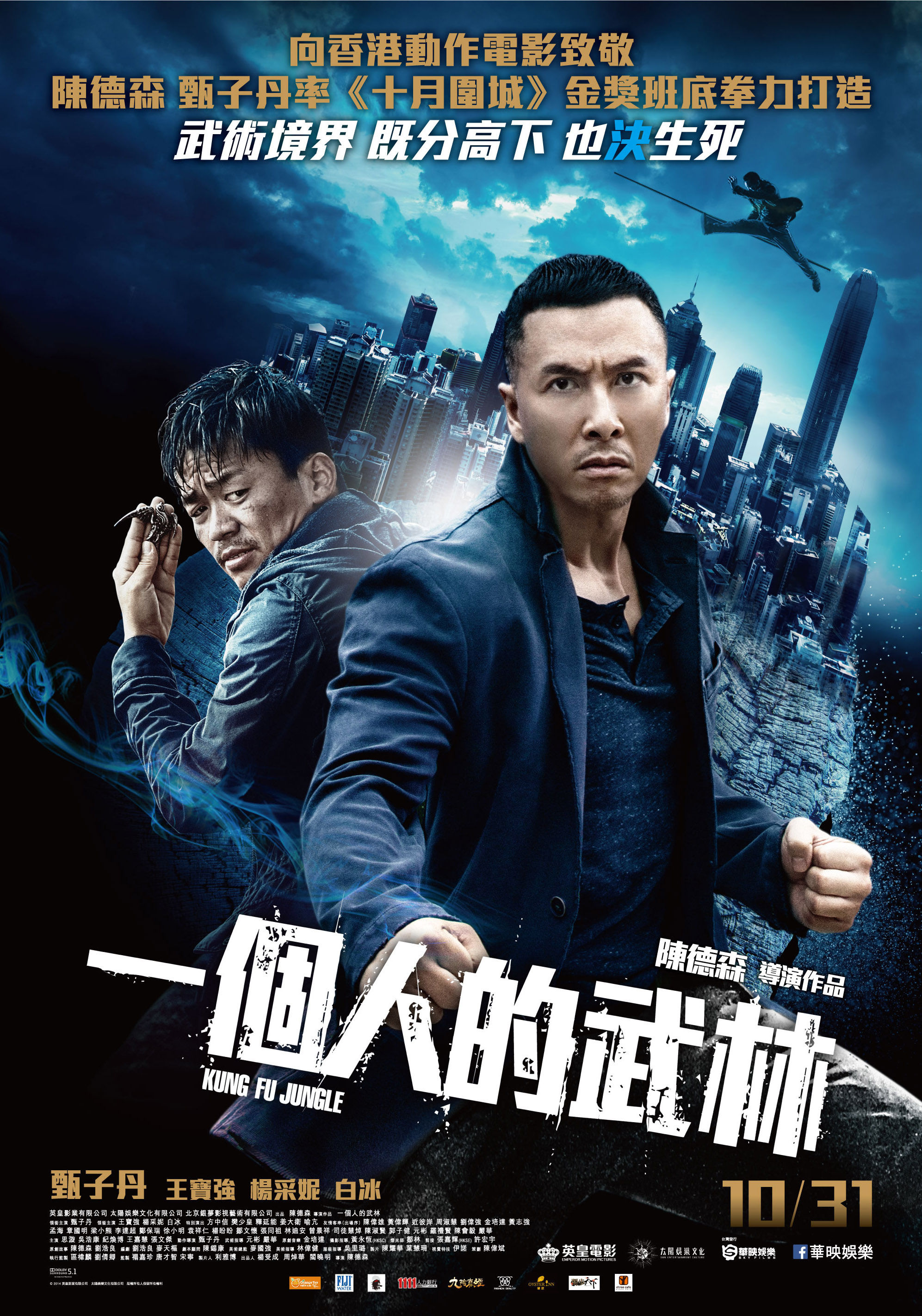
kung fu killerKung fu movies –  they don’t make ‘em like they used to, except when they do. Kung Fu Killer (一個人的武林, AKA Kung Fu Jungle) is equal parts homage and farewell as its ageing star, Donnie Yen, prepares to graduate to the role of master rather than rebellious pupil. What it also is, is a battle for the soul of kung fu. Just how “martial” should a martial art be? Is it, as our antagonist tells us, worthless with no death involved or will our hero prove the spiritual and mental benefits which come with its rigorous training and inner centring transcend its original purpose? Of course most of this is just posturing in the background of a lovingly old fashioned fight fest complete with a non-sensical plot structure motivated by increasingly elaborate set pieces.

Yen plays Hahou Mo, a martial arts master and instructor to the HK police who hands himself in one day covered in blood and confesses to having killed someone. Three years later Hahou is a man of peace, paying for the accidental death of an opponent by patiently waiting out his prison time. However, when he sees a news report about a serial killer with martial arts ability targeting fellow martial artists he goes on a violent rampage trying to get the attention of the police. If they’re going to solve this crime, they’re going to need someone who knows the martial arts world intimately and Hahou spies an opportunity to earn his freedom through helping someone not so unlike himself realise the error of their ways.

In keeping with the genre, its not so much of a whodunnit as a whydunnit and so the crazed murderer is unmasked fairly quickly. Fung Yusau (Wang Baoqiang) is determined to be number one in each and every discipline, taking on the accepted masters and besting them every time, even going to far as to leave a sarcastic trophy on every body. Hahou once shared his ambition, his reckless need to prove his skill is the reason his life has gone the way it has after all, but the two men share fundamentally different beliefs about the nature of their art. Fung Yusau believes martial arts exist for the reason of killing people – fights in which both challengers live are, to him, pointless and incomplete.

Even if Hahou once harboured the same desire to prove his skills superior to all others, his was a more internal quest. For him, at least now, kung fu is a sacred art of self improvement which can be used for self defence but is essentially about learning to live a harmonious life. Having learned from his own misfortune, he knows the folly of being no. 1 – in that it’s an essentially lonely and insecure place to be. Martial arts should be used to kick down walls and build bridges, his desire is to move forward in togetherness teaching people how to be happy rather than working against each other in an unnecessary and artificial kind of competition.

The police need Hahou’s help because the martial arts world is so essentially alien to them. Despite a shared culture, this insular universe is something which they know nothing about and is so dependent on interpersonal knowledge that no degree of wikipediaing is likely to help them understand it. Only by learning from those with direct knowledge and able to guide them through the particular thought processes of the killer will they stand any chance of being able to catch him. However, the strangely alternative nature of the martial arts universe also makes trusting Hahou and the veracity of his information a big ask for hardheaded cops.

Yen wisely cedes most of the action to Wang Baoqiang other than in the early prison riot sequence and final showdown. The fight scenes are innovatively choreographed and always exciting, except perhaps for going overboard with CGI especially during the motorway set finale during which the additional speeding cars become an unwelcome reminder of just how much less is at stake than during the heady Hong Kong heyday of death defying stunts. Still, the relative quality of the action goes a long way to covering for the otherwise under developed story elements.

A nice fusion of the classic and the modern, Kung Fu Killer wears its love on its sleeve with a final credits sequence celebrating the various Hong Kong greats who’ve all contributed to the film in some way even if in more of a spiritual capacity. Necessarily an exercise in genre, Kung Fu Killer makes no claims to breaking new ground or doing anything particularly interesting, but does provide ample scope for a celebration of Hong Kong action cinema as well as the handing of the baton from Yen to Wang as each showcases their respective martial arts prowess.


Original trailer (English Subtitles)