Behind the Shadows (私家偵探, Jonathan Li Tsz-Chun & Chou Man-Yu, 2025)

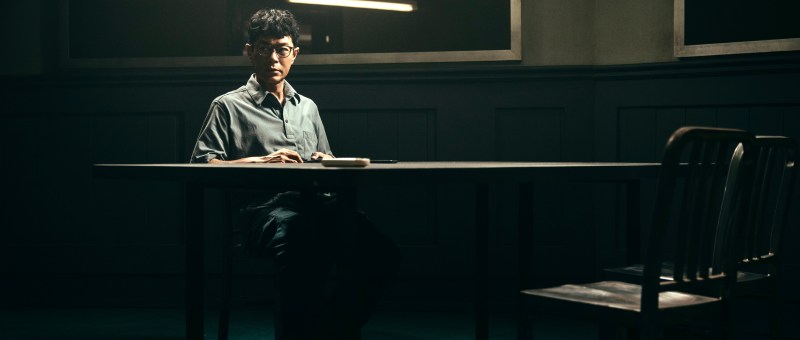
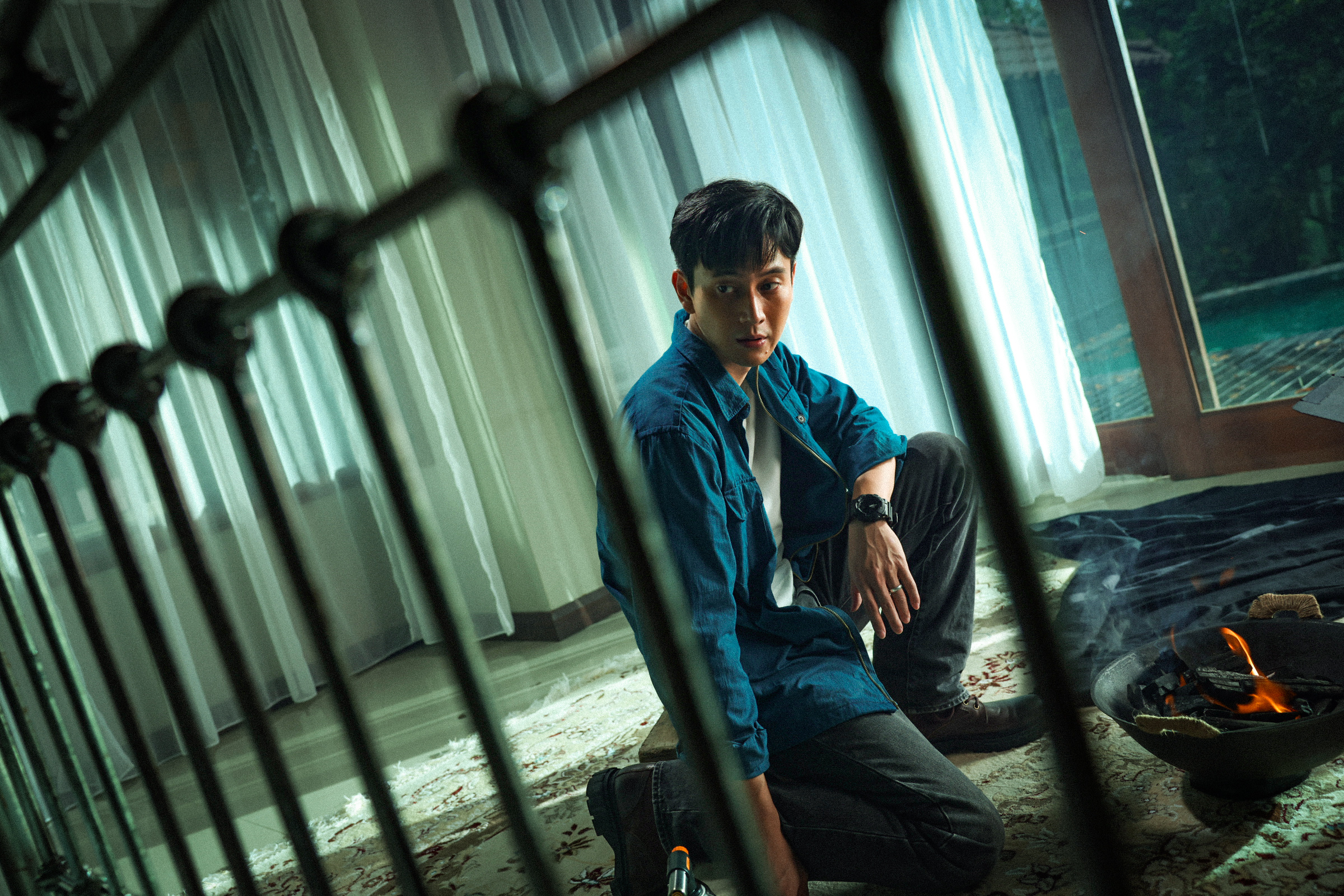
“At our age, we do what we have to do instead of obsessing over the good old days,” according to a put upon wife sick of waiting for her husband to make good on his promises. Jonathan Li Tsz-Chun and Chou Man-Yu’s Malaysia-set drama Behind the Shadows (私家偵探) is in its way as much about the disconnect in modern romance which has now been corrupted by capitalistic desires and frustrated notions of traditional masculinity as its central mystery. 

As someone says, in the old days women hired private detectives to chase their men, but now it’s the other way around. In someways, the parade of men rocking up at Wai-yip’s (Louis Koo Tin-lok) office to hire him to follow their wives, girlfriends, or women with whom they may not actually have much of a connection, all seem to be trying to regain control over their lives by asserting it over a lover they fear has betrayed them. Ironically, this is sort of true of Wai-yip too in that he’s taken to spending his evenings at his friend’s restaurant to escape his moribund marriage. When one customer brings him a photo of his own wife, Kuan (Chrissie Chau Sau-na), little knowing he’s the other man Wai-yip is irate but not as surprised as might be expected. Still, he hands the case off to a junior associate and tries to avoid thinking about it while otherwise passively seething about his wife’s potential betrayal.

But the ironic thing is that Kuan might only have done this to get Wai-yip’s attention and force him to confront their fracturing relationship. While Wai-yip hangs back, tries to act with maturity, and struggles to accept his wife’s decision, she privately wants him to fight back, to shout at her or punch her lover as a sign of manly love. She attacks his masculinity by berating him for being work-shy and refusing to have a child because they can’t afford it, though she can support them all on her salary, while Wai-yip remains hung up on the lost glory of his life in Hong Kong which he gave up to marry Kuan and move to Malaysia. The suggestion is that Wai-yip has been trapped in a kind of limbo, unable to let go of the past and embrace his new life and now Kuan is sick of waiting for him. 

The circumstances of his own marriage and the cynicism of 20 years spent chasing cheating spouses cause Wai-yip to be wary when a man comes and asks him to look for a runaway fiancée. He wonders if they’ve just had a tiff, if she’s left because the man was violent or unfaithful, or if the man is delusional and the woman doesn’t believe herself to be in a relationship with him and so is just happily living her own life. Along with all these anxieties is his sense of responsibility in knowing that this woman may be in danger if he finds her, as will Betty if Wai-yip manages to uncover evidence of her infidelity and relays it back to her gangster boyfriend. Like Kuan, Betty (Renci Yeung Sz-wing) says she just wants a man who will listen to her when she wants to talk and is half-minded to let Wai-yip send the video to find out if the gang boss cares about her enough to actually do anything about it. 

But the consequences of inaction are also brought home to Wai-yip when one of the women he’s following is murdered after he leaves his investigation to chase Kuan and her lover. Trying to makeup for his failure brings him into contact with a zombified cop, Chen (Liu Kuan-ting), whose wife is in a coma after a car accident. While Chen’s solicitous care and repeated pleading that his wife wake up may paint him as a lovelorn man, the marks on her arm that perfectly fit his fingers suggest a violent and controlling past along with a thinly concealed rage that she may have escaped him at last. “There’s nothing much the police can’t do,” he ominously tells Wai-yip while hinting at his desire for authoritarian control as mediated through the patriarchal institution of the police force and his rejection of a woman’s sexual freedom. Wai-yip feels similarly trapped as his own increasing sense of inadequacy deepens the gap between his wife and himself that leaves him unable to have an honest conversation with her about how he really feels and prevents him from healing the rifts within his own marriage even as he chases answers on behalf of other insecure men. What he indeed realises is that it’s time to move on from the past and live in the present, though as it turns out not even he may be strong enough to leave his insecurities behind. 


Behind the Shadows screened as part of this year’s New York Asian Film Festival.

Trailer (Traditional Chinese / English subtitles)

Connected (保持通話, Benny Chan, 2008)

A kidnapped woman’s only hope is a distant stranger in Benny Chan’s intense thriller, Connected (保持通話). Inspired by 2004’s Cellular, Chan shifts the action to contemporary Hong Kong with all of its global anxieties but eventually insists that we are all in a sense connected and have a responsibility to each other in the face of corrupt authorities and an increasingly selfish society. In contrast to other techno thrillers, technology is not threat but cure enabling unlikely alliances and facilitating justice both legal and emotional as the heroes work together yet apart to unscramble the shady threat that follows them. 

Mainlander and top robotics engineer Grace Wong (Barbie Hsu) is having a fairly normal day dropping her daughter Tinker off at school before heading into work only to be blindsided by an oncoming truck and stolen away to a secret location. With no clue what’s going on she realises the landline in the shack where they’re keeping her is still connected but one of the goons smashes it before she can get through to anyone. Using her engineering skills she’s able to rewire the surviving bits but can only make random connections which is how she ends up getting through to conflicted debt collector Bob (Louis Koo) who has problems of his own as his son, raised by his sister after his wife’s death, is supposed to be emigrating to Australia this very day and will forever lose faith in his father for his constant disappointments if he doesn’t make it to the airport by 3pm. 

Bob’s buried goodness is immediately signalled by his discomfort with his job as he watches the more violent members of crew harass and intimidate a lone woman and her crying children in an ironic mirror of his son and Grace’s daughter both also in tears while pulled into the orbit of vicious outside forces. Though originally reluctant, assuming he’s on the receiving hand of a prank call, Bob soon comes to realise that Grace and also her daughter are in real danger and after an early attempt to enlist the police fails he is the only one who can save her. Nevertheless, he is torn between conflicting responsibilities, this one to a stranger and the other to his son who has entirely lost faith in him because of his broken promises and internalised shame over the nature of his job. He finds himself doing quite extraordinary things to keep both promises which further mark him out as a “good person”, such as firing a gun at the floor to get the attention of a bored shop clerk who’d been trolling him but then insisting on paying the full amount for his phone charger and not even stopping for the change. 

Even so, there’s further conflict on the horizon when it turns out the crooks, led by a spooky Mainlander, are carrying Interpol badges leaving a huge question mark about what’s really going on, who the good guys are in this situation and whose side everyone else is on. Unthinkable in the current cinematic climate, the spectre of police corruption raises its ugly head though despite having failed to respond when originally hailed wronged hero cop Fai (Nick Cheung) eventually jumps into action after noticing something suspicious enabling Bob to fulfil his heroic missions and followthrough on his promises. 

Filled dry black humour, Chan’s worldview is tinged with an irony that also makes its way into the extremely elaborate action sequences including a car chase that later plows through an entire truck of Pepsi Max, and a flirtatious boyfriend who swears to protect his lady love for all eternity only to run off at the first sign of danger. Yet there’s also an idealistic faith in human goodness in Bob and Fai’s refusal to back down in the face of injustice, each of them somewhat revitalised in their quests to rescue Grace whose engineering skills made the whole thing possible in the first place along with her determination of save herself and protect her family. It really is all connected, the intricate, slow burn mystery gradually revealing itself thanks to the growing connection between the heroes, each of them strangers but stepping up when needed unable to abandon someone in danger while refusing to allow corrupt authority to treat their homeland with such contempt.


Original trailer (Traditional Chinese / English subtitles)

Sakra (天龍八部之喬峰傳, Donnie Yen & Kam Ka-Wai, 2023)

Donnie Yen returns to the (co-)director’s chair in an adaptation of Jin Yong’s classic wuxia Demi-Gods and Semi-Devils, Sakra (天龍八部之喬峰傳, Tiānlóng Bā Bù zhī Qiáo Fēng Zhuàn). 59-year-old Yen also stars as the tragic wuxia hero Qiao Feng who is repeatedly stated to be around 30, though he also appears in a handful of scenes as Qiao’s father which might help to explain the casting choice. Even so, Yen mostly pulls it off while striking an authoritative figure fighting for justice in an unjust world. 

As the opening titles reveal, this was a fairly tragic age in which “those who had feelings were all caught in it”. The Northern Song Dynasty faces invasion by the Khitan-led Liao, while the Yan are also vying to restore their lost power. Discovered as a foundling and raised by a Song couple, Qiao Feng joins the notorious Beggar Gang and becomes a powerful martial artist often defending their territory against Khitan raiders. After rescuing a young man held captive by a monk who describes him as a human sacrifice, Qiao returns to be accused of treachery by the Beggars. His leader, Ma, has been murdered, and Ma’s wife Min (Grace Wong Kwan-hing) claims she saw Qiao do it. Ma had apparently told her that he feared Qiao would kill him because he had come into an incriminating letter which suggests that Qiao’s biological parents were in fact Khitans and he is some kind of treacherous sleeper agent. 

Qiao realises there’s nothing he can really do to counter their suspicion except leave and discover the truth about his origins for himself. Unfortunately, however, everyone he could have asked ends up dead with him framed as the killer. Meanwhile, he wrestles with questions of identity asking himself if he can be both a “good” person and a “Khitan” but later coming to doubt his allegiance to Song after witnessing some soldiers massacre a group a of Khitan peasants out on the road. While investigating he ends up saving the life of mysterious spy Azhu (Chen Yuqi) who like him is looking for her origins, having been told by Yan warlord Murong Fu (Wu Yue) for whom she is working that he would tell her if she stole a scroll from the Shaolin temple. Azhu is the only one continues to believe in him, reassuring Qiao that regardless of his identity he is still a “good person”, and the pair soon fall in love vowing to leave the martial arts world behind to raise cattle in the country once their respective quests are concluded successfully. 

Even so, he later claims not to fight only for his land but for a righteous world against the amoral machinations of the villainous Murong Fu and all those who conspired with him. The Beggar Gang is not entirely innocent either, subject to a struggle for succession that made Liao’s existence inconvenient to some while Qiao is later confronted by the realities of a situation he may have misunderstood. Qiao may learn the secret of his origins, but is also left with a new mission in the necessity of stopping Yan’s despotic bid to reclaim Song, riding straight into battle with only a loyal companion at his side. 

Though struggling under the sheer complexity of Jin Yong’s sprawling novel, Yen and Kam showcase the key incidents such as the opening rescue of Duan Zhengchun’s son, and Liao’s epic battle against the Beggars after wading straight into a meeting knowing he’d likely be killed but looking for a doctor for Azhu. The action scenes are visceral and impressive, making the most of the movie’s high production values with a mixture of CGI and practical effects as Qiao faces off against hundreds of men at once or makes daring wire-assisted leaps from under a dome of enemy shields. There is also a genuine poignancy in the tragic romance between Azhi and Qiao who just want to be free of their legacies and the machinations of the martial arts world to live quiet lives as innocent farmers but are reminded there is no real escape from the political reality. Having covered half of Liao’s arc in Jin Yong’s text, a door is left open for a sequel in which Qiao continues to pursue justice and clear his name while hinting at a battle still to come in world in which “those who have feelings are all caught”.


Sakra is released in the US on DVD & Blu-ray June 13 courtesy of Well Go USA.

Original trailer (English subtitles)

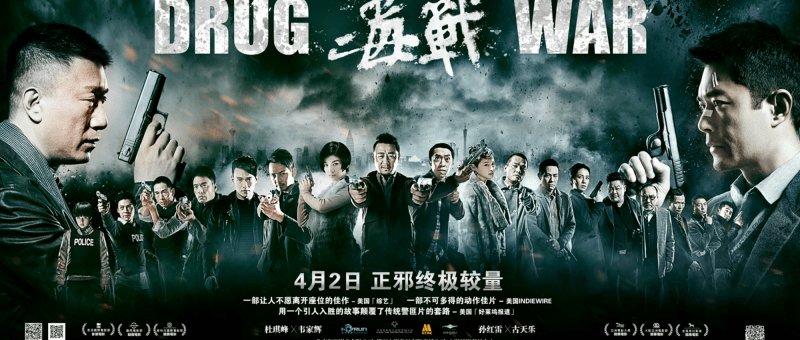
Drug War (毒戰, Johnnie To, 2012)

Drug War posterIn the world of the Hong Kong action flick, the bad guys are often the good guys, and the “good guys” not so good after all. Even crooks have their code and there are rules which cannot be broken ensuring the heroes, even when they’re forced into morally dubious acts, emerge with a degree of nobility in having made a free choice to preserve their honour over their life. In Mainland China, however, things are a little different. The bad guys have to be thoroughly bad and the good guys squeaky clean. You won’t find any dodgy cops or dashing villains in a thriller from the PRC where crime can never, ever, pay. And then, enter Johnnie To who manages to exactly what the censors board asks of him while at the same painting law and chaos as two sides of the same coin, each deluded and obsessed, engaged in an internecine war in which the idea of public safety has been all but forgotten.

The film begins with the conclusion of an undercover operation run by Captain Zhang (Sun Honglei) in which he successfully disrupts a large scale smuggling operation. Meanwhile, meth cook Timmy Choi (Louis Koo) attempts to escape after an explosion kills his wife and her brothers but drives directly into a restaurant and is picked up by the police. Timmy soon wakes up and tries to escape but is eventually recaptured – from inside the chiller cabinet in the morgue in a particularly grim slice of poetic irony. Seeing as drug manufacture carries the death penalty in the PRC, Timmy turns on the charm. He’ll talk, say anything he needs to say, to save his own life. Including giving up his buddies.

Timmy is, however, a cypher. His true intentions are never quite clear – is he really just an opportunist doing whatever it takes to survive, or does he still think he can escape and is engaged in a series of clever schemes designed outsmart the ice cool Zhang? Zhang takes the bait. Eyeing a bigger prize, he lets Timmy take him into the heart of a finely tuned operation even playing the part of loudmouth gangster Haha in a studied performance which reinforces the blankness of his officialdom. Zhang is certain he is in control. He is the law, he is the state, he is the good.

Could he have misread Timmy? Zhang doesn’t think so. Timmy remains calm, watchful. Eventually he leads Zhang to a bigger drug factory staffed by a pair of mute brothers who have immense respect for their boss. Suddenly Timmy’s impassive facade begins to crack as he tells his guys about his wife’s passing but it’s impossible to know if his momentary distress is genuine, a result of mounting adrenaline, or simply part of his plan – he does, after all, need to get the brothers to give themselves away. Unbeknownst to Timmy, however, the brothers are pretty smart and might even be playing their own game.

To pits Hong Konger Timmy against Captain Zhang of the PRC in a game of cat and mouse fuelled by conflicting loyalties and mutual doubts. Whatever he’s up to, Timmy is a no good weasel who is either selling out his guys or merely pretending to so that he can save them (or maybe just save himself and what’s left of his business). Zhang, meanwhile, is a singleminded “justice” machine who absolutely will not stop, ever, until all the drug dealers in China have been eradicated. Yet isn’t all of this destruction a little bit much? Zhang doesn’t really care about the drugs because drug abuse wrecks people’s lives, maybe he doesn’t really care about the law but only about order and control, and what men like Timmy represent is a dangerous anarchy which exists in direct opposition to his conception of the way the world ought to work.

There is a degree of subversive implication in the seemingly overwhelming power of the PRC coupled with its uncompromising rigidity which paradoxically makes it appear weak rather than strong, desperate to maintain an image of control if not the control itself. The final fight takes place in front of a school with a couple of completely non-fazed and very cute little children trapped inside a school bus – Timmy does at least try to keep them calm even while using them as part of his plan, but Zhang and his guys seem to care little for the direction of the stray bullets they are spraying in order to win the internecine battle with the drug dealers and stop Timmy in his tracks once and for all. A pared down, non-stop action juggernaut, Drug War (毒戰, Dú Zhàn) is another beautifully constructed, infinitely wry action farce from To which takes its rather grim sense of humour all the way to the tragically ironic conclusion.


International trailer (English subtitles)

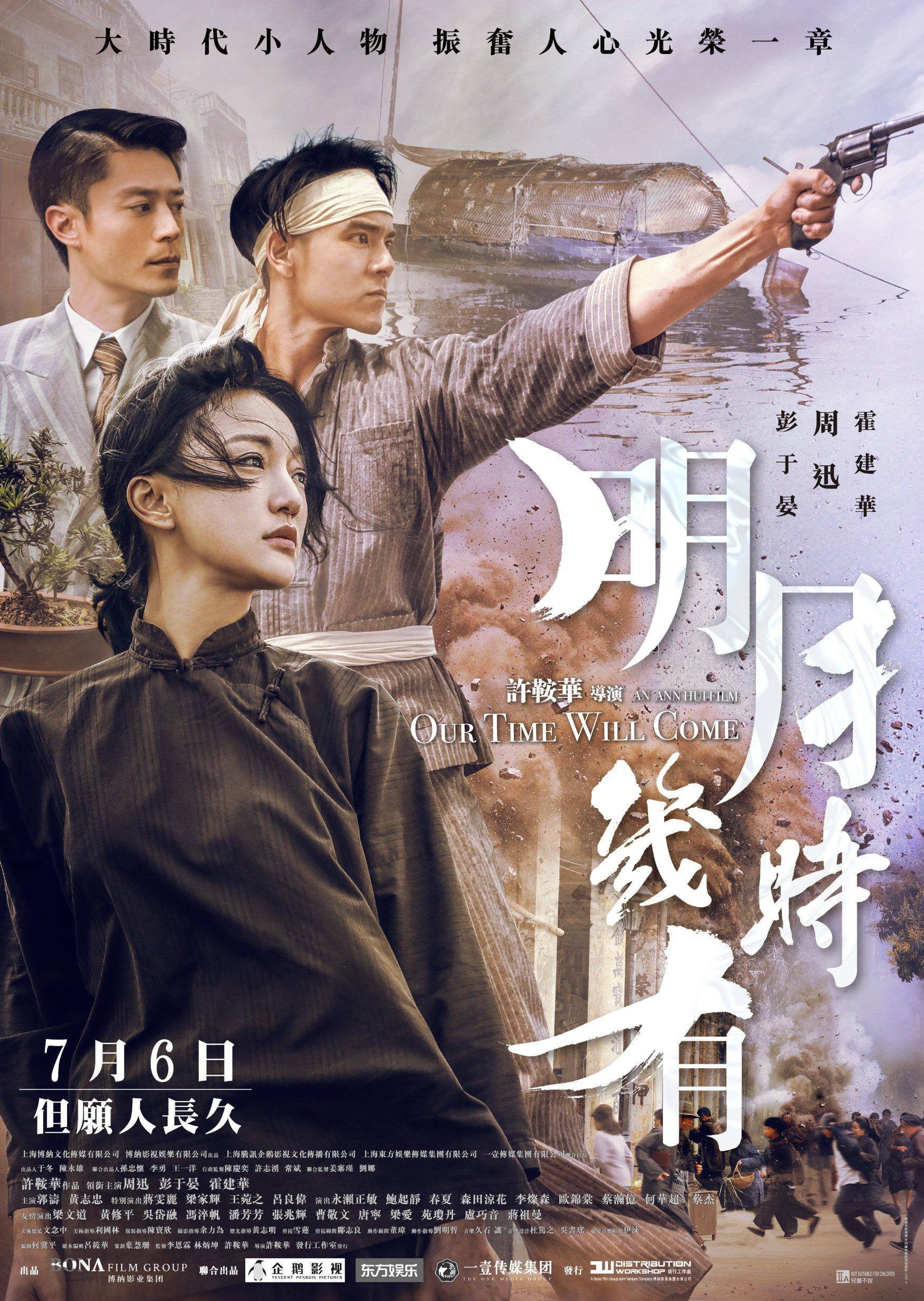
Our Time Will Come (明月幾時有, Ann Hui, 2017)

our time will come posterFor Ann Hui, the personal has always been political, but in the war torn Hong Kong of the mid-1940s, it has never been more true. Our Time Will Come (明月幾時有, Míng Yuè Jǐ Shí Yǒu) was pulled from its opening slot at the Shanghai film festival though it was permitted a screening at a later date. At first glance it might be hard to see what might be objectionable in the story of the resistance movement against the Japanese, but given that this year marks the 20th anniversary of Hong Kong’s handover from British colonial rule to mainland China, there is an obvious subtext. Yet, at heart, Hui’s film is one of resilience and longing in which “see you after the victory” becomes a kind of talisman, both prayer and pleasantry, as the weary warriors prepare for a better future they themselves do not expect to see.

In 1942, school teacher “Miss Fong” Lan (Zhou Xun) lives with her mother (Deanie Ip), a landlady who rents out her upstairs room to none other than Lan’s favourite poet, Mao Dun (Guo Tao). Lan also has a boyfriend, Gam-wing (Wallace Huo), who proposes marriage to her and then announces his intention to leave town. Not really interested in marrying someone who is already leaving her, Lan ends things on a slightly sour note but her refusal is more than just practicality – she wants something more out of life than being an absent man’s wife. Mrs. Fong is an expert in finding out things she isn’t supposed to know (a true landlady skill) and so has figured out that her lodgers are looking to move on. Mao Dun is supposed to make contact with notorious rebel Blackie Lau (Eddie Peng) who will guarantee passage out of Hong Kong for himself and his wife. Unfortunately, he is a little late and a Japanese spy turns up just at the wrong time. Luckily, Lau arrives and solves the problem but a sudden curfew means he can’t complete his mission – which is where Lan comes in. Lau entrusts the group of intellectuals to Lan, instructing her to guide them to a typhoon shelter where another contact will meet them.

This first brush with the business of rebellion provides the kind of excitement Lan has been looking for. Impressed with her handling of the mission, Lau returns and offers Lan a permanent place in his movement as part of a new urban cohort. Her life will be dangerous and difficult, but Lan does not need to think about it for very long. Her mother, ever vigilant, frets and worries, reminding her that this kind of work is “best left to men” but Lan is undeterred. Ironically enough, Lan has never felt more free than when resisting Japanese oppression with its nightly crawls accompanied by noisy drumming looking for the area’s vulnerable young girls. Mrs. Fong blows out the candles and moves away from the windows, but Lan can’t help leaning out for a closer look.

Hui keeps the acts of oppression largely off screen – the late night crawls are heard through the Fongs’ windows with Mrs. Fong’s worried but resigned reaction very much in focus. The schools have been closed and rationing is in full force, but most people are just trying to keep their heads down and survive. The local Japanese commander, Yamaguchi (Masatoshi Nagase), is a figure of conflicted nobility who quotes Japanese poetry and has a rather world weary attitude to his difficult position but when he discovers he’s been betrayed by someone he regarded as a friend, the pain is personal, not political.

Yamaguchi tries and fails to generate an easy camaraderie with his colleague, but the atmosphere among the rebels is noticeably warm. Lan becomes a gifted soldier and strategist but she never loses her humanity – embracing wounded comrades and caring for the children who often carry their messages. When Lan discovers that someone close to her has been captured and is being held by the Japanese she enlists the help of Lau who is willing to do everything he can for her, but coming to the conclusion the mission is impossible Lan’s pain is palpable as she wrestles with the correct strategic decision of leaving her friends behind rather than compromise the entire operation. What exists between Lan and Lau is not exactly a “romance”, the times don’t quite permit it, but a deferred connection between two people with deep respect for each other and a knowledge that their mission is long and their lives short.

Hui bookends the film with a black and white framing sequence in which she also features interviewing survivors of the resistance movement including an elderly version of the young boy, Ben, who is still driving a taxi to get by even at his advanced age. Ben is a symbol of hidden everyday heroes from the pharmacists who treated wounded soldiers, and the old ladies who cooked and provided shelter, to the resistance fighters who risked their lives in more overt ways, who then went back to living ordinary lives “after the victory”. The film’s final images seem to imply that Hong Kong’s time has come, that perhaps the eras of being passed, mute, from one master to another may be nearing an end but the time is not yet at hand, all that remains is to resist.


Screened at the BFI London Film Festival 2017.

International trailer (English subtitles/captions)

The Monkey King (西游記之大鬧天宮, Cheang Pou-soi, 2014)

Monkey King (donnie yen) posterEverybody knows the story of The Monkey King. His “journey to the west” has been reimagined by everyone from Tsai Ming-liang to Akira Toriyama but, all power to them, no one has yet had the courage to stuff Donnie Yen into a monkey suit to fully recreate the legend. Cheang Pou-Soi’s The Monkey King (西游記之大鬧天宮) rectifies this problem but makes up for it by adding a lot more to the already overcrowded arena. Based on a few early chapters of the story, this first of three Monkey King films could best be classified as an origin story as it retells the events which eventually see Sun Wu-kong imprisoned underneath Five Finger Mountain for 500 years.

Basically, a long, long time ago there was a war between gods and demons after which a fragile truce was formed. The demons were defeated and exiled from Heaven which is repaired thanks to the sacrifice of Princess Nuwa (Zhang Zilin) who transforms herself into crystal tears, one of which births a strange divine creature who has a long and arduous journey ahead of him. Emerging from his crystal egg, The Monkey King (Donnie Yen) returns to lead his people before being discovered by a monk who seeks to train him and make sure he remains on the path of the light. Now renamed Sun Wu-kong, The Monkey King finds himself summoned to the heavenly court where he causes a bunch of trouble and becomes swept up in the Demon King’s ongoing plot for revenge.

A super high budget production, The Monkey King is a live action/animation hybrid even beyond that of any recent Chinese fantasy blockbuster. Utilising green screen for the majority of backgrounds, Cheang also adds in a menagerie of strange creatures including supernatural dragons before the final fight develops into a complete CGI fest as a giant cow and super powered monkey duke it out for the rights to define their world. Rendered in 3D the battles are a whirl of brightly coloured mythic action but it’s often a confection too sweet to be to be truly satisfying, backed up only by a very variable quality of animation.

The film’s true standout element is in the surprisingly nuanced performance of Yen who completely becomes The Monkey King right down to his animalistic gestures. This being a family film he’s much more of a recalcitrant fun lover than someone who likes to cause trouble, but nevertheless trouble is usually what you get if The Monkey King pays you a visit. He is, however, hampered by the slightly incongruous obviousness of his monkey suit given the more abstract designs afforded to other characters. Despite the inherent strangeness of his appearance, Yen is afforded the opportunity to do some quality acting alongside killer fight sequences even if he’s often let down by the lacklustre script and production design.

The origin story of The Monkey King is a necessarily long and complicated one but even so, Cheang seems to have decided that coherence is unnecessary when his audience knows the story so well already. Consequently, the potential romance between Son Wu-kong and the fox spirit Ru-xue is inadequately backed up given its importance to the central narrative whereas other characters appear for such little screen time that they almost seem like excuses to add yet another famous name to the poster. Meandering from one episode to another, the film makes little attempt to maintain engagement between its large scale set pieces, becoming over reliant on its parade of well known personages.

Despite the gravitas offered by Chow Yun-fat and the intense villainy of Aaron Kwok’s poisonous antagonist, The Monkey King remains a fairly silly exercise, a visual sugar rush which seems primed to put viewers off their tea whilst leaving them with a slight headache to boot. Playing best to small children and family audiences, The Monkey King’s only selling point is in the surprising (and almost unrecognisable) performance of Yen as its titular hero whose good hearted japes are sure to be appreciated by the young of heart everywhere. The Monkey King will return, but hopefully with a little more maturity as his quest nears its iconic destination, or at least with a little more finesse.


Original trailer (English subtitles)