To Trap a Kidnapper (誘拐報道, Shunya Ito, 1982)

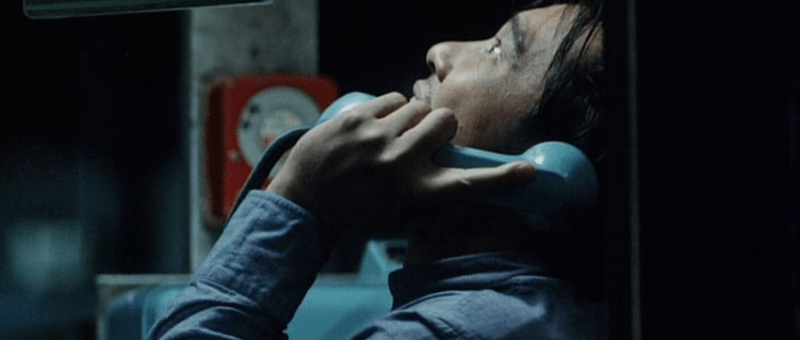
One of a number of films released in the early ’80s critical of the police force, To Trap a Kidnapper (誘拐報道, Yukai Hodo) draws inspiration from a real life case of child abduction but suggests that the police largely just get in the way and are only interested in apprehending the culprit rather than ensuring the boy’s safety. In any case, unlike the similarly themed High and Low, the film devotes most of its focus to the kidnapper’s desperation as a man apparently left behind by the rapidly rising tides of prosperity. 

Yet somewhat perversely the film opens with a scene of children playing and seven-year-old Hideyuki (Motoyoshi Wada) getting into trouble for flicking toy discs at his friend and deskmate Kaori (Kaori Takahashi). Hideyuki is then made to stand on his own in the playground as a punishment, though quickly makes things up to Kaori by gifting her the plastic discs he was playing with. Neither of them know it, but the children share a grim connection for it’s Kaori’s father Kazuo (Kenichi Hagiwara) who is responsible for kidnapping Hideyuki on his way home from school in the next town over.

Both Hideyuki and Kaori attend a prestigious private institution but are being raised in very different circumstances. Kazuo was once a successful cafe owner but was swindled out of his business and is now in massive debt to a shady loanshark named Moriyasu who’s sold his promissory note on to a third party debt collector. Hideyuki’s father, Noboru Mitamura (Fujita Okamoto), is a doctor though there’s nothing that suggests the family is anything more than financially comfortable and they aren’t immediately able to get the money together for the ransom. Noboru has to ring round all his friends, family, and random acquaintances begging for emergency loans but without really being able to explain why he needs the money. Just having seen it noted on a school register that Hideyuki’s dad was medical professional Kazuo assumed they’d be a good target for a kidnapping and is in any case resentful of their nice middle class life. 

His wife, Yoshie (Rumiko Koyanagi), is in turn resentful of Kazuo for their reduced circumstances later lamenting that they moved house, swapped their big car for a smaller one and are even going to rehome their dog but if Kazuo is really so deeply in debt, something he had kept from her, then nothing they do really matters because their lives will never improve. What she can’t understand is why Kazuo was so keen on keeping Kaori in a private school that he’d get himself into financial hell rather than make a more pragmatic decision to let her go somewhere else. The obsession perhaps hints at his class anxiety, wanting his daughter to stay in a more resolutely middle class environment otherwise in strong contrast to the hometown he later visits where his elderly mother operates a loom in a moribund fishing village which the youngsters are slowly leaving for jobs in factories in neighbouring towns. 

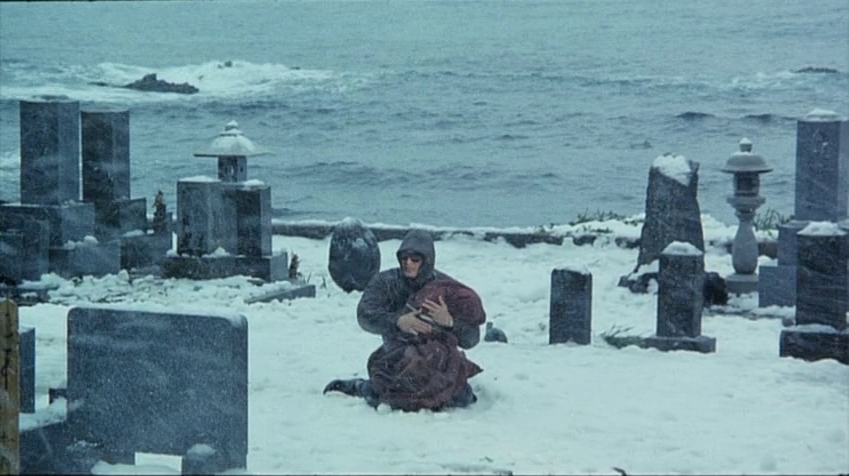
Perhaps in over his head, it at one point looks like Kazuo is about to dump Hideyuki’s body in the sea only to realise police divers are already searching the area. Despite himself, he begins to care for the boy though doesn’t really know what to do with him. He feeds him bread from convenience stores and keeps him tied up in the boot of his car wrapped in several blankets without really considering the possibility that he may die of cold or hypothermia left outside in the freezing winter. Realising the distraught parents have called in the police despite his warnings not to, he is too afraid to accept the ransom and is therefore at something of an impasse given he can’t very well give up the boy without getting the money.

Meanwhile, as the Japanese title implies the tale is alternately told from the perspective of the reporters at Yomiuri Shinbun who are originally quite annoyed by the police’s request for a news blackout to avoid panicking the kidnapper, suggesting it’s an infringement on their free speech if coming around in the acceptance that a child’s life is at stake. A rookie reporter, Kotaro (Shin Takuma) is involved in a dispute with his fiancée Tomo (Miwako Fujitani) who is having second thoughts because he’s always working while her parents are pressuring her to consider an arranged marriage. Kotaro refuses to write one of the dummy articles they’re putting together in the event that Hideyuki is killed describing it as morbid and irresponsible, but is very involved with the ongoing press investigation which simultaneously seems more rigorous than that of the police and accidentally gets in its way. A “suspicious car” that’s noticed outside a drop sport turns out to belong not to the kidnapper but a reporter on a stakeout wasting the police’s time.

Even they are eventually conflicted, the officer in charge on the ground later letting the Mitamuras leave on their own for the final drop empathising with them as a fellow parent and acknowledging the reason everything keeps going wrong is because the police got involved. Yet his boss orders him to follow them anyway, reminding him that the only job of the police is to catch the culprit seemingly indifferent to whether or not they rescue the hostage unharmed. Their tactics are quite naive, not considering that Kazuo will obviously realise that the Mitamuras are surrounded by undercover officers because they keep using the same ones and it’s odd to keep seeing that couple from the coffee shop everywhere they go. The big break in the case happens by accident just because a couple of traffic cops decide to ask a random car a few questions.

In any case, it’s Kaori who ends up suffering. She and her mother are also victims, unfairly hounded by the press and left with nowhere to go and no-one to turn to having had their lives turned upside down by her father’s desperate decision. He didn’t even know the kids were friends or the effect his actions would have on his daughter. Kazuo hadn’t really thought any of this through but acted only in jealousy and resentment, wanting payback against the Mitamuras for their nice middle class life and his own slice of the pie that he felt had been denied to him. In the end, the only winners are the press who can rejoice in selling their newspapers even if a remorseful Kotaro resents himself for taking a paparazzo photo of Yoshie and Kaori trying to leave town quietly. On seeing his article pasted on pillars at the station, even Tomo starts to change her mind reflecting that if he’s working on a story like this then perhaps working too much isn’t such a dealbreaker after all even if everyone seems to have forgotten about little Hideyuki in the headlong rush to dominate the newsstands by trying to lure a kidnapper into their trap.


Original trailer (no subtitles)
The Shootout (凶弾, Toru Murakawa, 1982)

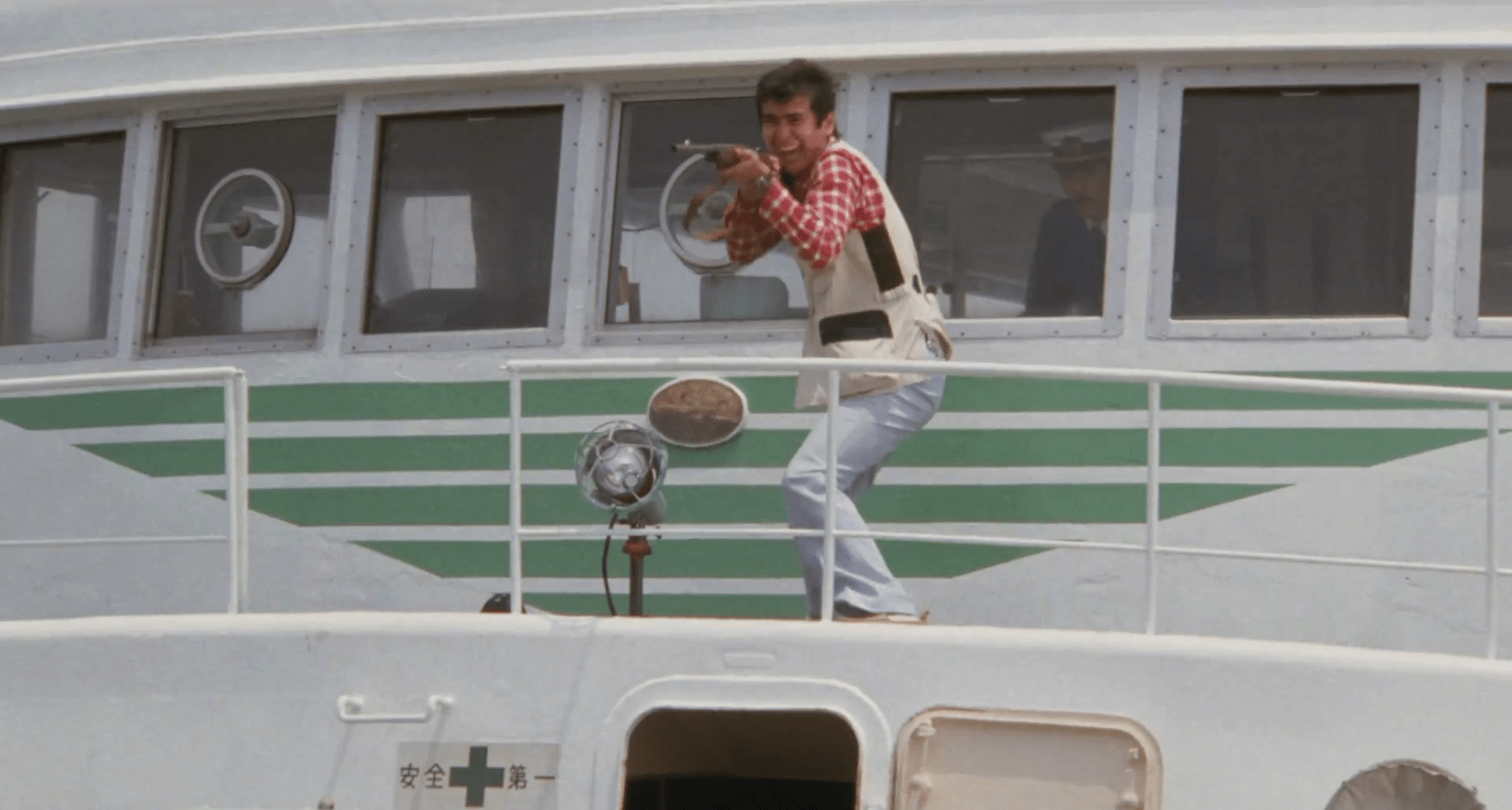
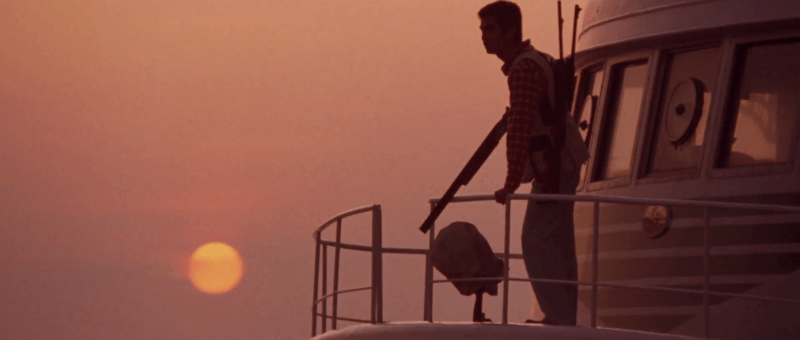
The seishun eiga or youth films of the 1960s often had an ambivalent attitude to rebellious youngsters who for various reasons were not able to accommodate themselves to the times in which they lived, but few were prepared to ask real questions about society’s responsibility towards young people in difficult situations who had often been let down by the same state institutions which only sought to demonise them. Based on a story by Hiroshi Fukuda which was inspired by a real life ferry hijack which outraged the nation when the police opted to shoot the teenage hijacker dead, Toru Murakawa’s The Shootout (凶弾, Kyodan) stars the nephew of 60s youth movie king Yujiro Ishihara and places the blame firmly at the door of the police and other public services whose gradual and needless escalation of events leads only to tragedy. 

Teenagers Hideo (Yoshizumi Ishihara), Numa (Masato Furuoya), and Soichi (Tatsuo Yamada) met in reform school and have become something like brothers. All of them either never knew their parents or lost them young and have developed a healthy distrust of authority thanks to their experiences. As the film opens, the boys run cheerfully through the streets of a small rural town headed to the mountains where they play with a shotgun Hideo inherited from his late father. While driving back the boys pick up a distressed young woman, Hiromi (Mio Takaki), running barefoot through the pouring rain, but soon come to the attention of a pair of bored policemen the older of whom has a definite problem with the “unreliable” youth of the day and all their “sissy” music. They pull car over for speeding which is a problem not only because Soichi has been drinking, but because it is also not his car. He took the neighbour’s when his was taken away and it’s been reported stolen. 

While the younger policeman processes Soichi, the older one decides to kick off after finding the shotgun, banging Hideo’s head against the side of the car and then attacking Numa with a police truncheon when he asks him politely to stop before punching him in the face and kneeing him in the stomach though at this point neither of the boys has made any attempt to resist. Continuing to kick him on the ground, the policeman tells Numa that he should have more respect for his parents which is something of a sore spot because Numa was a foundling raised in the care system. Snapping, Numa hits the policeman over the head with the shotgun leaving him crawling on the muddy ground in danger of drowning while having suffered a serious head injury. 

This is first of many needless escalations that the boys encounter. The policeman was not really interested in serving the law, only in validating his authority and in reality little better than a thug himself. If he had not needlessly inflicted violence on the two young men, which is in itself an act of extreme entitlement given his age and fitness level compared to that of two physically fit teenage boys, none of the succeeding action would have taken place. The boys feel that they are unfairly victimised and are understandably mistrustful of the police because as they say even when they are doing their best to adhere to the rules of mainstream society they are written off as reform school boys not least by the police who have already decided that they are innately bad and must be guilty of whatever it is they are accused. 

The boys find the same thing when they decide to turn themselves in after a few days on the run and go to their social worker for help. The social worker lives in a temple and first seems as if he’s going to help when they explain and ask him to mediate for them with the police who they fear will not listen to the real story, but it soon becomes clear that he only wants to help Hideo who is the grandson of a diplomat and a promising student while foundling Numa is according to him unsalvageable. If only the social worker had been prepared to listen to them, the hijacking would never have happened. All the boys ever ask for is that someone pay attention to their side of things, honestly without prejudice, but all they’re ever told is that the word of a reform school boy is worthless which really begs the question of what the reform school is for in the first place. 

Then again there are a handful of sympathetic officers including one in charge of the original incident who makes it clear to his men that they should not be judging the suspects on their backgrounds while another (Kunie Tanaka) who was responsible for arresting Hideo when he killed his sister’s no good violent boyfriend during a fight reflects that he had beautiful eyes for a murderer and has come to question the nature of contemporary policing feeling perhaps that boys like these deserve help rather than punishment. The only person who does make an effort to listen is the fatherly captain of the ferry which Hideo ends up hijacking (Tomisaburo Wakayama) who seems to be getting through to him only to have his progress undermined by the police who again only want to preserve their own authority. 

Comparing the ferryjacking to the 1972 Munich terrorist attack, which seems rather hyperbolic even though the situation is obviously dangerous given the hostage taker is an emotionally volatile teenage boy with at this point two powerful firearms, the police and Coast Guard determine that killing him is likely the only solution. Obviously never having studied much about hostage negotiation, they surround the boat when it stops to refuel pushing Hideo further into a corner and increasing the likelihood that he may end up feeling out of options and decide to take everyone else with him when he goes. From the police’s point of view, perhaps that adds an extra justification to their clear determination to kill when the implication is that to them boys like Hideo are just a threat to be neutralised, another powder keg reform school boy who would have caused trouble eventually. 

That the public do not agree with the police’s actions perhaps says something about contemporary social attitudes, that in general people do not want to live under such rigid authoritarianism and could see that Hideo was merely a frightened boy who could have been talked down if again someone, other than the captain who did his best to save him, had been prepared to listen rather than once again needlessly escalating the situation to preserve the image of police authority. On the flip side, we’re also shown that the shooting has an adverse effect on the remorseful police sniper who is also at a moment of emotional strain caring for a wife dying of a brain tumour at only 25. Reminiscent of Rebel Without a Cause, The Shootout like its heroes has a healthy distrust of authority figures but also a small faith in the wider public while asking serious questions about the way society treats those who are often the most in need of care and protection. 


Erica 38 (エリカ38, Yuichi Hibi, 2019)

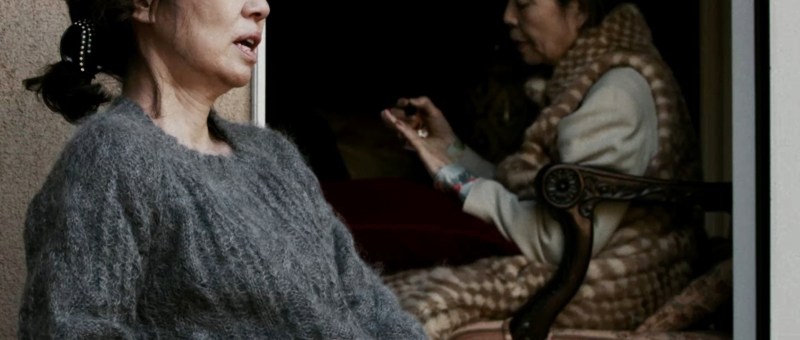
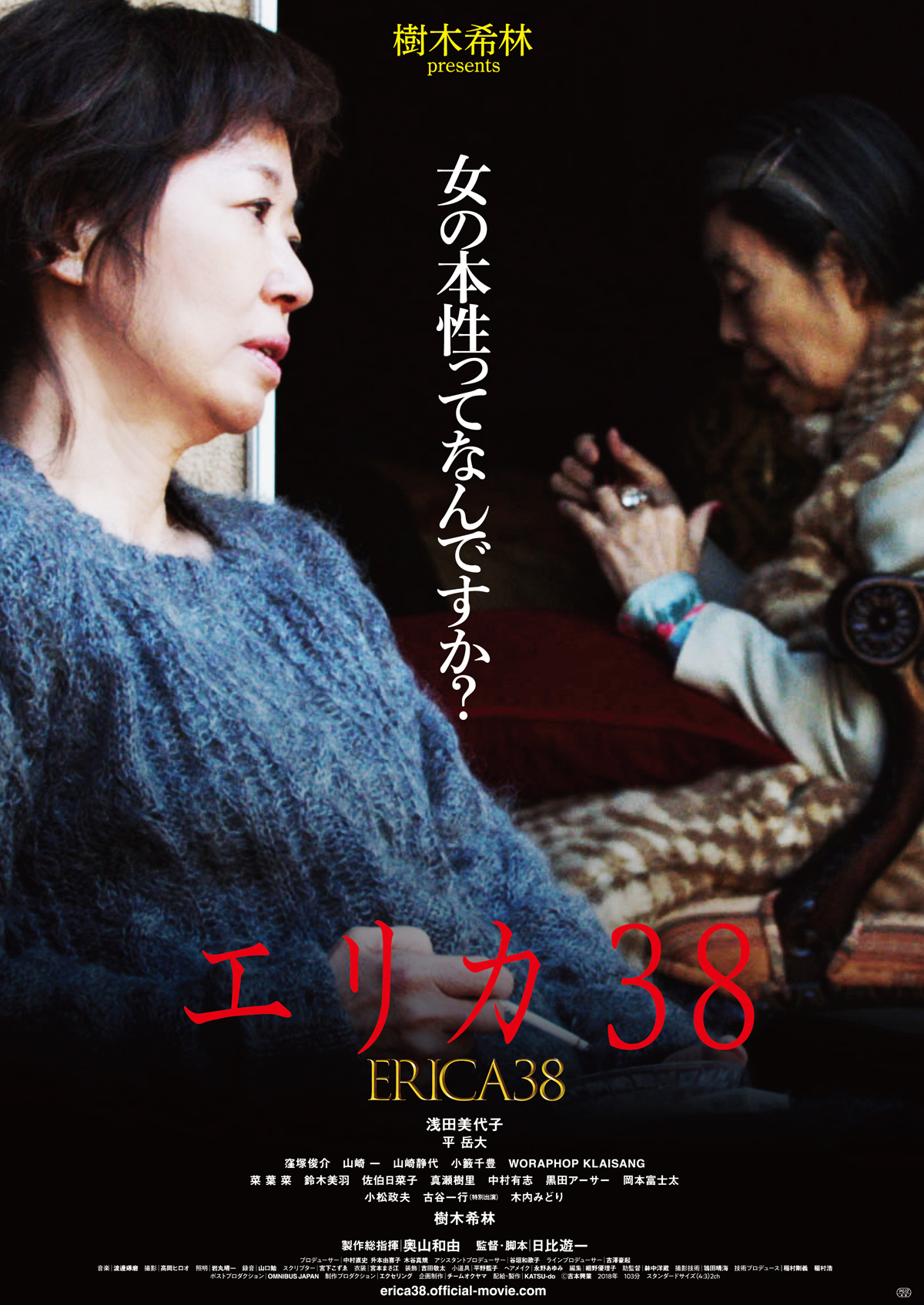
Erica 38 poster“Everybody’s life is in someway unfulfilling”, admits the philosophical victim of a con woman in ripped from the headlines tale Erica 38 (エリカ38). “It’s like a crutch” he adds, without a little fantasy you can’t go on. Like the “Erica” of the title, her victims are also looking for escape from an unsatisfying reality, and unfortunately for them already have what she feels would make her life more bearable – vast wealth. Returning to Japan after three decades abroad, director Yuichi Hibi does his best to humanise the figure of the coldhearted grifter, painting her as just another disappointed, lonely old woman desperately trying to recapture the sense of possibility so cruelly denied her in youth.

Later rebranding herself as “Erica”, a 38-year-old woman of means, our “heroine” is Satoko Watanabe (Miyoko Asada), an ageing bar hostess supplementing her income by peddling a dodgy multi-vitamin pyramid scheme to bored housewives eager to make a few extra bucks. Her sales pitch, however, gets her noticed by a refined old woman sitting close by in an upscale hotel during in one of her sessions. The woman, Mrs. Ito (Midori Kiuchi), introduces her to a “friend”, Hirasawa (Takehiro Hira), who cuts in with a sales pitch of his own in branding himself as a paid up member of the global elite who works with the Pentagon on important international matters. Hirasawa heavily implies his business is not quite on the level, but Satoko, captivated by his suave sophistication, fails to realise just how dodgy he really is. Before long, she’s joined him in his “consultation” business, selling fraudulent investment opportunities in the emerging market of Cambodia.

It is surprisingly easy to sympathise with the dejected Satoko as she falls under Hirasawa’s spell. Already well into her 50s when the film begins and clearly over 60 when she rebrands herself as the 38-year-old Erica, Satoko has led an unhappy life beginning with a traumatic childhood lived in the shadow of an abusive, adulterous father. The only memory of joy from her youth is when she and her mother (Kirin Kiki) giggled together after accidentally tipping rat poison into dad’s miso soup. Life since then, it seems, has been one disappointment after another spent in the hostess bars of Kabukicho. What all of that means, however, is that she’s become skilled in the art of selling fantasy. All that time invested in extracting cold hard cash from lonely men has set her in good stead for selling unrealistic investment opportunities to the already comfortably off.

Unrepentant, Satoko tells herself that she bears no responsibility towards those who lost money in her scams because they were chasing exactly the same thing she was – escape, and they both found it at least for a moment. Her victims made the decision themselves, she never forced anyone, and so it’s their own fault that they fell for her patter while she perhaps laments only that she’s been foolish and profligate in not planning better for the eventual implosion of all her schemes.

“There’s a thin line between real and fake”, she tells a party guest admiring one of her paintings, “if someone sees it as real then real it is”. Satoko’s cons are, in essence, an extension of the paradox of the hostess business. Anyone with an ounce of sense would have seen that the business isn’t legitimate, but like a salaryman in a hostess bar they invest in the semblance of connection while knowing in a sense that isn’t “real”. Ironically enough, Satoko is forced to realise that the first victim of her subterfuge is herself. Chasing a dream of love, she fell hard for Hirasawa without thinking him through. Hirasawa succeeds in his schemes because he’s scrupulously careful in maintaining his persona – he operates out of hotels, has no fixed address, and uses several cellphones. As Satoko later finds out, he is effectively running a harem, romancing several women all like herself bringing in the big bucks while he sits back relatively risk free. She has been used, once again.

The implosion of her dream of romantic escape is what sends her to Thailand where she ponders a reset, rebranding herself as the 38-year-old Erica of the title and beginning an affair with a young and handsome Thai man she rescued from gangsters with her ill-gotten gains. Porche (Woraphop Klaisang) later describes her as “My Angel”, of course realising that she was much older than she claimed but claiming not to care. It may be that he really did love her, but you can’t ignore the corruption of all that money and the power that it buys. In the end, money can’t buy you love, or a path out of loneliness, or a cure for disappointment.

Satoko was, like many, just another lonely, disappointed old lady trying to escape an unsatisfying present through a fantasy of returning to the past, rebooting herself as a successful business woman, loved and in love, as someone with a brighter future to look forward to. Her sales patter worked because it was “true”, the similarly dejected could sense in her the desperation for escape and as they wanted to escape too they let her take them with her. A melancholy tale of delusion and disillusionment, Erica 38 has immense sympathy for the scammer and the scammed painting them both as victims of an often unfair, conformist society in which freedom is the rarest commodity of them all.


Erica 38 screens in New York on July 25 as part of Japan Cuts 2019.

Original trailer (English subtitles)

What a Wonderful Family! (家族はつらいよ, Yoji Yamada, 2016)

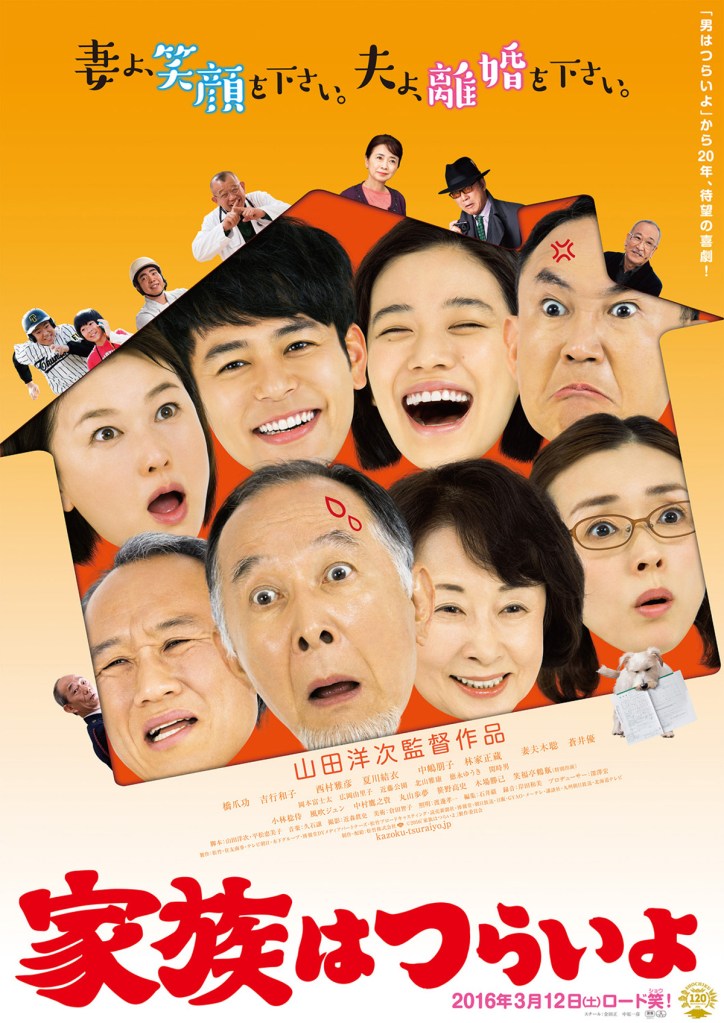
what-a-wonderful-familyProlific as he is, veteran director Yoji Yamada (or perhaps his frequent screenwriter in recent years Emiko Hiramatsu) clearly takes pleasure in selecting film titles but What a Wonderful Family! (家族はつらいよ, Kazoku wa Tsurai yo) takes things one step further by referencing Yamada’s own long running film series Otoko wa Tsurai yo (better known as Tora-san). Stepping back into the realms of comedy, Yamada brings a little of that Tora-san warmth with him for a wry look at the contemporary Japanese family with all of its classic and universal aspects both good and bad even as it finds itself undergoing number of social changes.

Once upon a time it was normal for the entire family clan to live together, sons bring their wives to their father’s house, become fathers and then grandfathers themselves passing the property on their eldest when they go. After the war everything changed, the return to prosperity brought about a greater need for mobility as well as increasing desire for privacy and individual freedom which saw the domestic environment shrinking.

The Hiratas still live the old way with “difficult” family patriarch Shuzo (Isao Hashizume) nominally in the lead but spending his retirement in the local bar flirting with the mama-san, Kayo (Jun Fubuki), who is gracious, but extremely skilled in her work which often involves deflecting the attentions of the clientele. His long suffering wife, Tomiko (Kazuko Yoshiyuki), eases her boredom with classes at the local community centre while the wife of eldest son Konosuke (Masahiko Nishimura), Fumie (Yui Natsukawa), has taken taken over the running of the household whilst also taking care of her two sons. The house is also still home to sensitive youngest son Shota (Satoshi Tsumabuki), and a point of refuge for daughter Shigeko (Tomoko Nakajima), during her inevitable fights with mild mannered husband Taizo (Shozo Hayashiya).

When Shuzo can’t really be bothered with his wife’s birthday, he asks her what she’d like as a present – as long as it’s not too expensive, he’s not made of money after all. That’s no problem she says, what I want only costs 450 yen. Shuzo’s confusion gives way to shock as he realises the bit of paper he’s just been handed is a petition for divorce….

Tomiko’s reasoning is sound, the position she’s been occupying for the last forty years is, effectively, a job. Now that the children are grown and another woman has taken over the domestic responsibilities, Tomiko wants to retire and enjoy some well earned freedom at last. The decision sends the entire family into a spiralling existential crisis as they contemplate this unexpected development and what it could mean for their previously ordinary way of life.

It would be nice to think men like Shuzo are a dying breed, so gruff and aggressive that his own daughter-in-law almost hangs up on him thinking he’s an “ore ore” scammer. Having worked hard for his family throughout his life, he feels a tremendous sense of entitlement in playing the king of his own domain. Tomiko, by side all these years putting up with his rudeness, selfishness, and inconsiderate behaviour is thoroughly sick of being taken for granted and unfavourably compared to a bar hostess whose job it is to stroke her husband’s ego.

More challenges to the domestic set up occur when youngest son Shota, still living at home into his 30s, decides to move out and get married. The polar opposite of his brash father, Shota has often been the mediator between different family factions which might well have gone to war and destroyed the household long before now were it not for his calming influence. A marriage would usually be a cause for celebration but Shota has picked exactly the wrong time to introduce his lovely new fiancée, Noriko (Yu Aoi), to the family right in the middle of this extended moment of crisis.

Divorce is still a taboo subject in Japan carrying its own degree of stigma whatever the circumstances which makes Tomiko’s sudden bid for individualistic freedom all the more difficult to understand for her family. This is thrown into sharp relief when Tomiko begins enquiring about Noriko’s family background and discovers she is actually the child of divorced parents only to have a momentary flash of distaste or perhaps mild disapproval before getting over it and trying to make her son’s future wife feel welcome even in this quite tense domestic environment. Disconnected from her own family, being suddenly thrown into the deep end with the boisterous and perhaps too closely involved Hiratas might be a little overwhelming for Hirata-in-waiting Noriko but luckily she takes to it well enough and perhaps finds the liberated frustrations of the large family unit a warm rather than intimidating experience.

It is, indeed, hard being a family. Total honesty is neither possible nor advisable and harmony is largely born of mutual compromise but the essential thing is understanding – both of everyone else’s feelings and of everyone’s unique places within the familial system. Like any good Japanese family drama things have to change so that everything can stay the same, and there’s a poignant moment towards the end where we observe the large number of vacant family homes in the neighbourhood where the elderly owners have either died or moved into residential care facilities while their children and grandchildren founded homes of their own. At the end of the day all anyone wants is a degree recognition as an individual rather than as an embodiment of a concept and if certain people are able to swallow their pride, there might still be hope for the old ways yet.


HK Trailer (English/Traditional Chinese subtitles)