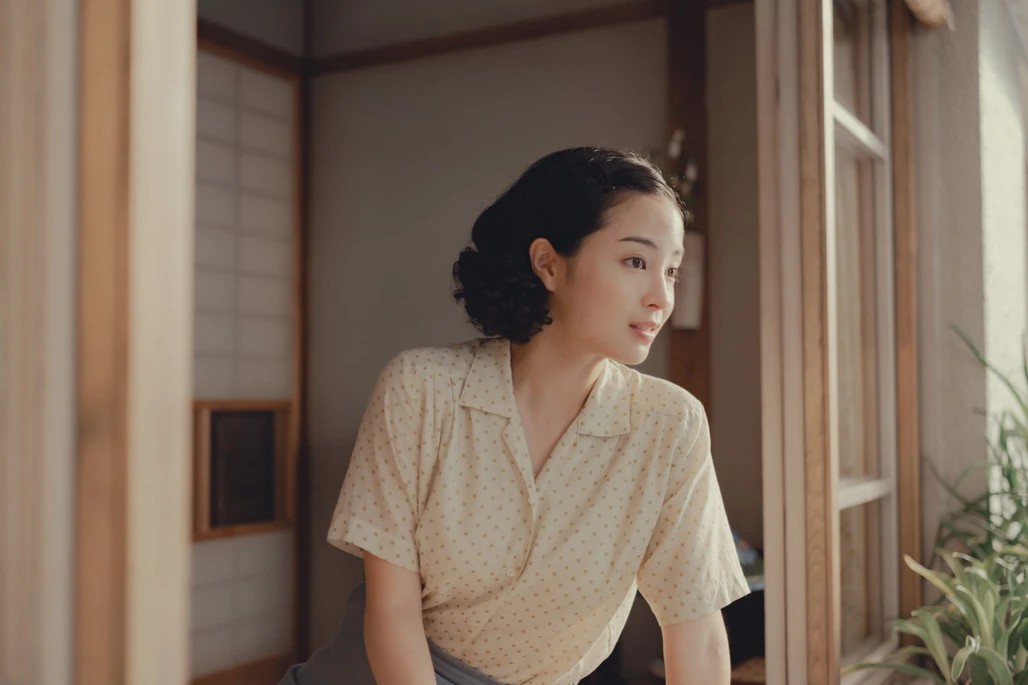
A Pale View of Hills (遠い山なみの光, Kei Ishikawa, 2025)

A young woman returns home at a moment of crisis, but finds herself with only more questions in an attempt to understand her mother and her decision to leave Nagasaki for the UK 30 years previously in Kei Ishikawa’s adaptation of Kazuo Ishiguro’s debut novel, A Pale View of Hills (遠い山なみの光, Toi yama-nami no Hikari). Set alternately in 1952 and 1982, the film positions the Greenham Common anti-nuclear protests as a point of connection between the two nations and the reason that Niki (Camilla Aiko) is currently so interested in her mother’s story seeing as there’s increased interest surrounding the atomic bomb, even if her editor keeps asking her about “Hiroshima”.

Another reason for Niki’s sudden return is that the editor is a married man Niki has been having an affair with. It seems she’s made a significant investment in the relationship by dropping out of university to work as a reporter, but despite saying he would, he has not left his wife and Niki suspects she may now be pregnant. All of which encourages her to investigate the relationship she has with her mother, Etsuko (Yo Yoshida / Suzu Hirose), and her late sister Keiko with whom she did not seem to get on, through tracing back her Japanese roots and trying to understand her familial history.

But what Etsuko, who is abruptly selling the family home, tells her is confusing and indistinct. Much of Etsuko’s story doesn’t line up, and we understand in part why later, but it seems almost as if the lacunas and contradictions are intentional and designed to hint at the ways we paper over cracks in our identities or create new mythologies for ourselves in an attempt to escape the traumatic past. Etsuko found a more literal escape in coming to the UK, but there’s something a little poignant about the way she says she thought there’d be more opportunities here and that Keiko would have had the chance to be anything she wanted which Japan would have denied her. Later she suggests that she always knew the UK wouldn’t be good for Keiko, but she came anyway. 

Now she’s selling the house, literally unpacking the past, Etsuko has begun dreaming about a woman she knew, Sachiko (Fumi Nikaido), and her daughter, Mariko, who lived near her in Nagasaki when she was pregnant with Keiko. Whereas Etsuko and her salaryman husband Jiro (Kohei Matsushita) live in a flat on a “danchi”, aspirational post-war housing estates for young families, Sachiko lives in a rundown shack across the way where the neighbours gossip about her for entertaining American soldiers who are still in the country post-Occupation because of the Korean War which is also what’s fuelling the economic recovery. Sachiko has met a man called Frank who says he’ll take her to America, but she doesn’t really believe him. 

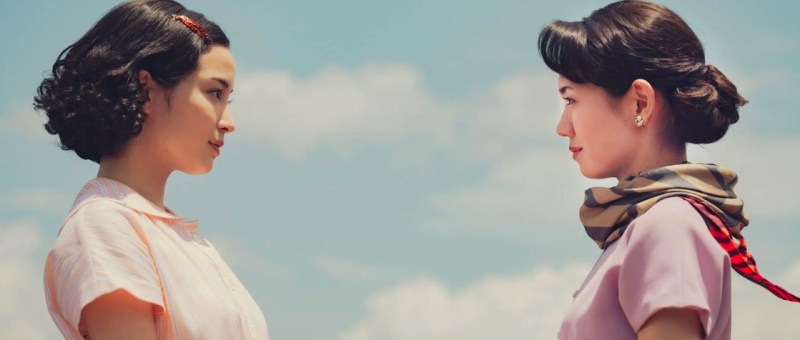
On the one level, it seems that Etsuko and Sachiko are mirror images of each other yet they are in other ways alike, while their stories share several details in common. What unites them is that they both experienced the aftermath of the bomb, though Etsuko has been careful not to disclose the extent of her exposure and is now fearful of what effect it may have on the baby along with on her relationship with her husband who appears to share some of the prevailing social prejudice against those who were exposed to radiation. Jiro, meanwhile, is a distant workaholic who criticises Etsuko for not being more “motherly” and sees her as little more than a domestic servant. He has a damaged hand from his wartime service that seems to reflect his wounds, but still rolls in drunk occasionally singing war songs with his inconsiderate friends. 

When his father, Ogata (Tomokazu Miura), announces he’s coming to stay with them, Jiro is pleased to see him but rebuffs his request that he talk to an old school friend, Matsuda (Daichi Watanabe), about an article he published claiming that it’s a good thing that teachers like Ogata were let go after the war. Ogata evidently feels hard done by, but it’s also true that the cause of his son’s animosity towards him is that he was a card-carrying militarist who cheered when he left for the front and indoctrinated children with imperialist ideology in his job as a teacher. He is the past Japan must move on from, and a representative of the wartime generation by which the young of today feel betrayed. As Matsuda tells him, it’s a new dawn. Ogata has to change, and so does everyone else including Etsuko who may not be as happy in her marriage as others might assume and may well be seeking other paths towards self-fulfilment rather than allow herself to become another miserable, self-sacrificing housewife.

Even so, the contradictory message seems to be that perhaps you can’t actually move on from this past and Keiko, in particular, may have been changed by her exposure not to the bomb but it’s aftermath, the terrible things she heard and saw amid the wreckage and the stigma she faced afterwards. The artificiality of the Japanese sets might speak to the slipperiness of Etsuko’s memory, as if she were observing a film of herself rather than recalling real events or else reimagining them differently so they play out a little more cinematically, in comparison to the concrete reality of the Sussex bungalow which perfectly captures a lived-in Britishness of the early 1980s. In many ways, Niki might not have clarified very much at all, or perhaps begun to accept the idea that not knowing doesn’t matter in coming to understanding of her relationship with her mother and along with it of herself as she too decides it’s time for change.


A Pale View of Hills screens 16/18th October as part of this year’s BFI London Film Festival.

Trailer (English subtitles)

The Moon (月, Yuya Ishii, 2023)

If you can judge a society by the way it cares for its most vulnerable, then at least according to Yuya Ishii’s The Moon (月, Tsuki), adapted from the novel by Yo Hemmi, Japan is not doing very well. Inspired by a real life incident in which a disaffected young man went on a rampage murdering patients at a facility for the disabled claiming they were a drain on national resources, the film probes into some dark areas of the human psyche asking what people really think deep down and who we do and don’t see as being human just like us.

Blocked writer Yoko (Rie Miyazawa) only takes the job at a care facility because her literary career has stalled and her husband (Joe Odagiri) is out of work. Each of them is still reeling from the death of their three-year-old son who was born with a heart defect and suffered brain damage during an operation that meant he never spoke and was fed through a feeding tube. Working at the care facility brings up painful memories and directly confronts Yoko with realities of her son’s life and death while she later discovers that she is pregnant again and isn’t sure whether or not to have the baby fearing it may have the same condition and knowing that as a woman over 40 there is an increased chance she may give birth to a child who has complex needs.

In many ways it’s Yoko’s own reaction to her pregnancy which underlines the film, the lunar imagery intensely linked with that of her ultrasounds while she reckons with her own feeling of perhaps not wanting to bear an “abnormal” child, as someone puts it. Of course, this very personal sentiment is informed by the loss of her son and the experience of living and caring for him for the three years he was alive, but it also informs her perspective on the care, or lack of it, sees at the facility where patients are sometimes confined to their rooms indefinitely, left covered in their own excrement, or allowed to harm themselves through lack of stimulation. Like Yoko most of the other orderlies seem to have no medical training and two in particular mistreat the people in their care for their own amusement. On witnessing an orderly strike a patient for no reason while frogmarching him back to his room, she asks him if that’s really okay but he just replies that okay or not it’s the way they do things here. She tries to take her concerns to the facility’s director, but he basically tells her the same thing and even threatens her employment if she continues to make a fuss. 

Yoko closely identifies with another woman who happened to be born on exactly the same day she was yet has been confined to bed for 10 years and is assumed to be unable to communicate. According to another orderly, also called Yoko (Fumi Nikaido), Ki-chan could walk and was partially sighted when she arrived but someone decided that it would be easier to care for her if she stayed in her room so now her muscles are too wasted to walk while they also covered up her windows because they thought dim lighting would keep her more docile. Essentially, they further disabled her for their own convenience and concluded that because she could not communicate with them in a way they considered usual that she had nothing to communicate. It doesn’t seem to occur to them that biting the other Yoko’s arm, for instance, is also communication as are some of the behaviours exhibited by the other patients which the orderlies respond to with force or violence.

Shoko, the girlfriend of another orderly Sato (Hayato Isomura), is deaf and remarks to the other Yoko that she doesn’t need to hear to be able to understand yet a value judgement seems to have been placed on these people’s lives based solely on their ability to communicate through conventional means. Yoko is accused of romanticising notions of disability, while many people may outwardly say they believe those with physical or intellectual disabilities are equal to themselves and deserve the same levels of respect and dignity they are also unwilling to deal directly with the unpleasant side of their care such as cleaning up bodily fluids which may have strong and penetrating odours. Both the other Yoko, who has literary aspirations of her own, and Sato make frequent reference the stench of reality, something which often left out or not spoken of. The other Yoko accuses Yoko of leaving the smell of decay out of her award-winning book on the Great Kanto Earthquake of 1923 which she later reveals was something urged by her editor who instructed her to soften the edges to create a story that readers would find uplifting and inspirational.

One of the unpleasant things glossed over about 1923 earthquake was the pogrom against Koreans which took place in its wake, something that is tacitly referenced during the attack on the care facility as the killer determines to ask each of the victims if they have a soul despite having already decided that those who cannot speak do not. During the pogrom, those suspected of being Korean were often asked to pronounce certain words to see if they had a Korean accent, only many people from other areas of Japan also pronounce them in the same way so the test proved nothing. The killer wants to see themselves as “normal”, that their way of thinking is just the same as everyone else’s only they don’t have the courage to speak and that their course of action is one most people tacitly support because they also do not believe that the people at the care facility are human or that they have a soul.

Raising her concerns, Yoko has a long philosophical conversation with Sato which doubles as a self-interrogation while it is also in some senses true that the people at the care facility are each refractions of herself. In any case, the conditions and contradictions of the facility appear to place a strain on the mental health of those who work there who are encouraged to simply get used to the way the system works rather than attempt to change it. Sato complains that he struggles to discern dream from reality, while reality itself is often distorted by a lack of desire to talk about anything that might be unpleasant or inconvenient.

Even a discussion that might have been unpleasant or inconvenient to have is interrupted in the closing moments, though the most important things are indeed said while Yoko and her husband are able to sit face to face and begin rebuilding their relationship in the wake of the loss of their son. Ishii conjures an atmosphere of true dread as events slowly creep towards an inevitable conclusion, but also peppers Yoko’s life with small moments of joy if underscored by a searing horror that many are prepared to unsee until brought to a violent confrontation with the contradictions and hypocrisies that dwell deep within their own hearts.


The Moon screened as part of this year’s Camera Japan.

Trailer (English subtitles)
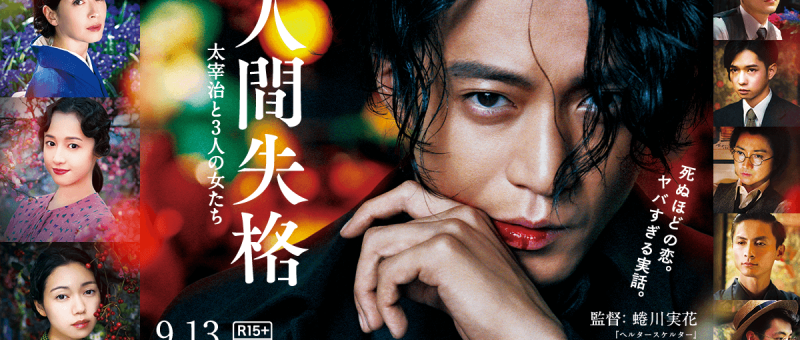
Fly Me To The Saitama -FROM BIWA LAKE WITH LOVE- (翔んで埼玉 ~琵琶湖より愛をこめて~, Hideki Takeuchi, 2023)

The Saitamafication of Japan continues in the long-awaited sequel to the hit 2019 comedy Fly Me to the Saitama. Though the visa system has been abolished and the citizens of Saitama are new free to enter the capital, that does not mean to say everyone is on the same page and the prefecture still faces internal divisions and increasing factionalism. Revolutionary Rei (Gackt) proposes a solution which involves connecting the series of train lines to make it easier to get around and building a beach resort to lesson their sense of inferiority over having no access to the sea.

Once again it has to be said that humour is very local and largely built around regional stereotypes, though it is perhaps curious that the ordinary citizens are often seen in clothing reminiscent of the 1930s something which is also echoed in scenes of trains arriving at stations greeted by crowds of well-wishers seeing soldiers off to war. This may in a sense echo the film’s central theme in the encroachment of Osaka imperialism in which Japan’s second city has launched a not so secret campaign to Osakify the rest of the nation, if not the world, using white powder manifesting as sand from Koshien Baseball Stadium which is a holy place to many as it is where the high school baseball championship takes place. 

They have a visa system in Osaka too, or more strictly the Kansai area, with Kyoto and Kobe apparently in on the plot and intent on looking down on suburban areas such as Wakayama and Shiga which is where Rei was planning on getting his sand. Shiga is set up as a the Saitama of the south west, a pleasant if dull sort of place with a lake its only claim to fame. Like Saitama it has a liberation front, led by Kikyo (Anne Watanabe) who known as the Oscar of Shiga because she went to France to study revolutions and is is dressed like Oscar from the Rose of Versailles. 

The citizens of Kyoto come in for a bit of a kicking for their stereotypically snobbish attitude, the natural politeness of the local dialect undone by a social gadget that reveals what they’re “really” thinking which is that their definition of Kyoite is very narrow. The stereotypical view of Osaka, as voiced towards the end of the film, is that the people are cheerful and warmhearted. The city is associated with comedy and particularly manzai double acts like the one which appears during the opening credits, which perhaps adds to the sense of despair and confusion that the normally nice Osakans could suddenly be hellbent on world domination aided by the already strong love for takoyaki throughout the nation.

As before, we also have a “real world” subplot in which members of a family listen to the radio broadcast outing the urban legend of Rei and his BL love story with Momomi, the Tokyo-raised governor of Saitama. These regional rivalries are tearing up the real world too with a tug of war match that threats to go incredibly wrong if the two areas with an existing beef are allowed to face each other in the final. In contrast, the fantasy world is a riot of zany 18th-century influenced design that sees Rei set off on a pirate ship to get his sand for the fake beach though the mayor of Kobe turns up dressed like Audrey Hepburn in Breakfast at Tiffany’s, and the Kyoto-ite has Taisho-esque straw hat. When the gang are caught by the fascisitic Osakans they’re relegated to a dungeon under Koshien Stadium and enslaved because of Saitama’s low ranking amid the other prefectures of Japan.

It’s all very silly, and somewhat impenetrable to non-Japanese speakers who can’t pick up on the dialect switching or zany wordplay while a certain degree of familiarity with regional stereotypes is certainly helpful. In any case, while the Osakafication of Japan undoubtedly sounded quite bad, the same cannot be said for its Saitamaification and Rei’s desire to create a land without discrimination free of the oppression and inequality born of pointless regional snobbery where everyone is free to go wherever they please without let or hinderance. 


Fly Me To The Saitama -FROM BIWA LAKE WITH LOVE- screened as part of this year’s Nippon Connection

Original trailer (English subtitles)
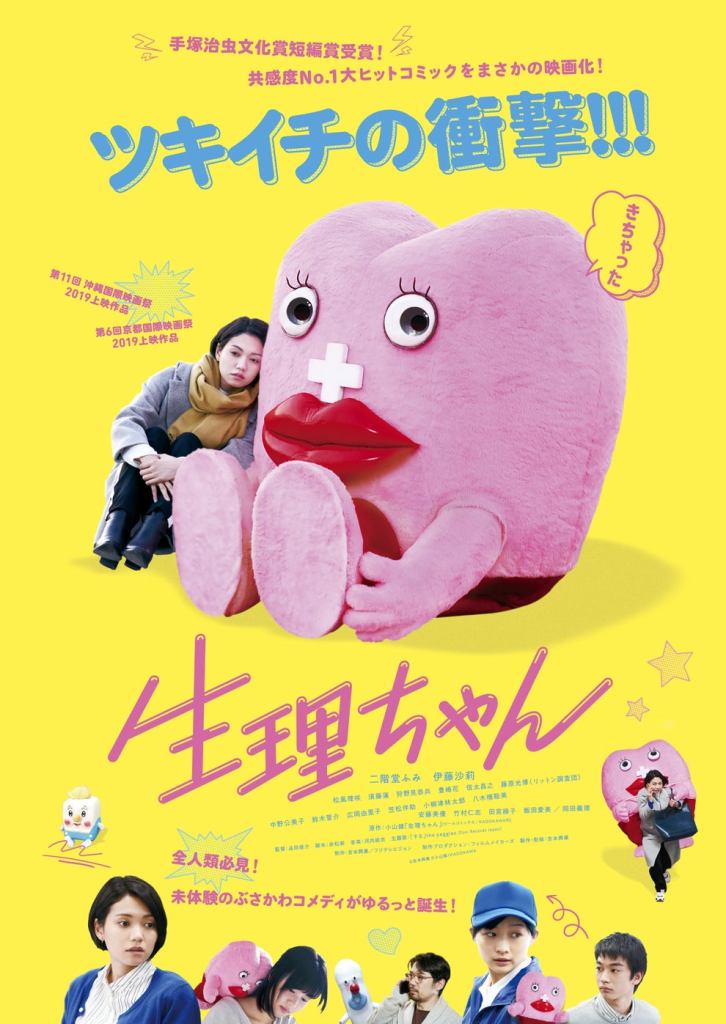
Sorasoi (そらそい, Katsuhito Ishii, Shunichiro Miki, Yuka Osumi, 2008)

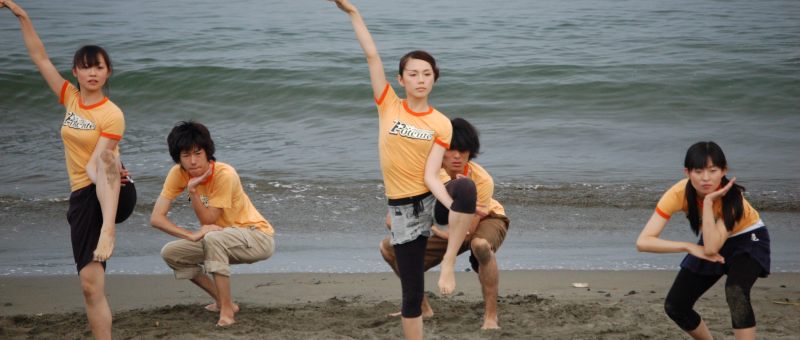
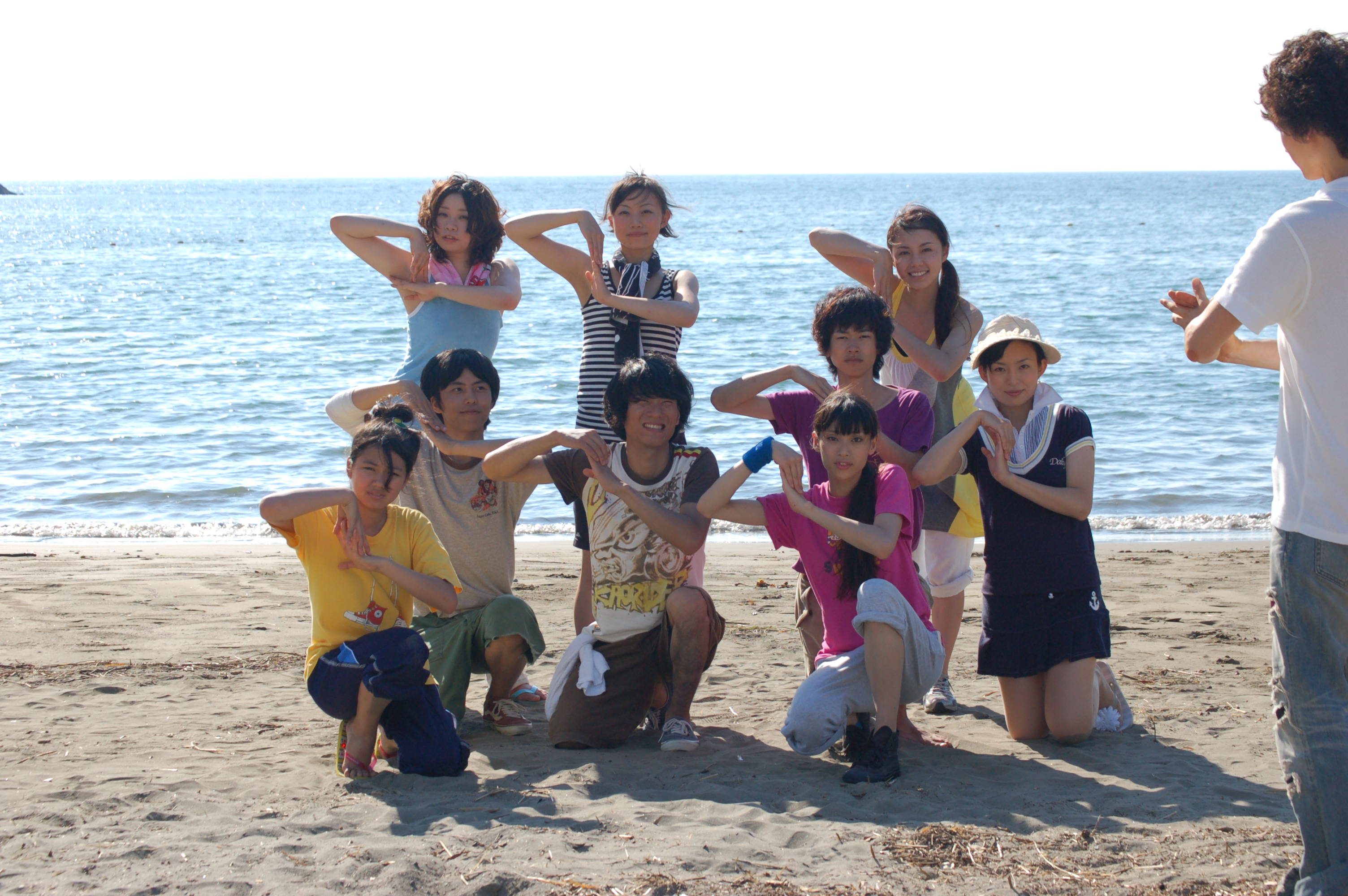
Students on a dance summer camp pick up a few lessons in authenticity and self-confidence while staying in an out of the way coastal hotel in Katsuhito Ishii, Shunichiro Miki, and Yuka Osumi’s goofy comedy Sorasoi (そらそい). Reuniting Ishii and Miki after Funky Forest, the film is less episodic in nature than the directors’ other work and quirky rather than surreal but otherwise offers some of the same lessons as those found in Party 7 as the students begin to discover new things about themselves and others while practicing dance on the beach. 

Led by teacher Tabe (Sota Aoyama) who claims to have been a top dancer with the Royal Ballet before an injury ended his career, the dance team consists of four girls and three boys all of whom Tabe regards as no hopers with little motivation to succeed. A trio of men lounging in donuts floating nearby in the sea gently mock them from a distance, but nevertheless utter a few words of encouragement as they leave the beach. Meanwhile, another young woman, Yuri (Sayuri Ichikawa), arrives to stay at the hotel after approaching the local tourist information office and asking for a reservation at somewhere that isn’t listed in the phonebook. 

Her request may echo that of Party 7’s Miki and her reasoning is similar in that she is clearly hoping to take some time out and doesn’t want to be bothered as evidenced by her decision to ignore missed calls and texts on her phone. The inn owner is forever trying to convince her to travel to a nearby beauty spot named the Cape of Love and its Lovers’ Bell though also dropping in casually that people sometimes take their own lives there which may be irresponsible given Yuri’s ambiguous mental state. In any case, she quickly catches the attention of student Ryu (Ryu Morioka) who begins pursuing her in a friendly if decidedly inappropriate way. 

The three guys tell each other that they’re only doing dance to get girls and that the fact the ones from the dance troupe aren’t interested in them can be excused because they are “different”. Engaging in stereotypically crude male banter one of them later tries to steal the girls’ underwear but as it turns out, at least two of them do actually like dancing and discover new things about themselves in the midst of their romantic pursuits, Ryu’s for Yuri and Atsushi’s (Atsushi Yoshioka) for Kano (Kanoko Kawaguchi ), a mysterious kimono’d woman who arrives to visit. The girls meanwhile are similarly focussed on romance with Ai (Ai Makino) besotted with the grumpy teacher Tabe and Kikka (Kikka) dropping entirely unsubtle hints that she’s in love with the seemingly straight Mako (Masako Satoh) who thinks she’s just playing around. 

They are all, however, keeping some kind of secret mainly because they fear being judged by others whether it relates to their sexuality, having embellished their CV, or having told a slightly bigger lie to help achieve their dancing dreams. What each of them learns is that it doesn’t matter very much if their dancing isn’t very good so long as they enjoy doing it and feel good about spreading that joy to others. Yuri, meanwhile, has some much more grown up dilemmas to consider especially as it transpires she may have been attempting to escape an abusive relationship with a degree of pressure placed on her from various directions to return because her boyfriend is “really a good guy” who made a “mistake” in a momentary fit of temper which is a fairly dated and uncomfortable sentiment to see presented so uncritically even in 2008. Nevertheless, the sense of discomfort is somewhat undercut in a counter courtship from Ryu who offers a sweet and romantic note that leaves the ball entirely in her court. 

In the best tradition of summer break movies, the film’s relaxed atmosphere adds to its laidback charm as do the unfussy indie visuals while the enthusiastic performances from a largely amateur cast of students from Ishii’s acting school (bar the participation of Warped Forest’s Fumi Nikaido and Ryu Morioka) reinforce the central messages of working hard at something you love whether it goes anywhere or not. The mutual solidarity of those around them with similar dreams affords the students the confidence to be more of who they are while clarifying what it is they may actually want out of life even if for some the future still seems uncertain.


Sorasoi is released in the UK on blu-ray on 17th July as part of Third Window Films’ Katsuhito Ishii Collection.

Original trailer (English subtitles)
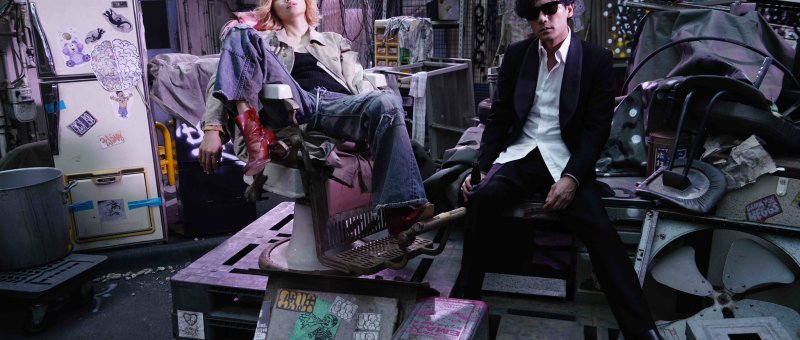
What to Do With the Dead Kaiju? (大怪獣のあとしまつ, Satoshi Miki, 2022) [Fantasia 2022]

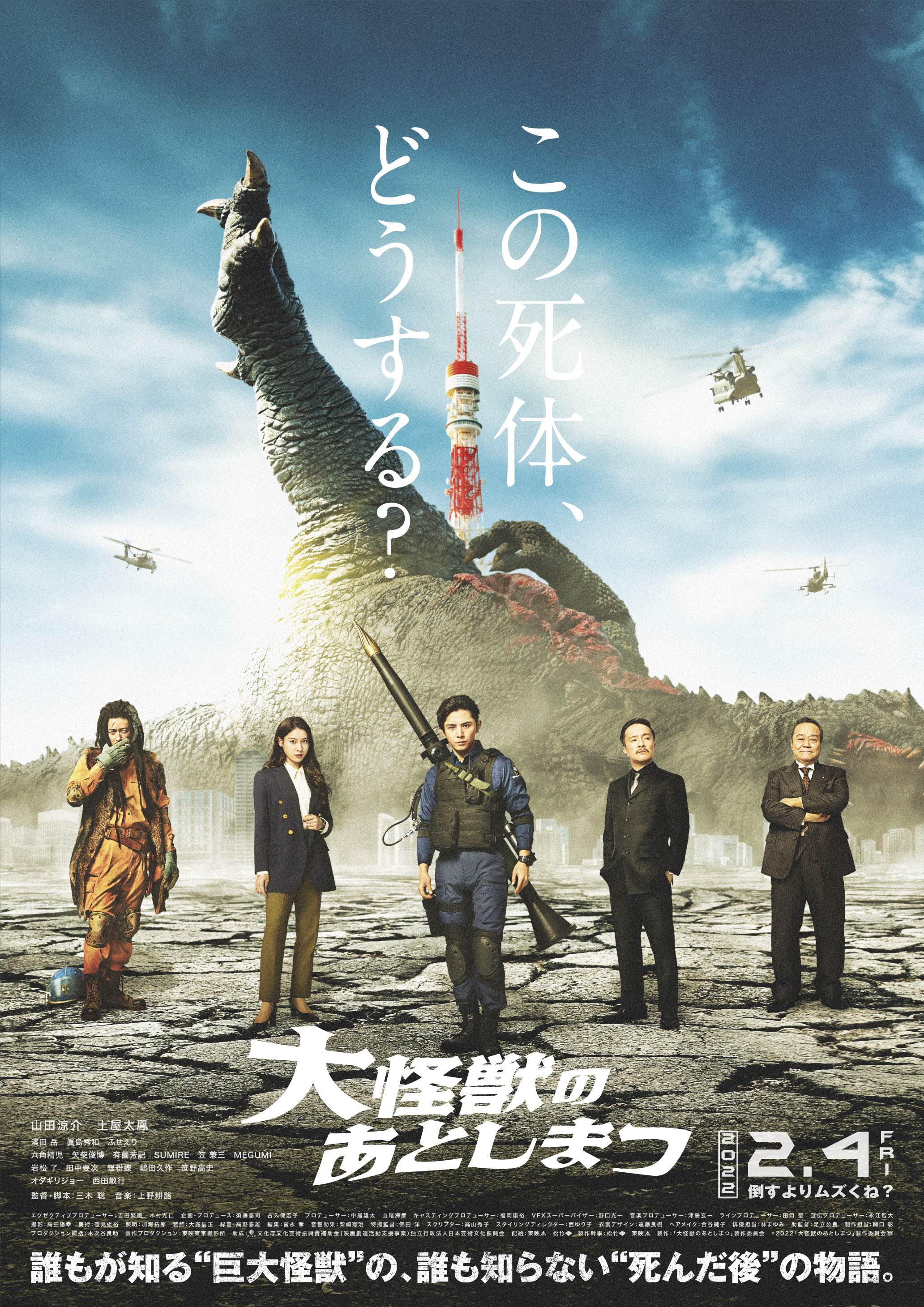
The sudden appearance of a deus ex machina is usually where a story ends. After all, that’s the point. Whatever crisis is in play is suddenly ended without explanation. But what happens then? Satoshi Miki’s What to Do With the Dead Kaiju? (大怪獣のあとしまつ, Daikaiju no Atoshimatsu) steps in to wonder what it is that comes next after a giant monster has been defeated. Someone’s going to have to clean all that up, and in a surprising twist a fair few people are keen to take on the burden. Like Hideaki Anno & Shinji Higuchi’s Shin Godzilla, which the film is on one level at least attempting to parody, Miki’s kaiju comedy is a government satire this time casting shade on the nation’s pandemic response, though with considerably less nuance. 

As the opening onscreen text, a nod to Shin Godzilla, and accompanying voiceover tell us Japan had been plagued by a kaiju but it suddenly died after being engulfed by a mysterious ball of light. While attempting to comedown from the constant state of anxiety under which they’d been living, the prime minister (Toshiyuki Nishida) is at a loss for what to do next especially as no-one really knows if the kaiju corpse is safe. While trying to ascertain whether or not the fallen kaiju might explode, spread dangerous radiation, or present some other kind of threat, government departments start fighting amongst themselves about whose responsibility the clean up effort must be all of them wanting the glory but not the work or expense. 

Some suggest turning the kaiju’s body into a massive tourist attraction and are therefore less keen on anything that involves destroying it while others think it should be preserved and put in a museum. The government has placed the SJF, a militarised science force set up after a terrorist incident, in charge but isn’t listening to much of what they’re saying. Meanwhile, evil moustachioed staffer Amane (Gaku Hamada) is playing his own game behind the scenes which also involves his wife, Yukino (Tao Tsuchiya), who was previously engaged to the leader of the SJF Taskforce, Arata (Ryosuke Yamada), before he abruptly disappeared after being swallowed by a mysterious ball of light three years previously. 

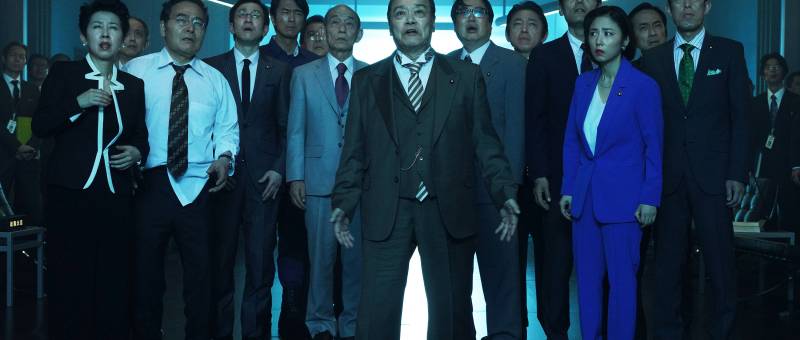
The political satire largely revolves around the indecisive PM, who at one point says he has no control or responsibility for what the other ministers do, and his anarchic cabinet meetings in which politicians run round in circles and insult each other like children. Not exactly subtle, much of the humour is indeed childish and scatological while one minister’s running gag is making sleazy sexist remarks even at one point accidentally playing a saucy video instead of displaying the latest kaiju data on the communal screen. The government experiences a public backlash in deciding to name the kaiju “Hope” which lends an ironic air to its rampage not to mention the necessity of its destruction, while the decision to declare the body safe for political reasons despite knowing it probably isn’t (“protecting the people’s right not to know”) casts shade on the pandemic response among other crises as do the constant refrains about getting back to normal now the crisis is over. 

Then again, there’s something a little uncomfortable going on with the film’s geopolitical perspectives, throwing up an angry politician on the screen with a mangled name who insists that the kaiju originated on their territory and must be returned to them in what seems to be an awkward allusion to Japan’s ongoing territorial disputes with Korea even while it’s suggested that the Americans wouldn’t mind getting their hands on the corpse either for purposes of experimentation and research. On the other hand it also becomes apparent that the Japanese military have deliberately destroyed civilian homes and cost lives in a reckless attempt to stop the kaiju which obviously failed. 

The closing scenes hint we may have been in a slightly different franchise than the one we thought we were dealing with, another deus ex machina suddenly arriving to save the day after the villains almost cause accidental mass destruction. The film’s problem may be that it’s the wrong kind of silly, relying on lowbrow humour while otherwise trying to conform to a blockbuster formula in which the kaiju corpse becomes the new kaiju but the battleground is bureaucracy. Ultimately the film’s prognosis is bleak. Even when the PM has achieved sufficient growth to realise he should make some kind of decision he makes the wrong call leaving everything up to a lone hero while fundamentally failing to come to any conclusion on what to do with a dead kaiju save trying to ensure it does not blow up in his face. 


What to Do With the Dead Kaiju? screened as part of this year’s Fantasia International Film Festival.

Original trailer (English subtitles)
The Warped Forest (あさっての森, Shunichiro Miki, 2011)

“Life is about making the most of what you get” according to a former blackmailer seeing the error of his ways when his attempt to use his ill-gotten gains to woo a lover abruptly fails, but you can always dream in the wild and wacky world of Shunichiro Miki’s The Warped Forest (あさっての森, Asatte no Mori). A quasi-sequel to Funky Forest: The First Contact which Miki also co-directed, Warped Forest is in someways more conventional lending a loose overarching narrative to its otherwise disconnected scenes set in a bizarre village where the residents can spend acorns and pinecones to tinker with their dreams assuming they don’t mind the possibility of emerging with a curse. 

Like Funky Forest, the film revolves around three trios in the black and white sequence which opens the film two staying at the same inn but adopting vastly different personas in the full colour alternate universe to which we are soon transported. The older male trio are informed they’ve been “missing” for two days though they don’t remember going anywhere and are very confused by the apparent forward motion of time. One does remember, however, that some of his students with whom he’d been on a camping trip turned up at his door and explained they’d been mysteriously beamed to a forest and had to hike their way back. 

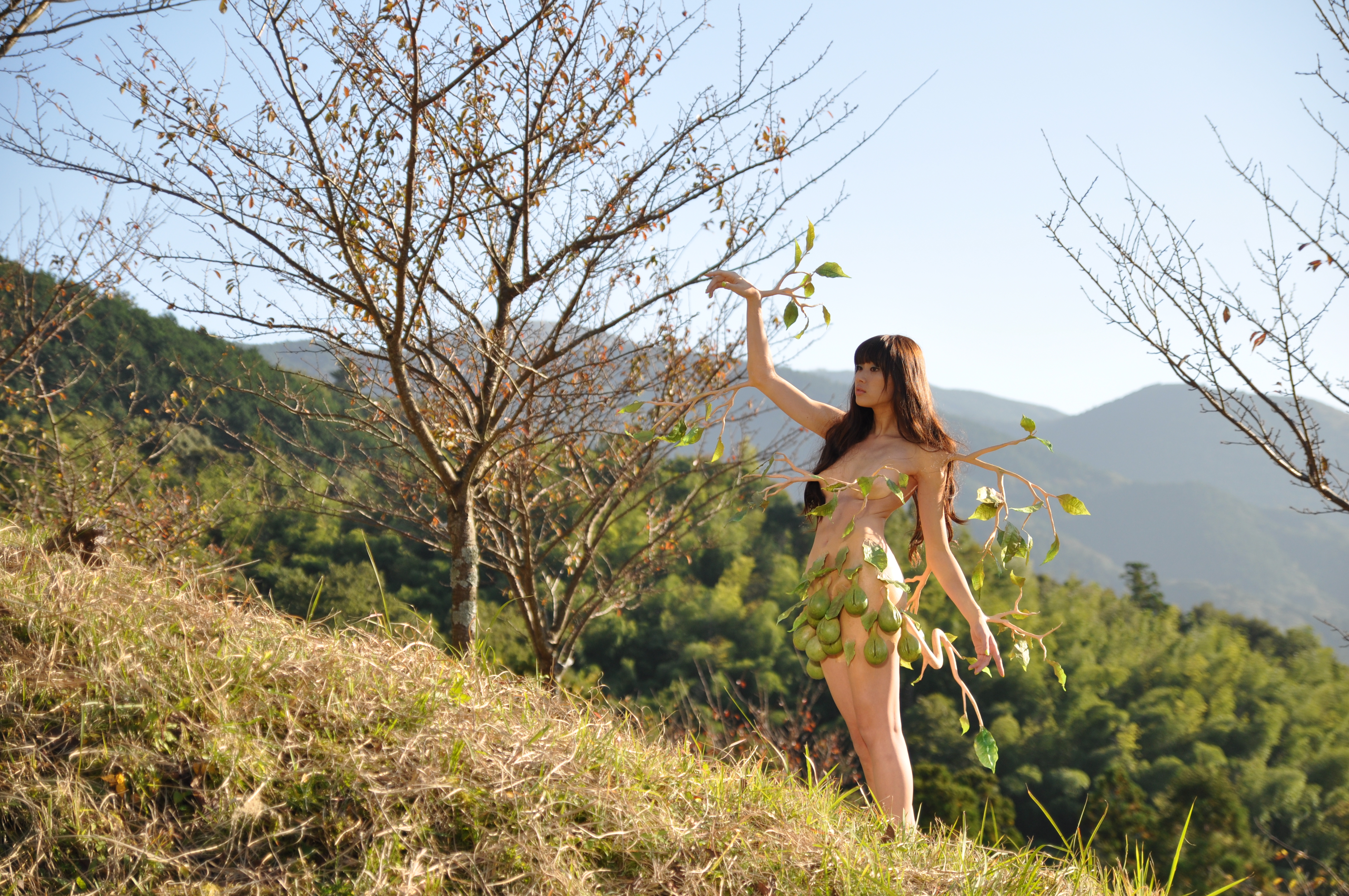
The Japanese title simply means the forest of two days from now, but warped might be a good way to describe it if it weren’t for its judgemental implications seeing as it is indeed somehow out of shape seemingly inhabited by giants and tiny people who co-exist in the same space with tinys prioritised, the giants squashing themselves into tiny chairs and drinking tiny coffees while appearing to also occupy spaces of their own (in which tiny people are not really seen). In any case, this is also a place where everyone is obsessed with the very suggestive Kattka fruit which pulses and gyrates, oozing a sweet liquid and growing from trees in the form of human women which Miss Au Lait, one of the sisters from the inn but here in kimono and walking with a cane, waters by drinking from her flask and passing liquid via her mouth. 

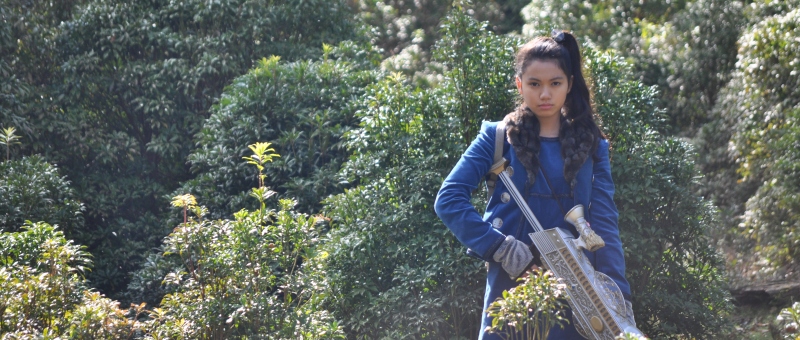
Even here, everyone is lovelorn and unhappy. “If only we could have fun in our dreams” one young man laments after trying out a positive thinking training hall where they’re told to repeat the phrase “I am happy” only to discover their instructor is far from happy himself. They know they can’t have real happiness, so all they can do is dream of it which is why some of them are intent on “dream-tinkering” despite the rumours of negative consequences and vast costs required. Each of the inn trio, all romantically frustrated store owners in this reality, eventually decide to give it a go after one of them gets hold of a special guide that apparently allows them to bypass the curse by promising to sacrifice two days. Appli (Fumi Nikaido) meanwhile is wracked with guilt after having asked to see her whole family happy in her dreams only for her sister to encounter an accident which is why she roams the forest with a gun which shoots white liquid from its penis-shaped tip to trap a “pinky panky” monster and get hold of a weird bug to get the worms out of Miss Au Lait’s leg. 

As for Miss Au Lait, “dreams are just dreams. I have to accept reality” she sadly remarks on turning down a invitation, “I’ll leave my beautiful dream untouched” too fearful and insecure to chase happiness while her suitor later echoes her words unwilling to run away in flights of fancy. Even so we might wonder which is the dream world and which the real, the hotel guests later finding each other and experiencing a kind of true happiness in togetherness unknown in the forest where everything seems to be not quite right. Continuing the slightly vulgar aesthetic of Funky Forest with his fleshy fruits and frequent innuendo, Miki conjures a bizarre world which nevertheless possesses an internal normality in which people are distanced from one another, not least by their respective size differentials, but each longing for something more which they fear cannot be found not even in dreams. 


The Warped Forest is released on blu-ray in the UK on 21st March courtesy of Third Window Films alongside Funky Forest: The First Contact in a set which also includes a feature length commentary, director interview, and introduction.

Original trailer (English subtitles)

.

No Longer Human (人間失格 太宰治と3人の女たち, Mika Ninagawa, 2019)

Like a character from one of his novels, Osamu Dazai is remembered as a figure of intense romanticism, an image fuelled by his love suicide with a woman who was neither his wife nor the mistress with whom he had conceived a child. A proponent of the “I novel”, Dazai lived as he wrote, but crucially gives the hero of his final book, No Longer Human, a less destructive ending than he eventually gave himself in that he finally accepts his toxicity and chooses self-exile in the belief that he has fallen so far as to lose the right to regard himself as “human”. Mika Ninagawa’s biographical treatment of Dazai borrows the title from his most famous novel (人間失格 太宰治と3人の女たち, Ningen Shikkaku: Dazai Osamu to 3-nin no Onnatachi), but gives it a subtitle which pulls focus from the author himself towards the three women who each in their own way made him what he was. 

Yet what he was, in Ninagawa’s characterisation at least, was hollow. Late into the film, she includes a famous literary anecdote in which a young Yukio Mishima (Kengo Kora) turns up to a party where Dazai (Shun Oguri) is holding court following the publication of The Setting Sun and accuses him of being a poseur, a coward who writes endlessly about death but has no real intention of following through. That’s something of which he was often accused, having already failed to die as we see in the film’s opening in a love suicide in which the woman died calling out another man’s name. Intensely insecure, he carps on about being disrespected by the literary establishment, in fact using his final days and one of his last chances to pen an embittered screed against the famous authors who read but apparently did not care for his work. His editor despairs of him, resenting him not only for the debauched lifestyle which interferes with his writing but his essential caddishness that sees him both mistreat his loyal wife and use countless women as fuel for his art never quite caring about what happens to them afterwards. 

Dazai claims that Michiko (Rie Miyazawa), his legal wife and mother of his children, is OK with his affairs because it is “love in the service of art”. There is some truth in that, though as Michiko points out, Dazai himself would have no interest in a woman so passively self-sacrificing as that of Villon’s Wife. When the children catch sight of their father embracing another woman at a festival, she calmly tells them that he is “working” before pulling them on in embarrassment, putting up with it perhaps more because she has no other option than in respect for Dazai the great artist. 

Yet as his new lover Shizuko (Erika Sawajiri) claims, beautiful art comes from broken people, an idea which perhaps enables Dazai’s grandiose vision of himself as an unjustly dismissed literary genius. Just as Villon’s Wife was “inspired” by his relationship with Michiko, The Setting Sun is about Shizuko, only this time Shizuko is more collaborator than muse. He plunders her diaries and the most famous line from his novel, “Men are made for love and revolution” was in fact not written by him but stolen from her (she eventually asks for a co-writing credit but evidently did not get one, penning her own book instead). What she asks him for in return is a child, a strangely common request also made of him by Tomie (Fumi Nikaido), the woman with whom he eventually dies largely, the film suggests, because despite the longing for life that birth represents she pulled him towards death and he was too indifferent to resist. Dazai’s resistance, if you can call it that, is listlessness in which he has no desire to live but equally perhaps no real desire to die. 

Despite the foregrounding of the title, the three women are perhaps three paths he could take – the conventional as a husband and father, the radical as man standing equal with a woman who is not a wife with whom he births “a new art”, and finally the nihilistic “death” which is the route he eventually takes. With or perhaps for Tomie he writes the work he knows will destroy him in which he excoriates himself rather than her but, unlike in life, receives the gift of self-awareness and then lets himself (partially) off the hook. In Ninagawa’s visual complexity he is perhaps to an extent already dead, collapsing in the snow after haemorrhaging blood in the later stages of TB next to a red circle looking oddly like the flag of Japan only for white petals to begin raining down on him as if he were already in his coffin. We see repeated shots of shimmering water reminding us of his death by drowning, and for all of Ninagawa’s characteristically colourful compositions it’s the women who are surrounded by the vibrancy of flowers in full bloom never Dazai himself. On her husband’s death, Michiko can exclaim only (and ironically) that the sun has finally come out as she gets on with her life putting out the washing. Shizuko affirms that Dazai was the love of her life while asserting her own artistic identity in pushing her book which is an inversion of his. Meanwhile, Dazai has consumed himself, a cad to the last, overdosing on romanticism as an artist who fears he has nothing else to say.


Hong Kong trailer (English/Traditional Chinese subtitles)

Little Miss Period (生理ちゃん, Shunsuke Shinada, 2019)

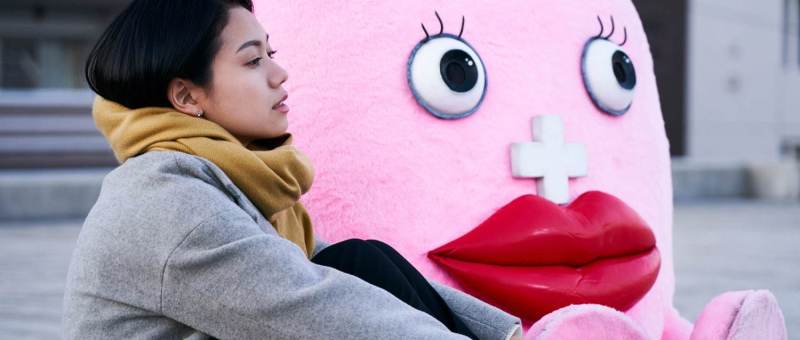
Perhaps surprisingly, Japanese cinema has never been afraid to tackle the sometimes taboo issue of menstruation but Little Miss Period (生理ちゃん, Seiri-chan) is certainly the first time it’s been turned into an accidental protagonist. Inspired by a popular web manga by Ken Koyama, who is male as is the director Shunsuke Shinada, the film revolves around the titular Little Miss P who arrives every month in the form of a giant pink fuzzy monster and generally causes havoc in women’s lives, but for all the trouble, pain, and inconvenience she causes Little Miss P also becomes a symbol of female solidarity and an accidental confidant whose presence can also be a comfort in regrettably patriarchal society. 

The first victim is Aoko (Fumi Nikaido), a young woman working in a busy publishing office who receives an inconvenient visit from Little Miss P while trying to sort out a problem with an uncommunicative writer which eventually leads to more trouble after the author begins bad mouthing them on social media and Aoko is given a public telling off by her sexist boss for failing to appreciate artistic temperament. Aoko’s boss is an unreconstructed chauvinist who makes deliberately inappropriate comments in the workplace and then jokes that he hopes he won’t be accused of harassment. He complains about Aoko looking tired and exclaims that these are the reasons he doesn’t like working with women, but running into a colleague in the ladies’ room, Aoko gets some practical though unhelpful advice coming from another woman to the effect that they can’t ever use Little Miss P as an “excuse” because it will just be seen as another reason to deny women the same rights and privileges as men. 

Aoko wishes that men could experience what it’s like to host Little Miss P if only once year and then perhaps they’d understand, though they also have problems of their own as manifested in the large white Mr. Sex Drive who appears out of nowhere to bother the boyfriend (Kyohei Kanomi) of Aoko’s younger sister Hikaru (Risaki Matsukaze). While Aoko laments the sexist atmosphere in the workplace that leaves her feeling as if she has to make a choice to be seen actively prioritising her career, being more present, more productive than the men just to be seen as equal, the office cleaner, Riho (Sairi Ito), resents her invisibility as a faceless service worker many regard as little more than a bot or real world NPC with no identity or interior life. She makes caustic comments about the vacuous lives of the office workers around her but has fully internalised this view of herself as worthless and undesireable. She resents Little Miss P in part because she doesn’t understand what the point of her visit is when it seems so unlikely that she would ever bear a child. 

Riho is so invested in her inferiority complex that she cannot comprehend that Aoko’s company want to hire her for writing gig after figuring out her secret blogger identity, believing it must be some kind of trick. In one sense, she might be right in that Aoko’s colleague Uchiyama (Ren Sudo) has an obvious crush on her, but still she finds it impossible to accept that she has a right to expect recognition as a human being and indeed as woman. Each of the women find themselves in dialogue with Little Miss P who often provides a quite literal shoulder to cry on as well a reassuring sense of “you got this” security. Aoko apologises to Little Miss P as she bids her goodbye for another month, admitting that it can’t be nice that in general no one is glad to see her (though there are of course cases in which they might be rather more than glad), but Little Miss P takes it all in her stride as part of the job and as much as she often causes trouble and inconvenience is also a warm and reassuring presence which unites women not so much in shared struggle but gentle camaraderie. 

It’s Little Miss P who helps Aoko bond with her prospective step-daughter Karin (Hana Toyoshima), while she perhaps remains ambivalent on the idea of marriage with its consequent loss of independence and the responsibility of suddenly becoming a mother for the first time to an adolescent girl. Female solidarity trumps family or romance, or at least so it seems as Aoko looks back on getting her own first visit from Little Miss P which threw her recently widowed single-father into an ambulance-calling panic but also resulted in a comforting dish of rice with red beans, traditionally eaten at moments of celebration. “Not everything about it is bad” Aoko tells a troubled Karin, “there’s nothing good about it. Not one thing” she replies, but Little Miss P has at least brought them together in female solidarity as they return to their respective, disappointingly patriarchal, worlds. 


Little Miss Period is available to stream online (Worldwide except Japan, Mainland China, Taiwan, Hong Kong, Macau, Thailand, Laos, Cambodia, & Myanmar) from 9th to 14th June as part of this year’s Nippon Connection Film Festival.

Original trailer (English subtitles)

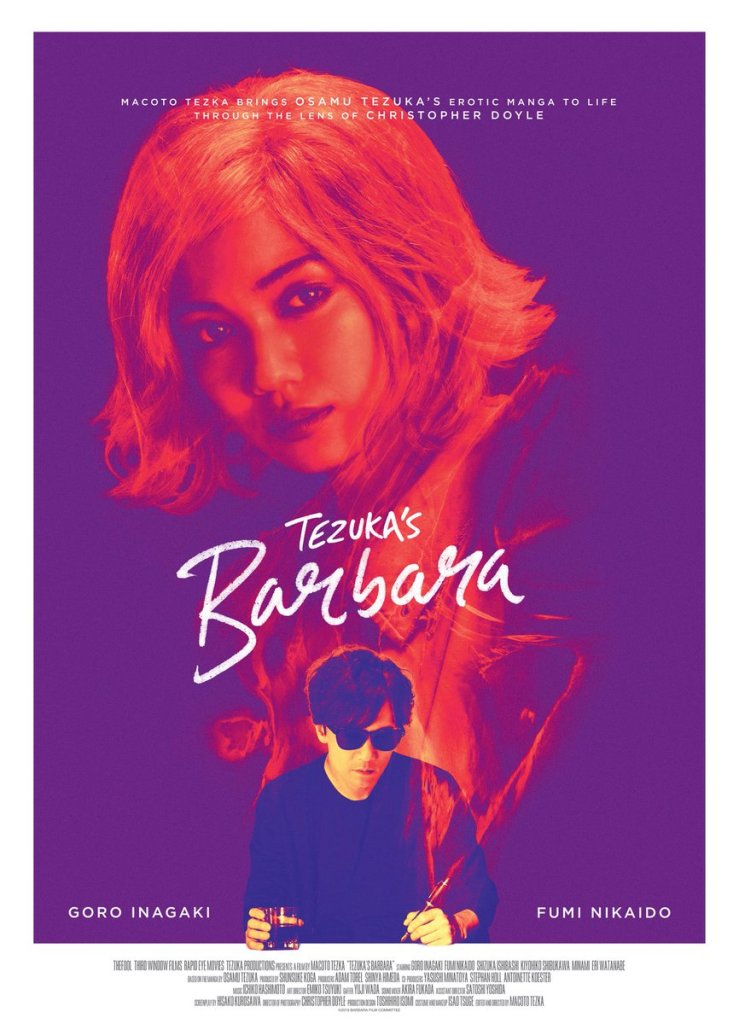
Tezuka’s Barbara (ばるぼら, Macoto Tezka, 2019)

The relationship between an artist and his muse (necessarily “his” in all but a few cases) is at the root of all drama, asking us if creation is necessarily a parasitical act of often unwilling transmutation. Osamu Tezuka’s Barbara (ばるぼら), brought to the screen by his son Macoto Tezka, takes this idea to its natural conclusion while painting the act of creation as a madness in itself. The hero, a blocked writer, describes art as a goddess far out of his reach, but also the cause of man’s downfall, framing his creative impotence in terms of sexual conquest that lend his ongoing crisis an increasingly troubling quality. 

Yousuke Mikura (Goro Inagaki) was once apparently a well regarded novelist but has hit a creative block. While his friends and contemporaries are winning awards and national acclaim, he’s become one of “those” writers busying himself with potboilers and eroticism to mask a creative decline. Passing a young woman collapsed drunk in a subway, something makes him stop and turn back. Surprisingly, she begins quoting romantic French poetry to him, and actually turns out to be, if not quite a “fan”, familiar with his work which she describes as too inoffensive for her taste. Mikura takes her home and invites her to have a shower, but later throws her out when she dares to criticise an embarrassingly bad sex scene he’s in the middle of writing. Nevertheless, he’s hooked. “Barbara” (Fumi Nikaido) becomes a fixture in his life, popping up whenever he needs a creative boost or perhaps saving from himself. 

Strangely, Barbara is in the habit of referring to herself using a first person pronoun almost exclusively used by men, which might invite us to think that perhaps she is just a manifestation of Mikura’s will to art and symbol of his destructive creative drive. He does indeed seem to be a walking cliché of the hardbitten writer, permanently sporting sunshades, drinking vintage whiskey, and listening to jazz while obsessing over the integrity of his art. We’re told that he’s a best-selling author and previously well regarded by the critics, but also that he has perhaps sold out, engaging in a casual relationship with a politician’s daughter and cosying up to a regime he may or may not actually support. He’s beginning to come to the conclusion that he’s a soulless hack and the sense of shame is driving him out of his mind. 

Mikura’s agent Kanako (Shizuka Ishibashi) certainly seems to think he’s having some kind of breakdown, though the jury’s out on whether her attentions towards him are professional, sisterly, or something more. There isn’t much we can be sure of in Mikura’s ever shifting reality, but it does seem a strange touch that even a rockstar writer of the kind he seems to think he is could inspire such popularity, recognised by giggling women wherever he goes yet seemingly sexually frustrated to quite an alarming degree. His world view is an inherently misogynistic one in which all women seem to want him, but he can’t have them. A weird encounter in a dress shop is a case in point, the assistant catching his eye from the window display turning out to be a devotee of his work because of its “mindlessness”, something which annoys Mikura but only causes him to pause as she abruptly strips off for a quickie in the fitting room. Tellingly, the woman turns out to be an inanimate mannequin, literally an empty vessel onto which Mikura can project his fears and desires, which is, perhaps, what all other women, including Barbara, are to him. 

Yet who, or what, is Barbara? Chasing his new “muse”, Mikura finds himself on a dark path through grungy subculture clubs right through to black magic cults, eventually arrested on suspicion of drug use. There is something essentially uncomfortable in his dependency, that he is both consuming and consumed by his creative impulses. Inside another delusion, he imagines himself bitten by potential love interest Shigako (Minami), as if she meant to suck him dry like some kind of vampire succubus, but finds himself doing something much the same to Barbara, stripping her bare, consuming her essence, and regurgitating it as “art”. Either an unwitting critique of the various ways in which women become mere fodder for a man’s creativity, or a meditation on art as madness, Barbara seems to suggest that true artistry is achieved only through masochistic laceration and the sublimation of desire culminating in a strange act of climax that stains the page with ink.  


Tezuka’s Barbara screens in Amsterdam on March 6/7 as part of this year’s CinemAsia Film Festival.

International trailer (English subtitles)

Fly Me to the Saitama (翔んで埼玉, Hideki Takeuchi, 2019)

Fly Me to the Saitama posterThe suburbia vs metropolis divide can be a difficult one to parse though there’s rarely a culture that hasn’t indulged in it. In England, for example, suburbia is to some a byword for quiet respectability, an aspirational sort of village green utopianism built on middle-class success as opposed to frivolous urban sophistication. Then again, city dwellers often look down on those from the surrounding towns as “provincial” or even dare we say it “common”. Saitama, a suburban area close enough to Tokyo to operate as a part of the commuter belt, has long been the butt of many a joke thanks to a quip from an ‘80s comedian which labeled it “Dasaitama” in an amusing bit of wordplay which forever linked it with the word “dasai” which means “naff”.

“Dasaitama” is a label which seems to haunt the protagonists of Hideki Takeuchi’s adaptation of the popular ’80s manga by Mineo Maya. Fly Me to the Saitama (翔んで埼玉, Tonde Saitama) opens in the present day with an ordinary family who are accompanying social climber daughter Aimi (Haruka Shimazaki) to Tokyo for her engagement party. While dad is quietly seething over this perceived slight to his beloved homeland, someone turns on the local radio station which is currently running an item on an “urban legend” about a long ago (well, in the ‘80s) period of oppression in which residents of Saitama (and other neighbouring “uncool” towns) had to get a visa to travel to Tokyo where they were treated as second-class citizens fit only for the jobs regular Tokyoites didn’t want to do and forced to live in hovels (which the snobbish city dwellers somehow thought made them feel more at home). The legend recounts the tale of a brave revolutionary who convinced the Saitamans to rise up, shake off their internalised feelings of inferiority, and reclaim their Saitama pride!

Shifting into an imagined fantasy of 20th century Japan which is in part inspired by warring states factionalism, Fly Me to the Saitama is, in the words of Aimi, a kind of “boys love” pastiche which riffs off everything from The Rose of Versailles to Star Wars while indulging in the (happily) never really forbidden love of mayor’s son Momomi (Fumi Nikaido) who has a girl’s name and feminine appearance but is actually a guy, and the dashing would-be-revolutionary Rei (Gackt) who has just returned from studying abroad in America and inevitably brought back some original ideas about individual freedom and a classless society. Having been born and raised in Tokyo, Momomi has a fully integrated superiority complex which encourages him to look down on Saitamans as lesser humans, almost untouchables, whose very existence is somewhat embarrassing. Only after being humbled, and then kissed, by Rei are his eyes opened to the evils of inequality and the ongoing corruption within his own household.

It goes without saying that much of Fly Me to the Saitama’s humour is extremely local and likely to prove mystifying to those with only rudimentary knowledge of daily life in Japan at least as far as it extends to regional stereotypes and ambivalent feelings towards hometown pride in a nation in which many still find themselves taking care not to let their accent slip after having moved to the capital lest they out themselves as an unsophisticated bumpkin. Yet there is perhaps something universal in its fierce opposition towards ingrained snobberies and petty class hierarchies which pokes fun both at the social climbing small-towners like Aimi desperate to escape the “dasai” countryside for the bright lights of Tokyo, and her proudly “dasai” dad, while asking the hoity-toity Tokyoites to get over themselves, and making a quiet plea for a little peace, love, and understanding along the way.

Then again, the Saitamans may have had a little more than freedom on their minds. If the “Saitamafication” of the world resulted in an expansion of mid-range shopping malls and chain restaurants filled with peaceful, happy people would that really be such a bad thing? Saitama might not be as “exciting” or as “cool” as Tokyo but it’s a nice enough place to live when all’s said and done. Perhaps that’s a frightening thought, but if the Saitama revolution ushers in a brave new world of freedom and equality then who really could argue with that?


Fly Me to the Saitama is screening as the opening night movie of the eighth season of Chicago’s Asian Pop-Up Cinema on March 12 at AMC River East 21, 7pm where director Hideki Takeuchi will be present in person for an introduction and Q&A.

Original trailer (English subtitles)

Nazeka Saitama – a novelty record released in 1981 and somewhat appropriately recorded in a style popular 15 years earlier.