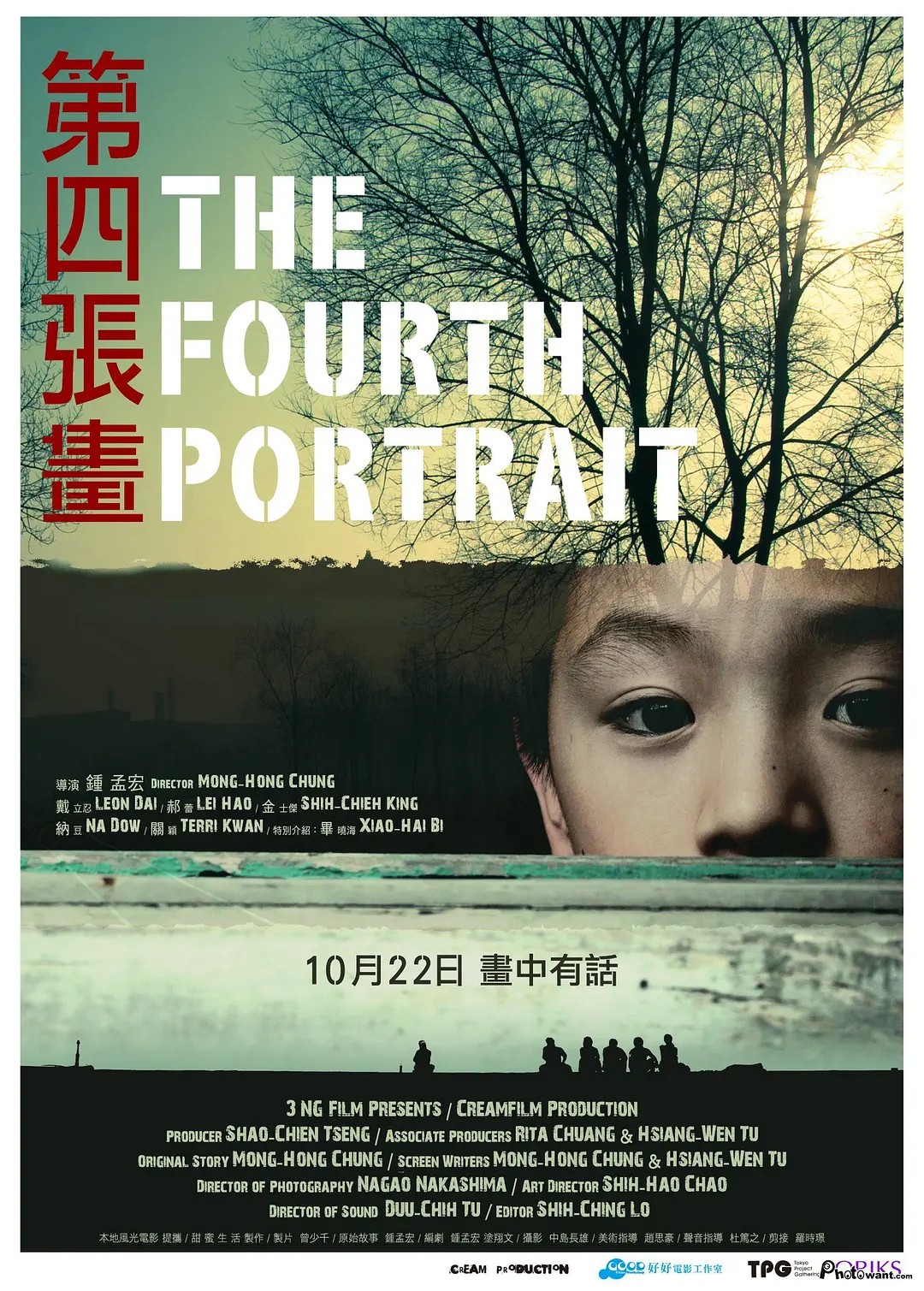
The Fourth Portrait (第四張畫, Chung Mong-Hong, 2010)

A young boy struggles to forge his own identity while lost amid the legacy of perpetual displacement in Chung Mong-Hong’s whimsical coming-of-age drama The Fourth Portrait (第四張畫). As the title implies, Chung structures his tale around four images as the boy looks for guidance through each of his relationships but perhaps finally discovers only that he is on his own and has only himself for protection yet must find the courage to try and escape even if it causes him pain. 

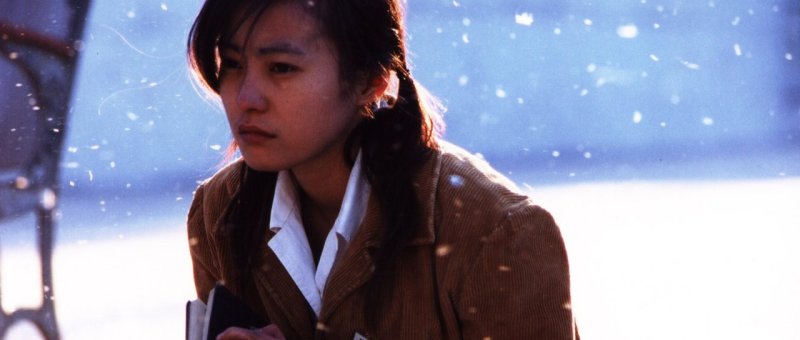
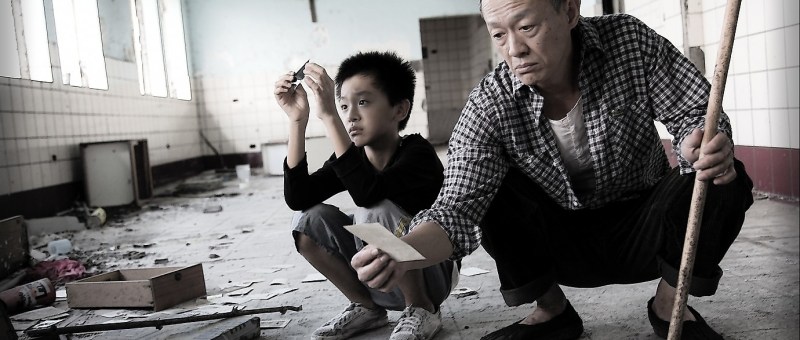
At 10 years old, young Xiang (Bi Xiao-Hai) is impossibly burdened in the way no child should be as a doctor coldly tells him that his father will soon pass, a nurse instructing him to stay put and let them know when his father is gone. Xiang impassively places a napkin over his father’s face, the undertakers bickering amongst themselves while deciding to do the funeral for free seeing as this child is now all alone and seemingly has no other family. Yet no one comes to take care of Xiang, he has to go home on his own and begins living independently eventually resorting to stealing lunch boxes at school only to be caught and scolded by a grumpy janitor who both tenderly offers him food but then roughly slaps him when he notices the boy is crying. 

As Xiang is about to become, the old man, Zhang (Chin Shih-Chieh), is also a displaced person having travelled from the Mainland 50 years previously. He takes him to scavenge abandoned buildings meditating on what it is that gets left behind, why it has value to some and apparently not to others. Xiang himself was abandoned by his mother who took his older brother with her but chose to leave him with his father, wondering perhaps if he is valuable or not. Technically if not literally orphaned, Xiang is later reunited with his mother, Chun-lang (Hao Lei), but is then displaced himself, forced to move to the city and into the house she shares with her second husband and infant child. Like Zhang his mother came from the Mainland in search of a better life she did not find and is living with a sense of disappointed futility trapped in her marriage to a dejected and violent man (Leon Dai) while forced to support the family through sex work at a nearby hostess club frequented largely by Mainland gangsters. 

Unanchored and insecure in his new environment, Xiang begins having strange dreams of his apparently absent brother Yi but his attempts to discover the truth about the past only further destabilise the foundations of his new home. His mother cannot fully embrace him because of her guilt over leaving him behind while unable to fully process the reality of what may have happened to Yi too frightened of the truth to risk poking around. His stepfather meanwhile is a haunted man, unable to work and seemingly the primary carer to their small child though neither them are ever really seen paying much attention to the baby. When Chun-lang tells Xiang that he is a stranger in their house, that she is no longer the mother she once was because she has married another man and has another child with him, she does so perhaps partly to encourage him to leave advising him to steer clear of his stepfather in a bid to keep him safe yet blaming herself for all the tragedy which has befallen her accepting it would not have happened if she had not “messed up” her life. 

Perhaps this is why Xiang finds himself bonding with a decidedly strange middle-aged man he meets by accident in a public toilet. “Big Gun” paints himself as something of a big brother figure, suggesting that they can drift together travelling around on his moped. His conduct towards the boy is extremely inappropriate in more ways than one involving him in his life of petty crime, yet Xiang finds in him a sense of acceptance that he doesn’t get from the other adults along with a new sense of independence. Yet Xiang’s illusions are eventually shattered twice over, the first revelation paving the way for a greater loss of innocence in discovering the truth about his brother while the second perhaps leads him to feel that he really is alone, continually displaced, and entirely unanchored in a world with offers little prospect of warmth, affection, or a place to belong. 

Like Zhang and his mother, Xiang is fails to settle in contemporary Taiwan lost amid a stream of constant dislocations and bound only for endless wandering. Yet staring into a mirror preparing for his fourth portrait he perhaps begins to forge an image of himself informed by those he’s drawn before and giving him the sense of confidence to survive the emptiness of the world around him. Beautifully shot with a lingering ethereality, Chung’s enigmatic storytelling coupled with the whimsical score lend a note cheerfulness to what in many ways is a fairly bleak situation but perhaps reflects the surreality of the boy’s life in his constant quest for belonging. 


International trailer (English subtitles)
Spring Tide (春潮, Yang Lina, 2019)

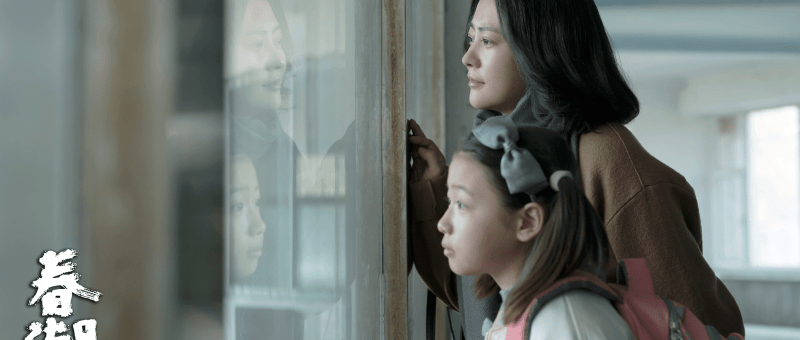
Toxic motherhood takes on strangely subversive, allegorical tones in Spring Tide (春潮, Chūn Cháo), Yang Lina’s painful examination of the relationships between three generations of Chinese women, each in different ways victims of the times in which they live. It’s true enough that the folk tunes sung so happily are often odes to the “motherland” which betray none of the eeriness of their propagandistic intentions in their full hearted endorsement of nation as family, but the darkness is inescapable as we see their metaphors made flesh in a woman destroyed by her sense of disappointment in life and in turn destroying her daughters literal and metaphorical in a pathological attempt to give her life meaning. 

30-something Jianbo (Han Lei) is a socially conscious investigative journalist whose refusal to let sleeping dogs lie is a constant thorn in the side of her more conservative editor. At home, meanwhile, she’s mother to nine-year-old Wanting (Qu Junxi), who, we later realise is being raised by Jianbo’s feisty mother, Minglan (Elaine Jin Yan-ling), while she splits her time between the family’s backroom and a bed in a student dorm with occasional nights spent with an intense yet silent musician. 

Aside from the obvious emotional disconnection, the fracture lines between mother and daughter are also ideological. Jianbo is a post-80s generation woman, she wants to hold mother China to account because she wants her society to be better than it is. She unroots scandal and corruption and brings them to light through the power of the press, trying to create real social change through shaming the populace into better patterns of behaviour. But her mother Minglan lived through the Cultural Revolution, because of all she’s suffered she thinks that things are fine the way they are and criticising the beneficent state is like scolding the person that raised you. Caught in the middle, Minglan’s fiancé Zhou (Li Wenbo) espouses contradictory views, at once proud to have Jianbo as a daughter because “journalists are the conscience of a country”, but also grateful for the iron rice bowl system that gave him a steady job, not to mention a pension and the old person’s flat that’s allowed him to meet Minglan. 

Minglan’s life has indeed been full of suffering, though it is perhaps surprising how casually she and her friends remark on the terror they experienced during their youth while continuing to sing the old patriotic songs. “My motherland and I can’t be apart for a moment”, according to patriotic hit My People, My Country (我和我的祖国), but its tones suddenly seem sinister in their breeziness as we’re forced to consider the icy Minglan as a stand-in for China as a toxic mother, insisting that she must be respected and that her children must repay their debts to her, no matter how abusive she has been and may continue to be. To her friends in the retirement community, Minglan is a warm and caring woman, running the choir and organising local events, but she’s also blindsided by the suicide of a friend who took her own life because of an entirely different kind of filial disappointment coupled with existential loneliness. Minglan can’t understand why she did it, but in characteristic fashion largely makes it all about herself in lashing out at Jianbo when she points out that Mrs Wang was not as happy about their (read: Minglan’s) potential retirement plan as Minglan had believed her to be. 

“When were you going to realise this was a family and not a battlefield?” Jianbo asks her mother knowing that she can make no further reply. The tug of love over motherhood of Wanting is, in many ways, a tussle over the future of China. Minglan digs her nails in, telling Wanting a few hurtful truths about her mother while insisting that you really can’t trust anyone anymore but that’s OK because grandma loves you, while Jianbo remains powerless to reassume her maternity knowing that her only weapon is to avoid unduly antagonising her mother in the hope that she won’t end up alienating Wanting in the same way Minglan alienated her. All that exists between them now is a torrent of resentment, Minglan seeing her daughter only as the symbol of all her frustrated desires, and Jianbo knowing she’s become a sad and lonely woman solely because her mother refused to love her in the way she wanted to be loved. Jianbo is determined that she won’t let Minglan’s “vanity and hypocrisy” corrupt her pretty, sensitive daughter, pushing her towards an “ignoble and ridiculous life”. She wants Wanting to be free of this chain of abuse and all its authoritarian gaslighting, but has no mechanism to free her other than distance. 

Wanting, by contrast, is cheerful and kind. She has absolutely no filter and is entirely unafraid of asking difficult questions, but is also brave and strong, willing to stand up for others. A little girl in her class who happens to be from the Korean minority is criticised for her “poor” Mandarin and ordered to switch seats but her new buddy refuses to sit with her because he claims not to be able to understand what she’s saying. Wanting immediately pipes up that she understands perfectly, instantly becoming the girl’s best friend and visiting her home which appears to be one of immense harmony and happiness where her dad whirls her round while proudly singing Arirang, standing in stark contrast to Minglan’s joyous yet somehow self-involved recitals. China as an authoritarian mother may be losing its grip on power, while Jianbo’s generation struggles to free itself from the trauma of toxic parenting, but there is perhaps hope for Wanting as she and her friend decide to leave the patriotism showcase to follow the spring tide right out into a wide river of joy and freedom.


Spring Tide was screened as part of this year’s Osaka Asian Film Festival.

Summer Palace (颐和园, Lou Ye, 2006)

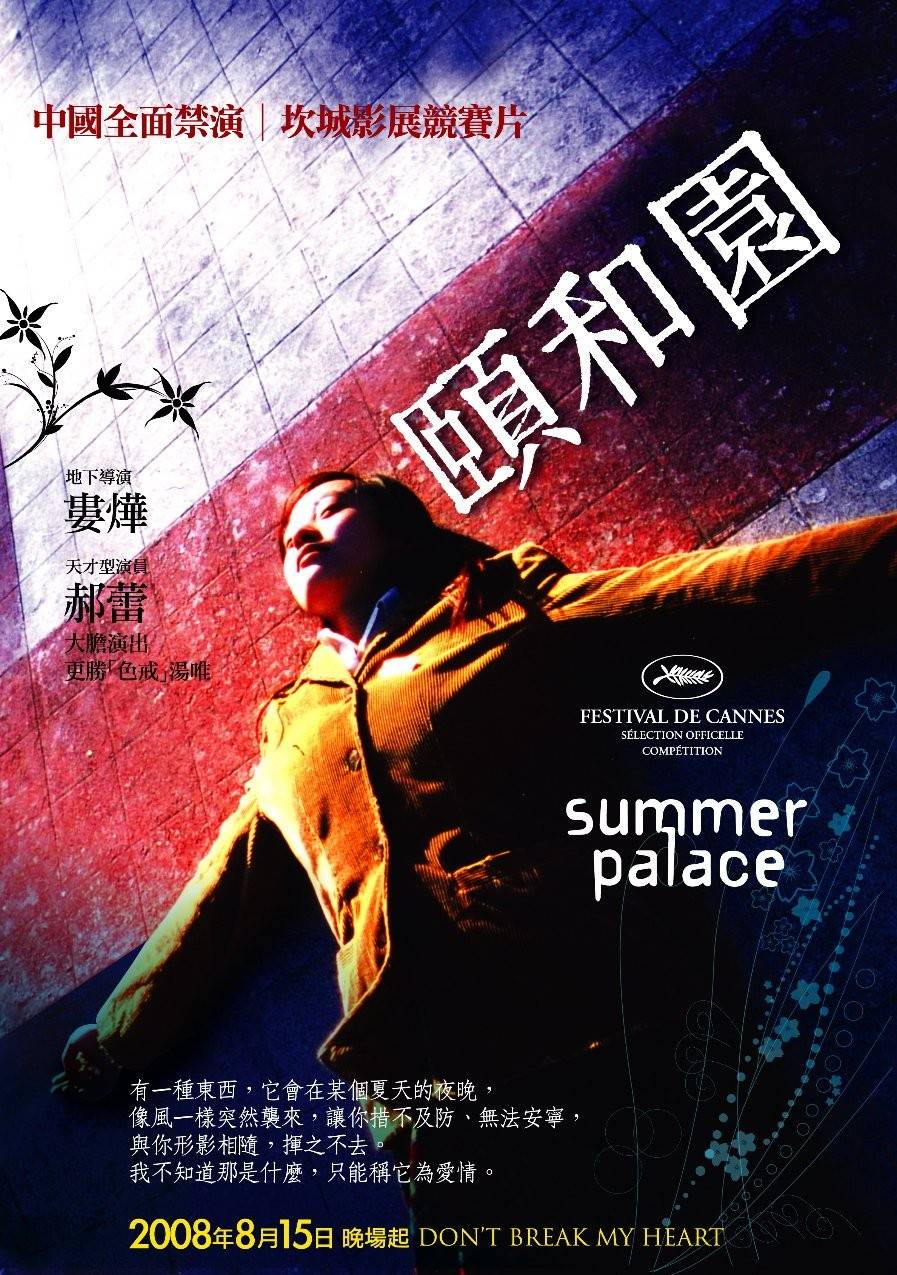
Summer palace posterThe personal is political for Lou Ye. Much as he had in Purple Butterfly, Lou paints love as a spiritual impossibility crushed under the weight of political oppression, though this time he leaves his protagonists breathing but wounded. Summer Palace (颐和园, Yíhé Yuán) is a member of a not exactly exclusive club of films deemed too controversial for the Chinese censors’ board. In truth, there are a number of reasons Lou’s wilfully provocative film might have upset the government, but chief among them is that he breaks a contemporary cinematic taboo in setting the Tiananmen Square massacre as the political singularity which causes the implosion of our protagonists’ youth, rendering them stunned, arrested, and empty. Personal and national revolutions fail, leaving nothing in their wake other than existential ennui and an inability to reconcile oneself to life’s disappointments.

In the late ‘80s, Yu Hong (Hao Lei) gets a scholarship to study in Beijing and prepares to leave her home in a small rural town near the North Korean border for the promise of big city life. Yu Hong craves sensation, she wants to live life intensely and the inability to connect on a true, existential level leaves her feeling progressively empty and confused. A chance meeting with another girl in her dorm, Li Ti (Hu Lingling), brings her into contact with Zhou Wei (Guo Xiaodong) – a brooding intellectual and latterly the love of Yu Hong’s life, though one she becomes too afraid to embrace.

Yu Hong’s personal revolution, her quest for spiritual fulfilment largely through physical contact, occurs in tune with the chaos of her times. This is Beijing in 1988. The air is tense, anxious, as if hurtling towards an unavoidable climax. Yu Hong is not particularly political. She sees the protests, perhaps she agrees with them, but when she boards a pick up truck full of students waving banners and singing songs she does so more out of excitement and curiosity than she does out of commitment to political reform. Her tempestuous love affair with Zhou Wei mirrors the course of her city’s descent into chaos. Everything goes wrong, her heart is broken, something has been damaged beyond repair. Tiananmen Square, referenced only obliquely, serves as the event which traps an entire generation shell shocked by the brutal obliteration of their youthful hopes for a better world, leaving them imprisoned in a kind of limbo which prevents the natural progression from the innocence of youth to seasoned adulthood. They want the world to be better than it is but had the belief that it ever could be so brutally ripped away from them, that they are left with nothing more than a barren existence in which they cannot bear to touch the things they desire because they cannot believe in anything other than their own suffering.

Yu Hong’s early college days, marked as they are by rising anxiety, are also jubilant and filled with possibility. She dances innocently, nervously in a disco with Zhou Wei while a cheerfully wholesome piece of ‘50s American pop plays in the background – it’s this image Lou returns to at the end of the film. Something beautiful and innocent has been destroyed by an act of political violence, ruining the hearts of two soulmates who are now forever divided and bound by this one destructive incident. Yu Hong drops out of university and goes back to the country, bouncing around small town China occasionally thinking of Zhou Wei as an idealised figure of the love she has sacrificed, while Zhou Wei goes to Berlin and occasionally thinks about Yu Hong and missed opportunities. When they meet again years later it’s not an act of fate, or faith, or love but a prosaic interaction that leaves them both wondering “what now?”. There’s no answer for them, the future after all no longer exists.

As in Purple Butterfly, Lou makes history the enemy of love. Yu Hong didn’t ask for Tiananmen Square, she wasn’t even one of its major participants simply a mildly interested bystander, but she paid for it all the same in the way that history just happens to you and there’s nothing you can do about it. The youthful impulsivity, the naivety and craving for new sensations and expressions of personal freedom are eventually crushed by an authoritarian state, frightened by the pure hearted desire of the young to take an active role in the direction of their destinies. The quest for love and freedom has produced only loss and listlessness as a cowed generation lives on in wilful emptiness, their only rebellion a rejection of life.


Available to stream on Mubi UK until 10th September 2018.

Short scene from the film featuring “Don’t Break My Heart” by Heibao (Black Panther) which is also referenced in the poster’s tagline.

Namiya (解憂雜貨店, Han Jie, 2017)

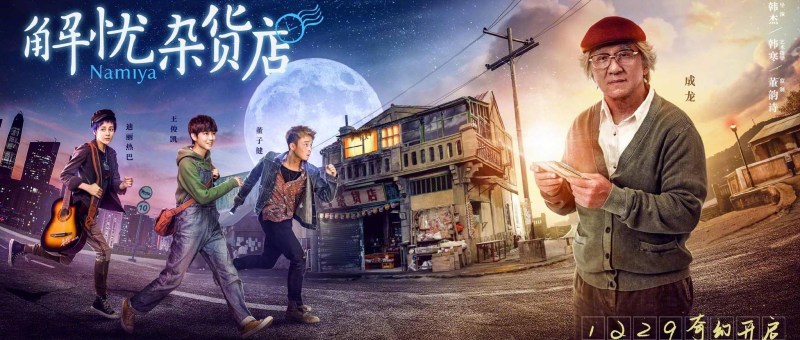
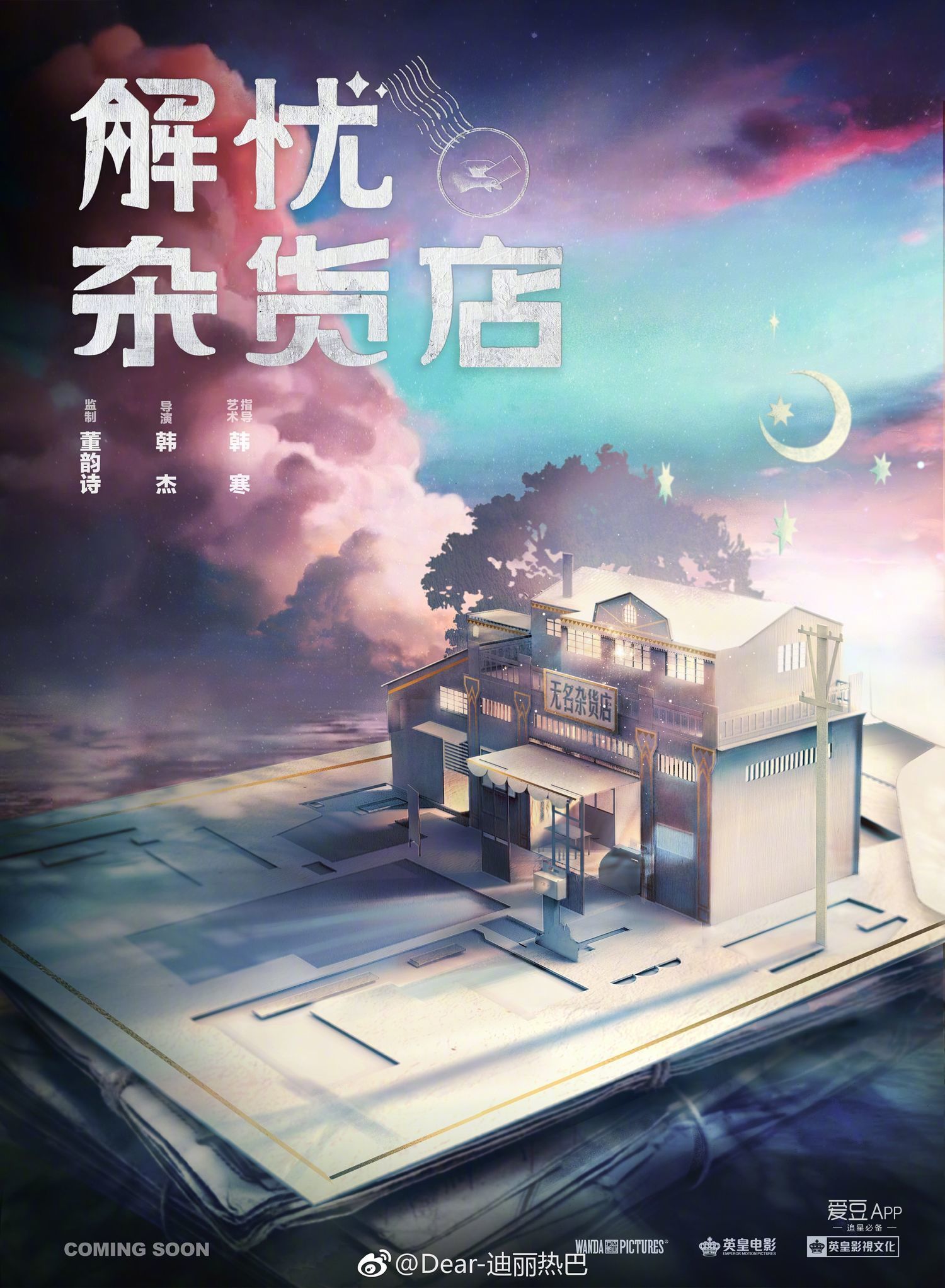
Namiya posterKeigo Higashino is almost certainly best known for his crime novels and in particular his most famous detective, Galileo, whose exploits have spawned a successful TV drama series and a fair few cinematic adaptations including the international bestseller, The Devotion of Suspect X. One might expect a writer of mystery novels to be a fierce rationalist, but Higashino occasionally dabbles in the fantastic – The Miracles of the Namiya General Store is more or less a nostalgia fest praising the pre-bubble Japan, implying that the modern world is colder and less kind than the aspiring society of 1979. Adapted for the Chinese market by Han Jie, Namiya (解憂雜貨店, Jiě Yōu Zá Huò Diàn) retains the corner shop where time stands still but locates it in 1993, which is not so much a significant date save being 25 years in the past.

On New Year’s Eve 2017, three teens break into a woman’s home with the idea of causing some damage, but the event goes south when she comes home early and one of the three decides to tie her up and steal a bunch of her stuff. Having gone further than they meant to, the trio wind up in an unfamiliar part of town when the car they’ve stolen runs out of petrol. An improbably quaint, apparently disused corner shop attracts their attention but when they break in to shelter for the night they discover that this is no ordinary store. A ghostly miasma gradually creeps its way in and the three youngsters find themselves answering a collection of letters meant for the store’s owner written in 1993 but only dropping through the letter box now. They funny thing is, they get almost immediate replies.

As one of the teens points out, they weren’t even born in 1993 – this store might as well be from 1793 as far as they’re concerned. Though it drips with nostalgia for a simpler time, Namiya treads (understandably) more carefully in painting early ‘90s Beijing and its rural backwater setting, strenuously avoiding any mention of politics and characterising China’s economic development as an entirely good thing despite the troubles the three teens at the centre have been subject to throughout their apparently difficult lives.

The letter writers have various problems but each in someway relates to being a little lost, a little bit confused about how to move forward in life. A frustrated musician (Lee Hong-chi) whose career is not taking off wants to know whether he should give up and come home, a little boy has a bad relationship with his go-getter parents who have lost all their money and got into trouble with loan sharks, and a melancholy bar hostess (Hao Lei) wants to know if she should become the mistress of a gangster who promises to set her up in a shop that would get her out of her dead end life and still enable her to support her family. The kids are not really qualified to offer any kind of real life advice, with sensitive Xiaobo (Karry Wang) and plucky Tong Tong (Dilraba Dilmurat) reacting in broadly sympathetic terms while the sullen Jie takes a hardline moralist stance in which he just wants to write angry letters to everyone telling them they’re doing everything wrong.

Jie has his own reasons for being so angry, especially as one of the letters touches a nerve in his own personal history but his ambivalence was at one point shared by Papa Namiya (Jackie Chan) himself after he feared his treasured advice might have ended up having a negative effect on people’s lives. Papa Namiya tells the troubled little boy to stick with his parents no matter what because family is the most important thing in a person’s life which might be true much of the time, but not when the parents actively endanger their child. What he finally reassures himself with is that his advice was largely meaningless because most people have already made up their minds what they’re going to do, they just want someone to help them feel like they’re doing the right thing. In fact, no one really follows Papa Namiya’s advice anyway, but the kids are able to make a concrete change when they reveal the economic realities of modern China to a young hopeful who then uses the knowledge to build an international business empire (but makes sure to pay it forward whilst paying tribute to their roots by committing to sponsor an orphanage in need of renovation/expansion).

The slightly awkward message Namiya leaves behind is that dreams come true when people work hard to achieve them but that the young are also free to forge their own destinies, that the world is, for them, infinite and filled with boundless possibility. Optimistic and inspiring as it is, it isn’t terribly realistic and does rather imply that those who haven’t made it are either lazy or dishonest as echoed in the mildly moralistic tone taken with the bar hostess’ dilemma or the odiousness of the corrupt businessman and his failure to protect his family from his own mistakes. Moral judgements and naivety aside, Namiya is an otherwise heartwarming, deliberately uncynical New Year tale which does its best to engender hope for the future in an otherwise cold and unforgiving month.


Currently on limited release in UK cinemas.

Original trailer (Mandarin with English subtitles)

Love in the Buff (春嬌與志明, Pang Ho-cheung, 2012)

love in the buff poster2010’s Love in a Puff was a delightfully low-key, slow burn romance in which two lonely smokers found each other over a back ally rubbish drum and a series of aimless text-based and ambulatory conversations. Jimmy and Cherie were both so diffident, fearful, and emotionally restrained that their grand love affair ended on a positive if ambiguous note, promising only to continue in forward motion. Where is there to go in a sequel? The same place again, apparently. Or, more precisely, Beijing.

So, Jimmy (Shawn Yue) and Cherie (Miriam Yeung) have found true love, moved in together and are very happy. Except, Jimmy is still Jimmy and Cherie is still Cherie and so there are problems. Things come to a head when Jimmy forgets a dinner arrangement with Cherie’s family, invites her to a beach party that turns out to be a work engagement, and then unwisely tries to win an argument by “reminding” her who plays the bills. Unsurprisingly, when Jimmy returns home Cherie has gone back to her mother’s. Jimmy takes a job in Beijing and starts dating an air hostess only for Cherie to also get an unexpected transfer to the mainland capital.

More or less following the pattern of the first film but with the roles of the protagonists reversed, Jimmy and Cherie find themselves falling back into the same old routine as they’re marooned in an unfamiliar city. Jimmy, still immature and self-centred, may have started an accidental relationship with a stewardess his friend intended to molest on an aeroplane, but it’s essentially superficial (at least from his side) and once again he finds himself texting Cherie whilst bored with his girlfriend’s elegant friend set. Cherie, not over Jimmy (much as she’d like to be) and perhaps regretting her over hasty grand gesture, begins a tentative relationship with a sensitive millionaire, Sam (Xu Zheng), whose only defects seem to be an old-fashioned idea of chivalry and the fact that he is extremely bald.

Despite Sam’s obvious goodness, Cherie can’t let Jimmy go and is ultimately disappointed to find that some of his childish strangeness has rubbed off on her – in fact, the very qualities which Sam finds attractive are ones she associates with Jimmy. Back to sneaking around, bickering, and exchanging cryptic text messages the pair are left to wonder if anything has really changed. The problems are exactly the same – neither one is willing to trust the other enough to make a real go of things. Cherie, still a little over sensitive about the (very small) age difference between herself and Jimmy as well as her ticking clock, resents being made to feel like the old ball and chain when Jimmy plays the coward in lying to her to go out drinking with friends. Jimmy still fears confrontation too much talk to Cherie in a straightforward way and so they’re locked in continuing cycles of passive aggressive drama.

Once again Jimmy and Cherie are the main draw though their friends take on a slightly larger role. Eunuch (Roy Szeto) remains Jimmy’s worst enabler as he urges him to make a series of bad decisions in making a life in the mainland capital, though there is a potential happy ending for Cherie’s “plain” friend Brenda (June Lam) whose lack of looks was the butt of such mean-spirited humour in the first film. Transposing the action to Beijing Pang takes another look at modern love with its marriage markets full of old women sitting in parks with signs selling the virtues of their sons not to mention the terrible blind dates but even if the actions of the central couple lean towards the sordid as they re-engage in accidental adultery, the romance is always gentle, innocent, and sincere. Jimmy and Cherie bonded in a puff, but now they have to learn to love each other “in the buff”, warts and all or call it quits.

Pang wisely drops the documentary conceit though maintains the laid-back aesthetic and whimsical music as the ballad of Jimmy and Cherie continues. The various cameo appearances threaten to derail the low-key style of the drama but once again Pang manages to capture something youthful, fresh, and heartfelt even if not moving very much beyond the original.


Original trailer (Cantonese with traditional Chinese/English subtitles)

https://www.youtube.com/watch?v=yoF6gwe1UOA