Mag Mag (禍禍女, Yuriyan Retriever, 2025)

The funny thing is, Mag Mag is only visible to the man she’s currently in love with, though what she seems to represent is the grudge of the unrequited lover whose gaze is never returned. The first release from K2 Pictures, a new production company launched in 2024 with the intention of shaking up the Japanese film industry by moving away from the production committee system, comedienne Yuriyan Retriever’s first feature sets out as if it’s asking why women become fixated on terrible men, only to eventually subvert its central premise with a series of unpredictable twists.

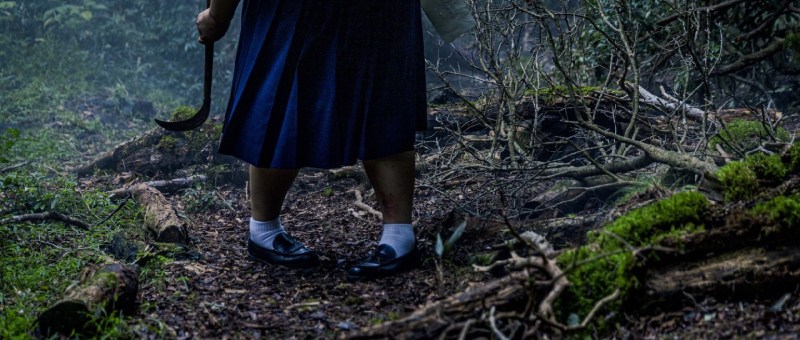
It’s true enough that (almost) all of Mag Mags targets deserve exactly what they get. The men are selfish and insensitive, bullying or abusive. Shunsuke (Fuku Suzuki), the first victim appears meticulously doing his hair in the bathroom mirror as if bearing out his vanity and self-obsession. Many of the men are popular and handsome, but the attention they get has only made them cruel and arrogant. Takuya (Junsei Motojima), the original victim said to have given birth to the curse of Mag Mag, is beloved of half the school but can’t resist punching down by making fun of a girl considered to be unattractive who had left him a love letter. Yurika Yoshida (Marina Mizushima), whose name is very similar to that of the director, is believed by some to have become Mag Mag after taking her own life and cursing Takuya in the process, but most of all represents the ugliness of the male gaze in being constantly berated for her appearance. The other kids tell her to lose weight and get plastic surgery, while Takuya takes her love letter as an insult to his status as king of the school. Mag Mag is described as being “freakishly tall” which also hints at ideas of monstrous femininity.

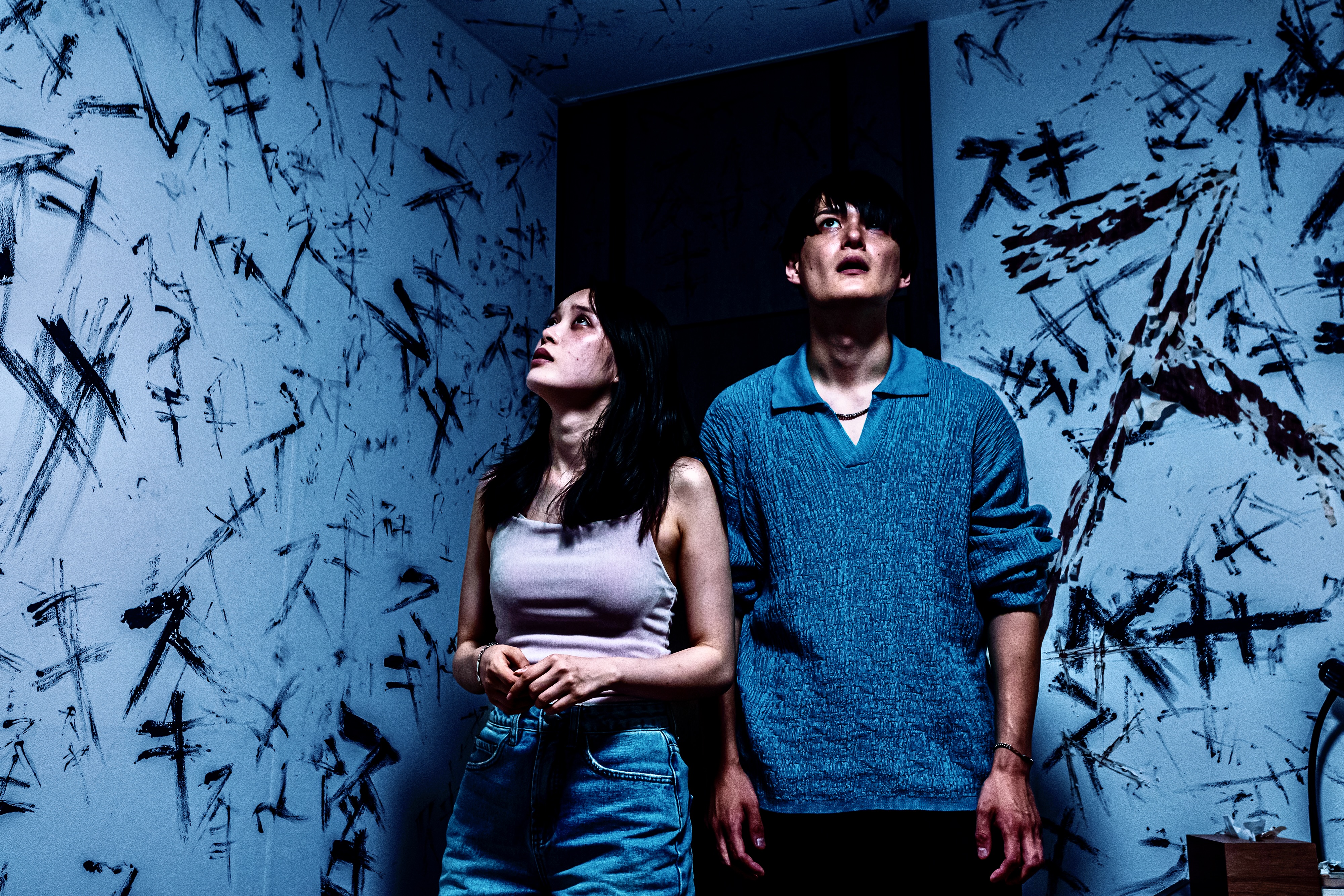
Perhaps this is one reason why Mag Mag rips out the eyes of her victims, though the point is that they were always pointed in the wrong direction anyway. Sanae is obsessed with an artist named Hiroshi (Oshiro Maeda), though he’s made a nude statue of another named Rumi apparently from his imagination and without her consent, which hints again at the self-involved nature of male desire. He does not appear to really notice Sanae (Sara Minami), though Rumi (Mai Fukagawa) may not be lying when she says he found her creepy. After Hiroshi’s death, Sanae begins investigating Mag Mag in attempt to unmask her and avenge Hiroshi, only to ultimately see herself in the vengeful spirt’s sinister cries of “I love you” which aren’t so different from those expressed for Hiroshi while essentially stalking him from her shrine lair. 

Nevertheless, this misdirected gaze is going in both directions as we, the viewers, too do not really see the person we should have been looking at all along. Deep-seated senses of inadequacy can provoke the jealously and resentment of unexpected and seriously inappropriate targets, and perhaps what we’re looking at here isn’t the societal urge to mock an “unattractive” woman who dares to ask for love, but rather the toxic rage of an invisible man who loathes those who seem to be unfairly popular with women despite being terrible human beings and unpleasant to be around. Perhaps in the end, it’s Sanae’s “delusional” fixation pitted against the passivity of a man who believes himself to be unattractive and in fact becomes so because of his intense self-loathing.

But then, there does appear to be a real ghost and unflinching embrace of the arcane with its Shinto priests, lines of prohibition, and apparently magic trees whose ability to end bad relationships is potentially more than just psychosomatic, or just little psycho. Yuriyan Retriever’s absurdist humour blends perfectly with the grimness of the Mag Mag curse and the world it seems to mirror. With an overt reference to Guard of the Underground, she celebrates and subverts J-horror tropes while skewering contemporary entertainment trends in her house share fantasia of hopeful youngsters that turns out to be a quasi-incestuous nest of betrayal and misplaced desire. Influencers too are a one-way relationship, and you only see what they you want you to. Mag Mag, however, just might let you go if only you’re brave enough to say you love her too rather than, like her unfortunate victims, spurning her affections and thereby invoking and ancient curse born of the suffering of an unreturned gaze.


Mag Mag screens in Chicago 10th April as part of the 20th edition of Asian Pop-Up Cinema.

Trailer (English subtitles)
When I Get Home, My Wife Always Pretends to be Dead (家に帰ると妻が必ず死んだふりをしています。, Toshio Lee, 2018)

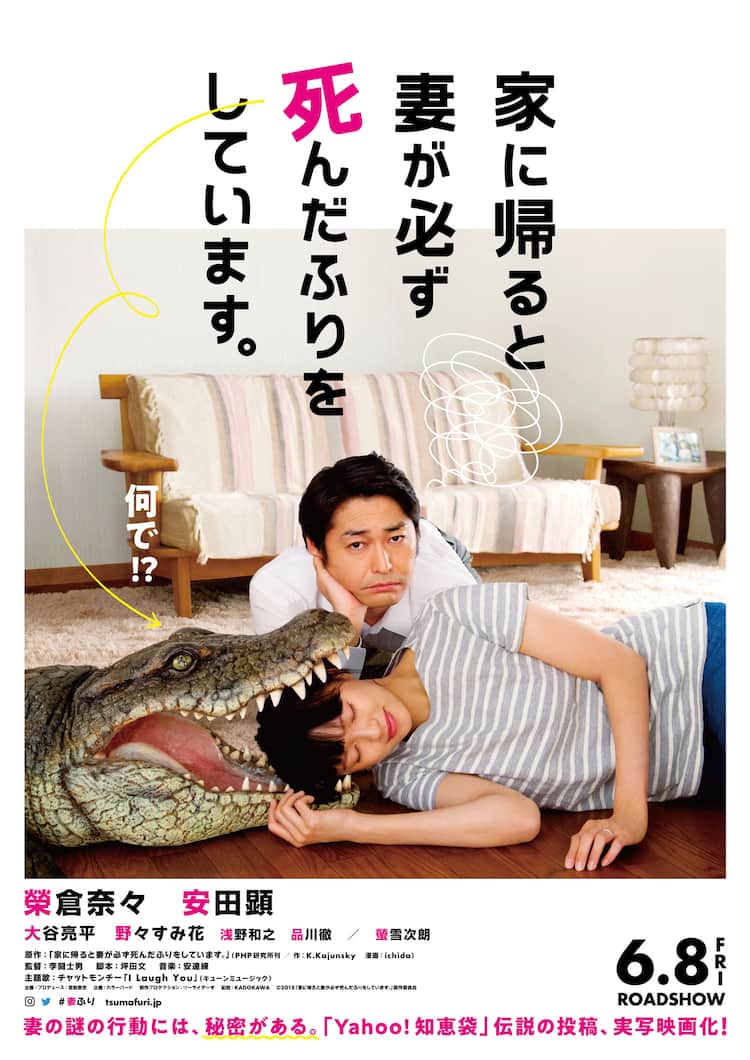
“If you give it some time it becomes just right,” according to the eccentric wife in Toshio Lee’s quirky contemplation of the modern marriage, When I Get Home, My Wife Always Pretends to be Dead (家に帰ると妻が必ず死んだふりをしています。Ie ni kaeru to tsuma ga kanarazu shinda furi wo shite imasu.). A more cheerful take on Harold and Maude, Lee’s not quite newlywed couple are heading out of their honeymoon phase and perhaps harbouring twin anxieties as they face the three year itch and start to wonder what marriage is all about and if they have what it takes to go the distance. 

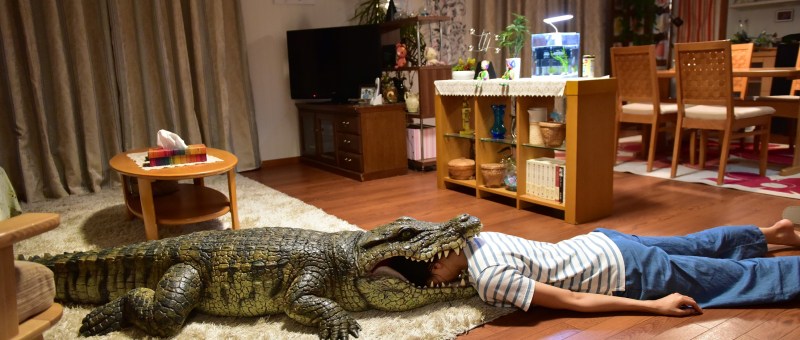
Regular salaryman Jun (Ken Yasuda) is particularly preoccupied with the “three year wall” because he was married once before and the relationship failed at the three year level which is, coincidentally, when many small businesses and restaurants fail. Perhaps unusually he has a friend at work, Sano (Ryohei Ohtani), with whom he discusses his marriage who ironically points out that Jun is essentially thinking of his marital status in the same way as a “contract renewal” as if worried he’s about to be let go. Around this time, however, he gets a nasty shock on returning home discovering his wife Chie (Nana Eikura) lying on the living room floor covered in blood. Distraught, he struggles to remember the number to call an ambulance only for Chie to suddenly burst out laughing. The same thing begins happening to him every time he goes home with the scenarios becoming increasingly elaborate such as being eaten by an alligator, for example, or being abducted by aliens. All things considered, Jun is quite a dull man, too embarrassed even to let his wife kiss him goodbye on the doorstep lest it scandalise the neighbours, so all of this fantasy is doing his head in but his rather blunt hinting that he’d prefer it Chie stop with the playing dead stuff only seems to hurt her feelings while she shows no signs of abandoning her strange hobby. 

Part of the problem is that Jun is also intensely self-involved and perhaps the product of a conformist, patriarchal society. He never reveals the reasons why his first marriage failed, only that his wife abruptly left him without much of an explanation. It never seems to occur to him that Chie may be fixating on death because she lost her mother young, possibly around the same age she is now, and is in a sense role playing demise to ease her anxiety probably grateful each time he returns home and “saves” her. For his part he insists he doesn’t “need excitement” and wants “a normal wife”, desperate to appear conventional and paranoid that Chie is going out of her mind. Rather than fully see her he keeps trying to “fix” the problem by encouraging her to take a part-time job and make new friends, worried she’s bored at home and lonely after moving away from her family home in Shizuoka.  

His friend Sano, seemingly happily married for five years, has a much more relaxed attitude to the mysteries of marriage but as the two wives begin to bond the cracks in their respective relationships are gradually revealed. Like Jun, Sano is also a conventional salaryman with traditional ideas about marriage which he somewhat rudely exposes in thinking he’s doing Jun a favour by “explaining” to Chie that her hobby is offensive to Jun because men work hard all day and want to sit down quietly without any bother when they come home. His quiet word provokes an outburst in his own wife Yumiko (Sumika Nono) who can no longer bear the irony, asking him why it is that she’s supposed to tiptoe around because he’s “tired” as if she does nothing at all day just waiting for him to come home. It’s as if they think their wives go back in the box until they ring the doorbell in the evening and wake them up again, as if the only value in their existence lies in supporting their husbands. Sano is mildly shocked on witnessing Yumiko suddenly brighten and embark on a mini lecture of crocodile facts after catching sight of Chie’s prop (bought on sale, making the most of her thrifty housewife skills), totally unaware she was into reptiles and equally stunned to learn she’s also a karate master. Five years, and it’s like they’re strangers. 

“Thinking won’t give you answers, when you don’t know, ask,” advises Jun’s boss, constantly carping about his ungrateful wife but later revealing that his deep love for her is what’s kept him going all these years. Miscommunication lies at the root of all their problems, Jun even failing to identify the most common if poetic of cliched idioms in his wife’s tendency to remark on the beauty of the moon seemingly at random. Clued in a little by Chie’s patient father, Jun begins to wake up himself, finally seeing his wife and understanding that she’s been trying to tell him something all this time only he was too self-involved to notice. “You can always find me if you look,” Chie was fond of saying, indirectly hinting that marital bliss is a matter of mutual recognition aided by empathy and a willingness to be foolish in the pursuit of happiness. 


When I Get Home, My Wife Always Pretends to be Dead is available to stream in the UK via Terracotta

Original trailer (English subtitles)