Doing Time (刑務所の中, Yoichi Sai, 2002)

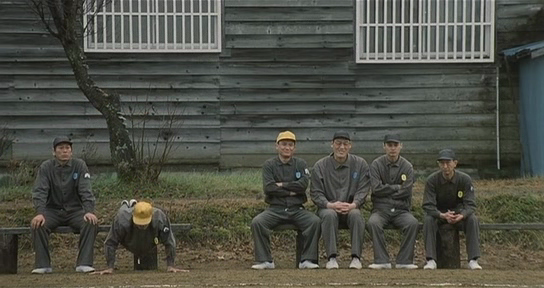
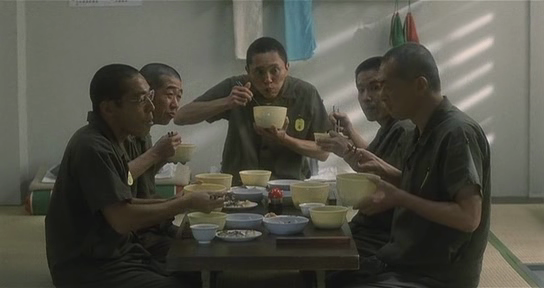
Who ever thought that life in prison could be so…peaceful? Adapted from the autobiographical manga by Kazuichi Hanawa, Yoichi Sai’s 2002 drama Doing Time (刑務所の中, Keimusho no Naka) is a slice of life dramedy somewhat typical of the early 2000s save its unexpected setting in a state penitentiary. Unlike the average prison movie, the main thing that Hanawa discovers is that life inside is incredibly dull, yet he approaches his brief sojourn in this other world with anthropological precision observing and mimicking the behaviour of his fellow prisoners while making the most of this hopefully once in a lifetime experience reflecting that he’ll likely never have the opportunity to wear such worn out undergarments ever again. 

A quiet man already in middle age, Hanawa (Tsutomu Yamazaki) is no dangerous criminal merely a firearms enthusiast who liked to fire modified pistols into bottles of water. He’s got three years for illegal possession of weaponry and explosives, which seems to be quite a harsh penalty considering another man is doing seven for murder after shooting a man he says waved an axe at him when he went to collect a debt. There are clearly men who have committed violent crimes in Hanawa’s immediate vicinity, yet this is not a traditional tale of prison gangs and factional infighting, the only violence we witness concerns one prisoner who appears to have broken the rules accidentally in thoughtlessness or ignorance rather than direct rebellion. Rather it is, ironically enough, almost like a summer camp in which Hanawa and his four cellmates attempt to amuse themselves during the little free time they are offered for contemplation and relaxation. 

Even so, every inch of the prisoners’ lives is micromanaged by the guards from the way they walk to when they are allowed to move or speak. So entirely stripped of their dignity are they, that they must ask for permission even to use the toilet in their own cell while in solitary confinement and dutifully report back once they’ve finished. The communal squat toilets at the back of the workshop where Hanawa works crafting wooden tissue boxes are entirely open with only knee-height doors on each stall for privacy. The prisoners’ days are tightly ordered, early to bed and early to rise with work in-between and only the promise of rest to look forward to on weekends and holidays. 

Ostensibly a shy man, Hanawa dislikes having to ask permission all the time though not so much as an affront to his autonomy as simply bothersome. Surprisingly he begins to warm to the rhythms and routines of prison life discovering in them a kind of liberation, finding his time in solitary for “unauthorised communication” the most enjoyable of his sentence free as it is of the necessity of interacting with other people. Like the bug collector in Woman of the Dunes, he finds freedom in simplicity appreciating the mindlessness of his absurd new job folding paper bags for medical prescriptions. He can abandon any sense of responsibility for his life, submitting himself entirely to the guards’ authority and surrendering the need for control, happy to allow his existence to be managed for him without needing to decide on anything for himself. 

That aside, it’s difficult to see what other purpose prison could serve for a man like Hanawa who merely had an unusual if potentially dangerous hobby save providing him with a unique life experience he seems to be treating as a kind of adventure. He may at times look down on his cellmates who have their own routines, but otherwise appears grateful for their input and advice regarding prison life often listening to their explanations for behaviour he regards as strange such as removing one’s trousers before entering the bathroom and then deciding to do as they do. With so little stimulation the mundane becomes exciting, each meal a culinary adventure listening to a cellmate recount his group treat of a film screening (Takeshi Kitano’s Kid’s Return) as if he had returned from exotic land relishing his description of the chocolate biscuits and cola he was given to snack on. Time is what Hanawa is doing, but he does at least gain the opportunity of experiencing life in slow motion learning to appreciate the beauty of a single dandelion while observing the absurdity of the world all around him which is perhaps no more absurd than that which exists outside. 

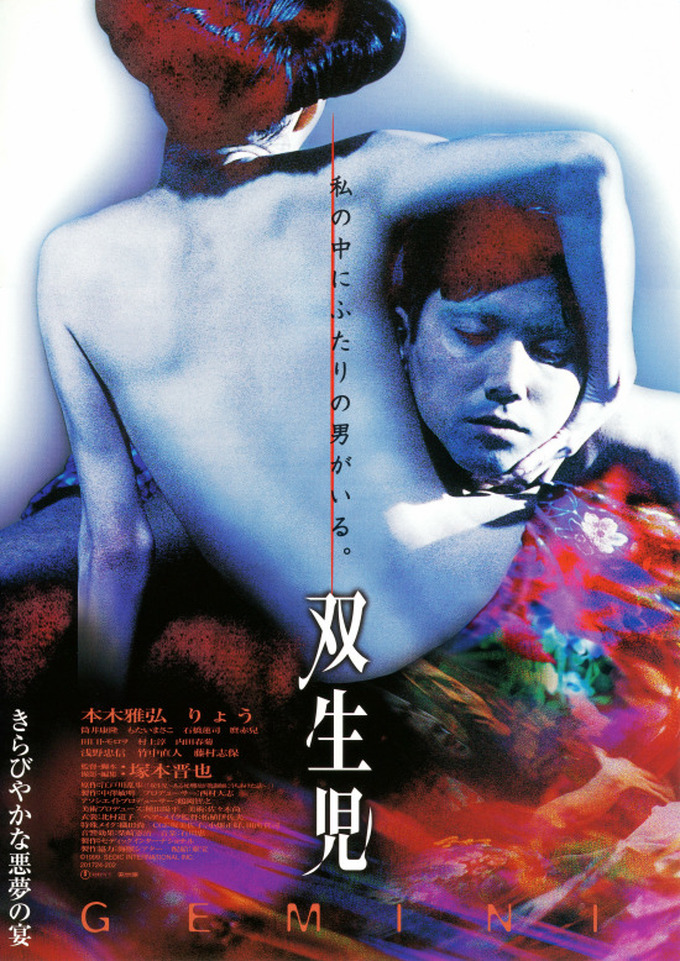
Gemini (双生児 GEMINI, Shinya Tsukamoto, 1999)

Shinya Tsukamoto made his name as a punk provocateur with a series of visually arresting, experimental indie films set to a pounding industrial score and imbued with Bubble-era urban anxiety. Inspired by an Edogawa Rampo short story, 1999’s Gemini (双生児 GEMINI, Soseiji Gemini) is something of a stylistic departure from the frenetic cyberpunk energy of his earlier career, marked as much by stillness as by movement in its strikingly beautiful classical composition and intense color play. Like much of his work, however, Gemini is very much a tale of societal corruption and a man who struggles against himself, unable to resist the social codes which were handed down to him while simultaneously knowing that they are morally wrong and offend his sense of humanity. 

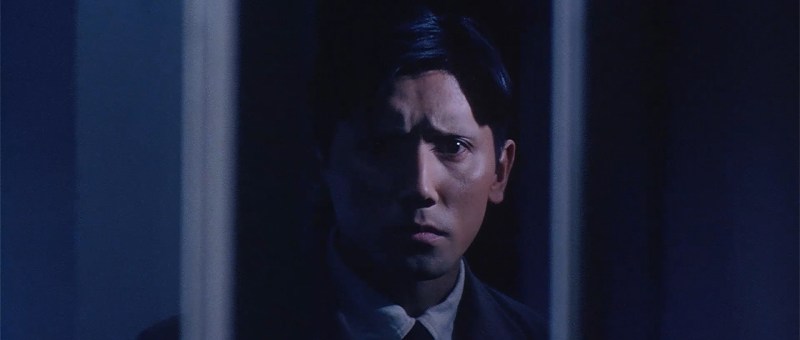
Yukio (Masahiro Motoki) is a war hero, decorated for his service as a battlefield medic saving the life of a prominent general during the first Sino-Japanese War. He’s since come home and taken over the family business where his fame seems to have half the well-to-do residents of the area inventing spurious excuses to visit his practice, at least according to one little boy whose mum has brought him in with a bump on the head after being beset by kids from the slums. “They’re just like that from birth” Yukio later tells his wife echoing his authoritarian father, “the whole place should be burned to the ground”. A literal plague is spreading, but for Yukio the slums are a source of deadly societal corruption that presents an existential threat to his way of life, primed to infect with crime and inequity. His home, which houses his practice, is hermetically sealed from those sorts of people but lately he’s begun to feel uneasy in it. There’s a nostalgia, a sadness, a shadowy presence, not to mention a fetid stench of decay which indicates an infection has already taken place, the perimeter has been penetrated. 

The shadowy presence turns out to belong to his double, Sutekichi whose name literally means “abandoned fortune”, a twin exposed at birth as unworthy of the family name owing to his imperfection in the form of a snake-like birthmark on his leg and raised by a travelling player in the slums. Having become aware of his lineage, Sutekichi has returned to make war on the old order in the form of the parents who so callously condemned him to death, engineering their demise and then pushing Yukio into a disused well with the intention of stealing his identity which comes with the added bonus that Yukio’s wife, Rin (Ryo), was once his. 

Rin’s presence had already presented a point of conflict in the household, viewed with contempt and suspicion by Yukio’s mother because of her supposed amnesia brought on by a fire which destroyed her home and family. Yukio had reassured her that “you can judge a person by their clothes”, insisting that Rin is one of them, a member of the entrenched upper-middle class which finds itself in a perilous position in the society of late Meiji in which the samurai have fallen but the new order has not quite arrived. In Rin modernity has already entered the house, a slum dweller among them bringing with her not crime and disease but a freeing from traditional austerity. In opposing his parents’ will and convincing them to permit his marriage, Yukio has already signalled his motion towards the new but struggles to free himself from the oppressive thought of his father. He confesses that as a battlefield physician he doubted himself, wondering if it might not have been kinder to simply ease the suffering of those who could not be saved while his father reminds him that the German medical philosophy in which he has been trained insists that you must continue treatment to the very last. 

This is the internal struggle Yukio continues to face between human compassion and the obligation to obey the accepted order which includes his father’s feelings on the inherent corruption of the slum dwellers which leads him to deny them his medical knowledge which he perhaps thinks should belong to all. The dilemma is brought home to him one night when a young woman is found violently pounding on his door wanting help for her sickly baby, but just as he makes up his mind to admit her, putting on his plague suit, a messenger arrives exclaiming that the mayor has impaled himself on something after having too much to drink. Yukio treats the mayor and tells his nurses to shoo the woman away, an action which brings him into conflict with the more compassionate Rin who cannot believe he could be so cynical or heartless. 

Where Yukio is repressed kindness, a gentle soul struggling against himself, Sutekichi is passion and rage. Having taken over Yukio’s life, he takes to bed with Rin who laughs and asks him why it is he’s suddenly so amorous. She sees or thinks she sees through him, recognising Sutekichi for whose return she had been longing but also lamenting the absent Yukio who was at least soft with her in ways Sutekichi never was. “It’s a terrible world because people like you exist” Sutekichi is told by a man whose fiancée he robbed and killed. Yukio by contrast is unable to understand why this is happening to him, believing that he’s only ever tried to make people happy and has not done anything to merit being thrown in a well, failing to realise that his very position of privilege is itself oppressive, that he bears his parents’ sin in continuing to subscribe to their philosophy in insisting on their innate superiority to the slum dwellers who must be kept in their place so that they can continue to occupy theirs. 

Apart, both men are opposing destructive forces in excess austerity and violent passion, only through reintegration of the self can there be a viable future. Tsukamoto casts the austerity of the medical practice in a melancholy blue, contrasting with the fiery red of the post-apocalyptic slums, eventually finding a happy medium with the house bathed in sunshine and the family seemingly repaired as a doctor in a white suit prepares to minister to the poor. Having healed himself, he begins to heal his society, treating the plague of human indifference in resistance to the prevalent anxiety of the late Meiji society. 


Gemini is released on blu-ray in the UK on 2nd November courtesy of Third Window Films in a set which also includes a commentary by Tom Mes, making of featurette directed by Takashi Miike, behind the scenes, make up demonstration featurette, Venice Film Festival featurette, and original trailer.

Original trailer (English subtitles)

Sketches of Kaitan City (海炭市叙景, Kazuyoshi Kumakiri, 2010)

sketches of kaitan cityYasushi Sato, a Hakodate native, has provided the source material for some of the best films of recent times including Mipo O’s The Light Shines Only There and Nobuhiro Yamashita’s Over the Fence but it has to be said that his world view is anything but positive. Kazuyoshi Kumakiri takes on Sketches of Kaitan City (海炭市叙景, Kaitanshi Jokei) inspired by a collection of short stories left unfinished on Sato’s death by suicide in 1990. Despite the late bubble era setting of the stories (now updated to the present day), his Kaitan (eerily close to the real life Hakodate) is a place of decline and hopelessness, populated by the disillusioned and despairing.
The first story concerns a brother and sister whose lives have been defined by the local shipbuilding industry. Since their father was killed in a dockside fire, older brother Futa (Pistol Takehara) has been taking care of his little sister Honami (Mitsuki Tanimura) and now works at the docks himself. Times being what they are, the company is planning to close three docks with mass layoffs inevitable. The workers strike but are unable to win more than minor concessions leaving Futa unable to continue providing for himself or his sister.

Similar tales of societal indifference follow as an old lady living alone with her beloved cat is hounded by a developer (Takashi Yamanaka) desperate to buy her home. Across town the owner of the planetarium (Kaoru Kobayashi) is living a life of quiet desperation, suspecting that his bar hostess wife (Kaho Minami) is having an affair. Meanwhile a gas canister salesman (Ryo Kase) is trying to branch out but having little success, and a tram driver dwells on his relationship with his estranged son.

Economic and social concerns become intertwined as increasing financial instability chips away at the foundations of otherwise sound family bonds. Futa’s situation is one of true desperation now that he’s lost the only job he’s ever had and is ill equipped to get a new one even if there were anything going in this town which revolves entirely around its port.

Yet other familial bonds are far from sound to begin with. The gas canister salesman, going against his father’s wishes in trying to diversify with a series of water purifiers he believes will be a guaranteed earner because of the need to replace filters, takes out his various frustrations through astonishing acts of violence against his wife who then passes on the legacy of abuse to his son, Akira (You Koyama). Resentful towards his father and embarrassed by his lack of success with the water filters, the gas canister salesman threatens to explode but unexpectedly finding himself on the receiving end of violence, he is forced into a reconsideration of his way of life – saving one family member, but perhaps betraying another.

The gas canister salesman is not the only one to have a difficult relationship with his child. The planetarium owner cannot seem to connect with his own sullen offspring and is treated like an exile within his own home while the tram driver no longer speaks to his son who is apparently still angry and embarrassed that his mother worked in a hostess bar.

Yet for all of this real world disillusionment, despair takes on a poetic quality as the planetarium owner spends his days literally staring at the stars – even if they are fake. The gas canister salesman’s son, Akira, becomes a frequent visitor, excited by the idea of the telescope and dreaming of a better, far away world only to have his hopes literally dashed by his parents, themselves already teetering on the brink of an abyss. Futa’s lifelong love has been with shipping – the company officials are keen to sell the line that it’s all about the boats and an early scene of jubilation following the launch of a recently completed vessel would seem to bear that out, but when it comes down to it the values are far less pure than a simple love of craftsmanship. Kaitan City is a place where dreams go to die and hope is a double edged sword.

There are, however, small shoots of positivity. The old lady welcomes her cat back into her arms, discovering that it is pregnant and stroking it gently, reassuring it that everything will be OK and she will take care of the new cat family. Signs of life appear, even if drowned out by the noise of ancient engines and the sound of the future marching quickly in the opposite direction. Bleak yet beautifully photographed, Sketches of Kaitan City perfectly captures the post-industrial malaise and growing despair of those excluded from economic prosperity, left with nothing other than false promises and misplaced hope to guide the way towards some kind of survival.


Original trailer (no subtitles)

Yakuza Taxi (893 タクシー , Kiyoshi Kurosawa, 1994)

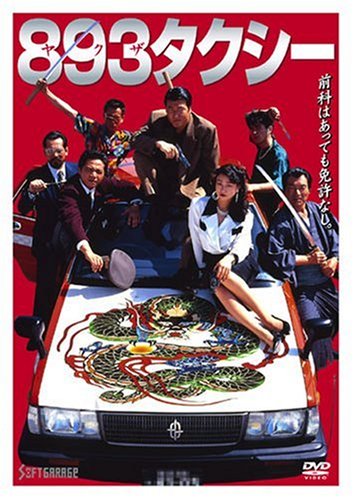
Like many fillmakers of his generation, Kiyoshi Kurosawa began directing commercially in the 1980s working in the pink genre but it was the early ‘90s straight to video boom which provided a career breakthrough. This relatively short lived movement was built on speed where the reliability of the familiar could be harnessed to produce and market low budget genre films with a necessarily high turnover. Kurosawa made his first foray into the V-cinema world in 1994 with the unlikely comedy vehicle Yakuza Taxi (893 タクシー, 893 Taxi). Although Kurosawa had originally accepted the project in the hope of being able to direct a large scale action film, his distaste for the company’s insistence on “jingi” (the yakuza code of honour and humanity) proved something of a barrier but it did, at least, lend free rein to the director’s rather ironic sense of humour.
The Tanaka taxi firm has hit on some hard times and is in trouble over a series of promissory notes owned by a former yakuza loanshark. Luckily, Tanaka is lifelong friends with a local yakuza boss who is angry about the dishonourable way his friend has been treated and is determined to help him. He also sees this as a rare opportunity to prove the yakuza can still be of help in an “honest” way and therefore instructs three of his guys to get some fake driving/taxi licenses and set about making enough money to fend off the loansharks. The guys are soon joined by the recently released Seiji who wasn’t really planning on a secondary career as a taxi driver after sacrificing precious time in service of his clan and is not happy with his current career track.

The set-up is, of course, primed for comedy as the yakuza, who are known for being rough, rowdy and rude, suddenly have to adapt to a job which requires absolute politeness and courtesy. The original trio do their best learning from the company’s only remaining professional driver, Kimura, and come to view radio girl and boss’ daughter Kanako as a kind of big sister figure. Once Seiji arrives things begin to become more complicated as he maintains a number of yakuza habits incompatible with taxi driving – namely all day drinking, hostess bars, and beating up the passengers.

Seiji and Kanako spit fire at each other in place of courtship though Kanako’s often surly attitude is later revealed as.partly driven by resentment at being forced to labour in a boring job at her father’s company. The guys are supposed to be earning the money back legally but Seiji has always been one for a short cut. His ill gotten gains are ultimately rejected by Kanako, but not before they’ve caused a lot more trouble. The situation becomes even more challenging when a corrupt policeman teams up with the loansharks to harass the guys, even going to far as to make them drive to remote places where they can be beaten up by motorcycle thugs. Finally the game appears to be up when Kanako attempts to renegotiate and is offered “alternative employment” with the threat of enslavement hanging over her head.

Despite the comedic tone, sleaze is never far from the screen with two quite odd and extremely gratuitous sequences of strange boob fondling, not to mention one set of passengers who are delighted that they’re “alone now” and decide to make the most of it with some distinctly kinky action (Seiji makes a point of giving the male customer a few lessons in taxi etiquette before they reach their destination). Comedy is the main draw, there are no gun battles and relatively few actual fights aside from failed jump kicks and the distant thud of crowbars. Remaining more or less straightforward in terms of style, Kurosawa nevertheless embraces his taste for the absurd as this gang of low level bad guys come together to help a friend and discover an unexpected affinity for the service industry in the process.


Antenna (アンテナ, Kazuyoshi Kumakiri, 2004)

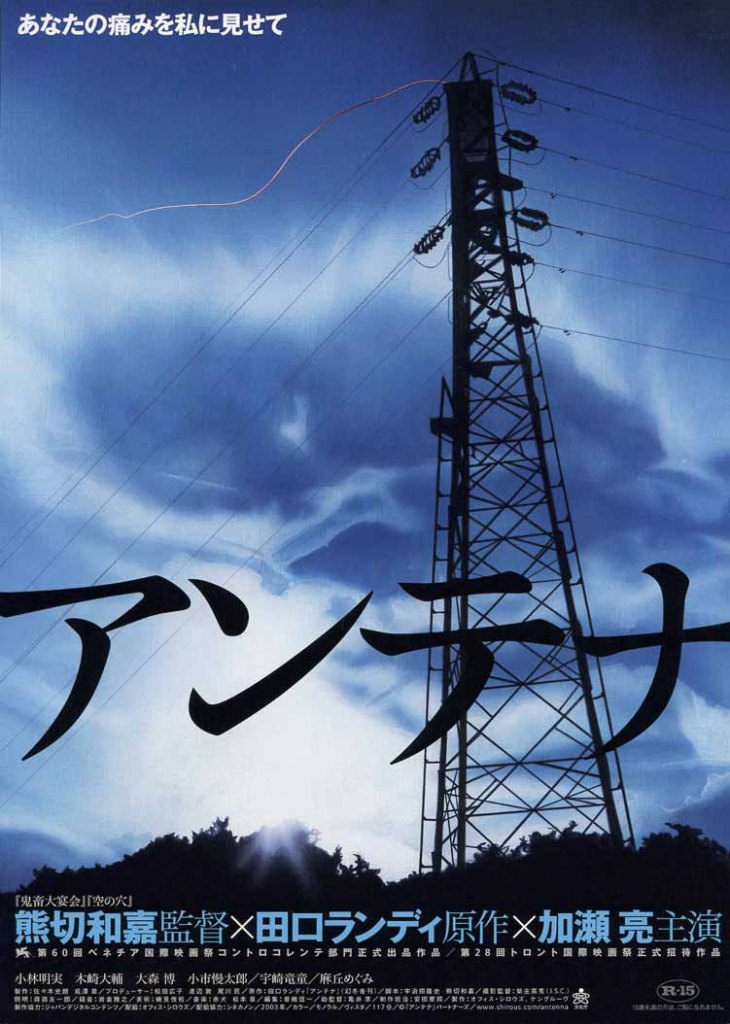
AntennaScarring, both literal and mental, is at the heart of Kazuyoshi Kumakiri’s third feature, Antenna (アンテナ). Though it’s ironic that indentation should be the focus of a film whose title refers to a sensitive protuberance, Kumakiri’s adaptation of a novel by Randy Taguchi is indeed about feeling a way through. Anchored by a standout performance from Ryo Kase, Antenna is a surreal portrait of grief and repressed guilt as a family tragedy threatens to consume all of those left behind.

Philosophy student Yuichiro (Ryo Kase) is currently working on a project which aims to reevaluate how pain is felt through attempting to identify with the pain of others. To do this he plans to investigate the S&M scene but before he can get started, a painful episode from his past is reawakened by current events. Yuichiro’s younger sister, Marie, has been missing since failing to return home from school one day when she was only eight years old. When news reports appear that another girl around the same age has been held captive in a nearby apartment complex since around the time Marie went missing hopes are sparked only to be dashed. Still no closer to discovering what happened to his younger sister, Yuichiro carries the guilt of having been unable to protect her as well as the inability to remember exactly what happened on that fateful day.

Matters come to a head when Yuichiro’s younger brother (their mother was pregnant with him at the time of the disappearance) turns up on his doorstep. Yuya (Daisuke Kizaki) repeatedly claims that Marie is about to return as he can feel her through his “antenna” (“like the horns of a snail”) and has a full scale fit aboard the train back. Things being what they are, the doctors advise Yuichiro to spend sometime at home as his distracted mother is no shape to cope with Yuya’s increasingly odd behaviour. A dutiful son, Yuichiro does what he can for what’s left of his family but his childhood home is far from a good environment for him.

Soon after Marie’s disappearance, both Yuichiro’s father and his uncle Shige who’d lived with them both died, leaving only Yuichiro’s mother and baby brother behind them. Unable to come to terms with Marie’s disappearance, Yuichiro’s mother has found religion, hosting Buddhist prayer sessions at the house and bringing in Feng Shui experts to try and heal the lingering sense of tragedy still present in the house. She has also become convinced that her second son, Yuya, is in fact the returned spirit of her daughter, raising him as a girl and dressing him in Marie’s clothes. This may explain some of Yuya’s conflicting behaviour and repeated insistence that his sister is “returning” in so much as something of her personality has become the ghost in his machine.

Once back in the house, Yuichiro’s mental state becomes ever more precarious as his memories of his sister’s disappearance begin to flicker to the surface. Overcome with repressed guilt, Yuichiro once again begins self harming by slashing his chest with a box cutter. Easing the mental pain with the physical, Yuirichiro finally begins to address some of his long buried trauma through repeated meetings with the dominatrix he was interviewing for his project. Undergoing a kind of S&M lead sex therapy, Yuichiro is slowly guided back through his memories to events he was too young to understand at the time and only now is fully able to comprehend.

Throughout his flashbacks Yuichiro is always sidelined, perched behind barriers or shut away by closed doors as the adults argue and loudly discuss things they claim are not suitable for children to hear. Crucial moments find him peaking through keyholes and seeing something he knew was not quite right but without knowing why. These incomplete and incomprehensible memories are the ones which haunt him, unresolvable but still trailing the guilt behind them of having seen yet done nothing.

Told in a slight non-linear fashion through frequent flashbacks, the film adopts a dreamlike tone and surreal imagery to make sense of the more extreme elements. The final sequence itself is either a hallucination or a dream that takes on a magical realist quality as the past is finally allowed to drift away from its lodging place, freeing up a space for light to return to the otherwise darkened house.

An intense exploration of buried trauma and childhood guilt, Antenna is a dark tale but does offer a glimmer of hope after all its hellish meandering. Kumakikri keeps things straightforward but his considered compositions have a strange kind of beauty despite the ugliness of the narrative. Embracing a number a taboo subjects coupled with strong emotion and explicit content, Antenna is not an easy watch but rewarding for those who can brave its extremes.


Original trailer (no subtitles)

https://www.youtube.com/watch?v=HL7ceRogLC8

Hatsukoi (First Love) (初恋, Yukinari Hanawa, 2006)

hatsukoiThe 300 Million Yen Affair is one of the most famous and intriguing unsolved mysteries in Japan, not least because the missing cash has been lying dormant somewhere, apparently untouched, ever since that fateful day back in 1968. Seeing as the true story has never been discovered, the crime has taken on legendary status and become the focus of many kinds of fiction. Misuzu Nakahara’s fictionalised autobiography is just one of these as she retroactively claims responsibility for the robbery as a teenage girl in love with a detached revolutionary.

Misuzu (Aoi Miyazaki) begins her tale a couple of years before the crime as she lives a lonely and introverted life in the house of her uncle, her father having died and her mother apparently absconded with her older brother in tow but leaving her behind. It’s her 16th birthday, but no one cares. Soon enough she starts hanging around a shady jazz bar before another woman convinces her to come inside and join their group of layabout beatniks – a group which is actually lead by her estranged older brother, Ryo (Masaru Miyazaki). These are the heady days of students protests – against the old order, against the ANPO treaty, against the war in Vietnam, against just about everything. Misuzu grows closer to one of their number, the quiet and mysterious Kishi (Keisuke Koide), who has a proposition for her….

Hatsukoi (AKA First Love, 初恋) is a film which is thick with period detail from the authentically smokey, sweaty jazz bar and its counterculture denizens to the nostalgic atmosphere and 1960s street scenes. However, evoking Misuzu’s own sense of ennui, director Yukinari Hanawa opts for a detached, dispassionate tone which is entirely at odds with the otherwise searing, youth on fire tension of the time period. Misuzu is always on the edges of things, younger than the other members of the group she feels as if she’s merely being permitted to stay and listen rather than invited to participate. Nevertheless, even if it’s the case that Misuzu is a by nature a passive person, the film pushes the intense nature of the social revolution going on all around her into mere background, squandering its power to bring out the sense of passion that the film feels as if it needs.

At heart, the robbery is something of a mcguffin as the real story is the true love tragedy hinted at in the title. Misuzu and Kishi grow closer through their plotting of the crime which is born of his desire to commit a different kind of revolutionary act. The money is intended to pay the bonuses of Toshiba employees and Kishi feels the best way to make a protest against economic inequality and the power of large corporations is to hit them in the finances. Misuzu plays her part well enough and the robbery comes off OK despite minor hitches allowing only a brief honeymoon period for its would be Bonnie and Clyde before history begins to move forward and eventually rips them apart. For Misuzu the robbery becomes the defining event of her youth and the birth of the love that she seemingly cannot let go. After this the jazz club is over, the protest movement dies as do some of the protestors, or else they move on to more conventional lives. Not quite a coming of age, but a death of youth before it had hardly begun.

Some injuries never heal, says the kindly old man who teaches Misuzu how to drive. A prescient remark if ever there was one. Misuzu seems locked within this brief period of her youth, before her friends died, left, or disappeared once the turbulent atmosphere of protest and revolution gave way to the consumerist 1970s and everyone forgot about the necessity for social change in the hurry to make money.

Hatsukoi becomes less a about the first love itself than about the period that surrounds it. The love was lost, but so was the bubble in which Misuzu had begun to define herself as a young woman. What Hatsukoi lacks is a sense of personal tragedy, of a soul crushing, spiritual death which locks each of the group members into their own tragic fates and seems somehow dictated despite their insistence on defining themselves in the new, youth centric world. Often beautifully photographed, Hatsukoi’s air of desolation and cold, detached tone weaken its ability to engage making its painful end of youth journey all seem rather dull.


Hatsukoi was released with English subtitles on blu-ray in Taiwan, and on DVD in Hong Kong though both editions now appear to be OOP.

Unsubtitled trailer:

https://www.youtube.com/watch?v=k-HTlxRwQPg