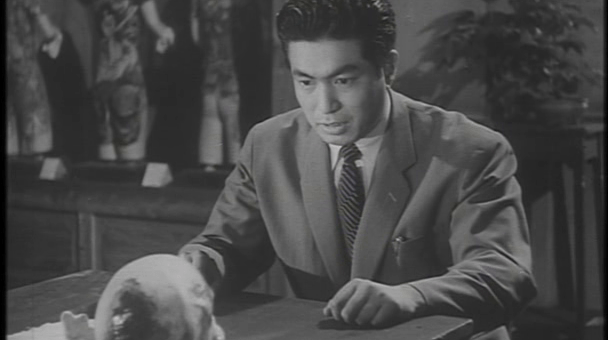
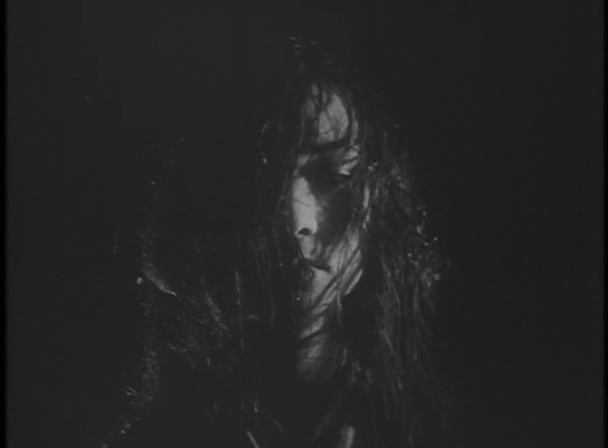
The Military Policeman and the Dismembered Beauty (憲兵とバラバラ死美人, Kyotaro Namiki, 1957)

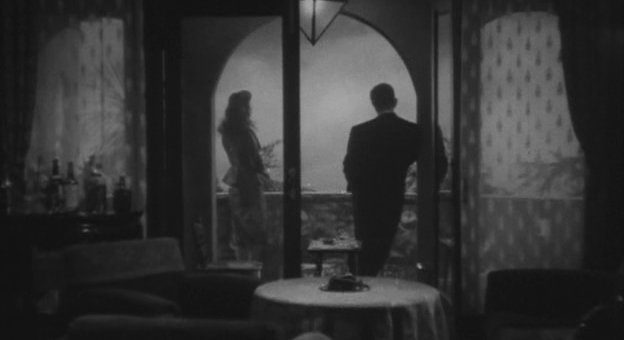
The Military Policeman and the Dismembered Beauty (憲兵とバラバラ死美人, Kenpei to Barabara Shibijin) was apparently a substantial hit on its release, though to modern eyes at least it doesn’t quite live up to the salaciousness of its title. In fact, it seems a little more interested in reassessing the militarist past while attempting to rehabilitate an authoritarian power and reframing it as good and compassionate unlike the corrupted killer who is selfish and ambitious to the extent that he’s literally poisoning the militarist wells. 

What we’re first introduced to, however, is a rather familiar tale of a soldier who’s gotten a girl pregnant but now won’t marry her mainly because he’s onto a good thing with a pretty girl from a prominent family so his girlfriend’s in the way. Though we see a prelude to the murder, we don’t get good a look at the soldier’s face (though we do hear his voice) which on one level hints at the generalised violent threat of the militarist machine but is also a neat plot device that allows us to into the crime but still maintains the mystery. When we do see the actual killing, it’s surprisingly frank for the time period and disturbing in its sexual charge though there is no gore involved save a grisly discovery in yet another well. 

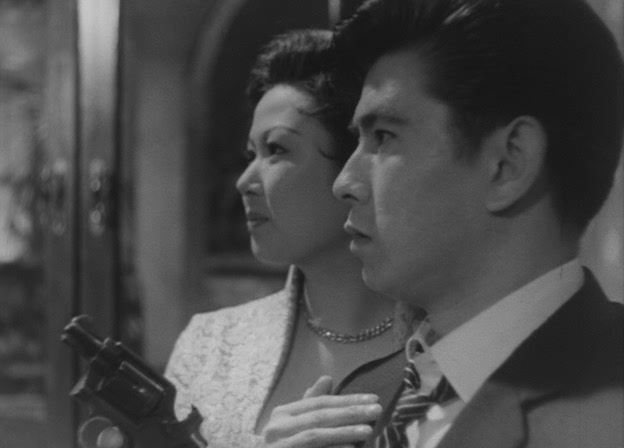
The killing occurred shortly before the regiment left for Manchuria, which seems to be one way the killer sought to move on and leave his crime behind. The first hint of the corruption is discovered by a gang of new recruits as yet unused to the militarist machine. They notice that the water in the well in the barracks is bad, but are at first bullied and insulted by another soldier who’s been there longer and gives them a rather priggish speech about the sanctity of the regimental water. What they discover is that the water tastes bad because there’s a dismembered torso in there and has been for the last six months. One has to wonder why the culprit would think this a good place to hide a body given the risk of discovery and increasing suspicion but as it turns out no one is all that interested. The Military Police aren’t that keen on investigating themselves, and then we get the familiar conflict between the local cops and the specialists as a top investigator, Kosaka (Shoji Nakayama), is assigned to investigate the crime and insists on doing so thoroughly rather than just beating their favourite subject into a false confession. 

Kosaka is then posited as a nice Military Policeman, an emissary of legitimate authority rather than bumbling provincials who are ridiculous and self-serving not to mention incompetent and resentful. We’re told repeatedly that Kosaka is prepared to work with the civilian police unlike the other military policemen who insist on militarist primacy and refuse to allow the detectives onto the base to investigate. He’s a representative of a less authoritarian age that looks forward to the democratic future, but he is also a part of that organisation himself no matter how different he may seem to be and cannot escape the overarching structures of militarism. Nevertheless, his edges are further softened by a nascent romance with the middle-aged innkeeper at his lodging house while his assistant is after her sister, a childhood friend who can’t stop calling him by his old nickname. 

The two of them investigate scientifically, making frequent trips to the pathologist to discuss theories and evidence though Kosaka is eventually guided towards the solution after seeing the young woman’s ghost. The local military police meanwhile fixate on another soldier who has a reputation for using sex workers, one of whom has recently disappeared, though Kosaka thinks the man is a just a crook with what modern viewers make think of as a sex addition that sees him steal supplies from the kitchen to sell in order to finance his visits to the red light district. The military police whip him in an oddly sexually charged manner to try to get him to confess, but he maintains his innocence. One of the motives for the murder was seemingly that the victim planned to expose the affair, taking her concerns to the killer’s superior officer in an effort to force him to marry her which would have ruined his career prospects in what is supposed to be an organisation of honourable men. Unlike Kosaka who shares his name with the writer of the novel the film is based on which may have been inspired by true events, the other military police are largely like the killer, arrogant, selfish and unfeeling though all Kosaka himself represents is a supposedly more benevolent authority that for his niceness may not actually be all that much nicer.
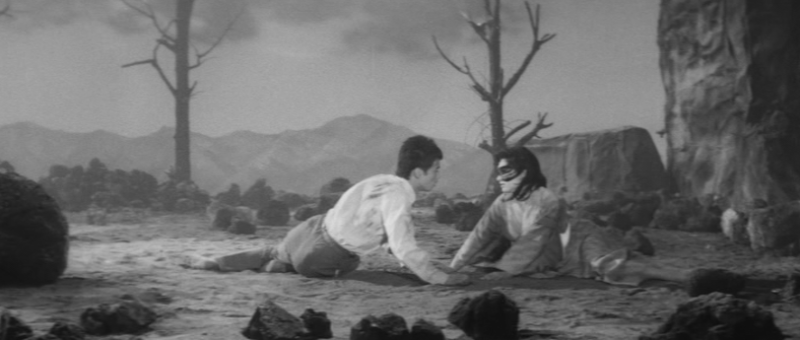
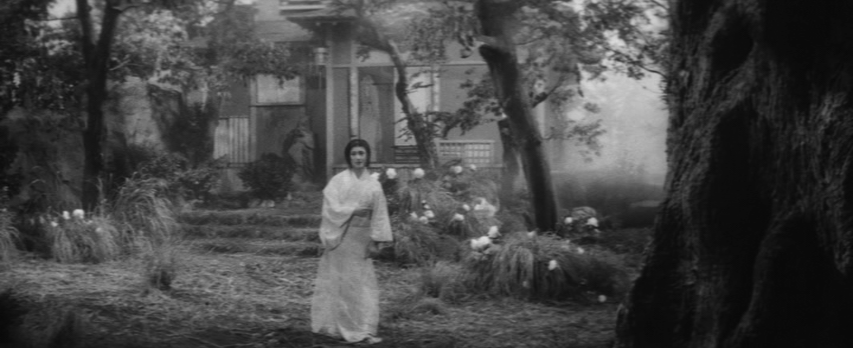
Lust of the White Serpent (蛇精の淫, Morihei Magatani, 1960)

The lingering inequalities of the feudal society are manifested in a snake woman’s thwarted desire for love in Morihei Magatani’s Shintoho horror Lust of the White Serpent (蛇精の淫, Jasei no In). Not quite as salacious as its title may imply, Magatani’s film takes a sympathetic view of the classic snake lady painting her as a tragic heroine betrayed by the codes of the mortal world with its persistent classism and misogyny while offering the conflicted hero caught between the old and the new only a compromised escape in spirituality. 

In what the opening voiceover describes as a local legend that has been passed on “since ancient days” though seemingly taking place in the relatively recent past, village boy Minokichi (Hiroshi Asami) hears a woman’s screams while walking along a mountain path and investigates to find her writhing around in the long grass. Having been attacked by a snake, the woman, Kinu (Kinuko Obata), seems confused though Minokichi recognises her as the daughter of the village headman and offers to carry her home. Unfortunately Kinu’s retinue immediately jump to the conclusion that filthy peasant boy Minokichi must have abducted her, roundly beating him for having dared to lay his hands on such a fine lady. “Even if you try to interact with them, they won’t treat you as an equal. This our fate” his mother reminds him cautioning him against any further attempts at interclass friendship. 

The problem is that the half-crazed Kinu has apparently imprinted on Minokichi and insists that she will marry only him or else die. This is unwelcome news for her father who had been considering marrying her off to the son of a local businessman who has learning difficulties on the promise of a seat on the prefectural council. As for Minokichi, he is technically betrothed to childhood friend Kiyo (Yumiko Matsubara) but is growing resentful having fallen for Kinu but knowing that their romance is impossible because of the barrier of social class. In a surprising move, Kinu’s father chooses his daughter’s happiness over both the current social order and his own financial gain in formally offering Kinu to Minokichi who is then conflicted, at first reassuring Kiyo that he cannot accept only for her to tell him that he must on hearing the rather naive conviction of the local policeman that this taboo-breaking interclass union will liberate the villagers from their subjugation by the townspeople and they’ll never be looked down again. 

As it turns out, Kinu has been possessed by the spirit of a snake woman, Sakurako, who fell in love with Minokichi after he saved her when she became trapped on a rock. The pair had had a brief affair a year earlier which Minokichi’s mother had put a stop to fearful that Minokichi was falling victim to a curse and that Sakurako meant to drain him of his energy and move on. “My background doesn’t matter, does it?” Sakurako had ironically asked having explained to Minokichi that she was just “a poor girl with no one to turn to” echoing the forbidden quality of Minokichi’s romance with Kinu. Yet their relationship is also transgressive in spanning two worlds. “Intimacy with an animal is non-Buddhistic behaviour” Minokichi is later scolded by an intense priest though still finding himself drawn to Sakurako despite the entreaties of his mother and Kiyo trying to drag him back to the village and his “proper” place in the contemporary social order. 

As for Kinu little thought is given to this reckless usurpation of her body, Sakurako seemingly having chosen her to appeal to Minokichi’s desire for social advancement. Once everyone knows she is possessed by a snake spirit things get even stranger with some of the men in the village believing that the only way to tell is to sleep with her. Having tried a shinto shamaness who confirmed a diagnosis of possession by a white snake, Kinu’s father tries a Western doctor branded a “horny weirdo” by the villagers. Despite everyone knowing this and that he is clearly drunk, the doctor is left alone in a room with Kinu and proceeds to rape her while the servant Sakuzo who had beaten Minokichi merely for touching his mistress watches silently from outside. When Sakurako strangles the doctor, winding her snake body around his chest, it is read as an expression of the snake’s curse, everyone instantly understanding what the doctor had done but merely covering up the crime while later petitioning Kinu’s father to have her sent away to save them from the havoc she is wreaking with storms, droughts, and floods in protest at her unhappy fate. 

Minokichi who was supposed to unite two worlds and dissolve barriers finds himself in a liminal state no longer a member of either, Kiyo’s father refusing to welcome him back into the village while having separated from Kinu on realising she is a snake woman denies him a place in the town. While he tells himself that he should know his place, reintegrate himself into the village and accept his proper social role by settling down and marrying Kiyo as he was supposed to do he cannot let go of his desire for Sakurako/Kinu and in the end cannot resist following her even if or perhaps precisely because it may lead to his death. When the “curse” is broken he is led away once again only this time by the priest as a new devotee of Buddhism reinforcing a spiritual message but ironically also implying that Minokichi’s fault was in trying to help others, firstly the snake and secondly Kinu, when he should like his mother advised have minded his own business and refrained from interacting with those outside of his immediate community be they beautiful noblewomen or alluring snake spirits. Though light on effects, Magatani ups the atmosphere with copious fog while employing a series of dissolves for the snake women’s transformations and some superimposition for their wrathful curses. The message may be know your place or you’ll end up nowhere, but the film nevertheless has unexpected sympathy for the lonely Sakurako beaten into submission by a cruel and misogynistic society. 


Original trailer (no subtitles)

Flesh Pier (女体桟橋, Teruo Ishii, 1958)

Teruo Ishii may be most closely associated with his exploitation work for Toei in the late ‘60s and ‘70s but in actuality he began his career at Toho, later joining Shintoho where he served as an AD to among others Mikio Naruse whom he regarded as a lifelong mentor. After making his debut with boxing movie King of the Ring: The World of Glory in 1957, he worked mainly in children’s sci-fi tokusatsu serials before sliding into B-movie noir of which 1958’s Flesh Pier (女体桟橋, Nyotai sanbashi) is an early example. 

Set firmly in the contemporary era, Ishii opens with a documentary-style voiceover exoticising the seedy underbelly of the city’s entertainment district hidden away in otherwise sparkling Ginza. Shooting in a bold reportage style, he captures a sense of natural spontaneity reminiscent of early American independent cinema transitioning directly into nightclub Arizona where a woman is furiously dancing. Arizona is as we’ll see the nexus of the recent proliferation of “call girl” businesses which have arisen since sex work was criminalised and in this case at least dependent on an international sex trafficking network backed by an American gangster, Thompson (Harold Conway). Salaryman Keizo (Ken Utsui) is a new customer, double checking that the business is “safe” before being reassured that they don’t deal with anyone they don’t know and have already vetted his identity, but when he reaches the hotel room he’s been handed the key for, he discovers the body of a woman lying in the bathtub and is forced on the run. The twist is that Keizo isn’t a bored executive after all but an undercover policeman working on breaking the trafficking ring. 

Co-scripted by Akira Sagawa, Flesh Pier seems to draw frequent inspiration from Casablanca only with the roles slightly reversed as replacement hostess Rumi (Yoko Mihara) finds herself wondering why of all the gin joints in Ginza Keizo had to walk into hers while the bar’s musician, Teruo (Teruo Hata), quite clearly in love with her himself, completes the triangular relationship. The couple even enter a Moroccan-style room while echoing Rick and Ilsa’s painful rehash of their Paris break up as Rumi tries and fails to explain why she left him on some previous occasion, Keizo remembering that she wore a white sweater and a blue coat to mimic Rick’s “the Germans wore grey, you wore blue” while the film’s ending is also hugely reminiscent of Casablanca’s “beginning of a wonderful friendship” only with additional romance. 

Nevertheless, the crime here is bigger and darker than most contemporary noir with awkward echoes of Japan’s prewar sex trafficking industry embodied by the karayuki as it becomes clear the gang’s business model relies on finding young women and luring them abroad with promises of good jobs only to force them into them sex work. Meanwhile one of the regular policemen, Hayami (Hiroshi Asami), gets a shock when he sets up a meeting with one of the call girls and is met by his own fiancée who, unbeknownst to him, has resorted to sex work in order to fund her brother’s tuition. “What else could I do?” she tearfully asks him making plain that in the difficult if improving economic environment of late 50s Japan sex work is still the only viable option for many women needing to support their families in the absence of men given persistent societal sexism which often locks them out of other kinds of well-paying jobs. Hayami perhaps understands this, drowning his sorrows with his veteran partner insisting that he’s sick of being a policeman and plans to quit only for the older man to sympathetically tell him not to give up so easily. 

Then again, Keizo’s secondary love interest Haruko (Akemi Tsukushi) is an intrepid undercover reporter posing as a model in order to bait the trafficking ring. Even so the primary drama revolves around Keizo and Rumi’s unfinished business along with her musician’s jealousy, the implication being more that her feelings for Keizo have clouded her judgement rather than reawakened a sense of moral goodness. Like many femme-fatales in post-war B-movie noir she is made to pay the ultimate price for her transgressive femininity in having firstly climbed the in-gang ladder and then damned herself in her conflicted love for the earnest Keizo even while suspecting he may be an undercover cop despite his acting like an underworld thug. These are indeed a new breed gangster much more like those seen in European and American noir rather than traditional yakuza while the environment of the Arizona is also something of a liminal space as the opening voiceover puts it in but not of Japan. 

While nowhere near as lurid as some of Ishii’s later work, Flesh Pier is certainly daring for the time period in the griminess with which it depicts the successor to the red light districts along with its air of forbidden allure even while its club scenes are in keeping with those found in other contemporary gangster tales if lent a little more realism in the immediacy with which Ishii shoots them making full use of documentary-style handheld. Expressing a degree of anxiety as regards Japan’s increasingly global outlook along with that of increasing social change, Flesh Pier is formally daring from the young Ishii artfully playing with classic noir while fully embracing the transgressive thrills of B-movie crime.