Daughter’s Daughter (女兒的女兒, Huang Xi, 2024)

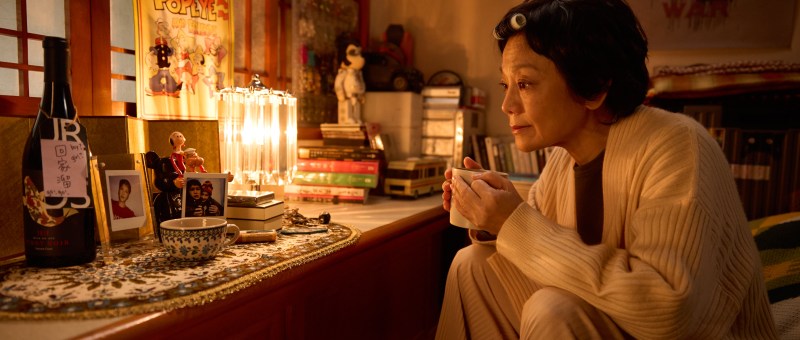
Never having fully dealt with the trauma of her teenage pregnancy and decision to give her child up to be raised by a family friend, 64-year-old divorcee Jin Ai-xia (Sylvia Chang Ai-chia) finds herself in an eerily similar position on on learning that the daughter she raised in Taiwan has been killed in a car accident in New York where she was receiving fertility treatment. The process resulted in a healthy embryo of which Ai-xia now finds herself the “guardian”. She is given four options, keep the embryo in storage and pay to renew the contract when it runs out, find a surrogate to carry to it term, donate it to another couple, or have it destroyed.

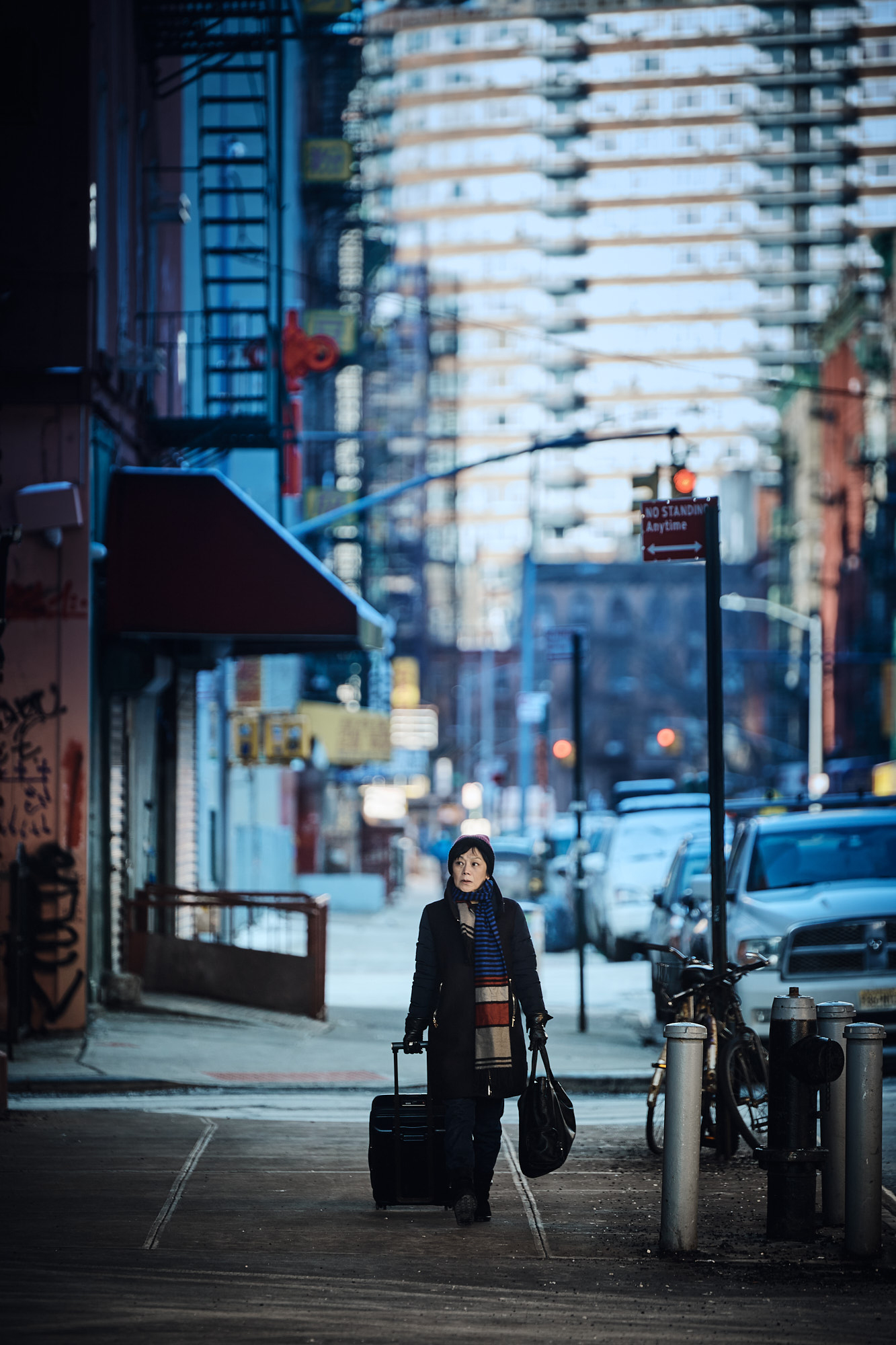
The fact that there are eight months left on the contract that her daughter Zuer (Eugenie Liu Yi-er) signed makes this almost another pregnancy which Ai-xia must decide whether or not to continue. Keeping the embryo in storage only defers the decision and traps it in the same mental space in which Ai-xia thinks of Emma (Karena Lam), the daughter she did not raise and tried to put out of her mind. In its consideration of motherhood, the film does shy away from suggesting that it is a kind of burden and requires sacrifice whether willing or not. Later confronted, if gently, by Emma who has unbeknownst to her become a single mother who chose to keep her child, Ai-xia justifies herself that she was 16 and afraid. Most of all, she was afraid the baby would trap her in New York’s Chinatown and that her life would never change after that. She wanted more, so she went along with her mother’s proposed solution of giving her daughter to a childless couple to raise while she returned to Taiwan and never looked back.

Yet it’s Emma who seems to haunt her while she’s in New York trying to sort out Zuer’s affairs while mired in her grief. It’s clear that she feels that she failed both her daughters as her unresolved trauma over separating from Emma left her unable to fully bond with Zuer whom she raised at arms’ length. When Zuer and her same-sex partner Jia-yi (Tracy Chou Tsai-shih) decide to have a child, Ai-xia is against it. It seems there may be some lingering prejudice in her about their relationship as she tells Zuer that the baby won’t be able to explain their family situation, but it’s also partly that she doesn’t want her to be trapped by motherhood as she felt herself to be. She asks her why she and Jia-yi don’t just enjoy their life together rather than complicate with a child. Ai-xia tells Emma that she wanted to live her own life, while expressing the same desire now that she has become a second mother to her own mother, Yan-hua (Ma Ting-Ni), who is living with dementia. Once her mother passes away, she’s looking forward to enjoying her freedom for once. 

Ai-xia rails that no one ever really considered her feelings and that she’s been given this burden without ever really being given an opportunity to ask herself if she wanted it. There’s a minor irony in Yun-hua’s segueing back into the past to tell the 64-year-old Ai-xia that she can’t raise a child at this age as if she were still a pregnant 16-year-old. As an older woman, she reflects that Yun-hua probably didn’t make that decision solely because she was embarrassed by the stigma of teenage pregnancy but genuinely thought it was best for both her daughter and her granddaughter. But now Ai-xia is facing the same choice at the other end of her life knowing that if she chooses to raise Zuer’s baby she may not live long enough to see it to adulthood, nor may she have the energy to look after a small child even if she has the time. 

But Ai-xia carries Zuer’s ashes around with her holding them in front of her belly as if they were the embryo and she were already carrying it. Placing the square black container on the airport scanner and watching it travel through the tunnel is oddly like an act of rebirth. Attempting to come to terms with her own complicated maternity, she thrashes out the past with Emma but also really with herself in trying to decide whether or not to continue this maternal legacy despite the sacrifices and compromises it entails. For her, motherhood becomes an act of self-forgiveness in which she learns to understand both her own mother and her daughters along with their shared connection in this ever-increasing line.


Daughter’s Daughter screens 18th July as part of this year’s New York Asian Film Festival.

Trailer (English subtitles)
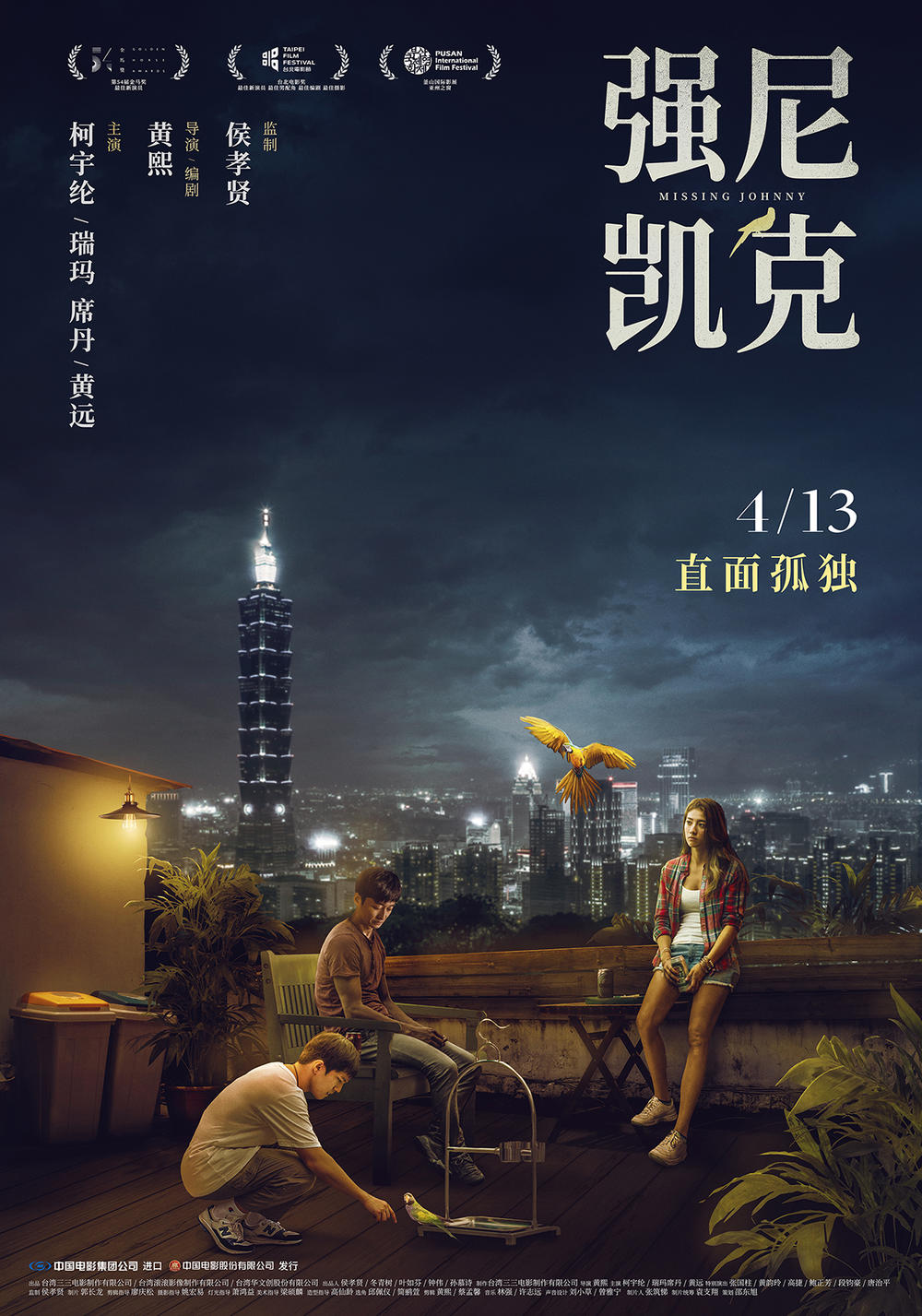
Missing Johnny (強尼.凱克, Huang Xi, 2017)

missing johnny poster 2“When people are too close they forget how to love each other” – so claims a lonely soul at the centre of Huang Xi’s debut Missing Johnny (強尼.凱克, Qiáng ní. Kǎi kè). A Taipei tale of urban disconnection, Missing Johnny is defined by mysterious absences and dangling connections as its three melancholy protagonists try to break free of their various obstacles to move towards a more fulfilling future. Family becomes both tether and support, a source of friction for all but very much a part of a the vice-like grip the traditional society is wielding over their lives. Yet there is hope for genuine connection and new beginnings even if you have to get out and push.

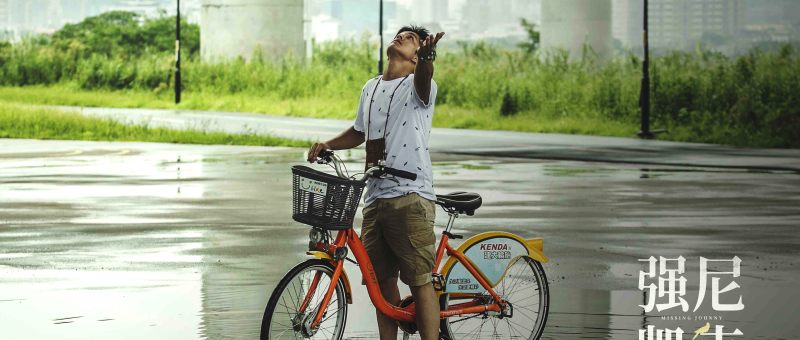
Casual labourer Feng (Lawrence Ko) has returned to Taipei after a failed venture only to see his car repeatedly break down, forcing him to seek help from a childhood friend. Meanwhile, Hsu (Rima Zeidan), a young woman living alone, fills her life with colourful birds which attract the attention of her landlady’s son, Li (Sean Huang) – a mildly autistic young man who finds it difficult to manage his life but resents his mother’s attempts to manage it for him. When Hsu’s newest parrot makes a bid for freedom, she enlists Li and Feng who has taken a job working on a nearby apartment to help her “rescue” it, sparking a series of connected epiphanies among the otherwise disparate group.

Each of them is, in someway, trapped. Feng is trapped by his difficult familial circumstances and resultant lack of social standing. His parents divorced when he was young and he came to the city alone for high school, forming a close bond with his teacher, Chang (Chang Kuo-chu), and his son, Hao (Duan Chun-hao). Feng is now welcomed as a member of their family but the Changs are not a happy bunch. Mr and Mrs Chang argue endlessly, usually ending with one of them asking for a divorce and Mr. Chang certainly seems to be a “difficult” older gentleman who requires all around him to walk on egg shells lest they say the wrong thing and set him off. Most of his scorn is reserved for Hao whom he regards as a disappointment in not having repaid on his investment. Divorced with a son and boomeranged back home, Hao resents his father’s moodiness and longs to move back out again but with things as they are, possibilities seem slim.

Money becomes a bone of contention for all. Hsu is involved in a long distance relationship with a controlling salaryman who tolerates her love of birds but doesn’t really want to be involved with them. It’s obvious the relationship has all but run its course and Hsu probably wants to end things but doesn’t quite have the energy so just doesn’t make as much time for him as perhaps she once did. Eventually we discover the boyfriend is married to someone else – a wealthy woman he married for her money which he now uses to “support” Hsu, her birds, and her business. Hsu’s boyfriend thinks the money he’s “invested” in the relationship means he’s bought something concrete, throwing it back in Hsu’s face just as Mr. Chang did to Hao. All he can offer her is a mistress’ life but he resents her desire to be free and expects her to be available to him whenever he wants as part of a reciprocal relationship. Mistaking the passage of money for genuine connection may be an ancient failing, but it seems one unlikely to go away.

Feng wants to build a family, despite himself, just a happier one than those he’s known while Hsu and Li are trying to assert their independence in a world which doesn’t quite want to give it to them. Li is almost a grown man but he can’t deny his mother’s suggestion that he needs some help here and there just to get by and that his life really does become confusing when he fails to read the notes she leaves for him reminding him what it is he’s supposed to do today. Like any young man, however, he wants to be free of his mother’s control to pursue his own destiny even if it might mean he gets lost along the way. His mother understands this, but she worries. She doesn’t stop him going but is hurt by his selfish refusal to accept that he causes her pain by wandering off for days on end without sign or warning.

And then what of “Johnny”? Hsu keeps getting calls on her mobile from various people looking for “Johnny” – presumably the same Johnny but really there’s no way to tell. Someone is missing him, anyway. Li asks Feng a philosophical question. He wants to know if birds in flight are still or in motion. A bird, flying, seems to be moving but it occupies a fixed point and is therefore “still” from moment to moment. The same could be said of our three protagonists, each living lonely lives of spiritual inertia carried along only by the rhythms of city life. Thanks to a missing parrot, however, they might finally find the courage to take flight even if they seem to stall at the beginning of their journeys.


Missing Johnny was screened as part of the 2018 New York Asian Film Festival.

Promo video (English subtitles)

https://www.youtube.com/watch?v=i9-Ozjp1xvQ