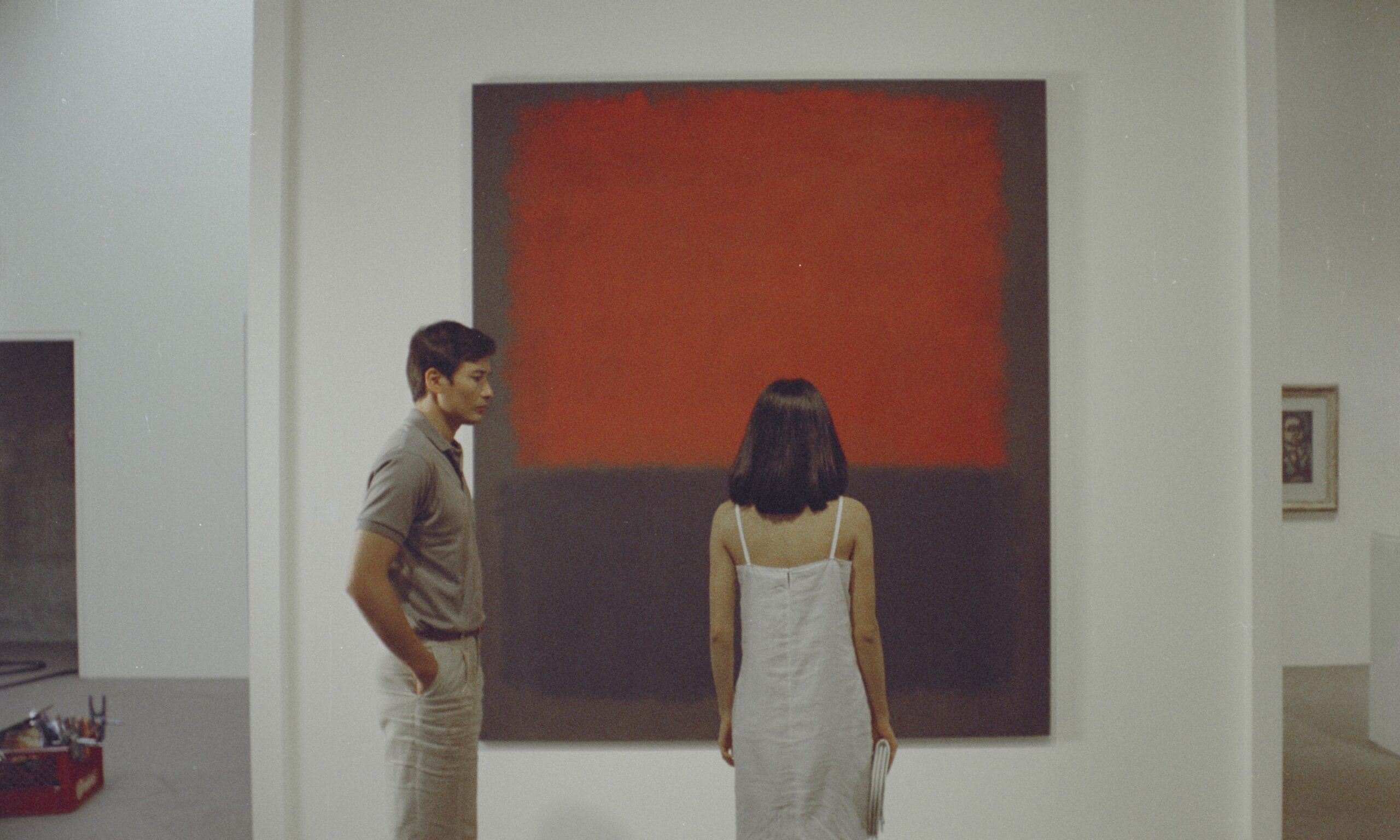
Love Massacre (愛殺, Patrick Tam Kar-Ming, 1981)

Is Love Massacre a massacre of love, a massacre for love, or is it love itself that inevitably leads to death? Patrick Tam’s second film draws inspiration from European and Hollywood cinema along with the French New Wave including the films of Godard, most obviously in its screen composition and bold use of reds and blues echoing Pierrot le Fou, while also leaning into Antonin Artaud’s Theatre of Cruelty in focusing on a sensory experience rather than expository dialogue.

Shot mainly in the US on account of star Brigitte Lin’s schedule, the film takes place in an uncanny space of another Hong Kong peopled by overseas students in San Francisco. Ivy (Brigitte Lin) has become good friends with Joy (Tina Lau), an emotionally fragile young woman uncertain in her relationship with boyfriend Louie (Charlie Chin) who plans to move to New York. Feeling abandoned, she attempts to take her own life by slashing her wrists, but survives. Not knowing what to do, Ivy calls Joy’s brother Chu Chung (Chang Kuo-chu) for further support, but he insists that his sister is fine and resists their efforts to get Joy to see a doctor. Meanwhile, he and Ivy begin a passionate affair.

Up to this point, Lin had mostly starred in romantic melodramas and Tam plays with this cinematic baggage in beginning the film in the same vein only to later change direction as it descends into madness and violence. Chu Chung appears to be living with a mental health condition of his own which informs his reluctance to get help for Joy. Joy, meanwhile, appears to be worried both about the latent attraction between Louie and Ivy, and Ivy’s relationship with her brother. Joy tells Louie that she doesn’t like Ivy dating Chu Chung, leading Ivy to wonder if Joy may have had an incestuous obsession with her brother, though it may equally have been because she knew of his paranoia and violence and feared for her safety. 

At any rate, Chu Chung did not disclose to Ivy that he was already married to a woman in Hong Kong (Deanie Ip) whom he appears to resent because she tries to constrain him by medicating his mental health condition. He ends up killing her to free himself so that he can pursue his relationship with Ivy, but soon becomes dangerously obsessed with the implication that his madness is caused by an excess of primal emotion that he is unable to control as symbolised by the violent intensity of the Mark Rothko paintings seen frequently throughout the film. 

Ivy had felt herself conflicted on coming to know of Chu Chung’s marriage accidentally and feeling both deceived and abandoned by him. She lived in a kind of fantasy of idealised romance that has now been compromised by her uncertainty after reading about a man with the same name in the paper who has apparently killed his wife in Hong Kong and gone on the run. When Chu Chung returns, his behaviour is strange and obsessive. He insists on marrying Ivy while claiming to have dealt with his wife, later confessing in detail about how he disposed of the body and ominously adding that he’ll have to think of a better way to do it next time because it was altogether too much bother. 

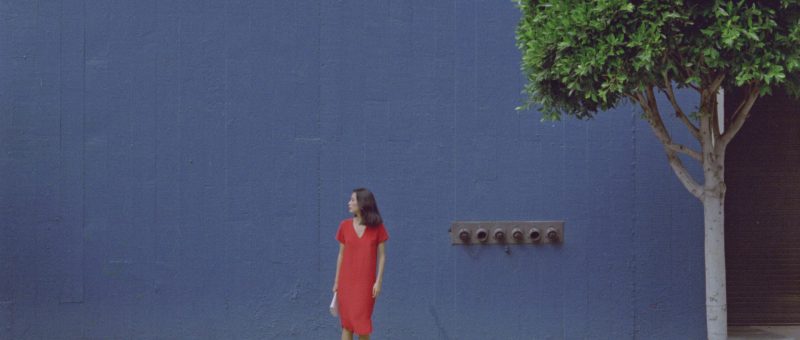
Yet despite the intensity of Chu Chung’s romantic obsession, Tam depicts his violence with extreme detachment. Chu Chung’s killing is matter of fact and motivated by resentment in that he mistakenly believes they are deliberately preventing him from being with Ivy, who has ironically sought out Louie after running away from Chu Chung in fear. In the earlier stages of their affair, Ivy had often been seen in a vivid red dress given to her by Chu Chung which symbolised her passionate emotion, but on Chu Chung’s return she is mainly seen in white which is a colour more closely associated with death. Chu Chung is also dressed entirely in white, which, on the one hand, is designed for maximum impact as his clothes become stained with blood, but also marks him out as a figure who represents destruction.

To that extent, he comes to embody the violent intensity of romantic obsession suggesting that love itself is a kind of madness that can only result in death just as it does for Joy when her love for Louie is not met with the same degree of passion. In confronting Chu Chung, Ivy is also directly confronting the emotions she was otherwise afraid to face and perhaps conquering them in being forced to make a choice how best to “help” Chu Chung while his obsession threatens to consume her. Using Hitchcockian music cues and conjuring a sense of dread in a city that seems isolated and empty, almost an imaginary backdrop with its de Chirico-inspired murals, Tam subverts genre tropes to spin a tale of love and madness. In the end, the “love killing” of the Chinese title might not be the ones perpetrated by Chu Chung but the final decision taken by Ivy motivated either by mercy or a desire for liberation.


Trailer (English subtitles)

The Last Affair (花城, Tony Au Ting-Ping, 1983)

“Why choose Paris?” a mysterious voice inquires. “Because it’s Paris” comes the slightly depressed reply. In terms of the movies, the City of Light has an undeniably romantic reputation, but those who go there are often drawn more towards the darkness. Art director Tony Au Ting-ping’s distinctly European directorial debut The Last Affair (花城) helped to launch the film careers of then TV stars Chow Yun-fat and Carol Cheng Yu-ling and finds a lonely young woman trapped in an unhappy marriage travelling to Paris alone for a friend’s wedding only to discover that you cannot escape yourself through romantic delusion. 

The dejected Ha-ching (Carol Cheng Yu-ling) once eagerly studied French after school with her best friend Bing (Pat Ha Man-lik) in the hope of travelling through Europe but married young and never got the opportunity while Bing moved to Paris and is about to marry a Vietnamese man who owns a family-run restaurant. Looking back at an old photo of the pair of them together, she laments that she was once young and full of dreams but is now middle-aged and filled with disappointment. Bing is surprised that Ha-ching has come to Paris on her own, but she deftly changes the subject, apparently unwilling to talk about her husband, Wai-ming seemingly a representative of an empty elitism of the newly prosperous society. Later she writes him a letter she doesn’t have the courage to send informing him that her trip to Paris has convinced her that she never loved him and she doesn’t see how their present relationship could continue. 

In any case, Wai-ming is supposed to arrive just before the wedding but perhaps only because he’s also going to a big architecture conference in Lyon. When he eventually turns up, he’s extremely rude to Bing and her fiancé who is obviously irritated but making a tremendous effort to be polite while Wai-ming makes a fuss about the quality of the hotel, snapping at Ha-ching that she should have booked the Georges V because it’s not as if they don’t have the money while endlessly droning on about himself. In short, it’s not difficult to see why Ha-ching is unhappy. 

Before he arrives, however, she starts to see a different future fuelled by ideas of European romance after locking eyes with handsome violinist Kwon-ping (Chow Yun-fat) busking in the subway. Awkwardly, Kwong-Ping turns out to be a member of Bing’s circle of friends, and the pair quickly hit it off, beginning a passionate affair. A phone call to his apartment from a French woman, however, has Ha-ching feeling uncertain. She has fallen in love with Kwon-ping and is intending to throw her life away for him, but he likes to have a good time in the bohemian bars of the city whereas she’d rather stay in cooking Chinese food to make them both feel more at home. Artists and dreamers all, the people at the bar make her uneasy. She’s always wanted to know how to find true happiness and has a feeling most of those at the bar are the same, never quite finding it and left with a terrible sense of incompleteness. In truth, she’s a little more conventional than she’d perhaps assumed.

That sense of existential displacement is something that, on the surface of things at least, doesn’t seem to bother Kwon-Ping, but then again perhaps explains the momentary monogamy of his womanising in which he loves them when he’s with them but forgets them when he’s not. For many, Paris seems to be the city of broken dreams. Melancholy art student Siu-tong is forced to make ends meet painting “traditional” furniture designs to European tastes while trying to make it as an artist. Bing’s fiancé is casually dismissive of those who paint for money by the river, but Siu-tong is left with no other choice, dismissed by the furniture maker and finding that all of the talk of his getting a solo show was just that. His girlfriend went back to the Philippines to study, worried he’d forget her, while he’s too ashamed to tell her that he’s giving up and going back to Hong Kong to be an art teacher. 

Bing, meanwhile, has troubles of her own, preparing to get married but perhaps getting cold feet in settling while still hung up on old love. She can’t forgive Kwon-Ping for his womanising ways, but is too close to the matter to be able to talk to Ha-ching even if she can tell that there’s something not right with her old friend. Unable to accept that Kwon-Ping is not a one woman sort of man, Ha-ching begins to go quietly out of her mind, falling out with Bing while resentful of her husband and certain she does not want to return with him to her old life in Hong Kong. She meets a Canadian-Chinese man travelling Europe alone and making ends meet through selling handicrafts along the way, but ultimately reflects that solo travelling is not the path to happiness at least not for her and is therefore faced with the impossibility of witnessing the implosion of her romantic delusion. Framed in the grandiose tones of avant-garde opera, Ha-ching’s existential despair takes a much darker turn than might originally be expected, but is perhaps in keeping with Au’s overtly European arthouse aesthetics. 


Missing Johnny (強尼.凱克, Huang Xi, 2017)

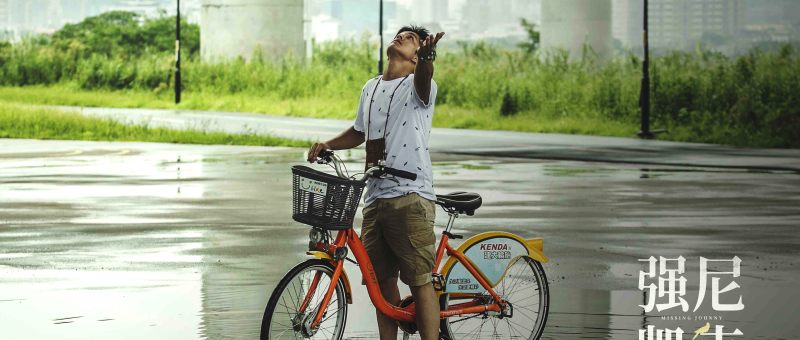
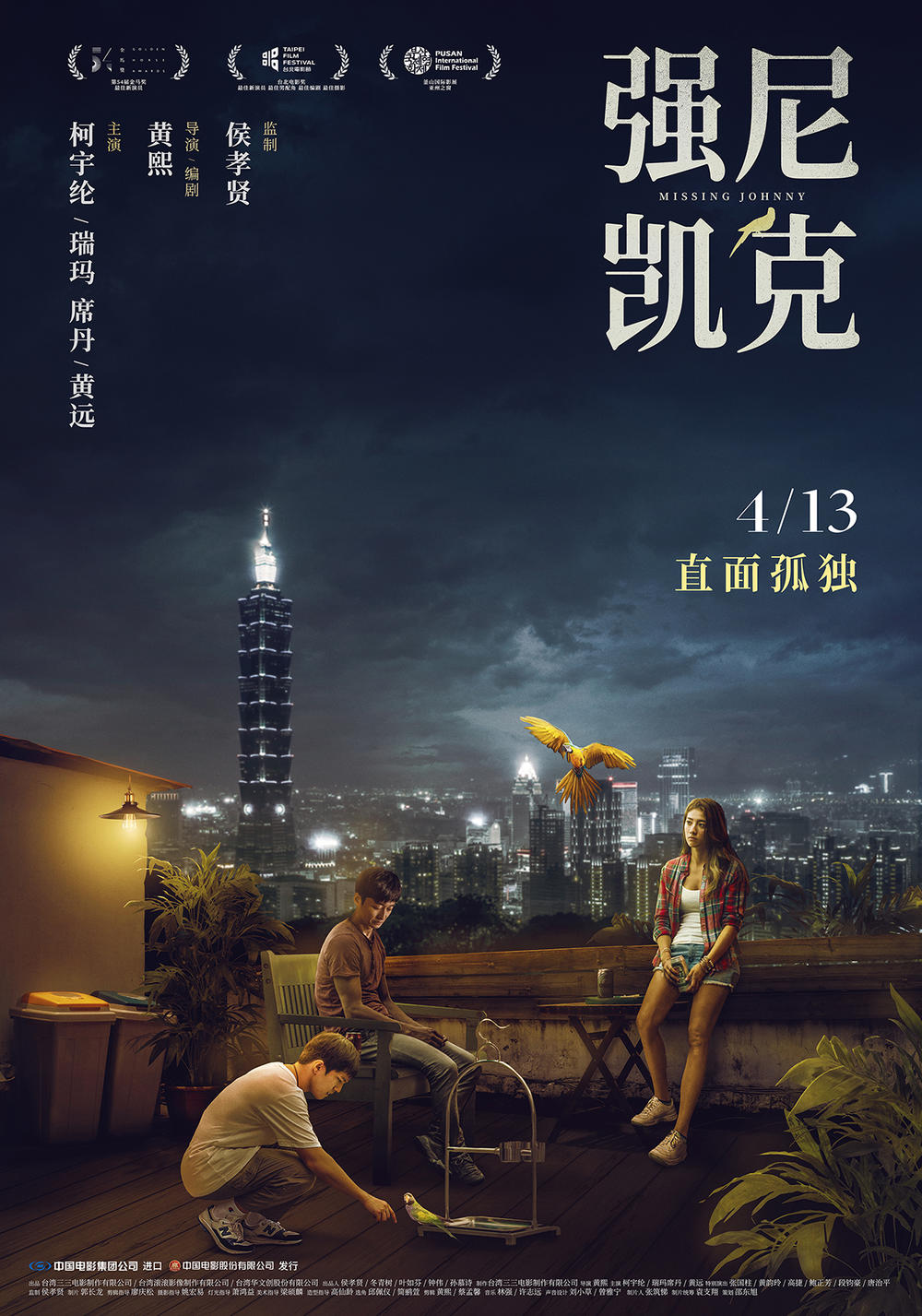
missing johnny poster 2“When people are too close they forget how to love each other” – so claims a lonely soul at the centre of Huang Xi’s debut Missing Johnny (強尼.凱克, Qiáng ní. Kǎi kè). A Taipei tale of urban disconnection, Missing Johnny is defined by mysterious absences and dangling connections as its three melancholy protagonists try to break free of their various obstacles to move towards a more fulfilling future. Family becomes both tether and support, a source of friction for all but very much a part of a the vice-like grip the traditional society is wielding over their lives. Yet there is hope for genuine connection and new beginnings even if you have to get out and push.

Casual labourer Feng (Lawrence Ko) has returned to Taipei after a failed venture only to see his car repeatedly break down, forcing him to seek help from a childhood friend. Meanwhile, Hsu (Rima Zeidan), a young woman living alone, fills her life with colourful birds which attract the attention of her landlady’s son, Li (Sean Huang) – a mildly autistic young man who finds it difficult to manage his life but resents his mother’s attempts to manage it for him. When Hsu’s newest parrot makes a bid for freedom, she enlists Li and Feng who has taken a job working on a nearby apartment to help her “rescue” it, sparking a series of connected epiphanies among the otherwise disparate group.

Each of them is, in someway, trapped. Feng is trapped by his difficult familial circumstances and resultant lack of social standing. His parents divorced when he was young and he came to the city alone for high school, forming a close bond with his teacher, Chang (Chang Kuo-chu), and his son, Hao (Duan Chun-hao). Feng is now welcomed as a member of their family but the Changs are not a happy bunch. Mr and Mrs Chang argue endlessly, usually ending with one of them asking for a divorce and Mr. Chang certainly seems to be a “difficult” older gentleman who requires all around him to walk on egg shells lest they say the wrong thing and set him off. Most of his scorn is reserved for Hao whom he regards as a disappointment in not having repaid on his investment. Divorced with a son and boomeranged back home, Hao resents his father’s moodiness and longs to move back out again but with things as they are, possibilities seem slim.

Money becomes a bone of contention for all. Hsu is involved in a long distance relationship with a controlling salaryman who tolerates her love of birds but doesn’t really want to be involved with them. It’s obvious the relationship has all but run its course and Hsu probably wants to end things but doesn’t quite have the energy so just doesn’t make as much time for him as perhaps she once did. Eventually we discover the boyfriend is married to someone else – a wealthy woman he married for her money which he now uses to “support” Hsu, her birds, and her business. Hsu’s boyfriend thinks the money he’s “invested” in the relationship means he’s bought something concrete, throwing it back in Hsu’s face just as Mr. Chang did to Hao. All he can offer her is a mistress’ life but he resents her desire to be free and expects her to be available to him whenever he wants as part of a reciprocal relationship. Mistaking the passage of money for genuine connection may be an ancient failing, but it seems one unlikely to go away.

Feng wants to build a family, despite himself, just a happier one than those he’s known while Hsu and Li are trying to assert their independence in a world which doesn’t quite want to give it to them. Li is almost a grown man but he can’t deny his mother’s suggestion that he needs some help here and there just to get by and that his life really does become confusing when he fails to read the notes she leaves for him reminding him what it is he’s supposed to do today. Like any young man, however, he wants to be free of his mother’s control to pursue his own destiny even if it might mean he gets lost along the way. His mother understands this, but she worries. She doesn’t stop him going but is hurt by his selfish refusal to accept that he causes her pain by wandering off for days on end without sign or warning.

And then what of “Johnny”? Hsu keeps getting calls on her mobile from various people looking for “Johnny” – presumably the same Johnny but really there’s no way to tell. Someone is missing him, anyway. Li asks Feng a philosophical question. He wants to know if birds in flight are still or in motion. A bird, flying, seems to be moving but it occupies a fixed point and is therefore “still” from moment to moment. The same could be said of our three protagonists, each living lonely lives of spiritual inertia carried along only by the rhythms of city life. Thanks to a missing parrot, however, they might finally find the courage to take flight even if they seem to stall at the beginning of their journeys.


Missing Johnny was screened as part of the 2018 New York Asian Film Festival.

Promo video (English subtitles)

Cold War 2 (寒戰II, Longman Leung & Sunny Luk, 2016)

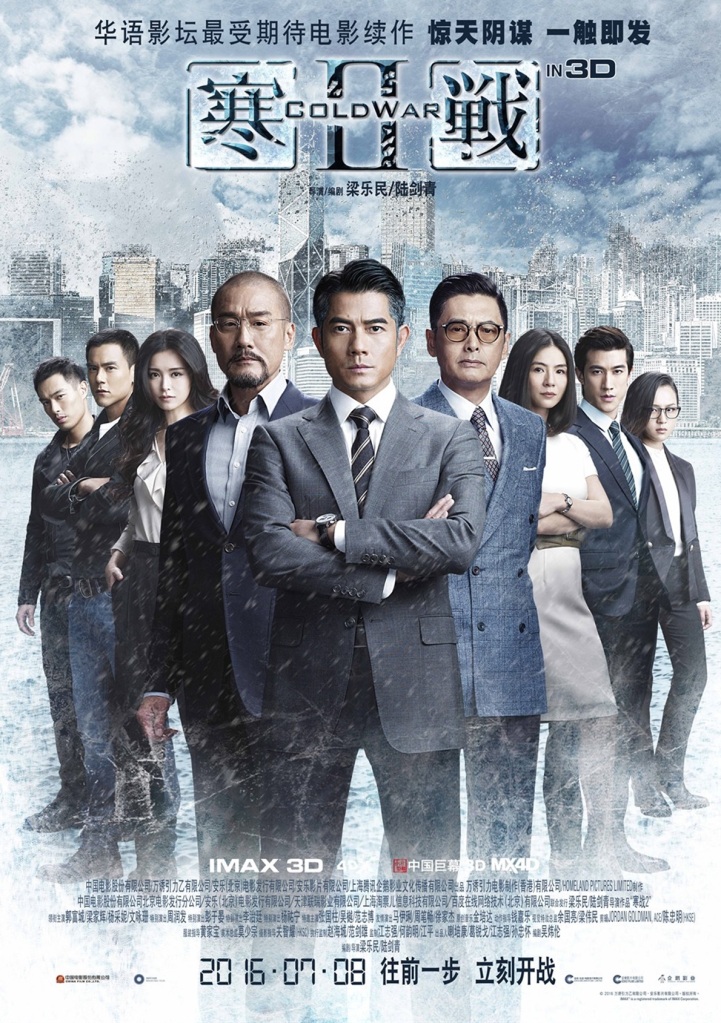
coldwar 2Cold War 2 (寒戰II) arrives a whole four years after the original Cold War rocked Hong Kong with police corruption scandals and fantastically convoluted internal plotting. Heroic policeman Sean Lau (Aaron Kwok) may have won the day, even if he ultimately had to compromise himself to do it, but the police van is still missing and MB Lee (Tony Leung Ka-fei) is still lurking in the background. As is his son, Joe (Eddie Peng) – languishing in prison but apparently still with the resources to cause trouble whilst behind bars.

Joe Lee has Lau’s wife kidnapped, forcing Lau to compromise himself by giving in to his demands all of which culminates in an intense subway set piece in which Lau inadvertently ends up handcuffed to an exploding smoke bomb while Joe Lee escapes. Embarrassing is not the word. Lau now looks bad, and old rivals have their eyes on the police chief’s chair. An enquiry is currently underway into goings on at police HQ lead by top lawyer Oswald Kan (Chow Yun-fat) but his impartiality is severely damaged when one of his own is caught in the crossfire whilst investigating Joe Lee’s nefarious activities.

Like the first film, Cold War 2 is an intense interpersonal thriller though this time the enemies are even closer as the old boys network becomes the means by which commissioners are unseated and installed. Service records are everything – Lau is unpopular with his colleagues because he started out at ICAC and has never served as a rank and file policemen. From one point of view, this makes him an ideal candidate because he has no personal ties to the body of serving officers but his rivals despise him for this very reason. He isn’t one of them, does not have first hand understanding of front line policing, and most importantly is not a part of their interconnected layers of military style brother-in-arms loyalties.

Lau’s predictable miscalculation regarding Joe Lee creates an opportunity to get rid of him and take back the force. “Save the police” is a message which is repeated over and over as the plotters attempt to win others over to their cause, insisting that Lau has lost the media battle for the hearts and minds of a public now trained to be afraid of their police force. Lau is the continuity candidate – mistakes have been made, but his stately manner and apparently steady hands may yet win the day. Those same hands are getting dirtier by the second, but they’ve been brushing the morally grey, not (yet, at least) immersed in the red of innocent blood like those of the corrupt top brass at police HQ.

If the plotting is intricate and filled with double crosses and betrayals, directors Luk and Leung have ensured a steady stream of explosive action sequences to accompany the ongoing cerebral games. Cold War also had its share of action packed spectacular set pieces but Cold War 2 may surpass them with the surprise factor alone including one shocking multi-car pileup inside a tunnel in which cars, buses and bikes go flying before an all out fire fight ensues. Lau’s constant gazing at the “Asia’s Safest City” signs which adorn police headquarters (right next to the metal detectors you need to pass through to get in) has never looked so melancholic and drenched in irony.

It’s a battle for the soul of the police service, but it’s being fought as a dirty war. Lau is the decent and honest man forced to behave in a slightly less honest and decent way, even if for the best of reasons. His rivals are running on pure ambition and pettiness. Despite their claims they do not have the interests of the people of Hong Kong as their foremost concern. The corruption stems far further back than anyone might have previously guessed and is more or less coded into the system. The police van and equipment are still missing and the central plotters are still in place. This is a partial victory at best but then what kind of action fest wouldn’t leave a door open for a sequel. The cold war maybe about to turn hot, but you can rely on the steely eyed Police Commissioner Sean Lau to be there, ready and waiting, when the first shots are fired.


Original trailer (English Subtitles)