“He is a decent, respectable man who draws a clear distinction between a lady and a whore,” according to one of the excerpts from Eileen Chang’s novel that pepper the screen in Stanley Kwan’s sumptuous melodrama set in the Shanghai of the 1930s, Red Rose White Rose (紅玫瑰白玫瑰). Zhen-Bao (Winston Chao Wen-hsuan) is though entirely delusional, a man who desires absolute control but has no mastery over himself and at times appears rather pompous, believing himself to have a kind of higher purpose though achieving little of note.
According to the narrator, this is an age in which most men have two women, though Zhen-Bao does indeed seem to draw a line between them as evidenced in the opening sequence comparing his time as a student in Paris and Edinburgh. We see him meet a Parisian sex worker, and then his “first love” in Scotland, Rose, whom the narrator describes as a simple and open girl that Zhen-Bao found “innocently attractive”. Nevertheless, Zhen-Bao abruptly dropped her when he left the city demonstrating his determination not to be romantically entangled or allow a woman to alter the course of his life.
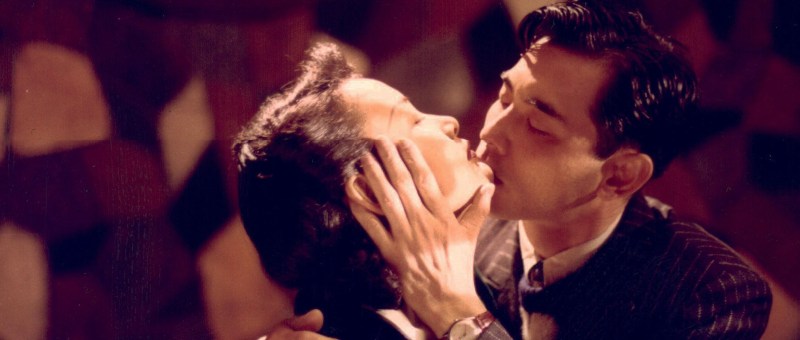
This seeming dichotomy is reflected in Zhen-Bao’s two roses, though there may be some debate about who occupies which role. “Red Rose” Jiao-Rui (Joan Chen) is the wife of a friend with whom he eventually embarks on a passionate affair, while “White Rose” Yen Li (Veronica Yip Yuk Hing) is the simple and innocent girl he marries as an “ideal wife” to please his mother and fulfil his image of himself as a “decent, respectable man”. Despite insisting on his independence, Zhen-Bao is blind to the influence his mother wields over his life and perhaps also what it actually means to be “decent and respectable” on anything other than a superficial level. His colleagues find him to be old-fashioned, but admire him for his attitude to work and life. “No one is more attentive to his mother than he,” they add, praising his diligence and reliability before describing him as a “practical man” who does not believe in something as unscientific as reincarnation. Chang’s description of him as the archetypal Chinese man of his era may be ironic, but also echoes Zhen-bao’s conception of himself as an idealised figure of patriarchal authority.
It’s this vision of properness along with his need for control that eventually leads Zhen-Bao to abandon Jiao-Rui after she falls in love with him and writes to her husband to ask for a divorce. Furious that she did this without consulting him or “considering [his] future”, Zhen-Bao strides out into traffic and is hit by a car. After this he is sort reborn as once again “decent and respectable”, resolving to break with Jiao-Rui on the grounds that their relationship was always improper because she was his friend’s wife and the scandal would destroy them both.
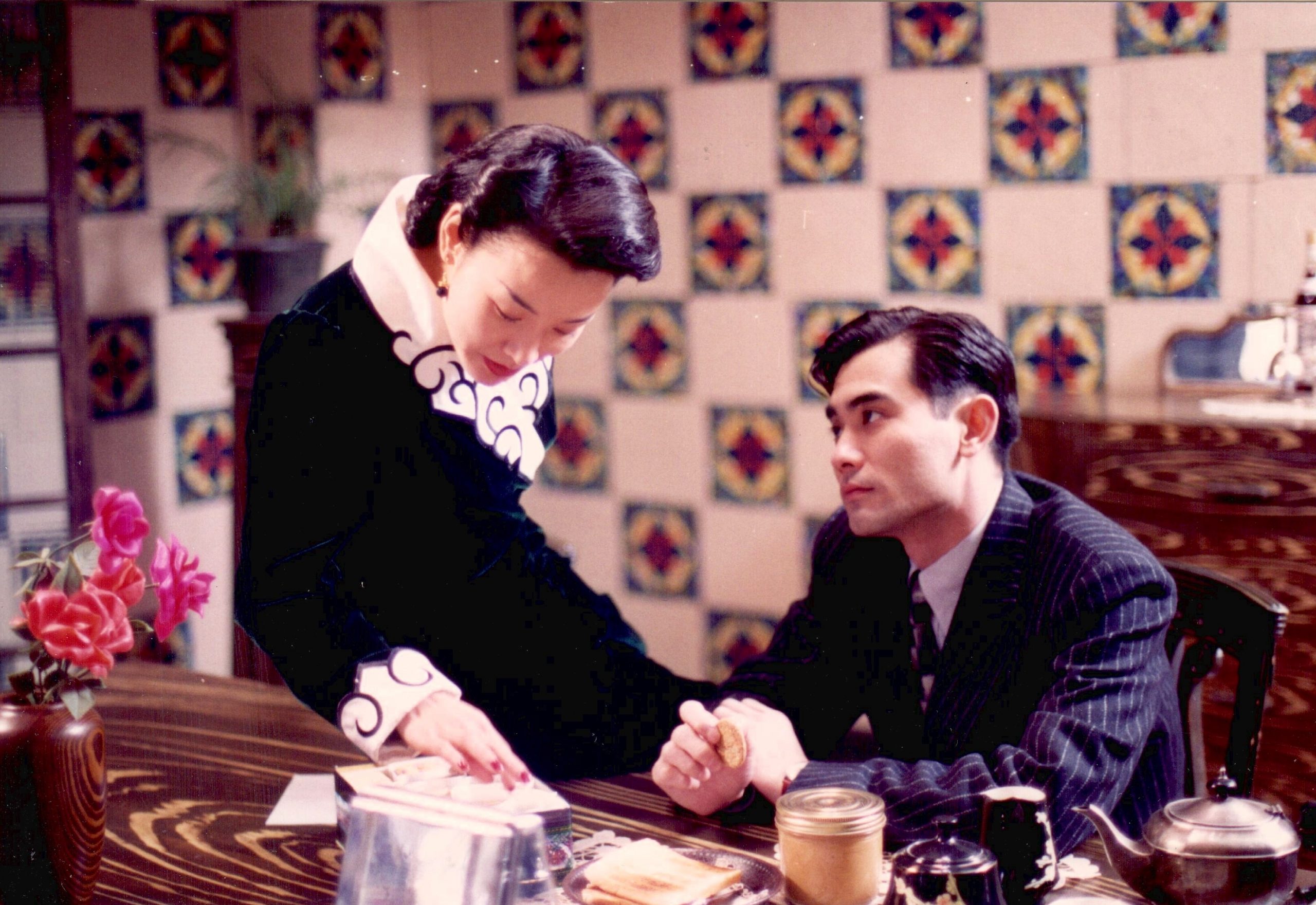
The world of Red Rose is one of opulent decadence, filled with colour and passion. The exposed brickwork of her apartment is broken by stretches patterned with rough shards of stone that echo the chaotic destructiveness of their affair. The world of White Rose, by contrast, is entirely sterile. Everything is white save for a pattern of pink roses the occasional cherub echoing the frieze on their wedding cake. This may be the world of absolute control that Zhen-bao was trying to create. For a while after the wedding he wears traditional Chinese dress and plays the part of a “decent, respectable” husband, yet his old habits soon resurface in his irresponsible womanising.
Meanwhile, he treats Yen Li with nothing but contempt. He regards her as stupid and avoids introducing her to his social circle lest she embarrass herself and show him up. Zhen-bao advises her to listen to the radio in order to educate herself and often flies into violent rages. When he sleeps with her, he merely uses her body as an object and does so only with the intention of conceiving a child, never considering her pleasure, consent, or even subjectivity. Despite the pressure to have a son, this seems to stop when the couple have a daughter whom Zhen-bao later enrols in boarding school seemingly out of spite.
Yen Li enters a depressive state in which she locks herself in the bathroom and refuses to come out, even taking her meals in there. Yet as she becomes used to her mistreatment by Zhen-bao, she is eventually able to overcome it to the extent that she no longer cares what he does or says. She has taken control of her world, embarking on a clandestine affair with her tailor and caring for her daughter, otherwise ignoring Zhen-bao’s existence. He vows to himself that he will once again start over as a “decent, respectable man” but seems to have come to the realisation that he is not and never will be while clinging to this delusional image of himself.
His failure is rammed home when he unexpectedly runs into Jiao-Rui on a street car. Despite his brother having said that he had seen her looking old and worn out with too much makeup, she still radiates beauty and allure. Zhen-bao behaves as if he’s encountered a saviour, but she has long since moved on. Jiao-Rui is happy and has found a steadier kind of relationship with her second husband, remarking that Zhen-bao taught her how, but also who, to love. Realising his desire to return to her will not be fulfilled, he lies that he is happy and talks about his career success rather than his marriage before breaking down in tears. As he ironically remarks to himself that it ought to be the woman crying in this sort of situation, Jiao-Rui appears a little embarrassed and abruptly disembarks this particular train. In the end, Zhen-Bao is reduced to an empty figure of patriarchal authority who appears almost as a ghost in his own home, continuing to delude himself that he is “a decent and respectable man” in the height of his impotence.
Screened as part of Hong Kong Golden Age 1985-1997 at the Garden Cinema.