 Written by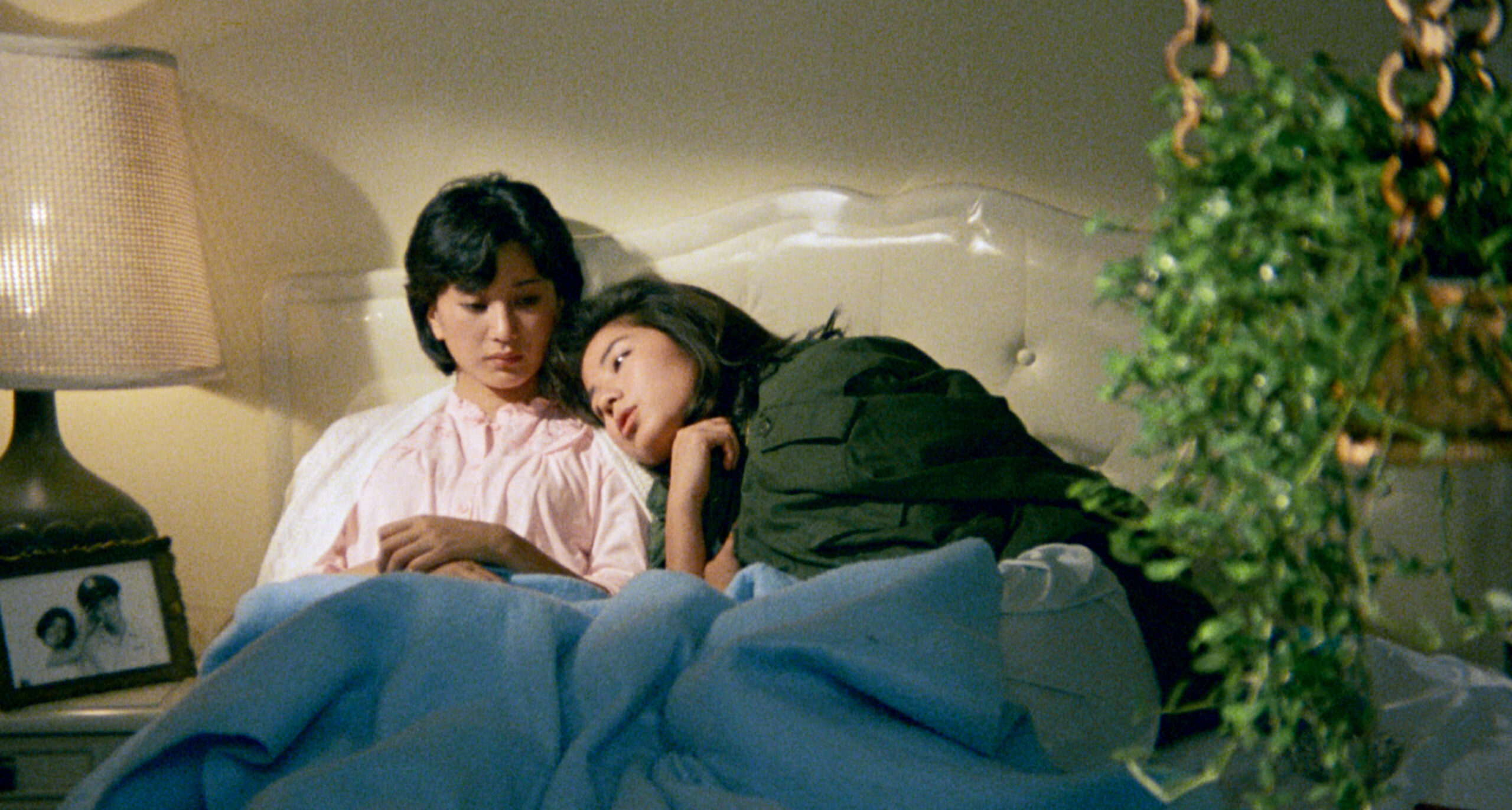
Two young women attempt to ride the waves of a changing Cold War Taiwan in Li Youning’s bittersweet melodrama, Spring Outside the Fence (竹籬笆外的春天, zhúlíbā wài dechūntiān). The titular fence is that of the military dependents’ village where the two women grew up that comes to represent an increasingly distant past and a vision of Taiwan that has all but become obsolete by the film’s conclusion in 1972 in which the nation seems to have abandoned both the US and the idea of reclaiming Mainland China to forge a more independent future.
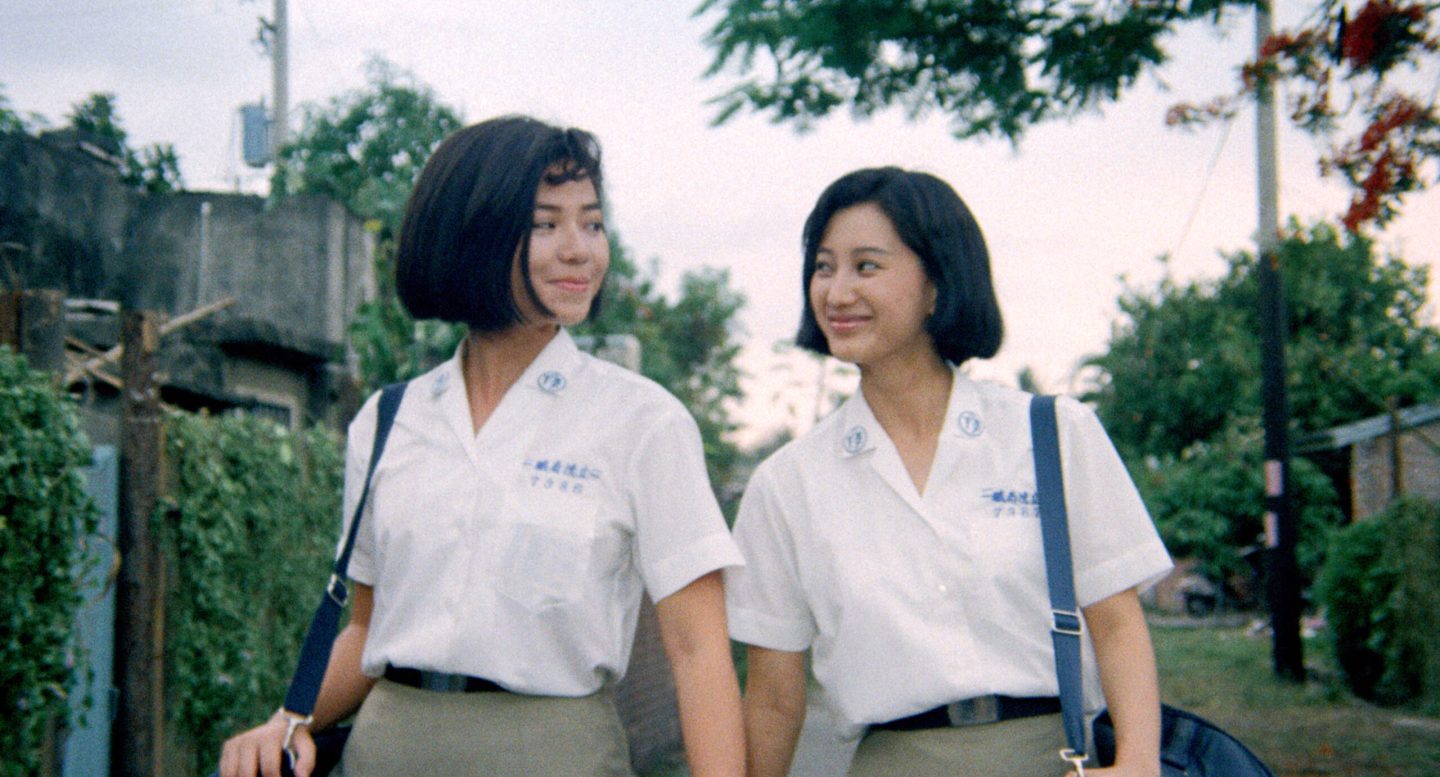
The film opens in 1949, not long after the Chinese Civil War and nationalist defeat in which Chiang Kai-shek’s forces fled to Taiwan. The military dependents’ village is a settlement for the family members of former KMT soldiers and a rather ramshackle, rundown place. Nevertheless, Ai Hua (Su Ming-ming) says she likes it because the people are kinder there than elsewhere. They’re like one big family with everyone supporting each other. To that extent, one could describe her relationship with best friend Li Lin as “sisterly”, though there are hints in her longing gazes that suggest her affection for her may lean towards the romantic. When Li Lin begins dating their childhood friend He Kang, Ai Hua abruptly agrees to go out with another boy she’s previously turned down only to later admit there is “no chemistry” between them.
That’s partly because he’s a slightly patronising hypocrite who tries to encourage Ai Hua to work on her English so she can study abroad in the US. He gives Ai Hua books on “existentialism”, while He Kang had given her poetry after reading some of her own in the newspaper. When Taiwan is kicked out of the UN, the other boy first broaches the subject with Ai Hua but then drops it saying he thinks it’s probably too difficult for her to understand. Despite his sense of betrayal that America sided with China, he is still studying English and planning to study in the US in order to get ahead. Ironically, capitalism has now become the enemy of right-wing patriotism even among the formerly privileged waishangren whose status has begun to decline. With the Vietnam War coming to a close, the bar in Taipei where Li Lin works as a hostess, and Ai Hua as an accountant, begins to refocus its attentions on chasing Japanese businessmen rather than US forces.
He Kang’s early death can also seen as symbolic of the death of the KMT’s vision of Taiwan. As a child, he’d given a firebrand speech about becoming a fighter pilot like his father to liberate the Mainland with a large picture of Chiang Kai-shek dominating the classroom. The children used to enjoy standing on the air raid shelter watching the planes go by safe in the knowledge that they were protected. For Li Lin, the planes also seemed to symbolise freedom and a world outside of the village. Her room is full of pictures of classic Hollywood stars like James Dean and Clark Gable, while she listens to the Beach Boys and dances to the The Twist aligning her with the anti-communist sensibilities of the KMT. Her love for He Kang is also bound up with this ideology in which the village is only ever really a transient space designed to exist only until the Mainland is retaken and the families return.
Speaking of her own emotional repression, Ai Hua remarks that she was always envious of Li Lin who was confident in expressing her feelings and having a good time outside the fence while she remained trapped within it. Though Li Lin remains wedded to the past, wearing He Kang’s jacket and the aeroplane necklace he gave her in lieu of a ring, the two women watch the plane carrying Chinese-speaking American airman Michael, whom Li Lin has rejected, fly away with a sense of sadness tempered with optimism. They have now only each other, but have perhaps achieved a kind of self-sufficient independence free of both Mainland China and America in the new nation of Taiwan.
The Spring Outside the Fence screened as part of this year’s Queer East.

