The Glamorous Ghost (散歩する霊柩車, Hajime Sato, 1964)

Best known for Shochiku horror Goke the Body Snatcher from Hell, Hajime Sato spent the majority of his career at Toei which he joined in 1952 after graduating with an economics degree from Keio University. After directing his first film in 1960 he mainly worked on monster movies, sci-fi, and action while transitioning into television from the late ‘60s. 1964’s The Glamorous Ghost (散歩する霊柩車, Sanpo Suru Reikyusha), however, features no special effects at all and in fact no actual “ghost”, instead painting a dark satire of the increasingly greedy and consumerist post-war society in a nihilistic tale of crime and futility. 

As the film opens, taxi driver Asami (Ko Nishimura) is ostentatiously shadowing his wife, Sugie (Masumi Harukawa), whom he suspects of having numerous affairs, through a busy department store. He later confronts her, suggesting that she’s the mysterious adulterous woman pictured in the paper but she denies everything before suggesting that if he’s so suspicious perhaps they should split up. He doesn’t appear to like that suggestion and becomes violent. A fight breaks out during which we see Asami strangle Sugie before an abrupt cut places him in the cab of a hearse sitting next to the driver, Mouri (Kiyoshi Atsumi), dressed in his best suit. Strangely, however, they don’t go to a funeral, but to a wedding where Asami confronts the father of the bride, Kitamura (Meicho Soganoya), showing him Sugie’s body with a prominent scar around her neck he says from her suicide producing a note that says she took her own life out of shame in having betrayed the husband who loved her so very much. The letter is dedicated to a KY, and Asami wants to know who it was his wife was sleeping with though Kitamura is careful not to admit anything while subtly promising him money if he goes away. Asami and the driver then make a second stop at a hospital where he tries the same thing with dodgy surgeon Yamagoshi (Nobuo Kaneko) who admits that he slept with Sugie but says it was only one time a while ago and he’s not sure why he’d be in her suicide note. 

As expected, not everything is quite as it seems. Sugie is not really dead, they’re just running a scam to blackmail her former lovers in order to get money to make a fresh start, possibly with a pig farm in the country which is why they didn’t bother with gigalo Tamio (Jiro Okazaki), the apparently penniless yet sportscar-driving young man Sugie was canoodling with in the park. “5 million yen would turn anyone into a murderer” one of their marks later admits after the scam goes south in several different ways, laying bare their sense of desperation in their otherwise perfectly fine if unsatisfying lives.

Yamagoshi, a doctor so compromised his admin staff assume the unexpected arrival of a hearse means he’s made another mistake, is desperate for money because he wants to open his own clinic. Sugie, meanwhile, gives a series of contradictory explanations for having come up with the scam, telling her marks she wants the money in order to get away from Asami and telling him that it’s for their future so they can live a happily married life. Asami’s male pride had indeed been wounded by Tamio in several different ways, firstly by his youth and vitality, but later by his assertion that a “shorty like him” couldn’t satisfy his wife which is why she puts it about at the club where she has to work because Asami’s cabbing job evidently doesn’t make enough to support them both. 

Sugie’s “death”, leaving aside fact that he “killed” her which is never brought up again, apparently helps him remember what she means to him, that if she really had died he’d be “lifeless” like the empty shell of a cicada. Scamming Sugie’s lovers probably does help rehabilitate his masculine pride and even though she is the one running the show it also suggests that she’s in a sense chosen him and wants to escape their disappointing urban life for something more wholesome as a happily married couple unburdened by financial anxiety. Meanwhile, we see her embarrassingly continue to chase the vacuous Tamio, an overgrown man child with expensive tastes and a room full of toy cars who lusts after a Porsche and appears to have a more age appropriate girlfriend he’d rather hang out in it with. Money corrupts human relationships whichever way you see it, and in the peculiarly toxic marriage of Sugie and Asami we can never quite be sure who’s playing whom. 

Then again in a fairly ironic touch, it may be the blissfully ignorant Tamio who is the only real “winner” seemingly continuing to live his life of empty consumerist pleasures without ever noticing the corruption of the world all around him. Gleefully cynical and accompanied by a playfully ironic, horror-inflected score, The Glamorous Ghost is a pitch black farce shot in the half light with crazy film noir framing and extreme depth of field in which it’s less money everyone wants than a less disappointing future and it seems they’re literally prepared to “die” to get it.


Title sequence (no subtitles)

Sing, Young People (歌え若人達, Keisuke Kinoshita, 1963)

Keisuke Kinoshita has sometimes been dismissed by Western critics for his supposed sentimentality, but his mid-career comedies can be surprisingly cynical. Scripted not by Kinoshita but Taichi Yamada, 1963’s Sing, Young People (歌え若人達, Utae Wakodotachi) is in someways an exception to the rule, a breezy take on the student comedy updated for the present day, but underneath all the absurdist humour and jibs about youthful ennui is a real sense of adolescent hopelessness as these aimless young men ponder their “pitch-black” futures in a rapidly changing Japan where the best they can hope for is fulfilling the salaryman dream.  

Shooting in glorious colour, Kinoshita opens with a lengthly pan over contemporary Tokyo which the jaunty voice over describes as “the number-one city in the world” before homing in on the incongruous figure of a strangely dressed man holding a sign advertising “sensual massage beauties”. A relic of an earlier advertising age, the wandering sign man nevertheless catches sight of someone even “weirder” than he is, a student wearing a student’s cap! Kinoshita then takes us on a brief detour through Japan’s major universities demonstrating that no one is so uncool as to wear a student’s cap in the age of protest, drawing a direct contrast to the student comedies of old while showing us a series of scenes of students “playing” hard with part-time jobs in bands or as models, training hard in preparation for the upcoming Olympics, fomenting the revolution, or fighting in the streets. In the first of many meta touches, our hero, Mori, is eventually woken by the narrator after falling asleep in class, his eyes “gleaming with hopes for the future”. 

Or, perhaps not, he’s just tired. Mori (Tsutomu Matsukawa) is as he describes himself a man without hopes or dreams who believes that the road ahead of him is “pitch black”. Dropping a brush from the window washers’ platform at one of his part-time jobs, he asks himself if there shouldn’t be more to life than this. The only son of his widowed mother, he’s pinned everything on graduating from a top university but feels powerless and empty, adrift in the post-war landscape. Where his calculating friend Miyamoto (Yusuke Kawazu) fills the void with romance and a determination to “get lots of As” and then land a top job, his roommate Okada (Shinichiro Mikami) earnestly studies hard afraid to disappoint his austere family but also quietly resentful in his lack of autonomy, and the dopey Hirao (Kei Yamamoto) simply goes about being nice to people more or less forcing them to eat the traditional treats his loving mother is forever sending. 

Yet for all the bleakness Mori seems to see in his future, he only ever falls up. Luck follows him and he’s presented with ever more fantastic opportunities at every turn. In fact, it’s his slightly grumpy expression as he cleans the windows of an office building that leads to them snapping a picture and making him a cover star without ever bothering to ask his permission though they do eventually pay. Still Mori remains indifferent, telling a reporter who tries to interview him that he had nothing to do with the cover, he has no dreams or aspirations for the future but lives his life day by day. He describes himself only as “nervous”. His words run ironically over the magazine literally becoming tomorrow’s chip paper, used by a stall owner to wrap her croquettes, as a stand for a hot pot, and otherwise bundled up to be pulped. Nevertheless, the cover leads to great opportunities from a TV network looking for a fresh face to front their new youth-orientated drama serial. 

Despite all the promise, Mori remains indifferent, later irritating a new colleague and potential love interest (Shima Iwashita) when he idly suggests he might just give up acting and fall back on the salaryman dream. As she points out, she had to fight all the way to achieve her dreams of becoming an actress so hearing someone say they’re going to throw away a tremendous opportunity that came to them entirely by chance is mildly offensive. Miyamoto meanwhile is growing lowkey resentful, realising that maybe nothing matters after all it’s all just dumb luck. Mori deliberately didn’t do anything because he thought his life was pointless but everything has landed right at his feet while Miyamoto’s life is crumbling. He’s lost all his girlfriends and endured a lonely New Year alone in the dorm, coming to the conclusion that his future really is “pitch black”.

Nevertheless, it’s difficult to remain resentful about a friend’s accidental success and so each of the men eventually finds direction in even in directionlessness. Mori realises that he might as well ride his wave of fame for as long as it lasts, accepting in part at least his sense of powerlessness, while Okada does the reverse in deciding to rebel against his authoritarian family by marrying in secret. Miyamoto resolves to make a success of himself in his own way, and Hirao seemingly accepts the hand fate has dealt him with good humour. Kinoshita ramps up the meta comedy with Mori joining Shochiku, encouraged to try and work for that “excellent” director Keisuke Kinoshita, later referencing Garden of Women, while Mariko Okada and Keiji Sada turn up as onstage guests at an event launching him as a young actor. Playfully using outdated, quirky screen wipes and opening with an artsy title sequence featuring colourful confetti falling up, Kinoshita perhaps adopts a slightly ironic tone in satirising the all pervasive sense of confusion and hopelessness among the younger generation but does so with only sympathy for those coming of age in uncertain times. 


The Takatsu River (高津川, Yoshinari Nishikori, 2019)

What price modernity? Post-war migration saw a rapid turn towards urbanisation with the young forsaking their countryside hometowns to chase the salaryman dream in the cities. Though there has in recent years been a mild reversal to the prevailing trend as economic fluctuation and technological innovation have a generation of anxious youngsters looking for a simpler life, the effects of rural depopulation have only become starker in light of Japan’s ageing society leaving the elderly isolated in inaccessible communities with few family members or facilities to support them. This push and pull of the traditional and the modern is at the heart of Yoshinari Nishikori’s The Takatsu River (高津川, Takatsugawa), in many ways an elegy for a vanishing Japan but also an ode to the furusato spirit and to continuity in the face of change. 

Set in a small town on the Takatsu River in Japan’s Shimane prefecture on the South West coast of Honshu, the central drama revolves around the middle-aged Manabu (Masahiro Komoto), a widower with a teenage son and a daughter recently returned from university in Osaka. His problem is that his son Tatsuya (Ishikawa Raizo) has been skipping out on rehearsals for the Kagura dance society, something which is obviously close to his father’s heart. About to graduate high school Tatsuya is perhaps at a crossroads, like many of his age trying to decide if his future lies in his hometown staying to take over the family farm, or in the cities as a regular salaryman. 

“Everyone thinks of leaving once” Manabu philosophically laments to the lady at the post office though like most of the other parents he does not try to influence his son’s decision even if he’s additionally grumpy about his lack of commitment to Kagura dance. The dance troupe is not just a precious artefact of traditional culture or a means of entertainment but a social hub for the small community in which the generations mix freely and are equally represented. One older man affectionately known as “Pops” (Choei Takahashi) is over 80 years old but refuses to give up the art of Kagura dancing, not only because he loves to perform but because he enjoys being part of the society especially as he lost his eldest son to a flood in childhood and the other, Makoto (Hiromasa Taguchi), has become a lawyer in the city who rarely visits his hometown claiming that his wife has a dislike of “bugs”. 

Acting as a surrogate son to the old man, Manabu’s other quest is to convince Makoto to visit a little more often, touting the idea of a reunion for some of their old elementary school friends a few of whom are, like Manabu, still living in the village. Unfortunately, however, Makoto’s time in the city has fully converted him into a heartless ultra-capitalist who struggles to understand a more traditional way of thinking. Meeting up to celebrate the successful graduation of another friend’s apprentice as a sushi chef, the guys lament the case of their friend Yoko (Naho Toda) who never married, apparently calling off an engagement to look after her elderly mother who has dementia while acutely feeling the responsibility of taking on her family’s 300-year-old traditional sweet shop. Confused, Makoto wonders why you wouldn’t just stick the parents in a home and get married, much to the consternation of his friends. Similarly, when Manabu asks him for some legal advice about how to stop a resort being built up river he reveals himself to be fully on the side of corporate power. After all, he points out, a resort will bring jobs and foot traffic to the area encouraging modernisation and better transport links which will also draw young people back towards the village. If you want to save the community, perhaps it’s the best and only way. 

Yet as Manabu points out, the Takatsu is the last clean river in Japan. His daughter Nanami (Ito Ono) came back after uni because she missed the taste of sweet fish that you just can’t find anywhere else. If the river is polluted by construction, the fish will disappear and perhaps there’ll be nothing left to “save”. With the local school set to close now there are only a handful of pupils, Manabu and his friends are minded to pick their battles and protect what it is that’s most important, eventually reacquainting Makoto with his furusato spirit by confronting him with the traumatic past which had kept him away. Bar repeated references to the double-edged sword of the Takatsu in the potential for lethal flooding, Nishikori’s gentle drama perhaps provides an overly utopian view of country living which sidesteps the hardships that can often accompany it, but also celebrates community spirit and an atmosphere of mutual support, qualities which have convinced city-raised farmhand Kana (Yurie Midori) that the rural life is the one for her. A gentle elegy for a disappearing way of life, The Takatsu River is ultimately hopeful that something at least will survive as long as the clear stream flows on.


The Takatsu River streams in Poland 25th November to 6th December as part of the 14th Five Flavours Film Festival.

Original trailer (English subtitles)

All the Things We Never Said (生きちゃった, Yuya Ishii, 2020)

The broken dreams of youth and middle-aged malaise push a trio of former high school friends towards existential crisis in Yuya Ishii’s melancholy exploration of emotional distance,  All the Things We Never Said (生きちゃった, Ikichatta). Commissioned as part of the B2B A Love Supreme project created by the Hong Kong International Film Festival Society and China’s Heaven Pictures which tasked six Asian filmmakers with the task of proving that high quality films can still be made on a micro-budget, Ishii’s latest finds him in the same register as his poetic take on urban angst The Tokyo Night Sky is Always the Densest Shade of Blue as his frustrated protagonists each pay a heavy price for the seeming inability to communicate their true feelings honestly. 

Opening with an idyllic scene of three high school friends enjoying a breezy summer day, Ishii cuts abruptly to the present, interrupting the wistful love song playing in the background mid-flow. Now in his 30s, Atsuhisa (Taiga Nakano) is a married father whose only dream is to be able to afford a nice house with a garden for his wife and daughter, maybe even get a dog. To this end, he’s been taking lessons in English and Mandarin with high school friend Takeda (Ryuya Wakaba) with the intention of one day starting their own business though they once dreamed of becoming musicians. All of that comes to nothing, however, when he begins to feel dizzy at work one day and returns home early to find his wife, Natsumi (Yuko Oshima), with another man. Unable to offer any real sound of protest, he accidentally smashes a panel on the glass door to their bedroom, apologises for interrupting, and leaves in a daze to pick up his young daughter Suzu (Yuno Ota) from school. 

Natsumi’s infidelity evidently comes as a complete surprise, though it seems obvious that their marriage is far from perfect. “My life is just stress and getting fatter” Natsumi openly complains to Takeda, her sense of inertia and impossibility seemingly more than simple dissatisfaction with her life as an ordinary housewife. For his part, Atsuhisa is as emotionally distant as they come, a near silent zombie dead eyed and permanently absent from himself. He is continually preoccupied by the absence of his late grandfather, now nothing more than an increasingly anonymous photograph on an altar as if he never existed at all. Atsuhisa asks himself if his grandfather really lived as a way of avoiding the same question in himself as he sleepwalks through a conventional life that proves infinitely unsatisfying while he chases elusive dreams of comfort and security. 

Natsumi’s revelation that she’s been completely miserable for the entirety of their married life because she’s never felt loved likewise shocks him, but if her intent was to provoke emotional honesty in her husband it fails. She pushes him to fight, to offer some kind of resistance but he simply accepts her decision to end the marriage. The sense of impotence is palpable, Natsumi turning off the TV set because she can hardly do anything about the reactors at Fukushima Daiichi so what’s the point in knowing about them. “How else can we live?” someone else later adds, other than to simply decide not to think about the things you cannot change. Atsuhisa tells himself that it’s meaningless anyway, it will all “fade away” in the end so there’s no sense in trying to resist. 

Yet he continues to struggle, wondering in a sense if he could perhaps claim agency over his life if only he could learn to communicate his true feelings honestly. He asks himself if it’s because he’s Japanese that he can’t, if his culture actively prevents him from speaking freely when it comes to desire. Of course, everyone else is Japanese too which perhaps makes his question moot, but those around him do indeed seem to suffer from the same sense of wilful repression, even Natsumi tragically withholding her real feelings and ultimately working against herself out of a mistaken sense of guilt. “You don’t love me, that’s why you can be honest” an ex of Atsuhisa’s points out during an emotional farewell, cutting to the quick in suggesting that his problem is that he fears the risks of emotional intimacy. 

Two boys and one girl is always going to be a story tinged with a degree of sadness no matter how it turns out, but on that idyllic summer day no one could ever have thought it would end like this. Takeda, manfully keeping his true desires under wraps perhaps in love with Natsumi himself but too diffident to have said anything or overly mindful of his friends’ feelings, does his best to be the emotional buffer supporting both halves of a couple rapidly spiralling away from themselves but is ultimately unable to prevent them from making decisions they may regret even as they are are made. “My love wasn’t good enough” Atsuhisa laments in his inability to make it felt, finding proof of life only in absence through the memory of those shining summer days. A little rough and ready around the edges but filled with a raw poetry Ishii’s melancholy drama puts its hero through the emotional wringer but in the end perhaps sets him free to speak his heart even if others are too ashamed to look.


All the Things We Never Said streamed as part of this year’s San Diego Asian Film Festival.

Original trailer (no subtitles)
Gemini (双生児 GEMINI, Shinya Tsukamoto, 1999)

Shinya Tsukamoto made his name as a punk provocateur with a series of visually arresting, experimental indie films set to a pounding industrial score and imbued with Bubble-era urban anxiety. Inspired by an Edogawa Rampo short story, 1999’s Gemini (双生児 GEMINI, Soseiji Gemini) is something of a stylistic departure from the frenetic cyberpunk energy of his earlier career, marked as much by stillness as by movement in its strikingly beautiful classical composition and intense color play. Like much of his work, however, Gemini is very much a tale of societal corruption and a man who struggles against himself, unable to resist the social codes which were handed down to him while simultaneously knowing that they are morally wrong and offend his sense of humanity. 

Yukio (Masahiro Motoki) is a war hero, decorated for his service as a battlefield medic saving the life of a prominent general during the first Sino-Japanese War. He’s since come home and taken over the family business where his fame seems to have half the well-to-do residents of the area inventing spurious excuses to visit his practice, at least according to one little boy whose mum has brought him in with a bump on the head after being beset by kids from the slums. “They’re just like that from birth” Yukio later tells his wife echoing his authoritarian father, “the whole place should be burned to the ground”. A literal plague is spreading, but for Yukio the slums are a source of deadly societal corruption that presents an existential threat to his way of life, primed to infect with crime and inequity. His home, which houses his practice, is hermetically sealed from those sorts of people but lately he’s begun to feel uneasy in it. There’s a nostalgia, a sadness, a shadowy presence, not to mention a fetid stench of decay which indicates an infection has already taken place, the perimeter has been penetrated. 

The shadowy presence turns out to belong to his double, Sutekichi whose name literally means “abandoned fortune”, a twin exposed at birth as unworthy of the family name owing to his imperfection in the form of a snake-like birthmark on his leg and raised by a travelling player in the slums. Having become aware of his lineage, Sutekichi has returned to make war on the old order in the form of the parents who so callously condemned him to death, engineering their demise and then pushing Yukio into a disused well with the intention of stealing his identity which comes with the added bonus that Yukio’s wife, Rin (Ryo), was once his. 

Rin’s presence had already presented a point of conflict in the household, viewed with contempt and suspicion by Yukio’s mother because of her supposed amnesia brought on by a fire which destroyed her home and family. Yukio had reassured her that “you can judge a person by their clothes”, insisting that Rin is one of them, a member of the entrenched upper-middle class which finds itself in a perilous position in the society of late Meiji in which the samurai have fallen but the new order has not quite arrived. In Rin modernity has already entered the house, a slum dweller among them bringing with her not crime and disease but a freeing from traditional austerity. In opposing his parents’ will and convincing them to permit his marriage, Yukio has already signalled his motion towards the new but struggles to free himself from the oppressive thought of his father. He confesses that as a battlefield physician he doubted himself, wondering if it might not have been kinder to simply ease the suffering of those who could not be saved while his father reminds him that the German medical philosophy in which he has been trained insists that you must continue treatment to the very last. 

This is the internal struggle Yukio continues to face between human compassion and the obligation to obey the accepted order which includes his father’s feelings on the inherent corruption of the slum dwellers which leads him to deny them his medical knowledge which he perhaps thinks should belong to all. The dilemma is brought home to him one night when a young woman is found violently pounding on his door wanting help for her sickly baby, but just as he makes up his mind to admit her, putting on his plague suit, a messenger arrives exclaiming that the mayor has impaled himself on something after having too much to drink. Yukio treats the mayor and tells his nurses to shoo the woman away, an action which brings him into conflict with the more compassionate Rin who cannot believe he could be so cynical or heartless. 

Where Yukio is repressed kindness, a gentle soul struggling against himself, Sutekichi is passion and rage. Having taken over Yukio’s life, he takes to bed with Rin who laughs and asks him why it is he’s suddenly so amorous. She sees or thinks she sees through him, recognising Sutekichi for whose return she had been longing but also lamenting the absent Yukio who was at least soft with her in ways Sutekichi never was. “It’s a terrible world because people like you exist” Sutekichi is told by a man whose fiancée he robbed and killed. Yukio by contrast is unable to understand why this is happening to him, believing that he’s only ever tried to make people happy and has not done anything to merit being thrown in a well, failing to realise that his very position of privilege is itself oppressive, that he bears his parents’ sin in continuing to subscribe to their philosophy in insisting on their innate superiority to the slum dwellers who must be kept in their place so that they can continue to occupy theirs. 

Apart, both men are opposing destructive forces in excess austerity and violent passion, only through reintegration of the self can there be a viable future. Tsukamoto casts the austerity of the medical practice in a melancholy blue, contrasting with the fiery red of the post-apocalyptic slums, eventually finding a happy medium with the house bathed in sunshine and the family seemingly repaired as a doctor in a white suit prepares to minister to the poor. Having healed himself, he begins to heal his society, treating the plague of human indifference in resistance to the prevalent anxiety of the late Meiji society. 


Gemini is released on blu-ray in the UK on 2nd November courtesy of Third Window Films in a set which also includes a commentary by Tom Mes, making of featurette directed by Takashi Miike, behind the scenes, make up demonstration featurette, Venice Film Festival featurette, and original trailer.

Original trailer (English subtitles)

Me and the Cult Leader (AGANAI -悪の陳腐さについての新たな報告, Atsushi Sakahara, 2020)

How can you continue to serve an ideology which you know is responsible for a heinous act that offends your sense of moral righteousness? That’s a question that Atsushi Sakahara, a survivor of the sarin gas attacks on the Tokyo subway, finds himself asking in his documentary Me and the Cult Leader (AGANAI -悪の陳腐さについての新たな報告, Aku no Chinpusa Nitsuite Aratana Hokoku), as he meets with Hiroshi Araki, a current member of Aleph, the successor to Aum, the cult which planned and executed the 1995 act of terrorism which led to the deaths of 13 people and left 6200 injured, many like Sakahara with life changing consequences. 

Yet Sakahara’s purpose is the opposite of polemical, he merely reaches out to Araki in an effort to understand the mindset not only of someone who joined Aum in the early ‘90s and was a member at the time of the attack though not directly involved, but of someone who stayed and continues to believe in the teachings of cult leader Asahara who was executed in 2018 after years on death row along with other members responsible for Japan’s only exposure to domestic terrorism. Throughout it all, however what he seems to want is some kind of apology, or at least an act of contrition, something which proves elusive as the distant, thoughtful Araki largely refuses to engage as if afraid to accept that the ideology to which he has devoted all his adult life may in fact be corrupt and empty. 

Araki’s justifications run mainly to technicalities. He does not exactly deny that members of Aum were responsible for the attack, but explains that their guilt is the most logical explanation given the available evidence which includes their own confessions and so concludes it is likely the truth. The two men travel together on a kind of pilgrimage back to their respective hometowns which happen to be in the same area of the country, while in another coincidence they also attended the same university at the same time. A jovial presence, Sakahara attempts to hurry the near silent Araki along, pushing him to open up which he eventually does but failing to elicit from him anything which might begin to free him from the icy grip of his ideology. 

Sakahara subtitles his film “A modern report on the banality of evil”, and there’s certainly something of that as the film opens in a subway station, Sakahara and Araki merely two ordinary middle-aged men in anoraks waiting for a train. Yet Araki is clearly not an “evil” man. He appears to be thoughtful and sensitive, often breaking down in tears as the journey forces him to remember his life before he renounced the world, the vision of his grandmother waving him off at the station after a summer holiday leading back to that of his mother as he severed connection with her to join with Aum. He doesn’t quite explain what led him to join the cult save being overwhelmed by Asahara’s charisma when he gave a speech at Kyoto university in the early ‘90s, Sakahara having witnessed him arrive the year before but jokingly shouting out for the famously outlandish cult leader to show off his talent for levitation, save that he became disillusioned with consumerism after a pencil case he lusted over as a child lost its lustre when he got it home. The training, he goes on, caused him to lose the capacity for joy or pleasure, leaving him he explains with no other choice than to join the cult because there was no longer anything left for him in the outside world which had become unbearably painful as a result.

Yet knowing what he knows, how can he go on practicing Asahara’s teachings? Sakahara tries not to push him, only once or twice pressing for an answer as to whether or not he sees and understands his suffering and feels remorse, later introducing him to both his parents in an effort to prove that actions have wider consequences, that he is not the only victim but that others suffer because of his suffering. Meeting Sakahara’s equally compassionate mother and father does appear to move something with him, evoking a loose apology even if he immediately walks back on it with some manichean justifications that Sakahara is also responsible for everything that’s happened to him because it is all a result of his choices, good and bad. 

The unavoidable conclusion is perhaps that Araki is simply afraid to confront the implications of everything he’s seeing lest his entire worldview collapse and he realises he’s wasted all of his adult life serving a corrupt and empty ideology. Sakahara acts with total warmth and compassion for his dilemma, even at one point quite literally buying him a coat because he’s only brought his anorak despite it being freezing (Araki also constantly carries a sleeping bag because his asceticism seems to extend to beds and futons), patiently listening to his often sad stories of youth but every revelation is followed by extended silence, Araki shifting back inside himself unwilling risk bursting the bubble. Sakahara, however, remains patient hoping for the day that the cultist will finally see the light. 


 Me and the Cult Leader streams in the US until Oct. 31 as part of this year’s San Diego Asian Film Festival.

Original trailer (English subtitles)

Under the Open Sky (すばらしき世界, Miwa Nishikawa, 2020)

“Am I too unhealthy to live in society?” asks the hero of Miwa Nishikawa’s Under the Open Sky (すばらしき世界, Subarashiki Sekai) of his doctor, but the only answer he gets is a wry chuckle and an exhortation not to be so “pessimistic”. Inspired by Ryuzo Saki’s 1993 novel Mibuncho, the first of Nishikawa’s six features to be adapted from secondary material is in many ways a typical Showa-era story, testifying to the fact that the world has not changed as much as we might have hoped in the intervening 30 years since Saki’s novel was published, but it’s also a lowkey condemnation of the quiet hypocrisies which continue to define our notions of civility in the story of a man who was perhaps too good to survive in our “society”.

Opening with bars and heavy snow, Nishikawa introduces us to Mikami (Koji Yakusho) as he nears release after serving 13 years in prison for killing a man in what is described by the authorities as a yakuza gang war, though Mikami is keen to point out that he’d already attempted to leave the yakuza by then and the killing was mere self defence. In any case when questioned by the officers about to release him, he admits no remorse over the man’s death only that he lost 13 years of his life over “that hoodlum”. In any case he’s thrown out into the cold, boarding a bus back into the city where he vows to go straight. Once there, however he discovers the outside world to be fairly inhospitable. Not only are the skills he learned in prison next to useless when it comes to finding employment in the contemporary economy, but he must also contend with societal prejudice and his own wounded pride.

Stepping for moment into the realms of the issue movie, Nishikawa explores the relative impossibility of re-entering mainstream society as someone who has been convicted of a crime. Having spent most of his adult life in and out of prison as a petty yakuza footsoldier, Mikami has little education and no marketable skills aside from his capacity for violence and the ability to drive, something of which he is now deprived because his licence expired while he was inside and to get it back he has to start from scratch by passing the new-style two-part test. Mikami’s life is indeed a typical post-war story, abandoned to an orphanage by his geisha mother from which he later escaped and ended up joining a gang in place of the family he never had. “Prison is the only place that won’t kick you out no matter how badly you behave” he later quips, accidentally laying bare his yearning for unconditional love found only shakily in yakuza brotherhood.

Yet that old-fashioned, post-war yakuza is an outdated institution, like Mikami himself a relic of the Showa era floundering in the late Heisei society in which gangsters wear sharp suits and have fancy offices, finding more sophisticated ways to make war with each other than open thuggery. Everybody wants out, Mikami later muses to himself, but it’s hard to fit in to society and those like him find themselves drawn back towards the vagaries of the yakuza life for all the dubious certainties it continues to offer them. His lawyer and guarantor Souji (Isao Hashizume) tells him that he needs to regain his love and trust of people, but that’s a tall order when it feels like no one loves you and they make a point of letting you know you’re not forgiven. Even a simple trip to the supermarket proves traumatic when the head of the local neighbourhood association who just happens to run it decides to pick him up for shoplifting just because he knows he’s an ex-con. Thankfully he later realises his mistake and is filled with remorse, moved by Mikami’s quiet dignity in asserting his innocence and right to shop as he pleases. 

For all that, however, Mikami is a man of violence who has known no other way of life, taught that his only acceptable emotional release lies in pain and destruction. His violence is, however, for the sake of others not himself. He does not become violent with the store manager Mastumoto (Seiji Rokkaku) who later becomes his friend, but gleefully confronts two punks hassling a terrified salaryman and teaches them a minor lesson in the way only an old hand can. This other side to his otherwise childishly naive character shocks frightens Tsunoda (Taiga Nakano), a TV director Mikami had approached with the intention of being featured on his show in the hope of tracking down the mother who abandoned him, who engages in some armchair psychology to imply that the source of Mikami’s rage lies in his alienation as a rejected child. The irony is that Souji, his wife (Meiko Kaji), Matsumoto, and Tsunoda become Mikami’s new “family”, replacing that he’d looked for in the yakuza and providing a grounding in mainstream society that allows him to shed his anger, but the compromise they ask of him is in itself soul crushing in its implications to the extent that his complicity with it is no redemption but a moral failure. 

If such is the price of civility, Mikami may have a point, perhaps it isn’t worth it. In the end, it is our world which fails to live up to his goodness, his violence a result of society’s continued indifference to human suffering. He is no more free outside the walls than in, constrained by an unforgiving emotional austerity that permits injustice in the name of harmony. If you can’t protect the ones who’ll save the flowers from the storm, then what is your freedom for? Subverting a well worn redemption narrative, Nishikawa finds a wealth of kindness in a broken world, but suggests it’s not enough save us until the world itself is redeemed. 


Under the Open Sky streams in California until Oct. 31 as part of this year’s San Diego Asian Film Festival.

Teaser trailer (English subtitles)

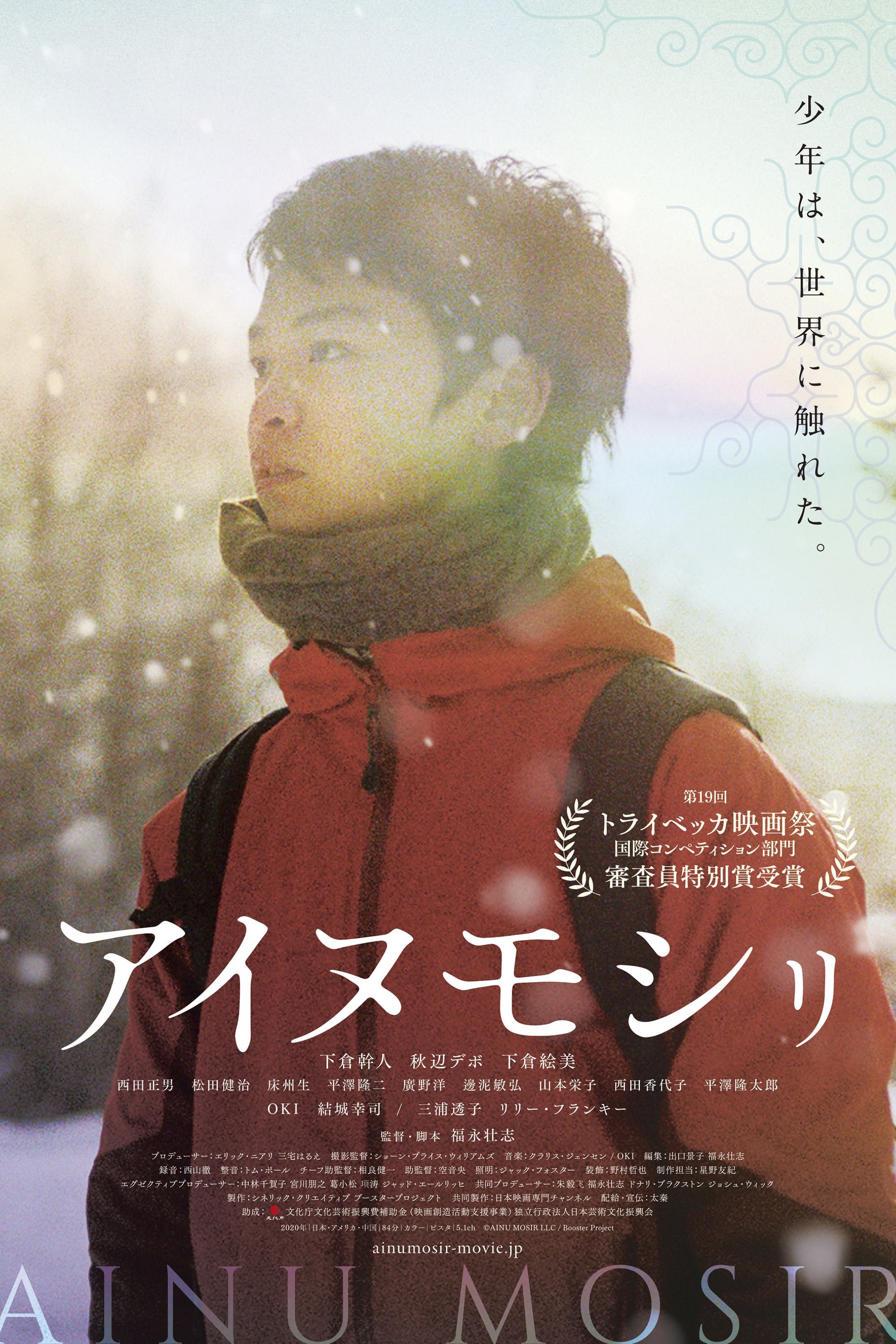
Kakame – Vampire Clay Derivation (血を吸う粘土~派生, Soichi Umezawa, 2019)

Kakame returns! Having been encased in concrete at the end of the previous film, it was perhaps inevitable that he would eventually break free to feed on the frustrated dreams of insecure artists everywhere. Kakame – Vampire Clay Derivation (血を吸う粘土~派生, Chi wo Su Nendo: Hasei) picks up shortly after the first film left off, but this time around the insecurities are less artistic than they are familial and social as those affected by the curse of Kakame find themselves wrestling with a sense of responsibility they must face alone to ensure that his bloody vengeance is contained lest he wreak more havoc on the wider world. 

After a short flashback, Aina (Asuka Kurosawa) sends the surviving student home and insists on going to the police alone but is involved in a car accident. Meanwhile, we’re introduced to the new heroine, Karin (Itsuki Fujii), the daughter of Fushimi (Kanji Tsuda) who fell victim to Kakame at the end of the previous film. His body has now been found in the art school and so the police contact Karin, who is his only living relative seeing as Karin’s mother committed suicide shortly after the marriage broke down, to identity him despite the fact they had been estranged for the last 12 years. The problem is that Karin didn’t want anything to do with her dad and so she is a bit lax dealing with his bones which still contain traces of Kakame. Meanwhile, as an aspiring artist herself, she enrols in a dodgy art project run by sleazy artist Kida (Shinji Kasahara) who makes a point of recruiting six young women in their 20s because he apparently wants to know what the women of Japan today are thinking, instructing them to unbalance the unbalanceable by disrupting the harmony of the hexagonal form. 

The strange apianism of the hexagonal theme is never developed further save a rerun of the events from the first film with the minor difference that is already “unbalanced” in the additional presence of Kida’s troubled assistant and the fact that he is the only male. Nevertheless, difficulties quickly arise among the girls and not least between Karin and her adoptive sister, also an artist though insecure in her abilities. Once again these tiny cracks between people are enough to let the murderous clay in, targeting first the melancholy assistant demeaned by her dismissive boss who refuses to let her participate in the project because the other girls are all students where as she is an aspiring ceramicist. Meanwhile, another suspect is provided in a young woman strangely fascinated with the bones of dead animals while Karin realises she is still in possession of one of her father’s lost in a tussle with her sister. It’s bone then, rather than blood, which condemns her but still she finds herself paying for her father’s sin in receiving a visit from Kakame as he makes swift work of the innocent artists. 

The sculptor’s curse refuses to die, the other Kakame apparently fusing with a worm and creating ructions underground which threaten to destabilise the world at large. As Aina had in the first film, venal artist Kida ponders using the clay for his own ends, ironically desiring to turn it into art, perhaps making good on the sculptor’s unfulfilled desires but also exposing his own less worthy goals of becoming rich and famous which is perhaps one reason why he’s busily exploiting six pretty young women rather than getting on with his work. Aina eventually reconsidered, but then finds herself facing a similar dilemma, targeted by the police who obviously don’t buy her story about demonically possessed clay turning murderous, while wondering if it might not be better to just dump the remaining powder in the river and be done with it. Maintaining his focus on practical effects, Umezawa shifts focus slightly heading into a different register of body horror as the strange clay worms work their way into the bones of our heroes before Kakame makes himself whole, but otherwise pulls back from large scale effects often switching to blackout and soundscape as in the opening car crash. Nevertheless, what we’re left with is a tale of shared responsibility as two women of different generations refuse to let the other carry the burden alone though neither of them is in any way responsible for the curse of Kakame save for the darker emotions which helped to birth him of which we all are guilty. 


Kakame – Vampire Clay Derivation screened as part of Camera Japan 2020.

Original trailer (no subtitles)
Vampire Clay (血を吸う粘土, Soichi Umezawa, 2017)

The artist consumed by their art is a potent motif, creation and destruction two sides of the same coin, but there’s rarely been a painter attacked by the canvas quite as literally as the sculptors of Vampire Clay (血を吸う粘土, Chi wo Su Nendo) are depleted by their material. The first feature from practical effects specialist Soichi Umezawa is refreshingly unpretentious, unabashed schlock designed to showcase Umezawa’s obvious skill in stop motion and prosthetics but it does perhaps have a point to make in the legacy of embittered artistry and frustrated dreams of those whose art is never recognised. 

Middle-aged sculptress Aina (Asuka Kurosawa) flees the duplicitous Tokyo art scene after being betrayed in love by her no good husband who also runs a studio specialising in training students to gain admission into one of Japan’s many exclusive art schools. In fact, Umezawa somewhat strangely opens with a title card revealing the comparatively small percentage of pupils each school accepts in contrast to the large number of applications, neatly setting up the desperation and sense of inadequacy that plagues most of our heroes, Aina included. Retreating to the country she sets up shop in a small shed which is later ravaged by an earthquake, leading to her discovery of a buried tin filled with mysterious clay and other artistic accoutrements left behind, she assumes, by the previous occupant. The trouble starts when errant student Kaori (Kyoka Takeda), who had been studying at a workshop in Tokyo, returns earlier than expected much to the chagrin of rival Reina (Ena Fujita) and discovers a new pupil has borrowed her clay. Predictably, she decides to use some from the mysterious bag, reviving the evil with water and discovering that somehow this magic substance seems to have upped her game. 

Umezama continues to flag the urban rural divide, the students beginning turn against Aina believing that it’s her time in Tokyo which has given Kaori a leg up, something that further wounds Aina in her sense of professional pride as she channels her rage and frustration into moulding her pupils into top candidates as a means of besting her ex. The sculptors knead their frustrated desires into the clay, it feeds on their misery and disappointment. This particular clay, however, is more cursed than most in that it is apparently infected by some kind of toxic disease which plagued the previous owner, symptomatic of the degree to which his art, or more pointedly the refusal of others to recognise it, destroys him. 

Aside from that there are a host of interpersonal problems between the students and their teacher. As the only male sculptor points out, they are both classmates and enemies as they are forced to compete against each other for the prize of recognition in the form of admission to an art school. Meanwhile, he is also the subject of a love triangle, refusing a homemade bento from an admirer in favour of one from another, this essential act of emotional betrayal later providing an in route for the murderous clay. 

Nevertheless, Umezawa is not so interested in the implications of the interpersonal drama as its potential for bloody action. The clay works its way into the bones of the sculptor, consuming and possessing them in a series of pleasingly retro, Cronenbergian practical effects. “I don’t want to lose my individuality to convention” Reina had snapped back in insisting that this small rural school suits her fine despite having just been given a dressing down for the “conventionality” of her final assignment. The clay, perhaps, attempts to rob them of their individuality, turning them into a mindless plastic mass fuelled only by negative emotions, thirsty for blood and hellbent on destruction. Somewhat incomprehensibly, a failed sculptor turned restaurateur convinces the original owner of the clay that his creepy creations will sell like hot cakes to hospitality establishments in the city, allowing his final humanoid legacy to become a kind of Frankenstein’s child carrying all his rage and resentment into the future but attacking, it seems, other marginalised artists rather than the hated Tokyo arts scene which is the real target of his ire. Aina, having for the moment neutralised the clay, considers unleashing it against her ex, bringing the grudge full circle in its own, ironic, way but also consumed by resentment and jealousy. The “toxic waste” of artistic disappointment refuses to die, burrowing its way underground even as the responsible attempt to bury it, lying in wait for the next tortured artist willing to sell their soul for illusory success.


US release trailer (English subtitles)

Not Quite Dead Yet (一度死んでみた, Shinji Hamasaki, 2020)

©2020 Shochiku Co., Ltd. Fuji Television Network, Inc.

“What’s important is purpose, to live for something. Without it you’re as good as dead” according to the hero of madcap existentialist farce Not Quite Dead Yet (一度死んでみた, Ichido Shinde Mita). The feature debut from ad director Shinji Hamasaki pits a rebellious student against her overly literal, authoritarian dad as the pair begin to come to a kind mutual understanding only once he “dies” after being tricked into taking an experimental drug in order to unmask conspiracy within his own organisation. 

College student Nanase (Suzu Hirose) intensely resents her father (Shinichi Tsutsumi), the CEO of Nobata Pharmaceuticals which he has long been pressuring her to join. She’s currently the lead singer in death metal band Soulzz only according to a record scout at one of their shows their problem is that they’re all “zz” and no soul. Meanwhile, Nobata has assigned an underling, Matsuoka (Ryo Yoshizawa), to shadow her partly because Matsuoka too has very little presence and is in fact nicknamed “ghost” for his essential invisibility. The trouble starts with the escalation of a corporate feud as Nobata’s old buddy Tanabe (Kyusaku Shimada) starts manoeuvring to get his hands on the company’s research into an anti-ageing serum codenamed “Romeo”, planting a mole inside the organisation. As a consequence of his research another of the scientists nicknamed “Gramps” has stumbled on another drug which renders someone temporarily “dead” for a period of two days, naming it “Juliet”. Watabe (Yukiyoshi Ozawa), a consultant Nobata has brought in to streamline the business, convinces him to take the experimental drug in order to flush out the mole while secretly working with Tanabe to take over the company by forcing through a merger while Nobata is out of action. 

A typical socially awkward scientist, Nobata believes that life is about experiment and observation, a belief system which has thoroughly irritated his daughter who still lives at home but has divided the territory in half with clearly marked red tape. Nanase’s animosity towards her father apparently stems back to the death of her late mother Yuriko (Tae Kimura), angry with him that he never left his desk and didn’t make it to the hospital in time to see her before she passed away. “Life’s not a lab experiment” she sings, recalling her childhood during which her overly literal father took away life’s magic by patiently over explaining fairytales, scoffing that Prince Charming probably didn’t revive Sleeping Beauty with a kiss but a transfer of static electricity, while continuing to order her around in fatherly fashion now she’s all grown up. Perhaps still stuck in a petulant adolescence she started the band to vent her frustrations with the world in the form of a death metal “mass”, but she’s growing up. Her bandmates are getting jobs or getting married, she’s still stuck with no real clue about what it is she actually wants to do with her life except that she doesn’t want anything to do with Nobuta Pharmaceuticals.  

Once her father “dies”, however, she begins to gain a new appreciation for his life philosophy able to see but not hear his “ghost” while his body lies on a table in the office cafeteria. Nobata went into pharmaceuticals to help people, but has been led on a dark and vacuous path pursuing anti-ageing technology which is in itself a rejection of change and transience. Ending all her sentences with the word “death”, that’s not something Nanase can get behind. She believes in growing old gracefully, that they make drugs not to cheat death but to be able to spend longer with those they love. As her father had advised Matsuoka to do, she begins to find her purpose, rediscovers her soul, and figures out what it is she’s supposed to do with her life.

Matsuoka, however, seems to be permanently “invisible” despite the tentative romance that develops as he and Nanase attempt to subvert the conspiracy to stop them doing her dad in for good, brushing up against the venal Tanabe who seems set to muster all his corporate advantages against them partly because of an old grudge against Nobata. Of course, you have to wonder why the conspirators didn’t just poison him rather than having him go Juliet and then entering a race against time to cremate him before he wakes up, but as Nobata reminds us there are many things which science cannot explain. A cheerfully silly Christmas tale of rediscovering what it means to be “alive” in the presence of death, Not Quite Dead Yet is zany seasonal fun but with plenty of soul as its heroes learn to shake off cynical corporatism for a healthy respect of the values of transience.


Not Quite Dead Yet screened as part of Camera Japan 2020.

Original trailer (English subtitles)

Images: ©2020 Shochiku Co., Ltd. Fuji Television Network, Inc.