Roommate (ルームメイト, Takeshi Furusawa, 2013)

meinImage(Is the tag line really “A woman’s unpainted face is scary!”? I get where they’re coming from but, hmmm – problematic)

Adapted from the 1997 novel by Aya Imamura, you’d be forgiven be forgiven for thinking that Roommate is something of a rehash of seminal ’90s “my roommate is a psycho” drama Single White Female though it goes a couple of steps further in the influences stakes and throws in Fatal Attraction and The Three Faces of Eve for good measure. Honestly anything else is a spoiler (though anyone who’s ever watched a film of this nature before is going to guess 70% of the plot about ten minutes in) but sit back and get ready to enjoy a very silly (though not really silly enough) tale of violence and psychological intrigue!

The film starts with the police arriving at the scene of a violent crime where a severely injured man and woman are being taken to hospital leaving another man dead inside. Cut to three months earlier and Harumi (Keiko Kitagawa) – the woman from the crime scene, has been injured in a car accident and wakes up in a hospital dormitory. Shortly thereafter she’s visited by the man who was driving the car, Keisuke (Kengo Kora), along with his insurance broker friend who’s very keen to sort out the paperwork for the compensation etc. Whilst recuperating Harumi builds up friendship with one of the nurses, Reiko (Kyoko Fukada), and when it comes time for Harumi to be discharged the two decide to become roommates! It’s all amazing at first but cracks begin to appear as Reiko’s behaviour becomes increasingly strange and Harumi starts getting closer to Keisuke. Then Harumi starts seeing a woman who looks really like Reiko, but is not actually Reiko, hanging around and things just start to get even more bizarre from then on.

Yes, you’ve seen all of this before. Not just in Single White Female and every other identity theft stalker drama since but even the various twists and turns feel lifted from other, more successful, movies. There’s even an incident with a pet that’s kind of like the one in Single White Female but it’s been given a Fatal Attraction style twist to make it less obvious. At this point, when your roommate’s behaviour has become this dangerous, a normal person would actually do something about it, wouldn’t they? Not in the land of the movies though! Revelation after revelation and about an hour of psychobabble later it’s all explained (sort of, as long as you don’t really think about it) but the last twist and the subplot with Tomorowo Taguchi’s sleazy mayoral candidate seem a little superfluous.

Mostly the film has a disappointingly televisual feeling and though there are a fair few interesting techniques in play such as the use of split screens, this feels both too on the nose and underdeveloped to have much of an impact. Performances are also on the weaker side though this may rest partly on the lack of depth in the fairly schlocky script – Kengo Kora isn’t left much to do other than being generally ‘nice’ and though the bond between the two women is well brought out, neither of them really gets to let loose with the intense extremes of their characters. The problem, really, is that Roommate walks a fine line between camp horror movie and serious psychological thriller, which just makes it a little bit dull. It never manages to build up much of an atmosphere of fear and its unwillingness to play with ambiguity makes it that much less engaging. Had it gone further down the schlocky, campy, melodrama route, Roommate might have proved more fun but this light on gore heavy on drama approach makes it only mildly diverting.

It’s about as tame and mainstream as they come, but Roommate isn’t exactly a bad film, just not a very interesting one. Not crazy enough for the midnight crowd nor smart enough lovers of cerebral thrillers, it ultimately falls between two stools. With such a high profile cast you might have expected something a little more powerful but Roommate is the classically OK, yet totally inconsequential film that’s fine for occupying a couple of hours but little more.
Stray Cat Rock Collection (Uk-anime.net Review)

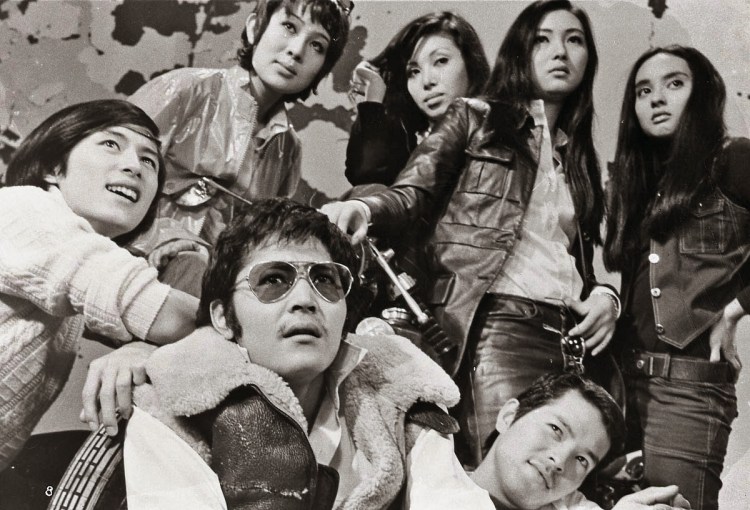
Stray Cat Rock Wild Measures '71 castReview of the new high definition Stray Cat Rock box set up at uk-anime.net


The late ‘60s/early ‘70s was a fascinating time in terms of Japanese popular culture and cinema was certainly no exception. With studios becoming desperately worried by the rising popularity of television and a troubled political situation, they knew they’d have to find someway to bring back that all important youth audience. Ultimately, they resorted to the time old solutions of sex and violence to try and lure the increasingly disinterested viewers back to the cinemas. In the end, Nikkatsu would end up becoming a purveyor of soft core pornography as its Roman Porno line all but dominated its production. The films from this era represent a kind of bridge between the youth orientated “Sun Tribe” films of the ‘50s and the full on exploitation films of the ‘70s. There’s no denying that in many ways they are very much of their time, which is generally a good thing, but the Stray Cat Rock films are an essential snap shot of a moment of counter culture shift.

This new blu-ray box set from Arrow films includes all five films in the Stray Cat Rock Series: Delinquent Girl Boss, Wild Jumbo, Sex Hunter, Machine Animal and Beat ’71. Perhaps “series” is a misleading way to describe the films as they’re really more of a “cycle”. There is no plot through line, each film stands independently with its own distinct story which appears to have no obvious connection with any of the other films in the series save sharing a certain sensibility (though even this shifts slightly as the films go on). The same actors reappear in several of the films, notably Meiko Kaji who is most closely associated with the franchise and Tatsuya Fuji who appears in every film, but even the actors who appear frequently are playing different (though often oddly similar) characters. What links the films together is their focus on what some might see as ‘low’ youth culture – bars, clubs, motorcycle gangs, drugs, drink and sex! What’s being sold, essentially, is a subversion of femininity – strong women who do not require the assistance of men but even take on male roles themselves such as forming or running violent street gangs.

The first film the series, Stray Cat Rock: Delinquent Girl Boss was intended as a vehicle for leading lady Akiko Wada and as a rival to Toei’s Delinquent Boss series. However, it was Meiko Kaji who became the breakout star of the film and a number of sequels featuring her were quickly put into production. The first film tells a fairly typical story of gangland warfare, albeit that it’s girl gangs, but the second, Wild Jumbo, takes a detour by telling a somewhat tragic tale of a group of students who plan to rob a mysterious cult – with tragic consequences! The third in the cycle, Sex Hunter, is the best known, perhaps because of its more complicated plot and engagement with racial politics. Apeing a western, a mixed race young man comes to town looking for his long lost sister and wanders straight into the gang war between Kaji’s female gang the “Alleycats” and the male “Eagles” lead by Fuji who has a prejudice against people of mixed race as his younger sister was gang raped by a mixed race gang. After this instalment the heavy sex and violence themes begin to fizzle out slightly and the fourth film, Machine Animal, is the most political of the Stray Cat Rock films as it follows a group of guys trying to dodge the draft for the Vietnam war planning to fund their onward journey to Sweden by selling LSD. The fifth and final film, Beat ’71 takes this even further and replaces the ‘gang’ motif entirely with a story set around a hippy commune.

Always fairly liberal in tone (even if the characters meet a ‘bad’ end, the series feels more aspirational than morally critical), the Stray Cat Rock films present a world of hedonistic, counter cultural youth. They’re full of the popular music of the time with long ‘live’ music sessions set inside the clubs, sometimes even prominently featuring popular bands and the theme song for Machine Animal “Gamble on Tomorrow” is even sung by Kaji herself. The earlier films are also filled with psychedelic imagery and interesting directorial touches like unusual split screens, blue screen cut outs, brightly coloured title cards, dissolves and freeze frames. However, Machine Animal marks quite a big change from the three previous films as the gang themes start to take more of a back seat to the politics and by Beat ’71, the tone of which is much more whimsical, they are pretty much absent. Films one, three, and four were directed by Yasuharu Hasebe while two and five where direct by Toshiya Fujita (Lady Snowblood) and there are some pretty clear directorial differences with Hasebe’s films being slightly more avant-garde and adventurous in terms of shooting style while Fujita’s are a little more classical. However, there might be something in the statement made by Hasebe in the interview included on this disc that by the end the pop culture tone had shifted from violence to beauty – the more salacious content, and in particular the sexualised violence, reaches its peak in Sex Hunter and decreases as the films go on.

All five films were made extremely quickly and released between 1970 and 1971 – that’s five films made and released in under two years! Though the creative team may have envisioned them as low budget, fairly disposable cash grabs designed to give a much needed boost to a declining industry, the Stray Cat Rock films have gone on to have cult appeal which still has its devotees all these years later. Hugely enjoyable in their own right, the films are an interesting window into a relatively small period time which nevertheless saw fairly massive changes taking place. Though they anticipate the trend of salacious exploitation that was to come, they stop short of some its excesses but were also to prove hugely influential in the history of ‘70s Japanese cinema.


Interview with Hoshi Ishida

vlcsnap-2014-10-04-22h46m14s119Totally forgot to post this at the time but here’s an interview I conducted with rising star Hoshi Ishida at Raindance 2014 on behalf of UK Anime Network.


Hoshi Ishida has had quite a long and varied career despite still being relatively young. As his latest short film, Touching the Skin of Eeriness, makes its UK premiere at Raindance (playing back to back with the upcoming Third Window Films release Lust of Angels) we sat down with him for a chat about the film as well as his career to date.

Is this your first time in London, how do you like it?

Hoshi Ishida: Yes – it’s great. Though at the moment I’m studying near Bristol for the next six months or so.

You started acting at quite a young age, and one of your first roles was in the 2002 movie Returner, directed by Takashi Yamazaki who recently directed your Touching the Skin of Eeriness co-star Shota Sometani in the upcoming Parasyte movies and The Eternal Zero. So I just wondered if you could talk a bit about your early experiences and how you got into the entertainment industry?

Hoshi Ishida: I didn’t really like acting in the beginning but then I met a director who I really liked and that gave me more of a desire to go on being an actor.

Which director was that?

Hoshi Ishida: Akihiko Shioda (Canary).

Was that why you left your original management company in 2006 and decided to study overseas? What were you doing during the two years between leaving your original company and joining the new one?

Hoshi Ishida: There were some extremely complicated circumstances. The reason I left the company was that it was up for renewal anyway – I decided to go to Australia because I wanted to learn some English not just for work but to make friends with English speaking people.

You said that when you met the director of Canary it rekindled your interest in acting and you’ve built up quite an interesting career so far with quite a few somewhat controversial or indie films. Is that something you’ve done deliberately or is it just by accident?

Hoshi Ishida: I haven’t made any kind of decision. I don’t really have any preferences about what I’m doing. It’s kind of like a coincidence that I was lucky enough to have some really good movies, but I’m always just given a script and I just go for it.

You also played the young boy Seita, the hero of Grave of the Fireflies, in the live-action film – were you nervous about taking on such a well known and well loved character? 

Hoshi Ishida: There was so much pressure! But if you let the pressure get to you can’t be a good actor so I had to put the pressure to one side just get on with acting as best as I could. The actress who played Secchan, [Setsuko, Seita’s younger sister] Mao Sasaki, really helped me so much and without her I probably couldn’t have done it.

To go back to Canary, it was obviously quite a controversial subject where you played a young boy who’d been raised in a revolutionary cult which later committed a terrorist act, which obviously has parallels with real events in Japan. Were you worried about a potential backlash from tackling such a taboo subject?

Hoshi Ishida: Once I’ve finished the role I don’t hold on to anything within me, it’s sort of irrelevant, but Canary is the reason I’m here now and still working, acting. So there’s something really substantial in me so I can only speak highly of Canary.

To bring things more up to date I believe you worked with the director of Touching the Skin of Eeriness, Ryosuke Hamaguchi, before on his previous film, The Depths? Was that how you became involved in this project? 

Hoshi Ishida: Yes, Hamaguchi saw me in Canary as well so everything really does come from that. He really liked my acting and asked me to be in his new film – The Depths, we took it from there and then he offered me another role in his next film so I just took it.

The Depths could be read as quite controversial as well as it deals with some fairly taboo subjects like homosexuality and yakuza prostitution rings etc. Did you worry about taking on what might be quite a difficult role?

Hoshi Ishida: Well, I’m always looking for something new to do so… it was challenging and I sort of hesitated when they offered me this role, but when Hamaguchi suggested I be in his film I thought if I didn’t do it now when would I? So I had to take the chance – I’m glad I did, I learned a lot from it.

The Depths was also a co-production with South Korea, did that have any effect on the shooting? 

Hoshi Ishida: The shooting ended on the first of April, which is the day before my birthday. In Japan the age of majority is 20, not 21, so I was 19 when we were shooting but I turned 20 right after we finished. So that was a really special moment for me. Apart from that it was the first time I’d worked on a co-production and it was a very new experience so yes – I enjoyed it. Also, the people who are into films, it really doesn’t matter where they come from – I watched them in South Korea being passionate about their filmmaking the same as Japan, which is good to know.

Did you enjoy working with Hamaguchi again on Touching the Skin of Eeriness?

Hoshi Ishida: I am so grateful he’s always asking me! This is really embarrassing but I didn’t know how well-known Hamaguchi is when I started doing his movies. Now I know, but when I first starting acting in his films everybody was saying “you don’t know how big he is” and then I kind of realised slowly but surely the amazing person I was working with, so I’m really grateful but I didn’t know then.

How detailed was the script for Touching the Skin of Eeriness – was it completely scripted? The scene in the cafe where you’re having the conversation about the thing you’re a afraid to touch felt like it might be improvised? 

Hoshi Ishida: The scene in the cafe with Shota Sometani where we’re sitting together and talking about the thing that scares you is 100% improvised, but apart from that everything was scripted. We didn’t really deviate anywhere, it was all on the line.

There’s also quite a lot of dance and physical acting – did you have a choreographer for that? 

Hoshi Ishida: The guy playing our teacher in the film was actually the choreographer. He’s a really famous guy called Osamu Jareo. He’s kind of a well known choreographer, he did everything.

Do you have a dance background or have you studied physical acting? 

Hoshi Ishida: I have done a little dancing but I can’t say ‘yes’ really.

Is that something you’d like to develop further in the future?

Hoshi Ishida: Well, I’m not sure…

Touching the Skin of Eeriness is a prequel to an upcoming film called The Floods – do you know a lot about that, do you expect your character to recur? 

Hoshi Ishida: I know of the concept – what’s going to happen in the new feature but the actual script hasn’t even been started yet.

So you don’t know anytime even when it’s likely to happen? 

Hoshi Ishida: I’m hassling Mr Hamaguchi to shoot it right now but he’s saying no. So I don’t know yet.

I know you had a film released just recently, Marching: Ashita He, but do you have anything else lined up at the moment? What are you working on now?

Hoshi Ishida: The next thing is a TBS drama – Shinya Shokudou and there’s another indie movie called Illuminations which I’ve already filmed and is due for release soon.

Do you prefer doing independent film or TV or do you have any aspirations to do theatre?

Hoshi Ishida: Movies!

Do you have any directors you haven’t worked with before that you’d like to work with in the future?

Hoshi Ishida: Mr Hamaguchi! Sion Sono – his films are really challenging so I’d really love to work with him one day!

Well I think that about wraps it up, Thank you so much for answering my questions and best of luck with the film.

Many thanks to Third Window Films for arranging this interview and to Sayaka Smith for the excellent translation.


Fuku-chan of FukuFuku Flats (福福荘の福ちゃん, Yosuke Fujita, 2014)

cbTezoQReview of Fuku-chan of FukuFuku Flats up at Uk-anime.net! Screening in London as part of the 2014 Raindance Film Festival on 30th September / 1st October. Tickets still available and the director will be in attendance!


It’s been quite a while since Yosuke Fujita released his first feature length film – the charming comedy Fine, Totally Fine in which two childhood friends who haven’t quite grown up fall in love with the same kind of strange girl, but now he’s finally back with another feature following his short film Cheer Girls which formed part of the Quirky Guys and Gals anthology film. Like those two previous efforts, Fuku-chan of FukuFuku Flats is another warm and funny tale of the strange lives of ordinary people.

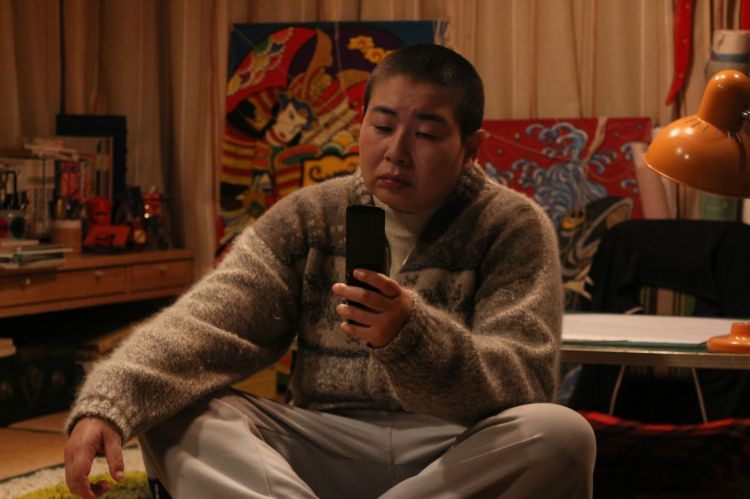
The titular Fuku-chan (played by actress Miyuki Oshima) is a painter and decorator and something of a parental figure at the small block of modest apartments at which he lives, Fukufuku Flats. As well as defusing work place disputes including one character breaking wind in the face of another to try and wake him up after lunch, and ones at home such as two neighbours disagreeing about the ownership of an exotic pet, Fuku-chan lives a fairly quiet, solitary life. On the other side of the story, a once high-flying executive, Chiho, has quit her lucrative and steady job to pursue a career in photography only to discover her idol and mentor is interested less in her artistic attributes than her physical ones. As you might expect, the path of these two characters is destined to cross – however an unlikely pair they may seem. In fact as it turns out, they share connection that for one of the them has become a long buried memory but for the other is an unforgettable scar that has coloured the rest of their life.

The more observant among you may wonder if there’s a mistake in the above paragraph. The titular Fuku-chan is indeed a male but the character is being played by the popular Japanese comedienne Miyuki Oshima. Though this is by no means the first time that an actress has portrayed a male character on screen – Linda Hunt even won an oscar for playing a male photographer in The Year of Living Dangerously, some viewers may initially be thrown by the decision. Fuku-chan’s shyness, caring nature and reluctance when it comes to dating women might, after all, be explained if ‘he’ were in reality a ‘she’. However, that is not where our story takes us and a joke about the size of Fuku-chan’s ‘maleness’ is perhaps designed to reassure us about his true nature.

As with Fine, Totally Fine Fujita’s world is packed out with eccentric characters and instances of everyday surrealism. From the the completely crazy ‘avant-garde’ photographer with his strange dress sense and giant camera wrapped up in some kind of alien-like yellow suit to the owner of an Indian restaurant who’s philosophically opposed to the idea of drinking water whilst ‘enjoying’ a spicy curry, these are some very strange people but crucially the sort of strange you might just come across in your everyday life – they never feel contrived or deliberately bizarre, just people that are little abstracted from the norm. Also to the film’s credit is that the characters’ individual quirks are just those – amusing, as character traits, but not ‘jokes’ in and of themselves.

There is, however, a slightly dark undertone to the film. The traumatic incident that binds the two central characters together is of a fairly ordinary variety, a typical sort of thoughtless teenage prank that happens everywhere, everyday (in fact, something similar happened to the author of this review in the dim and distant days of youth). Its ubiquity doesn’t make it any less cruel and even if it wasn’t exactly malicious in its intention, the effects of such humiliation can have an enormous effect on the rest of someone’s life. It’s not hard to see how such an experience could make someone bitter, withdrawn and misanthropic and it’s testament to Fuku-chan’s innately warm nature that his ability to help others remains undimmed even if he keeps himself in protective isolation. Conversely, you have to accept that some people’s problems are in need of more specialist care than even the kindest of hearts can provide, no matter how much you may want to help them.

Fuku-chan of FukuFuku Flats is another excellent entry in the ‘human comedy’ genre. Warm, genuinely funny and in the end even a little moving, it’s impossible not to be charmed by the film’s whimsical, absurd world. Though darkness sometimes creeps in around the edges, it only makes the light seem brighter and actually adds a little real world turmoil to Fuku-chan’s otherwise innocent world. An unconventional (not quite) romantic comedy, Fuku-chan of FukuFuku Flats is nevertheless a masterclass in the genre and genuinely one of the most fun films to come out of Japan (or anywhere else for that matter) for quite some time.


The Tale of Iya (祖谷物語 -おくのひと-, Tetsuichiro Tsuta, 2013)

1Japanese cinema has certainly been no stranger to the discussion of environmental issues from Studio Ghibli’s concerns about the modern society’s encroachment into the natural world to the ultra modern concerns about pollution and the dangers of nuclear disasters. However, they’ve rarely been addressed to poetically as in The Tale of Iya which is an extraordinarily rich examination of man and the landscape. Tinged with magical realism and surreal juxtapositions, The Tale of Iya is an oddly wonderful experience in the broadest sense of the word.

Film begins with a vast expanse of deep snow in which a lone figure dressed in traditional blue mountain dress with a conical straw hat is making an everyday journey to a local shrine. This could be a scene from any Jidaigeki or even a woodblock print were it not for the crashed car the old man finds a little further into his journey. A woman has been thrown through the windscreen and is lying motionless the bonnet. The old man gives the incongruous scene a quizzical look, but moves on along his planned path. Then, however, even more strangely he finds a little pink bundle by the side of a frozen river. This time he does stop and scoop the infant up. A jump cut sees us flash forward to around fifteen years later as teenage girl dressed in pink gets up to make breakfast for her ‘grandfather’  – the old man of the mountains. On her way to the local school she passes an old lady who’s taken to making sack mannequins which seem to do their part to make up the population of this rapidly declining mountain village.

The newly born sack people aren’t the only newcomers though – in an attempt at modernisation, the town planning committee have elected to build a tunnel which will connect them to the main road and make transportation easier. However, this has met with strong opposition from ‘environmental groups’ represented by an American eco-warrior. Amongst these strangers is another from Tokyo who seems to have come for an unknown reason but eventually decides to stay and attempt to farm the land. Iya is certainly very beautiful, but country life is also hard and entirely dependent on the weather. The young people long to leave for the comparative excitement of the city. City people though long for the simplicity of a long forgotten country life.

The film begins in a more or less naturalistic style filled with the most beautiful cinematography of snow covered vistas and foggy mountains. However, a strong seam of surreality constantly builds throughout the film until it reaches the final third and almost becomes a sort of science-fiction film about a magical environmental product that can clean polluted rivers down to near perfect clarity. Folklore beliefs and practices run side by side with a more poetic slice of magical realism that is jarring at first (and actually a tiny bit frightening) but the film’s surreal and dreamlike imagery is likely to be the thing that lingers longest.

A Tale of Iya also manages to offer a broadly nuanced and balanced view of the nature of country life and concerns about the environment. This is a remote town with a dwindling population – the new tunnel will ease communication, ultimately make lives safer and perhaps stop so many young people leaving the area altogether. The local people are therefore very much in favour of the new tunnel and many of them actually work for the construction company who are building it. The only opposition to the bridge is from a group of foreigners who are living in a commune but come down from the mountain every day to shout ‘save Iya’ and various ‘shame on you’ type comments (in English) at the construction team. The irony being that their ‘commune’ run in a typical communal farming style with hundreds of ‘save Iya’ billboards might actually be the biggest eye-sore in the area.

That’s not to say the film isn’t in favour of conservation or that it feels all construction is beneficial (quite the reverse) but it is eager to present a fair comment on both sides of the problem. Similarly, it isn’t afraid to point out that this ancient way of life is extremely difficult. Kudo, who’s arrived from Tokyo and looks so jumpy all the time one wonders if he left in a hurry, is eager to learn about traditional farming. He looks so pleased with himself when he’s finally mastered how to water crops in the traditional way, not to mention that torturous looking two buckets on a stick water carrying device. It’s not long before he’s taken up the self sufficient life but the problem with that is you have to do everything yourself – no electric, no running water (other than that which runs in a stream), no sanitation and in short no safety net. Muddling through and celebrating small victories is fine in the blistering heat of summer but as the first snow falls and you don’t have enough winter stores, death from cold or starvation (or both) is a very real possibility. City people romanticise country life thinking it’s ‘easier’ or admiring its ‘simplicity’ but whatever it gives it also takes.

At 169 minutes, there’s no point in denying A Tale of Iya is an extremely long film that moves a stately pace. Undeniably some viewers will be put off by its epic running time and frequent flights of fancy but those who stay the distance will be richly rewarded. Magical, beautiful and finally profoundly moving, A Tale of Iya is an incredibly heady brew that stays in the mind long after it finishes. Truly ‘wonderful’ in every sense of the word, A Tale of Iya deserves to be much more widely seen.


First published by UK Anime Network.

Branded to Kill (uk-anime.net review) / Masters of Cinema to release Suzuki’s Youth of the Beast

vlcsnap-2014-08-18-11h50m48s63

One of my favourite films – Seijun Suzuki’s Branded to Kill reviewed at uk-anime.net!


In the words of the bosses at Nikkatsu who chose to fire Seijun Suzuki immediately after the film was released in cinemas, Branded to Kill is ‘incomprehensible’. The same bosses then went on to add that they were stopping Suzuki’s monthly salary with immediate effect because his films never made any sense or any money and that he should probably give up being a film director because no one else was going to hire him. To be frank, it was their loss. ‘Incomprehensible’ is one way to describe the film, it’s almost fair though the plot and shooting style feel more straightforward than his previous film, the psychedelic yakuza movie Tokyo Drifter. Like Tokyo Drifter, Branded to Kill is the story of a tough guy killer but this time around our ‘hero’ turns out to be much less self aware.

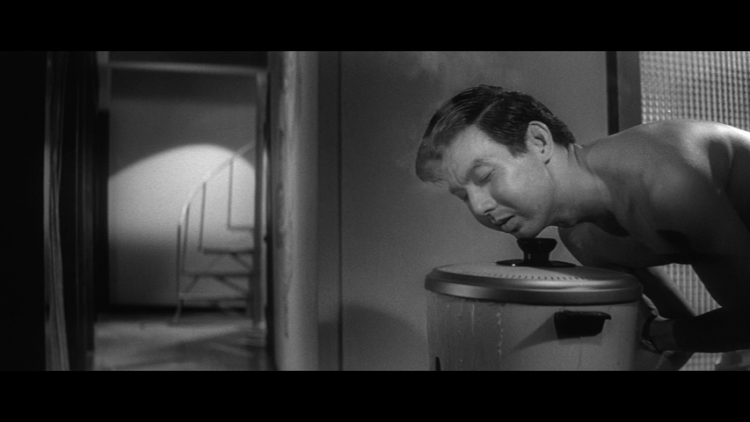
Hanada (Joe Shishido) is one of the top hit men operating in the Tokyo underworld (though perhaps not *the* best). His latest assignment is to escort a someone across town assisted by his alcoholic hit man friend. However, they’re ambushed and his friend is killed though the client reaches his destination safely. On the way home, Hanada’s car breaks down but a pretty girl, Misako, stops to give him a lift. Completely besotted, Hanada returns home to play odd sex games with his wife all over the house whilst sucking in the smell of boiling rice from the rice cooker to put himself in the mood. Becoming more and more obsessed with Misako, he agrees to take on an impossible hit which goes wrong after a butterfly lands on his sights. Accordingly, Hanada then loses his status as one of the top guys and begins to become increasingly insistent on claiming the number one slot for himself.

As you can see, the suits at Nikkatsu may have had a point. Essentially, Branded to Kill takes a fairly standard B-movie gangland plot where multiple guys duke it out for the top spot but it adds in multiple layers of quirky humour and surreality that were definitely not part of Suzuki’s brief. The first section of the film shows you Hanada’s tough and resourceful nature as he takes down the ambushers and completes his original mission in a cool headed fashion. His subsequent assignments have him showing a little more flair whether perfectly timing his shot to fire through the opening of a giant cigarette lighter on billboard, escaping via hot air balloon, or in the famous sequence in which he assassinates an optician by firing through the drainage pipes which lead to his sink. Unfortunately though, Hanada made a serious miscalculation when he accepted Misako’s job offer – as his friend told in him in the beginning, booze and women will get you killed. Stripped of his status and now a wanted man, Hanada’s fragile grip on his identity begins to crumble leaving him at the mercy of his own desires.

Misako herself is obsessed with death. She tells Hanada on their first meeting that her dream is to die and shows him the dead black canary she has hanging from her rear view mirror. Her house is filled with taxidermy birds and black butterflies and it’s hard not to see her as a kind of death goddess, luring Hanada from his certain path of simple but precise killing to one of neurotic questioning. Hanada’s relationship with his wife, Mami, also appears quite strange as in he seems not to care very much about her. He uses her for sex (whilst ordering her to cook him up a fresh batch of rice which, it seems, is what he really wants) but then seems faintly annoyed that she exists and barely seems to care when he telephones his boss but it’s Mami that answers the phone. She appears fairly devoted to him, though intolerant of his fetish for the smell of cooking rice, and is hurt by his lack of attentiveness. During the course of the film, both women will try to kill him and both will suffer directly or indirectly at his hands. Even the strangely homoerotic relationship he develops with the mythical No.1 is fuelled by death – what is it, really, that Hanada has been looking for?

Speaking of strange relationships, as part of this set Arrow have also provided the 1973 ‘Pink film’ remake of Branded to Kill, Trapped in Lust. Following Suzuki’s departure, Nikkatsu was taken over by new management who moved more into the realms of explicit sex and violence in the hope of recapturing an audience that was deserting the cinema for TV. Known as the ‘Roman Porno’ line Nikkatsu continued to pour out a series of explicit sex films, some of which were more ‘arty’ than others. Trapped in Lust is only loosely based on Branded to Kill but its protagonist is a more of a would be hit man who blows his chances by breaking the rules but still desperately wants to be taken seriously. Though it lacks Suzuki’s directorial flare, it makes up for it with sheer weirdness. How often can you say the villain turns out to be a ventriloquist and his doll in which you’re never quite sure which one is actually in control? These sorts of films have lots of rules about what can and can’t be shown including the prohibition on visible pubic hair which might explain the marker pen like scribble at one point where, presumably, the actress’ towel fell down unexpectedly. Pure wish fulfilment, Trapped in Lust has a slightly more upbeat ending (for the protagonist at least) and is worth seeing for its total bizarreness alone but is perhaps more interesting than actually enjoyable.

After being fired by Nikkatsu Suzuki entered a lengthy tribunal process (which he eventually won) and didn’t make another film for ten years. Strange, surreal and other worldly from its more straightforward beginnings to its boxing ring show down, Branded to Kill is one of the most perfectly constructed, but totally insane, B movie extravaganzas ever created. ‘Incomprehensible’? No. Well, a little bit – but only in the best possible way. Like all of Seijun Suzuki’s movies, Branded to Kill defies description or explanation and must be seen to be believed. A genre bending classic, Branded to Kill is a true must see and perfect example of late sixties weird cinema.


Also, hot on the heals of Arrow’s dual format DVD/BD combo of Branded to Kill, Eureka/Masters of Cinema announced today that they’ll be releasing a dual format release of Suzuki’s earlier colour film, Youth of the Beast!

Everybody’s going Seijun Suzuki crazy which can only be a very good thing! Now someone hurry up and release the Taisho trilogy.

The Kirishima Thing (UK-anime.net review)

thekirishimathingThis is from a million years ago but it was caught up in the queue at UK-anime.net and has only just been liberated! Also I wrote this when I was deathly ill (festival fever is a real thing!) so I’m not entirely sure it’s completely coherent. Anyway, have at it – The Kirishima Thing reviewed at Uk-anime.net


What’s up with that girl, why is everyone crying?

Must be the Kirishima thing again, right? It’s got everyone all riled up.

Hey, what exactly happened with that? Where is Kirishima?

You didn’t hear?! Kirishima quit the volleyball team! And nobody’s heard from him since, doesn’t answer calls, doesn’t answer texts – he’s in the wind….

Damn, man, that’s cold! Wonder what happened….

What happened with Kirishima, why he’s upped and quit the volleyball team quite suddenly right after having been made captain and with the team on course to win a big championship actually turns to out be almost totally irrelevant. We may speculate on why someone might just do that but we can never really know. What is important is that Kirishima’s unpredictable action causes a seismic wave to rip through the social structure of his class. With Kirishima gone, everyone else starts to question their own place in the social hierarchy – are they really where they want to be, where they ‘belong’ within the all important high school pecking order? Some threaten to move up and others down but will anything be the same ever again?

The ‘cool’ kids are in the ‘going home’ club or possibly ‘in a sports team but blowing off practice’, the next level are ‘kind of in a club because it’ll look good on my application forms (it’s not like I like it or anything)’ and then at the bottom we have the geeky guys and girls who are really into their club activities – exemplified here by the downtrodden film club. When Kirishima just quits and effectively demotes himself from the A crowd by quitting the volleyball team nobody’s really certain of anything anymore – what’s cool, what’s not, what do I care? The volleyball team feel betrayed by their captain’s absence, the cool boys are puzzled and uncertain without their leader to look to, the popular girls doubt their status now the alpha guy isn’t around and the film club….carry on as normal and try to ignore all the silly drama going around the school.

However, there are those in the higher echelons who maybe feel they don’t belong there. One of the cool girls has a secret liking for ‘geeky’ films but is frightened of becoming ‘one of them’ and losing her ‘popular’ status. Another girl, nominally one of the cool girls both hates and admires her friends for their vacuity and refusal to see whats going on around them. She is the only who really sees what’s going on everywhere, but even she too is afraid of losing her position. The most troubled and changed though is Hiroki, Kirishima’s ‘best friend’ who nevertheless didn’t know anything about his friend’s decision. Half in half out of the baseball team, he’s trapped between the cool world of the going home club and the slightly less cool one of being able to do something very well. The only people who aren’t really affected are the film club who are, to some extent, too invested in their own sense of inferiority to really notice what’s going on everywhere else.

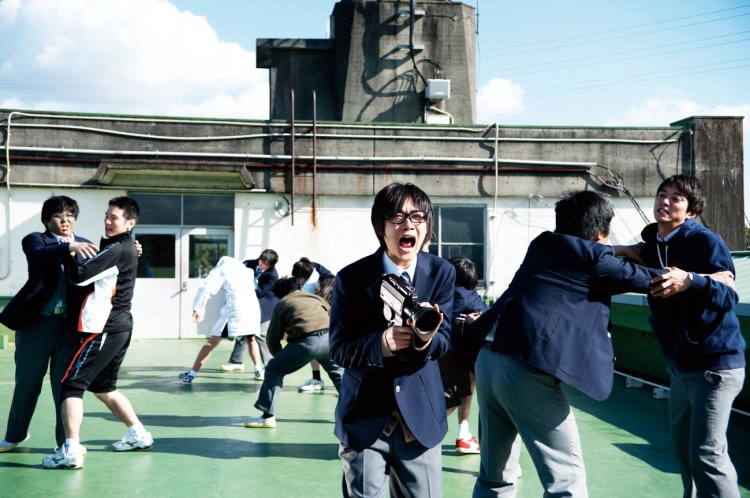
The film club  are in some ways the heart of the film as they both refuse to see and ultimately document the social fracturing that’s going on within the school. They seem to think themselves very hard done by -‘they’re always winning’ complains one boy after they find a location they want to use already occupied and later ‘I won’t cast them when I’m a director’ about the annoying popular clique who’ve just been laughing at them loud enough for them to hear before they’ve even gone past. However, they are the key to the film’s climactic roof top confrontation scene as the film club’s high school zombie invasion movie is rudely interrupted by the popular kids’ desperate search for Kirishima. This leads to a day of the dead style zombie fantasy sequence as the film club zombies devour the unwitting volleyball stars and popular girls which is the highlight of the film. The intermingling of the two groups which would never normally have anything to do with one another finally forces the ramifications of the Kirishima thing to come to a head. In some senses it clears the air; the tensions have boiled over and worked themselves out. However, for some the outcome is far from clear and they remain trapped between levels of high school cool.

The Kirishima Thing is certainly not for for those who like a lot of action, zombies aside, or something with a heavier plot element, but as an ensemble character study it excels. As an allegory for the wider problem of conformity/social norms vs individuality and self recognition in the adult world it’s certainly a very apt parable but all of the characters concerned are very well drawn and each afforded a degree of sympathy and understanding. The Kirishima thing strikes a more realistic tone than the director’s previous films (Funuke: Show some love you losers!, Perfect Nobara) which took place in a world of heightened reality but still has a strongly comic tone. An extremely nuanced and layered tale, The Kirishima Thing may require multiple viewings to completely appreciate but it’s certainly well worth the investment in time.


Also look out for fellow queue inmates Kumiko the Treasure Hunter and Tale of Iya which, I am assured, will shortly become eligible for parole.

Nobi: Fires on the Plain (野火, Kon Ichikawa, 1959)

86485840228b9d174ae44b6a189f8c0bIt’s a fallacy to think Japan doesn’t make war films. Or perhaps, more that they didn’t make them until the recent swing to the right in Japanese politics seems to have made it OK to make Hollywood style war movies. Up until the sixties, Japanese cinema was willing and able to engage with the darkness of the recent past and several wonderful films such as Kobayashi’s The Human Condition (Ningen no Jouken 人間の条件) or Okamoto’s The Human Bullet (Nikudan 肉弾) not to mention Ichikawa’s own The Burmese Harp (Biruma no Tategotoビルマの竪琴) presented the still fresh sorrow and regret associated with Imperialist ’30s onwards. None of them, however, come close to the hellish world of Fires on the Plain (Nobi 野火).

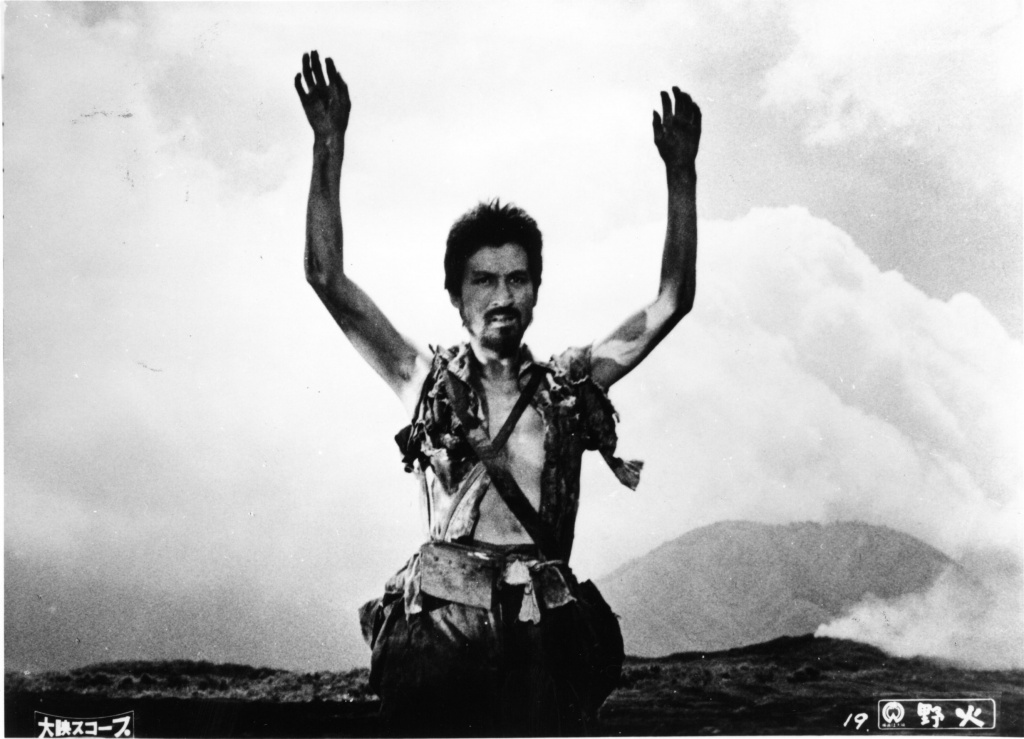
Based on Shohei Ooka’s novel of the same name, Fires on the Plain begins with the beleaguered conscript Tamura (Funakoshi Eiji) being berated (at length) by his commanding officer for returning from the field hospital earlier than expected. Despite having been given five days food, Tamura has returned after just three days because the hospital refused to admit him. Sick with TB, Tamura is told the hospital feels its duty is to the battlefield wounded – not those who’ve been unlucky enough to catch a debilitating and often terminal condition. Of course, his CO doesn’t want him back either – with only so many resources left and staring defeat in the face, why waste food and effort on a man who can’t pull his weight and is probably going to die anyway. And so, Tamura is sent back to the field hospital with no additional food and instructed to wait there until they let him in or alternatively, there’s your grenade – isn’t there? Do the decent thing. Thus begins Tamura’s bleak odyssey into the depths of human depravity, trying desperately to survive in the unforgiving Philippine jungle.

Legend has it that Funakoshi was so dedicated to the part that in true method fashion he’d been living on a starvation diet prior to the film’s starting and in fact actually caused it to be halted almost immediately when he collapsed from severe malnutrition. That might in part explain his miraculous performance with vacant, staring eyes like someone whose soul has gone somewhere far away. His halting and confused speech, understanding and not understanding, desperate to survive but terrified of what he might become – Tamura has no choice but to keep on walking, trying to find something to cling on to. Everybody knows the war is lost, yet there’s nothing they can do but keep on fighting. Tamura even considers the unthinkable – surrender, but another soldier beats him to it and is promptly mown down by a machine gun wielded by a Filipina resistance fighter working with the Americans. The most pressing problem is the lack of food. There is very little to live on left on the island which has been well and truly wrecked by every side. You can steal food from the indigenous people (if you can find any) or there’s ‘monkey meat’. The great taboo – cannibalism. Ultimately Tamura decides sometimes the price for survival is just too high if you won’t be able to live with what you’ve done.

In the west, particularly in the US, the film was criticised for its ‘sympathetic’ portrayal of Japanese soldiers – that it was another instance of Japan ‘playing the victim’ which was a common American reaction to the more contemplative war films of Post War Japan. It is true, the films glosses over the immediate situation of the Japanese occupied Philippines though the film largely takes with the Japanese on the run from American troops and the Philippine resistance. The fact there have been atrocities is never directly addressed though it hangs in the background like a grim, guilty spectre. It might explain why Tamura’s early meeting with a pair of villagers who’ve made a stealthy visit to their abandoned home to retrieve a parcel of salt buried under the floor becomes so fraught. In the first instance, Tamura was foolish to enter the house and approach them – even his disordered mind he must have known it was very unlikely they’d react kindly to his presence. If he just wanted to know what was buried under the floorboards, he had only to fire a warning shot and scare them off before they could dig it up and then retrieve it himself. When he does show himself the male villager runs off but the female is so scared she can barely move and can’t stop screaming. Tamura shoots her and takes the salt for himself. Disgusted with his actions he throws his rifle into the nearest pond. That isn’t to say the film lets Tamura, or indeed the other men or the whole Japanese war machine, off the hook. Only that they’ve become this way because of what war reduces you to – less than animals, surviving by any means even if that means betraying your fellow men.

Fires on the Plain was adapted from Shohei Ooka’s novel of the same name by Ichikawa and his screen writing wife Wada Natto who, while keeping broadly to the tone and spirit of the book, made several changes. The most obvious being to the structure of the novel which has more of a framing sequence, an unreliable first person narrator and a complicated structure. In the novel Tamura, a fictionalised version of the author, is a Christian and the book is written with a Christian view of the world rather than the traditionally Japanese viewpoint common to the majority of soldiers. Therefore, Ichikawa decided to remove the Christian themes from the film in order to present Tamura as more of an everyman though the Tamura of the book is presented much more ambiguously. This also explains the changes to the film’s ending which is bleaker and less forgiving that than that of the novel.

One of the most horrifying depictions of war ever put on screen, Fires on the Plain lays bare the true horror of warfare. Trapped in a sort of purgatory, forced to wander the jungle waiting for the inevitable yet desperately clinging on to life, Tamura’s story can’t be described as anything less than hellish. Wading past corpses, mud, blood and those who’ve already gone mad – this is humanity at its lowest point. Even if you meet another soldier, they can’t be trusted – it’s every man for himself. Ichikawa’s world is bleak beyond belief with no hope in sight, the only possibility of salvation lying in the large fires that appear at distant points along plains. Everyone assumes them to be a signal of some kind but nobody knows what they mean or for whom they are intended. A descent into hell, Ichikawa’s Fires on the Plain is one of the most realistic and most powerful anti-war films in cinema history.

Fires on the Plain is unavailable in the UK but is available in the US from the Criterion Collection. Shohei Ooka’s book is likewise unpublished in the UK but is available in English in its original 1957 translation by Ivan Morris currently in print from Tuttle in the US though it should be noted that Morris’ translation is itself heavily edited. 


Wings of the Kirin 麒麟の翼

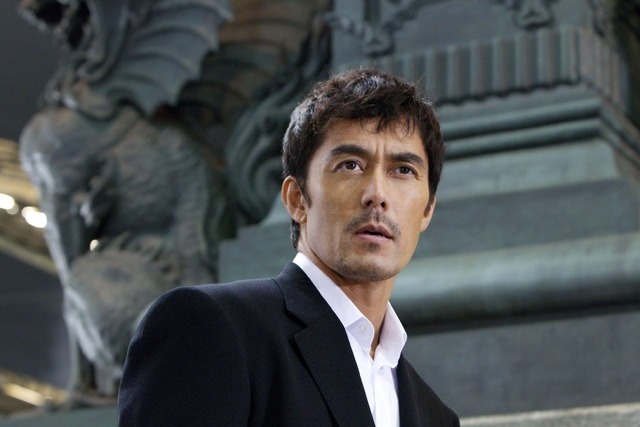
Wings_of_the_Kirin-002Based on the novel by Keigo Higashino (The Devotion of Suspect X), Wings of the Kirin is the latest big screen outing for Higashino’s famous detective Kaga. Previously played on TV by Hiroshi Abe who reprises his role as the much loved sleuth here, this latest instalment sees Kaga’s particular expertise put to use in the case of a salary man who appears to have staggered some distance from the subway tunnel where he was stabbed only to die right under the famous Kirin statue on Nihonbashi Bridge. Around the same time, a younger man calls his girlfriend to tell her he’s in ‘big trouble’ before being chased out into the road by police, whereupon he’s suddenly mown down by an oncoming truck. As this man had the salaryman’s briefcase the case seems open and shut – a mugging gone tragically wrong leading to the death of both perpetrator and victim. Kaga though feels differently and as always, the case is not quite as straightforward as the authorities would like to believe.

As with many of Higashino’s stories, the mystery itself is almost a macguffin as Higashino is more interested in investigating human behaviour and psychology with half an eye on traditional morality. Wings of the Kirin is no different in this respect as it has a heavy interest in the relationship between fathers and sons and the importance of taking personal responsibility for your own transgressions. However, that isn’t to downplay the mystery element as Higashino once again proves himself a master at wrong footing the audience. Many viewers may feel they have a pretty solid idea of who did it and why fairly early on the film only for it takes off in an entirely different direction in the final third. That said, although it is heavily pushing your intuition in one direction, there are perhaps an over abundance of subplots including illegal work practices and unfeeling employers, the difficulties faced by young people coming out of the foster system, complicated teenage friendships and misunderstandings brought about by people’s own sense of guilt. Consequently the film does run quite long as it manages to pack in just about as many wrong turns and red herrings as possible, however it largely earns its right to run as each of the characters and sub-plots manages to be compelling in its own right.

Though Wings of the Kirin is technically the big screen spin off of the Detective Kaga TV drama, no previous knowledge of Kaga and co is strictly necessary though familiarity with some of the peripheral characters may help. Hiroshi Abe excels once again as the slightly distant if all seeing detective who alone is capable to putting all the pieces together in the right order. Perhaps due to its TV roots, the film has a rather strange and quirky soundtrack which is frequently at odds with the serious nature of the drama yet it never quite tips over into being distracting enough to derail the film. Occasionally it does feel like more like a big budget TV special than a major feature but again perhaps that’s in keeping with the previous instalments in the series. Like all good mysteries, the solution involves a great deal of improbable coincidences yet watching Kaga shuffling them all into place to reveal the overall solution is quite masterful.

However, Higashino’s moralising does take over at times and there was at least one instance where it seemed Kaga had gone too far, or at least the actions of one character did seem reasonable. After all, if you can ‘save’ one person when there’s nothing to be done for another, is it really so wrong to try and help the people who are left behind? The actions in that case did seem altruistic, not born of any desire to ‘cover-up’ wrong doing but only to try and prevent more lives being ruined. Yes, Kaga’s assertion that you’ve effectively taught someone that it’s OK not to admit you’ve done wrong or that it’s OK to let others take the blame for your own mistakes is obviously true, but the consequences here are perhaps too extreme and dramatically neat to bear it out. Occasionally the film does feel preachy and its message is anything but subtle, however, thankfully it never manages to disrupt the pleasure of its finely constructed mystery. A little bit long and necessarily meandering, The Wings of the Kirin is another impressive crime thriller from the pen of Higashino that manages to entertain with a finely crafted central narrative but is also unexpectedly moving in its curiously small scale climax.

Library Wars (図書館戦争, Shinsuke Sato, 2013)

library-wars-2013-dojo-and-kasahara


Based on a series of light novels by Hiro Arikawa, Library Wars is another adaptation of a popular multimedia franchise from the director of the live action Gantz movies. Like Gantz, it’s another bug budget, tentpole style block buster with a subtle (though not insubstantial) desire to inject a bit of social commentary into what can be an entirely trivial genre. The manipulative forces at play here, however, are far less mysterious and unfortunately much more plausible than the mysterious black orbs of Gantz as they come in the form of crypto fascist censorship enthusiasts known as The Media Betterment Force. Having achieved the kind of success Mary Whitehouse could only dream of, The Media Betterment Force managed to pass the Media Betterment Act in the alternate Japan of 1989 which required all books containing ‘objectionable’ material to be destroyed. All is not lost though as the last bastion of intellectual freedom, the library, takes up arms and defends its right to disseminate whatsoever information anyone might desire with a government mandated assurance that library property can be safeguarded – with military force if necessary. Thirty years later in the near future of 2019, a young girl joins the LDF (Library Defence Force) full of idealistic zeal for protecting literature and a not so altruistic mission of finding the LDF officer who once saved her favourite book for her during in a MBF raid on a bookshop. Politics, romance, action! It’s all here for your edification and enjoyment.

If this all sounds a bit silly, well it is – but only in the best possible way. This is not a film about the evils of censorship, or how intellectual discourse and freedom of information are essential parts of any fully functioning society, though those themes are there if only in passing, so much as a big glossy blockbuster with just about every genre you can think of vying for the spotlight. The creeping totalitarianism is more backdrop than anything else but perhaps the absurdity of anyone picking up arms to defend access to information speaks to our unwillingness to prevent a gradual slide into a world of book burning and (not really) well meaning nannyism. First and foremost, Library Wars is science fiction action film modelled on the familiar boot camp genre following an underdog rookie recruit’s path to frontline glory. Yes we have training montages galore complete with the strained friendships and ‘you’re off the team!’ moments that appear in every film of this kind but the absurd premise and the film’s successful adoption of a warm comic tone help smooth over over any genre clichés and thankfully the film also manages to impress with several large scale battle scenes.

The romantic comedy element is arguably the least successful as it lacks the traditional climax many fans of the genre maybe hoping for (though one suspects a sequel may well put that right). That said the central relationship definitely falls into the ‘cute’ category and cleverly avoids the melodramatic nature of most blockbuster romances. Yes, the audience knows right away who the much sought after prince is but that only makes it more fun even if the post-idealistic bitterness of the man in question is another genre cliché. Supporting characters are also nicely fleshed out and each enjoys a decent amount of time in the spotlight creating a nice ensemble feel which is often rare in a blockbuster. As in Gantz the acting style remains fairly grounded rather the bigger, TV inflected performances which have been creeping into mainstream cinema and the strong performances from a fairly high profile cast help to lift Library Wars above some of its cinematic brethren.

Viewers expecting another Fahrenheit 451 or 1984 will obviously be disappointed in Library Wars’ fairly superficial examination of its themes but those hoping for a rip roaring, if slightly ridiculous, adventure are in line for a treat. Though the subject matter is itself absurd, such care has gone into the world building that it all makes a curious kind of sense assuming you’re willing to let yourself go with it. Most importantly, it’s remarkably self assured in terms of its tone – it knows exactly what it is and isn’t afraid to embrace its own nature. With much more heart than your average blockbuster, Library Wars is a warm and funny action comedy that also manages to be genuinely romantic. Now if they can only hurry up with Library Wars 2 so we can all enjoy the romantic resolution we’ve been waiting for!