 It used to be that movies about marital discord typically ended in a tearful reconciliation and the promise of greater love and understanding between two people who’ve taken a vow to spend their lives together. These endings reinforce the importance of the traditional family which is, after all, what a lot of Japanese cinema is based on. However, times have changed and now there’s more room for different narratives – stories of women who’ve had enough with their useless, deadbeat man children and decide to make a go of things on their own.
So it is for the heroine of Noriben: The Recipe for Fortune (のんちゃんのり弁, Nonchan Noriben). Inspired by Kiwa Irie’s popular manga, Noriben follows the adventures of Komaki – a woman in her early 30s who gets her daughter dressed for school one morning but secretly takes her to the train station instead where they board a train headed for Komaki’s hometown. Having left her husband who has literary aspirations and consequently no job (the couple were living off, and with, his parents), Komaki has no firm plans other than moving back in with mother. Used to living off scraps and leftovers, she knows how to make her food go further and is also an excellent cook so the unusual layered bento boxes she makes for her little girl, Noriko, prove a big hit with the kids, and later the staff, at the local school.
Hooking back up with a former crush and now local photographer, Komaki ends up tasting the best meal of her life at a tiny eatery and suddenly hatches on the idea of opening a mini bento shop of her own. Of course, it’s a steep learning curve especially for a woman in her thirties with almost no work experience and no real knowledge of how to set up and run a business which is completely leaving aside the need to hone her cookery skills. If there’s one thing you can say about Komaki, it’s that once she’s set her mind on something she will make it happen and so her new life in her old town is just beginning.
Noriben addresses a lot of themes which are becoming fairly common at the moment including the “boomerang daughter” who suddenly arrives home following the breakdown of a marriage. Komaki’s soon to be ex-husband is not an enticing proposition and it seems that most, if not all, of what she says about him is true. He’s a layabout whose dreams of becoming an author are very unlikely to come true and, as his parents seem content to go on supporting him, his promises of getting a real job are most likely hollow too. There’s no real idea of the couple reconciling and when the husband suddenly turns up and starts behaving in an irresponsible way the situation ends in a bizarre marital street fight which does at least seem to clarify for the pair that their marriage really is well and truly over.
Komaki begins a tentative romance with her high school crush Takeo who took over his family’s photography studio though with the advent of digital technology and home printing the shop’s days are numbered. However, Komaki’s uncertain marriage status and Takeo’s diffidence both prove stumbling blocks to the path of romantic bliss and the film seems to imply that Komaki’s own headstrong character is also a problem when it comes to building relationships. Here, the film doesn’t quite know what it wants to say. Perhaps wanting to emphasise Komaki’s strides towards becoming a truly independent woman, it has her side step romantic entanglements but it also seems to declare the need for choice where there isn’t one.
In essence Noriben is a perfectly pleasant, if slightly bland, film that meanders its ways towards a bittersweet ending. Presumably intended to be a celebration of female empowerment as this ordinary woman makes a break from an unrewarding relationship to prove that she can do better on her own, the film only partly fulfils this message as it also comes with an air of sadness and sacrifice where Komaki also has to give up on various other parts of life in order to pursue her dream. That said, Noriben does offer a degree of playful comedy and down home style wisdom that make it a fairly enjoyable, if forgettable, experience.
Reviewed as part of the Japan Foundation Touring Film Programme 2016.
 “Being good”. What does that mean? Is it as simple as “not being bad” (whatever that means) or perhaps it’s just abiding by the moral conventions of your society though those may be, no – are, questionable ideas in themselves. Mipo O follows up her hard hitting modern romance The Light Shines Only There by attempting to answer this question through looking at the stories of three ordinary people whose lives are touched by human cruelty.
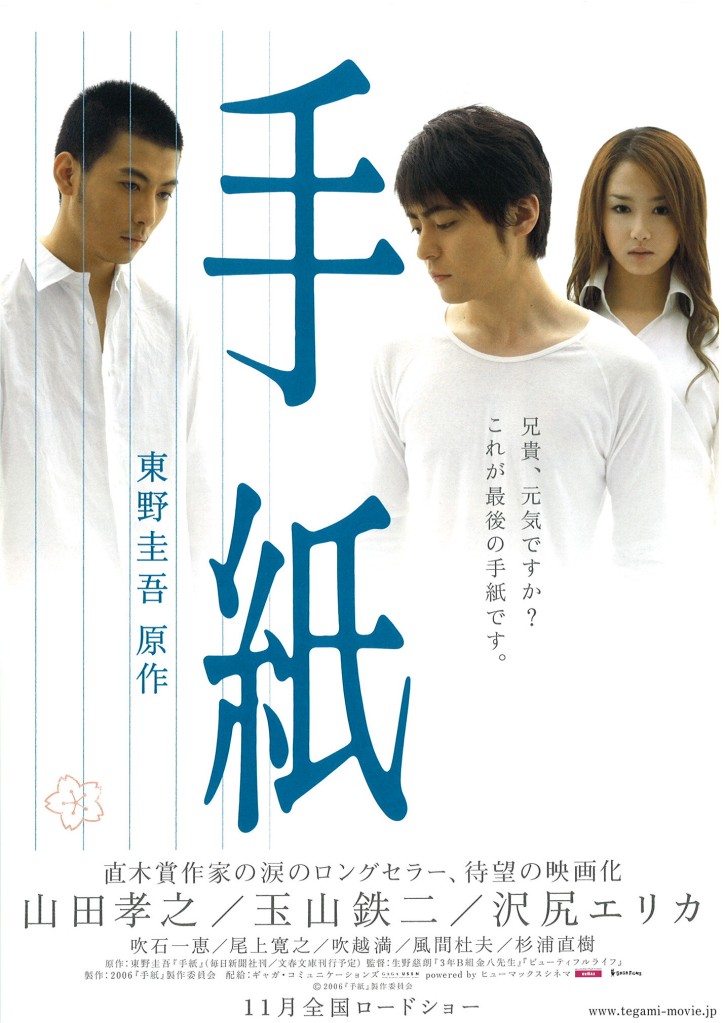 When it comes to cinematic adaptations of popular novelists, Keigo Higashino seems to have received more attention than most. Perhaps this is because he works in so many different genres from detective fiction (including his all powerful Galileo franchise) to family melodrama but it has to be said that his work manages to home in on the kind of films which have the potential to become a box office smash. The Letter (手紙, Tegami) finds him in the familiar territory of sentimental drama as its put upon protagonist battles unfairness and discrimination based on a set of rigid social codes.
 Kihachi Okamoto might be most often remembered for his samurai pictures including the landmark Sword of Doom but he had a long and extremely varied career which saw him tackle just about every conceivable genre and each from his own characteristically off-centre vantage point. The Elegant Life of Mr. Everyman (江分利満氏の優雅な生活, Eburi Man-shi no Yugana Seikatsu) sees him step into the world of the salaryman comedy as his hapless office worker reaches a dull middle age filled with drinking and regret imbued with good humour.
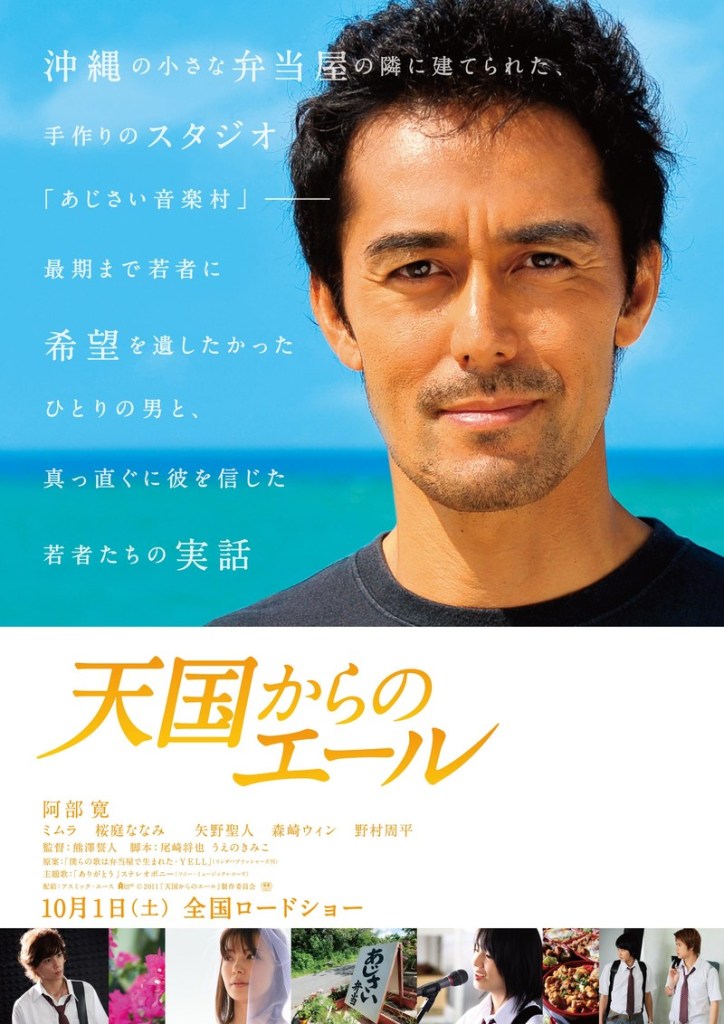 Okinawa might be a popular tourist destination but behind the beachside bars and fun loving nightlife there’s a thriving community of local people making their everyday lives here. Just like everywhere else, life can be tough when you’re young and the town’s teenagers lament that there’s just not much for them to do. A small group of high schoolers have formed a rock band but they’re quickly kicked out of their practice spot at school after a series of noise complaints from neighbours.
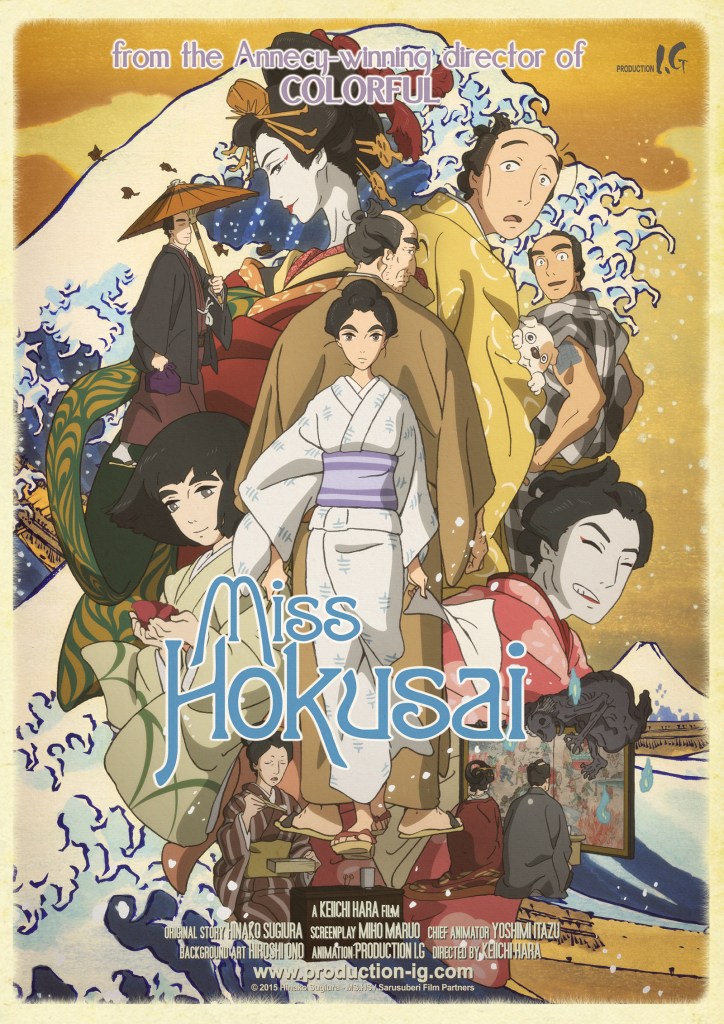 When it comes to the great Japanese artworks that everybody knows, the figure of Hokusai looms large. From the ubiquitous The Great Wave off Kanagawa to the infamous Dream of the Fisherman’s Wife, the work of Hokusai has come to represent the art of Edo woodblocks almost single handedly in the popular imagination yet there has long been scholarly debate about the true artist behind some of the pieces which are attributed to his name. Hokusai had a daughter – uniquely gifted, perhaps even surpassing the skills of her father, O-Ei was a talented artist in her own right as well as her father’s assistant and caregiver in his old age.
 A Japanese tragedy, or the tragedy of Japan? In Kinoshita’s mind, there was no greater tragedy than the war itself though perhaps what came after was little better. Made only eight years after Japan’s defeat, Keisuke Kinoshita’s 1953 film A Japanese Tragedy (日本の悲劇, Nihon no Higeki) is the story of a woman who sacrificed everything it was possible to sacrifice to keep her children safe, well fed and to invest some kind of hope in a better future for them. However, when you’ve had to go to such lengths to merely to stay alive, you may find that afterwards there’s only shame and recrimination from those who ought to be most grateful.
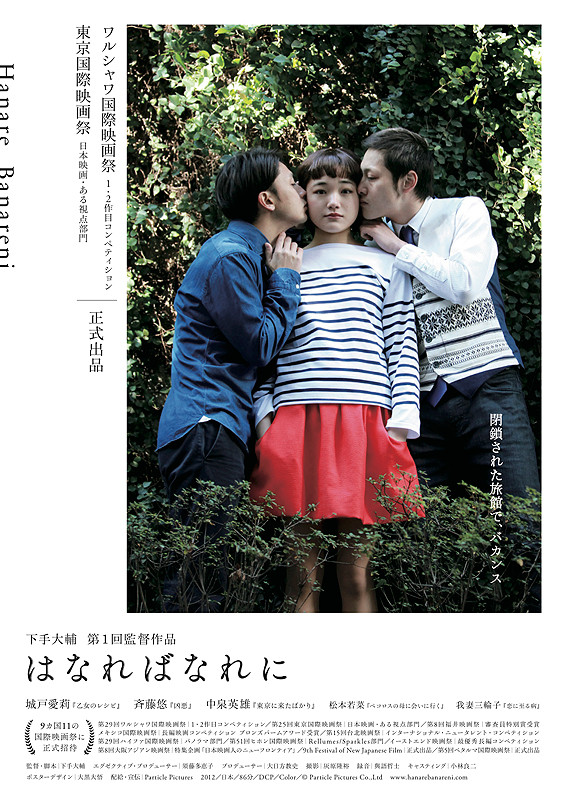 All these years later, it’s easy to forget just how revolutionary the wheezy, breezy youthfulness of the French New Wave was. Kuro proves that there’s life in this whimsical, summer seaside feeling yet as three misfits find themselves holing up at a disused small hotel to think about what they’ve done until they learn to grow up a little.
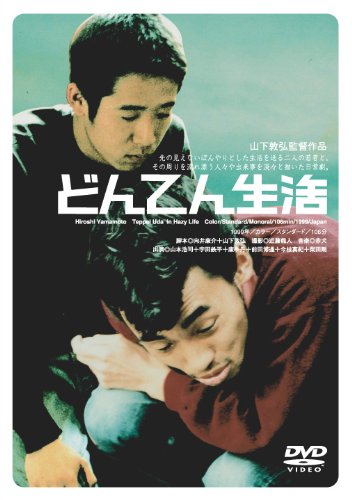 Starting as he meant to go on, Nobuhiro Yamashita’s debut feature film is the story of two slackers, each aimlessly drifting through life without a sense of purpose or trajectory in sight. His humour here is even drier than in his later films and though the tone is predominantly sardonic, one can’t help feeling a little sorry for his hapless, lonely “heroes” trapped in their vacuous, empty lives.
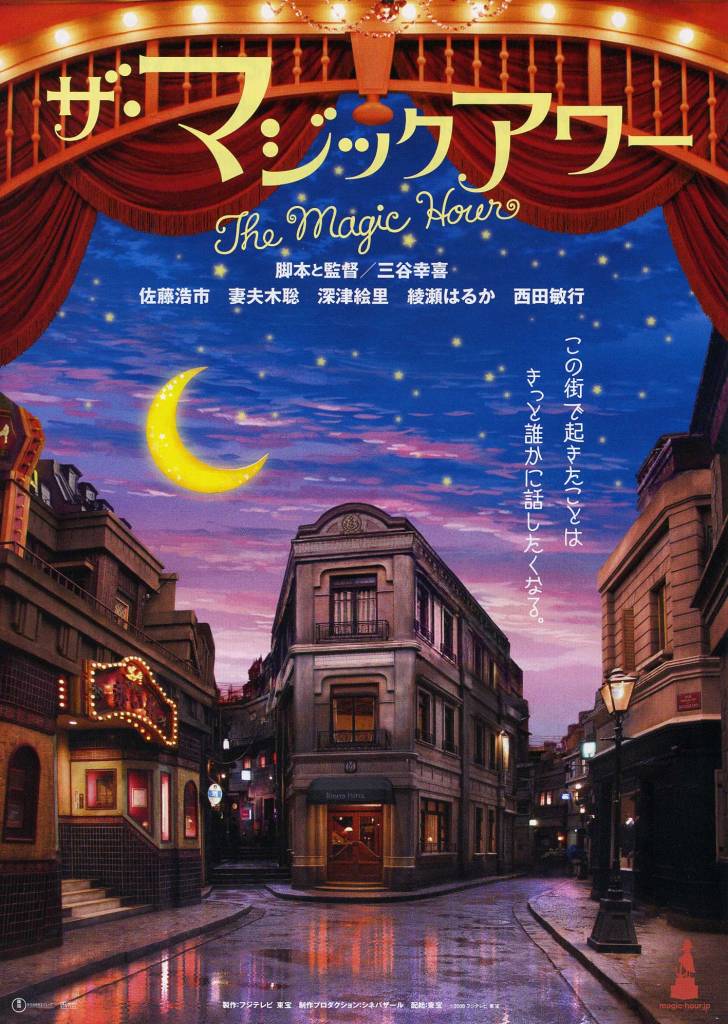 If there’s one thing you can say about the work of Japan’s great comedy master Koki Mitani, it’s that he knows his cinema. Nowhere is the abundant love of classic cinema tropes more apparent than in 2008’s The Magic Hour (ザ・マジックアワー) which takes the form of an absurdist meta comedy mixing everything from American ‘20s gangster flicks to film noir and screwball comedy to create the ultimate homage to the golden age of the silver screen.
